


Starting composting gets easier when bin matches your space, waste volume, and preferred routine. For beginners, key choice is between an outdoor bin that holds larger batches, a tumbler that turns by rotation, an in-ground worm composter, or a countertop caddy that only collects scraps before transfer. This guide to Best Compost Bin For Beginners compares listed options without treating kitchen caddies as finished-compost makers.
We reviewed 12 listed products using stated capacity, aeration, access, handling, maintenance, and placement. Product descriptions include manufacturer claims, not independently verified results. For kitchen collection, see our guide to countertop compost bins with charcoal filters.
JupiterForce 80-Gallon Compost Bin, Ventilated Outdoor Composter for Kitchen Scraps and Yard Waste OXO Good Grips 1.75-Gallon Easy-Clean Compost Bin for Neat Kitchen Scrap Collection TOP XIAN 2-Pack Inground Worm Composter for Compact Garden Composting Nazhura 43-Gallon Dual Chamber Compost Tumbler for Continuous Backyard Composting Prices and availability can change. We may earn a commission from qualifying purchases.


Pros
- Generous 80-gallon capacity for regular household and yard waste.
- Bottom access door can make harvesting compost more convenient.
- Lightweight, tool-free assembly is suitable for many home gardeners.
Cons
- It does not include a base and is intended to sit directly on the ground.
- Its roughly 23.2 by 22.4 inch footprint and 31.9 inch height require a dedicated outdoor location.
- Gardeners who want adjustable aeration, tumbling, or a raised working height may prefer a different composting design.
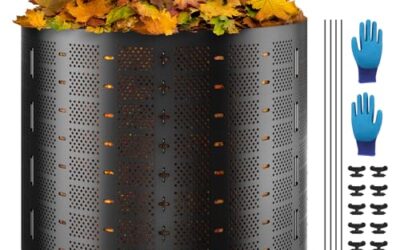
The JupiterForce 80-gallon compost bin is designed for turning household and yard organic waste into compost outdoors. Its capacity and straightforward layout make it a practical fit for homeowners, beginner composters, and gardeners with enough ground space for a dedicated bin.
The product information highlights four ventilation openings on each side to support air circulation during decomposition. The large chamber can hold kitchen scraps, leaves, grass clippings, and similar organic material, although successful composting still depends on using suitable inputs and maintaining an appropriate mix.
New material is added through the top lid, while a sliding door at the bottom provides a separate route for collecting compost. The closed lid may help discourage small animals from entering. At 23.2 by 22.4 by 31.9 inches and 11.9 pounds, the bin is relatively lightweight before filling and does not require tools for its four-step assembly.
This composter could work well beside a backyard garden, near a raised-bed area, or in another outdoor spot where kitchen and yard waste can be added regularly. Its listed frost and rain resistance supports outdoor use throughout the year, and the black finish provides a simple, unobtrusive appearance.
The main setup consideration is that no base is included, so the bin must be placed directly on the ground. Choose a stable location with enough clearance to open the lid and use the bottom door, and follow the assembly instructions before adding material. It is a sensible choice for gardeners wanting a spacious, simple stationary composter, while those seeking a raised, tumbling, or more adjustable system should compare other designs.
Best For / Avoid If
Best for buyers prioritizing
- Generous 80-gallon capacity for regular household and yard waste.
- Bottom access door can make harvesting compost more convenient.
- Lightweight, tool-free assembly is suitable for many home gardeners.
Consider another option if
- It does not include a base and is intended to sit directly on the ground.
- Its roughly 23.2 by 22.4 inch footprint and 31.9 inch height require a dedicated outdoor location.
- Gardeners who want adjustable aeration, tumbling, or a raised working height may prefer a different composting design.
Pros
- Compact countertop-friendly dimensions with enough capacity for routine kitchen scrap collection
- Smooth plastic interior and removable parts support easier cleaning than bins with more crevices
- Handle folds down when not in use and helps with transporting scraps to the main compost area
- Lid can stay open during food prep and comes off for emptying
- Reviewers frequently praise the neat bag fit and odor control
Cons
- Larger households or very active cooks may need to empty it more often than a bigger kitchen compost pail
- Plastic construction may not appeal to gardeners who prefer stainless steel or ceramic countertop bins
- One long-term reviewer reported staining and water getting into the liner after extended use, so periodic inspection and cleaning are sensible
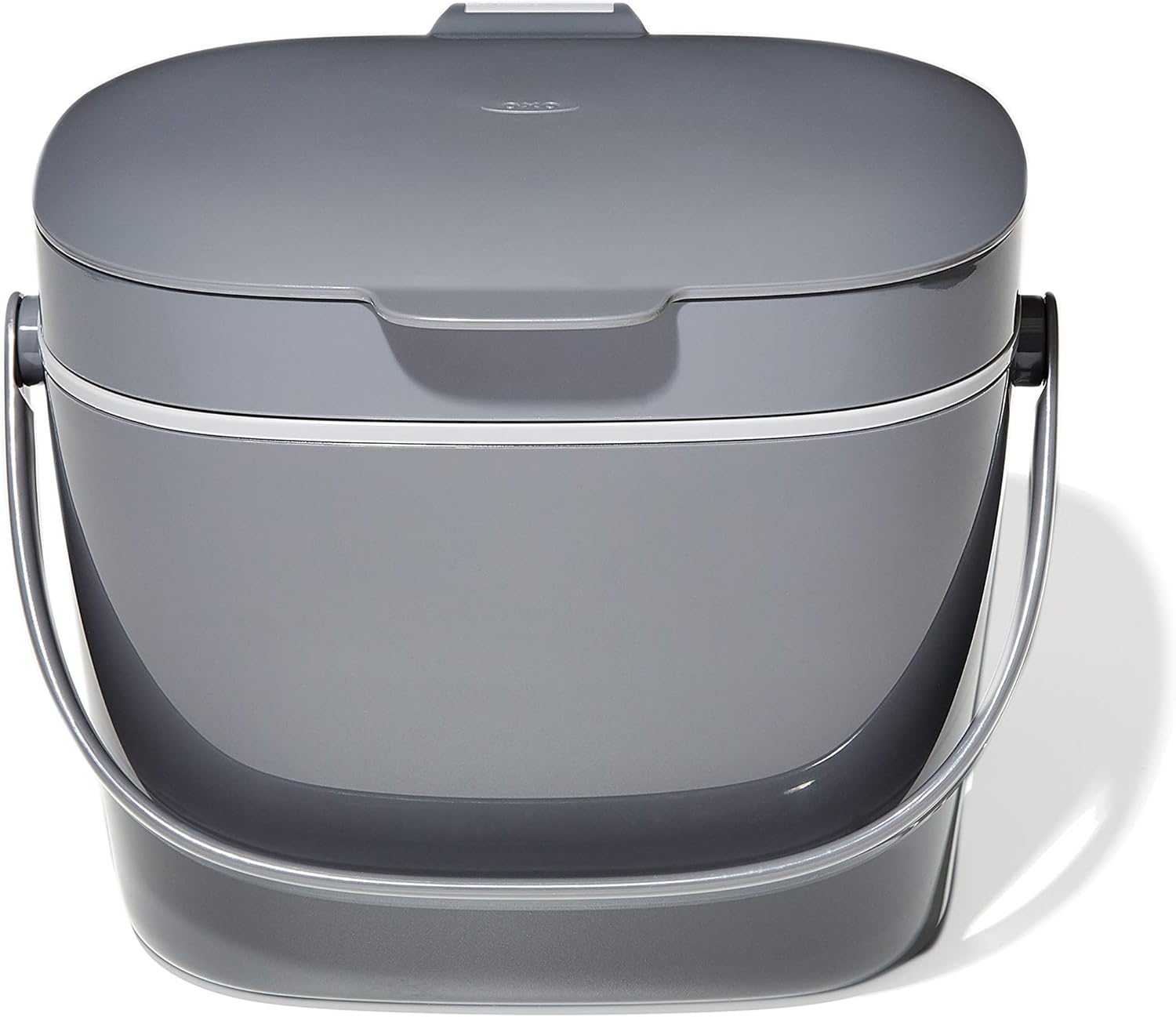
The OXO Good Grips Easy-Clean Compost Bin is an in-home composting bin made for collecting kitchen scraps before they move to an outdoor compost pile, backyard bin, or local compost collection container. Based on the listed specifications, it holds 1.75 gallons, or 6.62 liters, which makes it useful for everyday vegetable peels, fruit scraps, coffee grounds, and other kitchen compostables allowed by your composting system.
Its strongest practical benefit is convenience during food prep. The stay-open lid lets you toss scraps in as you cook, while the design keeps bags tucked inside for a cleaner look on the counter. The product information also notes an odor-containing, pest-reducing lid design, and several reviewers commonly mention that it helps keep smells down when closed.
The bin measures 8.3 inches long, 10.15 inches wide, and 12 inches high, with an oval charcoal plastic body. It weighs 1.5 pounds, includes a removable lid, and has a handle that folds down when not in use. The smooth interior is intended to make cleaning easier, and the removable internal bucket is listed as dishwasher safe for more thorough washing.
For small-space gardeners, this bin is a simple bridge between the kitchen and the garden. It can sit near a sink for daily scraps, tuck under a sink for a cleaner counter, or be carried out to a backyard compost bin when full. It is especially well suited to beginners who want composting to feel like a normal kitchen habit rather than a messy extra chore.
There are a few limitations to keep in mind. A 1.75-gallon bin may fill quickly in larger households, during canning season, or for gardeners who cook heavily with fresh produce. Since it is plastic, it may stain over time depending on what is stored in it, and one reviewer noted staining after extended use. Emptying it regularly, using compatible composting bags if desired, and washing it often will help keep it more pleasant indoors.
Overall, the feature set suggests a well-designed kitchen compost collector for homeowners, apartment gardeners, and anyone trying to keep food scraps organized before composting. Gardeners who want a countertop bin with simple handling and easy cleaning should find it a good match, while those needing a larger-volume pail or a non-plastic material may want to compare other options.
Best For / Avoid If
Best for buyers prioritizing
- Compact countertop-friendly dimensions with enough capacity for routine kitchen scrap collection
- Smooth plastic interior and removable parts support easier cleaning than bins with more crevices
- Handle folds down when not in use and helps with transporting scraps to the main compost area
Consider another option if
- Larger households or very active cooks may need to empty it more often than a bigger kitchen compost pail
- Plastic construction may not appeal to gardeners who prefer stainless steel or ceramic countertop bins
- One long-term reviewer reported staining and water getting into the liner after extended use, so periodic inspection and cleaning are sensible
Pros
- Compact dimensions are a practical fit for garden beds and smaller outdoor spaces.
- Includes two composters for a more flexible rotation between active use and maintenance.
- Accepts common organic inputs such as kitchen scraps, paper, and leaves.
- Removable lids and ventilation holes simplify access and airflow management.
Cons
- The 8L capacity may be less suitable for households producing large amounts of compostable waste.
- Installation requires digging a hole and choosing a suitable in-ground location.
- Earthworms are not included, so they must be sourced separately before vermicomposting can begin.
The TOP XIAN 2-Pack Inground Worm Composter is designed for vermicomposting in garden beds or other outdoor soil locations. It is aimed at beginners, eco-conscious households, and gardeners who want to recycle kitchen scraps, paper, and leaves without setting up a large freestanding compost bin.
Based on the listed specifications, each composter has an 8L capacity and measures 9.5 by 9.5 by 10.8 inches. The compact format can work well where space is limited, while the in-ground placement keeps the composting activity located close to the area where the finished material may be used.
The feature set is straightforward. Gardeners dig a hole, place the bin, add suitable organic material, and use the removable lid for access. The 360-degree ventilation holes are intended to provide airflow, and the PP construction is described as sturdy for outdoor use. No complex assembly is listed.
For a small backyard or raised-bed setup, one bin could receive fresh material while the second is maintained or used in another suitable location. The two-bin arrangement may also help gardeners organize ongoing composting, although the listed 8L size is better suited to modest household or garden waste volumes than to large-scale composting.
Gardeners should plan the installation location carefully because the bins are intended to be buried and may require digging for placement. Earthworms are not included, so they must be obtained separately. This set is a sensible option for beginners who want compact in-ground vermicomposting, while gardeners with higher waste volumes or no suitable digging area may prefer a larger above-ground system.
Best For / Avoid If
Best for buyers prioritizing
- Compact dimensions are a practical fit for garden beds and smaller outdoor spaces.
- Includes two composters for a more flexible rotation between active use and maintenance.
- Accepts common organic inputs such as kitchen scraps, paper, and leaves.
Consider another option if
- The 8L capacity may be less suitable for households producing large amounts of compostable waste.
- Installation requires digging a hole and choosing a suitable in-ground location.
- Earthworms are not included, so they must be sourced separately before vermicomposting can begin.
Pros
- Two-bin design supports a more continuous composting routine than a single-chamber tumbler.
- Raised rotating design reduces the need to fork or shovel a traditional compost pile.
- Listed dimensions make it compact enough for many home garden spaces.
- Reviewers commonly mention that it is lightweight and generally easy to rotate when not overfilled.
Cons
- Assembly may take patience, as several reviewers note many small fasteners and limited instructions.
- The tumbler does not list a side crank or handle, and some users report it can become harder to turn as it fills.
- Small sliding doors may be less convenient for gardeners emptying larger kitchen scrap containers or removing finished compost.
The Nazhura 43-gallon dual chamber compost tumbler is an outdoor composting bin for gardeners who want a cleaner, more contained alternative to an open compost pile. Based on the listed product information, it is intended for kitchen throw-outs, grass clippings, leaves, and other organic yard waste, making it suitable for homeowners, beginner composters, and small-yard gardeners who want to recycle everyday organic material.
The main benefit is the dual-bin design. One chamber can be used for new scraps while the other chamber continues breaking down, which helps avoid constantly disturbing a batch that is already composting. The rotating barrel is designed to mix materials and bring oxygen into the compost, a key part of keeping the process active without using a pitchfork.
The product specifications list a 43-gallon capacity, plastic and galvanized steel materials, and dimensions of 26.25 inches long by 23.6 inches wide by 36.5 inches high. At 21 pounds, the unit itself is not especially heavy before filling, though compost materials can add substantial weight. The sliding doors provide access for adding scraps and removing finished material, and the included garden gloves are a useful extra for routine garden handling.
In a typical backyard, this tumbler could sit near raised beds, a vegetable garden, or a side-yard utility area where kitchen scraps and dried leaves are easy to add. Its compact footprint may also work for gardeners who do not have space for a large three-bin compost system. For best results with any tumbler-style composter, gardeners should pay attention to the balance of wet green materials and dry brown materials so the contents do not become overly soggy.
The most common caution from reviewers is assembly. Several users describe the setup as doable but tedious, with many small nuts and bolts and instructions that may require careful interpretation. Some reviewers also mention that the unit can be harder to rotate as it gets fuller, and a few note leakage when the contents are too wet, so it is sensible to avoid overfilling and to add dry leaves or similar brown material when needed.
This is a sensible choice for gardeners who want an affordable-style, contained, dual-chamber composting system and do not mind a time-consuming assembly process. Gardeners who need a larger composting capacity, very large loading doors, or a built-in crank handle may want to compare other compost bin designs before choosing this one.
Best For / Avoid If
Best for buyers prioritizing
- Two-bin design supports a more continuous composting routine than a single-chamber tumbler.
- Raised rotating design reduces the need to fork or shovel a traditional compost pile.
- Listed dimensions make it compact enough for many home garden spaces.
Consider another option if
- Assembly may take patience, as several reviewers note many small fasteners and limited instructions.
- The tumbler does not list a side crank or handle, and some users report it can become harder to turn as it fills.
- Small sliding doors may be less convenient for gardeners emptying larger kitchen scrap containers or removing finished compost.

Pros
- Good countertop size for small households, apartment gardeners, and daily food scrap collection.
- Stainless steel body provides a durable, easy-to-clean surface based on the listed product materials.
- Charcoal filter is replaceable, so odor-control maintenance does not require replacing the entire bin.
- Reviewers commonly mention that it looks attractive on the counter and is simple to clean.
Cons
- It is a collection bin, not a full composting system, so scraps still need to be emptied into an outdoor pile, curbside organics bin, or other compost setup.
- Gardeners who cook heavily or generate large amounts of scraps may need to empty the 1.3-gallon bin frequently.
- Odor control depends on filter condition, scrap type, and emptying habits, and at least one reviewer reported odor escaping through the lid area.
The Epica SYNCHKG123584 is an in-home composting bin designed for kitchen countertops, not a backyard composter that finishes compost on its own. It gives gardeners and homeowners a tidy place to collect food scraps indoors before carrying them to an outdoor compost pile, raised-bed compost trench, community organics container, or municipal food-waste bin.
Based on the listed specifications, the main value is convenience. The 1.3-gallon capacity is large enough for regular kitchen prep scraps while staying small enough for visible counter use. For beginner composters, that matters because a bin that is easy to reach is more likely to be used consistently than a hidden container under the sink.
The product information indicates a stainless steel cylindrical body measuring 7.16 inches in diameter and 11 inches high. The one-piece molded design is described as resistant to leaks and rust, and it avoids welded seams that can be harder to maintain over time. The lid includes a replaceable activated-charcoal filter intended to help control odors naturally.
For small-space gardeners, patio growers, and homeowners with vegetable beds, this bin can serve as the indoor link between meal prep and soil building. It is well suited for collecting items such as produce trimmings and coffee grounds until they can be transferred outside. Reviewers commonly mention that the bin looks good on the counter, is easy to clean, and fits everyday kitchen use without feeling oversized.
There are some practical limits to keep in mind. This bin will not turn scraps into finished compost by itself, and it should be emptied regularly to reduce odor pressure, moisture buildup, and fruit fly risk. The charcoal filter is replaceable, but it will need maintenance over time, and odor control can vary depending on what is placed inside and how long scraps are stored.
This is a sensible choice for gardeners who want a compact, stainless steel food-scrap pail that can stay out on the counter. If you produce a large volume of kitchen waste, want foot-pedal operation, or prefer a fully sealed container without lid ventilation, a larger or different style of indoor organics bin may be a better fit.
Best For / Avoid If
Best for buyers prioritizing
- Good countertop size for small households, apartment gardeners, and daily food scrap collection.
- Stainless steel body provides a durable, easy-to-clean surface based on the listed product materials.
- Charcoal filter is replaceable, so odor-control maintenance does not require replacing the entire bin.
Consider another option if
- It is a collection bin, not a full composting system, so scraps still need to be emptied into an outdoor pile, curbside organics bin, or other compost setup.
- Gardeners who cook heavily or generate large amounts of scraps may need to empty the 1.3-gallon bin frequently.
- Odor control depends on filter condition, scrap type, and emptying habits, and at least one reviewer reported odor escaping through the lid area.
Pros
- Two-bin setup supports batch composting instead of continuously mixing new scraps into one unfinished pile.
- Tumbling action can be easier for older gardeners or anyone who wants to avoid manual stirring.
- Listed dimensions give it a relatively compact footprint for a raised outdoor composter.
- Reviewers commonly mention that it feels sturdy once assembled and turns easily.
- Included gloves are a useful extra for routine garden cleanup and compost loading.
Cons
- Assembly may take time, and several reviewers say a second person makes panel alignment easier.
- The door opening may feel small for gardeners dumping larger bowls or countertop compost bags.
- Gardeners who generate a very large volume of yard waste may prefer a larger stationary bin or multi-bin system.
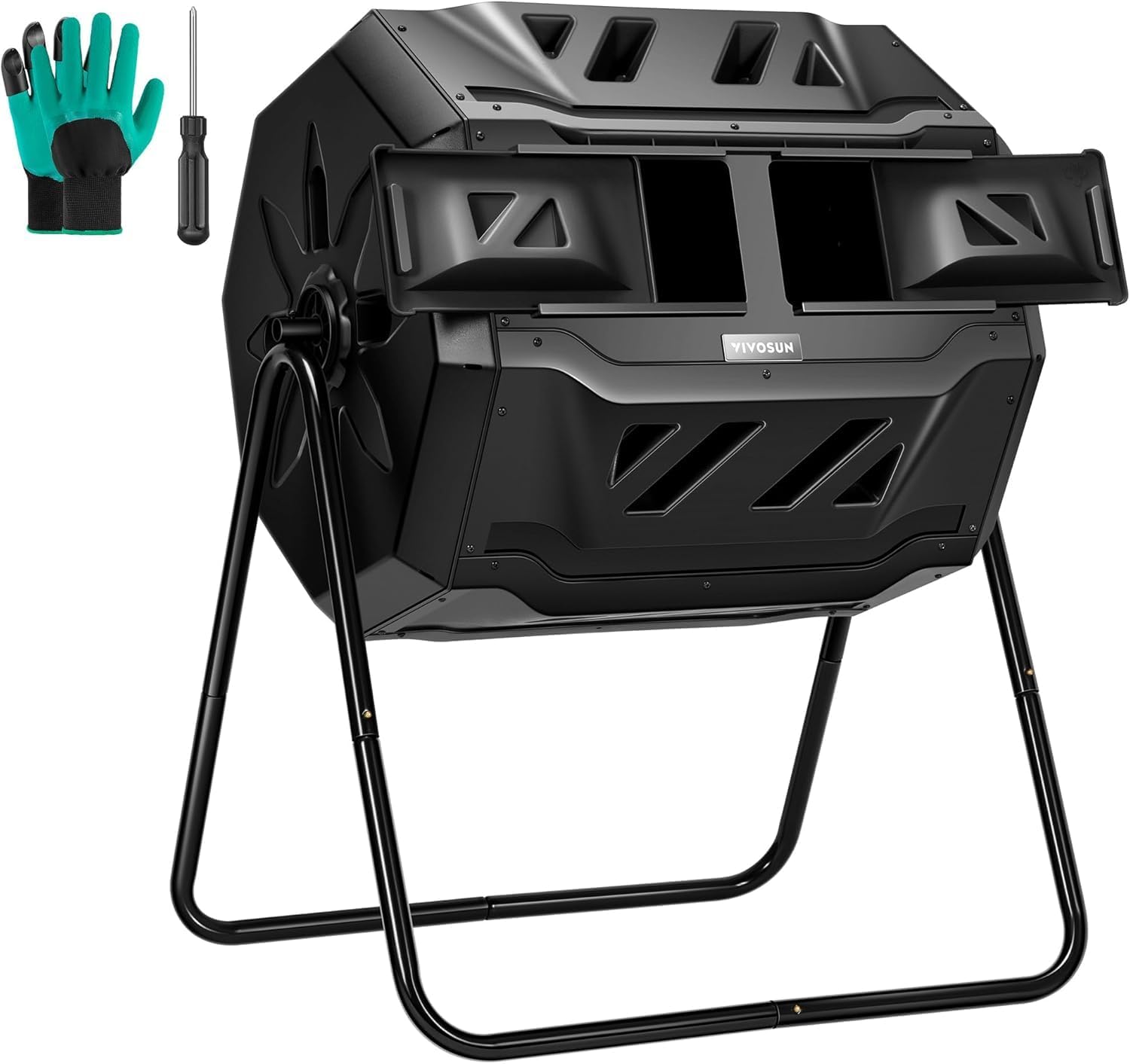
The VIVOSUN Outdoor Tumbling Composter is a 43 gallon compost bin for turning kitchen scraps and garden waste into compost in a contained outdoor setup. Based on the listed specifications, it is best suited to homeowners, raised-bed gardeners, and small-yard growers who want a cleaner alternative to an open compost pile and do not want to stir material by hand.
The main practical advantage is the dual-chamber layout. One side can hold material that is already composting while the other side stays available for fresh additions. For gardeners who add fruit and vegetable scraps, coffee grounds, leaves, or other compostable garden materials on a regular schedule, that batch-style setup can make it easier to let one side finish without constantly resetting the process.
The barrel rotates 360 degrees, and the product information lists air vents plus deep fins inside the panels. In plain terms, the tumbler is designed to mix the contents and introduce airflow as it turns, both of which are important for active composting. The octagonal shape, black body, and raised frame also keep the material off the ground, which can make turning and access more comfortable than working at soil level.
Its listed dimensions are 26.25 inches long by 23.6 inches wide by 36.5 inches high, with a listed capacity of 43 gallons and item weight of 21.67 pounds. The product description indicates a metal frame and PP plastic body, while the specifications also list galvanized steel. Reviewers commonly note that assembly involves many panels, screws, and a center divider, so beginners should plan time, organize parts first, and consider having a helper hold pieces in place.
In everyday backyard use, this composter fits gardeners who want to process a moderate stream of household scraps and light garden waste near a vegetable bed, patio edge, or utility area. The included garden gloves are a helpful extra for loading material or doing nearby planting work, though they do not replace careful hygiene. Always wash hands after handling compost materials, avoid adding unsuitable waste, and keep the unit on stable ground before rotating it.
The tradeoff is access size and assembly effort. Review feedback suggests the sliding doors may be less convenient when dumping larger containers, and gardeners with heavy compost output may want a larger bin. For many home gardeners, however, the VIVOSUN 43 gallon dual tumbler offers a useful balance of contained composting, easier mixing, and batch management in a compact outdoor footprint.
Best For / Avoid If
Best for buyers prioritizing
- Two-bin setup supports batch composting instead of continuously mixing new scraps into one unfinished pile.
- Tumbling action can be easier for older gardeners or anyone who wants to avoid manual stirring.
- Listed dimensions give it a relatively compact footprint for a raised outdoor composter.
Consider another option if
- Assembly may take time, and several reviewers say a second person makes panel alignment easier.
- The door opening may feel small for gardeners dumping larger bowls or countertop compost bags.
- Gardeners who generate a very large volume of yard waste may prefer a larger stationary bin or multi-bin system.

Pros
- Compact enough for countertop use while still offering 4.92 liters of listed capacity.
- Charcoal-filtered lid is intended to reduce odors from stored food scraps.
- Stainless steel body provides a sturdier alternative to many plastic scrap containers.
- Reviewers commonly mention that it is easy to clean and looks tidy in the kitchen.
- Useful for collecting scraps for compost piles, worm bins, chickens, or other separate food-waste handling systems.
Cons
- It stores scraps but does not turn them into finished compost on its own.
- The product information recommends thorough washing after each use, so it may require more routine cleaning than a disposable liner setup.
- Gardeners with large households or heavy daily food prep may prefer a larger collection bin.
The Utopia Kitchen CB-13 is an indoor food scrap collection bin made for gardeners who want a cleaner way to move vegetable peels, coffee grounds, and other compostable kitchen waste out of the trash stream. Based on the listed specifications, it holds 1.3 gallons, or 4.92 liters, which suits small households, apartment gardeners, and homeowners who empty scraps into a backyard compost pile, worm bin, chicken feed bucket, or separate composting appliance.
The main benefit is convenience. Keeping a lidded compost bucket on the counter makes it easier to save scraps during meal prep instead of walking outside for every handful. The product information states that the lid includes charcoal filters designed to trap and control odors, and reviewers commonly mention reduced smell when the lid is closed. That can be especially helpful for beginners who are trying to build a composting habit without making the kitchen unpleasant.
The bin is listed as stainless steel with a silver cylindrical design, measuring 8.4 inches long, 7 inches wide, and 11 inches high. At 2 pounds, it should be manageable for most adults to lift and carry when full, though anyone with limited hand strength may still want to empty it before it becomes packed down. The stainless steel body is described as resistant to scratching, cracking, and chipping, giving it a more durable feel than many lightweight plastic scrap pails.
For small-space gardeners, the footprint is one of the most practical features. It can sit on a kitchen counter where scraps are generated, then be carried to a patio worm bin, raised-bed compost area, outdoor tumbler, or chicken run as part of a regular routine. Several reviewers also mention using liners or compost bags to simplify cleanup, although bag choice and compostability should be matched to your local composting setup.
This is not a compost maker by itself. It is a holding container, so food scraps still need to be emptied into a proper composting system or disposal stream. The manufacturer also recommends washing the bin thoroughly after each use to prevent odor, which is sensible for any indoor scrap container. Replacing or maintaining the charcoal filter will also be part of long-term use, though the published data does not specify an exact replacement schedule.
Gardeners who want a simple, good-looking countertop pail for daily food scrap collection are the best fit for this model. Those who generate a large volume of scraps, want hands-free opening, or need an appliance that actively processes waste into compost should consider a different option with more capacity or composting function.
Best For / Avoid If
Best for buyers prioritizing
- Compact enough for countertop use while still offering 4.92 liters of listed capacity.
- Charcoal-filtered lid is intended to reduce odors from stored food scraps.
- Stainless steel body provides a sturdier alternative to many plastic scrap containers.
Consider another option if
- It stores scraps but does not turn them into finished compost on its own.
- The product information recommends thorough washing after each use, so it may require more routine cleaning than a disposable liner setup.
- Gardeners with large households or heavy daily food prep may prefer a larger collection bin.

Pros
- Handled inner pail supports easier transport from the kitchen to an outdoor compost tumbler.
- Included charcoal filters provide a built-in approach to managing odors between emptying sessions.
- Decorative exterior and compact dimensions make it more suitable for visible countertop placement than a basic utility container.
Cons
- The inner pail is not dishwasher-safe, so cleaning requires hand washing with soapy water and a soft cloth.
- Filters will need periodic replacement, with the product information indicating an approximate service period of four to six months.
- Gardeners generating large amounts of food waste may prefer a higher-capacity collection bin or more frequent emptying.
The Perfnique 1.3-gallon countertop compost caddy is designed for collecting kitchen scraps before they are transferred to an outdoor compost tumbler or another composting setup. It suits homeowners, apartment gardeners, and beginners who want a dedicated place for fruit and vegetable scraps, coffee grounds, tea bags, and eggshells during meal preparation.
Its main practical benefit is the combination of a covered container, removable inner pail, and included active carbon filters. The lid and filters are intended to help limit odor escaping into the kitchen, while the 1.3-gallon capacity provides temporary storage for several days according to the product information. Actual emptying frequency will depend on the amount and type of scraps produced.
The inner pail lifts out and includes a small handle, which can make carrying scraps to an outdoor compost tumbler more manageable than moving the entire container. Measuring 7.9 by 7.5 by 9.9 inches, the bin has a compact countertop footprint. The plastic inner pail also keeps collected scraps separated from the outer metal bucket, while the cream farmhouse-style exterior is intended to function as visible kitchen decor.
For backyard composting, this caddy can sit near food-preparation areas and serve as a short-term collection point before scraps are taken outside. It may also be useful in small-space homes where a full-size kitchen waste container would be inconvenient. The product is a collection bin rather than a complete composting system, so users still need an appropriate outdoor tumbler or other method for processing the material.
Maintenance requires hand cleaning with soapy water and a soft cloth, and the inner pail should not be placed in a dishwasher. Sharp objects may scratch the finish, so careful handling is recommended. The carbon filters are expected to be replaced approximately every four to six months. This is a sensible choice for gardeners seeking an attractive, compact scrap collector, while households producing high volumes of organic waste may want a larger bin or a setup that can be emptied more often.
Best For / Avoid If
Best for buyers prioritizing
- Handled inner pail supports easier transport from the kitchen to an outdoor compost tumbler.
- Included charcoal filters provide a built-in approach to managing odors between emptying sessions.
- Decorative exterior and compact dimensions make it more suitable for visible countertop placement than a basic utility container.
Consider another option if
- The inner pail is not dishwasher-safe, so cleaning requires hand washing with soapy water and a soft cloth.
- Filters will need periodic replacement, with the product information indicating an approximate service period of four to six months.
- Gardeners generating large amounts of food waste may prefer a higher-capacity collection bin or more frequent emptying.
Pros
- Lidded design helps contain kitchen scraps and may reduce unwanted odors and flies.
- Small footprint suits compact kitchens, apartments, RVs, cabins, and countertop use.
- Multiple placement options include countertop, cabinet-hanging, and adhesive-pad mounting.
- Handle supports easier transport when the container needs to be emptied.
Cons
- The 3-liter capacity may fill quickly for households that generate a large amount of kitchen waste.
- Adhesive mounting may be less suitable for some wall or cabinet surfaces, and the product information does not specify surface limitations.
- It is a collection container rather than a complete composting system, so gardeners still need a separate composting destination.
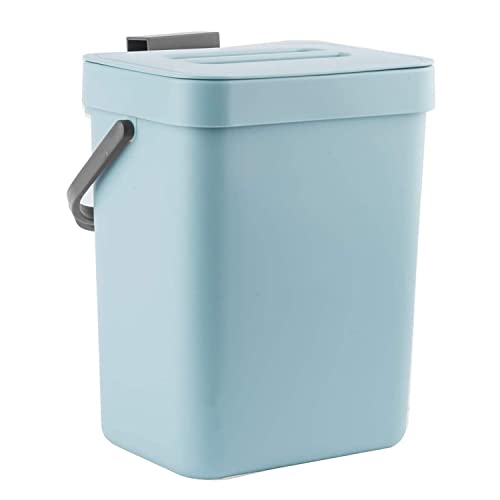
The LALASTAR 3L Compost Bin Kitchen is a small countertop food-scrap container for collecting fruit scraps, vegetable peelings, and similar kitchen waste. It is best suited to gardeners who want a convenient indoor holding bin before carrying scraps to an outdoor compost bin or other approved waste location.
Based on the listed features, the lidded container is designed to help block odors while scraps build up for several days. The enclosed format can also help keep waste contained and may reduce the chance of attracting flies, although results will depend on the type and age of the scraps and how the bin is maintained.
The bin measures 5.5 by 4 by 8 inches and holds 3 liters, or 0.8 gallons. Its compact size can fit on a countertop, under a sink, or in a pantry, while the handle provides a practical way to carry the container when it is full. The feature set also supports hanging from suitable cabinet doors, lockers, or drawers, plus wall mounting with the included adhesive-pad approach described in the product information.
For backyard gardeners, this bin can serve as an indoor collection point during meal preparation, helping keep kitchen scraps together until a trip to an outdoor compost area. Its small footprint also suits apartments, dorm rooms, RVs, cabins, and other spaces where a larger food-waste container would be inconvenient.
The main limitation is capacity. Three liters may be adequate for light kitchen use, but households producing more scraps may need to empty it frequently or consider one of the larger sizes listed by the brand. The product information does not describe ventilation, dishwasher care, liner compatibility, or the weight limit for adhesive mounting, so users should follow sensible cleaning and placement practices and avoid overloading a wall-mounted setup.
This container is a reasonable fit for beginners, small households, and gardeners seeking a compact way to collect kitchen scraps. Anyone needing higher capacity, specialized compost aeration, or a complete composting system should consider a different product or a larger dedicated compost solution.
Best For / Avoid If
Best for buyers prioritizing
- Lidded design helps contain kitchen scraps and may reduce unwanted odors and flies.
- Small footprint suits compact kitchens, apartments, RVs, cabins, and countertop use.
- Multiple placement options include countertop, cabinet-hanging, and adhesive-pad mounting.
Consider another option if
- The 3-liter capacity may fill quickly for households that generate a large amount of kitchen waste.
- Adhesive mounting may be less suitable for some wall or cabinet surfaces, and the product information does not specify surface limitations.
- It is a collection container rather than a complete composting system, so gardeners still need a separate composting destination.

Pros
- Space-saving design is well suited to raised beds, compact yards, and small-space gardens.
- Uses natural worm activity to turn organic scraps into nutrient-rich compost near the growing area.
- Ventilation and access openings support the airflow and worm movement needed for vermicomposting.
Cons
- The small form factor may be less suitable for households producing large amounts of food waste.
- Because it is an in-ground system, gardeners may need to choose an appropriate installation spot and prepare the surrounding soil.
- The product information does not specify capacity, included worms, or detailed setup instructions.
The TOP XIAN Inground Worm Composter is a mini underground bin for processing organic food scraps with the help of earthworms. Its compact form is intended for placement in garden beds or soil, making it a practical choice for beginners, older gardeners, and homeowners who want a smaller alternative to a freestanding compost bin.
The listed feature set focuses on natural decomposition close to the plants. Product information indicates that the system can transform organic waste into nutrient-rich compost in about two to three months, although actual results can vary with conditions such as moisture, temperature, worm activity, and the type of scraps added.
Its base openings are designed to provide worm access between the container and surrounding soil, while the perforated lid supports airflow. The twist-lock lid is intended to help deter animals, and the underground location may help reduce odors compared with exposed food waste. The listed dimensions are approximately 7.2 by 7.2 by 7.5 inches, with the product supplied as a two-pack.
This setup can fit well in a raised bed, vegetable plot, flower bed, or other small garden area where direct soil contact is available. Two units can also be positioned in separate beds, allowing a gardener to keep food-waste processing close to more than one growing space without dedicating room to a large compost enclosure.
The compact size also limits how much material each bin can handle, so it may be less suitable for large households or gardeners seeking high-volume composting. Gardeners should monitor the bin during use and keep the ventilation and access openings clear so airflow and worm movement are not obstructed. Overall, it is a space-conscious vermicomposting option for modest amounts of organic waste, provided the user has a suitable in-ground location and realistic expectations about capacity.
Best For / Avoid If
Best for buyers prioritizing
- Space-saving design is well suited to raised beds, compact yards, and small-space gardens.
- Uses natural worm activity to turn organic scraps into nutrient-rich compost near the growing area.
- Ventilation and access openings support the airflow and worm movement needed for vermicomposting.
Consider another option if
- The small form factor may be less suitable for households producing large amounts of food waste.
- Because it is an in-ground system, gardeners may need to choose an appropriate installation spot and prepare the surrounding soil.
- The product information does not specify capacity, included worms, or detailed setup instructions.
Best Compost Bin For Beginners buying guide
Choose the right type of bin
A stationary outdoor bin suits gardeners with yard waste and room for a ground-level container. The JupiterForce Garden Compost Bin 80 Gallon (300 L) provides a top lid, ventilation openings, and sliding bottom door. It has no base and is intended to sit directly on the ground.
A tumbler mixes material when rotated, so there is no need to turn a pile by hand. In-ground worm bins fit smaller garden spaces but rely on soil access and worms. Countertop caddies, including the Epica and LALASTAR models, collect scraps indoors; they do not replace an outdoor bin or a separate composting method.
Match capacity to waste volume
Capacity affects how often you need to empty a bin and how much yard material it can hold. The JupiterForce is listed at 80 gallons (300 L). The Compost Tumbler Bin Composter Dual Chamber 43 and VIVOSUN Outdoor Tumbling Composter Dual Rotating are listed at 43 gallons. Those larger containers make more sense for a household with regular leaves, grass clippings, and kitchen scraps than for someone producing only occasional scraps.
In-ground options are much smaller: TOP XIAN 2-Pack Inground Worm Composter is listed at 8 L per unit, while TOP XIAN Inground Worm Composter measures 7 × 7 × 7.4 inches. The published data does not list capacity for the smaller model. These are compact choices for a garden bed, not substitutes for an 80-gallon bin when handling substantial yard waste.
Consider aeration and mixing effort
Air supports aerobic decomposition. The JupiterForce has four vents on each side. Both listed tumblers have rotating designs intended to mix and aerate materials. The VIVOSUN description says its deep fins help break clumps during turning. A tumbler reduces manual pile turning, but you still need to rotate it and manage what goes into each batch.
In-ground worm bins use ventilation openings and depend on earthworms entering through openings at the base, according to the product descriptions. TOP XIAN 2-Pack Inground Worm Composter does not include earthworms. Do not assume a worm bin produces finished compost on a fixed schedule; the listed 2–3 month estimate is a product claim, not a guaranteed timeline.
Check loading and finished-compost access
Access design matters once material starts breaking down. JupiterForce loads from the top and removes material through a sliding bottom door. Tumblers use access doors; the dual-chamber designs allow one chamber to rest while the other receives fresh scraps. That separation helps avoid continually adding new waste to a batch that is already decomposing.
In-ground units have removable or twist-lock lids, but the published descriptions do not specify a separate harvest door. Expect to handle material in place rather than unload a full bin. Before buying, consider whether you can reach the unit comfortably and whether its opening fits your usual way of adding scraps.
Plan for placement and accessibility
Stationary bins need a suitable ground location; JupiterForce has no base and is intended for direct ground placement. Tumblers need space around their rotating body for turning and access. The published information does not give their assembled dimensions, so check current product details before choosing a tight patio or side-yard location.
Turning a tumbler avoids lifting and mixing a pile with a fork, but the loaded chamber still must rotate. In-ground units require digging a hole and reaching the lid. A kitchen caddy may be easier to access indoors, but it adds a transfer step. Choose the workflow that fits your mobility and garden layout rather than relying on a product’s “easy” label.
Understand odor, pests, and routine care
Lids and airflow can help manage a bin, but no published data supports a guarantee of odor-free or pest-proof operation. JupiterForce’s lid is described as helping prevent small animals from entering. TOP XIAN describes its underground placement and lid as minimizing odors or deterring wildlife. Treat these as manufacturer descriptions, not assured results.
Empty kitchen caddies regularly and clean them as directed. Epica and Utopia Kitchen use replaceable charcoal filters; Perfnique says its included filters typically last four to six months and recommends soapy water and a soft cloth. Outdoor-bin maintenance depends on keeping vents and doors usable and following the product instructions. Avoid adding materials unless your chosen composting method accepts them.
Compare upkeep and ongoing costs
A bin’s purchase price is only one part of ownership. Kitchen caddies with charcoal filters may need replacement filters; a worm bin may require sourcing worms, since they are not included with the larger TOP XIAN two-pack. Tumblers require turning, while a stationary bin involves handling material at its access door. Product prices can change, so compare current listings and include any replacement supplies in your decision.
The published information does not establish lifespan or warranty coverage for these products. Avoid treating material descriptions such as PP or stainless steel as proof of a specific service life. Follow cleaning, assembly, and placement directions supplied with the selected model.
Avoid common first-bin mistakes
Do not buy a small in-ground unit expecting it to process a season’s worth of leaves, or buy a large outdoor bin without room to access it. Do not confuse a kitchen caddy with a complete composting system. A caddy stores scraps temporarily; it needs a next destination, such as a suitable outdoor composter or local food-scrap program.
Also check what arrives in the package. TOP XIAN’s larger worm-bin two-pack does not include worms. JupiterForce does not include a base. Descriptions do not consistently specify assembled dimensions or every setup detail, so verify those points in current instructions before purchase.
Research methodology and trust
We screened the listed products for compost-related use, distinguishing outdoor composting systems from countertop containers that only hold food scraps before transfer. We compared stated volume, ventilation, turning method, loading and emptying access, placement, and cleaning needs. These criteria matter to beginners because they shape daily effort and whether a bin suits kitchen scraps, yard waste, or both.
This is research-based analysis, not physical testing. We did not install bins, measure decomposition, or independently verify manufacturer claims. The supplied review data lists 0 reviews for several products, so those listings do not provide enough owner feedback for a meaningful user-experience comparison. Available ratings and review counts should be checked again before purchase.
We update this guide during October 2026 using the published product information. Prices, stock, ratings, and specifications may change. Ranking emphasis favors practical fit: a clear composting function, usable capacity, manageable handling, and honest limits on what the listed features establish.
Frequently asked questions
What type of compost bin is easiest for a beginner?
That depends on the work you want to avoid. A tumbler mixes material when turned, while a stationary bin avoids rotating a chamber but may require more manual handling. A countertop caddy only collects scraps and needs a separate composting destination.
How large should my first compost bin be?
Base size on yard-waste volume and available space. The supplied outdoor options range from compact in-ground units to 43-gallon tumblers and an 80-gallon stationary bin. The smallest units suit limited space better than large volumes of leaves or clippings.
Can a countertop compost bin make finished compost?
The listed countertop products are scrap-collection caddies, not complete composting systems. Empty one into a suitable outdoor composter or another accepted food-scrap collection route. Check local program rules for accepted materials.
Do in-ground worm composters include worms?
The TOP XIAN 2-Pack Inground Worm Composter explicitly does not include earthworms. The other TOP XIAN description does not clearly state whether worms are included, so confirm package contents before buying.
How much maintenance does a compost bin need?
Maintenance varies by design. Tumblers need turning, countertop caddies need emptying and cleaning, and charcoal-filter models may need replacement filters. Follow the specific product instructions; published data does not establish a universal schedule for outdoor-bin upkeep.
Will a compost bin keep odors and animals away?
Lids, filters, ventilation, and in-ground placement are described as odor- or pest-management features, but they do not guarantee odor-free or animal-proof operation. Keep lids secured and clean caddies regularly. Follow local rules for compost placement where applicable.
Continue your garden research
Browse more practical guides in Compost, Soil & Mulch.
For product comparisons, see Best Compost Bin For Small Backyard: Reviews and Buying Guide.
See how Dove Creek Gardens researches and compares products.