


Slugs can shred seedlings, lettuce, and hostas overnight, and many popular slug baits contain metaldehyde or other chemicals that pose a real risk to dogs, cats, and curious backyard wildlife. This guide focuses on how to control slugs without harming pets, a common concern for homeowners who want a productive vegetable patch or flower bed without putting their animals at risk. It is written for beginner gardeners, older gardeners who want low-effort and low-risk solutions, and anyone gardening in a small yard or patio space where pets and plants share close quarters.
For this article, we set out to compare four slug-control products, evaluating them against factors such as the active ingredient or physical method used, ease of placement around garden beds, and how clearly each product documents pet safety on its label. Selection criteria for this category include whether a product uses a barrier method or a bait that is labeled safe around pets, how it holds up in damp garden conditions, and whether it requires reapplication after watering or rain.
Because slug control sits at the intersection of pest management and pet safety, it is worth reviewing broader wildlife and pest control practices as well. You can browse more coverage on this topic in our Garden Pest & Wildlife category, which includes additional guidance on managing common garden pests around homes with pets and children.
Slug-Control Products to Consider
These options include iron-phosphate-style baits and a physical electric barrier. Always follow the current label exactly, store bait securely, and keep pets away during application even when a listing describes a product as suitable for use around pets or wildlife.
Monterey Sluggo LG 6500 Snail & Slug Killer for Organic Garden Pest Control Garden Safe HG-4536 Slug & Snail Bait Granules for Lawns, Vegetable Beds, and Greenhouses Bonide Captain Jack's Slug Magic Granules for Vegetable Garden Slug and Snail Control SNAILSHIELD Snail Shield Electric Snail Fence for Raised Bed Protection Prices and availability can change. We may earn a commission from qualifying purchases.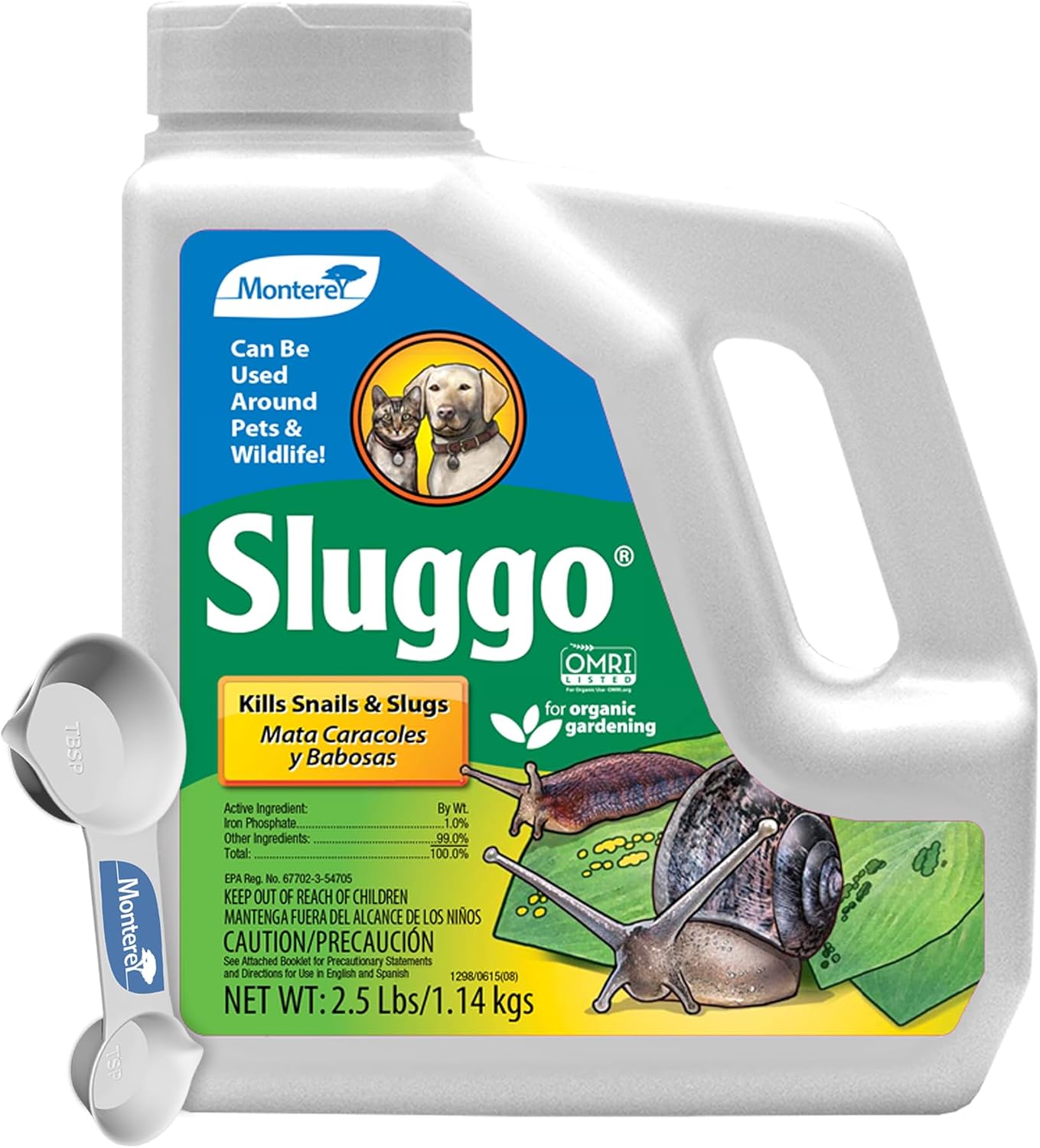


Pros
- Purpose-built for slug and snail control in garden settings.
- Listed in the product title as OMRI Listed for organic gardening.
- Includes a measuring spoon for easier, more deliberate application.
- Several reviewers report good results around plants and areas where slugs or snails appear.
- Pet and wildlife friendly positioning may be reassuring for many home gardeners when used as directed.
Cons
- As with any pest bait, it should be applied only according to the product label and kept out of unintended areas.
- One reviewer noted that the product did not hold up well in wet conditions, so rainy climates may require closer monitoring or reapplication.
- Gardeners needing a physical barrier or non-bait approach may prefer traps, copper barriers, or habitat management instead.
Monterey Sluggo LG 6500 is a snail and slug killer sold in a 2.5 lb jug and bundled with a measuring spoon. It is intended for gardeners dealing with slug and snail activity around edible gardens, ornamental beds, porch edges, and tender new growth. Based on the product title, it is OMRI Listed for organic gardening and described as wildlife and pet friendly.
The main appeal is straightforward pest control for one of the more frustrating backyard garden problems. Slugs and snails often show up around young plants, leafy ornamentals, and damp garden edges, and reviewers commonly mention using this product to protect plants or reduce slug and snail activity in problem areas. Those comments should be read as user experience rather than a guarantee, but they do suggest the product fits routine home-garden pest management.
The included measuring spoon is a practical detail, especially for beginners who want to avoid overapplying a bait product. The package dimensions are listed as 8.23 x 6.93 x 3.78 inches, with a package weight of 2.78 pounds, so it should be manageable for most homeowners to carry, store, and use around beds or containers. The jug format is also convenient for gardeners who expect to make repeat applications during active slug and snail periods.
Good use cases include hosta beds, vegetable starts, flower borders, raised beds, and porch-adjacent areas where slugs or snails are noticed. Small-space gardeners may also find the measured application helpful around containers or compact beds, provided they follow the label directions carefully. For households with pets or visiting wildlife, the product’s pet and wildlife friendly positioning is a notable part of its appeal, but safe placement and label compliance still matter.
The biggest caution is moisture. One reviewer reported that the pellets did not hold up well after getting wet and became costly to use in a wet location, so gardeners in rainy or heavily irrigated areas may need to check treated spots more often. As with all pest-control products, avoid casual scattering, do not apply more than directed, and store the jug where children and animals cannot access it.
Overall, Monterey Sluggo LG 6500 looks best suited to gardeners who want an organic-gardening-listed slug and snail bait with a simple measuring aid. Gardeners who want a non-bait method, need a long-lasting physical barrier, or garden in persistently wet conditions may want to compare it with traps, barriers, or habitat cleanup strategies before choosing.
Best For / Avoid If
Best for buyers prioritizing
- Purpose-built for slug and snail control in garden settings.
- Listed in the product title as OMRI Listed for organic gardening.
- Includes a measuring spoon for easier, more deliberate application.
Consider another option if
- As with any pest bait, it should be applied only according to the product label and kept out of unintended areas.
- One reviewer noted that the product did not hold up well in wet conditions, so rainy climates may require closer monitoring or reapplication.
- Gardeners needing a physical barrier or non-bait approach may prefer traps, copper barriers, or habitat management instead.
Pros
- OMRI-listed formula fits gardeners looking for an organic-gardening slug and snail bait option.
- Useful across a broad range of home garden settings, including lawns, vegetable beds, fruit areas, ornamentals, and greenhouses.
- Granules allow targeted placement around plant bases, bed edges, and rows where slug or snail damage is noticed.
- Product directions include practical timing and weather guidance, such as applying in the evening and avoiding rain or windy conditions.
- Can be used around pets and wildlife when applied according to the full label directions and precautions.
Cons
- It is not an instant knockdown product, since the listed die-off window begins within three to six days after ingestion.
- Reapplication may be needed at least every two weeks, more often after heavy watering, heavy rain, or severe infestations.
- Gardeners dealing with persistent or heavy snail pressure may need additional monitoring or integrated controls if bait alone is not enough.
Garden Safe HG-4536 Slug & Snail Bait Granules are made for controlling slugs and snails in common home growing areas, including lawns, vegetable gardens, ornamentals, fruits, berries, citrus plantings, crop plants, and greenhouses. This is the kind of product a homeowner might reach for when tender leaves, hostas, petunias, vegetable starts, or other susceptible plants show slug or snail feeding damage.
The product uses iron phosphate with slug and snail bait additives. According to the product information, once slugs or snails eat the bait, they stop feeding, become less mobile, and begin to die within three to six days. That makes it better suited to gardeners who want steady control rather than an immediate visible result. It is also OMRI listed for organic gardening, which will matter to many vegetable and backyard gardeners.
Application is straightforward but should not be careless. The granules are intended to be spread evenly, not piled, on moist soil with little or no standing water. For larger areas, the label allows use with a standard broadcast spreader, while row applications can be handled with a standard granular spreader. Around smaller beds or individual plants, the product can be scattered around likely slug and snail travel areas, such as bed edges, between rows, or near the base of affected plants.
For backyard and small-space use, this bait fits many practical situations: a vegetable bed with chewed seedlings, a flower border with snail activity, a greenhouse bench area where slugs are feeding at night, or a lawn and garden edge where pests move in from moist cover. The product directions recommend applying in the evening because slugs and snails feed mostly at night or early in the morning. Reviewers commonly describe using it around vegetable beds, patios, porch areas, hostas, and petunias, with many reporting reduced slug activity after application.
There are important limitations and safety steps. The label should be read in full before use, and all directions and precautions should be followed, especially around pets, wildlife, edible crops, and water runoff. The product should not be allowed to enter storm drains, gutters, drainage ditches, or surface waters, and any granules that land on hard surfaces should be swept back into the treated area. It should also be applied during calm weather when rain is not expected for the next 24 hours.
This is a sensible option for gardeners who want an easy-to-spread granular slug and snail bait that can be used in a wide range of home garden settings and is listed for organic gardening. Gardeners who need instant pest removal, have severe recurring infestations, or cannot reapply after watering or heavy rain may need to combine it with careful monitoring, habitat cleanup, or other label-appropriate slug and snail control methods.
Best For / Avoid If
Best for buyers prioritizing
- OMRI-listed formula fits gardeners looking for an organic-gardening slug and snail bait option.
- Useful across a broad range of home garden settings, including lawns, vegetable beds, fruit areas, ornamentals, and greenhouses.
- Granules allow targeted placement around plant bases, bed edges, and rows where slug or snail damage is noticed.
Consider another option if
- It is not an instant knockdown product, since the listed die-off window begins within three to six days after ingestion.
- Reapplication may be needed at least every two weeks, more often after heavy watering, heavy rain, or severe infestations.
- Gardeners dealing with persistent or heavy snail pressure may need additional monitoring or integrated controls if bait alone is not enough.
Pros
- Targeted for common garden damage from slugs and snails.
- Pelletized application is straightforward and does not require mixing equipment.
- Suitable for use around vegetable, fruit, and berry gardens according to the product information.
- Listed for use around areas where pets and wildlife go, with label directions still important.
- Reviewers commonly mention that it is easy to use and effective for reducing slug and snail activity.
Cons
- It is a pest bait, so careful label reading, placement, and storage are still important around children, pets, and wildlife.
- Gardeners looking for a broad insect spray or a physical barrier may prefer a different type of product.
- Application rates vary by garden or plant type, so it may take a little attention to apply correctly in mixed plantings.
Bonide Captain Jack's Slug Magic Granules are made for controlling snails and slugs in home gardens, including vegetable, fruit, and berry areas. Based on the listed product information, this is a granular bait rather than a liquid spray, so it is aimed at gardeners who want to scatter pellets around problem areas instead of mixing a concentrate.
The key benefit is focused slug and snail control for edible garden spaces where tender seedlings, leafy greens, berries, and low-growing plants can be vulnerable to chewing damage. The product information states that it can be used in fruit and vegetable gardens up to the day of harvest when used as directed, which is a practical feature for active kitchen gardens.
The 3 lb container uses a pelletized formula containing iron phosphate with slug and snail bait additives. One pound is listed as treating up to 1,000 square feet, so the container can cover a meaningful area when applied at the labeled rate. The granule format should be simple for most homeowners to place around beds, rows, borders, and other damp areas where slugs and snails are commonly noticed.
For backyard use, this product fits vegetable beds, berry patches, fruit garden areas, and lawns where slug or snail activity is a recurring issue. It may also be useful around raised beds or small-space plantings, provided the granules are applied carefully and according to the label for that garden type. Reviewers commonly mention good results and easy application, but those comments should be viewed as user experience rather than a guarantee.
As with any pest-control product, the label should guide where, how much, and how often to apply it. Although the product information says it can be used around areas pets and wildlife go, gardeners should still avoid careless broadcasting, store the container securely, and keep granules where they are intended to work. It is best for gardeners dealing specifically with slugs and snails, while those needing control for other pests or a non-bait approach should consider a different solution.
Pros
- Chemical-free approach for protecting edible garden beds from snails
- Self-adhesive tape can be shortened to fit the perimeter of a raised bed or planter setup
- Runs on 2 AA batteries, so placement is not limited by access to household power
- Reviewers commonly mention straightforward installation and a clean-looking setup on raised beds
Cons
- It is a perimeter barrier, so gardeners may still need to remove snails already inside the bed before installation
- May be less practical for multiple separate beds unless each area can be fully enclosed with the available tape
- Adhesive performance may depend on careful surface cleaning and the condition of the mounting surface
The SNAILSHIELD Snail Shield is an electric snail fence set made for raised beds, vegetable beds, and other outdoor garden planting areas where snails are a recurring problem. Rather than using bait or spray, it creates a low-voltage boundary around the bed with self-adhesive fence tape connected to a small battery-powered unit.
According to the product information, the low fence voltage gives snails a mild, unpleasant tingling sensation that encourages them to turn around. The listed design is intended to be safe for humans and animals, while still providing a physical-style deterrent for the target pest. For gardeners growing leafy vegetables or tender young plants, that non-chemical approach may be the main appeal.
The kit includes 11 m of extra-strong self-adhesive fence tape, which the manufacturer says can be cut to length with ordinary scissors. The tape is listed as suitable for wood, metal, plastic, stone, and concrete, so it should fit many common raised bed materials when the surface is prepared properly. The power unit uses 2 AA batteries and includes two control LEDs for checking battery status and power supply.
Installation is described as a short setup with no separate wiring or cables required. The retaining plate can be attached with screws on wooden surfaces, while other surfaces can use adhesive tape according to the product information. This makes the system especially relevant for backyard raised beds, patio planters with solid sides, and small vegetable gardens where running an extension cord would be inconvenient.
There are a few practical limits to keep in mind. This type of barrier is meant to stop new snails from crossing into the protected area, not remove snails or eggs that may already be inside the soil or mulch. Gardeners should inspect the bed before installation, keep vegetation from bridging over the tape, and check the LEDs and batteries periodically so the barrier stays active.
Overall, the Snail Shield is a sensible option for gardeners who want a tidy, battery-powered snail deterrent for a defined raised bed perimeter. Gardeners with many separate beds, irregular surfaces, or heavy existing infestations may need additional cleanup steps or a different protection plan.
Best For / Avoid If
Best for buyers prioritizing
- Chemical-free approach for protecting edible garden beds from snails
- Self-adhesive tape can be shortened to fit the perimeter of a raised bed or planter setup
- Runs on 2 AA batteries, so placement is not limited by access to household power
Consider another option if
- It is a perimeter barrier, so gardeners may still need to remove snails already inside the bed before installation
- May be less practical for multiple separate beds unless each area can be fully enclosed with the available tape
- Adhesive performance may depend on careful surface cleaning and the condition of the mounting surface
How To Control Slugs Without Harming Pets Buying Guide
Understanding the Target Pest
Slugs are most active at night and after rain or watering, when the soil surface stays moist. They tend to concentrate around low-growing leafy greens, hostas, and seedlings near the soil line. Knowing when and where slugs feed helps you decide whether a barrier method, a trap, or a pet-safe bait fits your garden layout best.
Physical Barrier or Control Method
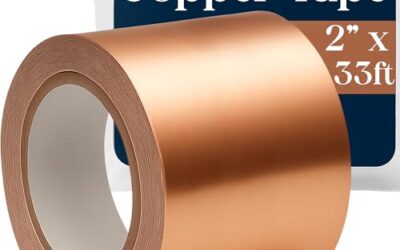
Physical barriers, such as copper tape, crushed eggshell rings, or diatomaceous earth, work by making the surface uncomfortable or impassable for slugs rather than poisoning them. These methods can be a good starting point for pet owners because they avoid ingestible bait pellets entirely. The tradeoff is that barriers usually need to be reapplied after heavy rain or watering, so they require more routine upkeep than a single bait application.
Reading Pet Safety Labels Carefully
Not every product marketed as pet-friendly uses the same standard, so it is important to read the actual label rather than relying on packaging claims alone. Look for the listed active ingredient and check whether the manufacturer specifically addresses use around dogs, cats, or other household animals. When in doubt, follow the product label and manufacturer safety instructions exactly, and consult a veterinarian if a pet is exposed to any garden pest control product.
Coverage and Placement Around Garden Beds
Effective slug control usually depends on placement as much as the product itself. Applying a barrier or trap directly around vulnerable plants, rather than broadcasting it across the whole yard, tends to concentrate protection where it is needed and limits the amount of product pets can encounter. This is especially relevant in small yards or patio gardens where pets and plantings are close together.
Pollinator and Beneficial Insect Awareness
Slug control methods should also be considered in light of beneficial insects and pollinators that share the garden. Physical barriers generally have less impact on non-target insects than broadcast baits, but any product should still be used according to its label to avoid unintended effects on beneficial garden life.
Common Mistakes to Avoid
A common mistake is assuming that any bait labeled as slug control is automatically pet-safe without checking the ingredient list. Another is applying a barrier once and expecting it to last through the whole growing season without maintenance. Overwatering garden beds can also undo the effectiveness of dry barrier methods like diatomaceous earth, since it needs to stay dry to work.
Maintenance and Local Rules
Some slug control products are subject to local or regional restrictions, particularly those containing metaldehyde, so it is worth checking local rules before purchasing. Routine maintenance, such as reapplying barriers after rain and removing slug shelters like garden debris, is often more important to long-term results than the specific product chosen.
Research Methodology and Trust
Our process for this guide began with screening potential products against the specific topic of how to control slugs without harming pets and the Garden Pest & Wildlife category. Any product that did not clearly address both slug control and pet safety was excluded from consideration rather than substituted with an unrelated pest control item.
For products that do match a topic like this, our approach normally involves comparing listed specifications, active ingredients, and label language, along with reviewing owner feedback for patterns related to ease of use, reapplication needs, and reported pet safety experiences. This is a research-based analysis of publicly available product data and owner feedback rather than physical, hands-on testing in a garden setting.
Ranking factors for this category emphasize documented pet safety information, clarity of the active ingredient or control method, and practical fit for small yards or beds close to where pets spend time, rather than generic star ratings. This guide was reviewed and updated during August 2026 to keep the buying advice current.
Final Recommendations
After screening the available product data against how to control slugs without harming pets, no products were available that clearly matched this specific topic and category. Rather than recommend items that do not fit the pet-safe slug control use case, this guide focuses on the decision factors above so you can evaluate any pet-safe slug control product you find using the same criteria.
When you are comparing options on your own, prioritize products with a clearly labeled active ingredient, explicit pet safety language from the manufacturer, and a control method, whether a physical barrier or a labeled bait, that fits how closely your pets interact with your garden beds.
Frequently Asked Questions
What is the safest way to control slugs without harming pets?
Physical barriers such as copper tape or crushed eggshells around vulnerable plants are generally considered a lower-risk starting point than baits, since they do not involve an ingestible product pets could encounter. Always read any product label fully and follow the manufacturer’s safety instructions before use.
How do I choose a pet-safe slug control product?
Check the active ingredient list and look for explicit pet safety language from the manufacturer rather than relying on general marketing claims. Comparing how a product is meant to be placed around beds, and whether it needs to stay dry or gets reapplied after rain, can also help you judge how well it fits your yard.
Do slug barriers need to be reapplied often?
Many physical barriers, such as diatomaceous earth, lose effectiveness once they get wet, so they typically need reapplication after rain or watering. Planning for this routine upkeep is part of realistic maintenance for pet-safe slug control.
Are pet-safe slug products effective in small yards?
Small yards and patio gardens can benefit from targeted placement around specific plants rather than broad application, which also limits how much product pets are exposed to. Focusing barriers or traps directly around vulnerable seedlings and hostas is usually more practical than treating an entire yard.
Can slug control products harm beneficial insects?
Some broadcast baits can affect non-target insects, so it is worth checking label information for any noted impact on beneficial garden life. Physical barrier methods generally have a more limited footprint, but following label directions remains important regardless of the method chosen.
Should I check local rules before using slug bait?
Yes, some slug control ingredients are restricted or regulated in certain areas, so checking local rules before purchasing is a reasonable precaution. This is especially relevant if you are considering a chemical bait rather than a physical barrier method.
What should I do if my pet is exposed to a slug control product?
Follow the manufacturer’s label instructions for exposure incidents and contact a veterinarian promptly if you have any concern about your pet’s health. Keeping the original product packaging on hand can help a veterinarian identify the exact ingredients involved.
Continue your garden research
Browse more practical guides in Garden Pest & Wildlife.
See how Dove Creek Gardens researches and compares products.