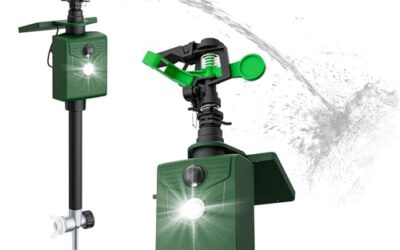



Unwanted deer, rabbits, squirrels, raccoons, cats, and other animals can damage flowers, vegetables, lawns, and freshly planted areas. A solar ultrasonic repeller may offer a convenient, chemical-free way to add motion-activated sound and light deterrence around a garden, although results can vary by animal, placement, and local conditions.
This guide compares 10 models priced from 18.99–59.99 from Broox, TFKK, Lycxbfjia, G-Jyuncyou, OTSEZE, Peepst, PHIMINNEX, Thcritter. We looked at the listed detection angles and ranges, ultrasonic and strobe-light features, operating modes, charging options, weather-resistance ratings, installation guidance, pack size, and suitability for home gardens and smaller outdoor spaces. For broader deer-control ideas, see our guide to deer repellents for vegetable gardens.
TFKK 2-Pack Solar Animal Repeller with Motion Detection for Garden Wildlife Deterrence Broox 2026 Solar Ultrasonic Animal Repellent with Motion Detection for Gardens and Yards OTSEZE 360° Solar Ultrasonic Animal Repeller for Motion-Activated Yard Protection Peepst Solar Motion Animal Repeller, 2-Pack Outdoor Garden Deterrent for Cats, Deer, Dogs and Squirrels Prices and availability can change. We may earn a commission from qualifying purchases.

Pros
- Combines motion detection, ultrasonic sound, and strobe lighting rather than relying on a single deterrent method.
- Solar-powered design can simplify placement where an electrical outlet is not convenient.
- Two units allow gardeners to address more than one likely animal access point.
Cons
- Detection distance may vary with animal size, so placement and coverage may require adjustment.
- The solar panel needs direct sunlight for initial charging and ongoing operation.
- Gardeners who need a physical barrier or a species-specific control method may prefer a different solution.
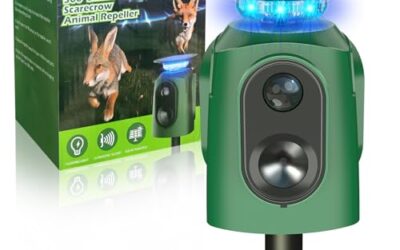
The TFKK two-pack is a solar-powered outdoor animal repeller designed to discourage deer, raccoons, squirrels, rabbits, foxes, dogs, cats, rats, skunks, and other unwanted visitors. It is intended for gardens, lawns, farms, orchards, courtyards, and similar areas where motion-activated wildlife deterrence may be useful.
Based on the listed specifications, each unit uses a PIR motion sensor with a 120-degree viewing angle and a detection range of approximately 25 to 30 feet, depending on animal size. When movement is detected, the device activates ultrasonic sound and flashing LED strobe lights, giving gardeners two non-contact deterrent methods.
The units measure 3 x 2 x 10 inches and are finished in green, which may help them blend into outdoor planting areas. Initial setup calls for charging the solar panel in direct sunlight for two days, then placing the device in a sunny location about 9 to 10 inches above ground. Positioning it near areas where animals are commonly seen should help make better use of the detection zone.
In a backyard, one unit could be placed near a garden edge while the second covers a separate lawn, courtyard, or orchard approach. The compact size may also suit smaller yards and narrow planting borders, although the listed detection range and 120-degree angle should be considered when deciding how far apart to place the two devices.
The product information lists ABS construction and an IP65 weather-resistant rating for outdoor use. Solar performance will depend on access to sunlight, and detection distance can vary by animal size, so this device should be viewed as a deterrent rather than a guaranteed wildlife-control solution. Gardeners needing dependable exclusion may want to combine it with appropriate physical barriers and careful placement.
Best For / Avoid If
Best for buyers prioritizing
- Combines motion detection, ultrasonic sound, and strobe lighting rather than relying on a single deterrent method.
- Solar-powered design can simplify placement where an electrical outlet is not convenient.
- Two units allow gardeners to address more than one likely animal access point.
Consider another option if
- Detection distance may vary with animal size, so placement and coverage may require adjustment.
- The solar panel needs direct sunlight for initial charging and ongoing operation.
- Gardeners who need a physical barrier or a species-specific control method may prefer a different solution.
Pros
- Uses a chemical-free approach to discourage unwanted animal visits.
- Solar charging and USB charging provide flexible outdoor power options.
- Motion detection and adjustable frequency modes make it more adaptable than a continuously active repeller.
Cons
- Effectiveness may vary because it depends on the animal detecting the listed 13.5 kHz to 45.5 kHz ultrasonic frequencies.
- It is not suitable for snakes, which cannot detect ultrasonic sound according to the product information.
- The stated 20 to 25-foot detection range may require careful placement or more than one unit for larger areas.
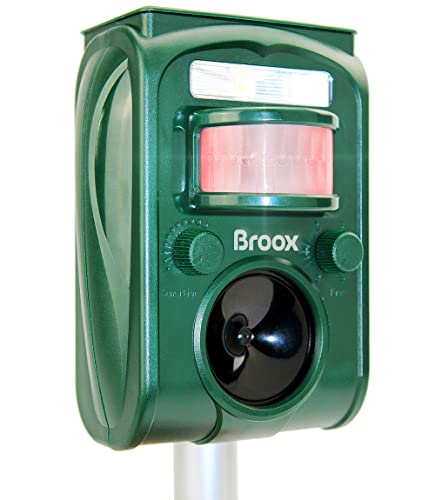
The Broox 2026 Solar Animal Repellent is designed for outdoor garden and yard use, where motion-activated sound and light can discourage unwanted visits from animals such as cats, squirrels, deer, dogs, raccoons, skunks, rabbits, and rodents. It is a practical option for homeowners who want a chemical-free deterrent rather than a trap or spray.
When its motion detector senses movement, the unit can trigger ultrasonic sound, an alarm, and flashing LED light. The listed frequency range is 13.5 kHz to 45.5 kHz, and five frequency modes provide some flexibility for different animal targets. These features may help protect specific areas such as a vegetable bed, fruiting plants, or a frequently visited section of lawn, but the product does not guarantee that every animal will be deterred.
The device measures approximately 4.33 inches on each listed dimension and weighs about 0.44 pounds. It can be placed in the ground or mounted on a wall, depending on the layout of the protected area. A 110-degree infrared sensor detects movement from about 20 to 25 feet, with the actual range depending on the size of the animal. Placement should give the sensor a clear view of likely entry paths.
Solar charging supports installation in an outdoor location, and the included USB cord provides an alternative charging method. The product information describes the housing as weatherproof, UV-protected, and suitable for normal rain, snow, and sun exposure. Its compact form may work well beside raised beds, along a patio edge, near a garden gate, or around a small backyard growing area.
Gardeners should remember that ultrasonic devices only work for animals capable of hearing the emitted frequencies, and the supplied information specifically notes that snakes will not be affected. The unit may also require repositioning if animals approach outside the sensor's range or from an obstructed direction. Overall, it is best viewed as one part of a wildlife-management plan, potentially combined with suitable physical barriers and attentive garden maintenance.
Best For / Avoid If
Best for buyers prioritizing
- Uses a chemical-free approach to discourage unwanted animal visits.
- Solar charging and USB charging provide flexible outdoor power options.
- Motion detection and adjustable frequency modes make it more adaptable than a continuously active repeller.
Consider another option if
- Effectiveness may vary because it depends on the animal detecting the listed 13.5 kHz to 45.5 kHz ultrasonic frequencies.
- It is not suitable for snakes, which cannot detect ultrasonic sound according to the product information.
- The stated 20 to 25-foot detection range may require careful placement or more than one unit for larger areas.
Pros
- Combines motion detection, ultrasonic output, flashing lights, and an optional alarm mode in one unit.
- Solar-powered design can reduce the need for routine battery charging in suitable outdoor conditions.
- Adjustable controls and multiple modes provide more flexibility than a single-output animal deterrent.
Cons
- Ultrasonic deterrents may be less suitable for gardeners who need a guaranteed solution or a physical barrier against persistent wildlife.
- The flashing-light and alarm settings could be less appropriate near seating areas, neighboring homes, or noise-sensitive spaces.
- The supplied information does not specify actual battery runtime or how performance changes during extended periods of limited sunlight.
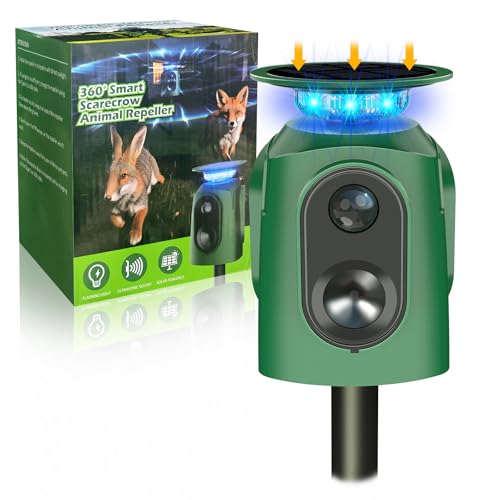
The OTSEZE 360° solar ultrasonic animal repeller is designed for homeowners trying to discourage cats, dogs, rabbits, deer, squirrels, skunks, raccoons, and other animals from entering garden, lawn, patio, farm, or campsite areas. Its motion-activated approach makes it a reasonable fit for targeted problem spots where a gardener wants a humane deterrent rather than a trap or chemical treatment.
Its main benefit is the combination of three-sided infrared sensing, adjustable ultrasonic output, flashing lights, and an alarm option. The product information lists movement detection up to 26 to 30 feet and five modes, including several ultrasonic frequency ranges, flashing patterns, and a continuous cycle. These choices may help gardeners adjust the response to different situations, although the supplied data does not guarantee results for any particular animal.
The unit includes a solar panel and a 2200mAh lithium battery, plus a USB cable for backup charging. A sensitivity control adjusts the detection distance, and a separate frequency knob fine-tunes the ultrasonic output. The listed installation guidance places the repeller approximately 9 to 10 inches above the ground, and the product information says it should be assembled before placement in the selected problem area.
For backyard use, one unit could be positioned near a garden edge, lawn boundary, patio, or other access point where animal movement is a recurring concern. The listed 360° sensing design may be useful in open areas, while the green color is suited to common lawn and garden settings. In smaller spaces, placement should account for nearby people, pets, and areas where flashing lights or alarm sounds may be disruptive.
The IP65 rating is listed for protection against rain, snow, dust, and outdoor temperature conditions, but regular inspection and cleaning of the solar panel can still help maintain charging potential. This type of product should be viewed as one part of a wildlife-management approach, not a guaranteed replacement for fencing or other physical barriers. It is a good option for gardeners who want adjustable, solar-powered deterrence, while those needing dependable exclusion or confirmed animal-specific performance may prefer a physical barrier or a different control method.
Best For / Avoid If
Best for buyers prioritizing
- Combines motion detection, ultrasonic output, flashing lights, and an optional alarm mode in one unit.
- Solar-powered design can reduce the need for routine battery charging in suitable outdoor conditions.
- Adjustable controls and multiple modes provide more flexibility than a single-output animal deterrent.
Consider another option if
- Ultrasonic deterrents may be less suitable for gardeners who need a guaranteed solution or a physical barrier against persistent wildlife.
- The flashing-light and alarm settings could be less appropriate near seating areas, neighboring homes, or noise-sensitive spaces.
- The supplied information does not specify actual battery runtime or how performance changes during extended periods of limited sunlight.
Pros
- Cord-free solar design can simplify placement where direct sunlight is available.
- Motion detection, ultrasonic output, and LED flashes combine several deterrent features in one device.
- Dual installation options provide flexibility for ground-level or wall-mounted use.
Cons
- The product information does not state a coverage area, so placement and the number of units needed may require trial and adjustment.
- Solar performance can depend on available sunlight, and shaded locations may be less suitable.
- Ultrasonic and flashing-light deterrents may not work equally well for every animal or situation, so physical barriers or other methods may still be needed.
The Peepst Solar Animal Repeller is a two-pack outdoor wildlife deterrent intended to discourage cats, deer, dogs, raccoons, and squirrels from entering garden and yard areas. It is a practical fit for homeowners and gardeners who want a non-contact device that can be positioned around lawns, flower beds, patios, farms, or other outdoor spaces.
Based on the listed specifications, the unit combines a 120-degree PIR motion sensor with ultrasonic waves and bright LED flashes. These features are designed to respond when movement is detected, which may help make selected areas less inviting to unwanted animals without relying on a physical trap or direct contact.
The solar panel is intended to recharge the device without extra power cords or frequent battery replacement. The device offers continuous and motion-triggered modes, while the included installation options support either ground-stake placement or wall mounting. Its listed dimensions are 5 x 5 x 5 inches, and the product information identifies the housing as IP44 and suitable for outdoor exposure to rain, snow, and temperature changes.
In a backyard, a gardener could place the two units near separate garden edges, lawn sections, or patio areas where animal activity is a concern. The two-pack may also be useful for covering different access points, but no coverage distance is provided, so exact placement will depend on the space and observed animal movement.
Solar placement should provide sufficient sunlight, and shaded areas may reduce charging effectiveness. Gardeners should also avoid assuming that the device will deter every animal, since results can vary and the listed information does not provide a coverage guarantee. This is a reasonable option for trying a solar, motion-activated deterrent, while gardeners needing a defined coverage range or a more certain physical exclusion method should consider a different solution or use additional barriers.
Best For / Avoid If
Best for buyers prioritizing
- Cord-free solar design can simplify placement where direct sunlight is available.
- Motion detection, ultrasonic output, and LED flashes combine several deterrent features in one device.
- Dual installation options provide flexibility for ground-level or wall-mounted use.
Consider another option if
- The product information does not state a coverage area, so placement and the number of units needed may require trial and adjustment.
- Solar performance can depend on available sunlight, and shaded locations may be less suitable.
- Ultrasonic and flashing-light deterrents may not work equally well for every animal or situation, so physical barriers or other methods may still be needed.

Pros
- Combines motion sensing, ultrasonic output, and a flashing light in one compact deterrent.
- Offers adjustable controls that may help users fine-tune detection and frequency for different yard situations.
- Dual charging options and IP65 weather resistance support convenient seasonal outdoor use.
Cons
- Ultrasonic deterrents may be less suitable when wildlife is highly persistent or when a guaranteed physical exclusion method is needed.
- The unit needs a position with adequate sunlight for solar charging, and the stated detection distance can vary with placement and surroundings.
- A flashing light or ultrasonic output could be unsuitable in areas with light-sensitive pets or nearby animals that should not be disturbed.
The OTSEZE Solar Animal Repellent is an outdoor wildlife deterrent designed for gardens, lawns, patios, farms, and garages. It uses motion detection to trigger ultrasonic sound and a flashing light when movement is detected, making it a practical option for homeowners who want to discourage common yard visitors without manually monitoring the area.
Based on the listed specifications, the 110-degree PIR sensor detects movement from approximately 25 to 30 feet. A 30-second ultrasonic and strobe cycle then activates, giving the unit a targeted response rather than relying only on constant operation. The listed animal targets include cats, dogs, rabbits, squirrels, raccoons, skunks, deer, and other animals.
The unit measures 3 by 3 by 6 inches and includes ground stakes for placement in soil. It can also be installed on a wall or fence, with the product information recommending positioning it about 9 to 10 inches above the ground. Sensitivity and frequency controls, along with five selectable modes, allow users to adjust operation for different locations and conditions.
In a backyard, it could be positioned near a vegetable garden edge, lawn border, patio, or area where animals regularly pass. The solar and USB-C charging design provides two power options, while the IP65-rated construction is intended to withstand rain, snow, heat, and other outdoor weather. Placement should still provide adequate sunlight and a clear view of the area being monitored.
This product is a deterrent, not a guaranteed wildlife-control solution. Results may vary depending on the animal, vegetation, obstacles, and surrounding conditions. Gardeners should monitor whether pets or non-target animals react to the sound or flashing light, keep the device securely positioned, and consider physical barriers when persistent wildlife continues to enter the area.
Best For / Avoid If
Best for buyers prioritizing
- Combines motion sensing, ultrasonic output, and a flashing light in one compact deterrent.
- Offers adjustable controls that may help users fine-tune detection and frequency for different yard situations.
- Dual charging options and IP65 weather resistance support convenient seasonal outdoor use.
Consider another option if
- Ultrasonic deterrents may be less suitable when wildlife is highly persistent or when a guaranteed physical exclusion method is needed.
- The unit needs a position with adequate sunlight for solar charging, and the stated detection distance can vary with placement and surroundings.
- A flashing light or ultrasonic output could be unsuitable in areas with light-sensitive pets or nearby animals that should not be disturbed.

Pros
- Combines PIR motion sensing with ultrasonic output and flashing light.
- Solar-powered design can reduce routine battery maintenance.
- Suitable for several listed animal targets, including deer, rabbits, squirrels, raccoons, cats, and dogs.
- Four units provide more placement flexibility than a single device.
Cons
- Each unit needs direct sunlight, and the instructions call for about two days of initial charging before first use.
- The stated detection distance is limited to approximately 25 to 30 feet and varies with animal size.
- Gardeners may need to adjust placement because deterrent response can vary by animal and site conditions.
The Thcritter Solar Ultrasonic Animal Repeller is a four-pack of outdoor motion-activated deterrents intended to help discourage unwanted wildlife and roaming animals around gardens, lawns, yards, orchards, and other living spaces. It is a practical option for homeowners who prefer a non-toxic physical deterrent rather than traps or chemical products.
When the PIR sensor detects movement, the unit activates ultrasonic signals and bright LED flashes. The product information lists deer, squirrels, cats, dogs, snakes, moles, gophers, chipmunks, skunks, raccoons, and rabbits among the intended targets. Because the system is motion activated, it is designed to remain in standby until movement occurs instead of operating continuously.
Setup involves switching on the unit, allowing the solar panel to charge in direct sunlight for about two days, assembling the device, and inserting it into the desired outdoor location. The listed 110-degree sensor detects movement from approximately 25 to 30 feet, depending on animal size, and the recommended installation height is about 9 to 10 inches above ground. The blue light indicates charging status, while the red indicator, ultrasonic signal, and white flashing light operate during activation.
The four-pack may be useful for positioning units along several garden borders, near lawn edges, around an orchard, or at common animal approach points. Placement should prioritize both direct sunlight and a clear view of the area to be protected. The separate units can also help homeowners address more than one outdoor zone without relying on a single sensor location.
The main limitations are the need for dependable sunlight and the relatively defined detection range. The product information does not establish how consistently every listed animal will respond, so results may vary with species, placement, and site conditions. Overall, this is best suited to gardeners seeking a solar-powered, waterproof, motion-triggered deterrent for smaller outdoor areas, while those needing a guaranteed barrier or protection beyond the sensor range should consider a different approach.
Best For / Avoid If
Best for buyers prioritizing
- Combines PIR motion sensing with ultrasonic output and flashing light.
- Solar-powered design can reduce routine battery maintenance.
- Suitable for several listed animal targets, including deer, rabbits, squirrels, raccoons, cats, and dogs.
Consider another option if
- Each unit needs direct sunlight, and the instructions call for about two days of initial charging before first use.
- The stated detection distance is limited to approximately 25 to 30 feet and varies with animal size.
- Gardeners may need to adjust placement because deterrent response can vary by animal and site conditions.

Pros
- Combines motion detection, ultrasonic sound, and flashing lights in one deterrent.
- Offers both solar and USB charging options.
- Adjustable controls and five modes provide more flexibility than a fixed-setting repeller.
- Can be placed in the ground or hung, depending on the installation area.
Cons
- The listed specifications do not provide a coverage area, so placement may require adjustment to suit the property.
- Gardeners who need a physical barrier or a proven solution for a specific animal may prefer a more targeted approach.
- Effectiveness can vary by animal, placement, and local conditions, so it should not be treated as a guaranteed pest-control method.
The G-Jyuncyou two-pack is an ultrasonic animal repeller designed to discourage deer, cats, dogs, foxes, coyotes, raccoons, and other invading animals around outdoor areas. It is a practical fit for homeowners protecting gardens, lawns, orchards, patios, RV areas, or other spaces where animal activity is a concern.
Based on the listed feature set, the main benefit is automatic activation when motion is detected. The devices combine ultrasonic waves with flashing LED lights, and the product information states that the ultrasonic sound is inaudible to humans. These functions are intended to provide a deterrent without relying on a continuously audible alarm.
Adjustable sensitivity and frequency knobs, along with five working modes, give gardeners some control over how the repeller responds to different settings. The compact units can be inserted into the ground or hung separately. The specifications do not provide dimensions or a coverage area, so users will need to choose placement carefully and adjust locations as needed.
Solar charging is suited to outdoor placement during daylight, while USB charging offers an alternative when sunlight is limited. The listed IP65 waterproof rating and ABS construction indicate that the units are designed for outdoor conditions. A pair can be useful for covering separate garden edges, lawn areas, or entry points, although the appropriate spacing is not specified.
This product may suit gardeners seeking a flexible, low-maintenance deterrent with adjustable settings and more than one charging method. It should not be considered a guaranteed solution, and results may vary with the animal, placement, and surrounding conditions. Gardeners needing a defined coverage range, a physical exclusion barrier, or a more specialized wildlife-control method may want to compare other options.
Best For / Avoid If
Best for buyers prioritizing
- Combines motion detection, ultrasonic sound, and flashing lights in one deterrent.
- Offers both solar and USB charging options.
- Adjustable controls and five modes provide more flexibility than a fixed-setting repeller.
Consider another option if
- The listed specifications do not provide a coverage area, so placement may require adjustment to suit the property.
- Gardeners who need a physical barrier or a proven solution for a specific animal may prefer a more targeted approach.
- Effectiveness can vary by animal, placement, and local conditions, so it should not be treated as a guaranteed pest-control method.

Pros
- Wide 180-degree motion detection can help monitor more of the surrounding garden area.
- Multiple sound and ultrasonic modes provide more adjustment than a single-setting repeller.
- Solar power with USB backup reduces reliance on a continuously connected outdoor power source.
Cons
- The supplied information does not specify coverage distance, so gardeners may need to determine placement based on their own space.
- Sound and flashing-light modes may be less suitable for locations close to living areas, neighbors, or people sensitive to outdoor noise and light.
- Gardeners seeking a physical barrier or a guaranteed solution for persistent wildlife pressure may prefer a different or supplemental approach.
The Lycxbfjia Solar Ultrasonic Animal Repeller is a two-pack outdoor deterrent designed for yards, gardens, lawns, patios, pathways, farm areas, and similar spaces. Its motion-activated design is intended to help discourage deer, cats, rabbits, squirrels, raccoons, dogs, and other animals from entering areas where plants or outdoor spaces may need protection. It is a practical fit for homeowners and gardeners who want a non-barrier option with simple ground placement.
When the 180-degree infrared motion sensor detects nearby movement, the unit activates selected sound, ultrasonic, and flashing red and white LED functions. The feature set suggests flexibility for different backyard conditions, although the supplied information does not provide a coverage distance or guarantee a particular pest-control result. Gardeners should view it as a deterrent that may work best as part of a broader wildlife-management approach.
Five working modes include alarm sound, bird call, ultrasonic frequency, eagle cry, and an automatic cycle that rotates through modes one through four. The left control button also adjusts the volume across low, medium, and high settings. The lower settings may be more appropriate for smaller patios, flower beds, or backyard corners, while higher settings are intended for more open areas according to the product information.
Setup involves assembling the connecting rod and placing the device in the desired outdoor location. Each unit measures 6 by 5 by 4.9 inches, and the listed package contents include the repeller, connecting rod, USB charging cable, and user manual. Solar charging is intended for regular outdoor charging, while the USB port provides backup power. The instructions recommend fully charging the unit by USB before first use, with a red indicator showing charging and turning off when charging is complete.
The main limitations are the absence of a stated coverage area, runtime, weather-resistance specification, or documented results for particular animals. Placement may also require adjustment as gardeners observe movement patterns, and sound or flashing-light modes should be considered carefully near homes, neighbors, and regularly occupied areas. Overall, this product is most suitable for gardeners wanting adjustable, solar-powered motion deterrence, while those needing a measured coverage range, physical exclusion, or a more predictable barrier may want another option or a supplemental method.
Best For / Avoid If
Best for buyers prioritizing
- Wide 180-degree motion detection can help monitor more of the surrounding garden area.
- Multiple sound and ultrasonic modes provide more adjustment than a single-setting repeller.
- Solar power with USB backup reduces reliance on a continuously connected outdoor power source.
Consider another option if
- The supplied information does not specify coverage distance, so gardeners may need to determine placement based on their own space.
- Sound and flashing-light modes may be less suitable for locations close to living areas, neighbors, or people sensitive to outdoor noise and light.
- Gardeners seeking a physical barrier or a guaranteed solution for persistent wildlife pressure may prefer a different or supplemental approach.

Pros
- Combines motion sensing, ultrasonic sound, and nighttime strobe action in one outdoor deterrent.
- Solar-powered design with Type-C backup charging can simplify ongoing power management.
- Two units are useful for monitoring more than one side of a yard, patio, or garden area.
Cons
- Effectiveness may vary by animal, placement, vegetation, and how frequently the area is disturbed.
- The units need direct sunlight and an initial two-day charging period, so shaded locations may be less suitable.
- Gardeners who need a guaranteed physical exclusion method may prefer fencing, netting, or another barrier-based solution.
The TFKK Solar Animal Deterrent is a two-unit outdoor repeller designed to discourage unwanted activity from animals such as deer, squirrels, cats, skunks, and raccoons. It is aimed at homeowners and gardeners who want a non-contact option for protecting lawn edges, garden areas, patios, and other outdoor spaces without installing a wired system.
Its main feature is a passive infrared motion sensor with a listed detection range of up to 35 feet across a 150-degree field of view. When movement is detected, the unit uses ultrasonic sound that cycles between 18K and 45kHz, along with a bright strobe at night. The listed 30-second activation and 30-second pause pattern is intended to limit unnecessary continuous operation.
Each unit measures 2 by 3 by 10 inches and is recommended for placement 9 to 10 inches above the ground in a sunny location facing common animal paths. Setup involves placing the units in direct sunlight for two full days before use. The green two-pack can be positioned at separate approach points, although the supplied information does not specify mounting hardware or an exact coverage area for the pair.
This setup may fit garden borders, lawn perimeters, patio edges, and small outdoor growing areas where animals regularly enter. Solar charging helps reduce battery-change chores, while the Type-C port offers a backup charging method. The built-in light sensor keeps the strobe for nighttime use, which may be helpful for areas where a flashing light is not wanted during the day.
The listed IP65 weather resistance supports outdoor use against rain, snow, dust, and sun, but proper placement still matters for reliable charging and motion detection. Animal response can differ, and the product should not be treated as a guaranteed substitute for physical barriers. Overall, it is a practical option for gardeners who want easy-to-place, solar-powered deterrence, while those needing dependable exclusion may prefer fencing, netting, or another barrier-based approach.
Best For / Avoid If
Best for buyers prioritizing
- Combines motion sensing, ultrasonic sound, and nighttime strobe action in one outdoor deterrent.
- Solar-powered design with Type-C backup charging can simplify ongoing power management.
- Two units are useful for monitoring more than one side of a yard, patio, or garden area.
Consider another option if
- Effectiveness may vary by animal, placement, vegetation, and how frequently the area is disturbed.
- The units need direct sunlight and an initial two-day charging period, so shaded locations may be less suitable.
- Gardeners who need a guaranteed physical exclusion method may prefer fencing, netting, or another barrier-based solution.

Pros
- Combines ultrasonic output, audible alarm options, and flashing lights rather than relying on one deterrent method.
- Motion activation can limit operation to times when movement is detected.
- Solar charging reduces the need for routine cable connection when the unit receives sufficient sunlight.
- Adjustable volume and multiple modes provide useful flexibility near homes and neighboring properties.
Cons
- Solar performance depends on receiving sufficient sunlight, so the USB charging cable may be needed in shaded or overcast locations.
- Effectiveness may vary with animal species, placement, terrain, and the animal's persistence.
- Gardeners needing a clearly specified coverage area, battery runtime, or detailed mounting dimensions may prefer a product with those specifications listed.
The PHIMINNEX Solar Animal Repeller is an outdoor wildlife deterrent for homeowners and gardeners dealing with unwanted movement from animals such as mice, skunks, foxes, rabbits, raccoons, and other listed pests. Its motion-activated design makes it a practical option for yard edges, terraces, farms, and areas where animals enter from a predictable direction.
Its main advantage is the combination of three ultrasonic frequency ranges from 13.5 kHz to 45.5 kHz, variable-frequency alarm sounds, and flashing lights. The product information indicates that these changing signals are intended to discourage animals from becoming accustomed to one repeated pattern, but results can vary by species and site conditions.
A PIR sensor detects movement within a listed 110-degree angle and up to 33 feet. Five operating modes and adjustable volume offer control over how the unit responds, while the volume adjustment is described as separate from the ultrasonic emission frequency. The unit can be placed in soil where it receives sufficient sunlight or hung on a wall at an appropriate height.
For backyard use, the repeller could be positioned near a garden boundary, trash area, terrace, or other entry point where animal activity is noticed. Its solar panel and rechargeable lithium battery support outdoor placement, and the included USB charging cable provides an alternative charging method when sunlight is limited.
The IP66 rating and ABS plastic construction are listed for outdoor use, but the unit still needs suitable placement and periodic attention to charging, sensor direction, and physical condition. The product information suggests that a reduction in animal activity may take 10 to 15 days, which should not be treated as a guaranteed result. It is a reasonable choice for gardeners seeking a flexible, motion-activated deterrent, while those needing confirmed coverage, runtime, or highly predictable wildlife control may want a product with more detailed performance specifications.
Best For / Avoid If
Best for buyers prioritizing
- Combines ultrasonic output, audible alarm options, and flashing lights rather than relying on one deterrent method.
- Motion activation can limit operation to times when movement is detected.
- Solar charging reduces the need for routine cable connection when the unit receives sufficient sunlight.
Consider another option if
- Solar performance depends on receiving sufficient sunlight, so the USB charging cable may be needed in shaded or overcast locations.
- Effectiveness may vary with animal species, placement, terrain, and the animal's persistence.
- Gardeners needing a clearly specified coverage area, battery runtime, or detailed mounting dimensions may prefer a product with those specifications listed.
Best Solar Animal Repeller For Garden buying guide
Solar animal repellers use a motion sensor to trigger one or more deterrents, commonly ultrasonic sound, audible alarms, or flashing LEDs. The products in this comparison are designed for outdoor areas such as gardens, yards, patios, farms, lawns, and orchards. They are not physical fences, traps, or chemical pesticides, so they should be viewed as one part of a broader wildlife-management plan rather than a guaranteed solution.
1. Match the repeller to the animal problem
The listed products name deer, cats, squirrels, rabbits, raccoons, skunks, dogs, and other animals as intended targets. Broox specifically notes that its ultrasonic output will not work for snakes because snakes cannot detect ultrasonic sound. If your main issue is birds, moles, or a persistent animal that ignores sound and light, a different control method may be more appropriate.
Use the device as a deterrent, not as proof that an animal problem has been solved. Watch the garden for continued damage and adjust placement or combine the repeller with suitable barriers and habitat-management steps. Follow local wildlife rules and the manufacturer’s instructions before using any device around animals.
2. Compare detection angle and range
Detection coverage varies considerably. The OTSEZE model B0H2L41XV3 lists 360-degree detection from triple sensors and a range of up to 26 to 30 feet. TFKK B0GS4P35DP lists a 150-degree field of view and up to 35 feet, while Lycxbfjia B0GTM7SG8Z lists a 180-degree sensor. Other models list 110- or 120-degree coverage and ranges from 20 to 33 feet.
For a narrow path into a vegetable bed, a focused 110- or 120-degree sensor may be sufficient. A wider sensor or multiple units can make more sense around open lawns, corners, or gardens with more than one approach route. Do not assume the stated range will be identical for every animal, since several listings note that detection depends on animal size.
3. Decide between one unit and a multipack
Multipacks can help cover separate entry points, but they cost more and require more sunny placement locations. The Thcritter B0H822ZLRX is listed as a 4-pack at $59.99. TFKK B0GS4P35DP, TFKK B0GZP2SYGJ, Lycxbfjia B0GTM7SG8Z, and G-Jyuncyou B0GVDKH8C9 are listed as 2-packs.
A single device may suit a small flower bed, patio edge, or one known animal pathway. Before choosing a multipack, identify where each unit can receive direct sunlight and whether several devices would be practical to install and monitor.
4. Look at sound, light, and mode controls
Most models combine ultrasonic output with flashing LEDs. OTSEZE B0H2L41XV3, OTSEZE B0GYY17XCM, PHIMINNEX B0H3JDLNGT, and G-Jyuncyou B0GVDKH8C9 list five modes or frequency settings. Lycxbfjia B0GTM7SG8Z adds choices such as an alarm sound, bird call, ultrasonic frequency, eagle cry, and automatic cycling, with low, medium, and high volume settings.
Adjustable controls are useful when a garden is close to a patio, path, or neighboring property. The TFKK B0GS4P35DP model lists a sweeping 18K to 45kHz cycle and a strobe that operates at night. By contrast, some products include audible alarms or variable-frequency sirens, so check the controls before placing one near living areas.
5. Check solar charging and backup power
Every listed model uses solar charging, while several also provide USB or USB-C backup charging. OTSEZE B0H2L41XV3 lists a 2200mAh battery and USB backup. TFKK B0GS4P35DP lists an 1800mAh battery, Type-C charging, and a stated runtime of up to 30 days under typical use of about 10 to 15 daily triggers, depending on sunlight and activation frequency.
Thcritter B0H822ZLRX and TFKK B0GZP2SYGJ recommend placing the unit in direct sunlight for two days before use. Lycxbfjia B0GTM7SG8Z recommends fully charging by USB for first use. A shaded garden bed may require more attention to backup charging, so choose a location that balances detection coverage with sunlight.
6. Consider weather protection and installation
Weather ratings range from IP44 to IP66 in the available data. Peepst B0H2YVSB56 lists IP44, while OTSEZE B0H2L41XV3, OTSEZE B0GYY17XCM, TFKK B0GS4P35DP, TFKK B0GZP2SYGJ, and G-Jyuncyou B0GVDKH8C9 list IP65. Thcritter B0H822ZLRX and PHIMINNEX B0H3JDLNGT list IP66.
Most products are designed for ground-stake installation, and some also support wall mounting. Several listings recommend positioning the unit approximately 9 to 10 inches above ground. Aim the sensor toward the route animals use, keep the solar panel exposed to direct sunlight, and follow the available assembly and placement instructions.
7. Plan maintenance, storage, and safe use
Solar panels and motion sensors work best when kept clear of dirt, leaves, and dense vegetation. Periodically check that the stake or wall mount remains secure, the panel receives sunlight, and the unit still activates when movement passes through its detection area. Backup charging may be useful after extended cloudy weather where the product provides that option.
When storing a unit, follow the manufacturer’s charging and storage instructions rather than leaving it in an unsuitable location. Do not rely on an ultrasonic repeller for dangerous wildlife, animal containment, or emergency protection. Use the lowest practical audible-volume setting near neighbors and follow local rules, product warnings, and safety instructions.
How the 10 listed models compare
| Model | Price | Listed detection | Weather rating | Listed format |
|---|---|---|---|---|
| OTSEZE B0H2L41XV3 | $29.99 | 360 degrees; 26-30 feet | IP65 | Single model listing |
| Thcritter B0H822ZLRX | $59.99 | 110 degrees; 25-30 feet | IP66 | 4-pack |
| TFKK B0GS4P35DP | $45.97 | 150 degrees; up to 35 feet | IP65 | 2-pack |
| TFKK B0GZP2SYGJ | $37.98 | 120 degrees; 25-30 feet | IP65 | 2-pack |
| Peepst B0H2YVSB56 | $31.59 | 120 degrees | IP44 | Single model listing |
| OTSEZE B0GYY17XCM | $18.99 | 110 degrees; 25-30 feet | IP65 | 1-pack |
| PHIMINNEX B0H3JDLNGT | $42.99 | 110 degrees; up to 33 feet | IP66 | Single model listing |
| Lycxbfjia B0GTM7SG8Z | $36.99 | 180 degrees | Not stated | 2-pack |
| Broox B07X454SH8 | $49.98 | 110 degrees; 20-25 feet | IP65 listed | Single model listing |
| G-Jyuncyou B0GVDKH8C9 | $45.99 | Not stated | IP65 | 2-pack |
Research methodology and trust
We screened the products reviewed for direct relevance to garden animal deterrence. All 10 models are solar-powered outdoor animal repellers with motion detection or motion-activated operation, and each lists ultrasonic sound, flashing light, or both as a deterrent method.
Ranking considerations included the intended animal targets, sensor angle and listed range, number of units, control options, charging method, weather rating, installation guidance, price, and the listed rating. The available feedback counts show 0 reviews for each item, so the ratings should be treated as limited marketplace data rather than a strong record of long-term owner experience.
This is research-based analysis, not physical testing. We did not install, operate, or independently verify any product’s detection range, battery performance, weather resistance, sound output, or wildlife results. Product specifications and prices can change, so confirm current details and follow the manufacturer’s instructions when purchasing or setting up a device during August 2026.
Final recommendations
Overall Pick: Upgraded Solar Ultrasonic Animal Repellent,360° Cat Repellent Outdoor with Motion Sensor,IP65 Waterproof Dog Repeller with Flash Light to Drive Away Rabbit Deer Squirrel Skunk for Yard Garden Lawn is the most flexible choice on paper. OTSEZE lists 360-degree detection, five customizable modes, adjustable sensitivity and frequency, IP65 weather protection, a 2200mAh battery, and USB backup charging. Its $29.99 price also places it near the middle of the listed range, although the 4.9/5 rating is shown with 0 reviews.
Heavy-Duty Pick: Solar Animal Deterrent Outdoor 2 Pack, Ultrasonic Motion Activated Repeller with LED Strobe, Waterproof for Unwanted Animals – Protect Garden Yard Lawn from Cats Squirrels Deer Raccoons Skunks is a strong fit when two units and a longer listed detection range matter. TFKK lists 35-foot detection, a 150-degree field of view, an 18K to 45kHz frequency cycle, IP65 protection, Type-C backup charging, and a stated runtime of up to 30 days under specified trigger conditions.
Beginner Pick: Solar Animal Repellent,Ultrasonic Cat Repellent Outdoor with Motion Sensor,Waterproof Rabbit Repeller with Flashing Light Defender Dog, Mouse,Squirrel,Raccoon,Skunk,Deer for Yard Farm Garden-1 Pack is the lowest-priced option at $18.99. OTSEZE lists five modes, adjustable sensitivity, USB-C backup charging, IP65 protection, and installation on a wall, stake, or directly in soil. It may suit a small garden area, provided the 110-degree sensor covers the approach route.
For multi-entry gardens, compare the listed multipacks from Thcritter, TFKK, Lycxbfjia, and G-Jyuncyou. For a compact space where audible output needs closer control, review the volume and mode settings before choosing. No listed device guarantees wildlife removal, so monitor the garden and use additional appropriate measures when needed.
Frequently asked questions
What should I look for in the best solar animal repeller for garden use?
Start with the animal you want to discourage, then compare the sensor angle, detection range, deterrent modes, charging options, and weather rating. Adjustable frequency, volume, or sensitivity can make placement easier in a small yard or near a home.
How many solar animal repellers do I need for a garden?
One unit may be suitable for a small area with one known entry path. A 2-pack or 4-pack may be more practical when animals approach from several directions, but each unit still needs a suitable location with direct sunlight and a clear detection path.
Where should I place a solar animal repeller?
Place it where animals are commonly seen, facing the approach route and receiving direct sunlight. Several product listings recommend positioning the device about 9 to 10 inches above ground, but follow the exact instructions for the model you select.
Do solar ultrasonic animal repellers work for every animal?
No. The available product data describes different target animals, and Broox specifically says its ultrasonic output will not work for snakes because snakes cannot detect ultrasonic sound. Results can also vary with placement, animal behavior, and whether the animal can hear the emitted frequencies.
How do I maintain a solar animal repeller?
Keep the solar panel and sensor area clear of dirt, leaves, and heavy vegetation. Check the stake or wall mount, confirm that the unit receives sunlight, and use the listed USB or USB-C backup charging method when required by the product instructions.
Can I use a solar animal repeller in a small garden?
Yes, but choose the detection angle and controls carefully. A unit with adjustable sensitivity or volume may be easier to position near a patio, walkway, or neighboring property, while a 180- or 360-degree model may detect movement from more directions than necessary in a confined space.
Are solar animal repellers safe to use around a garden?
The products reviewed describe ultrasonic sound and LED light as non-chemical deterrents, and several listings describe them as humane. Follow the product safety instructions, local rules, and manufacturer guidance, especially when using audible alarms or flashing lights near people, pets, neighbors, or wildlife.
Continue your garden research
Browse more practical guides in Garden Pest & Wildlife.
See how Dove Creek Gardens researches and compares products.