

Choosing between Deer Netting Vs Garden Fence usually comes down to how deer enter your yard, what you are protecting, and how much structure you want around the garden. Netting can be a flexible seasonal barrier, while a fence is usually a more defined perimeter, but either option needs careful placement and upkeep to work as intended.
This guide is written for beginner gardeners, homeowners with edible beds or ornamental borders, older gardeners who want easier access, and people growing in small spaces. For this update, we selected four representative products covering both flexible deer netting and structural fence posts. For more wildlife barrier topics, see our Garden Pest & Wildlife category.
The selected products provide practical examples, while this article also explains how to evaluate a complete deer barrier before you buy. The most important criteria are target pest pressure, barrier height, coverage area, access for weeding and harvesting, maintenance, storage, visibility, and local rules that may affect fence placement.
Deer Netting and Fence Components to Compare
These four products represent both sides of the decision: two 7-foot deer-netting rolls and two 7-foot steel post systems. Compare them as components of a complete barrier, and confirm the height, mesh, post spacing, gate plan, and local requirements for your garden.
Feitore 7 x 100 ft Deer Fence Netting for Garden and Fruit Tree Barriers Dalen DX-7 Deer-X Protective Garden Netting, 7 ft x 100 ft Black Mesh for Deer and Critter Barriers VEVOR 7-Foot U-Channel Steel Fence Posts, 10-Pack for Garden and Wire Fencing Support ARIFARO 7-Foot Assemblable Metal Fence Posts, Pack of 10, for Wire Fencing Support Prices and availability can change. We may earn a commission from qualifying purchases.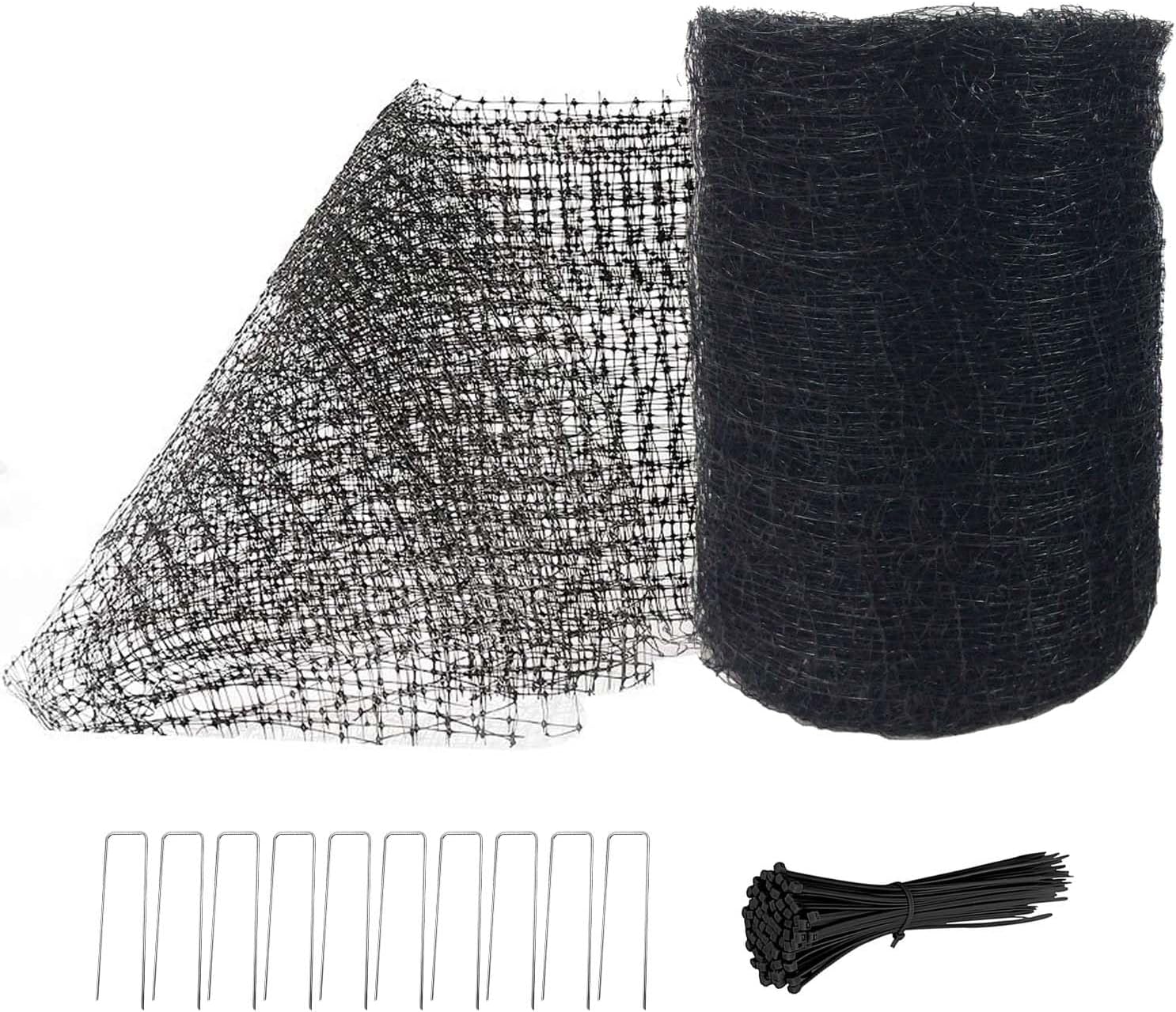


Pros
- Flexible roll format makes it easy to size for different garden layouts.
- Reusable polypropylene material is practical for seasonal setup and storage.
- Basic attachment accessories are included, which can simplify initial installation.
Cons
- Stakes or posts are not included, so you will need separate supports for installation.
- A flexible net barrier may be less suitable for gardeners who want a rigid fence or a very tall enclosure.
- Careful securing is important, since gaps or loose sections can reduce usefulness around openings.
Feitore's garden netting is a flexible barrier roll designed for protecting plants, fruit trees, vegetables, berries, and shrubs from birds and other animals. Based on the listed specifications, it is a practical choice for homeowners and beginner gardeners who need a simple way to cover a bed, wrap an individual plant, or section off part of a yard.
The key feature is the 3/4 inch square mesh, which offers a physical barrier without blocking plant growth. The polypropylene material is described as lightweight, reusable, and resistant to rust and rot, which makes more sense for temporary or seasonal garden use than heavier fencing materials.
The roll measures 7 feet by 100 feet, and the product information also notes that it can be cut to size with scissors. That flexibility should help when working around raised beds, shrubs, narrow side yards, or mixed plantings. The included 10 installation nails and 50 cable ties may help with setup, although stakes or posts are not included.
For backyard use, this netting could work well around tomatoes, strawberries, blueberries, figs, cherries, or arborvitae, as listed by the manufacturer. It may also suit small-space gardeners who want a lightweight barrier that can be adjusted to different shapes rather than a fixed enclosure.
The main limitation is that this is a soft netting product, so it depends on proper support and fastening. Gardeners who need a rigid fence, a tall freestanding barrier, or a heavy-duty animal enclosure may want a different solution, while those looking for a reusable, adaptable garden cover should find this format useful.
Best For / Avoid If
Best for buyers prioritizing
- Flexible roll format makes it easy to size for different garden layouts.
- Reusable polypropylene material is practical for seasonal setup and storage.
- Basic attachment accessories are included, which can simplify initial installation.
Consider another option if
- Stakes or posts are not included, so you will need separate supports for installation.
- A flexible net barrier may be less suitable for gardeners who want a rigid fence or a very tall enclosure.
- Careful securing is important, since gaps or loose sections can reduce usefulness around openings.
Pros
- Humane, non-chemical protection approach for garden borders and planting areas.
- Long 100-foot roll can suit larger projects or multiple sections.
- Weather-resistant polypropylene with UV inhibitors is appropriate for outdoor installation.
- Cut-to-length format adds flexibility for custom garden shapes and sizes.
Cons
- May require additional posts, ties, or other support materials depending on the layout, since those are not specified in the listing.
- 3/4-inch mesh is suited to barrier use, but gardeners needing fine insect exclusion may want a different type of netting.
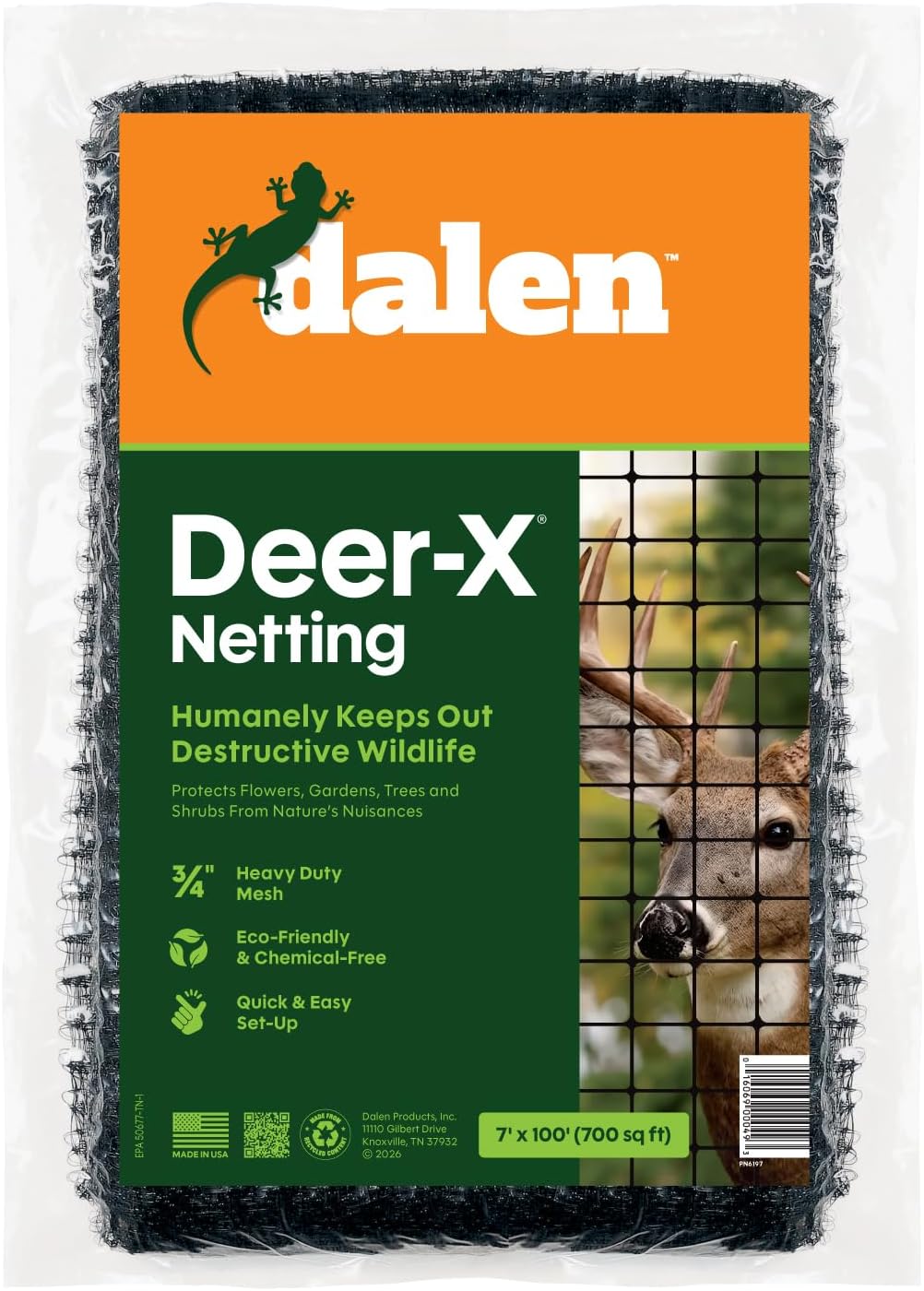
Dalen DX-7 Deer-X Protective Netting is a garden barrier product meant to help shield vegetables, fruits, flowers, and landscape plantings from deer and other unwanted critters. It is a practical fit for homeowners, beginners, and small-space gardeners who want a straightforward, humane way to add protection without building a heavy fence.
Based on the listed specifications, the main strengths are its large 7 ft by 100 ft roll size, 3/4-inch mesh, and polypropylene construction with UV inhibitors. That combination suggests a flexible barrier material that can be adapted to many planting areas while being suited to outdoor conditions.
The netting can be cut to the length needed, which makes it easier to fit along rows, around beds, or across sections of a yard with uneven edges. The black color is also a useful design choice for gardeners who want the barrier to be less visually distracting than lighter-colored netting.
This type of product can make sense for backyard gardens, perimeter protection around raised beds, or larger landscape areas where a lightweight fence-style barrier is preferred. It may also work well for gardeners who want a more temporary or adjustable solution than a permanent fence.
A balanced note is that installation needs can vary by site, and the listing does not specify included anchoring hardware or support accessories. Gardeners who need very fine pest exclusion, or who want a rigid structure, may prefer a different product style. For many common garden barrier uses, though, the feature set suggests a useful and adaptable option.
Best For / Avoid If
Best for buyers prioritizing
- Humane, non-chemical protection approach for garden borders and planting areas.
- Long 100-foot roll can suit larger projects or multiple sections.
- Weather-resistant polypropylene with UV inhibitors is appropriate for outdoor installation.
Consider another option if
- May require additional posts, ties, or other support materials depending on the layout, since those are not specified in the listing.
- 3/4-inch mesh is suited to barrier use, but gardeners needing fine insect exclusion may want a different type of netting.
Pros
- Sturdy steel construction with a U-channel profile for added rigidity.
- Green powder-coated finish is practical for outdoor use and visual blending.
- Included zip ties and clips add convenience for fence attachment.
- Works for a range of outdoor uses, including yards, gardens, orchards, and farms.
Cons
- Installation may be easier with a post driver, especially in firmer soil.
- Some product information and reviewer feedback suggest the anchor plate may require assembly rather than arriving fully welded.
- Those wanting a heavier-duty commercial fence post may prefer a different grade or design.
The VEVOR 7-foot U-channel metal fence post is designed for garden, yard, farm, and outdoor wire fencing projects where a straightforward support stake is needed. It is a practical fit for homeowners, small property owners, and gardeners who want a steel post system for boundary or protection setups.
According to the product information, the posts use 2 mm Q235 carbon steel with a U-shaped channel design and a powder-coated finish. That combination is intended to improve rigidity, bending resistance, and outdoor durability, while the included zip ties and metal clips help fasten fencing material more easily.
The posts are made for hammer or post-driver installation, and the listing notes that the anchor plate should be fully inserted below the ground for best stability. Because the product is 7 feet long and sold as a 10-pack, it can suit longer fence runs or multiple smaller sections around a garden or yard.
In real backyard use, this type of post can work well for vegetable plots, pet boundaries, roadside strips, orchard rows, or other places where a simple wire fence support is needed. The green finish is a useful touch if you want the structure to be less noticeable in planted areas.
A balanced point to note is that some listing details and reviewer feedback suggest the anchor plate may require assembly, so buyers should be prepared for a bit more setup than a fully welded post. Gardeners who want a basic steel support post with included attachment hardware should find it useful, while those needing a heavier-duty commercial fence system may want to compare alternatives before buying.
Best For / Avoid If
Best for buyers prioritizing
- Sturdy steel construction with a U-channel profile for added rigidity.
- Green powder-coated finish is practical for outdoor use and visual blending.
- Included zip ties and clips add convenience for fence attachment.
Consider another option if
- Installation may be easier with a post driver, especially in firmer soil.
- Some product information and reviewer feedback suggest the anchor plate may require assembly rather than arriving fully welded.
- Those wanting a heavier-duty commercial fence post may prefer a different grade or design.
Pros
- Pack of 10 offers flexibility for planning a fence line or replacing several posts at once.
- Two-piece assemblable format may make handling and transport simpler than a single 7-foot post.
- The U-channel shape and metal build are designed for added stiffness in outdoor conditions.
Cons
- Each post requires assembly before installation, so setup takes more steps than a one-piece post.
- The 10-pack format may be more than some small projects need, or not enough for longer runs.
- Best suited to wire fencing and similar utility uses, so gardeners wanting decorative edging may prefer a different style.
Based on the product information, the ARIFARO FP-01 is a metal fence post set made for garden fencing, corner anchors, and gateposts. It is a practical choice for homeowners who want a straightforward support post for wire fencing around beds, yards, or other growing areas.
The main appeal is its 7-foot assembled height and U-shaped metal construction. The listing says the design is meant to resist bending or warping, and the anti-rust coating is described as holding up against daily UV exposure and moisture, which is useful for outdoor fencing that stays in place season after season.
Installation is different from a single-piece post because each one arrives in two sections, a 4-foot piece and a 3-foot piece. The 4-foot section is placed into the ground first, then the upper section is attached with screws. That split design may be easier to ship and handle, but it also means a little more setup time before the fence is ready.
For backyard use, these posts appear suited to wire fencing around vegetable beds, simple animal barriers, or perimeter fencing where a clean, functional support is more important than decoration. The adjustable tab design should help secure rolled fence material, and the pack of 10 gives enough flexibility for small projects or for building a section in stages.
As with any utility fence post, the best results will depend on careful placement and a stable installation. The listing recommends setting the post deeply enough for support, and gardeners in very rocky ground or those looking for a purely decorative fence may want a different option. For practical wire-fence support, though, this set looks like a sensible, low-maintenance choice.
Best For / Avoid If
Best for buyers prioritizing
- Pack of 10 offers flexibility for planning a fence line or replacing several posts at once.
- Two-piece assemblable format may make handling and transport simpler than a single 7-foot post.
- The U-channel shape and metal build are designed for added stiffness in outdoor conditions.
Consider another option if
- Each post requires assembly before installation, so setup takes more steps than a one-piece post.
- The 10-pack format may be more than some small projects need, or not enough for longer runs.
- Best suited to wire fencing and similar utility uses, so gardeners wanting decorative edging may prefer a different style.
Deer Netting Vs Garden Fence Buying Guide
Start with the deer pressure in your yard
Before choosing deer netting vs garden fence, look at how often deer visit and what they are eating. Occasional browsing on a few flowers may call for a lighter seasonal barrier, while repeated feeding on vegetables, fruiting plants, or shrubs may justify a more permanent fence layout.
Also consider where deer approach from. A single open side of a garden may be easier to protect than a yard with several entry points. The more routes deer have, the more important it becomes to plan a continuous barrier without obvious gaps.
Understand the basic difference between netting and fencing
Deer netting is typically used as a lightweight physical barrier around beds, shrubs, or rows. It may be easier to move or remove at the end of the season, which can help renters, small-space gardeners, and anyone who changes garden layouts often.
A garden fence usually creates a more rigid boundary. It can be better suited to a dedicated vegetable garden, orchard edge, or permanent planting area, but it may require more planning for posts, gates, mowing clearance, and long-term maintenance.
| Choice | Often suits | Tradeoff to consider |
|---|---|---|
| Deer netting | Seasonal beds, temporary protection, small areas, flexible layouts | May need frequent inspection for sagging, gaps, or tangles |
| Garden fence | Permanent gardens, repeated deer pressure, larger protected zones | Requires more planning for access, structure, and placement |
Measure the area before comparing options
Accurate measuring prevents one of the most common mistakes: buying too little barrier material. Measure the full perimeter of the bed or garden, then account for corners, overlap, gates, paths, and any extra length needed to secure the ends.
For small raised beds or container clusters, it may be easier to protect individual growing zones rather than the entire yard. For a larger vegetable garden, a perimeter fence may be more practical than wrapping each planting row separately.
Plan for access, not just protection
A barrier that keeps deer out but makes harvesting difficult can become frustrating quickly. Plan where you will enter, how wide the opening needs to be, and whether you can carry tools, baskets, compost, or a hose through the access point comfortably.
Older gardeners and anyone who prefers low-strain gardening should avoid designs that require stepping over netting or repeatedly bending to unhook low barriers. A simple gate, removable panel, or clearly marked opening can make the system easier to use.
Watch for gaps at the bottom, corners, and gates
Deer barriers are only as useful as their weakest openings. When comparing deer netting vs garden fence options, think about how the bottom edge will be held in place and how corners will be secured so the barrier does not pull loose.
Gates and temporary openings also need attention. A well-built fence with a loose gate or an untied section of netting can invite browsing, especially when tender new growth is visible just inside the garden.
Consider visibility, pollinators, pets, and daily yard use
Some gardeners prefer a barrier that blends into the landscape, while others want a clearly visible fence edge for mowing, walking, or nighttime yard use. Visibility can also matter near paths, play areas, and patios where people may not expect a low or flexible barrier.
If plants need pollination, avoid blocking pollinator access during bloom unless the barrier is designed to allow insects through. If children or pets use the yard, follow the manufacturer safety instructions for any barrier product and check local rules when installing permanent fencing.
Think about maintenance through the season
Netting and fencing both need routine inspection. After storms, mowing, trimming, or heavy plant growth, check for loose edges, leaning supports, sagging sections, and places where vines or branches have pulled the barrier out of position.
Maintenance is especially important in vegetable gardens, where fast-growing plants can push against the barrier. Keep paths clear enough to inspect the perimeter without stepping into beds or damaging plants.
Storage and seasonal removal
If you only need protection during spring and summer, think about how the barrier will be stored. Netting should be cleaned of leaves and plant debris before storage so it is easier to reuse and less likely to tangle.
Permanent fencing still benefits from seasonal checks. Look for leaning sections, blocked access points, and any areas damaged by weather, garden tools, or routine yard work. A few minutes of inspection can prevent bigger repairs later.
Research Methodology and Trust
For this July 2026 update, we screened the available product data for relevance to deer netting vs garden fence and the Garden Pest & Wildlife category. No valid product listings were available, so no individual product reviews, rankings, or named recommendations were created.
Our research-based review process normally compares listed specifications, intended garden task, coverage, setup method, access design, maintenance needs, and owner feedback when those details are available. Because there were no products in the source data, this guide explains how homeowners can evaluate options without making unsupported claims about specific items.
This is not a physical hands-on test. The guidance is based on practical barrier-selection criteria for deer and garden wildlife control, with attention to humane use, safe placement, small-space gardening, and accessibility for everyday maintenance.
Final Recommendations
No Overall Pick, Beginner Pick, Small-Space Pick, or Heavy-Duty Pick can be named because the available product data did not include any valid deer netting or garden fence products. Rather than inventing recommendations, we recommend using the buying criteria above to compare real products before purchase.
As a general decision, choose deer netting when you need a flexible seasonal barrier around small beds or plant groups. Choose a garden fence when you want a more permanent perimeter, easier planned access, and a defined protected growing area.
FAQ
Is deer netting or a garden fence better for a vegetable garden?
It depends on the garden layout and how often deer visit. Netting may work well for temporary or small beds, while a garden fence is usually easier to manage around a permanent vegetable plot with regular harvesting.
How do I size deer netting vs garden fence for my space?
Measure the full perimeter you want to protect, then add extra length for corners, overlaps, gate areas, and secure attachment points. If protecting individual beds, measure each bed separately so you do not underestimate the total coverage needed.
What is the biggest mistake when installing a deer barrier?
The most common mistake is leaving weak points at the bottom, corners, or entry points. A barrier should be continuous and easy to close securely after every garden visit.
Is deer netting a good choice for small gardens?
Deer netting can suit small gardens because it is often flexible and seasonal. Make sure it does not block daily access, tangle around plants, or create a tripping hazard near paths and patios.
How much maintenance does a garden fence need?
A garden fence should be checked regularly for leaning sections, loose connections, open gates, and damage from weather or yard work. Seasonal inspections are especially helpful before tender new growth attracts browsing.
Can deer netting vs garden fence affect pollinators?
Any barrier can affect access if it covers flowers too tightly or blocks insect movement. When plants need pollination, choose a layout that protects against deer while still allowing pollinators to reach blooms when appropriate.
Continue your garden research
Browse more practical guides in Garden Pest & Wildlife.
See how Dove Creek Gardens researches and compares products.