


Weeds in turf can be difficult to control when a product does not match both the weed and the grass. This guide to Best Weed Killer For Lawns helps homeowners compare selective lawn products, granular controls, concentrates, and ready-to-use sprays using the published product details.
We screened 20 listed items for lawn weed-control relevance and reviewed the information available for the matching products. Key decision points include target weeds, application format, stated coverage, regional grass fit, and whether the listing identifies an active ingredient. Product listings do not provide complete label directions or owner feedback here, so confirm current label details before purchase or use.
Herbicides differ: selective lawn products are intended for specified weeds in specified turf, while nonselective weed-and-grass products can damage desirable grass. If you prefer to reduce pesticide use, see our guide to protecting a garden without pesticides.
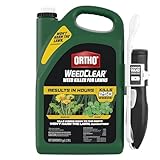
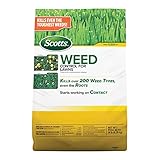
Ortho WeedClear Lawn Weed Killer Ready-to-Spray, 32 fl. oz. | Weed Killer Spray for Lawns, Kills Crabgrass, Dandelion and Clover, Hose-End Application, Covers 5,000 sq. ft. Spectracide Large Plot Weed Stop For Lawns Concentrate, 1 Gal | Kills 200+ Weed Types Down To The Root, See Results In Hours, Treats Up To 32,000 Sq. Ft., Mix & Apply With Sprayer Ortho WeedClear Weed Killer for Lawns with Comfort Wand, 1 gal. | Lawn Weed Killer Spray, Won't Harm Grass When Used as Directed, Kills over 250 Listed Weeds Including Dandelion and Clover Scotts Weed Control for Lawns, 14 lbs. | Weed Killer for Lawns, Kills Over 200 Types Including Dandelion and Clover, Covers 5,000 sq. ft. Prices and availability can change. We may earn a commission from qualifying purchases.








Best Weed Killer For Lawns buying guide
1. Identify weed and grass before choosing
Start with the weed you want to control, then identify your turf grass. Product names and listing descriptions mention targets such as crabgrass, dandelion, clover, and yellow nutsedge, but a name alone cannot confirm suitability for every lawn. Check the product label for both the target weed and the specific turf species.
Do not assume that a product labeled for lawns suits every region or grass type. Roundup for Lawns1 with Extend Wand, 1.33 gal. is described for northern grasses. BioAdvanced Season Long Lawn Weed Killer is described for southern lawns. Those regional distinctions make label verification especially important.
2. Match application format to yard and mobility
Ready-to-spray products avoid mixing a concentrate, while concentrates require a compatible sprayer and careful measuring according to label directions. Granules need suitable application equipment and even distribution. The published listings do not specify all equipment requirements, so check the label before buying.
A hose-end format can reduce separate mixing steps; a wand can help direct spray toward individual weeds. A bag of granular product may be awkward for some users to lift or carry. Consider reach, grip, walking distance, and the effort required to apply the product across your lawn, not only the bottle or bag format.
3. Compare coverage without overreading it
Coverage figures help estimate whether a package suits lawn size. The listings state up to 32,000 square feet for Spectracide Large Plot Weed Stop For Lawns, 5,000 square feet for Scotts Weed Control for Lawns, 14 lbs., and 4,000 square feet for BioAdvanced Season Long Lawn Weed Killer. Coverage depends on following the product label and application rate.
Do not compare package sizes alone. A concentrate, ready-to-use liquid, and granule are applied differently, and the published information does not provide comparable cost-per-treated-area calculations. Measure the lawn area first, then compare label coverage and any restrictions.
4. Distinguish selective lawn control from total vegetation control
Most products included here are presented as lawn weed controls. Spectracide Weed & Grass Killer with AccuShot is different: its listing says it kills broadleaf weeds and grasses and names driveways, walkways, and patios as use areas. It is not included as a lawn recommendation because the listing indicates control of grass itself.
Keep products intended to kill grass away from desirable turf unless their label explicitly permits the use. For weeds in planting beds or along paths, choose a product whose labeled use matches that location and protect nearby plants as directed.
5. Check active ingredient and intended weed
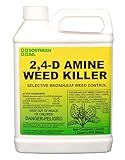
The published listing identifies quinclorac as the active ingredient in BASF Drive XLR8 Crabgrass Killer for Lawn & Turf. Southern Ag Amine 2,4-D WEED KILLER names 2,4-D in its product name. An ingredient name alone does not establish that a product fits your lawn, target weed, or application conditions. Read the complete label and use only as directed.
For a broad listed weed range, the descriptions identify more than 200 weed types for Spectracide Large Plot Weed Stop For Lawns and Scotts Weed Control for Lawns, 14 lbs., and more than 250 listed weeds for Ortho WeedClear Weed Killer for Lawns with Comfort. Those counts do not guarantee control of every weed or confirm compatibility with every turf variety.
6. Plan safe, label-directed use
Before application, read the full product label for permitted sites, dose, timing, protective equipment, weather limits, re-entry instructions, and precautions for people, pets, desirable plants, and water. The published data does not provide those details, so do not infer them from a product title or general lawn use.
Follow local pesticide rules and manufacturer safety instructions. Prevent drift and accidental contact by applying only as the label permits. If the label conflicts with a general product description, follow the label.
7. Avoid overapplication and maintain equipment
Applying extra product does not make a recommendation more reliable. Use the labeled rate and avoid overlapping passes or repeated applications unless the label permits them. The published descriptions do not state product-specific maintenance intervals, so follow directions for cleaning and storing sprayers or application equipment.
Keep products in their original containers with labels intact, and store them as directed. Do not transfer herbicide to an unmarked container. For alternatives that rely on barriers rather than chemical control, our guide to using row covers for pest control covers a different approach for garden pests, not lawn weeds.
Research methodology and trust
We screened the listed products for a clear match to lawn weed control. Nine listings describe lawn weed killers, lawn weed control, or lawn-and-turf herbicides. Spectracide Weed & Grass Killer with AccuShot was excluded from lawn recommendations because its description says it kills grasses as well as weeds. The remaining products still require label checks for exact turf and site suitability.
Comparison focused on listed target weeds, application format, stated coverage, regional fit, and named active ingredients where provided. Product descriptions provide different levels of detail, so we do not treat a larger weed count or coverage figure as proof of superior results. Prices and ratings were not used as performance evidence.
The published data shows zero reviews for the listed items, so there is no owner-feedback evidence available here to assess. This is research-based analysis of published product information, not physical product evaluation. Information was prepared for the supplied October update; availability, labels, and product details can change. Confirm current manufacturer directions and local rules before use.
Frequently asked questions
How do I choose the best weed killer for lawns?
Identify the weed and turf grass first. Then compare the label’s approved sites and targets with application format, coverage, and your ability to apply it as directed.
Should I use liquid or granular lawn weed killer?
Liquid products include ready-to-spray, wand, and concentrate formats; granules come in a bag. Choose based on the application method and equipment you can use correctly, then follow the specific label.
Does a larger listed weed count mean better control?
No. A weed-count claim is not a guarantee for every species or lawn. Confirm that the target weed and your turf grass appear on the current product label.
Can I use any lawn weed killer on any grass?
No. Product compatibility can vary by turf type and region. The published listing specifically describes Roundup for Lawns1 with Extend Wand for northern grasses and BioAdvanced Season Long Lawn Weed Killer for southern lawns, but the label remains controlling.
Is a weed-and-grass killer suitable for turf?
Do not assume so. Spectracide Weed & Grass Killer with AccuShot is described as killing grasses and is listed for hardscape areas. Use only products whose label allows application to the specific lawn and turf.
How should lawn herbicide be stored?
Keep it in its original labeled container and follow the storage directions on the product label. The published product data does not establish a shelf life or a universal storage temperature.
What safety steps matter when applying lawn weed killer?
Read and follow the complete label, including protective equipment, permitted application conditions, and precautions for people, pets, plants, and water. Follow local rules and manufacturer instructions; the published listings do not contain enough detail to give product-specific safety directions.
Continue your garden research
Browse more practical guides in Garden Pest & Wildlife.
For product comparisons, see Best Deer Repellent For Vegetable Gardens: Reviews and Buying Guide.
See how Dove Creek Gardens researches and compares products.