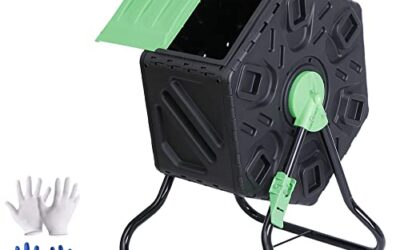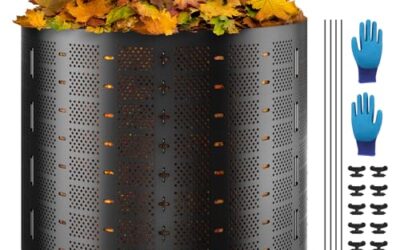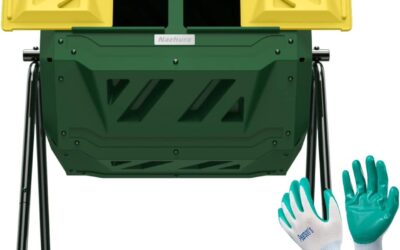


A compacted compost pile breaks down slowly, can hold pockets of excess moisture, and becomes harder to manage with a regular shovel or garden fork. The right Best Compost Aerator Tool helps add air, lift material from deeper layers, and mix leaves, grass clippings, and kitchen scraps without requiring you to empty the whole bin.
We focused on tools that clearly match compost turning and aeration, not general soil cultivators or lawn core aerators, because a compost bin needs a different style of tool than a flower bed or lawn.
This guide is written for homeowners, beginner composters, small-yard gardeners, and older gardeners who want less bending and less heavy lifting. For more soil-building topics, visit our Compost, Soil & Mulch section.
EJWOX 3313-N Stainless Steel Compost Aerator Tool for Easier Bin and Pile Turning Lotech Products Compost Crank Aerator for Easier Bin Turning Sewiden 80-15 Compost Turning Tool for Easier Bin Mixing and Aeration moonateen Compost Turner Aerator Tool for Easier Bin Mixing and Airflow Prices and availability can change. We may earn a commission from qualifying purchases.


Pros
- Purpose-built for aerating and mixing compost rather than general digging.
- Reviewers commonly mention that it is easier on the back than using a pitchfork in compost bins.
- Corkscrew design helps pull material up from deeper in the pile instead of only stirring the top layer.
- Light listed weight should be manageable for many homeowners and older gardeners.
- Product information describes durable metal construction with a hardwood handle.
Cons
- Manual twisting and lifting can still require arm effort, especially in dense or compacted compost.
- At 23 inches long, it may be less suitable for very deep piles where a longer aerator is preferred.
- Gardeners who need to move large volumes of finished compost may still want a fork or shovel in addition to this tool.
The EJWOX 3313-N Stainless Steel Compost Aerator Tool is a manual compost turner made for adding air and mixing materials in compost bins, tumblers, and backyard piles. Instead of lifting and flipping a pile with a pitchfork, the tool is designed to twist down into the compost and pull lower material upward. That makes it a practical choice for homeowners, beginner composters, and older gardeners who want a more focused tool for routine aeration.
Compost needs air to help materials break down evenly, and this tool is built around that specific task. The corkscrew-like design can help mix grass clippings, leaves, and vegetable scraps while also breaking up clumps. Based on the product information and recurring reviewer feedback, its main appeal is making regular compost turning feel less awkward than using a broad fork inside a bin.
The listed dimensions are 23 x 4.5 x 4.5 inches, with an item weight of 1.9 pounds. The product title describes stainless steel construction, and the feature details note sturdy steel with a free-spinning hardwood handle. That handle design is intended to support the twisting motion, while the compact size should make the aerator easy to hang or store with other garden hand tools.
In a typical backyard setup, this aerator is most useful for compost bins, pallet bins, leaf compost, and tumbler-style systems where a full-size pitchfork can be cumbersome. The basic method is straightforward: place the tool end deep into the compost, turn it, pull material upward, and repeat in several spots. For small-space gardeners, it offers a low-tech way to maintain a compost bin without needing powered equipment.
There are a few limitations to keep in mind. This is still a manual tool, so dense, wet, or heavily compacted compost may take effort to penetrate and lift. Its 23-inch length may not be ideal for very tall or deep piles, and it is not a replacement for a shovel when the goal is moving finished compost from one place to another. As with any compost tool, gloves, steady footing, and rinsing or wiping after use are sensible habits.
Overall, the EJWOX 3313-N is best for gardeners who already compost and want a dedicated aerating tool that is easier to maneuver in bins than a pitchfork. Gardeners managing very large composting systems or frequently relocating heavy material may prefer a longer aerator or a traditional fork as a companion tool.
Pros
- Stainless steel and glass-filled nylon materials are well suited to repeated contact with damp compost.
- The corkscrew shape is designed to pull material up from lower layers rather than just poking holes.
- Long reach can be useful in barrels, Geobin-style bins, trash-can composters, and other contained setups.
- No assembly is required, and the simple design has fewer parts than folding-tine aerators.
Cons
- Very deep, heavy, or compacted compost may need to be loosened layer by layer before the tool can reach full depth.
- Brushy piles with long branches, tough stems, or large uncut material may still be better handled with a fork or other heavy-duty turning tool.
- Gardeners with limited grip, elbow, or shoulder strength should consider whether the lift-and-pull motion is comfortable for them.
The Lotech Products Compost Crank is a manual compost aerator designed for gardeners who manage bins, barrels, or smaller backyard piles and want a cleaner, more targeted way to add air and mix materials. Instead of flipping an entire pile with a shovel or pitchfork, the tool cranks into the compost like a corkscrew and lifts material upward from below.
The main benefit is aeration through lifting and mixing. The product information describes a simple motion: crank clockwise into the pile, then lift without turning so the spiral pulls compost from the bottom toward the top. That can be especially useful when adding kitchen scraps, garden waste, browns, or moisture to a bin where the lower layers are hard to reach.
Based on the listed specifications, the tool is 46 inches tall overall with a 30-inch effective depth from the spiral tip to the first bend. The spiral section measures about 3-3/4 inches wide and 6 inches tall, and the tool weighs 2 pounds. It is made from solid 3/8-inch stainless steel with free-spinning glass-filled nylon handles and stainless steel washers, and it arrives ready to use with no assembly.
This design makes the most sense for contained compost systems, such as backyard bins, barrel-style composters, trash-can compost setups, or small-space compost piles where a full-size fork is awkward. Reviewers commonly mention using it in drums, Geobin-style bins, and compact compost areas, with many appreciating that it reaches down into the pile and can be worked across the surface in repeated pulls.
There are a few practical limits to keep in mind. The product information notes that heavy compost may need to be worked layer by layer because a full pull can be too heavy, and long vines, branches, or tough fibrous material may still benefit from being cut up before composting. As with any compost tool, use steady body mechanics, avoid twisting under strain, and rinse or wipe the spiral after use to keep buildup from drying on the metal.
For homeowners, older gardeners, and beginners who want a durable manual aerator for routine compost care, the Compost Crank is a strong fit based on its materials, reach, and straightforward motion. Gardeners managing very large brushy piles or who prefer to fully rebuild their heap during each turn may still want a sturdy fork or shovel alongside it.
Best For / Avoid If
Best for buyers prioritizing
- Stainless steel and glass-filled nylon materials are well suited to repeated contact with damp compost.
- The corkscrew shape is designed to pull material up from lower layers rather than just poking holes.
- Long reach can be useful in barrels, Geobin-style bins, trash-can composters, and other contained setups.
Consider another option if
- Very deep, heavy, or compacted compost may need to be loosened layer by layer before the tool can reach full depth.
- Brushy piles with long branches, tough stems, or large uncut material may still be better handled with a fork or other heavy-duty turning tool.
- Gardeners with limited grip, elbow, or shoulder strength should consider whether the lift-and-pull motion is comfortable for them.
Pros
- Purpose-built for compost stirring rather than general digging, with a spiral head intended to lift and churn material.
- Lightweight and compact enough for regular backyard use and simple storage.
- Reviewers commonly mention that it is easy to assemble and manageable to use.
- The product information lists a rust- and corrosion-resistant design with a smooth surface for easier cleaning.
Cons
- Plastic construction may be less suitable for gardeners who prefer metal compost tools for very dense or woody piles.
- A spiral tool can be harder to control around bin edges, and one reviewer noted less precision in what material it brings up.
- If twisted too deeply into a packed pile, it may require extra effort to pull back out, based on one user’s experience.
The Sewiden 80-15 Compost Turning Tool is a manual compost aerator made for stirring and mixing organic material in outdoor compost bins, tumbler bins, and compost bags. Its main job is to help gardeners add air and move material through the pile without relying on a shovel or garden fork. It is especially relevant for homeowners, small-space composters, and older gardeners who want a lighter tool for routine compost maintenance.
The key feature is the 5.9-inch spiral head, which is designed to twist clockwise into compost and lift material as it turns. That motion can help mix grass clippings, leaves, and vegetable scraps so the pile is less compacted. The product information indicates that this added aeration is intended to support the composting process, though actual results will still depend on moisture, material balance, pile size, and how often the compost is turned.
Based on the listed specifications, the tool measures about 5.9 inches wide by 33.5 inches high and weighs 0.4 pounds. The material is listed as plastic, and the product description notes a smooth surface for easier cleaning. There is no complicated setup described, so routine use appears straightforward: insert the spiral into the compost, turn the handle, then pull the tool upward to bring lower material toward the surface.
In a backyard bin, this type of compost stirrer can be useful when the pile needs oxygen but there is not enough room to work a full-size fork. Reviewers commonly mention easy handling, and one user specifically described using it in an Earth Machine-style compost bin. It may also suit gardeners managing aging compost piles, small outdoor bins, or compost bags where periodic stirring is easier than emptying the container.
There are a few practical limits to keep in mind. Because the tool is designed to twist into compost, very compacted or woody material may take more effort, and gardeners may need to work gradually rather than driving it all the way to the bottom at once. It may also be less precise near bin walls, where a spiral head can pull up whatever it catches rather than targeting one exact area. Gloves are a good idea when handling compost, and the tool should be rinsed and stored after use to keep it clean.
Overall, the Sewiden 80-15 is a sensible choice for gardeners who want a lightweight, manual compost mixing tool for regular aeration in outdoor bins. Gardeners with very large, dense piles or a preference for heavy-duty metal tools may want to compare other options, but for routine home compost care, the feature set is practical and easy to understand.
Best For / Avoid If
Best for buyers prioritizing
- Purpose-built for compost stirring rather than general digging, with a spiral head intended to lift and churn material.
- Lightweight and compact enough for regular backyard use and simple storage.
- Reviewers commonly mention that it is easy to assemble and manageable to use.
Consider another option if
- Plastic construction may be less suitable for gardeners who prefer metal compost tools for very dense or woody piles.
- A spiral tool can be harder to control around bin edges, and one reviewer noted less precision in what material it brings up.
- If twisted too deeply into a packed pile, it may require extra effort to pull back out, based on one user’s experience.
Pros
- Purpose-built for compost aeration rather than general digging
- Listed spiral width and standing height make it suitable for reaching into common compost containers
- Reviewers commonly mention that it is easy to use for bin or container composting
- Simple manual operation with no powered parts, batteries, or complicated setup described
Cons
- May require firm pulling if the spiral is driven deep into dense or compacted compost
- Not a substitute for a full-size fork or shovel when moving large amounts of finished compost
- One reviewer reported breakage, so gardeners working very heavy, compacted material may want to use reasonable force and avoid prying
The moonateen compost turner is a manual compost aerator made for stirring and loosening organic material in outdoor compost bins, tumblers, bags, and similar home composting setups. It is aimed at gardeners who want to get air down into a compost mix without relying on a shovel, pitchfork, or small hand tool.
Based on the product information, the main benefit is improved aeration through mixing. By turning grass clippings, leaves, and vegetable scraps, the tool helps distribute air through the pile, which is an important part of active composting. It is especially relevant for bin composting, where material can settle and become harder to stir by hand as the container fills.
The listed design includes a 33.4-inch height and a 5.9-inch wide spiral with a rotating drill-style mechanism. That shape is intended to twist into compost and pull material upward or loosen it as you stir. The product information also describes a rust- and corrosion-resistant construction with a smooth surface for easier cleaning after use.
For backyard gardeners, this type of tool is most useful for routine compost maintenance rather than bulk material moving. It can fit small-space composting routines, such as a patio bin, a tote-style compost container, or a compact outdoor compost bag, where a full-size fork may be awkward. Reviewers commonly mention easier turning in bins and containers, although those comments should be read as user experiences rather than verified performance testing.
There are a few practical limits to keep in mind. Dense, wet, or compacted compost may take more effort, and one reviewer noted that it can take hard yanks to remove the tool when twisted all the way down. As with any manual compost tool, use steady twisting pressure rather than using it as a pry bar, wear gloves, and rinse or wipe it clean before storage to reduce buildup.
This is a sensible choice for gardeners who maintain a compost bin and want a dedicated aerating tool for regular mixing. Gardeners managing very large open piles, heavy woody debris, or frequent bulk compost moving may still prefer a sturdy garden fork or shovel alongside it.
Best For / Avoid If
Best for buyers prioritizing
- Purpose-built for compost aeration rather than general digging
- Listed spiral width and standing height make it suitable for reaching into common compost containers
- Reviewers commonly mention that it is easy to use for bin or container composting
Consider another option if
- May require firm pulling if the spiral is driven deep into dense or compacted compost
- Not a substitute for a full-size fork or shovel when moving large amounts of finished compost
- One reviewer reported breakage, so gardeners working very heavy, compacted material may want to use reasonable force and avoid prying
Pros
- Purpose-built for compost aeration rather than general digging
- Steel construction with a protective powder-coated finish
- Long-handled design may reduce bending during compost work
- Reviewers commonly describe it as sturdy and relatively easy to use when the wings deploy properly
Cons
- Several reviewers report that one or both folding wings may not always open consistently in compacted or wet compost
- Gardeners who want a multipurpose digging and turning tool may prefer a garden fork
- Very dense piles may require repeated plunges and occasional clearing around the wing mechanism
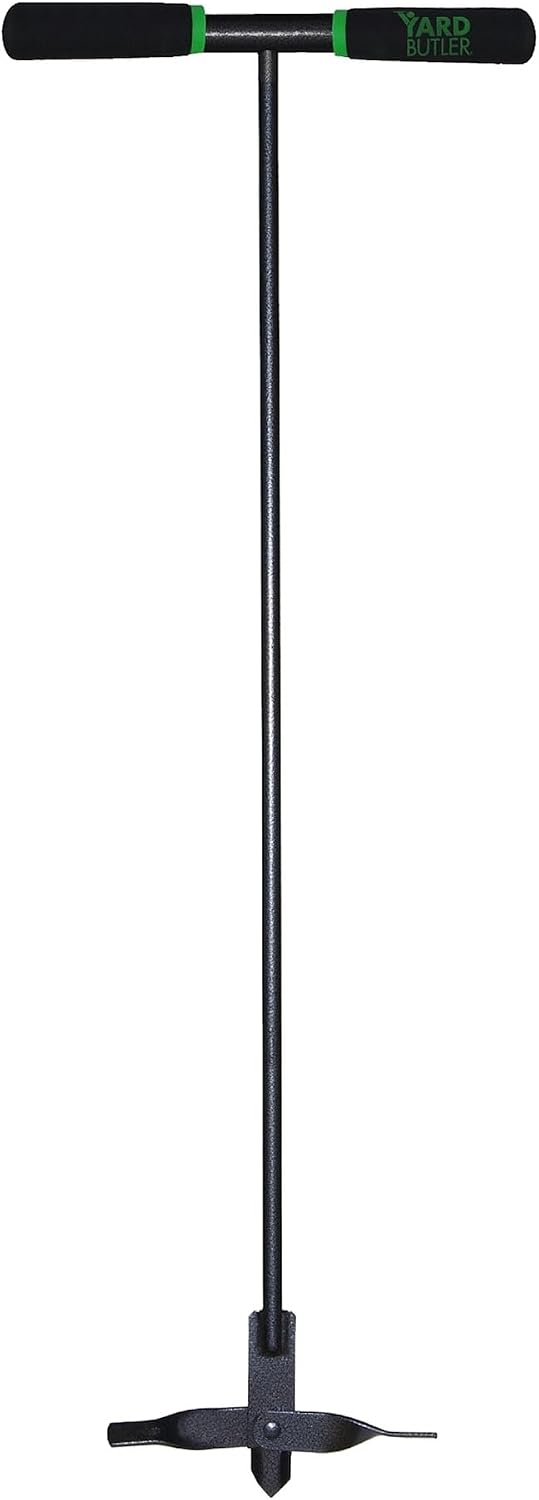
The Yard Butler ICA-36 Compost Aerator is a manual garden tool made for adding air and movement to a compost pile or bin. Instead of scooping and flipping material with a shovel or fork, it is designed to be pushed down into the compost and pulled back up so the folding wings can lift and loosen the pile. It is best suited to homeowners, beginner composters, and gardeners who want a simpler way to maintain a backyard compost system.
The main benefit is airflow. Compost piles work better when dense layers are loosened and oxygen can move through the material, and the product information indicates that this tool is intended to speed decomposition by improving aeration without full pile turning. It can also help mix fresh carbon material from the top into older material below, depending on the pile texture and how easily the wings open.
The listed construction is powder-coated steel, which gives it a more durable feel than lightweight plastic compost tools. The long handle is meant to provide leverage and reduce bending, while the cushioned handle is a useful comfort feature for repeated plunging motions. The item is listed at 1.4 pounds, so it should be manageable for many gardeners, although actual ease of use will depend on pile density and user strength.
In practical backyard use, this type of aerator makes the most sense for upright compost bins, small to medium compost piles, and gardeners who do not want to empty a bin just to mix the contents. It may be especially helpful where a shovel is awkward inside a narrow bin. Reviewers commonly mention using it to stir material, bring up lower layers, and mix in fresh additions, though experiences vary with wet or compacted compost.
The main limitation is the folding wing mechanism. Some reviewers say the wings open and mix well, while others report that one or both wings can stay folded or become clogged with compost, especially in dense material. For best results, gardeners may need to plunge at a slight angle, twist before lifting, and clear packed material from the wings as needed. Gloves are sensible when handling compost tools, and the tool should be cleaned and stored dry after use to help preserve the finish.
Overall, the Yard Butler ICA-36 is a focused compost aeration tool for gardeners who want less lifting than traditional turning. It is a good fit if you maintain a compost bin and want a simple manual way to add air, but a garden fork may be more versatile if you also need to dig, move bulky material, or fully turn large open piles.
Best For / Avoid If
Best for buyers prioritizing
- Purpose-built for compost aeration rather than general digging
- Steel construction with a protective powder-coated finish
- Long-handled design may reduce bending during compost work
Consider another option if
- Several reviewers report that one or both folding wings may not always open consistently in compacted or wet compost
- Gardeners who want a multipurpose digging and turning tool may prefer a garden fork
- Very dense piles may require repeated plunges and occasional clearing around the wing mechanism

Pros
- Purpose-built for compost aeration rather than general digging or raking.
- Ergonomic S-shaped handlebar may make turning compost feel less awkward than using a straight tool.
- Profiled teeth are intended to lift and mix material for better airflow through the compost.
- Tall handle length is helpful for gardeners who want to limit deep bending.
Cons
- Manual operation could require effort in dense, wet, or heavily compacted compost.
- The narrow working end may take more passes in a large compost pile than a broad fork or powered option.
- No accessory, cover, or storage feature is listed in the published specifications.
The Leborgne Naturovert 320061 is a manual compost aerator made for mixing and loosening compost in bins, heaps, and larger garden compost areas. It is best suited to gardeners who want a dedicated tool for improving airflow and turning organic material without relying on a shovel or garden fork.
The main benefit is its profiled tooth design, which the product information says can mix compost both horizontally and vertically. In practical terms, that means the tool is intended to pull up and shift material through the pile, helping reduce compacted pockets and supporting a more even composting process.
The listed design includes an S-shaped handlebar for a more comfortable grip and a 59.06-inch overall height, which may help reduce bending during regular compost maintenance. At 1.55 kg, it has some weight for working into material while still remaining a hand tool that many homeowners can manage.
This aerator makes sense for backyard gardeners who add kitchen scraps, leaves, grass clippings, or garden waste to a compost bin and need to stir the contents periodically. It can also be useful in small-space gardens where a full-size fork is awkward around bins, raised-bed areas, or compact compost stations.
Because it is manually operated, it may still take effort in wet, dense, or neglected compost, and very large piles may require multiple passes. Gardeners should use steady movements, avoid forcing the tool if it catches, and clean off stuck organic matter after use to keep the alloy steel working end ready for the next turning session.
Choose this Leborgne compost aerator if you want a long-handled, purpose-built tool for routine compost mixing with an ergonomic handle design. If you need to move large volumes of finished compost, dig soil, or break up heavy ground, a garden fork, shovel, or broader compost-turning tool may be the more suitable companion.
Best For / Avoid If
Best for buyers prioritizing
- Purpose-built for compost aeration rather than general digging or raking.
- Ergonomic S-shaped handlebar may make turning compost feel less awkward than using a straight tool.
- Profiled teeth are intended to lift and mix material for better airflow through the compost.
Consider another option if
- Manual operation could require effort in dense, wet, or heavily compacted compost.
- The narrow working end may take more passes in a large compost pile than a broad fork or powered option.
- No accessory, cover, or storage feature is listed in the published specifications.

Pros
- Long shaft is useful for reaching into deeper compost bins and backyard piles.
- Stainless steel construction supports outdoor garden use and easy rinsing after compost work.
- No sharp cutting blades, which may appeal to gardeners who prefer a less aggressive aerating tool.
- Reviewers commonly mention comfortable handling and usefulness for compost piles or lighter organic material.
Cons
- May be less suitable for very hard, compacted compost, based on one reviewer’s experience with dense ground-based material.
- The blunt, blade-free spiral design could require regular use before the pile dries out or packs down.
- Gardeners who need to break apart heavy, mature compost may prefer a fork or more aggressive turning tool.
The BIOGRN 46.5-inch Compost Aerator is a manual compost turning tool made for loosening backyard compost bins, outdoor piles, leaf piles, grass clippings, and mixed kitchen scraps. It is aimed at homeowners and beginner-to-intermediate composters who want to add air to a pile without using a shovel or digging fork every time.
Its main benefit is routine aeration. As compost settles, it can become dense, wet, and low in airflow. The product information indicates that the open-loop spiral end is meant to be inserted vertically, turned clockwise, and lifted to help loosen fresh or lightly compacted material. Used before a pile becomes too dry or tightly packed, this can make regular compost maintenance more manageable.
The tool measures 46.5 inches long and has a 0.48-inch stainless steel shaft. That extra length is useful for reaching into straight compost bins and deeper pile layers while reducing constant bending. The one-piece design requires no assembly, and the two green ribbed handles are intended to provide a steadier hand-crank grip while rotating the tool.
For small-space gardeners, this aerator could be a practical match for upright compost bins or contained backyard compost systems where a full-size garden fork is awkward. It can also be used in outdoor leaf and grass piles where the material is lighter and easier to loosen. Reviewers report positive results in compost piles and lighter compost areas, while one reviewer found it easier on newer compost and leaf or grass material than on dense, hard-packed compost.
There are some important limits to keep in mind. The spiral tip is blunt and the tool is deliberately made without sharp blades, so it should not be treated like a pry bar or used to force apart heavily compacted compost. The listed guidance is to keep it vertical, avoid bending or sideways prying, and turn counterclockwise first if it is difficult to pull out. For best results, aerate regularly and add dry materials such as leaves, shredded paper, or small wood chips when the pile is wet or odorous.
Overall, this is a sensible compost maintenance tool for gardeners who want a long, low-fuss aerator with simple storage. It is a better fit for ongoing pile care than for rescuing a neglected, rock-hard compost heap. If your compost is usually managed every week or two, the BIOGRN aerator offers a straightforward way to loosen material, improve airflow, rinse clean, and hang on the included wall mount between uses.
Best For / Avoid If
Best for buyers prioritizing
- Long shaft is useful for reaching into deeper compost bins and backyard piles.
- Stainless steel construction supports outdoor garden use and easy rinsing after compost work.
- No sharp cutting blades, which may appeal to gardeners who prefer a less aggressive aerating tool.
Consider another option if
- May be less suitable for very hard, compacted compost, based on one reviewer’s experience with dense ground-based material.
- The blunt, blade-free spiral design could require regular use before the pile dries out or packs down.
- Gardeners who need to break apart heavy, mature compost may prefer a fork or more aggressive turning tool.
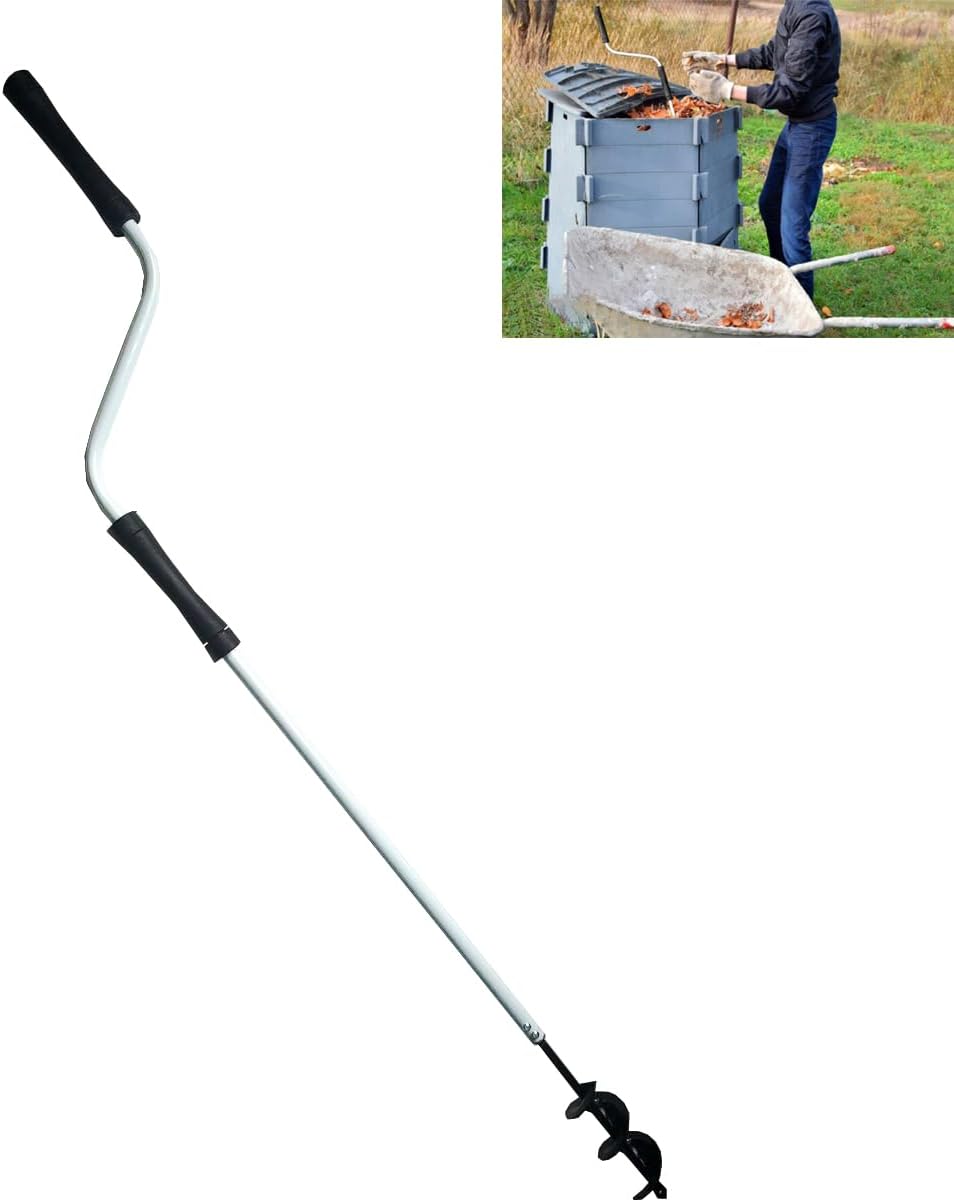
Pros
- Simple manual operation with no installation steps or power source required.
- Long 43-inch shaft is useful for reaching down into many outdoor compost bins.
- Dual anti-slip handles can make twisting more controlled than using a plain rod.
- Reviewers commonly mention that it is easy to screw into compost, though lifting and stirring can still take effort.
Cons
- May be less effective in a very shallow or only partially filled bin, based on mixed reviewer feedback.
- Dense, compacted compost can still require steady twisting and lifting effort.
- Gardeners who want to fully flip large piles may still prefer a fork, shovel, tumbler, or powered equipment.
The Focefec 0888 compost aerator is a manual turning tool made for loosening and aerating compost in outdoor bins and piles. Based on the listed specifications, it uses a long iron bar with spiral plates at the working end and dual handles at the top, giving home gardeners a straightforward way to mix leaves, grass clippings, kitchen scraps, and other compostable material.
The main benefit is routine aeration. Turning compost helps reduce compaction and introduces air into the pile, which supports the natural decomposition process. The product information indicates that the spiral plates are designed to stir and lift material as the tool is twisted into the compost and drawn back upward.
At about 43 inches long, this tool offers useful reach for many backyard compost bins while keeping the user’s hands away from the pile. The iron construction, listed rustproof finish, 2-inch spiral plates, and 5.1-inch anti-slip handles all point to a simple, durable design. It also arrives as a no-assembly tool, which is helpful for gardeners who want a low-fuss compost accessory.
In practical use, this style of aerator fits gardeners who maintain stationary compost bins rather than rotating tumblers. It can be especially useful in small yards, vegetable garden areas, and backyard compost stations where a pitchfork may feel awkward or where there is limited space around the bin. Reviewers commonly describe the tool as easy to screw into compost, though several note that breaking up dense material still takes effort.
There are a few limitations to keep in mind. A partially filled bin may not give the spiral end enough material to grab and mix effectively, and heavily compacted lower layers can take repeated twists and lifts. Use steady body positioning, avoid overstraining your back or wrists, and clean soil or compost residue from the tool before storing it.
This is a sensible choice for gardeners who want a dedicated compost turning tool that is simpler than a fork and does not require power. If you need to move large volumes of material, completely rebuild a pile, or manage heavy farm-scale compost, a larger turning method may be more efficient.
Best For / Avoid If
Best for buyers prioritizing
- Simple manual operation with no installation steps or power source required.
- Long 43-inch shaft is useful for reaching down into many outdoor compost bins.
- Dual anti-slip handles can make twisting more controlled than using a plain rod.
Consider another option if
- May be less effective in a very shallow or only partially filled bin, based on mixed reviewer feedback.
- Dense, compacted compost can still require steady twisting and lifting effort.
- Gardeners who want to fully flip large piles may still prefer a fork, shovel, tumbler, or powered equipment.
Best Compost Aerator Tool Buying Guide
Choose a tool made for compost, not just soil
A compost aerator is designed to reach into organic material and create air channels or lift buried material toward the surface. Spiral and crank-style tools, such as the Lotech Products Compost Crank Compost Aerator, EJWOX Stainless Steel Compost Aerator Tool, Sewiden Compost Turning Tool, Focefec Compost Aerator Tools, and BIOGRN 46.5" Compost Aerator Tool, are more directly suited to bins and outdoor compost piles than short hand cultivators.
General hand cultivators can loosen garden soil, and a lawn core aerator can remove plugs from turf, but those tools do not match the intended compost-bin task as closely. For this reason, they were not treated as final recommendations for the best compost aerator tool.
Match length to your bin depth and your back comfort
Length matters because compost bins are often deeper than they look once leaves and food scraps settle. The Lotech Products Compost Crank is listed at 46 inches tall with a 30-inch effective depth, while the BIOGRN model is listed at 46.5 inches long. Focefec lists a 110 cm, or 43.3-inch, length, and Sewiden lists a 33.4-inch height.
If you use a tall, straight-sided bin, a longer tool can reduce bending and help you reach deeper layers. If you use a smaller compost bag, tumbler access door, or low bin, a shorter tool may be easier to maneuver without bumping the sides.
Compare spiral, corkscrew, and profiled-tooth designs
Spiral and corkscrew-style aerators are meant to be inserted into the pile, turned, and lifted so material moves and air enters the compost. The LotechProducts model uses a corkscrew design and is described as able to work into corners and through vines and other troublesome ingredients. EJWOX, Sewiden, Focefec, and BIOGRN also describe spiral-style turning or mixing features.
The Leborgne Naturovert Aerompost uses profiled teeth for horizontal and vertical mixing, according to the listed specifications. That may appeal to gardeners who prefer a more rake-like mixing action instead of a crank-style spiral.
Look closely at handle style and grip comfort
Compost aeration is repetitive work, so handle comfort is not a small detail. The Lotech Products Compost Crank has free-spinning glass-filled nylon handles, EJWOX lists a free-spinning hardwood handle, and BIOGRN includes two ribbed, non-slip handles. Focefec lists anti-slip sponge sheet handles, while Leborgne describes an S-shaped handlebar for comfortable use.
Gardeners with wrist, shoulder, or back concerns should favor a handle style that lets them turn the tool without gripping too tightly. Also consider whether you can use the tool while standing upright, especially if your compost bin is tall or placed on uneven ground.
Check material and rust-resistance claims
Compost tools work in damp, gritty material, so the listed material matters. LotechProducts lists solid 3/8-inch stainless steel, BIOGRN lists a thick 0.48-inch premium stainless steel shaft, and EJWOX describes sturdy steel. Focefec lists iron spiral plates and describes the tool as rustproof and durable, while Sewiden describes rust and corrosion resistance.
Stainless steel can be a strong choice for frequent outdoor use when listed by the manufacturer. Still, any compost aerator should be rinsed and dried after use when practical, because wet compost residue left on the tool can make cleaning harder over time.
Consider setup, storage, and routine upkeep
Several of the valid compost tools are described as simple to start using. LotechProducts says the Compost Crank is ready to use with no assembly required, BIOGRN says its one-piece compost mixing tool requires zero assembly, Sewiden says no complicated setup is required, and Focefec says there are no install steps.
Storage is easier when a long tool has a clear place to hang. BIOGRN includes a custom dual-prong wall-mount holder, while some other tools simply need a dry shed, garage hook, or bin-side storage spot. Rinse off compost, let the tool dry, and keep handles out of standing water.
Avoid common compost aerator mistakes
One common mistake is waiting until a pile is extremely dry, dense, or matted before aerating. BIOGRN specifically notes that its spiral head is ideal for fresh or lightly compacted compost and suggests aerating before the pile gets too dry or compacted. Regular, moderate turning is usually easier on both the gardener and the tool than forcing a tool through a neglected pile.
Another mistake is treating every aerator like a pry bar. Insert, turn, and lift according to the product’s stated design, and avoid sudden sideways force if the tool is stuck. Follow the manufacturer’s use and safety instructions, wear garden gloves if needed, and keep stable footing around the bin.
Think about small spaces and compost tumblers
Small-space gardeners often compost in compact bins, bags, or tumblers, where a full-size garden fork may be awkward. EJWOX describes use for compost tumblers and bins, and Sewiden describes use with outdoor compost tumbler bins and bags. These designs may fit gardeners who need a dedicated mixing tool rather than a large digging tool.
Before buying, compare the tool length and head width with your bin opening. A long tool can be comfortable in a tall bin, but a smaller opening may require a slimmer or easier-to-angle design.
Compost Aerator Tool: How We Researched This Guide
Our analysis is based on manufacturer specifications, prices, ratings, review counts, descriptions, and listed features available for July 2026. This is research-based product comparison.
Products clearly designed for compost bins, compost piles, compost bags, or compost tumblers were considered valid. General soil cultivators, hand grubbers, and lawn core aerators were excluded from final recommendations because their listed task is not primarily compost turning.
Ranking factors included compost-specific design, listed tool length, handle comfort, assembly requirements, material and rust-resistance claims, storage features, rating strength when review data was available, and suitability for common home composting setups. We also considered beginner friendliness and accessibility because many homeowners want a tool that reduces bending and heavy lifting.
Final Recommendations
Overall Pick: Lotech Products Compost Crank Compost Aerator. Based on the listed specifications, it offers a 46-inch overall height, 30-inch effective depth, solid 3/8-inch stainless steel construction, free-spinning handles, no required assembly, a lifetime limited warranty, and the strongest available rating profile at 4.8 out of 5 from 511 reviews.
Accessible Choice: 46.5" Compost Aerator Tool, Manual Compost Turner, No Assembly Stainless Steel Compost Stirring Tool for Compost Bins, Outdoor Compost Piles & Backyard Composting, Wall Mount Hook. The BIOGRN tool stands out for its 46.5-inch length, one-piece no-assembly design, ribbed non-slip handles, stainless steel shaft, and included wall mount, which can help gardeners keep the tool easy to reach and off the ground.
Beginner Pick: Compost Turning Tool,Compost Stirring Tool,Compost Aerator Tool Turner and Mixing Tool for Outdoor Compost Tumbler Bins Bags. The Sewiden tool is described as requiring no complicated setup, with a 33.4-inch height, 5.9-inch spiral, and a simple insert-and-stir approach for outdoor compost bins. Gardeners who want a lower listed price among valid compost tools can also compare the Focefec Compost Aerator Tools.
FAQ
What is the best compost aerator tool for a beginner?
A beginner should look for a compost-specific tool with simple operation, comfortable handles, and little or no assembly. The Sewiden Compost Turning Tool and BIOGRN 46.5" Compost Aerator Tool both list easy setup, while the Lotech Products Compost Crank is ready to use with no assembly required.
How long should a compost aerator tool be?
Choose length based on your bin depth and how much bending you want to avoid. Longer listed tools, such as the 46-inch LotechProducts model and 46.5-inch BIOGRN model, are better suited to deeper bins and outdoor piles, while shorter tools may be easier in compact bins or bags.
Can I use a soil cultivator as a best compost aerator tool?
A soil cultivator can loosen garden soil, but it is not usually the most practical tool for reaching into a compost pile. For compost, a spiral, corkscrew, crank, or compost-specific mixing design is typically a closer match to the task.
How do I maintain a manual compost aerator?
After use, remove clinging compost, rinse the tool if needed, and let it dry before storage. Keep it in a shed, garage, or on a wall hook when available, such as the wall mount included with the BIOGRN model.
Is a stainless steel compost aerator worth considering?
Stainless steel is worth considering when you plan to aerate regularly or store the tool near damp composting areas. LotechProducts lists solid stainless steel construction, and BIOGRN lists a premium stainless steel shaft, both of which are relevant features for outdoor compost use.
What safety tips matter when using a best compost aerator tool?
Work from stable footing, keep your hands clear of the spiral or teeth, and avoid forcing the tool sideways if it catches. Follow the manufacturer’s instructions for inserting, turning, lifting, cleaning, and storing the tool.
Continue your garden research
Browse more practical guides in Compost, Soil & Mulch.
See how Dove Creek Gardens researches and compares products.