

Long handled garden tools such as shovels, rakes, hoes, and border forks form the backbone of everyday garden maintenance. However, leaning these heavy implements against garage walls or crowding them into shed corners quickly creates clutter and safety hazards. Unsecured handles topple easily, damaging cutting edges, warping wooden shafts, and posing tripping risks. Understanding how to store long handled garden tools correctly protects your equipment investment and makes retrieving the right tool effortless when outdoor chores begin.
Finding the right storage setup depends on your available floor space, wall construction, and physical accessibility needs. Whether organizing a compact garden closet, a bustling workshop, or a dedicated potting shed within our broader collection of garden tools and pruning gear, matching your storage approach to your tool inventory is essential. For this 2026 organizational guide, 0 commercial storage units were supplied in the database for direct specification review, meaning we focus entirely on proven structural methods, storage mechanics, and equipment-care principles rather than endorsing unverified brands.
In this guide, we break down wall-mounted brackets, freestanding tool carousels, tool clip systems, and vertical suspension racks. We also explore essential maintenance routines that keep metal blades rust-free and wooden handles smooth during prolonged seasonal downtime.
Wall-Mounted Tool Tracks and S-Hooks
Wall-mounted horizontal rail systems provide exceptional space efficiency by lifting heavy tools completely off the floor. These systems typically use an aluminum or heavy-gauge steel track secured directly into wall studs, paired with adjustable hooks, prongs, or rubber-coated pegs. Gardeners can slide hooks along the rail to accommodate varying tool widths, from wide leaf rakes to slender transfer shovels.
When installing a wall track, anchor it firmly into wall framing rather than drywall alone. A row of heavy forged digging spades, garden forks, and trenchers can easily exceed forty pounds. Position the rail high enough so tool heads hang clear of floor dampness while keeping handles accessible without excessive overhead reaching.
Spring-Loaded Grippers and Tool Clamps
Spring-loaded cam clamps and rubber roller grips secure tools by the shaft rather than relying on tool heads or hang holes. These individual holders mount directly to studs, masonry walls, or plywood backer boards. By pressing the handle against the grip, the internal spring or rubber roller clamps down under the tool’s own gravitational pull.
Grippers work well for tools with uniform shaft diameters, including brooms, stirrup hoes, and aluminum-handled cultivators. However, heavily contoured fiberglass handles or tapered wooden shafts can occasionally slip if moisture or dirt coats the handle. Ensure the friction pads are kept clean and verify that the clamp rating matches the weight of your heaviest tools.
Freestanding Floor Towers and Racks
Freestanding tool towers or mobile caddies are ideal for gardeners renting their property, working in masonry garages where drilling is impractical, or managing large yards where moving the entire tool set outdoors is convenient. These units feature molded plastic or tubular steel frames with individual vertical slots or grid openings to hold handles upright.
Stability is the primary concern with floor racks. Place your heaviest digging spades and iron rakes in the center or lowest slots to prevent the caddy from becoming top-heavy. Units equipped with locking casters allow you to roll the entire collection onto a patio during seasonal work and tuck it neatly away when finished.
Head-Up Versus Head-Down Orientation
Gardeners frequently debate whether long handled tools should hang with their working heads facing upward or downward. Hanging tools head-down—by their handles or hanging eyelets—keeps sharp edges, cutting tines, and heavy iron heads closer to the ground, reducing the risk of head injuries if a tool dislodges. It also lowers the center of gravity on freestanding racks.
Conversely, hanging tools head-up on double prongs placed just beneath the shoulder of the blade is often more convenient for standard spades, round-point shovels, and garden forks. If you store tools head-up, ensure hooks are spaced widely enough so sharp edges do not catch on clothing as you pass by, and avoid placing them above shoulder level.
Dedicated Storage for Long Pruning and Cutting Equipment
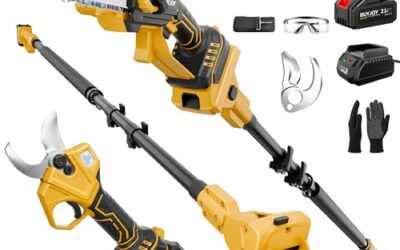
Long handled tools are not limited to digging and cultivating implements; they also encompass specialized cutting gear like telescoping pole saws, tree loppers, and powered pruners. Storing equipment like a cordless pole pruner requires extra precautions to protect delicate chain bars, gearing heads, and battery docks from dust and impact.
Never hang pole pruners or heavy loppers by their cutting blades or adjustment collars. Instead, use wide, padded U-hooks that support the upper shaft without placing torque on the cutting head. Store spare cutting gear, such as a pruning saw for thick branches, in scabbards alongside long tools to keep sharp teeth shielded from accidental contact.
Cleaning and Conditioning Prior to Storage
A well-organized storage rack cannot protect tools that are put away dirty. Soil holds ambient moisture against steel blades, accelerating rust, pitting, and edge dulling. Before returning any implement to its storage slot, scrape away caked soil using a wire brush or stiff putty knife, rinse off residue, and wipe the steel thoroughly dry.
Apply a thin coat of general-purpose machine oil, boiled linseed oil, or camellia oil to metal surfaces prior to winter storage. For ash or hickory wooden handles, an annual wipe-down with boiled linseed oil prevents drying, cracking, and splintering, ensuring your handles remain smooth and comfortable season after season.
Sand Bucket Method for Small Sheds
A classic, low-cost method for storing frequently used long handled tools involves a sturdy bucket or half-barrel filled with coarse builder’s sand mixed with mineral oil or vegetable oil. Plunging clean shovel blades and trowels into the oily sand keeps the metal isolated from damp shed air while scouring off residual grime each time the tool is inserted or removed.
This technique is particularly effective for active spring and summer storage near garden entrances. However, avoid using fine beach sand or salted play sand, which can scratch steel finishes or induce corrosion. Keep the sand container covered if outdoor moisture or pets have access to the area.
Research Methodology and Trust
At Dove Creek Gardens, our editorial guidance is rooted in practical horticultural mechanics, material durability standards, and realistic home maintenance routines. We screen storage techniques and hardware categories by examining material strength, mounting stability, load ratings, handle compatibility, and ergonomic ease of access for gardeners of all physical abilities.
Our research reviews structural specifications across heavy-gauge powder-coated steel racks, extruded aluminum tracks, high-impact polymers, and traditional wood framing options. We cross-reference manufacturer technical claims against aggregated feedback from active gardeners, identifying common failure points such as plastic clip fatigue, stripped wall anchors, and rust formation in humid sheds.
This analysis is based on hardware engineering principles, material science, and published storage guidelines rather than controlled laboratory destruction testing. Every storage recommendation is evaluated for real-world usability in unheated outdoor structures, where seasonal temperature swings and humidity test both mounting hardware and tool materials.
Frequently Asked Questions
What is the best height to install a wall rack for how to store long handled garden tools?
A wall rack should generally be mounted between 55 and 65 inches from the floor, depending on user height and average tool length. This elevation keeps tool heads off damp concrete while allowing the user to lift tools on and off hooks comfortably without straining their shoulders or back.
Can long handled garden tools be stored outdoors safely?
Long handled tools should not be left exposed to direct sunlight and rain for extended periods. Ultraviolet radiation degrades fiberglass shafts, rain swells and rots wooden handles, and moisture oxidizes steel blades. If outdoor storage is necessary, keep tools under a waterproof lean-to, shed overhang, or covered tool locker.
How do I prevent long handled garden tools from rusting while stored?
Prevent rust by washing off soil, drying metal heads thoroughly, and applying a light barrier coat of oil before hanging. Using silica gel packs or ensuring cross-ventilation in garden sheds also minimizes air condensation, which is the primary cause of rust during winter dormancy.
Is it better to hang tools by their handles or their heads?
Hanging tools head-down by an eyelet or shaft clamp is generally safer because heavy, pointed metal heads stay closer to the ground. However, tools with flared T-handles or wide spade shoulders can be hung head-up on dual steel prongs safely, provided the hooks are firmly secured into wall studs.
How should I store long pruning tools alongside digging tools?
Keep sharp cutting implements separated from blunt digging equipment to prevent blades from nicking or dulling. Protective sheaths should be placed over pruners and saws, such as a folding pruning saw, before they are stored on dedicated hooks or shelves.
Continue your garden research
Browse more practical guides in Garden Tools & Pruning.
For product comparisons, see Best Pruning Shears For Small Hands 2026: Reviews and Buying Guide.
See how Dove Creek Gardens researches and compares products.