


Thick stems can demand more squeezing force than sore or weak hands can comfortably provide. Ratchet pruners address this by advancing through a cut in stages, rather than requiring one full-force squeeze. This guide to Best Ratchet Pruning Shears For Arthritis compares four listed ratchet models for homeowners who want help pruning shrubs, fruit trees, and other woody growth.
We compared the published specifications, stated cutting capacities, blade and handle details, operating modes, and available owner-feedback information. Priorities include a manageable cut sequence, a suitable capacity for your branches, grip comfort, maintenance, and safe storage. A ratchet can reduce force per squeeze, but it does not guarantee pain-free gardening; stop if pruning causes pain and seek professional advice about persistent hand symptoms.
The Gardener's Friend Ratchet Anvil Pruner for Easier Stems and Small Branch Cutting Fiskars 91095935J Bypass Pruning Shears for Clean Cuts on Live Stems EZKUT 3130-1A Ratcheting Anvil Pruner for Easier Branch Cutting Fiskars Power-Lever Anvil Pruner for Dry Stems and Small Branches Prices and availability can change. We may earn a commission from qualifying purchases.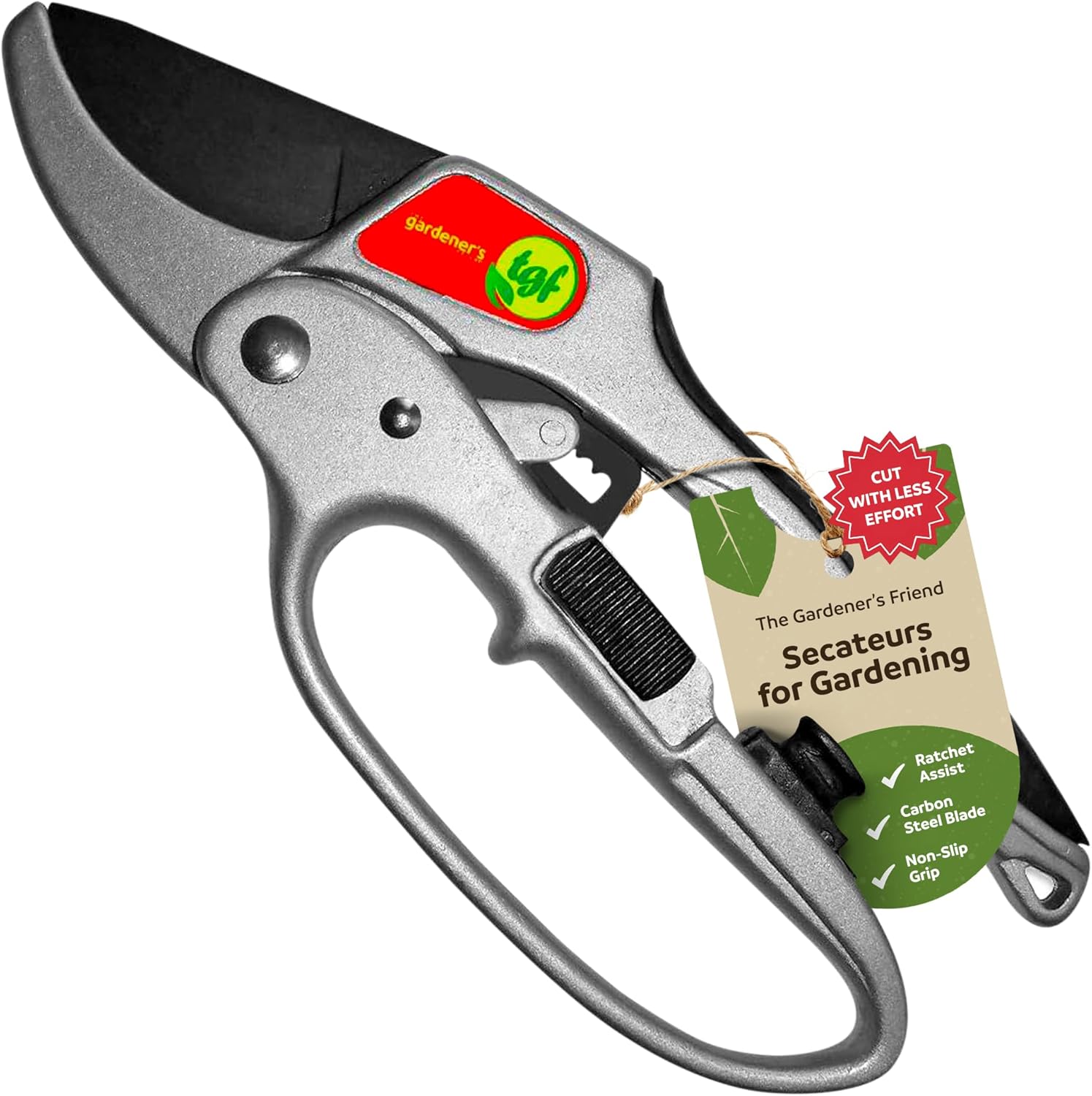


Pros
- Assisted ratchet mechanism can reduce effort compared with standard hand pruners.
- Suitable for pruning, trimming, and harvesting a range of garden stems and small branches.
- Anvil insert helps stabilize material during the cut.
- Corrosion-resistant materials are useful for tools that are regularly used around soil and plant moisture.
- Safety latch supports safer storage between pruning tasks.
Cons
- Anvil pruners may be less suitable for very precise cuts on tender green growth than bypass-style pruners.
- Maximum cutting performance depends on wood type and individual hand strength.
- Gardeners regularly cutting branches larger than the listed capacity may prefer loppers or a pruning saw.
The Gardener's Friend Ratchet Anvil Pruner is a hand pruning tool made for common backyard jobs such as trimming stems, cutting stalks, harvesting, and cleaning up small branches. Its assisted ratcheting action makes it especially relevant for gardeners who want more leverage from a compact hand tool, including homeowners maintaining flower beds, vegetable rows, shrubs, and small trees.
The key benefit is the strength-boosting ratchet mechanism. Instead of relying only on one squeeze, the tool is designed to help increase cutting power in stages, which can make tougher pruning tasks feel more manageable. The product information lists cutting ability up to 1 inch, depending on the wood and the user's individual strength, so it should be viewed as a capable hand pruner rather than a replacement for larger cutting tools.
Based on the listed specifications, the pruner uses a heavy-duty manganese steel blade with an aluminum body and a corrosion-resistant design. The anvil includes a neoprene insert intended to help hold stems and branches in place while cutting. It also has an enhanced safety latch, a useful feature for keeping the tool closed during storage or when carrying it between garden beds.
At 7.95 inches long by 3.15 inches wide and 220 grams, this is a compact tool for routine garden work. It can fit well into raised-bed maintenance, patio container cleanup, shrub tidying, and seasonal pruning tasks where a full-size lopper would be awkward. The black and grey traditional design keeps the focus on function rather than specialty features.
There are a few practical limits to keep in mind. Anvil pruners are generally better for firmer stems and dead or woody material than for the cleanest possible cuts on soft, living growth, where some gardeners may prefer bypass pruners. The blade should be kept clean after use, and the safety latch should be engaged before storing the tool. For branches beyond the stated capacity, a lopper or pruning saw would be the more appropriate choice.
Overall, this pruner is a sensible option for gardeners who want a compact, assisted-action cutting tool for stems, stalks, and small branches. It is best suited to routine yard and garden maintenance rather than heavy tree work or ultra-fine floral trimming.
Best For / Avoid If
Best for buyers prioritizing
- Assisted ratchet mechanism can reduce effort compared with standard hand pruners.
- Suitable for pruning, trimming, and harvesting a range of garden stems and small branches.
- Anvil insert helps stabilize material during the cut.
Consider another option if
- Anvil pruners may be less suitable for very precise cuts on tender green growth than bypass-style pruners.
- Maximum cutting performance depends on wood type and individual hand strength.
- Gardeners regularly cutting branches larger than the listed capacity may prefer loppers or a pruning saw.
Pros
- Clean bypass cutting style is well suited to live stems and delicate green growth.
- Low-friction blade coating and sap groove help reduce sticking during regular pruning.
- Non-slip grip and ambidextrous hand orientation support comfortable, controlled use.
- Compact hand-pruner size is convenient for raised beds, patios, shrubs, and flower borders.
Cons
- The 5/8 inch cut capacity may be less suitable for thicker branches, where a lopper or saw would be a better match.
- Like most pruning shears, the blades should be wiped clean and lightly oiled after use to limit sap buildup and support longer tool life.
- Gardeners who need extra leverage for woody material may prefer a larger pruner or lopper.
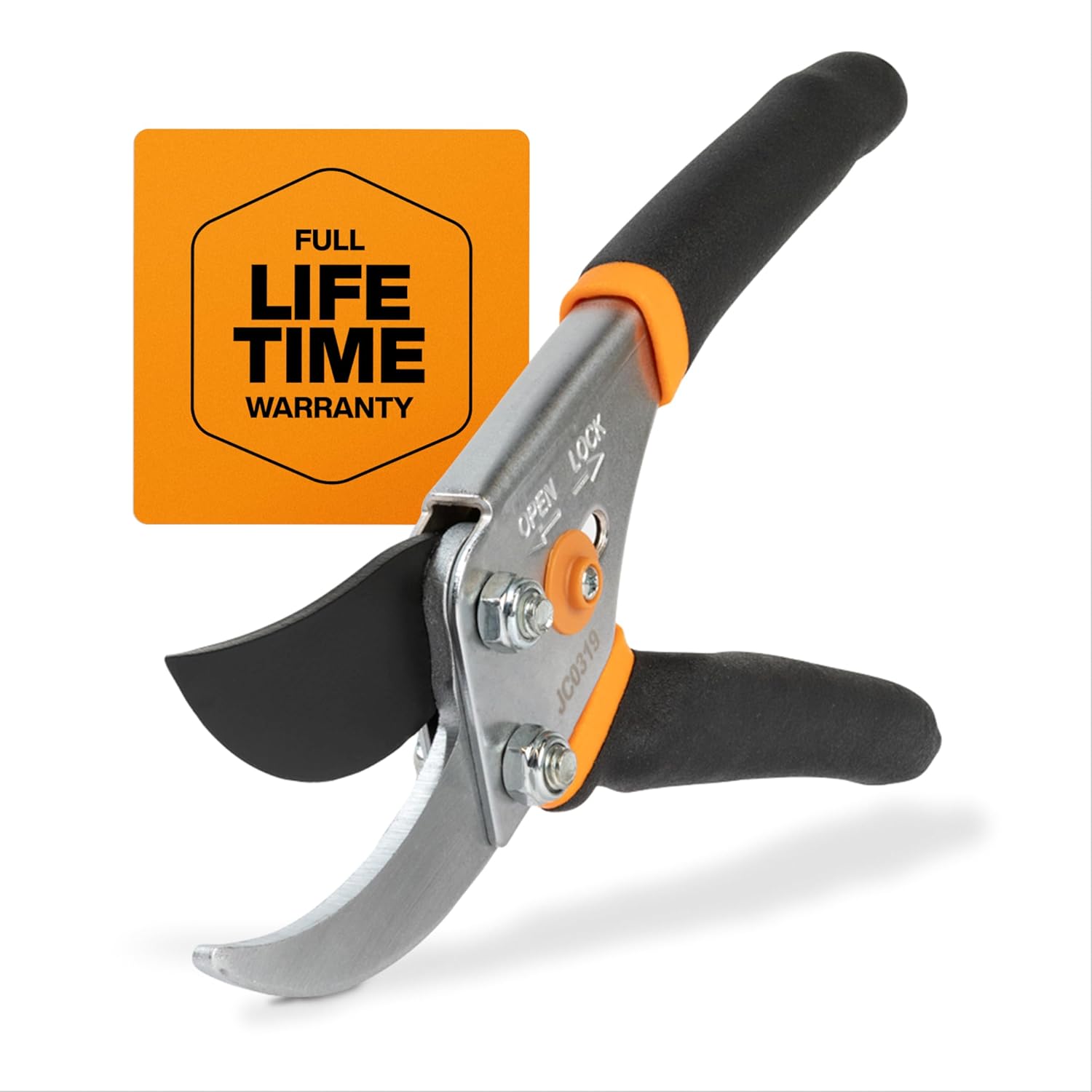
The Fiskars 91095935J bypass pruning shears are everyday hand pruners intended for live plant material, including flower stems, green growth, and small branches up to 5/8 inch in diameter. Based on the listed specifications, they are a sensible fit for homeowners, beginner gardeners, patio growers, and anyone who needs a compact tool for routine trimming rather than heavy cutting.
The main gardening advantage is the bypass blade design. Instead of crushing plant material, the two blades pass by each other to help create cleaner cuts on live stems. That makes this style especially useful for pruning flowers, shaping small shrubs, removing spent growth, and keeping raised-bed or container plants tidy.
The product information lists precision-ground alloy steel blades with a low-friction coating, plus a sap groove intended to reduce sticking. Those features are practical when cutting fresh stems that can leave residue on blades. The all-steel construction supports durability, while the 10.4 ounce listed weight keeps the tool in the typical range for a handheld garden pruner.
For handling, these shears include an ergonomic non-slip grip and an easy-open safety lock. The listed ambidextrous hand orientation is helpful for shared household tools, and the compact 9.07 inch by 2.47 inch dimensions make the pruner easy to store in a garden tote, shed drawer, or small patio storage box.
In a backyard or small-space garden, these pruners are best used for light seasonal cleanup, flower harvesting, soft-stem trimming, and small branch pruning within the stated capacity. They are not the right tool for thick woody limbs, tough dead branches, or jobs that require extended reach. For those tasks, gardeners should consider a lopper, pruning saw, or other tool designed for larger material.
Care is straightforward but important. The manufacturer’s listed care guidance recommends wiping the pruners clean after each use to prevent sap buildup and lightly oiling the blade for longer product life. Overall, these Fiskars bypass pruning shears are a practical, easy-to-understand choice for regular garden maintenance when used within their 5/8 inch cutting capacity.
Best For / Avoid If
Best for buyers prioritizing
- Clean bypass cutting style is well suited to live stems and delicate green growth.
- Low-friction blade coating and sap groove help reduce sticking during regular pruning.
- Non-slip grip and ambidextrous hand orientation support comfortable, controlled use.
Consider another option if
- The 5/8 inch cut capacity may be less suitable for thicker branches, where a lopper or saw would be a better match.
- Like most pruning shears, the blades should be wiped clean and lightly oiled after use to limit sap buildup and support longer tool life.
- Gardeners who need extra leverage for woody material may prefer a larger pruner or lopper.
Pros
- Ratcheting mechanism provides added leverage for gardeners who struggle with thicker cuts.
- Replaceable SK5 carbon steel blade is a useful long-term maintenance feature.
- Ambidextrous hand orientation makes it suitable for right- or left-handed users.
- Compact 10.63-inch length is easy to store with other hand tools while still offering a larger pruning capacity.
Cons
- The ratcheting action may feel slower or cumbersome for gardeners making many quick, small cuts.
- Product information notes it is best suited for medium to large hands, so it may not be the most comfortable fit for smaller hands.
- As with any sharp pruner, safe locking, careful handling, and routine blade maintenance are important.
The EZKUT 3130-1A is a ratcheting anvil hand pruner designed for heavier backyard pruning tasks than simple flower deadheading. Based on the listed specifications, it is built for cuts up to 1.5 inches and is aimed at homeowners, gardeners, landscapers, and others who need extra leverage for shrubs, fruit tree branches, and woody stems.
Its main advantage is the three-stage ratcheting action. Instead of relying on one hard squeeze, the mechanism lets the cut progress in steps, which can be helpful for gardeners with reduced hand strength or fatigue during longer pruning sessions. Reviewers commonly mention that the tool feels sharp and easier on the hands for thicker cuts, though those comments should be treated as user feedback rather than verified testing.
The pruner uses an SK5 hardened carbon steel blade with a non-stick coating, and the product information describes the blade as replaceable. The anvil blade type is a good match for woody material and general cleanup, while the contoured blade is described as being designed for circle-cutting. Its listed dimensions are 10.63 inches long by 4.13 inches wide, with a weight of 0.2 kilograms.
For everyday garden use, this pruner fits jobs such as trimming overgrown shrubs, cutting back thicker perennial stems, pruning small fruit tree branches, and cleaning up woody growth around raised beds or fence lines. The ambidextrous orientation is useful in shared garden tool kits, and the green metal-handled design keeps it in the familiar hand-pruner category rather than requiring the storage space of a full lopper.
Comfort and safety features include an ergonomic handle, non-slip cushioned grip, shock-absorbing pads, wrap-around knuckle protector, and a built-in safety lock. The product information also notes that it is best suited for medium to large hands, so gardeners with smaller hands may want to compare grip span before choosing it. Always lock the blades closed before storing it, keep fingers away from the blade path, and avoid forcing it beyond the listed cutting capacity.
This is a practical choice for gardeners who want a compact hand tool with more leverage than a conventional pruner. Gardeners who mainly deadhead flowers, harvest herbs, or make fast repeated cuts on thin green growth may prefer a lighter bypass pruner or snip, while those cutting larger limbs should consider a lopper or pruning saw instead.
Best For / Avoid If
Best for buyers prioritizing
- Ratcheting mechanism provides added leverage for gardeners who struggle with thicker cuts.
- Replaceable SK5 carbon steel blade is a useful long-term maintenance feature.
- Ambidextrous hand orientation makes it suitable for right- or left-handed users.
Consider another option if
- The ratcheting action may feel slower or cumbersome for gardeners making many quick, small cuts.
- Product information notes it is best suited for medium to large hands, so it may not be the most comfortable fit for smaller hands.
- As with any sharp pruner, safe locking, careful handling, and routine blade maintenance are important.
Pros
- Good match for dry stems, dead wood, and light branch trimming around home landscapes.
- Leverage-assisted design may feel easier than a basic pruner when cutting hard, dry material.
- Comfort grips and an ambidextrous layout make it approachable for a range of home gardeners.
- Compact hand-pruner size is easy to keep in a garden tote, shed, or near raised beds.
- Reviewers commonly mention sharp cutting action and comfortable handling.
Cons
- Anvil pruners may be less suitable than bypass pruners for very clean cuts on tender live stems.
- The 5/8-inch capacity is for small branches, so larger limbs call for loppers or a saw.
- Some reviewers report the locking lever can be fussy, so gardeners should check that it closes securely before storage.
The Fiskars Power-Lever Anvil Pruner is a compact hand pruner built for dry, dead stems, small branches, flower deadheading, and general backyard cleanup. Based on the listed specifications, it has a 5/8-inch cutting capacity, which places it in the light pruning category rather than heavy limb removal. It is a sensible fit for homeowners, beginner gardeners, and anyone who wants a straightforward pruning tool for shrubs, spent flowers, and winter-damaged growth.
The key feature is the Power-Lever design, which the product information describes as increasing leverage compared with traditional designs. That matters most when cutting hard, dry, woody material, where extra mechanical advantage can make repeated cuts feel more manageable. The anvil cutting action works like a blade pressing against a flat surface, a style often preferred for dead or dry wood rather than delicate green stems.
The pruner measures 8 inches by 5.8 inches in the listed product dimensions and weighs 11.8 ounces, so it should be easy to carry around a yard or store with other hand tools. It includes cushioned rubber grips for comfort, an ambidextrous hand orientation for right- or left-handed use, and a precision-ground steel blade with a low-friction coating intended to reduce sticking and help resist rust. The all-steel body and lifetime warranty are useful details for gardeners who expect regular seasonal use.
In a typical home garden, this pruner fits jobs like cutting back dead perennial stems, cleaning up small shrub growth, trimming dry twigs from ornamental plantings, and clipping spent flower stems. It can also be useful near raised beds or patio planters when a full-size lopper would be unnecessary. Because it is a hand pruner, it is best kept for controlled cuts on smaller material rather than forcing it through branches beyond its stated capacity.
There are a few practical limits to keep in mind. Anvil pruners can crush softer live stems more than bypass pruners, so gardeners focused on precise pruning of tender green growth may prefer a bypass model. The blade and pivot should be kept clean, and the tool should be stored closed and out of reach of children. Some reviewers mention issues with the locking lever, so it is worth checking the lock before putting the pruner in a pocket, tote, or shed drawer.
Overall, this Fiskars pruner is best for gardeners who mainly need extra leverage for dry stems, dead wood, and small branch cleanup. If your work involves larger limbs, extensive orchard pruning, or the cleanest possible cuts on live stems, a different tool such as loppers, a pruning saw, or a bypass pruner may be the better match.

Pros
- Useful cutting range for common backyard branches up to 1.2 inches.
- Dual batteries can reduce downtime during larger pruning sessions.
- Lighter 2-pound design may help reduce hand strain compared with repeatedly operating manual shears.
- Replacement SK5 blade is included for future maintenance.
- Two cutting modes provide flexibility for different branch sizes.
Cons
- The 1.2-inch maximum cutting capacity may be less suitable for large limbs or heavy tree work.
- Battery charging is required, so gardeners who prefer always-ready hand tools may prefer bypass pruners.
- The included oil pot is supplied without oil, so maintenance supplies may need to be purchased separately.
The Seesii Electric Pruning Shears are cordless powered pruners for routine garden trimming. Based on the listed specifications, they are intended for branches up to 1.2 inches and suit homeowners maintaining roses, shrubs, grapevines, fruit trees, and other backyard plants.
The main benefit is powered cutting that can reduce the repeated hand force required by manual shears. Two cutting modes provide a smaller setting for lighter stems and a wider setting for branches within the stated 0.8-inch to 1.2-inch range, helping users choose a more suitable opening for the task.
The pruner weighs 2 pounds and is designed for one-hand operation. Its cordless format avoids a power cord in the garden, while the two included 2000mAh batteries are listed to provide more than 2,000 cuts per charge. Actual results can vary with branch size, wood hardness, and operating conditions.
This tool fits backyard pruning sessions where gardeners need to shape shrubs, remove smaller fruit-tree branches, or maintain grapevines without carrying a larger saw. It can also be useful for gardeners who find frequent squeezing of manual shears tiring, although the listed cutting capacity is intended for branches rather than large limbs.
The SK5 steel blade is described as supporting cleaner cuts and edge retention, and a replacement blade is included. Users should follow the manual for charging, blade care, oiling, and safe operation, and should remember that the included oil pot does not contain oil. The supplied glove may add convenience, but it does not replace careful handling of the cutting blade.
This is a reasonable fit for homeowners and beginner-to-intermediate gardeners seeking powered help for ordinary pruning. Gardeners who regularly cut branches larger than 1.2 inches, prefer a tool that needs no charging, or need a saw for substantial tree work should consider a different pruning tool.
Best For / Avoid If
Best for buyers prioritizing
- Useful cutting range for common backyard branches up to 1.2 inches.
- Dual batteries can reduce downtime during larger pruning sessions.
- Lighter 2-pound design may help reduce hand strain compared with repeatedly operating manual shears.
Consider another option if
- The 1.2-inch maximum cutting capacity may be less suitable for large limbs or heavy tree work.
- Battery charging is required, so gardeners who prefer always-ready hand tools may prefer bypass pruners.
- The included oil pot is supplied without oil, so maintenance supplies may need to be purchased separately.

Pros
- Ratchet mechanism provides extra leverage for gardeners who struggle with thicker stems or reduced hand strength.
- Single-cut mode keeps the tool useful for lighter pruning instead of limiting it to only heavy cuts.
- SK5 high carbon steel blade and corrosion-resistant coating are strong feature choices for a garden hand tool.
- Rubber-grip aluminum handles and compact dimensions support comfortable carrying and general yard use.
- Reviewers commonly mention easy cutting, comfort in the hand, and usefulness for dry branches.
Cons
- Anvil pruners may be less suitable than bypass pruners for very delicate green stems where a cleaner slicing cut is preferred.
- The listed 3/4-inch cutting capacity means gardeners handling larger limbs will still need loppers or a pruning saw.
- One reviewer noted the safety latch was tough to engage, so users may want to check lock operation before carrying or storing the tool.
The GEROSSI GRS-PSR is a ratchet anvil pruning shear intended for routine garden trimming and tougher small-branch work. Its feature set is aimed at homeowners, older gardeners, and anyone who wants more mechanical help than a standard hand pruner provides. It is especially relevant for pruning dried-out plants, woody stems, shrubs, roses, and small tree branches within the listed cutting width.
The key benefit is the 2-in-1 cutting design. In single-cut mode, the pruner works like a traditional garden clipper for everyday snips. In ratchet mode, the 3-step mechanism is designed to increase cutting power, allowing the user to work through thicker or drier material in stages rather than relying on one hard squeeze. Reviewers commonly mention that this ratcheting action makes dry branches and larger small limbs easier to manage.
Based on the specifications, the tool measures 8.1 inches long by 2.7 inches wide, weighs 0.22 kilograms, and has a 2-inch blade with a 0.75-inch cutting width. The blade is listed as high carbon steel with a corrosion-resistant Teflon coating, while the handles are aluminum with an ergonomic rubber grip. It is an ambidextrous design and includes a hang rope, a user manual, and a safety lock that the product information says can be operated with one hand.
In a backyard or small-space garden, this style of pruner fits many common jobs, including cutting back dead perennial stems, shaping small shrubs, removing spent rose canes, trimming fruiting plants, and cleaning up woody growth around raised beds or patios. The compact size makes it easier to keep in a garden tote or hang in a shed so it is available for quick pruning tasks during regular yard walks.
There are a few practical limits to keep in mind. The listed capacity is 3/4 inch, so larger branches are better handled with loppers or a pruning saw. Because this is an anvil pruner, it may be more appropriate for dry or woody material than for tender green stems that benefit from the cleaner slicing action of bypass pruners. As with any sharp pruning tool, keep fingers clear of the blade, engage the lock when not in use, wipe sap and debris from the blade after pruning, and store it dry.
Overall, the GEROSSI GRS-PSR looks like a sensible choice for gardeners who want a compact hand pruner with extra leverage for tougher cuts. Gardeners focused mostly on fine, live-stem pruning may prefer a bypass model, but those dealing with dry stems, small woody branches, or limited grip strength are the best match for this ratchet anvil design.
Best For / Avoid If
Best for buyers prioritizing
- Ratchet mechanism provides extra leverage for gardeners who struggle with thicker stems or reduced hand strength.
- Single-cut mode keeps the tool useful for lighter pruning instead of limiting it to only heavy cuts.
- SK5 high carbon steel blade and corrosion-resistant coating are strong feature choices for a garden hand tool.
Consider another option if
- Anvil pruners may be less suitable than bypass pruners for very delicate green stems where a cleaner slicing cut is preferred.
- The listed 3/4-inch cutting capacity means gardeners handling larger limbs will still need loppers or a pruning saw.
- One reviewer noted the safety latch was tough to engage, so users may want to check lock operation before carrying or storing the tool.

Pros
- Ratchet mechanism lowers the grip force needed for each cut, a real advantage for weak or arthritic hands
- SK5 steel blade supports clean, durable cutting on woody growth
- The 7/8 inch capacity handles thicker branches than many basic hand pruners
- Purpose-built for gardeners with reduced hand strength, a group many standard pruners overlook
Cons
- Ratchet cutting takes multiple squeezes per stem, which may feel slower on large pruning jobs than a single-stroke pruner
- Details such as handle material, spring, safety lock, and blade replacement are not provided in the published information, so long-term care and parts availability are unclear
- Gardeners needing to cut limbs beyond 7/8 inch will still need loppers or a pruning saw, and those who want quick snips on soft green stems may favor a bypass pruner
FLORA GUARD built these pruning shears around a ratchet mechanism, a design that splits one tough cut into several easier steps. Based on the listed specifications, the blade is SK5 steel and the shears are rated for branches up to 7/8 inch thick. The product information identifies seniors, gardeners with arthritis, and anyone with reduced grip strength as the intended users, though the same easing of effort benefits any gardener who prunes a lot of woody growth.
The three-step ratchet is the feature that matters most. With a ratchet pruner, each squeeze advances the blade partway, and squeezing again continues the cut from that point. Instead of forcing one powerful grip through hard wood, you make two or three light squeezes. The practical effect is less strain on the hand, wrist, and thumb, which is why this style is often suggested for weaker hands. The listed SK5 blade is a high-carbon steel widely used in cutting tools because it can hold a sharp edge under regular use.
Ergonomics are the core appeal, and the 7/8 inch cutting capacity places these clippers in heavy duty hand pruner territory. That diameter comfortably covers rose canes, young fruit tree stems, hydrangea branches, and most shrub wood a backyard gardener routinely removes. The published information does not specify handle material, spring type, or locking mechanism, so it is worth reviewing the full listing for those details before purchase.
In a typical backyard, these shears fit jobs like cutting out deadwood, trimming roses, harvesting woody herbs, and tidying perennials along raised beds. Because the ratchet does part of the work, longer cleanup sessions are less tiring, which encourages smaller, more frequent prunings. Branches thicker than 7/8 inch call for loppers or a pruning saw, so keep those tools on hand for mature wood.
A few care points will protect any pruner like this. Wipe sap from the blade after use, apply a light coat of oil occasionally, and store the shears dry to discourage corrosion on the steel. Cut only within the rated capacity, avoid twisting the blade mid-cut, and wear gloves and eye protection around thorny growth. Keep in mind that ratchet cutting is deliberately slower per stem, since a thick branch takes several squeezes to finish.
The product information suggests these shears are a strong match for gardeners with arthritis, seniors, and anyone who struggles with ordinary hand pruners but still needs to cut real branches rather than soft tips. Gardeners who want fast single-squeeze snipping on green growth may prefer a traditional bypass pruner alongside them, and those facing large limbs should look at loppers instead. For accessible, lower-strain pruning of everyday woody stems, the design is well aimed at the job.
Best For / Avoid If
Best for buyers prioritizing
- Ratchet mechanism lowers the grip force needed for each cut, a real advantage for weak or arthritic hands
- SK5 steel blade supports clean, durable cutting on woody growth
- The 7/8 inch capacity handles thicker branches than many basic hand pruners
Consider another option if
- Ratchet cutting takes multiple squeezes per stem, which may feel slower on large pruning jobs than a single-stroke pruner
- Details such as handle material, spring, safety lock, and blade replacement are not provided in the published information, so long-term care and parts availability are unclear
- Gardeners needing to cut limbs beyond 7/8 inch will still need loppers or a pruning saw, and those who want quick snips on soft green stems may favor a bypass pruner
Best Ratchet Pruning Shears For Arthritis buying guide
How ratchet action helps
A ratchet holds progress as you release and squeeze again, splitting one cut into smaller stages. That can make thick wood easier to work through than a single-squeeze pruner. It also takes more repeated actions per branch, so consider the pace of your pruning as well as force.
Ratchet designs differ. The GEROSSI model lists a three-step ratchet plus a single-cut mode. FLORA GUARD and EZ Kut list ratcheting action, while The Gardener’s Friend describes assisted action. The published details do not give the same level of mechanism information for every model, so compare only claims stated for each tool.
Match capacity to branch size
Listed maximum capacities range from 3/4 inch for the GEROSSI to 1.5 inches for the EZ Kut. The Gardener’s Friend lists up to 1 inch, and FLORA GUARD lists up to 7/8 inch. These figures are product claims, not a promise that every branch at that diameter will cut easily.
Wood type, branch condition, blade sharpness, and your ability to position the tool can affect a cut. Choose a capacity that covers the branches you routinely prune, but do not force the tool past its stated limit. For larger limbs, use an appropriate pruning saw or hire help rather than straining your hand.
Choose anvil action for the task
All four matching ratchet products are described as anvil pruners. An anvil blade closes against a flat support, making this style a relevant option for firm or dry woody material. These listings do not provide a detailed comparison of cut quality on live stems, so gardeners pruning mostly delicate green growth should consider that evidence gap before choosing an anvil tool.
For mixed garden work, first identify the material you cut most often. A heavy-duty ratchet anvil pruner may suit branches and woody stems; it may not replace a bypass pruner for every fine pruning task. Avoid using one tool for jobs its design or capacity does not cover.
Check grip, hand fit, and control
Handle comfort is personal, especially when arthritis affects grip or finger movement. EZ Kut lists a non-slip cushioned handle and says it suits medium to large hands. GEROSSI lists ergonomic non-slip handles; FLORA GUARD lists a soft TPR grip. The Gardener’s Friend lists an aluminum body but does not specify handle sizing in the published details.
Before a long pruning session, check that you can hold the handles securely, operate the ratchet, and engage the safety lock without awkward twisting. Product descriptions do not give handle dimensions or opening width for these models, so consult the seller’s current listing if hand fit is a deciding factor.
Consider blade material and upkeep
The listings identify SK5 steel blades for EZ Kut, GEROSSI, and FLORA GUARD. The Gardener’s Friend lists a manganese steel blade. Keep blades clean and dry after use, and follow manufacturer care instructions for cleaning, lubrication, and sharpening. Sap and debris can interfere with cutting and ratchet movement.
Sharpening matters because a dull edge can make a manual cut harder. Use a sharpener appropriate for the blade and follow tool instructions; our garden tool sharpener guide covers options for maintaining garden cutting tools. Check the ratchet and lock before storage, and keep closed pruners out of children’s reach.
Account for pace and repeated cuts
A multi-stage cut can reduce the force needed at each squeeze, but it can take several squeezes to finish a branch. That tradeoff may suit a gardener who prunes a modest number of thicker stems and values gradual cutting. For extensive pruning, repeated operation may still tire hands, even when each squeeze feels manageable.
Use short work periods and take breaks before grip control declines. A tool that feels comfortable for a few test cuts may feel different after repeated use. Do not treat claims such as “threefold” cutting power as a measured reduction in effort; the published information does not establish a standardized comparison.
Use the safety lock and cut deliberately
Listings identify safety locks on EZ Kut, GEROSSI, and The Gardener’s Friend; GEROSSI says its lock can be operated one-handed. Engage the lock when carrying or storing the tool, and keep fingers clear of the blade and ratchet. Follow the manufacturer’s instructions, particularly when unlocking or clearing a jam.
Set the branch securely in the cutting head before squeezing. Do not twist the pruner sideways, force an oversized branch, or cut above a stable working position. If grip weakness makes safe control uncertain, ask someone else to handle the task.
Weigh price against fit and evidence
Listed prices run from $16.17 for GEROSSI to $39.99 for The Gardener’s Friend. A lower price does not establish lower quality, and a higher listed price does not prove better comfort or longer service life. The published ratings show 4.6/5 from 1,130 reviews for EZ Kut; other matching products show ratings but list zero reviews, so there is little owner-feedback evidence to compare for them.
Check current price, product details, and return terms before buying because listings can change. Do not assume replacement parts or blade availability; those details are not provided here. For other pruning-tool choices, see our folding pruning saw guide, available in Italian.
Research methodology and trust
We screened the seven listed products for relevance to ratchet pruning and garden branch cutting. Four match: The Gardener’s Friend, EZ Kut, GEROSSI, and FLORA GUARD. The bypass pruner, conventional anvil pruner, and electric pruning shears do not meet the requested ratchet-pruner type, so they are not individual recommendations here.
We compared stated cutting capacity, ratchet or assisted-action details, blade material, handle features, safety locks, prices, and the owner-feedback information supplied. Ranking judgments reflect practical fit for different branch sizes and hand-use preferences, not a laboratory measure of force or durability.
This is research-based analysis, not physical testing. Manufacturer and product-listing claims are presented as listed; we cannot verify them independently from the published data. We review the guide during October 2026 and update it when product specifications or source data change.
Frequently asked questions
Are ratchet pruning shears a good choice for arthritis?
Ratchet action divides a cut into stages, which may suit gardeners who find a single strong squeeze difficult. Handle fit and hand symptoms vary, and no listed model guarantees comfortable or pain-free use. Try a few controlled cuts and stop if discomfort increases.
How do I choose the right capacity?
Estimate the diameter of branches you prune most often, then choose a listed capacity that covers those tasks. The four matching products list limits from 3/4 inch to 1.5 inches. Treat maximum capacity as a stated limit, not a guarantee for every wood type or condition.
Which ratchet pruning shears have the highest listed capacity?
EZ Kut lists a maximum capacity of 1.5 inches, the highest among these four matching models. Its description says it suits medium to large hands. Check your grip and branch type before choosing based on capacity alone.
Can anvil ratchet shears replace bypass pruners?
Not necessarily. These recommendations are anvil pruners, while bypass pruners use two blades that pass each other. The published data does not establish that these anvil models are the best option for every live-stem pruning task, so match blade style to your usual work.
How should I maintain ratchet pruning shears?
Remove sap and debris, dry the tool, and follow its manufacturer’s cleaning, lubrication, and sharpening instructions. Check that the ratchet and safety lock move as intended before use. The published information does not confirm replacement-part availability for these models.
How should I store ratchet pruning shears safely?
Close and lock the blades before carrying or storing the pruners. Keep them dry and out of children’s reach. Follow the product instructions for any additional storage or care requirements.
Are these pruners suitable for a small garden?
They can suit a small garden if its pruning needs involve branches within the selected tool’s capacity. A higher maximum capacity is not automatically useful if your regular work involves only thin stems. Choose for branch size, hand fit, and the amount of repeated cutting you expect.
Continue your garden research
Browse more practical guides in Garden Tools & Pruning.
For product comparisons, see Best Pruning Shears For Small Hands: Reviews and Buying Guide.
See how Dove Creek Gardens researches and compares products.