


Weeds in paver joints can be awkward to reach with a standard garden hoe. A hori hori knife may help with accessible weeds, but its broad blade is not the same as a narrow crevice scraper. This guide to Best Weeding Knife For Pavers compares two garden knives for gardeners who want one tool for weeding and other garden tasks.
We compared 3 listed products for task fit, blade and handle details, storage, and listed owner feedback. The key distinction: both knives suit general garden work, while neither listing describes a purpose-built paver-joint blade. For narrow joints, match tool shape to joint width and avoid scraping that could chip paver edges or disturb joint material. See our guide to what a hori hori knife is used for for broader garden applications.
Nisaku NJP650 Hori Hori Weeding Knife for Digging, Planting, and Root Cutting PERWIN Hori Hori Garden Knife for Weeding, Planting, and Digging Juxifyron Crack Weeder with Long Handle for Patio and Paver Joints Prices and availability can change. We may earn a commission from qualifying purchases.


Pros
- Japanese stainless steel blade is listed as rust-proof and scratch resistant for long-term garden use.
- Straight and serrated edges make it more versatile than a single-purpose hand weeder.
- Blade markings are useful for gardeners who plant bulbs and seedlings at specific depths.
- Ambidextrous hand orientation makes it suitable for right- or left-handed adult users.
Cons
- The exposed sharp blade requires careful handling, cleaning, and storage, especially around children or pets.
- A 7.25-inch knife-style tool may be more than some gardeners need for very small containers or delicate seedling work.
- Gardeners who prefer cushioned or molded grips may want to compare it with an ergonomic plastic-handle model.
The Nisaku NJP650 is an original-style hori hori weeding knife designed for adult gardeners who want one sturdy hand tool for several common yard and bed tasks. Based on the listed specifications, it is intended for weeding, seeding, transferring bulbs, digging, cutting roots, and general outdoor use. It fits best in the tool kit of a homeowner, raised-bed gardener, or beginner who wants a compact alternative to carrying separate small digging and cutting tools.
The main advantage is the dual-edge stainless steel blade. One side has a straight cutting edge, while the other has a serrated edge, giving the tool more flexibility for slicing into soil, working around weeds, and cutting through roots or tougher garden material. The concave blade shape also supports scooping and loosening soil, which is one reason hori hori knives are popular for planting and transplanting work.
The blade measures 7.25 inches and includes engraved inch markings, a useful detail when planting bulbs, seeds, or starts at a target depth. The handle is listed as wood and measures 5.25 inches, with an overall tool weight of about 10 ounces. The product information also notes ambidextrous hand orientation, so it is not limited to right-handed use. A faux leather sheath is included, and the tool can hang neatly on a peg rack for tidier storage.
In a backyard garden, this knife can help with removing weeds from borders, opening planting holes for bulbs, working soil in raised beds, and trimming small roots during transplanting. In a patio or small-space garden, it may replace several bulkier hand tools when storage is limited. It is also listed for camping and other outdoor uses, although gardeners should still treat it primarily as a sharp manual cutting and digging tool.
There are a few practical cautions. The blade has both plain and serrated cutting edges, so it should be handled deliberately, stored in its sheath when not in use, and kept away from children. The product care instructions specify hand washing only, so gardeners should clean and dry it after use rather than leaving it dirty or wet. While the stainless steel blade is described as rust-proof and scratch resistant, routine cleaning is still a sensible habit for any soil-contact tool.
Overall, the Nisaku NJP650 is a strong fit for gardeners who want a traditional wooden-handle hori hori with planting-depth markings and a multipurpose blade. It is less ideal for someone who only needs a tiny hand trowel for delicate container work or who strongly prefers a cushioned molded grip, but for general weeding, planting, and root work, the listed feature set is well matched to everyday garden tasks.
Best For / Avoid If
Best for buyers prioritizing
- Japanese stainless steel blade is listed as rust-proof and scratch resistant for long-term garden use.
- Straight and serrated edges make it more versatile than a single-purpose hand weeder.
- Blade markings are useful for gardeners who plant bulbs and seedlings at specific depths.
Consider another option if
- The exposed sharp blade requires careful handling, cleaning, and storage, especially around children or pets.
- A 7.25-inch knife-style tool may be more than some gardeners need for very small containers or delicate seedling work.
- Gardeners who prefer cushioned or molded grips may want to compare it with an ergonomic plastic-handle model.
Pros
- Versatile enough for common garden tasks such as weeding, digging, transplanting, cutting, and dividing plants.
- Stainless steel, rust-resistant blade material is well suited to routine garden use when cleaned and stored properly.
- Depth markings are useful for planting tasks where consistent soil depth matters.
- Full-tang wood handle design provides a more secure construction than a blade attached only at the neck.
- Reviewers commonly mention that the blade feels sharp and the tool feels solid in hand.
Cons
- The blade is intentionally sharp, so it requires careful handling, safe storage, and extra caution around children.
- It is a hand tool, so gardeners dealing with large weeding areas or heavy excavation may prefer a long-handled tool.
- One reviewer reported a broken belt loop on the sheath, so the sheath hardware may be worth checking during regular use.
The PERWIN Hori Hori Garden Knife is a multipurpose manual weeding and planting tool designed for gardeners who want a compact alternative to carrying a trowel, weeder, and small cutting tool separately. Based on the listed specifications, it has a 12.1-inch overall length with a 7-inch stainless steel blade, making it a practical size for raised beds, borders, containers, and close work around established plants.
The main appeal is the blade layout. One side is sharpened for slicing, while the other has a serrated edge for tougher roots or fibrous growth. The curved blade can be used for digging planting holes, loosening weeds, removing small clumps, or dividing plants where a larger shovel would be too bulky. Inch markings on the blade also help with planting depth, which is especially useful for bulbs, transplants, and seedlings.
The product information indicates a full-tang design, meaning the blade extends through the handle for added strength. The walnut wood handle is secured with three metal rivets and includes a hanging hole for storage. It is also listed as ambidextrous, so right- and left-handed gardeners should be able to use the basic blade functions comfortably, while the included sheath provides a protected way to carry or store the knife between tasks.
In everyday home gardens, this tool fits well for weeding along bed edges, opening bags of soil or mulch, cutting twine, transplanting small perennials, and working in tight spaces where a full-size spade is awkward. It may be especially useful for gardeners who maintain raised beds or small backyard plots because it packs several frequent tasks into one tool that can ride on a belt or stay in a garden tote.
There are a few cautions to keep in mind. The blade is sharp by design, and reviewers commonly note that it should be handled carefully, cleaned by hand, and stored in the sheath when not in use. This is not the right tool for leaving loose in a bucket where someone could reach in without looking, and it should be kept away from children. Gardeners with very large beds, deep clay excavation, or heavy root removal may still want a long-handled weeder, digging fork, or shovel for leverage.
Overall, the PERWIN Hori Hori Garden Knife is a strong fit for beginner-to-intermediate gardeners who want a versatile hand tool for planting, weeding, cutting, and measuring depth. If you prefer specialized tools for every task or need long-reach leverage to avoid kneeling, a different weeder or trowel may be more comfortable, but for compact everyday garden work, the feature set is well matched to common backyard needs.
Best For / Avoid If
Best for buyers prioritizing
- Versatile enough for common garden tasks such as weeding, digging, transplanting, cutting, and dividing plants.
- Stainless steel, rust-resistant blade material is well suited to routine garden use when cleaned and stored properly.
- Depth markings are useful for planting tasks where consistent soil depth matters.
Consider another option if
- The blade is intentionally sharp, so it requires careful handling, safe storage, and extra caution around children.
- It is a hand tool, so gardeners dealing with large weeding areas or heavy excavation may prefer a long-handled tool.
- One reviewer reported a broken belt loop on the sheath, so the sheath hardware may be worth checking during regular use.
Pros
- Combines spike scraping and wire brushing for two kinds of crevice cleanup.
- Adjustable handle offers multiple working lengths.
- Includes two brush heads and a hanging hole for storage.
Cons
- Manual scraping and brushing require physical effort, especially across large paved areas.
- The listing does not specify head dimensions or handle assembly details, so fit and setup may take some checking.
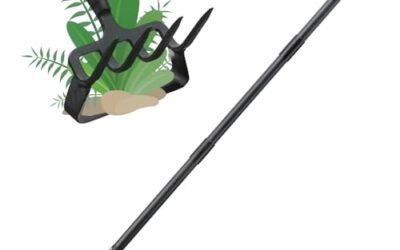
Juxifyron’s manual crack weeder is designed to remove weeds and moss from narrow joints in patios, pavers, walkways, and driveways. It may suit homeowners who want a hand-operated option for routine hardscape cleanup.
The tool combines a metal spike scraper with a steel-wire brush head. The spike is intended to loosen growth in cracks, while the brush can help clear residue from joints. This two-part approach is useful when a single pass with a brush is not enough.
The handle adjusts from 20 to 67 inches and can be assembled or disassembled. The longer setting can reduce the need to work close to the ground, while the shorter setting may help with more focused cleanup. A hanging hole provides a storage option.
For backyard use, work along paving joints, driveway seams, or suitable deck gaps, pulling the brush toward you as described in the product information. Two brush heads are included, though the listing does not explain how head replacement is performed.
This is a manual tool, so clearing extensive areas may take time and repeated effort. Use care around surfaces that could be scratched by metal bristles or the spike, and follow the product instructions before using it on roof tiles. The listing provides no specific surface-compatibility guidance.
Consider this tool for targeted crevice maintenance where adjustable reach and both scraping and brushing are useful. Gardeners with large areas to clear, or those needing a specified head size or surface-safe brush, may prefer a product with those details documented.
Best For / Avoid If
Best for buyers prioritizing
- Combines spike scraping and wire brushing for two kinds of crevice cleanup.
- Adjustable handle offers multiple working lengths.
- Includes two brush heads and a hanging hole for storage.
Consider another option if
- Manual scraping and brushing require physical effort, especially across large paved areas.
- The listing does not specify head dimensions or handle assembly details, so fit and setup may take some checking.
Best Weeding Knife For Pavers buying guide
Match tool shape to paver joints
Hori hori knives have broad, curved blades intended for digging and other garden tasks. Their straight and serrated edges can help with cutting or loosening weeds, but broad blades may not fit narrow joints cleanly. If most of your work is between paving stones, a narrow crack weeder may be a better match than a multipurpose garden knife.
Check joint width and depth before choosing. A blade that binds against stone can be difficult to control. Avoid levering hard against paver edges, which may damage the stone or loosen joint material.
Choose blade edges for your other garden tasks
Both listed knives have a straight cutting edge and a serrated edge. Serrations can be useful for sawing through roots, while a straight edge suits slicing tasks. The product details do not give a paver-specific cutting capacity, so do not assume either knife will remove every established weed or root from a joint.
If you also dig, transplant, or measure planting depth, a hori hori can serve more than one purpose. For pavers alone, favor a tool designed to enter a crevice rather than buying extra blade versatility you may not use.
Consider blade length, weight, and control
The Nisaku has a 7.25-inch blade, a 5.25-inch wooden handle, and a listed weight of 10 ounces. PERWIN lists a 7-inch blade and a 12.1-inch overall length. Neither listing gives a comparable weight. Blade length alone does not establish how easily a knife will reach a particular joint, so consider access and control rather than assuming longer means better.
For close work, use a grip that lets you control the blade without pushing toward your hand. Gardeners who prefer to work standing may find a short-handled knife less comfortable for extended paver maintenance than a long-handled crevice tool.
Assess handle construction and comfort
Nisaku lists a wooden handle. PERWIN describes a walnut wood handle with a full-tang blade and three metal rivets. Full tang means blade metal extends through the handle; it describes construction, not a guarantee against damage. Grip comfort is personal, and the available details do not establish that either handle suits every hand size or grip preference.
People with limited hand strength or difficulty bending should weigh the short reach of both knives against the convenience of a long-handled tool. A long handle reduces the need to crouch for some tasks, but it is not a feature listed for either knife here.
Plan for safe use and upkeep
Both knives have sharp edges. Work with the blade moving away from your body, keep your other hand clear of the cutting path, and avoid forcing the blade between stones. Wear suitable garden gloves, and check the paver surface and joint material before scraping. Follow the manufacturer’s care and handling instructions.
Clean soil and plant residue from the blade after use, then dry it before storage. The published details identify stainless steel, but do not provide care instructions or a lifespan. Inspect the edge and handle periodically, and stop using a knife if its handle becomes loose or damaged.
Compare storage and included protection
Nisaku lists a blade hole for hanging on a peg rack. PERWIN lists a hanging hole and a protective sheath with a belt loop. A sheath can help cover an exposed blade during storage, but store any knife where children cannot reach it. Choose storage that keeps the edge covered or secured and prevents contact while reaching for other tools.
Use owner ratings cautiously
The published data lists ratings of 4.6/5 for Nisaku and 4.5/5 for PERWIN, with 0 reviews shown for each. With no review count behind those ratings, they provide little basis for judging owner experience. Compare documented features and choose by task fit instead.
Research methodology and trust
We screened the listed products for relevance to manual garden weeding around pavers. The two hori hori knives qualify as garden weeding tools, but their product details focus on broader uses such as digging, planting, and cutting. We excluded the listed Juxifyron Crack Weeder, Moss Remover Tool from knife recommendations because it is a long-handled scraper and brush tool, not a knife. It may suit a different paver-cleaning need.
Our comparison uses the published specifications, listed features, prices, and ratings. We assessed blade design, handle details, dimensions where provided, storage, and relevance to paver-joint work. The listed ratings show 0 reviews, so owner feedback cannot meaningfully distinguish these options.
This is research-based editorial analysis, not physical product testing. Recommendations reflect documented features and likely use-case fit, not measured performance. We reviewed the published information for this guide in October 2026.
Frequently asked questions
Which best weeding knife for pavers option is better for paver joints?
Neither listing describes a blade designed specifically for narrow paver joints. The Nisaku and PERWIN are multipurpose hori hori knives. For tight crevices, compare a dedicated crack weeder’s shape and reach with your joint dimensions.
Is a hori hori knife suitable for removing weeds between pavers?
It may help with accessible weeds, but its broad blade may not enter narrow joints easily. Avoid forcing it against stone or joint material. Select a crevice-specific tool if most work involves tight gaps.
What blade size should I choose?
The listed blades measure 7.25 inches for Nisaku and 7 inches for PERWIN. A small difference in length does not determine fit for your pavers; joint width, access, and how much blade control you want matter more.
How should I maintain a weeding knife?
Remove soil and plant residue after use and dry the blade before storage. Follow the manufacturer’s care guidance, since detailed maintenance instructions are not included in the published product information.
How should I store a garden knife safely?
Keep the edge covered or secured and store the knife out of children’s reach. PERWIN lists a sheath; Nisaku lists a hanging hole. Choose a stable storage spot where the blade will not be exposed during routine tool access.
Can product ratings show which best weeding knife for pavers knife lasts longer?
No. The published listings show 0 reviews for both knives, so the ratings do not establish long-term durability. The available product details also do not state a service life.
Continue your garden research
Browse more practical guides in Garden Tools & Pruning.
For product comparisons, see Best Pruning Shears For Small Hands: Reviews and Buying Guide.
See how Dove Creek Gardens researches and compares products.