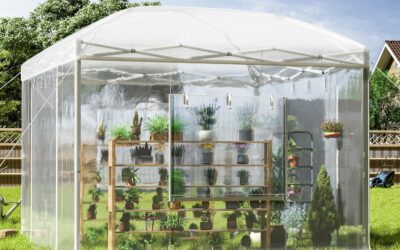



Good airflow is one of the easiest greenhouse upgrades to overlook. A small structure can heat up quickly, trap humidity, and leave tender plants sitting in stale air. This Diy Greenhouse Ventilation guide is written for homeowners, beginner gardeners, and small-space growers who want a practical way to move air without overbuilding the project.
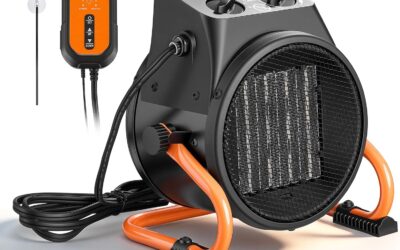
We compared 25 products in the available data, with listed prices ranging from $23.03 – $149.99. The most relevant options include wall-mounted shutter exhaust fans, solar-powered exhaust fans, inline fan kits, temperature controllers, and louver vents that can fit greenhouse, shed, grow tent, or small garden storage setups. If you are also managing heat during cool months, see our guide to a greenhouse heater with thermostat for the other side of climate control.
For this topic, the most important criteria are airflow, power source, temperature control, shutter or louver design, installation requirements, and whether the unit fits the size and access needs of your greenhouse. We only discuss products that clearly support greenhouse ventilation or closely related garden-structure airflow.
iLIVING ILG8SF12V-ST 12-Inch Wall-Mounted Exhaust Fan for Greenhouse and Workshop Ventilation Windigaga 8-Inch Shutter Exhaust Fan for Chicken Coops and Small Greenhouses VEVOR 16-Inch Shutter Exhaust Fan for Greenhouse, Shed, Garage, and Attic Ventilation KKOIUGQK 10-Inch Shutter Exhaust Fan for Garage and Greenhouse Ventilation Prices and availability can change. We may earn a commission from qualifying purchases.


Pros
- Strong listed airflow for greenhouse, garage, workshop, and similar ventilation tasks
- Adjustable airflow and temperature controls offer more flexibility than a basic on-or-off exhaust fan
- UL/cUL Listed design with wire guards and a corrosion-resistant metal construction
Cons
- Wall mounting and 115V electrical installation may require more planning than a portable ventilation solution
- The listed noise level is below 65 dB, so it may be less suitable for gardeners seeking very quiet operation
- Its 12-inch fan size and 15-inch housing may not fit every wall opening or small indoor growing setup
The iLIVING ILG8SF12V-ST is a 12-inch wall-mounted shutter exhaust fan designed to remove air from utility and growing spaces. Its listed applications include greenhouses, garages, workshops, warehouses, and dust extraction areas, making it a practical option for homeowners who need fixed ventilation rather than a portable fan.
Based on the listed specifications, the fan exchanges air at up to 960 cubic feet per minute and is described as covering areas up to 1,400 square feet. In a greenhouse, that airflow can support general air exchange, while in a workshop or garage it can help move warm or stale air out of the space. Actual results will depend on the room layout, wall opening, and installation conditions.
The fan uses a direct-drive motor with 12-inch blades, a galvanized steel frame, aluminum shutters, and aluminum fan blades. Variable speed control allows the airflow to be adjusted, and the included thermal control has a stated range of 32 to 130°F. The automatic shutter design is intended for wall-mounted use, but the supplied information does not specify installation hardware or the exact wall-opening requirements.
For backyard gardeners, the most relevant use is fixed ventilation in a greenhouse or garden workshop. It may also suit a garage used for potting, tool maintenance, or seasonal plant work. The 15 x 15 x 5.75-inch dimensions and 10.15-pound weight should be considered when planning the mounting location, especially where wall space is limited.
This is a 115V electrical appliance, so installation should follow applicable electrical requirements and the product's instructions. The listed noise level is below 65 dB, which is not necessarily quiet for a nearby patio or living area. Overall, it is a reasonable choice for users who need adjustable, wall-mounted ventilation in a greenhouse or utility space, while gardeners seeking a small, silent, or easily movable fan may prefer a different design.
Best For / Avoid If
Best for buyers prioritizing
- Strong listed airflow for greenhouse, garage, workshop, and similar ventilation tasks
- Adjustable airflow and temperature controls offer more flexibility than a basic on-or-off exhaust fan
- UL/cUL Listed design with wire guards and a corrosion-resistant metal construction
Consider another option if
- Wall mounting and 115V electrical installation may require more planning than a portable ventilation solution
- The listed noise level is below 65 dB, so it may be less suitable for gardeners seeking very quiet operation
- Its 12-inch fan size and 15-inch housing may not fit every wall opening or small indoor growing setup
Pros
- Provides a substantial listed airflow level for a compact 8-inch ventilation fan.
- Automatic louvers help protect the opening from outside debris when the fan is not running.
- ETL-listed construction with grounding protection is a useful safety feature for an electrically powered fan.
- Its plug-and-play design may be convenient for homeowners who want to avoid hardwiring.
Cons
- An 8-inch fan may be less suitable for large barns, whole-house ventilation, or spaces needing multiple air exchanges.
- Installation still requires a properly sized wall opening, secure mounting, and a suitable power connection.
- The product information does not specify a thermostat, timer, speed control, or automatic humidity control.
The Windigaga 8-inch shutter exhaust fan is designed to remove stale, warm, humid, dusty, or odorous air from enclosed spaces. For backyard use, it may be a practical fit for a chicken coop, shed, workshop, attic, or small greenhouse, especially for homeowners who want a straightforward powered ventilation option.
Based on the listed specifications, the fan can provide up to 760 CFM of airflow through a 26W motor. That level of movement may help improve air circulation and reduce heat or humidity buildup, although the right fan size and quantity depend on the room dimensions, layout, and existing intake openings.
The fan uses three aluminum alloy blades, a galvanized steel housing, and coated shutter louvers. Its automatic shutters open when the fan operates and close when it stops, which may help limit incoming rain, insects, and dust. The listed dimensions are 6.5 by 10.8 by 10.8 inches, and the unit weighs 5.07 pounds.
For a small greenhouse or coop, this fan could be installed in a wall or suitable panel to exhaust warm air while allowing replacement air to enter through another opening. The included mounting hardware and 5.9-foot power cord are intended to simplify installation, but users should confirm the opening, mounting surface, airflow path, and electrical setup before installation.
The product information lists noise below 40 dB, corrosion-resistant construction, and ETL listing with grounding protection. Even so, gardeners should keep the fan and power connection appropriately protected from moisture, follow applicable electrical safety practices, and clean dust or debris from the fan and shutters as needed. It is a reasonable choice for small enclosed garden spaces, while larger buildings or users needing thermostatic control may prefer a larger or more feature-rich ventilation system.
Best For / Avoid If
Best for buyers prioritizing
- Provides a substantial listed airflow level for a compact 8-inch ventilation fan.
- Automatic louvers help protect the opening from outside debris when the fan is not running.
- ETL-listed construction with grounding protection is a useful safety feature for an electrically powered fan.
Consider another option if
- An 8-inch fan may be less suitable for large barns, whole-house ventilation, or spaces needing multiple air exchanges.
- Installation still requires a properly sized wall opening, secure mounting, and a suitable power connection.
- The product information does not specify a thermostat, timer, speed control, or automatic humidity control.
Pros
- High listed airflow capacity for a 16-inch wall-mounted exhaust fan.
- Shutter-style design helps reduce open-wall exposure when the fan is off.
- Suitable for several common backyard and home utility spaces, including greenhouses, sheds, garages, and attics.
- Fully enclosed motor includes thermal protection and permanent lubrication according to the product information.
- All-metal housing components provide a sturdier feel than lightweight portable fans.
Cons
- Does not include a plug, power switch, speed control switch, or thermostat, so installation may require extra parts and electrical work.
- Requires an approximately 18.9 x 18.9 inch opening, which may be more involved than using a portable fan.
- Listed noise level is up to 65 dB, so it may not be the quietest choice for areas where low sound is a priority.
The VEVOR 16-inch Shutter Exhaust Fan is a wall-mounted ventilation fan intended for moving hot, humid, dusty, or stale air out of enclosed spaces. For gardeners, its most relevant use is greenhouse ventilation, but the product information also lists garages, workshops, chicken coops, sheds, barns, and attics as suitable locations. It is a better fit for homeowners planning a fixed installation than for someone wanting a plug-in portable fan.
Based on the listed specifications, the key benefit is airflow. The fan is rated at 2000 CFM with a 1450 RPM AC motor, which gives it the capacity to exchange air in small enclosed work and growing areas. In a greenhouse, that kind of exhaust setup can help support more active air movement when roof vents or open doors are not enough, especially during still, hot weather.
The housing measures 18.9 x 18.9 inches with a 16-inch fan, and the manufacturer notes that an 18.9 x 18.9 inch cutout is needed for installation. It can be added to wall or window openings, and reviewers commonly describe adapting it to greenhouse, attic, shed, and window-frame projects. The frame is listed as galvanized steel with an aluminum shutter, and the motor is described as fully enclosed with thermal protection and permanent lubrication.
The shutter design is useful in garden outbuildings because it helps close the opening when the fan is off. That can reduce unwanted exposure compared with a permanently open vent. Several reviewers mention pairing the fan with a thermostat or fan controller, which makes sense for greenhouse and attic use, but those controls are not included with this basic fan-only model.
The main limitation is installation. The product information states that it does not include a speed control switch or plug, and users need to purchase and wire separate power accessories for use. Anyone uncomfortable with electrical work should plan for qualified help. The fan is also listed at 65 dB, so it may produce a noticeable hum in quiet areas.
Overall, this VEVOR fan is a practical option for gardeners and homeowners who need a fixed exhaust fan for a greenhouse, shed, garage, coop, or attic and who are prepared for a cutout and proper wiring. If you need a ready-to-plug-in fan, built-in thermostat, or included programmable controller, a different model with those controls already supplied may be more convenient.
Pros
- Useful high-airflow format for removing heat, humidity, odors, and dust from enclosed areas.
- Automatic closing shutters provide a practical barrier against insects and outdoor debris when the fan is off.
- Pre-assembled construction may reduce setup complexity for suitable DIY installations.
Cons
- It requires a properly sized wall or window opening, so installation may still involve measuring, cutting, and securing the unit.
- The supplied information does not specify controls, airflow adjustment, or a thermostat, which may matter to gardeners seeking automatic climate management.
- A 10-inch exhaust fan may be less suitable for very large buildings or spaces requiring more extensive ventilation.
The KKOIUGQK 10-inch shutter exhaust fan is a wall-mounted ventilation unit for moving unwanted air out of enclosed spaces. For gardeners, its most relevant uses include ventilating a greenhouse, shed, garage, shop, barn, or other work area where heat, humidity, odors, or dust can accumulate. The feature set is particularly suited to homeowners and hobby growers who need a fixed exhaust point rather than a portable fan.
Based on the listed specifications, the fan delivers 844 CFM of airflow, which can help exchange stale air in an appropriately sized enclosed area. The product information also lists noise levels as low as 40 dB, a useful consideration when the fan is installed near a workspace. Ventilation can improve comfort around potting benches, stored tools, and garden projects, although the correct fan size depends on the room and the amount of air exchange needed.
The unit has galvanized steel housing with a corrosion-resistant coating, aluminum alloy blades, and aluminum shutters. Its automatic shutter system opens while the fan operates and closes when it is off, helping limit rain, insects, and outside debris according to the product description. The listed dimensions are 6.9 x 12.8 x 12.8 inches, and the pre-assembled design includes a 1.2-meter power cord for installation in a suitable wall or window opening.
In a backyard setting, this fan could be considered for a greenhouse that needs exhaust ventilation, a shed used for potting and tool storage, or a garage where garden equipment is maintained. It may also suit a workshop or barn that needs air movement through a fixed opening. The automatic shutters are helpful for spaces that are not continuously occupied because they close when the fan is not running.
Installation still requires careful measurement and a properly prepared opening, and the supplied information does not identify the required electrical specifications, controls, thermostat, or adjustment options. Follow applicable electrical and building requirements, keep the fan opening clear, and inspect the shutters and blades periodically for dust or debris. Overall, this is a practical choice for gardeners seeking fixed exhaust ventilation in a small to medium utility space, while those needing precise greenhouse climate control or ventilation for a very large building may prefer a more configurable system.
Best For / Avoid If
Best for buyers prioritizing
- Useful high-airflow format for removing heat, humidity, odors, and dust from enclosed areas.
- Automatic closing shutters provide a practical barrier against insects and outdoor debris when the fan is off.
- Pre-assembled construction may reduce setup complexity for suitable DIY installations.
Consider another option if
- It requires a properly sized wall or window opening, so installation may still involve measuring, cutting, and securing the unit.
- The supplied information does not specify controls, airflow adjustment, or a thermostat, which may matter to gardeners seeking automatic climate management.
- A 10-inch exhaust fan may be less suitable for very large buildings or spaces requiring more extensive ventilation.

Pros
- High listed airflow for ventilating garages, greenhouses, attics, and other sizable spaces.
- Temperature controller provides adjustable operation instead of relying only on manual switching.
- Corrosion-resistant aluminum louvers and blades are a practical choice for humid garden environments.
- Automatic shutters close when the fan stops, helping reduce unwanted outdoor entry.
Cons
- The 23.4-inch square frame requires a suitable wall opening and enough surrounding mounting space.
- At approximately 18.4 pounds, installation may be easier with a second person, especially for elevated mounting.
- Gardeners seeking quiet operation, weather-exposure guidance, or detailed installation requirements will need information beyond the supplied specifications.
The iPower 20-inch wall-mounted shutter exhaust fan is intended to move air through garages, greenhouses, attics, barns, warehouses, and similar spaces. Based on the listed specifications, it is best suited to homeowners and gardeners who need a fixed ventilation solution rather than a portable fan for a patio or small room.
Its listed airflow is 3368 CFM, with a 1200 RPM motor rated at 125 watts on a 120V, 60Hz supply. For garden use, that capacity may help exchange warm, stale, or humid air in a greenhouse or work area, although the actual result will depend on room size, wall placement, openings for replacement air, and other site conditions.
The fan uses aluminum louvers and blades with a steel frame. The aluminum components are described as corrosion-resistant, which may be useful in garden spaces where moisture is common. The automatic shutters open while the fan runs and close by gravity when it stops, helping limit dust and mosquitoes from entering through the fan opening, though they should not be treated as a complete seal.
The included temperature controller is listed as an eight-level control adjustable from 50°F to 120°F. The product is delivered mostly assembled, but installation still requires mounting the frame to a wall with tools and connecting the power cord and accessories. Its stated dimensions are 23.4 by 9.4 by 23.4 inches, and the approximately 18.4-pound weight means elevated or overhead mounting may be easier with assistance.
This fan could be useful for ventilating a greenhouse, garage workshop, garden storage area, attic, or barn where wall-mounted air exchange is practical. Before installation, confirm that the wall, opening, electrical supply, and mounting location are appropriate for the 120V equipment. The supplied information does not specify weather-exposure limits, noise level, installation clearances, or maintenance intervals, so those details should be confirmed before outdoor-facing use.
It is a reasonable option for gardeners who need adjustable, fixed ventilation and have a suitable wall location. Those with a small growing space, no electrical connection, limited mounting access, or a need for detailed weatherproofing guidance may prefer a smaller or more specifically documented ventilation product.
Best For / Avoid If
Best for buyers prioritizing
- High listed airflow for ventilating garages, greenhouses, attics, and other sizable spaces.
- Temperature controller provides adjustable operation instead of relying only on manual switching.
- Corrosion-resistant aluminum louvers and blades are a practical choice for humid garden environments.
Consider another option if
- The 23.4-inch square frame requires a suitable wall opening and enough surrounding mounting space.
- At approximately 18.4 pounds, installation may be easier with a second person, especially for elevated mounting.
- Gardeners seeking quiet operation, weather-exposure guidance, or detailed installation requirements will need information beyond the supplied specifications.

Pros
- Uses solar power for ventilation in locations without a nearby electrical outlet.
- Suitable for several common backyard structures, including greenhouses, chicken coops, sheds, and garages.
- The long cable can make it easier to separate the solar panel from the fan location.
- Manual on/off control allows the user to choose when the fan operates.
Cons
- Solar-powered operation may be less consistent when available sunlight is limited.
- The 8-inch size and listed 220 CFM airflow may be less suitable for larger buildings or spaces needing higher-capacity ventilation.
- Installation still requires a suitable window or wall location and secure placement of the solar panel bracket.
The BOBUY 25W Solar Exhaust Fan is designed to move air through outdoor or semi-enclosed spaces such as greenhouses, chicken coops, garden sheds, garages, attics, barns, workshops, and animal houses. Its solar-powered design makes it a practical option for homeowners who need ventilation where running a 110V AC connection would be inconvenient.
Based on the listed specifications, the 8-inch fan provides 220 CFM of airflow and is intended for spaces up to 2,190 cubic feet. That makes it a reasonable fit for many small to medium backyard structures, where moving warm or stale air can support more comfortable conditions for plants, animals, tools, or stored materials.
The fan measures 9.1 by 9.1 by 3.7 inches, and the 14.8-foot cable gives flexibility when positioning the solar panel away from the ventilation opening. A panel bracket is included for installation, and the on/off button provides manual control. The product information indicates that it can be mounted in a window or wall.
For gardening use, this fan could suit a greenhouse, potting shed, chicken coop, or detached workshop that needs daytime air movement. The solar panel may also be useful in locations where electrical access is limited. Its IP44-rated fan blades and waterproof plug are listed for outdoor use, but the fan should still be installed securely and positioned according to the site conditions.
The main limitation is that solar operation depends on available sunlight, so gardeners needing dependable ventilation in low-light conditions may prefer a system with another power source. The 220 CFM airflow may also be less suitable for larger buildings. Overall, this is a practical choice for small-space outdoor ventilation when a solar-powered, manually controlled fan fits the installation area and expected airflow needs.
Best For / Avoid If
Best for buyers prioritizing
- Uses solar power for ventilation in locations without a nearby electrical outlet.
- Suitable for several common backyard structures, including greenhouses, chicken coops, sheds, and garages.
- The long cable can make it easier to separate the solar panel from the fan location.
Consider another option if
- Solar-powered operation may be less consistent when available sunlight is limited.
- The 8-inch size and listed 220 CFM airflow may be less suitable for larger buildings or spaces needing higher-capacity ventilation.
- Installation still requires a suitable window or wall location and secure placement of the solar panel bracket.

Pros
- Strong listed airflow and a low listed power draw of 39W may help ventilate enclosed spaces efficiently.
- Automatic response to temperature and humidity is useful for growers who want less hands-on air management.
- Suitable for several practical locations, including greenhouses, garages, attics, workshops, and chicken coops.
- Adjustable speed control allows ventilation to be tailored rather than limited to a single setting.
Cons
- Installation still requires a correctly sized wall opening, so it may not suit spaces without an appropriate mounting location.
- The product is intended for exhaust ventilation and does not replace a complete greenhouse climate-control system.
- Gardeners needing wireless control, battery operation, or a portable fan may prefer a different design.
The Hon&Guan 12-inch shutter exhaust fan is a wall-mounted ventilation product for moving warm, damp, or odorous air out of enclosed spaces. It is especially relevant to greenhouse owners, home gardeners with utility areas, and homeowners ventilating garages, workshops, attics, or chicken coops.
Based on the listed specifications, the EC motor reaches 1,500 RPM and provides airflow of up to 971 CFM while using 39W. That combination suggests useful air movement for small enclosed work areas and garden buildings where heat, moisture, or odors can accumulate.
The included controller offers 10 adjustable speeds and automatic operation based on ambient temperature and humidity. The fan is listed as fully assembled and includes an 8.2-foot power cord, while the black unit measures 14.57 by 14.57 inches with a listed depth of 7.48 inches.
For backyard use, this fan could be considered for a greenhouse wall, a garden workshop, or a garage used for potting and tool storage. Before installation, measure for the required 12.28-by-12.28-inch opening and confirm that the mounting location and power connection are suitable for the project.
The fan is an exhaust solution rather than a complete climate-control system, so gardeners may need other methods for managing incoming air and overall temperature. Follow the installation guidance, and if the controller alarm sounds, check that the controller cable is fully plugged in. This model is best suited to users seeking adjustable, automatic wall ventilation, while those needing portability or wireless operation should consider another option.
Best For / Avoid If
Best for buyers prioritizing
- Strong listed airflow and a low listed power draw of 39W may help ventilate enclosed spaces efficiently.
- Automatic response to temperature and humidity is useful for growers who want less hands-on air management.
- Suitable for several practical locations, including greenhouses, garages, attics, workshops, and chicken coops.
Consider another option if
- Installation still requires a correctly sized wall opening, so it may not suit spaces without an appropriate mounting location.
- The product is intended for exhaust ventilation and does not replace a complete greenhouse climate-control system.
- Gardeners needing wireless control, battery operation, or a portable fan may prefer a different design.

Pros
- Automates basic greenhouse ventilation as temperatures rise and fall.
- Dual springs may provide useful extra force in exposed or windy locations.
- The solar, thermal-sensitive design does not require manual temperature monitoring.
Cons
- The listed 60°F to 77°F operating range may not suit gardeners who need a different ventilation trigger temperature.
- Compatibility should be confirmed before installation because window dimensions and vent designs vary.
- The supplied specifications do not state the maximum vent opening distance or adjustment options.
The PATIOHZ 2 Pack Solar Automatic Window Opener is designed for greenhouse roof vents and compatible windows. It uses temperature-sensitive operation to help manage heat, making it a practical option for homeowners and beginner gardeners who want more consistent ventilation without opening and closing vents by hand.
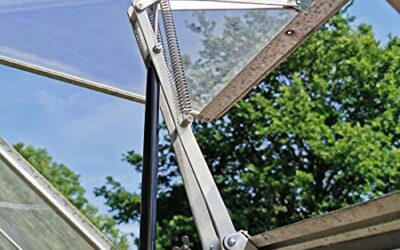
According to the product information, a gas-filled cylinder expands as the temperature rises and gently pushes the window open. As temperatures cool, the spring mechanism closes the vent. The listed operating range is 60°F to 77°F, so this opener is most appropriate for gardeners whose ventilation needs fall within that range.
The dual-spring design is intended to provide more thrust than a single-spring vent and may be useful in windy or exposed locations. The frame is made from aluminum alloy with a black powder coating, and the product information describes the materials as corrosion resistant for outdoor use. The listed dimensions are 14 by 3 by 3 inches.
For a backyard greenhouse, this type of opener can help release accumulated heat through a roof vent while the gardener is away or busy with other tasks. The included clamps and screws are intended to support straightforward installation, but the vent frame and window design should be checked for fit before purchase, especially on compact or nonstandard greenhouse structures.
The temperature range, maximum opening distance, and adjustment options are not provided, so gardeners needing highly precise climate control may prefer a system with adjustable settings or electronic monitoring. Regularly inspect the mounting hardware and vent movement, and keep the opener clear of obstructions. Overall, it is a reasonable fit for passive, temperature-based greenhouse ventilation where the existing window or roof vent is compatible.
Best For / Avoid If
Best for buyers prioritizing
- Automates basic greenhouse ventilation as temperatures rise and fall.
- Dual springs may provide useful extra force in exposed or windy locations.
- The solar, thermal-sensitive design does not require manual temperature monitoring.
Consider another option if
- The listed 60°F to 77°F operating range may not suit gardeners who need a different ventilation trigger temperature.
- Compatibility should be confirmed before installation because window dimensions and vent designs vary.
- The supplied specifications do not state the maximum vent opening distance or adjustment options.

Pros
- Useful airflow capacity for greenhouse, shed, garage, attic, workshop, basement, and chicken-coop ventilation.
- Hands-free temperature control with three speeds, a timer, and remote access.
- Closing shutters and corrosion-resistant materials are practical features for enclosed garden spaces.
- Grounded power cord and ETL certification provide documented electrical safety features.
Cons
- A 10-inch wall-mounted fan may be less suitable for large buildings or spaces that need multiple ventilation points.
- Installation still requires a properly sized wall opening and secure mounting, even though the power connection is plug-and-play.
- The supplied cable lengths may limit controller and outlet placement in some layouts.
The Ehiair 10-inch shutter exhaust fan is designed to move air through enclosed spaces such as greenhouses, sheds, workshops, garages, basements, attics, and chicken coops. For gardeners, its main use is helping remove excess heat, humidity, dust, smoke, and odors where natural airflow is not enough. The feature set is most relevant to homeowners managing a dedicated growing or utility area.
Based on the listed specifications, the fan provides 890 CFM airflow from a 36W motor. That combination suggests a practical balance between strong ventilation and modest electrical demand, although the suitable space size will depend on the building layout and other ventilation openings. Three speed settings allow users to adjust airflow, while the thermostat can operate in Low-Temp or High-Temp mode within a 32°F to 140°F range.
The wall-mounted design includes a controller, a 66-foot remote, an 18-hour timer, and automatic shutters. The shutters open while the fan runs and close when it stops, helping reduce the entry of rain, dust, wind, and insects. A galvanized steel frame, aluminum blades, and sound-absorbing padding on the shutter edges are listed design features for humid or dusty areas. The fan measures 5 by 10.8 by 10.8 inches and weighs 6.39 pounds.
In a backyard greenhouse, this fan could help exchange warm, humid air during periods of high temperature. It may also be useful in a garden shed or workshop where odors, dust, or stagnant air build up, and in a chicken coop where automatic temperature-based operation is convenient. The included cutout template can make it easier to mark the opening, while the 4.9-foot controller-to-plug cord and 2.6-foot fan-to-controller cable help define placement options.
Users should confirm that the wall can accommodate the listed dimensions and that the installation location provides a suitable opening, secure mounting, and safe access to grounded power. The product information does not specify a coverage area, so larger structures may need a different ventilation arrangement. Gardeners seeking a compact, adjustable fan for an enclosed greenhouse or outbuilding may find this feature set useful, while those needing whole-building ventilation or a battery-powered option should consider alternatives.
Best For / Avoid If
Best for buyers prioritizing
- Useful airflow capacity for greenhouse, shed, garage, attic, workshop, basement, and chicken-coop ventilation.
- Hands-free temperature control with three speeds, a timer, and remote access.
- Closing shutters and corrosion-resistant materials are practical features for enclosed garden spaces.
Consider another option if
- A 10-inch wall-mounted fan may be less suitable for large buildings or spaces that need multiple ventilation points.
- Installation still requires a properly sized wall opening and secure mounting, even though the power connection is plug-and-play.
- The supplied cable lengths may limit controller and outlet placement in some layouts.
Pros
- Non-electric operation simplifies installation where wiring is inconvenient.
- Temperature-based opening and closing can reduce the need for manual vent adjustments.
- The listed weight and opening limits accommodate many common greenhouse roof windows.
Cons
- Compatibility still depends on the greenhouse frame, vent design, and window weight, so measurements should be checked before installation.
- The cylinder requires chilling and manual extension and retraction before initial use, according to the product instructions.
- Gardeners needing ventilation below the listed temperature range or for heavier windows may prefer a different opener.
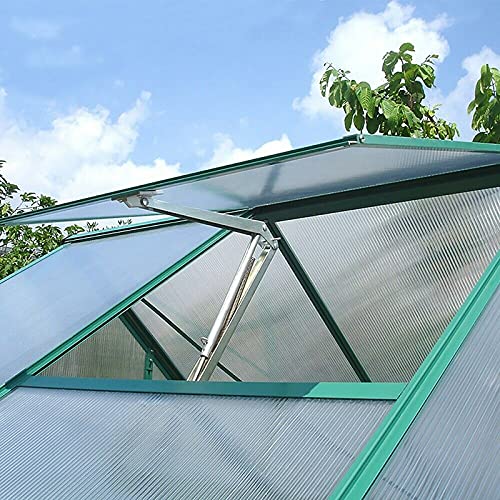
The Yziixi Single-Spring Greenhouse Roof Vent Opener is designed to automate a common greenhouse task: opening a roof window when heat builds up and closing it as temperatures fall. Its solar heat-sensitive cylinder makes it a practical option for homeowners and beginner gardeners who want temperature-responsive ventilation without adding electrical wiring.
Based on the listed specifications, the opener is intended for windows weighing up to 15 pounds and opening up to 18 inches. It is described as opening when temperatures exceed 77°F and closing as temperatures fall to about 59°F, which can help reduce the need for frequent manual vent adjustments during changing weather.
The unit uses aluminum and stainless steel components, with the product information describing the materials as rust-resistant for humid conditions. Installation is intended for compatible panels, metal frames, or wooden frames using the supplied clamps and screws. The cylinder can be turned to adjust the opening angle, providing some control over how far the vent opens.
This opener may be useful in backyard greenhouses where a roof vent is difficult to reach, as well as in small greenhouse spaces where simple passive ventilation is preferred. Before installation, check the window dimensions, frame structure, opening direction, and total window weight to make sure they fit the listed limits.
The instructions call for placing the cylinder in a chilled environment for approximately 30 minutes, then manually extending and retracting it before reinstalling it. The temperature range and 15-pound support limit also mean it may be less suitable for unusually heavy vents or gardeners who need adjustable ventilation outside the listed operating temperatures.
Choose this model if you want a compact, non-electric way to automate a compatible greenhouse roof vent. Consider a different option if your window exceeds the stated capacity, your frame does not accept the included mounting approach, or you need electronic temperature control with a broader adjustment range.
Best For / Avoid If
Best for buyers prioritizing
- Non-electric operation simplifies installation where wiring is inconvenient.
- Temperature-based opening and closing can reduce the need for manual vent adjustments.
- The listed weight and opening limits accommodate many common greenhouse roof windows.
Consider another option if
- Compatibility still depends on the greenhouse frame, vent design, and window weight, so measurements should be checked before installation.
- The cylinder requires chilling and manual extension and retraction before initial use, according to the product instructions.
- Gardeners needing ventilation below the listed temperature range or for heavier windows may prefer a different opener.

Pros
- Flexible two-fan configuration for separate intake and exhaust arrangements
- Long 15-foot cords allow more adaptable installation positioning
- Outdoor-oriented design with listed IP67 waterproofing and a broad working temperature range
- Installation accessories and a user manual are included
Cons
- Performance is dramatically reduced by cloudy conditions or shade, and the fans stop working during rain or at night because there is no built-in battery backup
- The solar panel needs a suitable location with strong direct sunlight for useful daytime operation
- The kit may be less suitable for gardeners who need continuous ventilation or dependable airflow after sunset
The blessny 5.5-inch Solar 2 Fan Kit is an outdoor ventilation setup for moving air through spaces such as greenhouses, sheds, chicken coops, and dog houses. It includes two separate fans that can be arranged for intake, exhaust, or a combination of both, making it a practical option for homeowners managing airflow in small backyard structures.
Each fan uses a listed 5.5-inch size and can reach a maximum speed of 3500 RPM according to the product information. The larger fan size is intended to provide more air volume than the 4.7-inch fans referenced in the listing, which may help with general air circulation or cooling efforts when the solar panel receives direct sunlight.
The two fans have 15-foot cords, giving you room to position them separately during installation. The kit includes fix plates, screws, zip-ties, and an installation guide. The listed dimensions are 15.4 by 12.6 by 1 inches, and the product information identifies the kit components as IP67 waterproofed for outdoor use, with a stated working range from -13°F to 140°F.
For backyard use, one fan could be positioned to draw warmer air out of a greenhouse or shed while the other brings in outside air. Using both fans for intake or both for exhaust may suit a different layout. The flexible arrangement can also be useful in a chicken coop or dog house where air circulation is needed during sunny summer conditions.
The most important limitation is the lack of a built-in battery backup. The fans work well during sunny days, but their performance is dramatically reduced when the day is cloudy or the solar panel is shaded. They stop working during rainy weather or at night, so installation should prioritize unobstructed sunlight and this kit should not be treated as continuous ventilation. Gardeners needing dependable airflow at all hours may prefer a different power source or a system with battery support.
Best For / Avoid If
Best for buyers prioritizing
- Flexible two-fan configuration for separate intake and exhaust arrangements
- Long 15-foot cords allow more adaptable installation positioning
- Outdoor-oriented design with listed IP67 waterproofing and a broad working temperature range
Consider another option if
- Performance is dramatically reduced by cloudy conditions or shade, and the fans stop working during rain or at night because there is no built-in battery backup
- The solar panel needs a suitable location with strong direct sunlight for useful daytime operation
- The kit may be less suitable for gardeners who need continuous ventilation or dependable airflow after sunset

Pros
- Automatic temperature and humidity programming supports more responsive ventilation.
- High listed airflow is useful for clearing heat, odors, and stale air from enclosed utility areas.
- Steel housing and closing shutters add practical protection for a wall-mounted setup.
- Variable speeds and timer functions allow users to tailor operation to changing conditions.
Cons
- Installation requirements, wiring details, and included mounting hardware are not specified in the supplied information.
- The 12.36 x 7.09 x 12.36-inch housing and 7.94-pound weight require a suitable wall opening and secure support.
- Gardeners seeking a fan specifically designed for plant canopies or greenhouse climate control may prefer a product with documented growing-area coverage and mounting details.
The VEVOR 10-inch exhaust fan is a wall-mounted ventilation unit intended to move hot, stale, or odorous air out of enclosed spaces. Its listed uses include attics, sheds, and workshops, making it more relevant to backyard utility areas than to direct plant watering or pruning tasks. Homeowners who want automated air movement may find its controller more useful than a simple on-off fan.
Its main performance feature is a listed airflow of up to 1000 CFM, which can help exchange air in suitable enclosed spaces and clear heat, smells, and floating dirt. The product information also lists a 30W EC motor running at 1900 RPM with airflow up to 7.2 m/s. These figures suggest a focus on steady, efficient ventilation, although the supplied data does not specify a recommended room size or coverage area.
The controller provides temperature and humidity triggers, up to 10 speed settings, multiple modes, a timer, and an alarm. This gives users several ways to adjust operation as conditions change instead of relying entirely on manual switching. The fan measures 12.36 by 7.09 by 12.36 inches and weighs 7.94 pounds, so the mounting surface and available wall space should be checked before purchase. Installation and wiring details are not provided.
For backyard use, this fan may suit an attic above a garage, a garden shed where heat and odors build up, or a workshop that needs regular air exchange. The automatic shutters open when the fan runs and close when it stops, helping limit rain and small debris entering through the opening. It could also be considered for a utility greenhouse area only when the wall, electrical setup, and ventilation needs are compatible, since no greenhouse coverage or plant-specific performance is listed.
The all-metal steel construction is described as rigid and resistant to deformation, and the product information says it can handle damp and rain, but this should not be treated as a complete weatherproofing or installation guarantee. Follow the product instructions and applicable electrical safety requirements, and keep the unit accessible for inspection and cleaning. Overall, it is a practical choice for homeowners needing programmable exhaust ventilation in a suitable wall opening, while buyers needing documented coverage, mounting hardware, or greenhouse-specific controls should compare other options.
Best For / Avoid If
Best for buyers prioritizing
- Automatic temperature and humidity programming supports more responsive ventilation.
- High listed airflow is useful for clearing heat, odors, and stale air from enclosed utility areas.
- Steel housing and closing shutters add practical protection for a wall-mounted setup.
Consider another option if
- Installation requirements, wiring details, and included mounting hardware are not specified in the supplied information.
- The 12.36 x 7.09 x 12.36-inch housing and 7.94-pound weight require a suitable wall opening and secure support.
- Gardeners seeking a fan specifically designed for plant canopies or greenhouse climate control may prefer a product with documented growing-area coverage and mounting details.

Pros
- Three-fan configuration offers a broader ventilation approach than a single-fan design.
- Solar operation can simplify placement in outdoor areas without a nearby power outlet.
- Reversible airflow provides more installation flexibility for intake or exhaust needs.
Cons
- There is no battery backup, so the fans stop working at night and during rainy conditions according to the product information.
- Airflow varies with available light, which may make ventilation less consistent under cloudy conditions.
- The listed dimensions of 15.8 x 1.5 x 6.3 inches should be checked against the intended mounting location before purchase.
The Fanspex Solar 3 Fan Kit is designed to provide solar-powered ventilation for small outdoor structures such as greenhouses, chicken coops, sheds, dog houses, and attics. Its three-fan layout makes it a reasonable fit for homeowners who need daytime air movement without relying on a conventional electrical connection.
The main practical benefit is the combination of three fans and a 25W solar panel. The product information lists a maximum fan speed of 3500 RPM and describes the system as providing more air volume than a single-fan setup. The fans can be arranged for intake or exhaust, which may help gardeners direct fresh air into a space or remove warm air from it.
The listed kit dimensions are 15.8 x 1.5 x 6.3 inches. The product information identifies the solar panel, connectors, and fans as waterproof-rated for outdoor use, with the panel suitable for placement on an outdoor house roof. Installation should be planned around available sunlight, the intended airflow direction, and the dimensions of the mounting area. Specific mounting hardware and assembly details are not provided.
For a small greenhouse, this kit may help move warm air during sunny periods. It could also be considered for a coop or shed that needs daytime ventilation, provided the installation location receives adequate light. The reversible airflow is useful when the structure's openings or layout make one ventilation direction more practical than another.
The most important limitation is the lack of battery backup. The listed warm note states that airflow depends on light intensity and that the fans stop working at night or during rainy days, so this is not a continuous ventilation solution. Gardeners should also confirm that the panel receives suitable daylight and that the fan kit fits the intended location. Overall, it is best suited to small outdoor spaces needing solar-powered daytime airflow, while users who require dependable operation after dark or in poor weather should consider a system with battery storage or another power source.
Best For / Avoid If
Best for buyers prioritizing
- Three-fan configuration offers a broader ventilation approach than a single-fan design.
- Solar operation can simplify placement in outdoor areas without a nearby power outlet.
- Reversible airflow provides more installation flexibility for intake or exhaust needs.
Consider another option if
- There is no battery backup, so the fans stop working at night and during rainy conditions according to the product information.
- Airflow varies with available light, which may make ventilation less consistent under cloudy conditions.
- The listed dimensions of 15.8 x 1.5 x 6.3 inches should be checked against the intended mounting location before purchase.

Pros
- Automates fan operation when configured temperature or humidity thresholds are exceeded.
- Provides real-time environmental readings through an easy-to-read LCD screen.
- Offers both manual control and sensor-based automatic operation.
- Mounting hardware supports more than one installation approach.
- Suitable for several enclosed-space applications, including small greenhouses and grow tents.
Cons
- The product information does not list airflow capacity, so suitability for larger enclosures is difficult to determine.
- A 4-inch fan may be less suitable for growers needing ventilation equipment for larger spaces or higher-volume ducting systems.
- The sensor must be inserted and the control thresholds configured before automatic operation can provide useful environmental control.
The DAOTAILI 4-inch inline duct fan is a ventilation device for enclosed growing environments. Its intended task is to help manage temperature and humidity in grow tents, small greenhouses, mushroom rooms, laboratories, and other contained spaces, making it most relevant to gardeners who want more automated climate monitoring than a basic manually switched fan provides.
Its main growing-use benefit is sensor-based operation. After temperature and humidity thresholds are set, the fan is designed to turn on when those values are exceeded and stop when conditions fall below the selected settings. The adjustable ranges of 50-140°F and 1-99% RH provide broad control options, although the most useful settings will depend on the specific plants or growing process.
The LCD screen displays real-time temperature and humidity readings along with the selected parameters, helping users check conditions without relying on a separate display. A brief press of the SET button starts the fan manually, while holding the button enters automatic mode. This gives growers a direct-control option without changing the saved automatic settings.
For installation, the fan measures 6.34 x 4.8 x 5.43 inches and is supplied with stainless steel mounting brackets and various screws. It can be fixed to a wall or hung, which may help when working around the limited interior space of a grow tent or arranging equipment in a small greenhouse.
The product information lists low-voltage DC power, low-noise operation, and energy-efficient use, but it does not provide an airflow capacity or specify the size of enclosure it can ventilate effectively. Gardeners should therefore confirm that the 4-inch format fits their planned setup and should place the sensor where it can represent the growing area's conditions accurately.
This fan is a sensible option for beginners and small-space growers who want automatic temperature and humidity response with visible readings and flexible mounting. Gardeners managing larger enclosures, complex ducting, or demanding airflow requirements should consider an option with clearly stated airflow specifications before choosing it.
Best For / Avoid If
Best for buyers prioritizing
- Automates fan operation when configured temperature or humidity thresholds are exceeded.
- Provides real-time environmental readings through an easy-to-read LCD screen.
- Offers both manual control and sensor-based automatic operation.
Consider another option if
- The product information does not list airflow capacity, so suitability for larger enclosures is difficult to determine.
- A 4-inch fan may be less suitable for growers needing ventilation equipment for larger spaces or higher-volume ducting systems.
- The sensor must be inserted and the control thresholds configured before automatic operation can provide useful environmental control.
Pros
- Automatic opening and closing follows airflow changes.
- Galvanized steel is specified for corrosion resistance and weather protection.
- Useful across greenhouses, barns, workshops, basements, and attic spaces.
Cons
- The motor and exhaust fan blades are not included, so a compatible fan system is required for powered exhaust.
- The 15-by-15-inch exterior dimensions should be checked carefully against the planned opening and surrounding wall space.
- Gardeners seeking a complete, ready-to-run ventilation kit may prefer an option that includes the fan and motor.
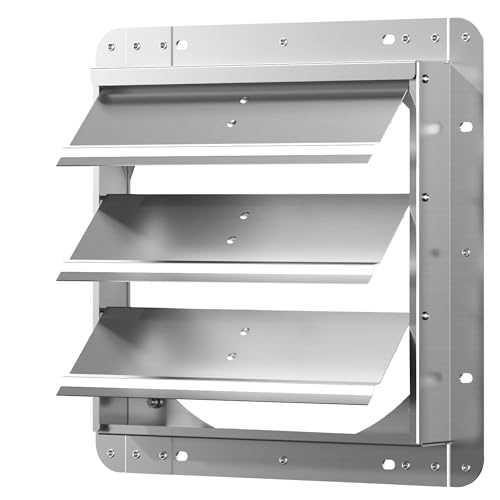
The HYITCL 12-inch galvanized shutter vent is a louvered exhaust component for spaces that need airflow, including greenhouses, barns, workshops, basements, and residential attics. Its automatic gravity design is intended for homeowners and gardeners who want a shutter that responds to air movement without adding a separate shutter control.
Based on the listed specifications, the louvers open and close with airflow and are designed to help limit exposure to dust, pests, and storms when closed. The galvanized steel panels are also listed for corrosion resistance and weatherproof performance, which may be useful in utility areas and garden buildings exposed to changing conditions.
The exterior dimensions are 15 inches long by 15 inches wide, with a listed depth of 2.1 inches. These measurements are important when planning the opening, mounting surface, and clearance around an existing or planned exhaust system. The product information identifies the shutter as a separate component, not a complete powered fan assembly.
For backyard use, this vent may fit a greenhouse, barn, garden workshop, or other enclosed growing space where exhaust airflow is already being provided. It can also be considered for attic or basement ventilation projects, provided the selected fan and installation method match the opening and the space requirements.
The main limitation is that the motor and fan blades are not included, so buyers should confirm they have a compatible exhaust setup before ordering. Installation details, mounting hardware, airflow capacity, and fan compatibility are not specified, so those points should be verified for the intended project. Overall, it is a practical shutter option for users assembling or replacing part of a ventilation system, but gardeners wanting a complete plug-and-play unit should consider a packaged fan and vent kit.
Best For / Avoid If
Best for buyers prioritizing
- Automatic opening and closing follows airflow changes.
- Galvanized steel is specified for corrosion resistance and weather protection.
- Useful across greenhouses, barns, workshops, basements, and attic spaces.
Consider another option if
- The motor and exhaust fan blades are not included, so a compatible fan system is required for powered exhaust.
- The 15-by-15-inch exterior dimensions should be checked carefully against the planned opening and surrounding wall space.
- Gardeners seeking a complete, ready-to-run ventilation kit may prefer an option that includes the fan and motor.

Pros
- High listed airflow of 4000 CFM with ten adjustable speeds.
- Temperature and humidity controls provide more flexible ventilation management.
- Automatic shutters help close off the opening when the fan is not running.
- Pre-assembled construction and an 8-foot cord may reduce installation steps.
Cons
- The 23-by-23-by-8.9-inch housing requires a suitably sized wall or ceiling opening and adequate mounting support.
- At up to 70 dB, it may be less suitable for locations where very quiet operation is important.
- Weather resistance and outdoor installation suitability are not specified, so exposed placement should not be assumed.
The Garvee 20-inch EC motor shutter exhaust fan is a wall-mounted ventilation unit designed to move air through enclosed areas such as greenhouses, sheds, garages, workshops, attics, storage rooms, and basements. For gardeners, its most relevant use is helping exchange warm or humid air in an enclosed growing space, while homeowners may also use it for general air removal in utility areas.
Based on the listed specifications, the fan delivers up to 4000 CFM at 1,772 FPM and 1,650 RPM. The EC copper motor with dual ball bearings is described as efficient and stable for heavy-duty use, while the ten speed settings allow users to select lower or higher airflow instead of relying on a single fixed setting.
The touchscreen controller adds temperature and humidity control, along with timer and cycle settings. It can support up to three fans through Type-C ports. The fan is listed as pre-assembled and includes an 8-foot power cord, but the 23-by-23-by-8.9-inch housing still requires a suitable opening, secure support, and an appropriate electrical installation for the selected wall or ceiling location.
In a backyard greenhouse or enclosed garden shed, the adjustable controls could help schedule ventilation or respond to changing temperature and humidity conditions. The automatic aluminum shutters open while the fan operates and close when it is off, which may help reduce the entry of dust, debris, and insects. The unit could also suit garages, workshops, and storage areas that need stronger air exchange.
The galvanized steel frame and aluminum blades are listed for corrosion resistance and heat dissipation, but the product information does not specify weatherproofing or outdoor exposure ratings. Its stated operating noise of 70 dB or less may be acceptable for utility spaces, though gardeners seeking near-silent ventilation may prefer a smaller or quieter option. Overall, this fan is a practical choice for enclosed spaces needing adjustable, high-volume ventilation, provided the mounting location and electrical requirements are confirmed before installation.
Best For / Avoid If
Best for buyers prioritizing
- High listed airflow of 4000 CFM with ten adjustable speeds.
- Temperature and humidity controls provide more flexible ventilation management.
- Automatic shutters help close off the opening when the fan is not running.
Consider another option if
- The 23-by-23-by-8.9-inch housing requires a suitably sized wall or ceiling opening and adequate mounting support.
- At up to 70 dB, it may be less suitable for locations where very quiet operation is important.
- Weather resistance and outdoor installation suitability are not specified, so exposed placement should not be assumed.

Pros
- Adjustable airflow provides more control than a single-speed ventilation fan.
- Suitable for several backyard and home-growing spaces, including greenhouses and chicken coops.
- Rust-resistant construction and automatic closing shutters are useful features for ventilation equipment.
- The listed compact dimensions and cutout template may make wall installation easier to plan.
Cons
- Because it uses a 115V wired setup, installation may require electrical work and careful attention to local requirements.
- Without a connected controller, the fan defaults to maximum speed, which may be more airflow than some smaller or delicate spaces need.
- The supplied information does not specify a weatherproof rating or whether all mounting hardware is included, so those details should be confirmed before installation.
The VIVOHOME 10-inch shutter exhaust fan is designed to move stale, warm, dusty, or odorous air from enclosed areas. For gardeners, its most relevant uses include ventilating a greenhouse, chicken coop, garage workspace, or storage area where improved air exchange is needed. The feature set is best suited to homeowners and beginner growers who want adjustable ventilation rather than a basic single-speed fan.
Based on the listed specifications, the 115V brushless EC motor delivers airflow up to 900 CFM and operates below 60dB. Ten speed settings allow a gentler setting for routine air exchange or stronger airflow when a space has built up more heat, dust, or odors. The stated coverage of up to 1076 square feet should be treated as a product-information guideline, since actual ventilation depends on room layout, openings, and installation.
The fan measures approximately 12.8 by 12.8 by 5 inches, and the supplied cutout template is listed at 11 by 10.6 inches. Automatic shutters close when operation stops, while the listed foam components are intended to help reduce noise and limit incoming rain and dust. A connected wired controller adds a speed display, status lights, and three delayed-cycle settings, while the fan defaults to maximum speed if no controller is connected.
In a backyard greenhouse, the adjustable settings could help manage heat and stale air during changing conditions. It may also suit a chicken coop, garden shed, garage potting area, or small workshop where dust and odors need to be exhausted. The wall-mounted format is less relevant to open patios or raised beds, where natural airflow may already be adequate and there is no enclosed space to ventilate.
This is a wired 115V appliance, so installation should be planned around safe electrical connections and the listed wall cutout. The supplied information does not confirm a weatherproof rating or the exact mounting hardware, so verify those details before placing the fan in an exposed location. Overall, it is a useful option for gardeners who need controllable ventilation in an enclosed growing or work area, while those seeking a plug-in, portable, or open-air solution should consider a different type of fan.
Best For / Avoid If
Best for buyers prioritizing
- Adjustable airflow provides more control than a single-speed ventilation fan.
- Suitable for several backyard and home-growing spaces, including greenhouses and chicken coops.
- Rust-resistant construction and automatic closing shutters are useful features for ventilation equipment.
Consider another option if
- Because it uses a 115V wired setup, installation may require electrical work and careful attention to local requirements.
- Without a connected controller, the fan defaults to maximum speed, which may be more airflow than some smaller or delicate spaces need.
- The supplied information does not specify a weatherproof rating or whether all mounting hardware is included, so those details should be confirmed before installation.
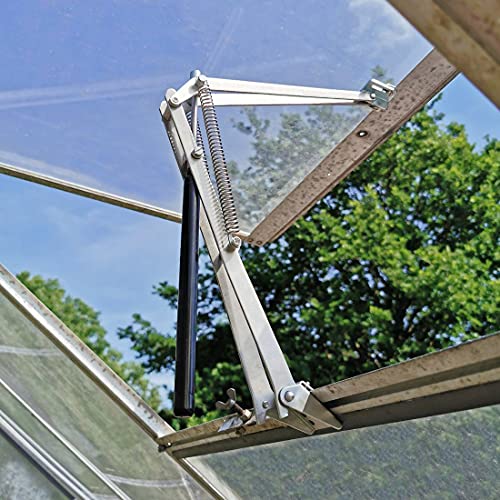
Pros
- Automatic temperature-responsive ventilation can help protect plants from greenhouse overheating.
- Solar-powered operation keeps the setup independent of electric power.
- Double springs provide more lifting force than a lighter single-spring design may offer.
Cons
- The supplied information does not specify the temperature range or adjustment settings, so response behavior may be less predictable for gardeners needing precise control.
- Compatibility with specific vent dimensions and roof designs is not provided and should be checked before installation.
- Installation still requires fitting the opener to the vent and following the included instructions.
The BIBISTORE Automatic Greenhouse Vent Opener is a solar-powered device for opening and closing a compatible greenhouse, hothouse, or cold-frame roof vent as temperatures change. It is intended for gardeners who want passive ventilation without connecting an electric power source or checking the vent manually throughout the day.
Its main growing-use benefit is automatic ventilation that can help limit overheating inside an enclosed growing space. The listed double-spring design lifts up to 15.4 pounds, which may make it a better fit for heavier compatible vents or locations where added resistance to wind-related twisting is useful.
The opener is listed at 18 inches and weighs about 1.08 pounds. Its aluminum and stainless steel construction is described as durable and rust resistant. The product includes a fitting accessory pack and detailed manual, but the supplied specifications do not identify the exact vent dimensions or mounting pattern it fits.
In a backyard greenhouse, small hothouse, or wooden cold frame, this opener could reduce routine vent-checking and help maintain a more suitable temperature when sunlight increases. Solar operation is especially convenient for structures without a nearby electrical outlet, provided the vent and mounting location are compatible.
Gardeners should confirm the vent size, opening direction, mounting space, and vent weight before installation. The temperature range, opening angle, and adjustment controls are not specified, so users needing highly precise climate management may prefer a system with documented settings. Overall, it is a practical option for basic automatic ventilation, while careful fit checking remains important.
Best For / Avoid If
Best for buyers prioritizing
- Automatic temperature-responsive ventilation can help protect plants from greenhouse overheating.
- Solar-powered operation keeps the setup independent of electric power.
- Double springs provide more lifting force than a lighter single-spring design may offer.
Consider another option if
- The supplied information does not specify the temperature range or adjustment settings, so response behavior may be less predictable for gardeners needing precise control.
- Compatibility with specific vent dimensions and roof designs is not provided and should be checked before installation.
- Installation still requires fitting the opener to the vent and following the included instructions.

Pros
- Offers flexible airflow control with ten speeds and three switchable modes.
- Automatic temperature, humidity, and schedule settings support more consistent ventilation routines.
- The listed 1800 CFM output is suitable for circulating air in larger enclosed or semi-enclosed work areas.
Cons
- The ceiling or wall-mount design may require careful installation and a suitable mounting surface.
- A noise level of up to 60 dB may be noticeable in quiet patios, hobby spaces, or nearby living areas.
- Gardeners seeking a simple plug-in fan may find the LCD controls, probe, and programmable settings more involved than necessary.
The VEVOR greenhouse air circulation fan is designed to move air through greenhouses, sheds, stables, patios, garages, events, and workstations. Its main garden task is circulation and ventilation, making it a practical fit for homeowners and growers who want adjustable airflow and automatic controls rather than a basic single-speed fan.
Based on the listed specifications, the fan delivers up to 1800 CFM and provides ten speed levels. Lower settings can support gentler circulation during cooler seasons, while higher settings can help move more air when an enclosed growing area feels hot or stagnant. Air circulation can help reduce stuffy spots, but the product should not be treated as a substitute for a complete greenhouse exhaust or climate-control system unless the installation provides the needed air exchange.
The control system includes an LCD interface, three switchable modes, temperature and humidity thresholds, and an external probe with an 8.2-foot cable. The automatic mode supports temperature settings from 33°F to 176°F and humidity settings from 1% to 90% RH. Scheduled operation can be set for 1 to 600 minutes on and off, with 0 to 100 cycles, or continuous cycling when selected.
For backyard use, the fan could be mounted in a greenhouse to circulate air around plant areas, placed in a shed or garage to reduce stagnant air, or used on a patio or workstation where adjustable airflow is useful. The listed dimensions are 13.78 by 8.27 by 24.02 inches, and the unit weighs 9.41 pounds, so gardeners should plan the mounting location and confirm that the wall or ceiling can securely support the fan and included hardware.
The Q235 metal frame and aluminum alloy blades are listed for use in hot, humid, and dusty areas, with noise rated at no more than 60 dB. Before installation, verify the AC110-230V electrical requirements, secure the mounting hardware, and keep the fan and probe positioned where they will not interfere with people, plants, or routine work. This is a strong choice for growers who value programmable ventilation, while those wanting the simplest possible circulation fan may prefer a less feature-heavy model.
Best For / Avoid If
Best for buyers prioritizing
- Offers flexible airflow control with ten speeds and three switchable modes.
- Automatic temperature, humidity, and schedule settings support more consistent ventilation routines.
- The listed 1800 CFM output is suitable for circulating air in larger enclosed or semi-enclosed work areas.
Consider another option if
- The ceiling or wall-mount design may require careful installation and a suitable mounting surface.
- A noise level of up to 60 dB may be noticeable in quiet patios, hobby spaces, or nearby living areas.
- Gardeners seeking a simple plug-in fan may find the LCD controls, probe, and programmable settings more involved than necessary.

Pros
- Complete kit includes the fan, filter, controller, ducting, clamps, and rope hangers.
- Ten speed settings and cycle modes allow more precise airflow management.
- Carbon filtration adds odor-control capability to the ventilation system.
Cons
- The 22.25-pound listed weight may require a secure overhead mounting location.
- Its 6-inch duct size and included components may be less suitable for gardeners needing a different ventilation diameter or longer duct run.
- Replacement-filter details and long-term maintenance intervals are not provided in the supplied information.
The VIVOSUN G6 Air Filtration Kit is a bundled ventilation system for grow spaces and other air-circulation projects. It combines a 6-inch AeroZesh inline fan, E12 speed controller, carbon filter, and 8 feet of black ducting, making it a practical fit for gardeners who want the main components in one package.
Based on the listed specifications, the fan provides airflow up to 388 CFM and uses PWM control for adjustable performance. Ten selectable speeds can help users match ventilation to changing growing conditions, while the listed 32 dBA operating level may be useful in indoor areas where excessive fan noise is a concern.
The E12 controller includes a memory function that can recall the previous speed after being turned off and on. It also offers three on and off cycle modes, and the product information indicates that it can integrate with an app system for remote control. The included ducting is 6 inches in diameter and 8 feet long, with two stainless clamps for securing connections.
For a backyard greenhouse, indoor grow area, or compact growing space, this kit can support air movement and help route filtered air through a planned ventilation path. The rope hangers may simplify positioning the carbon filter in a grow tent, but the listed dimensions of approximately 20.47 by 20.47 by 12.20 inches and weight of about 22.25 pounds should be considered when planning storage or overhead installation.
The carbon filter uses a listed 38mm charcoal bed made with RC 412 Australian Virgin charcoal and is intended to reduce pungent smells and chemicals. Gardeners should make sure the fan, filter, ducting, and clamps are securely installed, keep the setup compatible with the available 6-inch route, and follow applicable electrical and installation guidance. Details about replacement filters, service intervals, and weather resistance are not provided.
This kit is a reasonable choice for growers who need adjustable indoor ventilation with included odor filtration and ducting. Gardeners with limited mounting space, a different duct diameter, or a need for outdoor-rated equipment should consider another setup that specifically matches those requirements.
Best For / Avoid If
Best for buyers prioritizing
- Complete kit includes the fan, filter, controller, ducting, clamps, and rope hangers.
- Ten speed settings and cycle modes allow more precise airflow management.
- Carbon filtration adds odor-control capability to the ventilation system.
Consider another option if
- The 22.25-pound listed weight may require a secure overhead mounting location.
- Its 6-inch duct size and included components may be less suitable for gardeners needing a different ventilation diameter or longer duct run.
- Replacement-filter details and long-term maintenance intervals are not provided in the supplied information.

Pros
- Adjustable airflow with both manual and smartphone-based controls
- Useful installation accessories are included in the kit
- Compact 6-inch format suited to small grow tents and indoor gardening spaces
- Listed low-speed noise level may be preferable for overnight operation
Cons
- The 14.33-pound fan and included ducting may require a secure hanging or mounting arrangement.
- Low noise is specified only at the lowest speed, so operation may be more noticeable at higher settings.
- Gardeners needing ventilation for larger spaces may prefer equipment with a higher listed airflow capacity.
The VEVOR Inline Duct Fan Kit is a 6-inch ventilation system intended for small grow tents, indoor gardens, and hydroponic growing areas. It is best suited to gardeners who need to exhaust stale air, improve circulation, and manage odor in an enclosed space rather than those looking for a general outdoor fan.
Based on the listed specifications, the fan delivers up to 402 CFM, or 683 cubic meters per hour, to support active air exchange. The feature set also includes odor and fine-particle reduction support, which may help maintain a cleaner-feeling growing environment, although actual results will depend on the room, filter setup, duct routing, and other ventilation conditions.
Control options are a major part of this kit. The PWM controller provides 0 to 10 speed levels and four auto modes, while smartphone app control allows adjustment and monitoring of temperature and humidity. A timer is also listed in the product title. The included 8-foot double-layer aluminum foil duct, two clamps, and two hanging straps can reduce the need to source basic installation pieces separately.
This fan could fit a small grow tent, indoor propagation area, or compact hydroponic setup where adjustable exhaust is useful. Its 12.4 by 9.06 by 8.27-inch dimensions and 14.33-pound weight should be considered when planning space and mounting, especially if the fan is suspended above plants or connected to flexible ducting.
The listed noise level is as low as 27.3 dB at low speed, but noise varies with speed, so higher airflow settings may be more noticeable. Installation should use secure support for the fan and properly fastened duct connections. Overall, this is a practical option for indoor gardeners who want app-based control and included ducting, while larger growing areas or users seeking a simpler manual fan may want a different setup.
Best For / Avoid If
Best for buyers prioritizing
- Adjustable airflow with both manual and smartphone-based controls
- Useful installation accessories are included in the kit
- Compact 6-inch format suited to small grow tents and indoor gardening spaces
Consider another option if
- The 14.33-pound fan and included ducting may require a secure hanging or mounting arrangement.
- Low noise is specified only at the lowest speed, so operation may be more noticeable at higher settings.
- Gardeners needing ventilation for larger spaces may prefer equipment with a higher listed airflow capacity.
Pros
- Compact walk-in format for backyard or small-space growing
- Polycarbonate double-wall panels provide light transmission with UV resistance
- Ventilation and a lockable door support more controlled plant care
- Assembly instructions, labeled parts, and required tools are included
Cons
- The 6x4-foot footprint may feel limited for gardeners growing many large plants or wanting extensive shelving
- Assembly may be easier with two people, and the product information does not specify an anchoring system
- Gardeners in severe weather areas may need to verify local installation and reinforcement needs before relying on the listed weather protection
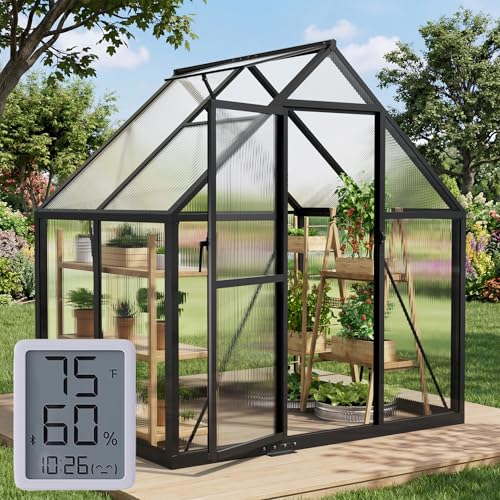
The Sylviera 6x4 FT greenhouse is a compact walk-in structure for homeowners who want a contained space for seedlings, vegetables, herbs, or seasonal plants. Its listed dimensions are 45 by 67 by 77 inches, making it a practical choice for a backyard or other area where a larger greenhouse would be difficult to place.
Based on the listed specifications, the greenhouse uses 4mm, 580g double-wall polycarbonate panels that are clear, impact-resistant, and UV-resistant. The panels are designed to admit useful light while helping moderate the interior environment, and the reinforced aluminum alloy frame is listed for resistance to wind, rain, and snow.
Adjustable roof vents are the main airflow control, helping gardeners release warm air and improve ventilation when conditions require it. The lockable door provides controlled access, while the included hygrometer or thermometer configuration can help monitor the greenhouse environment. The product information does not list shelving, automatic vent openers, or built-in irrigation.
The interior should work well for organizing smaller potted plants, seedlings, and compact crops in a dedicated growing area. It may also help gardeners protect plants from changing outdoor conditions, but the 6x4-foot footprint can become crowded if large containers or numerous mature plants are added.
The kit includes labeled parts, detailed instructions, and the necessary tools, though the manufacturer recommends a helping hand during setup. The instructions mention that glass glue can be added to gaps in the polycarbonate boards for additional sturdiness. Because anchoring details are not provided, gardeners should review the installation requirements and local wind or snow conditions before assembly.
This greenhouse is a reasonable fit for beginners and homeowners seeking a compact, enclosed growing space with basic ventilation and monitoring features. Gardeners needing extensive headroom, built-in shelving, automated climate control, or a clearly specified anchoring system may prefer a different greenhouse design.
Best For / Avoid If
Best for buyers prioritizing
- Compact walk-in format for backyard or small-space growing
- Polycarbonate double-wall panels provide light transmission with UV resistance
- Ventilation and a lockable door support more controlled plant care
Consider another option if
- The 6x4-foot footprint may feel limited for gardeners growing many large plants or wanting extensive shelving
- Assembly may be easier with two people, and the product information does not specify an anchoring system
- Gardeners in severe weather areas may need to verify local installation and reinforcement needs before relying on the listed weather protection

Pros
- Cordless solar setup is useful for sheds, small greenhouses, chicken coops, and other outbuildings away from household power.
- Thermostat control adds convenience compared with a basic always-on solar fan.
- Battery backup provides a supported option for continued ventilation beyond direct sunlight, depending on charge and conditions.
- Wall or window mounting gives homeowners flexibility for exhaust placement.
- Anti-backflow exhaust fan design is appropriate for moving air out of an enclosed space.
Cons
- Solar charging and fan output can be reduced in cloudy weather, shaded locations, or poor panel placement.
- The listed 220 CFM capacity may be too small for larger greenhouses, sheds, or animal shelters that need stronger air exchange.
- Some users may need to plan controller placement carefully because installation height and cable routing can affect everyday access.
The ecoCalm KP-SEF23124 is an 8-inch solar exhaust fan intended for outdoor ventilation in small greenhouses, sheds, chicken coops, animal houses, garages, barns, and similar enclosed spaces. It is designed to pull air out rather than blow fresh air in, so it works best when paired with an appropriate intake opening or existing vent on the opposite side of the space.
The main practical benefit is cord-free air movement. The product information lists 220 CFM airflow and suitability for spaces up to 380 cubic feet, which makes it most relevant for compact structures rather than large greenhouses. The included 4400mAh rechargeable battery is listed to provide up to 8 hours of operation after a full sunlight charge, although the manufacturer notes that charging and fan performance are affected by sunlight conditions.
The fan uses a bifacial solar panel that can generate power from both sides when light conditions allow. It also includes an adjustable temperature control system in the battery box, allowing the fan to turn on and off automatically according to the selected ambient temperature. For gardeners who do not want to manually manage ventilation throughout the day, that thermostat feature is a meaningful upgrade over a simple direct-solar fan.
Installation is listed as wall or window mount, with a permanent installation type, DC connectors, a waterproof plug, and a 14.8-foot cable. The fan body measures 3.74 inches deep by 9.06 inches wide by 9.06 inches high. The IP44 waterproof fan blades and outdoor-focused design are useful for garden structures, but the solar panel should still be positioned for strong sun exposure and mounted securely against wind or weather.
In a backyard setup, this fan makes the most sense for a small greenhouse that overheats in afternoon sun, a potting shed that holds warm air, or a coop where air exchange is needed without running electrical wiring. Reviewers commonly mention use in chicken coops and sheds, with several noting easy setup and quiet operation, while others report that airflow or battery performance did not meet their needs in larger or less ideal conditions.
Gardeners should size ventilation carefully before buying. A single 8-inch, 220 CFM exhaust fan may not be enough for a larger greenhouse, a very humid shed, or an animal shelter that needs substantial air exchange. This is a practical choice for small-space solar ventilation, but anyone needing dependable all-weather airflow, more capacity, or powered ventilation independent of sunlight may want to consider a larger or hardwired system.
Best For / Avoid If
Best for buyers prioritizing
- Cordless solar setup is useful for sheds, small greenhouses, chicken coops, and other outbuildings away from household power.
- Thermostat control adds convenience compared with a basic always-on solar fan.
- Battery backup provides a supported option for continued ventilation beyond direct sunlight, depending on charge and conditions.
Consider another option if
- Solar charging and fan output can be reduced in cloudy weather, shaded locations, or poor panel placement.
- The listed 220 CFM capacity may be too small for larger greenhouses, sheds, or animal shelters that need stronger air exchange.
- Some users may need to plan controller placement carefully because installation height and cable routing can affect everyday access.

Pros
- Variable-speed control supports different ventilation needs and comfort levels.
- Automatic shutters provide a useful barrier against rain and small outdoor items when the fan is not running.
- Steel construction and a wall-mounted format fit sheds, workshops, and attic ventilation projects.
- The 900 CFM specification offers substantial airflow for an enclosed utility area.
Cons
- A wall-mounted fan requires careful opening, mounting, and electrical planning, and the supplied information does not include installation instructions or compatibility details.
- The 10-inch fan size and listed airflow may be less suitable for very large spaces or systems requiring distributed ventilation.
- The product information does not specify a noise rating, thermostat, timer, or included mounting hardware.
The VEVOR 10-inch exhaust fan is a wall-mounted ventilation unit intended to move stale air, heat, odors, and floating dirt out of enclosed spaces. For gardeners and homeowners, its most relevant uses are ventilating a shed, workshop, or attic rather than directly cooling plants. The adjustable controller may make it a practical choice for users who want more control than a basic fixed-speed fan provides.
Based on the listed specifications, the fan delivers up to 900 CFM and uses a 1650 RPM, 45W AC motor. That airflow can help clear hot or unpleasant air from a utility space, while the stepless controller allows the output to be reduced for routine ventilation or increased when stronger exhaust is needed.
The fan measures 12.8 by 12.8 by 7.09 inches and weighs 6.72 pounds. Its all-metal steel construction is described as rigid and deformation-resistant, and the automatic shutter opens when powered and closes when the fan is off. The supplied information does not identify the required wall opening, mounting hardware, electrical connection details, or installation process, so those points should be confirmed before purchase.
In a backyard setting, this fan could be considered for a shed where lawn equipment, soil supplies, or tools create heat and odors, or for a workshop that needs fixed exhaust without taking up floor space. It may also fit an attic ventilation project when the dimensions, power requirements, and placement are appropriate. The variable-speed control can be useful when the space needs occasional ventilation rather than maximum airflow at all times.
Installation should be planned carefully, particularly around wall structure, electrical safety, airflow direction, and protection from direct water exposure. The rain-guard shutter helps close the opening when the fan is off, but the product data does not provide a formal weather-resistance rating or maintenance schedule. Overall, it appears best suited to homeowners seeking a fixed, adjustable exhaust fan for a small to moderate shed, workshop, or attic project, while buyers needing thermostat automation, specified low-noise performance, or detailed mounting guidance may prefer a model that documents those features.
Best For / Avoid If
Best for buyers prioritizing
- Variable-speed control supports different ventilation needs and comfort levels.
- Automatic shutters provide a useful barrier against rain and small outdoor items when the fan is not running.
- Steel construction and a wall-mounted format fit sheds, workshops, and attic ventilation projects.
Consider another option if
- A wall-mounted fan requires careful opening, mounting, and electrical planning, and the supplied information does not include installation instructions or compatibility details.
- The 10-inch fan size and listed airflow may be less suitable for very large spaces or systems requiring distributed ventilation.
- The product information does not specify a noise rating, thermostat, timer, or included mounting hardware.

Pros
- Automatic gravity operation requires no separate switch or manual closing step at the vent cover.
- Aluminum construction is described as smooth, burr-free, and resistant to rust or corrosion.
- The listed 10 x 10-inch interface provides a clear sizing reference for compatible openings.
Cons
- Compatibility depends on accurately matching the 10 x 10-inch interface and approximately 9 x 9-inch inner opening to the existing fan or duct.
- Mounting screws are not included, so an installer must supply suitable hardware for the installation surface.
- Gardeners needing adjustable airflow control or powered ventilation may prefer a complete fan system rather than a passive louver cover.
The PATIKIL 10x10-inch aluminum louvered vent cover is a passive exhaust accessory for greenhouse, garage, bathroom, kitchen, and other ventilation openings. It is intended to fit a 10 x 10-inch vent hole or duct interface and is best suited to homeowners replacing or adding a self-closing cover to an existing flow fan or exhaust setup.
Its main benefit is automatic gravity operation. The louvers are designed to open when exhaust airflow pushes through and close when the airflow stops, helping limit backdraft, unwanted air movement, moisture, and dust according to the listed product information. The feature set can be useful in a greenhouse or utility space where air needs to leave without leaving the opening continuously exposed.
The listed interface measures 250 x 250 mm, or 10 x 10 inches, while the inner opening measures about 230 x 230 mm, or 9 x 9 inches. The cover is made from aluminum and is described as smooth, burr-free, and resistant to rust and corrosion. Installation involves removing the flow fan's protective grille, inserting the cover into the fan outlet, and securing it with screws, which are not included.
For backyard use, this cover may suit a greenhouse exhaust outlet, a garage ventilation point, or a small workshop or utility-room fan. It can also be considered for patio-adjacent growing spaces where a fixed exhaust opening needs a simple exterior shutter. Before installation, measure the existing opening and confirm that the fan outlet, duct, and mounting surface can accept the listed dimensions.
The louvers are described as closing to help block water intrusion, but proper fit and installation remain important for weather performance. Inspect the moving louvers periodically for dust, debris, or anything that could prevent them from closing, and use suitable mounting hardware for the wall or fan outlet. This is a vent cover rather than a complete exhaust fan, so it does not provide airflow on its own.
It is a reasonable choice for gardeners and homeowners who already have compatible powered ventilation and want a compact, self-closing aluminum cover. Those needing a powered fan, adjustable louvers, included hardware, or a different opening size should compare other options before purchasing.
Best For / Avoid If
Best for buyers prioritizing
- Automatic gravity operation requires no separate switch or manual closing step at the vent cover.
- Aluminum construction is described as smooth, burr-free, and resistant to rust or corrosion.
- The listed 10 x 10-inch interface provides a clear sizing reference for compatible openings.
Consider another option if
- Compatibility depends on accurately matching the 10 x 10-inch interface and approximately 9 x 9-inch inner opening to the existing fan or duct.
- Mounting screws are not included, so an installer must supply suitable hardware for the installation surface.
- Gardeners needing adjustable airflow control or powered ventilation may prefer a complete fan system rather than a passive louver cover.
Diy Greenhouse Ventilation Buying Guide
Start with the type of ventilation you need
Most diy greenhouse ventilation projects use one of three approaches: an exhaust fan that pulls hot air out, an intake or louver that lets replacement air in, or a circulation setup that moves air within the space. The available product data is strongest for exhaust fans, including shutter fans, solar exhaust fans, and inline grow-tent style kits.
A wall-mounted shutter fan is a practical choice when you can cut or use an opening in a greenhouse wall. A solar fan may be useful where running power is inconvenient, but performance depends on sunlight conditions when the product relies on a solar panel. An inline fan kit, such as the VIVOSUN G6 Air Filtration Kit, Inline Fan, Controller, Carbon Filter, Duct | AeroZesh Inline Fan, Speed Controller, Carbon Filter & 8′ Ducting, Cooling Ventilation, Grow Tent, Indoor Grow, Hydroponic, is more relevant to enclosed grow tents or ducted greenhouse setups than a simple hoop house wall.
Match airflow to your greenhouse size
Airflow is commonly listed in CFM, or cubic feet per minute. Higher CFM moves more air, but it also needs a suitable opening, mounting location, and power source. For example, the VEVOR Shutter Exhaust Fan, 16” with Various Speeds, AC-motor, 2000 CFM, Wall Mount Attic Fan, Ventilation and Cooling for Greenhouses, Garages, Sheds, FCC lists 2000 CFM, while the Solar Fan 8″ with Adjustable Thermostat and Battery for Greenhouse | Solar Powered Exhaust Fans, Adjustable Temp Control, 25W Bifacial Panel, for Outdoor, shed, Chicken coop, Anti-backflow lists 220 CFM and suitability for places up to 380 ft³.
Do not choose only by the biggest number. In a very small greenhouse, a large exhaust fan may be more fan than the space needs. In a larger or hotter structure, a low-CFM solar unit may be better as a supplemental fan than the only exhaust source.
| Ventilation factor | What to compare in the product data |
|---|---|
| Airflow | Look for listed CFM, such as 220 CFM, 900 CFM, 960 CFM, 971 CFM, 2000 CFM, or 3368 CFM when available. |
| Control | Thermostat, temperature controller, humidity controller, variable speed, timer, or basic on/off wiring. |
| Power | Standard 120V wired models, solar-powered models, or inline fan kits with controllers. |
| Mounting | Wall-mounted shutter fan, ducted inline fan, or louver vent component. |
Consider controls before you buy
Controls make a greenhouse fan easier to live with. A thermostat can help the fan switch on and off around a selected temperature, while variable speed lets you reduce airflow when full output is not needed. The iLIVING 12″ Wall Mounted Shutter Exhaust Fan, Automatic Shutter, with Thermostat and Variable Speed controller, 0.6A, 960 CFM, 1400 SQF Coverage Area Silver (ILG8SF12V-ST) includes both a thermostat and variable speed controller in the available title.
The Hon&Guan Shutter Exhaust Fan, 12-Inch Wall Mount Attic Fan with Temperature Humidity Controller, 10-Speed Adjustable, 971 CFM, for Ventilation and Cooling in Greenhouses, Garages, Chicken Coops adds humidity control and 10-speed adjustment based on the listed title. That can be appealing in humid climates, but gardeners should still watch plant conditions and follow the manufacturer’s setup instructions rather than relying on a controller alone.
Check installation details and electrical needs
Installation is where many diy greenhouse ventilation projects get more complicated than expected. The VEVOR 16-inch shutter exhaust fan can be added to window openings or wall openings, but the available data also notes that this basic model does not include a speed control switch or plug, and that a separate plug must be purchased and wired for use. That makes it a better fit for gardeners who are comfortable planning the electrical side or hiring help.
Products that list a temperature controller, power cord kit, solar panel, or battery may reduce some setup decisions, but they still require careful mounting and weather-aware placement. Follow manufacturer safety instructions, local electrical rules, and any greenhouse-frame limitations before cutting panels or drilling supports. If your greenhouse also doubles as tool storage, our tips on organizing a small garden shed can help keep cords, spare vents, and seasonal parts accessible.
Compare shutter fans, louvers, and ducted kits
Shutter exhaust fans are popular because the shutters can open when the fan runs and close when it stops, based on the listed product designs. The VEVOR 10” Exhaust Fan, Wall Mounted Attic Fan with Variable Speed controller, 900 CFM, Automatic Shutter, Ventilation and Cooling, Black and VIVOHOME 10″ Shutter Exhaust Fan with EC Motor – 900 CFM, Variable Speed, Timer, Wall-Mounted for Attic, Garage, Greenhouse, Chicken Coop, Barn Ventilation both list 900 CFM and wall-mounted greenhouse use in their titles.
A louver vent, such as the 12 Inch Galvanized Shutter Exhaust Louver Vent, Automatic Gravity Shutter Louver Vent for Home Attics, Workshops, Barn, Greenhouse (Motor&Blades are not Included), is not a complete fan because the available title clearly says motor and blades are not included. It may still be relevant as part of a diy airflow path, but it should not be confused with a powered exhaust fan.
Think about small-space and accessibility needs
For a compact greenhouse, shed greenhouse, or balcony-style growing enclosure, look for a fan that does not require awkward daily adjustment. Thermostats, timers, and variable speed controls can help older gardeners or busy homeowners avoid repeated trips outside to switch the fan on and off.
The Ecocalm solar option lists an adjustable temperature control, a bifacial solar panel, a 4400mAh rechargeable battery, up to 8 hours of battery operation after full charge in sunlight, and a 14.8ft cable with waterproof plug. Those features may be useful where outlet access is limited, but the product data also states that fan and battery charging efficiency is affected by sunlight and reduced in cloudy weather.
Plan for intake air, not just exhaust
An exhaust fan can only move air well if replacement air can enter the greenhouse. That may mean opening a vent, door, louver, or opposite-side intake. If the greenhouse is sealed too tightly, the fan may struggle to exchange air effectively.
For gardeners using grow bags, benches, or dense plant layouts, airflow paths matter. Keep tall plants, shelving, and stored supplies from blocking vents. If you grow tomatoes or other container crops in flexible planters, our guide to fabric grow bags for tomatoes can help you plan a layout that leaves space for air movement.
Maintenance, cleaning, and seasonal storage
Greenhouse fans work around humidity, dust, soil particles, and plant debris. Periodically check shutters, louvers, fan guards, and cables for buildup or obstruction. Clean only according to the manufacturer’s instructions and disconnect power before maintenance when applicable.
At the end of the season, inspect mounting points and any solar panel or controller connections. Removable accessories, spare hardware, and extension cords should be stored dry and easy to find. A weatherproof storage option, such as a deck box for garden tools, can help keep greenhouse supplies organized near the garden.
Common mistakes to avoid
A common mistake is buying a fan without checking whether it includes the controls, cord, plug, or mounting style you expect. Another is assuming a solar fan will perform the same in cloudy weather as it does in bright sun. Product data for the Ecocalm solar fan specifically notes that efficiency is reduced when weather is cloudy.
Also avoid treating ventilation as a substitute for shade, watering, spacing, and seasonal temperature management. Ventilation helps exchange air, but greenhouse comfort comes from several decisions working together. For more greenhouse and storage topics, browse our Greenhouses & Garden Storage section.
Research Methodology and Trust
This guide is based on research and specification comparison, not physical hands-on testing. We screened the products reviewed for clear relevance to diy greenhouse ventilation, including greenhouse exhaust fans, shutter fans, solar fans, inline fan kits, controllers, and vent components. Products that only function as unrelated accessories would not be recommended as complete ventilation solutions.
We compared airflow ratings when listed, control types, power source, installation notes, product titles, available features, price, star rating, and review count. The available brand list includes VEVOR and Ecocalm, while some product entries did not provide a separate brand field even when the product title included a brand name.
Owner-feedback signals were considered through the provided ratings and review totals, such as 4.6/5 with 3702 reviews for the iLIVING 12-inch model and 4.5/5 with 751 reviews for the VEVOR 16-inch model. During July 2026, we prioritized practical garden use cases: small greenhouse airflow, wall mounting, solar placement, controller convenience, and whether the item is a complete powered fan or only a ventilation component.
Final Recommendations
Overall Pick: iLIVING 12″ Wall Mounted Shutter Exhaust Fan, Automatic Shutter, with Thermostat and Variable Speed controller, 0.6A, 960 CFM, 1400 SQF Coverage Area Silver (ILG8SF12V-ST). Based on the listed title and owner-feedback data, it combines a shutter exhaust fan format with thermostat control, variable speed control, 960 CFM, and the highest review count among the clearly relevant products shown.
Heavy-Duty Pick: VEVOR Shutter Exhaust Fan, 16” with Various Speeds, AC-motor, 2000 CFM, Wall Mount Attic Fan, Ventilation and Cooling for Greenhouses, Garages, Sheds, FCC. Its published specifications list 2000 CFM, 1450 rpm, 120V/60Hz power, a galvanized steel frame, aluminum alloy fan and shutter, and greenhouse suitability. The main tradeoff is installation: the product data says this basic model does not include a speed control switch or plug.
Small-Space Solar Pick: Solar Fan 8″ with Adjustable Thermostat and Battery for Greenhouse | Solar Powered Exhaust Fans, Adjustable Temp Control, 25W Bifacial Panel, for Outdoor, shed, Chicken coop, Anti-backflow. It is the most relevant available option for gardeners who want solar-powered ventilation, with listed adjustable temperature control, a rechargeable battery, a bifacial solar panel, IP44 waterproof fan blades, and 220 CFM for places up to 380 ft³. Choose it with the understanding that cloudy weather can reduce fan efficiency and battery charging.
FAQ
What is the best type of diy greenhouse ventilation for a small greenhouse?
For a small greenhouse, a modest exhaust fan with a thermostat or speed control is often easier to manage than a very large fan. A solar fan can be useful where outlet access is limited, but check the listed CFM and remember that solar performance depends on sunlight.
How do I size diy greenhouse ventilation?
Start by comparing your greenhouse volume with the product’s listed airflow and any stated coverage. In the available data, airflow ranges from 220 CFM on the Ecocalm solar fan to 3368 CFM on the iPower 20 Inch Wall Mounted Shutter Exhaust Fan with Temperature Controller and Power Cord Kit, Aluminum, 1200 RPM, 3368 CFM, for Attic, Garage, Louvered Vent, Plant, Greenhouse, Silver.
Do I need a thermostat for diy greenhouse ventilation?
A thermostat is not always required, but it can make ventilation easier because the fan can respond to temperature settings instead of manual switching. Several products reviewed list thermostats, temperature controllers, humidity controllers, or variable speed controls.
Can a solar fan ventilate a greenhouse at night?
The available Ecocalm solar fan includes a 4400mAh rechargeable battery and lists up to 8 hours of operation after a full charge in sunlight. However, the product data also says fan efficiency and battery charging are affected by sunlight conditions and reduced when the weather is cloudy.
What maintenance does greenhouse ventilation need?
Check shutters, louvers, fan guards, and vents for dust, soil, leaves, and plant debris. Disconnect power before cleaning powered equipment when applicable, and follow the manufacturer’s maintenance and safety instructions.
Is a louver vent enough for diy greenhouse ventilation?
A louver vent can help provide an air opening, but it is not the same as a powered exhaust fan. The 12 Inch Galvanized Shutter Exhaust Louver Vent, Automatic Gravity Shutter Louver Vent for Home Attics, Workshops, Barn, Greenhouse (Motor&Blades are not Included) is clearly listed as not including motor and blades, so it should be treated as a component rather than a complete fan.
What safety issues matter with diy greenhouse ventilation?
Electrical safety is the main concern, especially with powered fans in humid garden spaces. Use products only as directed, protect connections from water exposure according to the manufacturer’s instructions, and follow local electrical rules for wiring, plugs, and outdoor power.