

Managing heat inside an enclosed growing structure is one of the most persistent hurdles for backyard growers. If you find yourself asking, why does my greenhouse overheat even during mild spring mornings or temperate afternoons, you are dealing with fundamental thermodynamics. Greenhouses are specifically engineered to capture solar radiation, but without an adequate balance of ventilation, air movement, shading, and thermal mass, that trapped energy rapidly escalates into temperatures that stress or kill tender crops. This guide is written for home gardeners, backyard growers with compact hobby structures, and experienced growers seeking practical solutions to stabilize internal temperatures throughout the growing season.
Our evaluation focuses on foundational design mechanics, active and passive venting hardware, and environmental modifications. Whether you maintain a compact lean-to against an exterior wall or a freestanding walk-in frame, preventing thermal spikes requires an integrated approach rather than relying on a single quick fix. For wider planning guidance, explore our general resources in Greenhouses & Garden Storage to align your structure with your regional climate.
To identify why extreme heat accumulates, gardeners must evaluate glazing properties, cubic volume, roof pitch, vent surface area, and prevailing wind patterns. By understanding the interaction between incoming shortwave light and outgoing longwave thermal energy, you can select appropriate corrective steps. From automated ridge vents to external fabrics, keeping interior microclimates within safe biological thresholds prevents stunted growth, blossom drop, and soil desiccation.
The Solar Heat Trap and Glazing Dynamics
The primary reason a greenhouse overheats is the greenhouse effect itself. Sunlight enters through clear polycarbonate, glass, or polyethylene covers as shortwave radiation. When this radiation strikes interior surfaces, such as dark soil, shelving, gravel flooring, and foliage, those surfaces absorb the light and re-radiate it as longwave infrared energy. Glazing materials are largely impermeable to longwave radiation, trapping heat within the structural envelope. On a clear day with outdoor temperatures around 65 degrees Fahrenheit, an unventilated greenhouse can easily surpass 105 degrees in less than an hour.
Different glazing materials also possess varying light transmission and diffusion rates. Clear single-pane glass provides maximum direct light transmission, which creates intense hot spots directly beneath the roof panels. Twin-wall or multi-wall polycarbonate diffuses incoming light, scattering rays more evenly across foliage, yet its superior insulation value retains heat even longer once ambient levels rise. Gardeners must recognize that the very properties making glazing effective in early spring become liabilities during summer without responsive venting.
Insufficient Passive Venting and the Chimney Effect
Passive ventilation relies on natural convection, commonly known as the stack or chimney effect. Warm air expands, becomes less dense, and rises toward the apex of the roof, while cooler, denser air enters through lower vents or side louvers. When a greenhouse overheats, the root cause is frequently an inadequate ratio of roof vent area relative to the total floor footprint. Horticultural guidelines generally suggest that total ventilation area should equal at least 20 percent of the total floor area, with vents placed at both the highest ridge and near the foundation.
Without low intake louvers, opening a top roof vent produces limited airflow because air cannot easily exchange without a replacement source. Adding wax-cylinder openers can automate this airflow process reliably without electrical wiring. You can read our detailed guide on choosing a automatic greenhouse vent opener to see how thermally reactive cylinders respond automatically to rising ambient temperatures.
Structure Volume and Thermal Buffer Imbalances
A smaller air volume reacts far more rapidly to external temperature fluctuations than a large air volume. Compact hobby walk-in units and mini lean-to frames have a high surface-area-to-volume ratio, meaning sunlight striking the exterior warms the small interior air mass almost instantaneously. Conversely, larger greenhouses possess greater thermal inertia, slowing down rapid spikes during sudden sunny periods.
Gardeners working with smaller setups can counteract this volatility by intentionally adding thermal mass. Placing dark 55-gallon water barrels, masonry bricks, or concrete pavers inside the structure absorbs excess midday heat and slowly releases it when ambient temperatures drop overnight. This dampens daytime temperature spikes while guarding against sudden nighttime chills, reducing overall stress on plant roots and stems.
Solar Shading and External Light Interception
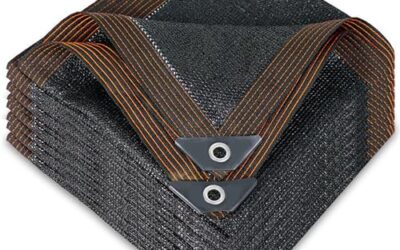
Once passive ventilation is maximized, preventing excess radiant energy from penetrating the glazing becomes essential. Suspending shade fabric outside the greenhouse frame is dramatically more effective than hanging curtains inside. When shade cloth is mounted internally, solar rays have already crossed the glazing boundary, converting into trapped thermal energy that stays inside the structure.
For warm-season vegetable production and general foliage protection, external knitted cloths offering 30 percent to 50 percent shade density block enough direct radiation without compromising photosynthetically active radiation. Review our analysis of the best greenhouse shade cloth for summer to determine the correct knit density, UV-stabilization ratings, and mounting hardware for your specific frame setup.
Active Mechanical Airflow and Evaporative Cooling
In regions where summer ambient outdoor temperatures exceed 85 degrees Fahrenheit, natural convection alone is often incapable of cooling a structure below the outdoor baseline. In these environments, active mechanical ventilation is required. An electric exhaust fan mounted on the upper gable wall pulls hot air out, creating negative pressure that draws fresh outdoor air through intake shutters placed on the opposite wall.
Exhaust systems must be sized based on total cubic volume, ideally cycling the entire interior air volume once every 60 seconds during peak heat. Combining high-volume exhaust with wet evaporative cooling pads or light ground-level misting drops internal temperatures several degrees below ambient outdoor levels through evaporative cooling, provided local relative humidity is not excessively high.
| Cooling Strategy | Mechanism | Best Application | Key Maintenance Consideration |
|---|---|---|---|
| Passive Ridge & Base Vents | Convective chimney effect | All greenhouse sizes, off-grid gardens | Lubricate hinges, inspect seasonal cylinder wax |
| External Shade Cloth | Direct solar interception | Intense summer sun, sensitive greens | Secure against high winds, remove before winter |
| Thermal Water Barrels | Sensible heat absorption | Small hobby greenhouses, cold frames | Keep sealed to prevent mosquito breeding and algae |
| Gable Exhaust Fans | Forced air exchange | Hot climates, medium to large structures | Clean fan louvers and check thermostat calibration |
| Evaporative Misting | Latent heat loss via evaporation | Arid, low-humidity summer climates | Use filtered water to prevent mineral nozzle clogging |
Common Overheating Mistakes and Seasonal Corrections
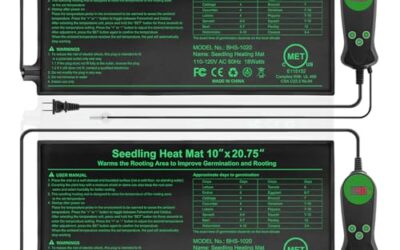
A frequent error among novice gardeners is leaving supplemental heating hardware or bottom-heat systems engaged too late into late spring. Seedlings on bottom warmth require careful monitoring, as ambient greenhouse heat combined with active heat mats can cook delicate root systems. When transitioning early starts, pairing a calibrated controller like the best seed starting heat mat with thermostat prevents unintended supplemental heat accumulation on bright, sunny mornings.
Another common miscalculation is relying entirely on door openings for ventilation without securing screens. Opening primary access doors creates massive cross-drafts that can cool a space rapidly, but it invites rodents, birds, and persistent insect pests directly onto tender crops. Always install framed insect mesh over open doorways and intake louvers to maintain biological security while exhausting heat.
Research Methodology and Trust
At Dove Creek Gardens, our editorial team evaluates greenhouse management strategies by examining horticultural physics, manufacturer engineering specifications, structural thermal boundaries, and real-world feedback from experienced home growers. We cross-reference manufacturer claims regarding airflow cubic feet per minute (CFM), light transmission percentages, and thermal insulation ratings against standard university extension guidelines for controlled-environment agriculture.
We do not conduct laboratory-controlled destructive tests or claim proprietary hands-on trials where none exist. Instead, our research-based synthesis focuses on practical mechanics, long-term material durability, accessibility for older or mobility-limited gardeners, and compatibility across varied garden footprints. Every environmental recommendation is checked for plant safety, mechanical dependability, and regional climatic adaptability, ensuring that your greenhouse modifications deliver reliable relief during peak solar exposure.
Our editorial files are reviewed and updated regularly, with the latest operational audit completed in September 2026. This ongoing review process verifies that ventilation hardware, shade fabrics, and structural accessories align with modern horticultural standards and current residential garden practices.
Frequently Asked Questions About Greenhouse Overheating
What temperature is considered too hot for greenhouse plants?
Most common garden crops, including tomatoes, peppers, and leafy greens, experience severe physiological stress when sustained internal temperatures exceed 90 degrees Fahrenheit. At sustained temperatures above 95 degrees, pollen becomes sterile in fruiting plants, leading to blossom drop and failed fruit set. Maintaining temperatures between 70 and 85 degrees during peak daylight hours provides the healthiest environment for active growth.
Why does my greenhouse overheat even when the outside air is cool?
Greenhouse glazing allows radiant solar energy to pass easily into the interior, where it is absorbed by benches, soil, and floor materials and converted into longwave thermal energy. In an unventilated or sealed structure, this trapped thermal energy accumulates rapidly regardless of cold outdoor air. Even on bright winter or early spring days with outdoor temperatures near 50 degrees, a closed greenhouse can warm past 90 degrees in full sun.
Can I leave greenhouse vents open overnight to reduce daytime heat?
Leaving vents open overnight is safe during stable summer weather when nighttime lows remain reliably above 55 degrees Fahrenheit. During spring and autumn, however, leaving vents wide open can expose sensitive crops to rapid chilling or unexpected frost. Thermally controlled automatic vent openers eliminate this dilemma by opening as the morning sun warms the cylinder and sealing shut as temperatures fall in the evening.
Does misting or wetting the floor help cool a hot greenhouse?
Wetting gravel walkways or running fine misting nozzles can lower interior ambient temperatures by 5 to 10 degrees through evaporative cooling, which consumes heat energy as water transitions from liquid to vapor. However, this method works best in arid and low-humidity climates. In naturally humid regions, excessive moisture creates stagnant, wet conditions that elevate the risk of fungal leaf diseases without providing substantial thermal cooling.
Is an exhaust fan necessary for a small backyard greenhouse?
Powered exhaust fans are generally not mandatory for compact hobby greenhouses under 80 square feet if the structure features adequate roof and base ventilation paired with external shade cloth. However, if your structure is situated in direct sun without natural cross-breezes, or if you live in an area where summer temperatures consistently top 90 degrees, a thermostatically controlled gable exhaust fan is the most dependable way to force active air turnover.
Continue your garden research
Browse more practical guides in Greenhouses & Garden Storage.
For product comparisons, see Best Portable Greenhouse for Backyard Use Right Now.
See how Dove Creek Gardens researches and compares products.