

Starting your vegetables, herbs, and flowers from seed indoors gives you earlier harvests, stronger varieties, and significant savings compared to buying nursery starts. However, weak germination, soggy roots, and transplant shock can quickly derail early spring efforts. Finding the best seed starting trays ensures your tender seeds receive adequate drainage, balanced humidity, and root protection before they ever touch the garden soil.
To help both beginning growers and seasoned gardeners select reliable equipment, we evaluated 10 top models ranging from $7.49 to $29.99 across reputable brands including Gardzen, MIXC, and Burpee. When comparing options, we focused on cell depth, bottom-watering capability, dome ventilation, and ease of seedling extraction. Having the right nursery flats alongside reliable garden tools and pruning equipment makes the delicate transition from indoor seedling to outdoor garden far smoother.
Whether you have a dedicated greenhouse bench, a simple basement wire rack with supplemental lights, or just a narrow sunny windowsill, choosing the right tray design directly influences germination rates and root development. Below, explore our top picks for 2026 along with an in-depth decision framework to help you set up an efficient indoor nursery.
Burpee SuperSeed 36-Cell Reusable Seed Starting Tray for Indoor Seedlings and Easy Transplanting Gardzen 5-Set Seed Starter Trays with Vented Domes and Drainage, 200-Cell Germination Kit for Indoor Propagation Gardzen 30-Pack 6-Cell Seed Starting Trays with Drainage Holes for Vegetables, Flowers, and Herbs Burpee SuperSeed 8-Cell Windowsill Seed Starting Tray with Flexible Pop-Out Silicone Cells Prices and availability can change. We may earn a commission from qualifying purchases.


Pros
- Soft silicone cell bottoms make popping out mature seedlings gentle and straightforward.
- Built-in water channels and drainage slots reduce the risk of standing water around tender roots.
- Reusable, dishwasher-safe design eliminates the need for flimsy single-use plastic seed flats.
- Compact dimensions fit easily onto standard indoor plant shelves or under small grow light setups.
Cons
- Capacity is fixed at 36 cells, which may require multiple trays for large-scale garden planting.
- Shallower cell depth is designed specifically for early propagation and not for long-term indoor pot culture.
The Burpee SuperSeed 36-Cell Seed Starting Tray is designed to provide home gardeners with a reliable, organized platform for propagating seedlings indoors. Starting warm-season vegetables like tomatoes and peppers before the final spring frost requires dependable moisture control and gentle handling. This unit addresses those needs by combining a structured frame with flexible planting compartments, making it well suited for beginners, container growers, and backyard gardeners wanting healthier starts with less mess.
A standout feature of this propagation system is the use of soft, food-grade silicone for the individual cell bottoms. Traditional plastic plug trays frequently crack or force gardeners to tug fragile stems, which can tear delicate roots and slow initial growth. With this flexible design, growers can gently push upward from the base of each cell to pop seedlings out smoothly, preserving root integrity and reducing transplant shock when moving plants to outdoor beds or patio pots.
Water management is another central element of the design. Each cell features molded corner slots that promote adequate soil aeration while allowing excess moisture to drain cleanly away from developing root systems. The accompanying bottom tray includes deep reservoir channels to collect runoff and a raised perimeter edge that prevents household water spills. Sturdy side handles make it easy to lift the insert, inspect moisture levels beneath, or pour off standing water as needed.
Measuring roughly 11.5 inches by 10.375 inches, the tray is appropriately sized for standard indoor propagation spaces, such as kitchen counters, seedling heat mats, or compact grow light shelves. Organization is made straightforward through alphanumerically marked rows paired with the included Plant-o-Gram chart, allowing gardeners to easily map different varieties within the same 36-cell unit without mixing up varieties.
Maintenance between growing cycles is simple because the tray is rated safe for the top shelf of a dishwasher, helping ensure clean conditions for subsequent plantings without tedious scrubbing. While high-volume market gardeners might need larger flats to start hundreds of crops at once, this sturdy, reusable tray represents a practical, low-waste solution for home growers who want tidy seedling management and stress-free transplanting.
Best For / Avoid If
Best for buyers prioritizing
- Soft silicone cell bottoms make popping out mature seedlings gentle and straightforward.
- Built-in water channels and drainage slots reduce the risk of standing water around tender roots.
- Reusable, dishwasher-safe design eliminates the need for flimsy single-use plastic seed flats.
Consider another option if
- Capacity is fixed at 36 cells, which may require multiple trays for large-scale garden planting.
- Shallower cell depth is designed specifically for early propagation and not for long-term indoor pot culture.
Pros
- Adjustable dual dome vents allow tailored moisture and airflow regulation.
- Built-in bottom drainage holes prevent standing water around fragile roots.
- Five individual 40-cell units allow staggered planting rather than filling one massive tray.
- Transparent covers offer unobstructed visual tracking of seed sprouting and root development.
Cons
- Relatively shallow cell depth at under two inches may require earlier transplanting for fast-growing taproot crops.
- Plastic construction requires careful handling during cleaning and storage to prevent cracking between seasons.
The Gardzen 5-Set Seed Starter Tray Kit is designed to assist home gardeners, indoor growers, and greenhouse hobbyists with starting plants from seeds or rooting vegetative cuttings. Featuring five separate 40-cell inserts for a total capacity of 200 individual cells, this setup lets growers stagger their planting dates or manage multiple varieties of herbs, flowers, and vegetables simultaneously.
A notable feature of this seed starting setup is the upgraded dome design, which includes two adjustable rotating air vents on each clear lid. These vents allow growers to maintain high humidity during the initial germination phase and gradually increase airflow as seedlings emerge, preventing stagnant air and excess condensation. The transparent domes also allow for easy daily inspection without disturbing the humidity microclimate underneath.
Each tray unit measures approximately 9 by 14.5 inches with a cell depth of 1.85 inches, creating a manageable footprint that fits comfortably onto standard indoor plant stands, heat mats, and potting benches. The individual cells feature dedicated bottom drainage holes that allow excess moisture to escape into the base tray, protecting fragile young root systems from oversaturation and fungal issues.
This modular setup works well for small-space gardeners operating under indoor grow lights or on wide windowsills, as well as suburban backyard gardeners prepping warm-season transplants ahead of spring. Because the kit is divided into five standalone 40-cell units rather than one bulky flat, you can easily move individual trays to different light or temperature zones as seeds germinate at varying rates.
Given the 1.85-inch tray depth, gardeners starting vigorous growers like squash or deep-rooting native species will need to pot up their seedlings relatively quickly once true leaves appear. Additionally, the lightweight plastic components benefit from gentle hand washing between uses to maximize service life across multiple planting seasons.
For gardeners seeking an organized, multi-tray propagation kit with reliable moisture control and integrated drainage, this 200-cell Gardzen system offers a practical and functional starting point. Those who prefer extra-deep plugs for extensive root development may want to look toward specialized deep-cell propagation trays instead.
Best For / Avoid If
Best for buyers prioritizing
- Adjustable dual dome vents allow tailored moisture and airflow regulation.
- Built-in bottom drainage holes prevent standing water around fragile roots.
- Five individual 40-cell units allow staggered planting rather than filling one massive tray.
Consider another option if
- Relatively shallow cell depth at under two inches may require earlier transplanting for fast-growing taproot crops.
- Plastic construction requires careful handling during cleaning and storage to prevent cracking between seasons.
Pros
- Generous 2.2-inch depth encourages healthy taproot and lateral root establishment.
- Top watering channels help guide water uniformly across all six cells.
- Bottom drain holes safeguard young seedlings from overwatering and root rot.
- Reusable design reduces seasonal plastic waste when properly cleaned.
Cons
- Does not include matching bottom drip trays or humidity domes, which may require separate sourcing.
- Individual six-cell units are lightweight and may tip easily if handled outside of a supportive flat.
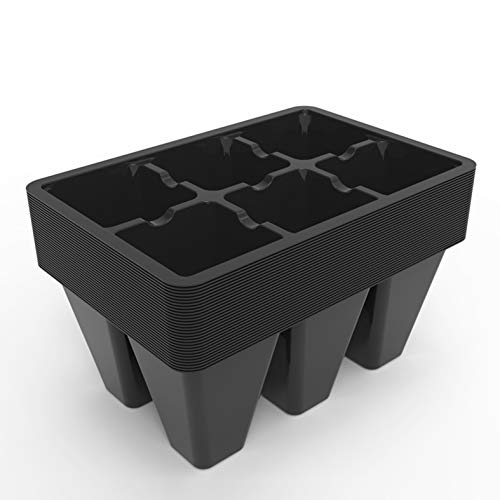
The Gardzen 30-Pack 6-Cell Seed Starting Trays provide home gardeners with a practical and organized method for germinating seeds indoors or inside hobby greenhouses. Ideal for backyard growers, kitchen gardeners, and small-space propagators, these modular inserts allow you to start multiple varieties of vegetables, flowers, and culinary herbs in manageable batches.
Based on the product specifications, each individual cell measures 1.5 inches square by 2.2 inches deep. This vertical depth gives young sprouts adequate room to establish healthy root structures before transplanting into outdoor garden beds or larger containers. Deeper cells minimize root crowding during the crucial early weeks of seedling development.
Water management is critical during germination, and these trays incorporate essential moisture-control features. Each cell includes a bottom drainage hole that allows excess moisture to escape freely, helping protect delicate root systems from saturated soil and rot. Additionally, guide channels along the top rim help disperse water evenly across all cells during top watering.
The compact dimensions of 5.4 by 3.7 inches per six-cell unit make these starter trays especially versatile. Gardeners can easily arrange them on indoor plant stands, sunny windowsills, or within standard carrying flats. Their separate six-cell layout allows you to move cold-hardy brassicas or fast-growing tomatoes outside on different schedules without disturbing slower-germinating varieties.
Because these trays are made from reusable plastic, they can be washed and sanitized between planting cycles to support multiple growing seasons. However, gardeners should note that outer catch trays and clear humidity domes are not included, meaning you may need a waterproof surface or standard nursery flat to capture drainage runoff. For home growers seeking dependable, organized propagation inserts, this 30-pack provides a functional and scalable seed-starting setup.
Best For / Avoid If
Best for buyers prioritizing
- Generous 2.2-inch depth encourages healthy taproot and lateral root establishment.
- Top watering channels help guide water uniformly across all six cells.
- Bottom drain holes safeguard young seedlings from overwatering and root rot.
Consider another option if
- Does not include matching bottom drip trays or humidity domes, which may require separate sourcing.
- Individual six-cell units are lightweight and may tip easily if handled outside of a supportive flat.
Pros
- Soft silicone cell bottoms make seedling extraction gentle on tender roots.
- Compact proportions fit narrow windowsills and limited indoor spaces.
- Integrated tray catches runoff to protect interior sills from water spills.
- Top-rack dishwasher safe for convenient cleaning and seasonal reuse.
Cons
- Capacity is limited to eight seedlings, which may be insufficient for large garden plots.
- Does not include a clear humidity dome, which some growers may prefer for certain seed varieties.
The Burpee SuperSeed Windowsill Seed Starting Tray is designed to provide home gardeners with a compact, reliable setup for germinating seeds indoors. Featuring eight extra-large growing cells, this system caters to gardeners who want to start warm-season staples such as tomatoes and peppers on a sunny windowsill without committing to bulky full-sized nursery flats.
A standout element of the tray is its soft, food-grade silicone construction. When seedlings develop their first true leaves and establish strong roots, the pliable bottoms flex upward with gentle thumb pressure. This pop-out design minimizes root disturbance and transplant shock, allowing delicate starts to transition smoothly into garden soil or larger outdoor containers.
Measuring approximately 11.5 inches long by 5.2 inches wide, the tray accommodates standard interior window ledge depths while providing adequate soil volume for early plant development. Molded corner slots promote healthy air circulation and soil aeration, while the base reservoir collects excess moisture in deep channels to prevent waterlogging. Molded side handles make checking moisture levels and emptying surplus water straightforward.
Keeping plant varieties organized is simplified by alphanumeric labeling along the cell rim, which corresponds to an included Plant-o-Gram chart. Between planting cycles, the tray eliminates the chore of tedious hand scrubbing, as the components are rated safe for cleaning on the top rack of standard household dishwashers.
For apartment residents, small-space patio growers, or community gardeners starting a select handful of specialty herbs and vegetables, the eight-cell capacity offers a manageable footprint. It avoids the clutter of larger propagation setups while providing enough root depth to nurture vigorous plants before the final spring frost.
Gardeners needing to start dozens of plants simultaneously will likely find the eight-cell layout limiting without purchasing multiple units, and growers in dry climates should note that a clear humidity dome is not included. However, for everyday home growers seeking a sturdy, reusable, and sill-friendly propagation tray, the SuperSeed design delivers dependable performance and easy handling season after season.
Best For / Avoid If
Best for buyers prioritizing
- Soft silicone cell bottoms make seedling extraction gentle on tender roots.
- Compact proportions fit narrow windowsills and limited indoor spaces.
- Integrated tray catches runoff to protect interior sills from water spills.
Consider another option if
- Capacity is limited to eight seedlings, which may be insufficient for large garden plots.
- Does not include a clear humidity dome, which some growers may prefer for certain seed varieties.
Pros
- Generous 216-cell capacity broken down into manageable six-cell units.
- Generous 2.25-inch depth encourages vertical root expansion for young seedlings.
- Built-in drainage slits help maintain proper soil moisture balance.
- Comes with five plant stakes for immediate garden organization.
Cons
- Outer carrier flats or bottom water-catching trays are not included and must be sourced separately.
- Lightweight build may require gentle handling when extracting root plugs during transplanting.
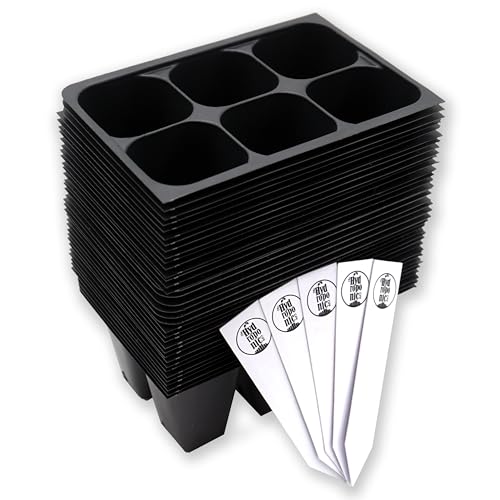
The Hydroponic City 216-Cell Seed Starter Tray set provides an accessible, modular system for starting a high volume of garden plants from seed. Composed of 36 separate six-cell inserts, this package delivers the equivalent capacity of three standard 1020 nursery flats. It is particularly well suited for backyard growers, patio container gardeners, and allotment holders looking to stage succession plantings of vegetables, herbs, or ornamental flowers indoors before the outdoor growing season begins.
A critical factor in seedling vigor is root development, and the dimensions of these cells are tailored to support healthy early growth. Each individual cell measures 1.5 inches square across the top and provides a depth of 2.25 inches. This vertical profile gives primary taproots and lateral feeder roots sufficient volume to expand downward, reducing the likelihood of early root binding before seedlings are ready to move into raised beds or larger containers.
Proper moisture management is equally vital during germination, and each cell includes strategically placed bottom drainage slits. These openings allow excess moisture to exit freely into a catch basin, preventing waterlogged mix around tender roots. The modular six-cell layout also gives growers the flexibility to separate fast-sprouting varieties from slower-germinating crops without disturbing the rest of the tray arrangement.
For small-space gardeners operating under indoor grow lights or on sunny windowsills, the split-tray design offers practical versatility. Instead of managing a large, inflexible 72-cell flat, you can place a few six-cell packs onto smaller saucers or windowsill trays. The inclusion of five plant stakes further assists in cataloging different cultivars, ensuring proper tracking of sow dates across multiple planting sessions.
Gardeners should note that this package consists of cell inserts rather than solid-bottom propagation trays, meaning an external flat or drip tray is necessary to catch drainage water indoors. With careful washing between seasons, the reusable materials can serve across several crop rotations. Overall, this set provides a practical, high-capacity starting solution for organized gardeners seeking controlled, modular seedling management.
Best For / Avoid If
Best for buyers prioritizing
- Generous 216-cell capacity broken down into manageable six-cell units.
- Generous 2.25-inch depth encourages vertical root expansion for young seedlings.
- Built-in drainage slits help maintain proper soil moisture balance.
Consider another option if
- Outer carrier flats or bottom water-catching trays are not included and must be sourced separately.
- Lightweight build may require gentle handling when extracting root plugs during transplanting.

Pros
- Complete propagation setup including cell trays, solid bases, vented domes, and planting tools.
- Modular 10-pack design allows staggered sowing schedules across different plant varieties.
- Clear vented covers help retain ambient heat and moisture while facilitating air exchange.
- Compact 14.5 by 9 inch footprint per tray fits easily on standard wire plant stands or potting benches.
Cons
- Cell depth is geared toward initial germination and may require prompt potting up for fast-growing taproots.
- Gardeners requiring rigid, heavy-duty commercial plastic may find standard propagation trays require two-handed support when fully watered.
The Mr. Pen 10-Pack Seed Starter Tray Kit is designed for home gardeners, classroom instructors, and small-space growers looking to propagate plants indoors before the growing season begins. With ten separate 40-cell trays offering a total of 400 planting spaces, this setup provides ample room to start a wide variety of vegetables, annual flowers, and culinary herbs. Each set includes a cell insert, a solid bottom reservoir tray, and a clear vented humidity dome.
Managing moisture and temperature is critical during early seedling development. The transparent humidity domes create a mini-greenhouse environment that retains ambient warmth and humidity around the growing medium while allowing light to reach emerging sprouts. Adjustable vents on top of each dome provide manual control over internal airflow, which helps growers gradually harden off seedlings and avoid excessive moisture buildup after germination.
Based on the listed specifications, each assembled unit measures approximately 14.5 by 9 by 4.3 inches. This compact size makes the trays convenient to arrange on indoor plant shelves, wide windowsills, or greenhouse staging. The solid black base trays catch drainage water, protecting household surfaces from leaks and allowing growers to water from the bottom. The kit also includes a hand dibber and widger, giving gardeners practical hand tools for creating planting holes and teasing apart root systems during transplanting.
This multi-pack configuration is particularly practical for backyard vegetable gardeners who practice succession sowing or want to isolate warm-season crops like tomatoes and peppers from cool-season greens. Because the cells are divided into ten distinct units rather than one massive flat, growers can start early varieties weeks ahead of later plantings without committing an entire bench or shelf to a single schedule.
While the 40-cell layout is well suited for initial germination and early root growth, fast-growing seedlings with vigorous root systems will need to be potted up into larger nursery containers before becoming root-bound. For home growers seeking an organized, scalable seed propagation system with all essential components included, this kit offers a straightforward and functional foundation for starting plants from seed.
Best For / Avoid If
Best for buyers prioritizing
- Complete propagation setup including cell trays, solid bases, vented domes, and planting tools.
- Modular 10-pack design allows staggered sowing schedules across different plant varieties.
- Clear vented covers help retain ambient heat and moisture while facilitating air exchange.
Consider another option if
- Cell depth is geared toward initial germination and may require prompt potting up for fast-growing taproots.
- Gardeners requiring rigid, heavy-duty commercial plastic may find standard propagation trays require two-handed support when fully watered.

Pros
- Clear trays and inserts allow direct observation of root systems and soil moisture without disturbing plants.
- Individual vented domes make humidity control straightforward as seedlings sprout.
- Compact footprint fits easily on indoor windowsills, counters, and seedling heat mats.
- Integrated lights eliminate the need to hang separate overhead grow light fixtures.
Cons
- Does not include a USB wall power adapter, requiring a separate power block.
- Lacks an integrated timer mechanism, necessitating manual switching or an external timer outlet.
- Small individual cell volume means seedlings will need prompt potting up once true leaves develop.
The Bonviee Seed Starter Tray Kit provides a self-contained indoor propagation system designed for starting garden vegetables, herbs, and flowers from seed. Each kit supplies five independent units totaling 60 individual growing cells, making it a practical option for home gardeners, windowsill growers, and those working in compact indoor spaces before moving plants out to garden beds.
Supplemental lighting is a critical factor for indoor seed germination, and each of these trays includes an integrated 12-LED full-spectrum grow light built directly into the dome vent. This design delivers focused overhead illumination right to emerging sprouts, helping reduce the spindly growth often caused by insufficient window light. In addition, the adjustable top vents let growers retain maximum humidity during the initial germination phase and gradually introduce airflow as true leaves emerge.
Measuring 5.7 by 8.5 by 5.5 inches overall, each compact unit consists of a clear base, a 12-cell planting insert, and a high-clearance humidity dome. The transparent plastic construction allows growers to monitor root development and moisture saturation without uprooting tender seedlings. Bottom drainage holes in each cell prevent overwatering by channeling excess moisture into the clear base, which also supports convenient bottom-watering routines. The feature set also indicates compatibility with standard seedling heat mats.
Power is distributed using an included 1-to-5 USB cable that connects all five light heads to a single USB power source. The set also provides ten plant labels to assist with organizing multiple plant varieties across the 60 planting cells. Because of their small footprint and modular nature, these trays can be arranged together on a utility shelf or placed in separate areas depending on available space.
While the kit provides a solid starting framework, gardeners should note that it does not include a USB wall adapter or a built-in automated timer, meaning users will need to provide their own wall plug and manage daily lighting cycles manually or via an external timer plug. Additionally, the compact cell dimensions require timely transplanting once root balls fill out. For backyard growers and indoor hobbyists seeking a compact, all-in-one propagation setup with dedicated lighting and moisture vents, this kit serves as an efficient and accessible tool.
Best For / Avoid If
Best for buyers prioritizing
- Clear trays and inserts allow direct observation of root systems and soil moisture without disturbing plants.
- Individual vented domes make humidity control straightforward as seedlings sprout.
- Compact footprint fits easily on indoor windowsills, counters, and seedling heat mats.
Consider another option if
- Does not include a USB wall power adapter, requiring a separate power block.
- Lacks an integrated timer mechanism, necessitating manual switching or an external timer outlet.
- Small individual cell volume means seedlings will need prompt potting up once true leaves develop.
Pros
- Adjustable humidity vents give flexible control over moisture retention
- Cell dimensions accommodate larger garden seeds and healthy early root growth
- Heat-mat compatible materials resist high and low temperature changes
- Watertight base trays keep indoor seed-starting benches clean
Cons
- Twelve cells per tray may require multiple units for high-volume garden planning
- Clear plastic requires gentle cleaning to prevent cracking between seasons
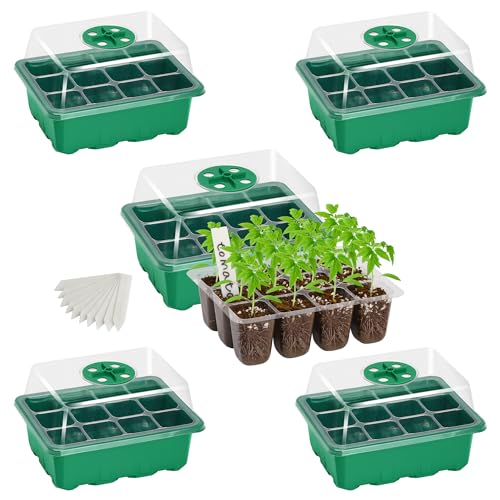
The Bonviee 5-Pack Seed Starter Trays provide a dedicated, modular system designed for starting garden plants from seed before transplanting outdoors. Each unit consists of a 12-cell insert, a watertight base tray, and an adjustable humidity dome, yielding a total capacity of 60 individual growing cells across the full package. This setup is particularly helpful for backyard growers, patio gardeners, and homesteaders who want organized indoor propagation without taking up excessive table space.
A notable feature of this set is the clear construction of the planting inserts, which allows gardeners to inspect soil moisture levels and emerging root systems directly through the plastic. Rather than lifting fragile sprouts or guessing about moisture penetration, users can quickly check progress. In addition, each cell measures approximately 1.5 inches square, providing sufficient depth and volume for crops with vigorous early growth, including tomatoes, peppers, eggplants, and larger vegetable seeds.
Environmental control is supported by the top-mounted vents located on each humidity dome. During initial germination, keeping the vents closed maintains high humidity and stable moisture for seed coats. Once seedlings emerge, the dials can be rotated open to increase airflow, helping prevent excess dampness while acclimating young plants to ambient room conditions. The materials are also built with temperature resistance, ensuring the trays can safely rest on a seedling heat mat without warping or melting.
Managing indoor mess is straightforward thanks to the included watertight green base trays. These shallow pans collect extra water drainage from bottom watering or overhead misting, protecting window sills, grow shelves, or kitchen counters from spills. The compact overall dimensions of roughly 7.25 by 5.5 inches per tray make them easy to arrange under standard grow lights or rotate on sunny window ledges.
Gardeners planning large-scale production runs should note that each individual tray holds 12 plants, so those looking to start hundreds of plants at once might prefer standard 72-cell community flats. However, the modular footprint offers substantial versatility for succession planting or raising different varieties side by side. For home vegetable growers who value clean indoor management, clear root visibility, and simple climate regulation, this kit serves as a dependable starting solution.
Best For / Avoid If
Best for buyers prioritizing
- Adjustable humidity vents give flexible control over moisture retention
- Cell dimensions accommodate larger garden seeds and healthy early root growth
- Heat-mat compatible materials resist high and low temperature changes
Consider another option if
- Twelve cells per tray may require multiple units for high-volume garden planning
- Clear plastic requires gentle cleaning to prevent cracking between seasons

Pros
- Vented clear domes create a protected microclimate with customizable air circulation.
- Dedicated drainage holes in every cell safeguard against waterlogged seedling mix.
- Small 12-cell format allows gardeners to start multiple plant varieties at different times.
- Comes equipped with handy scoop and shovel accessories for planting tasks.
Cons
- Plastic construction requires careful handling to prevent cracking over multiple seasons.
- Gardeners starting large-scale crop operations may prefer standard full-sized 72-cell nursery flats over small modular trays.
Starting seeds indoors allows home gardeners to extend their growing season and cultivate varieties rarely found at local nurseries. The Mr. Pen Seed Starter Tray Kit is designed for beginners and backyard growers who need a tidy, manageable setup. This set features ten separate trays, each containing 12 individual cells to provide 120 total starting positions for vegetables, herbs, and flowering annuals.
A critical stage of seed germination involves balancing ambient moisture and temperature. Each tray in this set is paired with a transparent dome lid that acts like a miniature greenhouse, keeping moisture from evaporating too quickly off the seedbed. The domes feature adjustable vents on top, which allows growers to gradually introduce fresh air and reduce humidity levels as green shoots emerge, helping to harden plants off safely.
Root health is addressed at the base of every cell through built-in drainage holes. These openings allow excess water to escape freely, substantially lowering the risk of soggy potting mix that can cause root rot or damping off. Furthermore, the cell structure is engineered to allow easy popping or release of established root plugs, minimizing shock and root tearing when it is time to pot up or move plants directly into garden beds.
Because the kit is broken down into ten independent 12-cell units rather than one or two bulky nursery flats, it is particularly well suited for small-space growers. Individual units can be positioned along bright windowsills, under compact grow light strips, or on greenhouse utility shelving. This modularity also makes it easier to manage staggered planting schedules, allowing you to sprout fast-growing brassicas in one tray while slow-germinating peppers occupy another.
The package also includes basic planting accessories, including a miniature shovel and scoop to assist with soil handling and precise transplant extraction. While the durable plastic build holds up well for routine home propagation, gentle handling during cleaning and storage is recommended to keep the clear domes and cell walls in good condition for upcoming seasons.
Best For / Avoid If
Best for buyers prioritizing
- Vented clear domes create a protected microclimate with customizable air circulation.
- Dedicated drainage holes in every cell safeguard against waterlogged seedling mix.
- Small 12-cell format allows gardeners to start multiple plant varieties at different times.
Consider another option if
- Plastic construction requires careful handling to prevent cracking over multiple seasons.
- Gardeners starting large-scale crop operations may prefer standard full-sized 72-cell nursery flats over small modular trays.
Pros
- Clear inserts enable quick visual checks on moisture and root health
- Rotating dome vents allow easy humidity control throughout germination
- Included plant labels and basic hand tools help keep varieties organized
- Space-saving nesting design simplifies off-season or pre-planting storage
Cons
- Cell depth of two inches is best suited for small seeds and may require prompt potting on for fast-growing varieties
- Dome height of 2.75 inches means taller seedlings will quickly outgrow the enclosed cover
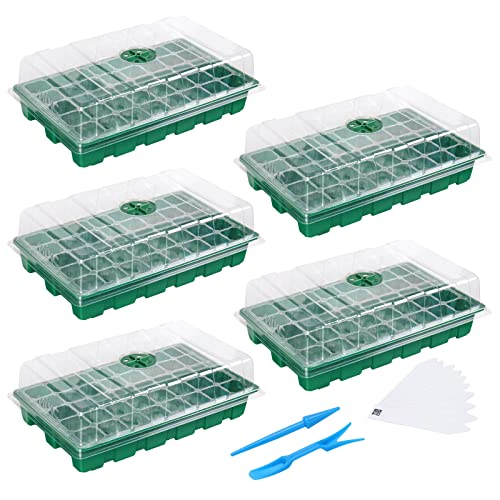
The MIXC 5-Pack Seed Starter Tray set is designed for gardeners looking to raise a wide variety of plants from seed indoors before the outdoor growing season begins. Providing five separate units with 40 cells each, the complete kit delivers 200 individual planting spaces. This multi-tray approach is particularly helpful for backyard growers and home propagators who want to stagger plantings or segregate different vegetable, herb, and flower varieties into dedicated environments.
A notable benefit of this propagation kit is the combination of transparent cell inserts and vented humidity domes. The clear plastic construction allows gardeners to observe root development and soil dampness from the side without lifting or disturbing the fragile root balls. Meanwhile, the adjustable dial vents on the 2.75-inch humidity domes offer precise control over ambient humidity and temperature, allowing users to keep moisture high during germination and gradually introduce fresh airflow as green shoots emerge.
In terms of dimensions, the full tray assembly measures approximately 14.6 inches long by 9.84 inches wide and 5.1 inches tall. Each individual cell measures 1.5 inches across and 2 inches deep, which provides an efficient, compact space tailored for starting small seeds. When preparing for the season or storing gear between cycles, the solid bottom trays are designed to nest one inside the other, significantly reducing clutter on indoor shelves, workbenches, or potting tables.
This kit fits neatly onto standard indoor plant stands, wide windowsills, or greenhouse staging areas where space efficiency is essential. The included bottom trays catch runoff and help protect household surfaces from water spills during bottom-watering or routine misting. MIXC also bundles two miniature garden tools to assist with fine soil filling or gentle transplanting, along with ten plant labels to prevent accidental mix-ups among similar-looking seedlings.
While this configuration is well suited for germinating small seeds such as brassicas, tomatoes, peppers, and tender annuals, gardeners should keep its physical proportions in mind. The 2-inch cell depth and 2.75-inch dome clearance mean that vigorous, deep-rooting plants will outgrow the enclosed space relatively fast and require transplanting to larger containers once true leaves appear. Routine cleaning with mild soap between uses will help preserve the plastic and keep the trays ready for subsequent planting cycles.
Overall, the MIXC 5-Pack Seed Starter Tray is a practical choice for beginners and experienced backyard growers who want an organized, multi-tray propagation station with reliable ventilation control. Gardeners needing to direct-sow large taproot vegetables or keep mature transplants under covers for extended periods may prefer deeper nursery pots, but for standard seed-starting tasks, this kit delivers solid utility.
Best For / Avoid If
Best for buyers prioritizing
- Clear inserts enable quick visual checks on moisture and root health
- Rotating dome vents allow easy humidity control throughout germination
- Included plant labels and basic hand tools help keep varieties organized
Consider another option if
- Cell depth of two inches is best suited for small seeds and may require prompt potting on for fast-growing varieties
- Dome height of 2.75 inches means taller seedlings will quickly outgrow the enclosed cover
Practical Seed Starting Trays Buying Guide
Selecting the best seed starting trays requires looking beyond cell counts. A tray that works well for tiny lettuce seeds may quickly stunt vigorous taproots on squashes or tomatoes. By evaluating tray construction, water movement, and humidity control, you can choose containers that nurture resilient seedlings year after year.
Cell Depth and Root Volume
Cell volume dictates how long a seedling can remain in its container before outgrowing its space. Compact cells measuring around 1.5 inches deep, such as those found in high-density multi-packs, are suitable for brassicas, onions, and small flowers that transplant quickly. Larger seeds or plants with long indoor development periods, such as tomatoes, peppers, and eggplants, benefit from cells with at least 2 to 2.25 inches of soil depth.
Restricting root space too early causes root circling, which leads to stunted growth once transplanted into garden beds. If you intend to start vegetables eight to ten weeks before your local final frost date, prioritize deeper inserts or plans that allow prompt potting on.
Drainage and Bottom-Watering Design
Adequate drainage holes at the base of every individual cell prevent waterlogging, which is the primary cause of damping-off fungus and root suffocation. Premium kits incorporate matching watertight reservoir bases beneath the cell inserts. This allows for bottom watering, where water is added directly into the base tray and drawn upward into the soil mix via capillary action.
Bottom watering keeps delicate stems dry, prevents topsoil disturbance, and encourages roots to reach downward. Kits designed with water channels along the base help distribute moisture evenly across all cells without forcing seedlings to sit in stagnant puddles.
Humidity Domes and Air Circulation
Humidity domes retain ambient warmth and prevent seed-starting soil from drying out during the critical germination phase. However, once seeds sprout, trapped moisture without airflow creates an ideal breeding ground for mold and fungal pathogens. Domes featuring built-in adjustable vents provide essential flexibility.
Begin with the vents fully closed during initial seeding. As green sprouts emerge across the tray, gradually rotate the vents open to acclimate plants to ambient indoor air before removing the dome entirely. Domes with higher clearance allow seedlings to grow taller before their foliage touches the plastic lid.
Silicone Pop-Out Cells vs. Rigid Plastic
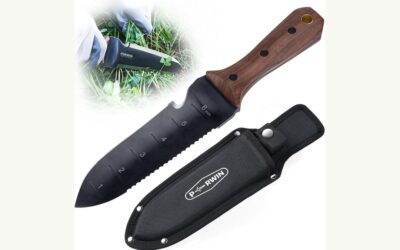
Traditional seed trays are constructed from thermoformed or injection-molded plastics. While economical and stackable, extracting tender seedlings from rigid plastic often requires squeezing the cells or using small spatulas, which risks snapping delicate stems or tearing feeder roots. Gardeners who frequently work with delicate root systems often pair flexible flats with precision tools like a hori hori knife during bed preparation.
Modern alternatives incorporate flexible silicone cell bottoms. By gently pressing upward on the flexible silicone base, the entire root ball pops out intact without pulling on the stem. For gardeners with limited hand strength or those seeking minimal root disturbance, silicone systems reduce transplant stress significantly.
Heat Mat and Supplemental Light Compatibility
Warm-season crops like peppers and eggplants require consistent soil temperatures between 75 and 85 degrees Fahrenheit to germinate reliably. Standard base trays must feature temperature-resistant plastics capable of resting on electric seedling heat mats without warping or melting.
Additionally, some specialized mini-propagators include integrated LED lighting built directly into the dome cover. While full-size grow light racks remain the gold standard for large production, self-contained LED dome kits provide a compact, all-in-one solution for small spaces lacking dedicated plant stands.
Windowsill and Small-Space Management
Standard commercial flats measure roughly 10 by 20 inches, which can overwhelm small apartments or narrow indoor ledges. For urban gardeners and homeowners without dedicated basements, elongated narrow trays engineered specifically for windowsill widths offer an accessible entry point. Compact kits with individual ten or twelve-cell pods also allow you to stagger planting schedules for different varieties.
| Tray Style | Best Suited For | Key Advantage | Practical Consideration |
|---|---|---|---|
| Silicone Pop-Out Trays | Delicate roots, repeat seasons | Zero-damage root extraction | Higher cost per cell |
| Mini-Propagator Kits (10-12 cell) | Small batches, staggered planting | Independent humidity control | Requires managing multiple bases |
| Windowsill Formats | Apartments, small homes | Fits narrow sunny shelves | Limited total seedling volume |
| High-Density Flats (40+ cell) | Large gardens, fast transplants | Maximum space efficiency | Requires earlier potting on |
| Integrated LED Domes | Areas without grow lights | Supplemental light in one unit | Requires USB power source |
Sanitization and Off-Season Storage
Reusing seed trays year after year is cost-effective and environmentally friendly, but proper sanitation is mandatory. Lingering soil particles can harbor fungal spores that cause damping-off disease in subsequent crops. Look for trays labeled as dishwasher safe or sturdy enough to scrub with warm soapy water and dilute sanitizing solutions.
When selecting large quantities of multi-cell inserts, ensure they stack neatly inside one another. Nesting designs preserve shelf space during late summer and winter when equipment is stored away.
Research Methodology and Evaluation Standards
Our evaluation of seed starting equipment relies on a detailed comparative methodology rather than simulated single-use trials. We analyzed manufacturer design documentation, dimensional blueprints, material formulations, and verified owner feedback across 10 leading models. This approach ensures our guidance reflects real-world home gardening conditions over entire growing seasons.
Each model was evaluated against core horticultural criteria: cell volume relative to root development, base tray rigidity under full water loads, clarity and height of humidity domes, and compatibility with standard heat mats. We reviewed how trays perform across diverse gardener profiles, including beginners starting their first tomato seeds, older gardeners seeking ergonomic handling, and small-space urban growers.
Updated in September 2026, our review synthesizes common failure points reported by home growers, such as brittle plastic corners, inadequate drainage slits, and poor dome venting. By filtering out flimsy disposable units and highlighting durable configurations, we provide practical, transparent recommendations designed to support healthy garden harvests.
Frequently Asked Questions
How do I choose the best seed starting trays for my space?
Match tray dimensions and cell count to your available lighting area. Gardeners using standard wire shelving units can fit traditional 1020-sized flats or grouped multi-packs, while windowsill growers need narrow formats under six inches wide. Ensure your chosen trays include watertight bottom bases to protect furniture and floors from leaks.
When should I remove the humidity dome from my seedling trays?
Remove humidity domes as soon as the majority of your seeds have sprouted. While high humidity is necessary to soften seed hulls, keeping domes over emerged green seedlings traps stagnant moisture that promotes fungal damping-off disease. Open adjustable vents first to lower humidity, then take the dome off entirely once stems stand upright.
Can I reuse plastic seed starter trays next season?
Yes, durable plastic and silicone seed starter trays can be reused for multiple seasons. Wash them thoroughly with warm water and mild soap, then rinse them in a 10 percent bleach solution or garden-safe sanitizer to eliminate disease organisms before storing them out of direct sunlight.
Why is bottom watering recommended for seed trays?
Bottom watering allows potting mix to absorb moisture through base drainage holes, keeping delicate stems dry and reducing disease risks. It also prevents the displacement of fine seeds that often occurs when pouring water from above.
What cell size is needed for tomatoes and peppers?
Tomatoes and peppers benefit from cells measuring at least 1.5 inches square and around 2 to 2.25 inches deep. Because these crops require six to ten weeks indoors before outdoor planting, deeper cells give root systems adequate room before potting up or outdoor transplanting.