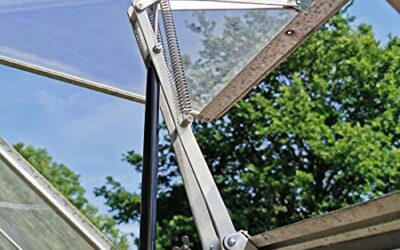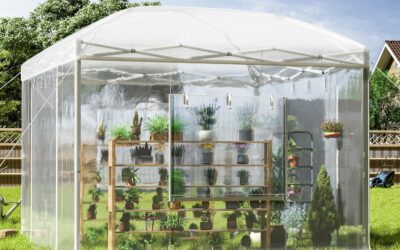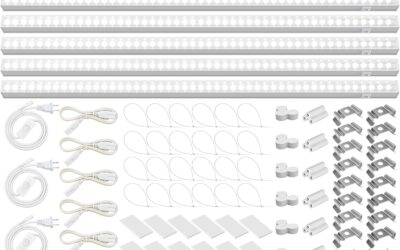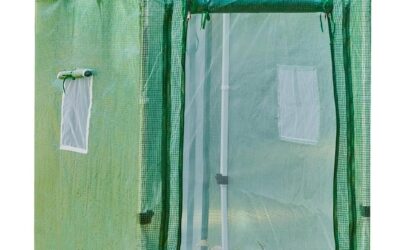



A greenhouse that lifts, shifts, or topples in a storm can undo months of careful growing and create a real safety hazard in the yard. This guide is for homeowners, beginner gardeners, and anyone with a small or exposed lot who wants to understand how to anchor a greenhouse against wind before the next storm season arrives. Alongside the practical methods and site considerations, this update compares four anchoring kits that illustrate cable and screw-in earth-anchor approaches.
The four products below are starting points rather than universal solutions. This guide explains the anchoring principles that apply to backyard greenhouse structures so readers can check compatibility or discuss the installation with the greenhouse manufacturer or a local hardware professional.
For more general storage and greenhouse guidance, see the Greenhouses & Garden Storage category page, which covers related setup and seasonal-use topics.
Greenhouse Anchor Kits to Compare
These products include a greenhouse-specific cable kit and several screw-in earth-anchor systems. Compatibility depends on greenhouse frame material, base design, soil conditions, wind exposure, and the manufacturer's anchoring instructions.
Palram HG1022 Snap & Grow Greenhouse Anchor Kit for Added Wind Stability hannger A4 18-Inch Ground Anchor Kit for Securing Greenhouses, Sheds, and Yard Structures Fabulas 18-Inch Spiral Ground Anchors for Securing Yard Structures and Garden Supports CORDUN 18-Inch Spiral Ground Anchor Kit for Shed and Outdoor Tie-Downs Prices and availability can change. We may earn a commission from qualifying purchases.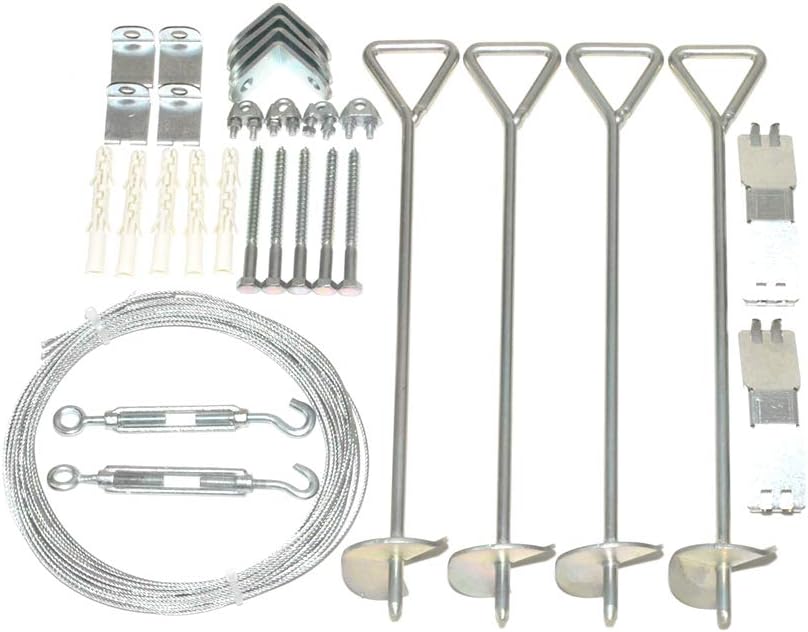


Pros
- Made for the Palram Snap & Grow greenhouse series, including listed 6-foot and 8-foot models.
- Provides an added anchoring method for wind and weather stability.
- Can be used with ground or foundation anchoring according to the product information.
- Reviewers commonly mention that the cables and anchors feel sturdy once installed.
Cons
- The product information specifies Snap & Grow compatibility, so it may not be suitable for other Palram greenhouse lines without modification.
- Ground installation could require extra effort depending on soil conditions, and one reviewer noted using a hammer to seat the anchors.
- Gardeners wanting a full greenhouse base or floor should note that this is an anchor kit, not a flooring system.
The Palram HG1022 Anchor Kit is a greenhouse accessory made for securing Palram Snap & Grow 6-foot and 8-foot series greenhouses. Its main job is straightforward: help hold the greenhouse to the ground or to a foundation so the structure has extra reinforcement when wind or rough weather moves through.
For backyard growers, the key benefit is added stability. Lightweight greenhouses can be vulnerable if they are not anchored properly, even in areas that do not see frequent severe storms. Based on the listed product information, this kit is intended to provide additional support against high winds and the elements, making it a sensible upgrade for gardeners who want to protect a seasonal or year-round growing space.
The design uses an over-the-top installation approach with wind cable anchoring. The listed material is alloy steel, and the color is silver. Because it is a dedicated accessory for the Snap & Grow line, it should be a cleaner fit for compatible Palram greenhouses than a general-purpose tie-down kit, though gardeners should still confirm their greenhouse model before ordering.
This kit is most relevant for home gardeners using a Snap & Grow greenhouse in an open yard, along a fence line, or in any spot where wind can catch the panels. It can also be useful after assembling a new greenhouse, before the first storm season, or when moving a greenhouse to a more exposed location. Reviewers commonly describe the kit as sturdy, and several mention positive experiences in windy areas, but those comments should be treated as user feedback rather than a guaranteed wind rating.
The main limitation is compatibility. The specifications identify this as an anchor system specifically for the Palram Snap & Grow greenhouse series, and one reviewer noted it was not made for the Harmony greenhouse without modification. Installation may also depend on the surface beneath the greenhouse, since anchoring into soil is different from anchoring to a foundation. Follow the manufacturer instructions, check cable contact points for rubbing over time, and inspect the anchors after strong weather.
Overall, this is a practical accessory for Snap & Grow owners who want a manufacturer-matched way to add greenhouse security. Gardeners with a different greenhouse model, a shed, or a need for a full floor or base system should consider a product designed for that specific structure instead.
Best For / Avoid If
Best for buyers prioritizing
- Made for the Palram Snap & Grow greenhouse series, including listed 6-foot and 8-foot models.
- Provides an added anchoring method for wind and weather stability.
- Can be used with ground or foundation anchoring according to the product information.
Consider another option if
- The product information specifies Snap & Grow compatibility, so it may not be suitable for other Palram greenhouse lines without modification.
- Ground installation could require extra effort depending on soil conditions, and one reviewer noted using a hammer to seat the anchors.
- Gardeners wanting a full greenhouse base or floor should note that this is an anchor kit, not a flooring system.
Pros
- Complete 18-piece kit includes four ground anchors, cable, rope clamps, turnbuckles, drill adapter, and clamp wrench.
- Spiral alloy steel anchors are listed at 18 inches long, giving more soil engagement than short garden stakes.
- Adjustable turnbuckles make it easier to fine-tune cable tension after the anchors are set.
- Reviewers commonly mention straightforward installation, especially with the included auger-style drill adapter.
- Suitable for a wide range of lawn, yard, greenhouse, and seasonal decoration tie-down needs.
Cons
- The included 1/8-inch cable may be too short or light for some larger sheds or heavier tie-down layouts, based on product information and at least one reviewer report.
- Soil type, installation depth, and anchor placement can affect holding strength, so very loose or saturated ground may require extra caution.
- Gardeners securing larger or higher-risk structures may prefer the brand's thicker cable or longer anchor options described in the product information.
The hannger A4 ground anchor kit is a tie-down set for securing outdoor structures in lawns, yards, gardens, and campsites. Based on the listed specifications, it is aimed at homeowners who need anchor points for greenhouses, sheds, trampolines, canopies, gazebos, swing sets, tree support, tents, or seasonal yard decorations.
The main value of this kit is that it packages anchors and tensioning hardware together. It includes four 18-inch spiral ground anchors, 50 ft of 1/8-inch galvanized steel cable, 10 rope clamps, 2 turnbuckles, a drill adapter, and a clamp wrench. For gardeners, that means fewer separate parts to track down when anchoring a small greenhouse or keeping a canopy from shifting in breezy weather.
The anchors are made from alloy steel and have a black protective coating listed to help resist rust and outdoor wear. The spiral style is designed to twist into the ground, either by inserting a metal rod through the eyelet or by using the included drill adapter with a compatible drill. Once the anchors are set, the cable, clamps, and turnbuckles allow the user to create and tension tie-down lines.
In a backyard setting, this kit makes sense for lightweight to moderate anchoring jobs such as stabilizing a small greenhouse frame, tying down a pop-up canopy, securing a gazebo leg, supporting a young tree, or anchoring holiday figures. Reviewers commonly mention easy installation and a secure feel for uses such as greenhouses, decorations, and guy lines, though those comments should be viewed as user experiences rather than guaranteed performance.
There are a few practical limits to consider before buying. The supplied cable is 1/8 inch with a listed breaking strength of 400 lb, and the product information notes that hannger offers thicker 3/16-inch cable for heavier items. One reviewer tying down a larger shed reported needing additional cable, so it is wise to measure your planned cable path before installation, especially if routing over a roof or around a wide structure.
This kit is a good choice for gardeners and homeowners who want a ready-to-use anchor set for common outdoor tie-down projects. If you are anchoring a large shed, a tall structure, or anything in a high-wind location, consider whether longer anchors, thicker cable, additional turnbuckles, or professional anchoring guidance would be more appropriate. Always check cable tension, clamp tightness, and anchor position periodically, especially after storms or heavy rain.
Best For / Avoid If
Best for buyers prioritizing
- Complete 18-piece kit includes four ground anchors, cable, rope clamps, turnbuckles, drill adapter, and clamp wrench.
- Spiral alloy steel anchors are listed at 18 inches long, giving more soil engagement than short garden stakes.
- Adjustable turnbuckles make it easier to fine-tune cable tension after the anchors are set.
Consider another option if
- The included 1/8-inch cable may be too short or light for some larger sheds or heavier tie-down layouts, based on product information and at least one reviewer report.
- Soil type, installation depth, and anchor placement can affect holding strength, so very loose or saturated ground may require extra caution.
- Gardeners securing larger or higher-risk structures may prefer the brand's thicker cable or longer anchor options described in the product information.
Pros
- Suitable for many outdoor anchoring jobs, including sheds, swings, trees, trampolines, carports, tents, fences, RV awnings, canopies, and temporary shelters.
- The kit includes both a hand wrench and a nut driver, so installation is not limited to one method.
- Reviewers commonly mention easy installation, especially when using a cordless drill in workable soil.
- The smaller 1.58-inch spiral blade may be easier to place in tighter areas such as near fences or planted spaces.
- Each anchor has a removable eyebolt, which can make setup and attachment more adaptable.
Cons
- Not recommended for extremely rocky soil or dense tree roots, where the anchor or drill may be damaged.
- Installed anchors may need to be checked and adjusted after severe weather, especially when securing wind-exposed items.
- Because they protrude as tie-down points, they may require extra attention around mowing paths, foot traffic, pets, or play areas.
The Fabulas 18-inch spiral ground anchor kit is designed for homeowners, gardeners, campers, and DIY users who need a stronger tie-down point than a simple straight stake. Based on the listed specifications, the set includes four iron screw-in anchors for securing outdoor items such as small sheds, swing sets, trampolines, tents, canopies, carports, fences, trees, RV awnings, temporary shelters, chicken coops, hammocks, and greenhouse-related structures.
The key benefit is the screw-style spiral design. The 1.58-inch spiral blade and sharp tip are intended to drive into compact soil, sand, or grass while creating grip below the surface. For garden use, that can be helpful when stabilizing a young tree support line, holding down a shade cloth edge, tying off a small greenhouse frame, or anchoring a temporary structure before windy weather.
Each anchor is 18 inches long and made from iron with a black anti-rust coating. The product information indicates that the spiral blade is welded to the rod, and the removable eyebolt gives you a tie-off point for rope, straps, or other compatible fastening methods. The kit also includes a T-handle wrench and a 12mm nut driver, so users can install by hand or with a drill where soil conditions allow. Rubber caps are included for safer handling and storage.
In a backyard or small homestead setting, these anchors are most relevant anywhere wind or movement could shift a lightweight structure. They may suit a seasonal canopy over a patio, a tarp over stored garden supplies, support lines for a leaning tree, a small swing set, or a temporary greenhouse or shelter. Reviewers commonly mention that the anchors were easy to install in workable soil, with several noting drill-assisted installation for tarps, tree support, swing sets, and shade setups.
There are some important limits to keep in mind. The manufacturer notes that these anchors are not recommended for extremely rocky soil or dense tree roots, since those conditions can damage the anchor or overload a drill. They should be installed to proper depth for the best grip, and they should be checked after severe weather. Around lawns, play areas, and pet runs, place them where people, mower wheels, and lead lines are less likely to catch on exposed hardware.
Overall, this Fabulas kit is a practical option for gardeners and homeowners who need a reusable ground anchoring solution for common yard structures and tie-down jobs. It is best suited to soil, grass, sand, or moderately compact ground rather than hard rock, root-heavy areas, or permanent structural anchoring projects that require engineered hardware.
Best For / Avoid If
Best for buyers prioritizing
- Suitable for many outdoor anchoring jobs, including sheds, swings, trees, trampolines, carports, tents, fences, RV awnings, canopies, and temporary shelters.
- The kit includes both a hand wrench and a nut driver, so installation is not limited to one method.
- Reviewers commonly mention easy installation, especially when using a cordless drill in workable soil.
Consider another option if
- Not recommended for extremely rocky soil or dense tree roots, where the anchor or drill may be damaged.
- Installed anchors may need to be checked and adjusted after severe weather, especially when securing wind-exposed items.
- Because they protrude as tie-down points, they may require extra attention around mowing paths, foot traffic, pets, or play areas.
Pros
- Complete kit with anchors, cable, clamps, turnbuckles, and installation tools
- Spiral design and 18-inch length offer a more substantial hold than lightweight stakes
- Useful for many backyard and small-structure tie-down jobs
- Can be installed by hand or with a drill for more flexibility
Cons
- May be less suitable for rocky or root-dense soil, based on the product guidance
- The cable and hardware may need periodic checking if left outdoors for extended periods
The CORDUN 18-inch ground anchor kit is made for securing outdoor structures and equipment that can shift in wind or with regular use. Based on the listed specifications, it is a practical option for homeowners, gardeners, and small-property users who need a tie-down solution for sheds, greenhouses, swing sets, carports, trampolines, tents, canopies, and similar items.
The main advantage is the more complete hardware package. In addition to four spiral metal anchors, the kit includes galvanized cable, cable clamps, hook and eye turnbuckles, a drill bit adapter, a T wrench, and a 7 mm ratchet wrench. That makes it easier to create a full anchoring setup without having to buy extra parts separately.
The 18-inch spiral shape is designed to bite into the ground more effectively than straight stakes, and the listing says it can be used in soil, sand, or clay. The ability to install the anchors by hand or with a drill adds convenience, especially when working close to a structure or when you want more control during installation.
For backyard use, this kit fits jobs where movement matters, such as stabilizing a shed, helping hold down a greenhouse, or adding extra security to a swing set or trampoline. It may also suit temporary or seasonal projects where a reusable anchor system is more practical than a permanent installation.
A few limitations are worth keeping in mind. The product guidance says it is not recommended for rocky or root-dense soil, so gardeners with very hard ground may need a different solution. It is also wise to check the cable and hardware periodically, especially if they stay outdoors for long stretches. Overall, this is a sensible choice for people who want a sturdy, adaptable tie-down kit and are working in soil conditions that allow screw-in anchors to perform well.
Best For / Avoid If
Best for buyers prioritizing
- Complete kit with anchors, cable, clamps, turnbuckles, and installation tools
- Spiral design and 18-inch length offer a more substantial hold than lightweight stakes
- Useful for many backyard and small-structure tie-down jobs
Consider another option if
- May be less suitable for rocky or root-dense soil, based on the product guidance
- The cable and hardware may need periodic checking if left outdoors for extended periods
How To Anchor A Greenhouse Against Wind: Buying Guide
Understanding Wind Load On A Greenhouse
Wind does not just push against a greenhouse from the side. It also creates uplift on the roof panels, similar to how air moves over an airplane wing. This uplift is often the reason a lightweight greenhouse fails even when it seems well positioned against a fence or wall. Before choosing anchoring hardware, it helps to think about both sideways force and vertical lift, since a solid anchoring plan usually needs to address both.
Common Anchoring Methods
Ground anchors, concrete footings, and weighted base rails are the three approaches most often used for backyard greenhouses. Ground anchors, such as auger-style stakes, are typically driven into soil at each corner and sometimes along the base rail, and they tend to work best in soil that is not too rocky or sandy. Concrete footings offer a more permanent solution and are generally recommended for larger structures that will stay in one place for years. Weighted base rails, where the frame is bolted to a heavier perimeter beam, can add stability without requiring digging, which may suit renters or gardeners who might relocate the structure later.
Many gardeners combine methods, for example pairing ground anchors with a secured base rail, especially in areas that regularly experience strong gusts. Reviewing the greenhouse manufacturer’s own anchoring instructions is important, since frame material and panel type can affect which method is appropriate.
Site Selection And Placement
Where a greenhouse sits in the yard has a major effect on how much wind it experiences. Placing a structure near a solid fence, hedge, or the leeward side of a house can reduce direct wind exposure, though it should not fully replace proper anchoring. Open areas, hilltops, and spots near funnel-like gaps between buildings tend to see stronger and more unpredictable gusts, so these locations generally call for more robust anchoring regardless of greenhouse size.
Matching Anchors To Greenhouse Size
A small cold frame or mini greenhouse has far less surface area catching wind than a large walk-in structure, so anchoring needs scale with size. Smaller units may only need a handful of ground stakes at the base corners, while larger greenhouses often require anchors spaced along the entire perimeter plus additional bracing at the roof ridge or door frame, since these are common failure points during storms.
Common Anchoring Mistakes
- Anchoring only two or three corners instead of the full base perimeter
- Using anchors that are too short for loose or sandy soil conditions
- Ignoring roof uplift and focusing only on sideways wind resistance
- Skipping manufacturer-recommended anchor spacing to save time or materials
- Failing to recheck anchor tightness after the first season of seasonal freeze-thaw cycles
Maintenance And Seasonal Checks
Anchoring hardware should be inspected at least once or twice a year, ideally before the windiest season in a given region. Soil naturally shifts with moisture and temperature changes, which can loosen ground anchors over time. Checking bolts, straps, and stake tension regularly helps catch problems before a storm puts them to the test.
Accessibility And Small-Space Considerations
For older gardeners or anyone with mobility concerns, ground anchors that require heavy digging or driving deep stakes can be physically demanding. In these cases, a professional installer or a helper for the initial setup may be worthwhile, since anchoring is typically a one-time task rather than an ongoing chore. Gardeners in small yards should also consider how anchor placement affects nearby walkways or garden beds, since stakes and guy lines need clearance to avoid becoming a tripping hazard.
Safety Reminders
Always follow the greenhouse manufacturer’s specific anchoring instructions, since frame materials and warranty terms can vary. In regions with local building codes or homeowner association rules, it is worth checking whether permanent anchoring methods like concrete footings require approval. During severe storm warnings, some gardeners choose to add temporary bracing or remove loose panels as an extra precaution, though this should only be done when it is safe to do so.
Research Methodology And Trust
This guide was developed by reviewing common anchoring practices and manufacturer guidance associated with backyard greenhouse structures. No specific product data was available for this article, so the content focuses on general anchoring principles rather than a comparison of named products or brands.
Because no product listings were available to evaluate, this article does not include specification comparisons, owner feedback analysis, or performance claims tied to any particular anchoring kit or hardware set. This is a research-based summary of anchoring concepts rather than a hands-on test of physical products.
This page will be revisited during future updates, including in August 2026, if relevant anchoring product data becomes available for review against the criteria outlined above.
Final Recommendations
The four anchor products above provide concrete options to compare, but the final choice still depends on greenhouse compatibility, soil conditions, wind exposure, and manufacturer guidance. Selecting hardware without verified specifications would not be responsible guidance for a task that directly affects structural safety.
Readers who want to move forward should compare anchoring hardware directly against their greenhouse manufacturer’s stated requirements, local soil conditions, and typical wind exposure in their area. Consulting the installation manual that came with a specific greenhouse model is the most reliable next step, since anchor spacing and hardware type often depend on frame material and structure size.
Frequently Asked Questions
What is the best way to anchor a greenhouse against wind?
Most stable setups combine ground anchors or concrete footings with a securely bolted base rail, since this addresses both sideways wind force and roof uplift. The right combination depends on greenhouse size, soil type, and how exposed the site is to strong gusts.
How many anchors does a small greenhouse need?
Smaller structures often need anchors at each base corner at minimum, though larger units typically require additional anchors spaced along the full perimeter. Checking the manufacturer’s spacing recommendations is the most reliable way to determine the right number for a specific model.
Can I anchor a greenhouse without digging?
Weighted base rails and bolted perimeter beams can add stability without deep digging, which may suit gardeners who rent their home or expect to relocate the structure later. However, these methods are generally considered less permanent than ground anchors or concrete footings.
How often should greenhouse anchors be checked?
Inspecting anchors at least once or twice a year, especially before the windiest season locally, helps catch loosening caused by soil movement or freeze-thaw cycles. A quick check of bolts and stake tension only takes a few minutes but can prevent bigger problems later.
Is greenhouse anchoring safe for older gardeners to do themselves?
Driving deep ground anchors or pouring concrete footings can be physically demanding, so older gardeners or those with mobility limitations may prefer to hire help for the initial setup. Once anchors are installed, ongoing maintenance checks are generally much less physically demanding.
Does greenhouse placement in the yard matter for wind protection?
Yes, placing a greenhouse near a solid fence, wall, or hedge on the windward side can reduce direct wind exposure. This should be treated as a helpful addition to proper anchoring rather than a replacement for it.
Should I follow the greenhouse manufacturer’s anchoring instructions exactly?
Yes, manufacturer instructions typically reflect the specific frame material, panel type, and weight distribution of that model. Deviating from those instructions could affect both structural stability and any warranty coverage tied to the greenhouse.
Continue your garden research
Browse more practical guides in Greenhouses & Garden Storage.
See how Dove Creek Gardens researches and compares products.