

Gardening Tools For Arthritis can make routine yard work feel more manageable when gripping, squeezing, bending, or kneeling causes discomfort. The most helpful options usually reduce hand force, improve leverage, offer larger or cushioned grips, or let you work from a standing position.
For this July 2026 guide, we compared 20 products from the supplied list and screened the available product data for relevance to home gardening, pruning, weeding, digging, cultivating, and accessibility. We focused on listed features such as ratcheting or lever-assisted cutting, ergonomic handles, cutting capacity, stand-up weed removal, blade or head material when provided, safety locks, storage features, and suitability for beginners or older gardeners. For more tool-focused advice, see our Garden Tools & Pruning category.
DECERK DDGJ-JD 8.5-Inch Bypass Pruning Shears for Easier Branch and Stem Cutting Premium Germany – Steel Pruning Shears, Work 3 Times Easier, Pruners Heady Duty, Sharp Garden Clippers Cuting Florist Flower, Hedge, Herb, Rose, Indoor Live Plants, Arthritis Weak Hand Snips Craft911 PS-V2 Bypass Pruning Shears with Dual-Size Opening for Easier Garden Trimming Ultra Sharp Japanese Steel Pruning Shears – Cuts 3X Easier, Weak Hand Arthritis Clippers, Rust-Resistant Titanium Coated Pruner, Effortlessly Cuts 3/4 Inch Prices and availability can change. We may earn a commission from qualifying purchases.


Pros
- Listed cutting capacity supports pruning small branches, with the product information describing use on branches up to 1 inch in diameter.
- Ergonomic rubber and aluminum handle design is intended to reduce hand fatigue during longer pruning sessions.
- Reviewers commonly mention that the shears feel sharp, comfortable, and easy to lock and unlock.
- Bypass blade style is a good match for common garden jobs such as deadheading, harvesting, trimming stems, and shaping small plants.
Cons
- Gardeners cutting larger woody limbs may need loppers or a pruning saw instead of hand pruners.
- The blades should be wiped after use and stored in a ventilated area to help maintain the anti-rust coating.
- One reviewer questioned whether the spring might stay in place long term, although the product includes replacement springs.
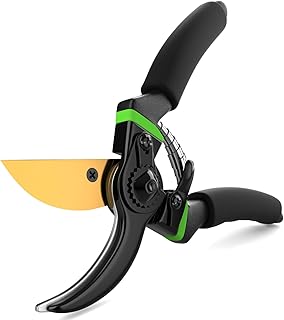
The DECERK DDGJ-JD 8.5-inch pruning shears are bypass hand pruners made for everyday garden trimming, including stems, flowers, vegetables, fruit harvest, brush, and small branches. Based on the listed features, they are especially relevant for homeowners, raised-bed gardeners, and older gardeners who want a hand tool with a cushioned grip and added cutting leverage.
The key performance feature is the lever cutting design, which the product information says is intended to increase cutting force for thicker, wet, or dry wood. The listed blade construction combines Japanese SK5 high-carbon steel with a titanium coating, a pairing aimed at sharp cuts and corrosion resistance. For live plants, the bypass blade style is generally preferable to anvil-style cutting because it is designed to slice past the lower jaw rather than crush the stem.
At 8.5 inches long and 0.25 kg, these pruners are compact enough for regular garden carry but large enough for many common pruning jobs. The specifications list rubber and aluminum handles, ambidextrous hand orientation, a straight blade edge, a 2.95-inch blade, and a 1.42-inch opening. A one-handed safety lock is included for closing the blades when the tool is not in use, and replacement springs are included for simple maintenance.
In a backyard garden, these shears fit tasks such as cutting spent blooms, trimming tomato or pepper stems, harvesting herbs, clipping small fruiting stems, and pruning young shrubs or fruit tree shoots within the listed capacity. They are also a useful size for patio planters and raised beds, where a full-size lopper would be awkward and a small snip may not provide enough leverage.
There are practical limits to keep in mind. Although the product information describes branch cutting up to 1 inch, hand pruners are not a substitute for loppers or a pruning saw when growth is larger, very hard, or difficult to reach. For safety and tool life, lock the blades before storage, keep fingers away from the cutting path, wipe the blades after use, and store the shears in a ventilated area as recommended by the manufacturer.
Overall, these DECERK pruning shears are a strong fit for gardeners who want a compact bypass pruner with cushioned handles, a safety lock, and replacement springs included. Gardeners who mainly cut heavy limbs, overhead branches, or dense hedges may be better served by a larger pruning tool designed for those jobs.
Pros
- Adjustable opening gives more flexibility for different stem sizes and hand comfort.
- Compact and lightweight design should be easy to handle for quick pruning sessions.
- Ambidextrous orientation makes it usable for right- or left-handed gardeners.
- Reviewers commonly mention sharp cutting and usefulness for flowers, vines, rose canes, and tight spaces.
Cons
- The listed 1.5 cm cutting width suggests it is better for light pruning than thick woody branches.
- Gardeners doing heavy hedge shaping or major shrub renovation may prefer larger loppers or dedicated hedge shears.
- High carbon steel blades still need basic care, such as wiping clean and dry after use, to help preserve the cutting edge and coating.
The Craft911 PS-V2 is a compact bypass pruning shear intended for everyday garden trimming rather than heavy cutting. Based on the listed specifications, it is designed for flowers, vines, rose bushes, small branches, and general cleanup around beds, borders, containers, and shrubs. Its ambidextrous orientation and comfort-focused handle design make it a practical option for homeowners, beginners, and older gardeners who want a simple hand pruner for routine work.
The standout feature is the dual-size cutting opening, which allows the jaw width to be adjusted for different stem sizes and hand positions. That can be useful when switching between delicate deadheading and slightly tougher pruning jobs. The product information lists a bypass blade type and high carbon steel blade material, a combination commonly chosen for clean cuts on living plant material when the tool is kept sharp and used within its capacity.
At 8.46 inches long and 2.36 inches wide, with a listed weight of 0.26 kilograms, this pruner is relatively compact for working in tight areas. The ABS handles are described as ergonomic and non-slip, and the one-handed safety lock helps keep the blades closed between cuts or in storage. The rust-resistant blade coating adds convenience, but like any garden pruner, it should still be wiped clean after use, especially after cutting sappy stems or working in wet conditions.
In a home garden, this style of pruner fits many small, frequent jobs: cutting spent blooms, trimming vegetable stems, snipping prickly vines, shaping light growth on shrubs, and tidying plants in raised beds or patio containers. Reviewers commonly mention that it feels sharp, light, and useful in tight spots, with several noting good performance on flowers, vines, and rose canes. Those comments are helpful context, though they should be read as user experiences rather than controlled testing.
The main limitation is capacity. The listed cutting width is 1.5 centimeters, so gardeners should not expect this tool to replace loppers, a pruning saw, or full-size hedge shears for thick woody growth or major hedge work. Avoid cutting wire, fencing, or other hard non-plant materials, as that can damage the blade. For light, regular pruning with an emphasis on comfort, control, and compact storage, the PS-V2 is a sensible small-garden pruner; for heavy hedge shaping or large branches, a larger cutting tool would be the better choice.

Pros
- Includes the three hand tools many gardeners use most often for containers, raised beds, and small planting areas.
- Ergonomic vertical grips are designed for gardeners with limited hand strength or dexterity concerns.
- Full-size adult tool design is more suitable for regular garden use than novelty or miniature gift sets.
- Moss color gives the set a subdued garden-friendly look.
Cons
- Gardeners who prefer traditional straight handles may need time to adjust to the vertical grip.
- The set is limited to hand trowel, fork, and cultivator tasks, so pruning, transplanting larger plants, or heavy digging will require other tools.
- Listed dimensions are compact, so gardeners working deep beds or dense, rocky soil may prefer longer-handled tools for more reach and leverage.
The Bernini Moss Ergonomic Garden Tool Set is a three-piece hand tool kit for everyday soil work. Based on the listed product information, it includes a hand trowel, gardening fork, and cultivator, making it useful for planting, loosening soil, pulling small weeds, aerating, turning soil, and blending potting mix with existing soil. Its main audience is the gardener who wants basic tools that are easier to hold than standard straight-handled hand tools.
The standout feature is the vertical grip design. Instead of forcing the wrist into a bent position while pushing a tool into soil, the handle is intended to let the wrist stay straighter and allow more pressure from the palm, arm, and shoulder. For older gardeners or anyone with reduced grip strength, that design may help make short garden sessions more comfortable, though it should not be treated as a medical solution.
The product information lists slip-resistant handles and rust-resistant steel tool heads. The large top of each handle is designed so the user can push with the palm while using less finger pressure. The listed item dimensions are 10 x 3 x 5 inches, which suggests a compact hand-tool format that should be simple to store in a potting bench drawer, garden tote, garage shelf, or small shed.
In a home garden, this set makes the most sense for raised beds, containers, patio planters, herb gardens, and small backyard planting areas. The trowel can help open planting holes, the fork can loosen and turn small patches of soil, and the cultivator can break up surface crust or mix amendments into a container or bed. It is also a thoughtful gift option for gardeners who still enjoy hands-on soil work but want tools designed around easier gripping.
There are some practical limits to keep in mind. These are hand tools, not long-handled digging tools, so they are not the best match for deep bed preparation, heavy clay work, or large garden renovation jobs. As with any steel garden tool, wiping soil from the heads after use and storing the set dry should help maintain the finish and reduce wear over time.
Overall, the Bernini Ergonomic Garden Tool Set is best for gardeners who want a compact, accessible set for routine planting and soil maintenance. Gardeners who need pruning tools, extra reach, or heavy-duty digging power should pair it with other tools or consider a different style, but for everyday small-space gardening, the supported features are well matched to comfort-focused use.


Pros
- Durable aluminum construction is well suited to regular soil-loosening and weeding tasks.
- Comfort-focused handle may reduce hand strain compared with basic straight-handled tools.
- Lightweight 8 ounce design is easy to carry around beds and store with other hand tools.
- Reviewers commonly mention sturdiness and usefulness in raised beds, flower beds, and rock-covered areas.
- Hanging hole makes storage simple and helps prevent the tool from being misplaced.
Cons
- As a hand cultivator, it may be less suitable for large garden plots or deep soil preparation than a long-handled or powered tool.
- Gardeners working in very compacted soil may need to moisten the soil or use a larger tool first.
- The short handle requires bending, kneeling, or working close to the ground, which may not suit every gardener.
The Fiskars Ergo Cultivator is a compact manual hand cultivator made for everyday garden maintenance, including loosening soil, aerating small planting areas, and helping remove weeds. Based on the listed specifications, it is best viewed as a close-up bed tool for homeowners, beginner gardeners, raised-bed growers, and anyone maintaining flowers, vegetables, or small landscaped areas.
The main value is the cast-aluminum head and tines. The product information indicates that the polished aluminum construction supports rust resistance and durability, while the tine shape is intended to cut into tough soil, loosen the surface, and work around weeds. For gardeners who only need to refresh planting pockets, break up crusted soil, or clean up around established plants, this type of tool is often more precise than a large cultivator.
The tool measures 3 by 4 by 13 inches and weighs 8 ounces, so it should be easy to carry, store, and maneuver between plants. Its ergonomic non-slip grip is designed to improve control and reduce fatigue during repetitive pulling and scratching motions. The handle also includes a hanging hole, which is a small but useful feature for keeping hand tools visible and organized in a shed, garage, or greenhouse work area.
In real garden use, this cultivator makes the most sense for raised beds, flower borders, container-adjacent work, and small backyard beds where you are loosening just the top layer of soil. Reviewers commonly mention that it feels sturdy, works well for weeding, and is useful in raised beds and rock-covered areas, though those comments should be treated as customer experience rather than controlled testing.
There are a few practical limits to keep in mind. This is a short hand tool, so it requires kneeling, bending, or working from a seated position, which may be uncomfortable for some older gardeners or anyone with limited mobility. It is also not a substitute for a long-handled cultivator, hoe, broadfork, or powered tiller when preparing a large plot or breaking up deeply compacted ground.
Overall, the Fiskars Ergo Cultivator is a sensible choice if you want a durable, simple hand tool for routine soil loosening and weeding in smaller garden spaces. Gardeners who need to cultivate large beds while standing upright, or who regularly work heavy compacted soil, may prefer a larger long-handled option instead.

Pros
- Versatile enough for common garden tasks such as weeding, digging, transplanting, cutting, and dividing plants.
- Stainless steel, rust-resistant blade material is well suited to routine garden use when cleaned and stored properly.
- Depth markings are useful for planting tasks where consistent soil depth matters.
- Full-tang wood handle design provides a more secure construction than a blade attached only at the neck.
- Reviewers commonly mention that the blade feels sharp and the tool feels solid in hand.
Cons
- The blade is intentionally sharp, so it requires careful handling, safe storage, and extra caution around children.
- It is a hand tool, so gardeners dealing with large weeding areas or heavy excavation may prefer a long-handled tool.
- One reviewer reported a broken belt loop on the sheath, so the sheath hardware may be worth checking during regular use.
The PERWIN Hori Hori Garden Knife is a multipurpose manual weeding and planting tool designed for gardeners who want a compact alternative to carrying a trowel, weeder, and small cutting tool separately. Based on the listed specifications, it has a 12.1-inch overall length with a 7-inch stainless steel blade, making it a practical size for raised beds, borders, containers, and close work around established plants.
The main appeal is the blade layout. One side is sharpened for slicing, while the other has a serrated edge for tougher roots or fibrous growth. The curved blade can be used for digging planting holes, loosening weeds, removing small clumps, or dividing plants where a larger shovel would be too bulky. Inch markings on the blade also help with planting depth, which is especially useful for bulbs, transplants, and seedlings.
The product information indicates a full-tang design, meaning the blade extends through the handle for added strength. The walnut wood handle is secured with three metal rivets and includes a hanging hole for storage. It is also listed as ambidextrous, so right- and left-handed gardeners should be able to use the basic blade functions comfortably, while the included sheath provides a protected way to carry or store the knife between tasks.
In everyday home gardens, this tool fits well for weeding along bed edges, opening bags of soil or mulch, cutting twine, transplanting small perennials, and working in tight spaces where a full-size spade is awkward. It may be especially useful for gardeners who maintain raised beds or small backyard plots because it packs several frequent tasks into one tool that can ride on a belt or stay in a garden tote.
There are a few cautions to keep in mind. The blade is sharp by design, and reviewers commonly note that it should be handled carefully, cleaned by hand, and stored in the sheath when not in use. This is not the right tool for leaving loose in a bucket where someone could reach in without looking, and it should be kept away from children. Gardeners with very large beds, deep clay excavation, or heavy root removal may still want a long-handled weeder, digging fork, or shovel for leverage.
Overall, the PERWIN Hori Hori Garden Knife is a strong fit for beginner-to-intermediate gardeners who want a versatile hand tool for planting, weeding, cutting, and measuring depth. If you prefer specialized tools for every task or need long-reach leverage to avoid kneeling, a different weeder or trowel may be more comfortable, but for compact everyday garden work, the feature set is well matched to common backyard needs.

Pros
- Ratcheting mechanism provides added leverage for gardeners who struggle with thicker cuts.
- Replaceable SK5 carbon steel blade is a useful long-term maintenance feature.
- Ambidextrous hand orientation makes it suitable for right- or left-handed users.
- Compact 10.63-inch length is easy to store with other hand tools while still offering a larger pruning capacity.
Cons
- The ratcheting action may feel slower or cumbersome for gardeners making many quick, small cuts.
- Product information notes it is best suited for medium to large hands, so it may not be the most comfortable fit for smaller hands.
- As with any sharp pruner, safe locking, careful handling, and routine blade maintenance are important.
The EZKUT 3130-1A is a ratcheting anvil hand pruner designed for heavier backyard pruning tasks than simple flower deadheading. Based on the listed specifications, it is built for cuts up to 1.5 inches and is aimed at homeowners, gardeners, landscapers, and others who need extra leverage for shrubs, fruit tree branches, and woody stems.
Its main advantage is the three-stage ratcheting action. Instead of relying on one hard squeeze, the mechanism lets the cut progress in steps, which can be helpful for gardeners with reduced hand strength or fatigue during longer pruning sessions. Reviewers commonly mention that the tool feels sharp and easier on the hands for thicker cuts, though those comments should be treated as user feedback rather than verified testing.
The pruner uses an SK5 hardened carbon steel blade with a non-stick coating, and the product information describes the blade as replaceable. The anvil blade type is a good match for woody material and general cleanup, while the contoured blade is described as being designed for circle-cutting. Its listed dimensions are 10.63 inches long by 4.13 inches wide, with a weight of 0.2 kilograms.
For everyday garden use, this pruner fits jobs such as trimming overgrown shrubs, cutting back thicker perennial stems, pruning small fruit tree branches, and cleaning up woody growth around raised beds or fence lines. The ambidextrous orientation is useful in shared garden tool kits, and the green metal-handled design keeps it in the familiar hand-pruner category rather than requiring the storage space of a full lopper.
Comfort and safety features include an ergonomic handle, non-slip cushioned grip, shock-absorbing pads, wrap-around knuckle protector, and a built-in safety lock. The product information also notes that it is best suited for medium to large hands, so gardeners with smaller hands may want to compare grip span before choosing it. Always lock the blades closed before storing it, keep fingers away from the blade path, and avoid forcing it beyond the listed cutting capacity.
This is a practical choice for gardeners who want a compact hand tool with more leverage than a conventional pruner. Gardeners who mainly deadhead flowers, harvest herbs, or make fast repeated cuts on thin green growth may prefer a lighter bypass pruner or snip, while those cutting larger limbs should consider a lopper or pruning saw instead.


Pros
- Ratchet mechanism provides extra leverage for gardeners who struggle with thicker stems or reduced hand strength.
- Single-cut mode keeps the tool useful for lighter pruning instead of limiting it to only heavy cuts.
- SK5 high carbon steel blade and corrosion-resistant coating are strong feature choices for a garden hand tool.
- Rubber-grip aluminum handles and compact dimensions support comfortable carrying and general yard use.
- Reviewers commonly mention easy cutting, comfort in the hand, and usefulness for dry branches.
Cons
- Anvil pruners may be less suitable than bypass pruners for very delicate green stems where a cleaner slicing cut is preferred.
- The listed 3/4-inch cutting capacity means gardeners handling larger limbs will still need loppers or a pruning saw.
- One reviewer noted the safety latch was tough to engage, so users may want to check lock operation before carrying or storing the tool.
The GEROSSI GRS-PSR is a ratchet anvil pruning shear intended for routine garden trimming and tougher small-branch work. Its feature set is aimed at homeowners, older gardeners, and anyone who wants more mechanical help than a standard hand pruner provides. It is especially relevant for pruning dried-out plants, woody stems, shrubs, roses, and small tree branches within the listed cutting width.
The key benefit is the 2-in-1 cutting design. In single-cut mode, the pruner works like a traditional garden clipper for everyday snips. In ratchet mode, the 3-step mechanism is designed to increase cutting power, allowing the user to work through thicker or drier material in stages rather than relying on one hard squeeze. Reviewers commonly mention that this ratcheting action makes dry branches and larger small limbs easier to manage.
Based on the specifications, the tool measures 8.1 inches long by 2.7 inches wide, weighs 0.22 kilograms, and has a 2-inch blade with a 0.75-inch cutting width. The blade is listed as high carbon steel with a corrosion-resistant Teflon coating, while the handles are aluminum with an ergonomic rubber grip. It is an ambidextrous design and includes a hang rope, a user manual, and a safety lock that the product information says can be operated with one hand.
In a backyard or small-space garden, this style of pruner fits many common jobs, including cutting back dead perennial stems, shaping small shrubs, removing spent rose canes, trimming fruiting plants, and cleaning up woody growth around raised beds or patios. The compact size makes it easier to keep in a garden tote or hang in a shed so it is available for quick pruning tasks during regular yard walks.
There are a few practical limits to keep in mind. The listed capacity is 3/4 inch, so larger branches are better handled with loppers or a pruning saw. Because this is an anvil pruner, it may be more appropriate for dry or woody material than for tender green stems that benefit from the cleaner slicing action of bypass pruners. As with any sharp pruning tool, keep fingers clear of the blade, engage the lock when not in use, wipe sap and debris from the blade after pruning, and store it dry.
Overall, the GEROSSI GRS-PSR looks like a sensible choice for gardeners who want a compact hand pruner with extra leverage for tougher cuts. Gardeners focused mostly on fine, live-stem pruning may prefer a bypass model, but those dealing with dry stems, small woody branches, or limited grip strength are the best match for this ratchet anvil design.


Pros
- Long handle supports upright weeding for gardeners who want to avoid frequent bending.
- Manual operation avoids chemical weed treatment and does not require power equipment.
- Alloy steel claw head and bamboo handle are clearly specified materials.
- The product information includes a specific use method, which can help beginners understand the required motion.
Cons
- May not perform as well in hard clay or rocky ground, according to the product information.
- Requires correct technique, pressing straight down, removing the foot, and leaning rather than twisting or lifting.
- A small claw head may be less suitable for clearing large weed patches quickly compared with broader hoe-style tools.
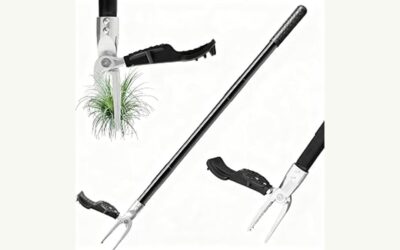
Grampa's Weeder CW-01 is a stand-up manual weed puller made for removing weeds without bending, pulling by hand, or kneeling at ground level. Based on the listed specifications, it uses a 45-inch long handle, a bamboo grip and handle, and a 4-claw alloy steel head to target individual weeds in lawns, garden beds, and other planted areas where manual control is preferred.
The main benefit is leverage. The product information describes a simple sequence: center the tool over the weed, press the claws straight into the ground with the footpad, remove your foot, then lean the handle toward the footpad so the forks pinch around the weed. Used correctly, this design is intended to pull weeds and roots while keeping the gardener more upright.
The tool measures 8 inches wide by 46 inches high and weighs 2.3 pounds, so it is a full-length hand tool rather than a compact hand weeder. The bamboo handle gives it a traditional feel, while the alloy steel head provides the working end for penetrating soil and gripping the weed. There are no batteries, cords, fluids, or complicated adjustments listed, which keeps maintenance and storage straightforward.
In a typical home garden, this type of weeder is most useful for spot weeding in lawns, around garden edges, and in open spaces where the claws can be centered over the weed. The product information notes that it works best in softer soil, particularly after watering or rainfall, which is helpful advice for homeowners dealing with dandelion-type weeds or scattered lawn weeds.
There are important limitations to keep in mind. The manufacturer notes that this stand-up weeder may not perform as well on hard clay or rocky surfaces, and the tool depends on using the correct leaning motion rather than twisting or lifting. Gardeners with compacted soil may need to water first or loosen the area with another tool, and anyone clearing dense weed mats may prefer a hoe or cultivator for faster coverage.
Overall, Grampa's Weeder CW-01 is a practical choice for gardeners who want a simple, chemical-free tool for pulling individual weeds while standing. It is especially appealing for beginners, older gardeners, and homeowners who prefer low-maintenance manual tools, while gardeners working mostly in rocky or very hard clay soil should consider whether a different weeding approach would be more efficient.
Pros
- Assisted ratchet mechanism can reduce effort compared with standard hand pruners.
- Suitable for pruning, trimming, and harvesting a range of garden stems and small branches.
- Anvil insert helps stabilize material during the cut.
- Corrosion-resistant materials are useful for tools that are regularly used around soil and plant moisture.
- Safety latch supports safer storage between pruning tasks.
Cons
- Anvil pruners may be less suitable for very precise cuts on tender green growth than bypass-style pruners.
- Maximum cutting performance depends on wood type and individual hand strength.
- Gardeners regularly cutting branches larger than the listed capacity may prefer loppers or a pruning saw.
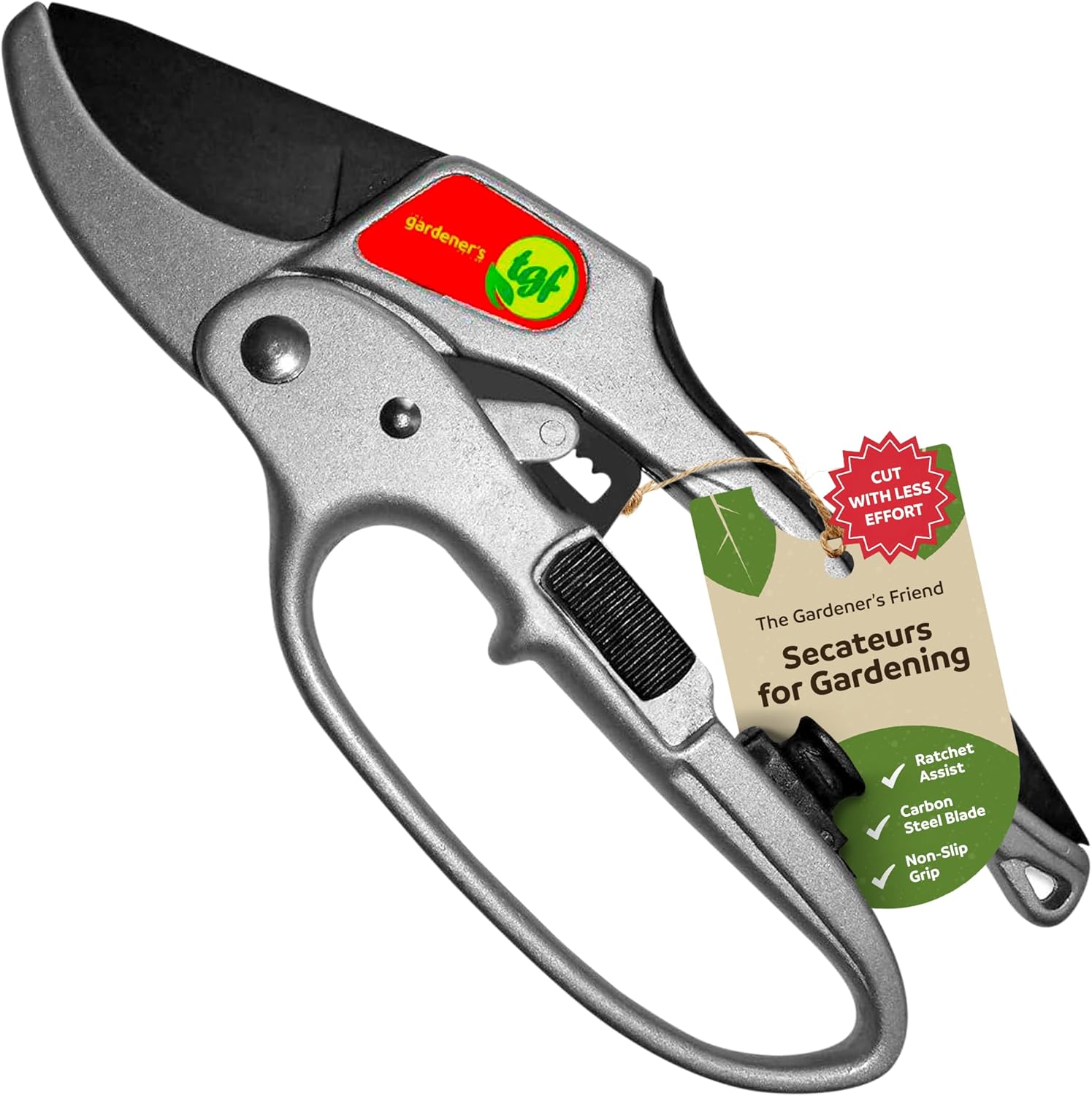
The Gardener's Friend Ratchet Anvil Pruner is a hand pruning tool made for common backyard jobs such as trimming stems, cutting stalks, harvesting, and cleaning up small branches. Its assisted ratcheting action makes it especially relevant for gardeners who want more leverage from a compact hand tool, including homeowners maintaining flower beds, vegetable rows, shrubs, and small trees.
The key benefit is the strength-boosting ratchet mechanism. Instead of relying only on one squeeze, the tool is designed to help increase cutting power in stages, which can make tougher pruning tasks feel more manageable. The product information lists cutting ability up to 1 inch, depending on the wood and the user's individual strength, so it should be viewed as a capable hand pruner rather than a replacement for larger cutting tools.
Based on the listed specifications, the pruner uses a heavy-duty manganese steel blade with an aluminum body and a corrosion-resistant design. The anvil includes a neoprene insert intended to help hold stems and branches in place while cutting. It also has an enhanced safety latch, a useful feature for keeping the tool closed during storage or when carrying it between garden beds.
At 7.95 inches long by 3.15 inches wide and 220 grams, this is a compact tool for routine garden work. It can fit well into raised-bed maintenance, patio container cleanup, shrub tidying, and seasonal pruning tasks where a full-size lopper would be awkward. The black and grey traditional design keeps the focus on function rather than specialty features.
There are a few practical limits to keep in mind. Anvil pruners are generally better for firmer stems and dead or woody material than for the cleanest possible cuts on soft, living growth, where some gardeners may prefer bypass pruners. The blade should be kept clean after use, and the safety latch should be engaged before storing the tool. For branches beyond the stated capacity, a lopper or pruning saw would be the more appropriate choice.
Overall, this pruner is a sensible option for gardeners who want a compact, assisted-action cutting tool for stems, stalks, and small branches. It is best suited to routine yard and garden maintenance rather than heavy tree work or ultra-fine floral trimming.
Pros
- Combines several common hand-tool functions in one compact garden knife.
- Softgrip oversized handle may be easier to hold than a slim hard handle during longer weeding sessions.
- Steel head includes both plain and serrated edges for different soil and root tasks.
- Forked tip adds useful leverage for loosening weeds and roots.
- Hanging hole simplifies storage and helps keep the sharp edges off work surfaces.
Cons
- Because it is a hand tool, it may be less suitable for clearing large weedy areas than a long-handled weeder or hoe.
- The sharpened and serrated edges require careful handling and storage, especially around children or pets.
- Gardeners who need measured planting depth markings or a sheath should note that those features are not listed in the supplied specifications.
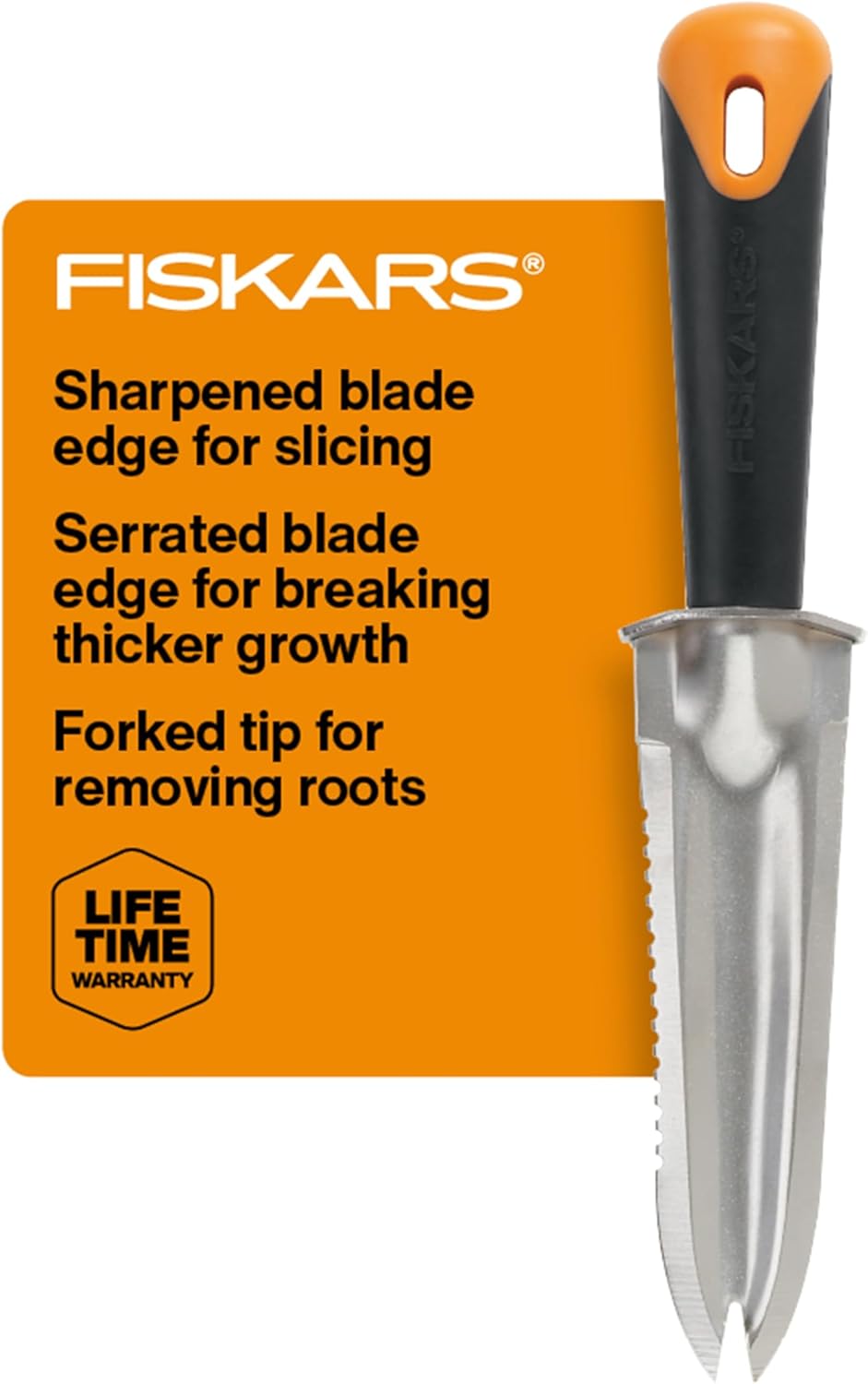
The Fiskars Big Grip Garden Knife is a manual weeding and planting tool made for everyday garden chores such as digging, weeding, transplanting, splitting seedlings, cultivating, and removing roots. Based on the listed specifications, it is a practical fit for homeowners, beginner gardeners, raised-bed growers, and anyone who prefers a compact hand tool for working close to plants.
Its main advantage is the multi-functional steel head. The product information indicates that one side has a sharpened blade edge for slicing into soil, sod, or seedlings, while the other side has a serrated edge for breaking down thicker growth or tougher root material. The forked tip adds another useful function for working under weeds and loosening roots before pulling.
Comfort is also a key part of the design. The extra-large handle uses Fiskars Softgrip material, which is intended to improve grip and reduce hand fatigue during repetitive tasks. At 0.59 pounds, the tool is still a hand-held garden knife rather than a long-handled weeder, so it is best used while kneeling, sitting, or working at raised-bed height.
In a backyard or small-space garden, this tool can handle many quick jobs that often interrupt planting: opening a hole for a transplant, loosening a stubborn weed, cutting through small rooty clumps, or cultivating tight spots between established plants. The trough-like indentation described in the product information may also help move small amounts of soil or seed while planting.
The steel head is listed as rust-resistant, but normal care still matters. Wiping soil and moisture off after use, keeping the blade edges away from hands, and storing it by the handle hang hole can help preserve the tool and reduce safety risks. Since the product includes sharp and serrated edges, it should be stored where children and pets cannot reach it.
This is a sensible choice for gardeners who want one affordable, reusable hand tool for weeding and planting tasks rather than carrying several small tools around the yard. Gardeners managing large weed patches, deep taproots, or work that requires standing upright may prefer a longer-handled weeder or a more specialized digging tool.

Pros
- Useful for removing common broadleaf weeds such as dandelions and thistles without applying herbicides.
- Stand-up design is especially helpful for gardeners who want to avoid kneeling or frequent bending.
- Stainless steel claw head and aluminum handle provide a durable, lightweight material combination based on the listed specifications.
- Reviewers commonly mention that it works best on larger weeds with an obvious center root.
- Listed full lifetime warranty adds value for gardeners who want a long-term manual weeding tool.
Cons
- May be less effective on very small weeds, sprawling weeds, or weeds where the main root is hard to locate.
- Can leave a noticeable hole in turf or soil after pulling larger rooted weeds.
- Hard, compacted, or clay-heavy ground may need watering before use so the claws can penetrate cleanly.
The Fiskars 1074437 4-Claw Stand-Up Weeder is a manual weed puller built for removing lawn and garden weeds without kneeling, bending repeatedly, or relying on chemical herbicides. Its 39-inch shaft, foot platform, and claw-style head make it best suited to homeowners dealing with dandelions, thistles, and other individual weeds that have a clear center crown.
The key benefit is root-focused removal. The product information indicates that four serrated stainless steel claws grip the weed and root when you press the tool into the soil, pull back on the handle, and lift. For beginners, this is a more approachable method than digging with a hand trowel, especially across a lawn where repeated kneeling can quickly become tiring.
Design details are practical for everyday yard work. The aluminum handle keeps the listed weight to 2.5 pounds, while the reinforced foot platform provides leverage for driving the claws into soft to moderately firm ground. The offset handle is intended to reduce wrist strain, the viewing window helps with placement, and the easy-eject mechanism lets you release the weed from the head between pulls.
In real backyard use, this type of tool makes the most sense for spot-weeding lawns, edges of flower beds, and open areas where you can stand directly over the weed. Reviewers commonly mention good results on larger weeds and dandelions, while also noting that tiny weeds or sprawled growth can be harder to capture. It can also leave a hole, so gardeners may want to press soil back into place after removing larger roots.
For best results, the listed guidance recommends using it in moist or recently watered soil. If your ground is compacted, dry, or clay-heavy, lightly watering the area 30 to 60 minutes before weeding may help the claws penetrate more cleanly. As with any pointed garden tool, keep feet clear of the head, use steady pressure on the foot platform, and store it where the claw end will not be a tripping or puncture hazard.
Overall, this Fiskars stand-up weed puller is a strong choice for gardeners who want a simple, chemical-free way to tackle scattered rooted weeds while staying upright. Gardeners who mainly deal with tiny seedlings, dense mats of weeds, or very hard soil may still need a hand weeder, hoe, or soil-loosening tool for those situations.
Gardening Tools For Arthritis Buying Guide
Match the tool to the task that hurts most
Start with the motion that causes the most strain. If squeezing pruners is the problem, look for ratcheting, lever-assisted, or cushioned-handle pruning shears. If bending and kneeling are the issue, stand-up weed pullers such as Grampa’s Weeder or the Fiskars Stand-Up Weed Puller are more relevant than another hand tool.
For digging, transplanting, and weeding in beds, a multipurpose garden knife or cultivator can reduce tool switching. The PERWIN Hori Hori Garden Knife combines a 7-inch stainless steel blade, serrated edge, depth markings, and a full-tang wood handle, while the Fiskars Ergo Cultivator is designed for digging, aerating soil, and removing weeds with an ergonomic handle.
Choose leverage before raw strength
Leverage matters because arthritis-friendly tools should help you do more with less grip force. Ratchet pruners work in steps instead of requiring one hard squeeze, which can be easier for weak hands. The GEROSSI Ratchet Pruning Shears list a 3-step ratchet mode, while The Gardener’s Friend Ratchet Pruning Shears use an assisted ratcheting action to boost cutting power.
Lever-assisted pruners are another option. The DECERK 8.5-inch Professional Pruning Shears list powerful lever cutting technology and cushioned, non-slip handles intended to reduce hand and wrist strain. The Craft911byLIME pruning shears list a dual-size cutting opening, which may help gardeners choose a jaw width that better fits the cut and their hand comfort.
Check cutting capacity and plant type
Do not buy a pruner based only on comfort claims. Match the listed cutting capacity to the work you actually do. DECERK lists pruning up to 1 inch, GEROSSI lists up to 3/4 inch, The Gardener’s Friend lists up to 1 inch depending on wood and individual strength, and EZKUT lists branches up to 1.5 inches.
For flowers, herbs, vegetables, and light shrub cleanup, smaller assisted pruners may be easier to control. For thicker stems or fruit tree branches, a heavier-duty ratcheting pruner such as EZKUT may suit medium to large hands better, based on its own product note.
| Tool type | Best fit based on listed features |
|---|---|
| Ratchet pruning shears | Repeated pruning where squeezing force is the main problem |
| Lever-assisted pruning shears | Gardeners who want more cutting power with cushioned, non-slip handles |
| Stand-up weed puller | Weeding without bending, kneeling, or pulling by hand |
| Hori hori or garden knife | Digging, transplanting, cutting roots, and planting-depth checks |
| Hand cultivator | Aerating soil, loosening beds, and light weeding in reachable spaces |
Prioritize handle comfort and grip size
Handles can matter as much as blades. Look for the listed features that reduce slipping and pressure points: non-slip rubber, cushioned handles, Softgrip surfaces, larger handles, ergonomic shapes, or offset designs. These details can make short sessions more comfortable and may help with control when hands are stiff.
The Fiskars Steel Garden Knife lists an extra-large handle with Softgrip for comfort, while the Fiskars Stand-Up Weed Puller lists an ergonomic offset handle to reduce wrist strain. If your hands are smaller, be cautious with tools described as best for medium to large hands.
Think about bending, kneeling, and bed height
Hand-friendly tools help, but accessibility also depends on garden layout. Raised beds, containers, and clear paths can reduce awkward reaching. If bending is a recurring problem, pair comfortable hand tools with better bed access and consider ideas from our Raised Beds & Planters section.
For lawn weeds, stand-up pullers are often more practical than hand weeders. Grampa’s Weeder uses a 45-inch long handle and 4-claw steel head, and the Fiskars 39-inch Stand-Up Weed Puller uses four serrated stainless steel claws with an easy-eject design. Both are intended to remove weeds without kneeling, though soil conditions matter.
Avoid common buying mistakes
A common mistake is buying one tool for every job. A sharp pruning shear is not a soil cultivator, and a stand-up weeder is not ideal for every hard clay or rocky spot. Grampa’s Weeder notes that it works best in softer soil, especially after watering or rain, and the Fiskars stand-up model notes best results in moist or recently watered ground.
Another mistake is choosing the highest listed cutting capacity without considering hand fit. Heavy-duty pruners can be useful, but if the handles feel too large or the lock is awkward, a smaller ratcheting or lever-assisted pruner may be easier for routine home garden use.
Maintenance, cleaning, and safe storage
Arthritis-friendly tools are easier to use when they stay clean, sharp, and dry. Wipe soil and sap from blades after use, dry metal parts before storage, and follow the manufacturer instructions for lubrication or sharpening when available. DECERK notes that its blades may arrive with anti-rust oil and recommends wiping the blades after use and storing the shears in a ventilated area.
Use safety locks and sheaths consistently. The PERWIN Hori Hori includes a protective sheath with a belt loop, and several pruning shears list one-handed or built-in safety locks. For organizing tools where they are easy to reach, our guides to a deck box for garden tools and organizing a small garden shed may help.
Small-space and beginner gardener considerations
In patios, raised beds, and small yards, multipurpose tools can save storage space. A garden knife, hand cultivator, and one comfortable pruner may cover many beginner tasks without filling a shed. Look for hanging holes, sheaths, and compact designs when storage is limited.
Beginners should also favor tools with clear safety features and simple operation. A one-handed lock, easy-eject weed release, visible blade sheath, or comfortable non-slip handle can reduce frustration and make short, frequent gardening sessions more realistic.
Research Methodology and Trust
This guide is based on research and comparison of the supplied product data, not physical testing. We screened the listed items for fit with gardening tools for arthritis, the Garden Tools & Pruning category, and common home garden tasks such as pruning, weeding, digging, cultivating, transplanting, and cutting roots.
Products were considered more relevant when their listed features directly addressed hand fatigue, weak hands, arthritis-friendly use, reduced bending, reduced kneeling, leverage, ratcheting action, ergonomic grips, safety locks, or accessible storage. We also looked at listed cutting capacity, blade or head material when provided, tool length when provided, and the type of garden work each tool is designed to perform.
Owner-feedback signals were considered only at a high level through the supplied ratings and review counts. We did not add claims about durability, comfort, or real-world performance beyond what the supplied specifications and product descriptions support. Updates were prepared during July 2026 to keep the recommendations aligned with the provided product list, prices, and features.
Final Recommendations
Overall Pick: DECERK® 8.5" Professional Pruning Shears – Cuts 4X Easier with Ultra Sharp Japanese Steel Titanium Blade, Arthritis Friendly Garden Scissors & Plant Clippers, Effortlessly Prunes 3/4" Branches is the strongest all-around choice from the supplied data for gardeners who need easier pruning. It combines lever cutting technology, cushioned non-slip handles, a one-handed safety lock, and a listed cutting capacity up to 1 inch.
Accessible Choice: Grampa’s Weeder – The Original Stand Up Weed Puller Tool with Long Handle – Made with Real Bamboo & 4-Claw Steel Head Design – Easily Remove Weeds Without Bending, Pulling, or Kneeling. is a practical pick when bending and kneeling are the biggest barriers. It is best matched to softer soil, particularly after rain or watering, according to the listed product guidance.
Heavy-Duty Pick: EZ Kut Heavy Duty Pruning Shears Green – with Ratcheting Action Great Garden Hand Tool Clippers Gardening pruners arthritis tools Ratcheting Anvil Hand Pruner Pruning Shears Heavy Duty Since 1988 is the better fit when the priority is thicker pruning, with a listed capacity up to 1.5 inches and ratcheting action for reduced effort. Gardeners with smaller hands may prefer a more compact assisted pruner instead.
FAQ
What are the most useful gardening tools for arthritis?
The most useful tools are the ones that reduce your hardest motions. For many gardeners, that means ratchet pruners, lever-assisted shears, stand-up weed pullers, ergonomic cultivators, and larger-grip garden knives.
Are ratchet pruners better than regular pruners for arthritic hands?
Ratchet pruners can be easier because they cut in steps instead of requiring one strong squeeze. They are especially helpful for tougher stems, but the best choice still depends on hand size, cutting capacity, handle comfort, and the safety lock design.
What cutting capacity should I choose for gardening tools for arthritis?
Choose the smallest tool that matches your normal pruning work. Light flowers and vegetables do not need the same capacity as shrubs or fruit tree branches. From the supplied data, listed capacities range from 3/4 inch to 1.5 inches on the pruners discussed.
Do stand-up weed pullers work in hard soil?
They may be harder to use in compacted, rocky, or clay-heavy soil. The supplied product data notes better results in soft, moist, or recently watered ground, so watering the area before weeding can help the claws penetrate more cleanly.
How should I maintain arthritis-friendly pruning tools?
Wipe blades after use, dry metal parts before storage, and keep safety locks engaged when the tool is not in use. Follow the manufacturer’s care instructions, especially for coated blades, anti-rust oil, sharpening, and storage ventilation.
Which gardening tools for arthritis are best for small spaces?
For small patios or raised beds, a comfortable pruner, a hand cultivator, and a multipurpose garden knife can cover many tasks without taking much storage space. Look for hanging holes, sheaths, and tools that perform more than one common garden job.



Write Your Review
No reviews yet. Be the first to share your experience!