

Gartengeräte bei Arthritis können die Gartenarbeit deutlich angenehmer machen, wenn Greifen, Drücken, Bücken oder Knien Schmerzen verursacht. Die hilfreichsten Modelle reduzieren meist die Handkraft, verbessern die Hebelwirkung, bieten größere oder gepolsterte Griffe oder ermöglichen Arbeiten im Stehen.
Für diesen Leitfaden vom Juli 2026 haben wir 20 Produkte aus der bereitgestellten Liste verglichen und die verfügbaren Produktdaten auf Relevanz für Hausgarten, Schnittarbeiten, Jäten, Graben, Lockern und Barrierefreiheit geprüft. Im Fokus standen genannte Merkmale wie Ratschen- oder Hebelunterstützung, ergonomische Griffe, Schnittkapazität, Unkrautentfernung im Stehen, Material von Klinge oder Kopf, Sicherheitsverriegelungen, Aufbewahrungsfunktionen und Eignung für Einsteiger oder ältere Gärtner. Weitere Tipps zu Werkzeugen finden Sie in unserer Kategorie Gartengeräte & Schnitt.
DECERK DDGJ-JD 8.5-Inch Bypass Pruning Shears for Easier Branch and Stem Cutting MEPEREZ Premium Germany Steel Pruning Shears for Easier Small-Hand Garden Cutting Craft911 PS-V2 Bypass Pruning Shears with Dual-Size Opening for Easier Garden Trimming Craft911 Pruning Shears with SK5 Steel Blades for Easier, Precise Garden Trimming Prices and availability can change. We may earn a commission from qualifying purchases.


Einige Produktangaben unten sind noch auf Englisch; ihre Übersetzung wird überprüft.
Pros
- Listed cutting capacity supports pruning small branches, with the product information describing use on branches up to 1 inch in diameter.
- Ergonomic rubber and aluminum handle design is intended to reduce hand fatigue during longer pruning sessions.
- Reviewers commonly mention that the shears feel sharp, comfortable, and easy to lock and unlock.
- Bypass blade style is a good match for common garden jobs such as deadheading, harvesting, trimming stems, and shaping small plants.
Cons
- Gardeners cutting larger woody limbs may need loppers or a pruning saw instead of hand pruners.
- The blades should be wiped after use and stored in a ventilated area to help maintain the anti-rust coating.
- One reviewer questioned whether the spring might stay in place long term, although the product includes replacement springs.
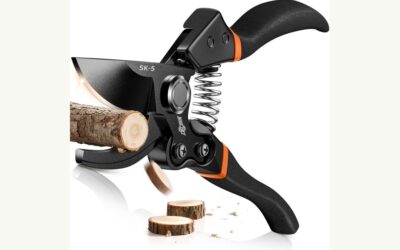
The DECERK DDGJ-JD 8.5-inch pruning shears are bypass hand pruners made for everyday garden trimming, including stems, flowers, vegetables, fruit harvest, brush, and small branches. Based on the listed features, they are especially relevant for homeowners, raised-bed gardeners, and older gardeners who want a hand tool with a cushioned grip and added cutting leverage.
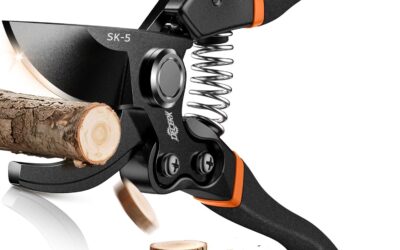
The key performance feature is the lever cutting design, which the product information says is intended to increase cutting force for thicker, wet, or dry wood. The listed blade construction combines Japanese SK5 high-carbon steel with a titanium coating, a pairing aimed at sharp cuts and corrosion resistance. For live plants, the bypass blade style is generally preferable to anvil-style cutting because it is designed to slice past the lower jaw rather than crush the stem.
At 8.5 inches long and 0.25 kg, these pruners are compact enough for regular garden carry but large enough for many common pruning jobs. The specifications list rubber and aluminum handles, ambidextrous hand orientation, a straight blade edge, a 2.95-inch blade, and a 1.42-inch opening. A one-handed safety lock is included for closing the blades when the tool is not in use, and replacement springs are included for simple maintenance.
In a backyard garden, these shears fit tasks such as cutting spent blooms, trimming tomato or pepper stems, harvesting herbs, clipping small fruiting stems, and pruning young shrubs or fruit tree shoots within the listed capacity. They are also a useful size for patio planters and raised beds, where a full-size lopper would be awkward and a small snip may not provide enough leverage.
There are practical limits to keep in mind. Although the product information describes branch cutting up to 1 inch, hand pruners are not a substitute for loppers or a pruning saw when growth is larger, very hard, or difficult to reach. For safety and tool life, lock the blades before storage, keep fingers away from the cutting path, wipe the blades after use, and store the shears in a ventilated area as recommended by the manufacturer.
Overall, these DECERK pruning shears are a strong fit for gardeners who want a compact bypass pruner with cushioned handles, a safety lock, and replacement springs included. Gardeners who mainly cut heavy limbs, overhead branches, or dense hedges may be better served by a larger pruning tool designed for those jobs.
Best For / Avoid If
Best for buyers prioritizing
- Listed cutting capacity supports pruning small branches, with the product information describing use on branches up to 1 inch in diameter.
- Ergonomic rubber and aluminum handle design is intended to reduce hand fatigue during longer pruning sessions.
- Reviewers commonly mention that the shears feel sharp, comfortable, and easy to lock and unlock.
Consider another option if
- Gardeners cutting larger woody limbs may need loppers or a pruning saw instead of hand pruners.
- The blades should be wiped after use and stored in a ventilated area to help maintain the anti-rust coating.
- One reviewer questioned whether the spring might stay in place long term, although the product includes replacement springs.
Pros
- Low-effort cutting design may be more comfortable for small or weaker hands.
- Sharp, wear-resistant blade is intended to stay effective over extended use.
- Versatile size for flowers, herbs, roses, indoor plants, and general small pruning jobs.
- Locking feature supports safer, more compact storage when the shears are not in use.
Cons
- The 8-inch hand-shear format may be less suitable for gardeners who need long reach or dedicated loppers for larger branches.
- The lock may require firm handle pressure if it becomes tight, according to the product information.
- The blade may eventually require sharpening to maintain cutting performance.
The MEPEREZ Premium Germany pruning shears are 8-inch steel hand clippers intended for routine trimming around the garden and home. They are positioned for cutting flowers, herbs, roses, indoor live plants, fruit trees, grass, and overgrowth, making them a practical fit for homeowners who want one compact tool for smaller pruning tasks.
The main benefit is an emphasis on easier cutting with minimal hand force. The product information describes a flexible handle suited to small and medium-sized hands, along with a sharp blade and sturdy construction. That combination may be useful for gardeners who find repeated snipping tiring, although the listing does not provide a specific cutting-capacity measurement.
The shears have a yellow finish, an 8-inch size, and a locking mechanism for keeping the tool closed when stored. The listing says the lock can be opened by pressing the handles firmly if it becomes tight. No assembly is indicated, so the tool appears intended for direct use after purchase.
For backyard and patio gardening, these shears could handle flower deadheading, herb harvesting, rose trimming, indoor plant maintenance, and other close-access jobs. Their compact hand-tool format is easier to maneuver around stems and foliage than a larger pruning tool, and the flexible handle may be a reasonable fit for users with smaller hands.
As with other sharp pruning tools, use care around fingers, store the shears locked when possible, and keep the blade maintained. The product information specifically notes that the blade can be sharpened when needed. Gardeners who regularly cut large-diameter wood or need extended reach may prefer a larger bypass pruner or lopper instead.
This model is best suited to homeowners and indoor plant growers seeking a compact pair of general-purpose pruning shears with an effort-conscious handle design. It is a less suitable choice for heavy structural pruning where a defined branch-capacity rating, longer handles, or specialized cutting geometry is important.
Best For / Avoid If
Best for buyers prioritizing
- Low-effort cutting design may be more comfortable for small or weaker hands.
- Sharp, wear-resistant blade is intended to stay effective over extended use.
- Versatile size for flowers, herbs, roses, indoor plants, and general small pruning jobs.
Consider another option if
- The 8-inch hand-shear format may be less suitable for gardeners who need long reach or dedicated loppers for larger branches.
- The lock may require firm handle pressure if it becomes tight, according to the product information.
- The blade may eventually require sharpening to maintain cutting performance.
Pros
- Adjustable opening gives more flexibility for different stem sizes and hand comfort.
- Compact and lightweight design should be easy to handle for quick pruning sessions.
- Ambidextrous orientation makes it usable for right- or left-handed gardeners.
- Reviewers commonly mention sharp cutting and usefulness for flowers, vines, rose canes, and tight spaces.
Cons
- The listed 1.5 cm cutting width suggests it is better for light pruning than thick woody branches.
- Gardeners doing heavy hedge shaping or major shrub renovation may prefer larger loppers or dedicated hedge shears.
- High carbon steel blades still need basic care, such as wiping clean and dry after use, to help preserve the cutting edge and coating.
The Craft911 PS-V2 is a compact bypass pruning shear intended for everyday garden trimming rather than heavy cutting. Based on the listed specifications, it is designed for flowers, vines, rose bushes, small branches, and general cleanup around beds, borders, containers, and shrubs. Its ambidextrous orientation and comfort-focused handle design make it a practical option for homeowners, beginners, and older gardeners who want a simple hand pruner for routine work.
The standout feature is the dual-size cutting opening, which allows the jaw width to be adjusted for different stem sizes and hand positions. That can be useful when switching between delicate deadheading and slightly tougher pruning jobs. The product information lists a bypass blade type and high carbon steel blade material, a combination commonly chosen for clean cuts on living plant material when the tool is kept sharp and used within its capacity.
At 8.46 inches long and 2.36 inches wide, with a listed weight of 0.26 kilograms, this pruner is relatively compact for working in tight areas. The ABS handles are described as ergonomic and non-slip, and the one-handed safety lock helps keep the blades closed between cuts or in storage. The rust-resistant blade coating adds convenience, but like any garden pruner, it should still be wiped clean after use, especially after cutting sappy stems or working in wet conditions.
In a home garden, this style of pruner fits many small, frequent jobs: cutting spent blooms, trimming vegetable stems, snipping prickly vines, shaping light growth on shrubs, and tidying plants in raised beds or patio containers. Reviewers commonly mention that it feels sharp, light, and useful in tight spots, with several noting good performance on flowers, vines, and rose canes. Those comments are helpful context, though they should be read as user experiences rather than controlled testing.
The main limitation is capacity. The listed cutting width is 1.5 centimeters, so gardeners should not expect this tool to replace loppers, a pruning saw, or full-size hedge shears for thick woody growth or major hedge work. Avoid cutting wire, fencing, or other hard non-plant materials, as that can damage the blade. For light, regular pruning with an emphasis on comfort, control, and compact storage, the PS-V2 is a sensible small-garden pruner; for heavy hedge shaping or large branches, a larger cutting tool would be the better choice.
Best For / Avoid If
Best for buyers prioritizing
- Adjustable opening gives more flexibility for different stem sizes and hand comfort.
- Compact and lightweight design should be easy to handle for quick pruning sessions.
- Ambidextrous orientation makes it usable for right- or left-handed gardeners.
Consider another option if
- The listed 1.5 cm cutting width suggests it is better for light pruning than thick woody branches.
- Gardeners doing heavy hedge shaping or major shrub renovation may prefer larger loppers or dedicated hedge shears.
- High carbon steel blades still need basic care, such as wiping clean and dry after use, to help preserve the cutting edge and coating.
Pros
- Designed for lower-effort cutting and easier hand control.
- Useful across many pruning tasks, from flowers and vegetables to shrubs and fruit plants.
- Safety lock adds protection when the shears are stored or carried.
- Rust-resistant materials and easy-clean construction support straightforward maintenance.
Cons
- The listed blade opening and claimed cutting capacity may be less suitable for large, woody branches that require loppers or a pruning saw.
- The product information does not specify handle adjustability, replacement parts, or a sharpening system.
- Gardeners seeking a specialized bonsai tool may prefer shears with more detailed bonsai-specific sizing or accessories.
The Craft911 pruning shears are compact hand pruners intended for trimming flowers, shrubs, vegetables, fruit plants, indoor greenery, and smaller branches. Their feature set is aimed at homeowners, container gardeners, older gardeners, and anyone who prefers a more controlled grip during routine pruning.
The shears use listed SK5 steel blades with a titanium coating and a bypass cutting mechanism. The product information describes the blades as ultra sharp and designed to require less effort, while the 2.95-inch blade and 1.42-inch opening provide a useful range for stems and branches within the tool's stated capacity.
Comfort-focused handles include a non-slip texture for added control. A built-in safety lock holds the blades closed when the shears are not in use, and the lock is described as operable with one hand. The listed size is 8.46 by 2.36 inches, with a stated weight of about 0.73 pounds.
In a backyard or patio garden, these pruners could handle deadheading flowers, shaping shrubs, trimming vegetable growth, and maintaining indoor plants. They may also be useful for small landscaping jobs and bonsai-style trimming where a handheld bypass pruner is appropriate.
Routine care should include removing plant debris and sap after use. The listed rust-resistant materials can help reduce maintenance, but the blades should still be kept clean and stored in the locked position. Because the opening is limited compared with larger cutting tools, gardeners working with substantial woody branches may prefer loppers or a pruning saw.
This is a sensible option for gardeners who want multipurpose pruners with an emphasis on grip, lower-effort cutting, and safe storage. Those needing adjustable handles, replacement components, or a dedicated bonsai shear design should compare other options before choosing.
Best For / Avoid If
Best for buyers prioritizing
- Designed for lower-effort cutting and easier hand control.
- Useful across many pruning tasks, from flowers and vegetables to shrubs and fruit plants.
- Safety lock adds protection when the shears are stored or carried.
Consider another option if
- The listed blade opening and claimed cutting capacity may be less suitable for large, woody branches that require loppers or a pruning saw.
- The product information does not specify handle adjustability, replacement parts, or a sharpening system.
- Gardeners seeking a specialized bonsai tool may prefer shears with more detailed bonsai-specific sizing or accessories.

Pros
- Includes the three hand tools many gardeners use most often for containers, raised beds, and small planting areas.
- Ergonomic vertical grips are designed for gardeners with limited hand strength or dexterity concerns.
- Full-size adult tool design is more suitable for regular garden use than novelty or miniature gift sets.
- Moss color gives the set a subdued garden-friendly look.
Cons
- Gardeners who prefer traditional straight handles may need time to adjust to the vertical grip.
- The set is limited to hand trowel, fork, and cultivator tasks, so pruning, transplanting larger plants, or heavy digging will require other tools.
- Listed dimensions are compact, so gardeners working deep beds or dense, rocky soil may prefer longer-handled tools for more reach and leverage.
The Bernini Moss Ergonomic Garden Tool Set is a three-piece hand tool kit for everyday soil work. Based on the listed product information, it includes a hand trowel, gardening fork, and cultivator, making it useful for planting, loosening soil, pulling small weeds, aerating, turning soil, and blending potting mix with existing soil. Its main audience is the gardener who wants basic tools that are easier to hold than standard straight-handled hand tools.
The standout feature is the vertical grip design. Instead of forcing the wrist into a bent position while pushing a tool into soil, the handle is intended to let the wrist stay straighter and allow more pressure from the palm, arm, and shoulder. For older gardeners or anyone with reduced grip strength, that design may help make short garden sessions more comfortable, though it should not be treated as a medical solution.
The product information lists slip-resistant handles and rust-resistant steel tool heads. The large top of each handle is designed so the user can push with the palm while using less finger pressure. The listed item dimensions are 10 x 3 x 5 inches, which suggests a compact hand-tool format that should be simple to store in a potting bench drawer, garden tote, garage shelf, or small shed.
In a home garden, this set makes the most sense for raised beds, containers, patio planters, herb gardens, and small backyard planting areas. The trowel can help open planting holes, the fork can loosen and turn small patches of soil, and the cultivator can break up surface crust or mix amendments into a container or bed. It is also a thoughtful gift option for gardeners who still enjoy hands-on soil work but want tools designed around easier gripping.
There are some practical limits to keep in mind. These are hand tools, not long-handled digging tools, so they are not the best match for deep bed preparation, heavy clay work, or large garden renovation jobs. As with any steel garden tool, wiping soil from the heads after use and storing the set dry should help maintain the finish and reduce wear over time.
Overall, the Bernini Ergonomic Garden Tool Set is best for gardeners who want a compact, accessible set for routine planting and soil maintenance. Gardeners who need pruning tools, extra reach, or heavy-duty digging power should pair it with other tools or consider a different style, but for everyday small-space gardening, the supported features are well matched to comfort-focused use.
Specifications
| Brand Name | Bernini Fountains |
|---|---|
| UPC | 810077926864 |
| Manufacturer | Bernini Fountains |
| Set Name | Ergonomic Garden Tool Set |
| Model Number | Moss |
| Manufacturer Part Number | LG6760 |
| Item Type Name | garden-hose |
| Best Sellers Rank | #591,301 in Patio, Lawn & Garden (See Top 100 in Patio, Lawn & Garden) #1,253 in Garden Tool Sets |
| ASIN | B0FJQKS2MV |
| Item Dimensions | 10 x 3 x 5 inches |
Verify the current product variation before purchase; specifications may change.

Pros
- Pointed tips provide useful control for detailed herb harvesting.
- Spring-assisted opening can make repeated snipping less tiring.
- Includes a sheath, dishwasher-safe design, and lifetime warranty.
Cons
- The compact design may be less suitable for thick stems or larger pruning jobs that require more leverage.
- Pointed tips require careful handling and covered storage, especially around children.
- The product is intended for small cutting tasks, so gardeners needing a general-purpose pruner may prefer a larger tool.
The Fiskars Herb Garden Scissors are compact 5-inch snips designed for harvesting herbs and making careful cuts in tight spaces. They fit indoor window herb gardens as well as outdoor herb beds and container gardens, making them a practical choice for gardeners who regularly trim small amounts of fresh growth.
The pointed stainless steel blade tips are the main functional advantage. Based on the listed features, they provide added control when working between closely spaced stems, leaves, or other plant parts. The precision-ground steel blades are also described as durable and able to stay sharp through heavy use, although the product information does not specify a cutting-capacity limit.
An easy-action spring gently opens the blades after each cut, which may reduce the effort involved in repeated snipping. The SoftGrip handle is intended to support controlled handling, while the compact size keeps the tool manageable for detailed work in a kitchen herb garden or small container.
For backyard and patio use, these snips are best suited to harvesting herbs, removing small pieces of plant growth, and maintaining compact edible plantings. Their size can be useful where a larger pair of pruning shears would feel cumbersome, particularly in window boxes, tabletop containers, and raised-bed sections with closely planted herbs.
Maintenance is straightforward because the snips are dishwasher safe, but blades should still be handled carefully and kept clean between gardening tasks as appropriate. The pointed tips can improve precision, but they also make the included sheath important for covered storage. Because no cutting diameter or capacity is listed, gardeners working with woody stems or heavier pruning should consider a larger pruning tool.
This is a sensible option for beginners, indoor herb growers, and homeowners who want a dedicated tool for light harvesting and precise snipping. Gardeners seeking one tool for thicker branches, broader pruning work, or greater leverage may be better served by full-size pruning shears.
Best For / Avoid If
Best for buyers prioritizing
- Pointed tips provide useful control for detailed herb harvesting.
- Spring-assisted opening can make repeated snipping less tiring.
- Includes a sheath, dishwasher-safe design, and lifetime warranty.
Consider another option if
- The compact design may be less suitable for thick stems or larger pruning jobs that require more leverage.
- Pointed tips require careful handling and covered storage, especially around children.
- The product is intended for small cutting tasks, so gardeners needing a general-purpose pruner may prefer a larger tool.

Pros
- Durable aluminum construction is well suited to regular soil-loosening and weeding tasks.
- Comfort-focused handle may reduce hand strain compared with basic straight-handled tools.
- Lightweight 8 ounce design is easy to carry around beds and store with other hand tools.
- Reviewers commonly mention sturdiness and usefulness in raised beds, flower beds, and rock-covered areas.
- Hanging hole makes storage simple and helps prevent the tool from being misplaced.
Cons
- As a hand cultivator, it may be less suitable for large garden plots or deep soil preparation than a long-handled or powered tool.
- Gardeners working in very compacted soil may need to moisten the soil or use a larger tool first.
- The short handle requires bending, kneeling, or working close to the ground, which may not suit every gardener.
The Fiskars Ergo Cultivator is a compact manual hand cultivator made for everyday garden maintenance, including loosening soil, aerating small planting areas, and helping remove weeds. Based on the listed specifications, it is best viewed as a close-up bed tool for homeowners, beginner gardeners, raised-bed growers, and anyone maintaining flowers, vegetables, or small landscaped areas.
The main value is the cast-aluminum head and tines. The product information indicates that the polished aluminum construction supports rust resistance and durability, while the tine shape is intended to cut into tough soil, loosen the surface, and work around weeds. For gardeners who only need to refresh planting pockets, break up crusted soil, or clean up around established plants, this type of tool is often more precise than a large cultivator.
The tool measures 3 by 4 by 13 inches and weighs 8 ounces, so it should be easy to carry, store, and maneuver between plants. Its ergonomic non-slip grip is designed to improve control and reduce fatigue during repetitive pulling and scratching motions. The handle also includes a hanging hole, which is a small but useful feature for keeping hand tools visible and organized in a shed, garage, or greenhouse work area.
In real garden use, this cultivator makes the most sense for raised beds, flower borders, container-adjacent work, and small backyard beds where you are loosening just the top layer of soil. Reviewers commonly mention that it feels sturdy, works well for weeding, and is useful in raised beds and rock-covered areas, though those comments should be treated as customer experience rather than controlled testing.
There are a few practical limits to keep in mind. This is a short hand tool, so it requires kneeling, bending, or working from a seated position, which may be uncomfortable for some older gardeners or anyone with limited mobility. It is also not a substitute for a long-handled cultivator, hoe, broadfork, or powered tiller when preparing a large plot or breaking up deeply compacted ground.
Overall, the Fiskars Ergo Cultivator is a sensible choice if you want a durable, simple hand tool for routine soil loosening and weeding in smaller garden spaces. Gardeners who need to cultivate large beds while standing upright, or who regularly work heavy compacted soil, may prefer a larger long-handled option instead.
Best For / Avoid If
Best for buyers prioritizing
- Durable aluminum construction is well suited to regular soil-loosening and weeding tasks.
- Comfort-focused handle may reduce hand strain compared with basic straight-handled tools.
- Lightweight 8 ounce design is easy to carry around beds and store with other hand tools.
Consider another option if
- As a hand cultivator, it may be less suitable for large garden plots or deep soil preparation than a long-handled or powered tool.
- Gardeners working in very compacted soil may need to moisten the soil or use a larger tool first.
- The short handle requires bending, kneeling, or working close to the ground, which may not suit every gardener.

Pros
- Versatile enough for common garden tasks such as weeding, digging, transplanting, cutting, and dividing plants.
- Stainless steel, rust-resistant blade material is well suited to routine garden use when cleaned and stored properly.
- Depth markings are useful for planting tasks where consistent soil depth matters.
- Full-tang wood handle design provides a more secure construction than a blade attached only at the neck.
- Reviewers commonly mention that the blade feels sharp and the tool feels solid in hand.
Cons
- The blade is intentionally sharp, so it requires careful handling, safe storage, and extra caution around children.
- It is a hand tool, so gardeners dealing with large weeding areas or heavy excavation may prefer a long-handled tool.
- One reviewer reported a broken belt loop on the sheath, so the sheath hardware may be worth checking during regular use.
The PERWIN Hori Hori Garden Knife is a multipurpose manual weeding and planting tool designed for gardeners who want a compact alternative to carrying a trowel, weeder, and small cutting tool separately. Based on the listed specifications, it has a 12.1-inch overall length with a 7-inch stainless steel blade, making it a practical size for raised beds, borders, containers, and close work around established plants.
The main appeal is the blade layout. One side is sharpened for slicing, while the other has a serrated edge for tougher roots or fibrous growth. The curved blade can be used for digging planting holes, loosening weeds, removing small clumps, or dividing plants where a larger shovel would be too bulky. Inch markings on the blade also help with planting depth, which is especially useful for bulbs, transplants, and seedlings.
The product information indicates a full-tang design, meaning the blade extends through the handle for added strength. The walnut wood handle is secured with three metal rivets and includes a hanging hole for storage. It is also listed as ambidextrous, so right- and left-handed gardeners should be able to use the basic blade functions comfortably, while the included sheath provides a protected way to carry or store the knife between tasks.
In everyday home gardens, this tool fits well for weeding along bed edges, opening bags of soil or mulch, cutting twine, transplanting small perennials, and working in tight spaces where a full-size spade is awkward. It may be especially useful for gardeners who maintain raised beds or small backyard plots because it packs several frequent tasks into one tool that can ride on a belt or stay in a garden tote.
There are a few cautions to keep in mind. The blade is sharp by design, and reviewers commonly note that it should be handled carefully, cleaned by hand, and stored in the sheath when not in use. This is not the right tool for leaving loose in a bucket where someone could reach in without looking, and it should be kept away from children. Gardeners with very large beds, deep clay excavation, or heavy root removal may still want a long-handled weeder, digging fork, or shovel for leverage.
Overall, the PERWIN Hori Hori Garden Knife is a strong fit for beginner-to-intermediate gardeners who want a versatile hand tool for planting, weeding, cutting, and measuring depth. If you prefer specialized tools for every task or need long-reach leverage to avoid kneeling, a different weeder or trowel may be more comfortable, but for compact everyday garden work, the feature set is well matched to common backyard needs.
Best For / Avoid If
Best for buyers prioritizing
- Versatile enough for common garden tasks such as weeding, digging, transplanting, cutting, and dividing plants.
- Stainless steel, rust-resistant blade material is well suited to routine garden use when cleaned and stored properly.
- Depth markings are useful for planting tasks where consistent soil depth matters.
Consider another option if
- The blade is intentionally sharp, so it requires careful handling, safe storage, and extra caution around children.
- It is a hand tool, so gardeners dealing with large weeding areas or heavy excavation may prefer a long-handled tool.
- One reviewer reported a broken belt loop on the sheath, so the sheath hardware may be worth checking during regular use.

Pros
- Ratcheting mechanism provides added leverage for gardeners who struggle with thicker cuts.
- Replaceable SK5 carbon steel blade is a useful long-term maintenance feature.
- Ambidextrous hand orientation makes it suitable for right- or left-handed users.
- Compact 10.63-inch length is easy to store with other hand tools while still offering a larger pruning capacity.
Cons
- The ratcheting action may feel slower or cumbersome for gardeners making many quick, small cuts.
- Product information notes it is best suited for medium to large hands, so it may not be the most comfortable fit for smaller hands.
- As with any sharp pruner, safe locking, careful handling, and routine blade maintenance are important.
The EZKUT 3130-1A is a ratcheting anvil hand pruner designed for heavier backyard pruning tasks than simple flower deadheading. Based on the listed specifications, it is built for cuts up to 1.5 inches and is aimed at homeowners, gardeners, landscapers, and others who need extra leverage for shrubs, fruit tree branches, and woody stems.
Its main advantage is the three-stage ratcheting action. Instead of relying on one hard squeeze, the mechanism lets the cut progress in steps, which can be helpful for gardeners with reduced hand strength or fatigue during longer pruning sessions. Reviewers commonly mention that the tool feels sharp and easier on the hands for thicker cuts, though those comments should be treated as user feedback rather than verified testing.
The pruner uses an SK5 hardened carbon steel blade with a non-stick coating, and the product information describes the blade as replaceable. The anvil blade type is a good match for woody material and general cleanup, while the contoured blade is described as being designed for circle-cutting. Its listed dimensions are 10.63 inches long by 4.13 inches wide, with a weight of 0.2 kilograms.
For everyday garden use, this pruner fits jobs such as trimming overgrown shrubs, cutting back thicker perennial stems, pruning small fruit tree branches, and cleaning up woody growth around raised beds or fence lines. The ambidextrous orientation is useful in shared garden tool kits, and the green metal-handled design keeps it in the familiar hand-pruner category rather than requiring the storage space of a full lopper.
Comfort and safety features include an ergonomic handle, non-slip cushioned grip, shock-absorbing pads, wrap-around knuckle protector, and a built-in safety lock. The product information also notes that it is best suited for medium to large hands, so gardeners with smaller hands may want to compare grip span before choosing it. Always lock the blades closed before storing it, keep fingers away from the blade path, and avoid forcing it beyond the listed cutting capacity.
This is a practical choice for gardeners who want a compact hand tool with more leverage than a conventional pruner. Gardeners who mainly deadhead flowers, harvest herbs, or make fast repeated cuts on thin green growth may prefer a lighter bypass pruner or snip, while those cutting larger limbs should consider a lopper or pruning saw instead.
Best For / Avoid If
Best for buyers prioritizing
- Ratcheting mechanism provides added leverage for gardeners who struggle with thicker cuts.
- Replaceable SK5 carbon steel blade is a useful long-term maintenance feature.
- Ambidextrous hand orientation makes it suitable for right- or left-handed users.
Consider another option if
- The ratcheting action may feel slower or cumbersome for gardeners making many quick, small cuts.
- Product information notes it is best suited for medium to large hands, so it may not be the most comfortable fit for smaller hands.
- As with any sharp pruner, safe locking, careful handling, and routine blade maintenance are important.

Pros
- Listed 1-inch cutting capacity covers many common shrub, rose, and small-branch pruning tasks.
- Soft, non-slip handle design may reduce strain during repeated cuts.
- Works for both right- and left-handed gardeners and includes a storage safety lock.
- SK5 stainless steel blade material is listed as rust-resistant.
Cons
- The product information does not specify an adjustable blade tension system or replacement parts.
- Gardeners regularly cutting branches larger than the listed 1-inch capacity may need a lopper or pruning saw.
- The 10.6-inch overall length may feel less nimble than compact snips for very fine bonsai or close-detail work.
The Kynup Heavy-Duty Pruning Shears are bypass-style hand pruners intended for trimming branches, stems, roses, shrubs, fruit trees, and indoor plants. Based on the listed features, they are aimed at homeowners and gardeners who want a general-purpose cutter with comfort features for routine yard and garden maintenance.
The most important performance specification is the stated capacity of up to 1 inch thick branches. The SK5 stainless steel blades are described as sharp, rust-resistant, and designed to resist sap buildup, which may support smoother cutting and easier cleanup over time. Actual results can vary with branch hardness, condition, and cutting technique.
The shears measure approximately 10.6 inches by 3.6 inches by 1 inch and weigh about 0.53 pounds. Their soft, non-slip handle is listed as cushioned for more comfortable use, while the design is described as friendly for both right- and left-handed gardeners. A safety lock helps keep the blades closed when the tool is stored.
These pruners could be useful in backyard shrub beds, rose gardens, small fruit-tree plantings, patio containers, and indoor plant care. The high-visibility red handle may also make the tool easier to locate among green foliage or grass, which is helpful when moving between several garden areas.
The listed capacity does not make these shears a substitute for loppers or a pruning saw when branches exceed 1 inch or require greater leverage. Gardeners should keep fingers clear of the bypass blades, engage the safety lock before storage, and remove sap or plant residue after use. Overall, the feature set suggests a versatile hand pruner for common branch trimming, especially for users who value a cushioned grip and left-handed usability.
Best For / Avoid If
Best for buyers prioritizing
- Listed 1-inch cutting capacity covers many common shrub, rose, and small-branch pruning tasks.
- Soft, non-slip handle design may reduce strain during repeated cuts.
- Works for both right- and left-handed gardeners and includes a storage safety lock.
Consider another option if
- The product information does not specify an adjustable blade tension system or replacement parts.
- Gardeners regularly cutting branches larger than the listed 1-inch capacity may need a lopper or pruning saw.
- The 10.6-inch overall length may feel less nimble than compact snips for very fine bonsai or close-detail work.

Pros
- Well suited to precise raking in small planters, flowerbeds, and hard-to-reach areas.
- Ergonomic softgrip handle and weighted balance may reduce awkward handling during routine bed care.
- Stainless steel head and flexible tines are designed for durability and improved rust resistance.
Cons
- As a hand rake, it may be less suitable for clearing leaves or cultivating large garden areas.
- The listed specifications do not provide a tine width or detailed care instructions, so its exact working reach and maintenance needs are not fully defined.
The Fiskars Xact Hand Rake is a compact hand tool intended for precise raking in small planters, flowerbeds, and other areas where a full-size rake is difficult to use. It is a practical fit for homeowners, container gardeners, and anyone maintaining established beds with limited working space.
Its stainless steel head and flexible tines are designed to improve control when raking through tougher soil. The product information also indicates enhanced rust resistance, while the steel construction is intended to stay durable through repeated gardening use.
The softgrip handle provides multiple grip positions, and the weighted handle is designed to improve balance. The listed dimensions are 17.25 by 4.75 by 1.75 inches, with a weight of 0.5 pounds. No assembly or adjustment steps are listed, and the included hang hole provides a straightforward storage option.
In a backyard or patio garden, this rake can help clear loose material from around plants, work soil in raised-bed sections, and reach narrow spaces between plantings. Its compact format is more appropriate for detailed cultivation than broad-area raking.
The tool is not a replacement for a full-size rake when large beds or lawns need clearing. Routine cleaning and drying after use would be sensible for any steel garden tool, although specific maintenance instructions are not supplied. Overall, the feature set suggests a balanced, durable choice for careful small-space garden work.
Best For / Avoid If
Best for buyers prioritizing
- Well suited to precise raking in small planters, flowerbeds, and hard-to-reach areas.
- Ergonomic softgrip handle and weighted balance may reduce awkward handling during routine bed care.
- Stainless steel head and flexible tines are designed for durability and improved rust resistance.
Consider another option if
- As a hand rake, it may be less suitable for clearing leaves or cultivating large garden areas.
- The listed specifications do not provide a tine width or detailed care instructions, so its exact working reach and maintenance needs are not fully defined.

Pros
- Lightweight aluminum construction can reduce fatigue during short cultivating sessions.
- Ergonomic grip design may be helpful for gardeners managing hand or wrist discomfort.
- Rust-resistant blade material simplifies care compared with tools that require protection from corrosion.
Cons
- As a hand cultivator, it may be less suitable for breaking deeply compacted soil or preparing large garden areas.
- The one-size design may not provide an ideal grip fit for every hand.
- The supplied specifications do not describe a hanging loop, sheath, or other dedicated storage feature.
The Radius Garden NRG103 is a compact hand cultivator intended for loosening garden soil, turning planting areas, and uprooting small weed seedlings. Its talon-like tines make it suited to targeted work around plants, while the ergonomic handle is designed for gardeners who want a more comfortable alternative to a basic straight-grip tool.
The feature set suggests a useful balance of control and low effort for routine bed maintenance. Its die-cast aluminum blade is described as ultra-lightweight, sharp, stronger than steel, and resistant to rust, which can support easier handling and simpler upkeep between gardening sessions.
The cultivator measures 13.38 by 3.35 by 4.25 inches and weighs about 0.52 pounds. Its Natural Radius Grip is intended to provide extra leverage and reduce hand and wrist stress, while the non-latex thermoplastic overmold adds cushioning to the handle. No assembly or operating controls are listed, so it appears ready for direct hand use.
This tool can fit practical jobs in raised beds, containers, borders, and small garden plots where careful work around individual plants matters. The compact form should also be convenient for carrying between planting areas, although the supplied information does not specify a dedicated storage loop or sheath.
The cultivator is likely less effective for large areas of hard, deeply compacted soil than a long-handled cultivator or heavier digging tool. Gardeners should use appropriate force for the task and clean the blade after use to help maintain its working condition. Overall, it is a sensible option for light to moderate hand cultivating, especially for users who value low weight and an ergonomic grip.
Best For / Avoid If
Best for buyers prioritizing
- Lightweight aluminum construction can reduce fatigue during short cultivating sessions.
- Ergonomic grip design may be helpful for gardeners managing hand or wrist discomfort.
- Rust-resistant blade material simplifies care compared with tools that require protection from corrosion.
Consider another option if
- As a hand cultivator, it may be less suitable for breaking deeply compacted soil or preparing large garden areas.
- The one-size design may not provide an ideal grip fit for every hand.
- The supplied specifications do not describe a hanging loop, sheath, or other dedicated storage feature.

Pros
- Ratchet mechanism provides extra leverage for gardeners who struggle with thicker stems or reduced hand strength.
- Single-cut mode keeps the tool useful for lighter pruning instead of limiting it to only heavy cuts.
- SK5 high carbon steel blade and corrosion-resistant coating are strong feature choices for a garden hand tool.
- Rubber-grip aluminum handles and compact dimensions support comfortable carrying and general yard use.
- Reviewers commonly mention easy cutting, comfort in the hand, and usefulness for dry branches.
Cons
- Anvil pruners may be less suitable than bypass pruners for very delicate green stems where a cleaner slicing cut is preferred.
- The listed 3/4-inch cutting capacity means gardeners handling larger limbs will still need loppers or a pruning saw.
- One reviewer noted the safety latch was tough to engage, so users may want to check lock operation before carrying or storing the tool.
The GEROSSI GRS-PSR is a ratchet anvil pruning shear intended for routine garden trimming and tougher small-branch work. Its feature set is aimed at homeowners, older gardeners, and anyone who wants more mechanical help than a standard hand pruner provides. It is especially relevant for pruning dried-out plants, woody stems, shrubs, roses, and small tree branches within the listed cutting width.
The key benefit is the 2-in-1 cutting design. In single-cut mode, the pruner works like a traditional garden clipper for everyday snips. In ratchet mode, the 3-step mechanism is designed to increase cutting power, allowing the user to work through thicker or drier material in stages rather than relying on one hard squeeze. Reviewers commonly mention that this ratcheting action makes dry branches and larger small limbs easier to manage.
Based on the specifications, the tool measures 8.1 inches long by 2.7 inches wide, weighs 0.22 kilograms, and has a 2-inch blade with a 0.75-inch cutting width. The blade is listed as high carbon steel with a corrosion-resistant Teflon coating, while the handles are aluminum with an ergonomic rubber grip. It is an ambidextrous design and includes a hang rope, a user manual, and a safety lock that the product information says can be operated with one hand.
In a backyard or small-space garden, this style of pruner fits many common jobs, including cutting back dead perennial stems, shaping small shrubs, removing spent rose canes, trimming fruiting plants, and cleaning up woody growth around raised beds or patios. The compact size makes it easier to keep in a garden tote or hang in a shed so it is available for quick pruning tasks during regular yard walks.
There are a few practical limits to keep in mind. The listed capacity is 3/4 inch, so larger branches are better handled with loppers or a pruning saw. Because this is an anvil pruner, it may be more appropriate for dry or woody material than for tender green stems that benefit from the cleaner slicing action of bypass pruners. As with any sharp pruning tool, keep fingers clear of the blade, engage the lock when not in use, wipe sap and debris from the blade after pruning, and store it dry.
Overall, the GEROSSI GRS-PSR looks like a sensible choice for gardeners who want a compact hand pruner with extra leverage for tougher cuts. Gardeners focused mostly on fine, live-stem pruning may prefer a bypass model, but those dealing with dry stems, small woody branches, or limited grip strength are the best match for this ratchet anvil design.
Best For / Avoid If
Best for buyers prioritizing
- Ratchet mechanism provides extra leverage for gardeners who struggle with thicker stems or reduced hand strength.
- Single-cut mode keeps the tool useful for lighter pruning instead of limiting it to only heavy cuts.
- SK5 high carbon steel blade and corrosion-resistant coating are strong feature choices for a garden hand tool.
Consider another option if
- Anvil pruners may be less suitable than bypass pruners for very delicate green stems where a cleaner slicing cut is preferred.
- The listed 3/4-inch cutting capacity means gardeners handling larger limbs will still need loppers or a pruning saw.
- One reviewer noted the safety latch was tough to engage, so users may want to check lock operation before carrying or storing the tool.

Pros
- Compact, lightweight format is easy to store and carry.
- Includes multiple thumb knives and finger cots for flexible use.
- Covers many common fruit and vegetable harvesting tasks.
- Includes a storage bag and blade covers for organized storage.
Cons
- The finger-worn format may be less suitable for gardeners who prefer a conventional handled pruner or knife.
- The supplied specifications do not list blade material, blade dimensions, or a specific cutting capacity.
- Gardeners needing a tool for thick stems or heavier pruning may prefer equipment designed specifically for those jobs.
The Mulenn Silicone Thumb Knife set is designed for harvesting garden produce, with the product information also identifying it for pruning and kitchen use. It includes four silicone thumb knives, six listed cut-resistant finger cots, and a storage bag, making it a practical choice for home gardeners who want a small finger-worn tool for picking tasks.
The tool is intended for a wide range of fruits and vegetables, including cucumbers, eggplant, peppers, tomatoes, beans, watermelon, melon, grapes, strawberries, cherries, and citrus. This broad task list suggests a useful fit for routine harvesting where a gardener wants to make quick cuts while keeping the tool close to the hand.
The set is orange and has listed package dimensions of approximately 4.72 by 3.35 by 1.57 inches, with a listed weight of about 0.18 pounds. Its compact size and included storage bag should make it easy to carry around a backyard garden, patio growing area, or raised bed. The finger cots are intended to be worn with the thumb knife for added protection according to the product information.
For everyday use, this set could be convenient when moving through several plants to collect ripe produce, particularly in small gardens where a full tool belt or larger pruning tool may be unnecessary. The product information also indicates kitchen use, so it may suit gardeners who want one compact set for garden harvesting and simple produce preparation.
Care requires cleaning the tool after use, covering the blade with its cover, and keeping it away from children. The supplied information does not specify the blade material, blade size, or cutting capacity, so gardeners should not assume it is suitable for thick stems or demanding pruning. Overall, it appears best suited to light harvesting and trimming work where portability and compact storage matter.
Best For / Avoid If
Best for buyers prioritizing
- Compact, lightweight format is easy to store and carry.
- Includes multiple thumb knives and finger cots for flexible use.
- Covers many common fruit and vegetable harvesting tasks.
Consider another option if
- The finger-worn format may be less suitable for gardeners who prefer a conventional handled pruner or knife.
- The supplied specifications do not list blade material, blade dimensions, or a specific cutting capacity.
- Gardeners needing a tool for thick stems or heavier pruning may prefer equipment designed specifically for those jobs.

Pros
- Ratchet mechanism lowers the grip force needed for each cut, a real advantage for weak or arthritic hands
- SK5 steel blade supports clean, durable cutting on woody growth
- The 7/8 inch capacity handles thicker branches than many basic hand pruners
- Purpose-built for gardeners with reduced hand strength, a group many standard pruners overlook
Cons
- Ratchet cutting takes multiple squeezes per stem, which may feel slower on large pruning jobs than a single-stroke pruner
- Details such as handle material, spring, safety lock, and blade replacement are not provided in the supplied information, so long-term care and parts availability are unclear
- Gardeners needing to cut limbs beyond 7/8 inch will still need loppers or a pruning saw, and those who want quick snips on soft green stems may favor a bypass pruner
FLORA GUARD built these pruning shears around a ratchet mechanism, a design that splits one tough cut into several easier steps. Based on the listed specifications, the blade is SK5 steel and the shears are rated for branches up to 7/8 inch thick. The product information identifies seniors, gardeners with arthritis, and anyone with reduced grip strength as the intended users, though the same easing of effort benefits any gardener who prunes a lot of woody growth.
The three-step ratchet is the feature that matters most. With a ratchet pruner, each squeeze advances the blade partway, and squeezing again continues the cut from that point. Instead of forcing one powerful grip through hard wood, you make two or three light squeezes. The practical effect is less strain on the hand, wrist, and thumb, which is why this style is often suggested for weaker hands. The listed SK5 blade is a high-carbon steel widely used in cutting tools because it can hold a sharp edge under regular use.
Ergonomics are the core appeal, and the 7/8 inch cutting capacity places these clippers in heavy duty hand pruner territory. That diameter comfortably covers rose canes, young fruit tree stems, hydrangea branches, and most shrub wood a backyard gardener routinely removes. The supplied information does not specify handle material, spring type, or locking mechanism, so it is worth reviewing the full listing for those details before purchase.
In a typical backyard, these shears fit jobs like cutting out deadwood, trimming roses, harvesting woody herbs, and tidying perennials along raised beds. Because the ratchet does part of the work, longer cleanup sessions are less tiring, which encourages smaller, more frequent prunings. Branches thicker than 7/8 inch call for loppers or a pruning saw, so keep those tools on hand for mature wood.
A few care points will protect any pruner like this. Wipe sap from the blade after use, apply a light coat of oil occasionally, and store the shears dry to discourage corrosion on the steel. Cut only within the rated capacity, avoid twisting the blade mid-cut, and wear gloves and eye protection around thorny growth. Keep in mind that ratchet cutting is deliberately slower per stem, since a thick branch takes several squeezes to finish.
The product information suggests these shears are a strong match for gardeners with arthritis, seniors, and anyone who struggles with ordinary hand pruners but still needs to cut real branches rather than soft tips. Gardeners who want fast single-squeeze snipping on green growth may prefer a traditional bypass pruner alongside them, and those facing large limbs should look at loppers instead. For accessible, lower-strain pruning of everyday woody stems, the design is well aimed at the job.
Best For / Avoid If
Best for buyers prioritizing
- Ratchet mechanism lowers the grip force needed for each cut, a real advantage for weak or arthritic hands
- SK5 steel blade supports clean, durable cutting on woody growth
- The 7/8 inch capacity handles thicker branches than many basic hand pruners
Consider another option if
- Ratchet cutting takes multiple squeezes per stem, which may feel slower on large pruning jobs than a single-stroke pruner
- Details such as handle material, spring, safety lock, and blade replacement are not provided in the supplied information, so long-term care and parts availability are unclear
- Gardeners needing to cut limbs beyond 7/8 inch will still need loppers or a pruning saw, and those who want quick snips on soft green stems may favor a bypass pruner

Pros
- Precise micro-tip design is well suited to intricate flower and herb trimming.
- Comfort loop accommodates larger hands and gardeners working with gloves.
- Non-stick coated steel blades are designed to resist jamming and remain durable through regular use.
Cons
- The snip-style design may be less suitable for thick stems, woody branches, or heavy pruning.
- The extra-large loop could feel less natural for gardeners with smaller hands.
- Gardeners will still need to clean and store the blades properly to maintain cutting performance.
The Fiskars 7-inch Loop Micro-Tip Pruning Shears are compact garden snips made for detailed trimming rather than broad cutting work. Their micro-tip blades are intended for flowers, herbs, and plant growth in tight spaces, making them a suitable option for homeowners, container gardeners, and anyone who needs more control around delicate stems.
The blade design cuts all the way to the tip, which can help with accurate cuts when working close to other leaves or stems. The product information also identifies the blades as steel with a non-stick coating, a combination intended to support durability and help reduce jamming from plant material during routine pruning.
Handling is centered on an extra-large comfort loop. Based on the listed features, it is designed to provide more room for larger hands or for gardeners wearing gloves. The included sheath covers the snips for storage, while the compact dimensions make the tool convenient to keep near a potting bench, flower bed, or indoor growing area.
In a backyard or patio garden, these shears could be useful for deadheading flowers, trimming herbs, and shaping small areas where full-size pruners would be awkward. They may also work well in raised beds and other small-space plantings where precise access matters more than cutting force.
Because these are micro-tip pruning snips, they may be less suitable for thick stems, woody growth, or larger branches that require more leverage. Clean the blades after use and store them with the sheath in place. Overall, the feature set suggests a practical choice for detailed plant maintenance, especially for gardeners who value precise reach and a roomy handle.
Best For / Avoid If
Best for buyers prioritizing
- Precise micro-tip design is well suited to intricate flower and herb trimming.
- Comfort loop accommodates larger hands and gardeners working with gloves.
- Non-stick coated steel blades are designed to resist jamming and remain durable through regular use.
Consider another option if
- The snip-style design may be less suitable for thick stems, woody branches, or heavy pruning.
- The extra-large loop could feel less natural for gardeners with smaller hands.
- Gardeners will still need to clean and store the blades properly to maintain cutting performance.

Pros
- Long handle supports upright weeding for gardeners who want to avoid frequent bending.
- Manual operation avoids chemical weed treatment and does not require power equipment.
- Alloy steel claw head and bamboo handle are clearly specified materials.
- The product information includes a specific use method, which can help beginners understand the required motion.
Cons
- May not perform as well in hard clay or rocky ground, according to the product information.
- Requires correct technique, pressing straight down, removing the foot, and leaning rather than twisting or lifting.
- A small claw head may be less suitable for clearing large weed patches quickly compared with broader hoe-style tools.
Grampa's Weeder CW-01 is a stand-up manual weed puller made for removing weeds without bending, pulling by hand, or kneeling at ground level. Based on the listed specifications, it uses a 45-inch long handle, a bamboo grip and handle, and a 4-claw alloy steel head to target individual weeds in lawns, garden beds, and other planted areas where manual control is preferred.
The main benefit is leverage. The product information describes a simple sequence: center the tool over the weed, press the claws straight into the ground with the footpad, remove your foot, then lean the handle toward the footpad so the forks pinch around the weed. Used correctly, this design is intended to pull weeds and roots while keeping the gardener more upright.
The tool measures 8 inches wide by 46 inches high and weighs 2.3 pounds, so it is a full-length hand tool rather than a compact hand weeder. The bamboo handle gives it a traditional feel, while the alloy steel head provides the working end for penetrating soil and gripping the weed. There are no batteries, cords, fluids, or complicated adjustments listed, which keeps maintenance and storage straightforward.
In a typical home garden, this type of weeder is most useful for spot weeding in lawns, around garden edges, and in open spaces where the claws can be centered over the weed. The product information notes that it works best in softer soil, particularly after watering or rainfall, which is helpful advice for homeowners dealing with dandelion-type weeds or scattered lawn weeds.
There are important limitations to keep in mind. The manufacturer notes that this stand-up weeder may not perform as well on hard clay or rocky surfaces, and the tool depends on using the correct leaning motion rather than twisting or lifting. Gardeners with compacted soil may need to water first or loosen the area with another tool, and anyone clearing dense weed mats may prefer a hoe or cultivator for faster coverage.
Overall, Grampa's Weeder CW-01 is a practical choice for gardeners who want a simple, chemical-free tool for pulling individual weeds while standing. It is especially appealing for beginners, older gardeners, and homeowners who prefer low-maintenance manual tools, while gardeners working mostly in rocky or very hard clay soil should consider whether a different weeding approach would be more efficient.
Best For / Avoid If
Best for buyers prioritizing
- Long handle supports upright weeding for gardeners who want to avoid frequent bending.
- Manual operation avoids chemical weed treatment and does not require power equipment.
- Alloy steel claw head and bamboo handle are clearly specified materials.
Consider another option if
- May not perform as well in hard clay or rocky ground, according to the product information.
- Requires correct technique, pressing straight down, removing the foot, and leaning rather than twisting or lifting.
- A small claw head may be less suitable for clearing large weed patches quickly compared with broader hoe-style tools.
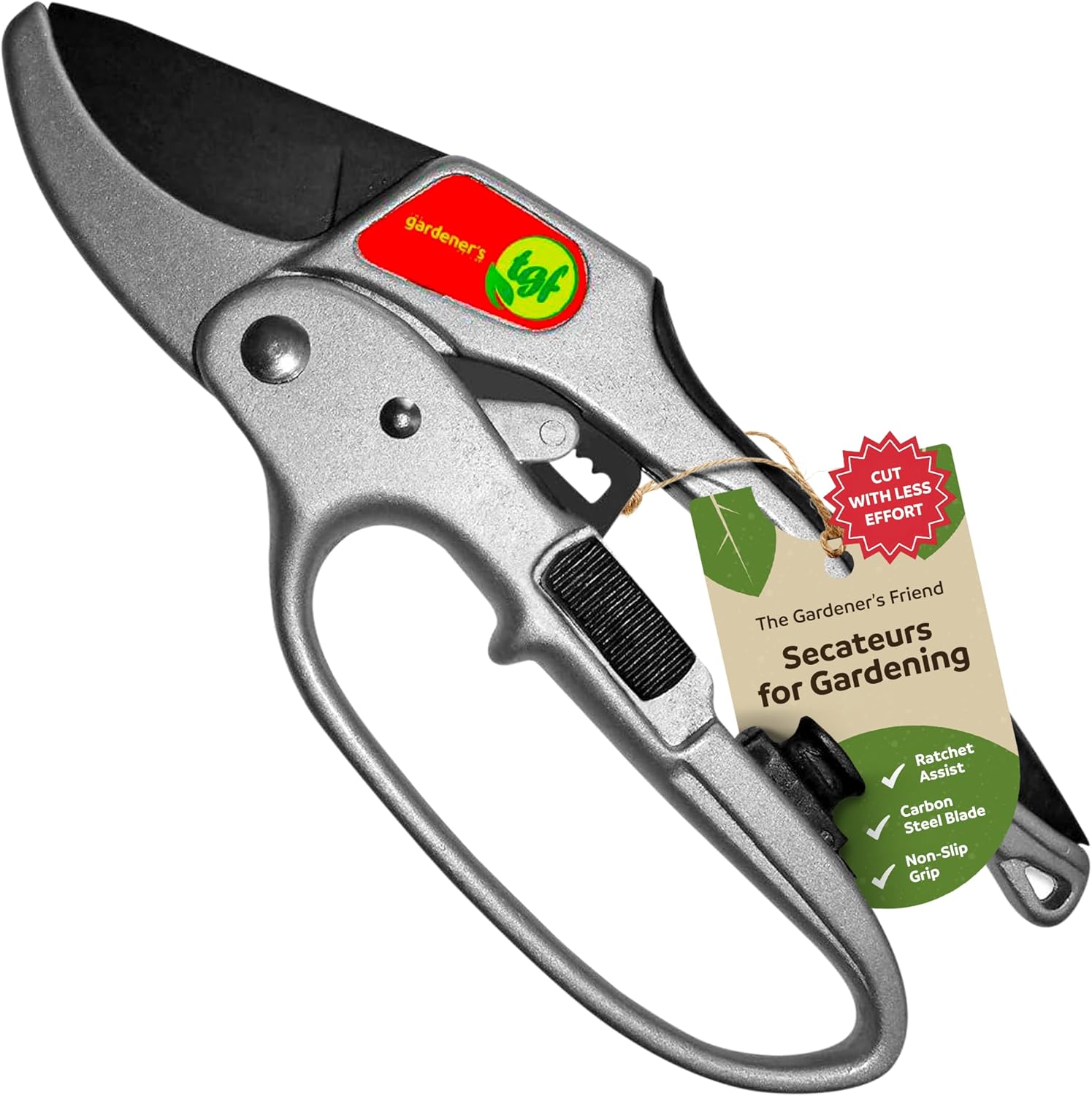
Pros
- Assisted ratchet mechanism can reduce effort compared with standard hand pruners.
- Suitable for pruning, trimming, and harvesting a range of garden stems and small branches.
- Anvil insert helps stabilize material during the cut.
- Corrosion-resistant materials are useful for tools that are regularly used around soil and plant moisture.
- Safety latch supports safer storage between pruning tasks.
Cons
- Anvil pruners may be less suitable for very precise cuts on tender green growth than bypass-style pruners.
- Maximum cutting performance depends on wood type and individual hand strength.
- Gardeners regularly cutting branches larger than the listed capacity may prefer loppers or a pruning saw.
The Gardener's Friend Ratchet Anvil Pruner is a hand pruning tool made for common backyard jobs such as trimming stems, cutting stalks, harvesting, and cleaning up small branches. Its assisted ratcheting action makes it especially relevant for gardeners who want more leverage from a compact hand tool, including homeowners maintaining flower beds, vegetable rows, shrubs, and small trees.
The key benefit is the strength-boosting ratchet mechanism. Instead of relying only on one squeeze, the tool is designed to help increase cutting power in stages, which can make tougher pruning tasks feel more manageable. The product information lists cutting ability up to 1 inch, depending on the wood and the user's individual strength, so it should be viewed as a capable hand pruner rather than a replacement for larger cutting tools.
Based on the listed specifications, the pruner uses a heavy-duty manganese steel blade with an aluminum body and a corrosion-resistant design. The anvil includes a neoprene insert intended to help hold stems and branches in place while cutting. It also has an enhanced safety latch, a useful feature for keeping the tool closed during storage or when carrying it between garden beds.
At 7.95 inches long by 3.15 inches wide and 220 grams, this is a compact tool for routine garden work. It can fit well into raised-bed maintenance, patio container cleanup, shrub tidying, and seasonal pruning tasks where a full-size lopper would be awkward. The black and grey traditional design keeps the focus on function rather than specialty features.
There are a few practical limits to keep in mind. Anvil pruners are generally better for firmer stems and dead or woody material than for the cleanest possible cuts on soft, living growth, where some gardeners may prefer bypass pruners. The blade should be kept clean after use, and the safety latch should be engaged before storing the tool. For branches beyond the stated capacity, a lopper or pruning saw would be the more appropriate choice.
Overall, this pruner is a sensible option for gardeners who want a compact, assisted-action cutting tool for stems, stalks, and small branches. It is best suited to routine yard and garden maintenance rather than heavy tree work or ultra-fine floral trimming.
Best For / Avoid If
Best for buyers prioritizing
- Assisted ratchet mechanism can reduce effort compared with standard hand pruners.
- Suitable for pruning, trimming, and harvesting a range of garden stems and small branches.
- Anvil insert helps stabilize material during the cut.
Consider another option if
- Anvil pruners may be less suitable for very precise cuts on tender green growth than bypass-style pruners.
- Maximum cutting performance depends on wood type and individual hand strength.
- Gardeners regularly cutting branches larger than the listed capacity may prefer loppers or a pruning saw.
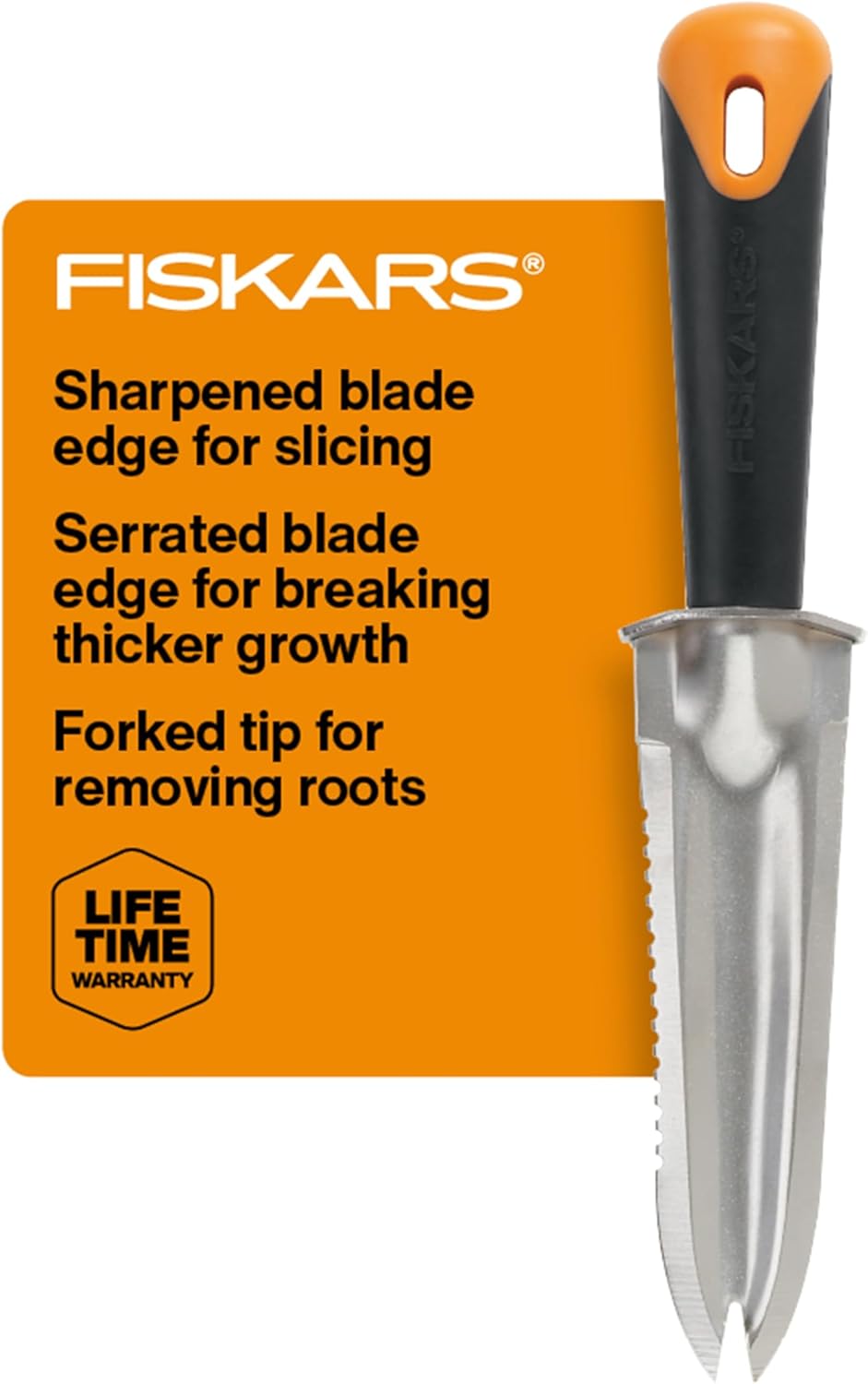
Pros
- Combines several common hand-tool functions in one compact garden knife.
- Softgrip oversized handle may be easier to hold than a slim hard handle during longer weeding sessions.
- Steel head includes both plain and serrated edges for different soil and root tasks.
- Forked tip adds useful leverage for loosening weeds and roots.
- Hanging hole simplifies storage and helps keep the sharp edges off work surfaces.
Cons
- Because it is a hand tool, it may be less suitable for clearing large weedy areas than a long-handled weeder or hoe.
- The sharpened and serrated edges require careful handling and storage, especially around children or pets.
- Gardeners who need measured planting depth markings or a sheath should note that those features are not listed in the supplied specifications.
The Fiskars Big Grip Garden Knife is a manual weeding and planting tool made for everyday garden chores such as digging, weeding, transplanting, splitting seedlings, cultivating, and removing roots. Based on the listed specifications, it is a practical fit for homeowners, beginner gardeners, raised-bed growers, and anyone who prefers a compact hand tool for working close to plants.
Its main advantage is the multi-functional steel head. The product information indicates that one side has a sharpened blade edge for slicing into soil, sod, or seedlings, while the other side has a serrated edge for breaking down thicker growth or tougher root material. The forked tip adds another useful function for working under weeds and loosening roots before pulling.
Comfort is also a key part of the design. The extra-large handle uses Fiskars Softgrip material, which is intended to improve grip and reduce hand fatigue during repetitive tasks. At 0.59 pounds, the tool is still a hand-held garden knife rather than a long-handled weeder, so it is best used while kneeling, sitting, or working at raised-bed height.
In a backyard or small-space garden, this tool can handle many quick jobs that often interrupt planting: opening a hole for a transplant, loosening a stubborn weed, cutting through small rooty clumps, or cultivating tight spots between established plants. The trough-like indentation described in the product information may also help move small amounts of soil or seed while planting.
The steel head is listed as rust-resistant, but normal care still matters. Wiping soil and moisture off after use, keeping the blade edges away from hands, and storing it by the handle hang hole can help preserve the tool and reduce safety risks. Since the product includes sharp and serrated edges, it should be stored where children and pets cannot reach it.
This is a sensible choice for gardeners who want one affordable, reusable hand tool for weeding and planting tasks rather than carrying several small tools around the yard. Gardeners managing large weed patches, deep taproots, or work that requires standing upright may prefer a longer-handled weeder or a more specialized digging tool.
Best For / Avoid If
Best for buyers prioritizing
- Combines several common hand-tool functions in one compact garden knife.
- Softgrip oversized handle may be easier to hold than a slim hard handle during longer weeding sessions.
- Steel head includes both plain and serrated edges for different soil and root tasks.
Consider another option if
- Because it is a hand tool, it may be less suitable for clearing large weedy areas than a long-handled weeder or hoe.
- The sharpened and serrated edges require careful handling and storage, especially around children or pets.
- Gardeners who need measured planting depth markings or a sheath should note that those features are not listed in the supplied specifications.

Pros
- Useful for removing common broadleaf weeds such as dandelions and thistles without applying herbicides.
- Stand-up design is especially helpful for gardeners who want to avoid kneeling or frequent bending.
- Stainless steel claw head and aluminum handle provide a durable, lightweight material combination based on the listed specifications.
- Reviewers commonly mention that it works best on larger weeds with an obvious center root.
- Listed full lifetime warranty adds value for gardeners who want a long-term manual weeding tool.
Cons
- May be less effective on very small weeds, sprawling weeds, or weeds where the main root is hard to locate.
- Can leave a noticeable hole in turf or soil after pulling larger rooted weeds.
- Hard, compacted, or clay-heavy ground may need watering before use so the claws can penetrate cleanly.
The Fiskars 1074437 4-Claw Stand-Up Weeder is a manual weed puller built for removing lawn and garden weeds without kneeling, bending repeatedly, or relying on chemical herbicides. Its 39-inch shaft, foot platform, and claw-style head make it best suited to homeowners dealing with dandelions, thistles, and other individual weeds that have a clear center crown.
The key benefit is root-focused removal. The product information indicates that four serrated stainless steel claws grip the weed and root when you press the tool into the soil, pull back on the handle, and lift. For beginners, this is a more approachable method than digging with a hand trowel, especially across a lawn where repeated kneeling can quickly become tiring.
Design details are practical for everyday yard work. The aluminum handle keeps the listed weight to 2.5 pounds, while the reinforced foot platform provides leverage for driving the claws into soft to moderately firm ground. The offset handle is intended to reduce wrist strain, the viewing window helps with placement, and the easy-eject mechanism lets you release the weed from the head between pulls.
In real backyard use, this type of tool makes the most sense for spot-weeding lawns, edges of flower beds, and open areas where you can stand directly over the weed. Reviewers commonly mention good results on larger weeds and dandelions, while also noting that tiny weeds or sprawled growth can be harder to capture. It can also leave a hole, so gardeners may want to press soil back into place after removing larger roots.
For best results, the listed guidance recommends using it in moist or recently watered soil. If your ground is compacted, dry, or clay-heavy, lightly watering the area 30 to 60 minutes before weeding may help the claws penetrate more cleanly. As with any pointed garden tool, keep feet clear of the head, use steady pressure on the foot platform, and store it where the claw end will not be a tripping or puncture hazard.
Overall, this Fiskars stand-up weed puller is a strong choice for gardeners who want a simple, chemical-free way to tackle scattered rooted weeds while staying upright. Gardeners who mainly deal with tiny seedlings, dense mats of weeds, or very hard soil may still need a hand weeder, hoe, or soil-loosening tool for those situations.
Best For / Avoid If
Best for buyers prioritizing
- Useful for removing common broadleaf weeds such as dandelions and thistles without applying herbicides.
- Stand-up design is especially helpful for gardeners who want to avoid kneeling or frequent bending.
- Stainless steel claw head and aluminum handle provide a durable, lightweight material combination based on the listed specifications.
Consider another option if
- May be less effective on very small weeds, sprawling weeds, or weeds where the main root is hard to locate.
- Can leave a noticeable hole in turf or soil after pulling larger rooted weeds.
- Hard, compacted, or clay-heavy ground may need watering before use so the claws can penetrate cleanly.
Kaufberatung für Gartengeräte bei Arthritis
Das Werkzeug an die schmerzhafteste Aufgabe anpassen
Beginnen Sie mit der Bewegung, die am meisten belastet. Wenn das Zusammendrücken von Scheren das Problem ist, suchen Sie nach ratchet-, hebelunterstützten oder gepolsterten Gartenscheren. Wenn Bücken und Knien die Hürde sind, sind Unkrautstecher im Stehen wie Grampa’s Weeder oder der Fiskars Stand-Up Weed Puller relevanter als ein weiteres Handwerkzeug.
Für Graben, Umpflanzen und Jäten in Beeten kann ein Mehrzweck-Gartenmesser oder Kultivator den Werkzeugwechsel reduzieren. Das PERWIN Hori Hori Garden Knife kombiniert eine 7-inch Edelstahlklinge, eine gezahnte Schneide, Tiefenmarkierungen und einen durchgehenden Holzgriff, während der Fiskars Ergo Cultivator zum Graben, Belüften des Bodens und Entfernen von Unkraut mit ergonomischem Griff entwickelt wurde.
Hebelwirkung vor roher Kraft wählen
Hebelwirkung ist wichtig, weil arthritisfreundliche Werkzeuge mit weniger Griffkraft mehr leisten sollen. Ratschen-Scheren arbeiten in Stufen statt mit einem harten Kraftschluss, was für schwache Hände leichter sein kann. Die GEROSSI Ratchet Pruning Shears nennen einen 3-step ratchet mode, während The Gardener’s Friend Ratchet Pruning Shears eine unterstützte Ratschenbewegung zur Erhöhung der Schneidkraft verwenden.
Hebelunterstützte Scheren sind eine weitere Option. Die DECERK 8.5-inch Professional Pruning Shears nennen eine leistungsstarke Hebelschneidtechnik sowie gepolsterte, rutschfeste Griffe zur Reduzierung von Hand- und Handgelenkbelastung. Die Craft911byLIME pruning shears nennen eine doppelte Öffnungsgröße, die Gärtnern helfen kann, eine Backenweite zu wählen, die besser zum Schnitt und zum Handkomfort passt.
Schnittkapazität und Pflanzentyp prüfen
Kaufen Sie eine Schere nicht nur wegen Komfortangaben. Stimmen Sie die angegebene Schnittkapazität auf die tatsächliche Arbeit ab. DECERK gibt Schnitte bis 1 inch an, GEROSSI bis 3/4 inch, The Gardener’s Friend bis 1 inch je nach Holz und individueller Kraft, und EZKUT bis zu 1.5 inches.
Für Blumen, Kräuter, Gemüse und leichte Strauchschnitte sind kleinere unterstützte Scheren oft leichter zu kontrollieren. Für dickere Stiele oder Äste von Obstbäumen kann eine robustere Ratschen-Schere wie EZKUT je nach Produktangabe besser für mittelgroße bis große Hände geeignet sein.
| Werkzeugtyp | Beste Eignung nach den genannten Merkmalen |
|---|---|
| Ratschen-Gartenscheren | Wiederholtes Schneiden, wenn die Handkraft das Hauptproblem ist |
| Hebelunterstützte Gartenscheren | Gärtner, die mehr Schneidkraft mit gepolsterten, rutschfesten Griffen wollen |
| Unkrautstecher im Stehen | Jäten ohne Bücken, Knien oder Ziehen von Hand |
| Hori Hori oder Gartenmesser | Graben, Umpflanzen, Wurzeln schneiden und Pflanztiefen prüfen |
| Handkultivator | Boden belüften, Beete lockern und leichtes Jäten in erreichbaren Bereichen |
Griffkomfort und Griffgröße priorisieren
Griffe können ebenso wichtig sein wie Klingen. Achten Sie auf genannte Merkmale, die Rutschen und Druckstellen verringern: rutschfestes Gummi, gepolsterte Griffe, Softgrip-Oberflächen, größere Griffe, ergonomische Formen oder versetzte Designs. Solche Details können kurze Einsätze angenehmer machen und die Kontrolle bei steifen Händen verbessern.
Das Fiskars Steel Garden Knife nennt einen extra großen Griff mit Softgrip für mehr Komfort, während der Fiskars Stand-Up Weed Puller einen ergonomischen, versetzten Griff zur Entlastung des Handgelenks angibt. Wenn Ihre Hände kleiner sind, seien Sie vorsichtig bei Werkzeugen, die als besonders geeignet für mittelgroße bis große Hände beschrieben werden.
Bücken, Knien und Beet-Höhe mitdenken
Handfreundliche Werkzeuge helfen, aber die Zugänglichkeit hängt auch vom Gartenlayout ab. Hochbeete, Kübel und freie Wege können ungünstiges Strecken reduzieren. Wenn Bücken ein wiederkehrendes Problem ist, kombinieren Sie bequeme Handwerkzeuge mit besserem Zugang zu den Beeten und ziehen Sie Ideen aus unserem Bereich Hochbeete & Pflanzkübel heran.
Für Rasenunkraut sind Steh-Unkrautstecher oft praktischer als Handjäter. Grampa’s Weeder verwendet einen 45-inch langen Stiel und einen 4-claw steel head, und der Fiskars 39-inch Stand-Up Weed Puller nutzt vier gezahnte Edelstahlkrallen mit Easy-Eject-Design. Beide sind dafür gedacht, Unkraut ohne Knien zu entfernen, wobei die Bodenverhältnisse eine Rolle spielen.
Häufige Kauffehler vermeiden
Ein häufiger Fehler ist, ein Werkzeug für alles zu kaufen. Eine scharfe Gartenschere ist kein Bodenlockerungswerkzeug, und ein Unkrautstecher im Stehen ist nicht ideal für jede harte Lehmboden- oder Steinfläche. Grampa’s Weeder weist darauf hin, dass er in weicherem Boden am besten funktioniert, besonders nach Bewässerung oder Regen, und das Fiskars-Standmodell nennt die besten Ergebnisse in feuchtem oder frisch gegossenem Boden.
Ein weiterer Fehler ist, die höchste angegebene Schnittkapazität zu wählen, ohne die Handpassform zu berücksichtigen. Schwerere Scheren können nützlich sein, aber wenn die Griffe zu groß wirken oder die Verriegelung unpraktisch ist, kann eine kleinere Ratschen- oder Hebelschere für die regelmäßige Gartenarbeit zu Hause leichter sein.
Pflege, Reinigung und sichere Aufbewahrung
Arthritisfreundliche Werkzeuge sind einfacher zu benutzen, wenn sie sauber, scharf und trocken bleiben. Wischen Sie Erde und Pflanzensaft nach dem Einsatz von den Klingen, trocknen Sie Metallteile vor der Aufbewahrung und befolgen Sie die Herstellerhinweise zu Schmierung oder Schärfen, wenn vorhanden. DECERK weist darauf hin, dass die Klingen mit Rostschutzöl ankommen können, und empfiehlt, die Klingen nach Gebrauch abzuwischen und die Schere an einem gut belüfteten Ort aufzubewahren.
Verwenden Sie Sicherheitsverschlüsse und Schutzhüllen konsequent. Das PERWIN Hori Hori enthält eine Schutzhülle mit Gürtelschlaufe, und mehrere Gartenscheren nennen einhändige oder integrierte Sicherheitsverriegelungen. Für die Organisation von Werkzeugen, damit sie leicht erreichbar bleiben, können unsere Ratgeber zu einer Deckbox für Gartengeräte und zum Organisieren eines kleinen Gartenhauses hilfreich sein.
Überlegungen für kleine Flächen und Einsteiger
Auf Terrassen, in Hochbeeten und kleinen Gärten sparen Mehrzweckwerkzeuge Stauraum. Ein Gartenmesser, ein Handkultivator und eine bequeme Gartenschere können viele Einsteigeraufgaben abdecken, ohne den Schuppen zu füllen. Achten Sie bei knappem Platz auf Aufhängelöcher, Schutzhüllen und kompakte Designs.
Einsteiger sollten außerdem Werkzeuge mit klaren Sicherheitsfunktionen und einfacher Bedienung bevorzugen. Eine einhändige Verriegelung, eine leicht auswerfbare Unkrautlösung, eine sichtbare Klingenhülle oder ein bequemer rutschfester Griff können Frust verringern und kurze, häufige Garteneinsätze realistischer machen.
Forschungsmethodik und Vertrauen
Dieser Leitfaden basiert auf Recherche und Vergleich der bereitgestellten Produktdaten, nicht auf physischem Testen. Wir haben die aufgeführten Artikel auf Eignung für Gartengeräte bei Arthritis, die Kategorie Gartenwerkzeuge & Schnitt sowie typische Gartenarbeiten wie Schneiden, Jäten, Graben, Lockern, Umpflanzen und Wurzelschneiden geprüft.
Produkte wurden dann als relevanter eingestuft, wenn ihre genannten Merkmale direkt Handermüdung, schwache Hände, arthritisfreundliche Nutzung, weniger Bücken, weniger Knien, Hebelwirkung, Ratschenfunktion, ergonomische Griffe, Sicherheitsverriegelungen oder zugängliche Aufbewahrung ansprachen. Außerdem haben wir die angegebene Schnittkapazität, Material von Klinge oder Kopf, sofern genannt, die Werkzeuglänge, sofern genannt, und die Art der vorgesehenen Gartenarbeit berücksichtigt.
Hinweise aus Nutzerfeedback wurden nur grob anhand der bereitgestellten Bewertungen und Rezensionenzahlen berücksichtigt. Wir haben keine Aussagen zu Haltbarkeit, Komfort oder realer Leistung hinzugefügt, die über die bereitgestellten Spezifikationen und Produktbeschreibungen hinausgehen. Die Aktualisierung wurde im Juli 2026 erstellt, um die Empfehlungen an die übermittelte Produktliste, Preise und Merkmale anzupassen.
Abschließende Empfehlungen
Gesamtempfehlung: DECERK® 8.5" Professional Pruning Shears – Cuts 4X Easier with Ultra Sharp Japanese Steel Titanium Blade, Arthritis Friendly Garden Scissors & Plant Clippers, Effortlessly Prunes 3/4" Branches ist aus den bereitgestellten Daten die stärkste Allround-Wahl für Gärtner, die leichter schneiden möchten. Sie kombiniert Hebeltechnik, gepolsterte rutschfeste Griffe, eine einhändige Sicherheitsverriegelung und eine angegebene Schnittkapazität bis 1 inch.
Barrierefreie Wahl: Grampa’s Weeder – The Original Stand Up Weed Puller Tool with Long Handle – Made with Real Bamboo & 4-Claw Steel Head Design – Easily Remove Weeds Without Bending, Pulling, or Kneeling. ist eine praktische Wahl, wenn Bücken und Knien die größten Hürden sind. Laut Produktangaben eignet er sich am besten für weicheren Boden, besonders nach Regen oder Bewässerung.
Robuste Wahl: EZ Kut Heavy Duty Pruning Shears Green – with Ratcheting Action Great Garden Hand Tool Clippers Gardening pruners arthritis tools Ratcheting Anvil Hand Pruner Pruning Shears Heavy Duty Since 1988 passt besser, wenn dickere Schnitte im Vordergrund stehen, mit einer angegebenen Kapazität bis 1.5 inches und Ratschenfunktion für geringeren Kraftaufwand. Gärtner mit kleineren Händen bevorzugen möglicherweise stattdessen ein kompakteres unterstütztes Modell.
FAQ
Welche Gartengeräte sind bei Arthritis am nützlichsten?
Am nützlichsten sind die Werkzeuge, die Ihre anstrengendsten Bewegungen reduzieren. Für viele Gärtner sind das Ratschen-Scheren, hebelunterstützte Scheren, Unkrautstecher im Stehen, ergonomische Kultivatoren und Gartenmesser mit größerem Griff.
Sind Ratschen-Scheren bei arthritischen Händen besser als normale Scheren?
Ratschen-Scheren können leichter sein, weil sie in Stufen schneiden statt einen starken Kraftschluss zu verlangen. Sie helfen besonders bei härteren Stielen, aber die beste Wahl hängt weiterhin von Handgröße, Schnittkapazität, Griffkomfort und der Art der Sicherheitsverriegelung ab.
Welche Schnittkapazität sollte ich bei Gartengeräten für Arthritis wählen?
Wählen Sie das kleinste Werkzeug, das zu Ihrer üblichen Schnittarbeit passt. Leichte Blumen und Gemüse brauchen nicht dieselbe Kapazität wie Sträucher oder Äste von Obstbäumen. In den bereitgestellten Daten liegen die genannten Kapazitäten der besprochenen Scheren zwischen 3/4 inch und 1.5 inches.
Funktionieren Unkrautstecher im Stehen in hartem Boden?
In verdichtetem, steinigem oder lehmreichem Boden können sie schwerer zu verwenden sein. Die bereitgestellten Produktdaten nennen bessere Ergebnisse in weichem, feuchtem oder frisch gegossenem Boden, daher kann das Wässern der Fläche vor dem Jäten helfen, damit die Krallen sauberer eindringen.
Wie pflege ich arthritisfreundliche Gartenscheren?
Wischen Sie die Klingen nach dem Einsatz ab, trocknen Sie Metallteile vor der Lagerung und halten Sie Sicherheitsverriegelungen geschlossen, wenn das Werkzeug nicht benutzt wird. Befolgen Sie die Pflegehinweise des Herstellers, insbesondere bei beschichteten Klingen, Rostschutzöl, Schärfen und Belüftung bei der Aufbewahrung.
Welche Gartengeräte für Arthritis eignen sich am besten für kleine Räume?
Für kleine Terrassen oder Hochbeete können eine bequeme Schere, ein Handkultivator und ein Mehrzweck-Gartenmesser viele Aufgaben abdecken, ohne viel Stauraum zu beanspruchen. Achten Sie auf Aufhängelöcher, Schutzhüllen und Werkzeuge, die mehr als eine übliche Gartenaufgabe erfüllen.