

Garden lime can raise soil pH, but adding it without checking your soil can push pH too high. This guide helps home gardeners compare options for acidic soil and avoid treating lime as a general-purpose fertilizer or remedy.
We reviewed the listed 20 product listings for Best Garden Lime For Acidic Soil, checking for garden lime and the intended soil-amendment task. We compare only products with a clear lime connection, using stated form, package size, intended use, and price. A soil test and product label remain essential because the right amount depends on the soil.
Jobe's Organics Garden Lime Soil Amendment for Raising Soil pH Cz Garden Supply Dolomite Lime, 5 lb Soil Amendment for pH and Calcium-Magnesium Support Earth Science Fast Acting Lime Soil pH Amendment for Lawns and Gardens Espoma Organic Garden Lime for Soil pH Adjustment and Pink Hydrangeas Prices and availability can change. We may earn a commission from qualifying purchases.


Pros
- Suitable for lawns, plants, and gardens, according to the product information.
- Organic gardening listing and no synthetic chemicals may appeal to gardeners avoiding synthetic amendments.
- Grain format is described as easy to measure.
Cons
- No coverage area or application quantity is provided, so gardeners must consult product directions for how much to use.
- Who should skip it: gardeners whose soil does not need higher alkalinity may prefer an amendment matched to their soil needs.
Jobe's Organics Garden Lime is a granular soil amendment formulated to de-acidify soil by increasing alkalinity. The 6 lb bag is intended for lawns, plants, and gardens where raising soil pH is appropriate.
The product information says increased alkalinity can help plants absorb nutrients. Its grains are described as easy to measure, which may help gardeners control applications rather than spread an unmeasured amount.
The listed dimensions are 4 x 7 x 13.5 inches, and the bag weighs 6 lb. No application tool, assembly, or storage feature is specified. The product guidance recommends application at planting, followed by 2 to 3 applications per year to maintain desired soil pH.
For a backyard lawn, garden bed, or patio planting area, this amendment may fit routine soil care when the growing area needs higher alkalinity. The product information also describes its formulation as designed to avoid wasteful runoff, mess, hazards, and smells.
Application amount and coverage area are not provided, so follow the product directions when deciding how much to apply. Gardeners should use lime only where raising soil pH suits their growing area, since the product is intended to increase alkalinity.
Consider this option if you need a garden lime amendment and value its OMRI listing for organic gardening by the USDA. Who should skip it: gardeners whose soil does not need a higher pH, or those seeking a product with specified coverage and application rates.
Best For / Avoid If
Best for buyers prioritizing
- Suitable for lawns, plants, and gardens, according to the product information.
- Organic gardening listing and no synthetic chemicals may appeal to gardeners avoiding synthetic amendments.
- Grain format is described as easy to measure.
Consider another option if
- No coverage area or application quantity is provided, so gardeners must consult product directions for how much to use.
- Who should skip it: gardeners whose soil does not need higher alkalinity may prefer an amendment matched to their soil needs.
Pros
- Combines pH adjustment with calcium and magnesium supplementation.
- Fine powder may be convenient to mix into container or garden-bed soil.
- Resealable pouch helps keep remaining amendment stored for later use.
Cons
- Application rate and coverage area are not provided, so gardeners must determine the appropriate amount for their soil.
- Because it raises pH, it may be unsuitable for plants or soil already at the desired pH.
- Who should skip it: gardeners who do not need a pH adjustment or calcium and magnesium amendment.
Cz Garden Supply Dolomite Lime is a fine-ground limestone soil amendment in a 5 lb pouch. It is intended to raise and stabilize soil pH while supplying calcium and magnesium, making it a potential option for gardeners managing acidic soil in containers, EarthBoxes, or garden beds.
The product information describes the powder as ultra-fine for rapid reaction in soil. Its calcium and magnesium content may be useful when those nutrients are needed, but the product should not be treated as a guaranteed fix for blossom end rot in tomatoes or peppers. Soil conditions and growing practices also matter.
The resealable, easy-pour pouch is designed to help dispense the amendment and store what remains. Listed dimensions are 6 x 4 x 3.5 inches, and the package weighs 5 lb. No application rate or coverage area is supplied, so use soil information to guide how much to apply.
For a patio gardener, the pouch size and pour format may be practical for container mixes or an EarthBox. Home gardeners can also consider it for beds where soil pH needs to rise. OMRI Listed status indicates eligibility for use in certified organic production under applicable USDA National Organic Program regulations.
Dolomite lime raises pH, so applying it where soil is already at the desired pH may be a poor fit. Check soil pH and nutrient needs before use, and follow any label directions. Gardeners seeking a neutral or pH-lowering amendment, or who have no need for added calcium and magnesium, should skip it.
Best For / Avoid If
Best for buyers prioritizing
- Combines pH adjustment with calcium and magnesium supplementation.
- Fine powder may be convenient to mix into container or garden-bed soil.
- Resealable pouch helps keep remaining amendment stored for later use.
Consider another option if
- Application rate and coverage area are not provided, so gardeners must determine the appropriate amount for their soil.
- Because it raises pH, it may be unsuitable for plants or soil already at the desired pH.
- Who should skip it: gardeners who do not need a pH adjustment or calcium and magnesium amendment.
Pros
- Targets low soil pH, a specific condition that can interfere with nutrient uptake.
- Can be used for grass and other plants, according to the product information.
- Product information says people and pets can use the lawn immediately after application.
Cons
- The 2.5 lb package may not suit gardeners treating a large lawn.
- Application rate and coverage area are not provided, so planning quantities may require checking the package directions.
- Who should skip it: gardeners whose soil does not need a pH increase, or who have not checked soil pH.
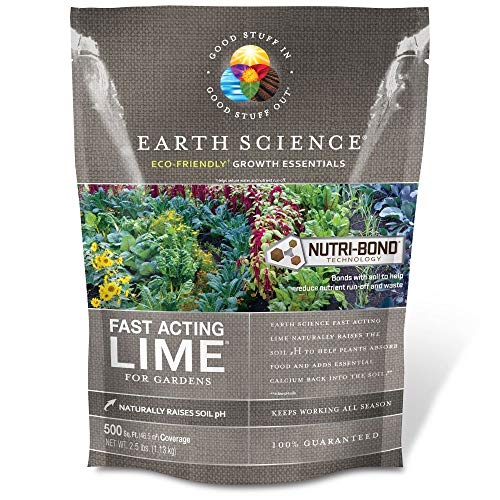
Earth Science Fast Acting Lime is a granular-style soil lime product in a 2.5 lb package, intended to raise soil pH and add calcium. It is aimed at homeowners caring for lawns and gardens where soil pH is too low.
Low soil pH can make it harder for plants to absorb nutrients. Product information says this lime starts working immediately and continues working through the season, with the goal of supporting nutrient uptake and plant color. Results depend on whether soil pH is low enough to need lime.
The listed package weighs 2.5 lb and measures 15 x 11 x 1.79 inches. Application controls, application rate, and coverage area are not specified in the published information, so consult package directions before applying to determine how much to use.
This product may fit a small lawn area, garden bed, or other limited spot where a soil check indicates a need to raise pH. Its Nutri-Bond Technology is described as helping keep product in the soil where applied, which may be useful for targeted application.
Do not apply lime solely to improve color: raising pH when soil does not need it can be counterproductive. Follow package directions, and check soil pH before use. Product information describes it as safe for people and pets and says the lawn can be used immediately after application.
Consider this lime if soil pH results show a need and a small package fits the area. Gardeners treating a large lawn, or those without evidence that their soil needs a pH increase, should consider a different approach.
Best For / Avoid If
Best for buyers prioritizing
- Targets low soil pH, a specific condition that can interfere with nutrient uptake.
- Can be used for grass and other plants, according to the product information.
- Product information says people and pets can use the lawn immediately after application.
Consider another option if
- The 2.5 lb package may not suit gardeners treating a large lawn.
- Application rate and coverage area are not provided, so planning quantities may require checking the package directions.
- Who should skip it: gardeners whose soil does not need a pH increase, or who have not checked soil pH.
Pros
- Listed for use across several common garden and landscape plantings.
- Targets soil acidity while adding calcium.
- Product information identifies it as a registered Organic Input Material.
- Made in the USA by Espoma.
Cons
- Application rate and coverage area are not provided, so gardeners need to consult the package directions.
- Hydrangea color benefit applies to mophead and lacecap types and depends on raising soil pH.
- Who should skip it: gardeners not seeking to raise soil pH or correct acidic soil.
Espoma Organic Garden Lime is pelletized dolomitic lime intended to correct acidic soil by raising pH. It is listed for flowers, vegetables, lawns, trees, and shrubs, making it relevant to home gardeners managing soil across several planting areas.
Its dolomitic lime helps sweeten soil, and the product information says it adds calcium that may help prevent blossom end rot. Raising soil pH can also help turn mophead and lacecap hydrangea blooms pink, though this use depends on changing soil conditions.
The listed size is 5 lb per bag, and the title describes a 2-pack. No application rate or coverage area is supplied, so use package directions to determine how much to apply. The product is identified as a registered Organic Input Material for organic gardening.
For a backyard, this lime may suit gardeners addressing acidic soil in vegetable beds, flower borders, lawns, or around trees and shrubs. Hydrangea growers can consider it when aiming for pink blooms on mophead or lacecap plants.
Do not apply lime without a reason to raise soil pH. The published information does not state an application rate, so follow the product label for use. Gardeners who want to maintain acidic soil, or who do not need pH correction, should skip it.
Best For / Avoid If
Best for buyers prioritizing
- Listed for use across several common garden and landscape plantings.
- Targets soil acidity while adding calcium.
- Product information identifies it as a registered Organic Input Material.
Consider another option if
- Application rate and coverage area are not provided, so gardeners need to consult the package directions.
- Hydrangea color benefit applies to mophead and lacecap types and depends on raising soil pH.
- Who should skip it: gardeners not seeking to raise soil pH or correct acidic soil.
Pros
- Pelletized form offers two listed application methods: spreader or hand sprinkling.
- Broad stated coverage suits lawns and larger garden areas.
- Made from limestone with no fillers or additives, according to the product information.
Cons
- Correct application amount depends on soil conditions, so gardeners should check soil pH and follow package directions.
- The 30 lb bag may be cumbersome to carry or store for some gardeners.
- Who should skip it: gardeners whose soil does not need lime or who want a product with a listed soil-specific application rate.
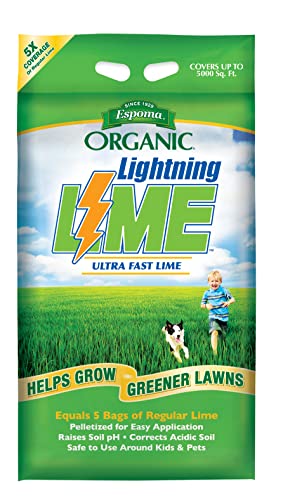
Espoma Organic Lightning Lime is pelletized limestone for helping correct acidic soil in lawns and gardens. It is suited to homeowners who need to treat a lawn or garden area rather than make a small, targeted soil adjustment.
The product information says the lime can help make fertilizers more effective and support greener lawns. One 30 lb bag is listed to cover up to 5,000 sq. ft., and the product may work in as little as 6 to 8 weeks. Results depend on soil conditions and application.
Pellets are intended for application with a drop or broadcast spreader, or gardeners can sprinkle them over garden soil. The listed dimensions are 26 x 2 x 12 inches, and the bag weighs 30 lb. No spreader or other accessories are listed as included.
For a lawn, the stated coverage can help homeowners plan treatment across a broad area. In a garden or raised bed, sprinkling provides an alternative to using a spreader. The product can be applied in spring, summer, or fall when the ground is not frozen.
Lime is not appropriate for every soil, and the product information does not provide a soil-specific application rate. Check soil pH and package directions before applying, and avoid using it where soil does not need lime. Who should skip it: gardeners seeking a small quantity or a product with a listed application rate tailored to their soil.
Best For / Avoid If
Best for buyers prioritizing
- Pelletized form offers two listed application methods: spreader or hand sprinkling.
- Broad stated coverage suits lawns and larger garden areas.
- Made from limestone with no fillers or additives, according to the product information.
Consider another option if
- Correct application amount depends on soil conditions, so gardeners should check soil pH and follow package directions.
- The 30 lb bag may be cumbersome to carry or store for some gardeners.
- Who should skip it: gardeners whose soil does not need lime or who want a product with a listed soil-specific application rate.
Pros
- Combines pH adjustment with calcium and magnesium supply.
- OMRI listed for use in eligible certified organic production.
- Resealable pouch supports storage of unused product.
Cons
- Application rate is not provided, so gardeners need soil-specific guidance before applying.
- Because it raises pH, it may be unsuitable for plants or soil that need acidic conditions.
- Who should skip it: gardeners whose soil pH is already appropriate or who need a treatment that does not raise pH.
Cz Garden Supply Dolomite Lime is a powdered mineral soil amendment for gardeners seeking to raise soil pH and add calcium and magnesium. Its listed uses include container gardens and Earthboxes, as well as general garden soil.
The product information describes the limestone as ultra-fine for rapid reaction and says it can raise and stabilize soil pH. That makes it relevant when soil conditions call for a pH increase, but it should not be treated as a universal plant food or a guaranteed solution for blossom end rot.
The 10 lb package comes in a resealable, easy-pour pouch. Listed dimensions are 6 x 4 x 3.5 inches, and the product weighs 10 lb. The published details do not give an application rate, so use soil-specific recommendations rather than estimating a dose.
For backyard gardeners, the pouch format may be convenient for storing and dispensing lime around containers, raised beds, or in-ground planting areas. Its OMRI listing may suit gardeners following eligible organic production practices.
Dolomite lime raises pH, so applying it where soil is already at the desired level could move conditions away from what plants need. Check soil pH and follow appropriate application guidance, and avoid breathing or getting fine powder in eyes during handling.
This is a practical choice for gardeners who have identified a need to raise soil pH and want a source of calcium and magnesium. Gardeners who need to lower pH, lack soil information, or want a product with a stated application rate should consider another option.
Best For / Avoid If
Best for buyers prioritizing
- Combines pH adjustment with calcium and magnesium supply.
- OMRI listed for use in eligible certified organic production.
- Resealable pouch supports storage of unused product.
Consider another option if
- Application rate is not provided, so gardeners need soil-specific guidance before applying.
- Because it raises pH, it may be unsuitable for plants or soil that need acidic conditions.
- Who should skip it: gardeners whose soil pH is already appropriate or who need a treatment that does not raise pH.
Pros
- Intended for several common outdoor growing areas, including lawns and vegetable gardens.
- Clearly identified as a soil amendment rather than a fertilizer.
- Package weight and dimensions are provided for planning storage and handling.
Cons
- Product information does not provide application rates or coverage area, so gardeners must consult the package directions.
- Who should skip it: gardeners seeking fertilizer or a product specifically intended to add nutrients directly.
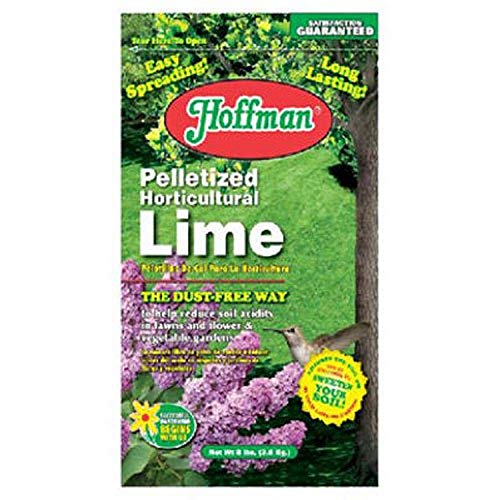
Hoffman 15208 is an 8 lb bag of pelletized garden lime intended to reduce soil acidity. The product information lists lawns, flower gardens, and vegetable gardens as suitable uses, making it relevant to homeowners managing several outdoor growing areas.
Reducing soil acidity can help increase the availability of key nutrients to plant roots, according to the listed features. Lime is not a substitute for fertilizer, and this product is explicitly identified as not being a fertilizer.
The listed dimensions are 2 x 9 x 15 inches, with a weight of 8 lb. The product is pelletized, but the available information does not specify application equipment, application rate, or coverage area.
For a backyard lawn, flower border, or vegetable garden, this product may suit gardeners whose soil needs acidity reduction. The 8 lb package provides a stated quantity for planning, but does not establish how much area it will treat.
Check package directions before applying, since the published information does not give a rate or timing. Gardeners needing fertilizer, or those who cannot confirm that lime is appropriate for their soil, may prefer a different product. Overall, this is a focused soil amendment for acidity reduction, not a general-purpose plant food.
Best For / Avoid If
Best for buyers prioritizing
- Intended for several common outdoor growing areas, including lawns and vegetable gardens.
- Clearly identified as a soil amendment rather than a fertilizer.
- Package weight and dimensions are provided for planning storage and handling.
Consider another option if
- Product information does not provide application rates or coverage area, so gardeners must consult the package directions.
- Who should skip it: gardeners seeking fertilizer or a product specifically intended to add nutrients directly.

Pros
- Pulverized form is intended to integrate into soil more readily than pelletized lime.
- Versatile listed uses include lawns, vegetable beds, flower beds, and compost.
- Supplies calcium carbonate while addressing low soil pH.
Cons
- The 2 lb package may be insufficient for treating a large lawn or extensive garden.
- No application rate or coverage area is provided, so gardeners must consult the label before calculating how much to use.
- Who should skip it: gardeners whose soil does not need a pH increase, or anyone seeking a ready-to-use liquid amendment.
GARDENWISE Organic Pulverized Garden Lime is a powdered calcium carbonate soil amendment intended to raise low soil pH. It is aimed at homeowners tending lawns, vegetable beds, flower beds, or compost who need a lime product for targeted soil care.
Raising pH can help improve nutrient availability when soil is too acidic. The product also supplies calcium, but lime is not a guaranteed fix for plant problems such as blossom-end rot, which can have multiple causes.
The listed package is 1 qt and 2 lb, with dimensions of 6 x 3 x 3 inches. Product information describes the powder as fine and pulverized, but does not provide an application rate, coverage area, or included measuring tool.
Its listed uses cover lawns, vegetable gardens, flower beds, and compost. Before applying it to a backyard bed or lawn, check soil pH and follow the package directions to avoid adding lime where it is not needed.
The product information identifies it as OMRI-listed and USDA Organic-approved. Avoid breathing airborne powder during handling, and follow any handling and storage precautions on the label. The small stated quantity may be less practical for broad lawn treatment.
Consider this lime if you need a calcium carbonate amendment for a limited area and have confirmed that raising soil pH is appropriate. Who should skip it: gardeners without a pH need, or those treating large areas who require a product with clearly stated coverage and application guidance.
Best For / Avoid If
Best for buyers prioritizing
- Pulverized form is intended to integrate into soil more readily than pelletized lime.
- Versatile listed uses include lawns, vegetable beds, flower beds, and compost.
- Supplies calcium carbonate while addressing low soil pH.
Consider another option if
- The 2 lb package may be insufficient for treating a large lawn or extensive garden.
- No application rate or coverage area is provided, so gardeners must consult the label before calculating how much to use.
- Who should skip it: gardeners whose soil does not need a pH increase, or anyone seeking a ready-to-use liquid amendment.

Pros
- Clear purpose for managing acidic soil.
- Listed for several garden plant types, not hydrangeas alone.
- Compact package dimensions of 4.25 x 7.75 x 11.5 inches.
Cons
- No application rate or coverage area is provided, so gardeners must consult package directions.
- Who should skip it: gardeners without acidic soil or those who do not want to raise soil pH.
True Organic Garden Lime is a soil amendment intended to raise pH and reduce acidity. It may suit home gardeners managing acidic beds, including those growing hydrangeas, vegetables, flowers, or shrubs.
The product information says neutralizing excess acidity can improve soil structure and nutrient availability. It is also presented as an option for gardeners seeking soil conditions associated with pink hydrangea blooms, but it does not promise a particular bloom color.
The package is listed as 6 lb, with dimensions of 4.25 x 7.75 x 11.5 inches. Application controls, spreading method, and coverage area are not specified, so check the package directions before use.
For a backyard bed or raised planter, first determine whether soil acidity is a concern, then use the product only where raising pH fits the garden’s needs. Its listed use across vegetables, flowers, and shrubs offers flexibility for mixed plantings.
Adding lime when soil does not need a higher pH may move conditions away from what plants require. Follow package directions and avoid estimating an application rate from bag size alone. The product information does not state coverage or application frequency.
Consider this lime if you need to manage acidic soil and want an amendment listed for several plant types. Who should skip it: gardeners whose soil does not need a pH increase or who need a product with stated coverage and application rates.
Best For / Avoid If
Best for buyers prioritizing
- Clear purpose for managing acidic soil.
- Listed for several garden plant types, not hydrangeas alone.
- Compact package dimensions of 4.25 x 7.75 x 11.5 inches.
Consider another option if
- No application rate or coverage area is provided, so gardeners must consult package directions.
- Who should skip it: gardeners without acidic soil or those who do not want to raise soil pH.
Pros
- Provides both calcium and magnesium in one soil amendment.
- OMRI Listed for permitted use in certified organic production.
- Resealable, easy-pour pouch supports storage and handling.
Cons
- Raises soil pH, so it may be unsuitable where soil is already alkaline or does not need lime.
- Application amount and timing are not specified in the published product information, so gardeners must consult soil guidance before use.
- Who should skip it: gardeners seeking a pH-lowering amendment or a guaranteed fix for blossom end rot.
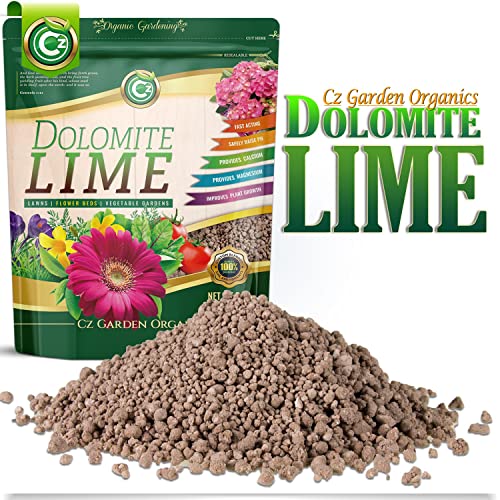
Cz Garden Supply Dolomite Lime is a mineral soil amendment that supplies calcium and magnesium and raises soil pH. Its 5 lb pouch may suit home gardeners adjusting soil in small beds, raised beds, or containers, provided their soil needs lime.
The listed features describe finely ground limestone intended to react quickly. The product information also promotes it for tomatoes and peppers with blossom end rot, but lime cannot be treated as a guaranteed cure. Confirm soil conditions first, since adding lime when pH does not need to rise may be counterproductive.
The resealable, easy-pour pouch is designed for storing unused amendment. Listed dimensions are 8 x 6 x 4 inches, and listed weight is 5 lb. The product data does not specify an application rate, so follow reliable soil-test guidance for the amount and timing.
For a patio or container garden, the small package may be easier to store than bulk soil amendments. It is also described as suitable for Earthboxes and other container gardens, but use depends on the growing mix's pH and nutrient needs.
OMRI lists the product for use in certified organic production under USDA National Organic Program regulations. Keep it stored in its closed pouch and avoid applying it without checking whether the soil needs a pH increase. The information supplied does not give detailed handling instructions.
Consider this amendment if soil guidance indicates a need for calcium, magnesium, or higher pH. Skip it if your soil is already alkaline, if you need to lower pH, or if you want a guaranteed blossom-end-rot remedy.
Best For / Avoid If
Best for buyers prioritizing
- Provides both calcium and magnesium in one soil amendment.
- OMRI Listed for permitted use in certified organic production.
- Resealable, easy-pour pouch supports storage and handling.
Consider another option if
- Raises soil pH, so it may be unsuitable where soil is already alkaline or does not need lime.
- Application amount and timing are not specified in the published product information, so gardeners must consult soil guidance before use.
- Who should skip it: gardeners seeking a pH-lowering amendment or a guaranteed fix for blossom end rot.

Pros
- Targets both acidic soil and hard or compacted ground.
- Coverage information makes it easier to estimate whether one bag suits the lawn area.
- The product information identifies soil pH testing options to help guide use.
Cons
- Results depend on your soil conditions, so measure pH before applying and follow the package directions.
- The listed coverage may not suit larger lawns without additional bags.
- Who should skip it: gardeners without acidic or compacted lawn soil, or those seeking a general-purpose fertilizer.
Jonathan Green Mag-I-Cal Plus is a lawn soil amendment for yards with acidic or hard soil. It is intended for homeowners who want to address low soil pH and compaction rather than add a general-purpose lawn fertilizer.
The product information says it helps raise soil pH and loosen clay or compacted soil. More balanced pH can help grass use nutrients already present in the soil, while looser soil can support root penetration. The listed feature set also identifies calcium as available for plant uptake or pH adjustment.
The 18 lb bag is listed to cover up to 5,000 sq. ft. Product information gives dimensions of 20.5 x 11.5 x 3.25 inches, but does not specify application rate details here. Use package directions to determine how much to apply to your lawn.
Before applying, check soil pH with a suitable lawn soil tester. The product information lists Jonathan Green Pro pH & Moisture Soil Tester (11100) and Soil pH Test Kit for Lawns (11595) as options. The amendment can be used in spring, summer, or fall, according to the listing.
This is a targeted choice, not a substitute for diagnosing other causes of pale grass or persistent weeds. Soil conditions vary, and the listing does not provide a guaranteed result or a specific pH change. Follow package directions and avoid applying where soil tests do not indicate a need.
Consider Mag-I-Cal Plus if a soil test indicates acidic lawn soil and your yard also has hard or compacted areas. Who should skip it: gardeners with suitable soil pH, those seeking fertilizer alone, or homeowners whose lawn area exceeds the listed coverage and who do not want to use multiple bags.
Best For / Avoid If
Best for buyers prioritizing
- Targets both acidic soil and hard or compacted ground.
- Coverage information makes it easier to estimate whether one bag suits the lawn area.
- The product information identifies soil pH testing options to help guide use.
Consider another option if
- Results depend on your soil conditions, so measure pH before applying and follow the package directions.
- The listed coverage may not suit larger lawns without additional bags.
- Who should skip it: gardeners without acidic or compacted lawn soil, or those seeking a general-purpose fertilizer.

Pros
- Supports soil pH adjustment where soil is acidic.
- Can serve both garden soil and animal-bedding odor-control needs.
- Bulk 50 lb format suits larger areas or repeated use.
Cons
- Application rate and coverage area are not provided, so users must consult soil guidance before applying.
- Fine powder may require careful handling to limit dust during application.
- Who should skip it: gardeners who have not confirmed a need for limestone or want a measured, ready-to-apply product.
CountryMax Fine Ground Limestone Powder is a 50 lb calcium carbonate soil amendment listed for lawns, gardens, crops, and agricultural use. It may suit homeowners and growers seeking to address acidic soil, as well as people managing animal bedding.
The product information says finely ground limestone can help neutralize acidic soils and improve soil calcium levels. These uses depend on the soil’s existing condition, so check soil pH before deciding whether lime is appropriate.
The listed format is a 50 lb bag of limestone powder. Application rate, coverage, and spreading instructions are not provided, so follow suitable soil guidance rather than estimating an amount from the bag size alone.
For backyard use, the listed applications include lawns, flower gardens, vegetable gardens, and crop areas. The product is also listed for chicken coops, barns, kennels, and animal bedding, where its stated purpose is to help manage moisture and ammonia odors.
Fine powder can create dust during handling, so avoid breathing it and use care when pouring or spreading. No application directions or specific animal-use instructions are supplied, so follow the product label and keep use appropriate to the setting.
This may fit gardeners or small farms needing bulk limestone for confirmed soil needs or listed bedding uses. Who should skip it: anyone without a clear need for lime, or anyone who needs a product with specified application rates and coverage.
Best For / Avoid If
Best for buyers prioritizing
- Supports soil pH adjustment where soil is acidic.
- Can serve both garden soil and animal-bedding odor-control needs.
- Bulk 50 lb format suits larger areas or repeated use.
Consider another option if
- Application rate and coverage area are not provided, so users must consult soil guidance before applying.
- Fine powder may require careful handling to limit dust during application.
- Who should skip it: gardeners who have not confirmed a need for limestone or want a measured, ready-to-apply product.

Pros
- Clear purpose for homeowners managing acidic soil.
- Listed benefits address soil structure, nutrient access, and lawn health.
- 25 lb bag size is specified, making the package weight clear.
Cons
- Application rate and coverage area are not provided, so gardeners need product directions to plan use.
- Pelletized lime is not a general-purpose soil amendment for every garden or lawn.
- Who should skip it: gardeners without acidic soil or those seeking a product with a stated coverage rate.
Natural Alternative Pelletized Lime is a soil amendment intended to raise pH in acidic soil. The 25 lb bag may suit homeowners working on lawns or garden areas where soil acidity is a concern.
Product information lists potential benefits for soil structure and earthworm activity, and says lime can help release nutrients that are trapped in acidic soil. It also describes support for root systems and uptake of water and nutrients. These benefits depend on whether soil acidity is present.
The listed size is 25 lb. Product data does not state application rate, coverage, pellet dimensions, or application equipment, so check the bag directions before planning how much to use.
For a backyard lawn or garden bed, this product may be relevant when soil conditions indicate a need to raise pH. It is not described as a universal amendment for all beds, lawns, or plants.
Application guidance and safety directions are not included in the published product details. Follow the label, and avoid applying lime based only on the assumption that soil is acidic. The balanced choice is to confirm the soil need and use the listed directions.
Consider this product if you need pelletized lime for acidic soil and can follow its application instructions. Skip it if your soil does not need pH adjustment or if you need a product with stated coverage information.
Best For / Avoid If
Best for buyers prioritizing
- Clear purpose for homeowners managing acidic soil.
- Listed benefits address soil structure, nutrient access, and lawn health.
- 25 lb bag size is specified, making the package weight clear.
Consider another option if
- Application rate and coverage area are not provided, so gardeners need product directions to plan use.
- Pelletized lime is not a general-purpose soil amendment for every garden or lawn.
- Who should skip it: gardeners without acidic soil or those seeking a product with a stated coverage rate.

Pros
- Two separate bags allow the total quantity to be handled in portions.
- Granular format is designed for convenient, even spreader application.
- Supports both soil pH adjustment and calcium and magnesium supply.
Cons
- The listed information does not provide application rate or lawn coverage, so gardeners must check package directions.
- Who should skip it: gardeners whose soil does not need lime or who need a product with a stated coverage rate.
home stuff Pelletized Lawn Lime is a granular soil amendment supplied as two 40 lb bags. It is intended to help neutralize acidic soil in lawns and gardens, making it a possible fit for homeowners who have confirmed that their soil needs lime.
The product information says lime can help raise and balance soil pH. A more suitable pH can improve nutrient availability, which may help grass use nutrients already present in the soil and those supplied through fertilizer.
The granules are designed for application with a compatible rotary or broadcast spreader. The two-bag format provides 80 lb total, but listed information does not specify spreader settings, application rate, or coverage area.
For backyard lawn maintenance, the granular format may be useful where spreader application is practical. The product also lists calcium and magnesium supply, so it may suit gardeners seeking those minerals as part of a soil amendment.
Check soil pH before applying lime, then follow the package directions for amount and application. Overuse may raise pH beyond what plants need. This product is a poor fit when soil does not need lime or when a stated coverage rate is essential. Consider it when soil information supports liming and the application directions meet your needs.
Best For / Avoid If
Best for buyers prioritizing
- Two separate bags allow the total quantity to be handled in portions.
- Granular format is designed for convenient, even spreader application.
- Supports both soil pH adjustment and calcium and magnesium supply.
Consider another option if
- The listed information does not provide application rate or lawn coverage, so gardeners must check package directions.
- Who should skip it: gardeners whose soil does not need lime or who need a product with a stated coverage rate.
Best Garden Lime For Acidic Soil buying guide
1. Confirm that soil needs lime
Start with a soil test rather than plant appearance or guesswork. The test reports soil pH and may include recommendations for correcting it. If pH is already within the range suited to your crops, lime may be unnecessary. Some plants prefer acidic conditions, so do not try to raise pH across a mixed garden without checking plant needs.
Ask a local extension service or soil-testing lab for guidance when results are unclear. Lime changes soil chemistry; it is not a substitute for compost, balanced fertilizer, or diagnosing another cause of poor growth. For related soil practices, see our guide to using finished compost in a garden.
2. Match lime type to your soil needs
Dolomitic lime contains calcium and magnesium, as stated in the Cz Garden Supply listings. That combination may suit gardeners whose soil test and local recommendations indicate both a pH correction and a need for magnesium. Do not select dolomitic lime solely because a listing mentions tomatoes, peppers, or blossom-end rot; the published data does not establish that lime alone prevents that condition.
Other listings identify garden lime, pelletized lime, or pulverized lime without enough published detail to compare their composition or neutralizing value. Check the bag label for the product’s ingredients and any soil-test-based application guidance before deciding.
3. Choose powder or pellets for handling
The published descriptions identify Jobe’s Organics and GARDENWISE products as powder or pulverized lime, while Hoffman and Espoma listings specify pelletized lime. Form affects how a product is handled and spread, but the provided data does not establish that one form works faster or raises pH more effectively. Follow each label’s directions rather than assuming forms are interchangeable.
Powder may be less convenient for gardeners who find fine material difficult to handle. Pelletized products may be a more practical format for some users, but use only the spreading method and precautions stated on the package. Avoid creating airborne dust, and follow label safety directions.
4. Size the package to the job
Listed pack sizes range from 2.5 pounds for Earth Science Fast Acting Lime to 30 pounds for Espoma Organic Lightning Lime. Smaller packages can make sense for a limited garden area or cautious first purchase; larger packages may suit a broader application if the label rate and soil-test recommendation call for that amount.
Espoma Organic Lightning Lime’s listed title states coverage of up to 5,000 square feet for its 30-pound bag. Treat that as the listing’s stated coverage, not a universal application rate. Actual need depends on the product instructions and soil conditions. Do not apply a full package just because it is available.
5. Compare claims and price carefully
Price alone cannot show value without comparing package weight, intended use, and labeled application rate. Listings use phrases such as “fast acting,” but the published information does not include comparative test results or timing data. Treat speed language as a manufacturer or listing claim, not an independently verified result.
The Cz Garden Supply titles state OMRI Listed and Made in USA. Those are listing claims; confirm current certification status and product details from the package or official documentation if they matter to your purchase.
6. Apply conservatively and follow the label
Use the soil-test recommendation and the exact product label to determine application amount, timing, and placement. Do not combine lime with other amendments or fertilizers unless directions allow it. Excess lime can raise pH beyond the target, potentially making nutrients less available; adding more is not a safe shortcut to faster correction.
Wear any protective equipment specified on the label, avoid breathing dust, and keep product away from children and pets as directed. Local rules and label instructions take priority. For broader soil and mulch topics, visit the Compost, Soil & Mulch section.
7. Plan storage and repeat testing
Keep unused lime in its original package, sealed and stored according to the label. Protect it from moisture if the instructions call for dry storage, and keep product identification readable. A small garden may not use a large bag quickly, so weigh package size against realistic need and storage space.
Soil pH correction is not a one-time guarantee. Retest on a schedule recommended by your soil-testing service before applying more. This helps prevent repeat applications when pH no longer calls for them.
Garden lime for acidic soil: our research approach
We reviewed the published listings for products explicitly identified as garden lime, dolomite lime, pelletized lime, or pulverized lime. Farmer’s Secret Soil Revitalizer was excluded from lime recommendations because its listed title describes a liquid humic-acid soil amendment, not lime. A product’s general soil-improvement wording alone does not make it a lime product.
Comparison used only listed product names, brands, package sizes, stated forms, listed intended uses, prices, and ratings. Product titles provide most available specifications; descriptions and key-feature fields are empty. We therefore cannot compare neutralizing value, application rate, detailed ingredients, or independently verify claims such as fast action. No listed owner feedback was available to analyze.
This is research-based editorial analysis. During October 2026, we assessed product relevance and fit for common home-garden decisions, including small-area purchasing, stated package coverage, form, and dolomitic composition where specified. Prices and listings can change; check current package directions and seller information before purchase.
Frequently asked questions
How do I choose the best garden lime for acidic soil?
Start with a soil test, then match the test recommendation to the product label. Compare lime type, package size, form, and stated application guidance. Do not choose by price or “fast acting” wording alone.
Can I apply garden lime without testing soil?
Testing first is the more reliable choice because it shows whether pH correction is needed. Without a test, you risk applying lime where it is unnecessary or raising pH too far. Ask a local soil-testing service for advice if you cannot interpret results.
Is dolomitic lime right for every garden?
No. The published listings identify dolomitic lime as a calcium and magnesium additive. Use it when soil-test guidance supports that choice, not simply because a product title mentions vegetables or blossom-end rot.
Should I buy powdered or pelletized garden lime?
Choose based on the package directions, your preferred handling format, and the application area. Published listings identify both forms, but do not provide evidence that one consistently corrects pH faster. Follow label instructions for spreading and precautions.
How much garden lime should I use?
Use the soil-test recommendation and product label. Required amounts vary with soil conditions and product instructions, so package size or a general coverage claim cannot determine the correct dose for your garden.
How should I store leftover garden lime?
Store it in its original, sealed package and follow label storage directions. Keep the label legible and store it where children and pets cannot access it, following any product-specific safety instructions.
Does garden lime need to be applied again?
Do not repeat an application on a fixed schedule without checking soil. Retest as advised by your soil-testing service, then apply more only if the results and product label support it.
Continue your garden research
Browse more practical guides in Compost, Soil & Mulch.
For product comparisons, see Best Compost Bin For Small Backyard: Reviews and Buying Guide.
See how Dove Creek Gardens researches and compares products.