


Thick limbs can split, fall unpredictably, or exceed a homeowner’s reach and tool capacity. Safe pruning starts with deciding whether the branch is manageable from the ground, then using the right tool and a cutting sequence that prevents bark from tearing. This guide explains how to prune thick branches safely for home gardeners, including older gardeners and anyone who values stable footing and controlled effort.
This is a practical how-to guide, not a ranking of specific products. Choose equipment by branch diameter, reach, leverage, handle comfort, and your ability to maintain stable control. For related tool guidance, see our Garden Tools & Pruning resources.
1. Decide whether the branch is safe to handle
Before cutting, inspect the branch and the area below it. Do not work near power lines, over a roof or occupied path, or where a falling limb could hit a person, vehicle, or structure. Stop if the limb is cracked, suspended, unusually heavy, high above your reach, or attached to a large tree in a way that makes its fall difficult to predict. Contact a qualified arborist for those jobs.
Check local rules before pruning street trees or trees with protected status. If the tree shows extensive decay, large cavities, or major dead limbs, get professional advice rather than treating one cut as an isolated task.
2. Match the tool to branch diameter and reach
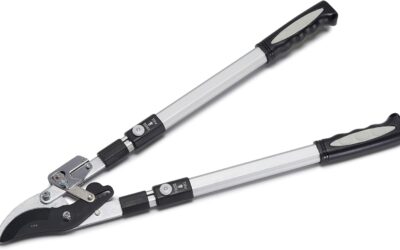
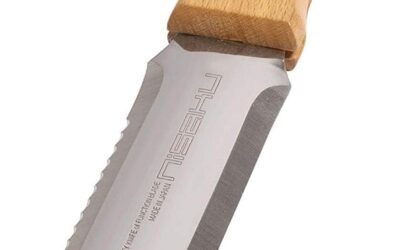
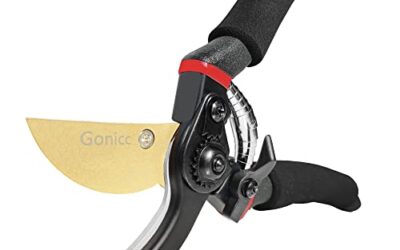
Use bypass hand pruners only for branches that close cleanly within their stated cutting capacity. Loppers add handle leverage for larger reachable limbs, while a pruning saw is generally the more suitable choice when a woody branch is beyond lopper capacity. Check the manufacturer’s maximum cutting capacity and instructions; do not force a tool through wood it cannot cut cleanly.
A pole pruner can extend reach, but it also changes balance and control. Use it only from a stable position and within the manufacturer’s guidance. Never climb a ladder while operating a saw or pole tool. If you cannot hold the tool securely or see the cut clearly, stop and choose a safer method.
3. Prepare a stable, clear work area
Wear eye protection, sturdy footwear, and gloves suited to the tool and task. Keep other people and pets away from the drop zone. Remove loose debris that could cause a slip, and position yourself so the branch cannot fall toward you. Keep both feet on firm, level ground and avoid reaching sideways or overhead with a loaded tool.
Use a sharp, clean cutting tool in good working order. Dull or damaged blades demand more force and can make a cut harder to control. Read the tool’s safety instructions before use, especially for powered equipment. Do not cut in poor visibility or when wind makes branch movement difficult to predict.
4. Use the three-cut method for a heavy limb
A heavy branch can tear bark down the trunk as it drops. The three-cut method reduces that risk by removing weight before making the final cut. First, make a shallow underside cut several inches out from the branch collar, the swollen area where the branch joins the trunk. Cut only about one-quarter of the way through.
Next, cut from above, a little farther out than the first cut, until the branch’s weight breaks away. The underside cut helps limit bark tearing. Finally, remove the remaining stub with a cut just outside the branch collar. Keep the saw clear of the collar: cutting flush to the trunk can damage tissue that helps the tree close over the wound.
5. Control the cut and do not rush
Let the saw do the work with smooth, controlled strokes. Avoid twisting the blade, pushing hard, or standing directly beneath the limb. If the cut begins to bind, do not yank the tool or place your hand in the cut. A trapped saw or shifting branch can move suddenly; step back if the limb becomes unstable and seek help when needed.
Remove a large limb in manageable sections only when each section can be controlled safely from the ground. Sectioning is not a safe workaround for a branch that is high, under tension, or close to a hazard. Those conditions call for an arborist with appropriate equipment and training.
6. Make the final cut at the branch collar
The branch collar is not a uniform ring, so inspect the junction before cutting. Make the final cut just beyond the collar, following its natural angle where practical. Do not leave a long stub, and do not cut into the trunk. Avoid applying wound paint or sealant unless a qualified local professional or specific disease-management guidance recommends it for your situation.
For live branches, avoid removing more canopy than necessary in one session. The appropriate amount depends on tree species, condition, season, and purpose of pruning. If a large portion of the crown needs removal, ask an arborist to assess the tree rather than making repeated large cuts.
7. Clean, maintain, and store tools carefully
After pruning, remove sap and plant debris, dry the tool, and follow its maker’s directions for cleaning, sharpening, and lubrication. Clean blades between plants when disease spread is a concern, using a method appropriate for the tool and plant-health guidance. Inspect handles, fasteners, and blades for looseness or damage before storing.
Store saws and pruners dry, with cutting edges covered or otherwise protected, and out of children’s reach. A clean, sharp tool is easier to control, but maintenance does not make an unsuitable tool safe for an oversized or hazardous branch.
8. Choose comfort and access over extra reach
For occasional work, a hand saw may offer more direct control than a long-reach tool when the limb is safely within arm’s reach. Loppers can reduce the hand force needed for suitable branches, but long handles add weight and can be awkward in tight spaces. Consider grip comfort, tool balance, your strength, and whether you can keep the blade aligned without straining.
Work in short periods and reposition your feet rather than stretching. If grip strength, balance, mobility, or fatigue makes the task uncertain, ask someone capable to help or hire a qualified professional. A tool’s reach is not a substitute for a safe working position.
Research Methodology and Editorial Approach
This guide evaluates pruning choices by intended task, branch diameter, tool capacity, leverage, reach, comfort, maintenance, and safe storage. We prioritize ground-based work and clear stop points because a suitable cut still depends on stable footing, branch movement, and the hazards around the tree.
We compare the roles of hand pruners, loppers, pruning saws, and pole tools without treating them as interchangeable. Manufacturer capacity and safety instructions should guide tool use, while tree condition and the risk of falling limbs determine whether a homeowner should proceed or call an arborist. This editorial guidance is reviewed for practical home-garden use and updated during November.
Frequently Asked Questions
What tool should I use for a thick tree branch?
Choose by branch diameter and the tool’s stated cutting capacity. Loppers suit reachable limbs within their capacity; a pruning saw is generally more appropriate for larger woody branches. Do not force a tool beyond its instructions.
How thick can a branch be before I need a saw?
There is no universal diameter because tool capacities vary. Check the manufacturer’s stated limit for your pruners or loppers, and switch to a suitable saw when the branch exceeds that limit. Do not use extra force to compensate for an undersized tool.
Why use three cuts on a heavy limb?
The first underside cut helps limit bark tearing when the limb’s weight breaks away during the second cut. The final cut removes the stub just beyond the branch collar. This sequence reduces one common source of damage, but it does not make an unstable or hazardous limb safe to handle.
Where should I cut a branch near the trunk?
Make the final cut just outside the branch collar, the swollen junction between branch and trunk. Avoid cutting flush into the trunk or leaving a long stub. If the collar is difficult to identify, get advice before removing a large limb.
Can I use a pole pruner from a ladder?
No. Do not climb a ladder while operating a saw or pole tool. Use equipment only from a stable position and within its manufacturer’s safety instructions; hire a qualified arborist if the branch cannot be reached safely from the ground.
When should I hire an arborist to prune a branch?
Call an arborist for branches near power lines or structures, high limbs, cracked or suspended wood, and limbs whose fall cannot be controlled from the ground. Also seek professional advice when a tree has significant decay or needs extensive crown reduction. Do not attempt a hazardous cut to avoid a service call.