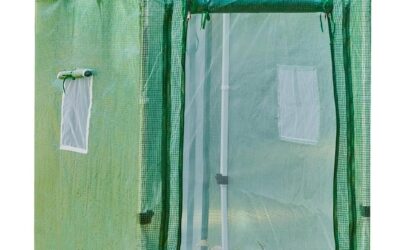



Does A Greenhouse Need Ventilation? Yes, most home greenhouses need some way to move hot, humid air out and bring fresh air in, especially during sunny weather. Without airflow, a greenhouse can become uncomfortable to work in and harder to manage for seedlings, container plants, and seasonal growing.
This July 2026 guide compares 25 products reviewed in the $22.34 – $198.89 range, with closer attention to items that clearly support greenhouse airflow, venting, cooling, or heat-sensitive window opening. We looked at listed airflow, power source, thermostat or battery features, installation needs, weather ratings when provided, and whether each product fits a beginner gardener, a small greenhouse, or a more demanding shed-style setup. For broader greenhouse gear, see our Greenhouses & Garden Storage section.
WECOOL Solar Dual-Mode Ventilation Fan for Greenhouses and Coops PQINS 18-1P-B 7.1-Inch Solar Greenhouse Fan for Small-Space Ventilation HYITCL 12-Inch Galvanized Gravity Shutter Vent for Attics, Workshops, Barns, and Greenhouses DC HOUSE 20W Solar Exhaust Fan for Greenhouses and Chicken Coops, Sun-Powered Ventilation Prices and availability can change. We may earn a commission from qualifying purchases.

Pros
- Provides both intake and exhaust configurations for more flexible ventilation control.
- Compact, fully assembled design suits small-space installation in a greenhouse, coop, or garden enclosure.
- Protective grille and stated quiet operation are useful considerations for spaces occupied by pets or poultry.
- Solar-powered setup may be convenient where running electrical wiring is impractical.
Cons
- The supplied information does not specify airflow rate, coverage area, or performance in cloudy conditions.
- A suitable sunny location is likely important for solar-powered operation, but battery storage and runtime are not listed.
- Gardeners needing precise temperature control, scheduling, or a documented weather-resistance rating may prefer a more fully specified ventilation system.
The WECOOL Solar Exhaust Fan is a compact ventilation system for enclosed garden and backyard spaces. Its two fans can be set for intake or exhaust, making it suitable for homeowners managing air movement in small greenhouses, poultry coops, pet areas, or similar enclosures.
The main benefit is airflow flexibility. Exhaust mode is intended to pull out stale or humid air, while intake mode draws in fresh air. The twin-fan layout is designed to create cross-ventilation, which may help move air through longer enclosures and reduce stagnant areas.
Based on the listed specifications, the unit measures 9.5 x 6 x 0.65 inches and is grayish black. It arrives fully assembled and includes screws for wall or window mounting. The product information describes a solar-powered setup without an electrician or complicated wiring, but it does not specify battery storage, runtime, or weather resistance.
For backyard use, this fan could be considered for a small greenhouse, coop, garden shed, or other enclosed area where fresh airflow is needed. The slim profile may be useful when mounting space is limited, while the ability to change airflow direction offers more control than a single-direction fan.
The protective grille is intended to help prevent access to the blades, and the listed quiet motor design may be helpful around animals. Even so, installation should be secure, the solar panel should be positioned where it receives suitable sunlight, and users should confirm that the mounting location and electrical components are protected as needed for their specific environment.
This product is best suited to gardeners and homeowners seeking simple solar ventilation with intake and exhaust options. Those who need measured airflow, automatic temperature control, dependable operation without sunlight, or a stated weather-resistance rating should consider a model that documents those specifications.
Best For / Avoid If
Best for buyers prioritizing
- Provides both intake and exhaust configurations for more flexible ventilation control.
- Compact, fully assembled design suits small-space installation in a greenhouse, coop, or garden enclosure.
- Protective grille and stated quiet operation are useful considerations for spaces occupied by pets or poultry.
Consider another option if
- The supplied information does not specify airflow rate, coverage area, or performance in cloudy conditions.
- A suitable sunny location is likely important for solar-powered operation, but battery storage and runtime are not listed.
- Gardeners needing precise temperature control, scheduling, or a documented weather-resistance rating may prefer a more fully specified ventilation system.
Pros
- Runs from solar power, so it is useful for sheds, coops, and small greenhouses that do not have convenient outlet access.
- Fan and solar panel can be mounted separately, which helps when the best sun exposure is not directly beside the vent opening.
- Designed for both exhaust and intake use, giving gardeners flexibility when planning airflow through a small structure.
- Product information lists quiet operation at 45 decibels, which may be helpful around pets, poultry, or backyard work areas.
- No built-in battery to maintain or replace, which keeps the system simpler for daytime-only ventilation.
Cons
- Because there is no built-in battery, the fan only operates when the solar panel receives enough daylight, with reduced airflow in cloudy conditions or near dusk.
- One power level limits fine control, so gardeners needing adjustable speeds may prefer a fan with multiple settings.
- Installation may require cutting or preparing a vent opening, and some reviewers mention that the included instructions could be clearer.
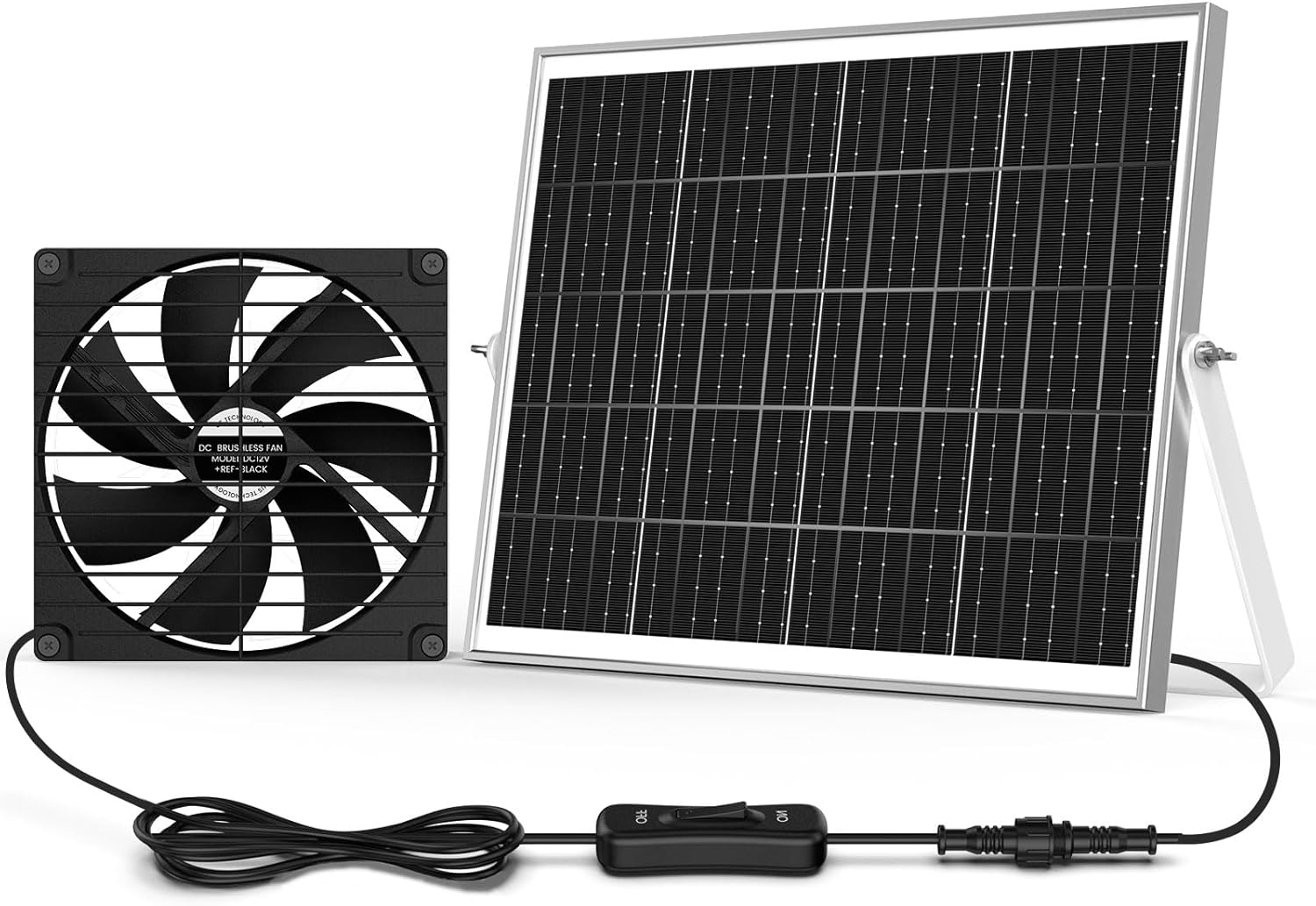
The PQINS 18-1P-B is a 7.1-inch solar-powered ventilation fan kit made for moving air through small outdoor and semi-outdoor spaces. Based on the listed uses, it fits small greenhouses, chicken coops, sheds, pet houses, garages, attics, and similar structures where stagnant heat or trapped air can build up during the day. It is best suited to homeowners and backyard growers who want a simple daytime airflow solution without running household power to the structure.
The product information lists a 25-watt solar power source, 3800 RPM maximum speed, and 720 CFM airflow capacity, with a recommended space range of 80 to 120 sq. ft. In plain terms, this is intended to help exchange air in smaller enclosures rather than cool a large building like an air conditioner. Reviewers commonly mention stronger airflow in direct sun and reduced or no operation when sunlight is weak, which matches the manufacturer note that the fan is powered directly by the solar panel and has no built-in battery.
The separate fan and solar panel are useful design choices for garden structures. You can place the panel where it gets better exposure while mounting the fan at the vent opening for exhaust or intake. The 16.5 ft cord helps with routing, and the push-button on/off switch gives basic manual control. The kit is listed as wall mounted and includes a bracket, DC fan, solar panel, and installation accessories such as mounting plates, screws, and nylon ties.
For a hobby greenhouse, this fan can help move hot, stale air out during sunny parts of the day, especially when paired with an opposite vent or opening for make-up air. In a chicken coop or doghouse, it may help improve air circulation during daylight hours, provided the installation keeps cords, blades, and hardware safely away from animals. For a shed, cabin, or small garage space, it can serve as a low-maintenance exhaust fan when heat builds up under direct sun.
The main limitation is also the reason it is simple: it has no battery backup. Gardeners who need overnight ventilation, cloudy-day performance, thermostat control, or continuous 24-hour airflow should consider a powered fan with battery storage or a wired option. Installation should be planned carefully, including weather exposure, secure mounting, protected cord routing, and a clear intake or exhaust path. Based on the specifications, this PQINS kit is a practical pick for sunny daytime ventilation in small backyard structures, but it is not the right choice for gardeners who need guaranteed airflow after dark or during extended cloudy weather.
Best For / Avoid If
Best for buyers prioritizing
- Runs from solar power, so it is useful for sheds, coops, and small greenhouses that do not have convenient outlet access.
- Fan and solar panel can be mounted separately, which helps when the best sun exposure is not directly beside the vent opening.
- Designed for both exhaust and intake use, giving gardeners flexibility when planning airflow through a small structure.
Consider another option if
- Because there is no built-in battery, the fan only operates when the solar panel receives enough daylight, with reduced airflow in cloudy conditions or near dusk.
- One power level limits fine control, so gardeners needing adjustable speeds may prefer a fan with multiple settings.
- Installation may require cutting or preparing a vent opening, and some reviewers mention that the included instructions could be clearer.
Pros
- Automatic opening and closing follows airflow changes.
- Galvanized steel is specified for corrosion resistance and weather protection.
- Useful across greenhouses, barns, workshops, basements, and attic spaces.
Cons
- The motor and exhaust fan blades are not included, so a compatible fan system is required for powered exhaust.
- The 15-by-15-inch exterior dimensions should be checked carefully against the planned opening and surrounding wall space.
- Gardeners seeking a complete, ready-to-run ventilation kit may prefer an option that includes the fan and motor.
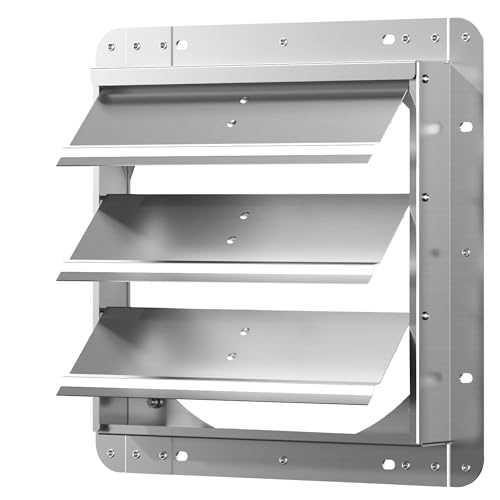
The HYITCL 12-inch galvanized shutter vent is a louvered exhaust component for spaces that need airflow, including greenhouses, barns, workshops, basements, and residential attics. Its automatic gravity design is intended for homeowners and gardeners who want a shutter that responds to air movement without adding a separate shutter control.
Based on the listed specifications, the louvers open and close with airflow and are designed to help limit exposure to dust, pests, and storms when closed. The galvanized steel panels are also listed for corrosion resistance and weatherproof performance, which may be useful in utility areas and garden buildings exposed to changing conditions.
The exterior dimensions are 15 inches long by 15 inches wide, with a listed depth of 2.1 inches. These measurements are important when planning the opening, mounting surface, and clearance around an existing or planned exhaust system. The product information identifies the shutter as a separate component, not a complete powered fan assembly.
For backyard use, this vent may fit a greenhouse, barn, garden workshop, or other enclosed growing space where exhaust airflow is already being provided. It can also be considered for attic or basement ventilation projects, provided the selected fan and installation method match the opening and the space requirements.
The main limitation is that the motor and fan blades are not included, so buyers should confirm they have a compatible exhaust setup before ordering. Installation details, mounting hardware, airflow capacity, and fan compatibility are not specified, so those points should be verified for the intended project. Overall, it is a practical shutter option for users assembling or replacing part of a ventilation system, but gardeners wanting a complete plug-and-play unit should consider a packaged fan and vent kit.
Best For / Avoid If
Best for buyers prioritizing
- Automatic opening and closing follows airflow changes.
- Galvanized steel is specified for corrosion resistance and weather protection.
- Useful across greenhouses, barns, workshops, basements, and attic spaces.
Consider another option if
- The motor and exhaust fan blades are not included, so a compatible fan system is required for powered exhaust.
- The 15-by-15-inch exterior dimensions should be checked carefully against the planned opening and surrounding wall space.
- Gardeners seeking a complete, ready-to-run ventilation kit may prefer an option that includes the fan and motor.
Pros
- Does not require mains electricity or extra wiring work.
- Solar-powered operation automatically starts when sunlight is available.
- Suitable for several small-space applications, including greenhouses, coops, sheds, pet houses, and windows.
- The included waterproof connector and pre-drilled panel holes can make installation more straightforward.
Cons
- It has no battery, so it will not continue operating when sunlight is unavailable.
- There is no on/off switch, and fan speed varies with the intensity of available sunlight.
- Gardeners needing consistent ventilation in shaded locations or after sunset may prefer a powered fan with battery storage or mains operation.
The DC HOUSE 20W solar exhaust fan is designed to ventilate small enclosed spaces such as greenhouses, chicken coops, sheds, pet houses, and windows. It is a practical fit for homeowners and gardeners who need basic air exchange in an outbuilding without running mains wiring.
The listed dual-fan design is intended to exhaust warm air and encourage fresher air movement, which can help reduce stagnant conditions and indoor humidity in suitable small spaces. The product information lists a maximum applicable space of 880 cubic feet, or 25 cubic meters, so it should be considered for compact structures rather than large rooms or buildings.
The panel and fan connect through a plug-and-play waterproof connector, and the solar panel has pre-drilled mounting holes. Installation requires self-tapping screws and tools. The fan measures 12 x 6 x 2 inches and weighs about 2.82 pounds, while the metal protective case helps shield the blades during normal operation.
For backyard use, the kit may suit a small greenhouse roof, a shed wall, a chicken-coop ventilation opening, or a pet-house project where direct sunlight is available. The panel should be positioned where it receives full, direct sun, and the fan's operation will naturally change as sunlight becomes stronger or weaker.
The main limitation is that this is real-time solar ventilation. It has no battery and no on/off switch, so it will not provide stored-energy operation after dark or in low sunlight. The accessories are treated with a waterproof layer for outdoor use, but installation should still be planned carefully to protect connections and ensure the fan is securely mounted.
This product makes the most sense for small, sunny structures where simple, cord-free daytime ventilation is the priority. Choose a different option if you need scheduled control, nighttime operation, or steady airflow in a shaded location.
Best For / Avoid If
Best for buyers prioritizing
- Does not require mains electricity or extra wiring work.
- Solar-powered operation automatically starts when sunlight is available.
- Suitable for several small-space applications, including greenhouses, coops, sheds, pet houses, and windows.
Consider another option if
- It has no battery, so it will not continue operating when sunlight is unavailable.
- There is no on/off switch, and fan speed varies with the intensity of available sunlight.
- Gardeners needing consistent ventilation in shaded locations or after sunset may prefer a powered fan with battery storage or mains operation.

Pros
- Automates basic greenhouse ventilation as temperatures rise and fall.
- Dual springs may provide useful extra force in exposed or windy locations.
- The solar, thermal-sensitive design does not require manual temperature monitoring.
Cons
- The listed 60°F to 77°F operating range may not suit gardeners who need a different ventilation trigger temperature.
- Compatibility should be confirmed before installation because window dimensions and vent designs vary.
- The supplied specifications do not state the maximum vent opening distance or adjustment options.
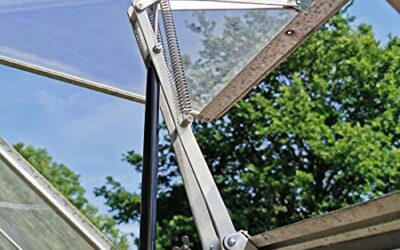
The PATIOHZ 2 Pack Solar Automatic Window Opener is designed for greenhouse roof vents and compatible windows. It uses temperature-sensitive operation to help manage heat, making it a practical option for homeowners and beginner gardeners who want more consistent ventilation without opening and closing vents by hand.
According to the product information, a gas-filled cylinder expands as the temperature rises and gently pushes the window open. As temperatures cool, the spring mechanism closes the vent. The listed operating range is 60°F to 77°F, so this opener is most appropriate for gardeners whose ventilation needs fall within that range.
The dual-spring design is intended to provide more thrust than a single-spring vent and may be useful in windy or exposed locations. The frame is made from aluminum alloy with a black powder coating, and the product information describes the materials as corrosion resistant for outdoor use. The listed dimensions are 14 by 3 by 3 inches.
For a backyard greenhouse, this type of opener can help release accumulated heat through a roof vent while the gardener is away or busy with other tasks. The included clamps and screws are intended to support straightforward installation, but the vent frame and window design should be checked for fit before purchase, especially on compact or nonstandard greenhouse structures.
The temperature range, maximum opening distance, and adjustment options are not provided, so gardeners needing highly precise climate control may prefer a system with adjustable settings or electronic monitoring. Regularly inspect the mounting hardware and vent movement, and keep the opener clear of obstructions. Overall, it is a reasonable fit for passive, temperature-based greenhouse ventilation where the existing window or roof vent is compatible.
Best For / Avoid If
Best for buyers prioritizing
- Automates basic greenhouse ventilation as temperatures rise and fall.
- Dual springs may provide useful extra force in exposed or windy locations.
- The solar, thermal-sensitive design does not require manual temperature monitoring.
Consider another option if
- The listed 60°F to 77°F operating range may not suit gardeners who need a different ventilation trigger temperature.
- Compatibility should be confirmed before installation because window dimensions and vent designs vary.
- The supplied specifications do not state the maximum vent opening distance or adjustment options.

Pros
- Automates fan operation when configured temperature or humidity thresholds are exceeded.
- Provides real-time environmental readings through an easy-to-read LCD screen.
- Offers both manual control and sensor-based automatic operation.
- Mounting hardware supports more than one installation approach.
- Suitable for several enclosed-space applications, including small greenhouses and grow tents.
Cons
- The product information does not list airflow capacity, so suitability for larger enclosures is difficult to determine.
- A 4-inch fan may be less suitable for growers needing ventilation equipment for larger spaces or higher-volume ducting systems.
- The sensor must be inserted and the control thresholds configured before automatic operation can provide useful environmental control.
The DAOTAILI 4-inch inline duct fan is a ventilation device for enclosed growing environments. Its intended task is to help manage temperature and humidity in grow tents, small greenhouses, mushroom rooms, laboratories, and other contained spaces, making it most relevant to gardeners who want more automated climate monitoring than a basic manually switched fan provides.
Its main growing-use benefit is sensor-based operation. After temperature and humidity thresholds are set, the fan is designed to turn on when those values are exceeded and stop when conditions fall below the selected settings. The adjustable ranges of 50-140°F and 1-99% RH provide broad control options, although the most useful settings will depend on the specific plants or growing process.
The LCD screen displays real-time temperature and humidity readings along with the selected parameters, helping users check conditions without relying on a separate display. A brief press of the SET button starts the fan manually, while holding the button enters automatic mode. This gives growers a direct-control option without changing the saved automatic settings.
For installation, the fan measures 6.34 x 4.8 x 5.43 inches and is supplied with stainless steel mounting brackets and various screws. It can be fixed to a wall or hung, which may help when working around the limited interior space of a grow tent or arranging equipment in a small greenhouse.
The product information lists low-voltage DC power, low-noise operation, and energy-efficient use, but it does not provide an airflow capacity or specify the size of enclosure it can ventilate effectively. Gardeners should therefore confirm that the 4-inch format fits their planned setup and should place the sensor where it can represent the growing area's conditions accurately.
This fan is a sensible option for beginners and small-space growers who want automatic temperature and humidity response with visible readings and flexible mounting. Gardeners managing larger enclosures, complex ducting, or demanding airflow requirements should consider an option with clearly stated airflow specifications before choosing it.
Best For / Avoid If
Best for buyers prioritizing
- Automates fan operation when configured temperature or humidity thresholds are exceeded.
- Provides real-time environmental readings through an easy-to-read LCD screen.
- Offers both manual control and sensor-based automatic operation.
Consider another option if
- The product information does not list airflow capacity, so suitability for larger enclosures is difficult to determine.
- A 4-inch fan may be less suitable for growers needing ventilation equipment for larger spaces or higher-volume ducting systems.
- The sensor must be inserted and the control thresholds configured before automatic operation can provide useful environmental control.
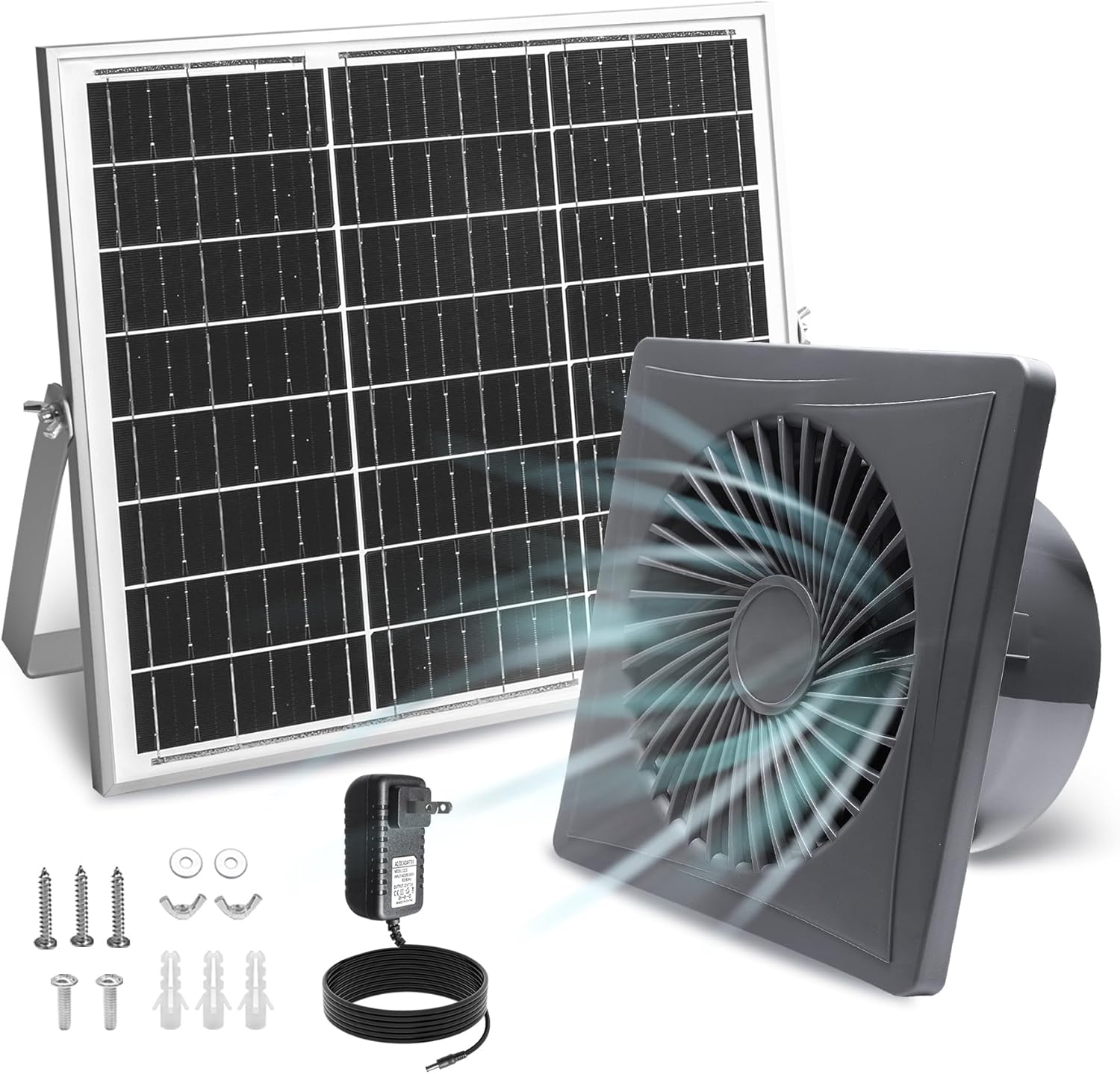
Pros
- Solar panel and household power adapter are both included for more flexible operation.
- Listed 36 dB noise level suggests relatively quiet ventilation for coops, sheds, or small greenhouses.
- Comes with bracket, solar panel, power adapter, and long cord needed for a basic installation.
- Wall-mount exhaust design is useful for removing warm, stale, humid, or dusty air from enclosed outdoor structures.
Cons
- Installation requires drilling a 7-inch hole, which may not suit renters or gardeners uncomfortable modifying a wall or shed panel.
- Solar performance will depend on sun exposure, panel placement, and weather, so shaded locations may need the power adapter more often.
- No battery runtime is listed, so gardeners wanting stored solar power overnight may need a different ventilation setup.
The SHENVITASO XJS-G8 is a solar exhaust fan kit made for ventilating small outdoor and utility spaces such as greenhouses, chicken coops, sheds, pet houses, garages, barns, RVs, and similar enclosed areas. For gardeners, its main job is to help move stale air out of a structure where heat, moisture, dust, or odors can build up.
According to the listed specifications, the kit pairs an 8-inch exhaust fan with a 25W monocrystalline solar panel. The fan is rated at 430 CFM, 2300 RPM, and 36 dB, giving it a useful mix of airflow and relatively low listed noise for small-space ventilation. The product information also notes a photovoltaic conversion efficiency of up to 21.5 percent for the panel.
The design includes a wall-mount fan, adjustable solar panel bracket, MC4 connector, push-button control, and a separate ON/OFF switch. A 16.4-foot solar panel cord helps with roof or sunny-wall placement, while the included power adapter with a 4.66-foot cable allows connection to household power when sunlight is not enough. Installation requires drilling a 7-inch hole and making the connection to the panel, so careful measuring and safe tool use are important.
In a backyard greenhouse, this fan may help exhaust hot, humid air during sunny periods. In a chicken coop or garden shed, it can support air exchange where odors, dust, or trapped heat are concerns. The anti-backflow valve is a helpful detail for outdoor structures because it is designed to stay closed when the fan is not running, helping limit outside insects, small animals, and reverse airflow through the opening.
The solar panel is listed with an IP67 waterproof rating, toughened glass surface, and aluminum frame, which supports outdoor use according to the product data. Still, placement matters. The panel should be aimed for the best available sun, wiring should be routed safely, and the fan opening should be positioned where exhaust air can leave freely. Periodic checks for dust, debris, and blocked vents will help keep airflow from being restricted.
This is a sensible option for homeowners and beginner-to-intermediate gardeners who want a ready solar ventilation kit with an AC power backup option. Gardeners who cannot cut a wall opening, need battery-backed overnight solar operation, or are ventilating a larger structure may want to compare other systems before choosing this one.
Best For / Avoid If
Best for buyers prioritizing
- Solar panel and household power adapter are both included for more flexible operation.
- Listed 36 dB noise level suggests relatively quiet ventilation for coops, sheds, or small greenhouses.
- Comes with bracket, solar panel, power adapter, and long cord needed for a basic installation.
Consider another option if
- Installation requires drilling a 7-inch hole, which may not suit renters or gardeners uncomfortable modifying a wall or shed panel.
- Solar performance will depend on sun exposure, panel placement, and weather, so shaded locations may need the power adapter more often.
- No battery runtime is listed, so gardeners wanting stored solar power overnight may need a different ventilation setup.

Pros
- Reduces the need to remember manual vent adjustments during changing temperatures.
- Supports vents up to 15 pounds with a dual-spring mechanism.
- Avoids batteries, wiring, and electrical connections.
- Rust-resistant aluminum and stainless steel parts are suited to humid greenhouse environments.
Cons
- The temperature-triggered design may be less suitable for gardeners who need precise scheduled or remote vent control.
- Compatibility still depends on the greenhouse vent's mounting arrangement, dimensions, and weight, which are not specified in the supplied data.
- The listed 15-pound lifting limit may not suit heavier roof vents.
The GDHSWJ automatic greenhouse vent opener is a temperature-sensitive window opener for greenhouse roof vents. It is intended to help home gardeners ventilate a greenhouse automatically, making it a practical option for beginners, busy homeowners, and anyone who cannot check a greenhouse throughout the day.
Based on the listed specifications, the opener begins opening between 60°F and 77°F and reaches full opening above 86°F, then closes as temperatures cool. This passive operation can help reduce manual vent adjustments and may help limit heat buildup around heat-sensitive plants, flowers, and vegetables.
The dual-spring mechanism is rated to lift vents weighing up to 15 pounds. The unit measures 13.2 by 3.4 by 1.5 inches and uses aluminum construction with stainless steel accessories. It requires no batteries, wiring, or external electricity, while the included screws and manual are intended to support installation.
This opener could be useful in a backyard greenhouse where a roof vent is exposed to changing daytime temperatures. Its compact size may also suit smaller greenhouse ventilation setups, but gardeners should confirm that the vent's mounting points, movement, dimensions, and weight are appropriate before installation.
The temperature-based mechanism does not provide the scheduling or remote controls found in powered ventilation systems. Gardeners should also stay within the listed 15-pound lifting capacity and inspect the mounting hardware and moving parts periodically, especially in humid or windy conditions. Overall, it is a sensible fit for simple passive greenhouse ventilation, while larger or more configurable systems may be better for heavier vents or precise climate management.
Best For / Avoid If
Best for buyers prioritizing
- Reduces the need to remember manual vent adjustments during changing temperatures.
- Supports vents up to 15 pounds with a dual-spring mechanism.
- Avoids batteries, wiring, and electrical connections.
Consider another option if
- The temperature-triggered design may be less suitable for gardeners who need precise scheduled or remote vent control.
- Compatibility still depends on the greenhouse vent's mounting arrangement, dimensions, and weight, which are not specified in the supplied data.
- The listed 15-pound lifting limit may not suit heavier roof vents.

Pros
- Automatic gravity operation requires no separate switch or manual closing step at the vent cover.
- Aluminum construction is described as smooth, burr-free, and resistant to rust or corrosion.
- The listed 10 x 10-inch interface provides a clear sizing reference for compatible openings.
Cons
- Compatibility depends on accurately matching the 10 x 10-inch interface and approximately 9 x 9-inch inner opening to the existing fan or duct.
- Mounting screws are not included, so an installer must supply suitable hardware for the installation surface.
- Gardeners needing adjustable airflow control or powered ventilation may prefer a complete fan system rather than a passive louver cover.
The PATIKIL 10x10-inch aluminum louvered vent cover is a passive exhaust accessory for greenhouse, garage, bathroom, kitchen, and other ventilation openings. It is intended to fit a 10 x 10-inch vent hole or duct interface and is best suited to homeowners replacing or adding a self-closing cover to an existing flow fan or exhaust setup.
Its main benefit is automatic gravity operation. The louvers are designed to open when exhaust airflow pushes through and close when the airflow stops, helping limit backdraft, unwanted air movement, moisture, and dust according to the listed product information. The feature set can be useful in a greenhouse or utility space where air needs to leave without leaving the opening continuously exposed.
The listed interface measures 250 x 250 mm, or 10 x 10 inches, while the inner opening measures about 230 x 230 mm, or 9 x 9 inches. The cover is made from aluminum and is described as smooth, burr-free, and resistant to rust and corrosion. Installation involves removing the flow fan's protective grille, inserting the cover into the fan outlet, and securing it with screws, which are not included.
For backyard use, this cover may suit a greenhouse exhaust outlet, a garage ventilation point, or a small workshop or utility-room fan. It can also be considered for patio-adjacent growing spaces where a fixed exhaust opening needs a simple exterior shutter. Before installation, measure the existing opening and confirm that the fan outlet, duct, and mounting surface can accept the listed dimensions.
The louvers are described as closing to help block water intrusion, but proper fit and installation remain important for weather performance. Inspect the moving louvers periodically for dust, debris, or anything that could prevent them from closing, and use suitable mounting hardware for the wall or fan outlet. This is a vent cover rather than a complete exhaust fan, so it does not provide airflow on its own.
It is a reasonable choice for gardeners and homeowners who already have compatible powered ventilation and want a compact, self-closing aluminum cover. Those needing a powered fan, adjustable louvers, included hardware, or a different opening size should compare other options before purchasing.
Best For / Avoid If
Best for buyers prioritizing
- Automatic gravity operation requires no separate switch or manual closing step at the vent cover.
- Aluminum construction is described as smooth, burr-free, and resistant to rust or corrosion.
- The listed 10 x 10-inch interface provides a clear sizing reference for compatible openings.
Consider another option if
- Compatibility depends on accurately matching the 10 x 10-inch interface and approximately 9 x 9-inch inner opening to the existing fan or duct.
- Mounting screws are not included, so an installer must supply suitable hardware for the installation surface.
- Gardeners needing adjustable airflow control or powered ventilation may prefer a complete fan system rather than a passive louver cover.

Pros
- High listed airflow for ventilating small enclosed work and growing spaces
- Durable all-metal frame, fan, and shutter construction
- Enclosed motor with thermal protection and permanent lubrication
Cons
- The unit does not include a speed control switch or plug, so electrical installation requires additional parts and appropriate wiring.
- Its approximately 12.8-inch square face and 5.9-inch listed depth may not fit every existing wall or window opening.
- Gardeners who need adjustable airflow will need a different model or a compatible control solution, since speed control is not included.
The VEVOR 10-inch shutter exhaust fan is designed to move air through enclosed utility and growing spaces, including greenhouses, sheds, garages, workshops, chicken coops, and attics. It is most suitable for homeowners who need fixed wall or window ventilation rather than a portable fan and who can arrange the required electrical installation.
Based on the listed specifications, the fan provides up to 820 CFM of airflow at 1,650 rpm. That level of stated air movement may help exchange warm, humid, dusty, or stale air in an appropriately sized enclosed area, although actual ventilation results will depend on the room, opening, and installation layout.
The fan has a listed 12.8 by 12.8-inch face and a 5.9-inch depth. Its galvanized steel frame, aluminum alloy fan, and aluminum shutter form an all-metal assembly described as resistant to weather, liquid, and dust. The enclosed AC motor operates at 120V and 45 watts, with thermal protection and permanent lubrication intended to reduce routine maintenance.
In a backyard greenhouse, shed, or workshop, this fan could provide a dedicated exhaust point when mounted in a suitable wall or window opening. The shutter format is useful for a fixed installation, while the compact square face may work well where wall space is limited, provided the opening and surrounding structure can accommodate the listed dimensions.
The basic model does not include a plug or speed control switch. A separate plug must be purchased and wired for operation, so installation should be completed safely by someone qualified to handle the electrical work. Overall, this is a practical choice for fixed ventilation in small enclosed garden-related spaces, while users wanting plug-and-play setup or adjustable fan speed should consider another option.
Best For / Avoid If
Best for buyers prioritizing
- High listed airflow for ventilating small enclosed work and growing spaces
- Durable all-metal frame, fan, and shutter construction
- Enclosed motor with thermal protection and permanent lubrication
Consider another option if
- The unit does not include a speed control switch or plug, so electrical installation requires additional parts and appropriate wiring.
- Its approximately 12.8-inch square face and 5.9-inch listed depth may not fit every existing wall or window opening.
- Gardeners who need adjustable airflow will need a different model or a compatible control solution, since speed control is not included.
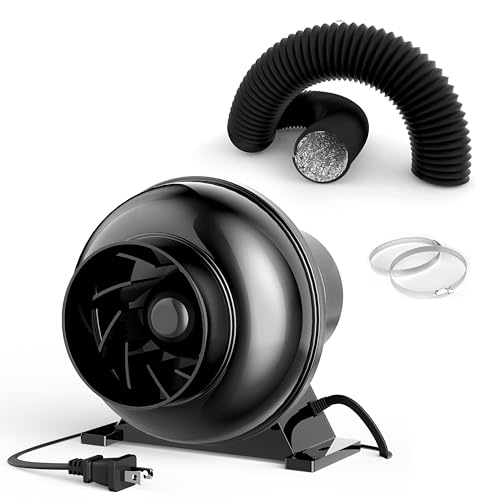
Pros
- Three-speed control offers more flexibility than a single-speed booster fan.
- The kit includes both the inline fan and 8 feet of ducting for a simpler starting setup.
- Listed operating temperature endurance for the ducting ranges from 0 to 185 degrees Fahrenheit.
Cons
- A 4-inch duct system may be less suitable for larger greenhouses or spaces requiring substantially higher airflow.
- Installation still requires planning for duct routing and access to a grounded electrical outlet.
- The supplied information does not specify mounting hardware, weather resistance, or a detailed installation guide.
The InfiniPower kit is a compact ventilation setup built around a 4-inch inline fan and 8 feet of black flexible ducting. It is intended to move air through grow tents, greenhouses, hydroponic areas, bathrooms, basements, and similar enclosed spaces, making it most suitable for gardeners who need basic exhaust or air-circulation support.
Based on the listed specifications, the fan can produce 195 CFM of airflow at a stated 2500 RPM. In a small growing area, that airflow may help refresh stagnant air and support better control of humidity, temperature, and general air quality, although actual results will depend on the space, duct layout, and operating setting.
The three-position control switch provides high, medium, and low settings, allowing users to adjust ventilation rather than running the fan at one fixed speed. The kit includes 8 feet of 4-inch ducting when fully extended and a pair of stainless steel metal clamps, which can simplify connection and routing. The product information lists a grounded plug and built-in grounded control outlet, so installation should be planned near an appropriate grounded electrical source.
For backyard use, this kit could fit a small greenhouse, grow tent, basement workshop, or indoor propagation area where flexible ducting can be directed toward an exhaust point. Its 4-inch format is relatively focused for compact installations, while the ducting length may help users position the fan and outlet without placing them directly beside one another.
The listed ducting temperature range is 0 to 185 degrees Fahrenheit, but the supplied information does not identify weather resistance or mounting hardware, so outdoor placement and support details should be checked before installation. Gardeners should keep electrical connections protected from moisture, avoid blocking the duct path, and inspect clamps and ducting periodically. Overall, it is a practical option for small-space ventilation, while larger greenhouses or users needing detailed mounting and outdoor-use specifications may prefer a more fully documented system.
Best For / Avoid If
Best for buyers prioritizing
- Three-speed control offers more flexibility than a single-speed booster fan.
- The kit includes both the inline fan and 8 feet of ducting for a simpler starting setup.
- Listed operating temperature endurance for the ducting ranges from 0 to 185 degrees Fahrenheit.
Consider another option if
- A 4-inch duct system may be less suitable for larger greenhouses or spaces requiring substantially higher airflow.
- Installation still requires planning for duct routing and access to a grounded electrical outlet.
- The supplied information does not specify mounting hardware, weather resistance, or a detailed installation guide.

Pros
- Enhanced ventilation through the mesh cover supports healthy airflow around plants
- Compact footprint fits small patios, balconies, and tight garden spaces
- Portable design simplifies repositioning during the season and storage between seasons
- Sized for spring, summer, and fall tasks such as seed starting and sheltering young plants
Cons
- The small interior may be less suitable for large containers, tall plants, or gardeners wanting to grow multiple full-size crops
- Rated for spring, summer, and fall, so it may need to be emptied and stored indoors for winter in cold climates
- Portable covers of this type could require a sheltered spot or extra securing in exposed or windy locations
The Gardzen Mini Greenhouse is a portable outdoor growing cover designed for gardeners who want a protected spot for plants without committing to a permanent structure. Measuring 36.2 inches long, 18.9 inches wide, and 33.3 inches high, it occupies a footprint closer to a small storage bench than a walk-in greenhouse, which makes it a practical fit for patios, balconies, decks, and tight beds. Beginners and small-space growers are the most obvious audience, but anyone starting seeds or sheltering young plants can find a use for a compact enclosure like this.
The feature that stands out in the listed specifications is the mesh cover paired with enhanced ventilation. Airflow matters in any enclosed growing space, because still, humid air can invite mildew and other seedling troubles. A mesh-covered design allows air to keep moving while still creating a sheltered zone around plants, which is especially helpful for tender transplants adjusting to outdoor life. That focus on ventilation is a sensible priority for a cover intended for spring, summer, and fall, when heat and humidity can build up quickly inside closed covers.
Because it is described as portable, this greenhouse does not call for the site preparation or permanent installation that larger frames often require. Portability opens up simple placement decisions: you can set it where the light is best, shift it as the season changes, or move it against a wall during rough weather. The 33.3 inch height keeps plants within comfortable reach, so watering, misting, and checking seedlings does not mean leaning into a tall structure. When the growing season winds down, a portable unit of this kind can be emptied and stored much more easily than a rigid panel greenhouse.
A mini greenhouse of this size suits several common backyard tasks. In spring, it can serve as a sheltered middle step for hardening off transplants started indoors. Through summer, it offers a covered home for herbs, lettuce, and smaller potted plants you want to keep separate from the open garden. In fall, it provides a protected spot for cool-season greens and late plantings facing early chills. Gardeners working on balconies or small patios can even treat it as their main growing structure, since it delivers greenhouse benefits without needing a yard.
There are honest limits to keep in mind. The interior will not hold large containers, tall plants, or a full season of sprawling crops, so gardeners with bigger plans may prefer a walk-in or shelved greenhouse. The three-season rating suggests this cover is not intended for heavy snow or deep winter conditions, so plan to store it once cold weather settles in. As with most portable covers, a sheltered placement is wise in exposed or windy spots, and the mesh benefits from an occasional gentle rinse to keep air moving freely.
Overall, the Gardzen Mini Greenhouse with mesh cover makes sense for beginner gardeners, balcony and patio growers, and anyone who wants a movable shelter for seedlings and small plants from spring through fall. Gardeners who need winter growing, large capacity, or shelving for dozens of pots should look at larger greenhouse kits instead. For its intended job, a compact ventilated cover like this one is a low-commitment way to add protected growing space.
Best For / Avoid If
Best for buyers prioritizing
- Enhanced ventilation through the mesh cover supports healthy airflow around plants
- Compact footprint fits small patios, balconies, and tight garden spaces
- Portable design simplifies repositioning during the season and storage between seasons
Consider another option if
- The small interior may be less suitable for large containers, tall plants, or gardeners wanting to grow multiple full-size crops
- Rated for spring, summer, and fall, so it may need to be emptied and stored indoors for winter in cold climates
- Portable covers of this type could require a sheltered spot or extra securing in exposed or windy locations

Pros
- Solar operation avoids the need for a 110V AC power connection.
- The 16-foot cord and panel bracket provide useful installation flexibility.
- Manual on/off control offers more direct control over fan operation.
Cons
- Because there is no built-in battery backup, the fan may slow in cloudy conditions or shade and stop at night or during rainy weather.
- The listed 420 CFM airflow may be less suitable for larger or heavily enclosed spaces without confirming the required ventilation rate.
- Installation requires selecting a location with adequate sunlight and placing the fan and panel appropriately.
The blessny 10-inch solar exhaust fan is designed to improve air movement in outdoor spaces such as greenhouses, chicken coops, sheds, pet houses, and some window ventilation setups. Based on the listed specifications, it is best suited to homeowners and gardeners who need ventilation where running 110V AC power would be inconvenient.
The fan uses a 25W solar panel and is listed with airflow of up to 420 CFM. That combination may help reduce stagnant air in a suitable enclosure, supporting more comfortable conditions for plants or pets, although the appropriate airflow will depend on the space and its existing openings.
The kit measures 11.4 by 11.4 by 5.6 inches and includes a 16-foot cord, a solar panel bracket, and an on/off button. The cord can make it easier to position the panel for sunlight, while the manual control provides a straightforward way to turn the fan on or off. An anti-backflow valve is also listed to help limit air, gas, and dust moving back through the fan.
For backyard use, this fan may fit a sunny greenhouse, small shed, chicken coop, or pet shelter where daytime ventilation is needed. The solar setup can be useful in detached areas without a convenient electrical outlet, but the installation location should allow the panel to receive adequate direct sunlight.
The main limitation is the lack of built-in battery backup. The product information states that performance can be reduced by clouds or shade and that the fan stops at night or during rainy weather. Users should also follow appropriate installation and electrical safety practices, keep the panel positioned as directed, and confirm that the fan size and listed airflow suit the enclosure.
This fan is a reasonable option for gardeners and homeowners seeking daytime solar ventilation in a small outdoor structure. Those needing continuous nighttime operation, dependable airflow in cloudy conditions, or power independent of sunlight should consider a different ventilation setup with an alternative power source or battery system.
Best For / Avoid If
Best for buyers prioritizing
- Solar operation avoids the need for a 110V AC power connection.
- The 16-foot cord and panel bracket provide useful installation flexibility.
- Manual on/off control offers more direct control over fan operation.
Consider another option if
- Because there is no built-in battery backup, the fan may slow in cloudy conditions or shade and stop at night or during rainy weather.
- The listed 420 CFM airflow may be less suitable for larger or heavily enclosed spaces without confirming the required ventilation rate.
- Installation requires selecting a location with adequate sunlight and placing the fan and panel appropriately.

Pros
- Separate fan and solar-panel setups allow more flexible intake and exhaust placement.
- No AC connection is required, which can be useful for detached structures or locations without convenient electrical access.
- The two-fan configuration can help create through-flow ventilation instead of relying on a single circulation point.
- The 16.5-foot cables provide useful reach between the panels and fan locations.
Cons
- Because no battery is included, airflow may drop substantially during cloudy weather or when the solar panels are shaded.
- Solar-dependent operation may be less suitable for nighttime ventilation or structures that do not receive consistent sunlight.
- Gardeners will need to plan the fan and panel locations carefully, especially when using one unit for intake and the other for exhaust.
The pqins 7.1-inch solar greenhouse fan 2-pack is designed to improve air circulation and ventilation in outdoor structures. It is a practical fit for homeowners managing a greenhouse, chicken coop, shed, pet house, or similar space without a convenient AC power connection.
Based on the listed specifications, each fan uses a brushless motor and thin blades, with operation up to 3,800 RPM and an air volume of up to 900 CFM. When both fans are used together, the product information indicates coverage for ventilation needs in spaces of approximately 150 to 230 square feet, although actual results will depend on sunlight, structure layout, and airflow openings.
The two fans are separate rather than connected as a single fixed unit. Each has its own solar panel and 16.5-foot extension cable, so you can position one for intake and one for exhaust, or configure both for the same airflow direction. The listed product dimensions are 7.5 by 7.5 by 4 inches, and the outdoor-oriented design is described as waterproof and lightweight.
For backyard use, this setup could help move warm air through a sun-heated greenhouse, improve circulation in a chicken coop, or ventilate a shed where running an electrical cable is inconvenient. The separate panels and long cables may also help when the best fan location and the sunniest panel location are not the same.
The main limitation is the lack of a battery. The product information states that performance is reduced on cloudy days or when a panel is shaded, so it is not intended to provide dependable stored-power ventilation after sunset. Keep the panels as unshaded as practical, and periodically check the outdoor fan and panel areas for dirt or obstructions. This is a sensible option for sunny locations needing daytime ventilation, while gardeners needing overnight or consistently powered airflow may prefer a battery-backed or AC-powered system.
Best For / Avoid If
Best for buyers prioritizing
- Separate fan and solar-panel setups allow more flexible intake and exhaust placement.
- No AC connection is required, which can be useful for detached structures or locations without convenient electrical access.
- The two-fan configuration can help create through-flow ventilation instead of relying on a single circulation point.
Consider another option if
- Because no battery is included, airflow may drop substantially during cloudy weather or when the solar panels are shaded.
- Solar-dependent operation may be less suitable for nighttime ventilation or structures that do not receive consistent sunlight.
- Gardeners will need to plan the fan and panel locations carefully, especially when using one unit for intake and the other for exhaust.
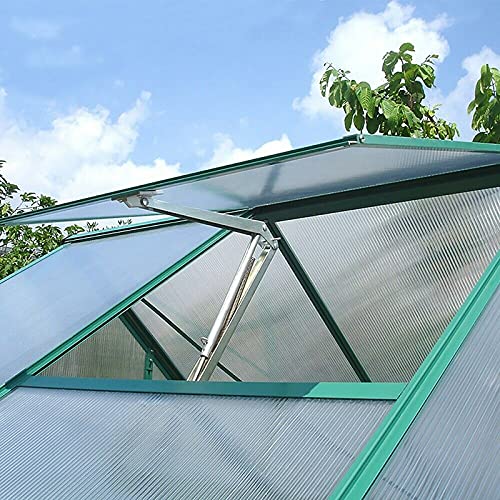
Pros
- Non-electric operation simplifies installation where wiring is inconvenient.
- Temperature-based opening and closing can reduce the need for manual vent adjustments.
- The listed weight and opening limits accommodate many common greenhouse roof windows.
Cons
- Compatibility still depends on the greenhouse frame, vent design, and window weight, so measurements should be checked before installation.
- The cylinder requires chilling and manual extension and retraction before initial use, according to the product instructions.
- Gardeners needing ventilation below the listed temperature range or for heavier windows may prefer a different opener.
The Yziixi Single-Spring Greenhouse Roof Vent Opener is designed to automate a common greenhouse task: opening a roof window when heat builds up and closing it as temperatures fall. Its solar heat-sensitive cylinder makes it a practical option for homeowners and beginner gardeners who want temperature-responsive ventilation without adding electrical wiring.
Based on the listed specifications, the opener is intended for windows weighing up to 15 pounds and opening up to 18 inches. It is described as opening when temperatures exceed 77°F and closing as temperatures fall to about 59°F, which can help reduce the need for frequent manual vent adjustments during changing weather.
The unit uses aluminum and stainless steel components, with the product information describing the materials as rust-resistant for humid conditions. Installation is intended for compatible panels, metal frames, or wooden frames using the supplied clamps and screws. The cylinder can be turned to adjust the opening angle, providing some control over how far the vent opens.
This opener may be useful in backyard greenhouses where a roof vent is difficult to reach, as well as in small greenhouse spaces where simple passive ventilation is preferred. Before installation, check the window dimensions, frame structure, opening direction, and total window weight to make sure they fit the listed limits.
The instructions call for placing the cylinder in a chilled environment for approximately 30 minutes, then manually extending and retracting it before reinstalling it. The temperature range and 15-pound support limit also mean it may be less suitable for unusually heavy vents or gardeners who need adjustable ventilation outside the listed operating temperatures.
Choose this model if you want a compact, non-electric way to automate a compatible greenhouse roof vent. Consider a different option if your window exceeds the stated capacity, your frame does not accept the included mounting approach, or you need electronic temperature control with a broader adjustment range.
Best For / Avoid If
Best for buyers prioritizing
- Non-electric operation simplifies installation where wiring is inconvenient.
- Temperature-based opening and closing can reduce the need for manual vent adjustments.
- The listed weight and opening limits accommodate many common greenhouse roof windows.
Consider another option if
- Compatibility still depends on the greenhouse frame, vent design, and window weight, so measurements should be checked before installation.
- The cylinder requires chilling and manual extension and retraction before initial use, according to the product instructions.
- Gardeners needing ventilation below the listed temperature range or for heavier windows may prefer a different opener.

Pros
- No battery means no charging routines, replacement costs, or complicated upkeep during everyday use.
- Exhaust and intake flexibility supports a true airflow pattern instead of relying on a single fan in one spot.
- The two-pack format covers two small structures, or one fan per side of a single coop for balanced circulation.
- Waterproof housing supports mounting in outdoor locations that see rain and sun.
Cons
- With no battery, the fans stop when the sun goes down, so overnight ventilation depends on passive openings such as vents or windows.
- Airflow output may be modest for large coops or bigger greenhouses, and gardeners with larger spaces may prefer a higher-capacity fan.
- Performance can dip on overcast days since the fans run only on available sunlight.
This two-fan set is built around a simple idea: use free sunlight to move air through small animal housing and growing spaces. Each 7.5-inch fan is rated at 15 watts and runs directly from solar power with no battery involved. Based on the listed specifications, the set is intended for chicken coops, greenhouses, doghouses, sheds, and similar outdoor structures where warm, stale air tends to collect. It is a practical match for backyard flock keepers, greenhouse gardeners, and homeowners who want better air circulation in outbuildings without running electrical lines.
Good ventilation matters in a coop or greenhouse for everyday comfort and plant health. Moving air helps carry out heat, humidity, and odors while fresher air is drawn into the space, which can make warm afternoons easier on chickens and less stressful for seedlings. Because these fans operate on solar power, they do their best work during the sunniest part of the day, which is often when cooling airflow is needed most. The absence of a battery also means there is nothing to recharge or replace over time.
Each fan can be set up as either an exhaust or an intake unit, so you can push hot air out of one opening and pull cooler air in through another. The outdoor waterproof construction is designed for exposed mounting, and the compact 7.5-inch size is generally suited to windows, vents, and small wall openings. Installation involves securing each fan firmly and making sure the panel side faces direct sunlight. As with any solar device, placement in full sun matters more than anything else for performance.
In a backyard setting, one natural setup places a fan high on the sunny side of a coop to exhaust warm air while vents or a second fan on the shaded side bring air in. In a small greenhouse, a single fan can help prevent stagnant, overheated air on bright days. The two-pack also covers separate structures, such as a coop and a tool shed, or a doghouse that bakes in afternoon sun. Pet owners may find the same airflow helps keep shelters fresher through the warm months.
There are honest limits to keep in mind. With no battery, the fans only run while sunlight is available, so they will not ventilate overnight and their output can drop on cloudy days. Airflow from 7.5-inch fans is best matched to small and mid-sized structures, so very large coops or greenhouses may call for larger units or additional fans. Periodic checks of the mounting and a quick cleaning of dust or debris around the fan area will help maintain performance, and each unit should be installed securely and out of reach of curious animals.
For flock keepers, greenhouse growers, and shed owners who want simple daylight ventilation with no wiring, no charging, and no complicated setup, this two-pack is a straightforward choice. Gardeners who need overnight airflow, thermostatic control, or high-volume air movement in a large structure should instead look at battery-backed or wired ventilation fans.
Best For / Avoid If
Best for buyers prioritizing
- No battery means no charging routines, replacement costs, or complicated upkeep during everyday use.
- Exhaust and intake flexibility supports a true airflow pattern instead of relying on a single fan in one spot.
- The two-pack format covers two small structures, or one fan per side of a single coop for balanced circulation.
Consider another option if
- With no battery, the fans stop when the sun goes down, so overnight ventilation depends on passive openings such as vents or windows.
- Airflow output may be modest for large coops or bigger greenhouses, and gardeners with larger spaces may prefer a higher-capacity fan.
- Performance can dip on overcast days since the fans run only on available sunlight.

Pros
- Useful airflow capacity for greenhouse, shed, garage, attic, workshop, basement, and chicken-coop ventilation.
- Hands-free temperature control with three speeds, a timer, and remote access.
- Closing shutters and corrosion-resistant materials are practical features for enclosed garden spaces.
- Grounded power cord and ETL certification provide documented electrical safety features.
Cons
- A 10-inch wall-mounted fan may be less suitable for large buildings or spaces that need multiple ventilation points.
- Installation still requires a properly sized wall opening and secure mounting, even though the power connection is plug-and-play.
- The supplied cable lengths may limit controller and outlet placement in some layouts.
The Ehiair 10-inch shutter exhaust fan is designed to move air through enclosed spaces such as greenhouses, sheds, workshops, garages, basements, attics, and chicken coops. For gardeners, its main use is helping remove excess heat, humidity, dust, smoke, and odors where natural airflow is not enough. The feature set is most relevant to homeowners managing a dedicated growing or utility area.
Based on the listed specifications, the fan provides 890 CFM airflow from a 36W motor. That combination suggests a practical balance between strong ventilation and modest electrical demand, although the suitable space size will depend on the building layout and other ventilation openings. Three speed settings allow users to adjust airflow, while the thermostat can operate in Low-Temp or High-Temp mode within a 32°F to 140°F range.
The wall-mounted design includes a controller, a 66-foot remote, an 18-hour timer, and automatic shutters. The shutters open while the fan runs and close when it stops, helping reduce the entry of rain, dust, wind, and insects. A galvanized steel frame, aluminum blades, and sound-absorbing padding on the shutter edges are listed design features for humid or dusty areas. The fan measures 5 by 10.8 by 10.8 inches and weighs 6.39 pounds.
In a backyard greenhouse, this fan could help exchange warm, humid air during periods of high temperature. It may also be useful in a garden shed or workshop where odors, dust, or stagnant air build up, and in a chicken coop where automatic temperature-based operation is convenient. The included cutout template can make it easier to mark the opening, while the 4.9-foot controller-to-plug cord and 2.6-foot fan-to-controller cable help define placement options.
Users should confirm that the wall can accommodate the listed dimensions and that the installation location provides a suitable opening, secure mounting, and safe access to grounded power. The product information does not specify a coverage area, so larger structures may need a different ventilation arrangement. Gardeners seeking a compact, adjustable fan for an enclosed greenhouse or outbuilding may find this feature set useful, while those needing whole-building ventilation or a battery-powered option should consider alternatives.
Best For / Avoid If
Best for buyers prioritizing
- Useful airflow capacity for greenhouse, shed, garage, attic, workshop, basement, and chicken-coop ventilation.
- Hands-free temperature control with three speeds, a timer, and remote access.
- Closing shutters and corrosion-resistant materials are practical features for enclosed garden spaces.
Consider another option if
- A 10-inch wall-mounted fan may be less suitable for large buildings or spaces that need multiple ventilation points.
- Installation still requires a properly sized wall opening and secure mounting, even though the power connection is plug-and-play.
- The supplied cable lengths may limit controller and outlet placement in some layouts.

Pros
- Offers flexible airflow control with ten speeds and three switchable modes.
- Automatic temperature, humidity, and schedule settings support more consistent ventilation routines.
- The listed 1800 CFM output is suitable for circulating air in larger enclosed or semi-enclosed work areas.
Cons
- The ceiling or wall-mount design may require careful installation and a suitable mounting surface.
- A noise level of up to 60 dB may be noticeable in quiet patios, hobby spaces, or nearby living areas.
- Gardeners seeking a simple plug-in fan may find the LCD controls, probe, and programmable settings more involved than necessary.
The VEVOR greenhouse air circulation fan is designed to move air through greenhouses, sheds, stables, patios, garages, events, and workstations. Its main garden task is circulation and ventilation, making it a practical fit for homeowners and growers who want adjustable airflow and automatic controls rather than a basic single-speed fan.
Based on the listed specifications, the fan delivers up to 1800 CFM and provides ten speed levels. Lower settings can support gentler circulation during cooler seasons, while higher settings can help move more air when an enclosed growing area feels hot or stagnant. Air circulation can help reduce stuffy spots, but the product should not be treated as a substitute for a complete greenhouse exhaust or climate-control system unless the installation provides the needed air exchange.
The control system includes an LCD interface, three switchable modes, temperature and humidity thresholds, and an external probe with an 8.2-foot cable. The automatic mode supports temperature settings from 33°F to 176°F and humidity settings from 1% to 90% RH. Scheduled operation can be set for 1 to 600 minutes on and off, with 0 to 100 cycles, or continuous cycling when selected.
For backyard use, the fan could be mounted in a greenhouse to circulate air around plant areas, placed in a shed or garage to reduce stagnant air, or used on a patio or workstation where adjustable airflow is useful. The listed dimensions are 13.78 by 8.27 by 24.02 inches, and the unit weighs 9.41 pounds, so gardeners should plan the mounting location and confirm that the wall or ceiling can securely support the fan and included hardware.
The Q235 metal frame and aluminum alloy blades are listed for use in hot, humid, and dusty areas, with noise rated at no more than 60 dB. Before installation, verify the AC110-230V electrical requirements, secure the mounting hardware, and keep the fan and probe positioned where they will not interfere with people, plants, or routine work. This is a strong choice for growers who value programmable ventilation, while those wanting the simplest possible circulation fan may prefer a less feature-heavy model.
Best For / Avoid If
Best for buyers prioritizing
- Offers flexible airflow control with ten speeds and three switchable modes.
- Automatic temperature, humidity, and schedule settings support more consistent ventilation routines.
- The listed 1800 CFM output is suitable for circulating air in larger enclosed or semi-enclosed work areas.
Consider another option if
- The ceiling or wall-mount design may require careful installation and a suitable mounting surface.
- A noise level of up to 60 dB may be noticeable in quiet patios, hobby spaces, or nearby living areas.
- Gardeners seeking a simple plug-in fan may find the LCD controls, probe, and programmable settings more involved than necessary.

Pros
- Combines airflow control with real-time temperature and humidity monitoring.
- Oscillation helps distribute air beyond one fixed direction.
- Flexible clip installation works with several pole and surface shapes within the listed size range.
- Four speed and circulation modes offer useful control for small indoor growing setups.
Cons
- The clip is limited to poles or surfaces between 0.12 and 0.9 inches, so thicker supports may require a different mounting solution.
- Gardeners needing ventilation for a larger growing area may prefer equipment with specifications for broader coverage.
- The supplied information does not state the sensor control range, power source, or included accessories.
The DAOTAILI 4-inch grow tent clip fan is a compact ventilation tool for indoor gardens, hydroponic setups, grow tents, shelves, and desks. Its combination of adjustable airflow and environmental monitoring makes it most suitable for beginners and home gardeners who want more control than a basic fixed fan provides.
The external sensor monitors temperature and humidity, while the automatic control feature can start or stop the fan when user-selected limits are reached. The built-in LCD display shows current readings, giving growers a convenient way to check conditions without relying on a separate display.
Airflow can be adjusted across Low, Medium, High, and Circulation modes. The automatic 90-degree oscillation helps move air across a wider section of the growing space, and the listed operating level of approximately 36dB is intended for comfortable indoor use.
Installation is handled by an adjustable U-shaped clip designed for round, square, and flat poles from 0.12 to 0.9 inches. Measuring 2.1 x 4.3 x 6.2 inches and weighing about 1.01 pounds, the fan can be practical where shelf, desk, or grow-tent space is limited, provided the mounting surface falls within the stated range.
The supplied information does not specify the sensor control range, power source, weather resistance, or included accessories, so those details should be confirmed before purchase. Secure installation is important, especially around plants and irrigation equipment, and gardeners needing coverage for a larger space may want a fan with clearly stated larger-area performance specifications.
Best For / Avoid If
Best for buyers prioritizing
- Combines airflow control with real-time temperature and humidity monitoring.
- Oscillation helps distribute air beyond one fixed direction.
- Flexible clip installation works with several pole and surface shapes within the listed size range.
Consider another option if
- The clip is limited to poles or surfaces between 0.12 and 0.9 inches, so thicker supports may require a different mounting solution.
- Gardeners needing ventilation for a larger growing area may prefer equipment with specifications for broader coverage.
- The supplied information does not state the sensor control range, power source, or included accessories.
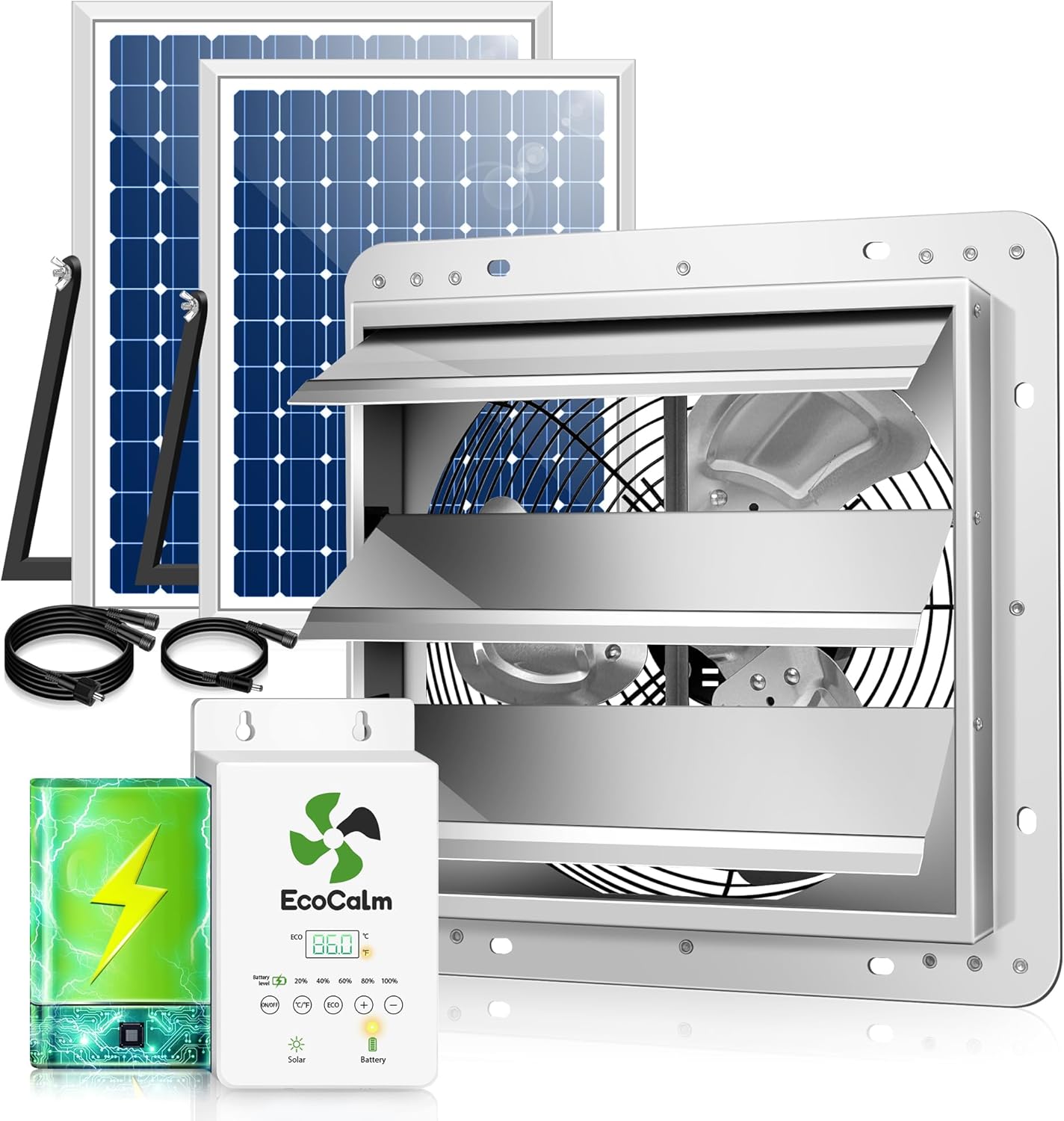
Pros
- Works without a conventional power outlet, useful for remote sheds, greenhouses, barns, and chicken coops.
- Thermostat control reduces the need to manually switch the fan on during hot parts of the day.
- Included battery provides backup ventilation after charging, rather than limiting operation only to direct sun.
- Reviewers commonly mention straightforward installation and effective airflow in greenhouse or coop uses.
- Metal build and screw-together style wiring noted in reviews suggest a more substantial setup than many lightweight plastic fan kits.
Cons
- Fan and battery performance may drop in cloudy weather or poorly positioned solar panel locations.
- Control setup may take patience, as at least one reviewer found the settings less intuitive at first.
- Gardeners needing guaranteed all-night ventilation or code-compliant attic ventilation should confirm the system meets their space and safety requirements before relying on it.
The ecoCalm KP-SEF240812 is a 12-inch solar powered exhaust fan made for moving hot, humid, or stale air out of enclosed spaces such as greenhouses, garden sheds, garages, attics, barns, and chicken coops. For gardeners, its most useful role is greenhouse ventilation, especially in backyard structures that do not have convenient access to a household electrical outlet.
Based on the listed specifications, the fan is rated at 680 CFM and is intended for spaces up to 1600 cubic feet. That puts it in a useful range for many small to midsize hobby greenhouses and outbuildings, provided there is also an intake opening so replacement air can enter. The product information also highlights cooling indoor temperatures, helping reduce mold-friendly conditions, and improving air quality through circulation.
The system includes two 30W bifacial solar panels, a 5000mAh rechargeable battery, and an intelligent power system that switches according to sunlight conditions. The battery is described as providing up to 6 hours of operation after a full charge in sunlight, though the product information clearly notes that fan output and battery charging are affected by cloudy weather. For best results, the panels need to be placed where they receive strong sun for much of the day.
Installation is listed for window or wall mounting, and the 14.8-foot cable gives some flexibility in locating the solar panels away from the fan opening. The fan uses metal construction, a DC motor, touch control, and IP44 waterproof fan blades. Reviewers commonly mention straightforward setup, quiet operation, and good results in small greenhouses and coops, although those comments should be treated as user experiences rather than guaranteed performance.
The adjustable thermostat is one of the more gardener-friendly features because it can cycle the fan on and off according to the temperature setting rather than requiring constant attention. That is helpful for seed starting areas, summer greenhouse use, or animal shelters where heat can build quickly. One practical setup tip is to think through both exhaust and intake placement, since an exhaust fan works best when fresh air can enter from the opposite side or lower part of the structure.
This is a good fit for homeowners who want off-grid ventilation for a greenhouse, shed, or coop and are willing to mount solar panels in a sunny location. It may be less suitable for shaded yards, spaces that need dependable ventilation through long dark periods, or installations where electrical safety and building-code compliance are critical. As with any powered outdoor equipment, keep wiring protected, follow the manufacturer instructions, and inspect the fan and connections periodically for damage, vibration, or moisture issues.
Best For / Avoid If
Best for buyers prioritizing
- Works without a conventional power outlet, useful for remote sheds, greenhouses, barns, and chicken coops.
- Thermostat control reduces the need to manually switch the fan on during hot parts of the day.
- Included battery provides backup ventilation after charging, rather than limiting operation only to direct sun.
Consider another option if
- Fan and battery performance may drop in cloudy weather or poorly positioned solar panel locations.
- Control setup may take patience, as at least one reviewer found the settings less intuitive at first.
- Gardeners needing guaranteed all-night ventilation or code-compliant attic ventilation should confirm the system meets their space and safety requirements before relying on it.

Pros
- Automatic temperature response reduces the need to monitor and adjust a greenhouse vent manually.
- No electrical connection or battery replacement is required.
- The listed 33-pound capacity and dual-spring design suit many compatible greenhouse windows.
- The wide 18-inch opening may improve airflow when the vent and frame support that movement.
Cons
- Compatibility still needs to be checked carefully because the product is intended for suitable greenhouse windows and frames.
- The opening and closing temperatures may not match every plant's preferred growing conditions.
- Gardeners needing active ventilation control during cloudy, cool, or unusually windy conditions may prefer a system with manual or powered override features.
The Buycitky Auto Vent Opener is a solar-powered greenhouse window mechanism designed to automate roof or side-vent ventilation. It is intended for hobby greenhouses, lean-to structures, and other compatible frames where gardeners want to reduce manual vent adjustments, making it particularly useful for homeowners and beginners who cannot check greenhouse temperatures throughout the day.
Based on the listed specifications, the opener begins opening at 77°F to release trapped heat and closes at 59°F to help retain warmth. The automatic response can make temperature management more consistent than relying on a vent that must be opened and closed by hand, although the preset temperatures may not suit every crop or greenhouse setup.
The unit is listed with a dual-spring system, an 18-inch maximum opening, and support for windows up to 33 pounds. Its aluminum alloy and stainless steel construction is described as rust-proof, and the product information states that it is intended to withstand rain, snow, and sun. Brackets, screws, and an illustrated guide are included, with installation requiring only a screwdriver according to the supplied details.
In a backyard or patio greenhouse, this opener could help vent heat during sunny periods while closing the window as temperatures fall. It may also suit panel, wood, or metal greenhouse frames, as well as certain industrial plant facilities or rooftop skylights, provided the window weight, mounting points, and available opening match the product requirements.
Before installation, confirm that the vent does not exceed the listed 33-pound capacity and that the frame can accept the supplied brackets. The mechanism should be kept clear of obstructions and checked periodically for secure mounting and smooth movement. This is a practical choice for passive, solar-powered ventilation, while gardeners who need adjustable temperature settings, remote control, or a manual override should consider a different type of opener.
Best For / Avoid If
Best for buyers prioritizing
- Automatic temperature response reduces the need to monitor and adjust a greenhouse vent manually.
- No electrical connection or battery replacement is required.
- The listed 33-pound capacity and dual-spring design suit many compatible greenhouse windows.
Consider another option if
- Compatibility still needs to be checked carefully because the product is intended for suitable greenhouse windows and frames.
- The opening and closing temperatures may not match every plant's preferred growing conditions.
- Gardeners needing active ventilation control during cloudy, cool, or unusually windy conditions may prefer a system with manual or powered override features.
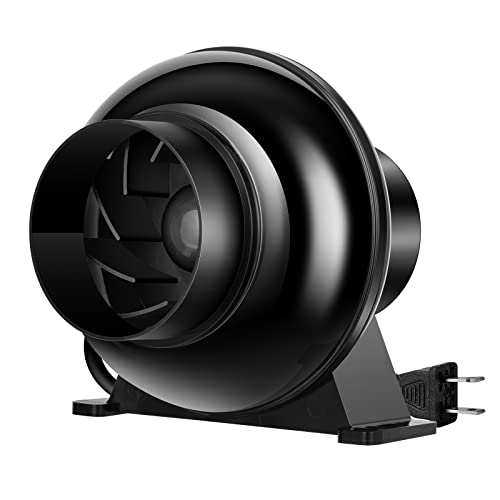
Pros
- Provides a useful 195 CFM airflow rating for small enclosed garden or utility spaces.
- Compact and relatively lightweight design may simplify placement in grow tents, basements, or kitchens.
- Detachable components support easier cleaning compared with a permanently sealed fan housing.
- Safety features include automatic reset protection and a flame-retardant electrical junction box.
Cons
- The 4-inch size limits it to ventilation setups designed around compatible 4-inch vent hose and fittings.
- No variable-speed control or airflow adjustment is listed, so gardeners needing precise ventilation may prefer a model with documented controls.
- As an AC-powered fan, it requires access to a suitable electrical outlet and careful cord placement.
The VIVOSUN D4 is a compact 4-inch AC motor inline fan for moving air through enclosed growing and utility spaces. It is intended for tasks such as ventilating a grow tent, transferring warm or cool air, circulating fresh air, and helping manage humidity, temperature, and air quality. The feature set makes it most suitable for homeowners and gardeners who need a straightforward powered ventilation component rather than a complete climate-control system.
Based on the listed specifications, the fan produces up to 195 CFM at 2500 RPM. That airflow may help exchange stale air and reduce heat or humidity in an appropriately sized enclosed area. The product information also lists a flow deflector and a 30 dB sound output, which suggests a quieter operating profile for locations near work areas or living spaces, although actual sound can vary with installation and ducting.
The fan measures 7 x 7.3 x 6.7 inches and weighs 2.5 pounds, making it relatively compact to position. Both ends have flanges designed to connect with vent hose through locking tabs, and the 5.9-foot cord can provide useful reach during setup. The housing, impeller, and blades are described as detachable, allowing access for cleaning and routine maintenance.
In a backyard growing setup, this fan could be used with a compatible 4-inch ventilation arrangement for a grow tent, indoor propagation area, basement growing corner, or kitchen space where air circulation is needed. It may also help move air away from a humid enclosed area, but the supplied information does not specify a coverage area or guarantee a particular temperature or humidity reduction.
The motor is ETL listed and includes an automatic reset function intended to help prevent overheating, while the electrical junction box uses flame-retardant components. Even with these features, installation should follow appropriate electrical and ventilation practices, and the cord should be kept safely positioned. No variable-speed control, airflow adjustment, weather resistance, or outdoor-use rating is listed, so gardeners needing precise control or exposed outdoor operation may prefer a model with those specifications.
This fan is a reasonable fit for users who want compact, basic air movement with accessible cleaning and 4-inch hose connections. Gardeners needing a complete ventilation kit, documented speed controls, or specifications for larger spaces should compare it with a system that clearly includes those features.
Best For / Avoid If
Best for buyers prioritizing
- Provides a useful 195 CFM airflow rating for small enclosed garden or utility spaces.
- Compact and relatively lightweight design may simplify placement in grow tents, basements, or kitchens.
- Detachable components support easier cleaning compared with a permanently sealed fan housing.
Consider another option if
- The 4-inch size limits it to ventilation setups designed around compatible 4-inch vent hose and fittings.
- No variable-speed control or airflow adjustment is listed, so gardeners needing precise ventilation may prefer a model with documented controls.
- As an AC-powered fan, it requires access to a suitable electrical outlet and careful cord placement.

Pros
- Cordless solar setup is useful for sheds, small greenhouses, chicken coops, and other outbuildings away from household power.
- Thermostat control adds convenience compared with a basic always-on solar fan.
- Battery backup provides a supported option for continued ventilation beyond direct sunlight, depending on charge and conditions.
- Wall or window mounting gives homeowners flexibility for exhaust placement.
- Anti-backflow exhaust fan design is appropriate for moving air out of an enclosed space.
Cons
- Solar charging and fan output can be reduced in cloudy weather, shaded locations, or poor panel placement.
- The listed 220 CFM capacity may be too small for larger greenhouses, sheds, or animal shelters that need stronger air exchange.
- Some users may need to plan controller placement carefully because installation height and cable routing can affect everyday access.
The ecoCalm KP-SEF23124 is an 8-inch solar exhaust fan intended for outdoor ventilation in small greenhouses, sheds, chicken coops, animal houses, garages, barns, and similar enclosed spaces. It is designed to pull air out rather than blow fresh air in, so it works best when paired with an appropriate intake opening or existing vent on the opposite side of the space.
The main practical benefit is cord-free air movement. The product information lists 220 CFM airflow and suitability for spaces up to 380 cubic feet, which makes it most relevant for compact structures rather than large greenhouses. The included 4400mAh rechargeable battery is listed to provide up to 8 hours of operation after a full sunlight charge, although the manufacturer notes that charging and fan performance are affected by sunlight conditions.
The fan uses a bifacial solar panel that can generate power from both sides when light conditions allow. It also includes an adjustable temperature control system in the battery box, allowing the fan to turn on and off automatically according to the selected ambient temperature. For gardeners who do not want to manually manage ventilation throughout the day, that thermostat feature is a meaningful upgrade over a simple direct-solar fan.
Installation is listed as wall or window mount, with a permanent installation type, DC connectors, a waterproof plug, and a 14.8-foot cable. The fan body measures 3.74 inches deep by 9.06 inches wide by 9.06 inches high. The IP44 waterproof fan blades and outdoor-focused design are useful for garden structures, but the solar panel should still be positioned for strong sun exposure and mounted securely against wind or weather.
In a backyard setup, this fan makes the most sense for a small greenhouse that overheats in afternoon sun, a potting shed that holds warm air, or a coop where air exchange is needed without running electrical wiring. Reviewers commonly mention use in chicken coops and sheds, with several noting easy setup and quiet operation, while others report that airflow or battery performance did not meet their needs in larger or less ideal conditions.
Gardeners should size ventilation carefully before buying. A single 8-inch, 220 CFM exhaust fan may not be enough for a larger greenhouse, a very humid shed, or an animal shelter that needs substantial air exchange. This is a practical choice for small-space solar ventilation, but anyone needing dependable all-weather airflow, more capacity, or powered ventilation independent of sunlight may want to consider a larger or hardwired system.
Best For / Avoid If
Best for buyers prioritizing
- Cordless solar setup is useful for sheds, small greenhouses, chicken coops, and other outbuildings away from household power.
- Thermostat control adds convenience compared with a basic always-on solar fan.
- Battery backup provides a supported option for continued ventilation beyond direct sunlight, depending on charge and conditions.
Consider another option if
- Solar charging and fan output can be reduced in cloudy weather, shaded locations, or poor panel placement.
- The listed 220 CFM capacity may be too small for larger greenhouses, sheds, or animal shelters that need stronger air exchange.
- Some users may need to plan controller placement carefully because installation height and cable routing can affect everyday access.

Pros
- Wide airflow positioning through automatic horizontal oscillation and manual vertical aiming
- Secure adjustable clip for compatible 16mm to 25mm poles
- Multiple speed choices with a listed quiet maximum of 33 dB
- Removable front frame supports easier routine cleaning
Cons
- The clip is designed for poles within the listed 16mm to 25mm range, so other mounting surfaces may not be suitable.
- It requires access to a compatible power source, but the supplied information does not specify the cord length or control method.
- Gardeners needing a larger fan for broad open areas may prefer equipment designed for wider coverage.
The Spider Farmer 6-inch EC motor clip fan is designed for air circulation in grow tents and other compact growing spaces. Its pole-mounted format suits home gardeners, indoor growers, and small-space users who want to position airflow without placing a fan on the floor.
The feature set provides 10 adjustable wind speeds, with a listed operating range from 0 to 2300 RPM. The natural-wind setting is intended to vary airflow, while the adjustable range can help gardeners choose gentler circulation for smaller plants or stronger movement as the growing area becomes denser.
Positioning is one of this fan's main strengths. It can automatically oscillate 90 degrees horizontally and can be manually adjusted through 100 degrees vertically. The clip is specified for poles from 16mm to 25mm, and its rubber pad is intended to improve grip and reduce scratching. The fan measures 8.8 x 6 x 10.6 inches and weighs 2 pounds.
In a grow tent, the fan can be aimed across plant foliage or adjusted to circulate air through different sections of the enclosure. Its compact form may also work in a bedroom, study, or other small area where floor space is limited. The listed maximum noise level of 33 dB makes it a consideration for spaces where quieter operation is useful.
IP54 protection is specified for grow environments exposed to high humidity and heat, but the supplied information does not establish that the fan is suitable for outdoor weather or direct water exposure. The front frame can be disassembled for cleaning, and the rebound feature is intended to help prevent damage if the fan contacts an object. Overall, it is a practical choice for compatible grow-tent poles and targeted indoor circulation, while gardeners needing broad open-area coverage or a different mounting method should consider another fan.
Best For / Avoid If
Best for buyers prioritizing
- Wide airflow positioning through automatic horizontal oscillation and manual vertical aiming
- Secure adjustable clip for compatible 16mm to 25mm poles
- Multiple speed choices with a listed quiet maximum of 33 dB
Consider another option if
- The clip is designed for poles within the listed 16mm to 25mm range, so other mounting surfaces may not be suitable.
- It requires access to a compatible power source, but the supplied information does not specify the cord length or control method.
- Gardeners needing a larger fan for broad open areas may prefer equipment designed for wider coverage.

Pros
- Solar-powered operation can simplify ventilation in locations without convenient electrical access.
- Four fans provide substantially more airflow potential than a single-fan setup, based on the listed specifications.
- The weatherproof fan design is intended for outdoor use across a broad stated temperature range.
- The product is suited to several common backyard structures, including small greenhouses and sheds.
Cons
- There is no battery backup, so the fans stop working at night and on rainy days according to the product information.
- Airflow depends on available sunlight, which means performance may vary with cloud cover, season, and panel placement.
- The listed dimensions of approximately 15.75 by 12.99 by 3.54 inches should be checked against the intended mounting location before purchase.
The Fanspex Solar 4 Fan Kit is an outdoor ventilation system intended for small greenhouses, chicken coops, sheds, dog houses, attic exhaust, and similar spaces. It is most suitable for homeowners and gardeners who need added daytime airflow in a location where connecting to household electricity may be inconvenient.
Based on the listed specifications, the four integrated fans can provide up to 640 CFM of air volume, with fan speeds up to 3000 RPM. That combination may help move warm or stagnant air through a compact structure, although actual airflow will depend on sunlight and the installation environment.
The kit includes a 25W monocrystalline solar panel measuring about 15.4 by 13 inches, while the overall product dimensions are approximately 15.75 by 12.99 by 3.54 inches. The product information identifies the fan as IP67 waterproof and lists an operating range from -13°F to 140°F. Mounting details, controls, and included installation hardware are not specified, so users should confirm those requirements before setting it up.
For backyard use, this kit could fit a small greenhouse, shed, chicken coop, or other enclosed outdoor structure that needs ventilation during sunny periods. The four-fan arrangement may be useful where a single fan does not provide enough movement, but the panel will need suitable exposure to daylight for the system to operate as intended.
The most important limitation is the lack of battery backup. The product information states that airflow follows light intensity and that the fans stop during rainy weather and at night. Gardeners who need continuous ventilation, overnight airflow, or operation during extended cloudy periods may prefer a system with battery storage or a wired power source. Overall, this is a practical option for daylight-dependent ventilation in small outdoor spaces, provided its operating limits and dimensions match the intended installation.
Best For / Avoid If
Best for buyers prioritizing
- Solar-powered operation can simplify ventilation in locations without convenient electrical access.
- Four fans provide substantially more airflow potential than a single-fan setup, based on the listed specifications.
- The weatherproof fan design is intended for outdoor use across a broad stated temperature range.
Consider another option if
- There is no battery backup, so the fans stop working at night and on rainy days according to the product information.
- Airflow depends on available sunlight, which means performance may vary with cloud cover, season, and panel placement.
- The listed dimensions of approximately 15.75 by 12.99 by 3.54 inches should be checked against the intended mounting location before purchase.
Does A Greenhouse Need Ventilation Buying Guide
Why greenhouse ventilation matters
A greenhouse traps sunlight and warmth, which is useful in cool weather but can quickly become too hot or damp when the sun is strong. Ventilation helps exchange indoor air with outdoor air and can reduce trapped heat, excess moisture, dust, and odors when the product is designed for exhaust or circulation.
For a small home greenhouse, ventilation may be as simple as a roof vent opener or a compact solar fan. Larger enclosed spaces may need a stronger exhaust fan, a louver vent, or a thermostat-controlled system that turns on without constant checking.
Choose between passive vents and powered fans
Passive options, such as the 1PCS Automatic Greenhouse Vent Opener and the 2X Auto Vent Opener Solar Automatic Window Opener, are meant to open vents using heat-sensitive operation. They are useful when you want airflow without wiring a fan, but they depend on having a compatible greenhouse vent or roof window.
Powered fans move air more actively. The Ecocalm Solar Exhaust Fan 12“ for Greenhouse lists 720 CFM airflow and is suitable for spaces up to 1600 ft³, while the SHENVITASO Solar Exhaust Fan lists 430 CFM from an 8-inch fan. The VEVOR 10” Shutter Exhaust Fan lists 820 CFM and uses an AC motor, which may suit gardeners who have safe access to household power near the installation area.
Match airflow to greenhouse size
Airflow is commonly listed in CFM, or cubic feet per minute. A higher CFM rating generally indicates stronger air movement, but the right choice depends on the enclosed space, vent placement, sun exposure, and how much heat builds up during the day.
| Product type | Supported specs to compare | Best fit based on available data |
|---|---|---|
| Compact solar fan | PQINS 7.1-inch fan, 3800 RPM, suitable for 80~120 sq.ft. | Small greenhouses, sheds, and pet-house style spaces |
| 8-inch solar exhaust fan | Ecocalm 8-inch fan, 220 CFM, suitable for up to 380 ft³ | Small enclosed greenhouse or shed spaces needing battery support |
| High-airflow solar exhaust fan | Ecocalm 12-inch fan, 720 CFM, suitable for up to 1600 ft³ | Larger greenhouse, shed, garage, or attic-style spaces |
| AC shutter exhaust fan | VEVOR 10-inch shutter fan, 820 CFM | Installations where household power is appropriate and available |
Solar, battery, and household power tradeoffs
Solar-powered ventilation is attractive for backyard greenhouses because it can reduce the need to run a power line. The PQINS 7.1-inch solar fan is directly powered by its solar panel and the listing notes that it works in daytime, with airflow affected by sunlight intensity.
Battery support can help when you want airflow beyond full sun conditions. The Ecocalm 12-inch model lists a 5000mAh rechargeable battery with up to 6 hours of operation after full sunlight charging, while the Ecocalm 8-inch model lists a 4400mAh rechargeable battery with up to 8 hours after full charging. The SHENVITASO model includes a power adapter, so it can be connected to household power for night or rainy-day use according to the available data.
Thermostats, switches, and automatic vent opening
A thermostat or automatic opener helps gardeners who cannot check the greenhouse several times a day. The Ecocalm 12-inch and Ecocalm 8-inch solar exhaust fans both list adjustable temperature control, allowing the fan to switch on and off automatically according to the selected ambient temperature setting.
Automatic vent openers are different from fans. The 1PCS Automatic Greenhouse Vent Opener is listed as a solar heat-sensitive window opener that can lift vents up to 15 lbs, while the 2X Auto Vent Opener Solar Automatic Window Opener lists dual springs up to 30 lbs. These can be useful for gardeners who prefer a quieter, non-powered venting approach, provided the opener fits the greenhouse vent.
Installation and placement mistakes to avoid
Common mistakes include buying a fan without checking the opening size, placing a solar panel where it gets shade, or choosing a passive vent opener without confirming that the vent can move freely. The SHENVITASO fan listing calls for drilling a 7-inch hole and making one electrical connection to the solar panel, so it is better for gardeners comfortable with basic installation.
For fan kits with separate solar panels, cord length matters. The Ecocalm models list a 14.8 ft cable, the SHENVITASO model lists a 16.4 ft solar cord plus a 4.66 ft adapter cable, and the PQINS fan lists a 16.5 ft cord. Longer cords give you more flexibility to place the panel in sun while mounting the fan where airflow is needed.
Small-space and accessibility considerations
Small-space gardeners should avoid oversizing equipment when a compact fan or vent opener will do the job. The PQINS 7.1-inch Large Solar Greenhouse Fan is listed for 80~120 sq.ft., while the Ecocalm 8-inch fan is listed for spaces up to 380 ft³. These are more manageable choices for small greenhouses, shed conversions, and starter setups.
Older gardeners and anyone who wants a lower-maintenance routine may appreciate automatic controls. A thermostat-controlled fan or heat-sensitive vent opener can reduce the need to manually open and close vents during changing weather, though you should still check the greenhouse regularly and follow the manufacturer’s instructions.
Weather resistance, safety, and routine care
Greenhouse ventilation equipment is exposed to moisture, dust, plant debris, and temperature swings. Use only the weather-resistance information available by the product listing: Ecocalm lists IP44 waterproof fan blades, SHENVITASO lists an IP67 waterproof solar panel, and PQINS lists IP67 waterproof design with heavy-duty aluminum and double metal protective nets.
Keep fan guards clear, inspect cords, and make sure louvers or shutters can open and close freely. If household power is involved, follow all manufacturer safety instructions and use appropriate outdoor-rated electrical practices. If you also heat your greenhouse, ventilation and temperature control should be considered together; our guide to a greenhouse heater with thermostat covers the heating side of that equation.
Storage and seasonal upkeep
At the end of the growing season, clean dust and plant residue from vents, fan guards, shutters, and solar panels. If a product includes a battery box, cord, adapter, or switch, inspect those parts before storage and again before spring use.
Garden storage habits also matter because small parts, brackets, and fasteners are easy to misplace. If your greenhouse supplies share space with tools and seasonal gear, our guide on how to organize a small garden shed may help keep ventilation accessories easier to find and maintain.
Research Methodology and Trust
This guide is based on research-based product analysis, not physical testing. We screened the available product data for relevance to greenhouse ventilation, Greenhouses & Garden Storage, and the question does a greenhouse need ventilation. Products that clearly listed greenhouse airflow, exhaust, vent opening, louvers, or enhanced ventilation were treated as relevant.
We compared listed specifications such as fan diameter, CFM, RPM, battery capacity, solar panel wattage, cord length, thermostat control, automatic vent lifting capacity, waterproof ratings when provided, and installation notes. We did not add performance claims beyond the available descriptions and key features.
Owner-feedback signals were considered where review counts and ratings were available, but we treated small review counts cautiously. For example, the 1PCS Automatic Greenhouse Vent Opener shows a 5.0 rating from 4 reviews, which is encouraging but limited, while the PQINS fan lists 555 reviews and the VEVOR shutter fan lists 754 reviews.
During the July update, we focused on practical home-garden use cases: small backyard greenhouses, beginner installations, solar setups without nearby power, and gardeners who value automatic controls. We also considered whether equipment would be easy to place, maintain, and store alongside other greenhouse supplies such as the gear discussed in our deck box for garden tools guide.
Final Recommendations
Overall Pick: Solar Exhaust Fan 12“ for Greenhouse with Smart Thermostat, Battery | Solar Powered Attic Fans, 2PCS 30W Bifacial Panels, Metal Build, Waterproof, Stable, for Outdoor, Garage, Shed, Chicken coop. Based on the listed specifications, it offers the strongest solar-focused feature set here: 720 CFM airflow, a 5000mAh rechargeable battery, adjustable temperature control, two 30W bifacial solar panels, IP44 waterproof fan blades, and suitability for spaces up to 1600 ft³.
Small-Space Pick: 7.1″ Large Solar Greenhouse Fan, 25W Solar Powered Vent Exhaust and Intake Chicken Coop Fan Outdoor Waterproof, 16.5 ft Cord, Strong Airflow for Shed Doghouse Cabin Ventilation Air Circulation. It is listed for 80~120 sq.ft., uses a separate solar panel and fan, includes an On/Off switch, and has a lower price than the larger Ecocalm solar system, though it has no built-in battery and works directly from solar power in daytime.
Accessible Choice: Solar Fan 8″ with Adjustable Thermostat and Battery for Greenhouse | Solar Powered Exhaust Fans, Adjustable Temp Control, 25W Bifacial Panel, for Outdoor, shed, Chicken coop, Anti-backflow. Its adjustable temperature control and listed battery support make it a practical middle-ground option for gardeners who want automatic operation in a smaller space. For a passive alternative, the 2X Auto Vent Opener Solar Automatic Window Opener for Greenhouse Heat Sensitive Roof Vent Opener Auto Vent Kit Gardening Tools Greenhouse Accessories Hothouse Roof Vent Kit (Dual Spring Up to 30lbs) is worth considering if your greenhouse has compatible vents.
FAQ
Does a greenhouse need ventilation year-round?
Most greenhouses need some ventilation whenever heat or moisture builds up inside. The amount changes by season, climate, sun exposure, and what you are growing, but airflow is a basic part of greenhouse management.
How do I choose the right fan for does a greenhouse need ventilation?
Start with the size of your greenhouse and compare listed airflow or space ratings. For example, the Ecocalm 12-inch fan lists 720 CFM and up to 1600 ft³, while the PQINS 7.1-inch fan is listed for 80~120 sq.ft.
Is a solar greenhouse fan enough?
A solar fan can be enough for some small greenhouses, especially when the fan is properly placed and the panel receives good sun. Check whether the product has a battery or power adapter if you need airflow during cloudy weather, evening hours, or rainy days.
What is the difference between a vent opener and an exhaust fan?
A vent opener helps open a greenhouse window or roof vent, allowing passive air exchange. An exhaust fan actively moves air out of the space and may include solar power, household power, a thermostat, or a battery depending on the model.
How often should greenhouse ventilation equipment be maintained?
Inspect fans, vents, shutters, cords, and solar panels regularly during the growing season. Clean dust and plant debris from guards, louvers, and panels so airflow is not blocked.
Can I use a greenhouse fan in a shed or chicken coop too?
Several products reviewed list use in sheds, garages, attics, chicken coops, or pet houses as well as greenhouses. Follow the product’s installation instructions and make sure the airflow, mounting style, and power source fit the space.
What safety steps matter with greenhouse ventilation?
Follow the manufacturer’s installation and electrical safety instructions, especially for AC-powered fans or adapters. Keep cords protected, avoid blocking moving parts, and make sure vents and shutters open freely before relying on automatic operation.