


A Cedar Raised Garden Bed can make a home garden easier to manage by lifting planting areas above poor native soil, improving access, and creating a defined space for herbs, flowers, or vegetables. Cedar is popular because many listed beds use natural cedar or Western Red Cedar, and several are designed for patios, balconies, and small backyards where an in-ground garden is not practical.
For this July 2026 guide, Dove Creek Gardens compared 23 products reviewed in the Raised Beds & Planters category, then screened the detailed product data for beds that clearly match the cedar raised garden bed topic. We focused on dimensions, growing volume or soil capacity when listed, access height, drainage, assembly, material claims, stability, and whether the design fits beginners, older gardeners, and small-space growers. You can also browse our broader Raised Beds & Planters category for more garden layout ideas.
Not every wooden planter in the available data is a cedar bed. Some detailed products use fir wood rather than cedar, so they are useful as general raised-planter comparisons but are not treated as cedar recommendations in the final picks.
Maple99 Cedar Elevated Raised Garden Bed for Accessible Patio Vegetable and Herb Growing Best Choice Products SKY6152 Elevated Wood Raised Bed for Patio Vegetable Growing Infinite Cedar Select Cedar Raised Garden Bed for Deep Vegetable and Flower Growing Yaheetech YT-00093448 8×2 Fir Wood Raised Garden Bed for Flexible Backyard Planting Prices and availability can change. We may earn a commission from qualifying purchases.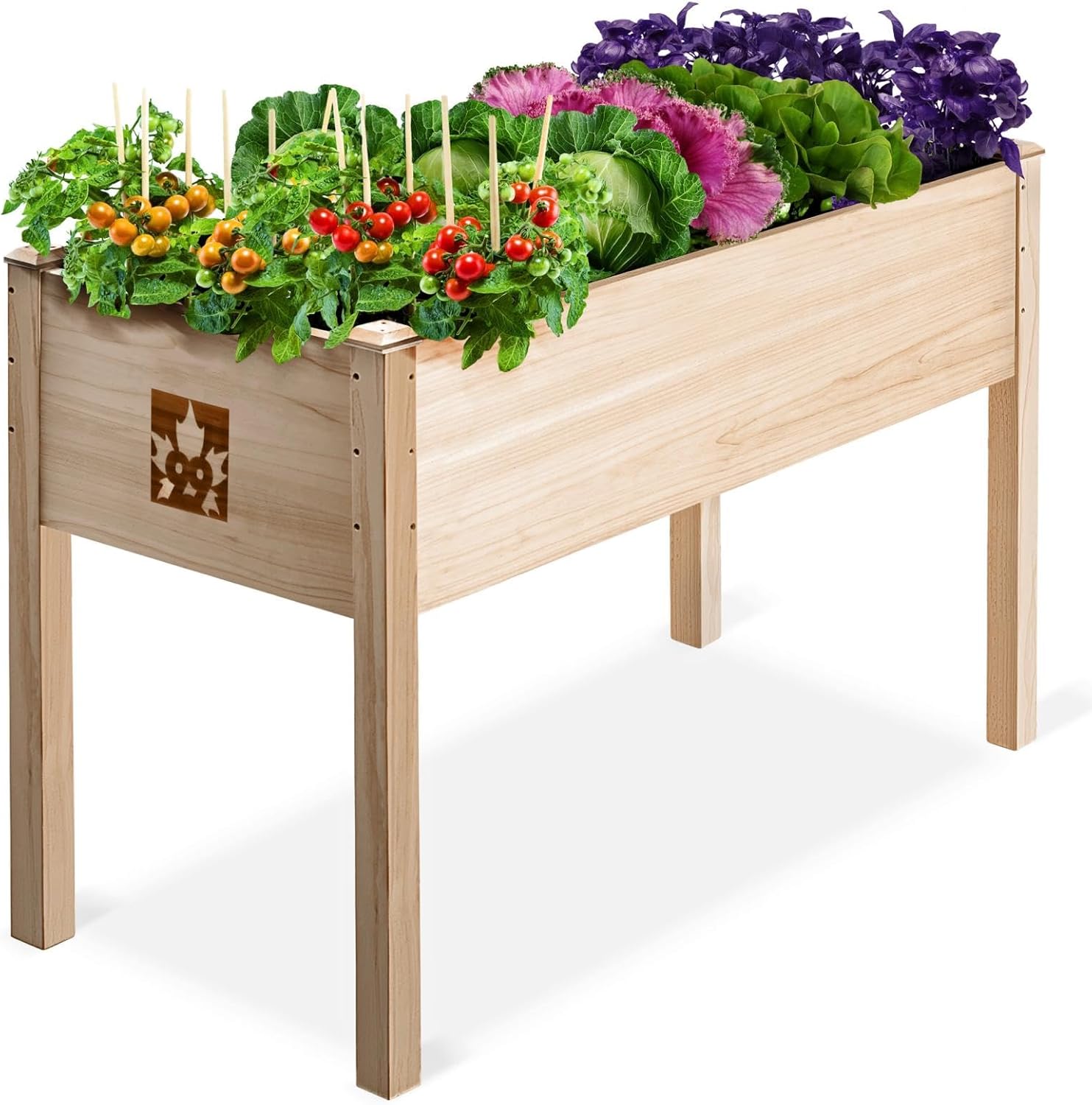


Pros
- Good working height for gardeners who want less stooping while planting, watering, and harvesting.
- Cedar wood construction offers a natural garden appearance and can be painted or finished according to the listed product details.
- Includes a bed liner, drainage hole, instruction manual, and tools, giving buyers the main components needed for setup.
- Reviewers commonly mention straightforward assembly and a roomy planting area.
Cons
- The listed 200-pound capacity means gardeners should be careful not to overfill with heavy or saturated soil mixes.
- As with many wood planters, outdoor exposure may require periodic care, painting, or finishing if you want to preserve appearance over time.
- At 48 inches long, it may be awkward for one person to move or position once assembled and especially once filled.
The Maple99 Raised Garden Bed with Legs is an elevated wooden planter for flowers, herbs, and vegetables. Based on the listed specifications, it is intended for outdoor use and is well suited to homeowners, patio gardeners, greenhouse growers, and anyone who wants a contained planting area that is easier to reach than an in-ground bed.
The main gardening benefit is access. With a listed height of 30 inches, this planter raises the soil surface so routine jobs such as planting, thinning, watering, and harvesting require less bending. The rectangular shape gives gardeners enough space for a small mixed planting, such as herbs with flowers or a compact vegetable selection, while still fitting many backyard and patio layouts.
The product information lists cedar wood, fir wood, and wood materials with a natural finish, plus a bed liner and drainage hole. The liner can help keep soil contained inside the planter, while the drainage hole is important for container growing because excess water needs a way out. The listed dimensions are 48 inches deep by 26.5 inches wide by 30 inches high, with a 200-pound capacity and a product weight of 33.3 pounds before filling.
Assembly appears designed for typical home use, with the instruction manual, tools, parts, and hardware included according to the supplied details. Several reviewers commonly mention that the planter is easy to assemble, though one reviewer noted that a drill made driving screws easier. For beginners, it is still wise to lay out all parts first, assemble on a flat surface, and avoid overtightening screws in wood.
In everyday garden use, this planter makes sense for growing near a kitchen door, on a sunny patio, inside a greenhouse, or along the edge of a small yard where a full raised bed is not practical. Because it is elevated and self-contained, it may also help reduce some weed pressure compared with planting directly in the ground, though it should not be treated as a complete pest or weed solution.
The key limitation is weight management. Soil, water, and mature plants can become heavy, so gardeners should respect the listed 200-pound capacity and consider using an appropriate container mix rather than overfilling with dense wet soil. This is a strong choice for accessible small-space growing, while gardeners planning deep-rooted crops, very large plantings, or maximum soil volume may prefer a larger ground-level raised bed.
Best For / Avoid If
Best for buyers prioritizing
- Good working height for gardeners who want less stooping while planting, watering, and harvesting.
- Cedar wood construction offers a natural garden appearance and can be painted or finished according to the listed product details.
- Includes a bed liner, drainage hole, instruction manual, and tools, giving buyers the main components needed for setup.
Consider another option if
- The listed 200-pound capacity means gardeners should be careful not to overfill with heavy or saturated soil mixes.
- As with many wood planters, outdoor exposure may require periodic care, painting, or finishing if you want to preserve appearance over time.
- At 48 inches long, it may be awkward for one person to move or position once assembled and especially once filled.
Pros
- Good working height for gardeners who prefer not to garden at ground level.
- Large enough for a small-space vegetable or flower planting while still fitting many patios and decks.
- Includes drainage holes, an important feature for container-style raised beds.
- Natural unfinished wood appearance suits traditional outdoor garden settings.
Cons
- Unfinished wood may require extra care or a compatible exterior finish if gardeners want added surface protection or a different look.
- At 72 inches long, it may be too large for very tight balconies or narrow walkways.
- Gardeners who need very deep root space for larger crops may prefer a deeper ground-level raised bed.
The Best Choice Products SKY6152 is an elevated wood raised garden bed designed for outdoor container-style growing. Based on the listed specifications, it is intended for vegetables, flowers, succulents, and similar plantings where a raised, accessible work height is useful. It is especially relevant for patio gardeners, balcony growers with enough floor space, and homeowners who want a contained planting area without building a permanent bed.
The main gardening benefit is its combination of usable planting space and easier access. The bed measures 72 inches long by 24 inches wide and holds 8.4 cubic feet of growing medium, giving beginners enough room to group several smaller crops or ornamental plants. The elevated layout also keeps the planting surface off the ground, which can make routine watering, thinning, and harvesting more comfortable than kneeling beside a traditional bed.
Drainage is an important detail in any raised planter, and this model includes six drainage holes to let excess water escape. That feature can help reduce waterlogged soil when paired with an appropriate potting or raised-bed mix. The product information lists all-wood Chinese fir construction, a natural color, a traditional rectangular shape, six legs, and a 300 lb weight capacity.
For small-space use, the long and narrow footprint can work well along a deck rail, patio wall, fence line, or sunny backyard edge. It may also suit gardeners who want to separate herbs from in-ground beds, grow salad greens close to the kitchen, or keep a few flowers at a more visible height. The included divider panel mentioned in the title may be useful for organizing plantings, although gardeners should confirm the assembly layout before filling the bed.
There are a few practical considerations before buying. The finish is listed as unfinished, so owners who want a sealed or stained look may need to choose a plant-safe exterior treatment appropriate for garden use. Because the planter is 72 inches long, measuring the intended location is important, and it should be placed on a level surface that can support the combined weight of the planter, soil, water, and plants.
Overall, this is a sensible option for gardeners who want a natural wood elevated bed with generous length, drainage, and a comfortable working height. It is less ideal for very tight balconies, gardeners needing extra-deep soil for large root systems, or anyone who prefers a fully finished planter that requires no additional surface care.
Best For / Avoid If
Best for buyers prioritizing
- Good working height for gardeners who prefer not to garden at ground level.
- Large enough for a small-space vegetable or flower planting while still fitting many patios and decks.
- Includes drainage holes, an important feature for container-style raised beds.
Consider another option if
- Unfinished wood may require extra care or a compatible exterior finish if gardeners want added surface protection or a different look.
- At 72 inches long, it may be too large for very tight balconies or narrow walkways.
- Gardeners who need very deep root space for larger crops may prefer a deeper ground-level raised bed.
Pros
- Made from 100% natural Western Red Cedar from North America.
- Roomy 96 by 48 inch rectangular bed with a listed capacity of 46.7 cubic feet.
- Boards are pre-cut and pre-drilled for more straightforward assembly.
- No added chemicals and no pressure-treated wood listed in the product information.
- Reviewers commonly mention an attractive cedar look, easy assembly, and sturdy feel.
Cons
- The 4 by 8 foot size needs a dedicated garden space and may be too large for many patios or narrow side yards.
- A reviewer notes that a drill made assembly much more secure, so gardeners without basic tools may find setup slower.
- Some reviewer feedback mentions misaligned or missing pre-drilled holes, so checking all parts before assembly is a wise step.
The Infinite Cedar Select Cedar Raised Garden Bed is a rectangular outdoor planting kit for gardeners who want a defined, above-ground space for vegetables, flowers, or other plants. Based on the listed specifications, this version measures 96 inches long, 48 inches wide, and 17.5 inches high, making it a substantial backyard bed rather than a small balcony planter.
Its main appeal is the use of 100% natural Western Red Cedar from North America. The product information describes the cedar as naturally weather-resistant, with no added chemicals and no pressure treating, which is important for gardeners who prefer untreated wood around edible crops. The listed 46.7 cubic foot capacity also gives room for a meaningful soil volume in a home vegetable or flower bed.
Assembly is designed around pre-cut and pre-drilled cedar boards, bolts, and nuts. The manufacturer highlights strong corners intended to avoid the tear-out problems associated with some dovetail-style corner designs. Reviewers commonly describe the bed as good-looking and fairly easy to assemble, though one reviewer specifically notes that using a drill helped tighten the bed properly.
The 17.5 inch height is useful for gardeners who want a deeper raised bed and a more comfortable working height than planting directly in the ground. It may suit backyard vegetable rows, a cut-flower bed, a kitchen garden near the house, or a more organized planting area in a larger yard. Because the bed is 4 feet wide, most gardeners should plan access from both long sides for easier reaching.
There are a few practical points to consider before buying. The unfinished cedar can be left to age naturally or painted or stained, but any finish used around edible plants should be chosen carefully. Before filling the bed, check that all boards and pre-drilled holes line up, since reviewer feedback includes isolated assembly issues with holes. Gardeners in areas with burrowing pests may also want to consider an appropriate bottom barrier, though one is not listed as included.
Overall, this raised bed is a strong fit for homeowners who want a large, natural cedar kit with a simple bolt-together design and enough height for deeper planting. Gardeners with very limited space, no assembly tools, or a preference for a lighter, movable planter may want to consider a smaller raised bed option instead.
Best For / Avoid If
Best for buyers prioritizing
- Made from 100% natural Western Red Cedar from North America.
- Roomy 96 by 48 inch rectangular bed with a listed capacity of 46.7 cubic feet.
- Boards are pre-cut and pre-drilled for more straightforward assembly.
Consider another option if
- The 4 by 8 foot size needs a dedicated garden space and may be too large for many patios or narrow side yards.
- A reviewer notes that a drill made assembly much more secure, so gardeners without basic tools may find setup slower.
- Some reviewer feedback mentions misaligned or missing pre-drilled holes, so checking all parts before assembly is a wise step.
Pros
- Good long-bed format for organizing vegetables, herbs, or flowers in rows.
- Divider can be removed or used to separate different planting methods or plant groups.
- Open bottom provides drainage and avoids the need for a built-in base panel.
- Natural unfinished wood can be stained or painted if you want it to match your garden style.
Cons
- At 11 inches high, it may be less comfortable for gardeners who need a taller, waist-height planter.
- Unfinished wood may require staining, sealing, or routine care if you want to preserve its appearance outdoors.
- Open-bottom beds need a reasonably level site and may require weed preparation before filling.
The Yaheetech YT-00093448 is an 8x2 foot fir wood raised garden bed designed for growing vegetables, herbs, flowers, and other garden plants in outdoor spaces. Based on the listed specifications, it is a floor-standing, open-bottom raised bed rather than a planter with legs, making it best for gardeners who want to build directly over soil, lawn, or a prepared garden area.
The most useful feature is its flexible interior layout. The bed includes a center baffle that can separate the growing area into two sections, which is helpful if you want to keep herbs apart from vegetables or manage different soil amendments in each side. If you prefer one longer bed, the divider can be removed to create a continuous planting space.
Its listed dimensions are 95 x 25 x 11 inches, with a stated capacity of 9.95 cubic feet. That long, narrow shape can fit well along a fence, beside a shed, or at the edge of a patio where a wider bed might feel crowded. The open bottom provides drainage and direct soil contact, but it also means the site should be cleared, leveled, and prepared before filling.
The product information describes simple assembly with heavy-duty screws, tight connections, an instruction manual, and included tools. Reviewers commonly mention that assembly is straightforward, though one reviewer cautioned that the wood can split if handled roughly or screwed without care. Taking time to align the boards and avoiding over-tightening can help during setup.
The fir wood frame has a natural unfinished appearance, and the product information indicates it can be painted or stained. That is useful for gardeners who want a more finished look, but it also means the bed may need routine outdoor wood care depending on climate and exposure. One reviewer reported warping and corner separation after seasonal weather, so buyers should have realistic expectations for an unfinished wood bed left outdoors.
This raised bed is a practical fit for beginner vegetable gardens, herb sections, flower borders, and small-space layouts where a long rectangular bed is easier to place than a wide square one. Gardeners who want a tall ergonomic planter, a bed with a built-in bottom, or a highly permanent structure may want to consider a different style.

Pros
- Tool-free assembly may be easier than building a bed from lumber yourself.
- Cedar construction is well suited to home vegetable and herb gardening.
- The long rectangular shape makes efficient use of narrow backyard spaces.
- Open-bottom construction helps with drainage and root development.
Cons
- The listed 1/2-inch board thickness may feel less substantial than thicker raised-bed lumber.
- Because it ships unfinished, gardeners who want a sealed or colored finish may need to stain or paint it.
- The narrow profile may be less suitable for gardeners who want a deeper or more heavily reinforced bed.
The Greenes Fence Classic Cedar Raised Garden Bed is a rectangular outdoor planter designed for common backyard growing tasks, including vegetables, herbs, flowers, and pollinator plants. Its 2 ft. by 8 ft. footprint makes it a practical option for homeowners, beginners, and small-space gardeners who want a simple raised bed instead of building one from scratch.
Based on the listed specifications, the bed uses untreated solid cedar and provides 10.5 inches of soil depth with an open bottom. That combination supports natural drainage and gives roots more room than a shallow container, while the 14 cubic feet capacity helps set expectations for soil needs before planting.
The signature dovetail assembly system is a key design feature. Boards slide into routed corner posts without tools, and the modular format can be stacked or connected if a gardener wants to expand the layout later. The unfinished cedar look is natural, and some buyers may choose to stain or paint it for appearance or added care.
In a backyard or side-yard setting, this style of bed can work well for lettuces, leafy greens, herbs, compact vegetables, and flowering plants. The long, narrow shape is also useful along a fence line or walkway, where a wider bed might be harder to fit. Because it is floor-standing with an open base, site preparation and level placement still matter for a cleaner install.
A balanced downside is that the listed 1/2-inch board thickness is thinner than some gardeners may expect from a premium cedar bed, so buyers who want a heavier-duty structure may want to compare options. This bed is best for gardeners who value simple assembly, natural cedar, and flexible layout options, while those needing a thicker, more rigid frame may prefer a different design.
Pros
- Generous 299-quart listed capacity for an elevated planter.
- Accessible raised design is helpful for gardeners who prefer not to kneel or bend as much.
- Drainage hole feature supports container-style vegetable and herb growing.
- Natural acorn brown wood finish can blend well with backyard, patio, or balcony settings.
Cons
- At 33 pounds before soil and plants, it could be difficult to reposition once filled.
- Wood planters may require routine care over time, especially when kept outdoors and in contact with moist soil.
- Gardeners wanting a full in-ground bed or a larger crop area may prefer a wider raised bed layout.
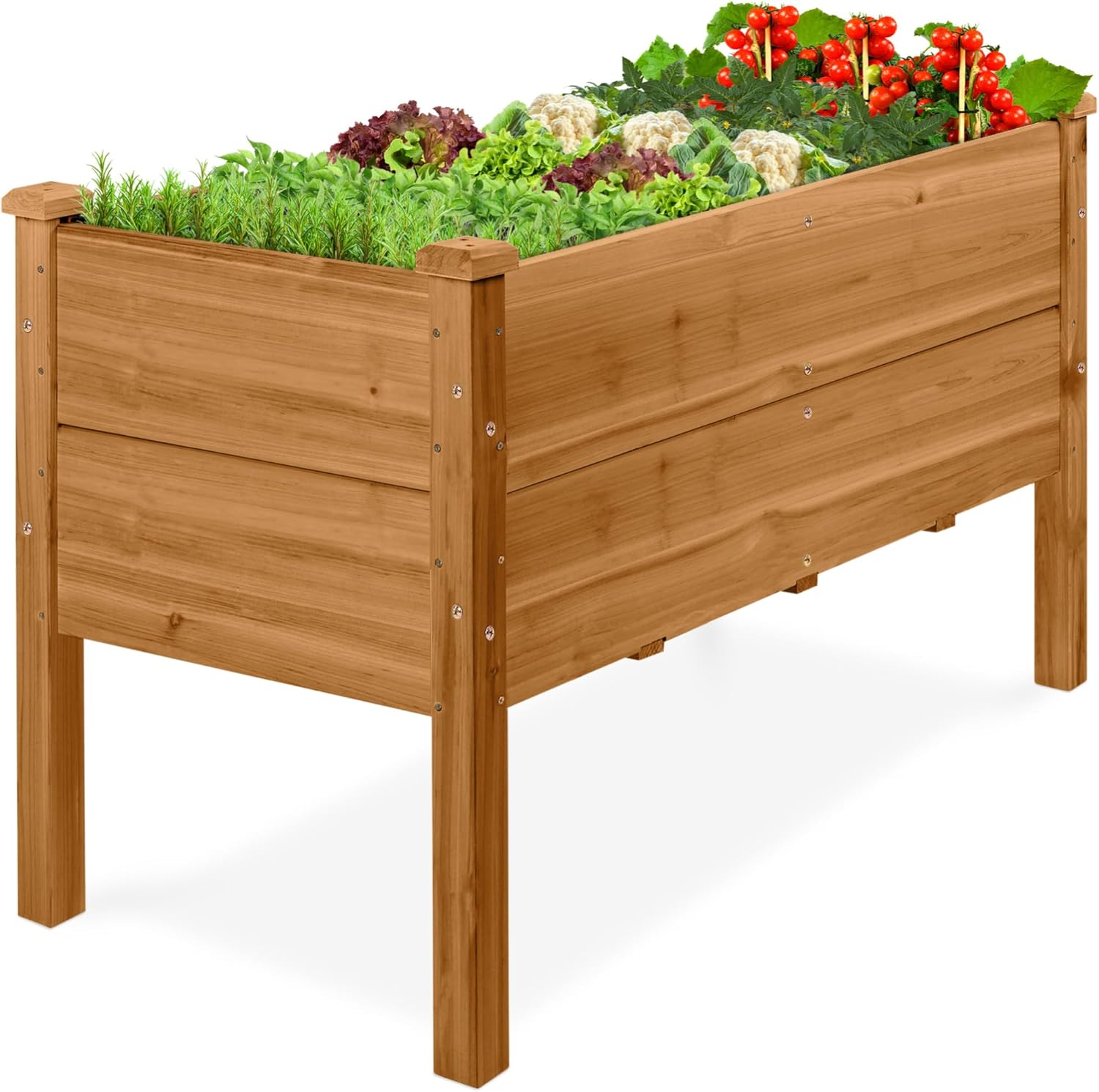
The Best Choice Products SKY11106 is an elevated wood raised garden bed designed for outdoor vegetable, herb, and small-space growing. Based on the listed specifications, it measures 48 inches long, 24 inches wide, and 30 inches high, making it a useful option for homeowners, balcony gardeners, and anyone who wants a planting area that is easier to reach than an in-ground bed.
Its most notable growing feature is the listed 16-inch soil depth. That depth gives gardeners more flexibility than a shallow planter, especially for crops that benefit from extra root room, including carrots, beets, radishes, many herbs, and compact vegetables. The listed 299-quart capacity also suggests a substantial soil volume for an elevated planter of this footprint.
The product information indicates that the planter is made from solid fir wood with reinforced corner posts and thick panels. It is freestanding, rectangular, and includes an assembly guide. Built-in drainage is also listed, which is important in a raised planter because excess water needs a way out to help prevent overly saturated soil.
For everyday use, the 30-inch overall height can make seeding, watering, and harvesting more comfortable for gardeners who do not want to work at ground level. The 48 x 24 inch footprint is compact enough for many patios, decks, balconies, and small backyards, while still offering enough surface area for a mixed planting of herbs, greens, flowers, or compact vegetables.
There are a few practical considerations before buying. The planter weighs 33 pounds empty, and it will become much heavier after adding soil and water, so it is best to choose the location carefully before filling it. Because it is wood and intended for outdoor use, gardeners should expect normal seasonal care and should monitor the planter over time for moisture exposure, fastener tightness, and soil contact wear.
Overall, this raised bed is best suited to gardeners who want an elevated, compact, deeper planter for small-space food gardening. Those who need a very large production bed, a movable planter after filling, or a non-wood material may want to compare other raised bed styles before deciding.
Best For / Avoid If
Best for buyers prioritizing
- Generous 299-quart listed capacity for an elevated planter.
- Accessible raised design is helpful for gardeners who prefer not to kneel or bend as much.
- Drainage hole feature supports container-style vegetable and herb growing.
Consider another option if
- At 33 pounds before soil and plants, it could be difficult to reposition once filled.
- Wood planters may require routine care over time, especially when kept outdoors and in contact with moist soil.
- Gardeners wanting a full in-ground bed or a larger crop area may prefer a wider raised bed layout.

Pros
- Comfort-height design is useful for older gardeners, beginners, or anyone who wants to avoid frequent kneeling.
- Raised, floor-standing format fits patios, balconies, decks, and small backyard spaces where in-ground beds are not ideal.
- Reinforced structure is listed to support up to 331 lb of soil and plants.
- Included liner and drainage holes address two important planter needs, moisture management and wood protection.
- Natural unfinished fir wood appearance blends well with outdoor garden areas.
Cons
- The 9 inch planting depth may be less suitable for deep-rooted crops or large vegetable plants.
- The waterproof liner needs to be punctured at the drainage holes if gardeners want drainage after installation.
- Outdoor wood planters still require sensible maintenance and placement to help limit moisture-related wear over time.
The MIXC 48 x 24 inch elevated wooden raised garden bed is a floor-standing planter designed for outdoor growing on a patio, deck, balcony, or small backyard space. It is aimed at gardeners who want a contained planting area for flowers, herbs, and vegetables without building an in-ground bed. The 31 inch height is especially useful for people who prefer to garden while standing or with less kneeling.
Based on the listed specifications, the planter provides about 5 cubic feet of growing capacity and a 9 inch planting depth. That makes it a practical size for many herbs, annual flowers, leafy greens, and other compact plantings. Gardeners planning large, deep-rooted crops may want to compare the root depth needs of those plants before choosing this style of elevated bed.
The bed is made with an untreated fir wood planter body and Pinus radiata support components, according to the product information. MIXC describes the frame as a beam-and-column structure with a listed capacity of 331 lb for soil and vegetables. The legs are coated with waterproof paint, while the planter includes a PE garden liner to help keep soil and moisture separated from the wood.
Drainage is an important detail with any raised planter, and this model includes four drainage holes. The included PE liner is waterproof, so the product instructions note that gardeners should poke holes through the liner at the drainage locations after filling if they want the bed to drain properly. That extra step is worth paying attention to, since overly wet soil can be hard on both plant roots and wooden planters.
For everyday use, the size and height make this MIXC raised bed a good fit for small-space growing near a kitchen door, along a sunny deck rail, or in a compact backyard garden zone. Assembly is described as a 20 to 35 minute process with a clear guide and screwdriver included, and the manufacturer recommends two people and gloves during setup. As with most wood garden products, placing it where it can drain freely and checking the liner and fasteners periodically would be sensible maintenance.
Overall, this raised bed is best for gardeners who want an accessible, natural-looking planter with enough room for a modest mix of herbs, flowers, or smaller vegetables. Gardeners who need a very deep bed, a larger growing area, or a fully ground-contact raised bed may be better served by a different planter style.

Pros
- Good option for gardeners who want a raised growing surface without building a permanent in-ground bed.
- Narrow 24-inch width allows easier access from the sides compared with wider raised beds.
- Large soil volume supports a more substantial planting layout than compact balcony planters.
- Cedar and aluminum materials are well suited to an attractive outdoor planter appearance.
- Reviewers commonly describe the finished bed as sturdy and good looking once assembled.
Cons
- The 8-foot length requires a long, level placement area and may be too large for very small balconies.
- Some reviewers report that assembly can take longer than expected, especially if holes need careful alignment or pilot drilling.
- At 64 pounds before adding soil, placement should be planned before filling because the completed planter will be difficult to move.
The Gardener's Supply Company 2x8 Elevated Cedar Raised Garden Bed is a standing planter box for growing vegetables, herbs, fruits, and flowers outdoors. Based on the listed specifications, it is aimed at homeowners, patio gardeners, deck growers, and anyone who wants a raised planting area without working at ground level.
The main advantage is access. At 29 inches high, the bed is designed to reduce bending, kneeling, and stooping during routine gardening tasks. The 96-inch by 24-inch footprint gives 16 square feet of growing space, while the 10-inch planting depth and 342-quart capacity provide room for a meaningful container-style planting plan.
The product information lists cedar wood sides with powder-coated aluminum legs and corners. Cedar gives the planter a natural farmhouse-style look, and the aluminum corner system is described as rustproof. The bed is made in Vermont and includes screws, an instruction manual, and an instructional planting guide.
For practical use, this size fits gardeners who want more growing room than a small patio box but still need a contained, elevated setup. It can work well along a deck edge, against a sunny patio wall, in a backyard growing area, or inside a greenhouse where a long rectangular bed makes efficient use of space.
Assembly deserves some planning. The listing describes setup as simple, but several reviewers mention that reading the directions carefully, aligning the parts, and drilling pilot holes can make the process smoother. Because the planter weighs 64 pounds before soil is added and holds a large volume of mix, it is wise to choose the final location before filling it.
This is a strong fit for gardeners who value upright access, natural cedar construction, and a generous growing area in a contained planter. Gardeners with very limited space, those who need a movable planter, or those who prefer a no-tool setup may want to consider a smaller elevated bed or rolling planter instead.
Best For / Avoid If
Best for buyers prioritizing
- Good option for gardeners who want a raised growing surface without building a permanent in-ground bed.
- Narrow 24-inch width allows easier access from the sides compared with wider raised beds.
- Large soil volume supports a more substantial planting layout than compact balcony planters.
Consider another option if
- The 8-foot length requires a long, level placement area and may be too large for very small balconies.
- Some reviewers report that assembly can take longer than expected, especially if holes need careful alignment or pilot drilling.
- At 64 pounds before adding soil, placement should be planned before filling because the completed planter will be difficult to move.

Pros
- Made from untreated cedar wood, which is well suited to gardeners who prefer a natural-looking raised bed material.
- No-tool dovetail assembly is straightforward based on the listed design.
- Square 48 x 48 inch size works well for organized kitchen gardens and compact planting areas.
- Open bottom design is helpful for drainage and in-ground root access.
- Listed as rot resistant, which is a useful feature for an outdoor wooden garden frame.
Cons
- At 10.5 inches high, it may be less suitable for gardeners who need a tall bed to reduce bending.
- The open bottom means it is intended for ground placement rather than use as a fully contained patio planter without an added base or liner.
- Gardeners planting very deep-rooted crops or wanting extra soil volume may prefer stacking modules or choosing a deeper bed.
The Greenes Fence RC4T12B-C Classic Cedar Raised Garden Bed is a square outdoor planting frame designed for vegetables, herbs, flowers, and pollinator plants. Based on the listed specifications, it measures 48 inches by 48 inches by 10.5 inches and provides a simple raised-bed format for homeowners who want a defined growing space without building a bed from raw lumber.
Its most useful feature for food gardening is the untreated 100% solid American cedar construction. The product information indicates no chemical treatments or glue laminations, which will appeal to gardeners who want a natural cedar frame around edible crops. Cedar is also listed as rot resistant, making it a sensible material choice for an outdoor raised bed.
The dovetail assembly system is designed so the boards slide into routed corner posts without tools. That can be especially helpful for beginners, older gardeners who want to avoid complicated assembly, or anyone setting up a quick kitchen garden. The bed holds approximately 14 cubic feet of soil, so gardeners can plan soil purchases before placing it in the yard.
The 4 ft. x 4 ft. footprint is compact enough for many backyards while still offering enough room for a small vegetable, herb, or flower layout. The square shape is easy to divide into sections for organized planting, and the open bottom allows drainage into the native soil while giving roots the option to grow deeper where conditions allow.
There are a few practical limits to consider. At 10.5 inches tall, this is not a waist-high accessibility bed, so gardeners who need to minimize bending may want a taller option or may consider stacking compatible Greenes Fence modules if appropriate. Because the bottom is open, it is best suited to placement over soil or another prepared outdoor surface rather than as a self-contained balcony planter.
Overall, this raised bed is a good match for gardeners who want a natural cedar, tool-free, compact bed for seasonal vegetables, herbs, and flowers. Gardeners who need a fully enclosed planter, a much deeper root zone, or a higher working height should compare deeper or elevated raised-bed designs before choosing.
Best For / Avoid If
Best for buyers prioritizing
- Made from untreated cedar wood, which is well suited to gardeners who prefer a natural-looking raised bed material.
- No-tool dovetail assembly is straightforward based on the listed design.
- Square 48 x 48 inch size works well for organized kitchen gardens and compact planting areas.
Consider another option if
- At 10.5 inches high, it may be less suitable for gardeners who need a tall bed to reduce bending.
- The open bottom means it is intended for ground placement rather than use as a fully contained patio planter without an added base or liner.
- Gardeners planting very deep-rooted crops or wanting extra soil volume may prefer stacking modules or choosing a deeper bed.

Pros
- Made in Maine from 1-inch thick Western Red Cedar boards.
- Tool-free assembly with aluminum rods keeps setup straightforward.
- No screws, nails, or dovetail corners in the main corner design.
- Natural cedar appearance can blend well in small yards, patios, or perimeter garden layouts.
- Backed by a listed five-year workmanship and material warranty under normal use.
Cons
- At 11 inches high, it may not be tall enough for gardeners who want waist-height access or deep-rooted crops with extra soil depth.
- As with any natural wood product, boards may shrink, swell, gray, or vary over time outdoors.
- Several reviewers mention occasional concerns such as cracks, bowing, or alignment issues, so inspecting parts before filling with soil is wise.
The Infinite Cedar Premium Cedar Raised Garden Bed is a 3' x 6' rectangular wood bed intended for outdoor vegetable, herb, flower, or border planting. Based on the listed specifications, it is best suited to homeowners and beginner-to-intermediate gardeners who want a natural cedar growing frame that is larger than a small planter but still manageable in a backyard or fenced garden area.
The main benefit is the material and corner design. The bed is made from 1-inch thick North American Western Red Cedar, described by the manufacturer as naturally rot resistant. The boards are untreated, with no chemicals or stains added, which will appeal to gardeners who prefer a simple wood frame around edible crops. The product information also notes that cedar can be left unfinished to gray naturally or finished on the outside if a different look is desired.
Assembly is designed to be simple. Instead of screws or nails, the half-lapped corners stack together and are secured with rust-free aluminum rods through the board ends. This design allows the wood to shrink and swell in changing outdoor conditions without relying on fasteners that may loosen. Reviewers commonly mention that setup is easy, although a few note that handling the 3-foot and 6-foot boards can be simpler with two people or when assembled directly where the bed will stay.
The listed dimensions are 72 inches by 36 inches by 11 inches, with a stated capacity of 16.5 cubic feet. That footprint works well for compact vegetable layouts, herb beds, pollinator-friendly flowers, or a tidy perimeter garden. The 3-foot width is practical because many gardeners can reach toward the center from either side, while the 6-foot length gives enough space for multiple plantings without taking over a small yard.
There are a few practical limitations to consider before buying. This is a floor-standing raised bed frame, not an elevated waist-height planter, so gardeners with significant bending limitations may prefer a taller style. It is also natural wood, so appearance and board movement can change with weather exposure. Some reviewers report excellent board quality and easy alignment, while others mention cracks, bowing, or holes that did not line up, so it is smart to check all pieces before filling the bed with soil.
Overall, this Infinite Cedar bed is a strong fit for gardeners who want a made-in-USA cedar raised bed with tool-free assembly and a clean, natural look. Gardeners who need extra-deep soil, elevated access, or a completely uniform manufactured material may want to compare other raised bed styles, but for a straightforward cedar vegetable bed, the listed design is practical and easy to understand.
Best For / Avoid If
Best for buyers prioritizing
- Made in Maine from 1-inch thick Western Red Cedar boards.
- Tool-free assembly with aluminum rods keeps setup straightforward.
- No screws, nails, or dovetail corners in the main corner design.
Consider another option if
- At 11 inches high, it may not be tall enough for gardeners who want waist-height access or deep-rooted crops with extra soil depth.
- As with any natural wood product, boards may shrink, swell, gray, or vary over time outdoors.
- Several reviewers mention occasional concerns such as cracks, bowing, or alignment issues, so inspecting parts before filling with soil is wise.

Pros
- Cedar wood and natural finish create a more garden-friendly appearance than many plastic or metal planters.
- Raised working height is helpful for gardeners who want easier access on a patio, balcony, or beside the house.
- Protective liner and drainage are included, so the planter is closer to ready for soil and plants after assembly.
- The 45 pound listed weight suggests a substantial unit once positioned, while still being manageable before filling with soil.
- Reviewers frequently describe the finished planter as sturdy, attractive, and easy to assemble.
Cons
- Some reviewers report that assembly holes may not line up perfectly, so a drill and a second person could be useful.
- The 18 inch depth and 48 inch width may be limiting for gardeners who want to grow larger quantities or very large crops.
- Because the cedar is listed as unfinished, gardeners who want to preserve the color may choose to apply an appropriate food-safe exterior finish.
The EARTHELEVATED 100% Canadian Cedar Wood Elevated Garden Bed is a raised planter for growing herbs, flowers, vegetables, and similar container plants without digging into the yard. Based on the listed specifications, it measures 18 inches deep, 48 inches wide, and 30 inches high, making it a good candidate for patios, balconies, decks, condo outdoor spaces, and small backyard areas.
The main appeal is accessible growing. The 30 inch standing height brings soil and plants closer to waist level, which can make routine tasks such as seeding, watering, trimming herbs, and harvesting more comfortable than working at ground level. The product information lists a 12 inch planting depth, which is useful for many herbs, annual flowers, greens, and compact vegetables grown in containers.
The planter is made from Western Red Cedar with a natural unfinished look, and the product information describes the wood as non-toxic and rot resistant. It includes an exterior grade garden fabric liner and uses a slatted drainage design, so excess water has a path out of the bed. That drainage is especially important in raised planters because soggy soil can be a common problem when containers do not release water well.
Assembly is part of the setup, and the listing says tools are provided. Reviewers commonly describe the planter as easy to assemble and attractive once finished, with several noting sturdy construction. A few reviewers also mention that some holes did not align perfectly, so it is reasonable to have a drill available and to plan for a second set of hands, especially when positioning longer cedar panels or tightening hardware.
In everyday use, this size works well as a dedicated herb station near the kitchen door, a flower planter for a deck rail area, or a compact vegetable bed along a sunny wall. The elevated layout is also useful for gardeners who prefer not to disturb lawn space or who want seasonal flexibility, such as changing from tomatoes in containers to fall flowers in the same planter area.
The main limitations are capacity and maintenance. Gardeners who want to grow sprawling crops or large harvest quantities may prefer a wider or deeper raised bed, while those who want the cedar color to stay closer to new may need to consider an appropriate food-safe exterior finish. Overall, this is a strong match for small-space gardeners and homeowners who want a natural wood elevated planter with drainage and easier access.
Best For / Avoid If
Best for buyers prioritizing
- Cedar wood and natural finish create a more garden-friendly appearance than many plastic or metal planters.
- Raised working height is helpful for gardeners who want easier access on a patio, balcony, or beside the house.
- Protective liner and drainage are included, so the planter is closer to ready for soil and plants after assembly.
Consider another option if
- Some reviewers report that assembly holes may not line up perfectly, so a drill and a second person could be useful.
- The 18 inch depth and 48 inch width may be limiting for gardeners who want to grow larger quantities or very large crops.
- Because the cedar is listed as unfinished, gardeners who want to preserve the color may choose to apply an appropriate food-safe exterior finish.

Pros
- Raised design is useful for gardeners who want easier access than a ground-level bed.
- Cedar wood and natural unfinished appearance suit many outdoor garden settings.
- Generous length gives more planting room than many compact elevated planters.
- Built-in drainage holes support better water management for container planting.
Cons
- Assembly may take time, and several reviewers suggest using a power drill or taking care with the parts.
- Some reviewers report gaps or fit issues with the bottom boards, so a liner may be worth considering.
- The 8.66-inch interior depth may be less suitable for gardeners who want to grow deeper-rooted crops.
The BlueWish Outdoor Cedar Garden Bed is a raised, elevated planter box designed for growing vegetables, herbs, flowers, and small fruits in outdoor spaces. Based on the listed specifications, it is especially useful for homeowners, patio gardeners, and older gardeners who want a working height that reduces the need to bend down to ground level.
The planter offers 6.8 cubic feet of growing capacity in a long rectangular layout, giving you room to organize a small edible or ornamental garden in one contained space. The untreated cedar wood construction gives it a natural garden look, and the product information indicates the wood can be oiled, sealed, or stained if you want to add protection or change the appearance.
Its overall size is listed as 72.04 inches long, 23.23 inches wide, and 29.92 inches high, with an interior size of 68.5 inches by 18.54 inches and an 8.66-inch interior height. The bed sits 18.5 inches above the ground and includes eight drainage holes, which helps excess water leave the planting area. As with most elevated planters, using a well-draining potting mix is important because garden soil can become too dense in a contained bed.
This raised planter is a good match for decks, patios, small backyards, side yards, or areas where digging an in-ground garden is not practical. Its long shape can fit neatly along a railing, fence, or sunny wall, while the elevated structure keeps the planting area easier to reach for routine watering, thinning, pruning, and harvesting.
Assembly is required, and the product information says hardware is included and recommends a power drill for quicker setup. Reviewers commonly mention that the planter looks nice and feels sturdy once assembled, but feedback on assembly is mixed, with some finding it easy and others saying it can be tricky. A few reviewers also reported bottom board gaps, so gardeners may want to inspect the base during setup and consider adding a liner if soil loss is a concern.
Overall, this BlueWish cedar garden bed is best for gardeners who want an elevated, natural-wood planter for modest vegetable, herb, or flower growing. Gardeners who need a deeper bed for long-rooted crops, want a no-assembly planter, or prefer a fully sealed container may want to compare other raised bed styles before choosing.

Pros
- Includes two planters, which gives you more layout flexibility
- Elevated format can be easier on the back and knees
- Simple assembly is supported by the included instruction manual
- Drainage hole and liner are included for basic growing setup
Cons
- Unfinished wood may need more care if kept outdoors for long periods
- The listed 15-inch maximum soil height may not suit deeper-rooted crops
- A two-pack may be more than some shoppers need if they only want one bed
The Yaheetech Raised Garden Bed set is a pair of elevated fir wood planter boxes made for gardeners who want a more comfortable planting height. Based on the listed specifications, it is a floor-standing, rectangular planter that works for herbs, vegetables, fruits, flowers, or mixed patio plantings.
The main advantage is the raised, 30-inch tall format, which can reduce how much bending is needed during planting, watering, and general upkeep. The product information also points to a 220.5 lb maximum load, a maximum soil height of 15 inches, drainage holes, and a non-woven fabric liner, all of which support basic container growing needs.
Design-wise, the beds use 100% fir wood in an unfinished natural wood look, with side plates locked in place for stability. Assembly is described as simple and an instruction manual is included, which may appeal to first-time buyers who want a straightforward project rather than a more complicated garden build.
For backyard and patio use, the set of two makes it easier to separate crops, create a matching display, or place planters in different spots around a small space. The floor-standing format can be especially helpful where in-ground planting is not practical, such as on a patio, deck, or compact yard.
As with many wooden planters, the unfinished wood may need more routine care if it stays outdoors, and the listed soil depth may be limiting for gardeners who want deeper rooting space. It is a sensible pick for accessible raised planting, but shoppers needing a single oversized bed or extra-deep grow space may want to compare other options.
Best For / Avoid If
Best for buyers prioritizing
- Includes two planters, which gives you more layout flexibility
- Elevated format can be easier on the back and knees
- Simple assembly is supported by the included instruction manual
Consider another option if
- Unfinished wood may need more care if kept outdoors for long periods
- The listed 15-inch maximum soil height may not suit deeper-rooted crops
- A two-pack may be more than some shoppers need if they only want one bed

Pros
- Comfortable working height for gardeners who prefer less bending.
- Drainage and liner features add practical growing support.
- Compact rectangular shape fits small outdoor areas well.
Cons
- Assembly may take more than one person, and some buyers may want a drill or extra fasteners on hand.
- The included liner and unfinished wood may need extra care or replacement over time, depending on exposure and use.
- The planting volume is useful for many flowers, herbs, and vegetables, but gardeners wanting a much larger bed may prefer a bigger option.
Based on the listed specifications, this is a floor-standing raised garden bed made for people who want easier access to planting without working at ground level. It is a practical choice for patios, decks, balconies, and smaller yards, especially for beginners, older gardeners, or anyone who prefers a more comfortable gardening height.
The key benefits are the 30-inch height, the 48 x 24 inch footprint, and the drainage hole. Together, those features support a more accessible planting setup while helping excess water move out of the bed, which is important for healthy container-style growing.
The planter uses Chinese fir wood, comes with a liner, and is listed as having a 200-pound weight capacity. The product information also suggests a traditional look and a simple floor-standing design, so it should fit in well where a neat, standalone planter is preferred.
For everyday use, this size can work well for herbs, flowers, salad greens, and compact vegetable plants. It is especially useful in spaces where a full in-ground garden is not practical, and the elevated format can make watering and harvesting more convenient.
A few tradeoffs are worth noting. Some reviewers mention assembly can take time, and the included liner may not be a permanent long-term solution for every gardener. Because the wood is unfinished, owners who want extra protection may choose to add their own care routine, and gardeners needing more growing depth or a larger bed may want to look at a bigger planter.
Best For / Avoid If
Best for buyers prioritizing
- Comfortable working height for gardeners who prefer less bending.
- Drainage and liner features add practical growing support.
- Compact rectangular shape fits small outdoor areas well.
Consider another option if
- Assembly may take more than one person, and some buyers may want a drill or extra fasteners on hand.
- The included liner and unfinished wood may need extra care or replacement over time, depending on exposure and use.
- The planting volume is useful for many flowers, herbs, and vegetables, but gardeners wanting a much larger bed may prefer a bigger option.

Pros
- Customizable shape makes it easier to fit irregular garden spaces.
- Open base supports drainage and reduces the chance of trapped water.
- Mesh perimeter adds a physical barrier around the planting area.
- Large size provides room for mixed plantings or deeper-rooted crops.
Cons
- At 140 pounds, it may be difficult to move once assembled.
- The unfinished cedar may need regular exterior care if left outdoors.
- Its large footprint may be too big for compact patios or very small yards.
The PIAOMTIEE TK-510031-01 is a large cedar raised garden bed made for backyard and patio growers who want a flexible planting layout. Based on the listed specifications, it is aimed at vegetables, flowers, and herbs, with a shape that can be arranged to suit different outdoor spaces.
The main appeal is its combination of size, drainage, and layout flexibility. It offers 62 cubic feet of growing space, a 20-inch depth, and an open-bottom design, which should give gardeners more room for roots while helping water move through the soil more easily.
Its mortise-and-tenon construction is a practical detail for people who prefer a screw-free assembly approach. The bed also includes an elevated iron mesh perimeter and 2.4-inch-thick solid cedar posts, features that suggest a stable frame with added airflow around the planting area.
For real-world use, this bed could work well in a backyard corner, along a fence line, or as a patio garden feature where a custom shape is helpful. The deformable design may be especially useful for gardeners working around walkways, existing beds, or uneven outdoor layouts.
There are a few limits to keep in mind. The unit is large and heavy, so once it is in place, relocation may be inconvenient. The unfinished cedar may also benefit from exterior care, and gardeners needing a compact or lightweight planter may want something smaller.
Best For / Avoid If
Best for buyers prioritizing
- Customizable shape makes it easier to fit irregular garden spaces.
- Open base supports drainage and reduces the chance of trapped water.
- Mesh perimeter adds a physical barrier around the planting area.
Consider another option if
- At 140 pounds, it may be difficult to move once assembled.
- The unfinished cedar may need regular exterior care if left outdoors.
- Its large footprint may be too big for compact patios or very small yards.

Pros
- Elevated design is helpful for gardeners who want easier access than an in-ground bed.
- Mobile frame with lockable wheels adds flexibility for patios, decks, and changing light conditions.
- Fir wood construction and natural finish give it a traditional garden look.
- Drainage holes and liner are included, so the planter is set up for container-style growing.
- Reviewers commonly mention that the finished planter looks attractive and is useful for herbs and deck gardening.
Cons
- Unfinished fir wood may require additional care or sealing if gardeners want to improve longevity outdoors.
- Assembly is required, and some reviewers report that it can take longer than expected or involve alignment challenges.
- The 100-pound weight capacity means gardeners should be mindful of heavy soil mixes, large crops, or overloading the bed.
The Best Choice Products SKY5732 is a mobile elevated raised garden bed designed for container-style growing on patios, decks, and small outdoor spaces. Based on the listed specifications, it measures 48 by 23.25 by 32 inches and provides 5.5 cubic feet of planting capacity. Its raised height makes it especially relevant for gardeners who want to grow herbs, vegetables, or flowers without working at ground level.
The standout benefit is accessibility. At 32 inches tall, this planter can reduce the amount of bending needed for planting, weeding, watering, and harvesting. The locking wheels also add useful flexibility, letting gardeners move the bed to adjust for sun exposure or to clear space on a patio. Once positioned, the wheels can be locked to help keep the planter in place.
The planter is made from fir wood with a natural, unfinished appearance. The product information indicates that it includes a protective liner to separate the soil from the wood, along with four drainage holes to let excess water escape. That combination is important in raised planters because overly wet soil can stress roots, while a liner helps keep the growing medium contained inside the bed.
For real backyard use, this size is well suited to a compact herb garden, salad greens, flowers, or smaller vegetable plantings. The lower shelf can hold garden accessories, spare pots, or trays, although items stored underneath should be chosen with drainage in mind. If water passes through the planter, weather-tolerant storage items are the safer choice.
There are a few practical limitations to consider. The listed weight capacity is 100 pounds, so gardeners should avoid overloading the bed with very heavy soil mixes or large, sprawling crops. Assembly is required, and while several reviewers describe it as manageable, others mention that it may take longer than expected or that predrilled hole alignment can be frustrating. Wearing gloves during assembly is a sensible precaution when handling unfinished wood.
This raised bed is a good option for gardeners who want a movable, attractive, waist-height planter for small-space growing. Gardeners looking for a permanently installed, heavy-duty bed or a fully finished wood planter for long-term exposed outdoor use may prefer a different style or plan on extra wood care before planting.
Best For / Avoid If
Best for buyers prioritizing
- Elevated design is helpful for gardeners who want easier access than an in-ground bed.
- Mobile frame with lockable wheels adds flexibility for patios, decks, and changing light conditions.
- Fir wood construction and natural finish give it a traditional garden look.
Consider another option if
- Unfinished fir wood may require additional care or sealing if gardeners want to improve longevity outdoors.
- Assembly is required, and some reviewers report that it can take longer than expected or involve alignment challenges.
- The 100-pound weight capacity means gardeners should be mindful of heavy soil mixes, large crops, or overloading the bed.

Pros
- Made in the USA from chemical-free North American cedar.
- Tool-free frame assembly is supported by the dovetail board-and-post design.
- Large rectangular layout suits common backyard vegetable and herb planting plans.
- Stackable and expandable design offers more layout flexibility than a fixed one-piece planter.
- Several reviewers mention easy assembly and positive customer service experiences.
Cons
- At 7 inches high, it may be less suitable for gardeners who want a deep raised bed for taller root crops or reduced bending.
- Because the cedar is unfinished, gardeners should expect natural weathering and may want to monitor the wood over time.
- A few reviewers reported rough wood, joint concerns, or packaging issues, so inspecting the boards before filling the bed is sensible.
The Greenes Fence RC48967 Premium Cedar Raised Garden Bed is a rectangular 4 by 8 foot garden kit for homeowners who want a defined growing area for vegetables, herbs, fruits, or flowers. Based on the listed specifications, it is made from untreated North American cedar and is intended for outdoor, floor-standing use on a level garden surface.
The main appeal is its simple cedar construction and modular layout. The product information indicates that the bed uses chemical-free cedar, which is helpful for gardeners who prefer untreated materials around edible crops. Its 18.7 cubic foot soil capacity gives beginners a clear starting point when planning how much soil or compost blend to add.
Assembly is centered on dovetail interlocking joints. The boards slide into 2.5 inch square routed corner posts, and the manufacturer notes that a rubber mallet may be used if needed. The listed dimensions are 96 inches long, 48 inches wide, and 7 inches high, with 3/4 inch thick boards, so it creates a broad but relatively low raised bed rather than a tall, waist-height planter.
In a backyard garden, this bed is well suited to organizing a vegetable patch, creating a cleaner edge between lawn and planting soil, or setting up a dedicated herb and flower area. The 4 foot width is useful because many gardeners can reach into the bed from either side without stepping into the soil. The routed posts also allow stacking or expansion with like kits, which can help if you want to start with one bed and adjust the layout later.
There are a few practical limitations to keep in mind. A 7 inch bed does not provide the same soil depth or access height as taller raised bed systems, so gardeners seeking less bending or more depth may want a taller option. Since the cedar is unfinished and designed to age naturally, the appearance will change over time to a silver-gray patina. It is also wise to inspect the package and boards before assembly, as a small number of reviewers noted rough boards, joint issues, or shipment concerns.
Overall, this kit is a good fit for gardeners who want a straightforward cedar raised bed with easy assembly and room for a productive backyard planting plan. Those who need a more polished furniture-like finish, extra height, or a fully enclosed planter bottom should consider a different raised bed style.
Best For / Avoid If
Best for buyers prioritizing
- Made in the USA from chemical-free North American cedar.
- Tool-free frame assembly is supported by the dovetail board-and-post design.
- Large rectangular layout suits common backyard vegetable and herb planting plans.
Consider another option if
- At 7 inches high, it may be less suitable for gardeners who want a deep raised bed for taller root crops or reduced bending.
- Because the cedar is unfinished, gardeners should expect natural weathering and may want to monitor the wood over time.
- A few reviewers reported rough wood, joint concerns, or packaging issues, so inspecting the boards before filling the bed is sensible.

Pros
- Accessible raised height is well suited to gardeners who prefer less bending.
- Cedar wood and grey finish make it suitable for visible patio, deck, or backyard spaces.
- Includes a liner and drainage holes, both useful features for container-style raised bed gardening.
- Reviewers commonly describe the planter as attractive, sturdy, and straightforward to assemble.
Cons
- Soil can be heavy to load into an elevated bed, so some gardeners may need help filling it.
- One reviewer noted that the wood may split if screws are driven in carelessly, so assembly should be done with gentle, controlled pressure.
- Gardeners wanting deep-rooted crops or a large in-ground vegetable plot may prefer a larger or deeper bed.
The SoliWood grey cedar elevated raised garden bed is designed for growing herbs, vegetables, flowers, and small fruiting plants above ground. Its 48 x 24 x 30 inch size makes it especially useful for homeowners with patios, decks, compact yards, or limited in-ground planting space.
Based on the listed specifications, the main advantage is accessible growing height. At 30 inches tall, the planter brings the soil surface closer to standing height, which can reduce bending during planting, watering, and light maintenance. Reviewers also commonly mention that the height works well for routine garden care.
The planter is made from cedar wood with a grey water-based finish and includes a liner. The product information lists two drainage holes, which are important in an elevated planter because excess water needs a path out of the soil. The 2.4 inch legs, 0.7 inch frame panels, and listed 300 pound weight capacity suggest a structure intended for a filled container garden when assembled properly.
Assembly is described by the product information as a quick DIY process, with an estimated setup time of about 30 minutes. Several reviewers say it was easy to assemble, including one older gardener who reported no trouble with the process, though another cautioned that the wood may split if screws are driven in without care. Using hand control, aligning parts before tightening, and avoiding overdriving screws would be sensible during setup.
In everyday use, this raised bed is a good match for an herb garden near the kitchen door, a small deck garden, a flower display, or a starter vegetable planter for a sunny outdoor spot. The added ledge can hold small tools or a watering can while you work, which is a simple but useful convenience for beginners and older gardeners.
This is not the right choice for gardeners who need a very large growing area or extra depth for extensive root systems. It also should be filled in place or moved only while empty, since the listed item weight increases substantially once soil and water are added. For small-space gardeners who want a cedar elevated planter with drainage, a liner, and a comfortable working height, it is a well-specified option worth considering.
Best For / Avoid If
Best for buyers prioritizing
- Accessible raised height is well suited to gardeners who prefer less bending.
- Cedar wood and grey finish make it suitable for visible patio, deck, or backyard spaces.
- Includes a liner and drainage holes, both useful features for container-style raised bed gardening.
Consider another option if
- Soil can be heavy to load into an elevated bed, so some gardeners may need help filling it.
- One reviewer noted that the wood may split if screws are driven in carelessly, so assembly should be done with gentle, controlled pressure.
- Gardeners wanting deep-rooted crops or a large in-ground vegetable plot may prefer a larger or deeper bed.

Pros
- Made in the USA from 100% natural Western Red Cedar with no added chemicals or pressure treating listed.
- Pre-drilled boards and included instructions support a more straightforward assembly process.
- Rectangular shape provides a practical long growing area for vegetables, flowers, or mixed plantings.
- Reviewers commonly mention attractive cedar, sturdy feel, and easy assembly.
Cons
- Some gardeners may want a drill or driver for assembly, based on reviewer feedback, even though the boards are pre-drilled.
- One reviewer reported missing or misaligned pre-drilled holes, so checking all boards before starting assembly is wise.
- Gardeners who want very thick lumber may prefer a heavier-duty bed, since the listed boards measure 11/16 inch thick.
The Infinite Cedar Select Cedar Raised Garden Bed is a wood raised bed kit intended for outdoor vegetable, flower, or general garden planting. Based on the product information, it is made from 100% natural Western Red Cedar from North America and is not pressure treated, which makes it a practical option for gardeners who prefer untreated cedar around edible crops.
The main appeal is its combination of natural material, long rectangular growing space, and straightforward assembly. The 2-foot by 8-foot size is especially useful where gardeners want a reachable bed along a fence, walkway, greenhouse edge, or narrow side yard. A narrower bed can be easier to tend from one side than a wide garden box, particularly for beginners or gardeners trying to keep planting areas organized.
The boards are listed as pre-cut and pre-drilled, with assembly handled by inserting bolts and tightening nuts. The product information highlights strong corners rather than dovetail construction, and the boards are 11/16 inch thick and 3.5 inches tall. Reviewers commonly describe the bed as attractive and sturdy, though one reviewer noted that using a drill made assembly more secure, and another reported a board with missing or misaligned holes.
For backyard use, this bed is a good fit for rows of greens, herbs, compact vegetables, cut flowers, or decorative seasonal plantings. Its natural wood finish can be left unfinished to age naturally, or it can be painted or stained if you want a more finished look in a visible front yard, patio-adjacent garden, or flower display area.
As with any wood raised bed, it is smart to assemble it on level ground, check that the corners are square, and inspect all boards and holes before filling it with soil. Gardeners concerned about burrowing animals or weeds may want to plan their site preparation carefully, but the supplied product data does not list a built-in bottom or barrier. Overall, this is a practical cedar raised bed for gardeners who want a natural-looking, bolt-together kit and are comfortable doing basic assembly.
Best For / Avoid If
Best for buyers prioritizing
- Made in the USA from 100% natural Western Red Cedar with no added chemicals or pressure treating listed.
- Pre-drilled boards and included instructions support a more straightforward assembly process.
- Rectangular shape provides a practical long growing area for vegetables, flowers, or mixed plantings.
Consider another option if
- Some gardeners may want a drill or driver for assembly, based on reviewer feedback, even though the boards are pre-drilled.
- One reviewer reported missing or misaligned pre-drilled holes, so checking all boards before starting assembly is wise.
- Gardeners who want very thick lumber may prefer a heavier-duty bed, since the listed boards measure 11/16 inch thick.
Pros
- Made in the USA from chemical-free North American cedar, according to the product information.
- Large 96 by 48 inch footprint works well for a dedicated backyard growing bed.
- Tool-free interlocking design should be approachable for beginners compared with screw-together kits.
- Modular corner posts make it easier to adjust or expand the layout with other compatible kits.
- Reviewers commonly mention easy assembly, though some note that a second person can help with corners.
Cons
- The bed requires a substantial amount of soil or fill material because of its large size and listed capacity.
- Untreated cedar will naturally change color over time, so gardeners wanting a consistent fresh-wood look may need to consider a suitable exterior finish.
- Some reviewers reported rough, splintered, split, or bowed pieces, so it is wise to inspect boards and posts before filling the bed.
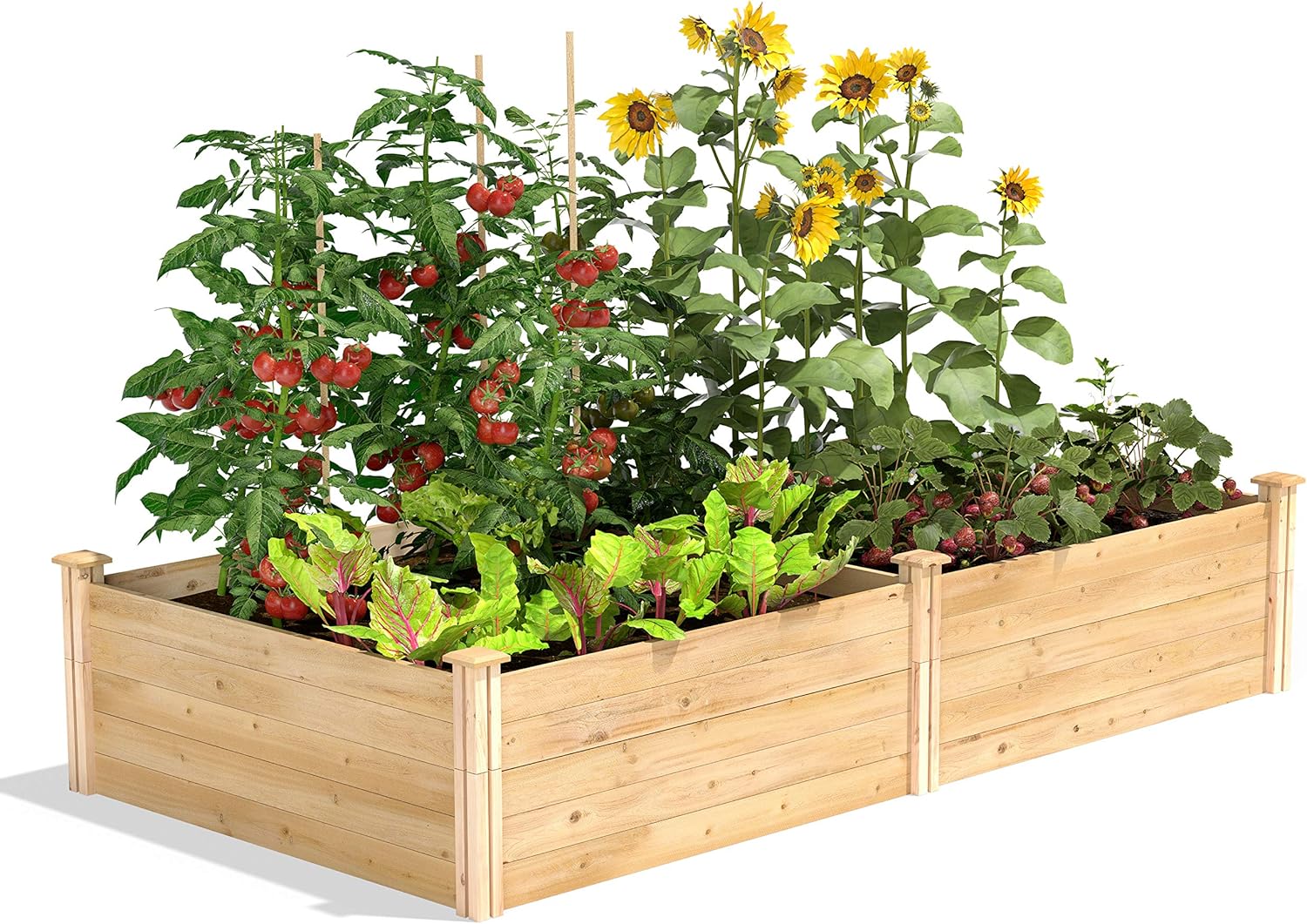
The Greenes Fence RC6S6T35B is a cedar raised garden bed kit sized for serious backyard growing rather than a small decorative planter. At 4 ft. by 8 ft. by 17.5 in., it is a practical choice for homeowners who want to grow vegetables, herbs, fruits, or flowers above native soil in a defined, easy-to-manage garden space.
Based on the listed specifications, the main gardening benefit is the combination of untreated cedar and a deeper raised-bed profile. The product information states that the cedar is chemical-free and safe for fruits, vegetables, and herbs, which will matter to gardeners building an edible garden. Its listed 46.7 cubic foot capacity also helps support a deeper soil mix than many lower raised bed frames.
The kit uses 3/4-inch thick boards and 2.5-inch square corner posts, with dovetail interlocking joints that slide together by hand. The routed corner posts are designed for stacking or expansion with compatible Greenes Fence kits, which gives gardeners some flexibility if they want to change the layout later. Reviewers commonly describe the assembly as easy, although a few mention that having another person available can help when aligning corners.
In a typical backyard, this bed is well suited for creating a permanent vegetable plot on a level outdoor surface, especially where the existing ground is clay, compacted, or otherwise difficult to plant directly. The 4-foot width is a common raised-bed size because many gardeners can reach in from both sides without stepping into the soil, while the 8-foot length offers enough room for rows, blocks, or mixed plantings.
There are a few practical considerations before buying. The bed is unfinished cedar, so it is intended to weather naturally to a silver-gray patina unless the owner applies a compatible finish. Because it holds a large volume of soil, plan the fill material before assembly and consider layering appropriate organic material only if it suits your gardening method. It should also be placed on a level outdoor area for best frame alignment.
This is a good fit for gardeners who want a larger modular cedar bed with simple assembly and an untreated wood construction for edible crops. Gardeners with very small patios, limited soil budget, or a preference for a fully finished, highly polished wood surface may prefer a smaller or more refined planter option.
Best For / Avoid If
Best for buyers prioritizing
- Made in the USA from chemical-free North American cedar, according to the product information.
- Large 96 by 48 inch footprint works well for a dedicated backyard growing bed.
- Tool-free interlocking design should be approachable for beginners compared with screw-together kits.
Consider another option if
- The bed requires a substantial amount of soil or fill material because of its large size and listed capacity.
- Untreated cedar will naturally change color over time, so gardeners wanting a consistent fresh-wood look may need to consider a suitable exterior finish.
- Some reviewers reported rough, splintered, split, or bowed pieces, so it is wise to inspect boards and posts before filling the bed.

Pros
- Tool-free assembly should be appealing to gardeners who want a simpler setup process.
- Cedar construction is well suited to organic-style planting and edible crops.
- Expandable design gives you a path to build a taller or larger bed later.
Cons
- At 14 inches tall, it may not provide as much depth as gardeners need for deep-rooted crops.
- As a floor-standing bed, it needs a fairly level site and may be heavy to move once filled.
- The unfinished cedar will naturally weather over time, which some buyers may not want.
The Greenes Fence Premium Cedar Raised Garden Bed is a rectangular 2' x 8' planter built for homeowners who want a straightforward place to grow vegetables, herbs, or flowers. Based on the listed specifications, it is a good fit for gardeners looking for a floor-standing bed with a simple, practical layout.
The product information highlights untreated North American cedar, sanded 3/4-inch boards, and 2.5-inch square corner posts. Those details suggest a sturdy wood bed with a smoother finish, while the tool-free dovetail joints are meant to make assembly easier than a typical cut-and-fastened wood project.
Its 14-inch height and 18.7-cubic-foot capacity make it a useful option for backyard growing spaces that need defined beds without taking up a large footprint. The routed corner posts also allow stacking, which gives gardeners a way to expand the bed later if they want more growing depth or a larger planting area.
For small yards and organized garden layouts, the long rectangular shape can work well for rows of salad greens, herbs, strawberries, or mixed flowers. The cedar finish is left unfinished, so it will naturally age to a silver-gray patina over time, which may appeal to gardeners who prefer a more natural wood look.
As with any wood raised bed, the site should be level before filling, and the bed may be easier to place before adding soil because it can become heavy once loaded. Gardeners who want a taller bed, a fully finished color, or a lighter-weight option may want to compare other styles, but for a classic cedar raised bed with simple assembly and expansion potential, this one is thoughtfully designed.
Best For / Avoid If
Best for buyers prioritizing
- Tool-free assembly should be appealing to gardeners who want a simpler setup process.
- Cedar construction is well suited to organic-style planting and edible crops.
- Expandable design gives you a path to build a taller or larger bed later.
Consider another option if
- At 14 inches tall, it may not provide as much depth as gardeners need for deep-rooted crops.
- As a floor-standing bed, it needs a fairly level site and may be heavy to move once filled.
- The unfinished cedar will naturally weather over time, which some buyers may not want.

Pros
- Generous raised-bed size for mixed home gardening.
- Elevated height improves comfort for many gardeners.
- Cedar material and natural finish suit outdoor use and custom finishing.
- Drainage holes are built in for better water management.
Cons
- Assembly may take time, and a power drill is recommended.
- Some reviewers noted that bottom boards may leave gaps, so a liner could be helpful depending on how you plan to fill it.
- Gardeners who want a fully open interior layout may want to confirm the fixed divider arrangement before buying.
The BlueWish Outdoor Cedar Garden Bed is a floor-standing raised planter designed for gardeners who want a long, elevated growing space for vegetables, flowers, herbs, or mixed plantings. Based on the listed specifications, it is aimed at home growers who want easier access than a ground-level bed can provide.
Its main strengths are the untreated cedar construction, built-in drainage holes, and substantial planting capacity. The product information also notes that the wood is non-toxic and can be oiled, sealed, or stained, which gives buyers flexibility if they want to extend the look or better match an outdoor setting.
The bed measures 96.46 inches long, 24.41 inches wide, and 30.2 inches high overall, with a listed 9.8 cubic feet of potting space. That taller profile can be especially useful for gardeners who prefer less bending, while the 2 x 8 ft footprint makes it easier to place along a wall, fence, deck, or patio edge.
Drainage is handled through nine holes in the flat-bottom design, which should help excess water escape more quickly than in a closed-bottom planter. For small-space gardens, this kind of raised bed can work well when you want a defined growing area without converting a large patch of lawn.
Assembly appears to be the main tradeoff, since the product notes included hardware and recommends a power drill, and some reviewer feedback suggests the build can take patience. Gardeners who want a simpler setup may prefer a lighter planter, but if you want a sturdy cedar raised bed with accessible height and a practical footprint, this one looks like a sensible choice.
Best For / Avoid If
Best for buyers prioritizing
- Generous raised-bed size for mixed home gardening.
- Elevated height improves comfort for many gardeners.
- Cedar material and natural finish suit outdoor use and custom finishing.
Consider another option if
- Assembly may take time, and a power drill is recommended.
- Some reviewers noted that bottom boards may leave gaps, so a liner could be helpful depending on how you plan to fill it.
- Gardeners who want a fully open interior layout may want to confirm the fixed divider arrangement before buying.

Pros
- Extra-deep planting space supports a wider range of crops, including many root vegetables.
- Raised height improves access for gardeners who prefer less bending and kneeling.
- Drainage feature is useful for keeping container soil breathable and easier to manage.
- Natural wood look fits well in simple backyard or patio garden layouts.
Cons
- Unfinished wood may need routine care if you want to extend its life outdoors.
- Assembly may be easier with two people, especially for gardeners who prefer a faster setup.
- The size is good for small-space gardening, but gardeners needing a very large harvest area may want multiple beds.
The Best Choice Products SKY11107 is a freestanding raised garden bed for gardeners who want a taller, more accessible planting space for vegetables, herbs, and flowers. Based on the listed specifications, it is a rectangular wood planter with an extra-deep 16-inch growing area and a 30-inch overall height, making it especially relevant for small yards, patios, decks, and balconies.
The main practical advantage is the combination of depth and access. The deeper soil profile is well suited to crops that prefer more root room, while the elevated design reduces the need to bend low during routine care. Built-in drainage is another useful feature because it helps prevent water from lingering in the soil, which is important in container-style gardening.
Its dimensions, 72 inches long by 24 inches wide, give it a long planting surface without requiring a large footprint. The product information also lists solid fir wood, reinforced corner posts, and thick panels, which suggests a design focused on stability and everyday garden use. Customer feedback commonly describes the unit as sturdy, with assembly that may be straightforward for some buyers but easier with two people.
For real-world use, this bed makes sense for herb gardens, salad greens, flowers, and mixed vegetable plantings in compact outdoor spaces. It can also be a good fit for gardeners who want to keep plants slightly elevated for easier tending and to create a cleaner, more organized growing area on a patio or backyard hardscape.
The main cautions are typical for unfinished wood raised beds. Outdoor wood may benefit from regular maintenance, and buyers who want the longest possible service life may want to consider protective care over time. This is a practical choice for gardeners who value accessible growing space and a deeper planting area, while those needing a larger production setup or a lower-maintenance material may prefer a different style of bed.
Best For / Avoid If
Best for buyers prioritizing
- Extra-deep planting space supports a wider range of crops, including many root vegetables.
- Raised height improves access for gardeners who prefer less bending and kneeling.
- Drainage feature is useful for keeping container soil breathable and easier to manage.
Consider another option if
- Unfinished wood may need routine care if you want to extend its life outdoors.
- Assembly may be easier with two people, especially for gardeners who prefer a faster setup.
- The size is good for small-space gardening, but gardeners needing a very large harvest area may want multiple beds.
Cedar Raised Garden Bed Buying Guide
Choose the right bed style first
Cedar raised beds in this data fall into two main styles: ground-level frame kits and elevated planter boxes with legs. Ground-level kits such as the Infinite Cedar Select Cedar Raised Garden Bed options and the Greenes Fence Premium Cedar Raised Garden Bed create a larger planting footprint and are well suited to yards or garden areas where you can place the bed on level ground.
Elevated planter boxes, including the SoliWood Raised Garden Bed with Legs, EARTH ELEVATED 100% Canadian Cedar Wood Elevated Garden Bed, and Maple99 Raised Garden Bed with Legs, lift the planting area to about 30 inches high based on their listed dimensions. That style is helpful if bending or kneeling is uncomfortable, or if you are growing on a patio, deck, or balcony.
Match dimensions to your garden space
Before buying, measure the exact spot where the bed will sit, leaving enough room to walk around it, water comfortably, and reach the center. A 4 ft. x 8 ft. cedar frame such as the Infinite Cedar Select Cedar Raised Garden Bed 4′ x 8′ x 17.5″ H or the Greenes Fence Premium Cedar Raised Garden Bed 4′ x 8′ x 7″ gives more planting area, but it also needs a yard or larger garden space.
For narrow spaces, the Infinite Cedar Select Cedar Raised Garden Bed 2′ x 8′ x 14″ H keeps the long growing area while reducing width. For patios and balconies, the EARTH ELEVATED model is listed at 18″ x 48″ x 30″, while the SoliWood and Maple99 elevated beds are both listed at 48″ x 24″ x 30″.
| Garden situation | Supported bed type to consider |
|---|---|
| Patio, deck, or balcony | Elevated cedar planter with listed drainage and liner |
| Larger vegetable plot | 4 ft. x 8 ft. cedar frame kit |
| Narrow side yard or edge planting | 2 ft. x 8 ft. cedar frame kit |
| Back-friendly gardening | 30-inch-high elevated planter box |
Consider depth, volume, and what you want to grow
Soil depth and growing volume affect how many plants you can reasonably fit and how often the bed may need watering. The Greenes Fence Premium Cedar Raised Garden Bed is listed as holding up to 18.7 cubic feet of soil, while the Best Choice Products 48 x 24 x 30 Inches Raised Garden Bed lists 5 cubic feet but is described as fir, not cedar, so it is not a cedar pick.
For the cedar models, use the listed dimensions as your guide. Taller frame kits give more room below the surface than shallow frames, while elevated boxes are convenient but have a fixed planter box area. If you want a dense herb garden, an elevated cedar planter may be enough. If you want rows of vegetables, a larger ground-level cedar frame is usually easier to scale.
Check drainage and liners
Drainage matters because standing water can oversaturate soil. The SoliWood raised bed lists drainage holes and a liner, the EARTH ELEVATED bed lists a protective liner and built-in drainage, and the Maple99 bed includes a bed liner. Liners can also separate soil from the wood, which is a useful feature in elevated planters.
Ground-level cedar frames typically sit directly on prepared soil or another level outdoor surface, so drainage depends more on site preparation and the soil mix you add. Avoid placing any raised bed where water pools after rain, and follow the manufacturer instructions for assembly, lining, and placement.
Compare cedar claims and construction details
The most clearly documented cedar options in the available data are the Infinite Cedar Select beds, which are described as 100% natural Western Red Cedar from North America, the EARTH ELEVATED bed, which lists Western Red Cedar and 100% Canadian Cedar in the product name, and the Greenes Fence bed, which lists chemical-free North American cedar. Maple99 lists cedar wood construction, and SoliWood lists grey cedar and premium cedar wood in its title and features.
Construction also matters. Infinite Cedar highlights pre-cut and pre-drilled boards with bolt-and-nut assembly and strong corners. Greenes Fence uses dovetail interlocking joints and routed corner posts for tool-free setup, stacking, and expansion. SoliWood lists 2.4-inch pole legs, 0.7-inch frame panels, and a 300 lb. weight capacity, while Maple99 lists a 200 lb. capacity.
Think about accessibility and comfort
Older gardeners, beginners, and anyone who dislikes kneeling should pay close attention to height. The SoliWood, EARTH ELEVATED, and Maple99 models all use a 30-inch-high elevated layout based on the listed specifications. EARTH ELEVATED specifically describes the ergonomic elevated structure as helping reduce strain from bending.
Accessibility also includes reach. A 24-inch-wide elevated planter is generally easier to tend from one side than a wide ground-level bed, while a 4 ft. x 8 ft. frame may require access from both sides. Keep tools nearby and consider a dedicated storage solution if your patio or shed is getting crowded; our guide to the best deck box for garden tools can help organize small-space supplies.
Plan for assembly before delivery day
Most cedar raised garden bed kits require some assembly. Infinite Cedar lists pre-cut and pre-drilled boards that assemble by inserting bolts and tightening nuts. Greenes Fence lists dovetail interlocking joints for fast, tool-free setup. SoliWood says assembly takes about 30 minutes by connecting legs and frame panels, while EARTH ELEVATED lists quick assembly with tools provided.
Read the instructions before filling the bed, because adjustments are much harder after soil is added. For elevated beds, confirm all legs, panels, liners, and drainage parts are properly seated before loading with soil, plants, and water.
Avoid common raised bed mistakes
The biggest mistake is buying for appearance before measuring space, reach, and soil needs. Another common issue is overloading an elevated planter beyond its listed capacity. SoliWood lists a 300 lb. weight capacity, while Maple99 lists 200 lb.; stay within the manufacturer guidance and remember that wet soil is heavy.
Also avoid placing a raised bed where access is blocked by walls, fences, or patio furniture. If you plan to grow vegetables and flowers together, leave space for regular watering and harvesting. For gardeners interested in supporting beneficial insects near a vegetable bed, our guide on how to attract pollinators to a vegetable garden offers related planning tips.
Maintenance and seasonal care
Cedar beds can be left unfinished when the manufacturer allows it. Infinite Cedar says its beds can be left unfinished to age naturally or painted or stained to your liking, and Greenes Fence says its untreated cedar naturally ages to a silver-gray patina. If you choose to apply any finish, use only products appropriate for garden beds and follow the product label.
At the start and end of the growing season, check fasteners, corner joints, liners, drainage openings, and leg stability. Remove excess plant debris, refresh soil as needed, and keep elevated beds on a stable, level surface. Follow all manufacturer safety and assembly instructions, especially when moving or refilling a planter.
Research Methodology and Trust
This guide is based on the available product specifications, listed features, prices, ratings, review counts, and product descriptions available for July 2026. Dove Creek Gardens did not physically test or install these beds for this article, so the analysis is research-based rather than a hands-on field test.
We first screened the detailed product list for relevance to cedar raised garden bed intent. Products that clearly listed cedar, Western Red Cedar, Canadian Cedar, North American cedar, grey cedar, or cedar wood construction were treated as valid cedar options. Products described as fir wood were not used as cedar recommendations, even when they were relevant to raised planters generally.
Ranking factors emphasized category-specific needs: bed dimensions, access height, listed weight or soil capacity, drainage and liner details, assembly style, construction claims, and suitability for patios, small yards, and accessible gardening. Owner feedback was considered through the listed ratings and review counts, but individual review text was not available beyond the summarized product data.
Final Recommendations
Overall Pick: Infinite Cedar Select Cedar Raised Garden Bed (4′ x 8′ x 17.5″ H) is the strongest all-around cedar frame in the available data for gardeners who have yard space and want a larger planting area. It uses 100% natural Western Red Cedar from North America, has pre-cut and pre-drilled boards, and lists strong corners designed not to tear out like dovetail construction corners.
Accessible Choice: EARTH ELEVATED 100% Canadian Cedar Wood Elevated Garden Bed for Gardening is a good fit for patio and balcony growers who want a narrow, elevated cedar planter with built-in drainage and a protective liner. Value Elevated Pick: Maple99 Raised Garden Bed with Legs 48x24x30 offers cedar construction, a 30-inch ergonomic height, a bed liner, and a listed 200 lb. capacity at a lower listed price than several cedar alternatives.
Easy-Setup Pick: Greenes Fence Premium Cedar Raised Garden Bed, 4′ x 8′ x 7″ stands out for its made-in-USA North American cedar, dovetail interlocking joints, and tool-free setup. Choose SoliWood Raised Garden Bed with Legs if the listed 300 lb. capacity, 30-inch elevated height, drainage holes, liner, and additional table ledge match your patio gardening needs.
FAQ
What size cedar raised garden bed should I buy?
Start with your available space and how far you can comfortably reach. A 4 ft. x 8 ft. cedar bed gives more planting area but needs room on both sides, while 48-inch elevated planters are easier to fit on patios and decks.
Is an elevated cedar raised garden bed better for older gardeners?
It can be, especially when bending or kneeling is uncomfortable. The SoliWood, EARTH ELEVATED, and Maple99 models are listed at 30 inches high, which places the growing area closer to standing working height.
Do I need a liner in a cedar raised garden bed?
A liner is especially useful in elevated planters because it separates soil from the wood and helps contain the planting area. Several listed elevated beds include liners, including SoliWood, EARTH ELEVATED, and Maple99.
Can a cedar raised garden bed go on a patio or balcony?
Yes, if the size, drainage, and loaded weight are appropriate for the surface. The EARTH ELEVATED model is specifically described for patios, apartment balconies, fire escapes, and more, while other elevated planters are also sized for patios and decks.
How much soil does a cedar raised garden bed need?
Soil needs depend on the bed dimensions and depth. The Greenes Fence Premium Cedar Raised Garden Bed lists up to 18.7 cubic feet of soil, while other models provide dimensions or weight capacities that you should use with the manufacturer instructions when filling.
How do I maintain a cedar raised garden bed?
Check joints, fasteners, liners, drainage holes, and leg stability regularly. Some listed cedar beds can be left unfinished to age naturally, but if you apply a finish, choose one appropriate for garden use and follow the label directions.
Are all wooden raised beds cedar raised garden beds?
No. Some available raised beds are made from fir or other wood, which may still be useful planters but should not be treated as cedar options. For this guide, final recommendations are limited to products that clearly list cedar in the available data.