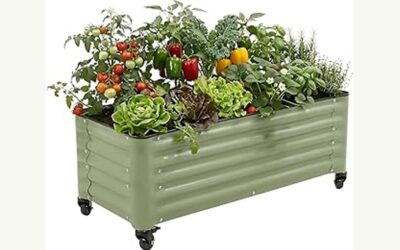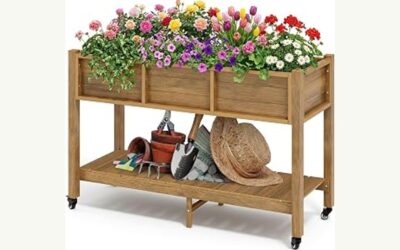



Gardening from a wheelchair becomes easier when the planting surface is brought within comfortable reach. However, height alone does not make a planter accessible. The most useful wheelchair accessible raised garden beds also provide space to approach the planting area, manageable front-to-back reach, stable construction, and drainage that will not create slippery puddles around the chair.
We compared 10 available products, screening their listed dimensions, elevated design, mobility, planting capacity, material, drainage, and small-space suitability. Seven are plausible candidates for seated gardening, although none can be confirmed as a universal fit without measuring the individual gardener and chair. For working close to plants with less hand strain, our guide to an ergonomic hand trowel for arthritis may also be helpful.
STBoo Elevated Garden Bed with Shelf, 2 x 4 ft Raised Planter for Comfortable Patio Growing Vego garden Classic Rolling Raised Garden Bed for Mobile Patio Growing Best Choice Products 48x24x30in Galvanized Raised Garden Bed for Easier, Accessible Growing All Things Cedar RGL34 Raised Garden Box with Legs for Accessible Patio Growing Prices and availability can change. We may earn a commission from qualifying purchases.


Pros
- Accessible 32-inch height can make routine garden care more comfortable.
- Mobile design is useful when a patio or balcony layout needs to change.
- The shelf adds practical storage without requiring a separate garden organizer.
- The 2 x 4-foot format offers useful growing space for compact outdoor areas.
Cons
- The product information does not list the planter's soil volume, so gardeners should plan their growing-media purchase after assembly.
- Assembly is required, and the planter will need to be positioned on a suitable surface before the wheel brakes are engaged.
- Gardeners needing a larger root zone or more planting area may prefer a wider or ground-level raised bed.
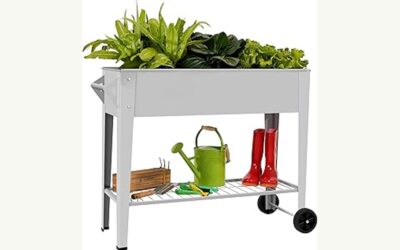
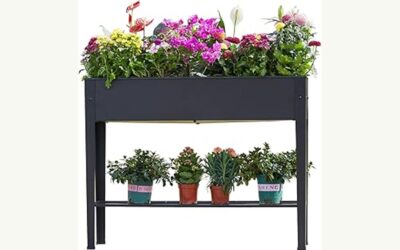
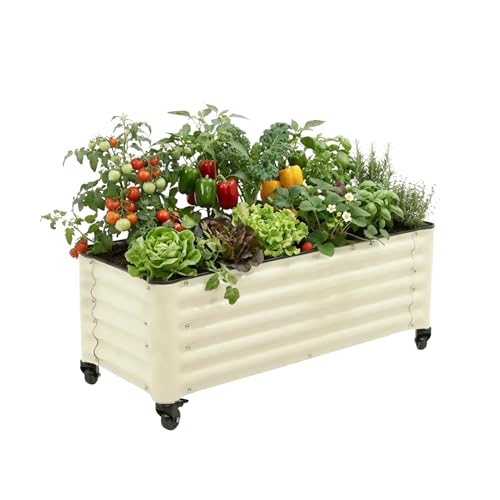
The STBoo Elevated Raised Garden Bed is a wheeled, 2 x 4-foot planter designed for growing vegetables, herbs, flowers, and succulents where ground-level gardening is inconvenient or space is limited. Its 32-inch height makes it a practical option for homeowners, balcony gardeners, and older gardeners who prefer to work while standing.
Based on the listed features, the main benefit is easier access to routine planting, weeding, and harvesting. Four smooth-rolling wheels allow the bed to be moved, while locking brakes are intended to hold it in place on patios, balconies, or decks. The elevated format also keeps the planting area separate from the ground surface.
The frame is made from galvanized steel, and the white finish gives the planter a clean appearance. A lower shelf provides space for tools, watering cans, plant pots, or potting supplies. Pre-drilled drainage holes are included to help excess water escape, which is important for reducing waterlogging in a raised container.
In a small patio or balcony garden, the 48 x 24-inch planting area can support a focused collection of edible or ornamental plants without taking up the footprint of a full ground-level bed. The wheels may also help when the planter needs to be repositioned, although it should be placed on a suitable surface with the brakes engaged before gardening.
Assembly is required, and the supplied information states that hardware and instructions are included. The soil volume is not specified, so gardeners should confirm the required amount of suitable growing medium before filling the bed. Overall, this planter is a good fit for accessible, organized container gardening, while gardeners needing maximum root depth, a larger growing area, or a permanent ground-level bed may want a different design.
Best For / Avoid If
Best for buyers prioritizing
- Accessible 32-inch height can make routine garden care more comfortable.
- Mobile design is useful when a patio or balcony layout needs to change.
- The shelf adds practical storage without requiring a separate garden organizer.
Consider another option if
- The product information does not list the planter's soil volume, so gardeners should plan their growing-media purchase after assembly.
- Assembly is required, and the planter will need to be positioned on a suitable surface before the wheel brakes are engaged.
- Gardeners needing a larger root zone or more planting area may prefer a wider or ground-level raised bed.
Pros
- Mobile design can simplify seasonal repositioning and access.
- Compact dimensions are practical for small-space gardening.
- Deep raised-bed format accommodates varied plantings.
- Suitable for patios, decks, balconies, rooftops, and other hard surfaces.
Cons
- The listed dimensions provide limited width, so gardeners planning larger crops or many plants may need additional growing space.
- Drainage details and included accessories are not specified, so setup may require checking how excess water is managed.
- Gardeners should confirm that the intended surface can safely support the filled bed, since soil weight and wheel-load limits are not provided.
The Vego garden Classic Rolling Garden Bed is a raised metal planter designed for movable container gardening. Its 48 x 21 x 19-inch dimensions make it a practical option for homeowners, balcony gardeners, older gardeners, and anyone who wants a defined growing area without preparing an in-ground bed.
The most useful feature is the rolling design, which allows the bed to be repositioned as sunlight, weather, or convenience changes. The listed deep planting space can support vegetables, herbs, and flowers that need more root room than a shallow planter typically provides, although the product data does not specify usable soil capacity.
The narrow rectangular footprint is easier to fit into small outdoor areas than a large traditional raised bed. The raised height also keeps the growing area distinct from the surrounding surface. Assembly details, drainage design, included hardware, and any wheel-locking controls are not provided, so gardeners should review those points before installation and plan the soil and watering setup accordingly.
This bed is suited to patios, decks, balconies, rooftops, and other hard surfaces where in-ground gardening is not practical. The wheels may also help gardeners move the planter away from changing weather or place it where plants receive better light, provided the route and surface are suitable for a filled raised bed.
The metal construction is described as durable for outdoor gardening use, but long-term finish performance and weather resistance are not specified. Before filling it, check that the supporting surface is level and strong enough for the combined weight of the bed, soil, and plants. Because drainage information is missing, confirm how excess water exits and choose a soil mix appropriate for container growing.
This is a good fit for gardeners who value movable, deep planting space in a compact footprint. Those needing a large growing area, detailed drainage information, or a clearly stated wheel-load capacity may prefer a different raised-bed system with those specifications documented.
Best For / Avoid If
Best for buyers prioritizing
- Mobile design can simplify seasonal repositioning and access.
- Compact dimensions are practical for small-space gardening.
- Deep raised-bed format accommodates varied plantings.
Consider another option if
- The listed dimensions provide limited width, so gardeners planning larger crops or many plants may need additional growing space.
- Drainage details and included accessories are not specified, so setup may require checking how excess water is managed.
- Gardeners should confirm that the intended surface can safely support the filled bed, since soil weight and wheel-load limits are not provided.
Pros
- Raised access can make planting and maintenance more comfortable for gardeners who prefer less bending or kneeling.
- The combination of a 48-by-24-inch footprint and 8-cubic-foot capacity offers useful growing space without requiring a large yard.
- Drainage features and covered corners address two practical concerns for container-style gardening.
Cons
- The elevated format may be less suitable for deep-rooted crops or gardeners who want direct contact with native soil.
- The product information does not specify assembly steps, included tools, or how much soil is needed to fill the bed.
- A 400-pound fill capacity means the placement surface should be considered carefully before filling, especially on balconies or other elevated areas.
The Best Choice Products 48x24x30in raised garden bed is an elevated galvanized steel planter designed for growing vegetables, herbs, and flowers above ground level. Its standing height makes it a practical choice for homeowners, older gardeners, and beginners who want a more accessible alternative to a traditional ground-level bed.
The feature set focuses on convenient everyday gardening. The 30-inch height can reduce the need for bending and kneeling, while the 8-cubic-foot planting area provides room for a useful selection of plants within a relatively compact footprint. The listed 400-pound fill capacity is important when planning the soil and placement.
The bed measures 48 inches long by 24 inches wide by 30 inches high and weighs 29.7 pounds before filling. Its galvanized steel construction is described as weatherproof, and the integrated drainage system is intended to help excess water leave the growing area. Corner protectors help reduce contact with exposed corners and can hold small gardening tools.
This planter should fit well on patios, porches, balconies, and small outdoor living areas where an in-ground bed is unavailable. It can provide a dedicated growing space near the home, although the available product information does not specify assembly requirements, included hardware, or the amount of soil required.
Gardeners should select a stable, level location and account for the bed's filled weight before installation, particularly on a balcony or other elevated surface. Drainage also depends on proper placement and suitable growing media, so the bed should not sit where runoff could damage the surrounding area.
This is a sensible option for accessible container-style gardening and compact outdoor spaces. Gardeners who need direct access to native soil, more planting depth, or a larger growing area may prefer a different raised-bed design.
Best For / Avoid If
Best for buyers prioritizing
- Raised access can make planting and maintenance more comfortable for gardeners who prefer less bending or kneeling.
- The combination of a 48-by-24-inch footprint and 8-cubic-foot capacity offers useful growing space without requiring a large yard.
- Drainage features and covered corners address two practical concerns for container-style gardening.
Consider another option if
- The elevated format may be less suitable for deep-rooted crops or gardeners who want direct contact with native soil.
- The product information does not specify assembly steps, included tools, or how much soil is needed to fill the bed.
- A 400-pound fill capacity means the placement surface should be considered carefully before filling, especially on balconies or other elevated areas.
Pros
- Raised-leg design supports more accessible gardening and easier plant maintenance.
- Untreated cedar construction suits gardeners growing herbs, flowers, and food-bearing plants.
- Built-in slatted drainage helps manage excess water in the planting box.
- Handcrafted, sanded construction offers a finished appearance without requiring a custom build.
Cons
- The planter still requires assembly, even though the product information describes the process as minimal.
- The listed dimensions provide a moderate growing area, so gardeners planning deep-rooted or high-volume crops may need a larger bed.
- A filled planter will be substantially heavier than the listed 42-pound product weight, so its final location should be chosen carefully.
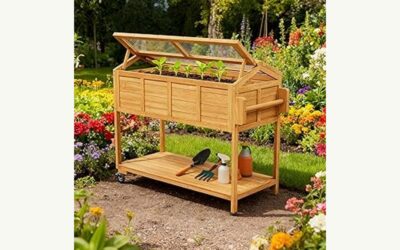
The All Things Cedar RGL34 is an elevated cedar garden box intended for growing herbs, flowers, and other plants in a contained planting space. Its raised legs make it especially suitable for gardeners who prefer not to bend as far, as well as users planning an accessible garden on a patio, deck, or level outdoor area.
The product information identifies the box as handcrafted from untreated Western Red Cedar. That untreated construction is presented as suitable for food-bearing plants, while the natural wood finish can blend with outdoor surroundings. The elevated format also keeps the planting area separate from ground-level garden space, which may help with organization and routine access.
The listed specifications give the planter a 48 by 25 inch footprint and a height of about 33 inches, while the product title describes it as 34 inches high. Ship lap bottom slats are designed to let excess water escape, and the smooth sanded finish with snug-fitting parts supports a more polished assembled appearance. Pre-cut components and instructions are included for minimal assembly.
For a backyard or small-space garden, this box can create a dedicated area for culinary herbs, compact flowers, or other plants that fit its available soil depth. It can also make productive use of a deck or patio where an in-ground bed is not practical, provided the surface is stable and can support the considerable weight of soil and water.
Gardeners should plan the final location before filling the box because the listed 42-pound product weight does not include soil or plants. The product information does not specify soil capacity, maximum load, or the growing depth, so crops with extensive roots may require a different planter. Overall, it is a sensible option for accessible, elevated container gardening, while gardeners needing a larger or deeper growing space should compare those measurements carefully.
Best For / Avoid If
Best for buyers prioritizing
- Raised-leg design supports more accessible gardening and easier plant maintenance.
- Untreated cedar construction suits gardeners growing herbs, flowers, and food-bearing plants.
- Built-in slatted drainage helps manage excess water in the planting box.
Consider another option if
- The planter still requires assembly, even though the product information describes the process as minimal.
- The listed dimensions provide a moderate growing area, so gardeners planning deep-rooted or high-volume crops may need a larger bed.
- A filled planter will be substantially heavier than the listed 42-pound product weight, so its final location should be chosen carefully.

Pros
- Comes as a 2-pack, useful for separating plant types or setting up a small garden in stages.
- Bottomless design provides drainage and works on grass, soil, or patio surfaces according to the product information.
- Compact oval shape fits small yards and patios while still offering usable growing space.
- Reviewers commonly mention that the beds feel sturdy and are generally easy to assemble.
Cons
- Because the beds are bottomless, gardeners placing them on weedy ground may want to prepare the site or add a weed barrier such as cardboard before filling.
- Some reviewers note that aligning the curved sections during assembly can feel awkward, especially when working alone.
- The 12 inch height may be less comfortable for gardeners who need a taller raised bed to reduce bending.
The Tegarbed HKTY-TYHYC-421-2 is a 2-pack set of oval galvanized metal raised garden beds designed for outdoor vegetable, herb, flower, and small fruit planting. Each bed measures 48 inches long, 24 inches wide, and 12 inches high, making it a manageable size for beginners, homeowners organizing a yard garden, or patio growers who want defined planting space without building a wood bed.
Based on the listed specifications, the key gardening benefit is the combination of a compact footprint and an open-bottom design. The open base allows excess water to drain away and, when placed over soil or lawn, lets plant roots grow downward into the native ground. The manufacturer lists the 1 ft depth as suitable for root crops, fruiting vegetables, herbs, and greens, which fits common home garden uses such as lettuce, basil, peppers, bush beans, radishes, and flowers.
The product information lists galvanized metal construction with an average 1mm thickness, rust resistance, weather resistance, and a smooth-edge finish. For gardeners, that means the bed is intended to hold soil in a stable shape while offering safer handling during assembly than rough, unfinished metal. The 24 inch width is also practical because most people can reach the center from either side for planting, weeding, watering, and harvesting.
Assembly is described as straightforward, with a manual, parts list, and installation steps included. Reviewers commonly report that the beds are easy to put together and feel sturdy once assembled, although a few mention that lining up the curved sections can take patience or an extra set of hands. The beds are lightweight enough to position before filling, but like most raised beds, they should be placed where you want them before adding soil.
In a backyard, the two-bed set can separate tomatoes and companion herbs from greens or flowers. On a patio, the open bottom means placement should be considered carefully, since water and soil contact with the surface may matter. On grass or soil, gardeners may want to clear vegetation first or use cardboard under the bed to help reduce weeds before filling with a mix such as topsoil, compost, and potting soil, as suggested in the product information.
This is a good fit for gardeners who want an approachable, metal raised-bed kit for compact growing areas and who do not need a tall, waist-height planter. Gardeners with mobility concerns, very deep-rooted crops, or a need for a fully enclosed planter may prefer a taller bed or a planter with a base. Overall, the listed design points to a useful, space-conscious raised bed set for organizing vegetables, herbs, and flowers in a home garden.
Best For / Avoid If
Best for buyers prioritizing
- Comes as a 2-pack, useful for separating plant types or setting up a small garden in stages.
- Bottomless design provides drainage and works on grass, soil, or patio surfaces according to the product information.
- Compact oval shape fits small yards and patios while still offering usable growing space.
Consider another option if
- Because the beds are bottomless, gardeners placing them on weedy ground may want to prepare the site or add a weed barrier such as cardboard before filling.
- Some reviewers note that aligning the curved sections during assembly can feel awkward, especially when working alone.
- The 12 inch height may be less comfortable for gardeners who need a taller raised bed to reduce bending.

Pros
- Elevated height is easier on backs and knees than a low ground-level bed.
- Mobility features are useful when you want to follow the sun or move plants out of harsh weather.
- Steel construction with a powder-coated finish is a good fit for outdoor use.
- Built-in drainage and a storage shelf add practical value for everyday gardening.
- Assembly hardware and instructions are included, and the product data estimates a manageable setup time.
Cons
- With about 2.5 cubic feet of soil capacity, it is smaller than a full-size stationary raised bed.
- Even with wheels, a fully loaded planter may still be awkward for some users to move on uneven ground.
- If used indoors or on a deck, you may want separate drip protection because a waterproof saucer is not included.
The LEETOLLA Elevate is a standing-height raised garden bed made for growing herbs, vegetables, flowers, or foliage plants in smaller outdoor spaces. Based on the listed specifications, it is especially suited to gardeners who want a planter that is easier to reach than a low bed and easier to reposition than a fixed container.
Its most useful features are the 32-inch height, powder-coated iron construction, 400 lb capacity, and built-in drainage system. The product information also notes five drainage holes and two cross drainage lines, which are intended to help move excess water out of the soil and support healthier container conditions.
The bed measures 14.6 inches deep, 37.4 inches wide, and 31.6 inches high, with about 2.5 cubic feet of soil capacity. Assembly is listed at roughly 30 to 45 minutes with the included hardware and tools, and the handle plus two wheels are designed to make repositioning simpler once the planter is set up.
This style of planter can work well on patios, decks, balconies, and in backyards where sunlight shifts during the day. The lower shelf adds a practical storage area for hand tools, fertilizer, or small pots, and reviewers commonly mention that the bed is easy to assemble and helpful when they want to move plants around.
The main tradeoffs are size and mobility under load. A planter this compact will not replace a large in-ground bed, and gardeners who need deep root space or frequent one-handed movement may want a different setup. If used indoors or on a deck, separate drip protection may be useful because a waterproof saucer is not included, but for accessible small-space gardening this is a sensible, well-focused option.
Best For / Avoid If
Best for buyers prioritizing
- Elevated height is easier on backs and knees than a low ground-level bed.
- Mobility features are useful when you want to follow the sun or move plants out of harsh weather.
- Steel construction with a powder-coated finish is a good fit for outdoor use.
Consider another option if
- With about 2.5 cubic feet of soil capacity, it is smaller than a full-size stationary raised bed.
- Even with wheels, a fully loaded planter may still be awkward for some users to move on uneven ground.
- If used indoors or on a deck, you may want separate drip protection because a waterproof saucer is not included.

Pros
- Slim wall-hugging shape suits balconies, patios, courtyards, and other narrow spaces.
- Raised working height may reduce the need for frequent bending during planting and harvesting.
- The combination of a breathable liner and half V-shaped design accommodates different root depths.
Cons
- At 40.7 inches long and 18.1 inches wide, it still requires a dedicated footprint and may not suit very tight spaces.
- A 170-liter soil capacity can require a substantial amount of growing medium to fill.
- Gardeners needing a wider planting area or multiple large crops may prefer a larger raised bed.
The VegTrug Wall Hugger is a small, elevated cedar raised garden bed intended for growing vegetables, herbs, and salad greens where a traditional rectangular bed would take up too much room. Its slim, flat-back design is especially suited to homeowners, apartment gardeners, and older or mobility-conscious gardeners who want a dedicated planting area near a wall or fence.
Based on the listed specifications, the half V-shaped planter and 170-liter soil capacity provide room for both shallow-rooted and deeper-rooted plants. The included breathable liner is designed to improve drainage and aeration, which can help create a more suitable root environment when the bed is filled with an appropriate growing medium.
The bed measures 40.7 inches long, 18.1 inches wide, and 31.5 inches high, with a listed weight of 29 pounds. Its elevated working height can make routine planting and harvesting more accessible than ground-level gardening, and the product information describes the height as wheelchair-friendly. Plastic feet are included for added stability, while the natural cedar has a water-based protective finish.
In a backyard or patio setting, the Wall Hugger can be placed along a fence, exterior wall, or courtyard edge to grow kitchen herbs and salad greens without using a broad section of floor space. The narrow footprint may also work well in a balcony or compact garden area, provided the location can accommodate the bed's dimensions and the weight of its soil-filled setup.
This planter still needs a suitable location, regular watering, and routine care for the plants and growing medium. Its soil capacity and 29-pound unfilled weight may make relocation difficult once prepared for planting, so positioning should be considered beforehand. It is a strong fit for accessible, wall-side growing in limited spaces, while gardeners who need more width or room for larger crops should consider a bigger raised bed.
Best For / Avoid If
Best for buyers prioritizing
- Slim wall-hugging shape suits balconies, patios, courtyards, and other narrow spaces.
- Raised working height may reduce the need for frequent bending during planting and harvesting.
- The combination of a breathable liner and half V-shaped design accommodates different root depths.
Consider another option if
- At 40.7 inches long and 18.1 inches wide, it still requires a dedicated footprint and may not suit very tight spaces.
- A 170-liter soil capacity can require a substantial amount of growing medium to fill.
- Gardeners needing a wider planting area or multiple large crops may prefer a larger raised bed.

Pros
- Tall profile offers more convenient access than a traditional in-ground planting area.
- Modular panel design can be arranged into multiple garden layouts.
- Natural drainage is supported because the design does not include a bottom panel.
Cons
- The missing bottom panel means it needs a suitable surface and may require additional planning to control weeds or protect the underlying area.
- Filling a bed with more than 160 gallons of soil can require significant material and preparation.
- Its 78 x 42-inch footprint may be too large for some balconies, narrow patios, or compact growing areas.
The HEAHOLD raised garden bed is a modular galvanized steel planter intended for growing vegetables, flowers, and herbs above ground level. Its 17-inch height and oval 78 x 42-inch footprint make it a practical option for homeowners who want a defined growing area without planting directly into existing soil.
Based on the listed specifications, the bed holds more than 160 gallons of soil and provides 17 inches of depth for root development. That capacity can support a substantial planting area, while the raised format helps separate the garden from compacted or unsuitable ground soil.
The structure uses galvanized steel with a powder-coated finish described as rust resistant for outdoor use. Eight interlocking panels can be arranged in nine configurations, and the pre-drilled, numbered panels are designed for tool-free assembly in about 15 minutes. Rubber edging covers the metal edges during setup and use.
This planter could work well in a backyard, on a sufficiently spacious patio, or in another area where a large raised bed can be filled and reached from the sides. The taller profile may be more comfortable for older gardeners or anyone who prefers not to work at ground level, while the modular design allows the layout to be adjusted as the garden changes.
The bed does not include a bottom panel, so it relies on natural drainage and should be installed on a suitable surface. Gardeners should plan for the amount of soil needed to fill its listed capacity and confirm that the 78 x 42-inch footprint fits their space. It is a reasonable choice for accessible, customizable raised-bed gardening, while those needing a smaller planter or a contained base may prefer a different design.
Best For / Avoid If
Best for buyers prioritizing
- Tall profile offers more convenient access than a traditional in-ground planting area.
- Modular panel design can be arranged into multiple garden layouts.
- Natural drainage is supported because the design does not include a bottom panel.
Consider another option if
- The missing bottom panel means it needs a suitable surface and may require additional planning to control weeds or protect the underlying area.
- Filling a bed with more than 160 gallons of soil can require significant material and preparation.
- Its 78 x 42-inch footprint may be too large for some balconies, narrow patios, or compact growing areas.

Pros
- Good fit for patios, balconies, decks, and small backyards where in-ground beds are not practical.
- Elevated design is easier to access than ground-level beds, especially for routine watering and harvesting.
- Locking casters add useful mobility while still allowing the planter to stay put when positioned.
- Resin material is listed as non-toxic and weather-resistant for outdoor growing use.
- Reviewers commonly mention straightforward assembly and appreciate the storage shelf and moisture features.
Cons
- The 17.7-gallon capacity may be limiting for large vegetable crops or plants with deep, spreading root systems.
- Gardeners who prefer the look and weight of real wood or metal may find the plastic/resin construction less appealing.
- As with any wheeled elevated planter, it should be locked and placed on a stable, level surface, especially when filled with soil and water.
The WTFGO 33.7-inch elevated raised garden bed is a floor-standing resin planter made for small-space growing on patios, balconies, decks, and backyards. Based on the listed specifications, it is best suited for herbs, flowers, succulents, and smaller vegetables rather than large in-ground style crops. The raised height is the main practical advantage for gardeners who want to avoid frequent bending or kneeling.
The planter measures 42.4 inches long, 16.8 inches wide, and 33.7 inches high, with a listed 17.7-gallon planting capacity and 110-pound load capacity. That gives it a useful but contained growing area for a compact kitchen herb garden, a row of lettuces, patio flowers, or a few small vegetable starts. The divisible planter design also gives gardeners the option to separate plant types or manage different varieties in one box.
Water management is a key part of this planter’s design. The product information lists drainage holes, a self-watering style reservoir, a water gauge, and a side drainage function, all of which can help beginners pay closer attention to moisture levels. These features do not replace checking the soil by hand, but they can make overwatering easier to spot and help prevent water from sitting unnoticed around roots.
The 360-degree rotating locking wheels are useful for changing sun exposure, moving the planter out of the way for patio cleaning, or bringing it closer to the house during changing weather. The lower storage shelf adds practical space for gloves, a hand trowel, seed packets, small pots, or plant food. Reviewers commonly mention that the planter is easy to move and that assembly is straightforward, although some users note that snapping parts together may still take a bit of pressure.
The plastic and resin construction is listed as weather-resistant and non-toxic, which makes it a low-maintenance alternative to untreated wooden planters. It should still be treated like a filled garden container, meaning it is best placed on a level surface, moved carefully when loaded with soil and water, and kept with the casters locked when in use. Periodically clearing drainage points and emptying excess water when needed will help keep the planter functioning properly.
This is a practical choice for beginners, older gardeners, renters, and homeowners who want an accessible raised bed without building a permanent structure. Gardeners planning to grow large tomatoes, sprawling squash, or deep-rooted crops may want a larger raised bed or in-ground space, but for compact edible and ornamental plantings, the WTFGO elevated planter offers a convenient mix of height, mobility, drainage, and storage.
Best For / Avoid If
Best for buyers prioritizing
- Good fit for patios, balconies, decks, and small backyards where in-ground beds are not practical.
- Elevated design is easier to access than ground-level beds, especially for routine watering and harvesting.
- Locking casters add useful mobility while still allowing the planter to stay put when positioned.
Consider another option if
- The 17.7-gallon capacity may be limiting for large vegetable crops or plants with deep, spreading root systems.
- Gardeners who prefer the look and weight of real wood or metal may find the plastic/resin construction less appealing.
- As with any wheeled elevated planter, it should be locked and placed on a stable, level surface, especially when filled with soil and water.

Pros
- Elevated design is helpful for gardeners who want easier access than an in-ground bed.
- Mobile frame with lockable wheels adds flexibility for patios, decks, and changing light conditions.
- Fir wood construction and natural finish give it a traditional garden look.
- Drainage holes and liner are included, so the planter is set up for container-style growing.
- Reviewers commonly mention that the finished planter looks attractive and is useful for herbs and deck gardening.
Cons
- Unfinished fir wood may require additional care or sealing if gardeners want to improve longevity outdoors.
- Assembly is required, and some reviewers report that it can take longer than expected or involve alignment challenges.
- The 100-pound weight capacity means gardeners should be mindful of heavy soil mixes, large crops, or overloading the bed.
The Best Choice Products SKY5732 is a mobile elevated raised garden bed designed for container-style growing on patios, decks, and small outdoor spaces. Based on the listed specifications, it measures 48 by 23.25 by 32 inches and provides 5.5 cubic feet of planting capacity. Its raised height makes it especially relevant for gardeners who want to grow herbs, vegetables, or flowers without working at ground level.
The standout benefit is accessibility. At 32 inches tall, this planter can reduce the amount of bending needed for planting, weeding, watering, and harvesting. The locking wheels also add useful flexibility, letting gardeners move the bed to adjust for sun exposure or to clear space on a patio. Once positioned, the wheels can be locked to help keep the planter in place.
The planter is made from fir wood with a natural, unfinished appearance. The product information indicates that it includes a protective liner to separate the soil from the wood, along with four drainage holes to let excess water escape. That combination is important in raised planters because overly wet soil can stress roots, while a liner helps keep the growing medium contained inside the bed.
For real backyard use, this size is well suited to a compact herb garden, salad greens, flowers, or smaller vegetable plantings. The lower shelf can hold garden accessories, spare pots, or trays, although items stored underneath should be chosen with drainage in mind. If water passes through the planter, weather-tolerant storage items are the safer choice.
There are a few practical limitations to consider. The listed weight capacity is 100 pounds, so gardeners should avoid overloading the bed with very heavy soil mixes or large, sprawling crops. Assembly is required, and while several reviewers describe it as manageable, others mention that it may take longer than expected or that predrilled hole alignment can be frustrating. Wearing gloves during assembly is a sensible precaution when handling unfinished wood.
This raised bed is a good option for gardeners who want a movable, attractive, waist-height planter for small-space growing. Gardeners looking for a permanently installed, heavy-duty bed or a fully finished wood planter for long-term exposed outdoor use may prefer a different style or plan on extra wood care before planting.
Best For / Avoid If
Best for buyers prioritizing
- Elevated design is helpful for gardeners who want easier access than an in-ground bed.
- Mobile frame with lockable wheels adds flexibility for patios, decks, and changing light conditions.
- Fir wood construction and natural finish give it a traditional garden look.
Consider another option if
- Unfinished fir wood may require additional care or sealing if gardeners want to improve longevity outdoors.
- Assembly is required, and some reviewers report that it can take longer than expected or involve alignment challenges.
- The 100-pound weight capacity means gardeners should be mindful of heavy soil mixes, large crops, or overloading the bed.
Start with the gardener, not a standard height
A 30- to 34-inch overall height appears frequently among the elevated candidates, but overall height is not necessarily the soil-surface height. Seat height, armrest position, trunk mobility, and preferred working posture all affect fit. Before buying, sit in the chair that will be used and measure from the ground to a comfortable hand position.
The available specifications list the All Things Cedar model at 34 inches overall, the WTFGO planter at 33.7 inches, the STBoo, LEETOLLA, and mobile Best Choice Products models at 32 inches, the VegTrug at 31.5 inches, and the galvanized Best Choice Products model at 30 inches. Treat these as comparison points rather than proof of accessibility.
Check knee and foot clearance
An elevated box can reduce bending yet remain difficult to use from a wheelchair if a shelf, brace, wheel assembly, or planter wall blocks the approach. The product data does not provide complete under-bed clearance measurements, so compare photographs and request the clear height, width, and depth beneath the planting box before ordering.
Lower shelves are convenient for storage but can be an accessibility tradeoff. The STBoo, LEETOLLA, WTFGO, and mobile Best Choice Products planters include shelves. Confirm that each shelf sits far enough back for the chair’s footrests and the gardener’s knees. A shelf should not be used as a step or transfer support unless the manufacturer specifically permits it.
Keep the planting area within reach
Bed width determines whether the center can be reached without leaning or twisting. A 24- or 25-inch-wide planter may be workable when approached from both long sides, but a wall-mounted layout normally allows access from only one side. The VegTrug Wall Hugger is only 18.1 inches deep and has a flat back, making it a notable option for narrow patios, but its placement against a wall removes rear access.
Place frequently harvested herbs and salad greens along the nearest edge. Reserve the back for plants requiring less attention. If growing taller crops, consider how stakes and foliage will affect reach; the related guide to a tomato planter with a trellis explains another container format for supported plants.
Choose fixed stability or controlled mobility
Wheels help reposition a planter on a patio, but soil and water make even a compact bed heavy. The STBoo, WTFGO, and mobile Best Choice Products models list locking wheels. The LEETOLLA uses two wheels and a handle, while the Vego garden model is described as rolling. A mobile planter is most practical on a firm, level surface with thresholds and hoses kept out of the route.
Lock wheels before planting, watering, or harvesting. Do not pull on the bed for balance or use it as a mobility aid. The Vego garden Classic Rolling Garden Bed may suit limited patio space, but the available data does not state its working height or under-bed clearance, so its wheelchair fit cannot be confirmed from the listing.
Match capacity and depth to the planting plan
Greater soil volume can support a broader planting plan, but it also increases total load and makes relocation harder. The galvanized Best Choice Products elevated bed lists 8 cubic feet of planting space and a 400-pound fill capacity. The VegTrug lists 170 liters, while the WTFGO model lists 17.7 gallons and a 110-pound load capacity. These figures are not directly interchangeable, so use the stated limits for each product.
The two bottomless Tegarbed beds and the 17-inch-high HEAHOLD bed are conventional ground-level frames rather than elevated wheelchair workstations. They may reduce some bending or support side access in a custom layout, but their available specifications do not show knee clearance or a seated working surface. They are therefore weaker matches for this specific search intent.
Plan drainage and watering access
Elevated planters dry differently from in-ground beds and need an unobstructed drainage path. The STBoo has predrilled drainage holes; the galvanized Best Choice Products model has an integrated system; the cedar All Things Cedar model drains through ship-lap bottom slats; the VegTrug includes a breathable liner; and the mobile wood Best Choice Products bed lists four drainage holes. The WTFGO model adds a drainage gauge.
Keep outlets away from the chair’s normal parking position and check that runoff does not create a slick surface. Use a light hose, watering wand, or nearby supply that can be reached without navigating around the planter. A rain barrel for a small garden is another watering option, but its spigot and overflow route must also remain accessible.
Compare material, assembly, and maintenance
Wood offers a traditional appearance but needs routine inspection around joints, legs, liners, and drainage points. The All Things Cedar bed uses untreated Western red cedar, while the VegTrug uses cedar with a water-based finish. The mobile Best Choice Products wood planter includes a liner separating the wood from soil.
Metal and resin avoid some wood-specific upkeep, but fasteners, coatings, wheels, and drainage openings still need inspection. Tighten loose hardware according to the instructions, clear blocked outlets, and check for sharp or damaged edges before each season. Assembly and filling may require assistance because soil capacity and elevated frames can create awkward loads.
Avoid common accessibility mistakes
Do not assume that a product labeled ergonomic, elevated, or senior-friendly will fit every wheelchair. Common mistakes include measuring only overall height, overlooking footrest clearance, placing a bed where only its short end is approachable, and filling a mobile planter before confirming that it rolls safely along its intended route.
Allow enough level space to approach, turn, and leave without backing into steps or garden borders. Confirm that a balcony or deck can carry the filled planter’s total load; the supplied capacity is not the same as confirmation that the supporting structure is suitable. Consult a qualified building professional when load capacity is uncertain.
Research Methodology and Trust
This guide is based on the available product specifications and feedback counts, not physical testing. We screened all 10 candidates for relevance to seated gardening, then gave greater weight to elevated working height, narrow reach, approach space, drainage, stability, and documented dimensions. Mobile features were treated as conveniences rather than automatic proof of accessibility.
Seven products remained plausible elevated candidates. The two bottomless ground beds were not treated as primary wheelchair-accessible recommendations, and the rolling Vego garden model requires additional height and clearance information. Ratings with zero supplied reviews were not used as evidence of owner satisfaction. Where review counts were available, they provided context but did not override design fit.
The analysis was updated during August 2026. Product specifications, prices, and availability can change, so confirm current dimensions, weight limits, included liners, wheel locks, and assembly instructions before purchase.
Frequently Asked Questions
What height should wheelchair accessible raised garden beds be?
There is no single correct height for every gardener. Measure the seated user’s comfortable hand position and compare it with the planter’s actual soil-surface height, not just its overall height.
How wide should a bed be for seated gardening?
The user should be able to reach the planting area without excessive leaning or twisting. A narrow bed can be easier from one side, while a wider bed may work when both long sides remain approachable.
Are raised beds with wheels safe to use from a wheelchair?
They can be practical on a firm, level surface when their brakes are engaged before gardening. Never use a wheeled planter for transfer support, and follow the manufacturer’s movement and load instructions.
Do storage shelves reduce wheelchair access?
They can. A low or forward shelf may block footrests and prevent knees from moving under the planting box, so verify the shelf’s clear height and setback.
Can a bottomless raised bed be wheelchair accessible?
A bottomless bed can be incorporated into an accessible garden layout, but a low frame does not provide the knee clearance of an elevated planter. Path width, edge reach, bed height, and approach direction must be planned together.
How should an accessible elevated bed be maintained?
Keep drainage openings clear, inspect fasteners and legs, test wheel locks, and examine liners or coatings for damage. Address unstable parts before use and follow the manufacturer’s maintenance instructions for the listed material.
Will an accessible raised bed fit on a balcony?
Compact dimensions alone do not establish balcony suitability. Account for turning space, drainage, door thresholds, and the total filled weight, and verify that the supporting structure can safely carry the load.