


Transforming coarse garden waste into rich, uniform organic matter is one of the most rewarding parts of maintaining a healthy garden. Even after a compost pile breaks down completely, it often contains undecomposed twigs, dense wood chips, eggshell fragments, and clumped soil. Learning how to sift finished compost allows gardeners to separate fine, nutrient-dense humus from coarse debris, creating an ideal texture for seed starting, potting mixes, and lawn top-dressing. This guide is designed for home gardeners, raised bed growers, and backyard composters who want practical, physical solutions to refine their compost without wasting time or straining their joints.
For this evaluation, 0 commercial products met our initial catalog screening criteria for direct inclusion, prompting us to focus our analysis on sifting methodologies, mechanical configurations, and hardware specifications. Gardeners looking to process large volumes may also want to explore our guide to the best compost sifter for large batches for heavy-duty rotary options. Understanding mesh gauge, frame dimensions, moisture management, and physical leverage ensures that you choose or build a tool suited to your space, physical comfort, and seasonal output.
Whether you manage a compact urban bin or maintain multi-bin open piles, the right approach to separating finished humus from bulky material prevents weed seed propagation and improves moisture retention across your vegetable beds. You can discover more seasonal soil amendment techniques in our compost, soil, and mulch resource library.
Screen Mesh Size: 1/4-Inch vs. 1/2-Inch Hardware Cloth
The mesh aperture of your sifting screen dictates the texture and intended use of your finished compost. A 1/4-inch mesh screen produces a delicate, fluffy consistency that is ideal for starting delicate seeds, creating container potting blends, or spreading as a light lawn top-dressing. However, 1/4-inch hardware cloth requires drier material and clogs more rapidly if moisture is present in the organic matter.
Conversely, a 1/2-inch mesh screen works significantly faster and resists clogging. It allows small organic particles and tiny bark fragments through while catching thick branches, stones, and unprocessed fruit pits. Compost passed through a 1/2-inch screen is ideal for mulching fruit trees, amending in-ground vegetable beds, or filling deep raised planters. Many experienced gardeners utilize a dual-stage system, passing bulk compost through a 1/2-inch screen first before refining a portion through a 1/4-inch screen for nursery flats.
| Screen Mesh Size | Particle Consistency | Ideal Garden Application | Throughput Speed |
|---|---|---|---|
| 1/8-inch | Powder fine | Seedling starter mixes, potting plugs | Very slow (high clog risk) |
| 1/4-inch | Uniform and crumbly | General potting soil, lawn top-dressing | Moderate |
| 1/2-inch | Coarse and textured | Raised bed fill, garden mulch, soil conditioning | Fast |
Manual Box Screens vs. Rotary Trommel Sifters
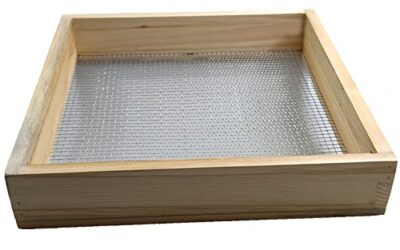
Choosing between a stationary flat screen and a rotary drum depends largely on the volume of compost you generate each season. Flat box sifters, often built from dimensional lumber and wire mesh, rest directly over a standard wheelbarrow or garden cart. You shovel compost onto the wire and agitate the frame back and forth by hand. They are inexpensive, easy to store upright against a shed wall, and reliable for processing two to three wheelbarrows per weekend.
Rotary trommel sifters feature a cylindrical wire drum turned by a hand crank or small electric motor. As raw compost enters the high end of the drum, rotation tumbles the material, allowing fine particles to fall through the screen while expelling oversized debris out the low end. Rotary sifters dramatically reduce physical exertion on your wrists, shoulders, and lower back, making them the superior choice for high-volume homesteads or gardeners with mobility limitations.
Moisture Management Before Sifting
Moisture content is the single most common factor determining whether sifting is effortless or frustrating. Wet compost smears across wire cloth, blinding the mesh openings and creating gummy balls that refuse to break apart. If you attempt to process compost immediately after heavy rainfall or after turning an active pile, the screen will clog within minutes.
For best results, harvest compost from the bottom or center of a mature pile and spread it out under sun on a tarp for 24 to 48 hours. The material should reach the consistency of wrung-out sponge moisture or slightly drier. It should crumble freely when squeezed in your palm rather than forming a dense, glistening ball of mud. If your organic waste contains coarse woody pieces, processing inputs beforehand with the best compost shredder for garden waste will yield faster breakdown and smoother sifting later.
Frame Construction and Wheelbarrow Compatibility
When selecting or assembling a sifting apparatus, the outer frame dimensions must match your collection container. A manual sifter should rest securely across the rim of a standard wheelbarrow without tipping sideways under the weight of a heavy shovel load. Incorporating wooden cleats or underside runners prevents the frame from sliding off the metal edges during vigorous shaking.
Look for framing made from cedar, redwood, or powder-coated steel to resist rot caused by wet organic matter. Galvanized hardware cloth secured with heavy-duty staples or sandwiched between two wooden laths prevents wire edges from snagging your gardening gloves. Avoid lightweight aluminum window screening or plastic netting, which sag immediately under shovel loads and puncture when contacting sharp twigs.
Ergonomics and Reducing Physical Strain
Repetitive lifting, shaking, and shoveling can cause significant strain on your lumbar spine and shoulders. To minimize joint stress, set your collection cart at waist height rather than working directly off the ground. When working with flat manual screens, slide the frame smoothly across the wheelbarrow rim rather than lifting it vertically with every pass.
Older gardeners and individuals with arthritis should consider angled gravity screens or rotary units. An angled screen allows you to throw compost against a slanted wire surface with a pitchfork, letting gravity pull the fine material through while coarse matter rolls downward onto a separate collection tarp. This approach eliminates the continuous torso twisting required by traditional flat box sifters.
Handling Oversized Organic Residue
Sifting invariably leaves behind a significant volume of oversized residue, known colloquially as compost “tailings.” These rejected materials consist of partially decomposed wood chips, dense root clusters, corncobs, and thick stems. Never throw these items into household trash. They are heavily colonized by beneficial microbial fungi and bacteria, making them outstanding inoculants for your next compost batch.
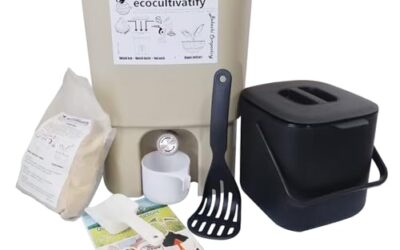
Add these tailings directly back into an active compost bin to provide structural aeration pockets that prevent anaerobic conditions. If you practice indoor kitchen waste fermentation using the best bokashi composting kit for beginners, you can trench these coarse tailings directly alongside fermented food scraps in outdoor soil to accelerate subterranean breakdown.
Maintenance, Rust Prevention, and Storage
Compost contains natural humic acids and moisture that will degrade bare carbon steel screens rapidly. Always clean your sifting apparatus after each work session. Tap the wooden frame firmly on a flat surface to loosen trapped organic fibers, and use a stiff bristle brush to clear stubborn mesh intersections.
Store manual and rotary sifters in an upright position inside a dry garden shed or garage away from rain. If you use galvanized hardware cloth, inspect the edges periodically for broken wire strands that could puncture hands during use. Applying a light seasonal coat of boiled linseed oil to wooden components protects against moisture warping and prolongs the lifespan of your equipment.
Research Methodology and Trust
At Dove Creek Gardens, our equipment evaluation process centers on structural design, user ergonomics, material durability, and real-world garden practicality. We recognize that gardeners require reliable solutions that perform under varied soil conditions without premature mechanical failure. Our research team screened commercial and do-it-yourself sifting designs against standardized criteria including wire gauge, corrosion protection, load-bearing stability, and throughput capacity.
Our editorial analysis relies on published technical specifications, manufacturer engineering standards, metallurgical corrosion ratings, and feedback collected from verified home gardeners and community compost operators. We do not claim hands-on laboratory testing where none occurred; rather, our comparative reviews synthesize verified operational data to help you make informed equipment choices.
This guide was fully reviewed and updated during September 2026 to ensure all recommendations align with current gardening best practices, available screen dimensions, and sustainable organic soil management principles.
Frequently Asked Questions
Why is it necessary to sift finished compost before using it?
Sifting finished compost removes dense wood chunks, unbroken stones, and undecomposed debris that can hinder seedling emergence and root development. It produces a uniform particle size that blends smoothly into potting mixes and spreads evenly across lawn surfaces without creating clumpy barriers.
What is the best mesh size for sifting compost at home?
A 1/4-inch mesh screen is generally considered the most versatile size for home gardeners, producing fine soil suitable for nursery trays and seedbeds. If you only need compost for general garden bed top-dressing or mulching around perennials, a 1/2-inch mesh works significantly faster and resists clogging.
Can you sift compost if it is damp or wet?
Sifting wet compost is not recommended because the damp particles smear together and quickly block the openings in the screen. Allow your finished compost to dry in the sun on a clean tarp for one or two days until it crumbles easily in your hand before beginning the sifting process.
What should you do with the coarse materials left on top of the sifter?
The coarse material, or tailings, should be returned directly to your active compost pile. These unfinished wood chunks and stems are rich in beneficial microflora and provide critical structural aeration pockets that help your next compost batch break down faster.
How do you prevent a manual compost screen from slipping off a wheelbarrow?
To keep a manual screen stable, attach small wooden guide cleats or runner strips to the underside of the frame. These runners rest snugly against the inner edges of the wheelbarrow rim, allowing you to shake the frame back and forth without the risk of it slipping off and dumping coarse material into your clean bin.
Is a rotary compost sifter worth the investment over a flat frame?
A rotary sifter is well worth the investment if you process more than five wheelbarrows of compost each season or suffer from joint stiffness in your wrists and lower back. Rotary drums use mechanical advantage to separate debris continuously, requiring far less physical effort than shaking a manual box screen.
Continue your garden research
Browse more practical guides in Compost, Soil & Mulch.
For product comparisons, see Best Compost Bin For Small Backyard 2026: Reviews and Buying Guide.
See how Dove Creek Gardens researches and compares products.