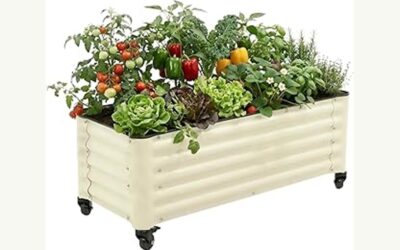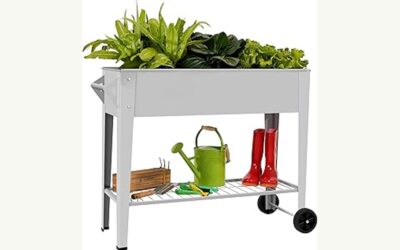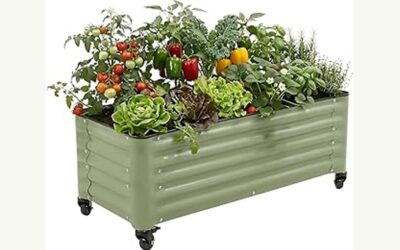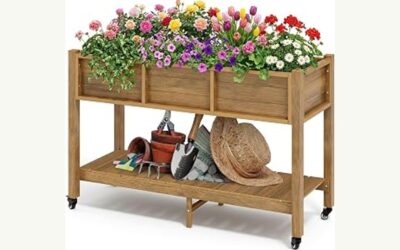



A useful wheelchair garden bed brings soil and plants within a comfortable seated reach without forcing the gardener to twist, lean deeply, or transfer from the chair. Height matters, but so do knee clearance, approach space, bed depth, stability, drainage, and access to tools. An elevated planter advertised only as reducing bending may not provide the open space needed to roll close to its planting area.
For this guide, we compared 10 elevated planters using the supplied dimensions, growing volume, materials, drainage features, mobility, storage, and documented accessibility language. The strongest candidates are the VegTrug Wall Hugger models because their listed 31.5-inch working height is specifically described as wheelchair friendly. However, the available specifications do not provide under-bed knee-clearance measurements, so every shopper should confirm fit before ordering.
Gardeners who also find conventional hand tools difficult to grip may benefit from our guide to an ergonomic hand trowel for arthritis. Keeping a light hand tool, watering wand, and harvest container within a seated arm’s reach can be just as important as selecting the bed itself.
GYMHILL Elevated Raised Garden Bed with Wheels for Easier Patio Growing VegTrug Wall Hugger Raised Garden Bed for Accessible, Space-Saving Patio Growing Best Choice Products 48x24x32 Mobile Raised Garden Bed for Easier, Accessible Growing WTFGO Elevated Raised Garden Bed with Wheels for Accessible Patio Growing Prices and availability can change. We may earn a commission from qualifying purchases.


Pros
- Accessible elevated design can reduce the need for bending and kneeling.
- Locking casters make it easier to adjust plant placement around a patio or balcony.
- Compact footprint and lower storage shelf use limited outdoor space efficiently.
- Suitable for a range of home crops, flowers, fruits, and vegetables.
Cons
- The relatively narrow 17.72-inch width may limit root space for larger or deeper-rooted plants.
- Gardeners should verify that the planter's filled weight and wheel position are suitable for their patio or balcony surface.
- Assembly is required, and the supplied information does not specify long-term weather resistance or detailed drainage performance.
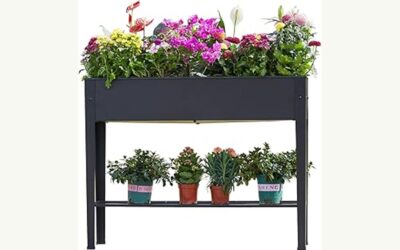
The GYMHILL Elevated Raised Garden Bed is a wheeled patio planter designed for growing vegetables, flowers, fruits, and other home garden plants without working at ground level. Its elevated format and compact footprint make it a practical option for beginners, older gardeners, and homeowners with balconies, patios, or small outdoor areas.
The main everyday benefit is easier access to the planting area. The listed height of 33.66 inches can reduce the need for repeated bending or kneeling, while the locking wheels allow the planter to be moved toward available sunlight or shade. Once positioned, the locks are intended to help keep it in place.
Based on the listed specifications, the planter measures 43.31 inches long by 17.72 inches wide by 33.66 inches high. It includes an under-bed shelf for storing selected garden accessories, plus a drain plug and water monitor identified in the product title. Assembly is required, but the product information states that instructions are included and that no extra professional tools are needed.
This raised bed could fit along a patio wall, near a balcony edge, or in another compact outdoor location where a traditional garden plot is not practical. The wheeled design may also help gardeners adjust plant exposure during the season, but the planter should be placed on a suitable surface and secured before regular care.
The narrow footprint may be less suitable for crops that need substantial root depth or a large spread. Gardeners should also account for the weight of soil and water, inspect the drain area, and avoid moving the planter when it is unnecessarily heavy. The supplied information does not establish weather resistance or detailed drainage performance, so routine moisture checks remain important.
This planter is a good fit for accessible container gardening and space-conscious growing. Gardeners who need a deeper bed, a wider planting area, or documented outdoor durability may prefer comparing larger or more specifically rated raised-bed options.
Best For / Avoid If
Best for buyers prioritizing
- Accessible elevated design can reduce the need for bending and kneeling.
- Locking casters make it easier to adjust plant placement around a patio or balcony.
- Compact footprint and lower storage shelf use limited outdoor space efficiently.
Consider another option if
- The relatively narrow 17.72-inch width may limit root space for larger or deeper-rooted plants.
- Gardeners should verify that the planter's filled weight and wheel position are suitable for their patio or balcony surface.
- Assembly is required, and the supplied information does not specify long-term weather resistance or detailed drainage performance.
Pros
- Space-efficient shape is well suited to narrow outdoor areas.
- Raised working height may be more comfortable for gardeners who want less bending.
- Large soil capacity and varied planting depth support a broad range of edible crops.
Cons
- At 72.2 inches long and 44 pounds, it may require a suitable permanent location and careful positioning.
- The listed information does not specify assembly time, so setup requirements should be confirmed before purchase.
- Gardeners needing a wider bed for sprawling crops may prefer a conventional raised bed with more lateral planting space.
The VegTrug Wall Hugger is a cedar raised garden bed intended for growing vegetables, herbs, and salad greens where floor space is limited. Its slim, flat-back design sits against a wall or fence, making it a practical option for patios, courtyards, balconies, and narrow garden areas. The elevated format also suits gardeners who prefer working above ground level.
Based on the listed specifications, the half V-shaped planter provides up to 310 liters of soil and supports both shallow- and deep-rooted plants. That combination gives gardeners more crop flexibility than a uniformly shallow container, while the long planting area can help organize several edible plants in one dedicated bed.
The planter measures 72.2 inches long, 18.1 inches wide, and 31.5 inches high. Its working height may reduce bending, and the product information describes the design as wheelchair-friendly. A breathable liner is included to enhance drainage and aeration, while plastic feet are intended to add stability. Assembly details are not provided, so buyers should review the current instructions and plan the placement before filling it with soil.
In a backyard or patio setting, this planter could provide a defined growing area along a wall without taking the space of a deeper freestanding bed. It may work well for herbs near a convenient outdoor area, salad greens in a courtyard, or a mix of crops in a narrow side space. The 18.1-inch width helps preserve walkway space, but the 72.2-inch length still calls for a location with sufficient clearance.
The product information does not specify weather-resistance testing, liner replacement intervals, or a maintenance schedule. Gardeners should place it on a stable surface, avoid blocking access routes, and follow the care guidance for the cedar and water-based finish. Overall, the listed design favors accessible, organized growing in narrow spaces, while gardeners needing a wider footprint or detailed assembly and maintenance information may want to compare other raised beds.
Best For / Avoid If
Best for buyers prioritizing
- Space-efficient shape is well suited to narrow outdoor areas.
- Raised working height may be more comfortable for gardeners who want less bending.
- Large soil capacity and varied planting depth support a broad range of edible crops.
Consider another option if
- At 72.2 inches long and 44 pounds, it may require a suitable permanent location and careful positioning.
- The listed information does not specify assembly time, so setup requirements should be confirmed before purchase.
- Gardeners needing a wider bed for sprawling crops may prefer a conventional raised bed with more lateral planting space.
Pros
- Elevated design offers more accessible planting and maintenance than a ground-level bed.
- Locking wheels add flexibility for seasonal placement or changing sunlight conditions.
- Drainage holes and a liner address two important raised-bed maintenance concerns.
Cons
- The listed 100-pound weight capacity may limit how much soil, plants, and stored equipment can be added.
- Gardeners needing a large root zone or extensive crop area may prefer a wider or ground-level bed.
- Assembly details are not provided, so buyers should review the included instructions before planning setup.
The Best Choice Products mobile elevated raised garden bed is designed for growing plants above ground level while keeping the planting area easier to reach. Its 32-inch height makes it a practical option for homeowners who find frequent bending or leaning uncomfortable, as well as gardeners working with patios, decks, or compact yards.
The feature set focuses on flexible placement and basic growing maintenance. Lockable wheels allow the planter to be repositioned to capture different amounts of sun or shade, while the four drainage holes provide an outlet for excess water. The listed 100-pound weight capacity should be considered when adding soil, plants, and anything stored on the shelf.
The planter measures approximately 48 inches long, 23.25 inches wide, and 32 inches high. Its protective liner is intended to separate the wood from the soil and help limit weed or invasive-plant interference. The lower storage shelf provides a convenient place for small gardening accessories, although the supplied information does not specify its separate load capacity.
In a backyard or patio setting, this bed could support accessible growing of suitable herbs, flowers, or compact vegetables where a ground-level plot is impractical. The wheels may also help gardeners adjust placement as light conditions change, but the planter should be positioned securely with the wheels locked before routine care or harvesting.
Because the product information does not provide assembly instructions, wood treatment details, or weather-resistance claims, review those points before setup and follow the included care guidance. Avoid exceeding the stated 100-pound capacity, keep the drainage openings clear, and check that the planter is stable after moving it.
This raised bed is a reasonable fit for gardeners who value elevated access, mobility, and a built-in storage shelf. Those needing greater planting depth, a larger growing area, or a higher load capacity may want to consider a different raised-bed design.
Best For / Avoid If
Best for buyers prioritizing
- Elevated design offers more accessible planting and maintenance than a ground-level bed.
- Locking wheels add flexibility for seasonal placement or changing sunlight conditions.
- Drainage holes and a liner address two important raised-bed maintenance concerns.
Consider another option if
- The listed 100-pound weight capacity may limit how much soil, plants, and stored equipment can be added.
- Gardeners needing a large root zone or extensive crop area may prefer a wider or ground-level bed.
- Assembly details are not provided, so buyers should review the included instructions before planning setup.
Pros
- Mobile design is useful for patios, balconies, and spaces where sun exposure changes.
- Raised access height can make routine planting and harvesting more comfortable.
- Drainage holes and planting dividers provide practical organization for mixed crops.
- Resin construction avoids the rot concerns associated with some wooden planters.
Cons
- The compact dimensions may be less suitable for large vegetables or gardeners planning a high-volume harvest.
- The product information does not specify the planter's soil capacity or the weight limit for moving it when filled.
- Gardeners who need a fixed, extra-deep raised bed may prefer a larger stationary model.
The WTFGO Elevated Raised Garden Bed is a wheeled resin planter for growing vegetables, herbs, and flowers in outdoor areas such as patios, balconies, and small backyards. Its 30 by 17.7-inch footprint and 26.3-inch height offer a compact alternative to a full-size ground-level raised bed, making it a practical choice for beginners, homeowners with limited space, and gardeners who prefer a higher work surface.
The most useful feature is its mobility. Four smooth-rolling wheels allow the planter to be repositioned when plants need a different balance of sun and shade. The elevated layout also reduces the need for repeated bending or kneeling during planting, watering, and harvesting, although the product information does not specify whether the wheels can be locked in place.
Drainage holes help excess water leave the growing area, which is important for avoiding persistently waterlogged soil. Integrated crossbars divide the planter into planting zones, so different herbs, flowers, or compatible vegetables can be kept more orderly. The listed resin construction is high-density and non-toxic, with resistance to rot, cracking, and warping described for outdoor use.
For a patio or balcony, this bed could hold a focused selection of culinary herbs, compact vegetables, or seasonal flowers while remaining easier to move than a stationary planter. In a backyard, it can serve as an accessible supplementary growing area near a kitchen door or other convenient location. The compact footprint may also help gardeners add food production without committing to a large raised-bed installation.
Assembly is described as straightforward, with step-by-step instructions and the necessary hardware included, and no special tools required. Gardeners should still choose a stable location, confirm that the filled planter can be moved safely, and keep drainage outlets clear. Because soil capacity, weight limits, and wheel-lock details are not provided, this model may be less suitable for very deep-rooted crops, heavy plantings, or anyone needing a large fixed bed.
This planter is a sensible fit for gardeners seeking raised access, flexible positioning, and organized growing in a relatively small outdoor space. Those who need substantial soil depth, a larger harvest area, or a specified load rating should compare it with a larger stationary raised bed before choosing.
Best For / Avoid If
Best for buyers prioritizing
- Mobile design is useful for patios, balconies, and spaces where sun exposure changes.
- Raised access height can make routine planting and harvesting more comfortable.
- Drainage holes and planting dividers provide practical organization for mixed crops.
Consider another option if
- The compact dimensions may be less suitable for large vegetables or gardeners planning a high-volume harvest.
- The product information does not specify the planter's soil capacity or the weight limit for moving it when filled.
- Gardeners who need a fixed, extra-deep raised bed may prefer a larger stationary model.

Pros
- Mobile design supports flexible placement as sunlight and shade change.
- Elevated 32-inch height may be more comfortable for gardeners who struggle with ground-level beds.
- Liner and drainage features address basic soil containment and excess-water management.
- Storage shelf adds useful organization without requiring a separate garden stand.
Cons
- The 100-pound weight capacity requires careful planning because soil, plants, and stored items all contribute to the load.
- The 48-by-24-inch footprint may provide less growing room than a ground-level or larger raised bed.
- Assembly details and the planter's wood treatment or weather-resistance information are not provided.
The Best Choice Products Mobile Raised Garden Bed is an elevated planter designed for growing vegetables, herbs, flowers, or other suitable container plants in a defined 48-by-24-inch space. Its 32-inch height may be a practical fit for homeowners, older gardeners, and anyone who prefers not to work at ground level.
The feature set focuses on access and placement flexibility. Locking wheels allow the planter to be moved when sunlight or shade changes, while the elevated layout can make routine planting and maintenance more accessible than a traditional bed placed directly on the ground.
A protective liner separates the soil from the wood, and four drainage holes provide routes for excess water to leave the bed. Gardeners should still use an appropriate container-growing soil mix and avoid overwatering, since drainage openings work best when they remain clear.
The planter's 48-by-24-inch footprint can work in a patio, small yard, or other compact outdoor area where a conventional garden bed would take up too much ground space. The lower shelf also offers a convenient place for selected gardening accessories, although the listed 100-pound capacity applies to the combined load of soil, plants, and stored items as relevant.
This planter may suit gardeners who value elevated access, mobility, and a contained growing area. Before purchase, confirm that the available space can accommodate its dimensions, and note that assembly information, wood treatment, and weather-resistance details are not provided. Gardeners needing a larger growing area, a higher stated load capacity, or documented outdoor durability may prefer a different raised-bed option.
Best For / Avoid If
Best for buyers prioritizing
- Mobile design supports flexible placement as sunlight and shade change.
- Elevated 32-inch height may be more comfortable for gardeners who struggle with ground-level beds.
- Liner and drainage features address basic soil containment and excess-water management.
Consider another option if
- The 100-pound weight capacity requires careful planning because soil, plants, and stored items all contribute to the load.
- The 48-by-24-inch footprint may provide less growing room than a ground-level or larger raised bed.
- Assembly details and the planter's wood treatment or weather-resistance information are not provided.

Pros
- Elevated height is easier on backs and knees than a low ground-level bed.
- Mobility features are useful when you want to follow the sun or move plants out of harsh weather.
- Steel construction with a powder-coated finish is a good fit for outdoor use.
- Built-in drainage and a storage shelf add practical value for everyday gardening.
- Assembly hardware and instructions are included, and the product data estimates a manageable setup time.
Cons
- With about 2.5 cubic feet of soil capacity, it is smaller than a full-size stationary raised bed.
- Even with wheels, a fully loaded planter may still be awkward for some users to move on uneven ground.
- If used indoors or on a deck, you may want separate drip protection because a waterproof saucer is not included.
The LEETOLLA Elevate is a standing-height raised garden bed made for growing herbs, vegetables, flowers, or foliage plants in smaller outdoor spaces. Based on the listed specifications, it is especially suited to gardeners who want a planter that is easier to reach than a low bed and easier to reposition than a fixed container.
Its most useful features are the 32-inch height, powder-coated iron construction, 400 lb capacity, and built-in drainage system. The product information also notes five drainage holes and two cross drainage lines, which are intended to help move excess water out of the soil and support healthier container conditions.
The bed measures 14.6 inches deep, 37.4 inches wide, and 31.6 inches high, with about 2.5 cubic feet of soil capacity. Assembly is listed at roughly 30 to 45 minutes with the included hardware and tools, and the handle plus two wheels are designed to make repositioning simpler once the planter is set up.
This style of planter can work well on patios, decks, balconies, and in backyards where sunlight shifts during the day. The lower shelf adds a practical storage area for hand tools, fertilizer, or small pots, and reviewers commonly mention that the bed is easy to assemble and helpful when they want to move plants around.
The main tradeoffs are size and mobility under load. A planter this compact will not replace a large in-ground bed, and gardeners who need deep root space or frequent one-handed movement may want a different setup. If used indoors or on a deck, separate drip protection may be useful because a waterproof saucer is not included, but for accessible small-space gardening this is a sensible, well-focused option.
Best For / Avoid If
Best for buyers prioritizing
- Elevated height is easier on backs and knees than a low ground-level bed.
- Mobility features are useful when you want to follow the sun or move plants out of harsh weather.
- Steel construction with a powder-coated finish is a good fit for outdoor use.
Consider another option if
- With about 2.5 cubic feet of soil capacity, it is smaller than a full-size stationary raised bed.
- Even with wheels, a fully loaded planter may still be awkward for some users to move on uneven ground.
- If used indoors or on a deck, you may want separate drip protection because a waterproof saucer is not included.

Pros
- Slim wall-hugging shape suits balconies, patios, courtyards, and other narrow spaces.
- Raised working height may reduce the need for frequent bending during planting and harvesting.
- The combination of a breathable liner and half V-shaped design accommodates different root depths.
Cons
- At 40.7 inches long and 18.1 inches wide, it still requires a dedicated footprint and may not suit very tight spaces.
- A 170-liter soil capacity can require a substantial amount of growing medium to fill.
- Gardeners needing a wider planting area or multiple large crops may prefer a larger raised bed.
The VegTrug Wall Hugger is a small, elevated cedar raised garden bed intended for growing vegetables, herbs, and salad greens where a traditional rectangular bed would take up too much room. Its slim, flat-back design is especially suited to homeowners, apartment gardeners, and older or mobility-conscious gardeners who want a dedicated planting area near a wall or fence.
Based on the listed specifications, the half V-shaped planter and 170-liter soil capacity provide room for both shallow-rooted and deeper-rooted plants. The included breathable liner is designed to improve drainage and aeration, which can help create a more suitable root environment when the bed is filled with an appropriate growing medium.
The bed measures 40.7 inches long, 18.1 inches wide, and 31.5 inches high, with a listed weight of 29 pounds. Its elevated working height can make routine planting and harvesting more accessible than ground-level gardening, and the product information describes the height as wheelchair-friendly. Plastic feet are included for added stability, while the natural cedar has a water-based protective finish.
In a backyard or patio setting, the Wall Hugger can be placed along a fence, exterior wall, or courtyard edge to grow kitchen herbs and salad greens without using a broad section of floor space. The narrow footprint may also work well in a balcony or compact garden area, provided the location can accommodate the bed's dimensions and the weight of its soil-filled setup.
This planter still needs a suitable location, regular watering, and routine care for the plants and growing medium. Its soil capacity and 29-pound unfilled weight may make relocation difficult once prepared for planting, so positioning should be considered beforehand. It is a strong fit for accessible, wall-side growing in limited spaces, while gardeners who need more width or room for larger crops should consider a bigger raised bed.
Best For / Avoid If
Best for buyers prioritizing
- Slim wall-hugging shape suits balconies, patios, courtyards, and other narrow spaces.
- Raised working height may reduce the need for frequent bending during planting and harvesting.
- The combination of a breathable liner and half V-shaped design accommodates different root depths.
Consider another option if
- At 40.7 inches long and 18.1 inches wide, it still requires a dedicated footprint and may not suit very tight spaces.
- A 170-liter soil capacity can require a substantial amount of growing medium to fill.
- Gardeners needing a wider planting area or multiple large crops may prefer a larger raised bed.

Pros
- Comfortable elevated working height can reduce the need for frequent bending.
- V-shaped growing space accommodates plants with different root depths.
- Suitable for patios, balconies, and other small outdoor gardening areas.
- Includes a breathable liner and provides listed capacity for a useful range of crops.
Cons
- At 43 pounds before adding soil, it may be difficult to reposition once filled.
- The listed 210-liter capacity means gardeners will need a substantial amount of suitable soil or growing medium.
- Gardeners needing a wide, ground-level bed or a larger growing area may prefer a different raised-bed format.
The VegTrug Classic Small 1m is an elevated cedar raised bed designed for growing vegetables, herbs, and greens in a compact outdoor space. Its 31.5-inch height makes it a practical option for homeowners, older gardeners, and anyone who prefers a more accessible planting surface than a traditional ground-level bed.
Based on the listed specifications, the V-shaped growing area is intended to support both shallow- and deep-rooted plants. The planter holds up to 210 liters, giving gardeners room to combine different crops while keeping the growing area contained and organized.
The bed measures approximately 29.9 inches long by 40.7 inches wide by 31.5 inches high and weighs 43 pounds. Grey-wash cedar, a water-based finish, and plastic feet are listed as part of the construction. The included breathable liner is designed to promote drainage and aeration around the roots.
This format can work well on a patio, balcony, or small yard where an in-ground bed is impractical. The elevated layout also offers some separation from common ground pests, although it should not be treated as complete pest protection. A level, stable placement area is important because the bed becomes substantially heavier after filling.
The main trade-offs are the bed's fixed footprint and the amount of growing medium required for its listed capacity. The product information does not provide assembly or detailed care instructions, so buyers should review those details before setup. It is a strong fit for accessible container-style growing in limited spaces, while gardeners seeking a larger or ground-level growing area may want another raised-bed design.
Best For / Avoid If
Best for buyers prioritizing
- Comfortable elevated working height can reduce the need for frequent bending.
- V-shaped growing space accommodates plants with different root depths.
- Suitable for patios, balconies, and other small outdoor gardening areas.
Consider another option if
- At 43 pounds before adding soil, it may be difficult to reposition once filled.
- The listed 210-liter capacity means gardeners will need a substantial amount of suitable soil or growing medium.
- Gardeners needing a wide, ground-level bed or a larger growing area may prefer a different raised-bed format.

Pros
- Accessible elevated height can make planting and maintenance more comfortable.
- Mobility and locking casters offer flexible placement on patios, balconies, courtyards, and similar spaces.
- Organized layout combines four growing areas with tool and pot storage.
Cons
- The 21-gallon capacity may be less suitable for gardeners who want deep-rooted or high-volume crops.
- Gardeners needing a fixed, in-ground-style bed may prefer a stationary planter without casters.
- The product requires assembly, although the listed instructions indicate an estimated 20 to 25 minute setup.
The EFU Raised Garden Bed is a wheeled, elevated planter designed for growing vegetables, herbs, flowers, and small fruits in a more accessible container. Its four separate planting zones and 21-gallon soil capacity make it a practical option for homeowners, older gardeners, patio growers, and anyone working with limited outdoor space.
The raised design places the planting area at approximately 35 inches high, which can reduce bending and kneeling during planting and routine care. The divided layout helps keep different crops organized, while the listed 240-pound support capacity provides room for soil and a range of smaller container plants when loaded within the stated limit.
Mobility is a central part of the design. Lockable casters allow the planter to be moved toward available sunlight, away from harsh weather, or into a sunroom when appropriate. The lower shelf adds storage for small pots and gardening tools, helping keep commonly used items close to the growing area.
For patios, balconies, courtyards, backyards, and sunrooms, this planter can create a flexible growing station without requiring a permanent garden bed. Side drainage holes are intended to remove excess water, and the built-in water level monitor can help gardeners pay closer attention to moisture levels. The product information also describes a breathable design intended to support soil ventilation.
The bed is made from high-density resin and includes four reinforced support rods, with product information describing it as crack-resistant and suitable for exposure to sun, rain, and seasonal temperature changes. Assembly is required, with the included instructions indicating an estimated setup time of 20 to 25 minutes. Gardeners should place it on a stable surface, observe the stated weight limit, secure the casters when stationary, and avoid overwatering even when using the water monitor.
This is a sensible choice for gardeners who value accessible planting, movable placement, and built-in organization. Those needing a larger soil volume, a deeper bed for extensive root systems, or a permanent ground-level structure may want a different raised-bed format.
Best For / Avoid If
Best for buyers prioritizing
- Accessible elevated height can make planting and maintenance more comfortable.
- Mobility and locking casters offer flexible placement on patios, balconies, courtyards, and similar spaces.
- Organized layout combines four growing areas with tool and pot storage.
Consider another option if
- The 21-gallon capacity may be less suitable for gardeners who want deep-rooted or high-volume crops.
- Gardeners needing a fixed, in-ground-style bed may prefer a stationary planter without casters.
- The product requires assembly, although the listed instructions indicate an estimated 20 to 25 minute setup.

Pros
- Elevated design is helpful for gardeners who want easier access than an in-ground bed.
- Mobile frame with lockable wheels adds flexibility for patios, decks, and changing light conditions.
- Fir wood construction and natural finish give it a traditional garden look.
- Drainage holes and liner are included, so the planter is set up for container-style growing.
- Reviewers commonly mention that the finished planter looks attractive and is useful for herbs and deck gardening.
Cons
- Unfinished fir wood may require additional care or sealing if gardeners want to improve longevity outdoors.
- Assembly is required, and some reviewers report that it can take longer than expected or involve alignment challenges.
- The 100-pound weight capacity means gardeners should be mindful of heavy soil mixes, large crops, or overloading the bed.
The Best Choice Products SKY5732 is a mobile elevated raised garden bed designed for container-style growing on patios, decks, and small outdoor spaces. Based on the listed specifications, it measures 48 by 23.25 by 32 inches and provides 5.5 cubic feet of planting capacity. Its raised height makes it especially relevant for gardeners who want to grow herbs, vegetables, or flowers without working at ground level.
The standout benefit is accessibility. At 32 inches tall, this planter can reduce the amount of bending needed for planting, weeding, watering, and harvesting. The locking wheels also add useful flexibility, letting gardeners move the bed to adjust for sun exposure or to clear space on a patio. Once positioned, the wheels can be locked to help keep the planter in place.
The planter is made from fir wood with a natural, unfinished appearance. The product information indicates that it includes a protective liner to separate the soil from the wood, along with four drainage holes to let excess water escape. That combination is important in raised planters because overly wet soil can stress roots, while a liner helps keep the growing medium contained inside the bed.
For real backyard use, this size is well suited to a compact herb garden, salad greens, flowers, or smaller vegetable plantings. The lower shelf can hold garden accessories, spare pots, or trays, although items stored underneath should be chosen with drainage in mind. If water passes through the planter, weather-tolerant storage items are the safer choice.
There are a few practical limitations to consider. The listed weight capacity is 100 pounds, so gardeners should avoid overloading the bed with very heavy soil mixes or large, sprawling crops. Assembly is required, and while several reviewers describe it as manageable, others mention that it may take longer than expected or that predrilled hole alignment can be frustrating. Wearing gloves during assembly is a sensible precaution when handling unfinished wood.
This raised bed is a good option for gardeners who want a movable, attractive, waist-height planter for small-space growing. Gardeners looking for a permanently installed, heavy-duty bed or a fully finished wood planter for long-term exposed outdoor use may prefer a different style or plan on extra wood care before planting.
Best For / Avoid If
Best for buyers prioritizing
- Elevated design is helpful for gardeners who want easier access than an in-ground bed.
- Mobile frame with lockable wheels adds flexibility for patios, decks, and changing light conditions.
- Fir wood construction and natural finish give it a traditional garden look.
Consider another option if
- Unfinished fir wood may require additional care or sealing if gardeners want to improve longevity outdoors.
- Assembly is required, and some reviewers report that it can take longer than expected or involve alignment challenges.
- The 100-pound weight capacity means gardeners should be mindful of heavy soil mixes, large crops, or overloading the bed.
Start with the gardener’s seated position
Do not choose a bed by overall height alone. Sit in the wheelchair normally and note the height of the armrests, knees, and comfortable working reach. Compare those measurements with the planter’s rim height and the structure below its basin. A shelf, crossbar, legs, or deep V-shaped container can prevent a close approach even when the rim itself is at a convenient height.
The VegTrug Wall Hugger models have a listed working height of 31.5 inches and manufacturer-described wheelchair-friendly access. The medium version measures 72.2 inches long by 18.1 inches wide, while the small version measures 40.7 by 18.1 inches. Those shallow front-to-back dimensions may reduce reach, but the available data does not document knee clearance or toe clearance. Measure the intended user and ask the seller for an under-bed diagram if necessary.
Keep every planting area within reach
A narrow bed accessed from one long side is usually easier to manage from a seated position than a wide bed that requires reaching into its center. This is where the flat-backed VegTrug Wall Hugger format has an advantage over the 40.7-inch-wide VegTrug Classic. The Classic provides access around its perimeter, but it also requires enough hard-surface space to move around multiple sides.
Plan the crop layout around reach as well. Put frequently harvested herbs and salad greens near the accessible edge. Taller or trellised crops can obstruct plants behind them, so locate supports where they will not interfere with chair movement. If tomatoes are the main goal, review the practical differences among tomato planters with trellises before committing to a shallow elevated bed.
Compare fixed beds with wheeled planters
Lockable wheels can help reposition an empty or lightly filled planter, but soil and water add substantial weight. Casters that move smoothly on a level patio may be difficult to control across joints, gravel, slopes, or soft ground. A mobile planter should be moved slowly, with the route cleared in advance, and its wheels locked before planting, watering, or leaning against the rim.
The Best Choice Products Raised Garden Bed is 48 by 24 by 32 inches and combines lockable wheels, a shelf, liner, and four drainage holes. The GYMHILL Elevated Raised Garden Bed is narrower at 43.31 by 17.72 by 33.66 inches and lists a 12-gallon capacity. EFU Raised Garden Beds Outdoor measures 44 by 19 by 35 inches, holds 21 gallons, and has lockable casters. These are relevant elevated planters, but none is explicitly documented as providing wheelchair knee clearance.
Choose growing volume for the intended crops
Growing volume affects crop choice, watering frequency, and total filled weight. The medium VegTrug Wall Hugger holds 328 quarts, or 310 liters, while the small Wall Hugger holds 180 quarts, or 170 liters. Their half-V profiles are intended to accommodate shallow- and deep-rooted plants in different parts of the container. The VegTrug Classic holds 225 quarts, or 210 liters, in a full V-shaped bed.
Compact models use less soil and may be easier to place, but they also provide less root space and can require closer moisture monitoring. GYMHILL lists 12 gallons, while EFU lists 21 gallons and four planting zones. If the gardener primarily wants potatoes and values easy harvesting over seated access to a fixed bed, potato grow bags are an alternative, although bags placed at ground level will not solve bending or reach limitations.
Check drainage and protect the surface below
Drainage openings let excess water escape, but the runoff needs a safe destination. Avoid placing a bed where discharged water will create a slippery route. The Best Choice Products model lists four drainage holes. LEETOLLA lists five holes and two cross-drainage lines, while the VegTrug models include breathable liners intended to support drainage and aeration. GYMHILL lists a drain plug and water monitor, and EFU lists side drainage holes and a water-level monitor.
Do not assume a monitor replaces checking the potting mix. Water needs vary with weather, plant size, container volume, and drainage. Keep hoses out of travel paths, and position controls where they can be reached without stretching across the planter. A compact rain barrel for a small garden may support convenient watering, but its outlet and hose must not obstruct wheelchair circulation.
Evaluate materials, assembly, and stability
Cedar, resin, and powder-coated iron have different ownership implications. The VegTrug models use cedar with a water-based finish, plastic feet, and a liner. The Best Choice Products models are wood planters with protective liners. GYMHILL and EFU use resin, while LEETOLLA lists powder-coated iron. Manufacturer durability language should be treated as a claim rather than a guarantee because the supplied evidence does not include independent weathering tests.
Assemble the planter on a flat surface and follow its instructions and load limits. Ask for assistance with large panels, soil bags, and final positioning. Check that fasteners are secure, casters lock correctly, and the frame does not rock before filling it. Never use the bed rim as a transfer rail unless the manufacturer explicitly approves that use.
Treat shelves as storage, not automatic accessibility
A lower shelf keeps supplies near the bed, but it can also occupy the space where knees or footrests need to go. GYMHILL, Best Choice Products, LEETOLLA, and EFU include lower storage. That feature suits gardeners approaching from the side or working partly from a standing position, but it may work against a straight-on wheelchair approach.
Store only light, frequently used items within easy reach. Heavy soil bags and liquid containers belong on a stable surface where retrieving them will not require twisting or lifting from below knee level. Do not leave sharp tools projecting from the shelf into the circulation path.
Avoid common accessibility and placement mistakes
The most common mistake is buying an elevated planter because its marketing says ergonomic, then discovering that its shelf, basin, or legs prevent a close approach. Another is measuring the bed but not the route to it. Confirm doorway width, turning space, patio slope, thresholds, and room to approach the useful planting edge.
The WTFGO Elevated Raised Garden Bed with Wheels is listed at 26.3 inches high, notably lower than the 31.5- to 35-inch options with documented heights. It may suit a lower seated reach, but no complete dimensions or wheelchair-clearance figures are supplied. Height preferences vary, so a cardboard mock-up of the rim and basin can reveal reach problems before purchase.
Research Methodology and Trust
We screened all 10 available products for relevance to seated gardening. Each is an elevated planter, but we did not treat elevated, ergonomic, and wheelchair accessible as interchangeable terms. The two VegTrug Wall Hugger listings are the only models whose available specifications explicitly use wheelchair-friendly language. Other models remain useful comparison options for gardeners who can confirm that their frames and shelves fit the intended approach.
Ranking factors included listed working height, planting-bed width, overall footprint, growing volume, drainage, liner design, mobility, storage placement, material, and the amount of specification evidence available. We gave limited weight to ratings shown with zero reviews because they do not provide a meaningful owner-feedback sample. The LEETOLLA and natural-finish Best Choice Products listings include substantial review counts, but review totals alone cannot establish wheelchair fit.
This is research-based editorial analysis, not physical testing. We did not assemble, fill, move, or measure these planters. Product data and recommendations were reviewed for the August 2026 update, but dimensions, included parts, prices, and availability can change. Confirm current specifications with the seller, particularly the clear space beneath the bed and the position of structural braces.
Frequently Asked Questions
What makes a wheelchair garden bed accessible?
An accessible bed combines a suitable working height with comfortable reach, a stable surface, and enough clear space for the wheelchair user’s knees and footrests. Overall planter height by itself does not prove accessibility because shelves, braces, or a deep planting basin may block a close approach.
How high should a wheelchair garden bed be?
There is no single correct height for every user or chair. The listed products range from 26.3 to 35 inches where height data is supplied, while the two wheelchair-friendly VegTrug Wall Huggers list a 31.5-inch working height. Measure the gardener’s comfortable elbow and reach position before choosing.
Is a narrow bed better for seated gardening?
A narrow bed can reduce the need to lean across the soil, particularly when only one long side is accessible. The Wall Hugger models are 18.1 inches deep, while the VegTrug Classic is 40.7 inches wide and is better approached from multiple sides.
Are wheels useful on a wheelchair garden bed?
Wheels can make placement more flexible on a smooth, level surface, but a filled planter may still be heavy and difficult to control. Lock the casters before working, keep the travel route clear, and never pull the planter toward the wheelchair by its rim.
How do I maintain an elevated wheelchair garden bed?
Keep drainage openings clear, inspect fasteners and casters, and replace a damaged liner when needed. Follow the manufacturer’s care instructions for cedar, resin, or coated metal rather than assuming every material requires the same treatment.
Can a wheelchair garden bed stay outside in winter?
Storage needs depend on the model, climate, and manufacturer instructions. Before freezing weather, empty water from drainage components, secure or remove loose accessories, and avoid moving a frozen or heavily saturated planter. The supplied evidence does not establish independent year-round durability for every model.
What should I check before filling the bed with soil?
Confirm final placement, level the frame, lock the wheels where applicable, check every fastener, and verify the stated load limit. Also test the user’s approach and reach while the bed is empty, because correcting an access problem is much harder after adding soil and water.