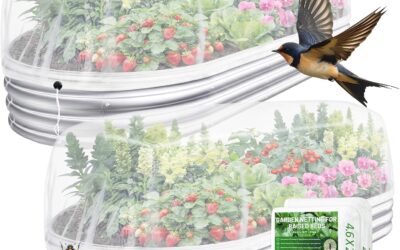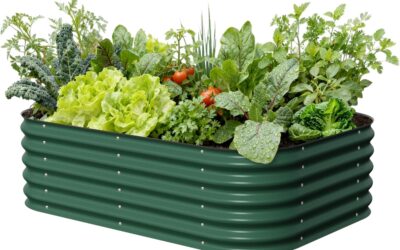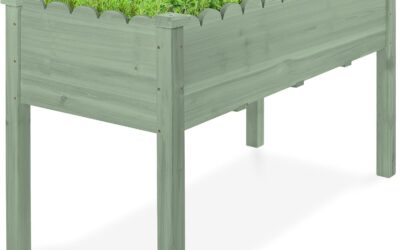



Los bancales elevados accesibles para sillas de ruedas pueden hacer que cultivar verduras, hierbas y flores sea más cómodo, ya que elevan la zona de plantación del suelo y, en algunos casos, incorporan ruedas, estantes, revestimientos, sistemas de drenaje o funciones de autorriego. Para los jardineros que usan silla de ruedas, andador o taburete, o simplemente quieren evitar arrodillarse, los detalles más importantes son la altura de trabajo, el alcance desde la parte delantera o los laterales, la estabilidad, el drenaje y si el jardinero cabe en el espacio disponible del patio, balcón o jardín.
Para esta guía de julio de 2026, comparamos 20 productos de la categoría de bancales elevados y jardineras, y después centramos nuestros consejos de compra en los modelos cuyas características indicadas favorecen más la jardinería doméstica accesible. Si todavía estás decidiendo entre jardineras elevadas, bolsas de cultivo y otras opciones de cultivo en recipientes, Dove Creek Gardens también mantiene una sección más amplia de bancales elevados y jardineras para espacios pequeños y jardines domésticos.
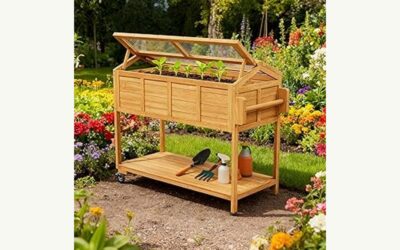
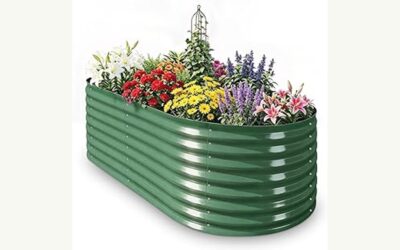
VegTrug Classic Medium Raised Bed for Accessible Patio and Small-Space Gardening Yaheetech Elevated Wood Raised Garden Bed Set of 2 for Easier Patio Growing Mofesun Galvanized Raised Garden Bed with Legs for Easier Patio and Backyard Growing Best Choice Products SKY5732 Mobile Raised Garden Bed for Accessible Patio Growing Prices and availability can change. We may earn a commission from qualifying purchases.


Algunas fichas siguen en inglés; su traducción está pendiente de revisión.
Pros
- Comfortable elevated access for planting, maintenance, and harvesting.
- Large growing capacity in a raised-bed format suited to small outdoor spaces.
- V-shaped design accommodates plants with different root depths.
Cons
- At 72.2 inches long and 60 pounds, it may be difficult to move once positioned and filled.
- The substantial soil capacity means gardeners will need to plan for filling and maintaining a large volume of growing medium.
- Balcony users should verify that the surface can safely support the empty bed plus its soil and plants.
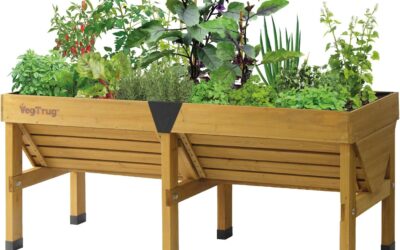
The VegTrug Classic Medium is a cedar V-shaped raised garden bed designed for growing vegetables, herbs, and greens outdoors. Its elevated format is particularly suitable for homeowners, older gardeners, and anyone who wants a more accessible alternative to planting at ground level.
The most notable growing benefit is the combination of a 31.5-inch height and a 420-liter soil capacity. The raised position can make routine planting, watering, and harvesting more comfortable, while the V-shaped profile is intended to accommodate both shallow-rooted and deeper-rooted plants.
Based on the listed specifications, the bed measures 29.9 by 72.2 by 31.5 inches and weighs 60 pounds before adding soil. It includes a breathable liner for drainage and root aeration, along with plastic feet for added stability. The natural cedar has a water-based protective finish, but the supplied information does not specify assembly requirements or long-term maintenance intervals.
This format can work well on a patio, balcony, or compact yard where gardeners want a dedicated planting area without building a ground-level bed. Its long footprint offers useful growing space, although placement should be planned carefully because the bed is substantial even before it is filled.
The main considerations are weight, soil volume, and location. Moving the bed after filling may be impractical, and balcony gardeners should confirm that their surface can support the empty unit, soil, and plants. The breathable liner and drainage design still require sensible watering practices so the growing medium does not remain excessively wet.
This raised bed is a good fit for gardeners seeking accessible, organized growing space with room for plants of different root depths. Gardeners who need a lightweight, easily movable planter or a smaller container may prefer a more compact option.
Best For / Avoid If
Best for buyers prioritizing
- Comfortable elevated access for planting, maintenance, and harvesting.
- Large growing capacity in a raised-bed format suited to small outdoor spaces.
- V-shaped design accommodates plants with different root depths.
Consider another option if
- At 72.2 inches long and 60 pounds, it may be difficult to move once positioned and filled.
- The substantial soil capacity means gardeners will need to plan for filling and maintaining a large volume of growing medium.
- Balcony users should verify that the surface can safely support the empty bed plus its soil and plants.
Pros
- Includes two planters, which gives you more layout flexibility
- Elevated format can be easier on the back and knees
- Simple assembly is supported by the included instruction manual
- Drainage hole and liner are included for basic growing setup
Cons
- Unfinished wood may need more care if kept outdoors for long periods
- The listed 15-inch maximum soil height may not suit deeper-rooted crops
- A two-pack may be more than some shoppers need if they only want one bed
The Yaheetech Raised Garden Bed set is a pair of elevated fir wood planter boxes made for gardeners who want a more comfortable planting height. Based on the listed specifications, it is a floor-standing, rectangular planter that works for herbs, vegetables, fruits, flowers, or mixed patio plantings.
The main advantage is the raised, 30-inch tall format, which can reduce how much bending is needed during planting, watering, and general upkeep. The product information also points to a 220.5 lb maximum load, a maximum soil height of 15 inches, drainage holes, and a non-woven fabric liner, all of which support basic container growing needs.
Design-wise, the beds use 100% fir wood in an unfinished natural wood look, with side plates locked in place for stability. Assembly is described as simple and an instruction manual is included, which may appeal to first-time buyers who want a straightforward project rather than a more complicated garden build.
For backyard and patio use, the set of two makes it easier to separate crops, create a matching display, or place planters in different spots around a small space. The floor-standing format can be especially helpful where in-ground planting is not practical, such as on a patio, deck, or compact yard.
As with many wooden planters, the unfinished wood may need more routine care if it stays outdoors, and the listed soil depth may be limiting for gardeners who want deeper rooting space. It is a sensible pick for accessible raised planting, but shoppers needing a single oversized bed or extra-deep grow space may want to compare other options.
Best For / Avoid If
Best for buyers prioritizing
- Includes two planters, which gives you more layout flexibility
- Elevated format can be easier on the back and knees
- Simple assembly is supported by the included instruction manual
Consider another option if
- Unfinished wood may need more care if kept outdoors for long periods
- The listed 15-inch maximum soil height may not suit deeper-rooted crops
- A two-pack may be more than some shoppers need if they only want one bed
Pros
- Elevated working height can be more accessible than a ground-level bed.
- Galvanized steel construction is suited to a substantial outdoor planter, with a listed 300-pound capacity.
- The narrow 18-inch depth may fit balconies, patios, and other areas with limited floor space.
- Can be used for vegetables, flowers, and herbs in several outdoor settings.
Cons
- The combined soil load can be substantial, so the final placement should have a stable, level surface that can support a filled planter.
- Drainage details are not provided, so gardeners should verify how excess water exits before filling the beds.
- A 12-inch planting depth may be less suitable for crops that need substantially deeper root space.
The Mofesun Galvanized Raised Garden Bed with Legs is a two-piece elevated metal planter designed for growing vegetables, flowers, and herbs. Its 31.5-inch overall height is intended to make the growing area easier to reach than a traditional bed at ground level, making it a practical option for homeowners, older gardeners, and anyone who prefers less bending.
Based on the listed specifications, each planter format uses a 48-by-18-inch planting area with a 12-inch planter box height, while the product information lists 5 cubic feet, or 36 gallons and 140 liters, of soil capacity. The available space should work well for common container-grown plants, although gardeners should match crop choice to the available root depth.
The bed is made from galvanized steel and has a listed 300-pound loading capacity. The product information describes the material as weather proof, but the filled planter should still be positioned carefully because soil and water create considerable weight. The 18-inch width may be useful where floor space is limited, including a patio, balcony, or narrow backyard area.
Assembly is intended to be straightforward, with necessary parts, gloves, and an instruction manual included. Before adding soil, choose a level location and confirm that the surface can support the filled bed. Drainage construction is not specified in the supplied information, so check the assembled planter and its instructions to understand how excess water is handled.
This raised bed is a reasonable fit for gardeners seeking an accessible planting area for herbs, flowers, or suitable vegetables in an outdoor space. It may be less suitable for crops requiring deeper root zones, gardeners who need a lightweight planter after filling, or anyone looking for a fully enclosed animal-proof bed. Overall, the elevated design, galvanized construction, and compact width offer a useful raised-growing format, provided placement and drainage are addressed before planting.
Best For / Avoid If
Best for buyers prioritizing
- Elevated working height can be more accessible than a ground-level bed.
- Galvanized steel construction is suited to a substantial outdoor planter, with a listed 300-pound capacity.
- The narrow 18-inch depth may fit balconies, patios, and other areas with limited floor space.
Consider another option if
- The combined soil load can be substantial, so the final placement should have a stable, level surface that can support a filled planter.
- Drainage details are not provided, so gardeners should verify how excess water exits before filling the beds.
- A 12-inch planting depth may be less suitable for crops that need substantially deeper root space.
Pros
- Elevated design is helpful for gardeners who want easier access than an in-ground bed.
- Mobile frame with lockable wheels adds flexibility for patios, decks, and changing light conditions.
- Fir wood construction and natural finish give it a traditional garden look.
- Drainage holes and liner are included, so the planter is set up for container-style growing.
- Reviewers commonly mention that the finished planter looks attractive and is useful for herbs and deck gardening.
Cons
- Unfinished fir wood may require additional care or sealing if gardeners want to improve longevity outdoors.
- Assembly is required, and some reviewers report that it can take longer than expected or involve alignment challenges.
- The 100-pound weight capacity means gardeners should be mindful of heavy soil mixes, large crops, or overloading the bed.
The Best Choice Products SKY5732 is a mobile elevated raised garden bed designed for container-style growing on patios, decks, and small outdoor spaces. Based on the listed specifications, it measures 48 by 23.25 by 32 inches and provides 5.5 cubic feet of planting capacity. Its raised height makes it especially relevant for gardeners who want to grow herbs, vegetables, or flowers without working at ground level.
The standout benefit is accessibility. At 32 inches tall, this planter can reduce the amount of bending needed for planting, weeding, watering, and harvesting. The locking wheels also add useful flexibility, letting gardeners move the bed to adjust for sun exposure or to clear space on a patio. Once positioned, the wheels can be locked to help keep the planter in place.
The planter is made from fir wood with a natural, unfinished appearance. The product information indicates that it includes a protective liner to separate the soil from the wood, along with four drainage holes to let excess water escape. That combination is important in raised planters because overly wet soil can stress roots, while a liner helps keep the growing medium contained inside the bed.
For real backyard use, this size is well suited to a compact herb garden, salad greens, flowers, or smaller vegetable plantings. The lower shelf can hold garden accessories, spare pots, or trays, although items stored underneath should be chosen with drainage in mind. If water passes through the planter, weather-tolerant storage items are the safer choice.
There are a few practical limitations to consider. The listed weight capacity is 100 pounds, so gardeners should avoid overloading the bed with very heavy soil mixes or large, sprawling crops. Assembly is required, and while several reviewers describe it as manageable, others mention that it may take longer than expected or that predrilled hole alignment can be frustrating. Wearing gloves during assembly is a sensible precaution when handling unfinished wood.
This raised bed is a good option for gardeners who want a movable, attractive, waist-height planter for small-space growing. Gardeners looking for a permanently installed, heavy-duty bed or a fully finished wood planter for long-term exposed outdoor use may prefer a different style or plan on extra wood care before planting.
Best For / Avoid If
Best for buyers prioritizing
- Elevated design is helpful for gardeners who want easier access than an in-ground bed.
- Mobile frame with lockable wheels adds flexibility for patios, decks, and changing light conditions.
- Fir wood construction and natural finish give it a traditional garden look.
Consider another option if
- Unfinished fir wood may require additional care or sealing if gardeners want to improve longevity outdoors.
- Assembly is required, and some reviewers report that it can take longer than expected or involve alignment challenges.
- The 100-pound weight capacity means gardeners should be mindful of heavy soil mixes, large crops, or overloading the bed.
Pros
- Mobile design can simplify seasonal repositioning and access.
- Compact dimensions are practical for small-space gardening.
- Deep raised-bed format accommodates varied plantings.
- Suitable for patios, decks, balconies, rooftops, and other hard surfaces.
Cons
- The listed dimensions provide limited width, so gardeners planning larger crops or many plants may need additional growing space.
- Drainage details and included accessories are not specified, so setup may require checking how excess water is managed.
- Gardeners should confirm that the intended surface can safely support the filled bed, since soil weight and wheel-load limits are not provided.
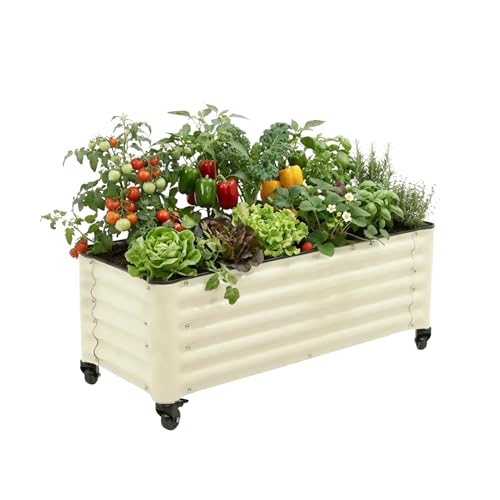
The Vego garden Classic Rolling Garden Bed is a raised metal planter designed for movable container gardening. Its 48 x 21 x 19-inch dimensions make it a practical option for homeowners, balcony gardeners, older gardeners, and anyone who wants a defined growing area without preparing an in-ground bed.
The most useful feature is the rolling design, which allows the bed to be repositioned as sunlight, weather, or convenience changes. The listed deep planting space can support vegetables, herbs, and flowers that need more root room than a shallow planter typically provides, although the product data does not specify usable soil capacity.
The narrow rectangular footprint is easier to fit into small outdoor areas than a large traditional raised bed. The raised height also keeps the growing area distinct from the surrounding surface. Assembly details, drainage design, included hardware, and any wheel-locking controls are not provided, so gardeners should review those points before installation and plan the soil and watering setup accordingly.
This bed is suited to patios, decks, balconies, rooftops, and other hard surfaces where in-ground gardening is not practical. The wheels may also help gardeners move the planter away from changing weather or place it where plants receive better light, provided the route and surface are suitable for a filled raised bed.
The metal construction is described as durable for outdoor gardening use, but long-term finish performance and weather resistance are not specified. Before filling it, check that the supporting surface is level and strong enough for the combined weight of the bed, soil, and plants. Because drainage information is missing, confirm how excess water exits and choose a soil mix appropriate for container growing.
This is a good fit for gardeners who value movable, deep planting space in a compact footprint. Those needing a large growing area, detailed drainage information, or a clearly stated wheel-load capacity may prefer a different raised-bed system with those specifications documented.
Best For / Avoid If
Best for buyers prioritizing
- Mobile design can simplify seasonal repositioning and access.
- Compact dimensions are practical for small-space gardening.
- Deep raised-bed format accommodates varied plantings.
Consider another option if
- The listed dimensions provide limited width, so gardeners planning larger crops or many plants may need additional growing space.
- Drainage details and included accessories are not specified, so setup may require checking how excess water is managed.
- Gardeners should confirm that the intended surface can safely support the filled bed, since soil weight and wheel-load limits are not provided.

Pros
- Comfort-height design is useful for older gardeners, beginners, or anyone who wants to avoid frequent kneeling.
- Raised, floor-standing format fits patios, balconies, decks, and small backyard spaces where in-ground beds are not ideal.
- Reinforced structure is listed to support up to 331 lb of soil and plants.
- Included liner and drainage holes address two important planter needs, moisture management and wood protection.
- Natural unfinished fir wood appearance blends well with outdoor garden areas.
Cons
- The 9 inch planting depth may be less suitable for deep-rooted crops or large vegetable plants.
- The waterproof liner needs to be punctured at the drainage holes if gardeners want drainage after installation.
- Outdoor wood planters still require sensible maintenance and placement to help limit moisture-related wear over time.
The MIXC 48 x 24 inch elevated wooden raised garden bed is a floor-standing planter designed for outdoor growing on a patio, deck, balcony, or small backyard space. It is aimed at gardeners who want a contained planting area for flowers, herbs, and vegetables without building an in-ground bed. The 31 inch height is especially useful for people who prefer to garden while standing or with less kneeling.
Based on the listed specifications, the planter provides about 5 cubic feet of growing capacity and a 9 inch planting depth. That makes it a practical size for many herbs, annual flowers, leafy greens, and other compact plantings. Gardeners planning large, deep-rooted crops may want to compare the root depth needs of those plants before choosing this style of elevated bed.
The bed is made with an untreated fir wood planter body and Pinus radiata support components, according to the product information. MIXC describes the frame as a beam-and-column structure with a listed capacity of 331 lb for soil and vegetables. The legs are coated with waterproof paint, while the planter includes a PE garden liner to help keep soil and moisture separated from the wood.
Drainage is an important detail with any raised planter, and this model includes four drainage holes. The included PE liner is waterproof, so the product instructions note that gardeners should poke holes through the liner at the drainage locations after filling if they want the bed to drain properly. That extra step is worth paying attention to, since overly wet soil can be hard on both plant roots and wooden planters.
For everyday use, the size and height make this MIXC raised bed a good fit for small-space growing near a kitchen door, along a sunny deck rail, or in a compact backyard garden zone. Assembly is described as a 20 to 35 minute process with a clear guide and screwdriver included, and the manufacturer recommends two people and gloves during setup. As with most wood garden products, placing it where it can drain freely and checking the liner and fasteners periodically would be sensible maintenance.
Overall, this raised bed is best for gardeners who want an accessible, natural-looking planter with enough room for a modest mix of herbs, flowers, or smaller vegetables. Gardeners who need a very deep bed, a larger growing area, or a fully ground-contact raised bed may be better served by a different planter style.

Pros
- Slim wall-hugging shape suits balconies, patios, courtyards, and other narrow spaces.
- Raised working height may reduce the need for frequent bending during planting and harvesting.
- The combination of a breathable liner and half V-shaped design accommodates different root depths.
Cons
- At 40.7 inches long and 18.1 inches wide, it still requires a dedicated footprint and may not suit very tight spaces.
- A 170-liter soil capacity can require a substantial amount of growing medium to fill.
- Gardeners needing a wider planting area or multiple large crops may prefer a larger raised bed.
The VegTrug Wall Hugger is a small, elevated cedar raised garden bed intended for growing vegetables, herbs, and salad greens where a traditional rectangular bed would take up too much room. Its slim, flat-back design is especially suited to homeowners, apartment gardeners, and older or mobility-conscious gardeners who want a dedicated planting area near a wall or fence.
Based on the listed specifications, the half V-shaped planter and 170-liter soil capacity provide room for both shallow-rooted and deeper-rooted plants. The included breathable liner is designed to improve drainage and aeration, which can help create a more suitable root environment when the bed is filled with an appropriate growing medium.
The bed measures 40.7 inches long, 18.1 inches wide, and 31.5 inches high, with a listed weight of 29 pounds. Its elevated working height can make routine planting and harvesting more accessible than ground-level gardening, and the product information describes the height as wheelchair-friendly. Plastic feet are included for added stability, while the natural cedar has a water-based protective finish.
In a backyard or patio setting, the Wall Hugger can be placed along a fence, exterior wall, or courtyard edge to grow kitchen herbs and salad greens without using a broad section of floor space. The narrow footprint may also work well in a balcony or compact garden area, provided the location can accommodate the bed's dimensions and the weight of its soil-filled setup.
This planter still needs a suitable location, regular watering, and routine care for the plants and growing medium. Its soil capacity and 29-pound unfilled weight may make relocation difficult once prepared for planting, so positioning should be considered beforehand. It is a strong fit for accessible, wall-side growing in limited spaces, while gardeners who need more width or room for larger crops should consider a bigger raised bed.
Best For / Avoid If
Best for buyers prioritizing
- Slim wall-hugging shape suits balconies, patios, courtyards, and other narrow spaces.
- Raised working height may reduce the need for frequent bending during planting and harvesting.
- The combination of a breathable liner and half V-shaped design accommodates different root depths.
Consider another option if
- At 40.7 inches long and 18.1 inches wide, it still requires a dedicated footprint and may not suit very tight spaces.
- A 170-liter soil capacity can require a substantial amount of growing medium to fill.
- Gardeners needing a wider planting area or multiple large crops may prefer a larger raised bed.

Pros
- Elevated height is easier on backs and knees than a low ground-level bed.
- Mobility features are useful when you want to follow the sun or move plants out of harsh weather.
- Steel construction with a powder-coated finish is a good fit for outdoor use.
- Built-in drainage and a storage shelf add practical value for everyday gardening.
- Assembly hardware and instructions are included, and the product data estimates a manageable setup time.
Cons
- With about 2.5 cubic feet of soil capacity, it is smaller than a full-size stationary raised bed.
- Even with wheels, a fully loaded planter may still be awkward for some users to move on uneven ground.
- If used indoors or on a deck, you may want separate drip protection because a waterproof saucer is not included.
The LEETOLLA Elevate is a standing-height raised garden bed made for growing herbs, vegetables, flowers, or foliage plants in smaller outdoor spaces. Based on the listed specifications, it is especially suited to gardeners who want a planter that is easier to reach than a low bed and easier to reposition than a fixed container.
Its most useful features are the 32-inch height, powder-coated iron construction, 400 lb capacity, and built-in drainage system. The product information also notes five drainage holes and two cross drainage lines, which are intended to help move excess water out of the soil and support healthier container conditions.
The bed measures 14.6 inches deep, 37.4 inches wide, and 31.6 inches high, with about 2.5 cubic feet of soil capacity. Assembly is listed at roughly 30 to 45 minutes with the included hardware and tools, and the handle plus two wheels are designed to make repositioning simpler once the planter is set up.
This style of planter can work well on patios, decks, balconies, and in backyards where sunlight shifts during the day. The lower shelf adds a practical storage area for hand tools, fertilizer, or small pots, and reviewers commonly mention that the bed is easy to assemble and helpful when they want to move plants around.
The main tradeoffs are size and mobility under load. A planter this compact will not replace a large in-ground bed, and gardeners who need deep root space or frequent one-handed movement may want a different setup. If used indoors or on a deck, separate drip protection may be useful because a waterproof saucer is not included, but for accessible small-space gardening this is a sensible, well-focused option.
Best For / Avoid If
Best for buyers prioritizing
- Elevated height is easier on backs and knees than a low ground-level bed.
- Mobility features are useful when you want to follow the sun or move plants out of harsh weather.
- Steel construction with a powder-coated finish is a good fit for outdoor use.
Consider another option if
- With about 2.5 cubic feet of soil capacity, it is smaller than a full-size stationary raised bed.
- Even with wheels, a fully loaded planter may still be awkward for some users to move on uneven ground.
- If used indoors or on a deck, you may want separate drip protection because a waterproof saucer is not included.

Pros
- Raised height may reduce repeated bending during routine garden care.
- Compact rectangular footprint suits patios, decks, and smaller backyard growing areas with suitable room.
- Wood-look HIPS offers a low-upkeep surface that can be cleaned with water or mild soapy water.
- Drainage holes and an included liner support a more organized planting setup.
Cons
- The 8.5-inch planting depth may be less suitable for crops that need especially deep root space.
- The bed requires a stable placement area and proper assembly to support the listed static load.
- Gardeners needing a larger planting area may prefer a wider or longer raised bed.
The YEFU 48-inch raised garden bed is an elevated planter for growing vegetables, herbs, and flowers in a backyard, patio, or deck setting. Its 48 x 24-inch footprint offers a manageable area for organizing several crops, making it a practical option for homeowners, beginners, and gardeners who prefer a higher planting surface.
The main growing-use benefit is the 30-inch height, which brings planting, watering, and harvesting closer to reach and may reduce repeated bending. The 8.5-inch planting depth provides usable root space for many common herbs, flowers, and vegetables, while also helping gardeners separate crop groups within one bed.
The bed uses wood-look HIPS in black rather than real wood, giving it a decorative woodgrain appearance without the listed upkeep associated with real-wood construction. Product information indicates that the surface can be rinsed with water or mild soapy water. Drainage openings help excess water leave the root zone, and the included liner forms a separate base layer before soil is added.
With dimensions of 24 x 48 x 30 inches, this planter can fit a patio, deck, or smaller backyard area that has enough level, stable space. The elevated format keeps the growing area defined and accessible, while the rectangular shape can make crop spacing and seasonal planting plans easier to organize.
The bed should be properly assembled and placed on a stable surface, particularly when filled, because the listed static-load support is up to 385 pounds under those conditions. Gardeners should also consider the 8.5-inch planting depth before choosing deep-rooted crops. This is a sensible choice for accessible, organized growing, while gardeners needing more root depth or a larger planting area may prefer a different raised-bed design.
Best For / Avoid If
Best for buyers prioritizing
- Raised height may reduce repeated bending during routine garden care.
- Compact rectangular footprint suits patios, decks, and smaller backyard growing areas with suitable room.
- Wood-look HIPS offers a low-upkeep surface that can be cleaned with water or mild soapy water.
Consider another option if
- The 8.5-inch planting depth may be less suitable for crops that need especially deep root space.
- The bed requires a stable placement area and proper assembly to support the listed static load.
- Gardeners needing a larger planting area may prefer a wider or longer raised bed.

Pros
- Raised height is helpful for gardeners who want less kneeling and bending.
- Built-in drainage and elevated design are useful for managing excess water in container plantings.
- Wheels and handle add convenience when you need to move the planter.
- The two-planter set offers more planting flexibility than a single bed.
Cons
- Some reviewers mention checking the hardware count before assembly, so it may be worth inventorying parts first.
- Like many tall metal planters, it may be less suitable for gardeners who want a very large, permanent bed or plan to move it while fully loaded.
- Its compact footprint is better suited to small-space growing than to very large crops or sprawling plantings.
The Chuangshuo Guard raised garden bed set is aimed at gardeners who want a more comfortable way to grow herbs, flowers, or vegetables in a compact outdoor space. Its tall design and wheeled base make it especially relevant for patios, balconies, and backyard areas where easier access matters.
According to the product information, the bed uses galvanized steel with an anti-rust coating, a 400-pound capacity, and a dual-layer drainage system with five holes and two cross lines. Those features suggest a setup intended to handle everyday container gardening while helping excess water move away from the root zone.
The 32-inch height is a practical detail for anyone who wants to cut down on bending, and the included handlebar with two universal wheels adds mobility for repositioning before the bed is fully loaded. The 37-inch shelf is also useful for keeping hand tools, fertilizer, or potting supplies close at hand instead of scattered around the patio.
In real use, this kind of planter can work well for kitchen herbs, seasonal flowers, salad greens, and other plants that fit a rectangular bed. The two-piece format gives gardeners more than one growing space, which can be helpful if you want to separate crops or keep different plantings organized in a small yard or balcony setting.
There are a few practical cautions to keep in mind. Some customer feedback mentions missing hardware, so it is wise to check all parts before assembly, and any tall planter should be filled and moved carefully to avoid strain or tipping. Overall, this is a sensible option for gardeners who value accessibility and compact growing, while buyers who want a heavier-duty permanent bed may want to compare other choices.
Best For / Avoid If
Best for buyers prioritizing
- Raised height is helpful for gardeners who want less kneeling and bending.
- Built-in drainage and elevated design are useful for managing excess water in container plantings.
- Wheels and handle add convenience when you need to move the planter.
Consider another option if
- Some reviewers mention checking the hardware count before assembly, so it may be worth inventorying parts first.
- Like many tall metal planters, it may be less suitable for gardeners who want a very large, permanent bed or plan to move it while fully loaded.
- Its compact footprint is better suited to small-space growing than to very large crops or sprawling plantings.
Pros
- Comfortable elevated access for routine planting and harvesting
- Mobile design is useful when sunlight or shade changes during the day
- Water-level gauge and drainage design support more controlled watering
- Lower shelf adds convenient storage for small gardening supplies
Cons
- Its 42.4-inch length and 16.8-inch width require a clear, reasonably level area for positioning and movement
- Gardeners growing deep-rooted or larger crops may prefer a planter with more growing depth or capacity
- The 110-pound load capacity means soil, plants, and stored moisture should be kept within the listed limit
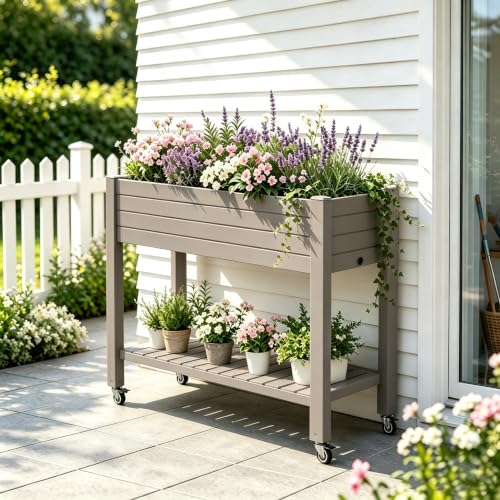
The Fancyango Raised Garden Bed with Wheels is an elevated resin planter intended for growing herbs, vegetables, flowers, and succulents in patios, balconies, and backyard spaces. Its 33.7-inch height makes the planting area easier to reach, so it may suit homeowners, older gardeners, and anyone who prefers less bending or kneeling during routine garden work.
Its most useful feature combination is the mobile base and built-in water-level system. The 360-degree locking wheels allow the planter to be moved toward sunlight or shade, while the brakes help keep it stable when parked. The float and water gauge are designed to make reservoir levels easier to monitor, and the side drainage holes and central divider help separate excess moisture from the soil area.
The planter measures 42.4 inches long by 16.8 inches wide by 33.7 inches high, with a listed 17.7-gallon capacity and 110-pound load capacity. Internal rubber strips create four planting zones, which can make it easier to separate different crops or ornamental plants. A lower shelf adds storage for tools and pots, and the product information indicates assembly takes about 20 minutes without complex tools.
For a patio or small backyard, this raised bed can provide a contained growing area without requiring a traditional garden plot. The wheels may also help gardeners adjust the planter as seasonal light changes or move it when the space is being cleaned. The gray resin construction is listed as weather-resistant, UV-protected, and non-toxic for growing use, with resistance to rot, warping, fading, and cracking described in the product information.
Gardeners should monitor the water gauge, keep drainage openings clear, engage the wheel brakes when the planter is stationary, and account for the combined weight of soil, plants, and stored moisture. Its relatively narrow footprint may be less suitable for large crops or plants that need substantial root depth, and the listed load capacity should not be exceeded. Overall, it is a practical choice for accessible, organized container gardening where mobility and reduced bending are priorities.
Best For / Avoid If
Best for buyers prioritizing
- Comfortable elevated access for routine planting and harvesting
- Mobile design is useful when sunlight or shade changes during the day
- Water-level gauge and drainage design support more controlled watering
Consider another option if
- Its 42.4-inch length and 16.8-inch width require a clear, reasonably level area for positioning and movement
- Gardeners growing deep-rooted or larger crops may prefer a planter with more growing depth or capacity
- The 110-pound load capacity means soil, plants, and stored moisture should be kept within the listed limit

Pros
- Raised-leg design supports more accessible gardening and easier plant maintenance.
- Untreated cedar construction suits gardeners growing herbs, flowers, and food-bearing plants.
- Built-in slatted drainage helps manage excess water in the planting box.
- Handcrafted, sanded construction offers a finished appearance without requiring a custom build.
Cons
- The planter still requires assembly, even though the product information describes the process as minimal.
- The listed dimensions provide a moderate growing area, so gardeners planning deep-rooted or high-volume crops may need a larger bed.
- A filled planter will be substantially heavier than the listed 42-pound product weight, so its final location should be chosen carefully.
The All Things Cedar RGL34 is an elevated cedar garden box intended for growing herbs, flowers, and other plants in a contained planting space. Its raised legs make it especially suitable for gardeners who prefer not to bend as far, as well as users planning an accessible garden on a patio, deck, or level outdoor area.
The product information identifies the box as handcrafted from untreated Western Red Cedar. That untreated construction is presented as suitable for food-bearing plants, while the natural wood finish can blend with outdoor surroundings. The elevated format also keeps the planting area separate from ground-level garden space, which may help with organization and routine access.
The listed specifications give the planter a 48 by 25 inch footprint and a height of about 33 inches, while the product title describes it as 34 inches high. Ship lap bottom slats are designed to let excess water escape, and the smooth sanded finish with snug-fitting parts supports a more polished assembled appearance. Pre-cut components and instructions are included for minimal assembly.
For a backyard or small-space garden, this box can create a dedicated area for culinary herbs, compact flowers, or other plants that fit its available soil depth. It can also make productive use of a deck or patio where an in-ground bed is not practical, provided the surface is stable and can support the considerable weight of soil and water.
Gardeners should plan the final location before filling the box because the listed 42-pound product weight does not include soil or plants. The product information does not specify soil capacity, maximum load, or the growing depth, so crops with extensive roots may require a different planter. Overall, it is a sensible option for accessible, elevated container gardening, while gardeners needing a larger or deeper growing space should compare those measurements carefully.
Best For / Avoid If
Best for buyers prioritizing
- Raised-leg design supports more accessible gardening and easier plant maintenance.
- Untreated cedar construction suits gardeners growing herbs, flowers, and food-bearing plants.
- Built-in slatted drainage helps manage excess water in the planting box.
Consider another option if
- The planter still requires assembly, even though the product information describes the process as minimal.
- The listed dimensions provide a moderate growing area, so gardeners planning deep-rooted or high-volume crops may need a larger bed.
- A filled planter will be substantially heavier than the listed 42-pound product weight, so its final location should be chosen carefully.

Pros
- Good fit for patios, balconies, decks, and small backyards where in-ground beds are not practical.
- Elevated design is easier to access than ground-level beds, especially for routine watering and harvesting.
- Locking casters add useful mobility while still allowing the planter to stay put when positioned.
- Resin material is listed as non-toxic and weather-resistant for outdoor growing use.
- Reviewers commonly mention straightforward assembly and appreciate the storage shelf and moisture features.
Cons
- The 17.7-gallon capacity may be limiting for large vegetable crops or plants with deep, spreading root systems.
- Gardeners who prefer the look and weight of real wood or metal may find the plastic/resin construction less appealing.
- As with any wheeled elevated planter, it should be locked and placed on a stable, level surface, especially when filled with soil and water.
The WTFGO 33.7-inch elevated raised garden bed is a floor-standing resin planter made for small-space growing on patios, balconies, decks, and backyards. Based on the listed specifications, it is best suited for herbs, flowers, succulents, and smaller vegetables rather than large in-ground style crops. The raised height is the main practical advantage for gardeners who want to avoid frequent bending or kneeling.
The planter measures 42.4 inches long, 16.8 inches wide, and 33.7 inches high, with a listed 17.7-gallon planting capacity and 110-pound load capacity. That gives it a useful but contained growing area for a compact kitchen herb garden, a row of lettuces, patio flowers, or a few small vegetable starts. The divisible planter design also gives gardeners the option to separate plant types or manage different varieties in one box.
Water management is a key part of this planter’s design. The product information lists drainage holes, a self-watering style reservoir, a water gauge, and a side drainage function, all of which can help beginners pay closer attention to moisture levels. These features do not replace checking the soil by hand, but they can make overwatering easier to spot and help prevent water from sitting unnoticed around roots.
The 360-degree rotating locking wheels are useful for changing sun exposure, moving the planter out of the way for patio cleaning, or bringing it closer to the house during changing weather. The lower storage shelf adds practical space for gloves, a hand trowel, seed packets, small pots, or plant food. Reviewers commonly mention that the planter is easy to move and that assembly is straightforward, although some users note that snapping parts together may still take a bit of pressure.
The plastic and resin construction is listed as weather-resistant and non-toxic, which makes it a low-maintenance alternative to untreated wooden planters. It should still be treated like a filled garden container, meaning it is best placed on a level surface, moved carefully when loaded with soil and water, and kept with the casters locked when in use. Periodically clearing drainage points and emptying excess water when needed will help keep the planter functioning properly.
This is a practical choice for beginners, older gardeners, renters, and homeowners who want an accessible raised bed without building a permanent structure. Gardeners planning to grow large tomatoes, sprawling squash, or deep-rooted crops may want a larger raised bed or in-ground space, but for compact edible and ornamental plantings, the WTFGO elevated planter offers a convenient mix of height, mobility, drainage, and storage.
Best For / Avoid If
Best for buyers prioritizing
- Good fit for patios, balconies, decks, and small backyards where in-ground beds are not practical.
- Elevated design is easier to access than ground-level beds, especially for routine watering and harvesting.
- Locking casters add useful mobility while still allowing the planter to stay put when positioned.
Consider another option if
- The 17.7-gallon capacity may be limiting for large vegetable crops or plants with deep, spreading root systems.
- Gardeners who prefer the look and weight of real wood or metal may find the plastic/resin construction less appealing.
- As with any wheeled elevated planter, it should be locked and placed on a stable, level surface, especially when filled with soil and water.

Pros
- Comes as a 2-pack, useful for separating plant types or setting up a small garden in stages.
- Bottomless design provides drainage and works on grass, soil, or patio surfaces according to the product information.
- Compact oval shape fits small yards and patios while still offering usable growing space.
- Reviewers commonly mention that the beds feel sturdy and are generally easy to assemble.
Cons
- Because the beds are bottomless, gardeners placing them on weedy ground may want to prepare the site or add a weed barrier such as cardboard before filling.
- Some reviewers note that aligning the curved sections during assembly can feel awkward, especially when working alone.
- The 12 inch height may be less comfortable for gardeners who need a taller raised bed to reduce bending.
The Tegarbed HKTY-TYHYC-421-2 is a 2-pack set of oval galvanized metal raised garden beds designed for outdoor vegetable, herb, flower, and small fruit planting. Each bed measures 48 inches long, 24 inches wide, and 12 inches high, making it a manageable size for beginners, homeowners organizing a yard garden, or patio growers who want defined planting space without building a wood bed.
Based on the listed specifications, the key gardening benefit is the combination of a compact footprint and an open-bottom design. The open base allows excess water to drain away and, when placed over soil or lawn, lets plant roots grow downward into the native ground. The manufacturer lists the 1 ft depth as suitable for root crops, fruiting vegetables, herbs, and greens, which fits common home garden uses such as lettuce, basil, peppers, bush beans, radishes, and flowers.
The product information lists galvanized metal construction with an average 1mm thickness, rust resistance, weather resistance, and a smooth-edge finish. For gardeners, that means the bed is intended to hold soil in a stable shape while offering safer handling during assembly than rough, unfinished metal. The 24 inch width is also practical because most people can reach the center from either side for planting, weeding, watering, and harvesting.
Assembly is described as straightforward, with a manual, parts list, and installation steps included. Reviewers commonly report that the beds are easy to put together and feel sturdy once assembled, although a few mention that lining up the curved sections can take patience or an extra set of hands. The beds are lightweight enough to position before filling, but like most raised beds, they should be placed where you want them before adding soil.
In a backyard, the two-bed set can separate tomatoes and companion herbs from greens or flowers. On a patio, the open bottom means placement should be considered carefully, since water and soil contact with the surface may matter. On grass or soil, gardeners may want to clear vegetation first or use cardboard under the bed to help reduce weeds before filling with a mix such as topsoil, compost, and potting soil, as suggested in the product information.
This is a good fit for gardeners who want an approachable, metal raised-bed kit for compact growing areas and who do not need a tall, waist-height planter. Gardeners with mobility concerns, very deep-rooted crops, or a need for a fully enclosed planter may prefer a taller bed or a planter with a base. Overall, the listed design points to a useful, space-conscious raised bed set for organizing vegetables, herbs, and flowers in a home garden.
Best For / Avoid If
Best for buyers prioritizing
- Comes as a 2-pack, useful for separating plant types or setting up a small garden in stages.
- Bottomless design provides drainage and works on grass, soil, or patio surfaces according to the product information.
- Compact oval shape fits small yards and patios while still offering usable growing space.
Consider another option if
- Because the beds are bottomless, gardeners placing them on weedy ground may want to prepare the site or add a weed barrier such as cardboard before filling.
- Some reviewers note that aligning the curved sections during assembly can feel awkward, especially when working alone.
- The 12 inch height may be less comfortable for gardeners who need a taller raised bed to reduce bending.

Pros
- Good working height for gardeners who prefer not to garden at ground level.
- Large enough for a small-space vegetable or flower planting while still fitting many patios and decks.
- Includes drainage holes, an important feature for container-style raised beds.
- Natural unfinished wood appearance suits traditional outdoor garden settings.
Cons
- Unfinished wood may require extra care or a compatible exterior finish if gardeners want added surface protection or a different look.
- At 72 inches long, it may be too large for very tight balconies or narrow walkways.
- Gardeners who need very deep root space for larger crops may prefer a deeper ground-level raised bed.
The Best Choice Products SKY6152 is an elevated wood raised garden bed designed for outdoor container-style growing. Based on the listed specifications, it is intended for vegetables, flowers, succulents, and similar plantings where a raised, accessible work height is useful. It is especially relevant for patio gardeners, balcony growers with enough floor space, and homeowners who want a contained planting area without building a permanent bed.
The main gardening benefit is its combination of usable planting space and easier access. The bed measures 72 inches long by 24 inches wide and holds 8.4 cubic feet of growing medium, giving beginners enough room to group several smaller crops or ornamental plants. The elevated layout also keeps the planting surface off the ground, which can make routine watering, thinning, and harvesting more comfortable than kneeling beside a traditional bed.
Drainage is an important detail in any raised planter, and this model includes six drainage holes to let excess water escape. That feature can help reduce waterlogged soil when paired with an appropriate potting or raised-bed mix. The product information lists all-wood Chinese fir construction, a natural color, a traditional rectangular shape, six legs, and a 300 lb weight capacity.
For small-space use, the long and narrow footprint can work well along a deck rail, patio wall, fence line, or sunny backyard edge. It may also suit gardeners who want to separate herbs from in-ground beds, grow salad greens close to the kitchen, or keep a few flowers at a more visible height. The included divider panel mentioned in the title may be useful for organizing plantings, although gardeners should confirm the assembly layout before filling the bed.
There are a few practical considerations before buying. The finish is listed as unfinished, so owners who want a sealed or stained look may need to choose a plant-safe exterior treatment appropriate for garden use. Because the planter is 72 inches long, measuring the intended location is important, and it should be placed on a level surface that can support the combined weight of the planter, soil, water, and plants.
Overall, this is a sensible option for gardeners who want a natural wood elevated bed with generous length, drainage, and a comfortable working height. It is less ideal for very tight balconies, gardeners needing extra-deep soil for large root systems, or anyone who prefers a fully finished planter that requires no additional surface care.
Best For / Avoid If
Best for buyers prioritizing
- Good working height for gardeners who prefer not to garden at ground level.
- Large enough for a small-space vegetable or flower planting while still fitting many patios and decks.
- Includes drainage holes, an important feature for container-style raised beds.
Consider another option if
- Unfinished wood may require extra care or a compatible exterior finish if gardeners want added surface protection or a different look.
- At 72 inches long, it may be too large for very tight balconies or narrow walkways.
- Gardeners who need very deep root space for larger crops may prefer a deeper ground-level raised bed.

Pros
- Accessible elevated design can be more comfortable than a ground-level bed for routine planting and maintenance.
- Mobile cart format is useful when plants need to be moved for sunlight, shelter, or seasonal placement.
- Cover, drainage features, and storage shelf combine several useful functions for compact-space gardening.
Cons
- The 42 by 18.5 inch growing area may be less suitable for gardeners planning large crops or deep-rooted plants.
- The covered design could limit growing room for tall plants, so crop height should be considered before planting.
- Outdoor use may require regular inspection of the fir wood, roof, wheels, and drainage paths to keep the planter functioning as intended.
The TenaoVilleux Country Rustic is an elevated garden bed designed for growing herbs, flowers, seedlings, and compact vegetables in a raised, mobile format. Its 42 by 18.5 inch planting area and 33.5 inch overall height make it a practical option for patios, balconies, small yards, and gardeners who prefer not to work at ground level.
The product information indicates that the fir wood bed includes bottom drainage slits to help excess water leave the root area. The transparent sloped acrylic cover is intended to admit sunlight while creating a more protected growing zone, and side drainage grooves are designed to reduce water pooling on the cover.
Four 360-degree lockable wheels and a push-pull rod allow the planter to be repositioned when needed, provided the surface is suitable for rolling. Lock the wheels before planting, watering, or working in the bed, and observe the listed 150-pound capacity when adding soil, plants, and accessories.
The lower shelf can hold gardening tools or supplies, while the push-pull rod provides a place to hang accessories. The listed bed liner and seed starter tray support a more organized setup, and the tool-free assembly design is intended to make initial installation simpler than a planter requiring a full hardware setup.
This planter is best for gardeners who want an accessible, covered growing station without committing to a large raised-bed system. The growing footprint may be limiting for sprawling or tall crops, and the fir wood, acrylic cover, wheels, and drainage openings should be checked periodically during outdoor use. Overall, it offers a versatile compact-space solution, while gardeners needing substantial crop volume or unrestricted plant height may prefer a larger open raised bed.

Pros
- Tall profile offers more convenient access than a traditional in-ground planting area.
- Modular panel design can be arranged into multiple garden layouts.
- Natural drainage is supported because the design does not include a bottom panel.
Cons
- The missing bottom panel means it needs a suitable surface and may require additional planning to control weeds or protect the underlying area.
- Filling a bed with more than 160 gallons of soil can require significant material and preparation.
- Its 78 x 42-inch footprint may be too large for some balconies, narrow patios, or compact growing areas.
The HEAHOLD raised garden bed is a modular galvanized steel planter intended for growing vegetables, flowers, and herbs above ground level. Its 17-inch height and oval 78 x 42-inch footprint make it a practical option for homeowners who want a defined growing area without planting directly into existing soil.
Based on the listed specifications, the bed holds more than 160 gallons of soil and provides 17 inches of depth for root development. That capacity can support a substantial planting area, while the raised format helps separate the garden from compacted or unsuitable ground soil.
The structure uses galvanized steel with a powder-coated finish described as rust resistant for outdoor use. Eight interlocking panels can be arranged in nine configurations, and the pre-drilled, numbered panels are designed for tool-free assembly in about 15 minutes. Rubber edging covers the metal edges during setup and use.
This planter could work well in a backyard, on a sufficiently spacious patio, or in another area where a large raised bed can be filled and reached from the sides. The taller profile may be more comfortable for older gardeners or anyone who prefers not to work at ground level, while the modular design allows the layout to be adjusted as the garden changes.
The bed does not include a bottom panel, so it relies on natural drainage and should be installed on a suitable surface. Gardeners should plan for the amount of soil needed to fill its listed capacity and confirm that the 78 x 42-inch footprint fits their space. It is a reasonable choice for accessible, customizable raised-bed gardening, while those needing a smaller planter or a contained base may prefer a different design.
Best For / Avoid If
Best for buyers prioritizing
- Tall profile offers more convenient access than a traditional in-ground planting area.
- Modular panel design can be arranged into multiple garden layouts.
- Natural drainage is supported because the design does not include a bottom panel.
Consider another option if
- The missing bottom panel means it needs a suitable surface and may require additional planning to control weeds or protect the underlying area.
- Filling a bed with more than 160 gallons of soil can require significant material and preparation.
- Its 78 x 42-inch footprint may be too large for some balconies, narrow patios, or compact growing areas.

Pros
- Includes both a water reservoir and an easy-to-read water gauge for more convenient moisture monitoring.
- Drainage plug can be opened or closed, which is useful for adjusting watering control by location and season.
- Raised design may be easier to tend than ground-level containers for many homeowners and older gardeners.
- Usable indoors or outdoors according to the product information, giving flexibility for year-round planting plans.
Cons
- Plastic material may not appeal to gardeners who prefer the look and feel of wood, metal, or natural stone planters.
- The 44.9 by 19.4 inch footprint may be too large for very tight balconies or narrow walkways.
- Gardeners planning deep-rooted or large crop plantings may prefer a larger or deeper raised bed.
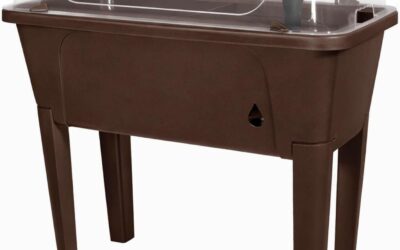
The Keter Splendor 31.7 Gallon Raised Garden Bed is an elevated plastic planter intended for growing fresh vegetables, flowers, and herbs in a contained space. Based on the listed specifications, it is a practical option for homeowners, balcony gardeners, and beginners who want a raised planting area without building a traditional wooden bed.
Its most useful feature set centers on water management. The product information lists a self-watering reservoir, an easy-to-read water gauge, and a drainage system that can be opened or closed. For everyday gardeners, those details can make it easier to monitor moisture and adjust drainage instead of relying only on guesswork.
The planter measures 44.9 inches wide, 19.4 inches deep, and 29.8 inches high, giving it a long, narrow shape that can fit along a patio edge, deck, balcony wall, or indoor growing area where floor space matters. The raised form also brings plants higher than a ground-level pot, which may make routine watering, harvesting, and checking plants more comfortable.
Because it is listed for indoor and outdoor use, this planter can serve several small-space gardening roles. It can hold a kitchen herb garden near a sunny doorway, a seasonal flower display on a patio, or a compact vegetable planting area where digging into the ground is not an option. The brown modern style is neutral enough for many outdoor seating areas.
There are still a few practical considerations. Plastic planters should be placed where they are stable and where excess water can drain safely when the drainage system is opened. Gardeners should also choose plants that suit the planter size, since larger or deep-rooted crops may need more growing volume than a compact raised planter provides.
Overall, the Keter Splendor is a sensible choice for gardeners who want an accessible raised planter with built-in moisture management features. Those seeking a larger backyard production bed, a natural wood look, or maximum soil depth may want to compare it with full-size raised bed kits before deciding.
Best For / Avoid If
Best for buyers prioritizing
- Includes both a water reservoir and an easy-to-read water gauge for more convenient moisture monitoring.
- Drainage plug can be opened or closed, which is useful for adjusting watering control by location and season.
- Raised design may be easier to tend than ground-level containers for many homeowners and older gardeners.
Consider another option if
- Plastic material may not appeal to gardeners who prefer the look and feel of wood, metal, or natural stone planters.
- The 44.9 by 19.4 inch footprint may be too large for very tight balconies or narrow walkways.
- Gardeners planning deep-rooted or large crop plantings may prefer a larger or deeper raised bed.

Pros
- Accessible 32-inch height can make routine garden care more comfortable.
- Mobile design is useful when a patio or balcony layout needs to change.
- The shelf adds practical storage without requiring a separate garden organizer.
- The 2 x 4-foot format offers useful growing space for compact outdoor areas.
Cons
- The product information does not list the planter's soil volume, so gardeners should plan their growing-media purchase after assembly.
- Assembly is required, and the planter will need to be positioned on a suitable surface before the wheel brakes are engaged.
- Gardeners needing a larger root zone or more planting area may prefer a wider or ground-level raised bed.
The STBoo Elevated Raised Garden Bed is a wheeled, 2 x 4-foot planter designed for growing vegetables, herbs, flowers, and succulents where ground-level gardening is inconvenient or space is limited. Its 32-inch height makes it a practical option for homeowners, balcony gardeners, and older gardeners who prefer to work while standing.
Based on the listed features, the main benefit is easier access to routine planting, weeding, and harvesting. Four smooth-rolling wheels allow the bed to be moved, while locking brakes are intended to hold it in place on patios, balconies, or decks. The elevated format also keeps the planting area separate from the ground surface.
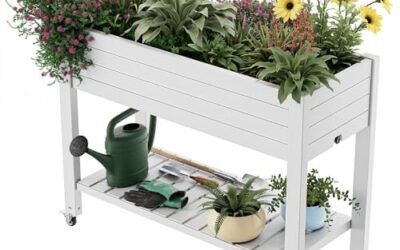
The frame is made from galvanized steel, and the white finish gives the planter a clean appearance. A lower shelf provides space for tools, watering cans, plant pots, or potting supplies. Pre-drilled drainage holes are included to help excess water escape, which is important for reducing waterlogging in a raised container.
In a small patio or balcony garden, the 48 x 24-inch planting area can support a focused collection of edible or ornamental plants without taking up the footprint of a full ground-level bed. The wheels may also help when the planter needs to be repositioned, although it should be placed on a suitable surface with the brakes engaged before gardening.
Assembly is required, and the supplied information states that hardware and instructions are included. The soil volume is not specified, so gardeners should confirm the required amount of suitable growing medium before filling the bed. Overall, this planter is a good fit for accessible, organized container gardening, while gardeners needing maximum root depth, a larger growing area, or a permanent ground-level bed may want a different design.
Best For / Avoid If
Best for buyers prioritizing
- Accessible 32-inch height can make routine garden care more comfortable.
- Mobile design is useful when a patio or balcony layout needs to change.
- The shelf adds practical storage without requiring a separate garden organizer.
Consider another option if
- The product information does not list the planter's soil volume, so gardeners should plan their growing-media purchase after assembly.
- Assembly is required, and the planter will need to be positioned on a suitable surface before the wheel brakes are engaged.
- Gardeners needing a larger root zone or more planting area may prefer a wider or ground-level raised bed.
Guía de compra de bancales elevados accesibles para sillas de ruedas
Empieza por la altura de acceso y el alcance
La primera pregunta es si el bancal permite trabajar sin inclinarte, apoyarte demasiado hacia delante ni alcanzar más tierra de la que te resulte cómoda. Varias opciones relevantes indican alturas elevadas cercanas a 30-33,7 pulgadas, entre ellas LEETOLLA Elevate 32" Tall Raised Garden Bed, Best Choice Products 48x24x32-inch Mobile Elevated Wood Planter, MIXC 48x24x31 in. Elevated Reinforced Large Planter Box y la jardinera elevada de 33,7 pulgadas de WTFGO.
Para los usuarios de silla de ruedas, la altura por sí sola no lo es todo. Observa la profundidad y la anchura de la jardinera, y considera si puedes acercarte desde la parte delantera, desde un lateral o desde ambos. Una jardinera de 72 pulgadas de largo puede ofrecer más espacio de cultivo, mientras que una jardinera móvil más estrecha puede ser más fácil de colocar junto a una silla en un patio o balcón.
Decide si las ruedas merecen la pena
Las ruedas pueden ser muy útiles cuando necesitas mover una jardinera para recibir sol, despejar un paso, evitar condiciones meteorológicas adversas o reorganizar un espacio exterior pequeño. El modelo LEETOLLA indica dos ruedas todoterreno y un asa ergonómica, mientras que la jardinera de 48x24x32 pulgadas de Best Choice Products incluye ruedas bloqueables. La jardinera WTFGO indica ruedas bloqueables con giro de 360 grados, y el conjunto de dos piezas ChuangshuoGuard incluye ruedas universales de gran tamaño y un manillar ergonómico.
La contrapartida es que una jardinera con ruedas sigue volviéndose pesada después de añadir tierra y agua. Antes de comprar, compara la capacidad de peso indicada con la cantidad de tierra que piensas utilizar y asegúrate de que las ruedas sean adecuadas para la superficie sobre la que la moverás. Las ruedas bloqueables o un punto de parada estable son importantes en tarimas, patios y cualquier zona con cierta inclinación.
Compara la capacidad, el volumen de cultivo y la elección de plantas
La capacidad indica cuánta tierra y peso de plantas está diseñado para soportar el bastidor. LEETOLLA y ChuangshuoGuard indican una capacidad de 400 libras, MIXC indica 331 libras, el bancal elevado de 72x24x30 pulgadas de Best Choice Products indica 300 libras y la jardinera móvil de 48x24x32 pulgadas de Best Choice Products indica 100 libras. Keter indica una jardinera de 31,7 galones, mientras que WTFGO indica 17,7 galones y una carga de 110 libras.
Para hierbas, lechugas, flores y hortalizas compactas, una jardinera elevada más pequeña puede ser suficiente y más fácil de manejar. Si quieres más espacio de plantación, la jardinera elevada de madera de 72x24x30 pulgadas de Best Choice Products ofrece 8,4 pies cúbicos e incluye un panel separador, mientras que MIXC indica entre 5 y 6 pies cúbicos con una profundidad de 9 pulgadas. Para cultivar tomates en recipientes, también puedes comparar la profundidad de la jardinera con las opciones comentadas en nuestra guía sobre bolsas de cultivo de tela para tomates.
Comprueba el drenaje antes de llenar el bancal
El drenaje es especialmente importante en las jardineras elevadas porque el exceso de agua no puede dispersarse simplemente por el suelo natural, a menos que el bancal tenga la base abierta. LEETOLLA indica cinco orificios de drenaje más dos líneas de drenaje transversales, ChuangshuoGuard indica el mismo tipo de sistema de drenaje de doble capa, Best Choice Products indica cuatro orificios de drenaje en la jardinera móvil de 48 pulgadas y seis orificios de drenaje en el bancal elevado de 72 pulgadas, y MIXC indica cuatro orificios de drenaje con un revestimiento interior.
Keter y WTFGO adoptan un enfoque diferente al incluir medidores de agua, y Keter también indica un depósito y un tapón de drenaje. Estas funciones pueden ayudar a los jardineros que prefieren un recordatorio visual antes de regar, pero aun así requieren comprobaciones periódicas. Con cualquier revestimiento, sigue las instrucciones del fabricante para que los orificios de drenaje sigan siendo utilizables.
Elige un material que puedas mantener
El metal, la resina y la madera presentan distintas ventajas y desventajas prácticas. LEETOLLA indica hierro con recubrimiento en polvo de alta resistencia y protección antióxido, mientras que ChuangshuoGuard indica acero galvanizado con recubrimiento antióxido de color gris carbón. Tegarbed indica acero galvanizado de 1 mm y un diseño con base abierta, aunque su altura de 1 pie hace que esté menos orientado al acceso desde una posición sentada que los modelos elevados.
Las jardineras de madera, como los modelos elevados de Best Choice Products, MIXC y Yaheetech, pueden atraer a los jardineros que prefieren un aspecto natural. MIXC indica madera de abeto sin tratar, piezas de soporte de Pinus radiata, pintura impermeable en las patas y un revestimiento de PE. Las opciones de resina, como WTFGO y Keter, evitan los problemas de pudrición de la madera según los materiales indicados; WTFGO especifica el uso de resina no tóxica resistente a la intemperie.
Planifica el montaje, la estabilidad y el uso seguro
La mayoría de los bancales elevados llegan como kits, por lo que el montaje es importante. WTFGO indica un montaje de 20 minutos sin herramientas complejas, MIXC incluye una guía clara y un destornillador, y recomienda un montaje de 20 a 35 minutos entre dos personas; Tegarbed y Yaheetech también indican un montaje sencillo con instrucciones. Si la fuerza de las manos, el equilibrio o la movilidad son un problema, organiza la ayuda antes de que lleguen la jardinera y la tierra.
Coloca el bancal sobre una superficie firme y nivelada antes de llenarlo. La tierra pesa mucho y es bastante más difícil cambiar de sitio una jardinera después de regarla. Mantén los caminos lo bastante anchos para que las sillas de ruedas o los andadores puedan desplazarse con seguridad, no sobrecargues los estantes por encima de su uso previsto y sigue todas las instrucciones del fabricante para los bloqueos de las ruedas, los revestimientos, las piezas de drenaje y los límites de peso.
Piensa en el almacenamiento de herramientas y la distribución de espacios pequeños
Varios bancales elevados accesibles incluyen estantes de almacenamiento, lo que puede reducir los desplazamientos mientras trabajas en el jardín. LEETOLLA indica un estante inferior desmontable, la jardinera móvil de 48 pulgadas de Best Choice Products incluye un estante de almacenamiento integrado, WTFGO indica un estante inferior y ChuangshuoGuard incluye un estante adicional de 37 pulgadas para herramientas o fertilizante.
Si tu zona de cultivo es un balcón, una tarima o un patio estrecho, el almacenamiento y los caminos despejados forman parte de la accesibilidad. Una jardinera compacta con ruedas puede ser mejor que un bancal estacionario más grande si el espacio es limitado. Para el resto de tus herramientas de jardinería, consulta nuestra guía sobre la mejor caja para tarima para herramientas de jardín o nuestros consejos sobre cómo organizar un cobertizo de jardín pequeño.
Metodología de investigación y confianza
Esta guía se basa en la investigación y la comparación de especificaciones, no en pruebas físicas. Revisamos los datos de producto proporcionados para determinar su relevancia para los bancales elevados accesibles para sillas de ruedas, buscando primero una altura de trabajo elevada, posibilidades de acceso desde una posición sentada, ruedas o funciones de movilidad, drenaje, dimensiones o volumen indicados, capacidad de carga, materiales y detalles de montaje.
Los productos con características de accesibilidad claras recibieron más atención que los bancales elevados a nivel del suelo. Por ejemplo, los modelos elevados con alturas indicadas de 29,8 a 33,7 pulgadas, ruedas móviles, estantes de almacenamiento, revestimientos o medidores de agua son más útiles directamente para los jardineros que quieren reducir la inclinación y el tiempo de rodillas. Los bancales sin base pueden seguir siendo útiles en un jardín, pero no están tan alineados con el acceso en silla de ruedas a menos que se instalen en una distribución accesible personalizada.
Solo tuvimos en cuenta las señales de opinión de propietarios cuando se proporcionaron el número de reseñas y las valoraciones, como LEETOLLA con 4,6 sobre 5 y 1.796 reseñas, la jardinera móvil de 48 pulgadas de Best Choice Products con 4,5 sobre 5 y 4.382 reseñas, y Keter con 4,3 sobre 5 y 1.004 reseñas. No inventamos valoraciones, precios, dimensiones ni resultados de durabilidad a largo plazo que no estuvieran disponibles.
Este artículo se actualizó durante julio de 2026 para reflejar el intervalo de precios proporcionado de 33,99 $ a 349,99 $ y la combinación de marcas disponible, incluidas MIXC, LEETOLLA, ChuangshuoGuard y otras. Los factores de clasificación se adaptaron a los bancales elevados y las jardineras: altura de acceso, capacidad de cultivo, drenaje, material, movilidad, estabilidad, montaje y adaptación a espacios pequeños.
Recomendaciones finales
Mejor opción general: LEETOLLA Elevate 32" Tall Raised Garden Bed Outdoor with Wheels & Shelf for Mobility, 400LBS Capacity, Anti-Rust Steel Planter Box for Vegetables/Herbs, Patio-Balcony-Backyard. Según las especificaciones indicadas, combina una altura de trabajo de 32 pulgadas, una capacidad de 400 libras, una estructura de hierro con recubrimiento en polvo, ruedas, un asa ergonómica, un estante desmontable y un sistema de drenaje doble, por lo que es una de las opciones más completas orientadas a la accesibilidad dentro de los datos proporcionados.
Mejor opción para espacios pequeños: Elevate 33.7" Tall Raised Garden Bed with Wheels, Divisible Resin Planter Box with Drainage Gauge & Storage Shelf, Herb Planter for Garden Patio Backyard, Ashen (33.7" h). Sus dimensiones indicadas de 42,4 por 16,8 pulgadas, altura de 33,7 pulgadas, ruedas bloqueables con giro de 360 grados, medidor de agua, sistema de drenaje y estante inferior la convierten en una opción práctica para patios, balcones y jardineros que quieren una jardinera elevada compacta.
Mejor opción accesible de alta resistencia: MIXC 331 lb Capacity Wooden Raised Garden Bed with Legs, 48x24x31 in. Elevated Reinforced Large Planter Box for Vegetable Flower Herb Outdoors – Beam and Column Structure – Unmatched Strength Outlast. Es una buena opción para los jardineros que prefieren la madera y quieren un diseño elevado de 31 pulgadas, una capacidad indicada de 331 libras, una longitud de 48 pulgadas, orificios de drenaje y un revestimiento, aunque el montaje puede resultar más sencillo entre dos personas.
Preguntas frecuentes
¿Qué altura es mejor para los bancales elevados accesibles para sillas de ruedas?
Muchos de los modelos proporcionados más relevantes indican alturas de trabajo de aproximadamente 30 a 33,7 pulgadas. La mejor altura depende de tu silla, postura, alcance de los brazos y de si te acercas a la jardinera desde la parte delantera o desde un lateral. Si es posible, mide la altura de una mesa o encimera que te resulte cómoda antes de elegir.
¿Son mejores para la jardinería accesible los bancales elevados con ruedas?
Las ruedas pueden ayudar si cultivas en un patio, balcón o tarima y necesitas mover las plantas para buscar luz solar o facilitar el acceso. No son automáticamente mejores para todos los espacios porque la tierra hace que las jardineras pesen mucho. Busca bloqueos de ruedas, asas y capacidades indicadas, y después coloca el bancal sobre una superficie nivelada.
¿Cuánto espacio de cultivo necesito en los bancales elevados accesibles para sillas de ruedas?
Para hierbas, flores, lechugas y hortalizas compactas, una jardinera elevada más pequeña puede ser más fácil de alcanzar y mantener. Para plantaciones mixtas más grandes, compara la capacidad o el volumen indicados, como 17,7 galones, 31,7 galones, entre 5 y 6 pies cúbicos u 8,4 pies cúbicos cuando se proporcionen. Evita elegir un bancal más grande de lo que puedas regar, podar y cosechar cómodamente.
¿Los bancales elevados accesibles para sillas de ruedas necesitan orificios de drenaje?
Sí, el drenaje es importante para la mayoría de las jardineras elevadas porque el exceso de agua necesita una salida. Los productos proporcionados incluyen varios sistemas de drenaje, como orificios, líneas de drenaje transversales, tapones de drenaje, revestimientos y medidores de agua. Instala siempre los revestimientos y tapones siguiendo las instrucciones del fabricante.
¿Son más fáciles de mantener los bancales accesibles de madera, metal o resina?
Cada material tiene sus ventajas y desventajas. La madera ofrece un aspecto natural, pero puede requerir más atención a los revestimientos y la humedad. Las opciones metálicas de los datos proporcionados incluyen acabados galvanizados o con recubrimiento en polvo, mientras que las opciones de resina pueden resultar atractivas para los jardineros que quieren una jardinera sin madera con funciones de riego integradas.
¿Los bancales elevados accesibles para sillas de ruedas caben en un balcón?
Algunos sí, pero debes comparar las dimensiones indicadas, la capacidad y las funciones de movilidad con el espacio disponible. Entre los productos proporcionados hay varias jardineras elevadas y con ruedas descritas para patios o balcones. También debes asegurarte de que la superficie del balcón pueda soportar de forma segura la jardinera, la tierra, el agua y las plantas.