


Pruning branches that are just beyond comfortable arm’s reach can be awkward, while a tool that is too long or heavy may be difficult to control. This guide to Best Telescopic Loppers helps home gardeners match a telescoping lopper to the size and location of the branches they prune.
We compare 2 options by intended task, cutting capacity, adjustable length, weight, grip details, and the kind of pruning each design supports. The key distinction is whether you need a longer-handled lopper for reachable fresh wood or a pole tool for branches overhead. For work above ground level, also consider whether a saw is more appropriate than lopper blades.
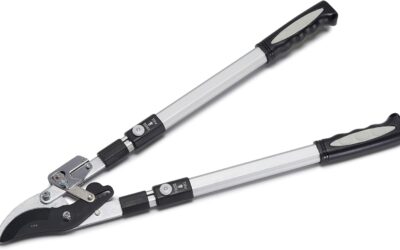
The Fiskars model below is a telescoping bypass lopper with a stated cutting diameter and compact handle-length range. If you are deciding between loppers and other pruning tools, our guides to pruning saws and cordless pole saws explain when those tool types may better suit the job.

Pros
- Extendable handle length adds useful reach for shrubs, small trees, and back-of-border pruning.
- Bypass cutting action is well matched to fresh, living wood when kept within the listed cutting diameter.
- Non-slip grips and two-handed leverage can make awkward cuts easier to control.
- Clear manufacturer specifications for length, weight, and cutting diameter help gardeners judge fit before buying.
Cons
- The 1.65 kg weight may feel tiring during long pruning sessions, especially with the handles fully extended.
- Gardeners mainly cutting dry, dead, or very hard wood may prefer an anvil-style lopper or a saw designed for that task.
- The listed spare part availability duration is limited to 1 year, so long-term parts support may be a consideration.
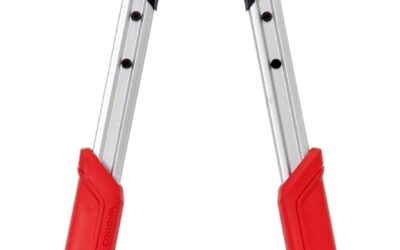
The Fiskars Solid 1027528 Telescopic Bypass Loppers are designed for pruning fresh wood in home gardens, including shrubs, young tree branches, and thicker stems that are beyond the comfort range of hand pruners. Based on the listed specifications, they are best suited to gardeners who want extra reach and leverage without moving straight to a pole pruner or powered tool.
The key benefit is the combination of bypass cutting action and a listed cutting diameter of 45 mm. Bypass loppers work with a scissor-like action, which is generally preferred for living branches because it can make cleaner cuts when the blade is sharp and the branch is within capacity. For routine seasonal pruning, shaping, and removing unwanted fresh growth, this design is a sensible match.
The telescopic handles adjust from 630 to 830 mm, giving the user more flexibility for high, low, or awkward cuts. Non-slip grips are listed, which should help with steadier handling, especially when the handles are extended. The product information also lists ambidextrous use, metal blade material, and stainless steel handle material, all useful details for comparing it with other long-handled loppers.
In a backyard setting, these loppers make sense for cutting branches on ornamental shrubs, managing fruit tree water sprouts within safe reach, trimming overgrown borders, or working around raised beds where stepping close to the plant is not always easy. They may also be useful in small gardens where one adjustable hand tool is easier to store than several fixed-length pruning tools.
There are a few practical limits to keep in mind. At 1.65 kg, the tool may become tiring if used overhead for extended periods, and gardeners with limited hand, shoulder, or upper-body strength may want to consider the weight carefully. The 45 mm capacity should not be treated as permission to force cuts through oversize or very hard branches, since that can damage the tool or create unsafe slipping. For dry deadwood, a pruning saw or an anvil lopper may be a better match.
Overall, the Fiskars Solid telescopic bypass loppers are a strong fit for homeowners who need an extendable, two-handed pruning tool for fresh branches within the stated capacity. They are less ideal as a heavy deadwood cutter or as a substitute for safe ladder practices, but for routine garden pruning with added reach, the listed feature set is practical and easy to understand.
Best For / Avoid If
Best for buyers prioritizing
- Extendable handle length adds useful reach for shrubs, small trees, and back-of-border pruning.
- Bypass cutting action is well matched to fresh, living wood when kept within the listed cutting diameter.
- Non-slip grips and two-handed leverage can make awkward cuts easier to control.
Consider another option if
- The 1.65 kg weight may feel tiring during long pruning sessions, especially with the handles fully extended.
- Gardeners mainly cutting dry, dead, or very hard wood may prefer an anvil-style lopper or a saw designed for that task.
- The listed spare part availability duration is limited to 1 year, so long-term parts support may be a consideration.

Pros
- Combines a bypass-style cutting function and serrated saw in one pole tool.
- Adjustable reach accommodates different pruning heights.
- Listed aluminum-alloy construction and non-slip handle support manageable handling.
Cons
- The 1/2-inch cutting limit applies to the shearing function, so thicker branches require the saw.
- A fully extended pole may be harder to control precisely than a shorter hand pruner.
- Who should skip it: Gardeners needing powered cutting, a specified larger cutting capacity, or detailed pruning near delicate growth.
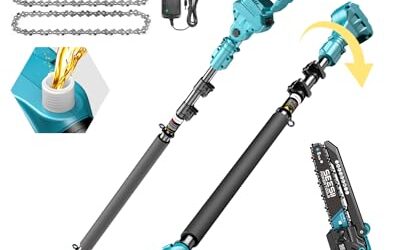
Heancare’s telescoping pole pruner is designed for trimming elevated branches and picking fruit. It combines a shearing head with an included serrated saw, making it a practical option for homeowners and gardeners who want reach for routine outdoor pruning.
The listed shearing capacity is up to 1/2 inch in branch diameter. For thicker limbs, the product includes a double-sided serrated saw. These separate cutting options suit a range of pruning tasks, but the listing does not specify a saw capacity.
The pole adjusts from 4.6 to 10 feet and is described as aluminum alloy. A safety lock and non-slip handle are included. The product information calls the design lightweight, but does not provide a weight or explain the adjustment mechanism.
In a backyard, the reach may help with fruit picking or trimming branches that sit above comfortable arm height. The pole can also be shortened for carrying or storage. Actual reach and control depend on the branch position and the user's ability to handle the tool at extension.
Use the shearing head only within its stated 1/2-inch capacity, and choose the saw for thicker branches. Keep the safety lock engaged when the tool is not in use, and maintain a secure grip while cutting overhead. The listing does not provide blade maintenance instructions.
This tool may suit gardeners who need occasional high-branch access and both cutting styles in one pole pruner. Those who regularly cut larger limbs, need especially precise control near delicate growth, or prefer a specified cutting capacity for the saw should consider another tool.
Best For / Avoid If
Best for buyers prioritizing
- Combines a bypass-style cutting function and serrated saw in one pole tool.
- Adjustable reach accommodates different pruning heights.
- Listed aluminum-alloy construction and non-slip handle support manageable handling.
Consider another option if
- The 1/2-inch cutting limit applies to the shearing function, so thicker branches require the saw.
- A fully extended pole may be harder to control precisely than a shorter hand pruner.
- Who should skip it: Gardeners needing powered cutting, a specified larger cutting capacity, or detailed pruning near delicate growth.
Best Telescopic Loppers buying guide
Match the tool to the branch and task
Loppers use long handles to give the user leverage on branches that are too substantial for hand pruners. Bypass loppers have two blades that pass one another as they close. The Fiskars Solid Telescopic Bypass Loppers are described for cutting fresh wood, so they are the more direct fit here for reachable branches that suit a bypass cut.
Do not assume that a longer handle means a tool can cut thicker wood. Check the stated cutting capacity and compare it with the branch you intend to prune. For branches above your head or beyond a lopper’s reach, a pole pruner or pruning saw may be a more suitable tool; avoid stretching or climbing to force a cut.
Use cutting capacity as a limit, not a target
Fiskars specifies a 45 mm cutting diameter for this model. Treat that figure as the manufacturer’s stated limit, not a promise that every branch at that size will cut easily. Wood condition, branch position, and how securely the lopper can be placed can affect the effort needed.
Keep the blades aligned around the branch and make a controlled cut rather than twisting the handles. If the branch resists, stop and choose a suitable saw or another tool instead of forcing the lopper. A comparison of bypass and anvil pruning cuts can help clarify how blade styles differ, although hand pruners and loppers are not identical tools.
Choose reach you can control
The Fiskars handles adjust from 630 to 830 mm, approximately 24.8 to 32.7 inches. The extra extension can help position the blades for a farther or awkward reachable cut, but added reach changes leverage and control. Adjust the handles only as far as needed, and maintain a stable stance with both hands on the grips.
This handle range is not equivalent to a long pole pruner. If your regular pruning involves high limbs, consider a pole tool designed for overhead reach instead of relying on extended lopper handles. Keep any cut within a height and position you can manage safely from the ground.
Consider weight and comfort over repeated cuts
Fiskars gives the tool’s weight as 1.65 kg, approximately 3.6 lb, and describes non-slip grips. Weight matters most when you are making repeated cuts or holding the lopper away from your body. A secure grip can support control, but it does not eliminate fatigue or guarantee that the tool will feel comfortable for every gardener.
If hand strength, shoulder comfort, or balance is a concern, try the tool’s grip and extension positions before committing when possible. Work in short intervals and keep cuts close to a comfortable working position. For smaller pruning jobs, a hand pruner may be easier to maneuver; our gardening gloves guide covers another practical part of comfortable garden work.
Check blade style and intended wood
Blade type should match the job. The Fiskars is a bypass model, and its description identifies fresh wood as its intended use. That gives shoppers a clearer use case than a generic lopper label, but it does not establish suitability for every plant, branch condition, or pruning method.
Position the blades cleanly before closing them, and avoid using the lopper as a general-purpose lever or cutter for materials it was not designed to handle. If a branch is dead, unusually hard, or too large for the specified capacity, pause and select an appropriate pruning saw instead.
Maintain and store the lopper carefully
After pruning, remove plant debris and moisture from the blades and check that the handles still extend and lock as intended. Follow the manufacturer’s care instructions for cleaning and sharpening. A clean, sharp cutting edge can help keep pruning controlled, but do not disassemble or adjust mechanisms unless the instructions permit it.
Store the tool closed and secured in a dry location, with the cutting edges away from children and other household members. Retract the handles for storage if the manufacturer’s instructions allow it. Before each use, inspect the blades, grips, and telescoping sections for damage or looseness.
Prune from a stable position
Telescoping handles can extend your reach, but they do not make overhead pruning risk-free. Wear suitable eye protection and keep other people clear of the drop zone. Do not cut near power lines, stand on an unstable surface, or reach so far that you lose balance; contact a qualified professional for hazardous or high limbs.
Before starting, identify where the branch may move as it separates and make sure you have room to work. Follow the manufacturer’s safety and maintenance instructions. A longer tool can make a reachable cut more convenient, but careful positioning remains essential.
How we evaluate telescoping loppers
We evaluate these pruning tools by matching their stated design to common home-garden tasks. For loppers, the most relevant factors include bypass or anvil blade type, intended wood, documented cutting capacity, handle adjustment range, grip details, and weight. A useful recommendation should explain both what a tool is suited to do and where its stated limits matter.
We also assess whether a tool’s reach makes sense for the intended cut. A lopper with adjustable handles is not automatically a substitute for a pole pruner, and a stated maximum cutting diameter should not be treated as a guarantee of effortless cutting. These distinctions help gardeners avoid choosing by length alone.
During November 2026, we review the product specifications and descriptions alongside the practical needs of beginner gardeners, homeowners with yards, and people who value manageable tool weight and grip comfort. Where a specification is available, we use it to frame the recommendation; where a detail is not listed, we advise shoppers to check the manufacturer’s current instructions before purchase.
Frequently asked questions
What does a telescoping lopper help me reach?
Adjustable handles can extend your reach for branches that remain manageable from a stable position. They do not turn a lopper into a long pole pruner. If the branch is high overhead, choose a tool designed for pole pruning or consult a professional when the cut is difficult to manage safely.
How thick a branch can the Fiskars lopper cut?
Fiskars states a cutting diameter of 45 mm. Actual cutting effort can vary with the wood and the position of the branch, so do not force a cut that resists. Use a suitable saw when a branch exceeds the stated capacity or cannot be cut with control.
Are bypass loppers suitable for fresh wood?
The Fiskars product description identifies fresh wood as its intended use and specifies bypass blades. Choose a tool based on the wood and branch size you need to prune, and follow the manufacturer’s guidance for use and care.
Will this lopper be comfortable for a small gardener?
Comfort depends on your grip, strength, and ability to control the tool at its extended length. Fiskars lists a weight of 1.65 kg and describes non-slip grips. If possible, handle a similar tool before buying, especially if you expect to make many cuts in one session.
How should I care for telescoping lopper blades?
Remove debris and moisture after use, inspect the blades and extension sections, and follow the manufacturer’s instructions for sharpening and maintenance. Keep the cutting edges secured during storage. Do not alter the lopper’s mechanism unless the instructions allow it.
Can I use a lopper to prune branches overhead?
Only make cuts you can reach and control while standing securely on the ground. Telescoping handles do not remove the risks of falling branches, unstable footing, or overhead hazards. Keep people clear of the work area and seek qualified help for high or hazardous limbs.