


Thick branches can be difficult to cut cleanly with hand pruners, while a saw may feel like more tool than a small pruning job requires. Ratcheting loppers use a staged cutting action to help with tougher branches, but the right choice depends on branch diameter, wood condition, reach, and how much tool you can comfortably handle.
This guide compares two long-handled bypass loppers for homeowners and gardeners who need extra leverage on living, green growth. In choosing among Best Ratcheting Loppers, consider the stated cutting capacity, blade style, handle length, weight, grip, and the balance between reach and control. For higher branches beyond a lopper’s safe working position, see our guide to cordless pole saws.
Kings County Tools KC8807-09 Extendable Bypass Lopper for Higher Branch Pruning Fiskars 28-Inch Power-Lever Bypass Lopper for Easier Branch Trimming FLORA GUARD Ratchet Pruning Shears, SK5 Steel Blade Clippers for Branches up to 7/8 Inch Prices and availability can change. We may earn a commission from qualifying purchases.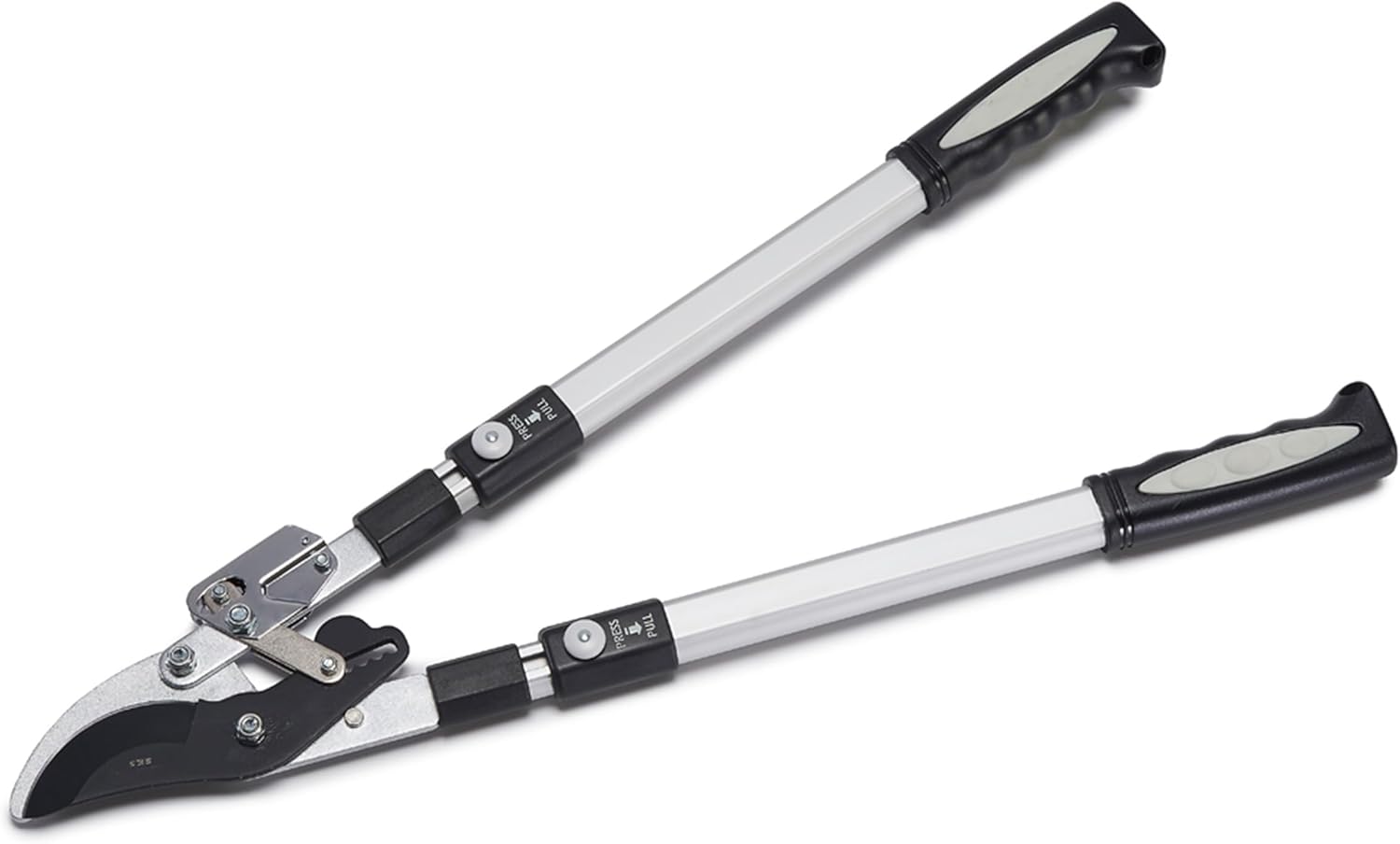


Pros
- Extendable handle range adds useful reach for small trees, tall shrubs, and overgrown landscape plantings.
- Bypass blade type is well matched to cleaner cuts on live, green wood.
- Ratcheting action and long handles provide added leverage compared with compact pruners.
- Ambidextrous hand orientation makes it usable for right- or left-handed gardeners.
Cons
- At roughly 3.75 to 3.99 pounds based on the listed data, it may feel tiring during long overhead pruning sessions.
- The 2 inch cutting capacity may not be enough for larger limbs, where a pruning saw or pole saw would be more appropriate.
- Long telescoping handles need more storage room than short loppers or hand pruners.
The Kings County Tools KC8807-09 is an extendable bypass lopper made for pruning green wood, including living branches, tree limbs, and shrub growth. It is a good fit for homeowners who want more reach and cutting leverage than a hand pruner provides, especially for routine yard cleanup and seasonal shaping.
The standout feature is the combination of a bypass blade, a double ratcheting mechanism, and a listed 2 inch jaw capacity. In plain terms, the bypass design is intended for cleaner cuts on live growth, while the ratcheting action is designed to build cutting force in stages rather than relying only on one hard squeeze.
The handles telescope from 26 to 40 inches and use 6 pin-locked position stops, giving gardeners a choice between shorter control and longer reach. Rubber grips help with hand placement, and the product information lists alloy steel for the blade material. The lopper is also described as ambidextrous, so it is not limited to one hand orientation.
In a typical backyard, this tool makes sense for trimming reachable branches on ornamental trees, cutting back overgrown shrubs, and maintaining fruit or shade trees within its capacity. It can also be useful around raised beds, fence lines, and small yards where branches need to be cut back without bringing out powered pruning equipment.
There are some practical limits to keep in mind. The listed weight is around 3.75 to 3.99 pounds, so overhead work may become tiring, particularly for older gardeners or anyone with shoulder fatigue. The 2 inch capacity should also be respected, since forcing a larger branch can reduce control and may damage the tool or create an unsafe cut.
This lopper is best for gardeners who regularly prune live branches and want adjustable reach in a manual tool. Gardeners dealing mostly with thick, dry, or very high limbs may want to consider a pruning saw, pole pruner, or another tool better matched to that work.
Pros
- Cuts branches up to 1.75 inches thick according to the product information.
- Compound lever mechanism offers more cutting power than a traditional lopper design.
- Cushioned, non-slip grips are useful for comfort and control.
- Ambidextrous hand orientation makes it approachable for left- or right-handed gardeners.
Cons
- May be less suitable for dead, very hard, or oversized limbs that call for a pruning saw or heavier-duty cutter.
- At 28 inches long and 3 pounds, it may feel bulky for very tight shrub interiors or gardeners who prefer compact pruners.
- Like most bypass loppers, the blade will need routine cleaning and careful storage to maintain smooth cutting.
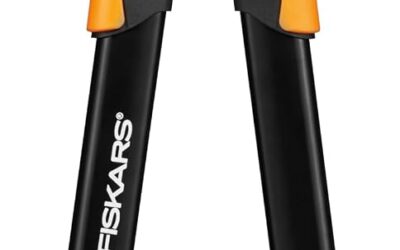
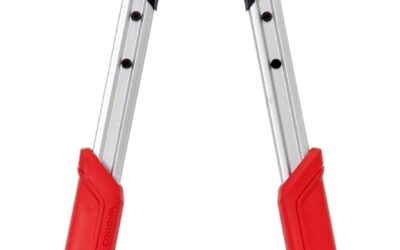
The Fiskars 28-Inch Power-Lever Bypass Lopper is a manual pruning tool for homeowners who need more reach and leverage than hand pruners provide. Based on the listed specifications, it is intended for trimming tree branches, shrubs, roses, and other yard growth up to 1.75 inches in diameter.
The main advantage is its Power-Lever compound mechanism, which the product information says provides more cutting power than traditional designs. For beginner and intermediate gardeners, that matters because medium branch cuts can be tiring with basic tools, especially during seasonal cleanup or when reclaiming overgrown planting areas.
This is a bypass-style lopper, meaning the blade passes by the counter blade in a slicing action that is generally preferred for living, green growth. The blade is listed as stainless steel with a low-friction coating, which is meant to promote smoother cuts, reduce gumming, and add rust resistance. The product also lists steel handle construction, a 28-inch length, and a 3-pound weight.
For backyard use, this size makes sense for pruning lower tree limbs, shaping ornamental trees, cutting back thick rose canes, and managing shrubs along fences or walkways. The longer handles provide useful leverage without requiring a powered tool, and the SoftGrip touchpoints can help with control when making repeated cuts.
There are still practical limits. Branches larger than the stated capacity, dry hardwood, or awkward overhead cuts may call for a pruning saw, pole saw, or professional help. Gardeners should avoid twisting the tool in a cut, keep fingers clear of the blade path, and clean sap from the blade after use to help preserve cutting performance.
Overall, this Fiskars lopper is a strong fit for routine home pruning where hand pruners are too small but a saw feels excessive. Gardeners who mainly work in very tight spaces or need to cut heavy deadwood may prefer a different tool, but for general shrub and small-branch maintenance, the feature set is well matched to everyday yard care.
Best For / Avoid If
Best for buyers prioritizing
- Cuts branches up to 1.75 inches thick according to the product information.
- Compound lever mechanism offers more cutting power than a traditional lopper design.
- Cushioned, non-slip grips are useful for comfort and control.
Consider another option if
- May be less suitable for dead, very hard, or oversized limbs that call for a pruning saw or heavier-duty cutter.
- At 28 inches long and 3 pounds, it may feel bulky for very tight shrub interiors or gardeners who prefer compact pruners.
- Like most bypass loppers, the blade will need routine cleaning and careful storage to maintain smooth cutting.
Pros
- Ratchet mechanism lowers the grip force needed for each cut, a real advantage for weak or arthritic hands
- SK5 steel blade supports clean, durable cutting on woody growth
- The 7/8 inch capacity handles thicker branches than many basic hand pruners
- Purpose-built for gardeners with reduced hand strength, a group many standard pruners overlook
Cons
- Ratchet cutting takes multiple squeezes per stem, which may feel slower on large pruning jobs than a single-stroke pruner
- Details such as handle material, spring, safety lock, and blade replacement are not provided in the published information, so long-term care and parts availability are unclear
- Gardeners needing to cut limbs beyond 7/8 inch will still need loppers or a pruning saw, and those who want quick snips on soft green stems may favor a bypass pruner
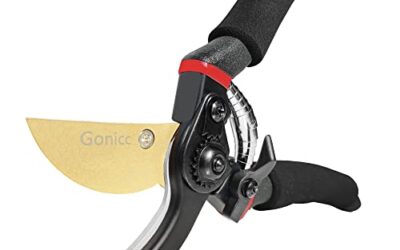
FLORA GUARD built these pruning shears around a ratchet mechanism, a design that splits one tough cut into several easier steps. Based on the listed specifications, the blade is SK5 steel and the shears are rated for branches up to 7/8 inch thick. The product information identifies seniors, gardeners with arthritis, and anyone with reduced grip strength as the intended users, though the same easing of effort benefits any gardener who prunes a lot of woody growth.
The three-step ratchet is the feature that matters most. With a ratchet pruner, each squeeze advances the blade partway, and squeezing again continues the cut from that point. Instead of forcing one powerful grip through hard wood, you make two or three light squeezes. The practical effect is less strain on the hand, wrist, and thumb, which is why this style is often suggested for weaker hands. The listed SK5 blade is a high-carbon steel widely used in cutting tools because it can hold a sharp edge under regular use.
Ergonomics are the core appeal, and the 7/8 inch cutting capacity places these clippers in heavy duty hand pruner territory. That diameter comfortably covers rose canes, young fruit tree stems, hydrangea branches, and most shrub wood a backyard gardener routinely removes. The published information does not specify handle material, spring type, or locking mechanism, so it is worth reviewing the full listing for those details before purchase.
In a typical backyard, these shears fit jobs like cutting out deadwood, trimming roses, harvesting woody herbs, and tidying perennials along raised beds. Because the ratchet does part of the work, longer cleanup sessions are less tiring, which encourages smaller, more frequent prunings. Branches thicker than 7/8 inch call for loppers or a pruning saw, so keep those tools on hand for mature wood.
A few care points will protect any pruner like this. Wipe sap from the blade after use, apply a light coat of oil occasionally, and store the shears dry to discourage corrosion on the steel. Cut only within the rated capacity, avoid twisting the blade mid-cut, and wear gloves and eye protection around thorny growth. Keep in mind that ratchet cutting is deliberately slower per stem, since a thick branch takes several squeezes to finish.
The product information suggests these shears are a strong match for gardeners with arthritis, seniors, and anyone who struggles with ordinary hand pruners but still needs to cut real branches rather than soft tips. Gardeners who want fast single-squeeze snipping on green growth may prefer a traditional bypass pruner alongside them, and those facing large limbs should look at loppers instead. For accessible, lower-strain pruning of everyday woody stems, the design is well aimed at the job.
Best For / Avoid If
Best for buyers prioritizing
- Ratchet mechanism lowers the grip force needed for each cut, a real advantage for weak or arthritic hands
- SK5 steel blade supports clean, durable cutting on woody growth
- The 7/8 inch capacity handles thicker branches than many basic hand pruners
Consider another option if
- Ratchet cutting takes multiple squeezes per stem, which may feel slower on large pruning jobs than a single-stroke pruner
- Details such as handle material, spring, safety lock, and blade replacement are not provided in the published information, so long-term care and parts availability are unclear
- Gardeners needing to cut limbs beyond 7/8 inch will still need loppers or a pruning saw, and those who want quick snips on soft green stems may favor a bypass pruner
Match the tool to the branch
Start by estimating the diameter of the branches you actually prune. The Kings County Tools lopper is specified for branches up to 2 inches, while the Fiskars lopper is specified for branches up to 1.75 inches. Treat these figures as maximum stated capacities, not a reason to force a cut: branch shape, wood condition, and your ability to hold the tool steady also matter.
For branches above a lopper’s stated capacity, use a suitable pruning saw rather than straining the handles or blade. A pruning saw guide can help you consider a tool designed for larger cuts.
Understand ratcheting and compound leverage
A ratcheting mechanism lets the user work through a cut in stages rather than relying on one continuous squeeze. Kings County Tools describes its lopper as having a double ratcheting mechanism and six pin-locked position stops. The available description does not explain exactly how the stops operate during a cut, so check the operating instructions before use.
Fiskars describes its Power-Lever design as a compound lever that increases cutting power compared with traditional designs. That is a different mechanism from a staged ratchet. If you specifically want a ratchet, verify the operating style suits your needs rather than assuming every lopper marketed for extra leverage uses the same action.
Choose bypass blades for the intended growth
Both long-handled tools here use bypass blades, where one blade passes the other like scissors. Kings County Tools describes its lopper as intended for wet wood and living branches. Fiskars describes its blade as suited to green growth. These stated uses make them more directly suited to pruning living stems than an anvil-style tool, but the product descriptions do not establish that either blade is right for every plant or pruning situation.
Keep blades clean and sharp, and avoid twisting the tool while cutting. A clean cut depends on a secure grip and correct positioning as well as the blade design. For smaller stems, hand pruners may be easier to control; our guide to garden hand tools covers other tools for routine garden tasks.
Balance reach against weight and control
The Kings County Tools handles telescope from 26 to 40 inches, and the tool weighs 3.99 lb. Longer handles can help reach branches farther from your body, but they also change the tool’s balance and can be more tiring to hold out in front of you. Extend the handles only as far as the task requires, and keep both feet planted on stable ground.
Fiskars has a fixed 28-inch handle length according to its product name. Its rounded handles include SoftGrip touchpoints and non-slip grips, while the Kings County Tools model has rubber grips. Handle comfort is personal: grip the tool in a store when possible, or check the seller’s return terms before buying online. If shoulder reach or grip strength is a concern, favor controlled cuts within easy reach rather than stretching overhead.
Consider weight, space, and job size
A longer or heavier lopper can be useful for larger branches, but it may be cumbersome for frequent cuts in a tight shrub or small yard. The Kings County Tools model’s 3.99 lb weight is stated by the manufacturer. The Fiskars product details here do not specify a weight, so check the current manufacturer or retailer description if lifting comfort is a deciding factor.
For occasional pruning, a fixed-length lopper may be simpler to store and position. For a small shed or crowded tool rack, measure available storage space before choosing a telescoping model, and secure the cutting head so it cannot snag other equipment.
Maintain the blade and mechanism
After pruning, wipe sap and debris from the blades and dry the tool before putting it away. Fiskars describes its blade coating as low-friction and resistant to gumming and rust; routine cleaning remains sensible care. Follow each manufacturer’s instructions for sharpening, lubrication, and any adjustment to the ratchet or lever mechanism. Do not disassemble a mechanism unless the instructions allow it.
Check the blades, pivot, handle locks, and grips before each session. Stop using a tool if a handle lock will not stay engaged, the blade is damaged, or the mechanism does not operate normally. Store loppers dry, with the cutting head closed or otherwise protected as the manufacturer directs.
Use loppers safely and within reach
Wear eye protection and sturdy gloves, and keep hands away from the blades and the branch’s fall path. Do not cut above shoulder height, work from a ladder with long-handled loppers, or stand beneath a branch that could drop. For overhead work or large limbs, choose an appropriate tool and consider qualified help rather than stretching or forcing a cut.
Position the branch deep enough in the cutting jaws to maintain control, then use the mechanism as directed. If the handles flex, the branch shifts, or the cut stalls, stop and reassess instead of applying a sudden extra force. Keep tools out of children’s reach when not in use.
How we evaluate ratcheting loppers
We compare loppers by intended pruning task, stated cutting capacity, blade style, leverage mechanism, handle design, reach, and weight when specified. These factors help distinguish a tool intended for living green branches from one that may be better suited to a different kind of cut, and they clarify the tradeoff between a longer reach and easy control.
We assess manufacturer descriptions alongside the practical needs of home gardeners, including occasional maintenance, frequent pruning, limited storage, and comfort during repeated cuts. Product features are attributed to the manufacturer, while recommendations reflect how those features align with common garden tasks. We update this guide during November 2026 as product details and gardening needs change.
Ratcheting loppers are not interchangeable with pruning saws or small hand pruners. Capacity, branch position, and user control should guide the choice. If reach is the main challenge, consider whether a pole tool is more appropriate than extending your arms with a lopper.
Frequently asked questions
How thick a branch can loppers cut?
The Kings County Tools model is specified for branches up to 2 inches, and the Fiskars model up to 1.75 inches. These are stated maximum capacities, so do not force a cut if the branch is difficult to position or the tool will not move smoothly.
Are ratcheting loppers easier to use?
A ratchet can divide a cut into stages, which may help users apply force gradually. The advantage depends on the mechanism, branch, and your ability to hold the tool securely; it does not remove the need for good positioning and control.
Can bypass loppers cut dead branches?
The product descriptions emphasize living or green growth. They do not establish suitability for every dry or dead branch, so check the manufacturer’s instructions and stay within the stated capacity. A pruning saw may be a better choice for a branch the lopper cannot cut cleanly.
Are telescoping loppers useful in a small yard?
They can help when branches are just beyond comfortable reach, but longer handles can be harder to maneuver around dense shrubs and nearby structures. Consider the tool’s weight, your storage space, and whether the branch is reachable without stretching or working overhead.
How should I clean and store garden loppers?
Wipe off sap and debris, dry the blades, and store the tool in a dry place with the cutting head protected. Follow the manufacturer’s directions for lubrication, sharpening, and care of the ratchet or lever mechanism.
Can I use long-handled loppers from a ladder?
Avoid using loppers from a ladder or cutting above shoulder height. Keep both feet on stable ground and stay clear of the branch’s fall path. For overhead limbs or work that cannot be reached safely, use an appropriate alternative or seek qualified help.