


A soaker hose can make watering garden beds more targeted, but the right setup depends on the bed’s shape, hose length, water supply, and the fittings your irrigation system uses. This guide to Best Soaker Hose helps home gardeners compare practical options for small borders, vegetable rows, and larger planting areas.
We compare six soaker hoses by construction, length, connection style, pressure guidance where available, and ease of placement or storage. Consider how the hose will connect to your faucet or supply line, whether it needs to curve around plants, and how you will manage pressure. For a connected watering system, see our guide to calculating drip irrigation flow rate.
Hourleey 100 FT Flat Soaker Hose for Root-Zone Garden Watering Gilmour 75-Foot Flat Weeper Soaker Hose for Efficient Garden Bed Watering Vantigreen 2-Pack 50 ft Flat Soaker Hose for Root-Zone Watering in Beds and Vegetable Gardens Gilmour 50-Foot Flat Weeper Soaker Hose for Efficient Garden Bed Watering Prices and availability can change. We may earn a commission from qualifying purchases.


Pros
- 100-foot total length provides useful reach for garden beds, rows, and long planting areas.
- Linkable design allows multiple sections to be connected for a more customized irrigation layout.
- Root-zone watering can help limit overspray onto fences, patios, paths, or foliage.
- Flat hose profile is easier to route between plants than many rigid irrigation layouts.
- Product information lists a 60 to 80 PSI ideal working pressure and 150 PSI burst pressure.
Cons
- Performance may depend on water pressure, hose layout, and how straight or curved the run is, so gardeners should test flow before leaving it unattended.
- Not intended for hot water use.
- Gardeners needing highly adjustable emitters or zone-by-zone flow control may prefer a more configurable drip irrigation kit.
The Hourleey 100 FT Flat Soaker Hose is a garden watering hose made for slow drip irrigation along planted areas rather than hand spraying. It is supplied as two 50-foot sections, which makes it suitable for vegetable rows, flower beds, shrubs, young trees, hedges, and other areas where water should soak into the soil near the roots.
The main benefit is water placement. According to the product information, the hose uses evenly spaced holes to distribute water along its length and is designed to deliver moisture directly to plant roots. That can be especially helpful for beginners who want a simple way to water beds without constantly moving a spray nozzle or wetting nearby hardscapes.
The hose has a flat, linkable design and can be connected end to end for a longer run. The listed construction combines PVC and nylon in a dual-layer design with a fabric cover, and the product information describes it as kink-resistant and clog-resistant. It can be used above ground or placed under mulch or soil, and the included stakes help hold the hose in position.
In a backyard garden, this style of hose makes sense for straight or gently curved planting rows, long hedge lines, and raised-bed paths where a low-profile hose is easier to route than a traditional sprinkler. Reviewers commonly mention that it is flexible and simple to hook up like a garden hose, although user feedback also suggests performance can vary depending on the setup.
For best results, lay the hose out, connect it directly to the faucet if possible, and check the entire length for even flow before relying on it around buildings, patios, or sensitive plantings. The product information lists an ideal working pressure of 60 to 80 PSI and notes that it should not be used with hot water. As with any soaker hose, avoid sharp bends, inspect fittings, and monitor the first few watering sessions.
This is a practical choice for gardeners who want a straightforward, linkable soaker hose for routine root-zone watering. Gardeners who need precise emitter spacing, separate watering zones, or adjustable output at individual plants may want a more advanced drip irrigation system instead.
Best For / Avoid If
Best for buyers prioritizing
- 100-foot total length provides useful reach for garden beds, rows, and long planting areas.
- Linkable design allows multiple sections to be connected for a more customized irrigation layout.
- Root-zone watering can help limit overspray onto fences, patios, paths, or foliage.
Consider another option if
- Performance may depend on water pressure, hose layout, and how straight or curved the run is, so gardeners should test flow before leaving it unattended.
- Not intended for hot water use.
- Gardeners needing highly adjustable emitters or zone-by-zone flow control may prefer a more configurable drip irrigation kit.
Pros
- Long 75-foot reach for larger beds and multiple planting areas
- Flexible, lightweight construction supports easier placement and storage
- Suitable for above-ground or below-ground installation
- Flat design helps save space between growing seasons
Cons
- As a soaker hose, it may be less suitable when you need a concentrated spray or adjustable watering pattern.
- Gardeners connecting multiple hoses may need to plan the layout carefully for even watering across separate sections.
- The published specifications do not identify included connectors, flow controls, or an automatic timer.
The Gilmour 75-foot Black Flat Weeper Soaker Hose is designed for slow, distributed watering in vegetable gardens, flower beds, lawns, orchards, and around foundations. It is a practical fit for homeowners who want to place a hose along planting rows rather than water with a handheld spray pattern.
The listed feature set focuses on delivering water near plant roots and indicates potential water savings of up to 80 percent. The clog-resistant fabric cover is intended to support consistent soaking, while the option to install the hose above or below ground gives gardeners flexibility when arranging beds or permanent planting areas.
At 75 feet long and weighing 2 pounds, the hose is described as lightweight and flexible. Its flat shape can be easier to position around beds and simpler to fold for storage. The product information also states that it can be linked with other hoses, allowing a DIY irrigation layout for vegetables, herbs, flowers, and similar plantings.
In a backyard, this hose could run beside vegetable rows, along a flower border, around a foundation, or through an orchard planting area. Its flexible profile may also help gardeners working in compact spaces where storing a conventional hose is inconvenient, although the available specifications do not state a precise coverage area or flow rate.
Installation should be planned so the hose rests where water is needed and connections remain secure. The published information does not list included fittings, flow controls, or timer compatibility, so those details should be confirmed separately if automated watering is important. As a soaker hose, it is intended for distributed root-zone watering rather than spraying foliage or cleaning hard surfaces.
This hose is a reasonable choice for gardeners who want a lightweight, space-saving way to water established beds and planting rows. Gardeners who need adjustable spray, measured flow control, or clearly specified connection accessories may prefer a different irrigation setup or may need to add compatible components.
Best For / Avoid If
Best for buyers prioritizing
- Long 75-foot reach for larger beds and multiple planting areas
- Flexible, lightweight construction supports easier placement and storage
- Suitable for above-ground or below-ground installation
Consider another option if
- As a soaker hose, it may be less suitable when you need a concentrated spray or adjustable watering pattern.
- Gardeners connecting multiple hoses may need to plan the layout carefully for even watering across separate sections.
- The published specifications do not identify included connectors, flow controls, or an automatic timer.
Pros
- Includes two hoses rather than a single long run, making it easier to divide watering between garden zones.
- Standard 3/4-inch threaded fittings support end-to-end connections and common garden hose setups.
- Metal connectors and a flat, flexible body are practical for weaving through flower beds or vegetable rows.
- Product information indicates the hose is designed to reduce water loss compared with traditional spray watering.
- Reviewers commonly mention slow, even watering and easy connection, though individual results may depend on pressure and setup.
Cons
- Even weeping may require pressure adjustment, especially when connecting both hoses together or running longer layouts.
- Gardeners who need overhead watering, high-volume filling, or wide lawn coverage may prefer a sprinkler or standard garden hose.
- One reviewer reported very low output from the soaker section, so checking flow during the first setup is important.
The Vantigreen 2-Pack Flat Soaker Hose is a drip-style garden hose set intended for watering soil-level plantings without hand-holding a spray nozzle. Each set provides a total listed length of 100 feet, split into two 50-foot hoses, which makes it suitable for vegetable gardens, flower beds, tree root zones, lawn edges, foundation watering, greenhouses, and seedbeds where slow, directed watering is useful.
The main benefit of this type of hose is root-zone watering. The product information says water seeps through many tiny holes in a fine, even manner, helping reduce evaporation and water loss compared with a traditional hose. For gardeners trying to keep leaves drier or avoid overspray onto paths and mulch, a flat soaker hose can be a simpler option than setting up a full drip irrigation grid.
Construction details include a thickened inner PVC tube, a high-density polyester yarn outer cover, and anodized aluminum inlet and outlet fittings. The hose uses standard 3/4-inch threaded fittings and can be connected end to end with additional compatible hoses. The 360-degree rotating inlet is a helpful design detail for reducing awkward twisting at the faucet or timer connection during setup.
In everyday backyard use, this hose set makes the most sense for gardeners who want to snake watering lines through established flower beds, raised-bed rows, vegetable patches, or greenhouse benches. Because the hoses are flat and flexible, they can be positioned around closely spaced plants, then rolled up for storage when the season ends or when a bed layout changes.
Pressure is an important consideration. The listed optimal working pressure is 40 to 60 PSI, and the product information notes that a pressure regulating valve can be paired with the hose to help maintain stable output. Some reviewers describe slow, even watering, while one reviewer noted poor soaking performance and another mentioned needing to dial in pressure for better balance along the length. It is wise to test the hose before covering it with mulch and to check both the near and far ends for consistent weeping.
Overall, this Vantigreen soaker hose set is a sensible fit for homeowners and beginner-to-intermediate gardeners who want a straightforward, reusable watering line for beds and planted borders. Gardeners who need strong spray, fast filling, or broad overhead lawn irrigation should consider a standard hose, sprinkler, or a more specialized irrigation system instead.
Best For / Avoid If
Best for buyers prioritizing
- Includes two hoses rather than a single long run, making it easier to divide watering between garden zones.
- Standard 3/4-inch threaded fittings support end-to-end connections and common garden hose setups.
- Metal connectors and a flat, flexible body are practical for weaving through flower beds or vegetable rows.
Consider another option if
- Even weeping may require pressure adjustment, especially when connecting both hoses together or running longer layouts.
- Gardeners who need overhead watering, high-volume filling, or wide lawn coverage may prefer a sprinkler or standard garden hose.
- One reviewer reported very low output from the soaker section, so checking flow during the first setup is important.
Pros
- Lightweight flat construction makes setup and storage more manageable.
- Can be installed above or below ground for flexible garden-bed and foundation watering.
- Made with 100% recycled vinyl and a clog-resistant fabric cover.
- Can be linked with other hoses to build a custom irrigation arrangement.
Cons
- The published specifications do not identify included connectors, flow controls, or a timer, so additional setup components may be needed.
- A soaker hose may be less suitable for gardeners who need a focused spray, hand-watering reach, or rapid high-volume delivery.
- Actual watering uniformity and water savings will depend on installation, water pressure, soil, and hose placement.
The Gilmour 50-foot black flat weeper soaker hose is designed to provide gradual watering along garden beds, foundations, lawns, orchards, and other planted areas. Its intended use is root-level irrigation rather than handheld spraying, making it a practical fit for homeowners managing vegetable gardens, flower beds, herbs, or longer planting rows.
The product information indicates that water can be delivered directly toward plant roots while potentially saving up to 80% of water compared with less targeted watering methods. Its clog-resistant fabric cover is intended to support consistent soaking, although results will vary with water pressure, soil conditions, placement, and installation.
The hose is listed as 50 feet long, weighs 1.43 pounds, and measures 7.5 by 13.8 by 1.43 inches. Its flat, flexible construction should make it easier to arrange around planting areas and fold for storage. The listed 100% recycled vinyl construction and UV-resistant materials are intended to support outdoor use across multiple seasons.
Gardeners can install the hose above or below ground and link it with other hoses to create a DIY drip irrigation layout. It may work well along raised beds, foundation plantings, patio garden rows, or extended lawn and orchard areas where slow, distributed watering is preferred over moving a spray nozzle by hand.
Installation details such as included connectors, flow controls, and timer compatibility are not provided, so gardeners may need to plan their irrigation setup around the available components. Check the hose placement before use, avoid sharp bends that could restrict water flow, and fold it cleanly for seasonal storage. Based on the listed features, this hose is a sensible choice for lightweight, space-saving bed irrigation, while gardeners needing spray coverage or precise handheld control may prefer a conventional garden hose or sprinkler system.
Best For / Avoid If
Best for buyers prioritizing
- Lightweight flat construction makes setup and storage more manageable.
- Can be installed above or below ground for flexible garden-bed and foundation watering.
- Made with 100% recycled vinyl and a clog-resistant fabric cover.
Consider another option if
- The published specifications do not identify included connectors, flow controls, or a timer, so additional setup components may be needed.
- A soaker hose may be less suitable for gardeners who need a focused spray, hand-watering reach, or rapid high-volume delivery.
- Actual watering uniformity and water savings will depend on installation, water pressure, soil, and hose placement.

Pros
- Well suited to garden and flower bed watering where slow, ground-level moisture is preferred
- Recycled rubber construction and reinforced fittings give it a more durable feature set than a very basic hose
- Can be expanded by connecting additional soaker hoses when the layout requires more reach
- Several reviewers mention easy installation, no leaks, or good water delivery, though individual results may vary
Cons
- New rubber soaker hoses may need time in the sun to relax before laying flat, based on reviewer feedback
- Very hot, exposed beds may still require adjusted watering schedules or supplemental irrigation depending on soil and climate
- One reviewer reported a defective connector, so checking the fittings before leaving it unattended is a sensible precaution
The Rocky Mountain Goods Soaker Hose is a 50-foot rubber garden hose made for slow watering in gardens and flower beds. Instead of broadcasting water like a sprinkler, a soaker hose is intended to run along the soil surface or beneath mulch so moisture reaches the planting area more directly. It is a practical option for homeowners, raised-bed gardeners, and anyone setting up a simple watering line without a more complex irrigation system.
Based on the listed product information, the main benefit is more efficient watering, with the manufacturer stating it can reduce water usage by up to 70% compared with traditional sprinkling systems. That makes it appealing for routine watering of vegetable rows, flower borders, and other planted beds where overhead spray is not necessary. Ground-level watering can also help keep paths and nearby hardscapes drier, although watering results will depend on layout, water pressure, soil type, and weather.
The hose is listed as heavy duty recycled rubber with a 50-foot length and a 5/8-inch size in the product title. Reinforced quick-connect fittings are included for attaching additional soaker hoses when a longer run is needed, and an end cap is included for the hose end. The specifications list a black rubber construction, 600-inch length, and a nominal wall thickness of 0.125 inches. The warranty information states a 7-year replacement warranty for manufacturing defects during normal garden use.
In backyard use, this hose makes sense along flower beds, vegetable rows, strawberry beds, foundation plantings, and raised beds where a 50-foot run fits the layout. Reviewers commonly mention using it as part of a more permanent watering setup, laying it under mulch, or letting it sit in the sun before installation so it softens and uncoils more easily. That is useful advice for beginners because a rubber hose can be easier to position once it has relaxed.
There are a few limitations to keep in mind. In very hot, exposed conditions, a soaker hose may need longer or more frequent run times, and one reviewer noted that extreme heat and sun can dry the top layer of soil quickly. It is also wise to inspect the fittings before use, start with modest water pressure, and watch the first watering cycle to confirm the hose is weeping evenly and the connector is secure. For winter storage or seasonal cleanup, avoid sharp bends and check the hose before the next season.
This is a good fit for gardeners who want a straightforward, expandable soaker hose for beds and borders. Gardeners who need precise zone control, timed scheduling, or a highly customized irrigation layout may prefer a dedicated drip irrigation kit, but for simple bed watering, the listed features make this Rocky Mountain Goods hose a sensible and easy-to-understand option.
Best For / Avoid If
Best for buyers prioritizing
- Well suited to garden and flower bed watering where slow, ground-level moisture is preferred
- Recycled rubber construction and reinforced fittings give it a more durable feature set than a very basic hose
- Can be expanded by connecting additional soaker hoses when the layout requires more reach
Consider another option if
- New rubber soaker hoses may need time in the sun to relax before laying flat, based on reviewer feedback
- Very hot, exposed beds may still require adjusted watering schedules or supplemental irrigation depending on soil and climate
- One reviewer reported a defective connector, so checking the fittings before leaving it unattended is a sensible precaution
Pros
- Provides slow, distributed watering rather than concentrating flow at one outlet.
- Bends easily to follow straight or curved planting areas.
- Can be trimmed for a cleaner fit around individual garden sections.
- Useful for short, flat runs in vegetable gardens, planters, and borders.
Cons
- Because it is non-pressure compensating, it may be less suitable for long runs or areas with uneven pressure.
- Installation requires a compatible 1/4-inch micro fitting and an appropriate supply line.
- The tubing is intended for short runs on flat surfaces, so gardeners with larger or sloped areas may need a different irrigation layout.
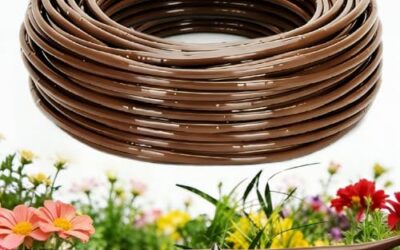
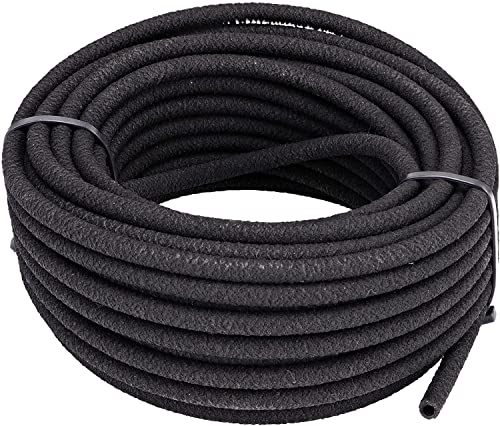
The Raindrip 015005T is 1/4-inch soaker tubing designed to form part of a drip irrigation system. It slowly releases water through the entire line, making it suited to vegetable gardens, planters, borders, and small planting areas where gentle root-zone watering is useful.
Its porous, non-pressure compensating design allows water to seep out along the tubing instead of flowing from a single end point. This feature set suggests a practical way to keep soil moist around closely spaced plants, especially on short runs installed across flat ground.
The tubing has a 0.250-inch outside diameter and a 0.170-inch inside diameter. It connects to 1/2-inch, 5/8-inch, or 0.710-inch supply lines using a compatible 1/4-inch micro fitting, such as a barbed connector or Clamp N Pierce Connector. It is flexible enough to follow curved beds as well as straight rows and can be cut to length.
For backyard use, the 50-foot coil can serve a small vegetable bed, a series of planters, or a border with multiple short sections. Its narrow format is particularly appropriate when a main supply line needs smaller branch tubing routed close to individual plants.
The tubing is non-pressure compensating, so it may be less suitable for long runs, sloped areas, or layouts where consistent output across changing pressure is important. Periodically inspect it for leaks or damage, and follow the listed cold-climate guidance by leaving it in place or covering it with soil or mulch after excess water drains away.
This is a sensible choice for beginners and homeowners assembling a compact drip system on relatively flat ground. Gardeners needing irrigation for larger areas, substantial elevation changes, or more controlled pressure may want to consider a different tubing and layout option.
Best For / Avoid If
Best for buyers prioritizing
- Provides slow, distributed watering rather than concentrating flow at one outlet.
- Bends easily to follow straight or curved planting areas.
- Can be trimmed for a cleaner fit around individual garden sections.
Consider another option if
- Because it is non-pressure compensating, it may be less suitable for long runs or areas with uneven pressure.
- Installation requires a compatible 1/4-inch micro fitting and an appropriate supply line.
- The tubing is intended for short runs on flat surfaces, so gardeners with larger or sloped areas may need a different irrigation layout.
How to choose a soaker hose
Match the hose layout to the bed
Measure the path the hose needs to follow, not just the length of the garden bed. A hose that is too short may leave sections dry, while extra length can create loops that are difficult to position neatly. Flat hoses are described as flexible and suitable for above-ground placement, and some can also be placed under mulch or soil. Check the individual instructions before covering a hose, especially if you expect to move it regularly.
For a narrow border or a compact planter, small-diameter irrigation tubing may be easier to route than a full-size garden hose. The Raindrip tubing is 1/4 inch and can be cut to length, but it needs compatible micro fittings and a supply line. It is not a direct substitute for a hose that screws onto a faucet.
Check connection type and expansion plans
Before buying, identify whether you need a faucet connection, a threaded garden-hose fitting, or a connection into drip tubing. The 1/4-inch Raindrip line connects to certain supply lines through a compatible 1/4-inch micro fitting. By contrast, the Vantigreen hose is described with standard 3/4-inch threaded fittings. The Gilmour and Rocky Mountain Goods hoses are described as linkable, but confirm that the connectors suit your existing setup before joining sections.
Longer runs and multiple connected hoses can change how water reaches the far end. If you plan to extend a system, check the manufacturer’s connection and pressure guidance and assess whether your water source can support the layout. Our guide to common causes of a leaking hose timer can help when a timer is part of the setup.
Treat pressure guidance as a design limit
Soaker hoses release water along their length, so pressure can affect how evenly water seeps from the line. The Hourleey product specifies a working pressure of 60–80 PSI. The Vantigreen product specifies 40–60 PSI and says a pressure-regulating valve can help maintain stable pressure. These ranges differ, so do not assume one hose’s pressure guidance applies to another.
Use the product’s stated operating guidance and avoid treating burst pressure as a normal operating target. If water distribution looks uneven, check for a kink, a loose connection, or a layout that is too long for the setup. Adjusting pressure should follow the hose and irrigation-system instructions.
Consider material, weight, and handling
Flat hoses can be easier to lay through rows and roll up for storage, while a heavier hose may be less convenient to reposition. The two Gilmour options are described as lightweight flat hoses made from 100% recycled vinyl with a fabric cover. The Hourleey and Vantigreen options describe a dual-layer construction, while Rocky Mountain Goods describes a heavy-duty recycled rubber hose. These construction descriptions help with comparison, but they do not establish a guaranteed service life.
For gardeners who prefer less lifting or bending, consider how often the hose must be moved, whether stakes are included, and whether the bed layout can remain in place. A shorter line may be simpler to handle than one long run. If the hose will stay in a permanent position, plan the route before connecting it so it does not cross a walkway.
Decide between a garden hose and drip tubing
A conventional soaker hose is a straightforward choice for a bed-scale route that starts at a faucet or garden hose connection. Micro-irrigation tubing is better suited to a system built around supply lines and fittings. The Raindrip tubing seeps along its length, is flexible, and can be cut to a desired length, but its non-pressure-compensating material means output is not described as automatically balancing along a run.
If your garden has separate areas with different watering needs, independent runs can be easier to manage than one long connected line. For automated schedules, review the connection requirements of both the hose and timer. Our guide to water timers with rain delay covers another part of planning a timed watering setup.
Place the hose carefully and check for leaks
Lay the hose alongside the area you intend to water, connect it securely, and start with a short watering period while you observe how water reaches the bed. This is a practical way to notice loose fittings, kinks, or unexpected pooling before leaving the system unattended. Keep connections accessible for inspection, particularly when a hose is under mulch.
Do not assume a claim of water savings guarantees a specific reduction in your own use. The Gilmour and Hourleey descriptions claim savings of up to 80% against conventional watering, while Rocky Mountain Goods claims up to 70% compared with sprinkling systems. Actual water use depends on the system, pressure, schedule, soil, and garden layout.
Plan maintenance and seasonal storage
Periodically check the hose for damage, leaks, loose fittings, and blockages. The Raindrip instructions specifically call for checking for leaks or damage. A clog-resistant cover is described for the Gilmour hoses and the Hourleey hose, but that feature does not remove the need for inspection. Disconnect and store hoses according to their instructions when the season ends; the Hourleey is described as rollable for storage, and the Gilmour hoses as easy to store.
Cold-weather care varies by product. The Raindrip description says excess water can gradually seep out and that the tubing may be left in place or covered in cold climates. Do not apply that guidance to other hoses. Follow each manufacturer’s winter-storage instructions, and never use the Hourleey hose with hot water.
How we evaluate soaker hoses
Our evaluation focuses on the practical details that determine whether a hose suits a home garden: its length and form, connection requirements, construction, flexibility, and any stated pressure guidance. We compare faucet-connected hoses with small drip tubing as different irrigation formats rather than treating them as interchangeable.
We also assess how each feature fits a likely use. A longer flat hose may suit multiple beds or a long row, while shorter hoses can be easier to route and store. For irrigation tubing, fitting compatibility and the need for a supply line matter as much as length. Claims about water savings and durability are presented as manufacturer descriptions, not guaranteed results.
During November 2026, we review the comparison using the available product specifications and owner-feedback information, giving priority to details relevant to installation, pressure management, leak prevention, maintenance, and small-space use. Where a specification is not provided, we avoid treating it as a feature.
Frequently asked questions
How long should a soaker hose be?
Measure the route through the bed and allow for the path around plants and corners. Choose a length that covers the intended area without forcing extra hose into tight loops, and check manufacturer guidance before connecting multiple sections.
Can I bury a soaker hose under mulch?
Some models in this guide are described as suitable for use under mulch or soil, including the Hourleey and Gilmour hoses. Check the specific product instructions before covering the line, and keep its connections accessible so you can inspect them.
Can I connect two soaker hoses together?
Several hoses here are described as linkable, but connection styles and pressure requirements vary. Confirm that the fittings match and follow the manufacturer’s guidance for the operating pressure of the connected setup.
Do soaker hoses need a pressure regulator?
That depends on the hose and water supply. The Vantigreen description recommends pairing its hose with a pressure-regulating valve to help maintain stable pressure, while the Hourleey and Vantigreen products specify different working-pressure ranges. Follow the instructions for your particular hose and irrigation system.
How should I store a soaker hose in winter?
Use the manufacturer’s seasonal-care instructions because winter guidance is not the same for every hose. The Raindrip tubing description gives specific cold-climate guidance, but it should not be assumed to apply to the other products.
Is drip tubing the same as a garden soaker hose?
No. The Raindrip product is 1/4-inch tubing for a drip-irrigation system and requires compatible micro fittings and a supply line. A larger garden soaker hose is a different format, so choose based on your connection setup and how you want to route water through the garden.