

A backpack sprayer can make it easier to apply water-based garden treatments across a lawn, planting beds, or a larger yard. The right choice depends on more than tank capacity: manual pumping requires repeated effort, while battery models add power-system considerations and may need a compatible battery purchased separately.
This guide compares 9 backpack sprayers from brands including SOLO, Field King, CHAPIN, Petra, EGO Power+, EARTHCRAFT, with options spanning $69.99–329. We focus on capacity, pressure information, power source, wand and nozzle details where specified, and comfort features. For watering approaches that do not require carrying a sprayer, see our guides to soaker hoses and rain barrels.
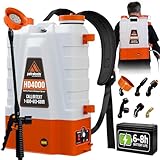
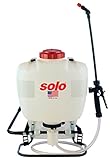
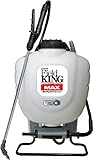
FIELD KING 190328 Backpack Sprayer, 4 Gallon, with Internal No Leak Pump Design Delivers 150 PSI PetraTools HD4000 Battery Powered Backpack Sprayer, 6 Hr Runtime, 6 Nozzles | Electric Sprayer for Lawn & Garden w/ Battery Meter, Adjustable 90 PSI & Padded Straps – For Weed/Pest Control, Fertilizing CHAPIN 60116 Backpack Sprayer – 4 Gallon Easy‑Pump Control | Durable poly tank with clear view for monitoring fluid levels, ideal for lawn care, pest control and fertilizer application SOLO 425 4-Gallon Piston Backpack Sprayer, Wide Pressure Range up to 90 psi Prices and availability can change. We may earn a commission from qualifying purchases.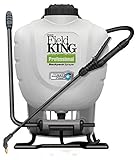





How to choose a backpack sprayer
Manual or battery-powered?
A manual sprayer uses a hand-operated pump, so the operator supplies the effort needed to build and maintain pressure. It avoids battery charging and battery-platform compatibility questions, but repeated pumping may be tiring during long jobs. A battery sprayer reduces that pumping task, though it adds electrical components and requires attention to charging, storage, and the manufacturer’s operating instructions.
For a small area or occasional use, a manual model may be a straightforward choice. For extended applications, consider whether avoiding manual pumping matters enough to justify the battery system. The PetraTools HD4000 title states a six-hour runtime, but runtime can depend on operating conditions; use the manufacturer’s guidance for planning rather than treating a headline figure as a guarantee.
Choose capacity with the filled weight in mind
Four-gallon models are common among these options, while two EARTHCRAFT models are identified as 4.2 and 5.3 gallons. A larger tank can mean fewer refills, but its contents add substantial carried weight. Capacity alone does not tell you the sprayer’s total loaded weight, and that figure is not specified here for these models. If lifting or carrying is difficult, think about how you will fill the tank, put it on, and set it down before choosing the largest capacity.
Consider the size of your usual job rather than the maximum area you might treat once a year. A smaller fill can be easier to carry and may help avoid mixing more solution than the task requires. Follow the product label for mixing and application amounts.
Understand pressure and spray control
Pressure affects how liquid exits the nozzle, but a higher maximum number is not automatically better for every task. The SOLO 425 is described as a piston sprayer with a range up to 90 psi. The EARTHCRAFT models specify adjustable pressure from 45 to 90 psi. The FIELD KING 190328 title identifies a 150 psi capability; that figure should not be read as a recommended setting for every application.
Match the nozzle and pressure to the product label and the application you need. Fine droplets can drift, especially in breezy conditions, while a spray pattern that is too narrow or broad may make precise application harder. Verify which nozzles are included and how pressure is adjusted before buying if those controls are central to your work.
Check battery compatibility and included equipment
Battery compatibility can change the real cost and convenience of a cordless sprayer. The two EARTHCRAFT models are described as compatible with a DeWalt 20V battery, and the battery is not included. EGO Power+ identifies its four-gallon cordless sprayer as sold without a battery and charger. Check the exact battery requirements and whether your existing batteries are suitable before ordering.
The PetraTools HD4000 title mentions a battery meter and six nozzles. The EARTHCRAFT models also specify six nozzles, a 39-inch telescopic wand, and a built-in mixing system. Compare these included features with the application you plan to do, and confirm their instructions in the manufacturer’s documentation. Do not assume that a battery from one brand works with another brand’s equipment.
Prioritize fit, straps, and handling
A backpack sprayer is carried while full, so strap fit and the ability to control the wand matter. The PetraTools HD4000 is described with padded straps. The CHAPIN 61500 also specifies padded straps and a cushion-grip shut-off. Those details may be useful for people who value cushioning and grip control, but they do not establish that a sprayer will fit every body or feel light when filled.
If mobility, balance, shoulder comfort, or lifting is a concern, consider a smaller fill, a helper for loading, or a non-backpack application method. Try the empty unit’s fit and review its operating instructions before filling it. Stop if carrying or handling it feels unstable.
Plan for cleaning and storage
Residue can remain in a tank, hose, wand, filter, or nozzle after application. Follow the sprayer manufacturer’s cleaning instructions and the chemical label’s cleanup and disposal directions. Never assume a rinse method or cleaning agent is suitable for every product. Keep sprayers used for herbicides clearly separate from equipment used for other garden tasks.
Before storage, empty and clean the unit as directed, then store it in a dry, secure place according to the manual. Battery models also need battery-specific storage and charging practices. The exact winterization procedure, replacement parts, and service life vary by model, so check the manufacturer’s documentation rather than relying on a universal schedule.
Use pesticides and fertilizers carefully
Use only products labeled for the intended site and application method. Follow the label for protective equipment, mixing, application conditions, re-entry instructions, and disposal, along with local rules and the sprayer manual. Avoid spraying in conditions that could carry droplets onto people, pets, neighboring property, or plants that are not part of the treatment.
For herbicides in particular, careful handling and equipment separation can help reduce accidental transfer. Check whether the sprayer’s materials and seals are suitable for the chemical you intend to use; do not infer chemical compatibility from the product name alone.
How we evaluate backpack sprayers
We compare backpack sprayers by the decisions that most affect a home gardener’s day-to-day use: manual versus battery operation, stated tank capacity, documented pressure range, and details about the wand, nozzles, mixing system, straps, and controls. We distinguish a stated feature from an editorial judgment about who may find it useful.
We also assess the ownership tradeoffs. A manual pump avoids battery-platform costs but calls for repeated effort. A cordless model may reduce that effort, while battery inclusion, compatibility, charging, and eventual battery replacement matter to the total investment. Capacity is considered alongside the practical burden of carrying a full tank, not as a stand-alone advantage.
Recommendations are matched to typical garden tasks and comfort priorities, with attention to safe chemical handling and routine cleanup. We update this guide during November 2026 as product details and the needs of home gardeners change. Buyers should consult the current manufacturer manual and product label for instructions specific to their equipment and treatment.
Backpack sprayer questions
What size tank should I choose?
Choose a capacity based on the area you usually treat and how much weight you can comfortably carry. A larger tank can reduce refill frequency but carries more liquid. Consider filling only what the label directs for the job.
Is a battery sprayer easier to use?
A battery model avoids repeated manual pumping, which may be helpful during longer applications. It still has to be carried when full, and battery compatibility, charging, and cleaning remain part of ownership. Check whether a battery and charger are included.
Can I use one sprayer for different garden chemicals?
Use the sprayer only with products compatible with its materials and intended application. Follow both the chemical label and the manufacturer’s cleaning instructions. Keeping equipment dedicated to herbicide use can help avoid accidental carryover to other tasks.
How should I clean a backpack sprayer?
Follow the label for the material applied and the sprayer manual for cleaning the tank, hose, wand, filter, and nozzle. Handle rinse water and remaining solution as directed by the label and local rules. Do not use an assumed universal rinse procedure.
How do I store a sprayer between seasons?
Clean and empty the sprayer as instructed, then store it securely in the conditions specified by its manual. Battery-powered models also require battery storage and charging practices described by their manufacturers. Check the manual for any model-specific winter storage steps.
What should I check before spraying?
Inspect the sprayer and connections, select a nozzle and pressure suitable for the label, and wear the protective equipment the label requires. Check wind and application conditions so spray does not drift onto people, pets, neighboring areas, or unintended plants. Follow local restrictions and the equipment manual.