


Moss in a lawn can point to a growing-conditions problem, so choosing a treatment means weighing more than the product name. This guide to Best Moss Killer For Lawns helps homeowners compare lawn-labeled granules and liquid treatment options, while keeping product claims and label directions in view.
We reviewed the published information for 20 listings and retained products identified for lawn moss control. Comparisons focus on format, stated coverage, whether fertilizer is mentioned, and fit for the area being treated. Listed product details do not establish which option works best in every lawn or under every local rule.
Match treatment to lawn area and application preference first. Then check the current package label for application rate, timing, watering instructions, protective measures, and restrictions. Our lawn care and equipment guides cover related maintenance decisions.
Scotts Turf Builder Triple Action for Moss Control, 40 lbs. | Moss Killer and Lawn Fertilizer, Covers Up to 8,000 sq. ft. Scotts MossEx Moss Killer for Lawns, 4.59 lbs. | Easy-To-Use Shaker Jug, Contains Fertilizer to Green Grass Lilly Miller Moss Out For Lawns Concentrate 1gal – 5601110, Nuetral | Liquid iron, works in hours, attaches to your garden hose, no mixing Scotts Turf Builder with Moss Control, 5,000 sq. ft. | Moss Killer and Lawn Fertilizer, Covers Up to 5,000 sq. ft. Prices and availability can change. We may earn a commission from qualifying purchases.







Best Moss Killer For Lawns buying guide
Choose a lawn-labeled product
Product intended use matters. Several listings explicitly identify lawn moss control. BioAdvanced 2-in-1 Moss and Algae Killer is described as a moss and algae cleaner, while CENTRAL GARDEN BRANDS Moss Out Roofs is listed for roofs and concrete, not lawn treatment. Neither belongs in a lawn recommendation based on the published information.
Read the package label before buying or applying any pesticide product. Confirm that lawn use, target site, and your intended application are allowed. Labels can vary by formulation and location.
Compare granules with liquid application
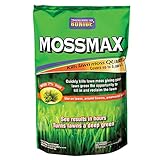
Granular options include Scotts MossEx, Scotts Turf Builder with Moss Control, Scotts Moss Control Granules, and Jonathan Green Lawn Moss Control. The published product titles identify these as lawn moss treatments; some also describe fertilizer or iron. Granules may suit shoppers who prefer a dry product, but the published data does not specify spreader compatibility or complete application directions. Check the label.
Lilly Miller Moss Out For Lawns Concentrate is described as a hose-attached liquid concentrate with no mixing. That may appeal to someone who prefers hose-end application, but confirm the directions, area it treats, and water-use instructions on the actual label. Do not assume every liquid product uses the same setup.
Use coverage to estimate quantity
Several listing titles state coverage: Scotts Turf Builder with Moss Control lists up to 5,000 sq. ft.; Scotts Turf Builder Triple Action products list up to 4,000 or 8,000 sq. ft.; and Lilly Miller Moss Control Granules lists 5,000 sq. ft. per bag. Treat these as listing claims, not a substitute for label rates. Verify coverage for the exact package and formulation before calculating how much to buy.
Measure the lawn area that needs treatment rather than the whole property. If the product label rate does not match the listed coverage, follow the label. Applying extra product to compensate for uncertain area can lead to misuse.
Decide whether fertilizer belongs in the plan
Some listings describe moss control combined with lawn fertilizer, including Scotts MossEx and Scotts Turf Builder with Moss Control. That combination may be convenient when fertilizer is part of your lawn plan. It may be a poor fit if you already applied fertilizer or do not want another fertilizer application. Check the fertilizer analysis and label schedule before combining products.
Other listings mention iron, but the published information does not provide full ingredient concentrations or application conditions. Do not infer nutrient needs or lawn response from a product title alone.
Address conditions that favor recurring moss
A moss treatment addresses moss, not necessarily the site conditions behind it. Before repeat applications, consider whether shade, drainage, soil compaction, or thin turf may be contributing. These are possible causes to investigate, not a diagnosis from the product data. A local extension service or lawn-care professional can help assess persistent problems.
After treatment, follow the package directions for any removal, reseeding, watering, or repeat-use steps. Avoid assuming that killing visible moss alone will establish grass or prevent moss from returning.
Plan safe application and storage
Use the current label as the authority for protective equipment, weather conditions, application, reentry, disposal, and precautions around people, pets, plants, and waterways. Local pesticide rules may impose additional limits. Do not apply outside label directions or transfer product into an unmarked container.
Store products in their original, labeled packaging, following storage instructions and keeping them secured from children and pets. For any lawn spreader or hose-end applicator, clean and store it as its manufacturer directs. The published listing data does not establish a product’s shelf life.
Consider handling comfort and small lawns
Granules require carrying and distributing a bag or container. A hose-attached liquid may avoid handling loose granules, but still requires managing a hose and following label directions. The published data does not state product weight for every package, applicator ergonomics, or physical effort, so shoppers with mobility or grip concerns should check packaging and choose a format they can manage safely.
For a compact lawn, a large package may leave unused product. Compare the listed coverage against the actual treatment area, then consider storage requirements and label directions for keeping leftovers. Do not buy a larger container solely because its coverage figure appears favorable.
Research methodology and trust
We screened the published listings for a clear match to lawn moss control and excluded products identified for roofs, concrete, or general moss and algae cleaning rather than lawn use. Product comparisons use only supplied names, descriptions, brands, prices, and coverage details. Missing specifications remain unassumed.
Ranking considerations include intended lawn use, application format, stated coverage, and whether the listing describes fertilizer or iron. These details help readers compare purchase fit, but do not establish efficacy, application rate, environmental impact, or suitability for a particular lawn. Owner feedback could not inform these recommendations because the published ratings show zero reviews for the listed products.
This is research-based editorial analysis, not physical product testing. We update the guide during October 2026 using the product data available for this edition. Product formulations and labels can change, so verify current packaging, availability, and local rules before purchase and use.
Frequently asked questions
How do I choose the best moss killer for lawns?
Start with a product explicitly labeled for lawn moss control. Compare application format, verified package coverage, and whether fertilizer is included. Follow the product label and local rules.
How much moss killer should I buy?
Measure the lawn area you plan to treat and compare it with coverage stated for the exact package. Confirm the label rate, which takes precedence over a product listing’s coverage description.
Are liquid or granular lawn moss treatments easier to use?
That depends on what you can handle and the application method you prefer. The supplied Lilly Miller description identifies a hose-attached concentrate; several other lawn products are granules. Check equipment needs and complete label directions before choosing.
Can moss return after treatment?
The published product data cannot establish whether or when moss will return. If moss recurs, investigate possible site conditions and follow the treatment label rather than repeating applications automatically.
How should I store leftover moss killer?
Keep it in its original labeled packaging and follow the product’s storage and disposal directions. Secure it from children and pets. The published product data does not state shelf life.
Is moss killer safe for every lawn and garden?
No universal suitability is established by the published information. Check the current label for approved sites, application limits, precautions, and local restrictions before use. Do not use a roof or concrete product as a lawn treatment unless its label expressly permits that use.
Continue your garden research
Browse more practical guides in Lawn Care & Power Equipment.
For product comparisons, see Best Cordless Lawn Mower For Small Yards: Reviews and Buying Guide.
See how Dove Creek Gardens researches and compares products.