


An electric tiller can help loosen previously worked garden soil and mix in amendments, but it is not automatically the right tool for hard clay, unbroken sod, or ground containing large roots. Choosing the best electric tiller starts with the soil condition, available working space, and a power source you can use safely.
To help you choose the right tool for your property, we examined 10 electric tillers and cultivators ranging from lightweight cordless weeders to heavy-duty 15-amp corded workhorses. Understanding the balance between motor power, tilling width, working depth, and physical weight helps you choose a machine tailored to your space, whether you cultivate open vegetable plots or tend narrow raised beds where managing soil settling is part of routine care. If your planting boxes frequently drop in volume each season, learning why raised bed soil sinks can help you integrate organic matter more effectively with the right equipment.
Compare the listed working width, depth, machine weight, controls, and power requirements. A lighter machine may be easier to transport, but handling also depends on soil resistance and the operator. Do not assume an adjustable handle or electric motor eliminates strain.
IncwBo 15-Amp 12-Inch Corded Electric Garden Tiller and Cultivator for Soil Preparation BILT HARD 18-Inch 15-Amp Corded Electric Garden Tiller and Cultivator for Easy Soil Preparation Westinghouse W18TCAC 18-Inch 15-Amp Corded Electric Tiller Cultivator for Garden Soil Prep MZK 12-Inch Corded Electric Tiller and Cultivator for Garden Beds and Soil Preparation Prices and availability can change. We may earn a commission from qualifying purchases.


Pros
- Generous 12-inch tilling path and 8-inch depth handle both garden bed turnover and general soil loosening.
- Electric power avoids fuel mixing; follow the manual for the model-specific operating and safety requirements.
- Replaceable steel tines provide extended serviceability across multiple planting seasons.
- Corded electric setup eliminates engine winterization, oil changes, and fuel storage.
Cons
- Requires a heavy-duty outdoor extension cord, limiting working radius to areas near a power source.
- May be less suitable for breaking hard-packed virgin ground or dense, rocky clay compared to large rear-tine tillers.
- Careful cord management is necessary during tilling passes to prevent the cable from fouling the tines.
The IncwBo 15-Amp 12-Inch Corded Electric Garden Tiller Cultivator provides residential gardeners with a practical solution for preparing planting beds, incorporating soil amendments, and managing weed growth. Featuring push-button electric starting, this model avoids the hard starts, fuel stabilization, and oil changes associated with traditional small gas engines. It is especially suited for homeowners and backyard growers who need consistent tilling power within reach of an outdoor outlet.
Performance is driven by a 15-amp electric motor that operates four angled, rust-proof steel tines. Based on the manufacturer specifications, the unit churns a tilling path up to 12 inches wide and can reach down to 8 inches in depth. This profile makes it well matched for established vegetable gardens, annual flower borders, and raised planting areas, allowing gardeners to aerate compacted dirt and mix in aged compost or topsoil effectively.
To assist with maneuverability and control, the cultivator is built with two-position 6-inch transport wheels and an integrated rear drag spur. Engaging the drag spur into the ground helps counter the forward pull generated by the tines, giving the operator steady control over working depth while reducing arm and back strain. An integrated debris guard sits above the tine housing to help direct loose soil and flying pebbles downward away from the user.
Follow the operating manual for the exact model and clear rocks and large roots before tilling. Any overload or stop feature should not be treated as guaranteed protection from sudden movement or kickback. Stop and disconnect the power before inspecting a jam or clearing debris, and keep the extension cord away from the tines.
While this corded cultivator offers dependable torque and zero direct emissions, users must account for the physical boundary of an extension cord and practice attentive cord management to keep the line clear of the rotating tines. Gardeners looking to break new, rock-heavy ground or cultivate expansive acreage may prefer a commercial rear-tine gas machine, but for maintaining established residential beds and seasonal vegetable patches, this electric cultivator offers a capable, user-friendly balance of power and convenience.
Best For / Avoid If
Best for buyers prioritizing
- Generous 12-inch tilling path and 8-inch depth handle both garden bed turnover and general soil loosening.
- Electric power avoids fuel mixing; follow the manual for the model-specific operating and safety requirements.
- Replaceable steel tines provide extended serviceability across multiple planting seasons.
Consider another option if
- Requires a heavy-duty outdoor extension cord, limiting working radius to areas near a power source.
- May be less suitable for breaking hard-packed virgin ground or dense, rocky clay compared to large rear-tine tillers.
- Careful cord management is necessary during tilling passes to prevent the cable from fouling the tines.
Pros
- Lightweight 25-pound frame makes maneuvering and transport accessible for older gardeners and homeowners.
- Generous 18-inch working width covers garden rows efficiently without the hassle of gas, oil, or battery charging.
- Flip-down rear wheels offer four distinct height adjustments to control digging depth and guide transport.
- Collapsible handle allows the unit to fold down neatly for seasonal storage in tight spaces.
Cons
- Requires a suitable outdoor-rated extension cord, which limits operation to areas near electrical outlets.
- Lightweight construction may cause bouncing on heavily compacted, rocky ground that typically requires heavier machinery.
The BILT HARD 18-Inch Corded Electric Tiller Cultivator is designed to help home gardeners aerate soil, clear shallow weeds, and incorporate amendments without the complications of gas engines. Powered by a 15-amp electric motor, this tool provides a balanced solution for homeowners caring for backyard vegetable patches, flowerbeds, and residential landscaping. Its lightweight build makes it especially appealing for growers who want effective digging capability without the back strain of heavy equipment.
Based on the product specifications, the internal motor runs at up to 19,000 RPM, driving the six rust-resistant steel tines at a working speed of 380 RPM. This configuration enables an 18-inch cultivating width and a working depth of up to 8.7 inches in loose or pre-worked ground. Angled tine blades help break apart crusted earth and distribute organic matter smoothly, helping aerate root zones ahead of seasonal planting.
Weighing just 25 pounds, the tiller emphasizes manageable handling and easy portability. It is built with an H-shaped handle featuring four quick-release knobs that fold down swiftly for off-season storage. Maneuverability and cultivating depth are managed by 6-inch flip-down wheels with four adjustable settings, allowing users to guide the tool across the yard and regulate tine penetration to suit specific soil conditions.
In practical backyard growing situations, this corded cultivator is well suited for refreshing established garden plots, blending compost into seasonal beds, and loosening soil around courtyard borders. Because it produces no exhaust fumes and starts at the push of a control, it fits smoothly into residential settings where quiet, straightforward operation is preferred.
As with any corded power tool, gardeners must remain conscious of extension cord management while working up and down rows. The lightweight design offers excellent maneuverability, though very hard-packed clay or rock-strewn virgin ground may require multiple shallow passes or manual spade work first. For regular garden bed preparation, weed reduction, and compost mixing, this cultivator delivers a capable and user-friendly solution.
Best For / Avoid If
Best for buyers prioritizing
- Lightweight 25-pound frame makes maneuvering and transport accessible for older gardeners and homeowners.
- Generous 18-inch working width covers garden rows efficiently without the hassle of gas, oil, or battery charging.
- Flip-down rear wheels offer four distinct height adjustments to control digging depth and guide transport.
Consider another option if
- Requires a suitable outdoor-rated extension cord, which limits operation to areas near electrical outlets.
- Lightweight construction may cause bouncing on heavily compacted, rocky ground that typically requires heavier machinery.
Pros
- Generous 18-inch working width speeds up seasonal bed preparation.
- At under 24 pounds, it is significantly easier to lift and maneuver than gas-powered tillers.
- The W18TCAC manual lists a maximum working depth of 8.7 inches; actual depth depends on conditions.
- Folding handle mechanism enables compact off-season storage.
Cons
- Requires a heavy-duty outdoor extension cord, which limits operational range to nearby outlets.
- Operators must exercise constant vigilance to prevent the tines from catching the power cord.
- May require multiple overlapping passes when working dense clay or rocky, uncultivated turf.
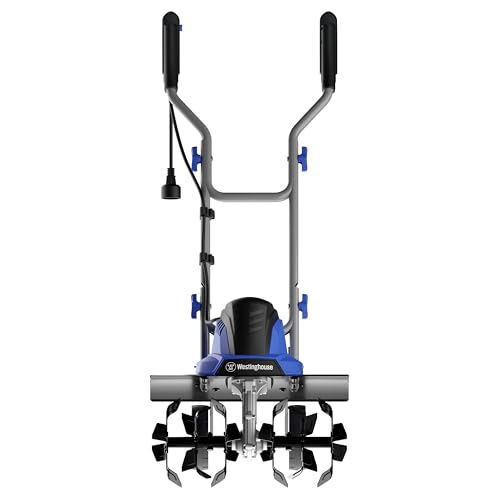
The Westinghouse W18TCAC Corded Electric Tiller Cultivator provides backyard gardeners with a straightforward, fume-free solution for seasonal ground preparation. Driven by a dependable 15-amp electric motor, this tool is designed for homeowners looking to loosen compacted soil, blend amendments, and turn under spent crops without managing engine oil, gasoline, or battery charging schedules. Its combination of motor strength and approachable handling makes it well suited for both beginner vegetable growers and experienced gardeners maintaining established plots.
In terms of working performance, the machine features an 18-inch clearing width and a tine rotation speed reaching up to 400 RPM. Six integrated steel blade assemblies measuring eight inches in diameter allow the cultivator to work soil down to a maximum depth of nine inches. This depth helps loosen hardened ground, enhances soil aeration, and creates a soft planting bed that promotes vigorous root growth for root vegetables, summer produce, and ornamental flowers.
Despite its broad 18-inch footprint, the cultivator maintains an accessible overall weight of 23.9 pounds. With open dimensions of 39.4 by 17.1 by 40.2 inches, the unit incorporates an ergonomic H-type handlebar that gives the operator steady leverage and steering control across uneven ground. When seasonal work is complete, the handles fold down smoothly, significantly shrinking the machine's profile for compact storage against a garage wall or inside a garden shed.
This electric tiller is especially useful for backyard vegetable rows, in-ground garden plots, and flower borders where annual soil conditioning is required. Gardeners can use it to evenly distribute compost, manure, or peat moss through the upper soil layers before planting. Because the electric drive delivers constant, uninterrupted torque, seasonal bed renovation becomes faster and noticeably less strenuous than manually turning soil with garden forks or spades.
As with all corded garden equipment, gardeners must supply a properly rated outdoor extension cord and practice good cord management to prevent running over the power line. Additionally, gardeners breaking new, heavily compacted sod or rocky soil should expect the lightweight frame to bounce occasionally, requiring slower, repeated passes. Overall, the Westinghouse W18TCAC offers a practical, low-maintenance balance of power, wide coverage, and easy storage for home gardeners.
Best For / Avoid If
Best for buyers prioritizing
- Generous 18-inch working width speeds up seasonal bed preparation.
- At under 24 pounds, it is significantly easier to lift and maneuver than gas-powered tillers.
- The W18TCAC manual lists a maximum working depth of 8.7 inches; actual depth depends on conditions.
Consider another option if
- Requires a heavy-duty outdoor extension cord, which limits operational range to nearby outlets.
- Operators must exercise constant vigilance to prevent the tines from catching the power cord.
- May require multiple overlapping passes when working dense clay or rocky, uncultivated turf.
Pros
- Pure copper motor delivers smooth rotation at up to 430 RPM for quick seedbed prep.
- Cultivates up to 8 inches deep to encourage healthy root development.
- Equipped with 16 rust-resistant steel blades for reliable cutting through garden soil.
- Electric operation requires far less maintenance than conventional gas-powered rototillers.
Cons
- Corded power source requires a suitable outdoor extension cord and limits overall operating range.
- May be less suitable for breaking up dense, unworked clay or heavily rock-laden virgin ground.
The MZK 12-Inch Electric Tiller Cultivator is designed for homeowners and backyard growers who need an accessible way to prepare soil for seasonal planting. Sized for manageable handling, it provides an alternative to heavy gas machinery for establishing garden beds, incorporating soil conditioners, and churning up compacted earth before seeding.
Digging capability is driven by an electric pure copper motor that turns the tines at up to 430 RPM. The cutting assembly incorporates 4 rust-resistant sections fitted with 16 steel blades. Together, they create a 12-inch working path and reach down to an 8-inch working depth, which provides adequate aeration for most vegetable roots and annual plantings.
Because this cultivator runs entirely on corded electric power, operational maintenance is minimal. Gardeners do not have to store fuel, mix two-cycle oil, or manage spark plugs. You simply plug the unit into a safe exterior-rated power source and start tilling, which significantly reduces physical fatigue during early spring bed turnover.
In practical use, this cultivator serves well in established vegetable plots, home fruit orchards, and expanded landscape borders. The 12-inch width allows it to maneuver between established rows or into dedicated garden patches where larger commercial tillers would prove too unwieldy or aggressive.
As with all corded garden equipment, users must practice cord management to keep extension leads safely clear of the rotating tines. Gardeners attempting to break hardpan soil, thick roots, or ground filled with heavy stone may prefer a heavy-duty rear-tine machine. For everyday garden beds and annual soil refreshment, however, the MZK electric cultivator offers a straightforward, low-hassle digging solution.
Best For / Avoid If
Best for buyers prioritizing
- Pure copper motor delivers smooth rotation at up to 430 RPM for quick seedbed prep.
- Cultivates up to 8 inches deep to encourage healthy root development.
- Equipped with 16 rust-resistant steel blades for reliable cutting through garden soil.
Consider another option if
- Corded power source requires a suitable outdoor extension cord and limits overall operating range.
- May be less suitable for breaking up dense, unworked clay or heavily rock-laden virgin ground.

Pros
- Cordless 20V operation allows effortless mobility throughout beds and borders.
- Narrow 8.5-inch width fits conveniently inside standard raised bed frames and tight garden rows.
- Manageable 10.45-pound weight makes it accessible for gardeners wanting to avoid heavy equipment.
- Twenty-four steel tines spinning at 360 RPM quickly churn pre-tilled soil into a fine planting bed.
Cons
- Intended primarily for pre-tilled beds and loose dirt rather than breaking dense virgin sod or heavy clay.
- Compact working path requires more passes when cultivating larger backyard plots.
- Cordless battery runtimes are naturally limited and vary based on soil firmness and depth.
The MZK 20V Cordless Tiller Cultivator is designed to take the strenuous manual labor out of routine bed preparation and soil aeration. Featuring an 8.5-inch working width powered by a 20V battery system, this compact power tool provides an agile alternative to cumbersome gas-powered machinery. It caters directly to home growers who need an accessible, easy-to-manage machine for backyard vegetable plots, perennial borders, and elevated planting areas.
Equipped with twenty-four steel tines rotating at up to 360 RPM, the cultivator is engineered to make quick work of pre-loosened soil. The listed specifications indicate that it effectively breaks up surface crusting, crumbles stubborn dirt clods, and aerates upper soil layers in a single pass. This rapid rotation also assists in folding organic compost, worm castings, or granular fertilizer into planting rows prior to spring sowing.
Handling remains a clear focus of the design. At approximately 10.45 pounds, the tool is significantly lighter than standard gas tillers, substantially reducing back and arm strain during prolonged use. The ergonomic handle setup aids steady guiding through topsoil, while the built-in safety lock ensures the motor engages only when deliberately activated, enhancing user safety during stops and repositioning.
In practical backyard scenarios, this cultivator excels in confined and established planting areas where larger machines cannot fit. Its 8.5-inch span allows gardeners to weed close to existing root systems, prepare raised beds without damaging sideboards, or lightly aerate compacted patches of lawn soil. Cordless convenience means no extension cords can snag against tomato cages or drag across delicate seedlings.
Buyers should keep realistic expectations regarding performance limitations. Because this unit is built as a lightweight cultivator, it is not suited for carving through unbroken ground, heavy brush, or thick rocky clay. Keeping the steel tines free of tangled vines and wiping down the housing after use will maintain working efficiency across seasons.
Overall, the MZK 20V Cultivator is a practical choice for beginner gardeners, raised bed growers, and older gardeners seeking an easy-to-manage tool for seasonal soil refreshes. Those managing extensive acreage or establishing gardens on raw, unworked pasture will be better served by a heavier commercial rear-tine tiller.
Best For / Avoid If
Best for buyers prioritizing
- Cordless 20V operation allows effortless mobility throughout beds and borders.
- Narrow 8.5-inch width fits conveniently inside standard raised bed frames and tight garden rows.
- Manageable 10.45-pound weight makes it accessible for gardeners wanting to avoid heavy equipment.
Consider another option if
- Intended primarily for pre-tilled beds and loose dirt rather than breaking dense virgin sod or heavy clay.
- Compact working path requires more passes when cultivating larger backyard plots.
- Cordless battery runtimes are naturally limited and vary based on soil firmness and depth.

Pros
- Lightweight build under 18 pounds minimizes physical strain and operator fatigue.
- Quick-folding handle mechanism allows convenient seasonal storage and easy transport.
- Eliminates engine tune-ups, oil changes, and exhaust fumes common to gas tillers.
- Two-position rear wheels assist with garden path mobility and working depth regulation.
Cons
- Requires an outdoor-rated extension cord, which restricts working distance to available power outlets.
- May be less suitable for breaking virgin sod, heavy clay, or rocky ground that demands heavier machinery.
The BILT HARD 14-inch electric tiller cultivator is designed for homeowners and backyard growers who need an accessible, low-maintenance tool for recurring garden bed preparation. Driven by a 10-amp electric motor, this corded machine focuses on loosening pre-worked soil, breaking up crust, and churning in organic amendments. Because it avoids the starting hassles and weight of traditional gas rototillers, it serves as a practical option for beginners, older gardeners, and anyone tending modest vegetable patches or ornamental borders.
Equipped with an internal motor operating up to 17,000 RPM, the tiller drives four steel blades at a working speed of up to 360 RPM. Each blade features four angled, rust-resistant tines configured to cut a path 14 inches wide and reach down to 8.7 inches in depth. This working envelope allows gardeners to aerate planting zones quickly and integrate organic compost, leaf mold, or granular fertilizers evenly throughout the root zone ahead of the planting season.
At just 17.98 pounds, maneuverability is a central feature of the overall construction. The machine measures 39 inches long by 14 inches wide and 40 inches high, balanced on a set of six-inch wheels with two height positions. These wheels can be adjusted to facilitate rolling across lawns and pathways, or set to assist with steady passes through the dirt. The ergonomic H-style handle uses four quick-bolt knobs, enabling gardeners to collapse the upper frame smoothly for compact vertical storage in small sheds or vehicle trunks.
This cultivator is well-suited for established raised beds, bordered flower beds, and medium-sized vegetable gardens where heavy farm machinery is impractical. It excels at routine seasonal tasks such as blending cover crops into the dirt, uprooting tender weeds, and fluffing settled soil between growing cycles. Gardeners working near exterior outlets can navigate around planting rows and corners far more easily than with bulky two-stroke or four-stroke alternatives.
Because this is a corded model, users must manage power cord positioning carefully during use to prevent accidental cord entanglement with the spinning tines. The 10-amp motor and lightweight frame are engineered for loose or previously cultivated dirt, meaning gardeners tackling unbroken sod, heavily compacted clay, or dense rock beds will likely need a heavier commercial gas unit. For routine yard maintenance, compost blending, and seasonal soil aeration, this model presents an efficient, user-friendly garden assistant.
Best For / Avoid If
Best for buyers prioritizing
- Lightweight build under 18 pounds minimizes physical strain and operator fatigue.
- Quick-folding handle mechanism allows convenient seasonal storage and easy transport.
- Eliminates engine tune-ups, oil changes, and exhaust fumes common to gas tillers.
Consider another option if
- Requires an outdoor-rated extension cord, which restricts working distance to available power outlets.
- May be less suitable for breaking virgin sod, heavy clay, or rocky ground that demands heavier machinery.
Pros
- Weighs only 10.6 pounds, making it easy to lift into raised garden boxes and tight borders.
- Cordless dual-battery platform avoids engine pull-cords, fuel storage, and tangled extension leads.
- Integrated dual-button safety lock prevents accidental starts while supporting simple operation.
- Adjustable handle assembly allows users to tailor the working height for better ergonomics.
Cons
- Lightweight build may be less suitable for breaking virgin sod, heavy clay, or extremely rocky ground.
- The manufacturer does not provide a specific runtime per battery charge, which will depend on soil density.
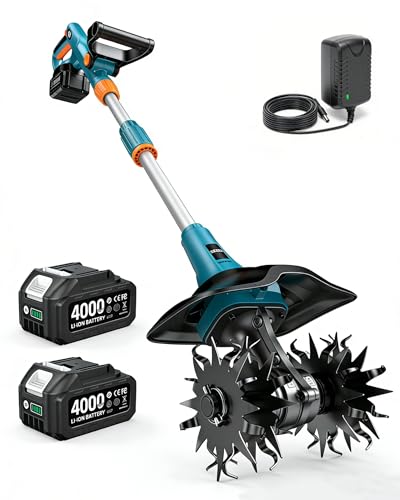
The Seesii Cordless Tiller Cultivator is a compact, battery-powered soil conditioning tool designed for routine backyard planting tasks. Powered by a 20V cordless system, this machine acts as a cultivator, tiller, and soil mixer in one manageable package. Weighing just 10.6 pounds, it provides an approachable option for beginners, older gardeners, and homeowners who want to cultivate planting beds without wrestling heavy gas equipment.
Performance is driven by a motor capable of reaching up to 360 RPM, working in tandem with 48 durable steel tines. Based on the listed specifications, this setup is designed to break up crusted surface soil, work in compost or granular fertilizers, and improve soil aeration before planting. By facilitating better airflow and nutrient distribution in established plots, the tool helps establish healthier seedbeds with minimal manual shovel work.
Ergonomics and maneuverability stand out as key practical features. The cultivator features a main handle that adjusts to multiple heights, accommodating different user heights to reduce stooping. A forward assist handle supplies extra leverage and directional control, which is particularly helpful when working along fence lines or between existing plantings. For safety, a dual-button switch mechanism stops accidental startups while remaining simple to engage.
This cordless cultivator is especially well-suited for raised beds, narrow planting rows, and smaller backyard vegetable patches. Because it runs on two included 20V 4.0Ah lithium batteries, gardeners are not tethered to outdoor wall outlets or limited by extension cords. Its compact working head allows it to navigate tight corners where larger rototillers cannot fit, making seasonal soil refreshment fast and tidy.
Maintenance is uncomplicated compared to combustion alternatives, as it skips spark plugs, air filters, and oil changes entirely. The tines detach for quick hose rinsing to keep dirt from accumulating between sessions. While it is not intended for ripping through hard-packed virgin ground or dense root systems, the Seesii cultivator serves as a practical, lightweight solution for seasonal soil aeration, raised bed maintenance, and routine garden cultivation.
Best For / Avoid If
Best for buyers prioritizing
- Weighs only 10.6 pounds, making it easy to lift into raised garden boxes and tight borders.
- Cordless dual-battery platform avoids engine pull-cords, fuel storage, and tangled extension leads.
- Integrated dual-button safety lock prevents accidental starts while supporting simple operation.
Consider another option if
- Lightweight build may be less suitable for breaking virgin sod, heavy clay, or extremely rocky ground.
- The manufacturer does not provide a specific runtime per battery charge, which will depend on soil density.

Pros
- Corded electric design eliminates fuel mixing, exhaust emissions, and engine maintenance.
- Manganese steel tines offer strong penetration and resist wear in tough ground.
- Electric power avoids fuel mixing; follow the manual for the model-specific operating and safety requirements.
- Lightweight 18.3-pound profile makes it easier to guide and store than bulky gas alternatives.
Cons
- Requires access to an outdoor extension cord, limiting working range.
- Working depth of 7 inches may be insufficient for deep trenching or breaking uncultivated hardpan.
- One-year warranty requires registration to activate coverage.
The EWORK 10-Amp Corded Electric Tiller provides home growers and backyard enthusiasts with an accessible, low-maintenance solution for ground cultivation. Measuring 22.5 by 14 by 54 inches and weighing an approachable 18.3 pounds, this electric machine bypasses the heavy pull-starts, fuel storage, and engine upkeep common to standard gas tillers. It is an ideal companion for homeowners needing to aerate soil and level planting areas for the upcoming growing season.
Powered by a 10-amp motor, this cultivator produces steady power to tackle compacted earth and break apart stubborn soil clods. It operates with a generous 14-inch working width and reaches a tilling depth of up to 7 inches. The tines are fabricated from high-strength manganese steel in a one-piece claw layout, engineered to resist edge curling in rocky dirt while simultaneously minimizing tangled roots and grass around the shaft.
Follow the operating manual for the exact model and clear rocks and large roots before tilling. Any overload or stop feature should not be treated as guaranteed protection from sudden movement or kickback. Stop and disconnect the power before inspecting a jam or clearing debris, and keep the extension cord away from the tines.
In practical backyard environments, this unit is well matched for raised or in-ground vegetable beds, border plantings, and soil amendment work. Gardeners can use the adjustable rear wheels to customize tilling depth according to specific soil textures, improving overall balance and reducing arm strain during longer garden tasks.
While the corded design delivers continuous power without battery recharging pauses, users must remain mindful of extension cord positioning around the rotating tines. Gardeners seeking deep trenching past 7 inches or cultivating multi-acre farm plots may find a commercial machine more suitable, but for routine suburban garden preparation, the EWORK tiller provides a capable, balanced balance of power and ease of handling.
Best For / Avoid If
Best for buyers prioritizing
- Corded electric design eliminates fuel mixing, exhaust emissions, and engine maintenance.
- Manganese steel tines offer strong penetration and resist wear in tough ground.
- Electric power avoids fuel mixing; follow the manual for the model-specific operating and safety requirements.
Consider another option if
- Requires access to an outdoor extension cord, limiting working range.
- Working depth of 7 inches may be insufficient for deep trenching or breaking uncultivated hardpan.
- One-year warranty requires registration to activate coverage.

Pros
- Lightweight 10.4-pound construction is manageable for older gardeners and raised bed tending.
- Convertible shaft height allows comfortable stand-up use or close-up planter bed cultivation.
- Generous 8.6-inch digging depth helps loosen tough topsoil and mix in compost thoroughly.
- Includes two 4.0Ah batteries and charger to minimize downtime between planting tasks.
Cons
- Compact 9-inch working width requires multiple passes across large open acreage.
- Denser soils and heavy root systems may reduce operating battery runtime.
- Recharging drained batteries requires an initial three to four and a half hours per battery.
The Zericuf 21V Cordless Garden Tiller is a lightweight electric soil cultivator designed for backyard vegetable plots, flower borders, and elevated raised planters. Engineered with a modular aluminum shaft and a quiet brushless motor, this machine caters to home growers, seniors, and gardeners who need an agile alternative to cumbersome, fume-heavy gas tillers.
At the working end, the unit features 170mm steel waveform blades spinning up to 360 RPM. With a 9-inch tilling path and an 8.6-inch working depth, the rotating tines are built to bust through seasonal hardpan, incorporate organic compost, and uproot weeds. The forward-motion assist uses the blade rotation to pull the machine forward gently, allowing the operator to steer without pushing heavy weight.
Adaptability stands out in the modular connecting rod, which allows the machine to operate at either a full 55-inch height or a compact 37-inch length. This convertible setup makes it practical for standing upright in long garden rows or maneuvering comfortably around raised planter walls. At just 10.4 pounds, the tool utilizes a 1.2mm aluminum frame that secures without tools, disassembling cleanly when seasonal garden chores are finished.
For backyard growers, this tiller works effectively when preparing spring seedbeds, aerating dense planting rows, or incorporating fall mulch. The quieter brushless drivetrain minimizes handle vibration and noise, making it suitable for tight neighborhood lots where gas engines might cause a disturbance. It is particularly well matched for loosening soil in standard raised beds, greenhouse benches, and narrow paths between existing perennials.
Because this is a compact battery-powered unit, gardeners cultivating large open acreage or hard, rocky clay will experience shorter runtimes and need multiple passes. The manufacturer advises an initial full charge of 3.5 to 4.5 hours per battery to maintain cell longevity, alongside periodic cleaning of the detachable blade assembly to remove wrapped roots.
Overall, this cordless cultivator offers an accessible, easy-handling option for backyard growers who want to amend soil and manage weeds without wrestling heavy machinery. It is an ideal pick for raised bed enthusiasts and older gardeners, while those tackling multi-acre field tillage or heavy sod-busting should look toward commercial gas tillers.
Best For / Avoid If
Best for buyers prioritizing
- Lightweight 10.4-pound construction is manageable for older gardeners and raised bed tending.
- Convertible shaft height allows comfortable stand-up use or close-up planter bed cultivation.
- Generous 8.6-inch digging depth helps loosen tough topsoil and mix in compost thoroughly.
Consider another option if
- Compact 9-inch working width requires multiple passes across large open acreage.
- Denser soils and heavy root systems may reduce operating battery runtime.
- Recharging drained batteries requires an initial three to four and a half hours per battery.
Pros
- Automatic motor stop helps protect both the user and the tines from sudden impacts against rocks and roots.
- Push-button electric starting eliminates the routine maintenance, fumes, and pull cords of gas models.
- Compact 12-inch tilling width navigates easily between existing garden rows, raised beds, and perimeter borders.
- Adjustable transport wheels and rear drag spur provide stable control over tilling depth and forward momentum.
Cons
- Requires a continuous outdoor-rated extension cord, which limits working range to nearby electrical outlets.
- A 12-inch width may require extra passes when preparing very large, multi-acre plots.
- Maximum depth of 8 inches is geared toward seasonal soil loosening rather than heavy-duty subsoil trenching.
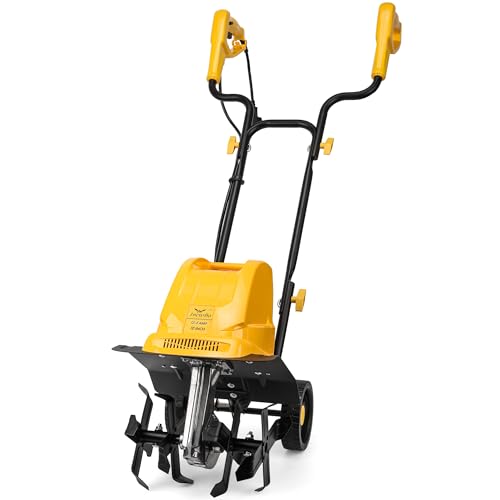
The IncwBo 13.5-Amp Electric Roto Tiller Cultivator is designed for residential gardeners who need an accessible, efficient way to prepare planting beds and manage weeds. Powered by standard household electricity, this corded unit provides continuous power for seasonal soil conditioning without the noise, exhaust fumes, or maintenance demands of small gas engines.
Equipped with a 13.5-amp motor and four rust-proof, angled steel tines, the cultivator works across a 12-inch width and reaches down to 8 inches in depth. Based on the manufacturer specifications, this combination allows it to churn through packed garden earth, blend in compost or amendments, and dislodge weed roots, creating an aerated seedbed for vegetables and flowers.
Follow the operating manual for the exact model and clear rocks and large roots before tilling. Any overload or stop feature should not be treated as guaranteed protection from sudden movement or kickback. Stop and disconnect the power before inspecting a jam or clearing debris, and keep the extension cord away from the tines.
For handling, the tiller features a 2-position wheel assembly with 6-inch wheels, allowing for straightforward transport across paths and lawns. In the garden, the integrated depth spur can be lowered into the soil, acting as a brake against the forward pull of the tines to help maintain steady tilling depth while minimizing arm and back fatigue.
Because this is a corded model, users must pair it with a properly rated outdoor extension cord and maintain cord awareness during operation. While large-scale agricultural projects may demand a wider rear-tine machine, this compact electric cultivator is an effective, practical choice for home gardeners preparing seasonal garden plots, raised borders, and landscape beds.
Best For / Avoid If
Best for buyers prioritizing
- Automatic motor stop helps protect both the user and the tines from sudden impacts against rocks and roots.
- Push-button electric starting eliminates the routine maintenance, fumes, and pull cords of gas models.
- Compact 12-inch tilling width navigates easily between existing garden rows, raised beds, and perimeter borders.
Consider another option if
- Requires a continuous outdoor-rated extension cord, which limits working range to nearby electrical outlets.
- A 12-inch width may require extra passes when preparing very large, multi-acre plots.
- Maximum depth of 8 inches is geared toward seasonal soil loosening rather than heavy-duty subsoil trenching.
Practical Best Electric Tiller Buying Guide
Corded Electric vs. Cordless Battery Power
Corded tillers avoid battery-charging pauses, but performance still depends on the load, circuit, and correctly rated extension cord. Their working range is limited by the cord and the maximum length permitted in the manual. Keep the cable clear of the rotating tines throughout each pass.
Cordless battery tillers rely on rechargeable lithium-ion packs, typically rated around 20V to 21V. These machines provide complete mobility across remote beds, orchards, or perimeter borders far from an exterior wall outlet. While modern high-capacity packs, like the dual 4.0Ah configurations on selected units, offer substantial convenience, battery output decreases when working in stiff clay or heavily root-bound soils. If you already manage battery power equipment in your yard, matching expectations for runtime and storage will feel familiar, much like diagnosing why battery mowers cut out unexpectedly during dense growth.
Tilling Width and Working Depth Explained
Working width affects the space needed for each pass. The listed 18-inch models suit more open beds than narrow rows. Maximum advertised depth is not the depth reached in every soil or on the first pass; begin shallowly as directed by the manual.
Narrower units can fit smaller planting areas, but leave room between the tines, crop roots, bed walls, and irrigation lines. Do not cultivate through established roots simply because the machine fits between stems. Check the model dimensions before choosing it for a raised bed.
Tine Design, Blade Numbers, and Rotation Speed
Steel tines are working parts, not protection against buried rocks. Remove visible stones and obstacles before tilling. Compare the manufacturer’s stated tine design and replacement instructions without treating a steel grade or rotation speed as proof of superior soil performance.
| Tiller Model | Power Source / Rating | Tilling Width | Working Depth | Machine Weight |
|---|---|---|---|---|
| Westinghouse 18-Inch, 15 Amp Corded Electric | Corded 15 Amp | 18 inches | 8.7 inches (manual) | 24.0 lbs |
| BILT HARD 18 Inch Electric Tiller Cultivator | Corded 15 Amp | 18 inches | 8.7 inches | 25.0 lbs |
| IncwBo 12” 15-AMP Corded Electric Garden Roto | Corded 15 Amp | 12 inches | 8.0 inches | Lightweight |
| BILT HARD Electric Tiller Cultivator 14 inch | Corded 10 Amp | 14 inches | 8.7 inches | 17.98 lbs |
| EWORK 10Amp Corded Electric Tiller | Corded 10 Amp | 14 inches | 7.0 inches | Lightweight |
| MZK 12-Inch 10.5A Electric Tiller | Corded 10.5 Amp | 12 inches | 8.0 inches | Lightweight |
| 21V Cordless Garden Tiller with 8.0Ah Battery | Cordless 21V (2x 4.0Ah) | 9 inches | 8.6 inches | 10.4 lbs |
| Seesii Cordless Tiller Cultivator | Cordless 20V (2x 4.0Ah) | Cultivator | Multi-surface | 10.6 lbs |
| MZK 20V Cordless Tiller Cultivator | Cordless 20V | 8.5 inches | Surface depth | Lightweight |
| IncwBo 12” 13.5-AMP Electric Roto Tiller | Corded 13.5 Amp | 12 inches | 8.0 inches | Lightweight |
Maneuverability, Weight, and Senior Accessibility
Compare each model’s listed weight with what you can safely move and control. Transport wheels can help on a suitable route, but steps, uneven paths, and wet soil may still require assistance. Stop if vibration or resistance makes controlled operation difficult.
A drag stake and wheel settings can help control travel and depth when used as instructed. Adjust the handle where the model allows it and take breaks as needed. These features do not make a powered tiller suitable for every older gardener or person with limited mobility.
Essential Safety Mechanisms and Cord Management
Safety features differ by model. A thermal or overload cutoff is not a guarantee of an instant stop or protection from kickback when tines hit an obstacle. Clear the area first, follow the operating manual, and stop immediately if the machine jumps, jams, or becomes difficult to control. Disconnect the power or remove the battery before inspection or clearing debris.
Use an outdoor-rated extension cord that meets the manual’s requirements for the exact motor amperage and cord length. Secure it with the specified retainer and route it behind the working area, clear of the tine path and walking route. Do not drape the cable over your body. Follow the model’s electrical and ground-fault protection instructions, and do not use the tiller in rain or wet conditions.
Routine Maintenance, Cleaning, and Off-Season Storage
Electric tillers require far less upkeep than combustion engines, needing no oil changes, spark plug checks, or fuel stabilizers. However, soil buildup harbors moisture that can lead to corrosion if neglected. Always disconnect power or remove lithium batteries before clearing tangles.
Wait until moving parts stop, disconnect the power source, and follow the manual when removing wrapped vegetation. Keep fingers away from sharp tines. Brush off soil and protect electrical components from water. Fold or lubricate parts only as the manufacturer directs, then store the machine securely in a dry place.
Electric Tiller: How We Researched This Guide
This is a research-based comparison of listed product specifications. We compare power source, working dimensions, weight where documented, storage features, and practical limits. Advertised maximum figures should not be interpreted as measured results in your garden.
Safety advice should come from the manual for the exact model. For example, the Westinghouse W18TCAC manual lists an 8.7-inch maximum depth and includes model-specific extension-cord requirements. Check the latest manual and listing before buying; similar-looking tillers may have different requirements.
We have not independently measured runtime, durability, kickback protection, or long-term failure rates for these machines. Where a specification or safety feature is not documented, confirm it with the manufacturer rather than assuming it from another model.
Frequently Asked Questions
Can an electric tiller break hard, uncultivated clay soil?
Motor amperage alone does not establish whether a machine can break hard clay or sod. Start with workable soil and the shallow setting described in the manual. Do not till sticky, saturated soil or force the tines through large roots and rocks. The University of Maryland Extension soil guide explains why wet-soil cultivation and digging through established tree roots should be avoided.
What gauge extension cord should be used with a corded electric tiller?
Use the extension-cord chart in the manual for your exact tiller. Required wire gauge changes with amperage and length, and some lengths may not be permitted. There is no single 14-gauge or 12-gauge recommendation that is safe for every model and distance. If the instructions are unclear, ask the manufacturer before operating.
How long do cordless electric tiller batteries last during operation?
Runtime depends on the specific machine, battery capacity and condition, soil, and working load. Two batteries in a kit do not necessarily run simultaneously. We do not have comparable measured runtime data for these models, so check manufacturer guidance and plan for charging or a spare battery rather than relying on a universal minutes-per-charge figure.
What is the main difference between an electric tiller and a cultivator?
Tillers are engineered with higher torque, wider tine assemblies, and greater working depths (often 8 to 9 inches) to churn compacted earth and incorporate heavy soil amendments. Cultivators are typically narrower, shallower (tilling 4 to 7 inches), and lighter, designed primarily for weeding between established planting rows, aerating existing garden soil, and lightly blending top dressings.
How do I prevent roots and weeds from tangling around tiller tines?
Long, fibrous grasses, binding vines, and tall weeds naturally wrap around rotating axles during operation. To minimize tangling, scalp tall growth with a mower or trimmer before tilling. If vegetation accumulates, always disconnect the machine from its power source or remove the battery before using garden shears or a knife to cut away tightly wound plant material.
How should an electric tiller be stored during winter?
Disconnect the power source before cleaning. Follow the manual for debris removal and permitted lubrication; do not hose the motor or electrical parts. Store the dry machine securely and follow the battery manufacturer’s temperature and charging instructions. Inspect the cord, controls, fasteners, and tines before the next use.