

Few lawn issues are more frustrating than stepping back after mowing only to spot streaks of tall turf, scalloped ridges, or patches scalped down to the soil. Homeowners frequently ask, why does my lawn mower cut unevenly, especially after months of trouble-free operation. In most residential yards, an uneven finish rarely indicates that your machine is completely broken. Instead, it is usually a clear symptom of mechanical misalignment, neglected blade maintenance, improper tire inflation, or poor deck airflow.
To help you diagnose the root cause, Dove Creek Gardens evaluated common mower architectures across walk-behind, self-propelled, and riding platforms. This guide does not push unverified tools or random replacement parts. Instead, our editorial team outlines the mechanical factors that cause ragged turf, showing you exactly how to calibrate your machine or evaluate replacement equipment in our broader lawn care and power equipment guides.
Whether you manage a compact city plot or a sprawling suburban lawn, getting a clean, level cut requires understanding how mower deck pitch, spindle health, and ground contours interact. By systematically working through the mechanical checkpoints below, you can identify why your lawn mower cut unevenly, correct the issue safely, and preserve the health of your grass.
When investigating cutting inconsistencies, it helps to distinguish between mechanical flaws, operator error, and terrain challenges. The following sections walk through the primary reasons why your lawn mower cut unevenly, detailing what to inspect and how to remedy each factor.
1. Dull, Damaged, or Inverted Cutting Blades
The single most frequent cause of an uneven lawn is the condition of the mower blade. A sharp blade cleanly slices grass blades, leaving a crisp edge that seals quickly. When a blade strikes rocks, roots, or dense soil, the leading edge becomes rounded or nicked. Rather than cutting, a dull blade shreds and tears the grass tips. This tearing leaves jagged brown ends and produces inconsistent cutting heights across the path.
Bent blades cause even more severe unevenness. If one wing of a rotary blade is bent upward or downward even a fraction of an inch, the cutting plane wobbles, creating a distinct stepped pattern across each pass. Furthermore, it is surprisingly common for homeowners to accidentally reinstall a sharpened blade upside down. Always confirm that the lift wings point toward the underside of the deck, with the sharpened cutting edge facing the direction of rotation.
2. Mismatched Tire Pressure and Unequal Wheel Heights
On riding mowers and lawn tractors, unequal tire pressure is the leading cause of a sloping, tilted deck. Even a difference of two or three pounds per square inch between the left and right rear tires will tilt the entire cutting chamber. This tilt causes the machine to cut noticeably lower on the underinflated side, creating pronounced ridges between adjacent rows.
On push mowers and walk-behind machines, check that each wheel height adjuster is seated in the exact same notch. It is easy for an adjustment lever to slip or for a gardener to change the front wheels while forgetting the rear. Additionally, inspect the wheel hubs and axles for wear. A loose wheel with worn bearings will lean outward under load, tilting the deck closer to the turf during turns.
3. Incorrect Mower Deck Pitch and Leveling
A mower deck must be level from side to side, but it should not be completely flat from front to back. In manufacturer service manuals, the standard specification requires a forward pitch, often called deck rake. The front tip of the blade should generally sit roughly one-eighth to one-quarter of an inch lower than the rear tip when measured on a hard, flat surface such as a concrete garage floor.
If the deck sits lower in the rear than in the front, the blades cut the grass twice. This double-cutting consumes extra engine power, disrupts grass discharge, and leaves ragged clumps. If the side-to-side level is off, one side will consistently scalp the turf while the other leaves taller strips. Inspect your deck lift links, hanger brackets, and leveling nuts for looseness or impact damage from hidden yard obstacles.
4. Grass Clumping and Restricted Deck Airflow
Rotary mowers rely on continuous aerodynamic lift to stand grass blades upright before cutting them cleanly. If wet grass, compacted mulch, or dried mud coats the underside of the deck chamber, this engineered airflow collapses. Without strong suction, limp grass blades bend under the front deck lip without being drawn up into the path of the rotating blade.
The result is intermittent stragglers, streaks of uncut weeds, and heavy clumps dropped in the yard. Before every mowing session, disconnect the spark plug boot or remove the safety key, tilt the mower safely with the air filter pointing upward, and scrape away any accumulated debris from the deck baffles and discharge chute.
5. Worn Spindles, Mandrels, and Pulleys
Multi-blade decks on riding mowers and wide-area walk-behind machines use spindles to drive each blade. Over time, spindle bearings wear out, or spindle housings can crack after an impact with a tree root or surveyor stake. A damaged spindle allows the blade to tilt or vibrate excessively, preventing a uniform plane of cut.
To inspect your spindles, turn off the engine, isolate the power source, and gently grasp the tip of the blade with a gloved hand. Attempt to rock the blade up and down. If you feel vertical play, clunking, or looseness inside the spindle housing, the assembly must be serviced or replaced before the machine will cut evenly again.
6. Engine Throttle, Belt Slippage, and Travel Speed
Rotary mower blades are engineered to operate at a specific rotational speed, usually around 2,800 to 3,200 revolutions per minute. If you run a gas mower at partial throttle, or if a worn drive belt slips under load, the blade tip speed drops significantly. At lower speeds, grass blades are knocked over rather than severed cleanly.
Similarly, walking or driving too quickly through dense or tall turf overwhelms the cutting chamber. The front edge pushes grass down, and the machine moves past before the blades have time to lift and cut the stems. Slowing your ground speed while maintaining full engine throttle immediately improves cut uniformity.
7. Managing Lawn Contours and Bumpy Turf
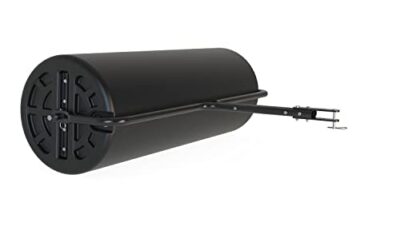
Sometimes the issue originates in the ground itself rather than inside the mower. Soil settling, rodent tunnels, tree roots, and winter frost heaves create undulations that cause wide mower decks to bridge over depressions or scalp high mounds. If you are mowing bumpy, rolling terrain, using a heavy tool like a lawn roller for uneven ground during early spring overseeding can help smooth minor surface irregularities.
| Visual Cut Pattern | Primary Suspected Cause | Recommended Corrective Action |
|---|---|---|
| Stepped ridges along pass lines | Unequal tire pressure or unlevel deck | Check tire PSI; level deck side-to-side on concrete |
| Torn, frayed, white grass tips | Dull or nicked cutting blade | Sharpen blade bevel or install balanced replacement |
| Uncut strips between blades | Bent blade, worn belt, or low engine RPM | Inspect blade straightness, replace slipping belt, use full throttle |
| Intermittent scalping on high spots | Deck height set too low or bumpy terrain | Raise cut height by one notch; smooth rough turf depressions |
| Ragged patches and clumping | Grass buildup under deck or wet turf | Scrape underside of deck clean; mow only when lawn is dry |
Research Methodology and Trust
At Dove Creek Gardens, our lawn care editorial process relies on published technical service documentation, manufacturer service manuals, and real-world mechanical troubleshooting standards. We do not manufacture claims of proprietary laboratory testing. Instead, we cross-reference engineering guidelines from major mower manufacturers with established turf management practices to present reliable, practical solutions.
Our analysis examines mechanical alignment, aerodynamic lift efficiency, blade metallurgy, and power transfer systems. We also screen verified feedback from residential gardeners to understand which mechanical failures occur most frequently over multi-season use. All troubleshooting recommendations in this guide were verified and updated during September 2026 to ensure accuracy across modern gas and electric platforms.
Frequently Asked Questions
Why does my lawn mower cut unevenly on one side?
When a mower consistently cuts lower on one side, the most common culprit is unequal tire pressure on riding mowers or mismatched wheel adjustment notches on walk-behind models. Check that all tires match the manufacturer recommended pressure, and verify that the deck hanger brackets are properly leveled from left to right.
How often should I sharpen my lawn mower blade?
Most residential mower blades require sharpening every 20 to 25 hours of engine operation, or at least twice per mowing season. If your lawn contains sandy soil, exposed roots, or granite borders, you may need to sharpen or balance the blade more frequently to prevent uneven tearing.
Can a bent mower deck cause an uneven cut?
Yes. Striking a curb, stump, or buried pipe can deform the steel deck shell or bend the spindle mounting plate. When this happens, the spindle sits at an angle relative to the ground, preventing the blade from rotating on a true horizontal plane regardless of how you adjust the leveling links.
Why does my mower leave a streak of grass in the middle?
A streak of taller grass between the blades of a twin-blade or triple-blade deck usually points to a bent blade wing, worn spindle bearings, or an elongated drive belt that slips under cutting resistance. It can also occur if you overlap your cutting passes too narrowly while driving at excessive speed through thick turf.
Does mowing wet grass make the cut uneven?
Mowing wet grass severely affects cut quality. Wet turf blades clump together, stick to the underside of the cutting deck, and disrupt the vacuum needed to pull stems upright. Always wait until the morning dew has evaporated and the grass blades are dry to achieve a smooth, uniform cut.
Continue your garden research
Browse more practical guides in Lawn Care & Power Equipment.
For product comparisons, see Best Cordless Lawn Mower For Small Yards 2026: Reviews and Buying Guide.
See how Dove Creek Gardens researches and compares products.