


A practical Raised Garden Bed For Wheelchair Users should bring the soil within comfortable seated reach without creating new obstacles around the chair. Height alone does not make a planter accessible. Its width, approach space, leg or shelf placement, drainage, stability, and location on a firm surface can matter just as much.
The elevated planters in this guide are candidates to evaluate for seated gardening, not certified wheelchair-accessible beds. Bottomless, ground-supported beds do not provide open knee space beneath the soil. None of the listings we reviewed documents complete wheelchair knee clearance, so confirm the approach and measurements with the seller before buying.
Before ordering, measure the gardener’s comfortable forward and sideways reach from their own chair. Gardeners who find gripping or digging uncomfortable may also benefit from an ergonomic hand trowel designed for easier handling.
aboxoo 40-Inch Raised Metal Planter Bed with Legs for Accessible Patio Growing YITAHOME Elevated Garden Bed with Wheels, Accessible Resin Planter for Herbs and Vegetables Outsunny 41-Inch Wooden Raised Garden Bed with Trellis and Wheels for Accessible Growing Vego Garden Rolling Elevated Raised Bed, 2 x 4 ft, Accessible Patio Growing Prices and availability can change. We may earn a commission from qualifying purchases.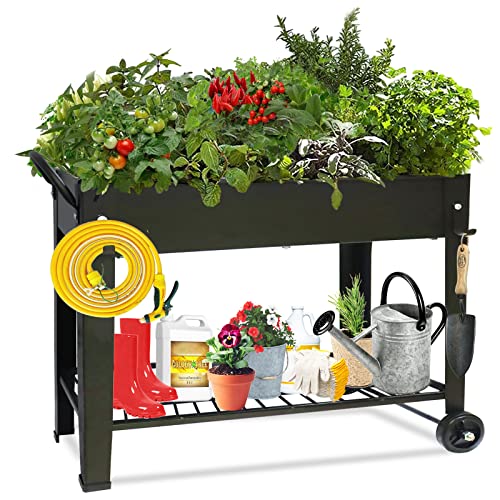


Pros
- Comfortable elevated height for gardeners who prefer less bending.
- Moveable design with a handle and two wheels.
- Galvanized steel construction with an anti-rust coating.
Cons
- The 11-inch width may be less suitable for deep-rooted or sprawling crops.
- The product information does not specify assembly instructions, drainage-hole details, or soil capacity.
- Gardeners needing a fixed, extra-wide bed may prefer a larger ground-level or broader raised-bed design.
The aboxoo Large Raised Metal Planter Bed is an elevated garden box intended for growing vegetables, herbs, flowers, and other potted plants. Its 40-inch length and raised-leg design make it a practical option for homeowners, patio gardeners, and people who want a planting area that is easier to reach than a bed at ground level.
The listed 31.5-inch height is the main access benefit. The product information indicates that the planter is high enough to reduce bending during planting and routine care, which may be useful for older gardeners or anyone looking for a more upright gardening position.
The planter is made from galvanized steel with an anti-rust grey coating and is listed for indoor or outdoor placement. A handle and two wheels on one side are included to support repositioning, although the published information does not describe the surface conditions or load limits for moving it.
The grooved bottom is designed to help water penetrate more evenly across the planting area. This feature may support more consistent watering, but gardeners should still monitor soil moisture because the product information does not provide details about drainage-hole size, soil capacity, or watering frequency.
At 40 inches long and 11 inches wide, this planter fits a narrow growing footprint, but the width may limit crops that need substantial root depth or room to spread. The metal surface and elevated position also warrant routine checks for soil moisture and plant stress during hot weather, while the coating should be kept in good condition for continued outdoor use.
This planter is a reasonable choice for accessible herb, flower, and vegetable growing in a patio or small-yard setting. Gardeners who need a wide bed, detailed drainage specifications, or space for large root systems should consider a different raised-bed format.
Best For / Avoid If
Best for buyers prioritizing
- Comfortable elevated height for gardeners who prefer less bending.
- Moveable design with a handle and two wheels.
- Galvanized steel construction with an anti-rust coating.
Consider another option if
- The 11-inch width may be less suitable for deep-rooted or sprawling crops.
- The product information does not specify assembly instructions, drainage-hole details, or soil capacity.
- Gardeners needing a fixed, extra-wide bed may prefer a larger ground-level or broader raised-bed design.
Pros
- Accessible raised design is practical for gardeners who prefer to work while standing.
- Mobile layout can be useful on patios, decks, and other compact growing areas.
- Moisture-management features offer more control than a planter with no water-level indicator or drainage options.
- The divided bed and storage shelf support organized gardening in a relatively narrow footprint.
Cons
- The listed capacity is up to 21 gallons of soil, so it may be less suitable for large plants or gardeners who want substantial root space.
- Gardeners needing a permanently fixed bed may not benefit from the wheeled design.
- The published information does not specify assembly time, wheel-lock details, or the exact planting depth.
The YITAHOME elevated garden bed is a wheeled resin planter designed for growing herbs, vegetables, and flowers above ground level. Its approximately 43.3-inch length, 17.7-inch width, and 34-inch height make it a practical option for homeowners, older gardeners, and anyone who prefers easier access to plants without regular bending or squatting.
Its main advantage is the combination of raised access and moisture-management features. The central divider separates the soil area, while the float system is intended to help monitor water level. Side drainage holes and a drain plug provide additional ways to control excess moisture, which can be useful when watering container-grown plants.
The planter holds up to 21 gallons of soil and includes three built-in support poles that distribute pressure across the frame. Four swivel wheels allow the bed to be moved, and the bottom shelf adds storage for tools or accessories. Based on the listed specifications, the resin construction is also designed to resist cracking and fading in outdoor conditions.
This bed could fit well on a patio, deck, balcony-sized growing area, or small yard where a traditional in-ground bed is impractical. The divided layout can help keep different herbs or flowers organized, while the mobility may make it easier to adjust placement as outdoor conditions change.
Its growing capacity is still limited compared with a full-size raised bed, so gardeners growing large vegetables or deep-rooted plants may prefer a larger planter. The published information does not detail assembly requirements, wheel locks, or planting depth, so those points should be confirmed before purchase. Keep the bed on a stable surface, follow the drainage instructions, and avoid exceeding its listed soil capacity.
This is a sensible choice for accessible container gardening and organized small-space growing. Gardeners who want a compact, mobile planter with built-in water-monitoring features should find the design appealing, while those needing extensive root space or a fixed, heavy-duty garden bed may want a different format.
Best For / Avoid If
Best for buyers prioritizing
- Accessible raised design is practical for gardeners who prefer to work while standing.
- Mobile layout can be useful on patios, decks, and other compact growing areas.
- Moisture-management features offer more control than a planter with no water-level indicator or drainage options.
Consider another option if
- The listed capacity is up to 21 gallons of soil, so it may be less suitable for large plants or gardeners who want substantial root space.
- Gardeners needing a permanently fixed bed may not benefit from the wheeled design.
- The published information does not specify assembly time, wheel-lock details, or the exact planting depth.
Pros
- Combines growing space, trellis support, shelving, and mobility in one unit.
- Raised height can make planting and maintenance more comfortable than working at ground level.
- The deep central trough is sized for a range of common herbs, flowers, and vegetables.
- The shelves provide useful space for tools, pots, seeds, or soil.
Cons
- The 39-by-13.5-inch bed is narrower than a full-size raised bed, so gardeners growing larger crops may need additional space.
- Drainage details and assembly information are not provided, so buyers should review the setup instructions and plan container planting accordingly.
- The trellis is intended for small climbing plants, so it may be less suitable for heavy or vigorous vines.
The Outsunny 41-Inch Wooden Raised Garden Bed is a mobile, elevated planter designed for growing herbs, flowers, and vegetables while keeping the main planting area off the ground. Its raised format and wheeled legs make it a practical choice for homeowners, older gardeners, patio growers, and anyone who prefers not to work at ground level.
Based on the listed specifications, the central trough measures 39 inches long by 13.5 inches wide and 10.75 inches deep, with a stated planter-bed capacity of 330 pounds. The elevated bed can make routine planting and maintenance more accessible, while the design may help place plants farther from ground-level weeds and some outdoor animals.
The planter has three functional levels. A top shelf is rated for 22 pounds and can hold small tools or plant pots, while the bottom shelf is rated for 110 pounds and provides storage space for items such as seed or soil bags. The integrated trellis sits between the top shelf and the planting bed, giving small climbing plants a support structure.
With overall dimensions of 41.25 inches long, 17.75 inches wide, and 53.25 inches high, this planter can fit in a compact yard, patio, balcony-style growing area, or indoor space where its footprint is suitable. The wheels are intended to make repositioning easier and may also allow the planter to be brought indoors for winter, provided the growing load and path are manageable.
Gardeners should confirm the assembly requirements and drainage arrangement before filling the bed, since those details are not supplied here. Respect the separate weight limits for the planter bed, top shelf, and bottom shelf, and check that the unit is stable before moving it. This is a good fit for accessible container gardening and organized small-space growing, while gardeners needing a wide bed, detailed drainage information, or support for heavy vines may prefer a different planter.
Best For / Avoid If
Best for buyers prioritizing
- Combines growing space, trellis support, shelving, and mobility in one unit.
- Raised height can make planting and maintenance more comfortable than working at ground level.
- The deep central trough is sized for a range of common herbs, flowers, and vegetables.
Consider another option if
- The 39-by-13.5-inch bed is narrower than a full-size raised bed, so gardeners growing larger crops may need additional space.
- Drainage details and assembly information are not provided, so buyers should review the setup instructions and plan container planting accordingly.
- The trellis is intended for small climbing plants, so it may be less suitable for heavy or vigorous vines.
Pros
- Elevated design provides easier access for planting, weeding, and harvesting.
- Compact 2 x 4 foot size is suitable for many patios and smaller yards.
- Strong welded frame has a listed 700-pound weight capacity.
- Assembly is limited to putting the kit together and tightening the fasteners, according to the product information.
Cons
- The 2 x 4 foot growing area may be limiting for gardeners who want to grow larger crops or a wide variety of plants.
- Drainage details are not provided, so gardeners should confirm how excess water exits before filling the bed.
- Assembly is still required, and the finished bed will need a stable, level location because of its elevated design.
The Vego Garden Rolling Elevated Raised Garden Bed is a 2 x 4 foot raised planter for growing herbs, flowers, and other suitable plants in a compact outdoor space. Its elevated format is especially useful for homeowners, older gardeners, and anyone who wants planting areas that are easier to reach than a bed placed directly on the ground.
Based on the listed specifications, the bed has a 32-inch overall height and a 12-inch planting height. This arrangement can reduce the amount of deep bending required for routine planting and maintenance, while still providing a defined growing area for small-scale gardening.
The frame uses one-piece welded corner and leg construction with a lower support bracket, and the 2 x 4 foot version is listed with a 700-pound weight capacity. The product information also describes VZ 2.0 coated steel and an AkzoNobel paint system, with a stated 20-plus-year life. Rubber edging covers the bed edges, and installation involves assembling the materials and tightening the fasteners.
The 24 x 48 inch footprint can work well on a patio or in a small yard where ground-level beds would take up too much room. The included storage rack may help keep selected gardening items near the bed, although the published information does not specify its dimensions or recommended load. Place the finished planter on a stable, level surface before adding soil.
Drainage construction and maintenance requirements are not specified in the published data, so buyers should verify how excess water is managed and choose an appropriate growing medium. The bed weighs 41.89 pounds before filling, and its planted weight can be substantially higher, so its location should be selected carefully. Overall, it is a practical choice for accessible patio gardening and compact raised-bed growing, while gardeners needing a larger planting area or confirmed drainage details may prefer another model.
Best For / Avoid If
Best for buyers prioritizing
- Elevated design provides easier access for planting, weeding, and harvesting.
- Compact 2 x 4 foot size is suitable for many patios and smaller yards.
- Strong welded frame has a listed 700-pound weight capacity.
Consider another option if
- The 2 x 4 foot growing area may be limiting for gardeners who want to grow larger crops or a wide variety of plants.
- Drainage details are not provided, so gardeners should confirm how excess water exits before filling the bed.
- Assembly is still required, and the finished bed will need a stable, level location because of its elevated design.

Pros
- Comfortable raised working height for gardeners who do not want to bend to ground level.
- Natural fir wood frame with a classic rectangular shape that can blend into porch, patio, and garden settings.
- Lower storage shelf adds useful organization without increasing the planter footprint.
- Included instruction manual and tools support straightforward home assembly.
- Reviewers commonly mention that the planter looks attractive and feels sturdy once assembled.
Cons
- The wood is unfinished, so gardeners who want extra outdoor protection may choose to apply a suitable exterior finish, avoiding plant-safe areas as needed.
- A liner is not listed as included, and the product information indicates a liner may be useful to help keep soil in place and add some protection to the wood.
- The 2.2 cubic foot capacity is better for compact plantings than for deep-rooted or large vegetable crops.
The Yaheetech YT-00144023 is an elevated wooden raised garden bed designed for container-style growing in places where ground beds are inconvenient or unavailable. Based on the listed specifications, it measures 33.86 by 18.11 by 29.53 inches and is intended for herbs, flowers, small vegetables, and similar plantings. The raised height makes it especially relevant for beginners, older gardeners, and homeowners who want a cleaner, easier-to-reach growing space.
Its main gardening benefit is access. Instead of kneeling or bending over a low planter, the planting box sits at a more comfortable working height for watering, checking leaves, pruning herbs, and harvesting small crops. The listed 2.2 cubic foot capacity gives it enough room for compact seasonal plantings, while the rectangular shape makes it easy to place along a wall, railing, fence line, or greenhouse aisle.
The planter is made from fir wood with a natural unfinished appearance. The product information notes polished boards, reinforced bottom bars, and a two-tier layout. The upper section holds the growing mix and plants, while the lower shelf can store small garden tools, gloves, plant labels, or a watering can within reach. Built-in drainage is included, which is important because container plantings need a way for excess water to escape.
For small-space gardeners, this raised bed can be a practical fit on a porch, deck, patio, yard corner, or greenhouse floor. It is not a replacement for a large vegetable bed, but it is well matched to culinary herbs, annual flowers, lettuce-style plantings, or decorative projects where neat appearance and easy access matter. Reviewers commonly describe the planter as attractive and straightforward to assemble, though one reviewer noted that following the instructions closely helps avoid rework.
There are a few realistic considerations before buying. The wood is listed as unfinished, so gardeners placing it outdoors may want to consider a suitable exterior finish on non-soil-contact surfaces, especially in wet climates. A liner is not listed among the included components, and the product Q&A indicates that adding one may help keep soil from escaping and provide some protection to the wood. As with any elevated planter, avoid overloading it beyond the listed capacity and place it on a stable, level surface.
Overall, this Yaheetech elevated raised bed is a sensible choice for gardeners who want a compact wooden planter with storage and a more accessible working height. Gardeners planning deep-rooted crops, large tomato plants, or high-volume vegetable production may prefer a larger raised bed or an open-bottom design, but for patio herbs, flowers, and small seasonal plantings, the feature set is practical and beginner-friendly.
Best For / Avoid If
Best for buyers prioritizing
- Comfortable raised working height for gardeners who do not want to bend to ground level.
- Natural fir wood frame with a classic rectangular shape that can blend into porch, patio, and garden settings.
- Lower storage shelf adds useful organization without increasing the planter footprint.
Consider another option if
- The wood is unfinished, so gardeners who want extra outdoor protection may choose to apply a suitable exterior finish, avoiding plant-safe areas as needed.
- A liner is not listed as included, and the product information indicates a liner may be useful to help keep soil in place and add some protection to the wood.
- The 2.2 cubic foot capacity is better for compact plantings than for deep-rooted or large vegetable crops.

Pros
- Comfortable elevated working height can reduce the need for frequent bending.
- V-shaped growing space accommodates plants with different root depths.
- Suitable for patios, balconies, and other small outdoor gardening areas.
- Includes a breathable liner and provides listed capacity for a useful range of crops.
Cons
- At 43 pounds before adding soil, it may be difficult to reposition once filled.
- The listed 210-liter capacity means gardeners will need a substantial amount of suitable soil or growing medium.
- Gardeners needing a wide, ground-level bed or a larger growing area may prefer a different raised-bed format.
The VegTrug Classic Small 1m is an elevated cedar raised bed designed for growing vegetables, herbs, and greens in a compact outdoor space. Its 31.5-inch height makes it a practical option for homeowners, older gardeners, and anyone who prefers a more accessible planting surface than a traditional ground-level bed.
Based on the listed specifications, the V-shaped growing area is intended to support both shallow- and deep-rooted plants. The planter holds up to 210 liters, giving gardeners room to combine different crops while keeping the growing area contained and organized.
The bed measures approximately 29.9 inches long by 40.7 inches wide by 31.5 inches high and weighs 43 pounds. Grey-wash cedar, a water-based finish, and plastic feet are listed as part of the construction. The included breathable liner is designed to promote drainage and aeration around the roots.
This format can work well on a patio, balcony, or small yard where an in-ground bed is impractical. The elevated layout also offers some separation from common ground pests, although it should not be treated as complete pest protection. A level, stable placement area is important because the bed becomes substantially heavier after filling.
The main trade-offs are the bed's fixed footprint and the amount of growing medium required for its listed capacity. The product information does not provide assembly or detailed care instructions, so buyers should review those details before setup. It is a strong fit for accessible container-style growing in limited spaces, while gardeners seeking a larger or ground-level growing area may want another raised-bed design.
Best For / Avoid If
Best for buyers prioritizing
- Comfortable elevated working height can reduce the need for frequent bending.
- V-shaped growing space accommodates plants with different root depths.
- Suitable for patios, balconies, and other small outdoor gardening areas.
Consider another option if
- At 43 pounds before adding soil, it may be difficult to reposition once filled.
- The listed 210-liter capacity means gardeners will need a substantial amount of suitable soil or growing medium.
- Gardeners needing a wide, ground-level bed or a larger growing area may prefer a different raised-bed format.

Pros
- Accessible elevated height can make planting and maintenance more comfortable.
- Mobility and locking casters offer flexible placement on patios, balconies, courtyards, and similar spaces.
- Organized layout combines four growing areas with tool and pot storage.
Cons
- The 21-gallon capacity may be less suitable for gardeners who want deep-rooted or high-volume crops.
- Gardeners needing a fixed, in-ground-style bed may prefer a stationary planter without casters.
- The product requires assembly, although the listed instructions indicate an estimated 20 to 25 minute setup.
The EFU Raised Garden Bed is a wheeled, elevated planter designed for growing vegetables, herbs, flowers, and small fruits in a more accessible container. Its four separate planting zones and 21-gallon soil capacity make it a practical option for homeowners, older gardeners, patio growers, and anyone working with limited outdoor space.
The raised design places the planting area at approximately 35 inches high, which can reduce bending and kneeling during planting and routine care. The divided layout helps keep different crops organized, while the listed 240-pound support capacity provides room for soil and a range of smaller container plants when loaded within the stated limit.
Mobility is a central part of the design. Lockable casters allow the planter to be moved toward available sunlight, away from harsh weather, or into a sunroom when appropriate. The lower shelf adds storage for small pots and gardening tools, helping keep commonly used items close to the growing area.
For patios, balconies, courtyards, backyards, and sunrooms, this planter can create a flexible growing station without requiring a permanent garden bed. Side drainage holes are intended to remove excess water, and the built-in water level monitor can help gardeners pay closer attention to moisture levels. The product information also describes a breathable design intended to support soil ventilation.
The bed is made from high-density resin and includes four reinforced support rods, with product information describing it as crack-resistant and suitable for exposure to sun, rain, and seasonal temperature changes. Assembly is required, with the included instructions indicating an estimated setup time of 20 to 25 minutes. Gardeners should place it on a stable surface, observe the stated weight limit, secure the casters when stationary, and avoid overwatering even when using the water monitor.
This is a sensible choice for gardeners who value accessible planting, movable placement, and built-in organization. Those needing a larger soil volume, a deeper bed for extensive root systems, or a permanent ground-level structure may want a different raised-bed format.
Best For / Avoid If
Best for buyers prioritizing
- Accessible elevated height can make planting and maintenance more comfortable.
- Mobility and locking casters offer flexible placement on patios, balconies, courtyards, and similar spaces.
- Organized layout combines four growing areas with tool and pot storage.
Consider another option if
- The 21-gallon capacity may be less suitable for gardeners who want deep-rooted or high-volume crops.
- Gardeners needing a fixed, in-ground-style bed may prefer a stationary planter without casters.
- The product requires assembly, although the listed instructions indicate an estimated 20 to 25 minute setup.

Pros
- Good working height for gardeners who prefer not to garden at ground level.
- Large enough for a small-space vegetable or flower planting while still fitting many patios and decks.
- Includes drainage holes, an important feature for container-style raised beds.
- Natural unfinished wood appearance suits traditional outdoor garden settings.
Cons
- Unfinished wood may require extra care or a compatible exterior finish if gardeners want added surface protection or a different look.
- At 72 inches long, it may be too large for very tight balconies or narrow walkways.
- Gardeners who need very deep root space for larger crops may prefer a deeper ground-level raised bed.
The Best Choice Products SKY6152 is an elevated wood raised garden bed designed for outdoor container-style growing. Based on the listed specifications, it is intended for vegetables, flowers, succulents, and similar plantings where a raised, accessible work height is useful. It is especially relevant for patio gardeners, balcony growers with enough floor space, and homeowners who want a contained planting area without building a permanent bed.
The main gardening benefit is its combination of usable planting space and easier access. The bed measures 72 inches long by 24 inches wide and holds 8.4 cubic feet of growing medium, giving beginners enough room to group several smaller crops or ornamental plants. The elevated layout also keeps the planting surface off the ground, which can make routine watering, thinning, and harvesting more comfortable than kneeling beside a traditional bed.
Drainage is an important detail in any raised planter, and this model includes six drainage holes to let excess water escape. That feature can help reduce waterlogged soil when paired with an appropriate potting or raised-bed mix. The product information lists all-wood Chinese fir construction, a natural color, a traditional rectangular shape, six legs, and a 300 lb weight capacity.
For small-space use, the long and narrow footprint can work well along a deck rail, patio wall, fence line, or sunny backyard edge. It may also suit gardeners who want to separate herbs from in-ground beds, grow salad greens close to the kitchen, or keep a few flowers at a more visible height. The included divider panel mentioned in the title may be useful for organizing plantings, although gardeners should confirm the assembly layout before filling the bed.
There are a few practical considerations before buying. The finish is listed as unfinished, so owners who want a sealed or stained look may need to choose a plant-safe exterior treatment appropriate for garden use. Because the planter is 72 inches long, measuring the intended location is important, and it should be placed on a level surface that can support the combined weight of the planter, soil, water, and plants.
Overall, this is a sensible option for gardeners who want a natural wood elevated bed with generous length, drainage, and a comfortable working height. It is less ideal for very tight balconies, gardeners needing extra-deep soil for large root systems, or anyone who prefers a fully finished planter that requires no additional surface care.
Best For / Avoid If
Best for buyers prioritizing
- Good working height for gardeners who prefer not to garden at ground level.
- Large enough for a small-space vegetable or flower planting while still fitting many patios and decks.
- Includes drainage holes, an important feature for container-style raised beds.
Consider another option if
- Unfinished wood may require extra care or a compatible exterior finish if gardeners want added surface protection or a different look.
- At 72 inches long, it may be too large for very tight balconies or narrow walkways.
- Gardeners who need very deep root space for larger crops may prefer a deeper ground-level raised bed.
Start with seated reach, not advertised height
Planter height is only a starting point. The listed elevated models range from 29.5 to 35 inches tall, but the ideal height depends on the wheelchair, cushion, armrests, trunk mobility, and whether the gardener approaches from the side or front. Re-create the planter edge with a table or cardboard box and confirm that the gardener can reach the near planting area without leaning dangerously.
Width affects access to the center. The aboxoo planter is only 11 inches wide, while the Outsunny planting bed is 13.5 inches wide and the YITAHOME model is 17.7 inches wide overall. Those narrow profiles may be easier to tend from one long side than a 24-inch-wide planter. The 72-by-24-inch Best Choice Products bed offers more growing area, but a gardener with limited reach may need access along both long sides.
Check knee, footrest, and caster clearance
True front-facing access normally requires open space beneath the planting trough. Lower shelves can hold tools, but they can also prevent a wheelchair from moving close enough to the bed. The Outsunny, YITAHOME, EFU, Yaheetech, and Rolling Elevated Raised Garden Bed listings mention lower storage, yet the available data does not provide shelf height, leg spacing, or knee-clearance measurements.
If front access is essential, request those measurements from the seller before buying. Otherwise, plan for a parallel approach along a long edge. Allow room for the chair to turn without encountering hoses, drainage trays, trellises, or projecting handles.
Match the planter shape to the available route
Measure the complete path from the door or gate to the garden, not just the final planting location. The aboxoo model measures 40 by 11 by 31.5 inches and has two wheels plus a handle. The YITAHOME measures 43.3 by 17.7 by 34.1 inches and uses four swivel wheels. EFU lists a 44-by-19-by-35-inch footprint with lockable casters. These relatively narrow models are the most plausible choices for patios and compact spaces, subject to actual doorway and turning clearance.
Wheels do not guarantee easy movement after filling. Wet soil adds substantial weight, and the available specifications does not document rolling performance over thresholds, pavers, gravel, or grass. Position a loaded planter on a level, firm surface and lock its casters before gardening. If water storage is important in a compact setup, this guide to a rain barrel for a small garden covers another part of planning the space.
Choose enough soil depth for the intended plants
A shallow trough suits many herbs, leafy greens, flowers, and compact crops, while larger plants need adequate root room and support. Outsunny lists a 10.75-inch-deep bed, and the Rolling Elevated Raised Garden Bed lists a 12-inch planting height. VegTrug uses a V-shaped trough holding 225 quarts, which combines shallow areas near the sides with a deeper center.
YITAHOME and EFU each list a 21-gallon capacity. That keeps their overall size manageable, but it also limits how many large plants can share the bed. For a dedicated climbing crop, the Outsunny includes a trellis; readers comparing other supported planting systems can review these tomato planters with trellises.
Evaluate drainage before choosing the location
Container beds need a route for excess water. YITAHOME and EFU list side drainage holes and water-level monitors. VegTrug includes a breathable liner, Best Choice Products lists six drainage holes, and Yaheetech states that its planter has drainage holes. The aboxoo listing describes a central groove intended to distribute water, but it does not provide a conventional drainage-hole specification.
Place drainage outlets where water will not create a slippery route or stain a sensitive surface. Check holes regularly for roots and compacted mix. A lightweight container mix is generally more practical than dense yard soil, but follow the planter manufacturer’s filling and weight instructions.
Balance material, stability, and maintenance
Metal, resin, and wood have different ownership implications. The aboxoo uses coated galvanized steel. The Rolling Elevated Raised Garden Bed uses coated steel and lists a 700-pound capacity for its 2-by-4-foot version. YITAHOME and EFU use reinforced resin, while Outsunny, Yaheetech, VegTrug, and Best Choice Products use wood.
Inspect fasteners, legs, wheel locks, and support bars at the start of each season. Clear drainage openings and look for coating damage, cracked resin, or deteriorating wood. Do not use the rim, trellis, or shelf as a transfer aid unless the manufacturer explicitly approves that use. A planter’s soil capacity is not evidence that it can safely support a person.
Plan assembly and filling around accessibility
Assembly can involve floor-level fasteners, large panels, and heavy bags of mix. Arrange help if those tasks are not safe for the intended gardener. Assemble the planter near its final location, verify that it sits level, and tighten all hardware before filling. Add soil gradually while checking for movement, bowing, or uneven legs.
Storage shelves are useful only when their contents remain reachable and do not block the chair. Keep frequently used tools in a light caddy near the working side rather than at the back of a deep shelf. Store heavy soil bags separately so the gardener does not need to lift them from beneath the planter.
Avoid beds that are merely taller than ground level
The SnugNiture 36-inch-tall bed and Tegarbed Galvanized Raised Garden Bed Outdoor are bottom-supported garden beds rather than elevated troughs. Their walls may reduce bending for a standing gardener, but a wheelchair user still has to reach over the wall, with no under-bed clearance. They were therefore excluded from the final wheelchair-oriented recommendations.
A common buying mistake is assuming that labels such as waist-high or no bending establish wheelchair compatibility. They do not. Confirm the actual approach, reach, edge height, and under-bed obstruction measurements for the individual user.
Research Methodology and Trust
This guide is based on research and specification comparison, not physical testing. Products that remained at ground level were not treated as wheelchair-accessible recommendations.
Accessibility received more weight than star ratings because eight listings reported ratings with zero reviews. Those values provide no documented owner-feedback sample to analyze. The Yaheetech and Tegarbed listings had review counts, but Tegarbed’s ground-level design did not fit the central use case. No conclusions about long-term durability or wheelchair usability were inferred from ratings alone.
The recommendations were updated during August 2026 using published product information. Because none of the listings provides explicit knee-clearance dimensions or an accessibility certification, buyers should verify critical measurements directly with the seller and compare them with the user’s wheelchair and reach range.
Frequently Asked Questions
What height should a raised garden bed for wheelchair users be?
There is no single correct height because wheelchairs, cushions, armrests, and individual reach differ. Test the proposed rim height while seated and confirm that the gardener can reach the soil without excessive leaning or lifting the shoulder.
Does an elevated planter need open space underneath?
Open knee space is important for a front-facing approach. A planter with a low shelf may still work from the side, but buyers should obtain the shelf height and distance between the legs before assuming a wheelchair will fit underneath.
How wide should a wheelchair-accessible planter be?
The width should match the gardener’s comfortable reach and the number of accessible sides. A narrow trough may be manageable from one side, while a wider bed may require a clear route on both sides. Test reach rather than relying on a general width rule.
Are raised beds on wheels easier for wheelchair users?
They can simplify repositioning on a smooth, level surface, but wet soil makes a planter heavy. Lock the wheels before working, and do not assume small casters will roll easily over thresholds, gravel, grass, or uneven pavers.
Can a raised planter be used on a balcony or deck?
Only after checking the complete filled weight, drainage route, available turning space, and the surface’s load limits. The available listings do not establish that every model is suitable for every balcony or deck, so consult the property owner or an appropriate professional when load capacity is uncertain.
How should an elevated garden bed be maintained?
Keep drainage holes clear, inspect legs and hardware, test caster locks, and look for corrosion, cracks, or wood deterioration. Follow the manufacturer’s care instructions and correct instability before adding water or working in the bed.
How long will a raised garden bed for wheelchair users last?
Lifespan depends on material, weather exposure, drainage, assembly, and maintenance. The available data is not sufficient to establish a comparable service life for every product, so inspect the structure regularly instead of relying on a general longevity estimate.