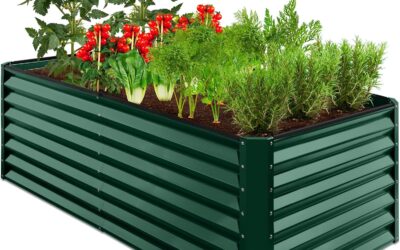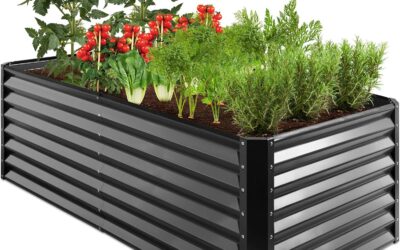


To improve raised-bed drainage, first identify where water should leave and what is stopping it. An elevated planter with a solid base drains through outlets; an open-bottom bed depends on both its growing soil and the ground beneath it. More holes, gravel, or new compost will not solve every problem.
Quick answer: Check drainage openings, recent watering, soil condition, and the bed’s base separately. Make the smallest change that addresses the cause. Do not empty a healthy bed or drill into a structural base before checking the manufacturer’s instructions.
Start with the bed type
In a planter on legs, inspect the specified drain outlets and any fitted liner. A storage shelf, catch tray, or protective mat should not seal the outlets or keep the base standing in water. Plan where drainage water will go so it does not create slippery paths or damage a deck.
In a bottomless bed, water must move through the fill and the existing ground. Compacted subsoil, an impermeable sheet, or a naturally wet site can limit drainage even when the raised-bed mix looks loose. A deeper frame does not remove that restriction.
Distinguish drainage trouble from excess watering
Look at moisture below the surface rather than judging by the top alone. Soil can have a dry crust and still be saturated lower down. Compare conditions before irrigation and after rain, and note whether only one corner stays wet.
Wilting and yellow leaves have several possible causes, so do not diagnose waterlogging from a leaf alone. Record the watering pattern, inspect the bed, and seek local Extension advice if symptoms persist or a soil disease is suspected. Avoid working saturated soil or repeatedly adding water to a plant that is already standing in wet soil.
Choose the next step from the evidence
If an accessible outlet is blocked by debris, clear it using the bed’s maintenance directions. If a liner covers the required drain, correct its installation without compromising the frame. If a saucer retains water, follow the planter’s drainage instructions and protect the supporting surface.
For soil that has settled or compacted, first review foot traffic, repeated digging, and the growing mix. Obtain an appropriate soil report before making nutrient or pH changes. Adding large amounts of sand, fertilizer, or compost without diagnosis can introduce another problem.
Do not use gravel as a universal cure
A gravel layer is not a replacement for a clear drainage outlet or a suitable growing medium. In containers, changing abruptly from a fine mix to coarse material can leave water held above that boundary. In an open-bottom bed, gravel cannot make an already saturated site accept more water.
Choose a location and base arrangement that suit the bed. For a patio or balcony, confirm the filled weight, drainage route, and permitted structural load before installation. Do not excavate near utilities, foundations, or established tree roots to create an improvised drain.
Maintain drainage without replacing all the soil
Check outlets when clearing crops and after debris accumulates. Keep paths from directing runoff into the bed. Adjust irrigation after significant rainfall instead of continuing a fixed schedule regardless of moisture.
When the growing medium settles, assess its condition before topping up. Our raised-bed soil refresh guide separates volume loss, fertility, and physical structure. The liner guide explains why a side liner and an impermeable bottom sheet serve different purposes.
Common questions
Does an open-bottom bed need drilled holes? Not in its open base. Check how water moves into the ground beneath it and follow the frame instructions. Drilling holes in side panels is not a substitute for that assessment.
Should I replace all wet soil? Not automatically. A blocked outlet or excessive watering can be corrected without removing the growing medium. Suspected contamination, persistent disease, or unsuitable fill needs a separate assessment.
Can I place a raised bed on concrete? Only with a design that retains its growing medium and provides a managed drainage route. A bottomless frame alone is not an engineered elevated planter or proof that a balcony can carry the load.
Sources and next steps
For the soil principles behind these checks, see University of Maryland Extension on soil health and drainage. For bed planning, see University of Minnesota Extension on raised beds. Match regional advice to your site, then browse raised-bed and planter guides for equipment choices.