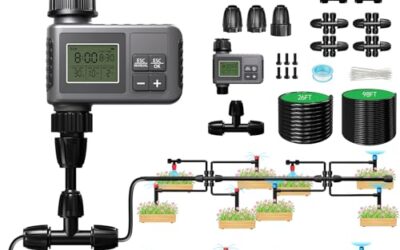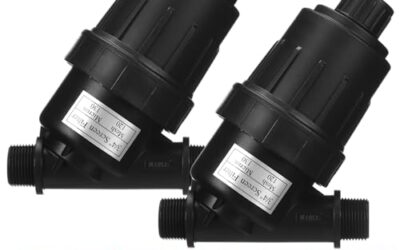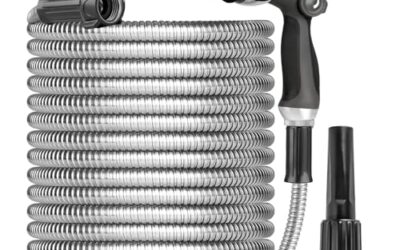


Choosing between drip irrigation vs soaker hose for raised beds usually comes down to how much control you want, how your beds are laid out, and how much setup work you are willing to do. Raised beds dry faster than in-ground beds, so a simple, consistent watering system can save time and reduce the guesswork of hand watering.
For this July 2026 guide, Dove Creek Gardens compared 20 product listings in the Watering & Irrigation category, then screened them for raised-bed relevance. The most useful matches were drip irrigation kits, pressure-compensating emitter tubing, and true soaker or weeper hose products; general-purpose garden hoses were not treated as recommendations for the main raised-bed watering task. If you are also replacing the hose that feeds your system, see our separate garden hose guide.
The key factors are hose or tubing compatibility, pressure needs, coverage, installation style, leak prevention, water efficiency claims supported by the product data, and how easy the system is to maintain or store at the end of the season.
GrowYourGreenParadise 230FT Soaker Hose Drip Irrigation Kit for Root-Zone Watering CARPATHEN 50-Foot Soaker Hose Kit for Raised Beds and Root-Level Watering FlexiHose 100 ft Expandable Garden Hose for Lightweight, Compact Watering Giraffe Tools 25-Foot Hybrid Garden Hose for Easier Yard and Patio Watering Prices and availability can change. We may earn a commission from qualifying purchases.


Pros
- Complete kit format includes main tubing, soaker hose, connectors, end plugs, thread seal tape, and stakes.
- Designed for raised beds, greenhouses, flower borders, potted plants, vertical gardens, and lawn edges.
- Soaker-style watering can place moisture closer to the root zone than overhead watering.
- Several reviewers mention that setup was easy once they understood the layout.
- Flexible tubing supports curved or customized garden arrangements.
Cons
- One reviewer reported weak water delivery farther down a longer run, so gardeners with very long continuous layouts may need to plan branches carefully.
- Instructions may be limited or unclear based on reviewer feedback, which could slow first-time installation.
- Gardeners wanting timer-based automation or adjustable individual emitters may prefer a different drip system, since those features are not listed.
The GrowYourGreenParadise 230FT drip irrigation system is a water-pressure-driven soaker hose kit made for delivering water along garden rows, beds, borders, pots, and greenhouse plantings. Based on the listed specifications, it includes 33 feet of 5/16-inch main tubing and 197 feet of 1/4-inch soaker hose, making it a practical option for homeowners who want to build a custom watering layout rather than hand-water every plant.
The main gardening benefit is its micro-pore weeping design. Instead of using individual emitters that water only at set points, the soaker hose is intended to release water along the hose length and form a more continuous moisture band near the root zone. For vegetable beds, flower borders, and closely spaced plantings, that style can be useful because the hose can follow the planting line and reduce unnecessary spraying over leaves and open soil.
The kit is built around flexible tubing, rigid and flexible tubing connections, and a large set of included fittings. The supplied parts list includes reducing tees, 6-way connectors, multipurpose end plugs, end caps, thread seal tape, a Y-connector, and ground stakes. That gives gardeners room to branch the layout across multiple bed sections, hold lines in place, and close off unused ends, although careful planning before cutting tubing is still important.
In a typical backyard, this kit makes the most sense for raised beds, narrow borders, greenhouse benches, potted plant groupings, vertical gardens, and lawn edges where a bendable 1/4-inch line is easier to route than a full-size hose. It can be placed on the surface, under mulch, or buried according to the product information, which helps keep the setup neater in decorative beds or small-space gardens.
There are a few practical cautions. Some reviewers describe the system as easy to set up, but one reviewer noted that directions were not included and another reported reduced water delivery farther down a long run. For best results, gardeners should avoid assuming one very long continuous line will water evenly in every situation, check the layout during the first few watering sessions, and adjust branches or line lengths as needed.
Overall, this is a useful kit for gardeners who want a flexible soaker-style irrigation layout with many included fittings and a focus on root-zone watering. It is a better match for raised beds, greenhouse crops, borders, and container groupings than for gardeners who need a fully automated timer system, individually adjustable emitters, or guaranteed performance across a long unbranched run.
Best For / Avoid If
Best for buyers prioritizing
- Complete kit format includes main tubing, soaker hose, connectors, end plugs, thread seal tape, and stakes.
- Designed for raised beds, greenhouses, flower borders, potted plants, vertical gardens, and lawn edges.
- Soaker-style watering can place moisture closer to the root zone than overhead watering.
Consider another option if
- One reviewer reported weak water delivery farther down a longer run, so gardeners with very long continuous layouts may need to plan branches carefully.
- Instructions may be limited or unclear based on reviewer feedback, which could slow first-time installation.
- Gardeners wanting timer-based automation or adjustable individual emitters may prefer a different drip system, since those features are not listed.
Pros
- Includes both supply tubing and porous soaker hose for a more complete irrigation layout.
- Useful for several common garden arrangements, including raised beds, shrubs, trees, and flower beds.
- Threaded couplers, end plugs, stakes, and sealing tape are included for installation and positioning.
Cons
- The kit may be less suitable for gardeners who need a highly customized system with different tubing sizes or specialized emitters.
- Gardeners will need to cut and arrange the tubing carefully to match their bed layout and avoid unused sections.
- The listed information does not specify flow rate, recommended operating pressure, or winter-storage instructions.
The CARPATHEN 1/2-inch soaker hose kit is designed for root-level watering in raised beds, flower beds, vegetable gardens, and around trees and shrubs. It combines 50 feet of porous soaker hose with 33 feet of 1/2-inch mainline tubing, making it a practical choice for homeowners and beginner gardeners setting up irrigation from one faucet connection.
Based on the listed features, the soaker hose releases water slowly along its length instead of delivering it from a single outlet. That layout can help distribute water through plant rows and around root zones, while the included mainline serves as the supply path between the faucet and the soaker sections. The product information indicates that the tubing can support watering across up to three raised beds, depending on the garden layout.
The kit includes eight hose coupler sets, two 1/2-inch end plugs, a 3/4-inch splitter with valve, ten hose stakes, and teflon tape. Its secure-lock nut couplers are intended to keep connected sections together under pressure, while the stakes can help hold the hose in place. The listed four-step setup involves cutting the hose, connecting the couplers, joining tubing sections, and turning on the water.
For a backyard garden, the soaker hose can be arranged in rows across raised beds or coiled around tree and shrub root zones. The cut-to-length design may also help gardeners adapt the system as bed shapes change. Compatibility with standard garden timers, as stated in the product information, makes it suitable for gardeners who want scheduled watering rather than relying entirely on manual hose use.
As with any cut-to-fit irrigation setup, careful planning and connection checks are important before regular watering. The supplied information does not list flow rate or recommended pressure, so gardeners with unusual faucet pressure or a larger irrigation area may need to confirm that the system matches their setup. This kit is a good fit for straightforward raised-bed and landscape watering, while gardeners seeking detailed flow specifications or a more advanced emitter-based system may prefer another option.
Best For / Avoid If
Best for buyers prioritizing
- Includes both supply tubing and porous soaker hose for a more complete irrigation layout.
- Useful for several common garden arrangements, including raised beds, shrubs, trees, and flower beds.
- Threaded couplers, end plugs, stakes, and sealing tape are included for installation and positioning.
Consider another option if
- The kit may be less suitable for gardeners who need a highly customized system with different tubing sizes or specialized emitters.
- Gardeners will need to cut and arrange the tubing carefully to match their bed layout and avoid unused sections.
- The listed information does not specify flow rate, recommended operating pressure, or winter-storage instructions.
Pros
- Expandable design offers long reach while storing more compactly after use
- Lightweight construction is easier to handle than many rigid full-size hoses
- Brass 3/4 inch fittings suit common US outdoor spigots
- Reviewers commonly mention that it is easy to move, easy to store, and less prone to kinking
- Outer fabric and latex core are specified for added protection around typical garden obstacles
Cons
- Expandable hoses may require extra care, such as draining after use and avoiding prolonged pressure when not watering
- Some reviewers report leaks or breakage after one or more seasons, so longevity may vary with use and storage conditions
- The listed manufacturer warranty description says no warranty, which may matter to gardeners who want long-term replacement coverage
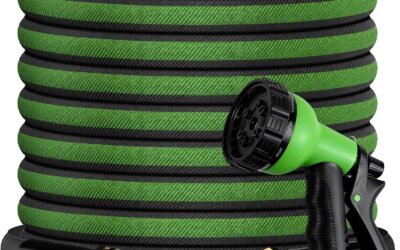
The FlexiHose 100 ft Expandable Garden Hose is a lightweight watering hose intended for everyday garden and yard tasks where reach and easy storage both matter. It is best suited to homeowners, patio gardeners, raised-bed growers, and anyone who finds a traditional 100 ft hose awkward to drag, coil, or store.
The main advantage is its expandable design. The product information indicates that the hose can expand up to three times its original length under standard water pressure, then shorten again when the water is turned off. For routine watering, that means it can reach across a yard or around planters during use without taking up the same amount of space between watering sessions.
Its 3/4 inch solid brass connectors are designed to fit typical outdoor garden taps in the US, and the hose uses a 3750D elastic outer fabric with a four-layer latex inner construction. Those details are useful for gardeners working around beds, corners, containers, and thorny plantings, although any fabric-covered expandable hose should still be kept away from sharp abrasion when possible.
In a backyard setting, this hose could be useful for watering vegetable beds, flower borders, shrubs near the house, or containers on a patio. Its compact retraction is also a practical benefit for small storage areas, hose pots, balconies with an outdoor tap, or gardeners who prefer not to wrestle with a stiff coil after each use.
There are a few care points to keep in mind. Expandable hoses continue to release water briefly as they contract, so it is sensible to turn off the spigot and let the hose drain before putting it away. Reviewers commonly praise the light handling and kink resistance, but some also report leaks or breakage over time, so careful storage out of harsh sun, avoiding abrasion, and not leaving it under pressure may help preserve it.
Overall, this is a convenient choice for gardeners who value light handling, long reach, and compact storage more than the heavy-duty feel of a traditional rubber hose. Gardeners who need a hose for constant pressure, rough dragging over hard surfaces, or maximum long-term durability may prefer a heavier conventional garden hose.
Best For / Avoid If
Best for buyers prioritizing
- Expandable design offers long reach while storing more compactly after use
- Lightweight construction is easier to handle than many rigid full-size hoses
- Brass 3/4 inch fittings suit common US outdoor spigots
Consider another option if
- Expandable hoses may require extra care, such as draining after use and avoiding prolonged pressure when not watering
- Some reviewers report leaks or breakage after one or more seasons, so longevity may vary with use and storage conditions
- The listed manufacturer warranty description says no warranty, which may matter to gardeners who want long-term replacement coverage
Pros
- Lighter than traditional rubber hose construction according to the product information
- Swivel handle can help limit twisting during connection and use
- Flexible design supports easier coiling and uncoiling in varied temperatures
- Nickel fittings are described as leak resistant and crush resistant
Cons
- A 25-foot length may be less suitable for larger yards or watering points farther from the faucet.
- Users need to smooth the hose before use and avoid leaving it tangled to minimize kinking.
- The male-to-female connector layout should be checked before purchase to ensure it matches the intended faucet, nozzle, or sprinkler setup.
The Giraffe Tools Garden Hose is a 25-foot, 5/8-inch hose designed for common residential watering tasks. Its manageable length makes it a reasonable choice for beginners, homeowners with compact yards, and gardeners watering nearby beds, containers, patios, or small lawn areas.
Based on the listed features, the rubber and polymer hybrid construction is intended to provide a lighter alternative to traditional rubber hose while retaining abrasion resistance and flexibility. The product information also lists a 150 PSI working pressure for residential water use, which fits the needs of routine home watering.
The movable swivel handle allows the hose to rotate more freely, helping reduce twisting while connecting or using it. The handle can also help hold the fitting in place during connection. Nickel fittings are described as leak resistant and crush resistant, and the hose uses male-to-female connectors, so the connection direction should be confirmed before purchase.
In a backyard or patio setting, 25 feet can cover a nearby raised bed, container group, front entry, or limited lawn section without leaving a large length to coil and store. The flexible design may also make seasonal coiling easier, while the listed 4.4-pound weight provides a useful indication that this is not an ultra-lightweight expandable hose.
The instructions recommend smoothing the hose before use and avoiding operation while it is tangled. If a kink develops, rotating the swivel handle is suggested as a way to help recover the hose. Gardeners with larger properties or distant watering areas may prefer a longer hose, while this model is better suited to compact, nearby watering routes where a 25-foot reach is sufficient.
Best For / Avoid If
Best for buyers prioritizing
- Lighter than traditional rubber hose construction according to the product information
- Swivel handle can help limit twisting during connection and use
- Flexible design supports easier coiling and uncoiling in varied temperatures
Consider another option if
- A 25-foot length may be less suitable for larger yards or watering points farther from the faucet.
- Users need to smooth the hose before use and avoid leaving it tangled to minimize kinking.
- The male-to-female connector layout should be checked before purchase to ensure it matches the intended faucet, nozzle, or sprinkler setup.

Pros
- Comes as a complete raised bed kit with regulator, adapter, emitter tubing, distribution tubing, fittings, stakes, and manual
- Low-volume drip watering targets the root zone and is listed by the manufacturer for up to 80 percent water savings
- 70 built-in emitters spaced 6 inches apart simplify layout for closely planted garden beds
- Compatible with an optional Rain Bird hose-end timer for gardeners who want scheduled watering
- Professional-grade resin components are described as built to last season after season
Cons
- The product information specifically warns not to extend the kit with extra 1/4-inch tubing, so larger gardens may need additional kits
- A timer is not included, so fully automatic watering requires a separate purchase
- The kit is sized around raised bed use and may be less suitable for long runs, large in-ground gardens, or complex multi-zone irrigation layouts
The Rain Bird GARDENKIT is a drip irrigation kit made for raised bed gardens, especially beds up to 4 x 8 feet. It is aimed at homeowners, beginner gardeners, and small-space growers who want a ready-to-assemble system for watering vegetables, herbs, flowers, or stock tank gardens from an outdoor faucet.
The main benefit is targeted, low-volume watering near the root zone. Based on the listed product information, the brown emitter tubing includes 70 built-in emitters spaced every 6 inches, and the pressure-compensating design is intended to provide even watering from end to end of the tubing run. This can be helpful in raised beds where consistent moisture matters and overhead sprinkling may waste water outside the planting area.
The kit includes a 3/4-inch faucet adapter, 25 psi pressure regulator with filter washer, 35 feet of 1/4-inch emitter tubing, 25 feet of 1/4-inch distribution tubing, couplers, elbows, end caps or goof plugs, tubing stakes, and an illustrated manual. Installation is meant to be straightforward: connect at the faucet, run the black distribution tubing to the bed, then place the brown emitter tubing around the plants. The manufacturer notes that warming the tubing in direct sun for about an hour can make it easier to unroll and work with.
For practical garden use, this kit makes sense for a single raised bed, a compact kitchen garden, or one or more small stock tank gardens within the listed tubing limits. The tubing may be staked on top of the soil for easy seasonal adjustment or buried for a neater appearance. Gardeners who travel, forget to hand-water, or want more consistent bed moisture can also add the Rain Bird 1ZEHTMR hose-end timer, which is sold separately.
The most important limitation is clearly stated in the product information: do not extend this kit by adding more 1/4-inch tubing, because reduced or inconsistent flow can result. Gardeners with larger layouts, long distances from the faucet, or multiple branches from a Y-splitter should plan on additional kits or a different irrigation design. As with any drip setup, it is also wise to check connections after installation, watch for displaced tubing, and drain or store components appropriately when freezing conditions are a concern.
Overall, the Rain Bird GARDENKIT is a practical choice for raised bed growers who want an organized drip system with the key faucet connection, pressure regulation, tubing, fittings, and stakes included. Gardeners building a large multi-bed irrigation network may prefer a more expandable system, but for a compact raised bed or stock tank garden, the listed components are well matched to the job.
Best For / Avoid If
Best for buyers prioritizing
- Comes as a complete raised bed kit with regulator, adapter, emitter tubing, distribution tubing, fittings, stakes, and manual
- Low-volume drip watering targets the root zone and is listed by the manufacturer for up to 80 percent water savings
- 70 built-in emitters spaced 6 inches apart simplify layout for closely planted garden beds
Consider another option if
- The product information specifically warns not to extend the kit with extra 1/4-inch tubing, so larger gardens may need additional kits
- A timer is not included, so fully automatic watering requires a separate purchase
- The kit is sized around raised bed use and may be less suitable for long runs, large in-ground gardens, or complex multi-zone irrigation layouts

Pros
- Provides consistent, regularly spaced watering points along a planting row.
- Compact 1/4-inch tubing is practical for directing water close to individual plants.
- Pressure-compensating design may help reduce variation in flow across the tubing.
- Compatible with most 1/4-inch fittings and 1/2-inch drip tubing when the correct barbed fittings are used.
Cons
- Installation requires compatible 1/4-inch barbed fittings and a connection to 1/2-inch drip tubing.
- The fixed 0.8 gallon-per-hour emitter rate may be less suitable for plants with substantially different watering needs.
- Gardeners must keep system pressure within the listed 8.5 to 60 psi operating range.
The Rain Bird ET256-50S is 1/4-inch drip emitter tubing intended for delivering water along garden planting areas. Its 50-foot brown roll is a practical fit for homeowners, raised-bed gardeners, and small-space growers who want tubing with built-in emitters rather than adding separate emitters at every plant.
Based on the listed specifications, the tubing has pressure-compensating emitters that release 0.8 gallon per hour at 6-inch intervals. This layout is designed to provide regular watering points along the line, while the pressure-compensating feature is intended to help maintain more even flow from the beginning to the end of the tubing.
Each emitter has two outlet holes positioned 180 degrees apart, allowing water to exit from both sides of the tubing. The 1/4-inch tubing measures 0.25 inches outside diameter, 0.17 inches inside diameter, and 0.04 inches in wall thickness. Installation requires 1/4-inch barbed fittings and a connection to 1/2-inch drip tubing, with the product information stating compatibility with most 1/4-inch fittings.
This tubing could be useful when laying a watering line through rows in a raised bed, around closely spaced plants, or through a compact patio growing area. Its built-in 6-inch emitter spacing may work well where plants are arranged in a relatively regular pattern, although gardeners should plan the tubing path around the actual plant locations.
The system should be operated within the listed 8.5 to 60 psi pressure range, and gardeners will need to provide compatible connection fittings that are not described as included. The fixed emitter output also means it may be less suitable for mixed plantings with widely different watering requirements. Overall, it is a practical option for gardeners seeking evenly spaced drip outlets in a simple 1/4-inch layout.
Best For / Avoid If
Best for buyers prioritizing
- Provides consistent, regularly spaced watering points along a planting row.
- Compact 1/4-inch tubing is practical for directing water close to individual plants.
- Pressure-compensating design may help reduce variation in flow across the tubing.
Consider another option if
- Installation requires compatible 1/4-inch barbed fittings and a connection to 1/2-inch drip tubing.
- The fixed 0.8 gallon-per-hour emitter rate may be less suitable for plants with substantially different watering needs.
- Gardeners must keep system pressure within the listed 8.5 to 60 psi operating range.
Pros
- Includes the main components needed to build or repair a small drip irrigation system.
- Timer-based scheduling can reduce routine hand watering for compatible flower beds and ground cover.
- Adjustable sprayers and feeder lines allow the layout to be adapted to different bed shapes.
Cons
- The listed coverage is limited to 200 square feet, so larger gardens may need a different or expanded setup.
- Installation still requires planning the tubing route and securely inserting barbed fittings and emitters.
- The supplied information does not specify the timer's scheduling range or available programming intervals.
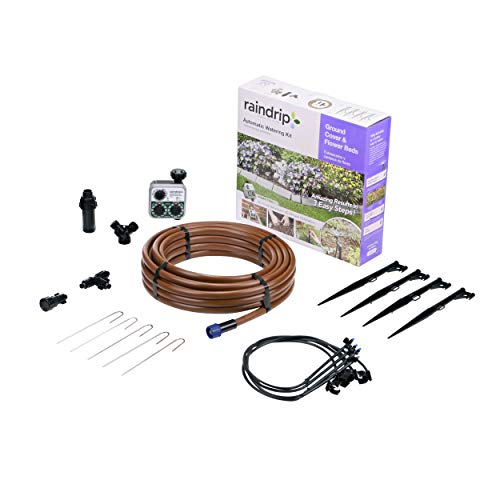
The Raindrip SDGCBHP is an automatic drip irrigation kit for watering ground cover and flower beds. It is intended for planting areas up to 200 square feet and should suit homeowners and beginner gardeners who want scheduled watering without assembling every component separately.
The kit combines a timer with a pressure regulator/filter, 50 feet of 1/2-inch poly tubing, four feeder lines, a Y connector, and 13 GPH half-circle adjustable sprayers. This combination provides a practical starting point for distributing water across a modest bed and gives gardeners more control over where the spray reaches.
Installation follows three listed steps: connect the timer and tubing to the water source, lay out the tubing, and attach the sprayers with the fittings. Threaded ends screw together, while barbed fittings and emitters push into openings in the tubing. The product dimensions are listed as 4 x 8.75 x 13.25 inches, with a weight of 2.61 pounds, although the supplied information does not clarify whether these measurements refer to the packaged kit or the assembled system.
In a backyard flower bed, the tubing can be routed along planting areas and the half-circle sprayers positioned where coverage is needed. The system may also work for ground cover sections or other compact layouts within the stated coverage area, while the feeder lines and Y connector can help divide the arrangement into separate sections.
Gardeners should plan the tubing route before making connections and check fittings during setup for a secure fit. Because the listed coverage is limited to 200 square feet and the timer's exact programming options are not provided, larger gardens or users needing highly specific scheduling may prefer a more expansive or more fully documented system. Overall, this kit is a reasonable fit for small to medium flower beds where a customizable, timer-based watering arrangement is the main goal.
Best For / Avoid If
Best for buyers prioritizing
- Includes the main components needed to build or repair a small drip irrigation system.
- Timer-based scheduling can reduce routine hand watering for compatible flower beds and ground cover.
- Adjustable sprayers and feeder lines allow the layout to be adapted to different bed shapes.
Consider another option if
- The listed coverage is limited to 200 square feet, so larger gardens may need a different or expanded setup.
- Installation still requires planning the tubing route and securely inserting barbed fittings and emitters.
- The supplied information does not specify the timer's scheduling range or available programming intervals.

Pros
- Provides continuous line watering for beds and rows rather than isolated watering points.
- Flexible tubing and included fittings make it practical to configure around different garden layouts.
- Supports surface or subsurface installation and can be reused season after season according to the listed features.
- Useful for multiple garden settings, including raised beds, containers, greenhouses, and flower beds.
Cons
- The product information recommends using 15 to 25 feet per soaker-hose strand because seepage may decrease at the far end when water pressure is insufficient.
- A timer is not included, so automatic scheduling requires a separate purchase.
- Gardeners should verify the listed 100-foot soaker hose length and 110-foot total size when planning a layout.
The MIXC Drip Irrigation System is a configurable watering kit built around 1/4-inch micro-pore soaker hose and 1/2-inch main tubing. It is intended for delivering water along plant rows, bed edges, containers, and other planted areas, making it a practical option for homeowners and beginner gardeners who want more targeted watering than a sprinkler provides.
The soaker hose releases water through tiny pores along its length, creating a continuous watering band near plant roots. The product information indicates that this approach can help limit evaporation and runoff compared with traditional sprinkler watering, while providing more even coverage than a system that depends only on individual emitters.
The kit includes 10 feet of 1/2-inch supply tubing, 100 feet of 1/4-inch soaker hose, a four-way barbed tee, two one-way barbed tees, a faucet connector, and multiple end plugs. The tubing can be cut and arranged into branches without special tools. The specifications list the overall size as 110 feet, so gardeners should compare that figure with the separate main-tubing and soaker-hose lengths when planning an installation.
For backyard use, the flexible hose can follow vegetable rows, flower beds, raised-bed corners, patio containers, greenhouse planting areas, or lawn edges. It may be laid on the surface beneath mulch or buried for subsurface watering. The included main tubing and fittings allow different sections to be connected, while a separate timer can provide scheduled watering.
Water pressure is an important limitation. The product information recommends keeping individual soaker-hose strands to about 15 to 25 feet because seepage may be reduced at the remote end when pressure is insufficient. Check connections during setup, use the included end plugs as needed, and store or protect the tubing appropriately between seasons. Overall, this kit is a good fit for gardeners who want customizable, low-complexity line watering, while those needing long uninterrupted runs or built-in scheduling may prefer a different system.
Best For / Avoid If
Best for buyers prioritizing
- Provides continuous line watering for beds and rows rather than isolated watering points.
- Flexible tubing and included fittings make it practical to configure around different garden layouts.
- Supports surface or subsurface installation and can be reused season after season according to the listed features.
Consider another option if
- The product information recommends using 15 to 25 feet per soaker-hose strand because seepage may decrease at the far end when water pressure is insufficient.
- A timer is not included, so automatic scheduling requires a separate purchase.
- Gardeners should verify the listed 100-foot soaker hose length and 110-foot total size when planning a layout.

Pros
- Configurable 50-foot and 100-foot layouts can accommodate different garden sizes.
- The kit includes many connection and anchoring accessories for customized installation.
- Slow, even watering is designed to place moisture closer to plant roots while limiting surface evaporation.
Cons
- Installation requires planning and assembly of the fittings, valves, plugs, and hose sections.
- The kit does not list an automatic timer, so scheduled watering would require a separate control device.
- Gardeners needing highly precise flow measurements or a permanently buried system may prefer a more specialized irrigation setup.
The Kalolary 100FT Soaker Hose Kit is a garden irrigation system built around two 50-foot sections of soaker hose. It is intended for watering flower beds, vegetable patches, herb gardens, lawns, and small farm plots, making it suitable for homeowners and gardeners who want a root-level alternative to moving a sprinkler or hand-watering each area.
The hose uses small pores to release water slowly and evenly along its length. The product information indicates that this design can reduce evaporation compared with traditional watering and help deliver moisture closer to plant roots. Adjustable pressure and evenly spaced pores are listed to support more consistent watering, but actual results will depend on water pressure, layout, soil, and hose placement.
The two hose sections can be used independently or combined into a 100-foot arrangement. The included faucet connector, shut-off valves, tees, couplers, end caps, elbows, clamps, spare end plug, stakes, zip ties, and thread-sealing tape provide parts for routing the tubing around curves and securing it in place. The listed hose size is 1/2 inch, while the specification lists a length of 1200 inches, equivalent to 100 feet.
This setup could work well along several raised beds, around rows of vegetables, through an irregular flower border, or across a small garden area where a flexible layout is useful. The hose can also be arranged in separate sections when different beds need individual routing. It works with standard water pressure according to the supplied information and does not require an additional pump.
Users should check connections for leaks, keep the tubing positioned where it can water the intended root zone, and adjust pressure to avoid uneven delivery or overwatering. Although the hose is listed as weatherproof and rated for a range of temperatures and pressure, seasonal storage and protection from unnecessary damage can still help maintain the system. No automatic timer is included in the listed package.
This kit is a reasonable choice for gardeners who want flexible soaker-hose coverage with basic section control and included installation accessories. Those who need automated scheduling, measured flow rates, or a more permanent underground irrigation design should consider a system with those features.
Best For / Avoid If
Best for buyers prioritizing
- Configurable 50-foot and 100-foot layouts can accommodate different garden sizes.
- The kit includes many connection and anchoring accessories for customized installation.
- Slow, even watering is designed to place moisture closer to plant roots while limiting surface evaporation.
Consider another option if
- Installation requires planning and assembly of the fittings, valves, plugs, and hose sections.
- The kit does not list an automatic timer, so scheduled watering would require a separate control device.
- Gardeners needing highly precise flow measurements or a permanently buried system may prefer a more specialized irrigation setup.

Pros
- Long single-run coverage makes it efficient to water an entire bed or border in one setup.
- Uniform low-flow output encourages deep soaking with less surface runoff than quick hand watering.
- Included hooks and plugs simplify installation and let you customize the layout without buying extra accessories.
- Flexible quarter-inch tubing is easy to route around trees, corners, and dense plantings.
Cons
- The listing does not detail connection fittings, so you may need to confirm compatibility with your spigot or supply line before setup.
- Quarter-inch lines can lose flow over very long distances, so gardeners watering a large property may prefer a half-inch mainline system.
- Like most soaker hoses, it could require periodic flushing and draining before winter to stay in good working order.
A soaker hose is one of the simplest ways to keep a garden watered consistently, and this 100-foot quarter-inch version is designed for exactly that job. Based on the listed specifications, it is intended for irrigating vegetable beds, trees, and flowers by releasing water slowly and evenly along its length. That makes it a practical match for homeowners with raised beds, in-ground rows, or borders, including beginners who want dependable results without assembling a complex drip system on day one.
The central benefit is steady root-zone watering. Because the hose seeps gradually, moisture has time to soak into the soil instead of running off or evaporating quickly, and the product information indicates this slow, uniform output is meant to help save water. Consistent soil moisture matters in a vegetable patch, where swings between soggy and bone-dry conditions can stress plants, so a line you can set and let run gently fits the way most home gardeners actually work.
At a quarter-inch diameter, the line is slim and easy to position close to plants, thread through a raised bed, or loop around the base of young trees. The accessory set makes setup more complete: five double hooks for anchoring the hose along rows or bed edges, and ten end plugs for capping the line when you branch it into multiple runs. One caution is that the listing does not specify which connection fittings are included, so it is wise to verify what your spigot or supply line requires before you begin.
In everyday use, a hose like this suits many backyard situations. Lay it along a row of tomatoes or peppers in a raised bed, snake it through a flower border where overhead spraying would soak the blooms, or ring it around trees so water reaches the roots slowly. Its length and flexibility make it workable in small urban gardens as well as larger plots, and gardeners who automate often pair soaker lines with a separate faucet timer, though one is not included here.
There are realistic limitations to keep in mind. Long quarter-inch runs may deliver noticeably less water at the far end than near the spigot, so very large yards could be better served by a half-inch mainline with branch lines. Soaker hoses also benefit from routine care: flush the line occasionally to clear sediment, and drain it before freezing weather so it lasts multiple seasons. Balancing those points, the feature set suggests a straightforward, water-conscious way to irrigate typical home beds.
This hose is a sensible pick for beginner and intermediate gardeners who want low-effort, consistent watering for vegetable beds, flowers, and young trees, and who will appreciate the included hooks and plugs for tidy installation. Gardeners who prefer precise emitter-by-emitter control or who need to cover very long distances may want to compare a full drip irrigation kit instead. For most small to mid-sized home gardens, it offers a simple path to steadier root-zone moisture.
Best For / Avoid If
Best for buyers prioritizing
- Long single-run coverage makes it efficient to water an entire bed or border in one setup.
- Uniform low-flow output encourages deep soaking with less surface runoff than quick hand watering.
- Included hooks and plugs simplify installation and let you customize the layout without buying extra accessories.
Consider another option if
- The listing does not detail connection fittings, so you may need to confirm compatibility with your spigot or supply line before setup.
- Quarter-inch lines can lose flow over very long distances, so gardeners watering a large property may prefer a half-inch mainline system.
- Like most soaker hoses, it could require periodic flushing and draining before winter to stay in good working order.
Pros
- Includes both a 75-foot soaker hose and a 50-foot solid garden hose for more flexible placement.
- Supports targeted watering in vegetable plots, flower beds, raised beds, and landscaping.
- Can be customized by cutting sections and using couplers as needed.
- Compact folding storage may be useful when the watering system is removed between seasons.
Cons
- Gardeners may need to spend time arranging and securing the hose so the porous section stays near the intended plants.
- The supplied information does not specify flow rate, pressure requirements, or an automatic timer.
- A different irrigation setup may be preferable for gardeners who need precisely measured delivery to individual plants.
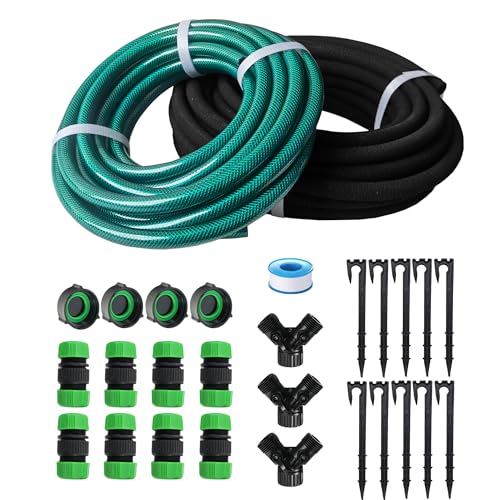
The LARNORJE watering system is a customizable garden hose setup made for delivering water to planting areas with less manual spraying. It includes a 75-foot soaker hose with porous walls and a 50-foot solid garden hose, making it suitable for homeowners watering garden beds, raised beds, flower borders, or sections of landscaping.
The soaker section is designed to let water seep gradually into the surrounding soil, while the solid hose carries water between beds without releasing water along its length. Based on the listed features, this arrangement can help focus moisture near planted areas and reduce watering of paths or unused spaces compared with broad sprinkling.
Installation involves unwinding both hoses, leaving them in warm sun for about an hour to loosen the coil, and then positioning the system from the water supply through the desired beds. The soaker hose can be cut into different lengths and reconnected with couplers as needed. The product information recommends spacing lines 12 to 18 inches apart in sandy soil and 18 to 24 inches apart in loam or clay soil.
For backyard use, the hose can be snaked through vegetable rows, flower beds, raised beds, and landscaping. The 50-foot solid section is useful when the water source is away from the planting area, while the longer soaker section can serve multiple rows or a broader bed layout. Its flexible flat design may also help with weaving around established plants.
Gardeners should inspect connections and hose placement during use, especially after cutting and reconfiguring sections. The supplied information does not provide a flow rate, pressure requirement, or timer, so watering duration will need to be adjusted for the soil and plants. This system is a practical choice for gardeners seeking focused, adaptable bed watering, while those needing individually metered irrigation may prefer a more precise drip system.
Best For / Avoid If
Best for buyers prioritizing
- Includes both a 75-foot soaker hose and a 50-foot solid garden hose for more flexible placement.
- Supports targeted watering in vegetable plots, flower beds, raised beds, and landscaping.
- Can be customized by cutting sections and using couplers as needed.
Consider another option if
- Gardeners may need to spend time arranging and securing the hose so the porous section stays near the intended plants.
- The supplied information does not specify flow rate, pressure requirements, or an automatic timer.
- A different irrigation setup may be preferable for gardeners who need precisely measured delivery to individual plants.
Pros
- Provides slow, distributed watering rather than concentrating flow at one outlet.
- Bends easily to follow straight or curved planting areas.
- Can be trimmed for a cleaner fit around individual garden sections.
- Useful for short, flat runs in vegetable gardens, planters, and borders.
Cons
- Because it is non-pressure compensating, it may be less suitable for long runs or areas with uneven pressure.
- Installation requires a compatible 1/4-inch micro fitting and an appropriate supply line.
- The tubing is intended for short runs on flat surfaces, so gardeners with larger or sloped areas may need a different irrigation layout.
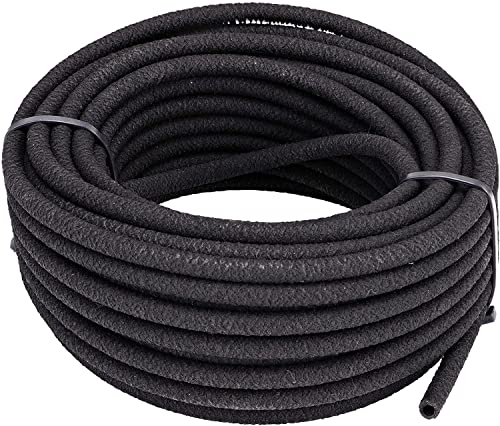
The Raindrip 015005T is 1/4-inch soaker tubing designed to form part of a drip irrigation system. It slowly releases water through the entire line, making it suited to vegetable gardens, planters, borders, and small planting areas where gentle root-zone watering is useful.
Its porous, non-pressure compensating design allows water to seep out along the tubing instead of flowing from a single end point. This feature set suggests a practical way to keep soil moist around closely spaced plants, especially on short runs installed across flat ground.
The tubing has a 0.250-inch outside diameter and a 0.170-inch inside diameter. It connects to 1/2-inch, 5/8-inch, or 0.710-inch supply lines using a compatible 1/4-inch micro fitting, such as a barbed connector or Clamp N Pierce Connector. It is flexible enough to follow curved beds as well as straight rows and can be cut to length.
For backyard use, the 50-foot coil can serve a small vegetable bed, a series of planters, or a border with multiple short sections. Its narrow format is particularly appropriate when a main supply line needs smaller branch tubing routed close to individual plants.
The tubing is non-pressure compensating, so it may be less suitable for long runs, sloped areas, or layouts where consistent output across changing pressure is important. Periodically inspect it for leaks or damage, and follow the listed cold-climate guidance by leaving it in place or covering it with soil or mulch after excess water drains away.
This is a sensible choice for beginners and homeowners assembling a compact drip system on relatively flat ground. Gardeners needing irrigation for larger areas, substantial elevation changes, or more controlled pressure may want to consider a different tubing and layout option.
Best For / Avoid If
Best for buyers prioritizing
- Provides slow, distributed watering rather than concentrating flow at one outlet.
- Bends easily to follow straight or curved planting areas.
- Can be trimmed for a cleaner fit around individual garden sections.
Consider another option if
- Because it is non-pressure compensating, it may be less suitable for long runs or areas with uneven pressure.
- Installation requires a compatible 1/4-inch micro fitting and an appropriate supply line.
- The tubing is intended for short runs on flat surfaces, so gardeners with larger or sloped areas may need a different irrigation layout.

Pros
- Modular two-hose layout gives more placement flexibility than a single fixed-length hose.
- Includes stakes and storage straps, so the kit is more complete for garden-bed installation.
- Flat, kink-resistant design is intended to sit neatly under mulch or along planting rows.
- Works with standard faucets, timers, and drip irrigation setups according to the product information.
Cons
- Best performance may require a pressure regulator, with the listing recommending 8 to 10 PSI for more even distribution.
- Gardeners should keep pressure below the listed care guidance and drain the hose before cold-condition storage.
- A flat soaker hose may be less suitable for lawns or areas where overhead watering is preferred.
The BetterBotanicals 100 ft Flat Soaker Hose Kit is a soil-level watering setup for garden beds, raised beds, trees, and landscaping. It includes two 50 ft connectable hoses, so homeowners can run separate watering lines in different areas or join them for a longer layout.
The main benefit is slow, consistent moisture along the hose, which is useful for watering planting rows and mulched beds without relying on overhead spray. The product information recommends using a pressure regulator at 8 to 10 PSI for more even distribution, which is an important detail for gardeners who want steadier watering from end to end.
The flat black hose is listed as vinyl with a dual-layer construction, including a flexible inner tube and protective outer fabric. Its flat profile is intended to reduce coiling and twisting, while the included 16 steel stakes help secure the hose around curves, bed edges, and long runs.
For small yards and raised-bed gardens, the two-piece layout is especially useful because one 50 ft hose can serve a vegetable bed while the other handles shrubs, trees, or a second planting area. The hoses work with standard faucets, timers, and drip irrigation setups according to the listing, and the included end caps support basic layout changes.
As with most soaker hose systems, setup details matter. Proper washer placement can help prevent connection leaks, and the listing advises keeping pressure below 25 PSI, covering the hose with mulch, and storing it drained in colder conditions to extend service life.
This kit is a good match for gardeners who want a simple, flexible alternative to hand watering beds and landscape plantings. Gardeners who need broad lawn coverage, high-pressure watering, or a fully customized drip system with emitters may prefer a different irrigation option.
Best For / Avoid If
Best for buyers prioritizing
- Modular two-hose layout gives more placement flexibility than a single fixed-length hose.
- Includes stakes and storage straps, so the kit is more complete for garden-bed installation.
- Flat, kink-resistant design is intended to sit neatly under mulch or along planting rows.
Consider another option if
- Best performance may require a pressure regulator, with the listing recommending 8 to 10 PSI for more even distribution.
- Gardeners should keep pressure below the listed care guidance and drain the hose before cold-condition storage.
- A flat soaker hose may be less suitable for lawns or areas where overhead watering is preferred.

Pros
- Targeted root watering can help limit runoff and unnecessary wetting between plants.
- Flexible tubing and multiple barbed connectors make branching and routing easier.
- Compact 1/4-inch format is practical for raised beds, planters, and other space-conscious layouts.
- Supplied flow information gives gardeners a useful starting point for planning irrigation.
Cons
- The listed flow rate is modest, so gardeners with larger areas may need multiple lines or a different irrigation format.
- Because the tubing is 1/4 inch, it may require careful routing and secure connections to avoid interruptions in a customized layout.
- The supplied information does not specify winter storage guidance, filtration needs, or maximum recommended run length.
The Pawfly 50-foot soaker hose is 1/4-inch porous drip irrigation tubing for delivering water near plant roots. It is aimed at homeowners and beginner gardeners who want to build a simple watering line for raised beds, flower beds, vegetable gardens, or planters without installing a larger hose system.
Water is designed to seep gently through the tubing, keeping the surrounding root zone more consistently moist while helping reduce runoff and nutrient loss. The product information lists a flow of 0.75 gallons per hour for each 15 feet of tubing at 25 PSI, which gives gardeners a measurable reference for planning a low-flow watering layout.
The black tubing measures 50 feet by 0.25 inches and is described as flexible rubber and polyethylene. It can be laid directly on soil, attached to plant supports or trellises for elevated irrigation, or buried underground. The hose can be cut to desired lengths and pushed onto compatible 1/4-inch drip irrigation fittings without tools.
The included faucet connector, five T-connectors, five couplings, five elbows, and five end caps support several basic configurations. In a raised bed, a gardener could use the tubing to route water along plant rows, while a patio grower could cut shorter sections for containers or compact planters.
The 1/4-inch format and listed flow rate may be less suitable for large garden areas that need higher volume or long, complex runs. Connections should be seated securely, and gardeners should plan the layout before cutting the tubing. Overall, this is a practical option for targeted, low-flow watering in small to medium garden spaces when its flow and fitting size match the irrigation setup.
Best For / Avoid If
Best for buyers prioritizing
- Targeted root watering can help limit runoff and unnecessary wetting between plants.
- Flexible tubing and multiple barbed connectors make branching and routing easier.
- Compact 1/4-inch format is practical for raised beds, planters, and other space-conscious layouts.
Consider another option if
- The listed flow rate is modest, so gardeners with larger areas may need multiple lines or a different irrigation format.
- Because the tubing is 1/4 inch, it may require careful routing and secure connections to avoid interruptions in a customized layout.
- The supplied information does not specify winter storage guidance, filtration needs, or maximum recommended run length.

Pros
- Lightweight 12.8-ounce hose is easy to move, place, and store.
- Designed for efficient deep watering in garden beds and other tight spaces.
- Flexible flat profile can be routed around plants and along bed edges.
- Listed as suitable for above-ground or below-ground watering.
- Reviewers commonly mention that it is easy to set up and useful for small gardens or flower beds.
Cons
- At 25 feet, it may be too short for larger beds unless linked with additional hoses.
- Some reviewers report durability concerns such as leaks, splitting, or sun wear over time.
- Gardeners who need precise emitter spacing or zoned irrigation control may prefer a more configurable drip system.
The Gilmour 25-foot flat soaker hose is built for root-zone watering in garden beds, vegetable patches, flower borders, orchards, lawns, and foundation plantings. Instead of spraying water into the air, the hose is designed to weep moisture through its fabric jacket so water can soak into the soil close to where plants use it. Based on the listed specifications, it is especially well suited to homeowners and beginner gardeners who want a simple watering aid without setting up a full drip-irrigation kit.
The main benefit is targeted, low-profile watering. The product information states that water seeps out of all sides of the fabric cover, which can help reduce overspray onto paths, foliage, or unused areas compared with a sprinkler. The listing also describes it as clog resistant and water saving, and notes that it is intended for efficient deep watering in beds and other tight spaces. For vegetables, herbs, roses, shrubs, or densely planted borders, that style of slow soaking can be easier to manage than repeated hand watering.
This hose measures 25 feet long and is listed at about 0.62 inches wide, with a 12.8-ounce item weight. The flat design makes it easier to roll up for storage than many round hoses, and the flexible shape helps it snake through planted areas. The hose is made of vinyl, with the product description specifying 100% recycled vinyl and a fabric cover. The listing also says it can be placed above or below ground, and that it can be linked with other hoses for a longer DIY watering layout.
In a small backyard garden, this hose could be laid along a row of tomatoes, tucked through a flower bed, or looped around shrubs where sprinkler spray would be wasteful. In raised beds or narrow side-yard plantings, the 25-foot length is manageable and less cumbersome than a long conventional garden hose. Reviewers commonly mention easy setup and good maneuverability, though those comments should be read as user feedback rather than guaranteed performance for every yard or water-pressure setup.
The main limitations are length and long-term durability expectations. A single 25-foot hose may not cover a large vegetable garden, and gardeners with multiple beds will likely need additional hose sections or a separate irrigation plan. Some reviewers report leaking, splitting, seam problems, or sun-related wear, while others report getting multiple seasons with proper care. To protect the hose, it is sensible to avoid excessive water pressure, drain it after use when practical, and store it before freezing weather or prolonged off-season exposure.
Overall, this Gilmour flat soaker hose is a practical choice for gardeners who want an inexpensive, compact, and easy-to-route watering option for shorter beds and tight spaces. It is best for simple root-zone soaking rather than highly customized irrigation. Gardeners managing large layouts, high-pressure systems, or permanent multi-zone watering may want to compare it with a more robust drip system or heavier-duty soaker hose before deciding.

Pros
- Flexible configuration for different bed lengths and garden shapes
- Targeted watering helps direct moisture toward plant roots
- Compatible with automated watering through a standard hose timer
- Suitable for surface, mulched, or shallow-buried installation
Cons
- Gardeners with larger areas may need multiple sections or additional hose lengths.
- Push-on connections require careful assembly to create the intended leak-resistant layout.
- A soaker hose may be less suitable when plants need overhead watering or highly adjustable spray patterns.
The Gilmour Round Soaker Hose is a 50-foot, 3/8-inch garden hose intended for slow, targeted watering in raised beds, vegetable gardens, flower beds, and foundation plantings. It is best suited to homeowners and gardeners who want to place water near plant roots instead of relying on broad overhead coverage.
Based on the listed feature set, the hose is designed to distribute water consistently along its length. Directing water toward the root zone can help limit runoff, evaporation, and overspray compared with overhead sprinklers, with the product information stating savings of up to 80 percent more water in suitable conditions.
Heavy-duty push-on plastic couplings let gardeners cut or shorten the hose, add sections, and connect multiple pieces for a custom-fit layout. The hose can also be paired with a standard garden hose timer, which supports scheduled watering without requiring manual operation each time.
For backyard use, the 50-foot length can be arranged around raised beds, along vegetable rows, through flower borders, or near foundation plantings. It may be laid on the surface for quick setup, covered with mulch for a tidier appearance, or buried shallowly for a more permanent installation.
The listed specifications do not provide flow-rate details, so watering performance can vary with the setup and garden layout. Check couplings and connections during installation, and confirm that the hose is positioned where water is needed before covering or burying it. Its design is less appropriate for gardeners who need overhead spray, adjustable nozzle patterns, or broad lawn watering.
This hose is a sensible option for small to medium garden beds and custom root-zone irrigation layouts. Gardeners managing larger areas, different watering needs, or plants that require overhead coverage should consider whether multiple sections or another irrigation style would be a better fit.
Best For / Avoid If
Best for buyers prioritizing
- Flexible configuration for different bed lengths and garden shapes
- Targeted watering helps direct moisture toward plant roots
- Compatible with automated watering through a standard hose timer
Consider another option if
- Gardeners with larger areas may need multiple sections or additional hose lengths.
- Push-on connections require careful assembly to create the intended leak-resistant layout.
- A soaker hose may be less suitable when plants need overhead watering or highly adjustable spray patterns.
Pros
- Useful for targeted watering in garden beds and tight planting spaces.
- Flat profile is easier to position around established plants and store between seasons.
- Linkable design supports simple DIY irrigation layouts and timer-based scheduling.
- Includes a one-year warranty and specified operating pressure range of 40 to 90 psi.
Cons
- The hose requires suitable water pressure, and gardeners may need to adjust their setup for the listed 40 to 90 psi range.
- Hot water is not suitable, so it should be used with a normal cold-water garden supply.
- Gardeners needing visible spray coverage for lawns or large open areas may prefer a sprinkler hose or other irrigation method.
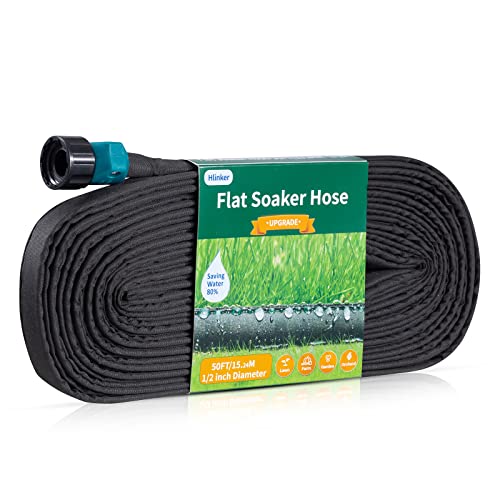
The Hlinker Flat Soaker Hose is a 50-foot irrigation hose made for slow watering along garden beds, borders, and other narrow planting areas. It is a practical fit for homeowners, beginner gardeners, and small-space growers who want to place water near plant roots rather than broadly spray an entire area.
Its fabric-covered, clog-resistant design is intended to provide consistent seepage along the hose length. Watering at the base of plants can help reduce unnecessary foliage wetting, which makes the hose relevant for vegetable beds, herb gardens, and other planted areas where targeted moisture is useful.
The hose uses a flat, kink-resistant form that can lie beneath existing plant growth and roll up for storage. It can be installed above ground or covered with up to 3 inches of mulch or soil. Garden hose threads, rust-resistant end caps, and end-to-end linking support a simple custom irrigation layout, including setups used with timers.
In a backyard or raised-bed garden, one 50-foot section can be arranged along rows or around planting areas where localized watering is preferred. Its flat profile may also be useful in compact beds and tight spaces where a round hose is harder to position. Multiple sections can be connected when a longer layout is needed.
For best results, the product information specifies water pressure from 40 to 90 psi, and hot water is not suitable. Users should check connections and end caps periodically, avoid sharp bends during installation, and roll the hose for seasonal storage. The double-layer PVC and extra-strength fabric construction are intended to improve sun protection, but the supplied information does not establish a specific service life or coverage area.
Best For / Avoid If
Best for buyers prioritizing
- Useful for targeted watering in garden beds and tight planting spaces.
- Flat profile is easier to position around established plants and store between seasons.
- Linkable design supports simple DIY irrigation layouts and timer-based scheduling.
Consider another option if
- The hose requires suitable water pressure, and gardeners may need to adjust their setup for the listed 40 to 90 psi range.
- Hot water is not suitable, so it should be used with a normal cold-water garden supply.
- Gardeners needing visible spray coverage for lawns or large open areas may prefer a sprinkler hose or other irrigation method.

Pros
- Lightweight flat construction makes setup and storage more manageable.
- Can be installed above or below ground for flexible garden-bed and foundation watering.
- Made with 100% recycled vinyl and a clog-resistant fabric cover.
- Can be linked with other hoses to build a custom irrigation arrangement.
Cons
- The supplied specifications do not identify included connectors, flow controls, or a timer, so additional setup components may be needed.
- A soaker hose may be less suitable for gardeners who need a focused spray, hand-watering reach, or rapid high-volume delivery.
- Actual watering uniformity and water savings will depend on installation, water pressure, soil, and hose placement.
The Gilmour 50-foot black flat weeper soaker hose is designed to provide gradual watering along garden beds, foundations, lawns, orchards, and other planted areas. Its intended use is root-level irrigation rather than handheld spraying, making it a practical fit for homeowners managing vegetable gardens, flower beds, herbs, or longer planting rows.
The product information indicates that water can be delivered directly toward plant roots while potentially saving up to 80% of water compared with less targeted watering methods. Its clog-resistant fabric cover is intended to support consistent soaking, although results will vary with water pressure, soil conditions, placement, and installation.
The hose is listed as 50 feet long, weighs 1.43 pounds, and measures 7.5 by 13.8 by 1.43 inches. Its flat, flexible construction should make it easier to arrange around planting areas and fold for storage. The listed 100% recycled vinyl construction and UV-resistant materials are intended to support outdoor use across multiple seasons.
Gardeners can install the hose above or below ground and link it with other hoses to create a DIY drip irrigation layout. It may work well along raised beds, foundation plantings, patio garden rows, or extended lawn and orchard areas where slow, distributed watering is preferred over moving a spray nozzle by hand.
Installation details such as included connectors, flow controls, and timer compatibility are not provided, so gardeners may need to plan their irrigation setup around the available components. Check the hose placement before use, avoid sharp bends that could restrict water flow, and fold it cleanly for seasonal storage. Based on the listed features, this hose is a sensible choice for lightweight, space-saving bed irrigation, while gardeners needing spray coverage or precise handheld control may prefer a conventional garden hose or sprinkler system.
Best For / Avoid If
Best for buyers prioritizing
- Lightweight flat construction makes setup and storage more manageable.
- Can be installed above or below ground for flexible garden-bed and foundation watering.
- Made with 100% recycled vinyl and a clog-resistant fabric cover.
Consider another option if
- The supplied specifications do not identify included connectors, flow controls, or a timer, so additional setup components may be needed.
- A soaker hose may be less suitable for gardeners who need a focused spray, hand-watering reach, or rapid high-volume delivery.
- Actual watering uniformity and water savings will depend on installation, water pressure, soil, and hose placement.

Pros
- Long 75-foot reach for larger beds and multiple planting areas
- Flexible, lightweight construction supports easier placement and storage
- Suitable for above-ground or below-ground installation
- Flat design helps save space between growing seasons
Cons
- As a soaker hose, it may be less suitable when you need a concentrated spray or adjustable watering pattern.
- Gardeners connecting multiple hoses may need to plan the layout carefully for even watering across separate sections.
- The supplied specifications do not identify included connectors, flow controls, or an automatic timer.
The Gilmour 75-foot Black Flat Weeper Soaker Hose is designed for slow, distributed watering in vegetable gardens, flower beds, lawns, orchards, and around foundations. It is a practical fit for homeowners who want to place a hose along planting rows rather than water with a handheld spray pattern.
The listed feature set focuses on delivering water near plant roots and indicates potential water savings of up to 80 percent. The clog-resistant fabric cover is intended to support consistent soaking, while the option to install the hose above or below ground gives gardeners flexibility when arranging beds or permanent planting areas.
At 75 feet long and weighing 2 pounds, the hose is described as lightweight and flexible. Its flat shape can be easier to position around beds and simpler to fold for storage. The product information also states that it can be linked with other hoses, allowing a DIY irrigation layout for vegetables, herbs, flowers, and similar plantings.
In a backyard, this hose could run beside vegetable rows, along a flower border, around a foundation, or through an orchard planting area. Its flexible profile may also help gardeners working in compact spaces where storing a conventional hose is inconvenient, although the available specifications do not state a precise coverage area or flow rate.
Installation should be planned so the hose rests where water is needed and connections remain secure. The supplied information does not list included fittings, flow controls, or timer compatibility, so those details should be confirmed separately if automated watering is important. As a soaker hose, it is intended for distributed root-zone watering rather than spraying foliage or cleaning hard surfaces.
This hose is a reasonable choice for gardeners who want a lightweight, space-saving way to water established beds and planting rows. Gardeners who need adjustable spray, measured flow control, or clearly specified connection accessories may prefer a different irrigation setup or may need to add compatible components.
Best For / Avoid If
Best for buyers prioritizing
- Long 75-foot reach for larger beds and multiple planting areas
- Flexible, lightweight construction supports easier placement and storage
- Suitable for above-ground or below-ground installation
Consider another option if
- As a soaker hose, it may be less suitable when you need a concentrated spray or adjustable watering pattern.
- Gardeners connecting multiple hoses may need to plan the layout carefully for even watering across separate sections.
- The supplied specifications do not identify included connectors, flow controls, or an automatic timer.
Drip Irrigation Vs Soaker Hose For Raised Beds Buying Guide
Drip irrigation vs soaker hose: the practical difference
In raised beds, drip irrigation usually means tubing with individual emitters or built-in emitter spacing that releases water at planned points. The Rain Bird GARDENKIT, for example, uses 35 feet of emitter tubing with 70 built-in emitters spaced every 6 inches and includes 25 feet of 1/4-inch distribution tubing. That type of layout is helpful when you want more predictable watering lines across a defined bed.
A soaker hose or weeper hose releases moisture along much of the hose length. The Gilmour 25′ Black Flat Weeper Soaker Hose is described as allowing water to seep out of all sides of its fabric jacket, while the BetterBotanicals 100 FT Flat Soaker Hose is designed for slow, consistent moisture along the hose. Soaker hoses are often simpler to lay in a bed, but pressure and hose length can affect evenness.
| Choice | Best fit based on available product data | Tradeoff to consider |
|---|---|---|
| Drip irrigation kit or emitter tubing | Planned raised-bed layouts, multiple rows, and gardeners who want emitter spacing or pressure-compensating features | More parts and layout decisions during setup |
| Flat soaker or weeper hose | Simple beds, borders, and gardeners who want a quick line-watering setup | Even watering may depend on pressure control, length, and placement |
Match the system to your raised-bed size and layout
Start with the bed shape. A single 4-by-8-foot bed is a natural fit for the Rain Bird GARDENKIT because the listing says it contains what is needed to water up to a 4′ x 8′ raised bed garden. Its included illustrated layouts may also help beginners who do not want to design a system from separate parts.
Longer runs or multiple garden zones may favor kits with more tubing. The GrowYourGreenParadise Upgraded 230FT Drip Irrigation System includes 33 feet of 5/16-inch main tubing and 197 feet of 1/4-inch soaker hose, while the BetterBotanicals kit provides two connectable 50-foot flat soaker hoses. For compact beds, a shorter option like the Gilmour 25-foot flat weeper hose or Raindrip 50-foot soaker hose tubing may be easier to manage.
Check pressure requirements before you buy
Pressure matters because raised-bed watering systems are meant to release water slowly, not blast it through fittings. BetterBotanicals specifically recommends using a pressure regulator at 8 to 10 PSI for more even distribution and keeping pressure below 25 PSI to extend lifespan. That is a useful warning for homeowners connecting directly to a standard outdoor faucet.
Rain Bird lists pressure-compensating emitters in its raised-bed kit, and the Rain Bird ET256-50S is described as pressure-compensating 1/4-inch emitter tubing with 6-inch emitter spacing. Pressure-compensating designs are worth considering when even output across the bed is a priority, especially if your bed is longer or the water source is not perfectly steady.
Think through tubing, connectors, and leak prevention
Many irrigation frustrations come from missing connectors, loose washers, or rushed installation. BetterBotanicals includes two connectable hoses with end caps, 16 steel stakes, and storage straps, and its product data notes that proper washer placement helps ensure secure, leak-free connections. The Kalolary 100FT Soaker Hose Kit lists connectors, a valve, and an end plug in the product name, which may be helpful if you want a kit rather than bare hose.
For more involved layouts, look for included main tubing and branching parts. GrowYourGreenParadise lists a Y-connector, connectors, end caps, reducing tees, 6-way connectors, multi-purpose end plugs, thread seal tape, and ground stakes. CARPATHEN lists a soaker hose kit with 1/2-inch 50-foot main line tubing and connectors for raised beds or greenhouse use. If you need a longer feeder hose to reach the bed, our 100 ft garden hose guide may help you plan the water source side separately.
Consider water efficiency claims carefully
Several products reviewed make water-saving claims, but the details differ. Rain Bird states that its raised-bed kit waters at low volume near roots and provides up to 80% water savings. Gilmour also states that its 25-foot hose can save 80% water when delivering water directly to plant roots. Kalolary lists 80% water saving in the product name.
Use those claims as a starting point, not a guarantee for every garden. Actual water use depends on how long you run the system, whether the hose is covered with mulch, soil type, plant spacing, and local weather. A timer can help with consistency, and Dove Creek Gardens covers more watering gear in the Watering & Irrigation section.
Installation choices: surface, mulch, or buried tubing
Surface installation is easiest because you can see leaks, kinks, and dry areas quickly. BetterBotanicals includes steel stakes to keep its flat hose positioned along curves and long runs, which is useful in raised beds where hoses can shift during planting, weeding, or harvesting.
Some listings support covered or buried use. Rain Bird says its tubing may be buried or left on top of the soil. Gilmour says its hose can be installed above or below ground. GrowYourGreenParadise says its 1/4-inch tubing can be laid on the surface, under mulch, or buried. If you cover tubing, check the system at the start of the season so hidden leaks or blocked sections do not go unnoticed.
Accessibility and small-space gardening considerations
For older gardeners or anyone trying to reduce bending and hauling, the best system is the one that stays in place and does not need daily repositioning. Flat soaker hoses like the BetterBotanicals 100 FT Flat Soaker Hose and Gilmour 25-foot flat weeper hose can be laid along rows and left in place during the growing season. The Gilmour listing also notes that the flat design is easy to roll up and store.
Small-space gardeners should avoid buying far more tubing than they can neatly route. A 230-foot kit can be useful for several beds, borders, pots, vertical gardens, or greenhouse areas, based on the GrowYourGreenParadise listing, but a short raised bed may be simpler with a 25- or 50-foot option. For patios and tight side yards, storage also matters; a wall-mounted holder or reel can keep feeder hoses out of the walkway, and our garden hose reel guide covers that part of the setup.
Maintenance, seasonal storage, and common mistakes
Common mistakes include running too much pressure, leaving washers out of fittings, stretching a layout too far from the faucet, and forgetting to check the far end of the bed. For soaker hoses, uneven output can often be related to pressure, length, or placement. BetterBotanicals specifically recommends a pressure regulator and proper washer placement, which are two simple steps that can prevent frustration.
At the end of the season, drain hoses and tubing before storage, especially in colder conditions. BetterBotanicals specifically recommends storing the hose drained in colder conditions, and Gilmour highlights easy storage for the next season. Before storing, disconnect fittings carefully, remove soil from connectors, and keep small plugs or end caps together so setup is easier next spring.
Research Methodology and Trust
This guide is based on research-based product analysis, not physical testing. Dove Creek Gardens reviewed the available product titles, ASINs, prices, ratings, descriptions, listed features, and owner-review counts, then screened for products that clearly matched drip irrigation vs soaker hose for raised beds.
Products that were general-purpose expandable or standard garden hoses were not recommended as raised-bed drip or soaker systems, even if they may be useful as feeder hoses. Valid matches included raised-bed drip kits, 1/4-inch emitter tubing, soaker hose tubing, flat weeper hoses, and soaker hose kits intended for garden beds, raised beds, greenhouses, planters, or borders.
Ranking factors were category-specific: coverage, tubing length, pressure guidance, emitter spacing when listed, connector completeness, leak-prevention details, installation flexibility, storage notes, water-saving claims only when stated, and suitability for beginner or small-space gardeners. The content was updated during July with the available 2026 product data, including the $11.41 – $67.99 price range and brands such as Gilmour, FlexiHose, RainBird and more.
Final Recommendations
Overall Pick: Rain Bird GARDENKIT Drip Irrigation Raised Bed Garden Watering Kit is the most direct fit for a beginner who wants a purpose-built raised-bed drip system. The listing says it waters up to a 4′ x 8′ raised bed, includes emitter tubing with 70 built-in emitters spaced every 6 inches, and uses pressure-compensating emitters for even watering throughout garden beds.
Easy-Setup Pick: 100 FT Flat Soaker Hose (2 x 50 FT) – Drip Irrigation for Garden Beds, Raised Beds & Landscaping – Kink-Resistant, Even Watering, Includes 16 Steel Stakes & Storage Straps is a strong choice if you prefer a flat soaker layout that can be used as two separate 50-foot hoses or connected for 100 feet. The included stakes, end caps, and storage straps make it practical for raised beds, garden beds, trees, and landscaping layouts.
Small-Space Pick: Gilmour 25′ Black Flat Weeper Soaker Hose for Garden Beds, Drip Irrigation Outdoor Hose, Flexible Garden Hose for Vegetable Gardens, Flower Beds, Lawns, and Orchards | Drip Irrigation Weeper Hose for Garden Beds, Vegetable Gardens & Orchards – Clog-Resistant, Water-Saving, Flexible is a sensible shorter option for compact beds and tight garden spaces. Gardeners building a custom drip layout may also consider Rain Bird ET256-50S Drip Irrigation Pressure Compensating 1/4″ Emitter Tubing, 6″ Emitter Spacing, 50 Roll, Brown or Raindrip 015005T 1/4-Inch by 50-Foot Soaker Hose Tubing for Drip Irrigation, Use in Vegetable Garden, Planters, and Borders, 50-Foot, Black.
FAQ
Is drip irrigation or a soaker hose better for raised beds?
Drip irrigation is usually better when you want planned emitter spacing and more layout control. A soaker hose is often better when you want a simpler line-watering setup with fewer parts. For a single 4′ x 8′ raised bed, the Rain Bird GARDENKIT is specifically listed for that size, while flat soaker hoses may suit flexible row layouts.
How much hose or tubing do I need for drip irrigation vs soaker hose for raised beds?
Measure the path the hose or tubing will follow inside each bed, not just the outside dimensions of the bed. Short beds may only need a 25- or 50-foot product, while multiple beds may justify a larger kit such as the GrowYourGreenParadise 230-foot system or the BetterBotanicals two-piece 100-foot soaker hose.
Do I need a pressure regulator for a raised-bed soaker hose?
It depends on the product, but pressure control is often important. BetterBotanicals recommends a pressure regulator at 8 to 10 PSI for more even distribution and keeping pressure below 25 PSI to extend hose life. Always follow the manufacturer’s setup instructions for the product you choose.
Can I bury drip tubing or soaker hose in a raised bed?
Some products reviewed allow this. Rain Bird says its tubing may be buried or left on top of soil, Gilmour says its hose can be installed above or below ground, and GrowYourGreenParadise says its tubing can be laid on the surface, under mulch, or buried. If buried, inspect the system regularly so leaks or blocked sections do not stay hidden.
What is the easiest option for beginners?
A complete kit is usually easier than buying separate tubing and fittings. The Rain Bird GARDENKIT includes components for a raised-bed layout and an illustrated manual, while BetterBotanicals includes connectable hoses, end caps, stakes, and storage straps. Beginners should choose the system that most closely matches their bed size.
How should I store a soaker hose after the season?
Drain the hose, disconnect fittings carefully, and keep end caps or plugs together. BetterBotanicals specifically recommends storing the hose drained in colder conditions, and Gilmour notes that its flat design is easy to roll up and store for the next season.