


Building a cinder block raised garden bed is a durable, permanent masonry approach to growing vegetables, herbs, and ornamental plants. Unlike temporary wooden frames or lightweight sheet metal kits, concrete masonry units provide thermal mass, rot-free longevity, and wide perimeter walls that double as garden seating. For homeowners planning a backyard layout, older gardeners who want elevated access, and beginners seeking long-term soil control, concrete blocks offer modular flexibility at a reasonable material cost.
To help you evaluate whether masonry fits your property, we examined 10 retail garden bed listings across popular brands including UTOPIAHOME, snugniture, and JERIA. However, gardeners shopping online quickly encounter an inventory discrepancy: e-commerce search algorithms frequently return galvanized sheet metal kits priced from $22.99 to $37.99 rather than genuine concrete masonry blocks. This guide clarifies that distinction, outlines core masonry construction principles, and provides a clear planning framework for structural safety, drainage, and soil volume.
Before purchasing materials, garden planners must weigh heavy masonry labor against modular kit convenience. If you need portable containers or lightweight options for patio slabs, alternative approaches such as grow bags for potatoes or modular planters may fit better. For gardeners committed to stone and concrete, this guide details everything needed to plan, source, and construct a safe, productive masonry bed.
Notice regarding listed products: The 10 products above represent consumer search results for garden bed kits on major retail platforms. Every item in this dataset is a prefabricated galvanized metal planter box rather than concrete masonry. Because none of these retail kits are masonry products, they are cataloged here for reference only and are not endorsed as cinder block structures.
Practical Cinder Block Raised Garden Bed Buying and Planning Guide
Concrete Masonry Units vs. Historic Cinder Blocks
Gardeners frequently use the phrase cinder block as a catchall term, but modern building supply stores sell concrete masonry units, commonly abbreviated as CMUs. Historic cinder blocks, manufactured through the mid-twentieth century, incorporated industrial coal cinders and fly ash as aggregate fillers. These older industrial byproducts occasionally contained heavy metal residues that caused concern regarding soil leaching in food production areas.
Modern CMUs are manufactured from Portland cement, crushed stone, sand, and clean gravel aggregate. When sourcing materials from local masonry yards or home centers, ask for standard hollow-core concrete building blocks meeting ASTM standards. Avoid salvaged, painted, or unknown demolition rubble from historic industrial demolition sites, as salvaged materials may have absorbed petroleum residues, old sealants, or lead paint.
Footprint Layout: Inside Growing Space vs. Outer Perimeter
A standard concrete masonry unit measures nominally 8 inches wide, 8 inches high, and 16 inches long, though actual dimensions are typically 7 and 5/8 inches to accommodate mortar joints. Because each wall is 8 inches thick, the exterior footprint of a cinder block raised garden bed is significantly larger than the usable interior planting area. This thickness reduction catches many beginners by surprise.
If you build an exterior perimeter measuring 8 feet long by 4 feet wide, the 8-inch wall thickness on all four sides subtracts 16 inches from both dimensions. Your actual growing surface shrinks to 6 feet 8 inches long by 2 feet 8 inches wide. To preserve a full 4-foot internal reach, your outer masonry dimensions must span 5 feet 4 inches in width. Plan your garden paths carefully, leaving at least 30 to 36 inches of clearance around the structure to maneuver wheelbarrows and tools.
Foundation Preparation, Trenching, and Drainage
Because concrete blocks are heavy and rigid, placing them directly onto uneven turf leads to shifting, tipping, and joint cracking over time. A stable installation starts with clearing topsoil, digging a shallow trench 4 to 6 inches deep and 12 inches wide, and packing the trench with compacted crushed stone or coarse gravel. This gravel footing distributes the wall weight and allows excess moisture to percolate freely away from the base.
Set your first course of blocks partially below grade, checking for level across both the length and width with a four-foot carpenter level. An open-bottom design allows natural downward root penetration into native subsoil and prevents waterlogging. For convenient bed maintenance and tending young transplants, pairing your masonry build with a dependable ergonomic hand trowel for arthritis minimizes wrist strain when working within confined soil pockets.
Assembly Choices: Dry-Stacking vs. Surface Bonding Cement
For low garden borders measuring one or two courses high (8 to 16 inches), many home gardeners dry-stack blocks without wet mortar. In a dry-stack configuration, alternating block seams across courses provides interlocking stability. To prevent the weight of wet soil from pushing walls outward, drive lengths of steel rebar vertically through the aligned hollow cores directly into the ground below, anchoring the structure firmly.
If you plan to construct walls three courses or higher (24 inches or taller) to reduce stooping, dry stacking alone is structurally insufficient against outward soil pressure. Applying surface bonding cement—a fiberglass-reinforced stucco applied directly to the exterior and interior faces of dry-stacked blocks—creates an exceptionally strong tensile shell without requiring traditional mortar joints between every unit. Taller builds may also require filling select reinforced cores with pea gravel concrete.
Soil Volume Calculations and Root Depth Planning
Calculating soil volume accurately prevents costly under-ordering or surplus disposal. To find the cubic yardage needed, multiply inside length by inside width by intended planting depth in feet, then divide the resulting cubic feet by 27. For example, a bed with interior dimensions of 8 feet by 3 feet, filled to a depth of 1 foot, requires 24 cubic feet of soil, which equals roughly 0.89 cubic yards or twelve 2-cubic-foot bags.
Soil settling naturally reduces depth by 10 to 15 percent over the first growing season as organic matter decomposes and settles under watering. Choose a high-quality blend of screened topsoil, weed-free compost, and aeration material such as perlite or coarse sand. If you harvest rainwater using a dedicated rain barrel for small gardens, consistent gravity or low-pressure soaker irrigation keeps moisture levels even across these deep masonry soil beds.
Planting in Block Cavities for Vertical Space
The hollow cores of concrete blocks create individual micro-planting pockets along the entire perimeter of the bed. These cavities warm up quickly in early spring sunshine, making them ideal for shallow-rooted culinary herbs such as thyme, oregano, and chives, or trailing companion flowers like marigolds and nasturtiums. Fill each core with a well-draining potting mix rather than dense garden soil to promote proper aeration.
Keep in mind that small concrete cavities dry out rapidly during hot summer afternoons due to the porous nature of masonry. Placing coarse gravel at the base of the cavity before adding potting soil maintains drainage while preventing fine soil from washing beneath the wall foundation. Core planting adds visual variety and increases the productive square footage of your garden footprint.
Ergonomics, Capstones, and Seating Comfort
The 8-inch top edge of standard hollow concrete blocks is rough and uncomfortable to lean against or sit upon during weeding sessions. Adding solid concrete cap blocks or smooth patio pavers along the top course solves this problem. Standard masonry caps measure 2 inches thick, 8 inches wide, and 16 inches long, creating a smooth, continuous bench that supports comfortable seating for older gardeners and individuals with limited mobility.
Secure capstones to the underlying blocks using exterior masonry adhesive to eliminate tipping hazards when standing up. For ambitious vegetable setups, vertical climbing supports can be incorporated directly into the masonry or paired alongside freestanding structures like a tomato planter with trellis to organize heavy vining crops along sunny garden perimeters.
Masonry vs. Galvanized Sheet Metal: Structural Comparison
| Evaluation Criterion | Concrete Masonry Units (CMU) | Prefabricated Galvanized Steel Kit |
|---|---|---|
| Material Weight | 30 to 35 pounds per block; requires heavy lifting | 15 to 30 pounds total kit weight; easily portable |
| Assembly Time | Multiple days for trenching, leveling, and placement | 15 to 45 minutes using included nuts and bolts |
| Expected Lifespan | Decades; completely rot-proof and dent-proof | 5 to 15 years depending on zinc coating thickness |
| Wall Thickness | 8 inches wide; consumes significant yard footprint | Less than 1 inch; maximizes interior planting volume |
| Relocation Potential | Permanent structure; highly labor-intensive to move | Disassembles quickly; easy to relocate |
| Thermal Mass | High; moderates soil temperature swings | Low; warms quickly in sun but cools rapidly |
Metal Raised Bed Alternatives
The products below are galvanized metal alternatives, not concrete masonry units. Consider them when portability, fast assembly, or lower installation effort matters more than the thermal mass and permanence of a block-built bed.

Pros
- Long, narrow shape is easy to place in small yards or along garden borders.
- Bottomless design supports natural drainage and in-ground root access.
- Rust-resistant galvanized metal panels are listed for outdoor durability.
- Includes gloves, protective tape, and assembly hardware for a more complete setup.
- Reviewers commonly mention that the bed looks good and is generally easy to assemble.
Cons
- At about 12 inches tall, it may be less suitable for gardeners who want extra-deep soil for larger root crops.
- Metal edges and hardware can still require care during setup, so wearing the included gloves is a smart precaution.
- Some reviewers noted assembly can be time-consuming or occasionally tricky when aligning bolts and wing nuts.
The G GOOD GAIN 8x2x1 ft galvanized raised garden bed is an oval, bottomless metal planter made for outdoor growing. Based on the listed specifications, it is best suited to gardeners who want a simple defined bed for vegetables, herbs, flowers, or small fruit plantings without building a wooden frame.
The main gardening benefit is the open-bottom design. Because there is no solid base, water can drain down into the soil below, which helps reduce standing water in the bed when it is placed on prepared ground. Roots can also continue into the native soil if conditions allow, making this style useful for seasonal food gardens and mixed flower plantings.
The bed measures about 96 inches long, 24 inches wide, and 12 inches high, giving it a narrow footprint that is easy to reach from either side. The product information lists galvanized metal with a rust-resistant coating, reinforced wavy panels, folded edges, protective tape, gloves, and wing-nut assembly hardware. The manufacturer describes it as tool-free, but careful alignment of the panels and fasteners will still make setup smoother.
In a backyard, this size works well as a dedicated herb row, a compact vegetable strip, or a flower bed along a fence or walkway. It can also help organize a small-space garden by separating planting areas from lawn, mulch, or paths. The low height is practical for defining a bed, though it does not provide the same elevated working height as taller raised planters.
There are a few realistic cautions. Metal planter panels can have edges or hardware that require careful handling during assembly, so the included gloves are worth using. The 12-inch depth is generally better matched to shallow-rooted crops and flowers than to gardeners who want a deep soil column for larger root vegetables. If adding kitchen scraps, use proper composting practices rather than burying fresh waste carelessly, especially where pets or wildlife may investigate.
Overall, this is a practical choice for homeowners and newer gardeners who want a long, tidy, bottomless raised bed with included setup accessories. Gardeners who need waist-height access, very deep planting space, or a fully enclosed planter for hard surfaces may want to consider a different raised bed style.
Best For / Avoid If
Best for buyers prioritizing
- Long, narrow shape is easy to place in small yards or along garden borders.
- Bottomless design supports natural drainage and in-ground root access.
- Rust-resistant galvanized metal panels are listed for outdoor durability.
Consider another option if
- At about 12 inches tall, it may be less suitable for gardeners who want extra-deep soil for larger root crops.
- Metal edges and hardware can still require care during setup, so wearing the included gloves is a smart precaution.
- Some reviewers noted assembly can be time-consuming or occasionally tricky when aligning bolts and wing nuts.
Pros
- Comes as a 2-pack, which is useful for separating crop types or creating a matched garden layout.
- Open bottom supports drainage and direct contact with the ground beneath the bed.
- Galvanized coated metal construction is listed as rust-resistant and reusable for multiple seasons.
- Compact footprint works well for homeowners with limited garden space.
- Included assembly hardware and tools make setup more approachable for beginners.
Cons
- At 12 inches tall, it may not be the best choice for gardeners who want extra-deep beds or a higher working height.
- Assembly instructions may require careful attention, as reviewers mention panel orientation and nut placement can be confusing.
- Gloves are wise during assembly because at least one reviewer noted that some steel edges can feel sharp.
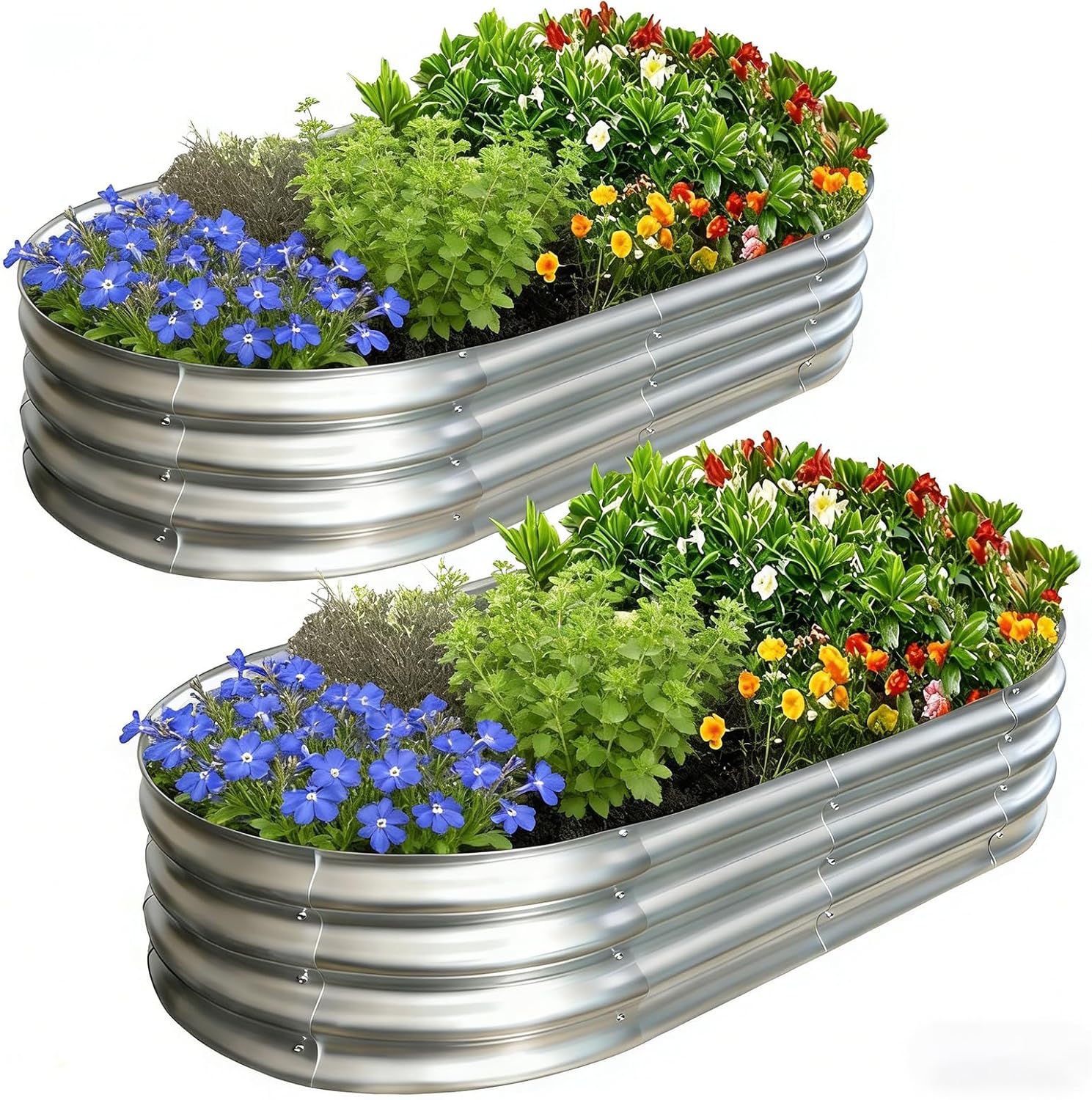
The AmazStove 4x2x1 ft galvanized raised garden bed kit is a two-pack of oval metal planter beds intended for outdoor growing. It is designed for vegetables, fruits, flowers, and herbs, making it a flexible choice for homeowners starting a small garden or adding defined planting areas to an existing yard.
The main gardening benefit is simple structure. Each bed creates a contained growing zone that can help keep soil, mulch, and plants organized compared with open ground planting. The open-base design is especially useful when the bed is placed over soil, since excess water can drain downward and roots are not boxed in by a solid floor.
Based on the listed specifications, each bed measures 48 inches wide, 24 inches deep, and 12 inches high. The product information describes thickened galvanized steel with a coated finish, galvanized nuts and bolts, included tools, and an instruction manual. Reviewers commonly describe assembly as manageable, though several note that panel orientation and hardware placement deserve close attention before tightening everything fully.
In a backyard or small-space garden, these beds make sense for grouping tomatoes, peppers, herbs, annual flowers, greens, or other appropriately sized plantings. The two-bed format is helpful if you want to separate crops with different watering or soil needs, or if you want one bed for edibles and another for flowers near a patio, fence line, or sunny side yard.
There are a few practical cautions. A 12-inch bed is easier to fill than a taller raised bed, but it does not provide the same working height or deep soil volume as larger raised-bed systems. During assembly, wear gloves and handle the metal panels carefully, as user feedback mentions that edges can still feel sharp despite the treated-edge design.
Overall, this is a sensible option for gardeners who want compact, open-bottom metal raised beds with a clean oval shape and included assembly hardware. Gardeners who need waist-high access, very deep root space, or a no-assembly planter may want to consider a different raised-bed style.
Best For / Avoid If
Best for buyers prioritizing
- Comes as a 2-pack, which is useful for separating crop types or creating a matched garden layout.
- Open bottom supports drainage and direct contact with the ground beneath the bed.
- Galvanized coated metal construction is listed as rust-resistant and reusable for multiple seasons.
Consider another option if
- At 12 inches tall, it may not be the best choice for gardeners who want extra-deep beds or a higher working height.
- Assembly instructions may require careful attention, as reviewers mention panel orientation and nut placement can be confusing.
- Gloves are wise during assembly because at least one reviewer noted that some steel edges can feel sharp.

Pros
- Practical size for small-space gardening and organized planting
- Includes assembly tools and protective accessories in the box
- Open bottom supports drainage for outdoor garden use
- Galvanized metal build is suited to repeated seasonal planting
Cons
- The 4 x 2 ft size may be too small for gardeners who want a larger bed layout
- Open-base construction may not suit paved patios or decks without extra planning
- Assembly is required, so it is not a ready-to-use planter straight out of the box
The JERIA raised garden bed is a compact outdoor planter designed for vegetables, herbs, fruits, and flowers. Based on the listed specifications, it is a straightforward option for beginners, homeowners with limited space, or anyone who wants a simple bed for organizing a small growing area.
The main appeal is the practical feature set. The galvanized metal body is described as thickened for outdoor use, the base is open for drainage, and the top edge includes a rubber strip for added safety. The kit also includes assembly tools, hardware, gloves, and instructions, which makes the setup process more accessible.
With a 4 x 2 x 1 ft size, this bed is best suited to compact backyard plots, side yards, and other small garden spaces where a full-size frame would be too large. The rectangular shape makes it easy to plan rows of greens, herbs, or seasonal flowers, and the floor-standing design keeps the bed simple to position before it is filled.
For everyday use, the open base can be helpful where drainage matters, since excess water can move through the bottom instead of pooling in the planter. The included rubber edge strip is also a thoughtful detail for families who want a cleaner top edge while working around the bed.
There are a few limitations to keep in mind. This is a single bed in a modest size, so gardeners planning a larger harvest area may need more than one unit. The open-bottom design may also be less convenient on patios or hard surfaces without additional setup. Overall, it looks like a sensible pick for small-space gardeners who want an affordable, practical raised bed rather than a large permanent installation.
Best For / Avoid If
Best for buyers prioritizing
- Practical size for small-space gardening and organized planting
- Includes assembly tools and protective accessories in the box
- Open bottom supports drainage for outdoor garden use
Consider another option if
- The 4 x 2 ft size may be too small for gardeners who want a larger bed layout
- Open-base construction may not suit paved patios or decks without extra planning
- Assembly is required, so it is not a ready-to-use planter straight out of the box
Pros
- Open base design supports drainage and root access to the soil below.
- Lightweight construction makes placement easier than heavier permanent beds.
- Sized for vegetables, flowers, and other home garden plantings in limited spaces.
Cons
- Assembly may take some time because the design uses many fasteners, according to reviewer feedback.
- The frame can feel less rigid before it is filled with soil.
- The 12-inch height may not be ideal for gardeners who want a taller bed or need more depth for certain crops.
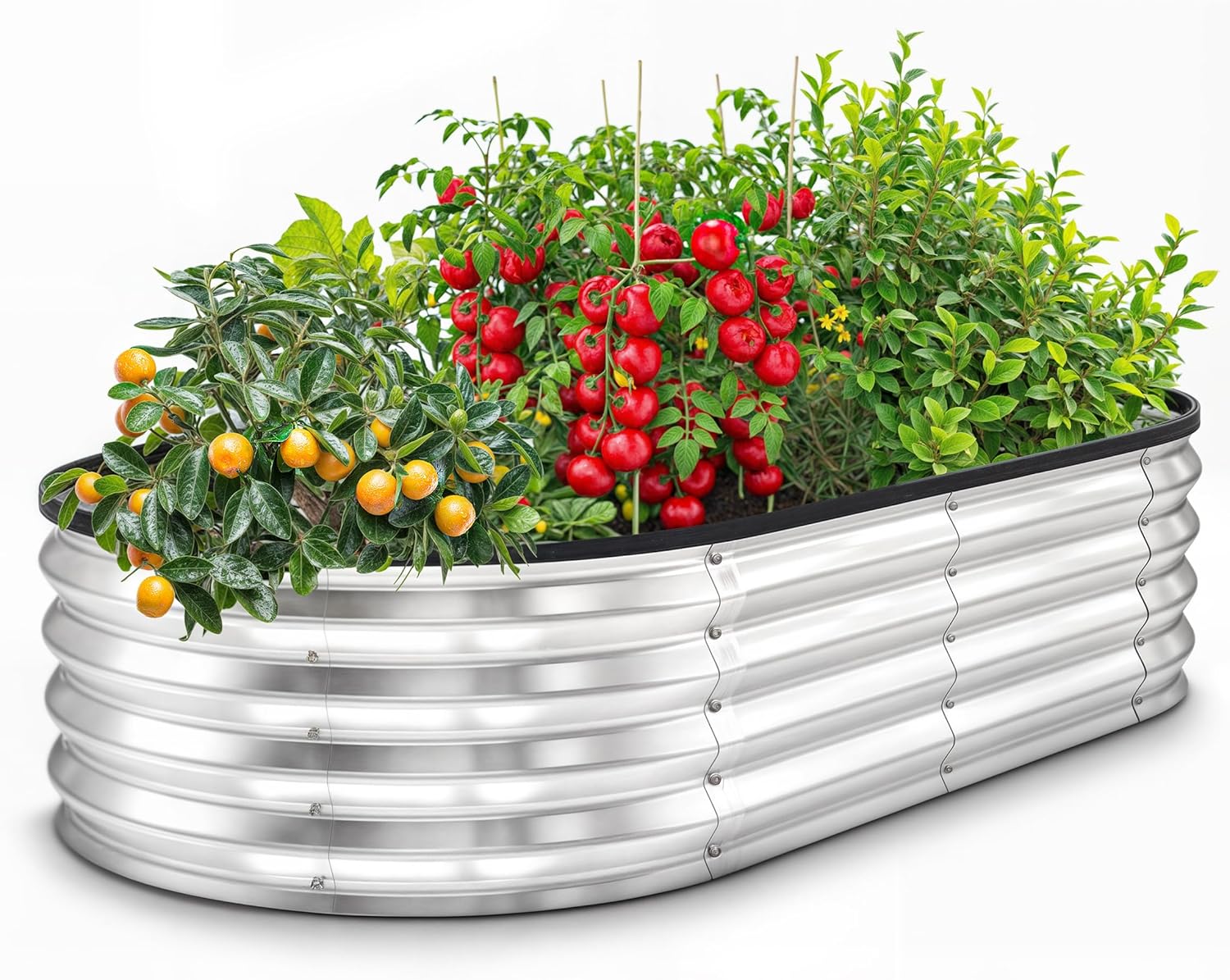
The UTOPIAHOME UH1173 is a galvanized raised garden bed kit made for homeowners who want a simple outdoor planter for vegetables, fruits, or flowers. Its 4 x 2 x 1 ft size makes it a practical choice for small yards, patio garden layouts, or adding a defined growing area to an existing garden.
One of its main strengths is the open-base design, which allows roots to extend into the soil below while still giving the bed structure above ground. The product information also indicates drainage, and the galvanized alloy steel construction is described as lightweight, durable, and designed to help resist corrosion and rust.
The bed measures 48 x 24 x 12 inches and uses a floor-standing, single-level design. The included support strip is intended to improve stability, and the lightweight build should make it easier to position before adding soil. Product details also note simple care, with wiping and drying recommended after use.
For backyard gardeners, this style of bed can work well for compact vegetable plantings, mixed flowers, or a tidy border near a porch, fence, or walkway. It is a sensible option for people who want a defined growing space without building a timber frame or a heavier permanent structure.
The main tradeoff is assembly and setup effort, since raised beds of this style often rely on many bolts, and some reviewers mention the build can take patience. The frame may also feel somewhat flexible until it is filled, so careful assembly and safe handling of the fasteners matter. Gardeners who want a taller bed or a more heavy-duty structure may want to consider a different style, but for a lightweight starter bed, this is a practical and accessible choice.
Best For / Avoid If
Best for buyers prioritizing
- Open base design supports drainage and root access to the soil below.
- Lightweight construction makes placement easier than heavier permanent beds.
- Sized for vegetables, flowers, and other home garden plantings in limited spaces.
Consider another option if
- Assembly may take some time because the design uses many fasteners, according to reviewer feedback.
- The frame can feel less rigid before it is filled with soil.
- The 12-inch height may not be ideal for gardeners who want a taller bed or need more depth for certain crops.

Pros
- Includes two raised bed rings for creating separate planting areas.
- Listed galvanized steel material should suit outdoor vegetable, herb, and flower growing.
- Tool-free assembly is beginner-friendly, with reviewers commonly mentioning that setup is straightforward.
- Open base helps excess water drain into the ground rather than collecting in a closed planter.
- Compact footprint is useful for small yards or gardeners starting with a modest raised-bed setup.
Cons
- At 12 inches tall, it may be less comfortable for gardeners who need a higher bed to reduce bending.
- Assembly still involves multiple panels and fasteners, so lining up holes may take patience.
- One reviewer noted possible panel alignment and edge concerns on a later purchase, so gloves and careful inspection are important during setup.
The Gartist 4 x 2 x 1 ft raised garden bed set is made for outdoor growing in small gardens, backyards, and compact planting areas. It includes two oval metal raised bed rings, giving homeowners a straightforward way to start vegetable, herb, or flower beds without building a wooden frame.
Based on the listed specifications, each bed provides a practical footprint for smaller crop groupings such as leafy greens, peppers, herbs, flowers, or mixed seasonal plantings. The 12-inch depth offers more growing room than many shallow containers, while the open base lets drainage move into the soil below and allows roots to extend downward when the bed is placed on suitable ground.
The product information lists galvanized Q195 steel sheet and alloy steel construction, with a matte silver finish. Gartist states that the bed resists bending, rust, corrosion, and temperature changes, and the rolled edge design is intended to make the rim safer to handle than exposed sheet metal. Assembly uses butterfly nuts that tighten by hand, so no separate tools are required, though the instructions specifically advise wearing gloves.
For everyday home gardening, this set makes sense for people who want to divide crops into manageable zones. One bed could hold herbs near a patio, while the other could be used for flowers, salad greens, or a small vegetable patch. The two-bed format is also helpful for separating plants with different water or sunlight needs, as long as the beds are placed in appropriate locations.
There are a few practical considerations. The beds are low, so gardeners who have difficulty bending may prefer a taller raised bed or an elevated planter. The panels also need to be aligned during assembly, and reviewer feedback suggests it is wise to leave fasteners slightly loose until the holes are lined up, then tighten everything after the shape is formed. Inspect the edges and wear gloves during setup, especially if children or pets will be nearby.
Overall, this Gartist raised bed set is a sensible choice for beginners, renters with yard space, and homeowners who want a simple metal bed system for small-scale growing. Gardeners who need waist-high access, enclosed-bottom planting, or a larger continuous growing area may want to compare other raised bed styles before choosing this one.
Best For / Avoid If
Best for buyers prioritizing
- Includes two raised bed rings for creating separate planting areas.
- Listed galvanized steel material should suit outdoor vegetable, herb, and flower growing.
- Tool-free assembly is beginner-friendly, with reviewers commonly mentioning that setup is straightforward.
Consider another option if
- At 12 inches tall, it may be less comfortable for gardeners who need a higher bed to reduce bending.
- Assembly still involves multiple panels and fasteners, so lining up holes may take patience.
- One reviewer noted possible panel alignment and edge concerns on a later purchase, so gloves and careful inspection are important during setup.

Pros
- Compact raised-bed size works well where a full garden plot is not practical.
- Open bottom supports drainage and direct contact with native soil.
- Metal construction avoids the cutting and framing work required for a DIY wooden bed.
- Reviewers commonly describe assembly as straightforward, though some note that trim and film removal can take patience.
Cons
- At 11.81 inches high, it raises the planting area but may not provide enough height for gardeners who need minimal bending.
- Because it is bottomless, it needs to be placed on soil, grass, or another prepared surface rather than used as a sealed container.
- Metal panels should be unpacked and assembled carefully, especially around children and pets, because some users have reported sharp edges or small metal pieces.
The SnugNiture 4x2x1 ft oval metal raised garden bed is a compact outdoor planter frame for growing vegetables, herbs, flowers, succulents, bonsai, and fruit plants according to the listed plant-use specifications. It is best suited to homeowners, beginner gardeners, and small-space growers who want a defined bed without constructing a wooden box.
The most important gardening benefit is the bottomless design. When placed over prepared ground, excess water can drain away and plant roots are not limited by a solid floor. This makes it useful for gardeners who want better soil control in the top layer while still allowing contact with the soil below.
The listed dimensions are 47.24 inches long, 23.62 inches wide, and 11.81 inches high. That gives enough space for a compact vegetable or herb planting, while still being narrow enough for easy access from the sides. The product information lists 0.5 mm galvanized steel, a powder-coated finish, wavy side panels, and horizontal pull rods intended to help the bed keep its shape once filled.
Assembly is described as simple in the product information, and reviewers commonly say it is manageable, although some mention that removing protective film, tightening small hardware, or fitting the top trim can take patience. The included instruction manual and gloves are practical additions, especially because metal garden-bed panels should always be handled carefully during setup.
In a backyard, this bed could define a small salad garden, herb patch, pollinator flower strip, or potato-growing area. Along a patio or fence line, the oval shape may feel softer than a sharp-cornered rectangle while still giving a clean, organized look. Since it is floor standing and bottomless, it should be set where drainage is acceptable and where the underlying surface can support garden soil.
The main limitations are height and handling. At just under one foot tall, it improves bed definition but does not offer the same bend-reducing access as a tall elevated planter. Gardeners with young children or pets should unpack and assemble it with extra care, then make sure the rubber strip and panel edges are seated securely. Overall, it is a practical choice for compact in-ground raised-bed planting, while gardeners who need waist-high access or a true container with a bottom should consider a different style.
Best For / Avoid If
Best for buyers prioritizing
- Compact raised-bed size works well where a full garden plot is not practical.
- Open bottom supports drainage and direct contact with native soil.
- Metal construction avoids the cutting and framing work required for a DIY wooden bed.
Consider another option if
- At 11.81 inches high, it raises the planting area but may not provide enough height for gardeners who need minimal bending.
- Because it is bottomless, it needs to be placed on soil, grass, or another prepared surface rather than used as a sealed container.
- Metal panels should be unpacked and assembled carefully, especially around children and pets, because some users have reported sharp edges or small metal pieces.

Pros
- Good footprint for herbs, flowers, greens, and compact vegetable plantings.
- Galvanized metal material and rust-resistant finish are suitable for outdoor garden use.
- Reviewers frequently describe assembly as easy, including setup by one person.
- The open base supports natural drainage when placed over soil or a prepared garden surface.
Cons
- The 12 inch height may be less comfortable for gardeners who need a tall, waist-level raised bed.
- Metal sides can warm in direct sun, so gardeners in hot climates may need mulch, shading, or closer moisture checks.
- Because it uses multiple panels and bolts, careful alignment during assembly may be needed for the cleanest fit.
The TATAANTY galvanized raised garden bed is a compact outdoor planter-raised-bed kit listed at 48 inches long, 24 inches wide, and 12 inches high. It is intended for growing vegetables, herbs, fruits, and flowers in a defined bed rather than planting directly into an open garden row. The size makes it especially relevant for beginners, homeowners with limited yard space, and gardeners setting up smaller growing zones.
Based on the product information, the main benefit is a simple metal bed that creates a contained planting area with a listed 7.1 cubic feet of soil capacity. That is enough space for small vegetable groupings, herb plantings, annual flowers, or a tidy tomato or pepper area, depending on spacing needs. The 12 inch depth is useful for many common garden crops, though gardeners should still match plant choices to root depth and local growing conditions.
The bed is made from galvanized metal with a double-layer galvanized finish and is listed as rust resistant. Its oval shape gives it a softer look than a rectangular box and can make it easier to place in a visible patio or backyard setting. The product information describes a clamp-and-bolt assembly system, and reviewers commonly mention that the bed goes together easily, although one review notes that aligning the final piece can take attention.
The open-bottom design is important for garden use. It does not include a solid floor, so it is best placed over soil, lawn that has been prepared, or another surface where drainage and root movement are appropriate. For patios or rooftops, gardeners should think carefully about the surface underneath, because an open base will not contain soil and water the same way a fully enclosed planter would.
For small-space growing, this set can help organize a few separate plantings, such as one bed for herbs and one for leafy greens or flowers. Reviewers often describe the beds as sturdy once filled, while one reviewer noted that moving an assembled but empty bed can feel wobbly. That is typical of many lightweight metal raised beds, so it is wise to assemble it near the final location and fill it only after placement is set.
The main limitations are height and heat management. A 12 inch bed still requires bending, so older gardeners or anyone wanting easier seated or standing access may prefer a taller elevated planter. In hot, sunny locations, metal beds can warm the surrounding soil, and one reviewer specifically mentioned dry soil during the day, so mulch, consistent watering, and thoughtful placement can help keep plants from drying out too quickly.
Best For / Avoid If
Best for buyers prioritizing
- Good footprint for herbs, flowers, greens, and compact vegetable plantings.
- Galvanized metal material and rust-resistant finish are suitable for outdoor garden use.
- Reviewers frequently describe assembly as easy, including setup by one person.
Consider another option if
- The 12 inch height may be less comfortable for gardeners who need a tall, waist-level raised bed.
- Metal sides can warm in direct sun, so gardeners in hot climates may need mulch, shading, or closer moisture checks.
- Because it uses multiple panels and bolts, careful alignment during assembly may be needed for the cleanest fit.

Pros
- Comes as a 2-pack, useful for separating plant types or setting up a small garden in stages.
- Bottomless design provides drainage and works on grass, soil, or patio surfaces according to the product information.
- Compact oval shape fits small yards and patios while still offering usable growing space.
- Reviewers commonly mention that the beds feel sturdy and are generally easy to assemble.
Cons
- Because the beds are bottomless, gardeners placing them on weedy ground may want to prepare the site or add a weed barrier such as cardboard before filling.
- Some reviewers note that aligning the curved sections during assembly can feel awkward, especially when working alone.
- The 12 inch height may be less comfortable for gardeners who need a taller raised bed to reduce bending.
The Tegarbed HKTY-TYHYC-421-2 is a 2-pack set of oval galvanized metal raised garden beds designed for outdoor vegetable, herb, flower, and small fruit planting. Each bed measures 48 inches long, 24 inches wide, and 12 inches high, making it a manageable size for beginners, homeowners organizing a yard garden, or patio growers who want defined planting space without building a wood bed.
Based on the listed specifications, the key gardening benefit is the combination of a compact footprint and an open-bottom design. The open base allows excess water to drain away and, when placed over soil or lawn, lets plant roots grow downward into the native ground. The manufacturer lists the 1 ft depth as suitable for root crops, fruiting vegetables, herbs, and greens, which fits common home garden uses such as lettuce, basil, peppers, bush beans, radishes, and flowers.
The product information lists galvanized metal construction with an average 1mm thickness, rust resistance, weather resistance, and a smooth-edge finish. For gardeners, that means the bed is intended to hold soil in a stable shape while offering safer handling during assembly than rough, unfinished metal. The 24 inch width is also practical because most people can reach the center from either side for planting, weeding, watering, and harvesting.
Assembly is described as straightforward, with a manual, parts list, and installation steps included. Reviewers commonly report that the beds are easy to put together and feel sturdy once assembled, although a few mention that lining up the curved sections can take patience or an extra set of hands. The beds are lightweight enough to position before filling, but like most raised beds, they should be placed where you want them before adding soil.
In a backyard, the two-bed set can separate tomatoes and companion herbs from greens or flowers. On a patio, the open bottom means placement should be considered carefully, since water and soil contact with the surface may matter. On grass or soil, gardeners may want to clear vegetation first or use cardboard under the bed to help reduce weeds before filling with a mix such as topsoil, compost, and potting soil, as suggested in the product information.
This is a good fit for gardeners who want an approachable, metal raised-bed kit for compact growing areas and who do not need a tall, waist-height planter. Gardeners with mobility concerns, very deep-rooted crops, or a need for a fully enclosed planter may prefer a taller bed or a planter with a base. Overall, the listed design points to a useful, space-conscious raised bed set for organizing vegetables, herbs, and flowers in a home garden.
Best For / Avoid If
Best for buyers prioritizing
- Comes as a 2-pack, useful for separating plant types or setting up a small garden in stages.
- Bottomless design provides drainage and works on grass, soil, or patio surfaces according to the product information.
- Compact oval shape fits small yards and patios while still offering usable growing space.
Consider another option if
- Because the beds are bottomless, gardeners placing them on weedy ground may want to prepare the site or add a weed barrier such as cardboard before filling.
- Some reviewers note that aligning the curved sections during assembly can feel awkward, especially when working alone.
- The 12 inch height may be less comfortable for gardeners who need a taller raised bed to reduce bending.

Pros
- Compact round size works well for small yards, patios with proper ground setup, and tidy backyard planting zones.
- Set of three beds gives gardeners more layout flexibility than a single small planter.
- Rubber edge trim is a helpful safety detail for families and gardeners who brush against bed rims while working.
- Bottomless construction supports natural drainage when installed directly over soil or prepared ground.
Cons
- At 12 inches high, it may be less suitable for gardeners who need a taller bed to reduce bending.
- Because it is open-bottom, it may require ground placement or an added containment layer if used on hard surfaces.
- The round 24-inch footprint is compact, so gardeners growing larger crops may prefer a wider or deeper raised bed.
The Tegarbed 3-piece round raised garden bed set is designed for gardeners who want small, defined planting spaces for vegetables, herbs, fruits, or flowers. Each bed measures 24 by 24 by 12 inches, giving beginners and homeowners a manageable size for starting a kitchen herb area, a compact flower grouping, or separate plantings in a backyard or small outdoor space.
Based on the listed specifications, the main appeal is the combination of galvanized metal construction, open-base drainage, and a compact round shape. The bottomless design lets water drain into the ground below rather than collecting in a closed container, and it also allows roots to move into the soil beneath when the bed is placed directly over prepared ground.
The product information lists 1 mm thick galvanized steel with a painted grey finish, along with rust-resistant and weather-resistant features for outdoor use. A rubber safety edge wraps the rim, which is a useful detail because metal raised beds can otherwise have sharper edges. The round, wave-shaped structure is intended to help distribute soil pressure, and the included wing nuts and instruction manual support tool-free assembly.
This set is especially useful where one large garden bed would be too bulky. You could place the three beds in a row along a fence, group them in a sunny corner, or separate crops such as lettuce, herbs, strawberries, and flowers into different rings. The small footprint also makes layout changes easier than with a long rectangular bed, though the open base should be considered carefully on patios, decks, or balconies.
There are a few practical limits to keep in mind. The 12-inch height is helpful for building a defined planting area, but it is not a tall elevated bed, so gardeners with mobility concerns may still need to bend or kneel. Since the bed is bottomless, it is best suited to soil, lawn, or another prepared outdoor surface unless you add an appropriate barrier or containment method for hardscape use. Overall, it is a sensible choice for compact, organized planting, while gardeners growing large crops or seeking waist-high access may want a larger or taller raised bed.
Best For / Avoid If
Best for buyers prioritizing
- Compact round size works well for small yards, patios with proper ground setup, and tidy backyard planting zones.
- Set of three beds gives gardeners more layout flexibility than a single small planter.
- Rubber edge trim is a helpful safety detail for families and gardeners who brush against bed rims while working.
Consider another option if
- At 12 inches high, it may be less suitable for gardeners who need a taller bed to reduce bending.
- Because it is open-bottom, it may require ground placement or an added containment layer if used on hard surfaces.
- The round 24-inch footprint is compact, so gardeners growing larger crops may prefer a wider or deeper raised bed.

Pros
- Two-pack format offers flexible layout options for separate crops or mirrored beds.
- Open-base construction supports drainage and direct root access to native soil.
- Safety edging and included assembly accessories add practical value for home gardeners.
- Compact size is easier to place in limited spaces than larger raised beds.
Cons
- The 1-foot height may be less suitable for gardeners who want deeper soil for larger root systems.
- Open-bottom construction may not be the best match for hard surfaces unless you plan for drainage and placement carefully.
The BIRDSINYARD galvanized raised garden bed is a compact two-pack planter set meant for home growing in small to medium outdoor spaces. It is designed for vegetables, fruits, flowers, herbs, and similar plantings, making it a practical option for gardeners who want simple raised-bed growing without a large footprint.
Based on the listed specifications, the main strengths are the galvanized steel construction, rust-resistant and corrosion-resistant coating, and open-bottom design. Those features are useful for outdoor planting because they support drainage, help reduce water buildup, and give roots access to the soil below when the bed is placed on suitable ground.
The 4 x 2 x 1 ft size is easy to place along a fence line, beside a driveway, or in a backyard corner, and the two-bed set allows for flexible layout choices. The product also includes rubber edging for the top rim, plus gloves and an installation tool kit, which should make setup more manageable for beginners.
For everyday gardening, this kind of bed works well for compact vegetable rows, herb plantings, mixed flowers, or separate crops that benefit from being divided into their own spaces. Its lighter weight and floor-standing design also make it a useful choice for gardeners who want a more organized growing area without building a permanent structure.
As with most metal raised beds, it will still need basic care and sensible placement. The 12-inch depth may not suit every crop equally, and the open bottom means you should think carefully about where it sits and how water will drain. If you want a simple, modest-sized raised bed set for general backyard growing, this is a practical option, while gardeners needing deeper beds or larger growing capacity may want a bigger model.
Best For / Avoid If
Best for buyers prioritizing
- Two-pack format offers flexible layout options for separate crops or mirrored beds.
- Open-base construction supports drainage and direct root access to native soil.
- Safety edging and included assembly accessories add practical value for home gardeners.
Consider another option if
- The 1-foot height may be less suitable for gardeners who want deeper soil for larger root systems.
- Open-bottom construction may not be the best match for hard surfaces unless you plan for drainage and placement carefully.
Research Methodology and Trust
Our review process at Dove Creek Gardens focuses on delivering transparent, practical guidance to help home growers make well-informed garden infrastructure investments. To produce this guide, we conducted extensive specification analysis of 10 commercially available raised garden bed products in September 2026. Rather than relying on automated marketing descriptions, we evaluated structural sheet metal gauges, hardware compositions, manufacturer dimensional schematics, and thousands of verified customer reports.
During product screening, we identified that online retail feeds universally return galvanized metal kits under queries for cinder block raised garden beds. Rather than presenting metal kits as concrete masonry alternatives without explanation, our editorial policy requires transparent disclosure: we explicitly separate masonry building principles from retail sheet metal containers. We did not conduct destructive load testing or build masonry structures specifically for this article; our recommendations draw from structural building guidelines, cooperative extension soil management research, and verified material specifications.
Our evaluation criteria center on material safety for food crops, soil pressure resistance, assembly ergonomics, drainage integrity, and long-term durability against environmental weathering. By clearly distinguishing between heavy masonry construction and prefabricated consumer kits, we ensure readers receive accurate information matched to their physical capabilities, property conditions, and gardening goals.
Frequently Asked Questions
Are modern cinder block raised garden beds safe for growing edible vegetables?
Modern commercially sold concrete masonry units are manufactured from Portland cement, sand, water, and crushed stone aggregate, making them safe for vegetable and fruit production. They do not contain the coal ash residues associated with historic industrial cinder blocks. For added peace of mind, ensure blocks are newly manufactured and avoid reclaimed demolition masonry of unknown origins.
How high should a cinder block raised garden bed be built?
Most home gardeners build masonry beds two courses high, reaching approximately 16 inches above ground level. This height provides ample root depth for deep-rooting vegetables like carrots and tomatoes while remaining easy to step over. Taller structures measuring three courses (24 inches) offer excellent accessibility for seated gardening but require internal rebar reinforcement or surface bonding cement to withstand lateral soil pressure.
Do concrete blocks alter the pH level of garden soil?
New concrete contains free lime (calcium hydroxide) that can slowly leach into adjacent soil over the first couple of seasons, mildly raising soil pH near the edges. Most common garden vegetables thrive in neutral to slightly alkaline soil (pH 6.5 to 7.2), making this minor shift harmless. For acid-loving crops such as blueberries, line the interior block wall with heavy landscape fabric or grow them in separate beds.
How do you prevent weeds and burrowing pests in a cinder block bed?
Before filling your bed with soil, clear all existing sod and line the open bottom with heavy-duty galvanized hardware cloth (wire mesh) with half-inch openings. This barrier stops burrowing rodents such as moles, voles, and gophers from tunneling upward while allowing earthworms, beneficial microbes, and deep plant roots to interact freely with the subsoil.
Can a cinder block raised garden bed be disassembled and moved?
If you build a dry-stacked bed using rebar stakes without mortar or adhesive, the blocks can technically be disassembled and relocated. However, moving dozens of 30-pound blocks and removing cubic yards of heavy soil involves strenuous manual labor. For renters or gardeners anticipating a move within a few years, lightweight metal beds or container grow bags are much more practical.