


A dull chainsaw chain can make routine yard cleanup slower and less controlled. The right sharpener depends on whether you want a compact manual tool for occasional touch-ups, a handheld electric option, or a bench-mounted grinder for repeated sharpening. This guide to Best Chainsaw Sharpener helps homeowners weigh those tradeoffs and match a sharpener to the chain they actually use.
We compare 15 options across manual, handheld electric, and bench-mounted designs. The useful questions are not just how a tool sharpens, but whether it suits your chain pitch and cutter size, offers a way to guide filing consistently, and fits your available workspace. If you are also choosing a saw, see our guide to battery chainsaws for homeowners.
Sharp Pebble Corded Chainsaw Sharpener for Consistent Tooth Maintenance Oregon Professional Compact Bench Chain Grinder for Workshop Sharpening Sharp Pebble Cordless Chainsaw Sharpener Kit for Portable Chain Maintenance Stihl 2-in-1 Easy File Chainsaw Sharpener for Cutter and Depth Gauge Care Prices and availability can change. We may earn a commission from qualifying purchases.


Pros
- Angle guidance can help users maintain a more uniform sharpening approach across the chain.
- Multiple wheel sizes accommodate a range of chain sharpening needs, subject to matching the wheel to the chain.
- The lightweight, compact tool may be manageable to handle and store.
Cons
- A corded 120V design requires an accessible power outlet and limits where sharpening can be done.
- Users need to identify the correct wheel size and sharpening angle for their particular chain before starting.
- Who should skip it: gardeners who sharpen only occasionally or need a portable, cordless tool may prefer a hand file or another option.
Sharp Pebble’s electric chainsaw sharpener is a corded tool for maintaining chainsaw teeth. It is intended for homeowners and other users who want a guided alternative to sharpening each tooth with a hand file.
The angle guide is designed to help keep the grinding angle consistent as you move from tooth to tooth. The kit includes four grinding wheel bits in 5/32-inch, 3/16-inch, and two 7/32-inch sizes. Match the wheel and sharpening angle to your chain before use, since the appropriate setup depends on the chain.
The tool operates on 120V power and has adjustable speed settings. Its listed dimensions are 7.99 by 2.99 by 1.1 inches, and it weighs 1 lb. A wrench and angle guide attachment are included. The corded design means you will need a suitable outlet near your sharpening area.
For backyard owners who use a chainsaw to manage firewood or maintain trees, a sharp chain can help avoid relying on extra pressure while cutting. The sharpening kit is best used in a stable, well-lit work area where the chain can be secured and each tooth approached carefully.
Chainsaw sharpening involves a fast-moving grinding wheel and a sharp chain. Follow the tool and chainsaw manufacturers’ instructions, secure the chain, and use appropriate eye and hand protection. Confirm wheel compatibility and angle before sharpening. The corded format may be inconvenient for remote work, and users who prefer simple occasional maintenance may find a hand file more suitable.
This kit may be a practical fit for homeowners who sharpen chains regularly and want angle guidance with several wheel sizes. Those seeking a cordless setup, or who do not want to manage wheel selection and sharpening setup, should consider a different approach.
Best For / Avoid If
Best for buyers prioritizing
- Angle guidance can help users maintain a more uniform sharpening approach across the chain.
- Multiple wheel sizes accommodate a range of chain sharpening needs, subject to matching the wheel to the chain.
- The lightweight, compact tool may be manageable to handle and store.
Consider another option if
- A corded 120V design requires an accessible power outlet and limits where sharpening can be done.
- Users need to identify the correct wheel size and sharpening angle for their particular chain before starting.
- Who should skip it: gardeners who sharpen only occasionally or need a portable, cordless tool may prefer a hand file or another option.
Pros
- Can be mounted to either a bench or a wall using the two included bolts.
- Includes a dressing brick, profile guide, and operator instructions alongside the grinding accessories.
- The 17 lb unit has a compact footprint of 15.25 x 11.8 x 8.6 inches for a fixed workshop setup.
Cons
- A fixed mount and dedicated workspace make it less suitable for users who need a portable sharpener.
- Who should skip it: occasional chainsaw users or anyone who does not want to set up and maintain a bench-mounted grinder.
The Oregon Professional Compact is a 120-volt bench chain grinder for sharpening chainsaw chains. Oregon describes it for semi-professional and home users who regularly saw wood, making it a practical option for maintaining chains in a workshop or garage.
It sharpens chain up to .404-inch pitch and is intended to work with chains from brands including Oregon, Stihl, and Husqvarna. The manual chain-clamping vise helps keep the chain positioned, while the included profile guide supports setup for sharpening.
The grinder can be secured to a bench or wall with the two included bolts. It measures 15.25 x 11.8 x 8.6 inches and weighs 17 lb, so it is better suited to a permanent work area than to carrying between jobs. One-way motor rotation is a safety-oriented feature; follow the operator instructions and use appropriate care around grinding wheels.
For a homeowner who cuts firewood or regularly maintains trees and shrubs with a chainsaw, a dedicated grinder can make routine chain maintenance part of the workshop workflow. The included 3.2 mm and 4.7 mm grinding wheels cover sharpening needs, while the 6.0 mm flat profile disc is intended for depth-gauge maintenance.
This is a specialized tool that requires a stable mounting location and careful setup. Keep the grinding components in good condition and use the included instructions when adjusting or operating the machine. Buyers should confirm that their chain type and sharpening needs suit the grinder before purchase.
Choose this Oregon grinder if you regularly sharpen chains and want a fixed station with several included accessories. Who should skip it: occasional users, or anyone looking for a portable, hand-operated sharpener instead.
Best For / Avoid If
Best for buyers prioritizing
- Can be mounted to either a bench or a wall using the two included bolts.
- Includes a dressing brick, profile guide, and operator instructions alongside the grinding accessories.
- The 17 lb unit has a compact footprint of 15.25 x 11.8 x 8.6 inches for a fixed workshop setup.
Consider another option if
- A fixed mount and dedicated workspace make it less suitable for users who need a portable sharpener.
- Who should skip it: occasional chainsaw users or anyone who does not want to set up and maintain a bench-mounted grinder.
Pros
- Portable cordless design can be convenient for maintenance in a yard or at a work area away from an outlet.
- An angle guide and several wheel sizes support a more repeatable sharpening routine.
- The tool is described as ergonomic and suitable for right- or left-handed users.
Cons
- Battery runtime, charging details, and whether a battery or charger is included are not specified, so check these details before buying.
- Who should skip it: Gardeners who sharpen chains only occasionally or prefer a simple hand file may find an electric tool unnecessary.
The Sharp Pebble cordless chainsaw sharpener is an electric maintenance tool for sharpening chainsaw chain cutters. Its portable design may appeal to homeowners who handle routine chain care themselves and want an alternative to sharpening with a hand file.
Sharp Pebble says the angle guide helps maintain a consistent sharpening angle, while the adjustable speed settings allow control over the tool as you work. A more uniform approach to sharpening can be useful when maintaining multiple cutters, but careful technique still matters.
The kit includes a cordless sharpening tool, angle guide attachment, wrench, and four sharpening wheels: 5/32, 3/16, and two 7/32 inches. The tool measures 5 by 3.98 by 2.48 inches and weighs 1.39 pounds. Battery runtime, charging method, and battery inclusion are not specified, so confirm those details before planning work away from an outlet.
For a homeowner who uses a chainsaw for occasional yard cleanup or cutting firewood, the cordless format may make sharpening more convenient at a work site. Match the wheel size and sharpening angle to your chain, rather than assuming one setup fits every chain.
Use the tool carefully and follow the chainsaw and sharpener instructions. Secure the saw before sharpening, keep hands clear of the rotating wheel, and use appropriate eye protection. The kit’s wheel sizes and angle guide support routine maintenance, but users who value a simple, low-equipment approach may prefer a hand file.
This kit is worth considering for chainsaw owners who want a portable electric sharpener with an angle guide and several wheel sizes. Skip it if you rarely sharpen a chain or need confirmed battery and charging details before choosing a cordless tool.
Best For / Avoid If
Best for buyers prioritizing
- Portable cordless design can be convenient for maintenance in a yard or at a work area away from an outlet.
- An angle guide and several wheel sizes support a more repeatable sharpening routine.
- The tool is described as ergonomic and suitable for right- or left-handed users.
Consider another option if
- Battery runtime, charging details, and whether a battery or charger is included are not specified, so check these details before buying.
- Who should skip it: Gardeners who sharpen chains only occasionally or prefer a simple hand file may find an electric tool unnecessary.
Pros
- Handles cutter resharpening and depth-gauge lowering in a single operation.
- Identifies 3/8-inch chain sizing, which helps shoppers check fit before buying.
- Combines two chain-care functions in one file holder.
Cons
- It is specified for 3/8-inch chains, so owners of other chain sizes should confirm compatibility or choose a matching sharpener.
- It is a specialized chainsaw accessory and will not sharpen general garden tools such as pruners or shears.
- Who should skip it: gardeners without a chainsaw, or chainsaw owners whose chain size is not compatible.
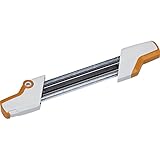
The Stihl 2-in-1 Easy File is a chainsaw chain sharpener intended for 3/8-inch chains. It is aimed at homeowners who maintain their own chains and want a tool that addresses cutter sharpening and depth-gauge care together.
Stihl describes the file holder as resharpening the cutter and lowering the depth gauge in a single operation. Bringing these tasks together may simplify routine chain care, though correct setup and technique remain important for consistent results.
The defining feature is its 2-in-1 file-holder design. The product information also identifies a 3/8-inch size and a 3/8-inch-24 thread size; check that these specifications match your chain and intended use before purchasing.
For backyard work, this tool may suit homeowners who use a chainsaw for pruning larger limbs, clearing fallen branches, or managing firewood. It is a chainsaw accessory, not a general garden sharpener for hand pruners or other cutting tools.
Use a sharpener only with a compatible chain and follow Stihl’s instructions for setup and safe chain maintenance. The product information does not specify additional adjustment controls or storage features, so buyers who need a different chain size or a broader sharpening tool should consider another option. Overall, it is a focused choice for 3/8-inch chain care that combines two maintenance steps in one operation.
Best For / Avoid If
Best for buyers prioritizing
- Handles cutter resharpening and depth-gauge lowering in a single operation.
- Identifies 3/8-inch chain sizing, which helps shoppers check fit before buying.
- Combines two chain-care functions in one file holder.
Consider another option if
- It is specified for 3/8-inch chains, so owners of other chain sizes should confirm compatibility or choose a matching sharpener.
- It is a specialized chainsaw accessory and will not sharpen general garden tools such as pruners or shears.
- Who should skip it: gardeners without a chainsaw, or chainsaw owners whose chain size is not compatible.

Pros
- Designed for frequent, higher-volume chain sharpening.
- Works with chains from brands including Oregon, Stihl, and Husqvarna, within its stated pitch limit.
- Includes two grinding wheels and a disc for depth gauge maintenance.
Cons
- At 19 lb, it may be less convenient for gardeners who need a portable sharpener.
- Who should skip it: occasional chainsaw users who do not need a dedicated, mountable workshop grinder.
Oregon’s Professional Compact 120-volt bench chain grinder is a powered sharpener for maintaining chainsaw chains. Oregon positions it for professional users and frequent, higher-volume sharpening, making it a better fit for a home workshop or garage than for occasional field touch-ups.
The grinder sharpens chain up to .404-inch pitch and is described as compatible with chains from manufacturers such as Oregon, Stihl, and Husqvarna. Multiple adjustment points help control positioning, while the built-in light improves visibility around the sharpening area.
It can be mounted to a bench or wall using the two included bolts. Its dimensions are 15.4 by 11.85 by 10.3 inches and it weighs 19 lb, so plan a stable mounting location with enough room to work around it.
For homeowners who maintain chainsaws for regular yard cleanup, firewood preparation, or property work, a fixed grinder can make repeated chain maintenance more convenient than relying on a handheld sharpening tool. The included 3.2 mm and 4.7 mm grinding wheels cover sharpening needs, while the 6.0 mm flat profile disc is intended for depth gauge maintenance.
Before use, read the operator instructions and follow the manufacturer’s guidance for setup, adjustment, and safe operation. Check that your chain pitch and sharpening requirements are compatible, and keep the grinder securely mounted. The fixed, 19 lb design may be less suitable for mobile use or a gardener who sharpens chains only rarely.
This is a practical option for chainsaw owners who sharpen often and have a dedicated workspace. Those seeking a compact portable tool for occasional maintenance should consider a different type of sharpener.
Best For / Avoid If
Best for buyers prioritizing
- Designed for frequent, higher-volume chain sharpening.
- Works with chains from brands including Oregon, Stihl, and Husqvarna, within its stated pitch limit.
- Includes two grinding wheels and a disc for depth gauge maintenance.
Consider another option if
- At 19 lb, it may be less convenient for gardeners who need a portable sharpener.
- Who should skip it: occasional chainsaw users who do not need a dedicated, mountable workshop grinder.

Pros
- Portable kit includes a storage bag and several useful accessories.
- Manual crank operation avoids dependence on batteries or a power outlet.
- Adjustable positioning and guide holes support more controlled sharpening.
Cons
- Buyers need to confirm that the jig and sharpening rods match their chain before use.
- Manual sharpening requires careful alignment and repeated repositioning along the chain.
- Who should skip it: Gardeners who want a powered sharpener or need a setup tailored to a specific chain specification.
The CONGDAREN 2027 is a portable, hand-crank chainsaw sharpener intended for maintaining chain teeth. It may suit homeowners and chainsaw enthusiasts who prefer a manual jig for routine yard work and wood-cutting tasks.
CONGDAREN specifies a 30° sharpening angle and two guide holes to help keep the rod aligned as each tooth is sharpened. The adjustable rod position allows alignment to be changed, which can help users work through a chain more consistently.
The sharpening process involves fastening the jig to the guide board with three black buttons, inserting a rod into the handle, and guiding it through the appropriate hole. The kit includes five sharpening rods, a cleaning brush, cut-resistant gloves, instructions, and a storage bag. Its listed weight is 0.5 lb, and its dimensions are given as 1 x 1 x 1 inches.
For a homeowner who uses a chainsaw for occasional pruning or cutting firewood, a portable manual kit can be kept with other maintenance supplies and used away from a workshop. The manufacturer states compatibility with 8- to 22-inch chainsaws, but bar length alone may not establish fit for every chain, so check the chain’s specifications before buying.
Sharpening requires careful alignment and moving the chain tooth by tooth. Secure the saw and follow the instructions, and handle the chain and rods cautiously; the included cut-resistant gloves do not replace safe work practices. The manufacturer describes the construction as rust-resistant, but routine cleaning and dry storage are sensible maintenance steps.
This kit is a practical option for owners comfortable with manual chain maintenance who value portability and included accessories. Those seeking powered sharpening or a tool confirmed for a particular chain specification should consider another option or verify compatibility first.
Best For / Avoid If
Best for buyers prioritizing
- Portable kit includes a storage bag and several useful accessories.
- Manual crank operation avoids dependence on batteries or a power outlet.
- Adjustable positioning and guide holes support more controlled sharpening.
Consider another option if
- Buyers need to confirm that the jig and sharpening rods match their chain before use.
- Manual sharpening requires careful alignment and repeated repositioning along the chain.
- Who should skip it: Gardeners who want a powered sharpener or need a setup tailored to a specific chain specification.

Pros
- Small dimensions support convenient storage in a tool area.
- Includes five grinding stones for chain-sharpening tasks.
- Described for use with both electric and gas chainsaws.
Cons
- The manufacturer does not specify the sharpening angle or stone diameters, so check that the accessories suit your chain before purchase.
- The product information does not explain setup or sharpening technique, which may be a hurdle for first-time users.
- Who should skip it: gardeners who need a guided filing system or a sharpener confirmed for a specific chain pitch should consider a more clearly specified option.
F WPKID’s portable chainsaw sharpener is intended for maintaining chains used in gardening, yard work, and woodworking. Its stated compatibility range covers electric and gas chainsaws with 4- to 22-inch bars, making it a potential option for homeowners who already know their chain’s sharpening requirements.
The manufacturer describes the tool as a way to restore chain sharpness and includes five grinding stones. Keeping a chain sharp is part of routine saw maintenance, but results depend on matching the accessory and sharpening method to the particular chain.
At 4 x 3 x 2.5 inches, the sharpener has a compact footprint for a workshop shelf or tool kit. It is orange, and the manufacturer describes it as lightweight and portable. Specific setup steps, operating controls, and stone dimensions are not specified, so buyers should check compatibility and instructions before use.
For backyard wood cutting or occasional property maintenance, a portable sharpener may be convenient to keep with other chainsaw care supplies. The stated bar-length range is a starting point, not a substitute for checking chain pitch and the correct sharpening accessory.
Chainsaw sharpening involves a sharp cutting chain and a power tool. Follow the chainsaw and sharpener instructions, secure the saw as directed, and use appropriate protective equipment. F WPKID does not specify the sharpening angle or detailed maintenance procedure, so careful users should confirm those details before beginning.
This may suit owners seeking a compact sharpener with several grinding stones. Gardeners who want guided alignment, clearly stated stone sizes, or confirmed fit for a particular chain should consider another option with those details spelled out.
Best For / Avoid If
Best for buyers prioritizing
- Small dimensions support convenient storage in a tool area.
- Includes five grinding stones for chain-sharpening tasks.
- Described for use with both electric and gas chainsaws.
Consider another option if
- The manufacturer does not specify the sharpening angle or stone diameters, so check that the accessories suit your chain before purchase.
- The product information does not explain setup or sharpening technique, which may be a hurdle for first-time users.
- Who should skip it: gardeners who need a guided filing system or a sharpener confirmed for a specific chain pitch should consider a more clearly specified option.

Pros
- Keeps the chain installed on the saw during sharpening.
- Guided sleeves and cutter positioning support a more controlled manual process.
- Compact kit includes the crank, wrench, fastening hardware, and spare bits.
Cons
- The included bits are all the same size, so buyers should confirm 3.2 mm (1/8 inch) is appropriate for their chain.
- Manual sharpening requires advancing the chain and working through cutters individually, which may take patience.
- Who should skip it: Anyone with a damaged or unsafe chain, an incompatible chain, or a preference for powered sharpening should consider another approach.
The FREEZE2TRIM is a manual, bar-mounted chainsaw sharpener for maintaining individual cutters while the chain remains installed. It may suit homeowners who handle firewood, fallen limbs, or routine property upkeep and want a compact tool that does not rely on a battery or outlet.
Its angled guide sleeves direct the sharpening bit, while an integrated positioning mechanism helps align the tool with one cutter at a time. Three clamping knobs help stabilize the body during use. These features are intended to provide guidance during manual sharpening, but the chain must be compatible with the tool.
To assemble it, attach the hand crank to one of the included 3.2 mm (1/8-inch) bits and secure the fastener with the supplied wrench. The bit slides through the selected guide sleeve as you work. Withdraw it before advancing the chain, and follow the chain manufacturer's maintenance instructions.
The body measures about 2.68 x 2.36 x 1.06 inches, and the tool weighs 0.37 lb. Its compact format can fit with other chainsaw accessories in a home workshop or storage area, and the manual design is useful where an electrical connection is not convenient.
The three included bits are the same nominal size, so check that 3.2 mm (1/8 inch) suits your chain before use. This tool is not intended to repair cracked, bent, broken, or otherwise unsafe chain parts. Wear appropriate chainsaw protective equipment and secure the saw according to its manufacturer's guidance before maintenance.
Consider this sharpener if you want a portable, manually operated guide for compatible chains and are comfortable working through cutters one at a time. Who should skip it: users with unsafe or incompatible chains, or those who want powered sharpening or a different bit size.
Best For / Avoid If
Best for buyers prioritizing
- Keeps the chain installed on the saw during sharpening.
- Guided sleeves and cutter positioning support a more controlled manual process.
- Compact kit includes the crank, wrench, fastening hardware, and spare bits.
Consider another option if
- The included bits are all the same size, so buyers should confirm 3.2 mm (1/8 inch) is appropriate for their chain.
- Manual sharpening requires advancing the chain and working through cutters individually, which may take patience.
- Who should skip it: Anyone with a damaged or unsafe chain, an incompatible chain, or a preference for powered sharpening should consider another approach.

Pros
- Accommodates four commonly used chain pitches.
- Angle adjustment allows positioning for different sharpening needs.
- Designed for home maintenance as well as gardening, landscaping, and repair work.
Cons
- The bench-mounted format requires a suitable, stable workspace and may be less convenient for occasional users with limited workbench space.
- Who should skip it: Gardeners who do not own a chainsaw, prefer manual sharpening, or need a portable sharpener.
The VEVOR electric chainsaw sharpener is a bench-mounted tool for restoring dull chains. It is intended for homeowners, gardeners, landscapers, and repair workers who maintain chainsaw equipment rather than sharpen by hand.
VEVOR specifies a 230W motor with a speed of up to 3,000 RPM and a 5.5-inch grinding wheel. The sharpener accommodates 1/4-inch, 0.325-inch, 3/8-inch, and 0.404-inch chain pitches, so it can serve users with more than one compatible chain size.
Adjustable grinding angles allow the chain to be positioned for different sharpening needs. The unit is described as bench-mounted and measures 10 by 10 by 15 inches, so plan for a stable work surface with enough room to position and handle the chain.
For backyard use, this setup may be practical for homeowners who regularly maintain a chainsaw for pruning or other property work. Its stated applications also include logging, landscaping, and repair work, though it is a stationary workshop tool rather than a portable option.
Grinding chains involves a powered wheel, so follow the manufacturer’s instructions and use appropriate eye protection. Check that your chain pitch is compatible and that your workbench can accommodate the unit before getting started. The manufacturer does not specify additional safety features here.
This sharpener is worth considering for users who want powered sharpening across several chain pitches and have a dedicated work area. Occasional users with little storage or bench space, and gardeners who do not maintain chainsaw chains, may prefer a different approach.
Best For / Avoid If
Best for buyers prioritizing
- Accommodates four commonly used chain pitches.
- Angle adjustment allows positioning for different sharpening needs.
- Designed for home maintenance as well as gardening, landscaping, and repair work.
Consider another option if
- The bench-mounted format requires a suitable, stable workspace and may be less convenient for occasional users with limited workbench space.
- Who should skip it: Gardeners who do not own a chainsaw, prefer manual sharpening, or need a portable sharpener.
Pros
- Motor speed and power are clearly specified.
- Adjustable angle and stated pitch range offer flexibility across compatible chains.
- Compact dimensions and a mountable base suit a fixed workbench setup or compact storage.
Cons
- The manufacturer does not specify which grinding wheels or other accessories are included, so check what is needed for your chain before buying.
- It requires a suitable mounting surface and an electrical outlet, which may be less convenient for sharpening away from a workshop.
- Who should skip it: users who prefer a manual file, need a cordless sharpener, or have chains outside the stated pitch range.
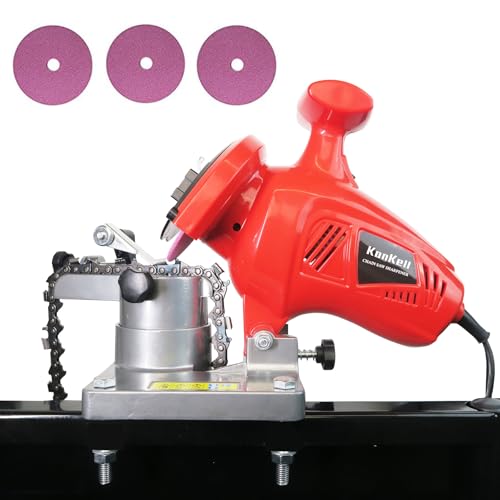
The KonKell is an electric chainsaw chain sharpener for maintaining compatible chains, rather than a chainsaw or general garden grinder. Its stated 1/4-inch to 3/8-inch pitch range makes it a potential fit for homeowners and DIY users who regularly maintain chainsaw equipment.
KonKell specifies a 250W motor running at 8,400 RPM. That combination is intended to support efficient grinding, while the adjustable angle gives users a way to set the sharpening position for different compatible chains. Check your chain’s sharpening requirements before use.
The sharpener has a mountable base intended to reduce movement during operation. Its dimensions are 11 x 6 x 8.27 inches, and it weighs about 5.27 lb, making it a relatively compact option for a garage or workshop bench. A suitable mounting surface and access to an electrical outlet are needed.
For backyard users who maintain a chainsaw for pruning or cutting firewood, a bench-mounted sharpener can keep chain upkeep close at hand. Its compact form may also work in a small home workshop where storage space matters, though the product is designed for chainsaw chains, not general garden-tool sharpening.
Use care around the grinding wheel and chain, secure the sharpener before operation, and follow the manufacturer’s instructions for setup and safe sharpening. The manufacturer does not specify which accessories are included, so confirm wheel and chain compatibility before purchase. Consider another option if you need cordless operation, a manual tool, or support for a chain pitch outside the stated range.
Best For / Avoid If
Best for buyers prioritizing
- Motor speed and power are clearly specified.
- Adjustable angle and stated pitch range offer flexibility across compatible chains.
- Compact dimensions and a mountable base suit a fixed workbench setup or compact storage.
Consider another option if
- The manufacturer does not specify which grinding wheels or other accessories are included, so check what is needed for your chain before buying.
- It requires a suitable mounting surface and an electrical outlet, which may be less convenient for sharpening away from a workshop.
- Who should skip it: users who prefer a manual file, need a cordless sharpener, or have chains outside the stated pitch range.




How to choose a chainsaw sharpener
Start with your chain, not the sharpener
Find the chain pitch and the recommended file or grinding-wheel size in your chainsaw or chain manual. Pitch describes the spacing of the chain links; it is not the same as the bar length. A sharpener that cannot take the right file size or be set for the chain’s sharpening angle is a poor fit, even if its title suggests broad compatibility.
Check the exact model instructions before buying. The Stihl 2 in 1 Easy File Chainsaw Chain Sharpener is identified for a 3/8-inch chain, while the VEVOR sharpener states a pitch range of 0.25 to 0.404 inch and the Konkell model states 1/4 to 3/8 inch. These stated ranges are not a substitute for confirming the correct grinding wheel, file, and setup for your particular chain.
Choose manual, handheld electric, or bench-mounted
A manual file or jig is compact and does not depend on an electrical supply. It can suit an occasional user who is willing to work carefully tooth by tooth. Handheld electric sharpeners reduce repeated manual filing motions, but still require steady positioning and the correct attachment. Bench-mounted grinders make more sense when you sharpen regularly and have a stable place to secure the machine.
Consider the full routine, not just sharpening time. A bench grinder takes dedicated storage and setup space; a portable tool is easier to put away, but its compact form does not remove the need for careful alignment. For one or two chains used seasonally, a simple manual option may be the more proportionate choice.
Look for guidance that supports consistent filing
Each cutter should be sharpened to a consistent angle and depth. A guide attachment, bar-mounted jig, or clear angle adjustment can help maintain repeatability, but it cannot confirm that you have selected the right setting. Follow the chain maker’s instructions and work evenly across the cutters. Avoid removing more metal than needed, since repeated aggressive grinding shortens chain life.
Manual tools demand a steady hand; electric tools demand control over pressure and contact. Neither format makes technique irrelevant. If cutters are badly damaged, uneven, or have reached their service limit, consult a qualified service provider or replace the chain as directed by its manufacturer.
Match power and setup to your workspace
A corded sharpener needs a suitable power outlet and a work area where the cord will not interfere. A cordless model avoids a cord during use, but check what is included and how its charging requirements fit your routine. A bench unit needs a stable mounting surface and enough clear room to handle the chain safely.
Small yards and limited storage generally favor hand tools or a compact handheld sharpener. If you have a dedicated workshop and sharpen chains often, a bench grinder may be worth considering. For more on matching a chainsaw to a home yard, browse our lawn care and power equipment guides.
Account for comfort and accessibility
Manual filing involves repeated hand and wrist movements, while a handheld electric tool requires a stable grip and controlled positioning. A bench setup can reduce the need to hold a tool in the air, but requires handling and positioning the chain at the machine. Choose the approach that feels manageable for your strength, dexterity, and working posture.
Set up at a comfortable height with good lighting and a secure surface. If a task causes discomfort or makes it hard to hold the tool steadily, pause rather than pushing through. A local chainsaw service can be a sensible alternative when sharpening at home is not comfortable.
Use power sharpeners with care
Before sharpening, switch off and isolate the chainsaw according to its manufacturer’s instructions. Remove the chain only if the saw manual calls for it and you know how to reinstall and tension it correctly. Keep hands clear of moving parts, use appropriate eye protection, and secure the workpiece or machine as directed by its manual.
For electric equipment, follow the sharpener’s electrical safety instructions and inspect cords and components before use. Do not operate a damaged tool or improvise a setup. Manufacturer instructions for both the sharpener and chainsaw take priority, especially for chain tension, sharpening angles, and protective equipment.
Maintain and store the sharpener
Brush away filings and debris after use, and inspect files, bits, wheels, guides, and fasteners for wear or damage. Replace consumable sharpening parts when the manufacturer calls for it. Keep small components together so the correct size is available for the next sharpening session.
Store manual and handheld tools in a dry, organized place, and keep bench equipment protected from dust when not in use. Check the manual for any specific cleaning, adjustment, or storage instructions. A tidy setup also makes it easier to notice a missing attachment or damaged part before starting work.
Avoid common buying and sharpening mistakes
Do not choose by price or a broad compatibility claim alone. Confirm the chain specification, included file or wheel sizes, and adjustment range. Product names that say a tool fits many saws do not establish that it is appropriate for every chain design.
During sharpening, avoid changing angles from tooth to tooth or applying excessive pressure. Follow the chain’s prescribed filing direction and depth-gauge guidance. If you are uncertain about the chain type or its condition, use the manufacturer’s documentation or ask a qualified chainsaw service professional.
How we evaluate chainsaw sharpeners
We evaluate sharpeners by the work they are designed to do and the information relevant to a homeowner’s chain. That includes sharpening format, stated pitch or chain compatibility, file or grinding-wheel options, angle guidance, power source, mounting needs, and portability. A clear match to a known chain specification matters more than a general-purpose claim.
We also assess practical ownership factors: whether the tool suits occasional or frequent sharpening, how much space its setup requires, what accessories are identified, and what maintenance the format is likely to involve. Owner feedback is considered where available, with specific attention to usability and recurring concerns rather than treating popularity as proof of fit.
Recommendations are framed around distinct home-garden scenarios rather than a universal winner. We review this guide during November 2026 and update it as product details and homeowner needs change. For broader equipment advice, visit our homeowner chainsaw buying guide.
Frequently asked questions
Which type of sharpener is easiest for occasional yard work?
A manual file or guided tool is compact and does not need power, while a handheld electric sharpener reduces repeated filing motions. The easier option depends on your comfort with hand filing and your ability to hold an electric tool steadily. Confirm compatibility with your chain before choosing either style.
How do I know what file size my chain needs?
Check the chainsaw or chain manufacturer’s manual and identify the chain model or specification. Do not infer file size from bar length alone. If markings are missing or unclear, ask a qualified service provider before sharpening.
Is a bench grinder worth keeping at home?
It may make sense if you sharpen chains regularly and have room for a securely mounted machine. For occasional homeowner use, a manual or handheld option can take up less dedicated workspace. Compare the grinder’s stated compatibility and setup requirements with your actual chain and routine.
Can one sharpener fit every chainsaw chain?
Do not assume so. Chain pitch, cutter geometry, and the required file or grinding wheel affect compatibility. Treat broad claims as a starting point, then confirm the exact chain specification and setup in the manufacturer’s instructions.
How should I store a chain sharpener?
Clean away filings and keep the tool and small attachments together in a dry, organized place. Store a bench unit where it is protected from dust and cannot be knocked or disturbed. Follow the manual for any model-specific storage or maintenance steps.
What safety steps matter when sharpening a chain?
Follow the instructions for both the saw and sharpener, isolate the saw from power before handling the chain, and use appropriate eye protection. Keep hands clear of moving parts and secure the work as directed. If you are unsure how to remove, sharpen, or tension the chain safely, seek qualified service.