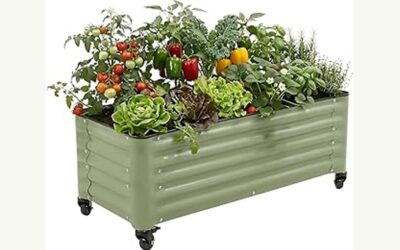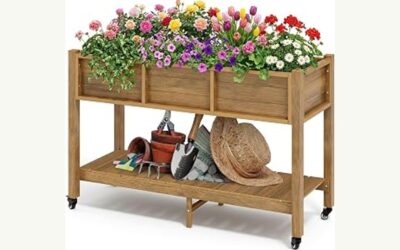



Determining what is the best height for a raised garden bed is one of the most critical decisions you will make when planning an edible or ornamental garden. The height of your planting bed dictates how comfortably you can weed, prune, and harvest, while directly influencing root development, moisture retention, and soil temperature. Whether you are rehabilitating poor native soil in a suburban backyard or configuring an accessible growing area on a patio, choosing the correct sidewall depth ensures your plants thrive without placing unnecessary strain on your back or your wallet.
This guide evaluates the structural and horticultural trade-offs across common bed heights to help beginner growers, older gardeners, and urban homesteaders choose the ideal setup. No single bed height can be a universal winner, because height must always align with individual physical needs, yard conditions, and plant varieties. Instead of promoting a single generic planter, we examine dimensional tiers ranging from shallow borders to waist-high structures, identifying the advantages and limitations of each style within our broader collection of Raised Beds & Planters.
To establish which bed height works best for your yard, we analyze several practical criteria: root penetration requirements for common vegetables, structural integrity against soil pressure, soil filling costs, accessibility, and moisture dynamics. By understanding how bed depth interacts with plant physiology and garden maintenance, you can invest in a setup that yields healthy crops for years to come.
Buying Guide: Selecting the Right Raised Bed Height
Standard 6 to 8-Inch Beds: Budget-Friendly and Open-Bottom Setups
A 6 to 8-inch raised bed is the classic starter dimension for home gardeners working on existing turf or tilled soil. This profile requires minimal construction materials, making it an affordable entry point when building multiple beds across a large area. At this height, the bed acts primarily as a defined perimeter that prevents turf grass encroachment and allows you to introduce a high-quality compost blend over existing topsoil.
However, 6 to 8-inch beds rely heavily on the quality of the native soil beneath them. If your native ground consists of heavy clay, dense hardpan, or rocky rubble, deep-rooting vegetables will struggle once their roots extend past the lower frame. Additionally, low beds provide minimal ergonomic relief, requiring gardeners to kneel or stoop frequently during planting and maintenance.
11 to 12-Inch Beds: The Optimal Middle Ground for Most Vegetables
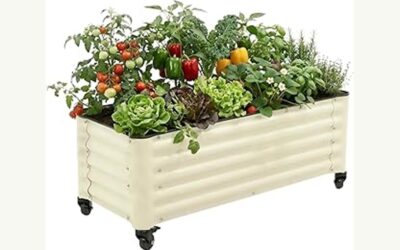
A depth of 11 to 12 inches (typically built using two 2×6 boards or standard modular metal panels) represents the industry standard for home vegetable gardening. This depth accommodates the active root zones of nearly all popular garden crops, including tomatoes, peppers, brassicas, bush beans, and leafy greens. If you are designing dedicated spaces such as a best raised garden bed for herbs, a 12-inch profile supplies more than enough soil volume for vigorous root systems.
From an operational standpoint, 12-inch beds strike a sensible balance between soil purchasing costs and growing performance. They provide enough elevation to warm up earlier in the spring than ground-level plots, while retaining moisture better than very tall, free-draining structures. They remain relatively easy to assemble and maintain, though gardeners with mobility challenges will still need to bend or sit on the edge to work the soil.
15 to 18-Inch Beds: Ideal for Root Crops and Moderate Ergonomics
When gardeners ask what is the best height for a raised garden bed that balances comfort and crop versatility, the 15 to 18-inch tier frequently emerges as the top answer. This intermediate height provides deep, loose soil that is essential for straight, uninhibited taproot growth. Gardeners seeking the best raised garden bed for root vegetables like long carrots, parsnips, and large daikon radishes will find that 17 to 18 inches prevents deformed roots even when placed over impenetrable native ground.
The extra height also offers practical ergonomic advantages. At 18 inches, the top edge doubles as a comfortable seat, allowing gardeners to tend crops from a seated position rather than kneeling in damp mulch. This depth also deters casual garden pests like rabbits and small dogs, who are less likely to hop over an 18-inch sidewall compared to an 8-inch timber border.
24 to 32-Inch Tall Beds: Maximum Accessibility and Comfort
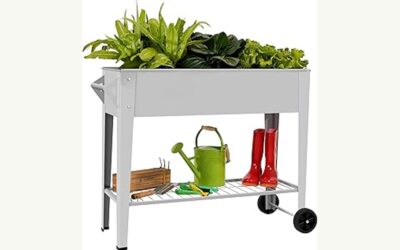
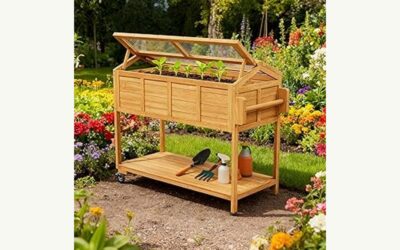
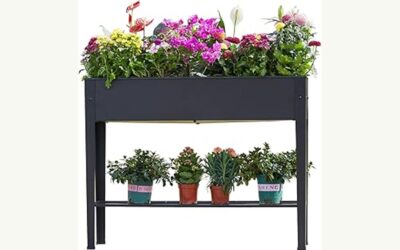
Beds measuring 24 to 32 inches tall bring the planting surface within easy reach of standing gardeners or those using mobility aids. For older adults, people recovering from back surgery, or anyone who experiences joint pain from prolonged bending, waist-high gardening transforms routine maintenance from a painful chore into an enjoyable hobby. Weeding, thinning seedlings, and inspecting foliage for pests can all be done while standing upright.
The trade-off with tall beds is structural pressure and soil expense. A bed measuring 4 feet wide, 8 feet long, and 30 inches deep holds roughly 80 cubic feet of material, which can be expensive to fill with bagged potting mix or bulk garden soil. Gardeners often use organic bulk fillers in the bottom half to manage costs, a technique detailed below.
Soil Volume Requirements and Filling Strategies
As raised bed height increases, the volume of required soil expands linearly, significantly impacting your initial setup budget. To calculate the volume needed, multiply length by width by height in feet to determine cubic feet, then divide by 27 to find cubic yards. For example, doubling bed height from 12 inches to 24 inches doubles your soil expense unless you plan ahead.
For beds 18 inches or taller, many gardeners use the hugelkultur approach to fill the lower section. By laying untreated logs, tree branches, dry leaves, and cardboard across the bottom 40 to 50 percent of the bed, you create a slow-decomposing sponge layer that saves money on soil. As this wood slowly breaks down over several seasons, it feeds beneficial soil fungi, retains moisture, and gradually settles, requiring only a moderate compost top-up each spring.
Drainage, Soil Temperature, and Watering Dynamics
Bed height fundamentally alters soil moisture and temperature dynamics throughout the growing season. Taller beds drain faster than low beds because gravitational head pressure pulls excess water downward through the soil column. This fast drainage is a major benefit during wet spring months, preventing root rot and allowing you to plant earlier. Taller soil masses also warm up faster in spring sunshine, accelerating early root establishment.
The inverse challenge occurs during high summer. In July and August, beds 24 to 32 inches high lose moisture rapidly through their sidewalls and upper root zone, requiring frequent watering or dedicated drip lines. Conversely, 8 to 12-inch open-bottom beds stay cooler and retain deep subsoil moisture longer, making them more forgiving if you miss an irrigation cycle during a heatwave.
Matching Bed Height to Specific Vegetable Crops
Different vegetables exhibit wildly divergent rooting depths. Matching your crop selection to bed height ensures efficient resource use without under-potting deep feeders. While shallow-rooted crops perform well in modest beds, tall trellised plants present separate structural challenges.
| Bed Height Range | Ideal Crops | Root Depth Characteristics | Primary Considerations |
|---|---|---|---|
| 6 to 8 Inches | Lettuce, spinach, radishes, green onions | Shallow, fibrous (under 8 inches) | Must sit on loose native soil for deep drainage |
| 11 to 12 Inches | Peppers, bush beans, brassicas, culinary herbs | Moderate (10 to 12 inches) | Standard universal profile for most garden plots |
| 15 to 18 Inches | Carrots, parsnips, beets, determinate tomatoes | Deep taproots (12 to 18 inches) | Edge serves as a seat; excellent pest barrier |
| 24 to 32 Inches | Indeterminate tomatoes, squash, accessible greens | Full depth or layered fill | High harvest height; tall crops need heavy support |
When growing tall, heavy crops such as indeterminate tomatoes in a 30-inch bed, consider the final harvest height. A 6-foot tomato vine growing out of a 32-inch bed places the upper fruit nearly 9 feet off the ground, making harvesting difficult without a step stool. For such vigorous plants, combining an 11 to 17-inch bed with a sturdy system like the best tomato planter with trellis keeps the canopy within comfortable working reach.
Research Methodology and Evaluation Criteria
At Dove Creek Gardens, our editorial evaluations are based on horticultural literature, structural engineering principles for garden planters, and real-world feedback from home growers. We did not conduct destructive laboratory stress tests or run controlled multi-year crop trials for this dimensional overview. Instead, our conclusions synthesize proven soil-science principles, extension office recommendations, and consumer durability data updated for September 2026.
When assessing raised bed heights, our evaluation centers on four primary ranking criteria: root architecture compatibility, ergonomic advantage, structural longevity against outward soil load, and thermal stability. Outward lateral pressure increases substantially as soil depth exceeds 18 inches, which means taller beds require heavier gauge metal, thicker lumber, or internal bracing rods to prevent sidewall bowing over time.
We also evaluate the total cost of ownership, which combines the frame purchase price with the volume of soil and compost required to establish the bed. By balancing structural requirements against practical home garden budgets, we offer clear, transparent recommendations that help readers avoid overbuilding or under-sizing their garden infrastructure.
Frequently Asked Questions
What is the best height for a raised garden bed for beginners?
For most beginner gardeners, a height of 11 to 12 inches is ideal. It requires a manageable amount of soil to fill, accommodates almost all common vegetables, warms up quickly in the spring, and keeps construction or purchase costs reasonable.
Can a raised garden bed be too tall?
Yes, a bed can be too tall if it pushes tall-growing crops out of comfortable reach. For example, pole beans or indeterminate tomatoes planted in a 32-inch bed will produce crops well above eye level, requiring a step stool to harvest and prune. Taller beds also require substantial structural bracing to avoid bulging under soil weight.
How deep should a raised bed be if placed on concrete or pavers?
When placed over an impervious surface like concrete, asphalt, or stone pavers, the bed should be at least 15 to 18 inches deep. Because plant roots cannot penetrate the underlying surface, the bed itself must provide the entire root depth and water reserve for your crops.
Does a deeper raised bed dry out faster than a shallow one?
Yes, tall raised beds generally drain faster than low beds due to increased gravitational pull through the taller soil column. Additionally, beds taller than 20 inches have more exposed sidewall surface area, which absorbs solar heat and accelerates evaporation during hot summer weeks.
What is the best height for an accessible or senior-friendly raised garden bed?
A height between 28 and 32 inches is best for gardeners who want to stand comfortably without bending forward. For gardeners seated in standard wheelchairs, beds between 24 and 28 inches tall with comfortable reach distances across the bed offer the best combination of accessibility and leverage.
How do I fill the bottom of a 30-inch raised bed without buying expensive soil?
You can fill the bottom 40 to 50 percent of a deep bed using organic materials such as untreated logs, tree limbs, twigs, dry leaves, and shredded cardboard. Cover this hugelkultur layer with finished compost and high-quality potting mix in the top 12 to 15 inches where plant roots actively feed.
Continue your garden research
Browse more practical guides in Raised Beds & Planters.
For product comparisons, see Best Galvanized Raised Garden Beds.
See how Dove Creek Gardens researches and compares products.