

Raised beds can make planting more organized, but choosing one means balancing growing space, working height, drainage, material, and the amount of soil you need to fill it. This guide compares six Best Raised Garden Beds options for home gardeners, including low beds for yards, deep metal beds, and elevated planters for patios.
We compared the published specifications and owner-feedback information, focusing on dimensions, stated capacity, construction, assembly features, and likely use-case fit. Before choosing, measure the site, consider what you plan to grow, and check the bed’s load limit if placing it on a deck or balcony. For crop-planning help, see our guide to vegetables that grow well in raised beds.
Best Choice Products SKY2376 8×2 Wooden Raised Garden Bed for Organized Backyard Planting Best Choice Products SKY6142 Metal Raised Garden Bed for Deep-Root Vegetable Growing Best Choice Products SKY6152 Elevated Wood Raised Bed for Patio Vegetable Growing Best Choice Products SKY11208 Elevated Galvanized Raised Bed for Easier Patio Vegetable Gardening Prices and availability can change. We may earn a commission from qualifying purchases.


Pros
- Spacious 8-foot length works well for row-style planting or dividing different plant types in one bed.
- Narrow 24-inch width makes it easier to reach across from one side than wider raised beds.
- Included divider and liner add practical value for gardeners setting up a basic bed without sourcing those pieces separately.
- Reviewers commonly mention that it looks nice once assembled and is generally easy to put together, though assembly experiences vary.
Cons
- At 10 inches high, it may be less suitable for gardeners who want a deeper raised bed for large root systems or less bending.
- The unfinished wood may require sealing or other care if you want to extend its outdoor service life.
- Some reviewer feedback notes cracked joiners or tight-fitting dovetail pieces, so assembly quality may vary from unit to unit.
The Best Choice Products SKY2376 is an outdoor wooden raised garden bed designed for vegetables, flowers, herbs, and other small garden plantings. Its 96-inch length and 24-inch width make it a practical choice for homeowners who want a long planting strip without taking over a large section of yard.
Based on the listed specifications, the main advantage is organized growing space. The included middle divider lets you separate plant types or planting plans within the same bed, which is helpful for beginners learning spacing, watering routines, and seasonal crop rotation on a small scale.
The bed is made from natural Chinese fir wood and has a traditional unfinished appearance. The panels are described as pre-sanded and built with dovetail joints that slide together, then lock in place with screw-fastened posts. An included liner separates the soil from the wood, and the product listing also notes a drainage feature for outdoor use.
In a backyard, this raised bed can work along a fence, beside a greenhouse, near a patio edge, or in a narrow lawn area where a full-width garden plot would be inconvenient. The 10-inch height gives a defined planting area and can help keep soil contained, but it is still a low bed, so gardeners should expect some bending when planting, weeding, or harvesting.
There are a few practical considerations before buying. Because the finish is listed as unfinished, gardeners who want longer outdoor durability may want to consider appropriate wood care before filling it. Reviewer feedback is mostly positive about the look and general setup, but some users report tight-fitting joints or cracked connecting pieces, so inspect parts before assembly and avoid forcing thin boards with excessive impact.
This is a sensible option for gardeners who want a simple, natural-looking raised bed with a divider and liner included. Gardeners who need a taller accessibility bed, a deeper planting profile, or a heavier-duty structure may prefer a different raised bed style.
Best For / Avoid If
Best for buyers prioritizing
- Spacious 8-foot length works well for row-style planting or dividing different plant types in one bed.
- Narrow 24-inch width makes it easier to reach across from one side than wider raised beds.
- Included divider and liner add practical value for gardeners setting up a basic bed without sourcing those pieces separately.
Consider another option if
- At 10 inches high, it may be less suitable for gardeners who want a deeper raised bed for large root systems or less bending.
- The unfinished wood may require sealing or other care if you want to extend its outdoor service life.
- Some reviewer feedback notes cracked joiners or tight-fitting dovetail pieces, so assembly quality may vary from unit to unit.
Pros
- Deep 269-gallon capacity gives gardeners room for substantial soil volume and root growth.
- Listed non-toxic materials are independently tested to meet FHSA standards and are stated to be free from heavy metals and phthalates.
- The 24-inch height can reduce bending compared with planting directly at ground level.
- Reviewers commonly mention straightforward assembly, though some note that a second set of hands can help.
- Modern gray metal finish suits many backyard, side-yard, or small vegetable garden layouts.
Cons
- The bed does not include a bottom panel, so it is not intended as a fully enclosed planter for decks or surfaces where soil contact is a concern.
- Its large soil capacity can require a significant amount of fill material before planting.
- Some reviewers report that support bars or edging may feel lightweight, so gardeners should avoid leaning on the sides or braces.
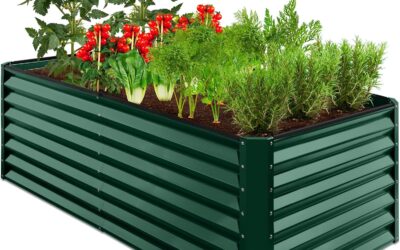
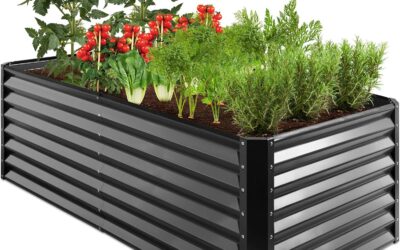
The Best Choice Products SKY6142 is a 6 x 3 x 2 ft outdoor metal raised garden bed made for growing vegetables, herbs, flowers, and succulents. It is best suited to homeowners and beginner-to-intermediate gardeners who want a defined growing space with more depth than a shallow planter. The product information lists a 269-gallon capacity and a 24-inch growing depth, which makes it especially relevant for crops that benefit from deeper soil.
The main gardening advantage is usable root space. At 24 inches tall, this raised bed can hold a large volume of growing mix and is described by the manufacturer as suitable for medium to deep-rooting plants such as broccoli and beans. The taller sides can also make routine planting, weeding, and harvesting more comfortable than working at ground level, especially for gardeners who prefer not to bend as far.
The bed is built from powder-coated steel panels with a non-corrosive finish, according to the listed features. It assembles with included wingnuts and bolts, and the product includes rubber edging, four ground stakes, and two stabilizing rods. The manufacturer describes the assembly as tool-free, though reviewers commonly note that the many fasteners take time and that working with another person can make setup easier.
Because this raised bed has no bottom panel, it is intended to sit directly on the ground rather than function as a sealed container. That open-bottom layout can be helpful for drainage and for connecting the bed to the soil below. In a backyard or side-yard vegetable patch, the 72 x 36 inch footprint provides enough planting room for a small crop rotation, mixed herbs and flowers, or a compact kitchen garden while still allowing access from the sides.
There are a few practical considerations before buying. The 269-gallon capacity means it will take a lot of soil or layered organic fill to bring the bed up to planting height. Since some reviewers mention lightweight support bars or edging, it is wise not to sit or lean on the panels or braces. Wear gloves during assembly, check that all fasteners are secure, and place the bed where you want it before filling, because moving it afterward can be difficult.
Overall, this is a useful raised bed for gardeners who want deep growing capacity, an open-ground design, and a clean metal look without a complex installation. Gardeners placing a planter on a deck, balcony, or paved patio may want a fully bottomed container instead, while those building a ground-level backyard garden will likely find this size and depth practical for vegetables, herbs, and flowers.
Best For / Avoid If
Best for buyers prioritizing
- Deep 269-gallon capacity gives gardeners room for substantial soil volume and root growth.
- Listed non-toxic materials are independently tested to meet FHSA standards and are stated to be free from heavy metals and phthalates.
- The 24-inch height can reduce bending compared with planting directly at ground level.
Consider another option if
- The bed does not include a bottom panel, so it is not intended as a fully enclosed planter for decks or surfaces where soil contact is a concern.
- Its large soil capacity can require a significant amount of fill material before planting.
- Some reviewers report that support bars or edging may feel lightweight, so gardeners should avoid leaning on the sides or braces.
Pros
- Good working height for gardeners who prefer not to garden at ground level.
- Large enough for a small-space vegetable or flower planting while still fitting many patios and decks.
- Includes drainage holes, an important feature for container-style raised beds.
- Natural unfinished wood appearance suits traditional outdoor garden settings.
Cons
- Unfinished wood may require extra care or a compatible exterior finish if gardeners want added surface protection or a different look.
- At 72 inches long, it may be too large for very tight balconies or narrow walkways.
- Gardeners who need very deep root space for larger crops may prefer a deeper ground-level raised bed.
The Best Choice Products SKY6152 is an elevated wood raised garden bed designed for outdoor container-style growing. Based on the listed specifications, it is intended for vegetables, flowers, succulents, and similar plantings where a raised, accessible work height is useful. It is especially relevant for patio gardeners, balcony growers with enough floor space, and homeowners who want a contained planting area without building a permanent bed.
The main gardening benefit is its combination of usable planting space and easier access. The bed measures 72 inches long by 24 inches wide and holds 8.4 cubic feet of growing medium, giving beginners enough room to group several smaller crops or ornamental plants. The elevated layout also keeps the planting surface off the ground, which can make routine watering, thinning, and harvesting more comfortable than kneeling beside a traditional bed.
Drainage is an important detail in any raised planter, and this model includes six drainage holes to let excess water escape. That feature can help reduce waterlogged soil when paired with an appropriate potting or raised-bed mix. The product information lists all-wood Chinese fir construction, a natural color, a traditional rectangular shape, six legs, and a 300 lb weight capacity.
For small-space use, the long and narrow footprint can work well along a deck rail, patio wall, fence line, or sunny backyard edge. It may also suit gardeners who want to separate herbs from in-ground beds, grow salad greens close to the kitchen, or keep a few flowers at a more visible height. The included divider panel mentioned in the title may be useful for organizing plantings, although gardeners should confirm the assembly layout before filling the bed.
There are a few practical considerations before buying. The finish is listed as unfinished, so owners who want a sealed or stained look may need to choose a plant-safe exterior treatment appropriate for garden use. Because the planter is 72 inches long, measuring the intended location is important, and it should be placed on a level surface that can support the combined weight of the planter, soil, water, and plants.
Overall, this is a sensible option for gardeners who want a natural wood elevated bed with generous length, drainage, and a comfortable working height. It is less ideal for very tight balconies, gardeners needing extra-deep soil for large root systems, or anyone who prefers a fully finished planter that requires no additional surface care.
Best For / Avoid If
Best for buyers prioritizing
- Good working height for gardeners who prefer not to garden at ground level.
- Large enough for a small-space vegetable or flower planting while still fitting many patios and decks.
- Includes drainage holes, an important feature for container-style raised beds.
Consider another option if
- Unfinished wood may require extra care or a compatible exterior finish if gardeners want added surface protection or a different look.
- At 72 inches long, it may be too large for very tight balconies or narrow walkways.
- Gardeners who need very deep root space for larger crops may prefer a deeper ground-level raised bed.
Pros
- Accessible working height is helpful for gardeners who want less bending than an in-ground bed requires.
- Large single-level planting space supports a useful mix of small vegetables, herbs, and ornamentals.
- Freestanding elevated design can be placed on patios, porches, yards, or compact garden spaces.
- Product information emphasizes non-toxic material testing for gardeners concerned about food-growing materials.
Cons
- Assembly is required, and reviewers suggest following the instructions closely and leaving hardware loose until panels are aligned.
- At 50 pounds before filling and with a listed 600 pound fill capacity, placement should be planned before adding soil.
- Gardeners wanting a deeper bed for large root crops or very tall plants may prefer a different raised bed style.
The Best Choice Products SKY11208 is an elevated galvanized metal raised garden bed designed for outdoor growing in yards, patios, porches, and small garden areas. Its 30 inch height is the main practical advantage, giving beginners, homeowners, and older gardeners a raised planting surface that can reduce the need to bend or kneel during planting, watering, weeding, and harvesting.
The listed growing space measures 72 inches long by 24 inches wide, with 12.5 cubic feet of planting space and a 600 pound fill capacity. That size is useful for a compact vegetable garden, a row of herbs, a pollinator-friendly flower planting, or a mixed seasonal display. The product information also states that the materials are non-toxic, independently tested to meet FHSA standards, free from heavy metals and phthalates, and compliant with PFAS screening and California Proposition 65.
Design details include a freestanding rectangular form, galvanized metal material, charcoal color, and a modern style. The specifications list drainage holes and the description refers to an integrated drainage system, which is important because container gardens need a way for excess water to leave the root zone. As with most elevated planters, gardeners should choose a suitable potting mix rather than heavy yard soil, especially when placing the bed on a deck or porch.
This planter makes sense for gardeners who want a defined growing area without building a wooden raised bed from scratch. It can be especially useful near a kitchen door for herbs and salad greens, along a sunny patio edge for flowers, or in a small backyard where an in-ground bed is not practical. The 24 inch width also keeps plants reachable from the sides, which helps with routine care in tighter spaces.
There are a few practical considerations before buying. The planter weighs 50 pounds empty and is listed for a filled capacity up to 600 pounds, so it is wise to assemble it close to the final location and confirm that the surface below can handle the load. Assembly is required, and several reviewers mention that the pieces are easier to align when the directions are followed carefully and the screws are not fully tightened until the structure is together.
Overall, this raised bed is a good match for gardeners who want an elevated, metal, food-garden-friendly planter with a generous footprint and easier access than ground-level beds. Gardeners who need a very deep planting bed, a no-assembly option, or a planter that will be moved frequently after filling may want to consider another format.
Best For / Avoid If
Best for buyers prioritizing
- Accessible working height is helpful for gardeners who want less bending than an in-ground bed requires.
- Large single-level planting space supports a useful mix of small vegetables, herbs, and ornamentals.
- Freestanding elevated design can be placed on patios, porches, yards, or compact garden spaces.
Consider another option if
- Assembly is required, and reviewers suggest following the instructions closely and leaving hardware loose until panels are aligned.
- At 50 pounds before filling and with a listed 600 pound fill capacity, placement should be planned before adding soil.
- Gardeners wanting a deeper bed for large root crops or very tall plants may prefer a different raised bed style.

Pros
- Comfortable working height for gardeners who prefer less bending.
- Drainage and liner features add practical growing support.
- Compact rectangular shape fits small outdoor areas well.
Cons
- Assembly may take more than one person, and some buyers may want a drill or extra fasteners on hand.
- The included liner and unfinished wood may need extra care or replacement over time, depending on exposure and use.
- The planting volume is useful for many flowers, herbs, and vegetables, but gardeners wanting a much larger bed may prefer a bigger option.
Based on the listed specifications, this is a floor-standing raised garden bed made for people who want easier access to planting without working at ground level. It is a practical choice for patios, decks, balconies, and smaller yards, especially for beginners, older gardeners, or anyone who prefers a more comfortable gardening height.
The key benefits are the 30-inch height, the 48 x 24 inch footprint, and the drainage hole. Together, those features support a more accessible planting setup while helping excess water move out of the bed, which is important for healthy container-style growing.
The planter uses Chinese fir wood, comes with a liner, and is listed as having a 200-pound weight capacity. The product information also suggests a traditional look and a simple floor-standing design, so it should fit in well where a neat, standalone planter is preferred.
For everyday use, this size can work well for herbs, flowers, salad greens, and compact vegetable plants. It is especially useful in spaces where a full in-ground garden is not practical, and the elevated format can make watering and harvesting more convenient.
A few tradeoffs are worth noting. Some reviewers mention assembly can take time, and the included liner may not be a permanent long-term solution for every gardener. Because the wood is unfinished, owners who want extra protection may choose to add their own care routine, and gardeners needing more growing depth or a larger bed may want to look at a bigger planter.
Best For / Avoid If
Best for buyers prioritizing
- Comfortable working height for gardeners who prefer less bending.
- Drainage and liner features add practical growing support.
- Compact rectangular shape fits small outdoor areas well.
Consider another option if
- Assembly may take more than one person, and some buyers may want a drill or extra fasteners on hand.
- The included liner and unfinished wood may need extra care or replacement over time, depending on exposure and use.
- The planting volume is useful for many flowers, herbs, and vegetables, but gardeners wanting a much larger bed may prefer a bigger option.

Pros
- Deep growing space suits many vegetables and mixed plantings
- Non-toxic material claims are useful for gardeners growing edible crops
- Large size helps create a dedicated, easy-to-manage garden area
- Assembly is designed to be simple compared with many framed bed kits
Cons
- It takes a substantial amount of soil or filler to bring the bed up to planting level
- The open-bottom design means it may need a level site and a weed-control plan underneath
- Some reviewers note lighter-duty support parts and hardware, so very rigid reinforcement may be preferred by some gardeners
This Best Choice Products raised garden bed is built for gardeners who want a large, deep planting area for vegetables, herbs, and flowers. Its 8 x 4 x 2 ft size and 24-inch depth make it a good fit for homeowners, beginners, and anyone who wants a more comfortable planting height with less bending.
Based on the product information, the main advantages are the generous soil volume, the open-bottom drainage design, and the non-toxic material claims. The bed is described as using powder-coated steel panels with three stabilizing rods, and the 478-gallon capacity gives plenty of room for medium to deep-rooting plants.
Assembly is meant to be tool-free, using included wingnuts and bolts, along with rubber edging for added protection. The rectangular shape and floor-standing design make it easier to plan a neat garden layout, while the 24-inch height can also help reduce strain during planting, weeding, and harvest time.
In a backyard or side-yard setting, this bed can function as a self-contained growing space for seasonal crops, mixed flowers, or a small kitchen garden. The large footprint also makes it useful when you want a more organized planting area than loose in-ground rows or smaller containers.
There are a few practical limits to keep in mind. It will require a lot of soil, and because the bottom panel is not included, you will need to think about drainage, leveling, and what is underneath the bed. Some users also mention that lighter hardware or support parts may benefit from extra care, so gardeners who want a very rigid frame may want to reinforce it. Overall, it is a solid option for people who want a roomy metal raised bed and are comfortable with a larger fill-in project.
Best For / Avoid If
Best for buyers prioritizing
- Deep growing space suits many vegetables and mixed plantings
- Non-toxic material claims are useful for gardeners growing edible crops
- Large size helps create a dedicated, easy-to-manage garden area
Consider another option if
- It takes a substantial amount of soil or filler to bring the bed up to planting level
- The open-bottom design means it may need a level site and a weed-control plan underneath
- Some reviewers note lighter-duty support parts and hardware, so very rigid reinforcement may be preferred by some gardeners
Best Raised Garden Beds buying guide
Choose dimensions for reach and access
Length and width define planting area, but also determine whether you can reach the center without stepping into the bed. A 24-inch-wide bed is reachable from either side when placed with access around it. A 36-inch-wide bed may need access from both long sides. Plan space for paths, watering, and any nearby doors or furniture.
Bed height changes how you tend plants. The 10-inch wooden bed suits gardeners comfortable working near ground level. The 24-inch metal beds offer deeper soil, while 30-inch elevated models reduce bending and kneeling. Height advice depends on access and placement, so compare the details in our guide to raised-bed height and sizing.
Match growing depth to the bed design
The low wooden option is 10 inches high. The metal beds are 24 inches deep and have no bottom panel, so their soil volume can extend below the frame if placed over suitable ground. Elevated planters have enclosed planting areas and listed volumes from 5 to 12.5 cubic feet. Capacity figures are not interchangeable: check dimensions and the product’s stated volume before buying soil.
Large capacity can mean substantial filling work and weight. The 8-by-4-foot metal bed lists 64 cubic feet of growing space, and the 6-by-3-foot version lists 36 cubic feet. Plan soil delivery and placement before assembly. For guidance on settling and ongoing soil care, read why raised-bed soil sinks.
Consider material and upkeep
Wood gives a traditional appearance and can include a liner, but its condition may change with exposure and use. The supplied wooden models use Chinese fir. One includes a liner intended to separate soil from wood; the larger low bed also includes a divider. These features do not establish a specific lifespan, so inspect the structure and follow any care instructions supplied with the product.
The metal models use powder-coated steel panels. Their listed features include stabilizing rods, and the 6-by-3-foot model also lists ground stakes. Metal may suit gardeners who prefer panel construction, but the published details do not establish a lifespan or performance in every climate. Check the frame periodically and follow manufacturer guidance for assembly and care.
Check drainage and placement
Drainage openings let excess water escape, so think about where runoff will go. The 72-by-24-by-30-inch wooden planter lists six drainage holes. The 48-by-24-by-30-inch planter also lists drainage, and the metal elevated model describes an integrated drainage system. For a balcony or deck, position the planter where drainage will not create a nuisance and confirm the surface can support the filled bed.
The 300-lb and 200-lb weight limits listed for the wooden elevated planters are important constraints, not estimates of what every deck can support. The metal elevated bed lists a 600-lb fill capacity. Soil weight varies with moisture and mix, so do not treat a capacity figure as a substitute for checking the support surface.
Account for assembly and stability
The low wooden bed uses pre-sanded panels with dovetail joints and screw-fastened posts. The metal beds use wingnuts and bolts and are described as tool-free to assemble. Elevated wooden models stand on legs, so assemble them on a level surface and check that all connections are secure before filling. Follow included instructions rather than improvising structural changes.
Plan assembly near the final location. Moving a filled bed can strain the frame or its support surface. The metal beds have no bottom panel, which matters when choosing a site: the bed needs an appropriate base beneath it, and ground contact may affect what can grow there.
Fit the bed to a patio or small yard
Elevated beds use floor space while bringing the planting surface up. The 48-inch wooden planter is the shorter elevated option, with 5 cubic feet of listed planting space and a 200-lb capacity. The 72-inch wooden planter lists 8.4 cubic feet and a 300-lb capacity. The elevated metal planter lists 12.5 cubic feet and a 600-lb fill capacity, but its larger fill capacity makes placement and support checks especially important.
For a compact garden, measure the full footprint rather than relying on a product’s “compact” description. Include room to reach plants and avoid blocking a walkway. Elevated beds can make tending more accessible, but the best height depends on the gardener and the location. Review both dimensions and reach before deciding.
Plan soil, seasonal care, and storage
Soil is a major part of ownership, especially for deep or wide beds. Estimate volume from the listed capacity, then plan how to move and replenish soil. Raised beds may settle over time, so monitor the soil level and refresh it when needed. Our guide explains how to refresh raised-bed soil.
These products are presented as garden beds for outdoor use, but the published information does not specify seasonal storage requirements or guarantee a particular service life. Check the manufacturer’s care directions and inspect joints, panels, drainage, and supports during routine maintenance. Do not assume a bed must be stored indoors unless its instructions say so.
Research methodology and trust
We screened the six listed products for raised-bed use and compared listed dimensions, materials, growing depth or volume, drainage details, assembly features, and weight limits. Ranking emphasis goes to practical fit: whether a bed suits ground-level planting, deep-rooting space, or elevated access, and what tradeoffs its footprint and capacity create.
Owner-feedback figures are included where supplied, but two products list zero reviews, so their published rating information does not provide an owner-feedback base for comparison. Ratings and review counts can change. Manufacturer claims, such as material or safety statements, are presented as product-provided information, not independent verification.
This is research-based analysis, not a report of physical evaluation. We do not claim to have assembled or used these beds. The guide is reviewed for updates during October 2026; confirm current specifications, instructions, and availability with the seller before purchase.
Frequently asked questions
How do I choose among best raised garden beds options?
Start with the location, then decide whether you want a low bed, a deep ground-level bed, or an elevated planter. Compare dimensions, growing volume, drainage, and any listed weight limit against your available space and intended use.
What size raised bed fits a small patio?
Measure the usable area and leave access space around the planter. Among these options, the 48-by-24-inch elevated wooden bed has the shortest footprint; confirm its 30-inch height and 200-lb capacity fit your needs and support surface.
Are deeper raised beds always better?
No. A 24-inch metal bed offers more depth, but it also requires much more soil than a 10-inch bed. Choose depth for your intended plants and site, and account for filling effort and placement before buying.
Do raised garden beds need drainage?
Drainage helps excess water leave the planting area. Check whether the model lists drainage holes or an integrated drainage system, and consider where water will flow, especially on patios and decks.
Can I put an elevated raised bed on a deck?
Check the bed’s listed weight limit and the deck’s capacity before filling it. Soil weight changes with moisture, so the product’s limit alone cannot confirm that a particular deck is suitable.
How should I maintain a raised bed?
Follow the manufacturer’s care instructions, keep drainage clear, and inspect panels, joints, legs, and supports periodically. Monitor soil level and refresh the growing medium as needed.
How long will a raised garden bed last?
The published product details do not establish a service life for any model. Material, exposure, care, assembly, and site conditions can affect ownership, so use manufacturer guidance and inspect the bed over time.
Continue your garden research
Browse more practical guides in Raised Beds & Planters.
For product comparisons, see Best Galvanized Raised Garden Beds.
See how Dove Creek Gardens researches and compares products.