

Managing sanitation in remote garden workshops, off-grid cabins, greenhouses, and backyard studios often presents a significant infrastructure challenge. Traditional flush plumbing requires dedicated septic infrastructure, costly trenching, and a continuous supply of pressurized water. A modern composting toilet provides an independent, sanitary, and waterless alternative that manages human waste cleanly while conserving valuable water resources on your property. Whether you are outfitting an outlying garden outbuilding or upgrading an off-grid retreat, selecting the right sanitation unit ensures dependable comfort without unpleasant odors or complex maintenance routines.
To help property owners make an informed choice, our evaluation compared 10 market options across core functional factors, including urine-diverting performance, internal capacity, manual versus motorized mixing, ventilation needs, and structural durability. As with curating dependable garden tools and pruning equipment for demanding outdoor routines, selecting the best composting toilet requires aligning mechanical complexity with your expected user volume and available power sources.
This guide breaks down key design principles, installation variables, and practical ownership realities. We evaluate self-contained residential fixtures alongside lightweight portable units to help you choose a dependable waterless system tailored to your space.
Nature's Head Self Contained Composting Toilet with Spider Handle for Off-Grid Cabins, Sheds, and Small Spaces OGO Origin Composting Toilet with 12V Electric Agitator, Urine-Diverting Design for RVs, Vans, Tiny Homes & Boats Separett Villa Waterless Composting Toilet with Urine Separation for Off-Grid Cabins and Homesteads Nature's Head Self Contained Composting Toilet with Foot-Spider Handle for Off-Grid Garden Sheds and Cabins Prices and availability can change. We may earn a commission from qualifying purchases.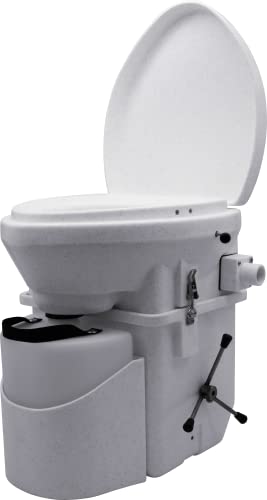


Pros
- Installs without plumbing or septic hookups, and the product information indicates any reasonably handy person can complete the setup.
- Long emptying intervals of four to six weeks for two full-time users cut down on routine chores.
- Compact dimensions and modest weight make it easier to fit and place in small structures.
- Five-year warranty provides substantial long-term coverage.
- Seller emphasizes responsive individual customer service for setup questions.
Cons
- Despite the no-maintenance marketing, owners still handle periodic tasks such as emptying the solids container and keeping cover material on hand.
- Finished compost must be handled and disposed of according to local regulations, so gardeners without a suitable composting area or local approval may find that step inconvenient.
- Its compact, non-traditional form may feel less familiar than a standard flush toilet for household members or guests.
The Nature's Head Self Contained Composting Toilet is a plumbing-free sanitation option built for places a conventional toilet cannot easily reach: off-grid cabins, garden sheds, greenhouses, workshops, and similar small structures. Because everything happens inside one unit, there is no black-water tank, septic tie-in, or sewer line to plan around. It best suits homeowners, homesteaders, and gardeners who spend long hours outdoors and want a practical facility close to the work.
Based on the listed specifications, capacity is the standout quality. Two people using the toilet full time will typically need to empty it every four to six weeks, and the manufacturer states the emptying process takes about five minutes. The feature list also describes the unit as odor-free when operating as intended, which matters greatly in small enclosed spaces. A five-year warranty backs the design, and the seller emphasizes individual customer support for anyone with setup questions.
Measuring roughly 21 inches high with a footprint near 19 by 21 inches, the unit fits into corners and closets where a standard toilet would not. It weighs 28 pounds, so one person can move and position it during installation. The close-quarters spider handle design places the agitator crank where it stays usable in tight spots, a thoughtful detail for small bathrooms or shed conversions. According to the product information, any reasonably handy person can install it without special plumbing skills.
In practice, this type of toilet earns its keep wherever running water is unavailable or expensive to extend: a greenhouse potting area, a remote garden plot with a tool shed, a hunting cabin, or a guest cottage separate from the main septic system. Gardeners who already maintain a compost area can fold the finished material into their existing routine, provided they follow local guidelines for handling composted human waste.
Honest expectations matter here. Although marketed as requiring no maintenance, any composting toilet involves some routine work: emptying the solids container on the schedule described above, keeping appropriate cover material available, and monitoring moisture levels. Owners also need a lawful place to finish or dispose of the composted material, since rules vary by location. None of these points are flaws unique to this model, but buyers should approach ownership with realistic expectations.
Choose this unit if you need a dependable, self-contained solution for an off-grid or small-space structure and you are comfortable with occasional hands-on emptying. If you prefer a flush experience connected to existing plumbing, or you have no practical way to manage finished compost, a conventional toilet may serve you better. For the right setting, the combination of compact size, long emptying intervals, and multi-year warranty coverage makes this a strong candidate worth serious consideration.
Best For / Avoid If
Best for buyers prioritizing
- Installs without plumbing or septic hookups, and the product information indicates any reasonably handy person can complete the setup.
- Long emptying intervals of four to six weeks for two full-time users cut down on routine chores.
- Compact dimensions and modest weight make it easier to fit and place in small structures.
Consider another option if
- Despite the no-maintenance marketing, owners still handle periodic tasks such as emptying the solids container and keeping cover material on hand.
- Finished compost must be handled and disposed of according to local regulations, so gardeners without a suitable composting area or local approval may find that step inconvenient.
- Its compact, non-traditional form may feel less familiar than a standard flush toilet for household members or guests.
Pros
- Small 15-by-16-inch footprint opens up installation spots that bulkier composting toilets cannot use.
- One-touch electric mixing keeps daily upkeep quick and hands-off.
- Durable polypropylene body with serviceable parts, built in the USA.
- At 28 pounds, the unit is light enough for one person to position during installation.
Cons
- Requires a 12V power connection, so fully non-electric setups may need added wiring or planning.
- The solids bin holds roughly 25 to 30 uses, which could mean frequent emptying for heavier households.
- May be less suitable for anyone who prefers a completely passive composting toilet with no motor or fan.
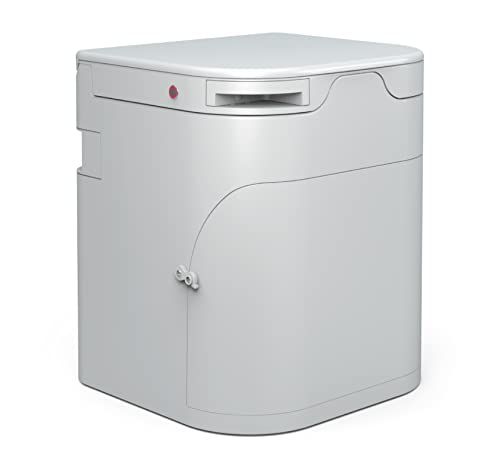
The OGO Origin is a compact composting toilet designed for mobile and off-grid spaces such as camper vans, RVs, tiny homes, and boats. Instead of relying on a black water tank, it separates liquid and solid waste at the source, which the product information indicates is central to controlling odor in small living quarters. It is best suited to full-time travelers, off-grid couples, and anyone fitting a bathroom into a space where every inch counts.
The standout feature is the push-button electric agitator. A 12V motor mixes the solids bin with a single press, so there is no side-mounted handle to crank and no messy contact after each use. Combined with urine diversion, where liquids collect in a 2.4-gallon bottle while solids stay dry in a rear bin rated for roughly 25 to 30 uses, the design aims to keep smells down while extending the time between emptying tasks.
Space efficiency shapes the entire layout. According to the listed dimensions, the 15-by-16-inch footprint and 18.38-inch height allow corner placement in Sprinter or Transit conversions where larger units simply will not fit. The 28-pound weight makes positioning manageable for one person during installation. Power demands are modest, with a low-draw 12V system that also runs a quiet ventilation fan, though buyers should plan wiring and vent routing before installation day.
In practical terms, this style of toilet fits a wide range of small-space projects. Van lifers gain a real-bathroom feel without giving up legroom, retrofitted RV owners can move away from bulky holding tanks, and boaters or tiny-home dwellers get a self-contained option that does not depend on dump stations. It can also serve an off-grid garden cabin, greenhouse workshop, or backyard studio where running plumbing would be costly or impractical.
There are honest trade-offs to consider. The unit needs a 12V connection, so purely passive setups may require extra electrical work, and heavy daily use will fill the solids bin faster than the 25-to-30-use figure suggests. Composting toilets also ask more of owners than a flush toilet: the liquid bottle needs regular rinsing, and solid waste must be handled or disposed of according to local regulations. Based on the listed specifications, the construction appears dependable, with durable polypropylene, serviceable parts, and US-based manufacturing.
Choose the OGO Origin if you want a compact, low-odor, appliance-style composting toilet and are comfortable with a simple electrical setup. Consider a basic non-electric model instead if you want zero power dependence, or a cassette toilet if the fastest possible emptying routine matters most. For tight builds where comfort and cleanliness are priorities, the feature set suggests this is a well-rounded choice.
Best For / Avoid If
Best for buyers prioritizing
- Small 15-by-16-inch footprint opens up installation spots that bulkier composting toilets cannot use.
- One-touch electric mixing keeps daily upkeep quick and hands-off.
- Durable polypropylene body with serviceable parts, built in the USA.
Consider another option if
- Requires a 12V power connection, so fully non-electric setups may need added wiring or planning.
- The solids bin holds roughly 25 to 30 uses, which could mean frequent emptying for heavier households.
- May be less suitable for anyone who prefers a completely passive composting toilet with no motor or fan.
Pros
- Conserves water entirely, since no flush or supply line is involved.
- Separating urine from solids simplifies disposal and helps keep the unit fresher.
- Simple operation with no additives, mixing, or complex maintenance steps.
- Adaptable to many off-grid settings, from cottages and cabins to converted school buses.
Cons
- Owners need a workable plan for emptying and legally handling both urine and composted solids, which varies by location.
- May feel less convenient than a flushing toilet for full-time homes already connected to municipal water and sewer.
- As with any urine-diverting design, results depend on consistent use habits, so there can be a short adjustment period.
The Separett Villa is a waterless composting toilet that uses urine-separating technology rather than a flush tank or sewer connection. According to the product information, it is aimed at off-grid living spaces such as homesteads, cottages, cabins, and converted school buses, which also makes it relevant for gardeners who want a functional restroom near a shed, greenhouse, or remote corner of a larger property. It suits homeowners comfortable with managing their own waste stream instead of relying on plumbed fixtures.
The core benefit is independence from water and plumbing. Because nothing is flushed, the unit works in buildings without supply lines or septic access, and it avoids sending wastewater into systems that may not exist on rural land. The urine-diverting design separates liquid from solid waste at the source, which the manufacturer lists as requiring no additives or mixing. Keeping these streams apart is what allows a composting toilet to stay manageable, since drier solids break down more predictably than mixed waste.
Based on the listed specifications, the Villa measures 26.5 by 18 by 21.3 inches and weighs 34 pounds, giving it a footprint close to a compact bathroom fixture while remaining light enough for one person to maneuver into place. The white finish and simple form help it blend into a small bath or utility space. Installation involves positioning the unit and planning how containers are accessed and removed, rather than running pipes, though buyers should confirm clearance for servicing before choosing a spot.
In practice, this type of fixture fits several real-world scenarios. A cabin used on weekends can go longer stretches between services thanks to the spacious interior. A homestead or market garden can place it in a washroom attached to a barn or tool shed. Builders converting a school bus or outfitting a tiny cottage gain a familiar seated toilet shape without sacrificing floor space to plumbing. Gardeners often pair a setup like this with a dedicated composting area managed separately from kitchen and yard compost.
There are honest limitations to weigh. Both the urine and the composted solids need somewhere to go, and acceptable handling methods vary by state and municipality, so check local rules before buying. As with any urine-diverting design, effectiveness depends on consistent use habits, and new owners may need a short adjustment period. Households with reliable city water and sewer service may find a conventional toilet more convenient day to day.
Overall, the Separett Villa appears to be a sensible choice for off-grid dwellers, homesteaders, and anyone building a bathroom where plumbing is impractical, based on the listed feature set. Buyers who want zero-effort waste handling or who dislike servicing containers themselves may prefer a different solution. For those willing to learn a simple routine, it offers a water-free path to sanitation in places traditional fixtures cannot reach.
Best For / Avoid If
Best for buyers prioritizing
- Conserves water entirely, since no flush or supply line is involved.
- Separating urine from solids simplifies disposal and helps keep the unit fresher.
- Simple operation with no additives, mixing, or complex maintenance steps.
Consider another option if
- Owners need a workable plan for emptying and legally handling both urine and composted solids, which varies by location.
- May feel less convenient than a flushing toilet for full-time homes already connected to municipal water and sewer.
- As with any urine-diverting design, results depend on consistent use habits, so there can be a short adjustment period.
Pros
- Self-contained design suits locations without existing plumbing infrastructure.
- Foot-operated handle supports hygienic, hands-free compost agitation.
- Compact footprint and moderate listed weight allow flexible placement in small buildings.
- Purpose-built composting toilet rather than an adapted household seat, indicating a dedicated waste-processing design.
Cons
- Composting toilets require routine upkeep, such as adding dry bulking material and periodic emptying, which may not suit every household.
- Proper setup often calls for ventilation planning, and buyers should confirm manufacturer venting guidance plus local regulations before installation.
- Households needing high-volume daily use or a fixture tied into existing plumbing may find a conventional toilet more convenient.
The Nature's Head Self Contained Composting Toilet with Foot-Spider Handle is a dedicated sanitation unit designed to process waste through composting rather than a plumbed connection. Based on the listed specifications, it is aimed at gardeners and homeowners who need a dependable toilet option where traditional plumbing is impractical, such as garden sheds, workshops, cabins, tiny homes, and other off-grid spaces. Its white finish and straightforward form reflect a utilitarian purpose.
The most important quality indicated by the product information is the self-contained layout, meaning the unit manages waste internally instead of routing it to a sewer or septic line. For backyard setups, that makes longer days in the garden more comfortable without repeated trips to the main house. The foot-spider handle is another notable element, since operating the agitator with your foot keeps hands clean and simplifies the routine mixing that composting requires.
Per the listed dimensions, the footprint measures roughly 19 inches square, compact enough for a corner of a shed or a small enclosure in a cabin. The listed weight of about 28 pounds means one person can generally move and position the unit during setup. Placement planning matters with any composting toilet: many installations benefit from ventilation, so it is wise to review the manufacturer's venting recommendations before fixing a permanent spot.
Practical uses include a potting shed that doubles as a weekend retreat, a greenhouse complex with a separate break area, hunting cabins, boats and RVs, and homesteads where the nearest bathroom is a long walk from the beds. Because the unit is self-contained, it can also serve as a backup facility during large outdoor projects or in guest spaces located away from the primary residence.
A composting toilet asks for a different routine than a flush fixture. Expect regular tasks such as adding dry bulking material, monitoring moisture levels, and periodically emptying processed compost, and follow safe handling practices throughout. Finished material should be managed according to local regulations and kept away from edible crops unless it has been fully and properly composted. Within those boundaries, the feature set suggests a thoughtfully designed option for off-grid sanitation.
This unit makes sense for shed-based gardeners, cabin and tiny-home dwellers, and anyone building out an off-grid workspace who values a purpose-built composting design with hands-free operation. Households wanting unlimited flushing capacity, heavy multi-user traffic, or a fixture connected to existing plumbing may be better served by a conventional toilet or a different sanitation system.
Best For / Avoid If
Best for buyers prioritizing
- Self-contained design suits locations without existing plumbing infrastructure.
- Foot-operated handle supports hygienic, hands-free compost agitation.
- Compact footprint and moderate listed weight allow flexible placement in small buildings.
Consider another option if
- Composting toilets require routine upkeep, such as adding dry bulking material and periodic emptying, which may not suit every household.
- Proper setup often calls for ventilation planning, and buyers should confirm manufacturer venting guidance plus local regulations before installation.
- Households needing high-volume daily use or a fixture tied into existing plumbing may find a conventional toilet more convenient.

Pros
- Compact footprint and low weight make carrying and storing the unit manageable for one person.
- Adjustable seat height supports comfortable use across a wider range of people and situations.
- Chemical-free operation avoids ongoing supply costs and harsh products.
- Tested weight capacity of 330.7 pounds offers reassurance for adult users of many sizes.
Cons
- Solid-waste capacity of 8 to 12 uses means fairly frequent emptying for groups or longer trips.
- Disposal of separated solids may require extra handling steps depending on local rules.
- Gardeners needing a permanent, high-capacity household solution may prefer a larger composting toilet or a plumbed fixture.
The TROBOLO WandaGO is a compact urine-diverting dry toilet built for places where plumbing is not an option. Based on the listed specifications, it measures about 12.3 inches tall, 15.0 inches deep, and 13.4 inches wide, and weighs just over 10 pounds, so it fits into many campervan storage compartments and can be carried out to a garden shed, greenhouse corner, or remote growing plot. It is best suited to campers, van owners, allotment gardeners, and homeowners who want dependable sanitation away from the house.
The core benefit comes from its separation design. Urine and solids are collected separately, which the product information indicates keeps odors down without chemicals, water, or electricity. The TROBOLO SafeShell System adds another layer of protection against smells and liquid spills. The containers hold roughly 10 to 20 urination uses or 8 to 12 defecation uses before they need emptying, and a built-in urine level indicator lets you check the fill status at a glance.
Comfort and stability are addressed through an adjustable seat that can be set to either 12.0 or 17.2 inches, so taller users and those who prefer a chair-height position are not forced into a deep squat. The seat is ergonomically shaped and tested to support up to 330.7 pounds. A firmly closing lid and a practical fastening system help keep everything contained during travel, and the lid includes a holder for the urine diverter to make cleaning more hygienic.
In practice, this type of toilet fits well into small-space and off-grid routines. Van owners can stow it in a garage compartment, campers can set it up beside a tent, and gardeners with a distant plot or an unheated shed gain a private option that works without hookups or plumbing. Because it needs no power or water, it can also serve as a backup during outages or while spending long days on land projects far from the house.
There are realistic limitations to weigh. The solid-waste container holds 8 to 12 uses, so a group on a multi-day trip may need to empty it often, and disposal of solids should follow local regulations, which could require composting or bagging steps depending on where you live. Like most dry toilets, it performs best when users follow the separation guidance carefully. Maintenance is straightforward but regular, mainly emptying the containers and wiping down surfaces after use.
Choose the WandaGO if you want a light, chemical-free sanitation option for a campervan, campsite, garden building, or remote work area, especially if seat-height flexibility matters to you. If you need higher capacity for large families, full-time residential use, or a flushing experience, a larger composting system or a plumbed solution may be a better fit.
Best For / Avoid If
Best for buyers prioritizing
- Compact footprint and low weight make carrying and storing the unit manageable for one person.
- Adjustable seat height supports comfortable use across a wider range of people and situations.
- Chemical-free operation avoids ongoing supply costs and harsh products.
Consider another option if
- Solid-waste capacity of 8 to 12 uses means fairly frequent emptying for groups or longer trips.
- Disposal of separated solids may require extra handling steps depending on local rules.
- Gardeners needing a permanent, high-capacity household solution may prefer a larger composting toilet or a plumbed fixture.

Pros
- No wiring, batteries, or plumbing required, which keeps setup simple in primitive locations.
- Odor management relies on physical separation rather than chemical treatments.
- Lightweight and small enough to relocate between vehicles, boats, and storage areas.
- Compatible with widely available 8-gallon bags instead of specialty liners.
Cons
- Bag-based waste handling means tying off and disposing of bags according to local guidelines after each use.
- May be less suitable for full-time RV living, where higher-capacity cassette or tank systems could require less frequent attention.
- Requires a supply of composting medium, an extra item to pack and restock before each trip.
The OGO NOMAD is a portable, waterless composting toilet aimed at people who spend time away from traditional bathrooms: campers, van lifers, boaters, hunters, and landowners tending remote garden plots or cabins. According to the product information, it needs no electric hookup, no plumbing, and no septic connection, which makes it one of the simpler sanitation options for rugged environments. For gardeners who keep bees, work distant raised beds, or run a homestead with limited facilities, having a dependable on-site option can make long days outside far more comfortable.
The standout feature is the urine-diverting design. By separating liquids from solids, the toilet limits the conditions that cause most odor problems, and it does this without chemical additives, black tanks, or trips to a dump station. The feature set suggests it suits users who want to stay outdoors longer, whether that means a multi-day camping trip or a full weekend of property work, without depending on chemical toilets.
Physically, the unit measures 15.4 by 13 by 12.38 inches and weighs about 12 pounds, based on the listed specifications. That footprint fits truck beds, car trunks, TentBox-style rooftop tents, rental camper vans, and small boats, and the light weight makes it realistic to carry and reposition by hand. Cleanup follows a straightforward bag system: add composting medium, use the toilet, then tie off a standard 8-gallon bag. Because those bags are sold almost everywhere, there is no need to order proprietary liners.
In practice, the NOMAD appears best matched to short and mid-length outings. Day boaters can stow it aboard, hunters can keep it in a blind or truck, and weekend adventurers can deploy it beside a pop-up tent. It also fills a gap around rural property, offering a sanitary option near a greenhouse, tool shed, or temporary field shelter where running water is unavailable.
There are honest trade-offs to consider. Bag-based systems mean you personally handle and dispose of waste, so local disposal guidelines need to be followed every time. A supply of composting medium must be packed along, and the format is geared toward individuals or small groups over days rather than weeks. Households planning full-time RV living may find tank-style cassettes more convenient, and anyone expecting a flushing experience will notice the difference.
For its intended audience, the value proposition is clear: simple, chemical-free sanitation that travels well and sets up in minutes. Beginners should appreciate that there is very little to learn, while experienced outdoorspeople will likely welcome the compatibility with ordinary bags. Buyers wanting higher capacity, flush-style comfort, or permanent installation should compare larger composting or cassette models instead. Within its niche, the NOMAD looks like a sensible, low-maintenance choice made in the USA.
Best For / Avoid If
Best for buyers prioritizing
- No wiring, batteries, or plumbing required, which keeps setup simple in primitive locations.
- Odor management relies on physical separation rather than chemical treatments.
- Lightweight and small enough to relocate between vehicles, boats, and storage areas.
Consider another option if
- Bag-based waste handling means tying off and disposing of bags according to local guidelines after each use.
- May be less suitable for full-time RV living, where higher-capacity cassette or tank systems could require less frequent attention.
- Requires a supply of composting medium, an extra item to pack and restock before each trip.

Pros
- Single-dose packaging keeps unused powder sealed and dry until needed.
- Compact box stores easily in an RV, boat, camper, or emergency kit.
- Simple two-step process works whether you add the powder before or after the liquid.
- Versatile enough for camping, boating, road trips, and home caregiving according to the listing.
Cons
- Capacity is capped at 1000 ml of water or 650 ml of urine per packet, so larger holding tanks could require several sachets.
- You need to wait one to two minutes for full gelling, so it is not truly instantaneous.
- Gardeners who want to compost treated waste at home should confirm local regulations first, since rules on human waste disposal vary widely.
The CRAZYTHUR Poo Powder camping toilet gel is a sanitation accessory rather than a traditional garden tool, but it earns a place in the outdoor kit of anyone who spends long days at a remote garden plot, camps beside it, or travels between growing projects. The package holds fifty individually wrapped 10 gram sachets of gelling powder designed to turn liquid waste in a portable toilet into a semi-solid gel that is easier to seal, carry, and dispose of cleanly.
Based on the listed specifications, each sachet treats up to 1000 ml of clean water or 650 ml of urine, and the powder is formulated to set within one to two minutes, which the manufacturer describes as roughly twice as fast as conventional portable toilet powders. The polymers are billed as eco-friendly and biodegradable, with treated liquid said to break down through soil composting in about seven days. Treat that figure as a manufacturer claim rather than a guarantee, since real-world breakdown depends on soil conditions and climate.
Packaging and storage are where this format stands out. Because every dose is sealed in its own small packet, there is no bulky tub to haul, no scoop to fumble with, and no loose powder drifting around a tent or camper. The whole box measures about 5.5 by 3.9 by 4 inches and weighs just over a pound, so it tucks into a garden shed drawer, RV cabinet, or emergency bin without crowding anything. A mild lemon scent keeps the task from being worse than it needs to be.
Practical uses reach well beyond the campsite. Keep a few packets with your raised-bed tools for long workdays at a community garden with no restroom, stash them in the car for road trips or storms that interrupt household plumbing, or pack them along for hiking, boating, and fishing trips. The listing also notes suitability for outdoor shower tents, camping showers, home care, schools, hospitals, and nursing homes, which shows how flexible a simple gelling powder can be.
A few practical cautions apply. Follow the included directions and place a toilet bag or liner in the container before use, then allow one to two minutes for the gel to form before sealing everything up. Capacity per packet is limited, so larger tanks may need more than one sachet. Most importantly, check local rules before composting anything containing human waste, because many municipalities and home composting guides advise against it regardless of how quickly the gel itself degrades.
For occasional campers, van and RV travelers, boaters, caregivers, and households assembling an emergency sanitation kit, this fifty-pack offers a tidy, low-fuss way to manage liquid waste. Very frequent users who move large volumes may prefer a bulk jug format, and anyone treating big holding tanks should plan on multiple packets per use. For everyone else, it is a sensible, easy-to-store addition to the outdoor supplies shelf.
Best For / Avoid If
Best for buyers prioritizing
- Single-dose packaging keeps unused powder sealed and dry until needed.
- Compact box stores easily in an RV, boat, camper, or emergency kit.
- Simple two-step process works whether you add the powder before or after the liquid.
Consider another option if
- Capacity is capped at 1000 ml of water or 650 ml of urine per packet, so larger holding tanks could require several sachets.
- You need to wait one to two minutes for full gelling, so it is not truly instantaneous.
- Gardeners who want to compost treated waste at home should confirm local regulations first, since rules on human waste disposal vary widely.

Pros
- Built-in fan and filter manage odor even in confined interiors, with external venting optional rather than required
- Simple maintenance routine of mixing after each use, emptying liquids every few days, and removing the solids bin every two to three weeks
- No water hookup, chemical additives, or constant power supply needed, based on the listed specifications
- Compact, lightweight build at about 28 pounds allows freestanding placement or a flush install in small layouts
Cons
- Requires regular hands-on waste handling, including emptying the liquids bottle every few days and the solids bin every two to three weeks
- Manual mixing after each visit may feel inconvenient for buyers who prefer a fully automated system
- At around 28 pounds, moving the unit in and out of tight quarters could be awkward for some users
The Compo Closet Cuddy is a self-contained, waterless composting toilet built for places where conventional plumbing is impractical, including vans, RVs, boats, tiny homes, and off-grid cabins. For gardeners and homesteaders who spend time at a remote plot, weekend cabin, or mobile setup, it offers a way to handle sanitation without septic hookups, water lines, or chemical additives. Based on the listed specifications, it is aimed at compact living and travel situations rather than serving as a whole-house fixture.
Odor management is the standout part of the design. A built-in 12V fan paired with a carbon filter actively moves air through the unit, and the patent-pending two-plate drop-zone cover separates liquids from solids, which is the main source of smells in any composting toilet. Liquids collect in a sealed bottle fitted with a no-spill valve, so routine emptying every few days can be done cleanly and with minimal mess.
Installation flexibility is another practical strength. Measuring roughly 17 by 15 by 16 inches and weighing about 28 pounds, the Cuddy can sit flush against a wall or stand freely in a tight corner, and its stable base suits moving vehicles or choppy water. It runs on 12V power with a cable included, continues working without electricity when needed, and does not require external venting because the fan and filter are integrated into the unit itself.
In everyday use, the routine stays simple. You add composting material once before first use, then give the handle-operated mixer a quick turn after each visit to maintain airflow in the solids chamber. The removable solids bin includes a bottom handle for contact-free disposal every two to three weeks, and a built-in LED light alerts you when the liquids container needs attention. With a 3.9-gallon main bin, the unit supports extended stretches between solids disposal, which matters when you are parked far from a dump station.
There are honest limitations to weigh. The system requires comfortable handling of waste containers on a regular schedule, and users should follow local regulations for disposal along with basic hygiene practices such as wearing gloves and washing hands afterward. Composting material must be sourced before first use, and the 3.9-gallon capacity may mean more frequent servicing compared with larger permanent installations. Anyone wanting an electrically mixed or plumbed unit may find the manual approach less convenient.
For van lifers, boaters, RV travelers, tiny-home residents, and off-grid gardeners outfitting a cabin or shed, the Cuddy's combination of odor control, compact size, and low upkeep makes it a strong candidate. Buyers planning a full-time household installation for several people, or those who prefer automatic mixing or mandatory external venting, may want to compare larger composting toilet systems before deciding.
Best For / Avoid If
Best for buyers prioritizing
- Built-in fan and filter manage odor even in confined interiors, with external venting optional rather than required
- Simple maintenance routine of mixing after each use, emptying liquids every few days, and removing the solids bin every two to three weeks
- No water hookup, chemical additives, or constant power supply needed, based on the listed specifications
Consider another option if
- Requires regular hands-on waste handling, including emptying the liquids bottle every few days and the solids bin every two to three weeks
- Manual mixing after each visit may feel inconvenient for buyers who prefer a fully automated system
- At around 28 pounds, moving the unit in and out of tight quarters could be awkward for some users
Practical Best Composting Toilet Buying Guide
Urine Diversion and Moisture Management
The primary source of unpleasant odors in any dry sanitation unit is the anaerobic reaction that occurs when urine and solid waste combine. Urine-diverting systems solve this problem mechanically by routing liquids forward into an isolated bottle or drain line while allowing solids to drop straight down into a dry holding chamber. Units like the Separett Villa Urine-Separating Compost Toilet rely on continuous diversion to keep the solids compartment dry, eliminating the need for internal agitators or constant bulking material top-ups during daily visits.
Agitation Systems: Manual Handles vs. 12V Electric Motors
Solid waste chambers require regular mixing to incorporate carbon-rich cover material, introduce oxygen, and promote even breakdown. Self-contained units generally utilize one of two agitation methods: manual cranks or low-draw electric motors. The classic Nature’s Head Self Contained Composting Toilet employs a side-mounted spider handle that the user turns manually after each solid deposit, requiring physical leverage but zero electricity for mixing. In contrast, the OGO Origin Composting Toilet – 12V Electric integrates a push-button 12V motorized agitator, removing physical turning effort and keeping the exterior footprint free of protruding handles.
Airflow, Ventilation, and Odor Prevention
Active ventilation creates negative air pressure inside the toilet chamber, pulling air down through the bowl opening and venting moisture outside. Models designed for tight enclosures, such as the Compo Closet Cuddy Composting Toilet – Odorless, pair internal 12V exhaust fans with integrated carbon filters to neutralize stale air. For enclosed structures like finished garden cottages, running rigid vent pipe through an exterior wall or roof creates a permanent, odor-free installation. Specialized designs such as the Thinktank Composting Toilet, White even incorporate dual intake and exhaust pathways to maintain air exchange without leaking conditioned room heat or cooling.
Capacity and Emptying Cycles
Tank capacity directly dictates how frequently you must handle waste maintenance. In full-time applications with two adults, large-capacity chambers like those found on the Nature’s Head Self Contained Composting Toilet require solid chamber emptying roughly once every four to six weeks. Compact options like the Compo Closet Cuddy Composting Toilet – Odorless hold 3.9 gallons of solid material, requiring servicing every two to three weeks under consistent use. Liquid bottles fill considerably faster: a typical two-to-three-gallon urine tank requires emptying every two to four days depending on household frequency.
| Model | Agitation Style | Primary Power Requirement | Emptying Frequency (Solids) |
|---|---|---|---|
| Nature’s Head Self Contained | Manual Spider Handle | 12V (fan only) | 4 to 6 weeks (2 users) |
| OGO Origin 12V Electric | Push-Button Electric Motor | 12V (motor and fan) | 25 to 30 uses |
| Separett Villa | None (Static Chamber) | 12V / 110V (fan only) | Extended use cycles |
| Compo Closet Cuddy | Manual Mixer | 12V (optional fan) | 2 to 3 weeks |
| Sun-Mar GTG | None (Direct Drop) | 12V (fan only) | Low-frequency cabin use |
Footprint, Height, and Accessibility
Physical space constraints determine whether a toilet fits comfortably into small garden rooms, camper conversions, or tiny homes. The OGO Origin Composting Toilet – 12V Electric provides one of the most compact footprints at 15 inches by 16 inches, making it well-suited for tight corners. Seat height is equally critical for daily comfort, particularly for older adults or individuals who experience knee fatigue. While standard portable bucket models sit low to the floor, models like the Sun-Mar GTG self-contained Urine Diverting Compost feature a full 18-inch seat height for easy sitting and standing. Similarly, the TROBOLO WandaGO Composting Toilet offers an adjustable base that can be configured between 12.0 inches and 17.2 inches.
Portable vs. Semi-Permanent Installations
If you need sanitation for weekend camping, garden construction zones, or seasonal potting sheds, a non-electric, portable dry toilet provides instant utility without drilling through floors. The OGO NOMAD Portable Composting Toilet – RV, Van weighs minimal pounds and requires no wiring or plumbing, utilizing standard 8-gallon bags for direct disposal. For established outbuildings or secondary garden suites, semi-permanent fixtures with dedicated external vent piping and 12V electrical adapters deliver a far closer match to standard residential bathroom convenience.
Safe Processing and Garden Utility
Material removed from a self-contained toilet chamber is partially decomposed organic matter, not finished garden soil. To safely process solid waste, empty the contents into a dedicated, covered humanure composting bin isolated from surface runoff. Allow the pile to complete thermophilic hot composting and cure for at least one full year before considering application around non-edible landscaping, ornamental shrub beds, or orchard windbreaks. When excavating dedicated compost pads or preparing tree borders near outbuildings, using the best garden auger drill bit for planting can save substantial time and labor during site development.
Composting Toilet: Our Research Approach
Our review process for dry sanitation systems relies on comprehensive specification analysis, manufacturer technical documentation, dimensional assessments, and aggregated real-world user feedback. We evaluate each unit against key operational metrics, including urine diversion reliability, air circulation efficiency, seal security, and mechanical robustness under daily loading conditions. This objective methodology ensures our ratings reflect verified mechanical attributes rather than marketing declarations.
We specifically screen products for practical usability in backyard garden cottages, off-grid outbuildings, and compact residential retreats. Models with complex, failure-prone mechanisms or fragile latches receive lower marks, while units with serviceable components, durable polyethylene housing, and responsive customer service rank higher. Note that this analysis is based on rigorous technical evaluation and user data synthesis.
Sanitation regulations and off-grid plumbing codes vary substantially across municipal, county, and state jurisdictions. Always consult local environmental health departments and manufacturer manuals before discharging urine or incorporating dry toilet residues into property compost enclosures. Recommendations in this guide were audited and updated for accuracy during September 2026.
Frequently Asked Questions About Composting Toilets
Does a composting toilet produce foul odors indoors?
When properly installed and maintained, a dry toilet remains virtually odorless. Separating liquid urine from solid waste prevents anaerobic decomposition, which is the primary cause of unpleasant sewage smells. Small continuous 12V exhaust fans further ensure that air flows downward into the bowl and exhausts safely outdoors.
What type of bulking material should be added to the solids chamber?
Most agitated models function best with lightly moistened coconut coir or organic sphagnum peat moss. These carbon-rich materials absorb moisture, create air pockets for aerobic bacteria, and help maintain structural balance within the chamber. Always avoid cedar shavings or treated wood products, as natural oils can slow microbial activity.
Can toilet paper be placed inside the toilet?
Yes, standard toilet paper breaks down naturally inside the solids container alongside composting medium. However, using single-ply or rapidly dissolving marine paper reduces volume accumulation and prevents the paper from wrapping around mechanical agitator tines. Some users choose to discard cleansing wipes separately to extend the time between chamber cleanings.
How often does the urine container need to be emptied?
Urine collection bottles generally hold between 1.5 and 2.5 gallons, which accommodates approximately 15 to 30 uses. In two-person households, this typically requires emptying the container every two to four days. Some installations route the liquid diverter directly into an approved external greywater or French drain system to eliminate manual container handling.
Can human compost be used directly on home vegetable gardens?
No, contents emptied from a toilet chamber should not be applied directly to edible crops or vegetable beds. Human waste requires an extended secondary composting process with high heat to neutralize potential pathogens. Most experts recommend aging cured compost for at least twelve months and reserving it exclusively for ornamental shrubs, native trees, or non-food landscaping borders.
Do composting toilets function properly in unheated winter outbuildings?
Composting toilets continue to collect and store waste reliably during cold weather, but biological decomposition stops when temperatures drop below 50 degrees Fahrenheit. The toilet itself will not be damaged by freezing conditions, though liquid bottles should be monitored and emptied to prevent ice expansion from cracking plastic reservoirs.