

Getting drip emitter spacing right is one of the most common irrigation challenges for vegetable gardeners. Space emitters too far apart and you end up with dry pockets between plants. Space them too close and you waste water while soaking areas that do not need it. This guide is written for beginner gardeners, homeowners setting up their first drip system, older gardeners who want a low-maintenance watering routine, and anyone growing vegetables in a small raised bed or backyard plot.
For this article we set out to compare 0 specific drip emitter products against the requirements of drip emitter spacing for vegetable garden use. After screening the supplied product data against this topic and the Watering & Irrigation category, none of the available listings matched the intended product type closely enough to support a fair comparison. Rather than recommend unrelated or poorly matched items, this guide focuses on the planning knowledge you need to choose and space emitters correctly on your own, whatever brand of tubing or emitter you already own or plan to buy.
Selection criteria for a good drip emitter layout include soil texture, the mature spread of each vegetable crop, emitter flow rate, tubing pressure, and how easy the system is to adjust as your garden changes through the season. If you are still shopping for irrigation equipment, you can browse current options on the Watering & Irrigation category page while using the guidance below to plan your layout.
Drip Emitter Spacing For Vegetable Garden Buying Guide
Understanding Soil Type and Water Spread
Water does not move straight down through soil, it spreads sideways as it soaks in, and how far it spreads depends heavily on soil texture. Sandy soil drains quickly and water tends to move mostly downward, so emitters generally need to be placed closer together to avoid dry gaps. Clay soil holds water longer and allows more lateral spread, so emitters can often be spaced farther apart while still reaching the same root zone. Loamy soil, which is common in many vegetable gardens, usually falls somewhere in between. Before committing to a spacing pattern, it helps to observe how water moves in your own beds during a slow test run.
Matching Spacing to Crop Type and Root Spread
Different vegetables have different root patterns, and spacing should reflect that. Closely planted crops like lettuce, spinach, and carrots generally benefit from tighter emitter spacing so the entire root zone stays evenly moist. Wider-spaced crops such as tomatoes, peppers, and squash often do better with emitters placed near each individual plant rather than in a continuous line, since their roots spread out from a single point. Grouping vegetables with similar water needs and root habits together in the same bed makes it much easier to design one spacing pattern that works for the whole row.
Emitter Flow Rate and Tubing Compatibility
Emitter flow rate, usually measured in gallons per hour, affects how far apart emitters can be placed. A higher flow rate emitter delivers water faster, which can help it spread further before the surface saturates, while a lower flow rate emitter is often better suited to tighter spacing where multiple points share the workload. Before finalizing a spacing plan, confirm that the emitters you choose are compatible with the tubing diameter and connector style already installed in your garden, since mismatched fittings are a common source of leaks and inconsistent pressure.
Calculating Coverage for Rows and Raised Beds
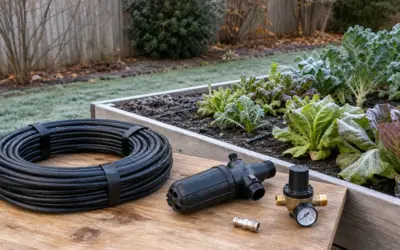
For straight rows, a simple approach is to measure the total row length and divide it by your target spacing interval to estimate how many emitters or emitter points you will need. Raised beds often work better with a grid or loop layout rather than a single line, since this allows more even coverage across the width of the bed rather than concentrating water along one edge. Sketching your bed dimensions on paper before installing tubing can help you avoid costly mid-season changes.
Pressure Considerations and Scheduling
Water pressure that is too high can cause emitters to spray unevenly or pop off tubing, while pressure that is too low may leave emitters at the far end of a line underperforming compared to those near the source. A pressure regulator suited to your system’s rated range helps keep flow consistent across the entire layout. Once spacing is set, scheduling shorter, more frequent watering sessions is generally easier on the soil than infrequent long soaks, particularly in sandy soil that drains quickly.
Common Spacing Mistakes to Avoid
One frequent mistake is using the same spacing pattern for every crop in the garden regardless of root habit, which leads to overwatering some plants and underwatering others. Another is ignoring soil type changes between beds, especially in gardens with amended raised beds next to native in-ground soil. Skipping a slow test run before planting season is also common, and it often means spacing problems are not discovered until plants are already showing stress.
Seasonal Adjustments and Off-Season Storage
Vegetable gardens change layout from season to season, so a drip spacing plan that worked for spring greens may need adjusting once summer vining crops take over the same bed. Reviewing and repositioning emitters at the start of each planting season helps keep coverage matched to whatever is actually growing. Before winter, draining tubing and storing removable components away from freezing temperatures helps prevent cracked lines and clogged emitters the following year.
Maintenance and Leak Prevention
Regularly walking the length of your drip lines to check for clogs, kinks, or leaks helps catch small problems before they affect a whole bed. Emitters near the soil surface can become blocked by mineral buildup or debris over time, so periodic flushing of the line keeps flow rates consistent with your original spacing plan. For older gardeners or anyone who prefers a lower-maintenance setup, simplifying the layout with fewer connection points can reduce the number of spots that need regular inspection.
Research Methodology and Trust
Our process for this guide started with reviewing the supplied product data against the specific topic of drip emitter spacing for vegetable garden use and the broader Watering & Irrigation category. This screening step confirmed that none of the available listings were a clear match for the product type or task involved, so no product-level comparison table or scoring was possible.
In place of product testing, this guide relies on established irrigation planning principles related to soil behavior, crop root patterns, and tubing system design. It is important to be transparent that this is research-based planning guidance rather than a hands-on trial of specific emitters or kits. If new product data becomes available that genuinely matches this topic, this page can be revisited and updated with a real comparison.
This page was last reviewed for accuracy in July 2026, and the recommendations reflect the product data available to us at that time.
Final Recommendations
Based on the product data supplied for this review, no items matched the requirements of drip emitter spacing for vegetable garden closely enough to justify a specific product recommendation. Rather than force a match, we are being upfront that this category currently has no qualifying products in our dataset for this topic.
If you are ready to shop for drip emitters or irrigation kits, the Watering & Irrigation category page is a good place to browse current options, and you can apply the spacing principles above to whichever tubing and emitter system you choose.
Frequently Asked Questions
How do I choose the right drip emitter spacing for a vegetable garden?
Start by identifying your soil type and the root spread of the vegetables you are growing, since both affect how far water travels from each emitter. Sandy soil generally needs closer spacing, while clay soil allows wider spacing due to greater lateral water movement.
What spacing works best for raised beds versus in-ground rows?
Raised beds often benefit from a grid or loop pattern that covers the full width of the bed evenly, while in-ground rows can typically use a straight line of emitters spaced along the row length. The right choice depends on bed width and how crops are arranged within it.
How often should I check and maintain my drip emitters?
A periodic walk-through of your drip lines to check for clogs, kinks, or leaks helps catch problems early. Flushing the line occasionally can help clear mineral buildup that affects flow rate and, indirectly, effective spacing.
Do I need to adjust spacing between growing seasons?
Yes, since different crops have different root habits, reviewing your layout at the start of each planting season helps keep coverage matched to whatever you are currently growing. A spacing pattern designed for spring greens may not suit summer vining crops planted in the same bed.
How should I store drip irrigation components over winter?
Draining tubing fully and storing removable fittings and emitters away from freezing temperatures helps prevent cracked lines and clogged components. Always follow the specific storage instructions provided by the manufacturer of your particular system.
Is drip emitter spacing different for small-space or container vegetable gardens?
Small-space and container gardens often need tighter spacing because the growing area is limited and soil volume dries out faster than in-ground beds. Checking soil moisture by hand periodically can help confirm whether your spacing is providing even coverage in a compact space.
What safety considerations apply when setting up a drip irrigation system?
Always follow the manufacturer’s instructions for connecting tubing to your water source and any pressure regulators, since incorrect pressure can cause fittings to fail. If your system connects to an outdoor spigot near electrical equipment, follow standard outdoor water safety practices and local guidelines.
Write Your Review
No reviews yet. Be the first to share your experience!