


Instrukcje kompostowania w kompostowniku dla dżdżownic mogą początkowo wydawać się skomplikowane, ponieważ przygotowanie wymaga odpowiedniego wyboru pojemnika, regularnej pielęgnacji i cierpliwości. Właściwa opcja zależy od miejsca kompostowania, ilości kuchennych odpadów spożywczych oraz tego, czy wolisz poradnik dla początkujących w formie książki, system tac do użytku w domu, system workowy czy ogrodowy kompostownik podziemny.
W ramach aktualizacji z lipca 2026 roku Dove Creek Gardens porównało 17 ofert związanych z kompostowaniem z użyciem dżdżownic w cenach od $8.99 do $139.00, a następnie skoncentrowało rekomendacje na porównywanych produktach, które wyraźnie dotyczą kompostowania z dżdżownicami, wermikompostowania lub instrukcji przygotowania systemu. Jeśli chcesz poprawić jakość gleby na podwyższonych zagonach lub w warzywniku, ten poradnik dobrze uzupełnia nasze materiały w kategorii Kompost, gleba i ściółka.
Najważniejsze czynniki to pojemność, miejsce ustawienia, dostęp podczas dokarmiania i zbioru kompostu, napowietrzanie, wygoda obsługi oraz ilość wskazówek potrzebnych początkującemu użytkownikowi.
VermiHut Plus 5-Tray Worm Composter for Compact Food Scrap Recycling Bumaeu Underground Worm Farm Composting Bin for Compact Outdoor Food-Waste Recycling TOP XIAN 3-Layer Worm Composter, 50L Vermicomposting Bin for Food Scrap Recycling Urban Worm Bag Version 2 Worm Composting Bin for Continuous, Easy Casting Harvest Prices and availability can change. We may earn a commission from qualifying purchases.


Niektóre opisy poniżej są nadal po angielsku; tłumaczenie wymaga sprawdzenia.
Pros
- Compact vertical format is designed to make efficient use of available floor space.
- Moisture and airflow features support a more consistent environment for composting worms.
- Worm Saver Tray helps separate solid composting material from the liquid collection area.
Cons
- Gardeners must manage moisture and food inputs carefully because vermicomposting depends on suitable conditions for worms.
- The 17 x 17 x 13-inch size may be less suitable for households seeking a large-volume outdoor composting system.
- The product information does not specify included worms, total capacity, or detailed setup instructions.
The VermiHut Plus is a five-tray worm composter for recycling food scraps with the help of composting worms. Its compact black housing is intended for indoor or outdoor use, making it a practical option for homeowners, patio gardeners, and beginners who want a dedicated vermicomposting system rather than a conventional open compost pile.
The feature set focuses on maintaining a suitable worm environment. The improved lid includes a built-in V-Board and coconut mat to support airflow and moisture balance, while the V-Board is designed to help retain moisture. These details may make routine vermicomposting more manageable, although users still need to monitor conditions and avoid overloading the system with food scraps.
Based on the listed specifications, the bin measures 17 x 17 x 13 inches. Its five-tray layout uses vertical space to provide a compact composting footprint. The Worm Saver Tray helps prevent worms and compost material from falling into the liquid collection area, while also supporting airflow through the system. The listed protective base feet can hold water to help discourage ants from entering.
This composter may work well near a kitchen, on a covered patio, or in another small-space gardening area where food scraps can be collected and managed regularly. It can also suit gardeners who want to produce vermicompost for container plants or other garden areas, but the published information does not state the finished compost volume or processing rate.
Routine care will require attention to moisture, airflow, food inputs, and the condition of the trays and collection area. The product information does not identify the included worm supply, materials beyond the listed coconut mat, assembly requirements, or weather-resistance details, so buyers should confirm those points before setup. Overall, it is a space-conscious choice for organized vermicomposting, while gardeners needing high-volume waste processing may prefer a larger system.
Best For / Avoid If
Best for buyers prioritizing
- Compact vertical format is designed to make efficient use of available floor space.
- Moisture and airflow features support a more consistent environment for composting worms.
- Worm Saver Tray helps separate solid composting material from the liquid collection area.
Consider another option if
- Gardeners must manage moisture and food inputs carefully because vermicomposting depends on suitable conditions for worms.
- The 17 x 17 x 13-inch size may be less suitable for households seeking a large-volume outdoor composting system.
- The product information does not specify included worms, total capacity, or detailed setup instructions.
Pros
- Compact underground format is useful where a full-size compost bin would not fit.
- Ventilation features are intended to support airflow and help manage heat inside the bin.
- Locking lid design helps protect the opening from rain while allowing gas to escape.
Cons
- The listed dimensions indicate limited capacity, so households producing substantial food waste may need a larger composting system.
- Installation requires digging a suitable hole and choosing a location that can remain accessible for adding organic waste.
- The product information does not specify included worm quantities, composting capacity, or detailed guidance for preparing the bin.
The Bumaeu Underground Worm Farm is a small vermicomposting bin for outdoor garden use. It is intended to receive kitchen food waste underground, where organic material can contribute to a localized composting setup. Its compact format is best suited to homeowners, beginner gardeners, and small-space growers who want an alternative to a larger above-ground compost bin.
The feature set focuses on ventilation and outdoor usability. A breathable valve and multiple 360-degree inlets are designed to improve airflow and heat dissipation, which may help maintain a more suitable environment for the composting process. The product information also describes the system as a way to turn organic waste into nutrient-rich garden material, although the actual results will depend on setup and ongoing care.
Based on the listed specifications, the bin measures 4.33 x 4.33 x 10.24 inches and weighs about 0.76 pounds. Installation involves digging a hole, placing the bin underground, adding organic waste, and fitting the lid. The safety-lock cover is designed to allow gas to discharge while helping prevent rainwater from entering. No material, internal capacity, or additional accessories are specified.
This design may work well beside garden plants, in a small backyard growing area, or near a raised bed where an underground composting point is convenient. The listed product information suggests a soil-improvement radius of about 3 feet, but gardeners should treat that as a stated design claim rather than a guaranteed result. The small footprint also makes it more practical than a bulky compost container for space-limited areas.
Because the bin is compact, it may be less suitable for households generating large amounts of food waste or gardeners seeking substantial quantities of finished compost. Choose an accessible installation site, follow appropriate composting practices, and avoid assuming that all kitchen waste is suitable without checking the product guidance. Overall, it is a simple, space-conscious option for localized outdoor vermicomposting, while gardeners needing higher capacity or more detailed control may prefer a larger system.
Best For / Avoid If
Best for buyers prioritizing
- Compact underground format is useful where a full-size compost bin would not fit.
- Ventilation features are intended to support airflow and help manage heat inside the bin.
- Locking lid design helps protect the opening from rain while allowing gas to escape.
Consider another option if
- The listed dimensions indicate limited capacity, so households producing substantial food waste may need a larger composting system.
- Installation requires digging a suitable hole and choosing a location that can remain accessible for adding organic waste.
- The product information does not specify included worm quantities, composting capacity, or detailed guidance for preparing the bin.
Pros
- Generous 50L capacity in a relatively compact three-tray format
- Handles make individual trays easier to lift and manage
- Ventilation and enclosed construction are useful features for small-space vermicomposting
- Includes several basic accessories for getting started
Cons
- Earthworms are not listed among the included accessories, so gardeners may need to source them separately.
- The available information does not specify how much liquid output to expect or how often the faucet needs servicing.
- Gardeners with larger volumes of food waste may need more capacity than this three-tray system provides.
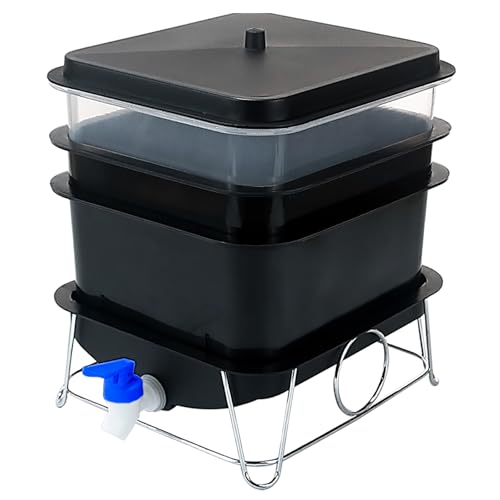
The TOP XIAN 3-Layer Worm Composter is a stackable vermicomposting bin designed to recycle household food scraps into compost. With up to 50L of total capacity, it is aimed at beginners, homeowners, patio gardeners, and anyone who wants a dedicated worm-farming system for indoor or outdoor use.
Its main practical benefit is the combination of multiple reusable trays and a closed, ventilated design. The feature set suggests that gardeners can add scraps and bedding in an organized way while maintaining airflow for decomposition. The listed materials include vegetable peelings, tea leaves, flowers, coffee grounds, and other compost materials.
The bin is listed at 17.7 by 13.7 by 17.5 inches and is made from black PP plastic. Each tray has a carrying handle, which should make removal and routine inspection easier than lifting the complete stack. A faucet at the base provides an outlet for collecting the liquid fertilizer described in the product information.
For a patio, utility area, balcony, or compact backyard station, the enclosed format may be more convenient than an open compost pile. The included coconut bricks, gloves, plastic rake, plastic shovel, and measuring cup provide basic setup and handling items, although earthworms are not listed as part of the package.
Routine use will require adding suitable organic material, maintaining appropriate airflow, and checking the trays and faucet as the system operates. The product information does not provide detailed guidance on worm quantity, liquid collection frequency, or long-term outdoor durability, so gardeners should review the setup instructions and choose a stable location.
This composter is a reasonable choice for gardeners who want a structured, relatively compact way to begin vermicomposting. Those handling a large volume of scraps or seeking detailed operating specifications may prefer a larger system or a model with more clearly documented capacity and maintenance guidance.
Best For / Avoid If
Best for buyers prioritizing
- Generous 50L capacity in a relatively compact three-tray format
- Handles make individual trays easier to lift and manage
- Ventilation and enclosed construction are useful features for small-space vermicomposting
Consider another option if
- Earthworms are not listed among the included accessories, so gardeners may need to source them separately.
- The available information does not specify how much liquid output to expect or how often the faucet needs servicing.
- Gardeners with larger volumes of food waste may need more capacity than this three-tray system provides.
Pros
- Harvesting from the bottom is simpler than managing multiple worm-composting trays.
- The continuous-flow format allows feeding and harvesting as separate routine tasks.
- Tool-free assembly and adjustable opening make the bin straightforward to set up and manage.
Cons
- Its approximately 27-inch square footprint and nearly 32-inch height may be too large for very limited indoor or balcony spaces.
- Gardeners who prefer a rigid bin or need specific capacity measurements may want a different composting setup.
The Urban Worm Bag Version 2 is a fabric worm composting bin for gardeners who want to process organic material and collect worm castings in a continuous-flow system. It is best suited to homeowners and small-space gardeners with a dedicated patio, utility area, or backyard location that can accommodate its listed dimensions.
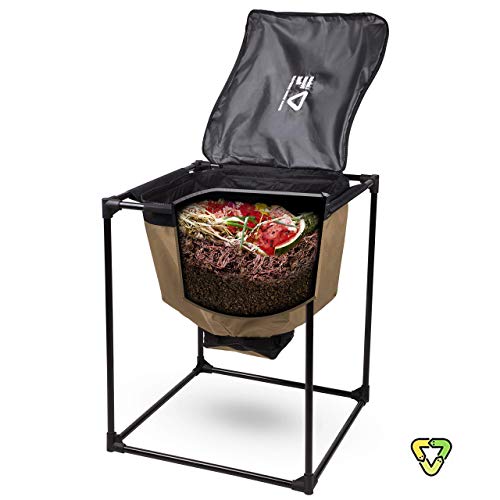
Its main practical benefit is the bottom-harvest design. Gardeners feed material through the top and remove finished castings from the bottom, without sorting worms from a series of trays. The design is intended to let the worm population remain in place while harvesting takes place.
The bin uses 900D Oxford fabric and includes a detachable opening that can be kept open or closed to help control moisture. Based on the listed specifications, the brown and black bin measures 26.75 by 26.75 by 31.75 inches and weighs about 10.6 pounds, so placement should allow enough room for access to both the top and bottom.
Assembly is described as taking less than five minutes and requiring no tools, glue, or complicated instructions. The top-feed and bottom-collection arrangement could be useful for a gardener who wants a repeatable composting routine without lifting or managing separate trays.
The product information does not provide a numeric capacity, moisture range, weather-suitability statement, or maintenance schedule. Gardeners will need to monitor conditions themselves and choose a suitable location, while those needing a compact rigid container or clearly measured capacity may prefer another option.
This bin is a reasonable fit for users who value easy casting access, flexible moisture management, and minimal assembly. It may be less suitable for very tight spaces or for gardeners who prefer a conventional stackable worm-bin format.
Best For / Avoid If
Best for buyers prioritizing
- Harvesting from the bottom is simpler than managing multiple worm-composting trays.
- The continuous-flow format allows feeding and harvesting as separate routine tasks.
- Tool-free assembly and adjustable opening make the bin straightforward to set up and manage.
Consider another option if
- Its approximately 27-inch square footprint and nearly 32-inch height may be too large for very limited indoor or balcony spaces.
- Gardeners who prefer a rigid bin or need specific capacity measurements may want a different composting setup.
Pros
- Compact dimensions make it suitable for small-space composting.
- Included bedding and hand tools reduce the number of setup items beginners need to source separately.
- Stackable trays support an organized, ongoing vermicomposting workflow.
Cons
- The listed capacity is modest, so households producing large amounts of kitchen waste may need a larger system or additional bin.
- The product information does not state that worms are included, so buyers may need to source appropriate composting worms separately.
- Indoor placement may require careful location and routine management to keep the surrounding area clean and comfortable.
The HCGADON 3-Tray 15L Worm Farm is designed for vermicomposting, a process that uses composting worms to break down suitable kitchen food waste into organic fertilizer. It is aimed at beginners, apartment and balcony gardeners, and homeowners who want a compact alternative to a conventional outdoor compost pile.
Its main practical benefit is the stacked tray arrangement. Based on the listed specifications, the three reusable 15L trays allow newer food scraps to be placed above material that is further along in the composting process, helping organize ongoing recycling and access to lower trays for harvesting.
The bin measures 9.6 x 10.8 x 10.5 inches and weighs 2.4 pounds, so its footprint should be manageable on a kitchen, balcony, patio, or other stable surface. The product information lists UV-resistant PP plastic and indoor or outdoor use, but it does not provide details about drainage, ventilation controls, or a dedicated liquid collection feature.
For a small household, this system could be useful near a kitchen for handling fruit peels and vegetable waste before using the resulting material around garden plants. It may also suit patio and small-space gardeners who want to produce compost inputs without dedicating room to a large outdoor bin.
Routine care will still be necessary, including following the instructions, maintaining suitable bedding and food inputs, and using the included scraper and rake as needed. The product details do not confirm that worms are included, so prospective buyers should verify the package contents and plan for an appropriate worm supply if required.
This is a reasonable fit for beginners seeking a compact, expandable vermicomposting setup with basic accessories included. Gardeners with high volumes of food waste, limited indoor space, or a preference for traditional aerobic composting may be better served by a larger or differently designed composting system.
Best For / Avoid If
Best for buyers prioritizing
- Compact dimensions make it suitable for small-space composting.
- Included bedding and hand tools reduce the number of setup items beginners need to source separately.
- Stackable trays support an organized, ongoing vermicomposting workflow.
Consider another option if
- The listed capacity is modest, so households producing large amounts of kitchen waste may need a larger system or additional bin.
- The product information does not state that worms are included, so buyers may need to source appropriate composting worms separately.
- Indoor placement may require careful location and routine management to keep the surrounding area clean and comfortable.

Pros
- Large 100L capacity supports continuous composting across five trays.
- Separate lower collection area and built-in faucet provide convenient access to compost byproducts.
- Starter accessories can reduce the need to purchase basic setup tools separately.
- Ventilated, stackable design is intended for organized use in indoor or outdoor composting locations.
Cons
- Worms are not included, so the system requires a separate worm purchase before composting can begin.
- The 25.5-inch height and 20 x 15 inch footprint may be less suitable for very tight storage areas.
- Like other worm composters, it could require regular attention to feeding, moisture, and tray conditions for reliable operation.
The Cozurra 5-Tray Worm Compost Bin is a vertical vermicomposting system designed to process household organic waste such as fruit peels, vegetable scraps, coffee grounds, and tea leaves. With five stackable trays and 100L, or 26.5 gallons, of total capacity, it is aimed at households, beginner composters, and gardeners who want to produce worm castings for raised beds, containers, herbs, flowers, or vegetables.
Its main growing-use benefit is the opportunity to recycle everyday kitchen scraps into castings that can support soil structure, moisture retention, and plant health. The tiered arrangement is intended to support continuous composting, with worms moving upward toward fresh food while finished material remains in lower trays for harvesting.
The bin measures 20 x 15 x 25.5 inches and uses stackable trays made from BPA-free PP plastic. Vent openings in each tray promote airflow, while the base includes a faucet for collecting liquid described as worm tea. The included coconut coir brick, non-woven fabric, measuring cup, soil meter, trowel, hand rake, and user manual provide useful setup and maintenance items, although the product does not include worms.
This size and vertical format can work in a dedicated kitchen, utility, patio, or garden area where the defined footprint is manageable. Collected castings can be directed toward container plants, raised beds, and other garden spaces, while the faucet provides a separate way to access the liquid collected at the base.
Potential buyers should plan for routine vermicomposting care, including monitoring the contents and maintaining suitable conditions for the worms. The bin's listed ventilation may help with airflow and odor control, but it does not remove the need for proper setup and maintenance. Because worms are sold separately and the unit stands 25.5 inches tall, gardeners with limited space or those wanting a ready-to-use system may prefer a different format.
Best For / Avoid If
Best for buyers prioritizing
- Large 100L capacity supports continuous composting across five trays.
- Separate lower collection area and built-in faucet provide convenient access to compost byproducts.
- Starter accessories can reduce the need to purchase basic setup tools separately.
Consider another option if
- Worms are not included, so the system requires a separate worm purchase before composting can begin.
- The 25.5-inch height and 20 x 15 inch footprint may be less suitable for very tight storage areas.
- Like other worm composters, it could require regular attention to feeding, moisture, and tray conditions for reliable operation.

Pros
- Includes two smaller bins and two larger bins for flexible garden use.
- Ventilated design supports airflow for vermicomposting.
- Ready-to-use construction with secure snap-on lids.
Cons
- The listed dimensions indicate a compact design, so gardeners with larger food-waste volumes may need additional composting capacity.
- The product information does not specify whether worms, bedding, or starter compost materials are included.
- Installation guidance and capacity details are not provided, which may require beginners to determine placement and loading practices themselves.
The QYRCXX four-piece worm composting bin set is intended to help gardeners process kitchen scraps through vermicomposting. It includes two bins measuring 3.6 by 3.6 by 11.8 inches and two larger bins measuring 4.3 by 4.3 by 12.2 inches, making it a useful option for beginners, small backyard gardens, raised beds, and other growing areas with limited space.
The most important feature is the full mesh construction, which provides 360-degree ventilation around the bin. Based on the listed specifications, this airflow is intended to give composting worms access to fresh air while organic waste breaks down. The covered design also helps keep the contents contained during routine use.
Each bin has a snap-on lid, and the set is described as requiring no assembly. The smaller and larger sizes can be assigned to different locations or stages of composting, although the product information does not provide individual capacity ratings or detailed loading instructions. The white, rust-resistant metal construction is listed as suitable for moist outdoor conditions.
For backyard use, these bins can be placed in a vegetable patch, garden bed, or another outdoor area where food scraps can be processed near growing spaces. Their relatively narrow dimensions may also suit compact gardens and small yards better than a large freestanding compost container. The product information describes both inground and above-ground use, so placement should follow the included instructions if available.
Gardeners should confirm whether worms, bedding, and other starter materials are included before beginning, since they are not identified in the published specifications. Capacity, installation details, and maintenance requirements are also not provided. Overall, this set appears best suited to gardeners seeking a compact, ventilated worm-composting setup, while households producing larger amounts of food waste may prefer a system with clearly stated higher capacity.
Best For / Avoid If
Best for buyers prioritizing
- Includes two smaller bins and two larger bins for flexible garden use.
- Ventilated design supports airflow for vermicomposting.
- Ready-to-use construction with secure snap-on lids.
Consider another option if
- The listed dimensions indicate a compact design, so gardeners with larger food-waste volumes may need additional composting capacity.
- The product information does not specify whether worms, bedding, or starter compost materials are included.
- Installation guidance and capacity details are not provided, which may require beginners to determine placement and loading practices themselves.

Pros
- Compact dimensions suit small yards, garden beds, and other space-conscious setups.
- Inground design keeps the composting container close to the plants and soil where the finished compost may be used.
- Beginner-friendly approach with simple placement, removable lids, and ventilation openings.
Cons
- Earthworms are not included, so gardeners must source suitable worms separately.
- The 8L capacity may be less suitable for households producing large amounts of kitchen waste.
- Installation requires digging, and gardeners should choose a location that remains accessible for adding scraps and maintenance.
The TOP XIAN Inground Worm Compost Bin is designed for vermicomposting, the process of using worms to break down organic material into compost. It can be buried underground or placed in a garden bed, making it a practical fit for beginners, families, and gardeners who want to recycle kitchen scraps without adding a large freestanding bin.
Based on the listed features, the system accepts organic waste such as kitchen scraps, paper, and leaves. Its 8L capacity is compact enough for small home gardens, while the product information indicates that worms may transform the contents into nutrient-rich compost over approximately two to three months under suitable conditions.
The setup is straightforward in concept: dig a hole, place the bin, and use the removable lid to add material or inspect the contents. The listed 360-degree ventilation holes are intended to support airflow, and the PP construction provides the specified material for outdoor use. No complex assembly is listed.
This design may work well alongside a raised bed, in a backyard garden, or in another outdoor growing area where an inground container can remain accessible. The multi-bin arrangement is intended to support ongoing composting by allowing one container to be maintained while another receives organic waste.
There are several practical limitations to consider. Earthworms are not included, the available capacity is modest, and installation requires digging. Gardeners should avoid burying the bin where it would be difficult to reach, and they should follow suitable vermicomposting practices for balancing food scraps, paper, moisture, and airflow. The product is a reasonable choice for small-scale composting beginners, while households with heavier waste volumes may prefer a larger system.
Best For / Avoid If
Best for buyers prioritizing
- Compact dimensions suit small yards, garden beds, and other space-conscious setups.
- Inground design keeps the composting container close to the plants and soil where the finished compost may be used.
- Beginner-friendly approach with simple placement, removable lids, and ventilation openings.
Consider another option if
- Earthworms are not included, so gardeners must source suitable worms separately.
- The 8L capacity may be less suitable for households producing large amounts of kitchen waste.
- Installation requires digging, and gardeners should choose a location that remains accessible for adding scraps and maintenance.

Pros
- Includes two compost bins for multiple garden locations.
- Compact in-ground format works well for small gardens and raised beds.
- Metal construction and included lids provide a contained setup for organic waste.
- Gardening gloves are included for handling compost materials.
Cons
- The compact dimensions indicate limited capacity compared with a full-size compost tumbler or large compost bin.
- Because the bins are buried, installation requires suitable soil and digging space.
- The published information does not specify composting capacity, accepted food scraps, or maintenance intervals.
The HTtoy set includes two small, round, in-ground worm composting bins intended for kitchen scraps and other organic waste. Each bin has a lid, and the set also includes one pair of gardening rubber gloves. This format is aimed at homeowners, families, and beginner gardeners who want to compost directly in garden soil without adding a large freestanding tumbler.
The listed ventilation design uses small air holes around the bin to support air circulation while helping keep the composting area contained. The product information also indicates that worms can move freely between the bin and surrounding soil, which is intended to support natural decomposition and soil loosening around the installation area.
Two sizes are listed in the feature information, approximately 11.8 by 3.74 inches and 12.2 by 4.25 inches, while the specifications provide a 4.25 by 4.25 by 12.2 inch dimension. Gardeners should confirm the exact dimensions before digging. Installation involves creating a suitable hole, partially burying the bin, adding organic waste, and fitting the lid. No power or complex tools are described as necessary.
The compact design may fit vegetable gardens, raised beds, greenhouse areas, and small backyard spaces where a larger composting unit would be impractical. Using two bins could also allow separate composting points near different growing areas, although the published information does not state how much material each bin holds.
These bins may be less suitable for households producing large amounts of food waste or for gardeners who want a high-capacity tumbler with defined turning access. The buried location also means installation and later removal may require digging, and gardeners should choose a spot with suitable soil and enough room around nearby plants. The included gloves can help with routine handling, but normal hygiene practices are still appropriate when working with decomposing organic material.
This set is a practical option for small-space gardeners and families interested in a simple, in-ground composting approach. Gardeners who need measured capacity, faster batch processing, or a larger above-ground system should consider a different composting format.
Best For / Avoid If
Best for buyers prioritizing
- Includes two compost bins for multiple garden locations.
- Compact in-ground format works well for small gardens and raised beds.
- Metal construction and included lids provide a contained setup for organic waste.
Consider another option if
- The compact dimensions indicate limited capacity compared with a full-size compost tumbler or large compost bin.
- Because the bins are buried, installation requires suitable soil and digging space.
- The published information does not specify composting capacity, accepted food scraps, or maintenance intervals.

Pros
- Compact four-tray format suits homes, patios, and other areas where floor space is limited.
- Nested trays are intended to make ongoing composting and finished-compost removal more organized.
- Clear setup process can be approachable for gardeners new to vermicomposting.
Cons
- It requires worms, bedding, and regular food-scrap management, so it is not a passive storage container.
- Gardeners needing a larger-capacity system may find the four-tray, compact format less suitable for higher food-waste volumes.
The Worm Factory 360 is a four-tray vermicomposting system for recycling household food scraps with the help of composting worms. It is suited to homeowners, beginner gardeners, and small-space growers who want an organized way to handle food waste without dedicating much floor space to a composting setup.
Its main practical benefit is the nested-tray arrangement. As worms process material, the feature design encourages them to move upward, leaving more finished compost in the lower trays for removal. This can make the composting cycle easier to organize than a single open container that must be emptied and mixed.
The system is listed at 17.95 by 17.95 by 14.95 inches and weighs 11 pounds. The setup instructions call for assembling the stand, placing the first tray, adding bedding, food scraps, and worms, then continuing to add materials to the top tray. Its black plastic construction and compact shape may fit conveniently in a designated home or garden area.
For backyard and patio use, the four-tray layout provides a structured way to process kitchen food scraps while keeping active and finished material in separate levels. The customizable tray approach may also help households adjust the setup to their available space and food-waste routine, rather than requiring a larger composting unit from the start.
This system requires ongoing attention to bedding, worms, and food scraps, so it may be less suitable for anyone seeking a maintenance-free waste container. Based on the listed features, it is a practical choice for gardeners who want compact, organized vermicomposting at home, while those with unusually high food-waste volumes may prefer a larger-capacity option.
Best For / Avoid If
Best for buyers prioritizing
- Compact four-tray format suits homes, patios, and other areas where floor space is limited.
- Nested trays are intended to make ongoing composting and finished-compost removal more organized.
- Clear setup process can be approachable for gardeners new to vermicomposting.
Consider another option if
- It requires worms, bedding, and regular food-scrap management, so it is not a passive storage container.
- Gardeners needing a larger-capacity system may find the four-tray, compact format less suitable for higher food-waste volumes.
Poradnik zakupowy: instrukcje kompostowania w kompostowniku dla dżdżownic
Najpierw wybierz odpowiedni format
Porównywane produkty dzielą się na trzy praktyczne grupy: książki instruktażowe, systemy do kompostowania z dżdżownicami do użytku w domu lub w domu i na zewnątrz oraz ogrodowe kompostowniki podziemne. Książka taka jak Worms Eat My Garbage, 35th Anniversary Edition: How to Set Up and Maintain a Worm Composting System: Compost Food Waste, Produce Fertilizer for Houseplants and Garden, and Educate Your Kids and Family lub How To Start A Worm Bin będzie najlepsza, jeśli chcesz poznać instrukcje krok po kroku przed zakupem albo zbudowaniem kompostownika.
Systemy przeznaczone do użytku w domu, w tym The Original VermiHut® Plus 5-Tray Worm Composter – Indoor & Outdoor Vermicomposting Bin | Sustainable Design for Food Waste Recycling- Black, Worm Factory® 360 Black US Made Composting System for Recycling Food Waste at Home – 4 Trays for Efficient Vermicomposting – Durable, Space-Efficient Design, Easy to Assemble, No Odor oraz Urban Worm Bag Worm Composting Bin Version 2 – Easy Harvest with Fully Removable Zipper-Free Bottom, są bardziej samodzielnymi rozwiązaniami. Kompostowniki podziemne są przeznaczone do grządek ogrodowych, warzywników, przydomowych ogrodów i użytku na zewnątrz.
Dopasuj pojemność do ilości odpadów i miejsca w ogrodzie
Pojemność ma znaczenie, ponieważ zbyt mały kompostownik dla dżdżownic może być trudny w obsłudze, jeśli odpady będą trafiać do niego szybciej, niż system będzie w stanie je przetwarzać. Najdokładniej podana pojemność dotyczy produktu Inground Worm Composter, Outdoor Underground Worm Farm 3.3 Gallons, Garden Worm Compost Bin from Kitchen Food Waste, Black+Gray (10.7×10.7x13Inch), który ma pojemność 3.3 galona i wymiary 10.7×10.7×13 cala.
Zestawy składające się z kilku kompostowników podziemnych mogą rozłożyć miejsca dokarmiania na większej powierzchni grządki. Produkt 4-Pack Inground Worm Composter, Outdoor Worm Compost Bin for Garden Beds & Home Use, Vermicomposting Bin for Beginners (9.5×9.5×10.8Inch), Green obejmuje cztery kompostowniki, natomiast 4PCS Inground Worm Composting Bin Turn Food Waste into Nutrient-Rich Soil Increase Soil Fertility Stainless Steel Composting Bin with Holes and Lid for Outdoor Garden Vegetable Patch Backyard to kolejna opcja wieloelementowa do użytku w ogrodzie na zewnątrz.
Weź pod uwagę miejsce: w domu, na zewnątrz czy w gruncie
Miejsce ustawienia wpływa zarówno na wygodę, jak i późniejszą pielęgnację. Jeśli chcesz trzymać kompostownik blisko kuchni, bardziej praktyczny może być samodzielny system przeznaczony do użytku w domu. Jeśli przede wszystkim chcesz zasilać glebę na grządce warzywnej, podziemna hodowla dżdżownic lub kompostownik umieszczany w gruncie pozwoli prowadzić kompostowanie bezpośrednio w ogrodzie.
Ogrodnicy korzystający z niewielkich grządek powinni również sprawdzić, jak kompostownik zmieści się między roślinami, ścieżkami i przewodami nawadniającymi. Jeśli kompostownik dla dżdżownic ma wspierać podwyższoną grządkę warzywną, zajrzyj do naszej sekcji Podwyższone grządki i donice, aby przed ustawieniem jednostek podziemnych lepiej zaplanować układ grządki i dostęp do niej.
Zwróć uwagę na dostęp podczas dokarmiania i zbioru
Początkujący często skupiają się na samym kompostowniku, ale to codzienny dostęp decyduje o tym, czy korzystanie z systemu będzie wygodne. Systemy tac, takie jak VermiHut Plus 5-Tray i Worm Factory 360 z 4 tacami, mają według opisu wiele tac, co może ułatwiać organizację procesu kompostowania w porównaniu z pojedynczym otwartym pojemnikiem.
Produkt Urban Worm Bag Worm Composting Bin Version 2 jest opisany jako łatwy do opróżniania i wyposażony w całkowicie zdejmowane dno bez zamka błyskawicznego. Ta wskazana cecha może spodobać się ogrodnikom, którzy nie lubią podnosić ustawionych jedna na drugiej tac, choć najlepszy wybór nadal zależy od dostępnego miejsca i wygody korzystania z formatu workowego.
Szukaj napowietrzania i praktycznej obsługi odpadów spożywczych
Kompostowanie z użyciem dżdżownic wymaga przepływu powietrza, odpowiedniego poziomu wilgotności i regularnego dokarmiania. Kilka opcji zewnętrznych opisano jako wyposażone w otwory i pokrywy, w tym Underground Worm Farm, Garden Mini vermicomposting bin for use in Outdoor Gardening from Kitchen Food Waste, with Holes and lid, White (10.2×4.3×4.3IN) oraz podziemny kompostownik ze stali nierdzewnej 4PCS.
Nie traktuj kompostownika dla dżdżownic jak zwykłego kosza na śmieci. Dodawaj odpady stopniowo, postępuj zgodnie z instrukcją przygotowania i pielęgnacji porównywaną przez producenta, a jeśli masz wątpliwości dotyczące ściółki, wilgotności lub dokarmiania, skorzystaj z poradnika dla początkujących. Książki z tej listy są szczególnie pomocne w unikaniu typowych błędów, zanim przerodzą się one w kłopotliwe problemy.
Weź pod uwagę dostępność i wygodę obsługi
Starsi ogrodnicy oraz osoby o ograniczonej sprawności ruchowej powinny przed wyborem kompostownika uwzględnić schylanie się, podnoszenie i zbieranie kompostu. Jednostka podziemna może ograniczyć konieczność późniejszego przenoszenia kompostu, ale wymaga ustawienia na zewnątrz i pewnych prac instalacyjnych w ogrodzie. System tac lub workowy może być łatwiejszy do dosięgnięcia, jeśli zostanie umieszczony na wygodnej wysokości, ale nadal wymaga regularnej obsługi.
Produkt 2 Pack Underground Worm Composting Bin with Gardening Gloves – Small Round Metal Stainless Steel Composter for Family Garden, Outdoor Compost Bins (2) według nazwy produktu zawiera rękawice ogrodowe, co może ułatwiać pracę na zewnątrz. Jeśli przechowujesz akcesoria do kompostowania, rękawice lub łopatki w małej szopie, nasz poradnik dotyczący organizacji małej szopy ogrodowej może pomóc w utrzymaniu wygodniejszej rutyny.
Porównuj ceny, oceny i liczbę recenzji z rozwagą
Ceny szczegółowo opisanych produktów wynoszą od $9.95 za How To Start A Worm Bin do $139.00 za Urban Worm Bag Worm Composting Bin Version 2. Tańsze książki i niewielkie kompostowniki podziemne są rozsądnym punktem wyjścia, natomiast systemy z wieloma tacami i większe zestawy mogą odpowiadać ogrodnikom, którzy chcą korzystać z dedykowanego systemu kompostowania.
| Potrzeba | Produkty z danych producenta do rozważenia |
|---|---|
| Poznanie podstaw | Worms Eat My Garbage, 35th Anniversary Edition; How To Start A Worm Bin |
| System do użytku w domu lub w domu i na zewnątrz | The Original VermiHut® Plus 5-Tray Worm Composter; Worm Factory® 360 Black US Made Composting System; Urban Worm Bag Worm Composting Bin Version 2 |
| Kompostowanie na zewnętrznych grządkach | Inground Worm Composter, Outdoor Underground Worm Farm 3.3 Gallons; 4-Pack Inground Worm Composter; Underground Worm Farm, Garden Mini vermicomposting bin |
Unikaj typowych błędów przy kompostowaniu z dżdżownicami
Do typowych błędów należy zakup kompostownika przed ustaleniem miejsca jego ustawienia, dodawanie zbyt dużej ilości odpadów w krótkim czasie oraz wybór systemu, do którego trudno się dostać. Kompostownik dla dżdżownic powinien pasować do codziennej rutyny, a nie tylko do ogrodniczych planów.
Postępuj zgodnie z instrukcją dołączoną do wybranego produktu, zwłaszcza w zakresie przygotowania, zarządzania wilgotnością i zalecanego użytkowania. W przypadku zewnętrznych systemów ogrodowych ustaw jednostki tak, aby nie przeszkadzały w sadzeniu, pieleniu, podlewaniu ani poruszaniu się po ścieżkach.
Metodologia i wiarygodność opracowania
Dove Creek Gardens przeanalizowało dane producenta produktów pod kątem ich związku z instrukcjami kompostowania w kompostownikach dla dżdżownic, wermikompostowaniem, kompostowaniem odpadów spożywczych oraz kategorią Kompost, gleba i ściółka. Produkty wyraźnie pasujące do tego zakresu obejmowały książki instruktażowe, systemy do kompostowania z dżdżownicami do użytku w domu lub na zewnątrz oraz kompostowniki podziemne do ogrodu.
Porównaliśmy dostępne specyfikacje bez dodawania niepopartych twierdzeń. Najważniejsze dostępne informacje obejmowały nazwy produktów, podane pojemności lub wymiary, jeśli zostały uwzględnione, liczbę tac, jeśli ją podano, ceny, oceny i liczbę recenzji. Nie twierdziliśmy, że produkty kontrolują zapachy, są trwałe, zapewniają określone właściwości materiału, chronią przed szkodnikami lub wytwarzają określoną ilość kompostu, chyba że takie sformułowanie pojawiło się w porównywanej nazwie produktu.
Czynniki rankingowe były związane konkretnie z kompostowaniem z użyciem dżdżownic: miejsce ustawienia, dostęp, prawdopodobna przyjazność dla początkujących wynikająca z formatu, sposób zbioru, dopasowanie do grządek oraz to, czy produkt uczy przygotowania systemu, czy sam jest pojemnikiem do kompostowania. W aktualizacji z lipca uwzględniono również praktyczność produktu dla ogrodników dysponujących małą przestrzenią, właścicieli domów z warzywnikami oraz osób preferujących łatwiejszy dostęp.
Końcowe rekomendacje
Najlepszy wybór ogólny: The Original VermiHut® Plus 5-Tray Worm Composter – Indoor & Outdoor Vermicomposting Bin | Sustainable Design for Food Waste Recycling- Black to najbardziej wszechstronny wybór w danych producenta dla ogrodników, którzy chcą korzystać z dedykowanego systemu kompostowania z dżdżownicami. Według opisu jest to 5-tacowy system do wermikompostowania w domu i na zewnątrz, w cenie $79.95, z oceną 4.5 gwiazdki na podstawie 1,914 recenzji.
Najlepszy wybór dla początkujących: Worms Eat My Garbage, 35th Anniversary Edition: How to Set Up and Maintain a Worm Composting System: Compost Food Waste, Produce Fertilizer for Houseplants and Garden, and Educate Your Kids and Family to najbardziej przejrzysta opcja instruktażowa dla osób rozpoczynających kompostowanie z dżdżownicami. Cena wynosi $10.37, a ocena to 4.7 gwiazdki na podstawie 641 recenzji, dzięki czemu może być praktycznym pierwszym zakupem przed wyborem kompostownika.
Najlepszy wybór do małego ogrodu: Underground Worm Farm, Garden Mini vermicomposting bin for use in Outdoor Gardening from Kitchen Food Waste, with Holes and lid, White (10.2×4.3×4.3IN) to kompaktowa opcja zewnętrzna dla ogrodników, którzy chcą korzystać z jednostki podziemnej. Podane wymiary 10.2×4.3×4.3IN i cena $13.99 sprawiają, że warto rozważyć ten produkt do niewielkich grządek, o ile jego rozmiar pasuje do miejsca przeznaczonego na uprawę.
Najczęściej zadawane pytania
Jakie są podstawowe instrukcje kompostowania w kompostowniku dla dżdżownic dla początkujących?
Najpierw wybierz kompostownik lub poradnik dopasowany do dostępnej przestrzeni, a następnie postępuj zgodnie z instrukcją produktu dotyczącą ściółki, dokarmiania, wilgotności i zbioru kompostu. Początkującym może pomóc książka instruktażowa, zanim zdecydują się na większy system kompostowania.
Czy wybrać kompostownik dla dżdżownic do użytku w domu czy ogrodowy kompostownik podziemny?
Wybierz kompostownik do użytku w domu lub w domu i na zewnątrz, jeśli chcesz korzystać z samodzielnego systemu ustawionego blisko kuchni albo pomieszczenia gospodarczego. Wybierz kompostownik podziemny, jeśli chcesz umieścić go bezpośrednio na grządce ogrodowej lub zewnętrznym warzywniku.
Ile wydać na instrukcje i sprzęt do kompostowania z dżdżownicami?
W danych producenta ceny szczegółowo opisanych produktów wynoszą od $9.95 do $139.00. Książki są najtańszym sposobem na poznanie procesu, natomiast systemy tac, worki i wieloelementowe kompostowniki zewnętrzne kosztują więcej, ponieważ zawierają sam pojemnik do kompostowania.
Czy instrukcje kompostowania w kompostowniku dla dżdżownic różnią się w przypadku podwyższonych grządek?
Podstawowe zasady pielęgnacji są podobne, ale inne jest miejsce ustawienia. Na podwyższonej grządce upewnij się, że podziemny kompostownik nie ogranicza przestrzeni dla korzeni roślin, przewodów nawadniających ani dostępu do ścieżek wokół grządki.
Jakiej pielęgnacji wymaga kompostownik dla dżdżownic?
Regularna pielęgnacja zwykle obejmuje dodawanie odpadów w odpowiednich ilościach, kontrolowanie wilgotności, utrzymywanie przepływu powietrza oraz zbieranie kompostu zgodnie z instrukcją produktu. Postępuj zgodnie ze wskazówkami producenta dotyczącymi konkretnego typu kompostownika, ponieważ systemy tac, worki i jednostki podziemne obsługuje się w różny sposób.
Które instrukcje kompostowania w kompostowniku dla dżdżownic są najlepsze do małych przestrzeni?
Ogrodnicy dysponujący małą przestrzenią powinni przed zakupem zwrócić uwagę na kompaktowe wymiary, łatwy dostęp i plan ustawienia. Porównywana miniaturowa podziemna hodowla dżdżownic ma podane wymiary 10.2×4.3×4.3IN, natomiast książki pozwalają poznać proces bez zajmowania dużej przestrzeni.