


Ein Wurmkomposter für drinnen kann dabei helfen, regelmäßig anfallende Küchenabfälle in verwertbares Kompostmaterial umzuwandeln, ohne dass ein großer Komposthaufen im Freien erforderlich ist. Dieser Ratgeber zu Wurmkompostern für drinnen richtet sich an Hausbesitzer, Balkongärtner, Einsteiger, Klassenzimmer und ältere Gärtner, die ein gut handhabbares System in Küchennähe oder nahe dem Gartenarbeitsbereich suchen.
Wir haben 17 Produkte aus der Kategorie Kompost, Erde & Mulch verglichen und unsere Empfehlungen anschließend auf die verglichenen Produkte konzentriert, die eindeutig für die Wurmkompostierung im Innenbereich geeignet sind. Die wichtigsten Unterschiede betreffen das Fassungsvermögen, die Art der Schalen oder Säcke, den einfachen Zugriff, den Wert von Startersets, die Anzahl der Besitzerbewertungen sowie die Frage, ob das angegebene Design für den Innen- und Außenbereich vorgesehen ist.
VermiHut Plus 5-Tray Worm Compost Bin for Compact Indoor and Outdoor Food Scrap Recycling TOP XIAN 3-Layer Worm Composter, 50L Vermicomposting Bin for Food Scrap Recycling Worm Factory 360 Vermicomposting System for Compact Food-Waste Recycling Cozurra 5-Tray Worm Compost Bin for Continuous Kitchen Scrap Recycling Preise und Verfügbarkeit können sich ändern. Für qualifizierte Käufe erhalten wir möglicherweise eine Provision.


Einige Produktangaben unten sind noch auf Englisch; ihre Übersetzung wird überprüft.
Pros
- Compact vertical layout can make vermicomposting more practical where floor space is limited.
- Moisture and airflow features address two important routine needs for worm composting.
- Integrated liquid collection base simplifies the lower section of the bin and avoids extra base assembly.
Cons
- Its 33-inch height may be less convenient for gardeners who prefer a low-profile composting container or have limited vertical clearance.
- Worm composting still requires suitable food scraps, moisture management, and routine care, so it may not suit gardeners seeking a maintenance-free waste solution.
- The listed specifications do not provide tray capacity or detailed placement guidance, so gardeners should confirm that the dimensions fit their intended location.
The VermiHut Plus is a five-tray worm composting bin for recycling food scraps into organic compost for gardening. Its vertical format and 17 by 17 inch footprint make it particularly relevant for homeowners, patio gardeners, and small-space growers who want a dedicated vermicomposting system without using a broad floor area.
The feature set focuses on maintaining a suitable worm habitat. The built-in V-Board and coconut mat are designed to support airflow and moisture balance, while the product information indicates that composting worms help consume food scraps and reduce odors. These features may make routine vermicomposting more manageable when the bin is supplied with appropriate organic material and kept under suitable conditions.
The system stands 33 inches tall and includes a worm saver tray, an integrated liquid collection base, and protective base feet. The worm saver tray helps prevent worms and compost from dropping into the liquid collection area. Because the collection tray and base are molded as one piece, the lower section is designed to avoid extra assembly and provide a dedicated place to collect excess liquid.
For backyard or patio use, the dark green bin can serve as a compact food-scrap recycling station near a gardening area, utility space, or other suitable indoor or outdoor location. The vertical five-tray arrangement may be useful for gardeners who want to work with stacked composting layers rather than a traditional ground-level pile.
Worm composting is not completely hands-off. Gardeners should monitor moisture, provide appropriate food scraps, and keep the system in a location that accommodates its 33-inch height. The base feet can be used with water to help discourage ants, but placement and routine observation remain important. Overall, this bin is a sensible option for small-space gardeners who want a structured vermicomposting system, while those needing a larger-capacity or lower-profile container may prefer a different design.
Best For / Avoid If
Best for buyers prioritizing
- Compact vertical layout can make vermicomposting more practical where floor space is limited.
- Moisture and airflow features address two important routine needs for worm composting.
- Integrated liquid collection base simplifies the lower section of the bin and avoids extra base assembly.
Consider another option if
- Its 33-inch height may be less convenient for gardeners who prefer a low-profile composting container or have limited vertical clearance.
- Worm composting still requires suitable food scraps, moisture management, and routine care, so it may not suit gardeners seeking a maintenance-free waste solution.
- The listed specifications do not provide tray capacity or detailed placement guidance, so gardeners should confirm that the dimensions fit their intended location.
Pros
- Generous 50L capacity in a relatively compact three-tray format
- Handles make individual trays easier to lift and manage
- Ventilation and enclosed construction are useful features for small-space vermicomposting
- Includes several basic accessories for getting started
Cons
- Earthworms are not listed among the included accessories, so gardeners may need to source them separately.
- The available information does not specify how much liquid output to expect or how often the faucet needs servicing.
- Gardeners with larger volumes of food waste may need more capacity than this three-tray system provides.
The TOP XIAN 3-Layer Worm Composter is a stackable vermicomposting bin designed to recycle household food scraps into compost. With up to 50L of total capacity, it is aimed at beginners, homeowners, patio gardeners, and anyone who wants a dedicated worm-farming system for indoor or outdoor use.
Its main practical benefit is the combination of multiple reusable trays and a closed, ventilated design. The feature set suggests that gardeners can add scraps and bedding in an organized way while maintaining airflow for decomposition. The listed materials include vegetable peelings, tea leaves, flowers, coffee grounds, and other compost materials.
The bin is listed at 17.7 by 13.7 by 17.5 inches and is made from black PP plastic. Each tray has a carrying handle, which should make removal and routine inspection easier than lifting the complete stack. A faucet at the base provides an outlet for collecting the liquid fertilizer described in the product information.
For a patio, utility area, balcony, or compact backyard station, the enclosed format may be more convenient than an open compost pile. The included coconut bricks, gloves, plastic rake, plastic shovel, and measuring cup provide basic setup and handling items, although earthworms are not listed as part of the package.
Routine use will require adding suitable organic material, maintaining appropriate airflow, and checking the trays and faucet as the system operates. The product information does not provide detailed guidance on worm quantity, liquid collection frequency, or long-term outdoor durability, so gardeners should review the setup instructions and choose a stable location.
This composter is a reasonable choice for gardeners who want a structured, relatively compact way to begin vermicomposting. Those handling a large volume of scraps or seeking detailed operating specifications may prefer a larger system or a model with more clearly documented capacity and maintenance guidance.
Best For / Avoid If
Best for buyers prioritizing
- Generous 50L capacity in a relatively compact three-tray format
- Handles make individual trays easier to lift and manage
- Ventilation and enclosed construction are useful features for small-space vermicomposting
Consider another option if
- Earthworms are not listed among the included accessories, so gardeners may need to source them separately.
- The available information does not specify how much liquid output to expect or how often the faucet needs servicing.
- Gardeners with larger volumes of food waste may need more capacity than this three-tray system provides.
Pros
- Compact four-tray format suits homes, patios, and other areas where floor space is limited.
- Nested trays are intended to make ongoing composting and finished-compost removal more organized.
- Clear setup process can be approachable for gardeners new to vermicomposting.
Cons
- It requires worms, bedding, and regular food-scrap management, so it is not a passive storage container.
- Gardeners needing a larger-capacity system may find the four-tray, compact format less suitable for higher food-waste volumes.
The Worm Factory 360 is a four-tray vermicomposting system for recycling household food scraps with the help of composting worms. It is suited to homeowners, beginner gardeners, and small-space growers who want an organized way to handle food waste without dedicating much floor space to a composting setup.
Its main practical benefit is the nested-tray arrangement. As worms process material, the feature design encourages them to move upward, leaving more finished compost in the lower trays for removal. This can make the composting cycle easier to organize than a single open container that must be emptied and mixed.
The system is listed at 17.95 by 17.95 by 14.95 inches and weighs 11 pounds. The setup instructions call for assembling the stand, placing the first tray, adding bedding, food scraps, and worms, then continuing to add materials to the top tray. Its black plastic construction and compact shape may fit conveniently in a designated home or garden area.
For backyard and patio use, the four-tray layout provides a structured way to process kitchen food scraps while keeping active and finished material in separate levels. The customizable tray approach may also help households adjust the setup to their available space and food-waste routine, rather than requiring a larger composting unit from the start.
This system requires ongoing attention to bedding, worms, and food scraps, so it may be less suitable for anyone seeking a maintenance-free waste container. Based on the listed features, it is a practical choice for gardeners who want compact, organized vermicomposting at home, while those with unusually high food-waste volumes may prefer a larger-capacity option.
Best For / Avoid If
Best for buyers prioritizing
- Compact four-tray format suits homes, patios, and other areas where floor space is limited.
- Nested trays are intended to make ongoing composting and finished-compost removal more organized.
- Clear setup process can be approachable for gardeners new to vermicomposting.
Consider another option if
- It requires worms, bedding, and regular food-scrap management, so it is not a passive storage container.
- Gardeners needing a larger-capacity system may find the four-tray, compact format less suitable for higher food-waste volumes.
Pros
- Large 100L capacity supports continuous composting across five trays.
- Separate lower collection area and built-in faucet provide convenient access to compost byproducts.
- Starter accessories can reduce the need to purchase basic setup tools separately.
- Ventilated, stackable design is intended for organized use in indoor or outdoor composting locations.
Cons
- Worms are not included, so the system requires a separate worm purchase before composting can begin.
- The 25.5-inch height and 20 x 15 inch footprint may be less suitable for very tight storage areas.
- Like other worm composters, it could require regular attention to feeding, moisture, and tray conditions for reliable operation.
The Cozurra 5-Tray Worm Compost Bin is a vertical vermicomposting system designed to process household organic waste such as fruit peels, vegetable scraps, coffee grounds, and tea leaves. With five stackable trays and 100L, or 26.5 gallons, of total capacity, it is aimed at households, beginner composters, and gardeners who want to produce worm castings for raised beds, containers, herbs, flowers, or vegetables.
Its main growing-use benefit is the opportunity to recycle everyday kitchen scraps into castings that can support soil structure, moisture retention, and plant health. The tiered arrangement is intended to support continuous composting, with worms moving upward toward fresh food while finished material remains in lower trays for harvesting.
The bin measures 20 x 15 x 25.5 inches and uses stackable trays made from BPA-free PP plastic. Vent openings in each tray promote airflow, while the base includes a faucet for collecting liquid described as worm tea. The included coconut coir brick, non-woven fabric, measuring cup, soil meter, trowel, hand rake, and user manual provide useful setup and maintenance items, although the product does not include worms.
This size and vertical format can work in a dedicated kitchen, utility, patio, or garden area where the defined footprint is manageable. Collected castings can be directed toward container plants, raised beds, and other garden spaces, while the faucet provides a separate way to access the liquid collected at the base.
Potential buyers should plan for routine vermicomposting care, including monitoring the contents and maintaining suitable conditions for the worms. The bin's listed ventilation may help with airflow and odor control, but it does not remove the need for proper setup and maintenance. Because worms are sold separately and the unit stands 25.5 inches tall, gardeners with limited space or those wanting a ready-to-use system may prefer a different format.
Best For / Avoid If
Best for buyers prioritizing
- Large 100L capacity supports continuous composting across five trays.
- Separate lower collection area and built-in faucet provide convenient access to compost byproducts.
- Starter accessories can reduce the need to purchase basic setup tools separately.
Consider another option if
- Worms are not included, so the system requires a separate worm purchase before composting can begin.
- The 25.5-inch height and 20 x 15 inch footprint may be less suitable for very tight storage areas.
- Like other worm composters, it could require regular attention to feeding, moisture, and tray conditions for reliable operation.

Pros
- Complete accessory set includes bedding material, hand tools, a soil meter, and liquid collection components.
- Vertical five-tray design provides useful composting capacity while keeping the footprint relatively compact.
- PP construction and anti-slip feet support a stable setup for routine household composting.
- Ventilated trays and clear waste guidance are designed to help manage odors during normal use.
Cons
- Worms are not included, so the system requires a separate worm purchase before composting can begin.
- Indoor users will need a suitable location and regular attention to accepted food scraps, moisture, and tray conditions.
- Gardeners wanting a simple passive compost bin without worms or multi-tray maintenance may prefer a different design.
The Blütezeit 5-Tray Worm Compost Bin is a vertical vermicomposting system for recycling suitable household food waste with composting worms. Its compact 16.2 by 12.6 by 17 inch footprint makes it relevant for beginners, apartment residents, balcony gardeners, and homeowners who want to process kitchen scraps without dedicating a large outdoor area.
The feature set is focused on controlled worm composting rather than ordinary yard-waste decomposition. Ventilation holes in each tray are intended to promote airflow, while the stacked trays provide separate levels for bedding, worms, and decomposing material. The product information also includes guidance on acceptable waste, which is important for keeping the composting environment balanced.
Setup is supported by a coco-coir brick, non-woven fabric, turning fork, shovel, soil meter, and user manual. The soil meter is listed for checking moisture, pH, and light levels, while the anti-slip feet are intended to help keep the bin stable. A spigot and cup provide access for collecting liquid from the lower part of the system, often referred to as worm tea.
This bin could fit in a kitchen, utility area, covered patio, balcony, or garden corner where its vertical layout is useful. The 7-pound listed weight and stackable tray format may make positioning manageable, but users should choose a level location with enough clearance to handle trays and access the spigot during routine care.
Worms are not included, so gardeners must source appropriate composting worms separately. Regular maintenance will still be necessary, including following the waste guidelines, checking conditions, and managing bedding and food scraps. Based on the listed specifications, it is a good match for people who want a guided, accessory-rich worm composting setup, while gardeners seeking a low-maintenance yard-waste bin may want a simpler composting method.
Best For / Avoid If
Best for buyers prioritizing
- Complete accessory set includes bedding material, hand tools, a soil meter, and liquid collection components.
- Vertical five-tray design provides useful composting capacity while keeping the footprint relatively compact.
- PP construction and anti-slip feet support a stable setup for routine household composting.
Consider another option if
- Worms are not included, so the system requires a separate worm purchase before composting can begin.
- Indoor users will need a suitable location and regular attention to accepted food scraps, moisture, and tray conditions.
- Gardeners wanting a simple passive compost bin without worms or multi-tray maintenance may prefer a different design.
Pros
- Compact dimensions make it suitable for small-space composting.
- Included bedding and hand tools reduce the number of setup items beginners need to source separately.
- Stackable trays support an organized, ongoing vermicomposting workflow.
Cons
- The listed capacity is modest, so households producing large amounts of kitchen waste may need a larger system or additional bin.
- The product information does not state that worms are included, so buyers may need to source appropriate composting worms separately.
- Indoor placement may require careful location and routine management to keep the surrounding area clean and comfortable.
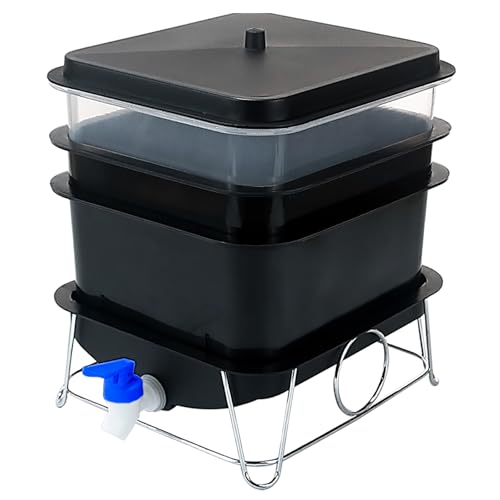
The HCGADON 3-Tray 15L Worm Farm is designed for vermicomposting, a process that uses composting worms to break down suitable kitchen food waste into organic fertilizer. It is aimed at beginners, apartment and balcony gardeners, and homeowners who want a compact alternative to a conventional outdoor compost pile.
Its main practical benefit is the stacked tray arrangement. Based on the listed specifications, the three reusable 15L trays allow newer food scraps to be placed above material that is further along in the composting process, helping organize ongoing recycling and access to lower trays for harvesting.
The bin measures 9.6 x 10.8 x 10.5 inches and weighs 2.4 pounds, so its footprint should be manageable on a kitchen, balcony, patio, or other stable surface. The product information lists UV-resistant PP plastic and indoor or outdoor use, but it does not provide details about drainage, ventilation controls, or a dedicated liquid collection feature.
For a small household, this system could be useful near a kitchen for handling fruit peels and vegetable waste before using the resulting material around garden plants. It may also suit patio and small-space gardeners who want to produce compost inputs without dedicating room to a large outdoor bin.
Routine care will still be necessary, including following the instructions, maintaining suitable bedding and food inputs, and using the included scraper and rake as needed. The product details do not confirm that worms are included, so prospective buyers should verify the package contents and plan for an appropriate worm supply if required.
This is a reasonable fit for beginners seeking a compact, expandable vermicomposting setup with basic accessories included. Gardeners with high volumes of food waste, limited indoor space, or a preference for traditional aerobic composting may be better served by a larger or differently designed composting system.
Best For / Avoid If
Best for buyers prioritizing
- Compact dimensions make it suitable for small-space composting.
- Included bedding and hand tools reduce the number of setup items beginners need to source separately.
- Stackable trays support an organized, ongoing vermicomposting workflow.
Consider another option if
- The listed capacity is modest, so households producing large amounts of kitchen waste may need a larger system or additional bin.
- The product information does not state that worms are included, so buyers may need to source appropriate composting worms separately.
- Indoor placement may require careful location and routine management to keep the surrounding area clean and comfortable.
Pros
- Harvesting from the bottom is simpler than managing multiple worm-composting trays.
- The continuous-flow format allows feeding and harvesting as separate routine tasks.
- Tool-free assembly and adjustable opening make the bin straightforward to set up and manage.
Cons
- Its approximately 27-inch square footprint and nearly 32-inch height may be too large for very limited indoor or balcony spaces.
- Gardeners who prefer a rigid bin or need specific capacity measurements may want a different composting setup.
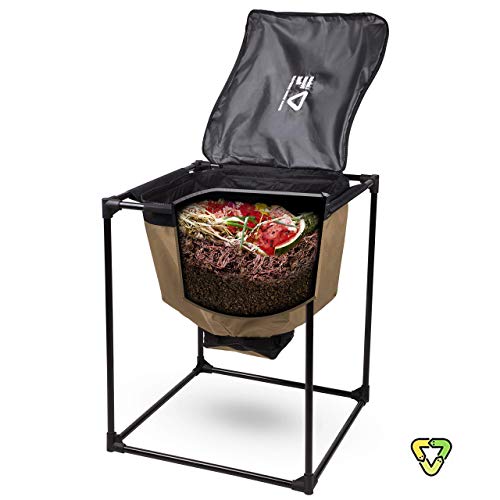
The Urban Worm Bag Version 2 is a fabric worm composting bin for gardeners who want to process organic material and collect worm castings in a continuous-flow system. It is best suited to homeowners and small-space gardeners with a dedicated patio, utility area, or backyard location that can accommodate its listed dimensions.
Its main practical benefit is the bottom-harvest design. Gardeners feed material through the top and remove finished castings from the bottom, without sorting worms from a series of trays. The design is intended to let the worm population remain in place while harvesting takes place.
The bin uses 900D Oxford fabric and includes a detachable opening that can be kept open or closed to help control moisture. Based on the listed specifications, the brown and black bin measures 26.75 by 26.75 by 31.75 inches and weighs about 10.6 pounds, so placement should allow enough room for access to both the top and bottom.
Assembly is described as taking less than five minutes and requiring no tools, glue, or complicated instructions. The top-feed and bottom-collection arrangement could be useful for a gardener who wants a repeatable composting routine without lifting or managing separate trays.
The product information does not provide a numeric capacity, moisture range, weather-suitability statement, or maintenance schedule. Gardeners will need to monitor conditions themselves and choose a suitable location, while those needing a compact rigid container or clearly measured capacity may prefer another option.
This bin is a reasonable fit for users who value easy casting access, flexible moisture management, and minimal assembly. It may be less suitable for very tight spaces or for gardeners who prefer a conventional stackable worm-bin format.
Best For / Avoid If
Best for buyers prioritizing
- Harvesting from the bottom is simpler than managing multiple worm-composting trays.
- The continuous-flow format allows feeding and harvesting as separate routine tasks.
- Tool-free assembly and adjustable opening make the bin straightforward to set up and manage.
Consider another option if
- Its approximately 27-inch square footprint and nearly 32-inch height may be too large for very limited indoor or balcony spaces.
- Gardeners who prefer a rigid bin or need specific capacity measurements may want a different composting setup.

Pros
- Multi-level design supports batch composting and easier access to different stages of material.
- Ventilation and tray grids are designed to encourage airflow and help manage odor during decomposition.
- Compact PP construction fits several small-space gardening setups.
- Liquid collection features provide a more controlled way to handle excess moisture.
Cons
- Gardeners will need to source suitable composting worms separately if they are not included, as the supplied product data does not list worms as an accessory.
- The 15.4-inch square footprint and 20.3-inch height still require a dedicated, level placement area.
- Worm composting requires ongoing attention to ventilation, moisture, temperature, and the type of waste added.
The Outsunny 4-Tray Worm Composter is a vertical bin for processing kitchen scraps with composting worms. It is intended for homeowners, apartment gardeners, balcony growers, and small-space users who want to reduce food waste while producing worm castings and collected liquid fertilizer for garden use.
Its four removable trays provide separate layers for adding material and handling different composting stages. The ventilated grid design is intended to support airflow and allow worms to move between layers, which can help maintain a more organized composting process than a single undivided container.
The bin uses a stackable layout with an overall size of 15.4 inches long by 15.4 inches wide by 20.3 inches high. Each tray is 5.1 inches high, and the listed PP construction provides a lightweight 9-pound unit. A bottom spigot and collection tray help manage excess liquid, while the included shovel and scraper support routine loading and clearing tasks.
With a listed 7.4-gallon capacity, this composter can fit on a patio, balcony, kitchen area, or in a protected garden location. Its square footprint uses vertical space rather than spreading across a large area, making it a practical option for gardeners with limited room or those who want to keep food-scrap processing close to their growing area.
This system still requires regular attention. The product information recommends using gloves, keeping the bin well ventilated, and placing it in a cool but protected location. Users should also be prepared to manage moisture and identify appropriate composting worms, since the supplied data does not confirm that worms are included. Overall, it is a reasonable fit for gardeners who want a compact, layered worm bin, while those seeking a maintenance-free composting method may prefer a different system.
Best For / Avoid If
Best for buyers prioritizing
- Multi-level design supports batch composting and easier access to different stages of material.
- Ventilation and tray grids are designed to encourage airflow and help manage odor during decomposition.
- Compact PP construction fits several small-space gardening setups.
Consider another option if
- Gardeners will need to source suitable composting worms separately if they are not included, as the supplied product data does not list worms as an accessory.
- The 15.4-inch square footprint and 20.3-inch height still require a dedicated, level placement area.
- Worm composting requires ongoing attention to ventilation, moisture, temperature, and the type of waste added.
Pros
- Small footprint is useful for gardeners with limited space
- Separate worm tea collection adds convenience for routine maintenance
- Air-flow control and tray design suggest a more manageable setup for beginners
- Designed for both indoor and outdoor placement
Cons
- The product information does not list capacity, so gardeners with high food-scrap volume may need more detail before buying
- At 27.5 inches tall, it may be less convenient for users who want a very low-profile bin
- Successful worm composting still requires regular moisture, feeding, and placement management
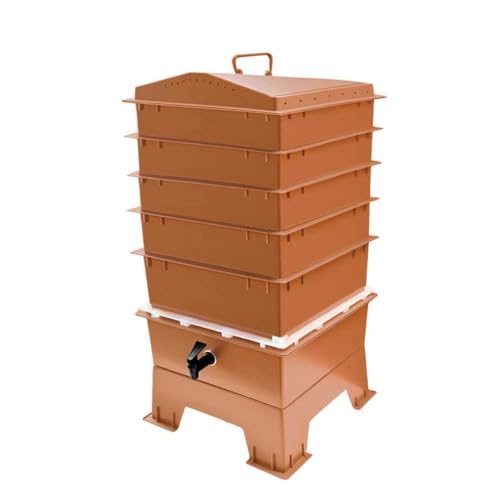
The VermiHut 5 is a tray worm composter made for vermicomposting, which means using worms to break down food waste into usable compost. Based on the product information, it is aimed at gardeners and homeowners who want a more organized way to recycle kitchen scraps, whether indoors or outdoors. It should be especially appealing to beginners who want a purpose-built bin rather than improvising a compost setup.
The standout benefits in the listed features are air-flow control, composting efficiency, and liquid collection. Good airflow is important in worm composting because it helps support the composting process and can make the system easier to manage. The included worm tea collection area also adds practical value by separating liquid from the main composting section, and the worm saver tray is intended to keep worms from dropping into that lower liquid area.
From a design standpoint, this unit has a 16 x 16 inch base and stands 27.5 inches tall, so it keeps a relatively small footprint while using vertical space. That can be a smart layout for gardeners who want composting capacity without giving up much floor area. The tray-style format also suggests a system built around layered composting, which many gardeners find easier to monitor than a single undivided bin.
In everyday use, this composter could fit well in a garage, covered patio, balcony corner, mudroom, or a sheltered outdoor spot, depending on your setup and climate. Small-space gardeners, apartment dwellers with an appropriate outdoor area, and homeowners who want to keep food-waste recycling close to the kitchen may appreciate its compact shape. It also suits gardeners looking to make vermicompost for container plants, raised beds, or small backyard growing spaces.
There are a few limits to keep in mind. The product details do not list total capacity, material, or setup specifics, so gardeners with larger households or heavy food-scrap output may want more information before choosing it. Like any worm bin, it will still require regular care, including proper feeding, moisture balance, and routine monitoring to keep conditions suitable for worms. Overall, the feature set suggests a thoughtful option for gardeners who want a compact, dedicated worm composting system with added protection for worms and easier liquid management.
Best For / Avoid If
Best for buyers prioritizing
- Small footprint is useful for gardeners with limited space
- Separate worm tea collection adds convenience for routine maintenance
- Air-flow control and tray design suggest a more manageable setup for beginners
Consider another option if
- The product information does not list capacity, so gardeners with high food-scrap volume may need more detail before buying
- At 27.5 inches tall, it may be less convenient for users who want a very low-profile bin
- Successful worm composting still requires regular moisture, feeding, and placement management

Pros
- Large 100L capacity in a vertically stacked design
- Removable trays simplify access to different composting layers
- Listed ventilation and closed construction support a cleaner, more contained setup
- Drain faucet provides a convenient outlet for liquid collection
Cons
- At 20 x 15 x 26 inches, it still requires a dedicated floor area and vertical clearance.
- Earthworms are not listed among the included accessories, so buyers may need to source them separately.
- Gardeners must manage suitable food waste, moisture, and ventilation for successful vermicomposting.
The TOP XIAN 5-Tray Worm Composter is a stacked vermicomposting system for recycling food waste into worm compost. With five trays and a listed total capacity of 100L, it is aimed at homeowners, beginners, and small-space gardeners who want a more organized alternative to an open compost pile.
Its main practical advantage is the layered design. The trays can be stacked as the composting system develops, then removed for access and collection. The product information also lists ventilation to allow oxygen into the bin and a closed design intended to help reduce escaping odors, which may be useful in an indoor utility area, patio, balcony, or compact backyard setup.
The bin measures 20 x 15 x 26 inches and is made from black PP plastic according to the listed specifications. A faucet provides a direct outlet for liquid runoff, while the included shovel and silicone scraper may help with routine handling. The five trays are described as easy to stack and remove, although the product data does not provide detailed assembly instructions or information about adjustable controls.
For backyard or patio use, gardeners can place the unit near a convenient food-waste collection area and later use the finished compost around suitable garden plantings. Its vertical format may be helpful where floor space is limited, but the 26-inch height should be considered before placing it under shelves or in a confined indoor location.
This system still requires regular attention to the balance of food waste, moisture, and airflow that worms need, and earthworms are not listed as included. The drain outlet should also be monitored during routine use, and the bin should be placed where any collected liquid can be handled cleanly. Based on the listed features, it is a sensible choice for gardeners seeking a contained, multi-tray worm farm, while those wanting a simpler, low-maintenance compost container may prefer a less structured design.
Best For / Avoid If
Best for buyers prioritizing
- Large 100L capacity in a vertically stacked design
- Removable trays simplify access to different composting layers
- Listed ventilation and closed construction support a cleaner, more contained setup
Consider another option if
- At 20 x 15 x 26 inches, it still requires a dedicated floor area and vertical clearance.
- Earthworms are not listed among the included accessories, so buyers may need to source them separately.
- Gardeners must manage suitable food waste, moisture, and ventilation for successful vermicomposting.
Kaufberatung für Wurmkomposter für drinnen
Wählen Sie eine Größe, die zu Ihrem Platz und Ihrem Küchenabfallaufkommen passt
Wurmkomposter für drinnen funktionieren am besten, wenn ihre Größe sowohl zum Haushalt als auch zum tatsächlichen Pflegeort passt. Ein kleines Set in Eimerform, etwa das Worm Bucket Indoor Composting Starter Kit mit einer angegebenen Größe von 10Q, lässt sich leichter in Wohnungen, Klassenzimmern oder Homeschooling-Bereichen unterbringen. Größere Systeme mit angegebenen Größen von 50L, 53QT und 100L können für Haushalte geeignet sein, die mehr Platz für die laufende Wurmkompostierung benötigen.
Wählen Sie das Fassungsvermögen nicht allein nach dem Preis. Ein größerer Behälter bietet zwar mehr Platz, benötigt aber auch einen geeigneten Stellplatz, ausreichend Aufmerksamkeit für Feuchtigkeit und Fütterung sowie einen einfachen Zugriff zur Entnahme. Für kleine Terrassen oder Bereiche in Küchennähe kann ein kompaktes System langfristig die realistischere Wahl sein.
Verstehen Sie den Unterschied zwischen Schalensystemen und Sacklösungen
Die meisten der aufgeführten Wurmkomposter für drinnen verwenden übereinandergestapelte Schalen. Beispiele sind der Original Vermihut ® 5 – Tray Worm Composter, The Original VermiHut® Plus 5-Tray Worm Compost Bin, der Blütezeit 5-Tray Worm Compost Bin sowie mehrere 3-Layer- oder 5-Tray-Modelle. Schalensysteme können attraktiv sein, weil die Konstruktion die Arbeitsebenen trennt und Einsteigern eine klare Möglichkeit bietet, den Behälter schrittweise zu verwalten.
Der Urban Worm Bag Worm Composting Bin Version 2 verfolgt einen anderen Ansatz in Sackform und wird mit einem leicht zu entleerenden Design sowie einem vollständig abnehmbaren, reißverschlussfreien Boden beschrieben. Dieser Stil kann Gärtner ansprechen, die statt des Anhebens gestapelter Schalen einen kontinuierlichen Durchfluss bevorzugen. Gleichzeitig ist er die teuerste gültige Option in den Herstellerangaben.
Prüfen Sie den Zugriff und die Entnahme vor dem Kauf
Der Zugriff ist wichtig, da die Kompostierung im Innenbereich eine regelmäßige Aufgabe und keine einmalige Einrichtung ist. Wenn Heben, Bücken oder Tragen für Sie eine Rolle spielen, vergleichen Sie, ob eine Schalen-, Eimer- oder Sackkonstruktion sich zum Öffnen, Füttern, Kontrollieren und Entnehmen am besten eignet. Ältere Gärtner und Personen mit eingeschränkter Handkraft sollten Systeme meiden, die sich im gefüllten Zustand umständlich bewegen lassen.
Auf Grundlage der verfügbaren Produktnamen betonen mehrere Optionen die Eignung für Einsteiger, das Recycling von Lebensmittelabfällen oder eine einfache Einrichtung. Der VIVOSUN 3-Layer Worm Compost Bin wird als einfach einzurichtendes, umfassendes Wurmfarm-Set aufgeführt, während der Worm Factory® 360 eine einfache Montage nennt. Diese Angaben sind bei der Wahl des ersten Behälters hilfreich. Lesen Sie vor der Einrichtung jedoch immer die aktuelle Produktseite und die Anweisungen des Herstellers.
Bewertungen und Anzahl der Rezensionen sorgfältig vergleichen
Rückmeldungen von Besitzern sind hilfreich, doch Bewertungsnote und Anzahl der Rezensionen sollten gemeinsam betrachtet werden. Der Original Vermihut ® 5 – Tray Worm Composter hat eine Bewertung von 4.6 bei 796 Rezensionen, während The Original VermiHut® Plus 5-Tray Worm Compost Bin eine Bewertung von 4.5 bei 1914 Rezensionen aufweist. Der Worm Factory® 360 kommt auf 4.4 bei 1860 Rezensionen und verfügt damit über eine der größeren Besitzer-Bewertungsgrundlagen in den Herstellerangaben.
Neuere oder weniger häufig bewertete Produkte können dennoch relevant sein, doch ihre Bewertungen bieten weniger Anhaltspunkte. Das Modell Worm Compost Bin, 5-Tray 26.5 Gallon (100L) weist beispielsweise eine Bewertung von 4.2 bei 16 Rezensionen auf. Käufer sollten daher das große angegebene Fassungsvermögen gegen die kleinere Bewertungsbasis abwägen.
| Entscheidungspunkt | Warum er im Innenbereich wichtig ist |
|---|---|
| Fassungsvermögen | Es muss zur Menge der Küchenabfälle sowie zur verfügbaren Boden- oder Regalfläche passen. |
| Zugriffsart | Schalen-, Eimer- und Sackkonstruktionen unterscheiden sich beim Füttern und Entnehmen. |
| Anzahl der Rezensionen | Eine größere Bewertungsbasis kann mehr Sicherheit geben als eine hohe Bewertung von nur wenigen Besitzern. |
| Preis | Die gültigen verglichenen Optionen reichen von $56.99 bis $139.00. Stimmen Sie die Kosten daher auf Fassungsvermögen und Bedienbarkeit ab. |
Planen Sie den Standort mit Blick auf Komfort, Sauberkeit und regelmäßige Pflege
Ein Wurmkomposter für drinnen sollte an einem Ort stehen, an dem Sie ihn regelmäßig kontrollieren können. Häufige Möglichkeiten sind ein Hauswirtschaftsbereich, eine Waschküche, ein Eingangsbereich, eine Ecke in der Garage, ein naturwissenschaftlicher Bereich im Klassenzimmer oder ein geschützter Platz in Küchennähe. Der genaue Standort sollte den Herstelleranweisungen für den gewählten Behälter entsprechen.
Wenn Sie in der Nähe auch Werkzeuge, Pflanzzubehör oder saisonale Gartengeräte aufbewahren, hilft ein aufgeräumtes Ordnungssystem dabei, dass die Kompostierung nicht zur Unordnung führt. Unser Ratgeber zum Organisieren eines kleinen Gartenhauses kann hilfreich sein, wenn Ihr Wurmkomposter eher bei den Gartenvorräten als direkt in der Küche steht.
Vermeiden Sie häufige Anfängerfehler
Viele Erstkäufer achten nur auf die Anzahl der Schalen oder das Gesamtvolumen. Besser ist es, sich zu fragen, wie oft Sie Abfälle hinzufügen, wie leicht Sie den Arbeitsbereich anheben oder erreichen können und ob der Behälter in Ihre Wohnung passt, ohne unpraktisch zu werden. Ein für den vorhandenen Platz zu großes System kann schwieriger zu pflegen sein als ein kleineres Starterset.
Gehen Sie außerdem nicht davon aus, dass jeder Behälter für den Innenbereich Würmer, Einstreu oder sämtliches Zubehör für die Einrichtung enthält, sofern dies nicht eindeutig im aktuellen Angebot steht. Einige Produktnamen erwähnen Startersets oder Werkzeugsets, doch die Herstellerangaben enthalten nicht für jeden Artikel den vollständigen Lieferumfang. Prüfen Sie vor der Bestellung, welche Teile enthalten sind.
Überlegen Sie, wohin der fertige Kompost kommt
Wurmkompostierung im Innenbereich ist besonders sinnvoll, wenn Sie bereits einen Verwendungszweck für das fertige Material haben. Kübelgärten, Pflanzgefäße auf der Terrasse und Hochbeete können bei geeigneter Anwendung praktische Einsatzorte sein. Wenn Sie aus der Kompostierung im Innenbereich heraus mehr Anbaufläche schaffen möchten, finden Sie in unserem Bereich Hochbeete & Pflanzgefäße Ideen zur Gartengestaltung.
Verwenden Sie fertigen Wurmkompost mit Bedacht und beachten Sie allgemeine Gartenempfehlungen für Ihre Pflanzen und Böden. Die Herstellerangaben dokumentieren keine spezifischen Ergebnisse zur Pflanzenleistung. Daher macht dieser Ratgeber keine Versprechen zu Erträgen oder Wachstum.
Stimmen Sie den Preis auf den tatsächlichen Funktionsunterschied ab
Die gültigen verglichenen Wurmkomposter für drinnen liegen preislich zwischen $56.99 und $139.00. Zu den günstigeren Optionen gehört der 3-Layer Worm Composter, 50L Worm Compost Bin für $56.99. Zu den teureren Optionen zählen der Worm Factory® 360 für $134.95 und der Urban Worm Bag Worm Composting Bin Version 2 für $139.00.
Der Preis allein bestimmt nicht, welcher Behälter am besten ist. Ein Einsteiger kann ein einfach einzurichtendes Set bevorzugen, ein Klassenzimmer vielleicht einen kleinen Eimer, während ein Gärtner mit größerem Bedarf auf das angegebene Fassungsvermögen und die Zugriffsart achten kann. Wählen Sie das Produkt, dessen Konstruktion Sie dauerhaft regelmäßig pflegen werden.
Recherchemethodik und Vertrauen
Bei den gültigen Produkten handelt es sich um Wurmkomposter, Wurmbehälter, Wurmeimer oder Wurmfarm-Systeme, die für das Recycling von Lebensmittelabfällen, die Wurmkompostierung oder die Nutzung im Innen- und Außenbereich vorgesehen sind.
Wir haben ausschließlich die verfügbaren Produktnamen, Preise, Bewertungen, Anzahl der Rezensionen, angegebenen Fassungsvermögen, Schalenanzahlen sowie Aussagen zur Einrichtung oder zum Zugriff verglichen.
Zu den Bewertungsfaktoren für dieses Thema gehörten die Eignung für den Innenbereich, das Fassungsvermögen, die Schalen- oder Sackkonstruktion, die Einsteigerfreundlichkeit, der Zugriff für regelmäßiges Füttern und Entnehmen, die Bewertungsbasis sowie der Preis. Produkte mit einer größeren Anzahl an Rezensionen wurden als Produkte mit breiterem Feedback von Besitzern betrachtet, während Produkte mit wenigen Rezensionen vorsichtiger eingeordnet wurden.
Abschließende Empfehlungen
Beste Gesamtwahl: Original Vermihut ® 5 – Tray Worm Composter, Sustainable Design for Both Indoor & Outdoor, Worm Compost Bin for Vermicomposting Starter, Recycling Food Wastes (Terracotta). Nach den Herstellerangaben verbindet er ein Wurmkompostierungsdesign mit 5 Schalen für den Innen- und Außenbereich mit der höchsten angegebenen Bewertung unter den gültigen Produkten: 4.6 von 5 bei 796 Rezensionen und einem Preis von $84.00.
Beste Wahl für Einsteiger: The Original VermiHut® Plus 5-Tray Worm Compost Bin – Indoor & Outdoor Vermicomposting System, Continuous Flow Food Waste Recycler for Organic Composting & Gardening – Dark Green. Das Produkt hat eine Bewertung von 4.5 bei 1914 Rezensionen und einen angegebenen Preis von $82.00. Damit bietet es eine der überzeugendsten Kombinationen aus Bewertungsumfang, Preis und klarer Relevanz für die Wurmkompostierung im Innen- und Außenbereich.
Beste Wahl für wenig Platz: Worm Bucket Indoor Composting Starter Kit – Small 10Q Worm Farm for Classrooms, Homeschool, and Apartments – Educational Soil Project – Make Organic Worm Castings & Worm Tea. Die angegebene kompakte Größe von 10Q sowie die Ausrichtung auf Wohnungen, Klassenzimmer und Homeschooling machen es zur eindeutigsten platzsparenden Option in den Herstellerangaben. Gärtner, die ein größeres System wünschen, sollten stattdessen die Modelle mit 50L, 53QT und 100L vergleichen.
FAQ
Welche Größe sollte ein Wurmkomposter für drinnen haben?
Wählen Sie eine Größe, die zu Ihrem Küchenabfallaufkommen und dem Platz passt, an dem Sie den Behälter pflegen werden. Ein kleiner Eimer mit 10Q ist wohnungsfreundlicher, während die Optionen mit 50L, 53QT und 100L mehr angegebenes Fassungsvermögen für Haushalte bieten, die ein größeres System wünschen.
Ist ein Wurmkomposter für drinnen mit Schalen besser für Einsteiger?
Ein Schalensystem kann einsteigerfreundlich sein, weil es den Behälter in Arbeitsebenen unterteilt und dem Prozess mehr Struktur gibt. Die verglichene Liste umfasst mehrere Systeme mit 3 Ebenen, 4 Schalen und 5 Schalen. Vergleichen Sie daher die Schalenanzahl mit Ihrer Bereitschaft, den Behälter anzuheben und zu bedienen.
Wo sollte ich einen Wurmkomposter für drinnen aufstellen?
Stellen Sie ihn an einem Ort auf, der regelmäßiges Füttern und Kontrollieren erleichtert, etwa in einem Hauswirtschaftsbereich, Klassenzimmer, Eingangsbereich oder in Küchennähe. Befolgen Sie die Anweisungen des Herstellers zur Aufstellung, Fütterung und regelmäßigen Pflege.
Enthalten Wurmkomposter für drinnen alles, was für den Start benötigt wird?
Nicht immer. Einige der angegebenen Produktnamen erwähnen Startersets, Werkzeugsets oder umfassende Wurmfarm-Sets, doch der vollständige Lieferumfang ist nicht für jedes Produkt angegeben. Prüfen Sie vor dem Kauf das aktuelle Angebot, insbesondere wenn Sie erwarten, dass Würmer, Einstreu, Werkzeuge oder Anleitungen enthalten sind.
Wie viel sollte ich für einen Wurmkomposter für drinnen ausgeben?
Die gültigen verglichenen Produkte kosten zwischen $56.99 und $139.00. Geben Sie nur dann mehr aus, wenn Konstruktion, Fassungsvermögen, Zugriffsart und Bewertungsbasis zu Ihren Anforderungen passen. Für eine kleine Wohnung kann ein kompaktes, günstigeres Modell besser geeignet sein als ein größeres System, für das kein geeigneter Platz vorhanden ist.
Sind Wurmkomposter für drinnen und draußen gleich?
Mehrere aufgeführte Produkte werden für die Nutzung im Innen- und Außenbereich beschrieben, doch der Standort bleibt wichtig. Bei der Nutzung im Innenbereich sind Stellfläche, Zugriff, Sauberkeit und regelmäßige Kontrolle meist besonders relevant. Im Außenbereich können je nach Herstelleranweisungen andere Überlegungen zum Aufstellort gelten.