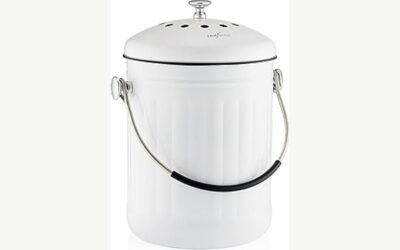



Die Grundlagen zu Kompostbehältern können zunächst verwirrend wirken, weil derselbe Begriff kleine Behälter für Küchenabfälle, große Kompostbehälter für den Außenbereich, Trommelkomposter, faltbare Gartensäcke und Wurmkompostsysteme umfasst. Die richtige Wahl hängt davon ab, wo Sie Küchenabfälle sammeln möchten, wie viel Material anfällt, wie oft Sie den Behälter leeren möchten und wie angenehm Bücken, Heben oder Wenden für Sie ist.
Für diesen Ratgeber vom Juli 2026 hat Dove Creek Gardens 18 Produkte aus der bereitgestellten Auswahl verglichen und die Kaufberatung anschließend auf Kompostbehälter konzentriert, die eindeutig zur Kategorie Compost, Soil & Mulch passen. Die Preise in den Daten liegen zwischen $12.99 – $59.33; vertreten sind unter anderem REDMON Since 1883, Epica und YardfullyProducts. Weitere Themen rund um den Bodenaufbau finden Sie in unserer Kategorie Compost, Soil & Mulch.
Utopia Kitchen CB-13 Stainless Countertop Compost Bin for Cleaner Food Scrap Storage OXO Good Grips 1.75-Gallon Easy-Clean Compost Bin for Neat Kitchen Scrap Collection GEOBIN Expandable Outdoor Compost Bin for High-Volume Backyard Composting Atvkov 34-Gallon Compost Bin with Handles and Viewing Window for Easy Backyard Composting Prices and availability can change. We may earn a commission from qualifying purchases.


Pros
- Compact enough for countertop use while still offering 4.92 liters of listed capacity.
- Charcoal-filtered lid is intended to reduce odors from stored food scraps.
- Stainless steel body provides a sturdier alternative to many plastic scrap containers.
- Reviewers commonly mention that it is easy to clean and looks tidy in the kitchen.
- Useful for collecting scraps for compost piles, worm bins, chickens, or other separate food-waste handling systems.
Cons
- It stores scraps but does not turn them into finished compost on its own.
- The product information recommends thorough washing after each use, so it may require more routine cleaning than a disposable liner setup.
- Gardeners with large households or heavy daily food prep may prefer a larger collection bin.
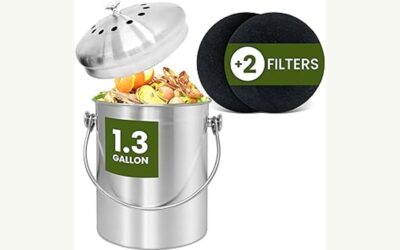
The Utopia Kitchen CB-13 is an indoor food scrap collection bin made for gardeners who want a cleaner way to move vegetable peels, coffee grounds, and other compostable kitchen waste out of the trash stream. Based on the listed specifications, it holds 1.3 gallons, or 4.92 liters, which suits small households, apartment gardeners, and homeowners who empty scraps into a backyard compost pile, worm bin, chicken feed bucket, or separate composting appliance.
The main benefit is convenience. Keeping a lidded compost bucket on the counter makes it easier to save scraps during meal prep instead of walking outside for every handful. The product information states that the lid includes charcoal filters designed to trap and control odors, and reviewers commonly mention reduced smell when the lid is closed. That can be especially helpful for beginners who are trying to build a composting habit without making the kitchen unpleasant.
The bin is listed as stainless steel with a silver cylindrical design, measuring 8.4 inches long, 7 inches wide, and 11 inches high. At 2 pounds, it should be manageable for most adults to lift and carry when full, though anyone with limited hand strength may still want to empty it before it becomes packed down. The stainless steel body is described as resistant to scratching, cracking, and chipping, giving it a more durable feel than many lightweight plastic scrap pails.
For small-space gardeners, the footprint is one of the most practical features. It can sit on a kitchen counter where scraps are generated, then be carried to a patio worm bin, raised-bed compost area, outdoor tumbler, or chicken run as part of a regular routine. Several reviewers also mention using liners or compost bags to simplify cleanup, although bag choice and compostability should be matched to your local composting setup.
This is not a compost maker by itself. It is a holding container, so food scraps still need to be emptied into a proper composting system or disposal stream. The manufacturer also recommends washing the bin thoroughly after each use to prevent odor, which is sensible for any indoor scrap container. Replacing or maintaining the charcoal filter will also be part of long-term use, though the supplied data does not specify an exact replacement schedule.
Gardeners who want a simple, good-looking countertop pail for daily food scrap collection are the best fit for this model. Those who generate a large volume of scraps, want hands-free opening, or need an appliance that actively processes waste into compost should consider a different option with more capacity or composting function.
Pros
- Compact countertop-friendly dimensions with enough capacity for routine kitchen scrap collection
- Smooth plastic interior and removable parts support easier cleaning than bins with more crevices
- Handle folds down when not in use and helps with transporting scraps to the main compost area
- Lid can stay open during food prep and comes off for emptying
- Reviewers frequently praise the neat bag fit and odor control
Cons
- Larger households or very active cooks may need to empty it more often than a bigger kitchen compost pail
- Plastic construction may not appeal to gardeners who prefer stainless steel or ceramic countertop bins
- One long-term reviewer reported staining and water getting into the liner after extended use, so periodic inspection and cleaning are sensible
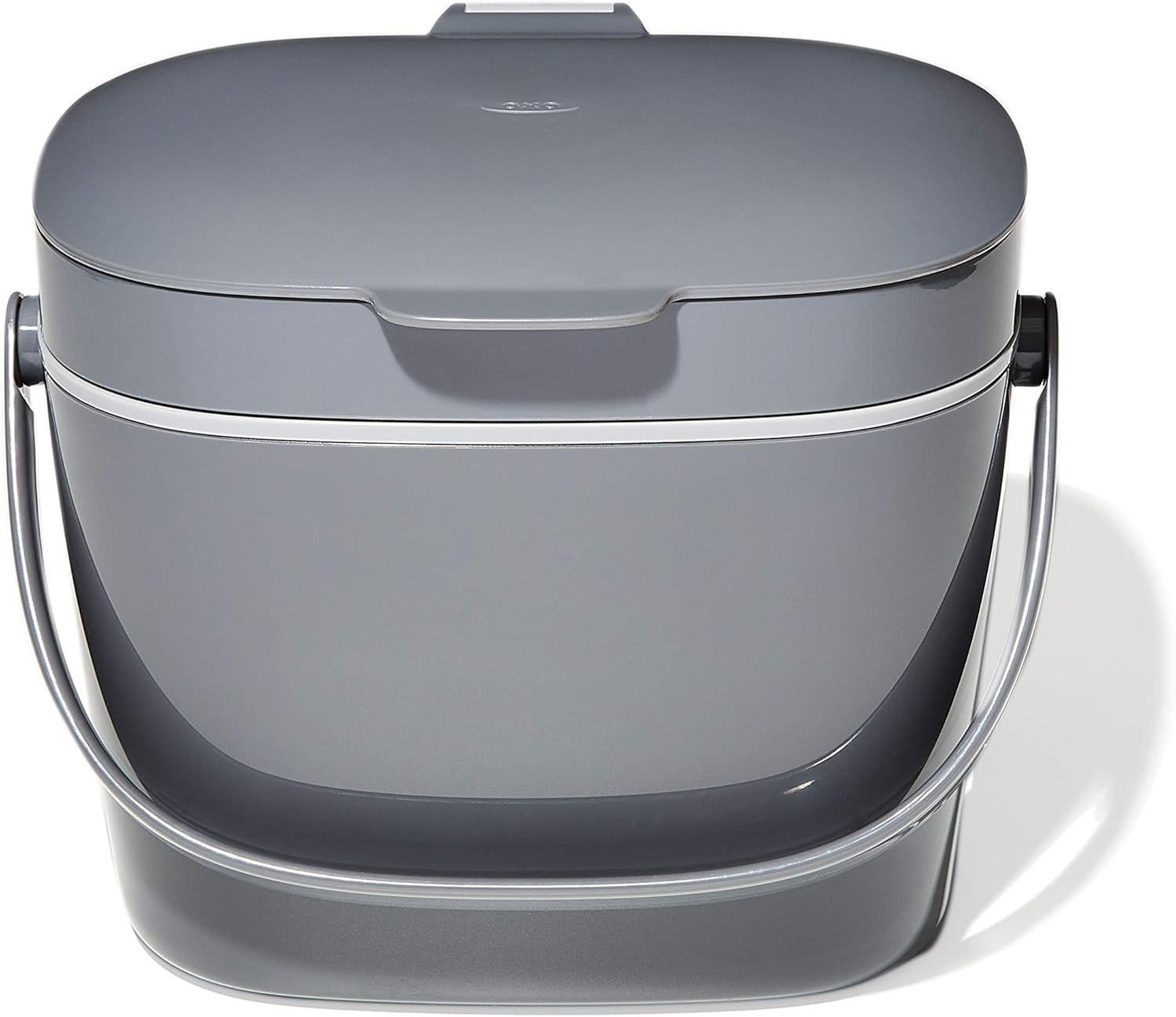
The OXO Good Grips Easy-Clean Compost Bin is an in-home composting bin made for collecting kitchen scraps before they move to an outdoor compost pile, backyard bin, or local compost collection container. Based on the listed specifications, it holds 1.75 gallons, or 6.62 liters, which makes it useful for everyday vegetable peels, fruit scraps, coffee grounds, and other kitchen compostables allowed by your composting system.
Its strongest practical benefit is convenience during food prep. The stay-open lid lets you toss scraps in as you cook, while the design keeps bags tucked inside for a cleaner look on the counter. The product information also notes an odor-containing, pest-reducing lid design, and several reviewers commonly mention that it helps keep smells down when closed.
The bin measures 8.3 inches long, 10.15 inches wide, and 12 inches high, with an oval charcoal plastic body. It weighs 1.5 pounds, includes a removable lid, and has a handle that folds down when not in use. The smooth interior is intended to make cleaning easier, and the removable internal bucket is listed as dishwasher safe for more thorough washing.
For small-space gardeners, this bin is a simple bridge between the kitchen and the garden. It can sit near a sink for daily scraps, tuck under a sink for a cleaner counter, or be carried out to a backyard compost bin when full. It is especially well suited to beginners who want composting to feel like a normal kitchen habit rather than a messy extra chore.
There are a few limitations to keep in mind. A 1.75-gallon bin may fill quickly in larger households, during canning season, or for gardeners who cook heavily with fresh produce. Since it is plastic, it may stain over time depending on what is stored in it, and one reviewer noted staining after extended use. Emptying it regularly, using compatible composting bags if desired, and washing it often will help keep it more pleasant indoors.
Overall, the feature set suggests a well-designed kitchen compost collector for homeowners, apartment gardeners, and anyone trying to keep food scraps organized before composting. Gardeners who want a countertop bin with simple handling and easy cleaning should find it a good match, while those needing a larger-volume pail or a non-plastic material may want to compare other options.
Pros
- Simple roll-and-lock style assembly is well suited to beginners and low-maintenance composting routines.
- Excellent ventilation is listed as a core feature and is useful for aerobic composting.
- Adjustable size gives more flexibility than a fixed rigid bin.
- Lightweight plastic construction is easier to move and store than many heavy compost systems.
Cons
- Because it is a lightweight, flexible bin, some gardeners may want separate stakes or supports for better shape and stability, especially before it is full.
- Gardeners who need a fully enclosed composter for wildlife-prone areas may prefer a lidded or closed-bin design.
- Turning a tall, full pile may require a fork and some effort, so it may be less convenient for gardeners with limited strength or mobility.
The GEOBIN outdoor compost bin is a flexible, cylindrical plastic composter intended for backyard use with yard debris, plant trimmings, leaves, and suitable kitchen scraps. Based on the listed features, it is best suited to homeowners and beginner-to-intermediate gardeners who want a straightforward composting setup with more volume than a countertop pail or small enclosed bin.
The key gardening benefit is capacity combined with airflow. The product information describes a large, expandable bin with excellent ventilation, and those two traits matter for composting because a pile needs enough mass and oxygen to break down well. For gardeners who regularly collect fall leaves, grass clippings, spent vegetable plants, or coffee grounds, this format can help keep organic material contained instead of piled loosely in the yard.
Assembly is designed around closure keys, so the bin can be set up, taken apart, and reassembled without a complex frame. The listed 7-pound weight also makes it easier to move than many rigid composters. The specifications identify the material as plastic, the color as black, and the shape as cylindrical. Product information lists expandable capacity details, while the specification table lists 216 gallons, so shoppers should treat the exact usable volume as dependent on how the bin is adjusted during setup.
In a practical backyard, this bin fits well near a vegetable garden, behind a shed, along a fence line, or in a corner where leaves and garden cleanup waste are easy to add. It may also suit small-space gardeners who have enough outdoor room for a compost station but do not want a permanent wooden bin. Reviewers commonly mention using stakes, rebar, or similar supports to help the flexible sides keep their shape, especially when the bin is not yet full.
The main limitation is that this is not a sealed tumbler or enclosed pest-resistant composter. Gardeners in areas with raccoons, deer, or other wildlife may want to be careful about what they add, cover fresh green material with browns, or choose a closed composter if animal access is a major concern. As with any compost bin, avoid adding materials that are not appropriate for home composting, and use safe lifting and forking habits when turning a heavy pile.
Overall, the GEOBIN is a sensible choice for gardeners who value capacity, airflow, adjustability, and simple assembly over a rigid, fully enclosed design. It is especially appealing for leaf-heavy yards and vegetable gardeners who generate steady organic waste. Gardeners who need a neater sealed system, built-in supports, or easier turning may be better served by a different composting style.
Pros
- Generous capacity for routine household and garden waste collection.
- Portable design with handles and a foldable form for easier handling and storage.
- Multiple access points make loading and removing compost more convenient.
- Viewing window helps gardeners check material changes without fully opening the bin.
Cons
- The product information does not specify a weather rating, so placement may require protection from prolonged exposure.
- The listed specifications do not describe a dedicated drainage system or rigid base.
- Gardeners who prefer a hard-sided bin may find a felt bag less structured for long-term placement.
The Atvkov 34-gallon compost bin is a flexible outdoor composting bag for collecting and fermenting fruit peels, weeds, fallen leaves, plant fragments, and other garden waste. Its size and portable design make it suitable for homeowners, beginner gardeners, and anyone who wants a simple compost container without a rigid bin structure.
Based on the listed specifications, the main convenience comes from the combination of generous capacity, breathable felt construction, and several access points. The top zipper provides a broad loading area, while the transparent side window lets gardeners observe changes inside the bag during fermentation. These features can make routine monitoring and material handling more straightforward.
The bin measures 17.7 by 17.7 by 31.5 inches and is described as having a 34-gallon capacity. Handles on both sides support repositioning, and the foldable design is useful for storage when the container is not needed. Top and bottom square ports provide separate ways to add material or remove soil and compost during the process.
In a backyard or garden setting, the bag can serve as a central collection point for fallen leaves, plant trimmings, and kitchen fruit peels. Its portable format may also suit gardeners who need to move the container between outdoor areas, although the available information does not specify a required surface, drainage arrangement, or weather protection.
The thick felt is described as breathable, tear-resistant, lightweight, and intended for repeated use. Gardeners should keep the bag in a suitable location and monitor moisture and material condition during composting, especially because the product information does not list a weather-resistance rating or dedicated drainage feature. Overall, it appears well suited to users who value accessible loading, visual monitoring, and compact storage.
Choose this bin if you want a portable, large-capacity compost bag with handles and multiple openings. A different option may be preferable if you need a rigid container, a specified weather rating, or clearly documented drainage and base features.

Pros
- Good countertop size for small households, apartment gardeners, and daily food scrap collection.
- Stainless steel body provides a durable, easy-to-clean surface based on the listed product materials.
- Charcoal filter is replaceable, so odor-control maintenance does not require replacing the entire bin.
- Reviewers commonly mention that it looks attractive on the counter and is simple to clean.
Cons
- It is a collection bin, not a full composting system, so scraps still need to be emptied into an outdoor pile, curbside organics bin, or other compost setup.
- Gardeners who cook heavily or generate large amounts of scraps may need to empty the 1.3-gallon bin frequently.
- Odor control depends on filter condition, scrap type, and emptying habits, and at least one reviewer reported odor escaping through the lid area.
The Epica SYNCHKG123584 is an in-home composting bin designed for kitchen countertops, not a backyard composter that finishes compost on its own. It gives gardeners and homeowners a tidy place to collect food scraps indoors before carrying them to an outdoor compost pile, raised-bed compost trench, community organics container, or municipal food-waste bin.
Based on the listed specifications, the main value is convenience. The 1.3-gallon capacity is large enough for regular kitchen prep scraps while staying small enough for visible counter use. For beginner composters, that matters because a bin that is easy to reach is more likely to be used consistently than a hidden container under the sink.
The product information indicates a stainless steel cylindrical body measuring 7.16 inches in diameter and 11 inches high. The one-piece molded design is described as resistant to leaks and rust, and it avoids welded seams that can be harder to maintain over time. The lid includes a replaceable activated-charcoal filter intended to help control odors naturally.
For small-space gardeners, patio growers, and homeowners with vegetable beds, this bin can serve as the indoor link between meal prep and soil building. It is well suited for collecting items such as produce trimmings and coffee grounds until they can be transferred outside. Reviewers commonly mention that the bin looks good on the counter, is easy to clean, and fits everyday kitchen use without feeling oversized.
There are some practical limits to keep in mind. This bin will not turn scraps into finished compost by itself, and it should be emptied regularly to reduce odor pressure, moisture buildup, and fruit fly risk. The charcoal filter is replaceable, but it will need maintenance over time, and odor control can vary depending on what is placed inside and how long scraps are stored.
This is a sensible choice for gardeners who want a compact, stainless steel food-scrap pail that can stay out on the counter. If you produce a large volume of kitchen waste, want foot-pedal operation, or prefer a fully sealed container without lid ventilation, a larger or different style of indoor organics bin may be a better fit.
Pros
- Compact countertop design fits kitchens, coffee stations, and small homes.
- Removable, drainable inner bucket makes handling wet and dry scraps more manageable.
- Dishwasher-safe, smooth surfaces can reduce the effort required for regular cleaning.
Cons
- The 0.7-gallon capacity may require frequent emptying in larger households or during heavy food-preparation periods.
- A compact countertop bin is intended for collecting scraps, not for completing the composting process itself.
- Gardeners who need a larger outdoor storage container may prefer a dedicated compost bin with greater capacity.
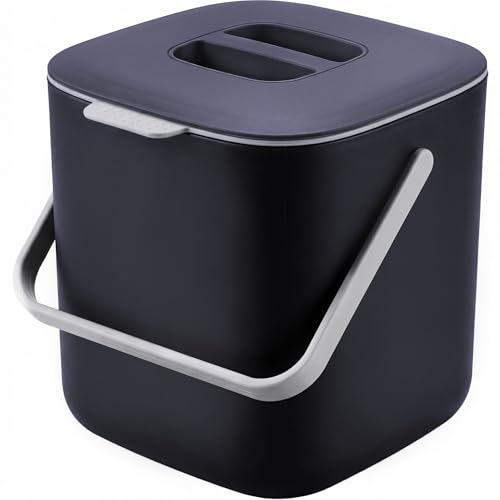
The IVWOXO 0.7-gallon kitchen compost bin is a small countertop container for collecting coffee grounds, tea bags, fruit peels, and other household scraps before they are moved to an outdoor composting setup or another appropriate collection point. Its compact format makes it a practical choice for homeowners, apartment residents, and small-space gardeners who want to keep scraps contained near food-preparation areas.
The feature set is focused on convenient daily use. The nearly airtight lid is designed to help contain odors, while the inner bucket separates liquids from solids. That separation may help slow decomposition inside the container and make wet scraps easier to manage, although the bin still needs regular emptying and cleaning.
A one-handed lid and sturdy handle support quick additions and easier carrying. The removable inner bucket provides access for emptying, and the listed drainable design gives users a way to handle collected liquid separately. The smooth interior and dishwasher-safe surface also support straightforward hand cleaning or dishwasher cleaning.
At 6.5 by 6.5 by 7 inches, this dark blue bin can fit on a kitchen counter, beside a coffee maker, or in another small household area. For a backyard composting routine, it works best as an indoor staging container that is emptied into a larger compost system rather than as a replacement for an outdoor compost bin.
The main limitation is its 0.7-gallon capacity, which may mean more frequent emptying for larger households or during busy cooking periods. Users should keep the lid properly closed, empty the container routinely, and clean the inner bucket as needed to maintain a fresh collection area. This bin is a sensible fit for compact kitchens and light-to-moderate scrap collection, while gardeners needing longer storage or higher volume may want a larger dedicated compost container.
Pros
- Lidded design helps contain kitchen scraps and may reduce unwanted odors and flies.
- Small footprint suits compact kitchens, apartments, RVs, cabins, and countertop use.
- Multiple placement options include countertop, cabinet-hanging, and adhesive-pad mounting.
- Handle supports easier transport when the container needs to be emptied.
Cons
- The 3-liter capacity may fill quickly for households that generate a large amount of kitchen waste.
- Adhesive mounting may be less suitable for some wall or cabinet surfaces, and the product information does not specify surface limitations.
- It is a collection container rather than a complete composting system, so gardeners still need a separate composting destination.
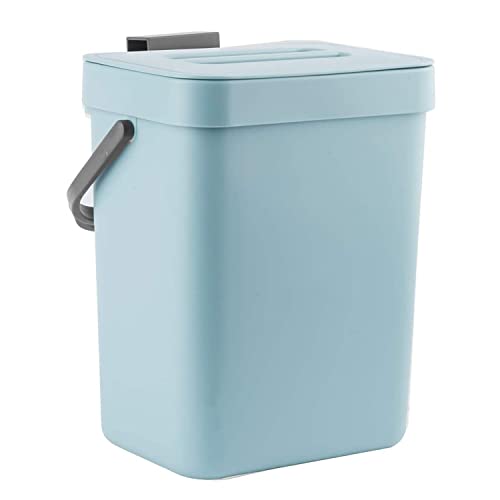
The LALASTAR 3L Compost Bin Kitchen is a small countertop food-scrap container for collecting fruit scraps, vegetable peelings, and similar kitchen waste. It is best suited to gardeners who want a convenient indoor holding bin before carrying scraps to an outdoor compost bin or other approved waste location.
Based on the listed features, the lidded container is designed to help block odors while scraps build up for several days. The enclosed format can also help keep waste contained and may reduce the chance of attracting flies, although results will depend on the type and age of the scraps and how the bin is maintained.
The bin measures 5.5 by 4 by 8 inches and holds 3 liters, or 0.8 gallons. Its compact size can fit on a countertop, under a sink, or in a pantry, while the handle provides a practical way to carry the container when it is full. The feature set also supports hanging from suitable cabinet doors, lockers, or drawers, plus wall mounting with the included adhesive-pad approach described in the product information.
For backyard gardeners, this bin can serve as an indoor collection point during meal preparation, helping keep kitchen scraps together until a trip to an outdoor compost area. Its small footprint also suits apartments, dorm rooms, RVs, cabins, and other spaces where a larger food-waste container would be inconvenient.
The main limitation is capacity. Three liters may be adequate for light kitchen use, but households producing more scraps may need to empty it frequently or consider one of the larger sizes listed by the brand. The product information does not describe ventilation, dishwasher care, liner compatibility, or the weight limit for adhesive mounting, so users should follow sensible cleaning and placement practices and avoid overloading a wall-mounted setup.
This container is a reasonable fit for beginners, small households, and gardeners seeking a compact way to collect kitchen scraps. Anyone needing higher capacity, specialized compost aeration, or a complete composting system should consider a different product or a larger dedicated compost solution.
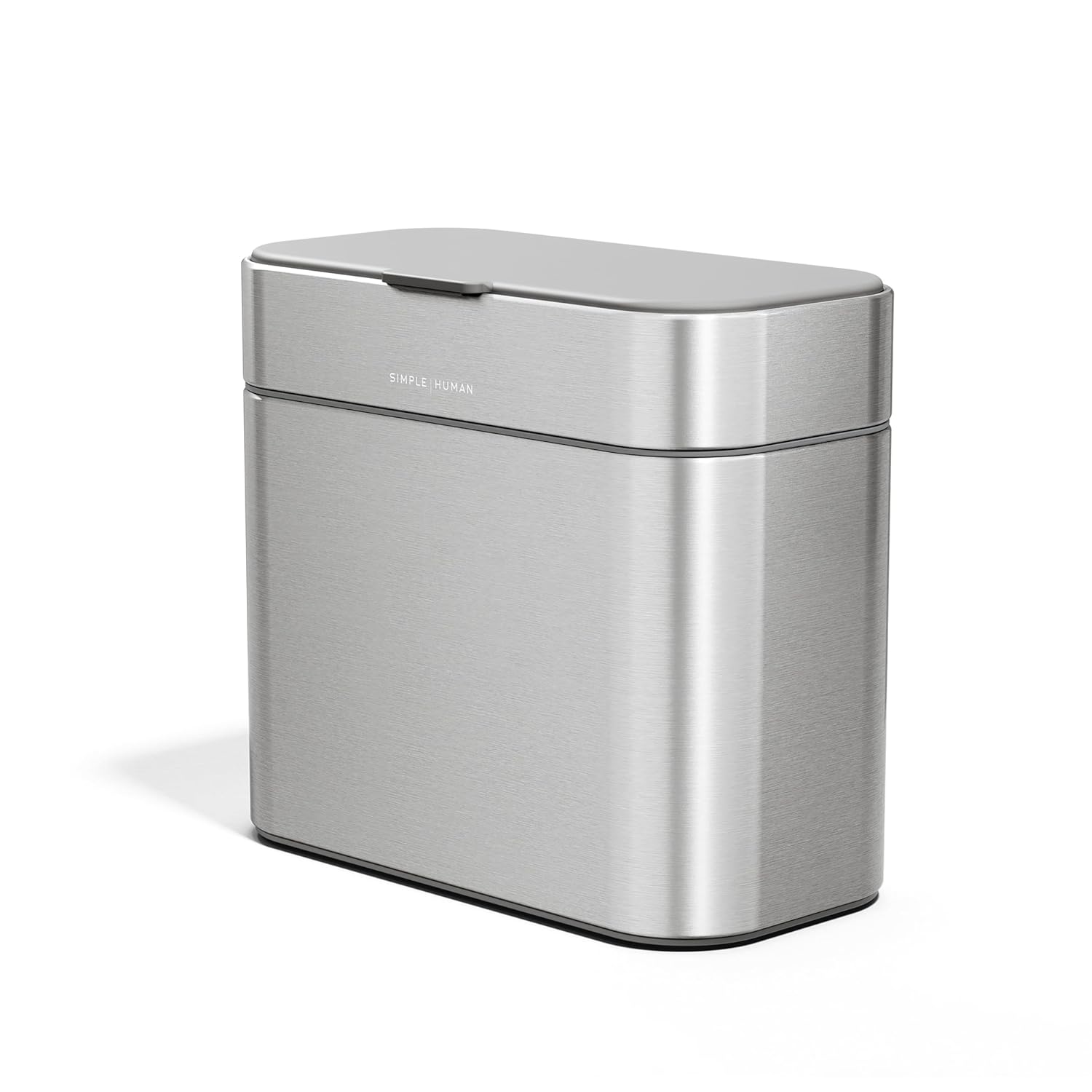
Pros
- Compact footprint and 9.6 by 5.5 by 8.7 inch dimensions are well suited to small kitchens, apartments, and countertop food prep areas.
- Can be used docked on compatible simplehuman trash cans or removed for countertop use during chopping and cooking.
- Removable inner bucket makes emptying into an outdoor compost bin or curbside compost container more straightforward.
- Reviewers commonly mention that the stainless finish looks good in the kitchen and that the bin is easy to clean.
- Custom-fit compostable liners are included, so buyers can start using the caddy without immediately sourcing bags.
Cons
- The magnetic dock compatibility is limited to simplehuman rectangular or slim liner rim trash cans, so owners of other trash cans may use it mainly as a countertop bin.
- The 4-liter size may fill quickly for large households, heavy meal prep, or gardeners saving a high volume of kitchen scraps.
- Some users may prefer a compost pail with a larger carrying handle or a more ventilated lid design, especially if scraps sit for longer periods.
The simplehuman Compost Caddy is an indoor food-scrap bin intended for the first step of composting: collecting kitchen waste before it goes to a backyard compost pile, outdoor bin, or municipal compost pickup. Based on the listed specifications, it holds 4 liters, has a brushed stainless steel exterior, and is sized for daily cooking scraps rather than bulk yard or garden waste.
Its main practical advantage is convenience during meal prep. The caddy can dock magnetically to the side of compatible simplehuman rectangular or slim liner rim trash cans, which keeps compostable scraps close to regular trash. It also detaches so you can place it beside a cutting board and scrape in vegetable ends, peels, coffee grounds, and similar household organics as you cook.
The design is compact at 9.6 inches long, 5.5 inches wide, and 8.7 inches high, with a rectangular shape that can tuck against a wall or sit on a counter. The manual-lift soft-seal lid is described as helping control odors and pests, while the removable smooth plastic inner bucket lifts out for dumping and rinsing. A 30-pack of custom-fit Code Z compostable liners is included, which helps keep the setup neat without excess liner showing over the rim.
For gardeners, this type of caddy is useful if you want a cleaner way to move kitchen scraps into an outdoor compost bin without keeping a larger pail in the kitchen. It is also a good fit for apartment gardeners, small-space growers, and homeowners using curbside compost programs, since the bin is small enough to keep near the food prep area and empty on a regular schedule.
There are a few limitations to consider. The magnetic docking feature depends on owning a compatible simplehuman trash can, so not every kitchen will benefit from that part of the design. The 4-liter capacity may be too small for large families or big batch cooking, and compostable liners can allow moisture to collect in the inner bucket, so periodic rinsing is still a sensible habit.
Overall, the feature set suggests a tidy, design-conscious compost caddy for people who want kitchen scrap collection to feel easy and visible rather than hidden and inconvenient. Choose it if compact size, a polished stainless look, and simple emptying matter most; consider a larger or differently ventilated compost pail if you produce a lot of scraps or prefer to empty less often.
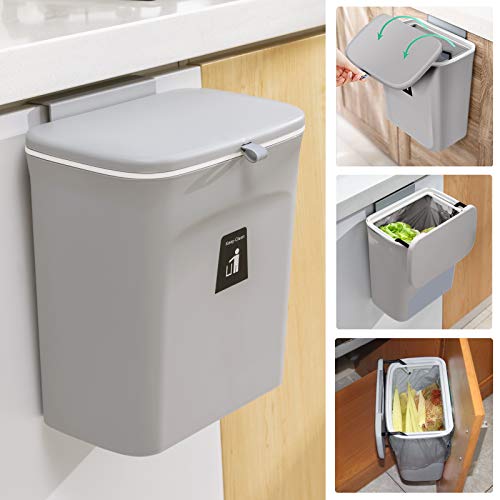
Pros
- Flexible placement options for countertops, under-sink areas, or compatible cabinet doors
- Compact capacity helps conserve usable kitchen and household space
- Included mounting accessories and trash bags make setup more convenient
- Smooth ABS plastic body should be relatively easy to rinse and clean
Cons
- Hanging installation may be less suitable for cabinet doors thicker than 0.95 inch or for doors that cannot support the bin comfortably
- The 2.4-gallon capacity may require frequent emptying for larger households or heavy kitchen use
- The product is intended for indoor waste collection, so gardeners needing an outdoor composting system will need a different solution
The Tiyafuro 2.4-gallon kitchen compost bin is a compact indoor container for collecting kitchen scraps and other household waste before disposal or transfer. It is a practical fit for homeowners, apartment residents, and gardeners who want a convenient collection point near food-preparation areas without adding a large floor bin.
Its fitted lid is designed to help keep odors from escaping, while the enclosed form keeps waste less exposed between emptying. The feature set suggests useful short-term storage for kitchen scraps, although the supplied information does not document a specific odor-control test or guarantee.
The bin measures about 10.2 by 6.3 by 11.6 inches and has a listed 2.4-gallon capacity. It can sit on a countertop or under a sink, or hang from a suitable cabinet or pantry door using the included hook or adhesive hooks. The listed door-thickness limit is less than 0.95 inch, so measure the intended door before installation.
For backyard and small-space gardening, this container can serve as an indoor holding point for kitchen scraps that will later be taken to an appropriate composting setup. It can also work in an RV, laundry area, bathroom, office, or other location where a smaller waste container is more useful than a full-size can.
The ABS plastic body is listed as easy to clean with soap and water, and the product information describes an interior without crevices intended to trap grime or liquids. Empty the container regularly, secure it carefully when hanging, and use a stable placement surface if adhesive mounting is not appropriate. Gardeners seeking outdoor compost processing, larger capacity, or a system with documented aeration should consider a different product.

Pros
- Compact footprint suits kitchens with limited counter space.
- Includes two filters and has a built-in compartment for odor management.
- Durable, easy-to-clean carbon steel design with a convenient carry handle.
- Useful bridge between daily food-scrap collection and backyard composting.
Cons
- The 1.1-gallon capacity may be less suitable for large households or gardeners producing substantial amounts of food waste.
- Ongoing odor control may require attention to the included charcoal filters and regular emptying.
- The product information does not specify outdoor weather suitability, so it is best treated as an indoor countertop container.
The KIBAGA countertop compost bin is designed for collecting food and other organic waste in the kitchen before transferring it to a backyard compost setup or another approved collection method. It is a sensible choice for homeowners, apartment gardeners, and beginners who want a dedicated food-scrap container close to the cooking area.
Its main garden-related benefit is convenience. Keeping scraps in a single 1.1-gallon container can make routine collection more organized and help support the steady supply of organic material used in home composting. The listed charcoal filter compartment and lid air holes are intended to help manage odors while allowing airflow.
Based on the listed specifications, the bin measures 7 by 7 by 10.2 inches and weighs about 2.89 pounds. Its compact footprint can fit on many kitchen counters, while the wooden handle supports easier carrying when the container needs to be emptied. No assembly or installation is indicated in the supplied product information.
This bin can be useful in small-space gardening situations where a patio, balcony, or backyard compost system is fed from kitchen scraps. The beige powder-coated carbon steel body, wooden handle, and wooden knob also make it suitable for kitchens where appearance matters alongside waste-sorting function.
The capacity may be limiting for large households or anyone generating a high volume of food waste, so those users may prefer a larger collection container. Regular emptying and attention to the charcoal filters are likely part of maintaining odor control, although the supplied information does not specify filter replacement timing. Overall, it appears to be a practical indoor collection bin for gardeners who want a compact, easy-to-carry starting point for food-scrap recycling.
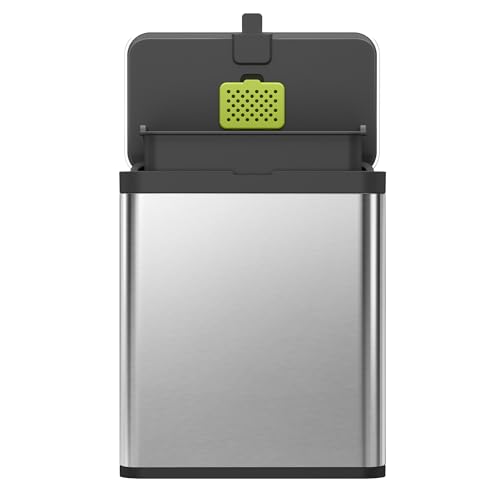
Pros
- Compact dimensions make it suitable for smaller kitchens, offices, and other space-limited areas.
- The removable liner helps keep bags in place and simplifies emptying.
- Multiple placement options provide more flexibility than a countertop-only food waste container.
Cons
- The 7L capacity may be less suitable for large households or gardeners who generate substantial food waste.
- Gardeners who need a larger outdoor composting container will need a separate compost bin or pile.
- The supplied information does not specify whether odor-control media, liners, or mounting hardware are included.
The EKO 7L kitchen compost bin is designed for collecting food scraps indoors before they are transferred to an outdoor compost pile, municipal organics program, or other disposal system. Its compact form makes it a practical fit for homeowners, apartment gardeners, and beginners who want a dedicated food waste container near food preparation areas.
Based on the listed specifications, the bin holds 7L, or about 1.85 gallons, and measures 9.88 by 6.65 by 11.42 inches. That capacity should work well for routine scrap collection in a smaller kitchen, while the swing lid helps keep the container closed between uses. The product listing also identifies a deodorizer compartment for adding odor-control media.
The stainless steel construction is listed as resistant to fingerprints, corrosion, and staining, which can help the bin maintain a tidy appearance during regular kitchen use. A removable inner bucket supports easier emptying, and the liner is intended to help keep garbage bags in place. The detachable design and carrying handle add convenience when moving the collected scraps for composting.
Placement is one of this bin's more flexible features. It can sit on a countertop, hang over a cabinet door, or be mounted on a wall, allowing gardeners to position it near a prep area without committing all of the available counter space. The listed dimensions should still be checked against cabinet clearance and wall space before installation.
This is a collection container, not a complete composting system, so it does not replace an outdoor compost bin, tumbler, or pickup service. The 7L capacity may also require frequent emptying in larger households or during heavy food-preparation periods. Routine cleaning of the inner bucket and lid area is sensible, and any wall or cabinet mounting should be completed securely according to the included instructions, if provided.
The EKO is a reasonable choice for gardeners who need a compact, movable food scrap caddy with flexible placement and easy-cleaning features. Those generating larger volumes of scraps, or looking for a product that composts material indoors, should consider a larger collection container or a dedicated indoor composting system instead.

Pros
- Compact countertop design keeps food-scrap collection convenient for kitchens, apartments, and small homes.
- Stainless-steel construction is less vulnerable to cracking or chipping than some plastic containers.
- The included dual-filter system is intended to reduce unpleasant odors during short-term food-scrap storage.
- The handle and moderate capacity make transport to an outdoor composting area manageable.
Cons
- The bin is not machine washable, so cleaning must be done by hand with soapy water.
- Gardeners who produce a large volume of kitchen waste may need to empty a 1.3-gallon container frequently.
- The supplied information does not specify how often the filters should be replaced or whether replacement filters are sold separately.
The RED FACTOR Premium Compost Bin is an indoor food-scrap collection pail for kitchens that feed an outdoor compost heap or another composting system. It suits homeowners, apartment gardeners, and small-space growers who want a dedicated place for everyday scraps without keeping a larger waste container on the counter.
Its main practical benefit is the dual-filter lid, which uses active carbon and ventilation holes to help neutralize food odors during temporary storage. The listed food-scrap examples include fruits, vegetables, coffee grounds, eggshells, and tea bags, giving beginners a clear starting point for routine collection.
Based on the listed specifications, the bin measures about 10.8 inches by 8.7 inches by 7.3 inches and holds 1.3 gallons. The stainless-steel body is made with single-sheet construction without joints, and the soft-grip handle should make it easier to carry scraps from the kitchen to an outdoor compost area. No assembly or installation is indicated.
This bin can work well beside a food-preparation area, under a counter, or in another convenient kitchen location where scraps are generated. Its compact footprint and dome-shaped lid are particularly useful for homes with limited indoor space, while the moderate capacity may reduce trips outside compared with a very small container.
Cleaning requires hand washing with soapy water because the bin is not machine washable. Users should also follow the product instructions for filter care and replacement, since the supplied information does not give a replacement schedule. Overall, it is a sensible choice for convenient countertop scrap collection, while households producing heavy food waste may prefer a larger container or a system designed for more frequent capacity.

Pros
- Observation window makes it easier to check progress without repeatedly opening the bin.
- Bottom access can reduce the need to shovel from the top when collecting compost.
- Compact, tool-free design is practical for backyards, urban patios, and hobby farms.
Cons
- The supplied specifications do not include the bin's exact height, diameter, or footprint, so placement should be confirmed before purchase.
- The product information does not specify weather resistance, odor control, or a warranty.
- Gardeners needing a rigid, high-volume composting system may prefer a different bin style.
The AXCLCDBN outdoor compost bin is designed for turning household and yard organic waste into compost. Its 34-gallon capacity and cylindrical shape make it a practical option for homeowners, beginner gardeners, patio growers, and families who want a dedicated composting station without a complicated setup.
Its most distinctive feature is the transparent observation window. Based on the listed product information, gardeners can use it to view decomposition progress and check moisture at a glance without opening the container. The bottom harvest door is also intended to provide access to more finished material while newer scraps remain above, which may make routine collection more convenient.
The bin uses a lightweight, heavy-duty non-woven fabric construction with interlocking panels and requires no tools for assembly. The product information indicates setup can take under 10 minutes. A snap-lock lid, tight-sealing bottom door, and ventilation holes are included in the design, although exact dimensions and the level of weather resistance are not provided.
For backyard use, it can be placed near a vegetable garden, flower bed, lawn area, fence, corner, or garden shed. Its listed inputs include kitchen scraps, grass clippings, yard waste, and fallen leaves. The compact cylindrical format may also suit urban patios or other spaces where a larger rigid compost structure would be difficult to position.
Routine composting still requires appropriate material balance, moisture management, and attention to airflow, and the viewing window does not replace those basic practices. The supplied information does not state whether the fabric is odor-resistant, weatherproof, or suitable for a specific climate. Overall, this bin is a reasonable fit for gardeners who value visible progress and bottom access, while those needing exact placement dimensions or a more rigid long-term enclosure should compare alternatives.

Pros
- Large 34-gallon capacity for mixed kitchen and garden waste
- Top and bottom access can simplify checking contents and removing composted material
- Collapsible, lightweight format is easier to store than a rigid container
Cons
- A flexible bag may be less suitable for gardeners who want the rigid structure of a traditional compost bin
- The product information does not specify ventilation details, so composting conditions may require regular attention
- Soil should be kept away from the self-adhesive strips when removing material from the lower opening
The MyLifeUNIT composting bag is a 34-gallon outdoor container for organizing fruit peels, weeds, leaves, wilted plant parts, and other kitchen or garden waste intended for composting. Its flexible format is suited to homeowners and beginner gardeners who need a movable waste container rather than a permanent rigid compost structure.
The feature set is focused on straightforward compost organization. A sealed zipper is designed to support fermentation and decomposition, while the upright opening makes it easier to add material as yard cleanup progresses. The bag is also described as lightweight, water-resistant, and tear-resistant for general garden use.
Two access points support routine handling. The top opening is used for adding waste and checking the contents, while the bottom opening can help remove soil or finished material. The listed dimensions are 17.7 by 17.7 by 31.5 inches, and strong webbing handles are provided for moving the bag when necessary. No assembly is indicated, and the collapsible design supports storage between uses.
This bag can work beside a backyard garden, raised beds, or a small-space growing area where kitchen scraps and plant trimmings need to be gathered in one place. It can also be used for general storage of toys, clothes, laundry, garage tools, shopping items, moving supplies, or camping gear when composting capacity is not needed.
Because it is a flexible bag, gardeners who prefer rigid walls, clearly specified ventilation, or a fixed composting station may want a different type of bin. When removing material, avoid letting soil touch the self-adhesive strips, as directed in the product information. Overall, it is a practical option for gardeners seeking a lightweight, collapsible container with large capacity and separate access points for adding and removing material.

Pros
- Includes two compost bins for multiple garden locations.
- Compact in-ground format works well for small gardens and raised beds.
- Metal construction and included lids provide a contained setup for organic waste.
- Gardening gloves are included for handling compost materials.
Cons
- The compact dimensions indicate limited capacity compared with a full-size compost tumbler or large compost bin.
- Because the bins are buried, installation requires suitable soil and digging space.
- The supplied information does not specify composting capacity, accepted food scraps, or maintenance intervals.
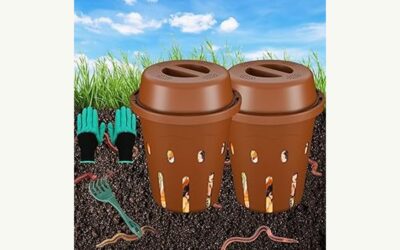
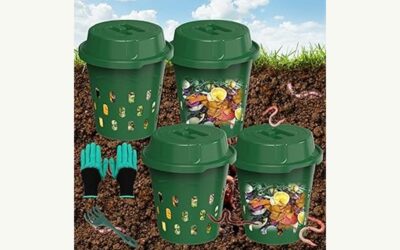
The HTtoy set includes two small, round, in-ground worm composting bins intended for kitchen scraps and other organic waste. Each bin has a lid, and the set also includes one pair of gardening rubber gloves. This format is aimed at homeowners, families, and beginner gardeners who want to compost directly in garden soil without adding a large freestanding tumbler.
The listed ventilation design uses small air holes around the bin to support air circulation while helping keep the composting area contained. The product information also indicates that worms can move freely between the bin and surrounding soil, which is intended to support natural decomposition and soil loosening around the installation area.
Two sizes are listed in the feature information, approximately 11.8 by 3.74 inches and 12.2 by 4.25 inches, while the specifications provide a 4.25 by 4.25 by 12.2 inch dimension. Gardeners should confirm the exact dimensions before digging. Installation involves creating a suitable hole, partially burying the bin, adding organic waste, and fitting the lid. No power or complex tools are described as necessary.
The compact design may fit vegetable gardens, raised beds, greenhouse areas, and small backyard spaces where a larger composting unit would be impractical. Using two bins could also allow separate composting points near different growing areas, although the supplied information does not state how much material each bin holds.
These bins may be less suitable for households producing large amounts of food waste or for gardeners who want a high-capacity tumbler with defined turning access. The buried location also means installation and later removal may require digging, and gardeners should choose a spot with suitable soil and enough room around nearby plants. The included gloves can help with routine handling, but normal hygiene practices are still appropriate when working with decomposing organic material.
This set is a practical option for small-space gardeners and families interested in a simple, in-ground composting approach. Gardeners who need measured capacity, faster batch processing, or a larger above-ground system should consider a different composting format.

Pros
- Large 65-gallon listed capacity suits regular household food scrap and yard waste composting.
- Vented design supports airflow, an important part of active compost management.
- Four-door access is useful for removing lower compost without fully emptying the bin.
- No-tool assembly keeps initial setup simpler than bins requiring hardware or special tools.
Cons
- As a stationary bin, it may require manual turning or an aerator tool if you want to mix materials more actively.
- The listed product data includes conflicting dimension entries, so gardeners with tight spaces should confirm the assembled footprint before buying.
- Plastic bins can be easier to place than heavier systems, but gardeners wanting a tumbler-style composter may prefer a rotating design.
The REDMON Since 1883 Model 8000 is an outdoor composting bin built for homeowners who want to recycle kitchen food scraps, decomposed leaves, plant material, soil, and other suitable organic waste into compost for the garden. With a listed 65-gallon capacity, it is aimed at backyard and small homestead use rather than tiny countertop collection.
The most useful feature set is the combination of ventilation and access. Multiple vent holes are designed to help air move through the bin and allow gases to escape, both of which matter when managing a compost pile. The lift-off lid provides top access for adding fresh materials, while the four side doors help with reaching lower, more finished compost.
Based on the supplied information, the bin is made from plastic and contains 80 percent post-consumer recycled materials. It is described as weather resistant for outdoor use and requires no tools for assembly. The product information lists the outdoor composter at 26 x 26 x 30.75 inches, although some specification fields show conflicting smaller dimensions, so it is wise to verify the footprint if placement space is limited.
In a typical home garden, this bin could sit near raised beds, a vegetable patch, or a convenient side-yard location where kitchen scraps and garden debris can be added regularly. Its 65-gallon size should be more practical for homeowners with seasonal leaves, spent plants, and routine food scrap collection than for gardeners who only generate a very small amount of organic waste.
Like most stationary compost bins, this model still depends on good composting habits. Gardeners may need to balance moist green materials with dry brown materials, keep the contents from becoming too wet, and turn or aerate the pile as needed. Because it has a lift-off lid and side doors, place it where there is enough room to access the top and all sides comfortably.
This is a sensible choice for beginners and backyard gardeners who want a basic outdoor compost bin with a large capacity, ventilation, and multiple access points. Gardeners who need a very compact patio composter, a sealed indoor system, or a rotating tumbler for easier mixing may want to compare other composting formats before deciding.

Pros
- Two-bin design supports a more continuous composting routine than a single-chamber tumbler.
- Raised rotating design reduces the need to fork or shovel a traditional compost pile.
- Listed dimensions make it compact enough for many home garden spaces.
- Reviewers commonly mention that it is lightweight and generally easy to rotate when not overfilled.
Cons
- Assembly may take patience, as several reviewers note many small fasteners and limited instructions.
- The tumbler does not list a side crank or handle, and some users report it can become harder to turn as it fills.
- Small sliding doors may be less convenient for gardeners emptying larger kitchen scrap containers or removing finished compost.
The Nazhura 43-gallon dual chamber compost tumbler is an outdoor composting bin for gardeners who want a cleaner, more contained alternative to an open compost pile. Based on the listed product information, it is intended for kitchen throw-outs, grass clippings, leaves, and other organic yard waste, making it suitable for homeowners, beginner composters, and small-yard gardeners who want to recycle everyday organic material.
The main benefit is the dual-bin design. One chamber can be used for new scraps while the other chamber continues breaking down, which helps avoid constantly disturbing a batch that is already composting. The rotating barrel is designed to mix materials and bring oxygen into the compost, a key part of keeping the process active without using a pitchfork.
The product specifications list a 43-gallon capacity, plastic and galvanized steel materials, and dimensions of 26.25 inches long by 23.6 inches wide by 36.5 inches high. At 21 pounds, the unit itself is not especially heavy before filling, though compost materials can add substantial weight. The sliding doors provide access for adding scraps and removing finished material, and the included garden gloves are a useful extra for routine garden handling.
In a typical backyard, this tumbler could sit near raised beds, a vegetable garden, or a side-yard utility area where kitchen scraps and dried leaves are easy to add. Its compact footprint may also work for gardeners who do not have space for a large three-bin compost system. For best results with any tumbler-style composter, gardeners should pay attention to the balance of wet green materials and dry brown materials so the contents do not become overly soggy.
The most common caution from reviewers is assembly. Several users describe the setup as doable but tedious, with many small nuts and bolts and instructions that may require careful interpretation. Some reviewers also mention that the unit can be harder to rotate as it gets fuller, and a few note leakage when the contents are too wet, so it is sensible to avoid overfilling and to add dry leaves or similar brown material when needed.
This is a sensible choice for gardeners who want an affordable-style, contained, dual-chamber composting system and do not mind a time-consuming assembly process. Gardeners who need a larger composting capacity, very large loading doors, or a built-in crank handle may want to compare other compost bin designs before choosing this one.

Pros
- Handled inner pail supports easier transport from the kitchen to an outdoor compost tumbler.
- Included charcoal filters provide a built-in approach to managing odors between emptying sessions.
- Decorative exterior and compact dimensions make it more suitable for visible countertop placement than a basic utility container.
Cons
- The inner pail is not dishwasher-safe, so cleaning requires hand washing with soapy water and a soft cloth.
- Filters will need periodic replacement, with the product information indicating an approximate service period of four to six months.
- Gardeners generating large amounts of food waste may prefer a higher-capacity collection bin or more frequent emptying.
The Perfnique 1.3-gallon countertop compost caddy is designed for collecting kitchen scraps before they are transferred to an outdoor compost tumbler or another composting setup. It suits homeowners, apartment gardeners, and beginners who want a dedicated place for fruit and vegetable scraps, coffee grounds, tea bags, and eggshells during meal preparation.
Its main practical benefit is the combination of a covered container, removable inner pail, and included active carbon filters. The lid and filters are intended to help limit odor escaping into the kitchen, while the 1.3-gallon capacity provides temporary storage for several days according to the product information. Actual emptying frequency will depend on the amount and type of scraps produced.
The inner pail lifts out and includes a small handle, which can make carrying scraps to an outdoor compost tumbler more manageable than moving the entire container. Measuring 7.9 by 7.5 by 9.9 inches, the bin has a compact countertop footprint. The plastic inner pail also keeps collected scraps separated from the outer metal bucket, while the cream farmhouse-style exterior is intended to function as visible kitchen decor.
For backyard composting, this caddy can sit near food-preparation areas and serve as a short-term collection point before scraps are taken outside. It may also be useful in small-space homes where a full-size kitchen waste container would be inconvenient. The product is a collection bin rather than a complete composting system, so users still need an appropriate outdoor tumbler or other method for processing the material.
Maintenance requires hand cleaning with soapy water and a soft cloth, and the inner pail should not be placed in a dishwasher. Sharp objects may scratch the finish, so careful handling is recommended. The carbon filters are expected to be replaced approximately every four to six months. This is a sensible choice for gardeners seeking an attractive, compact scrap collector, while households producing high volumes of organic waste may want a larger bin or a setup that can be emptied more often.
Kaufberatung zu den Grundlagen von Kompostbehältern
Wählen Sie zunächst den Standort des Behälters
Die erste Entscheidung betrifft das Sammeln im Innenbereich oder das Kompostieren im Außenbereich. Modelle für die Arbeitsplatte wie der Epica Kitchen Compost Bin for Kicthen Countertops, 1.3 Galllon – Silver, der OXO Good Grips EASY-CLEAN COMPOST BIN – CHARCOAL – 1.75 GAL/6.62 L, der Utopia Kitchen Countertop Compost Bin 1.3 Gallon, Stainless Steel, Silver | 1.3-gallon countertop stainless steel compost bin with charcoal filter helps control odors and store food scraps., der simplehuman Compost Caddy, Detachable and Countertop Bin, 4 Liter / 1.06 Gallon, Brushed Stainless Steel, und der RED FACTOR Premium Compost Bin for Kitchen Countertop – Stainless Steel Food Waste Bucket with Innovative Dual Filter Technology – Includes Spare Filters (White, 1.3 Gallon) dienen hauptsächlich dazu, Küchenabfälle zu sammeln, bevor Sie sie nach draußen oder zu einem Kompostierservice bringen.
Modelle für den Außenbereich wie der Geobin Compost Bin – 246 Gallon, Expandable, Easy Assembly, Made in the USA, Outdoor & Backyard Composter, der Redmon Outdoor Compost Bin with Lift Off Lid, 4-Door Access & Vent Holes, 65 Gallon, Black – Composting Bin Container for Kitchen Food Waste Recycling, und der Compost Tumbler Bin Composter Dual Chamber 43 Gallon (Bundled with Pearson’s Gardening Gloves) sind für die Verarbeitung größerer Mengen an Küchen- und Gartenmaterial ausgelegt. Wenn Sie nur eine sehr kleine Terrasse oder keinen Garten haben, ist ein Behälter für die Arbeitsplatte möglicherweise realistischer als ein großes Modell für den Außenbereich.
Passen Sie das Fassungsvermögen an Ihren Haushalt an
Das Fassungsvermögen ist einer der deutlichsten Unterschiede zwischen den bereitgestellten Produkten. Die Behälter von Epica und Utopia Kitchen für die Arbeitsplatte sind beide mit 1.3 gallons angegeben, während das OXO-Modell 1.75 gallons fasst und der simplehuman Compost Caddy ein Fassungsvermögen von 4 Litern beziehungsweise 1.06 gallons besitzt. Diese Größen eignen sich für täglich anfallende Küchenabfälle, Kaffeesatz, Schalen und kleine Mengen organischer Abfälle.
Bei den Modellen für den Außenbereich steigt das Fassungsvermögen deutlich. Der Geobin ist als auf 3.75 feet und 237 gallons erweiterbar angegeben, das Redmon-Modell fasst 65 gallons, der faltbare Kompostbehälter für draußen wird mit 34 gallons angegeben und der NazhuraGoodCompanionAtHome-Tumbler mit 43 gallons. Einsteiger kommen häufig mit einer Größe besser zurecht, die sie gefüllt halten und gut verwalten können, statt mit dem größtmöglichen Behälter.
| Behältertyp | Beispiele aus den Daten | Am besten geeignet für |
|---|---|---|
| Sammelbehälter für die Arbeitsplatte | Epica 1.3 gallon, OXO 1.75 gallon, Utopia Kitchen 1.3 gallon, simplehuman 4 liter | Küchen, Wohnungen, kleine Haushalte und einfaches Sammeln von Küchenabfällen |
| Stationärer Behälter für den Außenbereich | Geobin 237 gallon, Redmon 65 gallon | Gärten mit regelmäßig anfallenden Küchen- und Gartenabfällen |
| Trommelkomposter | Compost Tumbler Bin Composter Dual Chamber 43 Gallon | Gärtner, die Wenden und Belüften in das Design integriert haben möchten |
| Wurmkompostsystem für den Außenbereich | 2 Pack Underground Worm Composting Bin with Gardening Gloves – Small Round Metal Stainless Steel Composter for Family Garden, Outdoor Compost Bins (2) | Beete, in denen ein unterirdischer Ansatz zur Wurmkompostierung gewünscht ist |
Geruchskontrolle ist in Innenräumen besonders wichtig
Behälter für die Küche müssen Gerüche kontrollieren, ohne das Leeren unnötig zu erschweren. Das Epica-Modell verwendet einen luftdichten Deckel und einen austauschbaren Aktivkohlefilter; der angegebene Filter kann bei sachgemäßer Handhabung länger als sechs Monate halten. Auch das Modell von Utopia Kitchen nutzt Kohlefilter, um Gerüche im Edelstahlbehälter auf natürliche Weise einzufangen und zu kontrollieren.
Der OXO-Behälter verfolgt mit einem geruchsbindenden, schädlinge reduzierenden Soft-Close-Deckel, der weiterhin Sauerstoffzufuhr ermöglicht, einen anderen Ansatz. Der simplehuman Caddy verwendet einen Deckel mit weicher Dichtung, der Gerüche im Behälter und Schädlinge fernhalten soll, während organisches Material weiterhin belüftet wird. Diese Details sind für Hausbesitzer nützlich, die den Behälter gern in der Nähe des Schneidebretts statt an einem abgelegenen Ort aufstellen möchten.
Achten Sie auf Belüftung, Zugang und Wenden
Kompost im Außenbereich braucht Luft und einen guten Zugang. Beim Geobin werden eine sehr gute Belüftung, eine einfache Montage mit Verschlussschlüsseln sowie die Möglichkeit genannt, den Behälter umzusetzen und wieder aufzubauen. Der Redmon-Behälter verfügt laut Angaben über Belüftungsöffnungen, einen abnehmbaren Deckel und einen Zugang über 4 Türen. Dadurch kann fertiges Material möglicherweise leichter entnommen werden, ohne den gesamten Behälter auseinanderzunehmen.
Der Compost Tumbler Bin Composter Dual Chamber 43 Gallon nutzt die Rotation, um Sauerstoff in die Mitte des Behälters zu bringen. Innenliegende Schaufeln helfen beim Mischen und Belüften des Materials, wenn der Behälter gedreht wird. Durch das Design mit zwei Kammern kann eine Seite neues Material aufnehmen, während die andere Seite kompostiert, wie aus den aufgeführten Merkmalen hervorgeht. Gärtner, die einen Komposthaufen nicht mit einer Grabegabel wenden möchten, könnten diesen Typ bevorzugen. Dennoch muss auch ein Trommelkomposter befüllt, gedreht und geleert werden.
Wählen Sie Materialien und Reinigungsfunktionen, die Sie pflegen können
Mehrere Behälter für die Arbeitsplatte bestehen aus Edelstahl. Epica nennt hochwertigen Edelstahl, der langlebig und kratzfest ist und keine giftigen Chemikalien in den Kompost abgeben soll. UTOPIAKITCHEN gibt eine Edelstahlkonstruktion an, die weder verkratzt, reißt noch abplatzt. Das RED FACTOR-Modell wird als Edelstahlbehälter für Küchenabfälle beschrieben.
Der Zugang zur Reinigung ist ebenso wichtig wie das Material. OXO nennt einen glatten Innenraum und einen abnehmbaren Deckel zum Leeren, während simplehuman einen herausnehmbaren Inneneimer ohne schwer zu reinigende Ecken angibt. Wenn Sie empfindlich auf Gerüche reagieren oder nur über begrenzte Handkraft verfügen, kann ein glatter Innenraum mit herausnehmbarem Eimer wichtiger sein als das Aussehen.
Berücksichtigen Sie Zugänglichkeit und die Nutzung auf kleinem Raum
Ältere Gärtner und Menschen mit eingeschränkter Beweglichkeit sollten darauf achten, wie Küchenabfälle von der Küche zum Kompostierbereich gelangen. Ein kleiner Behälter für die Arbeitsplatte lässt sich voll möglicherweise leichter heben als ein größerer Eimer. Der offen bleibende Deckel des OXO kann beim Zerkleinern von Lebensmitteln hilfreich sein, und der simplehuman Caddy lässt sich aus seiner magnetischen Halterung nehmen und während der Zubereitung auf die Arbeitsplatte stellen.
Bei Behältern für den Außenbereich sind die Zugangshöhe und die Art des Leerens wichtig. Das Redmon-Modell verfügt über einen Zugang mit 4 Türen, während der Tumbler eine Schiebetür zur Entnahme des fertigen Komposts nutzt. Wenn Ihr Gartenschuppen vollgestellt ist, hilft Ihnen möglicherweise unser Ratgeber zur Organisation eines kleinen Gartenschuppens bei der Planung, wo Handschuhe, Einlagen und kleine Kompostwerkzeuge aufbewahrt werden.
Vermeiden Sie häufige Fehler bei Kompostbehältern
Ein häufiger Fehler besteht darin, einen Behälter für die Arbeitsplatte zu kaufen und zu erwarten, dass er den Kompost selbst fertig verarbeitet. Die meisten Eimer für den Innenbereich in dieser Liste sind Sammelbehälter und keine vollständigen Kompostiersysteme. Sie halten Küchenabfälle ordentlich, bis diese in einen Behälter für den Außenbereich, einen Tumbler, ein Wurmkompostsystem, eine kommunale Sammlung oder an einen anderen zugelassenen Kompostierort gebracht werden.
Ein weiterer Fehler ist die Wahl eines Außenbehälters, der zu groß für die eigene Pflege ist. Ein auf 237 gallons erweiterbarer Behälter wie der Geobin bietet deutlich mehr Volumen als ein faltbarer Behälter mit 34 gallons oder ein Tumbler mit 43 gallons, benötigt aber auch ausreichend organisches Material und einen geeigneten Aufstellort. Halten Sie Kompostbereiche im Außenbereich ordentlich und vermeiden Sie das Anlocken unerwünschter Wildtiere. Für allgemeine Fragen rund um den Garten finden Sie weitere Informationen in unseren Ressourcen zu Gartenschädlingen und Wildtieren.
Regelmäßige Pflege und sichere Nutzung
Leeren Sie Küchenbehälter regelmäßig, spülen Sie sie entsprechend dem Produktdesign aus und ersetzen Sie Kohlefilter, wenn der Hersteller dies empfiehlt. In den Daten zu Utopia Kitchen wird ausdrücklich darauf hingewiesen, den Kompostbehälter für den Innenbereich nach jeder Nutzung gründlich zu waschen, um Gerüche zu vermeiden und die Küche frisch zu halten.
Befolgen Sie bei Behältern für den Außenbereich und bei Trommelkompostern die Montage- und Sicherheitshinweise des Herstellers, insbesondere bei Verschlussschlüsseln, abnehmbaren Deckeln, Schiebetüren oder drehbaren Kammern. Tragen Sie beim Umgang mit Kompostmaterial Handschuhe, achten Sie auf einen stabilen Stand und prüfen Sie die örtlichen Vorschriften, wenn Ihre Gemeinde Anforderungen an den Umgang mit Küchenabfällen oder die Aufstellung von Kompostbehältern im Außenbereich hat.
Methodik und Vertrauen
Dieser Ratgeber basiert auf Recherche und dem Vergleich von Produktdaten, nicht auf eigenen Praxistests. Wir haben die bereitgestellten kompostbezogenen Angebote auf ihre Relevanz für die Grundlagen von Kompostbehältern, Compost Bin Basics und die Kategorie Compost, Soil & Mulch geprüft. Anschließend haben wir nicht belegte Aussagen ausgeschlossen und Zubehör nicht als eigenständige Empfehlung behandelt, sofern das Produkt selbst kein Kompostbehälter oder Kompostiersystem war.
Zu den Bewertungsfaktoren gehörten das angegebene Fassungsvermögen, die Nutzung im Innen- oder Außenbereich, Funktionen zur Geruchskontrolle, Belüftung, der Zugang zum fertigen Kompost, die Art des Wendens oder Handlings, das Reinigungsdesign sowie die Eignung für Einsteiger, kleine Räume und Hausbesitzer mit Garten. Angegebene Bewertungen und Rezensionzahlen haben wir berücksichtigt, sofern sie vorlagen; Leistungsangaben über die verfügbaren Daten hinaus haben wir jedoch nicht erfunden.
Im Juli haben wir die bereitgestellten Angaben zu Preis, Marke, ASIN, Merkmalen und Produktrelevanz geprüft. Einige Angebote enthalten nur wenige Merkmalsangaben oder keine Preis- und Bewertungsfelder. Daher werden sie vorsichtiger besprochen als Produkte mit vollständigeren Spezifikationen.
Abschließende Empfehlungen
Beste Wahl insgesamt: Der Epica Kitchen Compost Bin for Kicthen Countertops, 1.3 Galllon – Silver ist aufgrund seines Fassungsvermögens von 1.3 gallons, der Edelstahlkonstruktion, des luftdichten Deckels, des austauschbaren Aktivkohlefilters und der hohen angegebenen Anzahl an Rezensionen eine gute Wahl für die meisten Küchen. Er eignet sich am besten zum ordentlichen Sammeln von Küchenabfällen im Innenbereich, bevor diese in ein Kompostiersystem für den Außenbereich oder ein Abholprogramm gegeben werden.
Beste Wahl für Einsteiger im Außenbereich: Der Geobin Compost Bin – 246 Gallon, Expandable, Easy Assembly, Made in the USA, Outdoor & Backyard Composter fällt für die Nutzung im Garten durch sein großes, erweiterbares Fassungsvermögen, die einfache Montage mit Verschlussschlüsseln, den einfachen Wiederaufbau und die sehr gute Belüftung auf. Barrierearme Wahl für die Küche: Der OXO Good Grips EASY-CLEAN COMPOST BIN – CHARCOAL – 1.75 GAL/6.62 L ist eine Überlegung wert, wenn Sie einen offen bleibenden Deckel, einen glatten Innenraum, einen abnehmbaren Deckel und ein Design wünschen, bei dem Beutel im Inneren verborgen bleiben.
Beste Wahl als Tumbler: Der Compost Tumbler Bin Composter Dual Chamber 43 Gallon (Bundled with Pearson’s Gardening Gloves) eignet sich für Gärtner, die ein drehbares Design mit zwei Kammern statt eines stationären Behälters bevorzugen. Wenn Ihnen ein größerer, geschlossener Behälter für den Außenbereich mit mehreren Zugangstüren wichtiger ist, ist auch der Redmon Outdoor Compost Bin with Lift Off Lid, 4-Door Access & Vent Holes, 65 Gallon, Black – Composting Bin Container for Kitchen Food Waste Recycling relevant. Die bereitgestellten Daten enthalten dafür jedoch keinen aktuellen Preis und keine Bewertungsangabe.
FAQ
Was gehört für Einsteiger zu den Grundlagen von Kompostbehältern?
Zu den Grundlagen von Kompostbehältern gehören die Wahl eines geeigneten Sammelplatzes, ein Fassungsvermögen, das Sie gut verwalten können, und das Verständnis, ob ein Produkt nur zum Sammeln in der Küche oder zum Kompostieren im Außenbereich dient. Einsteiger sollten außerdem auf einen einfachen Zugang, Belüftungs- oder Wendemerkmale bei Außenbehältern und eine unkomplizierte Reinigung bei Behältern für den Innenbereich achten.
Ist ein Kompostbehälter für die Arbeitsplatte dasselbe wie ein Komposter für den Außenbereich?
Nein. Behälter für die Arbeitsplatte wie die Modelle von Epica, OXO, Utopia Kitchen und simplehuman dienen hauptsächlich dazu, Küchenabfälle aufzubewahren, bis sie an anderer Stelle geleert werden. Komposter für den Außenbereich, Trommelkomposter und Wurmkompostsysteme sind für einen umfangreicheren Kompostiervorgang im Garten oder Außenbereich vorgesehen.
Welche Größe sollte mein Kompostbehälter haben?
Wählen Sie die Größe danach, wie viel Küchen- und Gartenabfall anfällt und wie oft Sie den Behälter leeren möchten. Ein Behälter mit 1.3 bis 1.75 gallons eignet sich für das tägliche Sammeln in der Küche, während Modelle mit 34, 43, 65 und 237 gallons besser für den Garten oder Außenbereich geeignet sind.
Wie kann ich mit den Grundlagen von Kompostbehältern Gerüche reduzieren?
Achten Sie bei Behältern für den Innenbereich auf angegebene Funktionen zur Geruchskontrolle wie Kohlefilter, luftdichte Deckel, Deckel mit weicher Dichtung oder geruchsbindende Designs. Leeren Sie den Behälter regelmäßig und reinigen Sie ihn gemäß den Produktangaben, insbesondere wenn er feuchte Küchenabfälle enthält.
Sind Trommelkomposter einfacher als stationäre Behälter?
Ein Trommelkomposter kann das Mischen und Belüften strukturierter gestalten, da das angegebene Design durch Rotation und innenliegende Schaufeln beim Vermengen des Materials hilft. Er muss jedoch weiterhin befüllt, gedreht und geleert werden. Welche Variante einfacher ist, hängt daher von Ihrer Kraft, Ihrem Platzangebot und Ihren Gewohnheiten ab.
Kann ich die Grundlagen von Kompostbehältern auch auf kleinem Raum umsetzen?
Ja, auf kleinem Raum eignen sich jedoch meist ein Behälter für die Arbeitsplatte oder ein kompaktes Modell für den Außenbereich besser als ein sehr großer Gartenkomposter. Prüfen Sie das angegebene Fassungsvermögen, den vorgesehenen Standort und wie Sie die Küchenabfälle zum endgültigen Kompostierort transportieren.