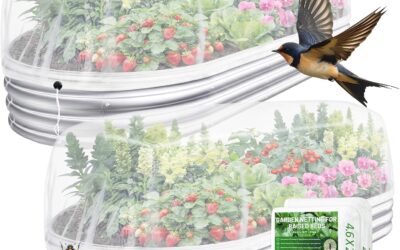



Los pulgones, las polillas de la col, los pájaros e incluso las ardillas pueden echar por tierra semanas de cuidadosa plantación en una sola tarde. Para los jardineros que quieren una barrera física en lugar de depender únicamente de pulverizaciones, la malla antiinsectos para bancales ofrece una forma sencilla de mantener las plagas alejadas de hortalizas, frutas y flores, al tiempo que deja pasar la luz solar, el aire y la lluvia. Esta guía compara 15 productos de malla, desde pequeñas cubiertas precortadas para un solo bancal elevado hasta rollos grandes que se pueden cortar para cubrir varios bancales, hileras o un pequeño huerto.
Esta comparativa está pensada para jardineros principiantes que preparan su primer bancal elevado, propietarios que protegen un huerto ya establecido, jardineros mayores que quieren una malla fácil de levantar y fijar sin realizar grandes esfuerzos, y cualquier persona que cultive en un jardín pequeño o en un patio. Los criterios de selección incluyen el tamaño de la malla y las plagas que puede bloquear de forma realista, la durabilidad del material y la resistencia a los rayos UV, la facilidad de instalación y retirada de cada producto, y si la malla tiene el tamaño adecuado para un bancal elevado estándar o necesita cortarse.
Para conocer más soluciones contra plagas y fauna silvestre además de las mallas, nuestra sección Plagas y fauna del jardín explica otros métodos que los propietarios pueden combinar con una barrera física.
Garden Tailor 4×10 Fine Mesh Garden Netting for Raised Beds and Crop Pest Barriers RIFNY GN-10-33-2 Ultra-Fine Garden Netting for Raised Beds, Fruits, and Vegetable Protection FEEDGARDEN LX-HYW-8.10ft Garden Netting for Raised Beds and Vegetable Protection Sunwinx 2-Pack Fine Mesh Raised Bed Covers for Easy Vegetable and Flower Protection Prices and availability can change. We may earn a commission from qualifying purchases.


Pros
- Breathable mesh allows water and airflow through while keeping the cover lightweight.
- Suitable for direct crop coverage or use with garden hoops and cages.
- Useful for small-space pest exclusion around vegetables, herbs, fruits, flowers, and young plants.
- Reviewers commonly mention that it is easy to handle and works as intended for plant protection.
Cons
- Hoops, pegs, clips, or other anchoring supplies are not included, and windy sites could require careful securing.
- Crops that depend on bee pollination need the net lifted or removed during flowering.
- The 4 by 10 foot size may be too small for larger beds, long rows, or full-size fruit tree coverage.
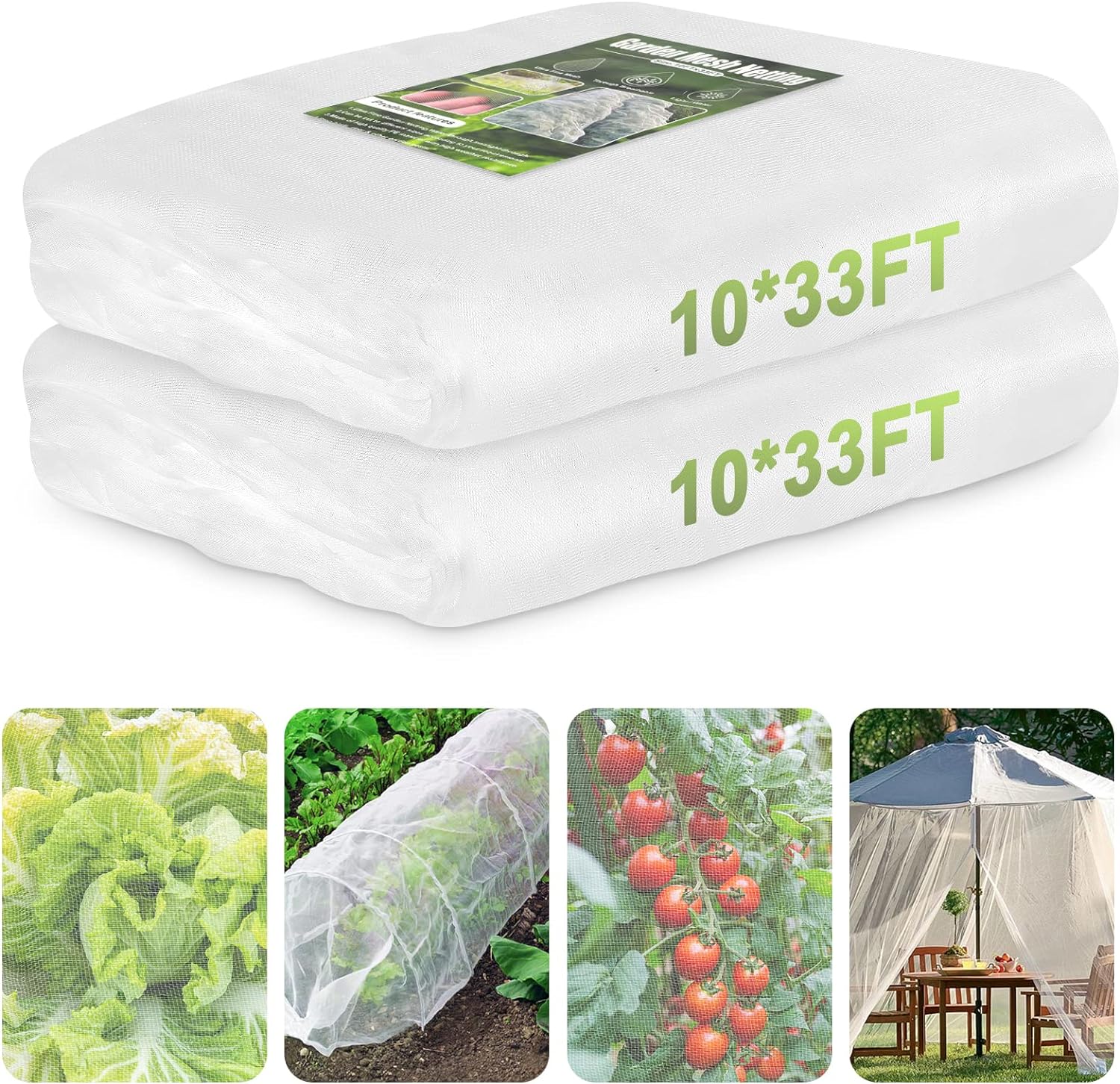
The Garden Tailor 4 by 10 foot fine mesh garden netting is a physical pest barrier for vegetables, fruits, flowers, herbs, and small plantings. Based on the listed specifications, it is made from high density polyethylene and is intended for use over crops, raised beds, garden hoops, fruit or vegetable cages, and similar protective setups.
The main benefit is simple exclusion. The product information lists protection against pests such as cabbage root fly, carrot fly, cabbage white butterfly, pea moth, leek moth, cutworm, onion fly, leaf miners, aphids, cicadas, rabbits, and other garden visitors. As with any netting, results depend on proper placement, sealed edges, and using it before pests get established.
The mesh size is listed as 0.03 inch, with 90 percent light passage and 95 percent air passage. That means it is designed to let light, airflow, rain, and irrigation pass through while still acting as a fine screen. It is light enough to rest directly on crops, but many gardeners may prefer using hoops to keep the mesh from pressing on tender plants as they grow.
For small gardens, this size is a practical fit for a short raised bed section, a few containers, young seedlings, herbs, brassicas, leafy greens, or a small berry patch. It can also be cut with scissors, which helps when fitting it to planter boxes, frames, or custom covers. Reviewers commonly describe it as lightweight and easy to use, with several using it for potted plants, basil, and planters.
There are a few important limitations. Hoops are not included, so gardeners who want a tunnel will need a separate support system and a way to secure the edges, such as buried edges, pegs, clips, or weights. In windy conditions, loose netting can blow away if it is not anchored well. One reviewer also noted concern about the edges appearing cut rather than sewn, so gardeners planning repeated seasonal reuse may want to handle and store it carefully.
This is a sensible choice for beginner and small-space gardeners who want a breathable, cut-to-fit barrier rather than a spray-based approach. Gardeners covering long rows, larger raised beds, or plants that need frequent bee pollination may want a larger net, a framed cover, or a setup that is easier to open during flowering.
Pros
- Large total coverage area in two separate pieces for flexible garden setups.
- Fine mesh design is useful for gardeners looking for a physical plant barrier around brassicas, berries, seedlings, and similar crops.
- Allows air, rain, and light to pass through based on the listed product features.
- Easy to trim to size for pots, low tunnels, raised beds, or frame-supported covers.
- Lightweight and see-through, which can make routine plant checks more convenient.
Cons
- Because the mesh can exclude beneficial insects as well as pests, flowering crops that need pollination may require temporary uncovering or another setup.
- Edges need to be secured with soil, stones, staples, clips, or a frame, so installation may take extra care in windy areas.
- Some reviewers report stretching, tearing, or animal tangling concerns, so it should be kept taut, checked often, and placed with wildlife safety in mind.
The RIFNY GN-10-33-2 is an ultra-fine garden netting set made for covering plants rather than treating pests chemically. The package contains two 10 by 33 foot net pieces, giving home gardeners a practical option for raised beds, vegetable rows, fruit bushes, flowers, greenhouse crops, and patio plantings where a lightweight physical barrier is useful.
Based on the listed specifications, the mesh measures 0.04 inch and is described as 60 mesh per inch. The product information indicates that it allows sunlight, artificial light, air, and rain to pass through, so it is intended to protect plants while still supporting normal growing conditions. This makes it especially relevant for gardeners growing cabbage, cauliflower, greens, tomatoes, berries, cherries, grapes, strawberries, or other crops commonly bothered by birds, small animals, or insects.
The netting is made from polyethylene and has a rectangular shape with listed dimensions of 396 inches by 120 inches for each 10 by 33 foot piece. It can be cut to size, which is helpful if you need one section for a low row cover and another for pots or a small fruit cage. The product information suggests securing the edges with stones, soil, staples, clips, stakes, or a frame, and the see-through mesh lets you monitor plants without opening the cover every time.
For backyard and small-space gardeners, this netting is most useful when paired with hoops, stakes, PVC, or another support that keeps the fabric off delicate foliage and fruit. It can also be draped over raised beds or used around potted plants, provided the edges are closed well enough to reduce gaps. Reviewers commonly mention that it is easy to cut and that the coverage is generous, though those comments should be viewed as user experiences rather than guaranteed performance.
There are a few important limitations to consider. Fine mesh can also keep pollinators from reaching blossoms, so crops that need bee activity may need timed uncovering, hand pollination, or a cover design that can be opened during bloom. As with any netting, keep it taut and inspect it often, especially around birds, pets, and wildlife. Some reviewers reported tearing or tangling issues, while others found it durable, so careful installation and regular checks are important.
This RIFNY netting is a good fit for gardeners who want a cut-to-fit, lightweight plant cover for vegetables, berries, flowers, and raised beds. Gardeners who need a rigid animal fence, a shade cloth, or a pollinator-friendly open structure may prefer a different type of garden protection.
Pros
- Useful size for small gardens and common raised-bed layouts.
- Allows rain, watering, sunlight, and airflow to reach plants through the mesh.
- Can be cut to fit custom planting areas and containers.
- Made from UV-stabilized polyethylene, according to the listed product information.
- Reviewers commonly mention that it is lightweight and easy to cut once positioned.
Cons
- Light mesh usually needs separate supports, clips, stakes, hoops, or weights to keep it positioned securely.
- May be awkward to manage at first because fine, lightweight netting can snag or fold while being placed.
- Gardeners protecting tall crops or longer rows may need a larger size or multiple pieces.
The FEEDGARDEN LX-HYW-8.10ft Garden Netting is an 8 x 10 ft rectangular PE mesh cover designed for protecting vegetables, fruits, berries, flowers, and other garden plants. It is best suited to homeowners, raised-bed gardeners, patio growers, and beginners who want a simple physical barrier for small planting areas without setting up permanent fencing.
The main practical benefit is the fine 0.7 x 0.8 mm mesh, which the product information describes as a high-density barrier for birds and small animals. Because the mesh allows sunlight, rain, and airflow to pass through, gardeners can keep plants covered during routine watering and changing weather instead of removing the netting every time the bed needs moisture.
Based on the listed specifications, this netting measures 120 inches long by 96 inches wide and is made from white polyethylene. The material is described as UV-stabilized and resistant to tearing and sun damage. It is also lightweight enough to trim, which is helpful when fitting it around a raised bed, container grouping, berry bush, or irregular planting layout.
In a backyard garden, this size makes sense for covering leafy greens, strawberries, peppers, young tomatoes, flowers, or compact berry plantings. It can also be used in greenhouses, around small orchard plants, over ponds, on balconies, or as a patio or window insect mesh where the dimensions fit. Reviewers commonly mention using similar placements to protect vegetable beds, young trees, and fruiting plants, though results will depend on how securely the edges are fastened.
There are a few setup considerations. Fine mesh netting performs best when it is supported and held in place so it does not rest heavily on delicate seedlings or blow loose in wind. The listing does not specify included hoops, clips, stakes, or a frame, so gardeners should plan their own fastening method if the cover needs structure. It is also wise to check the netting regularly for gaps, trapped leaves, or snags and to store it dry and folded between seasons if it will be reused.
This is a good choice for gardeners who need a cut-to-fit, breathable cover for small beds, containers, and seasonal plant protection. Gardeners with long crop rows, very tall plants, or heavy wildlife pressure may want a larger netting size, a framed enclosure, or a more rigid barrier system.
Pros
- Sized specifically for common 6 x 3 ft raised beds.
- Allows sunlight, airflow, and water through the mesh.
- Lightweight HDPE material should be easy for beginners and older gardeners to handle.
- Drawstring closure helps reduce gaps around the bed edges.
Cons
- Only the netting is included, so gardeners will need a raised bed or support setup separately.
- The 1.5 ft height may be less suitable for taller crops unless additional support is used.
- Fine mesh covers can limit easy access to flowers for pollinators, so timing and crop needs should be considered.
The Sunwinx 2-pack raised bed cover is a fine mesh garden netting set made for protecting vegetables, fruits, leafy greens, and flowers in small growing spaces. Based on the listed specifications, each rectangular cover is sized at 79.2 inches by 39.6 inches, with product information describing a 6.6 x 3.3 x 1.5 ft fit for standard 6 x 3 x 1 ft raised beds. It suits home gardeners who want a simple, non-spray physical barrier for raised beds, patios, balconies, greenhouses, or backyard plots.
The main benefit is coverage that still supports normal plant growth needs. The product information indicates a 0.04-inch ultra-fine mesh designed to block birds, insects, and small animals while allowing airflow, light, and water through. For beginner gardeners, that means seedlings and leafy crops can stay covered during vulnerable stages without removing the netting every time the bed needs watering.
The covers are made from high density polyethylene, or HDPE, and are described as UV-resistant, lightweight, breathable, and foldable for storage. A double drawstring closure lets the user tighten the cover around the raised bed, which can help reduce gaps along the bottom edge. No tools are listed as required, and the soft, lightweight fabric should be easier to handle than rigid framed covers.
In a backyard or patio garden, this cover set makes the most sense over low to medium-height crops such as young vegetables, greens, herbs, strawberries, or compact flowers. The two-pack format is useful if you maintain multiple small beds or want one cover available while another is being cleaned or stored. It can also be used in greenhouse or balcony setups where a removable mesh barrier is more convenient than a permanent enclosure.
There are a few practical limits to keep in mind. The raised bed itself is not included, and taller plants may outgrow the listed 1.5 ft cover height unless the gardener uses a compatible support arrangement. Because fine mesh can also keep beneficial insects from reaching blossoms, gardeners growing crops that need pollination should plan when to cover and uncover plants. Overall, this is a straightforward raised-bed netting option for gardeners who want lightweight, reusable coverage and easy drawstring installation.

Pros
- Generous size provides enough material for multiple small beds or custom garden covers
- Fine mesh is more protective against small insects than wide bird netting
- Cuttable design makes it adaptable to different bed shapes, hoops, and partial plant coverage
- Manufacturer-listed breathability allows routine watering and light penetration through the mesh
- Reviewers commonly mention that it is easy to cut, flexible to handle, and useful over raised beds
Cons
- Crops that rely on bee pollination may need the netting removed during flowering
- It requires a frame or careful draping and secure edge anchoring to avoid gaps where pests can enter
- Gardeners who need a wider single sheet than 10 ft may need to overlap pieces or choose another size
The JTSIOV GMN-10X50FT is an ultra-fine garden netting sheet made for covering vegetables, fruiting plants, flowers, shrubs, raised beds, greenhouse rows, and similar home garden spaces. It is best understood as a physical barrier, not a pesticide or trap, and it should appeal to gardeners who want a simple cover for insect, bird, and small wildlife pressure without adding a complicated system.
Based on the listed specifications, the netting measures 10 x 50 ft and uses polyethylene material in a white rectangular sheet. The product information describes a 0.04-inch, 60-mesh-per-inch design, which is intended to block small insects while also helping keep out larger visitors such as birds, rabbits, squirrels, and deer when the cover is properly installed and sealed at the edges.
The mesh is described as breathable, allowing sunlight, air, and moisture to pass through. For everyday garden care, that means gardeners can often water through the cover instead of removing it each time. The manufacturer also notes moderate shading, which may be useful for leafy crops exposed to strong direct sun, though gardeners should still watch plant growth and heat buildup under any cover.
Installation is straightforward in concept. The sheet can be cut to size, placed over hoops or another support frame, and anchored along the edges with soil, stones, stakes, or similar garden weights. Reviewers commonly mention using it over raised beds and cutting it with scissors, which makes it a practical option for beds that do not match a standard cover size.
For small-space gardeners, the 10 ft width and 50 ft length provide flexible coverage for several patio planters, a row of brassicas, strawberry or tomato beds, or temporary protection around fruiting plants. It may also be used as a patio screen, mosquito net, or pond leaf net according to the product description, but garden use will depend on how securely it can be supported and fastened in the specific space.
The main limitation is pollination access. The product information specifically notes that the netting should be removed during flowering if crops depend on bees, so it is not a set-and-forget cover for every plant stage. Gardeners should also inspect for tears, loose edges, and trapped insects, and those needing a rigid enclosure or a wider seamless span may prefer a different type of garden protection.

Pros
- Good fit for compact raised beds and elevated planters based on the listed dimensions.
- Mesh construction supports airflow and watering while creating a physical barrier around young plants.
- Zippered access is more convenient than fully removing the cover for routine checks.
- Reviewers commonly mention easy storage and practical use for protecting vegetables, strawberries, and starter plants.
- Includes 8 ground stakes and a storage strap, so basic anchoring and off-season storage are addressed.
Cons
- The 16-inch height may be limiting once taller vegetables or fast-growing plants mature.
- Assembly may take some patience because the end panels need to be zipped to the side panels rather than simply springing open fully on their own.
- Gardeners with larger beds may prefer a longer cover, since this model is listed at 45 inches by 22 inches.
The ANGAR Netting Covers-01 set is a pair of small rectangular mesh covers made for raised beds, elevated beds, vegetable rows, seedlings, flowers, fruits, and potted plants. Based on the product information, the main job is to create a breathable physical barrier around young or vulnerable plants while still allowing routine watering and airflow.
The feature set is especially useful for gardeners who want protection without sealing plants inside a solid cover. The dark green mesh is described as water and air permeable, and it provides 30% sun shading to reduce direct sunlight. That can be helpful for seedlings and tender starts in exposed beds, though gardeners should still match shade needs to the crops they are growing.
Each cover measures 45 inches long by 22 inches wide by 16 inches high, so this is best viewed as a compact raised-bed cover rather than a full-bed tunnel for large plantings. The covers use zippered end connections and include a zippered roll-up window for checking plants. The set also includes 8 metal ground stakes and a storage strap, and the covers fold down for compact storage when not in use.
In a backyard or patio garden, these covers make sense over strawberries, leafy greens, starter vegetables, low flowers, or small potted groupings. Reviewers commonly mention watering through the mesh, using the covers on elevated beds, and appreciating the zipper access. Several users also describe them as useful for keeping birds, bugs, grasshoppers, or animals away, although results will depend on placement, anchoring, and the specific garden pressure.
There are a few practical limits to consider. The 16-inch height may not work once tomatoes, peppers, taller herbs, or vigorous greens outgrow the enclosure. The product is called a pop-up cover, but the listed setup requires zipping the end panels to the side panels, and at least one reviewer found that part a little frustrating. It is also wise to inspect zippers before the return window ends, since one reviewer reported a zipper issue.
Overall, this ANGAR 2-pack is a sensible option for small-space gardeners, beginners starting seedlings, and homeowners who want a reusable mesh barrier for compact raised beds. Gardeners with long beds, taller crops, or a need for heavy-duty seasonal protection may want a larger or more rigid garden cover instead.

Pros
- Large sheet size is useful for raised beds, vegetable patches, berry bushes, and small fruit trees
- Fine mesh design is suited to insect and bird barrier use while still permitting basic watering and ventilation
- Can be cut to fit custom spaces, which helps in small yards, greenhouses, and irregular garden layouts
- Light weight makes it easier to drape, fold, move, and store than heavier barrier materials
Cons
- Thin netting may need gentle handling, especially around sharp stakes, branches, clips, or rough bed corners
- Gardeners needing a rigid animal fence or heavy-duty long-term perimeter barrier may prefer a sturdier material
- Because it is an insect barrier, it may need to be lifted during flowering crops that require pollinator access
The Fippy ZN-GMN garden netting is a 10 x 50 ft white polyethylene mesh intended for physical pest protection in home gardens. Based on the listed product information, it is designed for raised beds, vegetable rows, fruit trees, blueberry bushes, strawberries, greenhouse use, and similar backyard growing areas. It is a practical option for gardeners who want a simple cover that can be draped, secured, and trimmed to fit different planting spaces.
The key feature is the 0.8 mm mesh, which the product information describes as fine enough to help block many garden pests while still allowing airflow, sunlight, and water penetration. That combination matters for beginners because a barrier cover should protect plants without making daily care overly complicated. Reviewers commonly mention easy handling and use in vegetable gardens, raised beds, flowers, and fruit trees, although individual results will depend on how well the edges are sealed and how the netting is supported.
At 590 inches long by 118 inches wide, this rectangular sheet provides broad coverage for multiple small beds or one longer row. The material is listed as lightweight PE, with a product weight of 0.55 pounds, so it should be easy to move and fold. It can be placed directly over plants according to the product information, but gardeners working with tender seedlings, tall crops, or plants with delicate tips may still prefer hoops, stakes, or a simple frame to keep the mesh from pressing on new growth.
In a typical backyard garden, this netting could be used over brassicas, greens, strawberries, blueberry bushes, fig trees, or other crops where a breathable barrier is helpful. It may also fit small-space gardeners who need to cover a patio planter, a compact raised bed, or a greenhouse opening. Since it can be cut to shape, it is useful when one full sheet is too large or when separate covers are needed for different crops.
There are a few limitations to keep in mind. Thin, lightweight mesh can snag or puncture if pulled across rough wood, wire, thorns, or sharp plant supports, so careful installation and storage are important. One reviewer reported concerns about thinness and sizing, while others described the netting as easy to use and effective for their garden needs, so buyers should inspect the sheet on arrival and handle it gently. For insect-pollinated crops, remember that a fine barrier can also block beneficial pollinators, so covers may need to be opened during bloom or used after pollination.
Overall, the Fippy ZN-GMN is best suited to gardeners who want an adaptable, lightweight mesh cover for seasonal plant protection rather than a rigid wildlife fence. It is a sensible choice for raised beds, berries, vegetable rows, and small fruit plantings when you can secure the edges well. Gardeners facing heavy animal pressure, rough weather exposure, or frequent contact with sharp supports may want to consider a heavier-duty barrier material.

Pros
- Large two-pack format provides adaptable coverage for several garden areas or one longer planting row.
- Fine mesh design is intended to create a physical barrier while maintaining light, airflow, and water penetration.
- Suitable for common home garden uses such as raised beds, berries, vegetables, flowers, and fruit tree protection.
- Several reviewers mention easy installation and good results keeping birds and small animals away from plants.
- Can be trimmed to size for custom coverage around beds, bushes, or patio plantings.
Cons
- Some reviewers report that the material can snag, tear, or run if cut or handled roughly.
- It does not include hoops or clips in this listed 2-pack version, so gardeners may need separate supports or fasteners.
- Because it is a lightweight mesh barrier, it may require careful edge weighting or burying to reduce access underneath.
The YNERHAI 10x30FT 2-Pack Garden Netting Mesh is a lightweight physical barrier for gardeners who want to protect vegetables, berries, flowers, shrubs, and small fruit trees without fully blocking the growing environment. Based on the listed specifications, each sheet measures 360 inches long by 120 inches wide, giving a 10 by 30 foot rectangular format that can be used over raised beds, blueberry bushes, patio plants, or garden rows.
The product information highlights an ultra-fine mesh design that allows sunlight, air, and water to pass through. That matters for beginners and busy homeowners because plants can stay covered while still receiving basic exposure from natural light and rainfall. The netting is positioned as a barrier for birds, rabbits, squirrels, deer, and insects, although results will depend on how completely the edges are secured and how the netting is supported around the plants.
The listed material is high density polyethylene, and the netting is described as stable, lightweight, reusable, and easy to cut. In practice, that feature set is most useful when you need to shape coverage around a berry patch, cabbage row, strawberry bed, or young tree. The product information suggests securing the edges with stones, soil, or nails, and it also notes that burying or weighting the edges can help prevent animals from getting underneath.
For raised-bed gardeners, this mesh can be draped directly over plants or supported with separate hoops or a frame if extra clearance is needed. For blueberry bushes and fruiting plants, the large sheet size gives more flexibility than small pre-shaped covers. It may also be useful on patios as a mosquito-style mesh barrier for outdoor spaces, as described by the manufacturer, but gardeners should still measure carefully before cutting because the product does not list included poles, clips, or a dedicated frame.
There are a few practical limitations to keep in mind. Some reviewers say the material works well and is easy to handle, while others mention that it can snag, tear, or develop runs when cut or handled roughly. Use sharp scissors, avoid dragging it across rough surfaces, and store it indoors in a dry place when not in use, as the product information recommends. Gardeners who need a heavier, rigid wildlife barrier or a complete hoop-and-clip kit may prefer a different setup, but for flexible seasonal plant coverage, this YNERHAI netting is a practical option for many home gardens.

Pros
- Complete kit format is convenient for creating a covered grow tunnel over raised beds or vegetable rows
- PE netting with fine mesh supports pest exclusion without fully enclosing plants from light, rain, or airflow
- Adjustable DIY sizing makes it useful for more than one garden layout when the netting is cut or arranged carefully
- Reviewers commonly mention straightforward assembly and useful crop protection in smaller garden setups
Cons
- The wide, long netting may be awkward for one person to unfold, measure, and position neatly
- May need extra anchoring or closer hoop spacing in windy areas, based on reviewer feedback about collapse in strong wind
- Gardeners covering long rows or taller crops may find the netting needs frequent adjustment to prevent sagging
The Fippy ZN-GMN04 Garden Netting Kit is designed for gardeners who want to build a simple pest barrier over vegetables, fruits, flowers, or raised beds. The kit includes a 10 x 50 ft garden netting pest barrier, 10 sets of garden hoops, and 20 fixing clips, making it a practical starter option for creating a covered row or small grow tunnel.
The main benefit is physical protection. According to the product information, the 0.8 mm mesh is intended to block many common garden pests while still allowing sunlight, water, and airflow to reach plants. That makes it useful for crops that benefit from coverage without being sealed off, such as young vegetable seedlings, strawberries, blueberries, and other small garden plantings.
The hoops are listed as having an inner steel tube with an outer plastic coating, which gives the structure more support than netting alone and helps reduce rust or corrosion concerns. Assembly is described as a basic process: connect the hoops, insert them into the soil, drape the netting over the frame, secure it with clips, and weigh down the edges with soil or stones.
For backyard and raised-bed use, this kit fits gardeners who want one package for seasonal crop protection rather than buying mesh, hoops, and clips separately. The long netting roll can be cut or arranged for different bed sizes, though careful measuring before cutting is a good idea. Reviewers commonly note that the system is easy to assemble, but some also say the netting can be hard to manage by one person because of its size.
There are a few practical limitations to consider. Lightweight garden netting can sag if it is stretched over too large a span, and windy sites may require additional anchoring beyond the included clips and soil weighting. Some reviewer feedback also suggests the setup may be better for smaller beds than for a full 50 ft row if you want a tidy, low-maintenance tunnel.
Overall, this Fippy kit is a useful choice for beginner and home gardeners who need a flexible insect and wildlife barrier for raised beds, vegetable patches, or compact fruit plantings. Gardeners in very windy locations, or those who need a sturdier long-row structure, may prefer a heavier-duty frame and netting system.

Pros
- Generous sheet size is useful for multiple garden layouts or for trimming to fit raised beds and rows.
- Fine mesh design supports plant protection while still allowing moisture and airflow through.
- Lightweight material is easy to drape over plants, hoops, shrubs, or small trees.
- Reviewers commonly mention that it works well as a raised-bed or vegetable cover when secured carefully.
- Can be secured with stones, soil, stakes, or similar garden supports according to the product information.
Cons
- Several reviewers describe the fabric as delicate or easy to damage, so it may not suit gardeners who need a heavy-duty barrier.
- Cut edges may require careful handling because reviewer feedback notes that trimmed areas can shred or rip.
- The large sheet can be unwieldy for small beds unless it is measured and cut before installation.
The FARAER 10x33 ft Ultra-Fine Garden Netting is a lightweight polyethylene mesh cover made for protecting vegetable plants, fruits, flowers, crops, shrubs, and raised beds with a physical barrier. Based on the listed specifications, it is most useful for home gardeners who want a broad, cut-to-fit cover for garden rows, berry plants, brassicas, tomatoes, greenhouse use, or simple hoop tunnels.
The key feature is the ultra-fine 0.8 mm by 1 mm oblong mesh. The product information indicates that this mesh allows air, moisture, rain, liquid feed, and light to pass through, so gardeners do not need to remove the cover every time they water. It is also described as offering partial shade, which may be helpful for reducing some sun intensity while still allowing light transmission.
At 10 feet wide by 33 feet long, this is a large sheet rather than a fitted cover. That gives it flexibility, but it also means most gardeners will need to measure, cut, fold, or secure it for their specific setup. It can be placed directly over plants, wrapped around small trees or shrubs, or stretched over hoops, posts, or a grow tunnel frame. The product information suggests securing it with stones, soil, or stakes.
For backyard and small-space gardens, this netting is a practical option for raised beds, berry patches, vegetable rows, and greenhouse openings where a see-through barrier is preferred. Reviewers commonly mention using it over raised beds, squash and zucchini, brassicas, raspberries, marionberries, and young plants. Because it is lightweight, it may be easier for beginners or older gardeners to position than a heavier net, especially when working over low beds.
The main tradeoff is durability. While the product description calls the PE material stabilized and reusable, several reviewers describe the mesh as thin, delicate, or prone to tearing, especially around cut edges. For best results, handle it gently, avoid pulling it hard over sharp stakes or rough frames, and secure it so wind does not whip the fabric against edges. Gardeners who need a rugged, long-term cover for rough conditions may prefer a heavier garden netting material.
Overall, this FARAER netting is a sensible choice for gardeners who want a large, breathable, fine-mesh plant cover that can be trimmed for raised beds, rows, and fruiting plants. It is best for careful seasonal use where light weight and broad coverage matter more than maximum tear resistance.

Pros
- Generous 10 x 50 ft size is useful for raised beds, garden plots, and shrub coverage.
- Fine mesh design supports plant protection without fully blocking light, airflow, or watering.
- Can be cut to fit different garden layouts and plant sizes.
- Simple drape-and-secure setup does not require a permanent frame, based on the listed installation method.
Cons
- Fine mesh may be damaged by sharp objects, so careful handling and storage are important.
- Gardeners who need a rigid cage or heavy-duty wildlife barrier may prefer a sturdier framed solution.
- Pollination may require temporary access for flowering crops that depend on insect pollinators.
The GonLei 10 x 50 ft garden netting is a flexible physical barrier for gardeners who want to cover raised beds, vegetable rows, fruiting shrubs, flowers, or young crops. Based on the product information, it is intended for simple garden protection by draping the mesh over plants and securing the edges. It is a practical option for homeowners, beginner gardeners, and small-space growers who want a cut-to-fit cover rather than a permanent enclosure.
The key benefit is the ultra-fine mesh, listed as 0.04 inch with 60 mesh per inch. This dense mesh format is designed to help separate plants from unwanted garden visitors while still allowing air, water, and light to pass through. That matters in everyday use because gardeners can water or apply liquid feeding through the netting without fully uncovering the bed each time.
The rectangular 10 x 50 ft size provides a broad sheet of coverage that can be trimmed for different layouts. The product information says it can be draped over plants in raised beds or regular garden plots, then secured with stones, soil, or the included clips. Because the specifications list a nylon material and a 1.79 kilogram item weight, it appears to be a lightweight, flexible cover rather than a rigid barrier.
In a backyard vegetable garden, this netting could be used over cabbage, cauliflower, tomatoes, or seedling areas, as listed in the product description. In a fruit garden, it may be shaped around blueberry shrubs, peaches, or cherries where a fine cover is preferred. It may also be useful in small spaces because the sheet can be cut down for individual planters, compact raised beds, or temporary outdoor mosquito-net style coverage as described by the manufacturer.
There are a few practical limits to keep in mind. The manufacturer notes that sharp objects can damage the fine mesh, so avoid pulling it over rough stakes, thorny branches, or jagged bed edges. For crops that need insect pollination, gardeners may need to uncover plants at the right time or hand-pollinate as appropriate. It is also not the same as a rigid animal fence, so gardeners dealing with determined larger wildlife may want a stronger framed barrier.
Overall, the GonLei garden netting is best for gardeners who want a simple, adaptable mesh cover for raised beds, vegetables, fruit shrubs, and flowers. It is a good fit if you value easy cutting, broad coverage, and the ability to water through the mesh. Consider another option if you need a heavy-duty cage, a permanent structural enclosure, or a barrier specifically built for high-pressure wildlife problems.

Pros
- Generous sheet size and two-piece pack provide adaptable coverage for common home garden layouts.
- PE mesh material is listed as durable and resistant to easy deformation or breakage.
- Reviewers commonly mention that it is lightweight, easy to cut, and simple to position over garden areas.
- A physical barrier approach can reduce reliance on direct pest contact methods when used properly.
- Works for both temporary seasonal coverage and DIY fitted covers when cut and secured carefully.
Cons
- Pollination can be limited if the netting is left over flowering crops that need insect access.
- Edges need to be secured with soil, stones, clips, or another method, especially in windy conditions.
- Gardeners wanting detailed crop timing instructions may need to look beyond the basic product information.
The Unves YY-039-1 garden netting is a two-pack of white rectangular mesh intended for protecting garden plants from birds and insects. Based on the listed specifications, each piece measures 10 x 33 ft and is made from polyethylene, giving home gardeners a flexible cover for raised beds, vegetable rows, berries, seedlings, small fruit trees, or other vulnerable plantings.
The main value of this netting is its role as a physical barrier. The product information describes an ultra-fine, breathable mesh that allows sunlight and air to reach plants while helping separate crops from pests. That makes it a practical option for gardeners who prefer a non-spray layer of protection around tender growth or ripening fruit, as long as the crop still receives the access it needs for pollination.
Installation is straightforward. The netting can be placed directly over plants and weighted at the edges with soil, stones, or similar heavy objects, or it can be set over a simple support frame. Because the sheets can be cut to size, they are useful for custom covers around raised beds, berry rows, nursery starts, and irregular garden spaces where a fixed-size cover may not fit cleanly.
For small-space gardeners, the two separate sheets are convenient because one can be used over a raised bed while the other is cut for containers, fruiting shrubs, or seasonal row protection. Reviewers commonly mention that the netting is lightweight and easy to cut, and some report using clips or other simple fasteners to hold it in place. Those comments are useful for planning, but the exact hold in wind will depend on how well the edges are secured and what support structure is used.
The biggest caution is pollination. A fine mesh barrier can also block helpful insects, so gardeners growing flowering vegetables or fruits should remove or open the cover at the right stage if pollinator access is needed. It is also wise to avoid letting the mesh press heavily on delicate seedlings and to check underneath regularly for trapped pests, plant stress, or growth that needs more room.
Overall, this Unves garden netting is a sensible choice for homeowners and beginner gardeners who want a large, cuttable plant cover for seasonal pest and bird protection. Gardeners who need crop-specific instructions, built-in supports, or a cover designed to stay permanently over pollinator-dependent plants may want a more specialized system.
Pros
- Complete kit format reduces the need to source hoops, connectors, netting, and clips separately.
- Fine polyethylene mesh provides a lightweight barrier approach for raised beds and garden rows.
- Water, light, and air can pass through the mesh, which helps simplify everyday care compared with solid covers.
- User feedback commonly mentions easy setup, useful clips, and good results for protecting brassicas and other garden plants.
Cons
- Some reviewers report that the fine netting can fray, pull, or develop holes, so careful handling and edge checks are important.
- This is a mesh barrier, not a rigid cage, so gardeners dealing with chewing wildlife may need a stronger or reinforced protection method.
- The listed crop examples are mainly shorter plants and row crops, so tall or sprawling plants may require a different support setup.
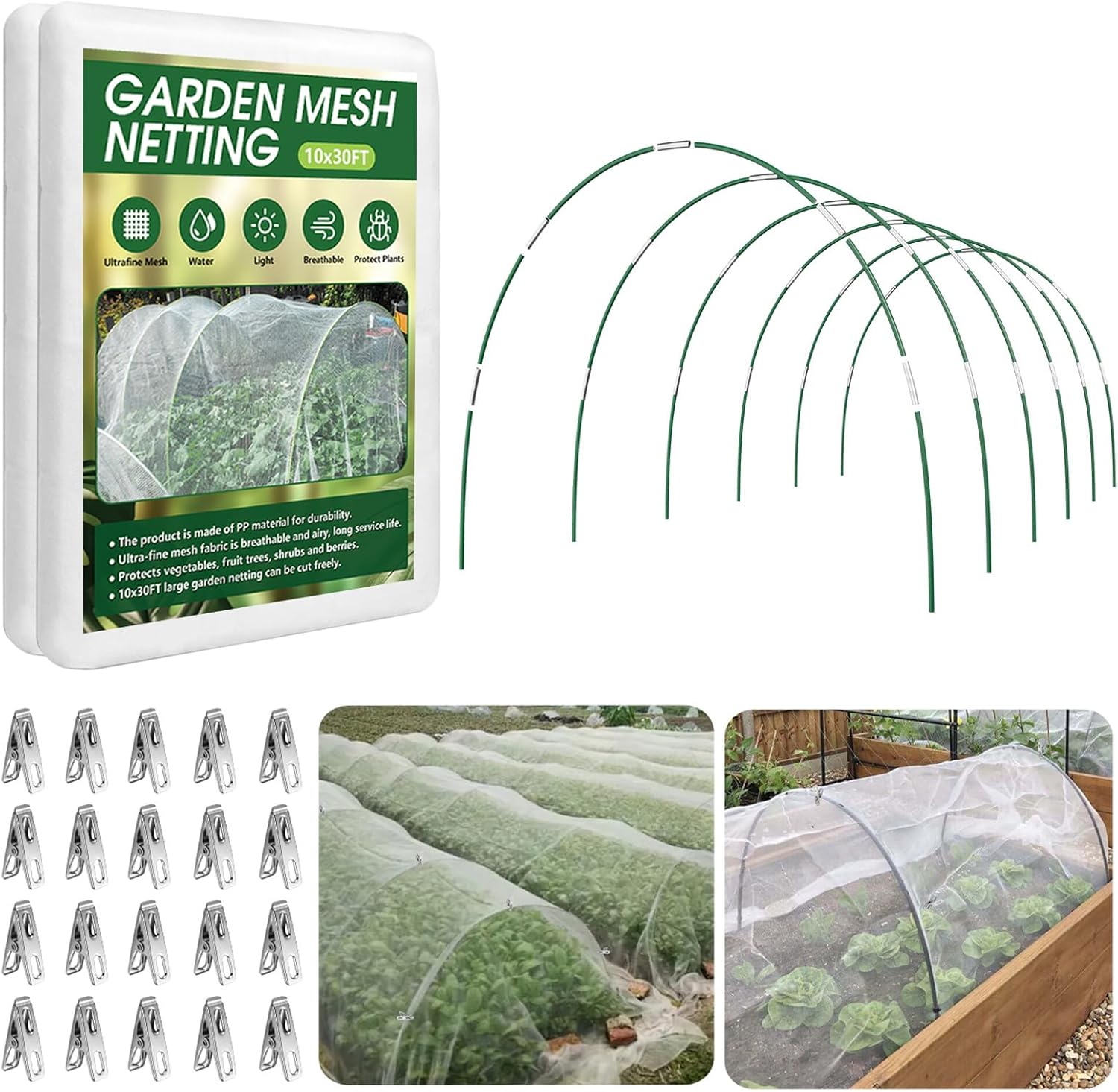
The MONIRSEN Garden Netting Kit is a raised-bed and row-cover setup built around a 10 x 30 ft polyethylene mesh sheet and six sets of 8 ft fiberglass garden hoops. It is intended for gardeners who want a simple physical barrier over vegetables, fruiting plants, flowers, potted plants, and other shorter crops without building a permanent frame.
The key benefit is the ultra-fine 0.8 mm x 1 mm mesh, which the product information describes as allowing air, light, and water through while helping keep insects, birds, and small animals away from plants. That makes it useful for crops such as cabbage, broccoli, lettuce, strawberries, blueberries, grapes, tomatoes, root vegetables, and flowers where a lightweight cover can reduce direct pest access without blocking routine watering.
The kit includes one netting panel, 36 fiberglass hoop sections, 30 connecting pipes, and 20 clips. Assembly is described as joining the fiberglass hoops with connectors, bending them into arches, inserting them into soil, and securing the cover with clips. The fiberglass hoop material is listed as rust-free and flexible, which is helpful for outdoor garden beds where metal corrosion can be a concern.
For a typical home garden, this kit fits raised beds, short crop rows, and small-space vegetable plots where a temporary tunnel is easier than a fixed enclosure. The generous netting dimensions give room to cover a longer planting area or to adapt the layout to different bed sizes, as long as the grower accounts for the height and width created by the hoops.
There are a few practical cautions. Fine mesh should be handled gently, especially around clips and edges, because some reviewers mention fraying, pulling, and holes. It is also wise to inspect the cover for loose strands and damage so wildlife does not become tangled and pests do not find openings. For chipmunks or other chewing animals, a heavier barrier may be more appropriate.
Overall, this MONIRSEN kit is a sensible choice for beginner and intermediate gardeners who want a ready-to-assemble mesh tunnel for raised beds and short crops. Gardeners who need a rigid animal-proof cage, a tall trellis-style cover, or a long-term heavy-duty enclosure should consider a sturdier system designed for that level of protection.

Pros
- Complete kit format reduces the need to source hoops and netting separately.
- Large netting sheet offers flexibility for DIY layouts and multiple small covers.
- Mesh allows watering and sunlight through according to the product information.
- Fiberglass hoops are bendable and rust-free, based on the listed materials.
- Several reviewers report that it was helpful for keeping birds or animals away from garden plants.
Cons
- Some gardeners may need extra clips, binder clips, clothespins, or side brackets to secure the cover more firmly in certain beds.
- Because it is a barrier mesh, it may also block pollinators such as bees and butterflies, so flowering crops may need timed access for pollination.
- At least one reviewer reported difficulty fitting poles into connectors, so assembly quality may vary.
The WYRJXYB XWTZ-US Garden Mesh Netting Kit is a physical plant-cover system for raised beds, vegetable rows, berry patches, and small garden spaces. It includes a 10 x 30 ft sheet of ultra-fine polyethylene mesh, 6 sets of fiberglass garden hoops, 36 connectors, and 24 clips. Based on the supplied product information, it is intended for gardeners who want a lightweight barrier against insects, birds, chickens, deer, and other animals without building a permanent enclosure.
The main gardening value is the combination of fine mesh and hoop support. The listed 0.8 mm x 1 mm mesh is designed to exclude many common garden pests while allowing water and light to pass through. That makes it useful for leafy greens, brassicas, strawberries, blueberries, young tomato plants, peppers, and other crops that need protection from chewing or pecking damage. As with any barrier cover, results depend on how tightly the edges are secured and whether pests are already inside before the cover goes on.
The hoop system is built from bendable fiberglass rods that connect into arched supports. The product information lists the combined hoop size as about 2.8 ft wide by 3.8 ft high when assembled with 6 pieces, making it a practical fit for narrow raised beds or row-cover tunnels. The netting can also be cut to different sizes, which is helpful if you are covering containers, short rows, or individual plantings rather than one long bed.
For backyard and small-space gardeners, this kit is most useful where a flexible seasonal cover is better than a fixed cage. It can be set over a raised bed during early growth, draped over berry plants as fruit develops, or adjusted over container rows where birds and animals are a problem. Reviewers commonly mention use around raised beds, strawberries, tomatoes, peppers, and vegetable plants, with several noting that water and light still reach the plants.
There are a few practical limitations to plan for. The clips may not be enough for every bed shape or windy location, and some reviewers mention using binder clips, clothespins, or other fasteners for a more secure hold. Because the mesh is fine enough to block insects, it can also keep pollinators away, so crops that need bee or butterfly access may require the cover to be opened during bloom or removed at the right stage. Check the cover regularly so leaves are not crowded against the mesh and so trapped insects are not sealed inside.
This is a sensible option for gardeners who want an affordable, adjustable row-cover kit for raised beds and small garden areas. It is especially appealing if you value cut-to-fit netting and a lightweight hoop structure. Gardeners needing a rigid animal cage, a heavily anchored system, or a cover for very wide beds may want to consider a sturdier enclosure or additional mounting hardware.

Pros
- Fine 0.8 mm by 1 mm mesh is suitable for gardeners who need a tighter barrier than standard bird netting.
- Generous 50 foot length can cover multiple small beds or be trimmed into custom sections.
- Lightweight enough to drape, clip, stake, or use with support structures.
- Product information states that the mesh can be cut without unraveling.
- White mesh is easy to see in the garden, which can help during setup, harvesting, and removal.
Cons
- As with most fine mesh plant covers, it may need secure anchoring at the edges to reduce gaps where insects or animals can enter.
- Gardeners growing crops that need insect pollination may need to uncover plants at the right time or hand-pollinate as appropriate.
- One reviewer noted that stretching the mesh on a frame may enlarge the openings, so a relaxed drape may be better when the smallest mesh size matters.
The Hyxanons GN-W-315 is an ultra-fine garden mesh netting intended for physical plant protection in outdoor gardens, raised beds, patios, greenhouses, nurseries, orchards, and similar growing spaces. Based on the listed specifications, it measures 10 feet by 50 feet and is designed for vegetables, fruit, flowers, and other garden crops that benefit from a breathable cover.
The key feature is the 0.8 mm by 1 mm mesh, which is much finer than many basic bird nets. The product information indicates that the mesh allows air, water, and light to pass through, so gardeners can generally keep plants covered while still watering and maintaining airflow. It is best viewed as a physical barrier rather than a guaranteed pest-control solution.
The netting is made from PE material that is described as thick, UV-resistant, durable, and reusable. It can be draped over plants and held with rocks, soil, wooden stakes, or similar supports, or paired with hoops, frames, tunnels, arches, wooden rods, or steel rods to keep the fabric off delicate foliage. The manufacturer also states that it can be trimmed to size without unraveling.
For backyard use, this size works well for creating temporary covers over raised beds, rows of seedlings, berry plantings, vegetable patches, or patio containers. It may also be useful for wrapping small fruiting plants or making custom panels for greenhouse openings, garden windows, doors, ponds, or other areas where a fine breathable screen is helpful.
There are a few practical considerations. Fine mesh can also limit access for beneficial insects, so gardeners growing crops that rely on pollinators should plan when to cover, uncover, or hand-pollinate. Edges should be secured carefully because gaps reduce the value of any barrier cover. A reviewer also noted that stretching the material on a frame may enlarge the openings, so avoid pulling it overly tight when insect exclusion is the priority.
Overall, this is a sensible choice for homeowners and beginner-to-intermediate gardeners who want a large, cuttable mesh cover for seasonal crop protection. Gardeners who need a rigid enclosure, built-in frame, or a heavier-duty wildlife fence may want a different style of product, but for flexible row-cover and raised-bed use, the listed features are practical and easy to adapt.
Guía práctica para comprar malla antiinsectos para bancales
La malla antiinsectos parece sencilla, pero pequeñas diferencias en el tamaño de los orificios, el material y la forma influyen mucho en el nivel de protección del bancal y en su duración. En las siguientes secciones explicamos qué conviene comprobar antes de comprar.
Tamaño de la malla y qué bloquea realmente
Varios productos de esta comparativa utilizan una malla ultrafina con aberturas de aproximadamente 0.04 pulgadas, a menudo descrita como de 60 mesh por pulgada, incluidos los modelos de JTSIOV, Sunwinx, RIFNY y GonLei. Según las especificaciones indicadas, esta trama cerrada está pensada para detener pequeñas plagas como pulgones y cigarras, a la vez que bloquea pájaros, conejos, ardillas y ciervos. La malla de GardenTailor indica en cambio una trama de 40 mesh, que su descripción relaciona con el bloqueo de cigarras, la mosca de la zanahoria y especies de pulgones, sin dejar de permitir la circulación del aire.
Hyxanons y FARAER describen una construcción de malla oblonga de 0.8mm x 1mm en lugar de utilizar únicamente una cifra de mesh por pulgada. Según sus listas de características, esta forma busca equilibrar la exclusión de plagas pequeñas con una buena circulación del aire y transmisión de la luz. Si su principal preocupación son los animales grandes y no los insectos diminutos, una malla algo más abierta puede ser suficiente y ofrecer una mejor ventilación en climas cálidos.
Material y durabilidad frente a los rayos UV
La mayoría de las mallas comparadas aquí están fabricadas con polietileno (PE) o HDPE y se describen como estabilizadas frente a los rayos UV o resistentes a ellos. Las fichas relacionan esta característica con la posibilidad de reutilizar la malla durante varias temporadas en lugar de sustituirla cada año. JTSIOV describe específicamente un proceso de engrosamiento y densificación destinado a mejorar la resistencia al desgarro frente a las mallas más finas, un punto de desgaste habitual que también aparece en los comentarios de propietarios sobre productos similares de malla fina.
Como la malla permanece al aire libre y expuesta directamente al sol durante meses, el tratamiento contra los rayos UV es más importante de lo que podría parecer. Según las especificaciones indicadas, los productos que mencionan la estabilización frente a los rayos UV están orientados a un uso estacional repetido, mientras que las mallas sin ese detalle pueden ser más adecuadas para proyectos de menor duración o de una sola temporada.
Tamaño de cobertura y ajuste para sus bancales
La cobertura varía mucho entre estos productos. El panel de 8x10ft de FEEDGARDEN y la opción de 4x10ft de GardenTailor son adecuados para un bancal pequeño individual, mientras que FARAER y RIFNY ofrecen una cobertura de 10x33ft, y JTSIOV, Hyxanons y GonLei proporcionan rollos de 10x50ft para varios bancales o hileras más largas. El paquete de 2 mallas de 10x30ft de YNERHAI está pensado para jardineros que quieren cubrir dos zonas independientes a la vez.
Sunwinx adopta un enfoque diferente con un paquete de 2 unidades de 6.6 x 3.3 x 1.5 pies, descrito como un ajuste completo para un bancal elevado estándar de 6x3x1 pies. Esto elimina la necesidad de calcular cuánto hay que cortar de un rollo grande. Si tiene uno o dos bancales elevados estándar, una opción precortada como esta puede simplificar considerablemente la instalación frente a medir y recortar un rollo grande.
Método de instalación: cubrir, cordón de ajuste o estructura desplegable
La mayoría de las mallas en rollo, incluidas las opciones de FARAER, RIFNY, GonLei y Hyxanons, están diseñadas para colocarse sobre una estructura de soporte o aros y fijarse después en los bordes con piedras, tierra o estacas. Este método es flexible y funciona con los aros de jardín existentes, pero requiere algo de tiempo de preparación y materiales para mantener los bordes en su sitio.
Sunwinx utiliza un cierre con doble cordón pensado para ajustarse alrededor de un bancal elevado, lo que según la ficha ayuda a que la cubierta permanezca en su sitio en condiciones de viento. ANGAR adopta un enfoque más estructurado con un diseño de malla desplegable que incluye estacas metálicas para el suelo y una ventana enrollable con cremallera para revisar las plantas. La descripción indica que se pliega hasta aproximadamente 13 x 13 x 1.2 pulgadas para guardarla. Para los jardineros que quieren una instalación más rápida y sencilla, los diseños con cordón o desplegables pueden justificar un precio más alto frente a cortar y fijar un rollo grande.
Circulación del aire, luz y riego a través de la malla
Una característica recurrente en casi todos los productos de esta comparativa es que se describe que el agua, el aire y la luz solar pueden atravesar la malla, por lo que normalmente no será necesario retirarla para regar las plantas. La ficha de JTSIOV señala que la malla fina también proporciona una sombra moderada, algo que su descripción relaciona con una menor exposición de las hortalizas de hoja al intenso sol directo.
ANGAR es el único producto de esta selección diseñado principalmente para proporcionar sombra, además de excluir plagas. Su malla verde oscura de alta resistencia ofrece, según la ficha, un efecto de sombreado del 30 por ciento. Esto puede ser una opción razonable si también quiere proteger los plantones del fuerte sol de la tarde, aunque puede reducir más la luz que una malla ligera y translúcida.
Errores habituales al utilizar mallas de jardín
Un error común es dejar la malla completamente cerrada durante la floración, ya que puede impedir que las abejas y otros polinizadores lleguen a las flores. La propia ficha de JTSIOV indica específicamente que hay que retirar la malla durante la floración si los cultivos dependen de la polinización. Otro error es no fijar todos los bordes, ya que los huecos a nivel del suelo permiten que conejos, ardillas o insectos rastreros se introduzcan por debajo aunque la malla sea lo bastante fina para bloquearlos.
Cortar la malla sin planificar cómo rematar los bordes también puede provocar que se deshilache antes de tiempo. Varias fichas, incluidas las de FARAER, RIFNY y Hyxanons, señalan que su material se puede cortar a medida sin que se deshaga. Conviene comprobar este aspecto si piensa recortar un rollo grande para adaptarlo a un bancal de forma irregular.
Almacenamiento y reutilización estacional
Las mallas que se pliegan ocupan menos espacio y son más fáciles de guardar entre temporadas, algo importante para los jardineros con poco espacio en el cobertizo o el garaje. El diseño desplegable de ANGAR se pliega hasta un tamaño compacto de 13 x 13 x 1.2 pulgadas e incluye una correa de almacenamiento. Las mallas en rollo de marcas como FARAER o GonLei normalmente se pueden doblar o enrollar sin apretar demasiado y guardar protegidas de la luz solar y la humedad cuando no se utilizan. Varias fichas indican que esto ayuda a conservar el material para futuras temporadas.
Consideraciones sobre polinizadores y fauna silvestre
Como la malla antiinsectos es una barrera física, no distingue entre insectos perjudiciales y polinizadores a menos que se retire en el momento adecuado. Si cultiva plantas que dependen de la polinización de las abejas, planifique levantar o retirar la malla durante la floración y volver a colocarla cuando el fruto ya se haya formado. Siga siempre las indicaciones específicas del producto incluidas con su malla y consulte la normativa local sobre fauna silvestre si la utiliza cerca de zonas donde haya pájaros u otras especies protegidas.
Metodología de investigación y confianza
Esta guía se elaboró mediante un análisis basado en la investigación y no mediante pruebas físicas en el jardín. Primero se revisó la relevancia de cada producto para la mejor malla antiinsectos para bancales, confirmando que estuviera diseñado como barrera de malla para bancales elevados, hileras o configuraciones de jardín similares, y no como un accesorio de control de plagas sin relación.
A continuación, comparamos las especificaciones indicadas lado a lado, incluido el tamaño de la malla o de los orificios, el tipo de material, las afirmaciones sobre el tratamiento contra los rayos UV, el tamaño de cobertura y el método de instalación. También revisamos los comentarios de propietarios y las valoraciones con estrellas para identificar patrones, como la frecuencia con la que se menciona un producto para bancales elevados frente a explotaciones agrícolas o huertos más grandes, y cómo hablan los compradores sobre el tamaño y el ajuste de la cobertura.
La clasificación de esta categoría prioriza factores prácticos y relevantes para el jardín: el grado en que el tamaño de la malla se adapta a las plagas habituales de los bancales elevados, la facilidad para instalar y fijar la malla sin herramientas especiales, y si el tamaño de cobertura encaja en un bancal de jardín doméstico típico en lugar de un campo comercial. Esta guía refleja los datos de producto disponibles en August 2026 y se revisará a medida que cambien las fichas.
Recomendaciones finales
Para la mayoría de los jardineros domésticos que cubren un bancal de hortalizas estándar, la malla de 10x33ft de FARAER destaca como la Mejor opción general. Su malla ultrafina de 0.8mm x 1mm se describe como eficaz frente a diversas plagas, se puede cortar a medida y tiene el mayor volumen de reseñas de esta comparativa, con 5,903 valoraciones y una media de 4.3 estrellas, lo que sugiere un uso amplio en distintas configuraciones de jardín.
Para los jardineros que quieren una opción precortada y diseñada específicamente para un bancal elevado estándar, el paquete de 2 unidades de Sunwinx obtiene la distinción de Mejor opción para espacios pequeños, ya que sus dimensiones de 6.6 x 3.3 x 1.5 pies están pensadas para adaptarse a un bancal habitual de 6x3x1 pies sin necesidad de cortar. Quienes busquen la instalación más sencilla posible, incluidos los jardineros mayores que prefieren no clavar estacas ni sujetar una malla suelta con peso, pueden preferir las cubiertas desplegables de ANGAR como Mejor opción de instalación sencilla, gracias a sus paneles que se unen con cremallera, sus estacas para el suelo y su ventana enrollable de observación. Los compradores con un presupuesto ajustado que preparan su primer bancal pueden considerar la malla de 4x10ft de GardenTailor como Mejor opción para principiantes, ya que por $7.99 ofrece un punto de entrada accesible y una amplia base de reseñas de 1,443 valoraciones.
Ningún producto es adecuado para todas las distribuciones, y la mejor elección depende de cuántos bancales necesite cubrir, de si quiere un ajuste precortado o un rollo que pueda cortar, y de cuánto tiempo quiera dedicar a la instalación en cada temporada.
Preguntas frecuentes
¿Qué tamaño de malla debo buscar para una malla antiinsectos para bancales?
Varios productos de esta comparativa utilizan un diseño ultrafino de 0.04 pulgadas o 60 mesh, que según sus fichas sirve para bloquear plagas pequeñas como los pulgones, además de animales más grandes. Si le preocupan principalmente los pájaros o los conejos y no los insectos diminutos, una malla algo más abierta, como la opción de 40 mesh de GardenTailor, puede ofrecer una protección suficiente.
¿Puedo regar las plantas sin retirar la malla?
La mayoría de las mallas comparadas aquí, incluidas las opciones de FEEDGARDEN, FARAER y RIFNY, se describen como lo bastante permeables para que el agua, el aire y la luz solar las atraviesen sin retirarlas. Esta es una de las características mencionadas con mayor regularidad en las fichas y conviene confirmarla si piensa regar a mano o utilizar aspersores elevados.
¿Cómo calculo el tamaño de la malla para mi bancal elevado?
Mida la longitud y la anchura del bancal y añada material adicional para cubrir una estructura de soporte y fijar los bordes al suelo. Las opciones precortadas, como el paquete de 2 unidades de Sunwinx, están dimensionadas para medidas estándar, mientras que los rollos más grandes de FARAER, GonLei o Hyxanons se pueden cortar para adaptarlos a distribuciones personalizadas o a varios bancales.
¿Tengo que retirar la malla durante la floración?
Si el cultivo depende de la polinización de las abejas, sí. La propia ficha de producto de JTSIOV recomienda retirar la malla durante la floración en los cultivos que necesitan acceso de los polinizadores. Esta indicación también conviene seguirla con cualquier producto de malla fina similar para evitar bloquear a los polinizadores.
¿Cuánto suele durar una malla antiinsectos para el jardín?
Los productos descritos como estabilizados frente a los rayos UV o resistentes a ellos, como los de JTSIOV, Sunwinx y Hyxanons, están orientados en sus fichas a la reutilización durante varias temporadas de jardinería y no a un único uso. La duración real depende de la exposición al sol, de las condiciones de almacenamiento entre temporadas y del cuidado con que se fijen los bordes para evitar desgarros.
¿Cómo debo guardar la malla cuando no la utilizo?
Doblar la malla y mantenerla alejada de la luz solar directa y de la humedad es una recomendación habitual en varias fichas de esta comparativa. Los modelos desplegables como ANGAR incluyen una correa de almacenamiento específica y un tamaño compacto una vez plegados, lo que puede facilitar el almacenamiento fuera de temporada frente a la gestión de un rollo suelto.
¿Es segura la malla antiinsectos cerca de mascotas y niños?
La malla antiinsectos es una barrera física pasiva y no un producto químico, pero las estacas, pinzas y anclajes utilizados para fijarla deben instalarse con cuidado para evitar tropiezos o pinchazos en jardines donde jueguen niños o mascotas. Siga siempre las instrucciones de instalación del fabricante incluidas con el producto de malla específico.