


Si vous vous demandez quels sont les meilleurs robots tondeuses pour un jardin domestique, la vraie réponse dépend de la taille de votre pelouse, des pentes, des bordures, des arbres et du temps de configuration que vous êtes prêt à consacrer. Une tondeuse robot peut réduire le travail de tonte hebdomadaire, mais le bon modèle doit tout de même disposer d’un système de navigation adapté, d’une gestion sûre des obstacles, d’une hauteur de coupe réglable et d’une configuration compatible avec votre terrain.
Pour ce guide de juillet 2026, Dove Creek Gardens a comparé 16 fiches de tondeuses robots fournies dans la catégorie Lawn Care & Power Equipment, avec des prix allant de 299,00 $ à 2 522,51 $. Nous nous sommes concentrés uniquement sur des robots tondeuses valides, y compris des modèles LiDAR sans fil, des tondeuses guidées par RTK et vision, des machines pour petites pelouses et des options contrôlées par application pour les jardins à zones multiples. Si votre terrain est particulièrement accidenté ou pentu, vous pouvez aussi comparer les options de notre guide des tondeuses pour terrain irrégulier.
Ce guide s’adresse aux jardiniers débutants, aux propriétaires occupés, aux jardiniers plus âgés qui souhaitent moins d’effort physique, et aux petits espaces verts qui ont tout de même besoin d’un gazon net autour des massifs, patios et allées. Les critères les plus importants sont l’adéquation à la taille du jardin, le type de navigation, la plage de hauteur de coupe lorsqu’elle est indiquée, la gestion des pentes lorsqu’elle est indiquée, la détection d’obstacles, la performance sur les bords, les besoins d’entretien et le fait que les commandes de l’application semblent assez simples pour votre niveau de confort.
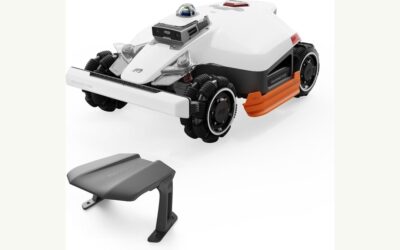
WORX WO7144 Robotic Lawn Mower for Precise, Wire-Free Yard Maintenance WORX WR320 Robot Lawn Mower with Wire-Free Mapping for Lawns up to 1/2 Acre ANTHBOT M5 Robotic Lawn Mower for Wire-Free, App-Controlled Multi-Zone Mowing ECOVACS GOAT O1000 RTK CARE Robotic Lawn Mower for Wire-Free Yard Maintenance Les prix et la disponibilité peuvent changer. Nous pouvons percevoir une commission sur les achats éligibles.


Certaines fiches ci-dessous restent en anglais ; leur traduction est en cours de révision.
Pros
- RTK Cloud positioning is designed for precise, organized mowing without a local antenna.
- Multiple zone, path, and no-go area controls offer useful flexibility for varied lawn layouts.
- The included wheel brushes and six spare blades provide some replacement parts for routine upkeep.
Cons
- Gardeners with lawns larger than the listed 1/4-acre size may need a different model or additional evaluation.
- The 39.2-pound body and 22.7 by 18.1 by 11.3-inch dimensions may require planning for storage and placement around the charging station.
- The published information does not specify battery runtime, cutting height, weather resistance, or maintenance intervals.
The WORX WO7144 is a wire-free robotic lawn mower intended to maintain lawns up to 1/4 acre. It is a practical fit for homeowners who want to reduce routine mowing work and manage lawn areas through an app rather than manually guiding a mower.
Its main advantage is the combination of RTK Cloud positioning, Vision AI, and V-SLAM sensor fusion. The product information indicates that these systems help the mower map lawn shapes, follow boundaries, navigate shaded areas, and create more consistent mowing paths. AI obstacle recognition is also designed to help it work around common yard objects.
Controls are handled through the app, where users can create unlimited mowing zones, set custom paths, mark no-go areas, edit the map, and monitor the mower remotely. The listed dimensions and 39.2-pound weight suggest that placement of the charging station and a suitable storage location should be planned before setup. The box includes a charging station, wheel brushes, six spare blades, accessories, and a product guide.
This mower may work well for medium-sized residential lawns with distinct areas, shaded sections, or borders that benefit from more deliberate route planning. Its selectable Parallel, Checkerboard, Diamond, and Natural patterns may also appeal to homeowners who want to change the visual finish of the lawn through the app.
Important details are not provided for battery runtime, cutting height, weather resistance, noise, or maintenance intervals, so buyers should confirm those specifications before purchase. Routine attention will still be needed for the blades, wheel brushes, charging area, and lawn conditions. Overall, the WO7144 is best suited to homeowners seeking app-based, wire-free mowing and precise zone control, while gardeners with larger properties or specific runtime and weather-resistance requirements should compare other options.
Best For / Avoid If
Best for buyers prioritizing
- RTK Cloud positioning is designed for precise, organized mowing without a local antenna.
- Multiple zone, path, and no-go area controls offer useful flexibility for varied lawn layouts.
- The included wheel brushes and six spare blades provide some replacement parts for routine upkeep.
Consider another option if
- Gardeners with lawns larger than the listed 1/4-acre size may need a different model or additional evaluation.
- The 39.2-pound body and 22.7 by 18.1 by 11.3-inch dimensions may require planning for storage and placement around the charging station.
- The published information does not specify battery runtime, cutting height, weather resistance, or maintenance intervals.
Pros
- Supports lawns up to 1/2 acre and can manage multiple mowing zones through the app.
- The 22.7 by 18.1 by 11.3 inch design and listed two-wheel drive configuration are suited to automated residential lawn care.
- Cut-to-edge behavior is designed to reduce missed grass along ridable edges and fixed borders.
Cons
- At 44.5 pounds, it may be less convenient to move or store than a smaller robotic mower.
- The feature set may require time to configure, especially when creating maps, pathways, zones, and no-go areas.
- The published information does not specify battery runtime, charging details, maintenance requirements, or how it handles unusually complex terrain.
The WORX WR320 is a robotic lawn mower for residential lawns up to 1/2 acre. Its main purpose is routine grass cutting with less manual mowing, making it a practical option for homeowners who want app-managed lawn care and prefer not to install a local perimeter antenna.
Its most notable feature is RTK Cloud navigation, which is described as providing centimeter-level accuracy through the cloud without additional cloud costs. Vision AI adds automatic mapping, boundary recognition, and obstacle understanding, while V-SLAM-based sensor fusion is intended to help maintain navigation in shaded or partially covered parts of the lawn.
Controls are handled through the app, where users can manage unlimited mowing zones, create custom pathways, set no-go areas, edit the lawn map, and monitor the mower remotely. The mower also supports Parallel, Checkerboard, Diamond, and Natural mowing patterns, giving homeowners a choice between visible geometric stripes and a less formal finish.
With listed dimensions of 22.7 by 18.1 by 11.3 inches and a weight of 44.5 pounds, the WR320 is sized for substantial residential lawn coverage rather than small patio or balcony gardening. It may work well for homeowners with multiple lawn sections or varied boundary types, provided the yard is within the stated coverage and the mapping system can be configured for the property.
The product information does not provide battery runtime, charging specifications, maintenance instructions, weather suitability, or detailed terrain limitations, so those points should be confirmed before purchase. Users should also review the operating guidance and keep people, pets, and loose objects clear of the mower while it is running, even though AI obstacle avoidance is included.
This mower is best for homeowners who value wire-free mapping, remote controls, multi-zone management, and adjustable mowing patterns. Gardeners seeking a simpler setup, a lighter machine, or clearly documented runtime and maintenance details may prefer to compare other robotic mower options before deciding.
Pros
- Useful combination of dual-camera obstacle recognition and NRTK positioning for automated lawn navigation.
- Supports sloped areas up to a listed 45% gradient and multiple lawn zones.
- Includes the mower, charging base, five-blade set, and RTK reference station.
Cons
- The listed coverage figures vary between a 0.12-acre size specification and a maximum mowing size of 0.15 acre, so gardeners should compare them with their actual lawn layout.
- Setup still requires placing and configuring the charging base and RTK reference station, even though perimeter wire is not required.
- Battery runtime, charging time, weather resistance, and detailed maintenance requirements are not provided.
The ANTHBOT M5 is a robotic lawn mower designed to maintain small to medium residential lawns with limited manual mowing. It is intended for homeowners who want app-managed mowing, automatic recharging, and multi-zone control without installing a traditional perimeter wire system.
Its main supported performance features are dual-camera vision, NRTK positioning, and adaptive cruise control. The product information indicates that the cameras use AI to recognize more than 1,000 common garden objects, while RTK positioning is designed to support precise navigation. The mower also offers a cutting-height range of 1.2 to 2.7 inches and is listed for slopes up to a 45% gradient.
Control and setup are handled through the ANTHBOT app. The mower can create a virtual map, manage up to 20 work zones, establish no-go areas, and select different mowing paths. The package includes the mower, charging base station, five-blade set, and RTK reference station, with the listed package contents shipped in multiple separate packages. Its dimensions are 19.61 by 15.43 by 9.88 inches, and its listed weight is 21.6 pounds.
This feature set may work well for a homeowner with connected lawn sections, sloped areas, or several zones that need separate mowing rules. App-based mapping could also be useful for gardeners who prefer to monitor lawn care remotely, while the self-charging function is intended to let the mower return to its base and resume work automatically.
Important details remain unspecified, including battery runtime, charging duration, weather resistance, and routine blade or mower maintenance. Gardeners should also confirm the actual usable lawn area, since the specifications list a 0.12-acre size while the product description gives a maximum mowing size of 0.15 acre. The M5 may suit homeowners prioritizing wire-free mapping and automated mowing, while those needing documented runtime, larger coverage, or fully specified outdoor-weather protection should compare other models.
Best For / Avoid If
Best for buyers prioritizing
- Useful combination of dual-camera obstacle recognition and NRTK positioning for automated lawn navigation.
- Supports sloped areas up to a listed 45% gradient and multiple lawn zones.
- Includes the mower, charging base, five-blade set, and RTK reference station.
Consider another option if
- The listed coverage figures vary between a 0.12-acre size specification and a maximum mowing size of 0.15 acre, so gardeners should compare them with their actual lawn layout.
- Setup still requires placing and configuring the charging base and RTK reference station, even though perimeter wire is not required.
- Battery runtime, charging time, weather resistance, and detailed maintenance requirements are not provided.
Pros
- Wire-free RTK setup avoids installing a physical perimeter wire.
- Includes 36 additional blades for longer-term upkeep.
- App control, auto mapping, and multi-zone management support more tailored lawn routines.
- Battery-powered automatic operation can reduce the time spent pushing or riding a mower.
- Listed cutting width of 8.66 inches is suitable for frequent robotic maintenance mowing rather than heavy one-pass cutting.
Cons
- RTK performance can depend on proper antenna placement and signal conditions, so setup may take planning in complex yards.
- The product information lists smart home compatibility as not supported, which may matter to users wanting voice assistant integration.
- With a 90-minute listed average battery life and an 8.66-inch cutting width, larger or overgrown lawns may require more mowing cycles.
The ECOVACS GOAT O1000 RTK CARE is a robotic lawn mower built for homeowners who want regular automatic mowing without installing perimeter wire. Based on the listed specifications, it is a battery-powered, automatic mower with RTK precision navigation, smart app control, auto mapping, and multi-zone lawn management. The listed variant indicates suitability up to 1/4 acre, making it most relevant for small to moderate residential lawns rather than large acreage.
The main appeal is its RTK-based navigation system, which the product information describes as providing centimeter-level positioning and systematic mowing paths. In practical terms, this is intended to help the mower move in planned routes instead of wandering randomly, which can support more consistent coverage on routine maintenance cuts. The mower also offers adjustable cutting height from 1.2 to 3.2 inches, giving homeowners some flexibility for common turf preferences.
This CARE kit is also notable because it includes 36 extra replacement blades. Robotic mowers rely on sharp, small blades for clean recurring cuts, so having replacements on hand can make routine maintenance easier. The included RTK extension cable is another useful setup detail, because it allows the antenna to be positioned where satellite reception is stronger, which may be important in yards with trees, structures, or other obstacles.
For everyday use, the app-based auto mapping and multi-zone controls are helpful if your lawn is divided into a front yard, backyard, and side strip. You can set up different mowing areas and schedules through the app, and the mower is designed to recharge automatically. Its 8.66-inch cutting width suggests it is intended for frequent trimming and upkeep rather than quickly knocking down tall, neglected grass.
There are a few practical considerations before choosing it. RTK robotic mowers depend on good signal conditions, so gardeners with heavily covered yards or complicated layouts may need to spend extra time finding the best antenna location. The listed smart home compatibility says it is not smart home compatible, so buyers who want integration with a broader home automation system should take note. As with any robotic mower, keep children, pets, loose hoses, toys, and garden debris away from the mowing area, and follow the manufacturer’s blade replacement and safety instructions.
Overall, the ECOVACS GOAT O1000 RTK CARE is a strong fit for homeowners who want automated lawn maintenance, wire-free boundary setup, and a ready supply of replacement blades. Gardeners with larger lawns, poor satellite reception, or a preference for full smart home integration may want to compare other mower options before deciding.
Best For / Avoid If
Best for buyers prioritizing
- Wire-free RTK setup avoids installing a physical perimeter wire.
- Includes 36 additional blades for longer-term upkeep.
- App control, auto mapping, and multi-zone management support more tailored lawn routines.
Consider another option if
- RTK performance can depend on proper antenna placement and signal conditions, so setup may take planning in complex yards.
- The product information lists smart home compatibility as not supported, which may matter to users wanting voice assistant integration.
- With a 90-minute listed average battery life and an 8.66-inch cutting width, larger or overgrown lawns may require more mowing cycles.

Robot tondeuse: ANTHBOT M9
Résumé du produit: Modèle autonome à comparer selon le terrain, la traction et les possibilités de navigation.
À vérifier avant l’achat: Consultez le manuel de la version exacte pour la pente, les limites près des bordures et la sécurité. Ne confondez pas degrés et pourcentage.
Synthèse documentaire, sans essai pratique.

Pros
- No perimeter wire or RTK antenna required for setup.
- Built-in edge trimming adds functionality many robotic mowers do not include.
- Custom zones, schedules, and no-go areas support more tailored mowing plans.
- Designed for tight paths and shaded yards where navigation can be challenging.
- Reviewers commonly mention easy setup, quiet operation, and even routine cutting.
Cons
- Initial mapping and fine-tuning may take several adjustments, especially in complex yards.
- Edge trimming may still require manual follow-up around sharp corners, raised edges, narrow gaps, fences, or obstacles.
- May be less suitable for lawns with exposed sand, mulch transitions, or very uneven borders based on mixed reviewer feedback.
The ECOVACS GOAT O1000 LiDAR PRO is an automatic, battery-powered robotic lawn mower for homeowners who want frequent mowing support on lawns up to 1/4 acre. It is best understood as a routine maintenance mower rather than a full replacement for every lawn-care task, especially where borders, fences, mulch beds, and tight corners are involved.
The main advantage is its wire-free mapping system. The product information states that its HoloScope 360 degree Dual-LiDAR navigation does not require buried perimeter wire or an RTK antenna, and is designed to work under trees, near fences, and in shaded areas. For gardeners with established beds or hardscaping, avoiding perimeter wire can make installation less disruptive.
This model also includes the TruEdge trimming feature, which is meant to cut closer along driveways, sidewalks, flower beds, and irregular borders than a standard robot mower. That can reduce the amount of string trimming after mowing, but the product information and user feedback both suggest that highly complex corners, narrow gaps, raised edges, and fence lines may still need occasional manual trimming.
Control is handled through the ECOVACS app, where users can create mowing zones, schedule tasks, and set no-go areas. The mower uses AI Vision and 3D ToF LiDAR obstacle detection to navigate around common yard objects, and the narrow body is designed to pass through corridors as slim as 0.8 m. Assembly is required, and the trimmer module installation calls for the included screws and a PH2 Phillips screwdriver.
For small lawns, side yards, compact backyards, and layouts with trees or play equipment, the feature set is well matched to homeowners who prefer frequent light mowing over occasional heavy cutting. The listed cutting width is 8.66 inches, and the cutting height range is 1.2 to 3.6 inches, so gardeners who maintain taller cool-season turf should confirm that this height range fits their grass-care goals.
The balanced verdict is that the GOAT O1000 LiDAR PRO is a strong candidate for tech-comfortable homeowners who want wire-free robotic mowing with more edge help than many basic models provide. Consider a different mower if your lawn has exposed sand, frequent mulch transitions, very rough edges, or if you expect completely hands-off trimming along every fence and corner.
Best For / Avoid If
Best for buyers prioritizing
- No perimeter wire or RTK antenna required for setup.
- Built-in edge trimming adds functionality many robotic mowers do not include.
- Custom zones, schedules, and no-go areas support more tailored mowing plans.
Consider another option if
- Initial mapping and fine-tuning may take several adjustments, especially in complex yards.
- Edge trimming may still require manual follow-up around sharp corners, raised edges, narrow gaps, fences, or obstacles.
- May be less suitable for lawns with exposed sand, mulch transitions, or very uneven borders based on mixed reviewer feedback.

Pros
- Automates regular mowing with programmable schedules and self-charging.
- Designed to navigate moderate slopes of approximately 25 to 30 percent, depending on conditions.
- Remote app control and real-time updates provide convenient oversight.
- The listed 41-pound weight and compact dimensions may make the unit manageable for lawn equipment storage.
Cons
- Initial setup requires a one-time activation code before the mower can be used.
- The published information does not specify battery capacity, charging time, installation requirements, or detailed maintenance needs.
- Gardeners with heavily uneven terrain or complex obstacles may still need to supervise operation despite the mapping and sensor features.
The BESTMOW is a robotic lawn mower intended to handle recurring grass-cutting duties with less hands-on effort. Its listed feature set makes it a potential fit for homeowners with larger lawns, including properties described as covering up to 1.5 acres, who want scheduled mowing rather than frequent manual passes.
Its main practical benefits are automated scheduling, adjustable cutting height up to 4 inches, GPS-based mapping, and route planning. The product information indicates that it is designed to maintain coverage across lawns with changing elevations and to handle moderate slopes of about 25 to 30 percent, depending on conditions.
When the battery is low, the mower automatically returns to its charging station and resumes work after charging. Smartphone app control allows users to change settings, schedule mowing, and monitor progress remotely. The listed dimensions are 22.4 by 17.98 by 10.2 inches, and the mower weighs 41 pounds, details that may help with planning storage and moving it when needed.
This type of mower may be useful for larger residential lawns where regular trimming is time-consuming. Quiet operation could also be helpful in neighborhoods or households where conventional mower noise is inconvenient. The app and mapping features may be particularly useful for owners who want to check mowing activity without walking the entire yard.
Setup should be planned carefully because the product requires a one-time activation code before first use. Although built-in sensors are described as detecting pets and obstacles, users should not assume that automated detection removes the need for supervision, especially around children, animals, slopes, or cluttered areas. The published information does not provide battery specifications, charging duration, installation details, or maintenance instructions.
This mower is best suited to homeowners seeking automated routine lawn care and app-based oversight. Those with highly irregular terrain, complicated lawn boundaries, or a preference for detailed control over every mowing pass may want to compare it with another robotic mower after confirming setup and compatibility requirements.
Best For / Avoid If
Best for buyers prioritizing
- Automates regular mowing with programmable schedules and self-charging.
- Designed to navigate moderate slopes of approximately 25 to 30 percent, depending on conditions.
- Remote app control and real-time updates provide convenient oversight.
Consider another option if
- Initial setup requires a one-time activation code before the mower can be used.
- The published information does not specify battery capacity, charging time, installation requirements, or detailed maintenance needs.
- Gardeners with heavily uneven terrain or complex obstacles may still need to supervise operation despite the mapping and sensor features.

Pros
- No perimeter wire or RTK antenna is required according to the product information.
- Integrated edge trimming is a useful feature for lawns with hardscape borders and planting beds.
- Smart app controls allow zone-based scheduling and no-go area setup.
- Listed IPX6 waterproof design supports routine outdoor use and cleanup needs.
- Designed for lawns up to 1/2 acre, making it relevant for many suburban yards.
Cons
- The listed cutting width is narrow, so larger or fast-growing lawns may need more frequent scheduled runs.
- App-based mapping and zone setup could take some learning for gardeners who prefer simple manual controls.
- Plastic construction may not appeal to buyers looking for a heavier metal-bodied mower.
The ECOVACS GOAT A2000 LiDAR PRO is a battery-powered robotic lawn mower for homeowners who want to automate routine lawn cutting on yards up to 1/2 acre. It is especially relevant for people who like the idea of robotic mowing but do not want to install a perimeter wire or rely on a separate RTK antenna.
Its standout feature is the HoloScope 360 dual-LiDAR navigation system, which the product information says can automatically map the yard and provide precise positioning, including in shaded areas, near fences, and under trees. For practical lawn care, that means the mower is designed to work in more complicated residential spaces where signal loss can be a concern.
The built-in TruEdge trimmer adds value for homeowners who usually have to clean up along sidewalks, driveways, flower beds, and uneven borders after mowing. The product includes two rolls of trimming line, each listed for about 3 km of edging, and the app allows users to create mowing zones, set no-go areas, adjust cutting height and speed, and define travel paths between zones.
Based on the listed specifications, this model uses a 32V battery-powered platform with a dual-blade disc system and a cutting height range from 1.2 to 3.6 inches across five positions. It has a listed average battery life of 50 minutes and recharges in about 50 minutes, which supports scheduled mowing cycles rather than occasional heavy cutting.
In a typical backyard, this mower is best suited to homeowners with defined lawn areas, borders that benefit from edge trimming, and a willingness to manage settings through the ECOVACS app. It may also be useful for older gardeners or busy households who want to reduce the amount of walking, pushing, and trimming involved in routine lawn maintenance.
As with any robotic mower, users should keep the lawn clear of loose objects, supervise initial mapping, and use no-go areas around places where the mower should not travel. Gardeners with very simple, tiny lawns may not need this level of automation, while those with complex yards who want wire-free navigation and app-based control are the most likely fit.
Best For / Avoid If
Best for buyers prioritizing
- No perimeter wire or RTK antenna is required according to the product information.
- Integrated edge trimming is a useful feature for lawns with hardscape borders and planting beds.
- Smart app controls allow zone-based scheduling and no-go area setup.
Consider another option if
- The listed cutting width is narrow, so larger or fast-growing lawns may need more frequent scheduled runs.
- App-based mapping and zone setup could take some learning for gardeners who prefer simple manual controls.
- Plastic construction may not appeal to buyers looking for a heavier metal-bodied mower.

Pros
- Designed for steep and uneven lawns with all-wheel drive, adaptive suspension, and a listed slope capability of up to 80 percent.
- Detailed navigation system uses LiDAR, NetRTK, and AI vision rather than relying on a single positioning method.
- Supports complex lawn layouts with up to 30 mowing zones, no-go areas, and several coverage patterns.
- Listed runtime of up to 175 minutes per charge and mowing coverage of up to 500 square meters per hour may suit larger residential lawns.
Cons
- The garage ships separately, so the complete setup may arrive in more than one delivery.
- Its 27.2 by 21 by 12.8 inch dimensions may require dedicated storage and a suitable charging location.
- Gardeners with simple, flat lawns may not need the advanced navigation and off-road features of this model.
The Mammotion LUBA 3 AWD 3000H is a robotic lawn mower for homeowners who want automated grass cutting across larger, sloped, uneven, or divided residential lawns. Its feature set is especially relevant to yards where conventional robotic mowers may need more help navigating changes in terrain or multiple mowing areas.
Its main advantage is the combination of 360° LiDAR, NetRTK, and dual-camera AI vision. Based on the listed specifications, these systems work together to map the yard, recognize objects, and switch sensing methods as conditions change. The mower can also identify more than 300 obstacle types and plan paths around them.
For lawn access and maneuverability, the mower uses four independently powered motors, all-wheel drive, omni-wheel pivoting, and adaptive suspension. The product information states that it can handle slopes up to 80 percent, or 38.6 degrees, and step over curbs, roots, and thresholds up to 50 mm high. Its listed dimensions are 27.2 by 21 by 12.8 inches, so owners should plan a clear charging and storage area.
The mower supports up to 30 mowing zones and lets users define no-go areas, which can be useful for lawns separated by paths or surrounding garden features. Perimeter-only, zigzag, checkerboard, and adaptive zigzag patterns provide options for different coverage preferences. The listed battery can run for up to 175 minutes per charge, with coverage of up to 500 square meters per hour.
Routine attention may include keeping the cutting system and sensors clear, checking the blades, and following the product guide for setup and safe operation. The included extra blade set, charging station, and garage add practical value, but the garage ships separately. Because installation details, operating conditions, and maintenance schedules are not provided, buyers should review the guide before relying on the mower in a complex yard.
This model is best suited to homeowners with challenging terrain, multiple lawn zones, or a preference for highly automated mowing. Gardeners with a small, flat, uncomplicated lawn may prefer a simpler robotic mower with fewer navigation features and less equipment to configure.
Best For / Avoid If
Best for buyers prioritizing
- Designed for steep and uneven lawns with all-wheel drive, adaptive suspension, and a listed slope capability of up to 80 percent.
- Detailed navigation system uses LiDAR, NetRTK, and AI vision rather than relying on a single positioning method.
- Supports complex lawn layouts with up to 30 mowing zones, no-go areas, and several coverage patterns.
Consider another option if
- The garage ships separately, so the complete setup may arrive in more than one delivery.
- Its 27.2 by 21 by 12.8 inch dimensions may require dedicated storage and a suitable charging location.
- Gardeners with simple, flat lawns may not need the advanced navigation and off-road features of this model.

Robot tondeuse: MOVA LiDAX Ultra 1000
Résumé du produit: Modèle autonome à comparer selon le terrain, la traction et les possibilités de navigation.
À vérifier avant l’achat: Consultez le manuel de la version exacte pour la pente, les limites près des bordures et la sécurité. Ne confondez pas degrés et pourcentage.
Synthèse documentaire, sans essai pratique.

Pros
- Combines app scheduling with a wire-free installation approach.
- Includes a flexible magnetic-strip system for protecting selected lawn areas.
- Compact 17 x 14 x 8.6-inch dimensions may be practical for storage between mowing sessions.
- Adjustable cutting height and included replacement blades support ongoing lawn maintenance.
Cons
- The listed information does not specify battery runtime, charging time, or detailed cutting-height settings.
- Gardeners with complex borders or larger lawns may need to plan no-go zones carefully and confirm that the listed coverage fits their space.
- Weather resistance, terrain limits, and replacement-part availability are not provided, so these details should be confirmed before purchase.
The LEBOSBO V3 is a robotic lawn mower intended for routine grass cutting on lawns listed at up to 1,600 square feet. Its feature set is aimed at homeowners who want to reduce manual mowing and manage regular lawn tasks through a smartphone app.
AI vision obstacle sensing is designed to help the mower detect objects and navigate lawn areas more accurately. Adjustable cutting height gives gardeners some control over the finished grass length, while the listed low-noise design may be helpful in backyards where minimizing disturbance matters.
The mower uses a wire-free setup rather than requiring perimeter cable installation. Its included 32-foot magnetic strip can be secured with the supplied ground stakes to create no-go areas around gardens, decorations, or pet spaces. The package also includes an MX 18V 4000mAh battery, charger, replacement blades, and a user manual, although battery runtime and charging details are not listed.
This design may fit a relatively defined residential lawn where the mowing area can be clearly separated from planting beds and other sensitive spaces. App scheduling and remote monitoring could be convenient for homeowners who prefer setting mowing tasks in advance rather than operating a mower manually each time.
Before buying, confirm the mower's compatibility with the shape, borders, slopes, and surface conditions of your lawn. The published information does not specify weather resistance, terrain limits, runtime, charging time, or exact cutting-height ranges. Routine upkeep should include following the manual, keeping no-go boundaries properly positioned, and handling the blades and battery with care.
The LEBOSBO V3 is worth considering for homeowners seeking app-managed, lower-noise mowing with a wire-free boundary approach. Those with irregular lawns, extensive obstacles, or coverage needs beyond the listed lawn size may prefer a model with more detailed terrain, runtime, and boundary specifications.
Best For / Avoid If
Best for buyers prioritizing
- Combines app scheduling with a wire-free installation approach.
- Includes a flexible magnetic-strip system for protecting selected lawn areas.
- Compact 17 x 14 x 8.6-inch dimensions may be practical for storage between mowing sessions.
Consider another option if
- The listed information does not specify battery runtime, charging time, or detailed cutting-height settings.
- Gardeners with complex borders or larger lawns may need to plan no-go zones carefully and confirm that the listed coverage fits their space.
- Weather resistance, terrain limits, and replacement-part availability are not provided, so these details should be confirmed before purchase.

Pros
- Wire-free navigation may simplify setup for yards with clearly defined grass boundaries.
- Magnetic-strip no-go zoning offers a flexible way to restrict access to selected lawn areas.
- App scheduling and automatic charging can reduce the need for frequent manual mowing.
- The 28.7-pound design and compact 23 x 15.8 x 9.5-inch dimensions may be practical for homeowners managing limited storage space.
Cons
- It may be less suitable for lawns without clear visual boundaries, since the vision-navigation system is designed around defined grass and non-grass areas.
- Grass taller than 2.6 inches should be manually trimmed before initial use, which adds preparation work.
- Routine blade replacement is recommended, and gardeners with complex obstacles or changing lawn layouts may need to manage no-go zones carefully.
The YARDCARE M800Plus is a robotic lawn mower designed for routine grass cutting on residential lawns up to 8611 square feet. Its cordless GPS and 3D vision navigation is intended for yards with clear visual boundaries, making it a potential fit for homeowners who want scheduled mowing without installing traditional boundary wires.
The feature set focuses on reducing routine lawn-care effort. Vision-based navigation identifies grass and non-grass areas, while obstacle detection is designed to recognize common lawn objects and adjust movement. The mower also supports slopes up to 35 percent, or 20 degrees, which may help it manage many typical residential lawn sections.
Homeowners can use the YARDCARE App to set schedules, adjust mowing patterns, and access firmware updates. The included 32.8-foot magnetic strip provides a no-go zone option without digging or using an external power source. The mower measures 23 by 15.8 by 9.5 inches and weighs 28.7 pounds, so storage planning is still worthwhile even though the listed dimensions are relatively compact for a lawn machine.
The adjustable cutting height spans 0.8 to 2.4 inches, and the three-blade cutting disc has a 7-inch cutting width. Spiral spot mowing is intended for thicker or faster-growing patches, while automatic charging supports unattended mowing sessions. These functions may be useful for homeowners who prefer regular lawn maintenance rather than occasional heavy cutting.
Before initial use, grass taller than 2.6 inches should be manually trimmed according to the product information. Routine blade replacement is also recommended to maintain consistent cutting performance. Because navigation depends on clear visual boundaries, gardeners with highly irregular edges, complex obstacles, or frequently changing lawn layouts may prefer a mower with another boundary-management approach.
This model is a reasonable option for homeowners who want app-controlled, wire-free mowing and have a clearly defined lawn with manageable slopes. It may be less suitable for overgrown lawns at startup or properties where grass boundaries are difficult for a vision-based system to distinguish.
Best For / Avoid If
Best for buyers prioritizing
- Wire-free navigation may simplify setup for yards with clearly defined grass boundaries.
- Magnetic-strip no-go zoning offers a flexible way to restrict access to selected lawn areas.
- App scheduling and automatic charging can reduce the need for frequent manual mowing.
Consider another option if
- It may be less suitable for lawns without clear visual boundaries, since the vision-navigation system is designed around defined grass and non-grass areas.
- Grass taller than 2.6 inches should be manually trimmed before initial use, which adds preparation work.
- Routine blade replacement is recommended, and gardeners with complex obstacles or changing lawn layouts may need to manage no-go zones carefully.

Pros
- Suitable for larger residential lawns up to 21,780 square feet, including terrain with slopes and uneven grass.
- Multi-zone mapping and virtual no-go areas can simplify care around landscape features.
- Vision AI is designed to help route around common objects during daytime or nighttime operation.
- The 26-pound size and 26.7 by 16.3 by 10.3-inch dimensions provide a relatively compact footprint for a mower in this category.
Cons
- It may be less suitable for homeowners who prefer a simple manual mower or do not want to manage maps, zones, and schedules in an app.
- The product information does not specify battery runtime, charging details, weather resistance, or maintenance intervals.
- The 8.7-inch cutting width could require more passes than a wider conventional mower on open lawns.
The SUNSEEKER X5 is a wire-free robotic lawn mower intended for routine grass cutting on residential yards up to 0.5 acre, or 21,780 square feet. Its feature set is aimed at homeowners who want scheduled mowing with less manual pushing, particularly where the lawn includes slopes, uneven ground, roots, or multiple sections.
Its main navigation system combines RTK satellite positioning, VSLAM, and Vision AI to map the yard, plan systematic paths, and maintain coverage. The product information indicates that this approach is intended to support operation under trees, in shade, or in areas with weaker RTK signals, while Vision AI can detect common objects and adjust the route during daytime or nighttime mowing.
Setup is designed around virtual boundaries rather than buried perimeter wire. Through the app, users can create up to five maps, define smart zones and no-go areas, and adjust mowing schedules and cutting height. The 8.7-inch floating cutting system offers a 1.6 to 3.2-inch height range and is described as following lawn contours, while the mower can pass through spaces as narrow as 31.5 inches.
For backyard use, the X5 may fit homeowners managing a larger lawn with separate grass areas, narrow passages, flower beds, or pool surroundings. AWD, rugged tires, and independent front suspension are intended to improve stability across changing terrain, with the listed slope capability reaching up to 30° / 60%. Its 26-pound weight and compact listed dimensions may also make it practical to position within a typical lawn-care setup, although storage requirements are not specified.
Important details remain unlisted, including battery runtime, charging time, weather resistance, and maintenance intervals, so buyers should confirm those points before purchase. The mower's automated controls and mapping features may require more initial setup than a conventional mower, and its narrower cutting width may mean additional passes on open lawns. Overall, it is a reasonable fit for homeowners seeking wire-free, multi-zone robotic mowing and terrain assistance, while gardeners wanting a basic mower or fully documented operating specifications may prefer a simpler or more extensively specified option.
Best For / Avoid If
Best for buyers prioritizing
- Suitable for larger residential lawns up to 21,780 square feet, including terrain with slopes and uneven grass.
- Multi-zone mapping and virtual no-go areas can simplify care around landscape features.
- Vision AI is designed to help route around common objects during daytime or nighttime operation.
Consider another option if
- It may be less suitable for homeowners who prefer a simple manual mower or do not want to manage maps, zones, and schedules in an app.
- The product information does not specify battery runtime, charging details, weather resistance, or maintenance intervals.
- The 8.7-inch cutting width could require more passes than a wider conventional mower on open lawns.
Pros
- All-wheel drive is a useful feature for sloped or rough lawn areas.
- Wire-free mapping avoids the installation of a traditional perimeter wire.
- Adjustable cutting height and zero-turn steering support a more controlled mowing pattern.
- GPS alerts and multi-zone management add useful remote oversight.
Cons
- The listed 0.15-acre mowing capacity may be limiting for larger properties or lawns with multiple extensive sections.
- Gardeners who want a simple setup without mapping technology may find the RTK and Vision feature set more involved than a basic robotic mower.
- The published information does not detail routine maintenance, weather suitability, or storage requirements.
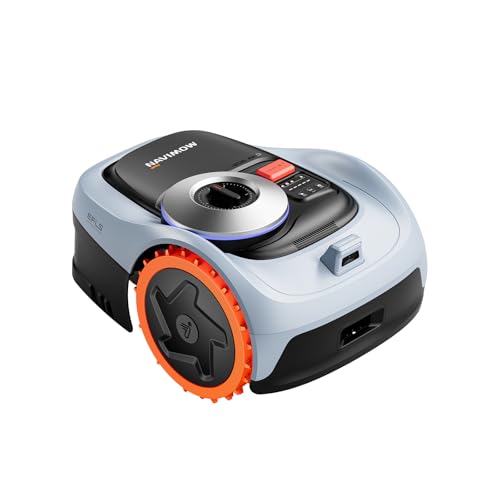
The NAVIMOW i206 AWD is a robotic lawn mower intended to automate grass cutting on residential lawns, particularly where slopes and uneven ground make basic models less suitable. Based on the listed capacity, it is best matched with smaller to medium-sized properties covering up to 0.15 acre, with the product information also stating coverage of up to 1,350 square feet per charge.
Its main performance advantage is the all-wheel-drive system paired with automotive-grade stability control. The manufacturer states that it can tackle slopes up to 45%, which may make it a practical choice for homeowners with hilly sections or rougher lawn surfaces. Zero-turn steering is designed to let the mower pivot smoothly, while the adjustable 2 to 3.6 inch cutting height provides flexibility for different lawn preferences.
This model uses EFLS Network RTK and Vision for wire-free, one-tap auto mapping rather than a traditional perimeter wire. The feature set suggests that careful mapping is central to setup and operation. Once configured, the mower can manage up to 20 mowing zones, use optimized routes, return to charge, and resume mowing automatically. Its listed dimensions are 33.5 by 24 by 13.8 inches, and the color is black.
For a backyard with sloped sections, several separate lawn areas, or a layout where installing boundary wire would be inconvenient, the i206 AWD offers a centralized way to manage mowing. Real-time GPS alerts may also help homeowners monitor the mower if it is lifted or moves off course. The stated 2.5Ah battery and automatic charging are suited to routine mowing within the product's listed lawn-size limits.
The main limitation is coverage. Larger properties or lawns requiring more than the listed 0.15-acre capacity may need a different mower or a model designed for broader areas. The published information does not specify weather resistance, maintenance intervals, storage guidance, or installation requirements beyond the wire-free mapping system, so buyers should confirm those details before purchase. Overall, it appears best for homeowners who value automated mowing, slope capability, and multi-zone GPS control, while gardeners wanting a simpler or higher-capacity solution may prefer another option.
Pros
- Scheduled mowing can reduce repetitive manual lawn work.
- The listed slope capability expands its usefulness on uneven or hilly residential lawns.
- Rain-sensor pausing and boundary-wire guidance support more controlled operation.
Cons
- The mower depends on boundary-wire installation, so setup requires planning around the lawn's edges and obstacles.
- Its stated coverage is limited to lawns up to 1/4 acre, so larger properties may need a different solution.
- At about 41 pounds and 25 by 17.5 by 10 inches, it may require a dedicated storage location and some effort to move.
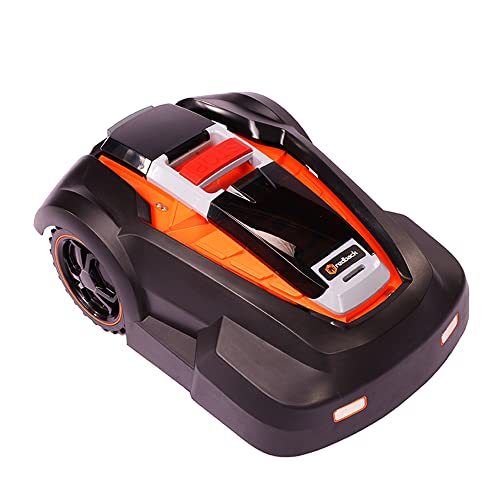
The Mowro Robot Lawn Mower is designed to handle recurring lawn cutting with less manual effort. It follows a boundary wire and runs on a fixed schedule, making it a reasonable option for homeowners who want regular maintenance without pushing a mower across the yard each time.
The listed specifications indicate coverage of up to 1/4 acre, or 10,890 square feet, along with the ability to manage slopes up to 50% and uneven terrain. Its adjustable cutting height gives homeowners some control over the finished grass length, while the 65 dBA operating level is intended to keep mowing relatively quiet.
Installation is based on the included self-installation kit, boundary wire, and step-by-step instructions. The product information indicates that no tools or professional installer are required. At 25 by 17.5 by 10 inches and approximately 41 pounds, it is compact enough for many storage areas, but its weight is worth considering when moving or storing it.
This mower is best suited to residential lawns within the stated coverage area, especially yards where scheduled maintenance and sloped or uneven sections make manual mowing inconvenient. The boundary-wire design also makes careful lawn-edge planning important before operation.
The rain sensor pauses the mower during wet conditions, which may help avoid mowing a damp lawn. Homeowners should follow the supplied installation and operating instructions, verify the boundary layout, and plan storage for the mower when it is not in use. Because the product information does not provide battery runtime, charging details, or maintenance intervals, those factors should be confirmed before purchase.
Choose this model if your lawn is within the stated size range and you value scheduled, quieter mowing with DIY installation. Gardeners with larger properties or those who prefer to avoid boundary-wire setup may want to consider a different robotic mower design.
Best For / Avoid If
Best for buyers prioritizing
- Scheduled mowing can reduce repetitive manual lawn work.
- The listed slope capability expands its usefulness on uneven or hilly residential lawns.
- Rain-sensor pausing and boundary-wire guidance support more controlled operation.
Consider another option if
- The mower depends on boundary-wire installation, so setup requires planning around the lawn's edges and obstacles.
- Its stated coverage is limited to lawns up to 1/4 acre, so larger properties may need a different solution.
- At about 41 pounds and 25 by 17.5 by 10 inches, it may require a dedicated storage location and some effort to move.
Guide d’achat : quels sont les meilleurs robots tondeuses
Commencez par la taille du terrain et les zones de tonte
Les robots tondeuses sont généralement classés selon une surface maximale de pelouse, et ce chiffre compte davantage que la préférence de marque. Dans les caractéristiques publiées, les exemples vont de modèles pour petites pelouses comme le YARDCARE V100 Robot Lawn Mower pour des terrains jusqu’à 1 600 sq ft à des options plus grandes comme l’ECOVACS Goat A2000 LiDAR PRO Robotic Lawn Mower pour jusqu’à 1/2 acre.
Ne choisissez pas un modèle trop juste si votre jardin comporte des zones avant, arrière et latérales séparées. La gestion multi-zones est utile lorsque la tondeuse doit traiter différentes parties du gazon séparément. L’ANTHBOT M9 Robot Lawn Mower prend en charge jusqu’à 30 zones de travail via l’application, tandis que la fiche du MOVA LiDAX Ultra 1000 mentionne jusqu’à 150 zones gérées et des cartes doubles.
Choisissez le système de navigation adapté à votre jardin
La navigation est l’une des plus grandes différences entre les robots tondeuses. Les modèles LiDAR, comme l’ECOVACS Goat O1000 LiDAR PRO et l’ECOVACS Goat A2000 LiDAR PRO, sont indiqués avec une cartographie sans fil et un positionnement Dual-LiDAR. Cet ensemble de fonctions suggère un avantage pour les jardins ombragés, les zones avec des arbres et les endroits où les systèmes basés sur le GPS peuvent perdre le signal.
Les systèmes RTK et vision sont également courants dans ce groupe. L’ANTHBOT M9 utilise Dual AI Vision avec Full-Band RTK, tandis que l’ECOVACS Goat O1000 RTK Care Kit utilise une navigation de précision RTK et inclut un câble d’extension RTK pour un placement plus flexible de l’antenne. Le Segway Navimow i206 AWD mentionne NRTK plus vision et cartographie automatique pour une configuration sans fil.
Examinez de près les bords, les bordures et les passages étroits
Une tondeuse robot peut réduire le temps de tonte, mais de nombreux modèles laissent encore un peu de travail de finition le long des clôtures, des bordures surélevées, des anneaux d’arbres ou dans les angles serrés. L’ECOVACS Goat O1000 LiDAR PRO comprend un coupe-bordure TruEdge intégré, conçu pour les allées, trottoirs, massifs fleuris et bordures irrégulières, avec la mention que certains angles complexes ou bords surélevés peuvent encore nécessiter une coupe manuelle occasionnelle.
Pour les jardins compacts, les pelouses latérales et les couloirs étroits, vérifiez la capacité de passage indiquée. L’ECOVACS Goat O1000 LiDAR PRO est décrit comme ayant un corps super étroit capable de passer dans des couloirs aussi fins que 0,8 m. Ce type de spécification est donc important pour les maisons de ville, les jardins latéraux et les pelouses séparées par des massifs.
Faites correspondre la gestion des pentes et la hauteur de coupe à votre gazon
Les indices de pente sont particulièrement importants pour les terrains qui descendent vers les trottoirs, les fossés de drainage ou les terrasses arrière. Les fiches de l’ANTHBOT M9, du MOVA LiDAX Ultra 1000, de l’ANTHBOT M5 et du Segway Navimow i206 AWD mentionnent chacune une gestion de pente de 45 %. Cela ne signifie pas que chaque terrain difficile sera simple, mais c’est un bon point de tri.
La hauteur de coupe doit correspondre à votre type de gazon et à l’aspect que vous souhaitez pour la pelouse. L’ANTHBOT M9 indique une hauteur de coupe réglable de 1,2 à 2,7 in. Le Segway Navimow i206 AWD indique 2 à 3,6 in, tandis que le MOVA LiDAX Ultra 1000 indique 1,2 à 3,9 in. Des réglages plus hauts peuvent être utiles pour les propriétaires qui préfèrent ne pas raser l’herbe pendant les périodes de chaleur, mais suivez toujours le manuel de la tondeuse pour une installation et un réglage sûrs.
| Fonction | Pourquoi c’est important | Exemples pris en charge par les caractéristiques publiées |
|---|---|---|
| Couverture pour petite pelouse | Permet d’éviter de payer pour une tondeuse plus puissante que nécessaire pour un petit jardin. | YARDCARE V100 et V3 indiquent des pelouses jusqu’à 1 600 sq ft. |
| Couverture pour terrain moyen | Utile pour les pelouses suburbaines typiques avec plusieurs sections. | L’ECOVACS Goat O1000 LiDAR PRO indique des pelouses jusqu’à 1/4 acre ; l’ANTHBOT M9 indique une taille de tonte max de 0,3 acre. |
| Couverture pour grand terrain | Offre plus de capacité pour les grandes pelouses résidentielles. | L’ECOVACS Goat A2000 LiDAR PRO indique des pelouses jusqu’à 1/2 acre. |
| Pentes | Important pour les terrains irréguliers et les dénivelés de drainage. | L’ANTHBOT M9, le MOVA LiDAX Ultra 1000, l’ANTHBOT M5 et le Segway Navimow i206 AWD indiquent une gestion de pente de 45 %. |
Tenez compte de la détection d’obstacles autour des enfants, des animaux et des massifs
La détection d’obstacles n’est pas une raison d’ignorer la sécurité, mais elle peut aider une tondeuse à travailler autour du désordre habituel du jardin. L’ECOVACS Goat O1000 LiDAR PRO mentionne AI Vision et 3D ToF LiDAR capables d’identifier plus de 200 types d’obstacles, y compris les jouets, le mobilier de terrasse, les animaux domestiques et la petite faune. L’ANTHBOT M9 mentionne deux caméras HDR 150° et des algorithmes IA intégrés capables de reconnaître plus de 1 000 objets de jardin courants.
Avant toute tonte programmée, retirez les tuyaux, outils en vrac, petits jouets et bordures de jardin temporaires. Tenez les enfants et les animaux éloignés pendant le fonctionnement, et suivez les consignes de sécurité du fabricant. Pour une planification du jardin plus respectueuse de la faune au-delà de la tonte, Dove Creek Gardens couvre aussi les sujets liés aux ravageurs et à la faune du jardin.
Pensez à la difficulté de configuration et au confort avec l’application
De nombreux robots tondeuses récents évitent le fil périphérique, mais la configuration n’est pas toujours simple. La cartographie dans l’application, les zones interdites, l’emplacement de la station de charge, le positionnement de l’antenne RTK et les trajets entre zones peuvent demander de la patience. L’ECOVACS Goat O1000 LiDAR PRO précise que la configuration initiale et les réglages fins peuvent nécessiter quelques ajustements pour des plans de jardin uniques.
Pour les débutants, recherchez une cartographie automatique claire et une gestion simple des zones. L’ANTHBOT M9 est décrit comme adapté aux débutants, avec une vision IA créant une carte virtuelle dans l’application ANTHBOT en environ 10 minutes et sans avoir besoin de le conduire manuellement autour de la propriété. Si vous n’aimez pas les commandes via application, un robot tondeuse peut tout de même être pratique, mais choisissez un modèle dont les indications de configuration sont les plus simples dans la fiche et le manuel.
Prévoyez l’entretien des lames, le nettoyage et le rangement
Les robots tondeuses nécessitent tout de même un entretien régulier. Les lames s’usent, les résidus d’herbe s’accumulent, et les capteurs ou caméras peuvent nécessiter un nettoyage selon les instructions du fabricant. L’ECOVACS Goat O1000 RTK Care Kit est intéressant car il inclut 36 lames de remplacement supplémentaires, ce qui peut plaire aux propriétaires qui veulent avoir des lames de rechange sous la main.
Le rangement compte aussi. Gardez la zone de charge propre et placez la station conformément au manuel afin que la tondeuse puisse y revenir de manière fiable. Pendant le stockage hors saison, suivez les instructions du fabricant pour la batterie et le nettoyage, et gardez organisés les accessoires comme les lames, les pièces RTK et les composants de charge. Une solution de rangement résistante aux intempéries peut aussi bien s’associer à un rangement de jardin dédié, comme les options évoquées dans notre guide des coffres de terrasse pour outils de jardin.
Évitez les erreurs d’achat courantes
L’erreur la plus courante est d’acheter uniquement en fonction du prix. Un robot tondeuse moins cher pour petite pelouse peut être parfaitement adapté à un terrain simple de 1 600 sq ft, mais il ne conviendra pas forcément à un jardin plus grand avec des zones séparées, des pentes et des arbres. De même, un modèle plus avancé peut être inutile si vous avez seulement besoin d’une tonte légère autour d’une petite pelouse de patio.
Une autre erreur consiste à penser que la tonte robotisée remplace toutes les tâches d’entretien de la pelouse. Vous devrez peut-être encore reprendre les bords difficiles, aérer un sol compacté, épandre des graines ou de l’engrais lorsque c’est approprié, et garder les bordures du jardin dégagées. Pour une planification plus large de l’entretien du gazon, consultez nos guides sur les aérateurs de pelouse pour sol compacté et les épandeurs à semis pour petites pelouses.
Méthodologie de recherche et confiance
Ce guide repose sur la recherche et la comparaison des caractéristiques publiées. Les articles valides étaient des robots tondeuses destinés à la tonte résidentielle automatisée, et non des accessoires ou des équipements sans rapport.
Les critères de classement incluaient la surface de pelouse documentée, le type de navigation filaire ou guidée, les fonctions de détection d’obstacles, le contrôle via application, la prise en charge multi-zones, les informations sur la hauteur de coupe lorsqu’elles étaient fournies, la capacité à gérer les pentes lorsqu’elle était fournie, les fonctions de tonte des bords, les allégations de bruit uniquement lorsqu’elles étaient indiquées, et les détails d’entretien comme les lames de remplacement incluses. Nous avons aussi pris en compte la note et le nombre d’avis comme signaux de retour d’expérience, tout en reconnaissant que les notes seules ne prouvent pas qu’un modèle convient à tous les jardins.
Lors de la mise à jour de juillet, nous avons comparé les prix, notes et spécifications figurant dans la plage fournie de 299,00 $ à 2 522,51 $. Nous n’avons pas inventé de durée d’autonomie, de garantie, d’indice d’étanchéité, de matériaux de lame, de dimensions ni d’allégations de durabilité à long terme lorsque ces informations n’étaient pas fournies.
Recommandations finales
Choix global : ECOVACS Goat O1000 LiDAR PRO Robot Lawn Mower, Wire-Free Mapping with LiDAR Navigation, AI Obstacle Avoidance, Smart Edge Mowing, App Control, for Lawns Up to 1/4 Acre. D’après les spécifications listées, il offre une bonne combinaison de cartographie LiDAR sans fil, de positionnement à 2 cm, de coupe TruEdge intégrée, de détection d’obstacles par IA, de zones dans l’application, de zones interdites et d’un design à corps étroit pour les passages serrés.
Choix débutant : ANTHBOT M9 Robot Lawn Mower 1/4 Acre, Dual Vision+Full-Band RTK Robotic Lawnmower, No Perimeter Wire, App Control Obstacle Avoidance, 45% Slope, Cutting Height, Multi-Zone Mapping. C’est le meilleur choix d’après les caractéristiques publiées pour les propriétaires qui veulent une configuration facile à prendre en main, car la fiche décrit explicitement une cartographie virtuelle automatique dans l’application, le contrôle multi-zones, l’auto-charge, la reconnaissance des obstacles et un fonctionnement silencieux à ≤58 dB.
Choix pour petit espace : YARDCARE V100 Robot Lawn Mower with HD Vision Navigation, Smart Obstacle Detection, Collision Sensors, Adjustable Cutting Height, Low-Noise Operation—Perfect for Small Lawns up to 1,600 sq ft. Pour les pelouses plus grandes, l’ECOVACS Goat A2000 LiDAR PRO Robotic Lawn Mower for Up to 1/2 Acre, Wire-Free with Dual-LiDAR Auto Mapping, Built-in TruEdge Edge Trimmer, AIVI 3D Obstacle Avoidance, Smart App Control est la recommandation la plus adaptée d’après les caractéristiques publiées, car il est indiqué pour jusqu’à 1/2 acre et inclut une plateforme 32V plus puissante ainsi qu’une charge rapide.
FAQ
Quels sont les meilleurs robots tondeuses pour les petites pelouses ?
Pour les petites pelouses, cherchez une tondeuse dimensionnée au plus près de la surface réelle de votre terrain et évitez de payer pour une capacité inutile. Dans les caractéristiques publiées, les fiches YARDCARE V100 et V3 mentionnent toutes deux des pelouses jusqu’à 1 600 sq ft, ce qui en fait des options pertinentes pour les petites surfaces.
Quels sont les meilleurs robots tondeuses pour les jardins en pente ?
Vérifiez l’indice de pente indiqué avant d’acheter. Les fiches ANTHBOT M9, MOVA LiDAX Ultra 1000, ANTHBOT M5 et Segway Navimow i206 AWD mentionnent chacune une gestion de pente de 45 %, ce qui mérite de les comparer pour des terrains résidentiels en pente.
Les robots tondeuses ont-ils encore besoin de finition sur les bords ?
Souvent, oui. Certains modèles incluent des fonctions ciblées sur les bords, comme le coupe-bordure TruEdge de l’ECOVACS Goat O1000 LiDAR PRO et de l’ECOVACS Goat A2000 LiDAR PRO, mais même ces fiches indiquent que les angles complexes, les passages étroits ou les bords surélevés peuvent encore nécessiter une coupe manuelle occasionnelle.
Les robots tondeuses sans fil périphérique sont-ils plus faciles à installer ?
Les modèles sans fil peuvent réduire le travail de pose du fil périphérique, mais ils nécessitent tout de même une configuration. Vous devrez peut-être cartographier les zones, définir des zones interdites, placer une station de charge, positionner une antenne RTK si elle est incluse, et ajuster les limites dans l’application.
Quel entretien faut-il prévoir pour les robots tondeuses ?
Prévoyez de vérifier les lames, de nettoyer les accumulations d’herbe, de garder les capteurs ou caméras propres et de suivre les instructions du fabricant pour la charge et le stockage. L’ECOVACS Goat O1000 RTK Care Kit inclut 36 lames supplémentaires, ce qui peut être utile si vous voulez disposer de lames de rechange.
Les robots tondeuses sont-ils sûrs avec les animaux domestiques et les enfants ?
La détection d’obstacles peut aider, mais elle ne doit pas remplacer la surveillance ni les bonnes pratiques d’utilisation. Dégagez le jardin avant la tonte, éloignez les enfants et les animaux pendant le fonctionnement, utilisez des zones interdites lorsque c’est approprié, et respectez toutes les consignes de sécurité du fabricant.
Comment décider quels sont les meilleurs robots tondeuses pour la configuration de mon jardin ?
Adaptez la tondeuse à la taille de votre pelouse, au nombre de zones, aux pentes, aux arbres, aux passages étroits et à la complexité des bordures. Une petite pelouse simple peut n’avoir besoin que d’un modèle compact guidé par vision, tandis qu’un jardin avec des arbres, plusieurs zones et des passages étroits peut justifier le LiDAR, le RTK, la cartographie via application et une meilleure détection d’obstacles.