


Las babosas pueden destrozar plántulas, lechugas y hostas durante la noche, y muchos cebos populares para babosas contienen metaldehído u otras sustancias químicas que representan un riesgo real para perros, gatos y la fauna curiosa del jardín. Esta guía se centra en cómo controlar las babosas sin dañar a las mascotas, una preocupación habitual para quienes desean tener un huerto productivo o un macizo de flores sin poner en riesgo a sus animales. Está dirigida a jardineros principiantes, personas mayores que buscan soluciones sencillas y de bajo riesgo, y cualquiera que cultive en un jardín pequeño o en un patio donde las mascotas y las plantas compartan espacios reducidos.
Para este artículo, nos propusimos comparar cuatro productos para el control de babosas, evaluándolos según factores como el ingrediente activo o el método físico utilizado, la facilidad de colocación alrededor de los bancales y la claridad con la que cada producto documenta la seguridad para mascotas en su etiqueta. Los criterios de selección para esta categoría incluyen si el producto utiliza un método de barrera o un cebo etiquetado como seguro para mascotas, cómo resiste en condiciones húmedas del jardín y si requiere una nueva aplicación después del riego o la lluvia.
Dado que el control de babosas se encuentra en la intersección entre la gestión de plagas y la seguridad de las mascotas, también conviene revisar las prácticas generales de control de fauna y plagas. Puedes consultar más información sobre este tema en nuestra categoría Plagas y fauna del jardín, que incluye orientación adicional para gestionar las plagas habituales del jardín en hogares con mascotas y niños.
Productos para el control de babosas que puedes considerar
Estas opciones incluyen cebos a base de fosfato de hierro y una barrera eléctrica física. Sigue siempre exactamente la etiqueta vigente, guarda el cebo de forma segura y mantén alejadas a las mascotas durante la aplicación, incluso cuando una ficha describa el producto como adecuado para usar cerca de mascotas o fauna silvestre.
Monterey Sluggo LG 6500 Snail & Slug Killer for Organic Garden Pest Control Garden Safe HG-4536 Slug & Snail Bait Granules for Lawns, Vegetable Beds, and Greenhouses Bonide Captain Jack's Slug Magic Granules for Vegetable Garden Slug and Snail Control SNAILSHIELD Snail Shield Electric Snail Fence for Raised Bed Protection Prices and availability can change. We may earn a commission from qualifying purchases.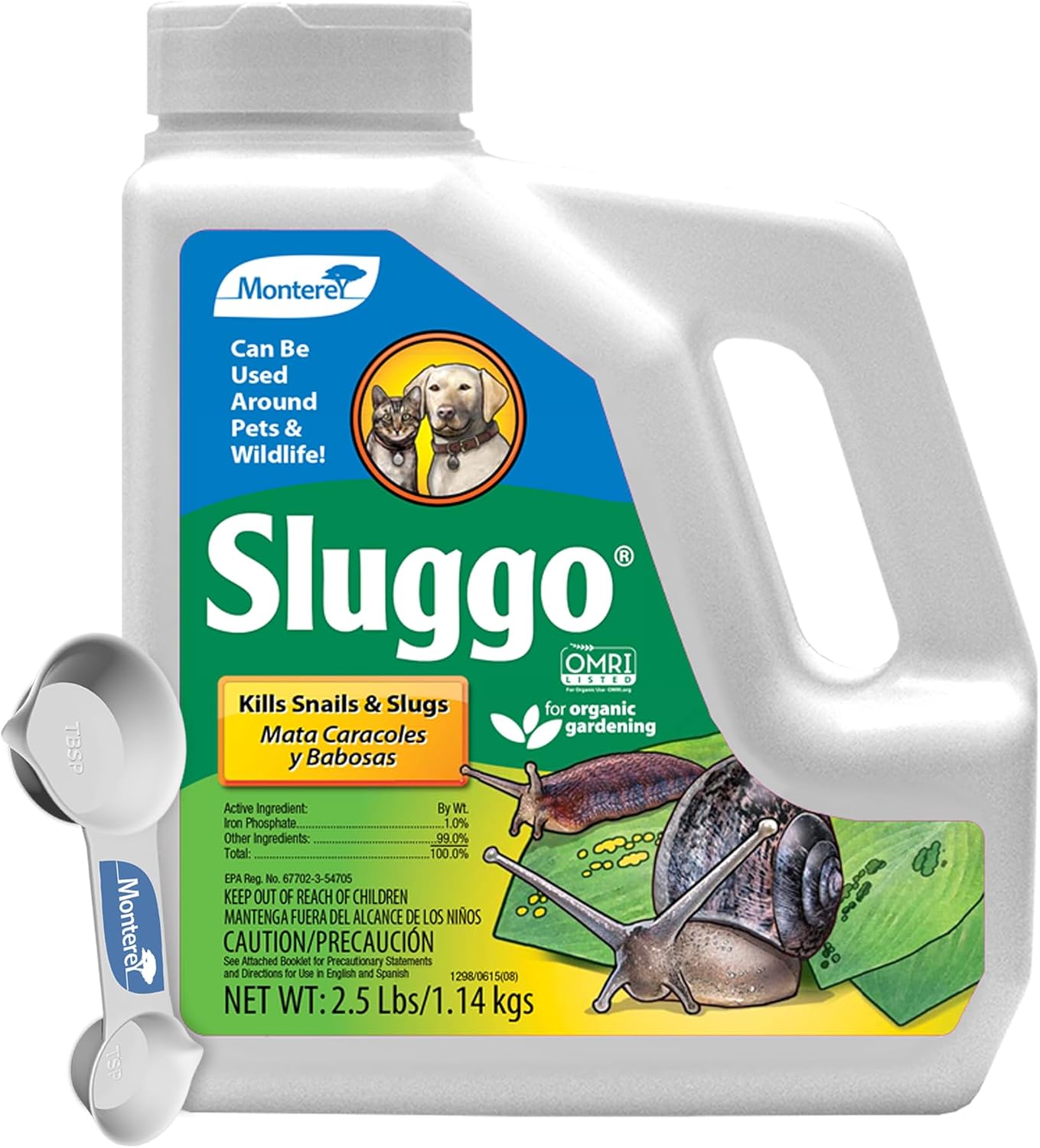


Algunas fichas siguen en inglés; su traducción está pendiente de revisión.
Pros
- Purpose-built for slug and snail control in garden settings.
- Listed in the product title as OMRI Listed for organic gardening.
- Includes a measuring spoon for easier, more deliberate application.
- Several reviewers report good results around plants and areas where slugs or snails appear.
- Pet and wildlife friendly positioning may be reassuring for many home gardeners when used as directed.
Cons
- As with any pest bait, it should be applied only according to the product label and kept out of unintended areas.
- One reviewer noted that the product did not hold up well in wet conditions, so rainy climates may require closer monitoring or reapplication.
- Gardeners needing a physical barrier or non-bait approach may prefer traps, copper barriers, or habitat management instead.
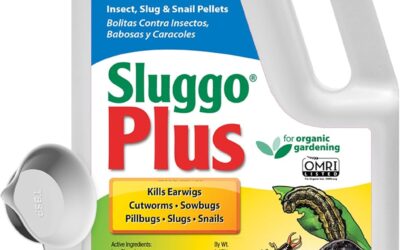
Monterey Sluggo LG 6500 is a snail and slug killer sold in a 2.5 lb jug and bundled with a measuring spoon. It is intended for gardeners dealing with slug and snail activity around edible gardens, ornamental beds, porch edges, and tender new growth. Based on the product title, it is OMRI Listed for organic gardening and described as wildlife and pet friendly.
The main appeal is straightforward pest control for one of the more frustrating backyard garden problems. Slugs and snails often show up around young plants, leafy ornamentals, and damp garden edges, and reviewers commonly mention using this product to protect plants or reduce slug and snail activity in problem areas. Those comments should be read as user experience rather than a guarantee, but they do suggest the product fits routine home-garden pest management.
The included measuring spoon is a practical detail, especially for beginners who want to avoid overapplying a bait product. The package dimensions are listed as 8.23 x 6.93 x 3.78 inches, with a package weight of 2.78 pounds, so it should be manageable for most homeowners to carry, store, and use around beds or containers. The jug format is also convenient for gardeners who expect to make repeat applications during active slug and snail periods.
Good use cases include hosta beds, vegetable starts, flower borders, raised beds, and porch-adjacent areas where slugs or snails are noticed. Small-space gardeners may also find the measured application helpful around containers or compact beds, provided they follow the label directions carefully. For households with pets or visiting wildlife, the product’s pet and wildlife friendly positioning is a notable part of its appeal, but safe placement and label compliance still matter.
The biggest caution is moisture. One reviewer reported that the pellets did not hold up well after getting wet and became costly to use in a wet location, so gardeners in rainy or heavily irrigated areas may need to check treated spots more often. As with all pest-control products, avoid casual scattering, do not apply more than directed, and store the jug where children and animals cannot access it.
Overall, Monterey Sluggo LG 6500 looks best suited to gardeners who want an organic-gardening-listed slug and snail bait with a simple measuring aid. Gardeners who want a non-bait method, need a long-lasting physical barrier, or garden in persistently wet conditions may want to compare it with traps, barriers, or habitat cleanup strategies before choosing.
Best For / Avoid If
Best for buyers prioritizing
- Purpose-built for slug and snail control in garden settings.
- Listed in the product title as OMRI Listed for organic gardening.
- Includes a measuring spoon for easier, more deliberate application.
Consider another option if
- As with any pest bait, it should be applied only according to the product label and kept out of unintended areas.
- One reviewer noted that the product did not hold up well in wet conditions, so rainy climates may require closer monitoring or reapplication.
- Gardeners needing a physical barrier or non-bait approach may prefer traps, copper barriers, or habitat management instead.
Pros
- OMRI-listed formula fits gardeners looking for an organic-gardening slug and snail bait option.
- Useful across a broad range of home garden settings, including lawns, vegetable beds, fruit areas, ornamentals, and greenhouses.
- Granules allow targeted placement around plant bases, bed edges, and rows where slug or snail damage is noticed.
- Product directions include practical timing and weather guidance, such as applying in the evening and avoiding rain or windy conditions.
- Can be used around pets and wildlife when applied according to the full label directions and precautions.
Cons
- It is not an instant knockdown product, since the listed die-off window begins within three to six days after ingestion.
- Reapplication may be needed at least every two weeks, more often after heavy watering, heavy rain, or severe infestations.
- Gardeners dealing with persistent or heavy snail pressure may need additional monitoring or integrated controls if bait alone is not enough.
Garden Safe HG-4536 Slug & Snail Bait Granules are made for controlling slugs and snails in common home growing areas, including lawns, vegetable gardens, ornamentals, fruits, berries, citrus plantings, crop plants, and greenhouses. This is the kind of product a homeowner might reach for when tender leaves, hostas, petunias, vegetable starts, or other susceptible plants show slug or snail feeding damage.
The product uses iron phosphate with slug and snail bait additives. According to the product information, once slugs or snails eat the bait, they stop feeding, become less mobile, and begin to die within three to six days. That makes it better suited to gardeners who want steady control rather than an immediate visible result. It is also OMRI listed for organic gardening, which will matter to many vegetable and backyard gardeners.
Application is straightforward but should not be careless. The granules are intended to be spread evenly, not piled, on moist soil with little or no standing water. For larger areas, the label allows use with a standard broadcast spreader, while row applications can be handled with a standard granular spreader. Around smaller beds or individual plants, the product can be scattered around likely slug and snail travel areas, such as bed edges, between rows, or near the base of affected plants.
For backyard and small-space use, this bait fits many practical situations: a vegetable bed with chewed seedlings, a flower border with snail activity, a greenhouse bench area where slugs are feeding at night, or a lawn and garden edge where pests move in from moist cover. The product directions recommend applying in the evening because slugs and snails feed mostly at night or early in the morning. Reviewers commonly describe using it around vegetable beds, patios, porch areas, hostas, and petunias, with many reporting reduced slug activity after application.
There are important limitations and safety steps. The label should be read in full before use, and all directions and precautions should be followed, especially around pets, wildlife, edible crops, and water runoff. The product should not be allowed to enter storm drains, gutters, drainage ditches, or surface waters, and any granules that land on hard surfaces should be swept back into the treated area. It should also be applied during calm weather when rain is not expected for the next 24 hours.
This is a sensible option for gardeners who want an easy-to-spread granular slug and snail bait that can be used in a wide range of home garden settings and is listed for organic gardening. Gardeners who need instant pest removal, have severe recurring infestations, or cannot reapply after watering or heavy rain may need to combine it with careful monitoring, habitat cleanup, or other label-appropriate slug and snail control methods.
Best For / Avoid If
Best for buyers prioritizing
- OMRI-listed formula fits gardeners looking for an organic-gardening slug and snail bait option.
- Useful across a broad range of home garden settings, including lawns, vegetable beds, fruit areas, ornamentals, and greenhouses.
- Granules allow targeted placement around plant bases, bed edges, and rows where slug or snail damage is noticed.
Consider another option if
- It is not an instant knockdown product, since the listed die-off window begins within three to six days after ingestion.
- Reapplication may be needed at least every two weeks, more often after heavy watering, heavy rain, or severe infestations.
- Gardeners dealing with persistent or heavy snail pressure may need additional monitoring or integrated controls if bait alone is not enough.
Pros
- Targeted for common garden damage from slugs and snails.
- Pelletized application is straightforward and does not require mixing equipment.
- Suitable for use around vegetable, fruit, and berry gardens according to the product information.
- Listed for use around areas where pets and wildlife go, with label directions still important.
- Reviewers commonly mention that it is easy to use and effective for reducing slug and snail activity.
Cons
- It is a pest bait, so careful label reading, placement, and storage are still important around children, pets, and wildlife.
- Gardeners looking for a broad insect spray or a physical barrier may prefer a different type of product.
- Application rates vary by garden or plant type, so it may take a little attention to apply correctly in mixed plantings.
Bonide Captain Jack's Slug Magic Granules are made for controlling snails and slugs in home gardens, including vegetable, fruit, and berry areas. Based on the listed product information, this is a granular bait rather than a liquid spray, so it is aimed at gardeners who want to scatter pellets around problem areas instead of mixing a concentrate.
The key benefit is focused slug and snail control for edible garden spaces where tender seedlings, leafy greens, berries, and low-growing plants can be vulnerable to chewing damage. The product information states that it can be used in fruit and vegetable gardens up to the day of harvest when used as directed, which is a practical feature for active kitchen gardens.
The 3 lb container uses a pelletized formula containing iron phosphate with slug and snail bait additives. One pound is listed as treating up to 1,000 square feet, so the container can cover a meaningful area when applied at the labeled rate. The granule format should be simple for most homeowners to place around beds, rows, borders, and other damp areas where slugs and snails are commonly noticed.
For backyard use, this product fits vegetable beds, berry patches, fruit garden areas, and lawns where slug or snail activity is a recurring issue. It may also be useful around raised beds or small-space plantings, provided the granules are applied carefully and according to the label for that garden type. Reviewers commonly mention good results and easy application, but those comments should be viewed as user experience rather than a guarantee.
As with any pest-control product, the label should guide where, how much, and how often to apply it. Although the product information says it can be used around areas pets and wildlife go, gardeners should still avoid careless broadcasting, store the container securely, and keep granules where they are intended to work. It is best for gardeners dealing specifically with slugs and snails, while those needing control for other pests or a non-bait approach should consider a different solution.
Pros
- Chemical-free approach for protecting edible garden beds from snails
- Self-adhesive tape can be shortened to fit the perimeter of a raised bed or planter setup
- Runs on 2 AA batteries, so placement is not limited by access to household power
- Reviewers commonly mention straightforward installation and a clean-looking setup on raised beds
Cons
- It is a perimeter barrier, so gardeners may still need to remove snails already inside the bed before installation
- May be less practical for multiple separate beds unless each area can be fully enclosed with the available tape
- Adhesive performance may depend on careful surface cleaning and the condition of the mounting surface
The SNAILSHIELD Snail Shield is an electric snail fence set made for raised beds, vegetable beds, and other outdoor garden planting areas where snails are a recurring problem. Rather than using bait or spray, it creates a low-voltage boundary around the bed with self-adhesive fence tape connected to a small battery-powered unit.
According to the product information, the low fence voltage gives snails a mild, unpleasant tingling sensation that encourages them to turn around. The listed design is intended to be safe for humans and animals, while still providing a physical-style deterrent for the target pest. For gardeners growing leafy vegetables or tender young plants, that non-chemical approach may be the main appeal.
The kit includes 11 m of extra-strong self-adhesive fence tape, which the manufacturer says can be cut to length with ordinary scissors. The tape is listed as suitable for wood, metal, plastic, stone, and concrete, so it should fit many common raised bed materials when the surface is prepared properly. The power unit uses 2 AA batteries and includes two control LEDs for checking battery status and power supply.
Installation is described as a short setup with no separate wiring or cables required. The retaining plate can be attached with screws on wooden surfaces, while other surfaces can use adhesive tape according to the product information. This makes the system especially relevant for backyard raised beds, patio planters with solid sides, and small vegetable gardens where running an extension cord would be inconvenient.
There are a few practical limits to keep in mind. This type of barrier is meant to stop new snails from crossing into the protected area, not remove snails or eggs that may already be inside the soil or mulch. Gardeners should inspect the bed before installation, keep vegetation from bridging over the tape, and check the LEDs and batteries periodically so the barrier stays active.
Overall, the Snail Shield is a sensible option for gardeners who want a tidy, battery-powered snail deterrent for a defined raised bed perimeter. Gardeners with many separate beds, irregular surfaces, or heavy existing infestations may need additional cleanup steps or a different protection plan.
Best For / Avoid If
Best for buyers prioritizing
- Chemical-free approach for protecting edible garden beds from snails
- Self-adhesive tape can be shortened to fit the perimeter of a raised bed or planter setup
- Runs on 2 AA batteries, so placement is not limited by access to household power
Consider another option if
- It is a perimeter barrier, so gardeners may still need to remove snails already inside the bed before installation
- May be less practical for multiple separate beds unless each area can be fully enclosed with the available tape
- Adhesive performance may depend on careful surface cleaning and the condition of the mounting surface
Guía de compra: cómo controlar las babosas sin dañar a las mascotas
Conocer la plaga objetivo
Las babosas están más activas por la noche y después de la lluvia o el riego, cuando la superficie del suelo permanece húmeda. Suelen concentrarse alrededor de verduras de hoja de porte bajo, hostas y plántulas cerca de la línea del suelo. Saber cuándo y dónde se alimentan las babosas te ayuda a decidir si una barrera, una trampa o un cebo seguro para mascotas se adapta mejor a la distribución de tu jardín.
Barrera física o método de control
Las barreras físicas, como la cinta de cobre, los anillos de cáscaras de huevo trituradas o la tierra de diatomeas, funcionan haciendo que la superficie resulte incómoda o infranqueable para las babosas, en lugar de envenenarlas. Estos métodos pueden ser un buen punto de partida para quienes tienen mascotas, ya que evitan por completo los gránulos de cebo ingeribles. La desventaja es que normalmente hay que volver a aplicar las barreras después de lluvias intensas o del riego, por lo que requieren más mantenimiento habitual que una sola aplicación de cebo.
Leer atentamente las etiquetas de seguridad para mascotas
No todos los productos comercializados como aptos para mascotas utilizan el mismo criterio, por lo que es importante leer la etiqueta real en lugar de basarse únicamente en las afirmaciones del envase. Busca el ingrediente activo indicado y comprueba si el fabricante aborda específicamente el uso cerca de perros, gatos u otros animales domésticos. En caso de duda, sigue exactamente la etiqueta del producto y las instrucciones de seguridad del fabricante, y consulta a un veterinario si una mascota queda expuesta a cualquier producto de control de plagas del jardín.
Cobertura y colocación alrededor de los bancales
El control eficaz de las babosas suele depender tanto de la colocación como del producto en sí. Aplicar una barrera o trampa directamente alrededor de las plantas vulnerables, en lugar de esparcirla por todo el jardín, tiende a concentrar la protección donde se necesita y limita la cantidad de producto con la que las mascotas pueden entrar en contacto. Esto es especialmente relevante en jardines pequeños o patios donde las mascotas y las plantas están muy cerca.
Consideración de polinizadores e insectos beneficiosos
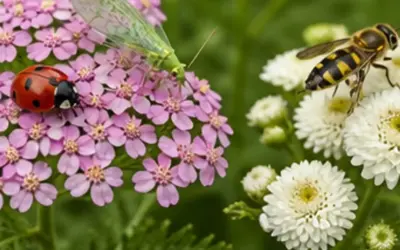
Los métodos de control de babosas también deben considerarse teniendo en cuenta los insectos beneficiosos y los polinizadores que comparten el jardín. Por lo general, las barreras físicas afectan menos a los insectos no objetivo que los cebos esparcidos, pero cualquier producto debe utilizarse de acuerdo con su etiqueta para evitar efectos no deseados sobre la vida beneficiosa del jardín.
Errores habituales que conviene evitar
Un error habitual es suponer que cualquier cebo etiquetado para el control de babosas es automáticamente seguro para las mascotas sin comprobar la lista de ingredientes. Otro consiste en aplicar una barrera una sola vez y esperar que dure toda la temporada de cultivo sin mantenimiento. Regar en exceso los bancales también puede anular la eficacia de los métodos de barrera secos, como la tierra de diatomeas, ya que debe mantenerse seca para funcionar.
Mantenimiento y normativa local
Algunos productos para el control de babosas están sujetos a restricciones locales o regionales, especialmente los que contienen metaldehído, por lo que conviene consultar la normativa local antes de comprarlos. El mantenimiento habitual, como volver a aplicar las barreras después de la lluvia y retirar refugios para babosas, como los restos del jardín, suele ser más importante para obtener resultados a largo plazo que el producto concreto elegido.
Metodología de investigación y confianza
Nuestro proceso para esta guía comenzó examinando posibles productos según el tema específico de cómo controlar las babosas sin dañar a las mascotas y la categoría Plagas y fauna del jardín. Cualquier producto que no abordara claramente tanto el control de babosas como la seguridad para mascotas quedó excluido, en lugar de sustituirse por un artículo de control de plagas no relacionado.
Para los productos que sí coinciden con un tema como este, nuestro enfoque normalmente implica comparar las especificaciones indicadas, los ingredientes activos y el lenguaje de la etiqueta, además de revisar los comentarios de los propietarios en busca de patrones relacionados con la facilidad de uso, la necesidad de volver a aplicar el producto y las experiencias comunicadas sobre la seguridad para mascotas. Se trata de un análisis basado en la investigación de datos de productos disponibles públicamente y comentarios de propietarios, no de pruebas prácticas realizadas en un jardín.
Los factores de clasificación para esta categoría hacen hincapié en la información documentada sobre la seguridad para mascotas, la claridad del ingrediente activo o del método de control y la adaptación práctica a jardines pequeños o bancales cercanos a los lugares donde pasan tiempo las mascotas, en lugar de las valoraciones genéricas por estrellas. Esta guía fue revisada y actualizada durante agosto de 2026 para mantener actualizados los consejos de compra.
Recomendaciones finales
Después de examinar los datos de los productos proporcionados según el tema de cómo controlar las babosas sin dañar a las mascotas, no había productos disponibles que coincidieran claramente con este tema y categoría específicos. En lugar de recomendar artículos que no se ajustan al uso de control de babosas seguro para mascotas, esta guía se centra en los factores de decisión anteriores para que puedas evaluar cualquier producto que encuentres utilizando los mismos criterios.
Cuando compares opciones por tu cuenta, prioriza los productos con un ingrediente activo claramente indicado, información explícita del fabricante sobre la seguridad para mascotas y un método de control, ya sea una barrera física o un cebo etiquetado, que se adapte al grado de interacción de tus mascotas con los bancales.
Preguntas frecuentes
¿Cuál es la forma más segura de controlar las babosas sin dañar a las mascotas?
Las barreras físicas, como la cinta de cobre o las cáscaras de huevo trituradas alrededor de las plantas vulnerables, suelen considerarse un punto de partida de menor riesgo que los cebos, ya que no implican un producto ingerible con el que las mascotas puedan entrar en contacto. Lee siempre por completo la etiqueta de cualquier producto y sigue las instrucciones de seguridad del fabricante antes de utilizarlo.
¿Cómo elijo un producto para el control de babosas seguro para mascotas?
Comprueba la lista de ingredientes activos y busca información explícita del fabricante sobre la seguridad para mascotas, en lugar de basarte en afirmaciones generales de marketing. Comparar cómo debe colocarse el producto alrededor de los bancales y si necesita mantenerse seco o volver a aplicarse después de la lluvia también puede ayudarte a valorar hasta qué punto se adapta a tu jardín.
¿Es necesario volver a aplicar a menudo las barreras contra babosas?
Muchas barreras físicas, como la tierra de diatomeas, pierden eficacia cuando se mojan, por lo que normalmente hay que volver a aplicarlas después de la lluvia o el riego. Prever este mantenimiento habitual forma parte de una gestión realista del control de babosas seguro para mascotas.
¿Son eficaces los productos seguros para mascotas contra las babosas en jardines pequeños?
Los jardines pequeños y los patios pueden beneficiarse de una colocación específica alrededor de determinadas plantas en lugar de una aplicación amplia, lo que también limita la cantidad de producto a la que se exponen las mascotas. Concentrar las barreras o trampas directamente alrededor de las plántulas y hostas vulnerables suele ser más práctico que tratar todo el jardín.
¿Pueden los productos para el control de babosas dañar a los insectos beneficiosos?
Algunos cebos esparcidos pueden afectar a los insectos no objetivo, por lo que conviene comprobar la información de la etiqueta para conocer cualquier impacto indicado sobre la vida beneficiosa del jardín. Los métodos de barrera física suelen tener un alcance más limitado, pero seguir las instrucciones de la etiqueta sigue siendo importante independientemente del método elegido.
¿Debo consultar la normativa local antes de utilizar cebo para babosas?
Sí, algunos ingredientes para el control de babosas están restringidos o regulados en determinadas zonas, por lo que consultar la normativa local antes de comprar es una precaución razonable. Esto es especialmente relevante si estás considerando un cebo químico en lugar de un método de barrera física.
¿Qué debo hacer si mi mascota queda expuesta a un producto para el control de babosas?
Sigue las instrucciones de la etiqueta del fabricante para los incidentes de exposición y contacta con un veterinario de inmediato si te preocupa la salud de tu mascota. Tener a mano el envase original del producto puede ayudar al veterinario a identificar los ingredientes exactos implicados.
Continúa tu investigación de jardinería
Consulta más guías prácticas en Plagas y fauna del jardín.
Descubre cómo Dove Creek Gardens investiga y compara productos.