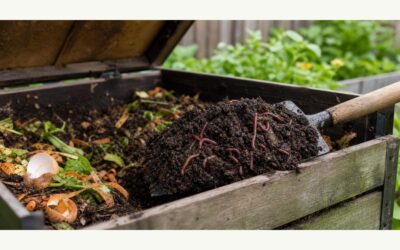



Le aiuole rialzate possono asciugarsi più rapidamente rispetto al terreno del giardino direttamente in piena terra, soprattutto lungo i bordi e durante la stagione calda. Un affidabile misuratore di umidità per aiuole rialzate consente di controllare l’umidità sotto la superficie prima di annaffiare, evitando di basarsi soltanto sull’aspetto del primo centimetro di terreno.
Per questa guida di luglio 2026, abbiamo confrontato 24 prodotti presenti nell’elenco fornito e analizzato i dati disponibili relativi alla misurazione dell’umidità del terreno, all’utilità per le aiuole rialzate, alla leggibilità dei display, al tipo di sonda, al fabbisogno energetico e alla facilità d’uso per i principianti. Se stai ancora progettando la disposizione delle aiuole o dei contenitori, la nostra sezione Raised Beds & Planters può aiutarti ad abbinare gli strumenti al tuo spazio di coltivazione.
Le opzioni valide qui includono semplici misuratori analogici, tester di pH e umidità senza batterie, misuratori digitali del terreno multifunzione e tester con collegamento a un’app. La scelta giusta dipende dal fatto che tu voglia soltanto controlli rapidi dell’umidità oppure un quadro più completo del terreno che includa pH, temperatura, luce, fertilità, conducibilità o umidità dell’aria.
XLUX Long Probe Soil Moisture Meter for Checking Moisture in Deep Pots YAMRON CTY 4-in-1 Digital Soil Meter for Moisture, pH, Temperature, and Light Checks Antonki 2-Pack Soil Moisture Meter for Plants, Battery-Free Watering Checks SONKIR MS02 3-in-1 Soil Meter for Moisture, pH, and Light Checks Prices and availability can change. We may earn a commission from qualifying purchases.


Alcune schede qui sotto sono ancora in inglese; la traduzione è in revisione.
Pros
- Long probe is suited to deeper pots and containers.
- Large dial is designed for easy reading.
- Battery-free design simplifies routine use.
Cons
- It should not be left in soil for more than five minutes because the metal tip may gradually corrode.
- The probe is not intended for very hard soil, water, or other liquids.
- Gardeners must wipe the probe clean after each use to help maintain it.
The XLUX Long Probe Plant Soil Moisture Meter is a battery-free soil-checking tool for indoor and outdoor gardening. It is designed to identify whether soil is dry, moist, or wet below the surface, making it useful for homeowners caring for plants in deeper pots, containers, or garden soil.
Its main benefit is access to moisture that may not be visible from the top layer. The listed probe is 5.5 inches longer than regular styles, and the product size is given as 40 cm, so it can reach farther into larger flower pots. This may help reduce watering decisions based only on dry-looking surface soil.
The meter uses a single probe and a large dial with three zones and ten scales. The dial is intended to be easy to read, while the single-probe design may cause less root and soil disturbance than meters with multiple probes. No assembly or batteries are indicated in the supplied product information.
For patio containers, indoor houseplants, raised beds, and other small-space growing areas, insert the probe into the soil and read the dial immediately. Checking at different depths can be useful when the surface appears dry but the lower soil may still retain moisture, or when the top feels damp but deeper soil needs attention.
The meter has important use limits. Do not force it into very hard soil, use it to test water or other liquids, or leave it in the soil for more than five minutes, since the metal tip may gradually corrode. Wipe the probe clean after testing. It is a sensible option for gardeners who want simple, battery-free moisture checks, while those needing measurements for liquids or hard, compacted soil should consider a different tool.
Best For / Avoid If
Best for buyers prioritizing
- Long probe is suited to deeper pots and containers.
- Large dial is designed for easy reading.
- Battery-free design simplifies routine use.
Consider another option if
- It should not be left in soil for more than five minutes because the metal tip may gradually corrode.
- The probe is not intended for very hard soil, water, or other liquids.
- Gardeners must wipe the probe clean after each use to help maintain it.
Pros
- Combines moisture, pH, temperature, and light readings in one compact garden tool.
- Large backlit screen and visual display design are beginner-friendly compared with small analog gauges.
- Lightweight listed weight of 120 grams should make it easy to carry between pots, beds, and outdoor planting areas.
- Suitable for both indoor and outdoor plant checks according to the product information.
Cons
- Requires four AAA batteries, and they are not included.
- Cannot be used directly in liquid, and forcing the probe into very dry, hard soil may damage the tester according to the instructions.
- For pH and moisture checks, the product instructions call for readings from at least five soil locations, so careful testing takes more time than a single probe reading.
The YAMRON CTY 4-in-1 Digital Soil Meter is made for gardeners who want a quick way to check basic growing conditions before watering, moving plants, or evaluating soil. It measures soil moisture, pH, temperature, and sunlight intensity, which makes it useful for houseplants, patio containers, raised beds, outdoor garden rows, succulents, and general backyard planting.
Based on the listed features, the main benefit is convenience. Instead of relying only on touch or guesswork, gardeners can use the probe and display to compare moisture levels, soil temperature, pH readings, and available light. This can be especially helpful for newer growers who are learning that different plants dry out at different rates and may respond differently to light exposure.
The design includes a large LCD screen with a white backlight, plus a 45-degree rotating head for easier viewing. The unit is listed at 2.36 inches wide by 12.6 inches high and weighs 120 grams, so it should be simple to carry between containers or garden beds. It uses four AAA 1.5V batteries, which are not included, and the product information notes a low-battery alert.
For use, the instructions say to insert the probe about 4 inches, or 10 cm, into soil and wait about 10 seconds for a reading. For soil pH and moisture, the manufacturer recommends checking at least five locations and averaging the results, which is a sensible approach because moisture and pH can vary across a bed or pot. The listed temperature range is 32 to 122 degrees Fahrenheit, with a stated temperature accuracy of 1.8 degrees Fahrenheit.
There are a few important cautions. This tester should not be used directly in liquids, and the product information warns not to insert it into very dry, hard soil. If the soil is too dry, the instructions recommend watering the test area and waiting 10 minutes before testing to avoid damaging the machine. As with any home soil meter, it is best used as a practical garden guide rather than a substitute for a professional laboratory soil test when exact nutrient or pH analysis is required.
This YAMRON meter is a good fit for homeowners, container gardeners, and beginners who want readable digital feedback for everyday plant care decisions. Gardeners who need lab-level soil analysis, battery-free operation, or a tool designed for direct liquid testing should consider a different type of testing method.
Best For / Avoid If
Best for buyers prioritizing
- Combines moisture, pH, temperature, and light readings in one compact garden tool.
- Large backlit screen and visual display design are beginner-friendly compared with small analog gauges.
- Lightweight listed weight of 120 grams should make it easy to carry between pots, beds, and outdoor planting areas.
Consider another option if
- Requires four AAA batteries, and they are not included.
- Cannot be used directly in liquid, and forcing the probe into very dry, hard soil may damage the tester according to the instructions.
- For pH and moisture checks, the product instructions call for readings from at least five soil locations, so careful testing takes more time than a single probe reading.
Pros
- Simple dial operation is accessible for beginners and gardeners who prefer no digital controls.
- Useful for checking moisture in indoor pots, outdoor containers, and garden soil.
- Compact, lightweight design and battery-free operation make it easy to keep available.
- Two meters provide convenient coverage for separate plants or growing areas.
Cons
- It is intended for soil use only and should not be used to test water or other liquids.
- A manual probe reading checks the spot where it is inserted, so gardeners may need multiple readings in uneven soil.
- Gardeners who need recorded readings, automatic alerts, or broader moisture mapping may prefer a more advanced sensor.
The Antonki 2-pack is a manual soil moisture meter for checking whether garden or potting soil is dry, moist, or wet before watering. It is a practical fit for beginners, indoor plant owners, patio gardeners, and homeowners who want a straightforward alternative to judging moisture by appearance alone.
Its main benefit is the quick, readable dial. The color-coded zones identify dry, moist, and wet conditions, while the 10-scale display provides more detail than a simple yes-or-no indicator. The product information indicates that the pointer responds once the probe has full contact with the soil, helping users make watering decisions with less guesswork.
Using it requires three basic steps: remove the probe protector, insert the probe near the roots with full soil contact, and read the dial after the pointer settles. The listed 7.6-inch probe is intended to reach deeper root areas, and the single-probe design may disturb less soil than a bulkier double-probe style. No batteries, settings, or assembly are required.
For container plants, the meter can help identify whether the upper soil is dry while lower areas remain wet. In raised beds or outdoor planting areas, checking more than one location may reveal uneven watering. The two-pack also allows separate meters to remain in different rooms, containers, or garden sections for convenient spot checks.
This is a soil-only tool, not a liquid or water tester. Because it measures the spot where it is inserted, gardeners may need to check several locations when moisture is uneven. Wipe the probe clean after each reading and use it carefully near roots. Overall, it is a simple option for routine moisture checks, while gardeners seeking automatic monitoring, alerts, or stored data should consider a different type of sensor.
Best For / Avoid If
Best for buyers prioritizing
- Simple dial operation is accessible for beginners and gardeners who prefer no digital controls.
- Useful for checking moisture in indoor pots, outdoor containers, and garden soil.
- Compact, lightweight design and battery-free operation make it easy to keep available.
Consider another option if
- It is intended for soil use only and should not be used to test water or other liquids.
- A manual probe reading checks the spot where it is inserted, so gardeners may need multiple readings in uneven soil.
- Gardeners who need recorded readings, automatic alerts, or broader moisture mapping may prefer a more advanced sensor.
Pros
- Measures three common plant-care factors: soil moisture, soil pH, and sunlight level.
- Does not require batteries, charging, or digital setup.
- Compact and lightweight for use around indoor plants, outdoor containers, raised beds, gardens, and lawns.
- Simple switch-based operation makes it approachable for beginner gardeners.
- Product instructions clearly outline cleaning and soil-use precautions.
Cons
- Not intended for testing water or other liquids, including liquid pH readings.
- Very dry or very hard soil may prevent movement of the indicator or risk damaging the probes if forced.
- Gardeners needing laboratory-level pH accuracy may prefer a dedicated soil test kit or professional soil analysis.
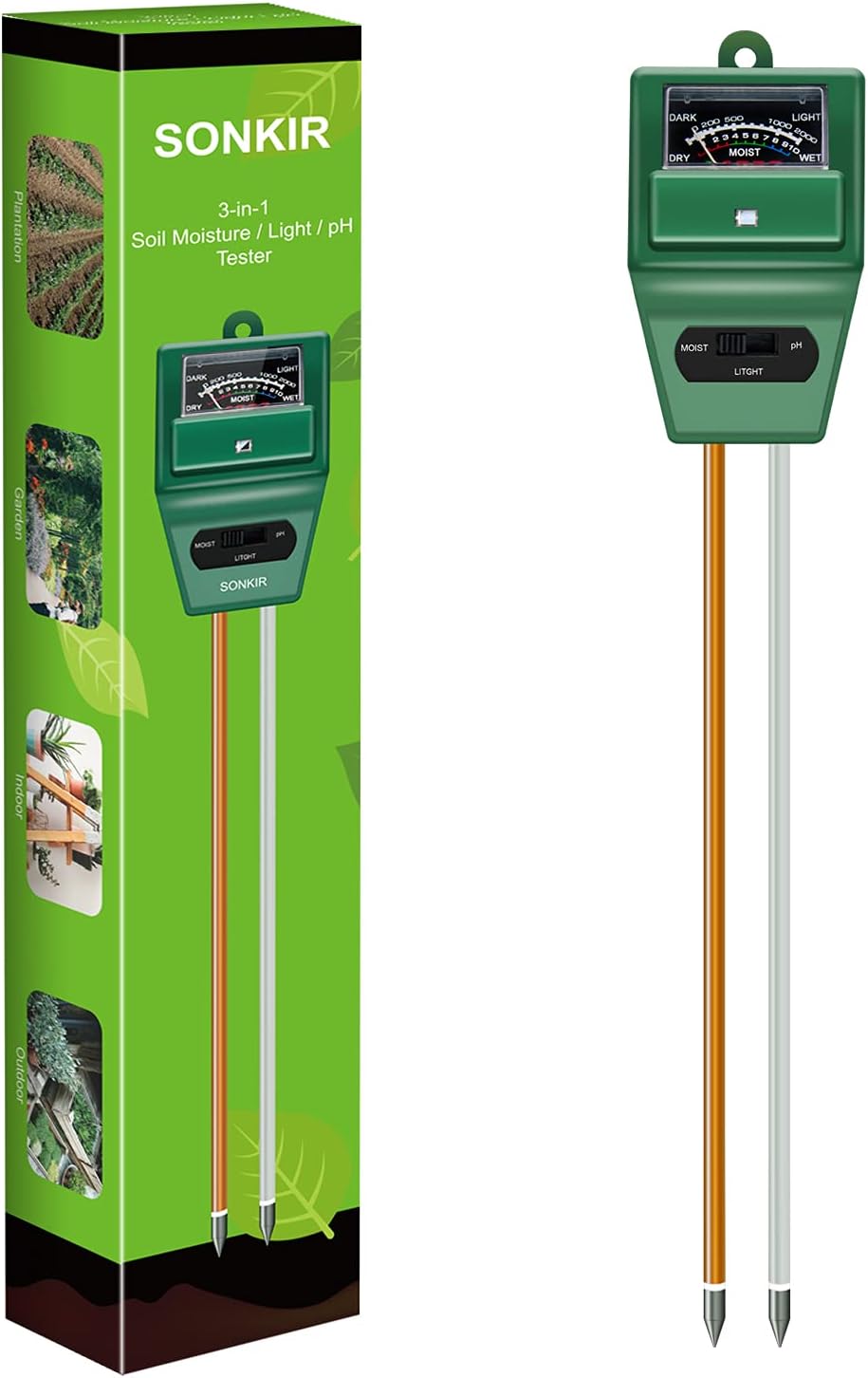
The SONKIR MS02 is a 3-in-1 soil meter made for checking soil moisture, soil pH, and sunlight level with a single analog dial. It is intended for practical plant care rather than lab-grade testing, making it a useful fit for homeowners, houseplant keepers, patio gardeners, and beginners who want a quick reference before watering or moving plants.
Its most useful everyday role is helping reduce guesswork around watering. The moisture scale runs from dry to wet, so gardeners can check below the surface instead of judging only by the top layer of soil. The pH function covers a listed range of 3.5 to 8, and the light setting can help compare growing spots for indoor plants, containers, vegetable beds, or lawn areas.
Based on the listed specifications, the meter measures 11.5 x 2 x 1.5 inches and weighs 2.89 ounces, so it should be easy to store with small garden tools or keep near a potting bench. The probe length is listed at 7.9 inches, and the instructions recommend inserting the probes about 6 to 7 inches into soil, then waiting about 10 minutes before reading the dial.
For small-space gardeners, this tool can be helpful when checking container soil that dries unevenly, comparing light levels on a windowsill, or monitoring raised-bed moisture after watering. In larger yards, it can serve as a quick reference for garden beds, lawns, and general soil checks, especially when plants show signs that water, light, or soil conditions may need attention.
There are important use limits to keep in mind. The product information says it is for soil only and should not be used to test pure water or other liquids. It also should not be forced into very hard soil or left in soil for long periods, and the probes should be wiped clean after each use. If the soil is extremely dry, the indicator may not move until the soil is watered before testing.
This is a sensible choice for gardeners who want a simple, battery-free way to gather basic soil-condition clues. Gardeners who need highly precise pH data for major soil amendments, crop planning, or diagnostic work may want to pair it with a more formal soil test, but for routine home plant care the MS02 offers a convenient starting point.
Best For / Avoid If
Best for buyers prioritizing
- Measures three common plant-care factors: soil moisture, soil pH, and sunlight level.
- Does not require batteries, charging, or digital setup.
- Compact and lightweight for use around indoor plants, outdoor containers, raised beds, gardens, and lawns.
Consider another option if
- Not intended for testing water or other liquids, including liquid pH readings.
- Very dry or very hard soil may prevent movement of the indicator or risk damaging the probes if forced.
- Gardeners needing laboratory-level pH accuracy may prefer a dedicated soil test kit or professional soil analysis.
Pros
- Simple moisture readings without batteries or charging
- Clear dial that is approachable for beginner gardeners
- Slim probe design may be less disruptive to roots than bulkier testers
Cons
- It is intended for soil only and should not be used to test liquids.
- The probe should be removed within five minutes and cleaned after use, so it is not designed for continuous placement.
- Gardeners needing measurements beyond moisture, such as soil pH or nutrients, would need a different type of meter.
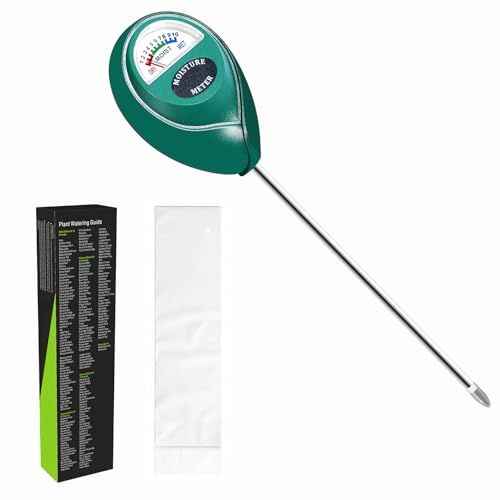
The XLUX Plant Soil Moisture Meter is a battery-free soil moisture tool for indoor containers and outdoor garden soil. It is intended to help gardeners decide when to water by checking moisture deeper in the soil, near the area where plant roots grow. The straightforward design should suit beginners, houseplant owners, and homeowners who want a quick reference before watering.
The main benefit is access to a moisture reading below the surface, where soil can be wetter or drier than it appears from the top. The large color-coded dial uses 10 Dry-Moist-Wet scales, giving users a simple visual guide rather than requiring them to judge moisture by appearance or touch alone. The product information indicates that the meter provides an immediate reading without batteries or charging.
The meter has a slim single probe and is listed at 26 cm in size, with a weight of 47 grams. Its 304 stainless steel probe is designed to slide into various soils with limited soil disturbance, which may be useful around plants with delicate roots. A protective sleeve is included for storage and helps protect the probe from abrasion when the meter is not in use.
In practical use, this meter could help check moisture in houseplant pots, containers on a patio, or sections of outdoor garden soil before watering. It may be especially useful when several plants have different moisture needs or when the soil surface does not reflect conditions deeper in the pot or garden bed.
Use the probe in soil only, not in liquids. The listed instructions recommend inserting it temporarily, reading the dial, and removing it within five minutes. Wipe the probe clean after use and store it in the protective sleeve. Because it measures moisture only, gardeners who also want pH, nutrient, or other soil readings should consider a more specialized instrument.
This is a sensible option for gardeners seeking a simple, reusable moisture check without batteries. It may be less suitable for anyone wanting a permanently installed sensor, automated watering control, or multi-function soil analysis tool.
Best For / Avoid If
Best for buyers prioritizing
- Simple moisture readings without batteries or charging
- Clear dial that is approachable for beginner gardeners
- Slim probe design may be less disruptive to roots than bulkier testers
Consider another option if
- It is intended for soil only and should not be used to test liquids.
- The probe should be removed within five minutes and cleaned after use, so it is not designed for continuous placement.
- Gardeners needing measurements beyond moisture, such as soil pH or nutrients, would need a different type of meter.

Pros
- Measures multiple soil and growing-condition indicators in one digital device.
- Backlit display with large numbers may be easier to read than basic needle-style meters, a point several reviewers commonly mention.
- Works for indoor and outdoor plant care, including gardens, beds, potted plants, and succulents according to the product information.
- Fast listed reading process, with the manufacturer describing about 10 seconds after inserting the probe.
- Lightweight design should be easy to carry between rooms, containers, and garden beds.
Cons
- AAA batteries are required but not included.
- The probe should not be forced into very dry or hard soil, so compacted beds may need light moistening and a wait before measuring.
- Gardeners who need laboratory-grade pH, nutrient, EC, or TDS results may prefer dedicated testing equipment.
The Buladeke 7-in-1 Digital Soil Tester is a probe-style meter made for routine plant checks around the home garden. Based on the listed features, it measures soil moisture, pH, temperature, light intensity, and fertility, with EC and TDS functions also included. It is a practical fit for beginners, houseplant collectors, patio gardeners, and homeowners who want a quick snapshot of growing conditions before watering or adjusting plant placement.
The main value is convenience. Instead of using separate tools for moisture, light, and basic soil-condition checks, this meter puts several readings on one digital display. For everyday gardening, moisture is likely the most useful function, especially for containers, succulents, and indoor plants where the soil surface can look dry while the root zone is still damp. The pH, fertility, temperature, and light readings can also help flag when a plant may need closer attention.
The product information highlights a large LCD screen with a white backlight, clear numbers, intuitive symbols, and a low-battery warning. It runs on 4 x 1.5V AAA batteries, which are not included. The listed package dimensions are 11.61 x 2.68 x 1.85 inches, and the item weight is 5.6 ounces, so it should store easily with small garden tools or on a potting bench.
For use, the manufacturer says to insert the probe about 10 cm into the soil and wait about 10 seconds for a reading. That makes it useful for checking several pots, raised-bed sections, or garden rows during a watering round. It can also help compare light levels in different areas, such as a windowsill, patio corner, greenhouse bench, or outdoor bed, when deciding where to place plants with different light needs.
There are a few important cautions. The product notes that the tester must not be used directly to measure liquids, and if soil is too dry or hard, the probe should not be forced in. The recommended approach is to moisten the test area slightly and wait 10 minutes before measuring to avoid damaging the device. As with most home soil meters, gardeners needing highly precise nutrient, pH, EC, or TDS data should consider follow-up testing with dedicated equipment.
Overall, this Buladeke meter looks most useful as a quick decision aid for everyday plant care rather than a professional lab instrument. It is a good match for growers who want easier watering judgment, clearer digital readings, and multiple plant-condition checks in one lightweight tool. Gardeners working in very compacted soil or those requiring calibrated scientific measurements may be better served by more specialized testing methods.
Best For / Avoid If
Best for buyers prioritizing
- Measures multiple soil and growing-condition indicators in one digital device.
- Backlit display with large numbers may be easier to read than basic needle-style meters, a point several reviewers commonly mention.
- Works for indoor and outdoor plant care, including gardens, beds, potted plants, and succulents according to the product information.
Consider another option if
- AAA batteries are required but not included.
- The probe should not be forced into very dry or hard soil, so compacted beds may need light moistening and a wait before measuring.
- Gardeners who need laboratory-grade pH, nutrient, EC, or TDS results may prefer dedicated testing equipment.
Pros
- No batteries are required, reducing routine upkeep and the risk of depleted power.
- Clear dashboard with a wide scale and large numbers may be easier for beginners and older gardeners to read.
- Compact, lightweight design suits houseplants and container gardening.
Cons
- The listed feature set focuses on soil moisture readings, and no pH measurement range or scale is provided.
- The probe should not be used in water, liquids, stone, or hard soil, which limits where it can be used.
- Users need to wipe the probe after use and avoid leaving it in soil for extended periods.
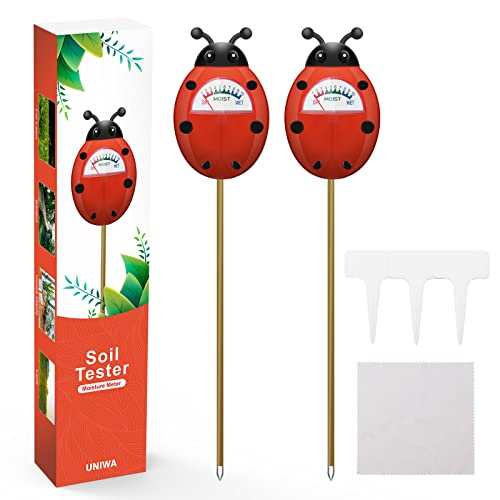
The UNIWA Ladybug Soil Moisture Meter is designed to help gardeners check whether soil needs water before reaching for a watering can. It is especially suited to houseplants, container plants, patio gardens, and beginners who want a simple visual aid for routine plant care.
Its moisture-focused design uses a probe and a pointer-style dashboard with large numbers and a wide scale. The product information indicates that the detection design is intended to improve reading speed and accuracy, which may make quick checks easier when several plants need attention.
The meter is described as battery-free and compact, with listed dimensions of 2.95 by 2.95 by 11.62 inches and a listed weight of about 0.28 pounds. There are no batteries, charging steps, or assembly requirements described, so the basic routine is to place the probe in appropriate soil and read the dashboard.
In a home garden, it can be moved from one container to another to compare moisture levels in houseplants, balcony pots, or small outdoor planters. The ladybug design may also make routine moisture checks more approachable for children participating in supervised gardening activities.
Care is important for continued use. The instructions say not to test stone, hard objects, water, or other liquids, and recommend wiping the probe clean after use and not leaving it inserted in soil for a long time. Gardeners seeking a dedicated, portable moisture check may find it useful, while those needing confirmed pH measurements or broader soil analysis should consider a tool with those specifications clearly provided.
Best For / Avoid If
Best for buyers prioritizing
- No batteries are required, reducing routine upkeep and the risk of depleted power.
- Clear dashboard with a wide scale and large numbers may be easier for beginners and older gardeners to read.
- Compact, lightweight design suits houseplants and container gardening.
Consider another option if
- The listed feature set focuses on soil moisture readings, and no pH measurement range or scale is provided.
- The probe should not be used in water, liquids, stone, or hard soil, which limits where it can be used.
- Users need to wipe the probe after use and avoid leaving it in soil for extended periods.

Pros
- Measures a broad set of growing conditions, including moisture, pH, fertility, light, soil temperature, air temperature, and humidity.
- Designed for both indoor and outdoor gardening uses, from houseplants to lawns and garden beds.
- LCD screen helps display temperature and humidity information clearly.
- Reviewers commonly mention that the readings are easy to understand and helpful for reducing guesswork around watering.
- Compact and lightweight enough for routine checks around pots, beds, and small growing spaces.
Cons
- Requires three batteries, and the product instructions indicate replacing or installing all three at the same time.
- It is not designed for testing liquid, so gardeners should only use it in soil as directed.
- The probe should not be forced into hard or very dry soil, since probe-style meters can be vulnerable to damage if pushed too aggressively.
The HSLGOVE 001 7-in-1 Soil Test Kit is a multipurpose soil meter made for everyday plant-care checks in home gardens, lawns, containers, and indoor growing spaces. Based on the product information, it measures soil moisture, pH, fertility, light, soil temperature, air temperature, and humidity, making it a practical choice for beginners who want a clearer picture of plant conditions before watering or fertilizing.
Its main benefit is convenience. Instead of relying only on finger tests or guessing from plant appearance, gardeners can insert the probe into soil and switch modes to check several key conditions. Moisture readings are especially useful for houseplants and containers, where overwatering is a common problem. The pH and fertility functions can also help guide general soil-care decisions, though gardeners making major amendments may still want a lab or dedicated soil test for confirmation.
The design combines a dial-style soil meter with an LCD display for temperature and humidity information. The listed probe length is about 6.8 inches, which should be useful for medium to large potted plants and many garden-bed checks. The product measures 11.5 x 2.9 x 1.5 inches and weighs 4.8 ounces, so it should be easy to store in a drawer, potting bench, greenhouse shelf, or small garden tote.
For everyday use, this meter fits a wide range of small-space and backyard tasks. A patio gardener could compare moisture levels between containers, a raised-bed gardener could check whether different areas are drying unevenly, and an indoor plant grower could use the light meter to evaluate plant placement. The air temperature and humidity readings may also be useful around seedlings, houseplants, or protected growing areas where conditions change quickly.
There are a few important cautions. The product information says this is not a water moisture meter, so it should not be used to test liquid. It also requires three batteries, and the instructions note that all three should be replaced or installed each time. As with any probe-style soil meter, it is wise to loosen very hard or dry soil first and insert the probe gently rather than forcing it, which can help reduce the chance of damaging the shaft or disturbing roots.
This is a sensible pick for gardeners who want an easy, all-in-one reference tool for routine plant care rather than a professional soil analysis device. Gardeners who need highly detailed nutrient reporting, laboratory-grade pH confirmation, or rugged field equipment for compacted farm soil may prefer a more specialized testing method.
Best For / Avoid If
Best for buyers prioritizing
- Measures a broad set of growing conditions, including moisture, pH, fertility, light, soil temperature, air temperature, and humidity.
- Designed for both indoor and outdoor gardening uses, from houseplants to lawns and garden beds.
- LCD screen helps display temperature and humidity information clearly.
Consider another option if
- Requires three batteries, and the product instructions indicate replacing or installing all three at the same time.
- It is not designed for testing liquid, so gardeners should only use it in soil as directed.
- The probe should not be forced into hard or very dry soil, since probe-style meters can be vulnerable to damage if pushed too aggressively.
Pros
- Combines four useful readings in one monitoring system.
- Wireless range and multi-sensor support can simplify care across several growing areas.
- The listed probe design is waterproof and corrosion-resistant for use in real soil.
Cons
- The supplied information does not specify battery life, charging method, or replacement requirements.
- Calibration instructions and measurement ranges are not provided, so gardeners seeking detailed setup guidance may need to confirm those details before purchase.
- A connected sensor system may be more equipment than needed for someone who only checks one or two plants occasionally.
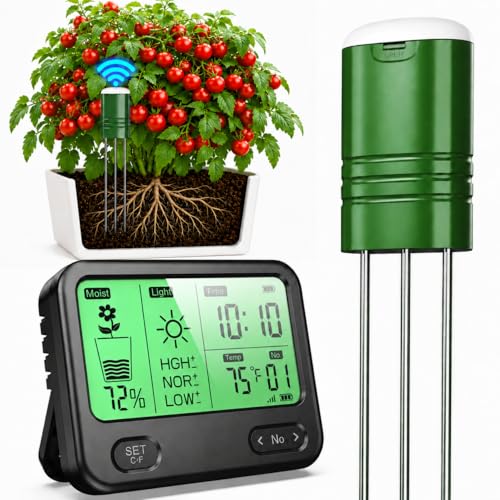
The EDGEVEIL is a wireless soil monitoring system for houseplants, containers, garden beds, lawns, and other planted areas. It measures soil moisture, temperature, light, and time, making it best suited to gardeners who want more information than a simple moisture-only probe provides.
Its main growing-use benefit is helping gardeners base watering decisions on a soil reading rather than relying only on surface appearance. The listed low-moisture flashing reminder can draw attention to plants that need checking, while the four-in-one display provides additional context about the growing environment.
The feature set is designed for low-interruption monitoring. The probe can remain inserted in the soil, and the wireless display can receive readings from up to 328 feet according to the product information. A large screen is intended to make the readings easier to view, and one display can connect with up to 12 sensors.
This setup could be useful for a home with plants spread across rooms, a balcony, patio containers, raised beds, or a small garden. Remote monitoring may be especially convenient when the display is kept indoors while sensors are placed outside, although the listing does not explain how walls or other obstacles affect the stated wireless range.
The probe is described as waterproof and corrosion-resistant, but the supplied information does not provide battery details, calibration instructions, measurement ranges, or specific cleaning guidance. Avoid forcing any probe into hard, rocky, or compacted soil, and follow the manufacturer’s instructions for installation and care.
This meter is a sensible choice for gardeners who want centralized readings across multiple plants and prefer a visible reminder when moisture is low. Someone caring for only a few plants, or anyone needing documented calibration procedures and detailed technical specifications, may prefer to compare other options before deciding.
Best For / Avoid If
Best for buyers prioritizing
- Combines four useful readings in one monitoring system.
- Wireless range and multi-sensor support can simplify care across several growing areas.
- The listed probe design is waterproof and corrosion-resistant for use in real soil.
Consider another option if
- The supplied information does not specify battery life, charging method, or replacement requirements.
- Calibration instructions and measurement ranges are not provided, so gardeners seeking detailed setup guidance may need to confirm those details before purchase.
- A connected sensor system may be more equipment than needed for someone who only checks one or two plants occasionally.
Pros
- Simple color-coded scale is approachable for beginner gardeners.
- Requires no batteries or electrical power.
- Single-probe design may help limit disturbance around established roots.
- Suitable for checking soil in several common growing settings.
Cons
- It is intended for soil testing only and should not be placed in liquids.
- The probe may be less suitable for rocky or extremely hard soil, which can damage it.
- The product information does not specify a calibration process or a detailed measurement range beyond the ten-scale display.
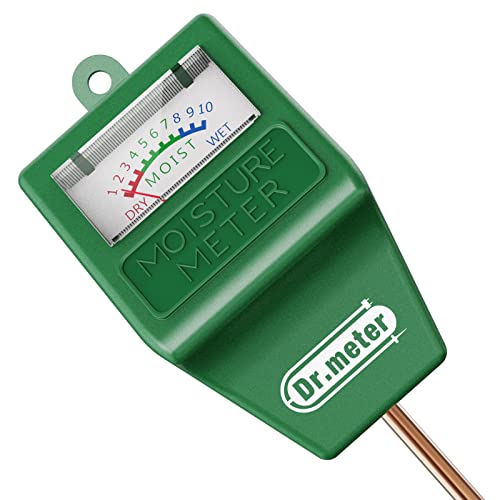
The Dr.meter Soil Moisture Meter is a handheld soil moisture gauge for checking whether garden soil, lawn soil, or houseplant soil may need water. It is aimed at beginners, homeowners, and gardeners who want a simple alternative to judging moisture by touch.
Its main benefit is a ten-scale reading system with red, green, and blue color zones. Based on the listed features, this visual format is intended to make moisture checks easier to understand and can help reduce guesswork during routine watering.
The meter uses a single probe and requires no batteries or electricity. Its listed dimensions are 13 x 4 x 1.6 inches, and its weight is 0.17 pounds, so the lightweight design should be easy to move between plants and store with other gardening tools. No assembly is indicated in the supplied product information.
In a home garden, the meter can be used to check soil around houseplants, lawn areas, garden beds, and other soil-based growing spaces. It may also be useful for gardeners who prefer not to disturb much soil when checking moisture near established plants.
The probe is designed only for soil testing and should not be used in liquids. Keep it away from rocks and extremely hard soil to help avoid damage, and clean the probe after each use. Gardeners who want a basic, battery-free moisture check may find it suitable, while those needing documented calibration details or more specialized measurement functions should consider a different type of meter.
Best For / Avoid If
Best for buyers prioritizing
- Simple color-coded scale is approachable for beginner gardeners.
- Requires no batteries or electrical power.
- Single-probe design may help limit disturbance around established roots.
Consider another option if
- It is intended for soil testing only and should not be placed in liquids.
- The probe may be less suitable for rocky or extremely hard soil, which can damage it.
- The product information does not specify a calibration process or a detailed measurement range beyond the ten-scale display.

Pros
- Covers a wide range of common soil and environmental checks in one unit.
- LCD display includes air and soil temperature and air humidity information.
- Metal probes are intended to support responsive moisture and pH detection.
- Suitable for many home gardening and small-scale growing situations.
Cons
- The supplied information does not specify measurement ranges, calibration procedures, dimensions, or power details.
- It is not intended for testing water or other liquids and may be less suitable for rocky, sandy, or very loose soil.
- The probe requires careful handling, cleaning, and drying, and should not be left in soil for extended periods.
The Auduto 7-in-1 soil test kit is a multi-function soil meter for gardeners who want a broader view of growing conditions without using several separate basic tools. It is designed to check soil moisture, pH, fertility, sunlight intensity, soil temperature, air temperature, and air humidity, making it a practical match for beginners, houseplant owners, lawn-care users, and small garden growers.
Its main benefit is the combination of soil and air information in one unit. Moisture and pH readings can help guide watering and soil-adjustment decisions, while sunlight intensity, soil temperature, air temperature, and humidity provide additional context when plants are struggling or conditions are changing. The listed feature set suggests a convenient way to compare growing areas and monitor seedlings or established plants.
The unit uses metal probes and an LCD display. Based on the product information, the metal construction is intended to improve conductivity, sensitivity, and corrosion resistance during moisture and pH detection. No dimensions, calibration instructions, assembly requirements, battery details, or specific measurement ranges are provided, so gardeners should review the included instructions for operating and maintaining those functions.
This tester can be used in potted plants, vegetable gardens, flower beds, lawns, rice planting, greenhouse soil, and other soil-based growing settings. It may be especially useful when checking several locations, such as comparing a sunny patio container with a shaded bed, or reviewing moisture conditions in different parts of a lawn or garden.
Use it only in soil, not in water or other liquids. The supplied guidance recommends avoiding rocks and excessively hard soil, using caution in sandy or loose soil, inserting the probe about two-thirds of its length, and avoiding force. Keep the probe clean and dry before and after use, do not leave it in soil for a long time, and do not repeatedly measure the same spot. It is a reasonable choice for beginners wanting multiple basic indicators in one device, while gardeners needing documented measurement ranges or advanced calibration controls may prefer a more specialized meter.
Best For / Avoid If
Best for buyers prioritizing
- Covers a wide range of common soil and environmental checks in one unit.
- LCD display includes air and soil temperature and air humidity information.
- Metal probes are intended to support responsive moisture and pH detection.
Consider another option if
- The supplied information does not specify measurement ranges, calibration procedures, dimensions, or power details.
- It is not intended for testing water or other liquids and may be less suitable for rocky, sandy, or very loose soil.
- The probe requires careful handling, cleaning, and drying, and should not be left in soil for extended periods.

Pros
- Combines four basic soil and light checks in one handheld meter.
- Large dial should be easier to read than a smaller traditional soil hygrometer.
- No battery is required, making it convenient for occasional indoor and outdoor checks.
- Useful across houseplants, pots, lawns, composting, ornamental landscapes, and small trees.
Cons
- The probe should not be used in water, slurry, liquid, plant ash, hard soil, red clay soil, or other unsuitable materials listed by the manufacturer.
- It requires careful placement, including compacting surrounding soil and keeping the sensor away from the bottom of a pot.
- Gardeners needing laboratory-style soil analysis or documented calibration may prefer a more specialized testing method.
The AiGerdinn 4-in-1 soil tester is a handheld tool for checking basic growing conditions around houseplants, containers, lawns, garden beds, small trees, and composting areas. It is aimed at homeowners and beginner to intermediate gardeners who want a quick indication of soil moisture, pH, nutrient level, and sunlight without using several separate meters.
Its main practical benefit is combining four checks in one battery-free device. The product information indicates that readings appear immediately on the oversized dial, giving gardeners a simple reference before watering, adding fertilizer, or investigating possible soil pH issues. These readings can support routine decisions, but they should not be treated as a substitute for laboratory soil analysis.
The tester uses a single probe and a 1.95-inch dial. To use it, the listed instructions call for moistening the soil first, inserting the probe about 2.5 to 3 inches deep, compacting the surrounding soil, and switching the control to the desired reading. In pots, the sensor should not reach the bottom, which helps avoid an improper reading and reduces the chance of pressing too deeply near roots.
For patio containers and houseplants, the meter can provide a quick check before a watering routine is repeated. In lawns, raised beds, mixed soil, ornamental landscapes, or small planting areas, it may help identify differences between locations. The portable design also makes it easy to keep in a drawer or storage box when it is not needed.
Use requires attention to the listed restrictions. Do not test while watering, and avoid water, slurry soil, liquid, red clay soil, hard soil, plant ash, and other unsuitable materials identified by the product information. Clean handling and careful insertion are sensible precautions for any soil probe. This is a convenient general-purpose meter for everyday observations, while gardeners who need documented precision, calibration details, or formal nutrient testing should consider a specialized soil testing service or instrument.
Best For / Avoid If
Best for buyers prioritizing
- Combines four basic soil and light checks in one handheld meter.
- Large dial should be easier to read than a smaller traditional soil hygrometer.
- No battery is required, making it convenient for occasional indoor and outdoor checks.
Consider another option if
- The probe should not be used in water, slurry, liquid, plant ash, hard soil, red clay soil, or other unsuitable materials listed by the manufacturer.
- It requires careful placement, including compacting surrounding soil and keeping the sensor away from the bottom of a pot.
- Gardeners needing laboratory-style soil analysis or documented calibration may prefer a more specialized testing method.

Pros
- Long 15-inch stem can help assess moisture below the surface.
- Adjustable 0-10 scale offers a straightforward moisture reference.
- Stainless steel construction is a practical choice for soil and compost work.
Cons
- Gardeners needing readings from a specific digital percentage or a broader measurement display may prefer a different meter.
- The supplied specifications do not identify water resistance, an automatic shutoff, or storage protection, so care requirements are not fully detailed.
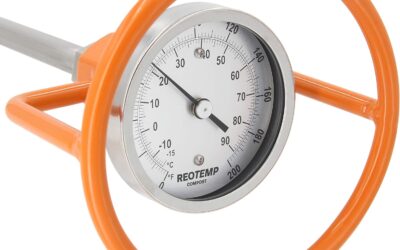
The REOTEMP 15-inch Garden and Compost Moisture Meter is designed for checking moisture in soil, compost, plants, farm areas, and lawns. Its straightforward format makes it a practical fit for home gardeners, composters, schools, and community programs that want a quick moisture reference without relying only on visual judgment.
The meter uses a 0-10 wetness scale and provides instant readings. The product information also identifies it as user calibratable, which gives gardeners a way to adjust the meter for their preferred checking routine. These features can help compare moisture conditions between containers, garden beds, compost, and other growing areas.
Its 15-inch stem has a listed 5/16-inch diameter and is made from stainless steel. The extended length can help reach farther into compost or below the surface of a planting area, while the 0.62-pound weight keeps the tool relatively manageable for routine checks. Operation is powered by one included AAA battery.
In a backyard garden, the meter could be used to check moisture in raised beds, containers, lawn areas, or compost before deciding whether additional water or attention is needed. The long stem may also be useful where surface conditions do not represent the moisture deeper in the material, although the supplied information does not specify a particular depth or coverage area beyond the 15-inch stem.
Because this is a moisture meter rather than a complete soil-analysis tool, it does not provide supplied information about nutrients, pH, temperature, or other growing conditions. The specifications also do not state whether the unit is waterproof or include detailed cleaning and storage guidance, so users should follow the manufacturer's care instructions and avoid assuming it can be left outdoors. Overall, it is a sensible option for gardeners who want a simple, reusable moisture check and a longer reach into soil or compost.
Best For / Avoid If
Best for buyers prioritizing
- Long 15-inch stem can help assess moisture below the surface.
- Adjustable 0-10 scale offers a straightforward moisture reference.
- Stainless steel construction is a practical choice for soil and compost work.
Consider another option if
- Gardeners needing readings from a specific digital percentage or a broader measurement display may prefer a different meter.
- The supplied specifications do not identify water resistance, an automatic shutoff, or storage protection, so care requirements are not fully detailed.

Pros
- Battery-free operation reduces routine maintenance and keeps the tool ready to use.
- Compact size and low weight make it convenient for checking multiple plants.
- The probe-and-read design is accessible for beginners and everyday watering decisions.
Cons
- It is intended only for soil testing, so it cannot measure water or other liquids.
- The probe should not be left in soil for long periods, which requires removal after checking.
- It may be less suitable for extremely hard soil or gardeners who need additional measurements such as light or pH.
The Gouevn Soil Moisture Meter is a basic soil-testing tool for checking whether growing media is dry or moist before watering. Its simple format is well suited to houseplant owners, container gardeners, and homeowners who want a quick reading without managing batteries or electronic settings.
The feature set emphasizes straightforward use: place the probe in the soil area being checked and read the large dial. This can make watering decisions easier for gardeners caring for several plants, since each pot or garden area can be checked individually rather than relying only on memory or a fixed schedule.
Based on the listed specifications, the meter measures 2.02 by 2.02 by 1.3 inches and weighs about 0.18 pounds. Its compact, lightweight design should be convenient to carry between pots, raised beds, lawns, greenhouse areas, and other planting spaces. No assembly, electrical connection, or battery replacement is indicated.
For practical use, it can help compare moisture conditions in indoor containers, patio planters, vegetable beds, garden soil, and greenhouse plantings. The product information also notes a watering guide printed on the back of the packaging, which may offer a useful starting point for beginners, although watering needs still vary by plant, soil, container, and weather.
This meter is designed only for soil testing and should not be placed in water or other liquids. The probe should be removed after checking because leaving it in soil for a long time can damage the sensor, and extremely hard soil should be avoided. It is a sensible choice for simple moisture checks, while gardeners seeking soil pH, light, or other readings should consider a different type of meter.
Best For / Avoid If
Best for buyers prioritizing
- Battery-free operation reduces routine maintenance and keeps the tool ready to use.
- Compact size and low weight make it convenient for checking multiple plants.
- The probe-and-read design is accessible for beginners and everyday watering decisions.
Consider another option if
- It is intended only for soil testing, so it cannot measure water or other liquids.
- The probe should not be left in soil for long periods, which requires removal after checking.
- It may be less suitable for extremely hard soil or gardeners who need additional measurements such as light or pH.

Pros
- Simple insert-and-read operation requires no assembly or battery.
- Useful across indoor and outdoor soil-checking tasks.
- The single probe may help limit disturbance around plant roots.
Cons
- It should not be placed in liquid or forced into soil that is too hard, which may limit where it can be used.
- The probe needs to be wiped clean after each use to help maintain subsequent reading accuracy.
- Gardeners wanting additional measurements, such as light or soil pH, may prefer a more multifunctional meter.
The SZHLUX Soil Moisture Meter is a basic soil hygrometer for checking whether growing media needs water. It is suited to homeowners, beginner gardeners, houseplant owners, and anyone managing containers, lawns, farm areas, or garden beds who wants a quick moisture check before watering.
The listed feature set indicates that the meter provides an immediate reading through a simple probe-and-dial design. This can help reduce guesswork and may help gardeners avoid watering when soil is already moist or delaying water when the soil is too dry.
Operation is straightforward: insert the probe into suitable soil and read the large dial. The meter is listed at approximately 10.23 inches in size, with dimensions of 10.3 by 2.3 by 1.4 inches and a weight of about 0.20 pounds. It does not require a battery, and the single-probe format may cause less disturbance around roots than digging into the soil.
For practical use, gardeners could check moisture in indoor pots, patio containers, raised beds, lawn areas, or other outdoor planting spaces. Its lightweight form should make it easy to carry between locations, while the clear dial is intended to support quick readings during routine plant care.
The manufacturer advises against using the meter in liquid or inserting it into soil that is too hard, and recommends wiping the probe clean after each use. It is a sensible choice for straightforward moisture checks, but gardeners needing measurements beyond moisture, such as pH or light, should consider a different type of soil meter.
Best For / Avoid If
Best for buyers prioritizing
- Simple insert-and-read operation requires no assembly or battery.
- Useful across indoor and outdoor soil-checking tasks.
- The single probe may help limit disturbance around plant roots.
Consider another option if
- It should not be placed in liquid or forced into soil that is too hard, which may limit where it can be used.
- The probe needs to be wiped clean after each use to help maintain subsequent reading accuracy.
- Gardeners wanting additional measurements, such as light or soil pH, may prefer a more multifunctional meter.

Pros
- Long 8-inch probe is practical for checking moisture deeper in soil.
- Memory and data-hold functions support more organized readings.
- Fast sampling and a 0 to 50% range suit frequent soil monitoring.
Cons
- Four AAA batteries are required and are not included.
- The longer probe may be less convenient in very shallow containers or tightly packed small planters.
- The listed accuracy specification means readings should be treated as measurement guidance rather than exact laboratory results.
The General Tools DSMM500 is a digital soil moisture meter designed to measure moisture content in soil. Its professional and agricultural positioning makes it a reasonable fit for gardeners, greenhouse growers, nursery work, and homeowners who want more information than a simple visual check can provide.
Based on the listed specifications, the meter measures from 0 to 50% and provides 0.1% resolution, with an accuracy specification of plus or minus 5% of the reading plus 5 digits. That range can help users compare moisture levels between areas and make watering decisions with more consistent information.
The heavy-duty 8-inch probe is the main design feature. It can reach below the soil surface, while the 0.8-second sampling time should keep routine checks moving quickly. Minimum and maximum memory, along with data hold, can help when readings need to be recorded or compared away from the display.
For backyard use, the DSMM500 could be useful when checking raised beds, larger containers, greenhouse soil, or different sections of a garden before watering. Its 1.5 by 1.5 by 14.5-inch dimensions and 0.7-pound weight give it a narrow, portable format, although the longer probe may be less convenient in shallow planters.
The IP65 water-resistance rating is relevant for damp soil work, but the supplied information does not describe the meter as waterproof, so it should be protected from unnecessary water exposure. Four AAA batteries are required and are not included. Readings should be interpreted as practical guidance within the stated accuracy limits.
This meter is best suited to gardeners and professional users who value quick digital readings, deeper probing, and memory functions. Someone seeking a simpler moisture check for occasional use may prefer a less feature-focused option, while users needing exact laboratory measurement should look for an instrument with specifications designed for that purpose.
Best For / Avoid If
Best for buyers prioritizing
- Long 8-inch probe is practical for checking moisture deeper in soil.
- Memory and data-hold functions support more organized readings.
- Fast sampling and a 0 to 50% range suit frequent soil monitoring.
Consider another option if
- Four AAA batteries are required and are not included.
- The longer probe may be less convenient in very shallow containers or tightly packed small planters.
- The listed accuracy specification means readings should be treated as measurement guidance rather than exact laboratory results.

Pros
- Combines four soil and light checks in one handheld meter.
- Rotating head supports easier reading from different positions.
- Does not require batteries, charging, or electrical setup.
Cons
- The probe should not be forced into hard soil, so compacted ground may need to be loosened first.
- It is not designed for testing water or other liquids.
- The meter should be wiped clean after use and should not be left inserted in soil for extended periods.
The Buladeke 4-in-1 soil meter is designed for gardeners who want a simple way to check growing conditions around the home. Its four modes cover soil moisture, pH, fertility, and light intensity, making it relevant for indoor containers, lawns, garden areas, farms, and greenhouses.
The main benefit is convenience. A slide switch lets you select the type of reading you want, and the dial displays data after the probe is inserted into the soil. These checks can help gardeners make more informed decisions about routine plant care, although the supplied information does not provide measurement ranges or calibration details.
The 45-degree rotating head is a useful ergonomic feature for reading the scale from a more comfortable position. The battery-free design also simplifies storage and portability, since the meter does not require charging or battery replacement before use.
For backyard and patio gardening, the meter can be moved between potted plants, lawn areas, greenhouse soil, and other planting locations. It may be especially useful for beginners or gardeners managing several types of growing spaces who prefer one handheld tool for multiple basic checks.
Use care when operating the probe. Do not force it into hard soil, use it to test water or other liquids, or leave it in soil for long periods. Wipe the probe clean before and after use. Based on the listed features, it is a practical choice for convenient spot checks, while gardeners needing detailed laboratory-style soil analysis or documented measurement specifications may prefer a more specialized instrument.
Best For / Avoid If
Best for buyers prioritizing
- Combines four soil and light checks in one handheld meter.
- Rotating head supports easier reading from different positions.
- Does not require batteries, charging, or electrical setup.
Consider another option if
- The probe should not be forced into hard soil, so compacted ground may need to be loosened first.
- It is not designed for testing water or other liquids.
- The meter should be wiped clean after use and should not be left inserted in soil for extended periods.

Pros
- Combines multiple plant-care measurements in one soil meter.
- App connectivity may make readings easier to track than a basic analog probe.
- Works for a wide range of indoor and outdoor growing situations listed by the manufacturer.
- Rechargeable Type-C interface is convenient for routine garden use.
- Care instructions are straightforward, including wiping the probe and storing it dry after use.
Cons
- Requires Bluetooth, app use, and phone permissions, which may not appeal to gardeners who prefer a simple no-app meter.
- Readings require inserting the probe for 1 to 2 minutes and syncing in the app, so it is not an instant glance tool.
- The product information does not list measurement ranges, calibration details, waterproof rating, or battery runtime.
The KGLLIFE 6-in-1 Soil Test Kit is a digital soil meter made for checking several common growing conditions in one device. According to the product information, it measures soil pH, soil moisture, soil temperature, conductivity, light intensity, and relative humidity of the surrounding environment. That makes it a practical option for houseplant owners, balcony gardeners, vegetable growers, greenhouse users, and homeowners trying to make more informed care decisions.
The main benefit is the broader view it gives compared with a basic moisture-only meter. Moisture can tell you whether the root zone is dry or wet, but pH, conductivity, temperature, light, and humidity can also affect plant performance. The listed feature set suggests it can help gardeners compare readings with a plant’s preferred range before changing watering, fertilizer, or lighting routines.
This meter connects to the SoilX app through Bluetooth. The listed setup instructions say to press and hold the power button for 3 seconds, enable Bluetooth and location permissions, connect in the app, insert the probe into soil for 1 to 2 minutes, and then press Sync for more stable readings. An LED indicator shows power, pairing, and connection status, which should help users understand what the device is doing during setup.
For small-space gardening, this type of tool can be useful when checking potted herbs, succulents, flowers, balcony containers, or indoor foliage plants that dry unevenly. Outdoors, the product information lists use in vegetable gardens, lawns, greenhouses, and small farms, including crops and plants such as tomatoes, corn, strawberries, flowers, and succulents. It may be especially helpful when comparing conditions across several beds or containers rather than guessing by surface appearance alone.
There are a few practical cautions. The metal probe should be inserted vertically and should not be forced into hard rocks or compacted hard soil. After use, the probe should be wiped clean and the device stored dry to help preserve it. Gardeners should also note that the supplied information does not provide measurement ranges, calibration instructions, waterproof rating, or battery runtime, so those details should be checked before relying on it for more technical growing decisions.
Overall, this KGLLIFE soil meter is a sensible fit for gardeners who want a rechargeable, app-connected tool for routine plant checks and basic decision support. Gardeners who dislike phone apps, need lab-level soil analysis, or want a meter with clearly published calibration and range specifications may prefer a different option.
Best For / Avoid If
Best for buyers prioritizing
- Combines multiple plant-care measurements in one soil meter.
- App connectivity may make readings easier to track than a basic analog probe.
- Works for a wide range of indoor and outdoor growing situations listed by the manufacturer.
Consider another option if
- Requires Bluetooth, app use, and phone permissions, which may not appeal to gardeners who prefer a simple no-app meter.
- Readings require inserting the probe for 1 to 2 minutes and syncing in the app, so it is not an instant glance tool.
- The product information does not list measurement ranges, calibration details, waterproof rating, or battery runtime.

Pros
- Works without batteries or electricity.
- Top-facing dial can improve readability for standing users.
- Suitable for indoor plants, gardens, lawns, farms, greenhouses, and large pots.
Cons
- It is designed for soil testing only and should not be used in water or other liquids.
- The probe may be less suitable for very hard, rocky, or compacted soil.
- Gardeners who need additional measurements such as pH, light, or nutrient levels will need a different type of testing tool.
The Jxikatx soil moisture meter is a simple probe-style tool for checking how much moisture is present in soil around a plant's roots. It is intended for houseplants, garden beds, lawns, farms, greenhouses, and larger containers, making it suitable for beginners and homeowners who want a clearer watering routine.
The product information indicates that the meter provides an immediate moisture reading after the probe is inserted. This can help gardeners decide whether a plant needs water instead of relying only on the appearance of the soil surface, which may dry at a different rate than the root area.
Its top-facing display is designed for easier viewing while standing, so users may not need to bend as far when checking pots, beds, or lawn areas. The single probe is also intended to reduce root disturbance compared with meters that use multiple probes, although careful placement is still important.
For practical use, gardeners can check individual houseplant pots, larger planters, garden soil, greenhouse containers, or selected lawn areas before watering. Because the meter does not require batteries or electricity, it can be used as needed in indoor and outdoor growing spaces without preparation beyond inserting the probe.
The meter should be used in soil only, not in water or other liquids. Avoid forcing the probe into very hard soil or stones, and wipe it clean after testing to support long-term performance. The listed dimensions are 1 x 1 x 1 inches, but the supplied information does not provide additional details about measurement ranges, calibration, or storage features.
This is a sensible option for gardeners who want a straightforward moisture check with minimal setup and a display that is easier to see from above. Those who need soil pH, nutrient, light, or other measurements should consider a more comprehensive testing tool instead.
Best For / Avoid If
Best for buyers prioritizing
- Works without batteries or electricity.
- Top-facing dial can improve readability for standing users.
- Suitable for indoor plants, gardens, lawns, farms, greenhouses, and large pots.
Consider another option if
- It is designed for soil testing only and should not be used in water or other liquids.
- The probe may be less suitable for very hard, rocky, or compacted soil.
- Gardeners who need additional measurements such as pH, light, or nutrient levels will need a different type of testing tool.

Pros
- Simple dial design is accessible for beginner gardeners.
- No batteries are required for operation.
- Single-probe construction may disturb fewer roots during routine checks.
- Useful across indoor and outdoor soil-checking situations.
Cons
- May be less suitable for hard or rocky soil, where inserting the probe could be difficult.
- It is designed for soil only and should not be used to test water or other liquids.
- The probe should be wiped clean after use to support durability and accurate readings.
The Zoiydals Soil Moisture Meter is a manual soil-checking tool for determining whether the soil beneath the surface is dry, moist, or wet. It is suited to homeowners, beginning gardeners, indoor plant owners, and anyone who wants a quick moisture reading before watering potted plants, garden beds, lawns, or farm areas.
Its main benefit is helping gardeners look beyond the surface of the soil. The listed feature set indicates that the probe provides an immediate reading on a dial with three moisture zones and ten scales, which can make routine watering decisions more consistent than relying only on visual inspection or touching the top layer.
The meter uses a single probe and does not require batteries, charging, or assembly based on the supplied information. Its stated dimensions are 9.84 by 2.47 by 1.81 inches, and the large dial is intended to be easy to read while checking plants. The battery-free design also keeps operation simple for occasional use in different parts of the garden.
For practical use, gardeners can insert the probe into soil around potted plants, garden beds, lawn areas, or other planting spaces and read the dial immediately. It may be particularly useful when the surface looks dry but moisture deeper in the root area is uncertain, although the product information does not specify a measurement depth or calibration process.
The probe is not suitable for hard or rocky soil, and it should not be placed in water or other liquids. After each use, the probe should be wiped clean to help maintain durability and reading accuracy. Overall, this is a straightforward option for gardeners who want a basic, battery-free soil moisture check, while users needing advanced electronic readings or additional soil measurements may prefer a different type of meter.
Best For / Avoid If
Best for buyers prioritizing
- Simple dial design is accessible for beginner gardeners.
- No batteries are required for operation.
- Single-probe construction may disturb fewer roots during routine checks.
Consider another option if
- May be less suitable for hard or rocky soil, where inserting the probe could be difficult.
- It is designed for soil only and should not be used to test water or other liquids.
- The probe should be wiped clean after use to support durability and accurate readings.

Pros
- Useful for tracking several beds, containers, lawn zones, or houseplants without checking each probe individually.
- Provides more information than a simple dry-or-wet meter by adding temperature and sunlight readings.
- The product information indicates compatibility with natural garden soil and standard potting mix, which covers many common home-gardening setups.
- Wireless sensors reduce the need to walk through the garden whenever moisture conditions need checking.
Cons
- It may be less suitable for pure perlite, gravel, coco coir, or hydroponic media, where the listed TDR sensing is not intended to perform.
- Readings can vary with soil type, compaction, and insertion depth, so consistent probe placement is important.
- The display is designed for indoor use, and sensors must be paired within 16 feet of it during initial setup.
The Vodeson Soil Moisture Meter is a wireless, multi-zone monitoring system for gardeners who want to check outdoor beds and indoor plants from one display. The package includes four sensors, and the system can connect with up to 12 sensors, making it a practical fit for raised beds, flower borders, vegetable gardens, lawn areas, and groups of houseplants.
Its primary job is to reduce watering guesswork. Each zone reports soil moisture, and the display can switch to a zone that falls below a selected moisture threshold with a flashing low-water alert. The system also shows soil temperature and sunlight level, which can help gardeners compare growing locations and identify whether a plant is receiving conditions closer to its needs.
The listed TDR sensing is intended to provide repeatable moisture trends rather than only a simple dry, moist, or wet indication. For more consistent comparisons, the product information recommends inserting probes about 7 centimeters deep into evenly packed soil. Initial pairing should take place within 16 feet of the indoor display, while the stated wireless range after setup is up to 230 feet.
This setup could be useful when a backyard has several watering zones, when containers are spread across a patio, or when a gardener wants to monitor lawn and raised-bed conditions without visiting every location. The sensors are listed as IPX5 waterproof for outdoor exposure to rain, sprinklers, and dew, while the display should remain indoors. Listed dimensions are 6 by 4 by 4 inches, and included batteries support out-of-the-box setup.
The main limitation is growing media compatibility. The product is designed for natural garden soil and standard potting mix, not pure perlite, gravel, coco coir, or hydroponic media. Soil composition, compaction, and probe depth can affect readings, so consistent placement and occasional battery replacement will be part of routine use. This is a sensible choice for gardeners managing multiple soil-based zones, while growers using hydroponic or highly specialized media may prefer a meter designed for those conditions.
Best For / Avoid If
Best for buyers prioritizing
- Useful for tracking several beds, containers, lawn zones, or houseplants without checking each probe individually.
- Provides more information than a simple dry-or-wet meter by adding temperature and sunlight readings.
- The product information indicates compatibility with natural garden soil and standard potting mix, which covers many common home-gardening setups.
Consider another option if
- It may be less suitable for pure perlite, gravel, coco coir, or hydroponic media, where the listed TDR sensing is not intended to perform.
- Readings can vary with soil type, compaction, and insertion depth, so consistent probe placement is important.
- The display is designed for indoor use, and sensors must be paired within 16 feet of it during initial setup.

Pros
- Combines four soil and growing-condition checks in one handheld tool.
- The adjustable head may be easier to read for gardeners who have difficulty bending down.
- Battery-free operation keeps routine soil checks simple and portable.
Cons
- The probe needs regular cleaning and occasional sandpaper polishing to help maintain function.
- Artificial-light readings require the probe to remain within 4 inches of the light source for accurate results.
- Gardeners needing laboratory-level soil analysis or detailed nutrient measurements may prefer a more specialized testing method.
The Moistenland 4-in-1 soil meter is designed for quick checks of moisture, light, nutrients, and pH in soil. It suits beginners and home gardeners who want basic information before watering, adding fertilizer, or changing a plant's location.
Its main practical benefit is combining several common growing checks in one tool. The listed feature set suggests it can help gardeners compare conditions across indoor pots, lawns, raised beds, farm areas, and greenhouse spaces, although the product data does not provide measurement ranges or calibration details.
To use it, select the function to check, insert the probe at least 2.5 inches into the soil, and wait for the reading. The 90-degree rotating head lets the display be positioned at different angles, which may make readings more comfortable when working with floor-level containers or garden beds. No assembly or batteries are listed as required.
For backyard use, the meter can help check whether soil conditions differ between sunny and shaded areas, between containers, or across sections of a lawn or raised bed. Its single probe may be useful around established plants because it is intended to reduce root disturbance, but gardeners should still insert it carefully and avoid forcing it into very hard or obstructed soil.
Routine care is important. The probe should be cleaned after each test and polished regularly with sandpaper, including the tip, according to the product instructions. For artificial-light checks, the probe should be kept within 4 inches of the light source. Because no accuracy specifications, calibration procedure, or nutrient scale details are provided, this is best viewed as a convenient guidance tool rather than a replacement for detailed soil analysis.
This meter is a reasonable fit for gardeners who want quick, battery-free checks in several growing spaces. Those who need documented accuracy, laboratory-style nutrient results, or a defined measurement range should consider a more specialized soil-testing option.
Best For / Avoid If
Best for buyers prioritizing
- Combines four soil and growing-condition checks in one handheld tool.
- The adjustable head may be easier to read for gardeners who have difficulty bending down.
- Battery-free operation keeps routine soil checks simple and portable.
Consider another option if
- The probe needs regular cleaning and occasional sandpaper polishing to help maintain function.
- Artificial-light readings require the probe to remain within 4 inches of the light source for accurate results.
- Gardeners needing laboratory-level soil analysis or detailed nutrient measurements may prefer a more specialized testing method.
Guida all’acquisto di un misuratore di umidità per aiuole rialzate
Scegli il tipo di misuratore più adatto alla tua routine di irrigazione
Un semplice misuratore di umidità è solitamente sufficiente se il tuo obiettivo principale è decidere quando annaffiare pomodori, erbe aromatiche, fiori o verdure a foglia in un’aiuola rialzata. L’XLUX Long Probe Deep Use Soil Moisture Meter è un’opzione essenziale incentrata sull’umidità, sulla base del nome del prodotto fornito, mentre il SONKIR Soil pH Meter, MS02 aggiunge le letture del pH e della luce solare senza batterie.
Se desideri più dati, tester digitali multifunzione come HSLGOVE 7-in-One Soil Test Kit, Buladeke 7-in-1 Digital Soil Tester Kit, KGLLIFE 6-in-1 Soil Test Kit e YAMRON 4-in-1 Soil Moisture Meter aggiungono funzioni come temperatura del terreno, luce, fertilità, conducibilità o collegamento all’app, a seconda del modello. Possono essere utili per i giardinieri che gestiscono più aiuole o confrontano le condizioni tra zone soleggiate e ombreggiate.
La profondità della sonda è importante nelle aiuole rialzate
Le aiuole rialzate possono avere una superficie dall’aspetto asciutto mentre la zona delle radici conserva ancora umidità. I dati dei prodotti per diversi misuratori raccomandano di inserire la sonda per diversi centimetri nel terreno: HSLGOVE indica più di 3 pollici per i suoi tester 2-in-1 e 7-in-1, YAMRON e Buladeke indicano circa 4 pollici o 10 cm, mentre SONKIR descrive l’inserimento della sonda a circa 6-7 pollici.
Per contenitori più profondi o aiuole più alte, una sonda più lunga può ridurre la necessità di piegarsi e aiutarti a raggiungere il terreno sotto la pacciamatura o la crosta superficiale. Evita di forzare qualsiasi sonda nel terreno duro o sassoso, poiché diverse istruzioni dei prodotti avvertono che ciò può danneggiare il misuratore.
Letture analogiche, digitali e tramite app
I misuratori analogici sono apprezzati perché semplici e spesso non richiedono batterie. HSLGOVE 2-in-1 Soil Test Kit utilizza un design a doppio quadrante senza batterie che mostra contemporaneamente umidità e pH, mentre anche SONKIR MS02 è privo di batterie e permette di alternare umidità, pH e luce.
I modelli digitali possono essere più facili da leggere se lo schermo è grande o retroilluminato. Buladeke indica un LCD retroilluminato, YAMRON indica un ampio display LCD con retroilluminazione e testa rotante a 45 gradi, mentre HSLGOVE indica un display LCD sul modello 7-in-1. KGLLIFE 6-in-1 Soil Test Kit aggiunge la connettività Bluetooth tramite l’app SoilX, che può essere adatta ai giardinieri che preferiscono monitorare i dati dal telefono, ma richiede anche passaggi di configurazione come l’attivazione del Bluetooth e dei permessi di localizzazione.
Decidi quali misurazioni aggiuntive sono utili
L’umidità è la misurazione principale per l’irrigazione, ma alcuni misuratori includono pH, luce, temperatura, fertilità, conducibilità, TDS, EC, temperatura dell’aria o umidità. Queste letture aggiuntive possono aiutarti a confrontare le condizioni di coltivazione, ma rendono anche lo strumento più complesso.
| Funzione | Perché può essere importante in un’aiuola rialzata |
|---|---|
| Umidità | Aiuta a decidere se la zona delle radici è abbastanza asciutta da richiedere acqua. |
| pH | Utile per confrontare le condizioni del terreno, ma non testare liquidi a meno che il produttore non lo indichi. |
| Luce | Utile per confrontare aiuole con diversa esposizione al sole. |
| Temperatura | Utile per i giardinieri che desiderano maggiori dettagli sulle condizioni del terreno. |
| Fertilità, EC, TDS o conducibilità | Disponibili su alcuni modelli multifunzione per un monitoraggio più ampio del terreno o delle condizioni di coltivazione. |
I principianti non dovrebbero sentirsi obbligati ad acquistare il misuratore con l’elenco di funzioni più lungo. Una lettura chiara dell’umidità che utilizzerai davvero è spesso più utile di diverse misurazioni che controllerai raramente.
Considera accessibilità e comfort
I giardinieri più anziani e chiunque desideri ridurre la necessità di piegarsi dovrebbe prestare particolare attenzione alla leggibilità del display e alla portata della sonda. YAMRON 4-in-1 Soil Moisture Meter indica una testa rotante a 45 gradi che può rendere il display più facile da vedere, mentre le opzioni con LCD retroilluminato di YAMRON e Buladeke possono essere più leggibili in condizioni di scarsa illuminazione.
Per piccole aiuole rialzate, fioriere da balcone o sacchi da coltivazione in tessuto, un misuratore compatto è solitamente più facile da spostare da una pianta all’altra. Se coltivi pomodori sia in contenitori sia in aiuole rialzate, la nostra guida ai sacchi da coltivazione in tessuto per pomodori offre maggiori informazioni sugli spazi di coltivazione in contenitore.
Evita gli errori comuni con i misuratori di umidità
Non testare un bicchiere d’acqua, una soluzione fertilizzante o altri liquidi a meno che le istruzioni del prodotto non lo consentano esplicitamente. Diverse descrizioni dei prodotti forniti indicano che il tester del terreno non deve essere utilizzato direttamente per testare liquidi.
Non forzare la sonda nel terreno asciutto, duro, sassoso o molto friabile. Sia YAMRON sia Buladeke consigliano di inumidire le zone di test molto asciutte prima della misurazione e di attendere prima di inserire la sonda, mentre HSLGOVE avverte di non forzare la sonda nel terreno duro o troppo friabile.
Manutenzione e conservazione
Pulisci la sonda dopo ogni utilizzo e conserva il misuratore in un luogo asciutto. Questo aspetto è indicato specificamente nelle istruzioni di HSLGOVE, KGLLIFE e SONKIR ed è una buona abitudine per qualsiasi tester del terreno con sonda.
I modelli senza batterie riducono la manutenzione delle batterie, ma i modelli digitali possono offrire una lettura più semplice. Per le unità alimentate a batterie, fai attenzione ai requisiti indicati: YAMRON utilizza quattro batterie AAA non incluse, Buladeke utilizza quattro batterie AAA da 1,5 V non incluse e il modello HSLGOVE 7-in-1 indica la sostituzione o l’installazione di tre batterie. Conserva i misuratori insieme agli altri attrezzi da giardino in un luogo asciutto; se ti servono idee per riporli, consulta la nostra guida su come organizzare un piccolo capanno da giardino.
Abbina lo strumento alle dimensioni del giardino e al tuo livello di esperienza
Per una o due aiuole rialzate, può essere sufficiente un semplice misuratore di umidità o un modello 3-in-1. Per più aiuole, una serra, un prato, un’area agricola o una collezione mista di piante da interno ed esterno, può valere la pena prendere in considerazione i modelli 6-in-1 e 7-in-1, poiché i dati forniti indicano serie di misurazioni più ampie e un utilizzo esteso in ambienti interni ed esterni.
Considera anche quanta configurazione desideri effettuare. Un misuratore analogico da inserire e leggere è generalmente più semplice per i principianti, mentre gli strumenti digitali collegati a un’app o con più modalità sono adatti ai giardinieri che amano confrontare diverse letture e hanno familiarità con ricarica, batterie, pulsanti o abbinamento al telefono.
Metodologia di ricerca e affidabilità
Questa guida si basa sulla ricerca e sul confronto delle specifiche dei prodotti forniti, dei nomi, dei prezzi, delle valutazioni, del numero di recensioni, delle descrizioni e delle funzioni indicate. Dove Creek Gardens non ha testato fisicamente questi misuratori, non li ha installati in aiuole rialzate e non ha verificato le dichiarazioni sull’accuratezza dei produttori tramite test di laboratorio.
Abbiamo analizzato l’elenco alla ricerca di prodotti chiaramente progettati come misuratori dell’umidità del terreno o kit per test del terreno con misurazione dell’umidità. I prodotti validi includono opzioni di SONKIR, YAMRON, HSLGOVE, KGLLIFE, Buladeke e diversi articoli con marca o dettagli sulle funzioni mancanti, ma con nomi che li identificano chiaramente come misuratori dell’umidità del terreno o kit per test del terreno.
Tra i criteri di valutazione per un misuratore di umidità per aiuole rialzate rientravano la rilevanza della lettura dell’umidità, le istruzioni per l’uso della sonda, la leggibilità del display, il funzionamento con o senza batterie, le letture aggiuntive supportate, il volume dei feedback dei proprietari e l’indicazione nei dati del prodotto di un utilizzo in giardino al chiuso e all’aperto. Durante gli aggiornamenti di luglio, abbiamo considerato anche se un prodotto disponesse di informazioni sufficienti per essere raccomandato con sicurezza.
Raccomandazioni finali
Scelta per principianti: Il SONKIR Soil pH Meter, MS02 3-in-1 Soil Moisture/Light/pH Tester Gardening Tool Kits for Plant Care, Great for Garden, Lawn, Farm, Indoor & Outdoor Use (Green) è un punto di partenza pratico perché misura umidità, pH e luce solare, non richiede batterie e ha il maggior numero di feedback dei proprietari tra quelli forniti, con 46,575 recensioni.
Scelta accessibile: Il YAMRON 4-in-1 Soil Moisture Meter Digital Plant Temperature/Soil Moisture/pH Meter/Sunlight Intensity Backlight LCD Display Soil Test Meter for Gardening, Farming and Outdoor Plants si distingue per l’ampio LCD retroilluminato e la testa rotante a 45 gradi, due caratteristiche che possono facilitare la lettura senza doversi piegare in posizioni scomode.
Scelta ricca di funzioni: Il HSLGOVE Soil Test Kit, 7-in-One Soil Moisture Meter/Soil PH Meter/Fertility, Dual Screen Soil Tester w/Digital Soil Temp/Air Temp&Humidity for Plants Gardening,Lawn,Farm Indoor&Outdoor-Lvory White è più adatto se desideri un quadro più ampio che includa umidità, pH, fertilità, temperatura, luce, temperatura interna e umidità. I giardinieri che preferiscono letture tramite telefono possono prendere in considerazione anche il 6-in-1 Soil Test Kit, pH/Humidity/Moisture/Temperature/Conductivity/Illuminance Soil Meter for Indoor & Outdoor, Soil Tester with Bluetooth Connectivity, Garden Tools for Plant Lover.
Domande frequenti
Qual è il tipo di misuratore di umidità migliore per le aiuole rialzate?
Per la maggior parte delle aiuole rialzate, è sufficiente un semplice misuratore dell’umidità del terreno con sonda per i controlli quotidiani dell’irrigazione. Scegli un misuratore multifunzione se desideri anche letture di pH, luce, temperatura, fertilità, conducibilità o umidità.
A quale profondità devo inserire un misuratore di umidità per aiuole rialzate?
Segui le istruzioni del prodotto. Nei dati forniti, alcuni misuratori richiedono più di 3 pollici, altri circa 4 pollici o 10 cm, mentre SONKIR indica circa 6-7 pollici.
Posso lasciare un misuratore dell’umidità nell’aiuola rialzata per tutta la stagione?
Le istruzioni fornite sottolineano di inserire la sonda, effettuare la lettura, rimuoverla, pulirla e conservarla asciutta. A meno che il produttore non indichi espressamente che il misuratore è progettato per rimanere nel terreno, utilizzalo come strumento temporaneo di controllo.
Ho bisogno di un misuratore digitale dell’umidità per le aiuole rialzate?
No. I modelli analogici senza batterie possono essere più semplici e facili da gestire. I modelli digitali sono da prendere in considerazione se desideri uno schermo retroilluminato, letture numeriche, misurazioni aggiuntive o il collegamento a un’app.
Un misuratore di umidità può testare fertilizzante liquido o acqua?
Non testare liquidi a meno che le istruzioni del prodotto non lo consentano esplicitamente. Diverse descrizioni dei prodotti forniti avvertono che i loro tester del terreno non devono essere utilizzati direttamente nei liquidi.
Come si mantiene un misuratore di umidità per aiuole rialzate?
Pulisci la sonda dopo ogni utilizzo, evita di forzarla nel terreno duro o sassoso e conservala asciutta. Per i modelli alimentati a batterie, controlla il tipo di batteria indicato e rimuovi o sostituisci le batterie secondo le istruzioni del produttore.
Un misuratore di umidità è utile per i giardini in spazi ridotti?
Sì, soprattutto per aiuole rialzate, fioriere da balcone e sacchi da coltivazione, dove il volume del terreno è limitato e l’umidità può cambiare rapidamente. Un misuratore compatto può aiutarti a confrontare diversi contenitori senza dover scavare manualmente nel terreno.