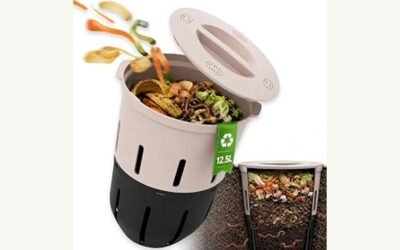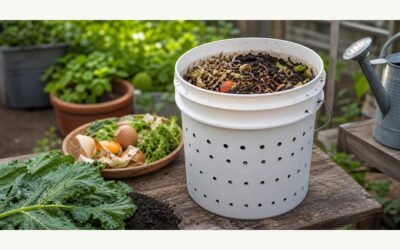



Un contenitore per vermicompost aiuta a trasformare gli scarti alimentari adatti in materiale compostato lavorato dai lombrichi, senza bisogno di una grande compostiera in giardino. Per chi possiede una casa, coltiva su un balcone o desidera una soluzione più gestibile, la scelta del contenitore giusto dipende da accesso, capacità, posizione e facilità nel mantenere equilibrato l’ambiente dei lombrichi.
Per questa guida di luglio 2026, Dove Creek Gardens ha confrontato 18 prodotti elencati nella categoria dei contenitori per vermicompost, concentrando poi le raccomandazioni sui prodotti forniti che corrispondono chiaramente al compostaggio con lombrichi per la casa, la cucina, le aiuole rialzate o il giardino. I prezzi dell’insieme fornito vanno da $13.99 a $139.00, con opzioni dettagliate particolarmente pertinenti tra cui sistemi a vassoi, compostiere da interrare per il giardino e contenitori per il compostaggio con lombrichi a forma di sacco.
Se stai creando una routine più completa per la cura del terreno, puoi anche consultare la nostra categoria Compost, Soil & Mulch per risorse correlate sul terreno del giardino. In questa guida diamo priorità a capacità, accesso per l’aerazione, modalità di raccolta, adattamento agli spazi ridotti, facilità per i principianti e destinazione d’uso del prodotto: interno, esterno o interrato.
VermiHut Plus 5-Tray Worm Compost Bin for Compact Indoor and Outdoor Food Scrap Recycling VermiHut Plus 5-Tray Worm Composter for Compact Food Scrap Recycling Bumaeu Underground Worm Farm Composting Bin for Compact Outdoor Food-Waste Recycling TOP XIAN 5-Layer Worm Compost Bin for 85L Food Scrap Recycling Prices and availability can change. We may earn a commission from qualifying purchases.


Pros
- Compact vertical layout can make vermicomposting more practical where floor space is limited.
- Moisture and airflow features address two important routine needs for worm composting.
- Integrated liquid collection base simplifies the lower section of the bin and avoids extra base assembly.
Cons
- Its 33-inch height may be less convenient for gardeners who prefer a low-profile composting container or have limited vertical clearance.
- Worm composting still requires suitable food scraps, moisture management, and routine care, so it may not suit gardeners seeking a maintenance-free waste solution.
- The listed specifications do not provide tray capacity or detailed placement guidance, so gardeners should confirm that the dimensions fit their intended location.
The VermiHut Plus is a five-tray worm composting bin for recycling food scraps into organic compost for gardening. Its vertical format and 17 by 17 inch footprint make it particularly relevant for homeowners, patio gardeners, and small-space growers who want a dedicated vermicomposting system without using a broad floor area.
The feature set focuses on maintaining a suitable worm habitat. The built-in V-Board and coconut mat are designed to support airflow and moisture balance, while the product information indicates that composting worms help consume food scraps and reduce odors. These features may make routine vermicomposting more manageable when the bin is supplied with appropriate organic material and kept under suitable conditions.
The system stands 33 inches tall and includes a worm saver tray, an integrated liquid collection base, and protective base feet. The worm saver tray helps prevent worms and compost from dropping into the liquid collection area. Because the collection tray and base are molded as one piece, the lower section is designed to avoid extra assembly and provide a dedicated place to collect excess liquid.
For backyard or patio use, the dark green bin can serve as a compact food-scrap recycling station near a gardening area, utility space, or other suitable indoor or outdoor location. The vertical five-tray arrangement may be useful for gardeners who want to work with stacked composting layers rather than a traditional ground-level pile.
Worm composting is not completely hands-off. Gardeners should monitor moisture, provide appropriate food scraps, and keep the system in a location that accommodates its 33-inch height. The base feet can be used with water to help discourage ants, but placement and routine observation remain important. Overall, this bin is a sensible option for small-space gardeners who want a structured vermicomposting system, while those needing a larger-capacity or lower-profile container may prefer a different design.
Best For / Avoid If
Best for buyers prioritizing
- Compact vertical layout can make vermicomposting more practical where floor space is limited.
- Moisture and airflow features address two important routine needs for worm composting.
- Integrated liquid collection base simplifies the lower section of the bin and avoids extra base assembly.
Consider another option if
- Its 33-inch height may be less convenient for gardeners who prefer a low-profile composting container or have limited vertical clearance.
- Worm composting still requires suitable food scraps, moisture management, and routine care, so it may not suit gardeners seeking a maintenance-free waste solution.
- The listed specifications do not provide tray capacity or detailed placement guidance, so gardeners should confirm that the dimensions fit their intended location.
Pros
- Compact vertical format is designed to make efficient use of available floor space.
- Moisture and airflow features support a more consistent environment for composting worms.
- Worm Saver Tray helps separate solid composting material from the liquid collection area.
Cons
- Gardeners must manage moisture and food inputs carefully because vermicomposting depends on suitable conditions for worms.
- The 17 x 17 x 13-inch size may be less suitable for households seeking a large-volume outdoor composting system.
- The product information does not specify included worms, total capacity, or detailed setup instructions.
The VermiHut Plus is a five-tray worm composter for recycling food scraps with the help of composting worms. Its compact black housing is intended for indoor or outdoor use, making it a practical option for homeowners, patio gardeners, and beginners who want a dedicated vermicomposting system rather than a conventional open compost pile.
The feature set focuses on maintaining a suitable worm environment. The improved lid includes a built-in V-Board and coconut mat to support airflow and moisture balance, while the V-Board is designed to help retain moisture. These details may make routine vermicomposting more manageable, although users still need to monitor conditions and avoid overloading the system with food scraps.
Based on the listed specifications, the bin measures 17 x 17 x 13 inches. Its five-tray layout uses vertical space to provide a compact composting footprint. The Worm Saver Tray helps prevent worms and compost material from falling into the liquid collection area, while also supporting airflow through the system. The listed protective base feet can hold water to help discourage ants from entering.
This composter may work well near a kitchen, on a covered patio, or in another small-space gardening area where food scraps can be collected and managed regularly. It can also suit gardeners who want to produce vermicompost for container plants or other garden areas, but the supplied information does not state the finished compost volume or processing rate.
Routine care will require attention to moisture, airflow, food inputs, and the condition of the trays and collection area. The product information does not identify the included worm supply, materials beyond the listed coconut mat, assembly requirements, or weather-resistance details, so buyers should confirm those points before setup. Overall, it is a space-conscious choice for organized vermicomposting, while gardeners needing high-volume waste processing may prefer a larger system.
Best For / Avoid If
Best for buyers prioritizing
- Compact vertical format is designed to make efficient use of available floor space.
- Moisture and airflow features support a more consistent environment for composting worms.
- Worm Saver Tray helps separate solid composting material from the liquid collection area.
Consider another option if
- Gardeners must manage moisture and food inputs carefully because vermicomposting depends on suitable conditions for worms.
- The 17 x 17 x 13-inch size may be less suitable for households seeking a large-volume outdoor composting system.
- The product information does not specify included worms, total capacity, or detailed setup instructions.
Pros
- Compact underground format is useful where a full-size compost bin would not fit.
- Ventilation features are intended to support airflow and help manage heat inside the bin.
- Locking lid design helps protect the opening from rain while allowing gas to escape.
Cons
- The listed dimensions indicate limited capacity, so households producing substantial food waste may need a larger composting system.
- Installation requires digging a suitable hole and choosing a location that can remain accessible for adding organic waste.
- The product information does not specify included worm quantities, composting capacity, or detailed guidance for preparing the bin.
The Bumaeu Underground Worm Farm is a small vermicomposting bin for outdoor garden use. It is intended to receive kitchen food waste underground, where organic material can contribute to a localized composting setup. Its compact format is best suited to homeowners, beginner gardeners, and small-space growers who want an alternative to a larger above-ground compost bin.
The feature set focuses on ventilation and outdoor usability. A breathable valve and multiple 360-degree inlets are designed to improve airflow and heat dissipation, which may help maintain a more suitable environment for the composting process. The product information also describes the system as a way to turn organic waste into nutrient-rich garden material, although the actual results will depend on setup and ongoing care.
Based on the listed specifications, the bin measures 4.33 x 4.33 x 10.24 inches and weighs about 0.76 pounds. Installation involves digging a hole, placing the bin underground, adding organic waste, and fitting the lid. The safety-lock cover is designed to allow gas to discharge while helping prevent rainwater from entering. No material, internal capacity, or additional accessories are specified.
This design may work well beside garden plants, in a small backyard growing area, or near a raised bed where an underground composting point is convenient. The listed product information suggests a soil-improvement radius of about 3 feet, but gardeners should treat that as a stated design claim rather than a guaranteed result. The small footprint also makes it more practical than a bulky compost container for space-limited areas.
Because the bin is compact, it may be less suitable for households generating large amounts of food waste or gardeners seeking substantial quantities of finished compost. Choose an accessible installation site, follow appropriate composting practices, and avoid assuming that all kitchen waste is suitable without checking the product guidance. Overall, it is a simple, space-conscious option for localized outdoor vermicomposting, while gardeners needing higher capacity or more detailed control may prefer a larger system.
Best For / Avoid If
Best for buyers prioritizing
- Compact underground format is useful where a full-size compost bin would not fit.
- Ventilation features are intended to support airflow and help manage heat inside the bin.
- Locking lid design helps protect the opening from rain while allowing gas to escape.
Consider another option if
- The listed dimensions indicate limited capacity, so households producing substantial food waste may need a larger composting system.
- Installation requires digging a suitable hole and choosing a location that can remain accessible for adding organic waste.
- The product information does not specify included worm quantities, composting capacity, or detailed guidance for preparing the bin.
Pros
- Large 85L total capacity in a vertical, five-tray format
- Removable trays with carrying handles simplify access and material handling
- Includes several starter accessories for basic setup and maintenance
- Ventilation and an enclosed design may make it more suitable for small-space composting
Cons
- Earthworms are not listed among the included components, so gardeners may need to source them separately.
- The product is 25.6 inches tall, so users should check overhead clearance and choose a stable, accessible location.
- Routine vermicomposting still requires appropriate food-scrap management and moisture attention, even with the enclosed design.
The TOP XIAN 5-Layer Worm Compost Bin is a vertical vermicomposting system for recycling household food scraps and selected garden materials. With five reusable trays and a listed total capacity of 85L, it is aimed at beginners, homeowners, and small-space gardeners who want an alternative to an open compost pile.
The feature set suggests a more organized way to manage worm composting. Food scraps, vegetable peelings, tea leaves, flowers, and coffee grounds can be added to the trays, while the stacked design supports handling material in separate layers. The enclosed, ventilated structure is intended to help oxygen enter and reduce odor escape during decomposition.
Based on the listed specifications, the bin measures 17.7 by 13.7 by 25.6 inches and is made from black PP plastic. Each tray has a carrying handle and can be removed for collection, which may be useful when inspecting material or transferring finished compost. A faucet at the bottom provides access for releasing collected liquid, though the product information does not explain a measurement system or recommended application method for that liquid.
This format can work well on a patio, balcony, utility area, or other compact location where horizontal space is limited. The included gloves, coconut bricks, plastic rake, plastic shovel, and measuring cup give new vermicomposters several basic setup and maintenance items, while the five-tray arrangement provides room to add material progressively.
Gardeners should remember that earthworms are not listed in the included accessories, so they appear to require separate sourcing. The bin also needs a stable placement area, regular attention to acceptable food scraps and moisture, and cleaning of trays or the faucet as needed. The enclosed design may help with odor control, but it should not be treated as a substitute for balanced bin management.
This composter is a reasonable fit for beginners who want a relatively compact, vertical system with starter accessories and removable trays. Gardeners needing a very low-maintenance setup, a larger outdoor composting capacity, or clearly documented weather-resistance features may prefer a different option.
Best For / Avoid If
Best for buyers prioritizing
- Large 85L total capacity in a vertical, five-tray format
- Removable trays with carrying handles simplify access and material handling
- Includes several starter accessories for basic setup and maintenance
Consider another option if
- Earthworms are not listed among the included components, so gardeners may need to source them separately.
- The product is 25.6 inches tall, so users should check overhead clearance and choose a stable, accessible location.
- Routine vermicomposting still requires appropriate food-scrap management and moisture attention, even with the enclosed design.

Pros
- Generous 50L capacity in a relatively compact three-tray format
- Handles make individual trays easier to lift and manage
- Ventilation and enclosed construction are useful features for small-space vermicomposting
- Includes several basic accessories for getting started
Cons
- Earthworms are not listed among the included accessories, so gardeners may need to source them separately.
- The available information does not specify how much liquid output to expect or how often the faucet needs servicing.
- Gardeners with larger volumes of food waste may need more capacity than this three-tray system provides.
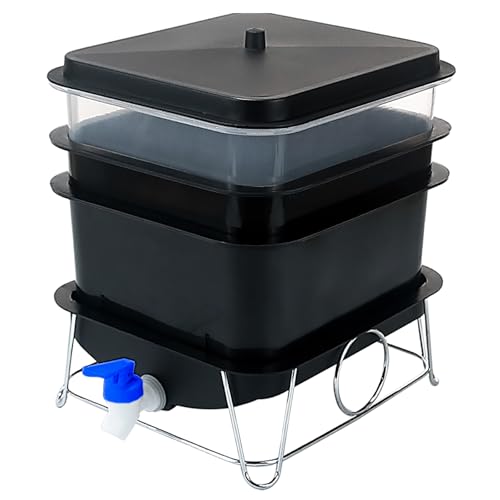
The TOP XIAN 3-Layer Worm Composter is a stackable vermicomposting bin designed to recycle household food scraps into compost. With up to 50L of total capacity, it is aimed at beginners, homeowners, patio gardeners, and anyone who wants a dedicated worm-farming system for indoor or outdoor use.
Its main practical benefit is the combination of multiple reusable trays and a closed, ventilated design. The feature set suggests that gardeners can add scraps and bedding in an organized way while maintaining airflow for decomposition. The listed materials include vegetable peelings, tea leaves, flowers, coffee grounds, and other compost materials.
The bin is listed at 17.7 by 13.7 by 17.5 inches and is made from black PP plastic. Each tray has a carrying handle, which should make removal and routine inspection easier than lifting the complete stack. A faucet at the base provides an outlet for collecting the liquid fertilizer described in the product information.
For a patio, utility area, balcony, or compact backyard station, the enclosed format may be more convenient than an open compost pile. The included coconut bricks, gloves, plastic rake, plastic shovel, and measuring cup provide basic setup and handling items, although earthworms are not listed as part of the package.
Routine use will require adding suitable organic material, maintaining appropriate airflow, and checking the trays and faucet as the system operates. The product information does not provide detailed guidance on worm quantity, liquid collection frequency, or long-term outdoor durability, so gardeners should review the setup instructions and choose a stable location.
This composter is a reasonable choice for gardeners who want a structured, relatively compact way to begin vermicomposting. Those handling a large volume of scraps or seeking detailed operating specifications may prefer a larger system or a model with more clearly documented capacity and maintenance guidance.
Best For / Avoid If
Best for buyers prioritizing
- Generous 50L capacity in a relatively compact three-tray format
- Handles make individual trays easier to lift and manage
- Ventilation and enclosed construction are useful features for small-space vermicomposting
Consider another option if
- Earthworms are not listed among the included accessories, so gardeners may need to source them separately.
- The available information does not specify how much liquid output to expect or how often the faucet needs servicing.
- Gardeners with larger volumes of food waste may need more capacity than this three-tray system provides.
Pros
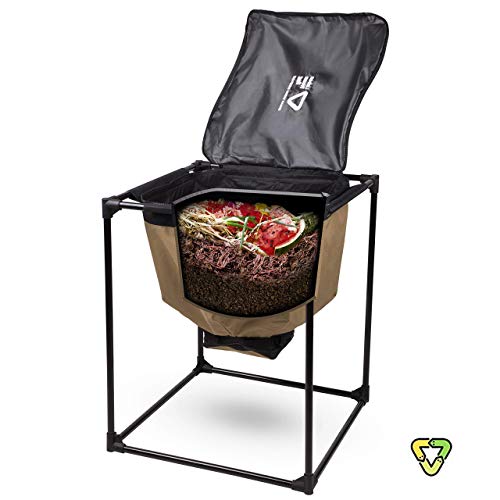
- Harvesting from the bottom is simpler than managing multiple worm-composting trays.
- The continuous-flow format allows feeding and harvesting as separate routine tasks.
- Tool-free assembly and adjustable opening make the bin straightforward to set up and manage.
Cons
- Its approximately 27-inch square footprint and nearly 32-inch height may be too large for very limited indoor or balcony spaces.
- Gardeners who prefer a rigid bin or need specific capacity measurements may want a different composting setup.
The Urban Worm Bag Version 2 is a fabric worm composting bin for gardeners who want to process organic material and collect worm castings in a continuous-flow system. It is best suited to homeowners and small-space gardeners with a dedicated patio, utility area, or backyard location that can accommodate its listed dimensions.
Its main practical benefit is the bottom-harvest design. Gardeners feed material through the top and remove finished castings from the bottom, without sorting worms from a series of trays. The design is intended to let the worm population remain in place while harvesting takes place.
The bin uses 900D Oxford fabric and includes a detachable opening that can be kept open or closed to help control moisture. Based on the listed specifications, the brown and black bin measures 26.75 by 26.75 by 31.75 inches and weighs about 10.6 pounds, so placement should allow enough room for access to both the top and bottom.
Assembly is described as taking less than five minutes and requiring no tools, glue, or complicated instructions. The top-feed and bottom-collection arrangement could be useful for a gardener who wants a repeatable composting routine without lifting or managing separate trays.
The product information does not provide a numeric capacity, moisture range, weather-suitability statement, or maintenance schedule. Gardeners will need to monitor conditions themselves and choose a suitable location, while those needing a compact rigid container or clearly measured capacity may prefer another option.
This bin is a reasonable fit for users who value easy casting access, flexible moisture management, and minimal assembly. It may be less suitable for very tight spaces or for gardeners who prefer a conventional stackable worm-bin format.
Best For / Avoid If
Best for buyers prioritizing
- Harvesting from the bottom is simpler than managing multiple worm-composting trays.
- The continuous-flow format allows feeding and harvesting as separate routine tasks.
- Tool-free assembly and adjustable opening make the bin straightforward to set up and manage.
Consider another option if
- Its approximately 27-inch square footprint and nearly 32-inch height may be too large for very limited indoor or balcony spaces.
- Gardeners who prefer a rigid bin or need specific capacity measurements may want a different composting setup.
Pros
- Compact two-tray format is well suited to indoor and small-space composting.
- Moisture channels, migration tunnels, and aeration supports address key conditions for productive worms.
- Provides both solid worm castings and collected liquid fertilizer for garden use.
- Made from BPA-free, UV-inhibited recycled polypropylene.
Cons
- Worms are not included, so setup requires sourcing suitable composting worms separately.
- Gardeners needing a larger-volume composting system may find the listed compact dimensions limiting.
- Indoor use still requires attentive moisture and food-scrap management to maintain a suitable worm environment.
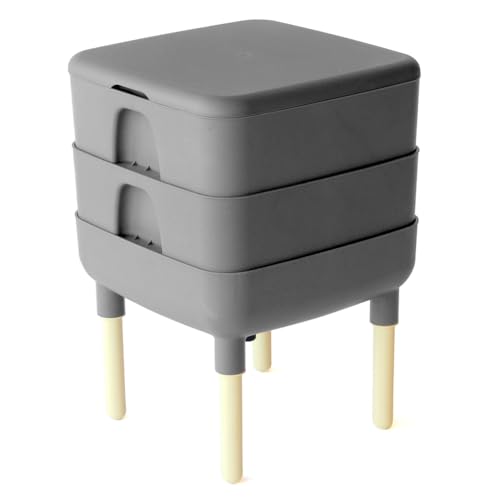
The FCMP Outdoor Essential Living Composter is a two-tray worm vermicomposter designed to process household food scraps into worm castings. Its compact 15 x 15 x 22-inch footprint makes it relevant for homeowners, apartment gardeners, and small-space growers who want a composting option that can be kept indoors throughout the year.
The feature set focuses on the conditions worms need for productive composting. Moisture-control channels around each tray help retain water near the edges, while 52 angled migration tunnels allow worms to move between trays. Molded aeration support points provide airflow around the tray sides, which can help maintain a more suitable environment for the composting process.
The bin includes a reservoir base for collecting liquid referred to as worm tea. The product information recommends mixing one part of this liquid with one part water before using it as plant fertilizer. The two-tray design also gives gardeners a practical way to separate or transition material between levels as the worms migrate.
With its gray recycled polypropylene construction and compact dimensions, this vermicomposter can fit in an indoor utility area, on a patio, or near a small container garden. It is especially useful where a traditional outdoor compost pile would be impractical, and the product information indicates that typical composting odors are kept to a minimum when used indoors.
Worms are not included, so buyers need to provide them before the system can operate. Users should also monitor moisture and manage food scraps appropriately, since vermicomposting depends on maintaining suitable conditions for the worms. This is a sensible choice for gardeners seeking compact, year-round food-scrap composting, while those needing substantially more composting volume may prefer a larger system.
Best For / Avoid If
Best for buyers prioritizing
- Compact two-tray format is well suited to indoor and small-space composting.
- Moisture channels, migration tunnels, and aeration supports address key conditions for productive worms.
- Provides both solid worm castings and collected liquid fertilizer for garden use.
Consider another option if
- Worms are not included, so setup requires sourcing suitable composting worms separately.
- Gardeners needing a larger-volume composting system may find the listed compact dimensions limiting.
- Indoor use still requires attentive moisture and food-scrap management to maintain a suitable worm environment.
Pros
- Compact dimensions make it suitable for small-space composting.
- Included bedding and hand tools reduce the number of setup items beginners need to source separately.
- Stackable trays support an organized, ongoing vermicomposting workflow.
Cons
- The listed capacity is modest, so households producing large amounts of kitchen waste may need a larger system or additional bin.
- The product information does not state that worms are included, so buyers may need to source appropriate composting worms separately.
- Indoor placement may require careful location and routine management to keep the surrounding area clean and comfortable.
The HCGADON 3-Tray 15L Worm Farm is designed for vermicomposting, a process that uses composting worms to break down suitable kitchen food waste into organic fertilizer. It is aimed at beginners, apartment and balcony gardeners, and homeowners who want a compact alternative to a conventional outdoor compost pile.
Its main practical benefit is the stacked tray arrangement. Based on the listed specifications, the three reusable 15L trays allow newer food scraps to be placed above material that is further along in the composting process, helping organize ongoing recycling and access to lower trays for harvesting.
The bin measures 9.6 x 10.8 x 10.5 inches and weighs 2.4 pounds, so its footprint should be manageable on a kitchen, balcony, patio, or other stable surface. The product information lists UV-resistant PP plastic and indoor or outdoor use, but it does not provide details about drainage, ventilation controls, or a dedicated liquid collection feature.
For a small household, this system could be useful near a kitchen for handling fruit peels and vegetable waste before using the resulting material around garden plants. It may also suit patio and small-space gardeners who want to produce compost inputs without dedicating room to a large outdoor bin.
Routine care will still be necessary, including following the instructions, maintaining suitable bedding and food inputs, and using the included scraper and rake as needed. The product details do not confirm that worms are included, so prospective buyers should verify the package contents and plan for an appropriate worm supply if required.
This is a reasonable fit for beginners seeking a compact, expandable vermicomposting setup with basic accessories included. Gardeners with high volumes of food waste, limited indoor space, or a preference for traditional aerobic composting may be better served by a larger or differently designed composting system.
Best For / Avoid If
Best for buyers prioritizing
- Compact dimensions make it suitable for small-space composting.
- Included bedding and hand tools reduce the number of setup items beginners need to source separately.
- Stackable trays support an organized, ongoing vermicomposting workflow.
Consider another option if
- The listed capacity is modest, so households producing large amounts of kitchen waste may need a larger system or additional bin.
- The product information does not state that worms are included, so buyers may need to source appropriate composting worms separately.
- Indoor placement may require careful location and routine management to keep the surrounding area clean and comfortable.

Pros
- Large 100L capacity supports continuous composting across five trays.
- Separate lower collection area and built-in faucet provide convenient access to compost byproducts.
- Starter accessories can reduce the need to purchase basic setup tools separately.
- Ventilated, stackable design is intended for organized use in indoor or outdoor composting locations.
Cons
- Worms are not included, so the system requires a separate worm purchase before composting can begin.
- The 25.5-inch height and 20 x 15 inch footprint may be less suitable for very tight storage areas.
- Like other worm composters, it could require regular attention to feeding, moisture, and tray conditions for reliable operation.
The Cozurra 5-Tray Worm Compost Bin is a vertical vermicomposting system designed to process household organic waste such as fruit peels, vegetable scraps, coffee grounds, and tea leaves. With five stackable trays and 100L, or 26.5 gallons, of total capacity, it is aimed at households, beginner composters, and gardeners who want to produce worm castings for raised beds, containers, herbs, flowers, or vegetables.
Its main growing-use benefit is the opportunity to recycle everyday kitchen scraps into castings that can support soil structure, moisture retention, and plant health. The tiered arrangement is intended to support continuous composting, with worms moving upward toward fresh food while finished material remains in lower trays for harvesting.
The bin measures 20 x 15 x 25.5 inches and uses stackable trays made from BPA-free PP plastic. Vent openings in each tray promote airflow, while the base includes a faucet for collecting liquid described as worm tea. The included coconut coir brick, non-woven fabric, measuring cup, soil meter, trowel, hand rake, and user manual provide useful setup and maintenance items, although the product does not include worms.
This size and vertical format can work in a dedicated kitchen, utility, patio, or garden area where the defined footprint is manageable. Collected castings can be directed toward container plants, raised beds, and other garden spaces, while the faucet provides a separate way to access the liquid collected at the base.
Potential buyers should plan for routine vermicomposting care, including monitoring the contents and maintaining suitable conditions for the worms. The bin's listed ventilation may help with airflow and odor control, but it does not remove the need for proper setup and maintenance. Because worms are sold separately and the unit stands 25.5 inches tall, gardeners with limited space or those wanting a ready-to-use system may prefer a different format.
Best For / Avoid If
Best for buyers prioritizing
- Large 100L capacity supports continuous composting across five trays.
- Separate lower collection area and built-in faucet provide convenient access to compost byproducts.
- Starter accessories can reduce the need to purchase basic setup tools separately.
Consider another option if
- Worms are not included, so the system requires a separate worm purchase before composting can begin.
- The 25.5-inch height and 20 x 15 inch footprint may be less suitable for very tight storage areas.
- Like other worm composters, it could require regular attention to feeding, moisture, and tray conditions for reliable operation.

Pros
- Compact dimensions are a practical fit for garden beds and smaller outdoor spaces.
- Includes two composters for a more flexible rotation between active use and maintenance.
- Accepts common organic inputs such as kitchen scraps, paper, and leaves.
- Removable lids and ventilation holes simplify access and airflow management.
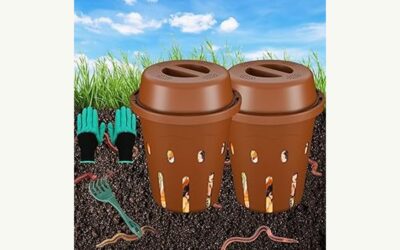
Cons
- The 8L capacity may be less suitable for households producing large amounts of compostable waste.
- Installation requires digging a hole and choosing a suitable in-ground location.
- Earthworms are not included, so they must be sourced separately before vermicomposting can begin.
The TOP XIAN 2-Pack Inground Worm Composter is designed for vermicomposting in garden beds or other outdoor soil locations. It is aimed at beginners, eco-conscious households, and gardeners who want to recycle kitchen scraps, paper, and leaves without setting up a large freestanding compost bin.
Based on the listed specifications, each composter has an 8L capacity and measures 9.5 by 9.5 by 10.8 inches. The compact format can work well where space is limited, while the in-ground placement keeps the composting activity located close to the area where the finished material may be used.
The feature set is straightforward. Gardeners dig a hole, place the bin, add suitable organic material, and use the removable lid for access. The 360-degree ventilation holes are intended to provide airflow, and the PP construction is described as sturdy for outdoor use. No complex assembly is listed.
For a small backyard or raised-bed setup, one bin could receive fresh material while the second is maintained or used in another suitable location. The two-bin arrangement may also help gardeners organize ongoing composting, although the listed 8L size is better suited to modest household or garden waste volumes than to large-scale composting.
Gardeners should plan the installation location carefully because the bins are intended to be buried and may require digging for placement. Earthworms are not included, so they must be obtained separately. This set is a sensible option for beginners who want compact in-ground vermicomposting, while gardeners with higher waste volumes or no suitable digging area may prefer a larger above-ground system.
Best For / Avoid If
Best for buyers prioritizing
- Compact dimensions are a practical fit for garden beds and smaller outdoor spaces.
- Includes two composters for a more flexible rotation between active use and maintenance.
- Accepts common organic inputs such as kitchen scraps, paper, and leaves.
Consider another option if
- The 8L capacity may be less suitable for households producing large amounts of compostable waste.
- Installation requires digging a hole and choosing a suitable in-ground location.
- Earthworms are not included, so they must be sourced separately before vermicomposting can begin.

Pros
- Includes two sizes for flexible placement in beds, borders, or other garden areas.
- Compact in-ground format can fit gardeners with limited space.
- Stainless steel may be more durable than plastic for regular outdoor use.
- Ventilation and removable lids support simpler routine maintenance.
Cons
- The listed dimensions indicate a compact system, so gardeners processing large amounts of waste may need a higher-capacity option.
- In-ground installation requires selecting a suitable garden location and preparing the soil.
- The product information does not specify composting capacity, included worms, or a detailed setup guide.
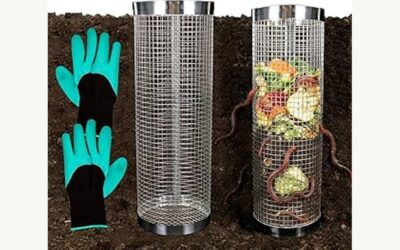
The BDAC two-pack worm composter is an in-ground vermicomposting system for recycling kitchen scraps and other organic waste directly in the garden. It is best suited to homeowners, raised-bed gardeners, and small-space growers who want a compact alternative to a large freestanding compost bin.
The feature set is centered on airflow and convenient access. Ventilation holes around the bins are intended to improve air circulation and help reduce odor buildup, while the wider openings make it easier to add scraps during regular use. The product information presents the bins as a way to support the breakdown of organic waste into garden compost, though results will depend on setup and ongoing care.
The package includes two listed sizes, approximately 8.1 by 3.7 by 3.7 inches and 12.0 by 4.3 by 4.3 inches. The larger specification is also listed as 4 by 4 by 12 inches, and both bins have removable lids and handles. Their compact dimensions may make placement easier in a raised bed or small garden area, while the handles can help with repositioning or access during maintenance.
For backyard use, a gardener could place a bin near planting areas where food scraps can be added and the surrounding soil can benefit from the composting process. The smaller format may also work where space is limited, but the supplied information does not provide a capacity rating or confirm how much waste either bin can process at one time.
Gardeners should choose an appropriate location, follow the setup instructions, and maintain suitable composting conditions rather than assuming the bin alone will prevent odors or ensure rapid breakdown. The stainless steel construction is listed as resistant to rust, corrosion, and deformation, but no specific weather rating or long-term durability testing is provided.
This system is a reasonable fit for gardeners seeking compact, in-ground food-waste recycling with two size choices. Those managing substantial household waste, or who prefer a larger centralized composting system with documented capacity and more detailed controls, may want to consider a different style of bin.
Best For / Avoid If
Best for buyers prioritizing
- Includes two sizes for flexible placement in beds, borders, or other garden areas.
- Compact in-ground format can fit gardeners with limited space.
- Stainless steel may be more durable than plastic for regular outdoor use.
Consider another option if
- The listed dimensions indicate a compact system, so gardeners processing large amounts of waste may need a higher-capacity option.
- In-ground installation requires selecting a suitable garden location and preparing the soil.
- The product information does not specify composting capacity, included worms, or a detailed setup guide.

Pros
- Large 100L capacity is useful for households producing regular food waste.
- Removable trays simplify access to different stages of the composting process.
- Ventilation and a closed design may make it more suitable for small spaces than an open compost pile.
- Included tools and coconut bricks can reduce the number of setup items needed.
Cons
- The 26-inch height and five stacked trays may require a stable, accessible placement area.
- Earthworms are not listed among the included accessories, so gardeners may need to source them separately.
- The product information does not specify details such as exact ventilation openings, tray dimensions, or maintenance instructions.
The TOP XIAN 5-Tray Worm Composter is a stacked vermicomposting bin for recycling food waste with the help of earthworms. Its five reusable trays provide up to 100L of total capacity, making it suited to homeowners, beginner composters, and gardeners who want a dedicated system instead of an open backyard pile.
The feature set is focused on organized decomposition and easier material handling. The trays stack vertically, allowing new waste to be added in layers while individual trays can be removed for collection. The product information indicates that its ventilated, closed design allows oxygen into the bin while helping contain odors, which may be useful in compact outdoor areas or other suitable small-space locations.
Based on the listed specifications, the bin measures 20 x 15 x 26 inches and weighs about 13.95 pounds. It is made from black PP plastic and includes a faucet that can be opened to drain liquid from the bin. Gloves, coconut bricks, a shovel, and a silicone scraper are also included, supporting basic setup and routine handling.
This vertical format could work well on a patio, balcony, or in a small yard where floor space is limited but there is room for a stable 26-inch-tall container. The removable trays may also make it easier to separate stages of the composting process than a single undivided container, although the available information does not provide detailed tray dimensions or placement requirements.
Gardeners should plan a level, accessible location and monitor the bin according to the needs of the worms and composting material. The listed accessories do not include earthworms, so they may need to be obtained separately. Overall, this is a sensible option for people seeking a relatively high-capacity, vertically organized worm composter, while gardeners wanting a conventional outdoor pile or a fully specified system may prefer a different design.
Best For / Avoid If
Best for buyers prioritizing
- Large 100L capacity is useful for households producing regular food waste.
- Removable trays simplify access to different stages of the composting process.
- Ventilation and a closed design may make it more suitable for small spaces than an open compost pile.
Consider another option if
- The 26-inch height and five stacked trays may require a stable, accessible placement area.
- Earthworms are not listed among the included accessories, so gardeners may need to source them separately.
- The product information does not specify details such as exact ventilation openings, tray dimensions, or maintenance instructions.

Pros
- Includes two smaller bins and two larger bins for flexible garden use.
- Ventilated design supports airflow for vermicomposting.
- Ready-to-use construction with secure snap-on lids.
Cons
- The listed dimensions indicate a compact design, so gardeners with larger food-waste volumes may need additional composting capacity.
- The product information does not specify whether worms, bedding, or starter compost materials are included.
- Installation guidance and capacity details are not provided, which may require beginners to determine placement and loading practices themselves.
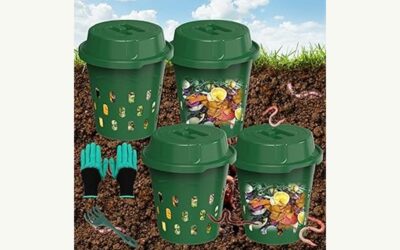
The QYRCXX four-piece worm composting bin set is intended to help gardeners process kitchen scraps through vermicomposting. It includes two bins measuring 3.6 by 3.6 by 11.8 inches and two larger bins measuring 4.3 by 4.3 by 12.2 inches, making it a useful option for beginners, small backyard gardens, raised beds, and other growing areas with limited space.
The most important feature is the full mesh construction, which provides 360-degree ventilation around the bin. Based on the listed specifications, this airflow is intended to give composting worms access to fresh air while organic waste breaks down. The covered design also helps keep the contents contained during routine use.
Each bin has a snap-on lid, and the set is described as requiring no assembly. The smaller and larger sizes can be assigned to different locations or stages of composting, although the product information does not provide individual capacity ratings or detailed loading instructions. The white, rust-resistant metal construction is listed as suitable for moist outdoor conditions.
For backyard use, these bins can be placed in a vegetable patch, garden bed, or another outdoor area where food scraps can be processed near growing spaces. Their relatively narrow dimensions may also suit compact gardens and small yards better than a large freestanding compost container. The product information describes both inground and above-ground use, so placement should follow the included instructions if available.
Gardeners should confirm whether worms, bedding, and other starter materials are included before beginning, since they are not identified in the supplied specifications. Capacity, installation details, and maintenance requirements are also not provided. Overall, this set appears best suited to gardeners seeking a compact, ventilated worm-composting setup, while households producing larger amounts of food waste may prefer a system with clearly stated higher capacity.
Best For / Avoid If
Best for buyers prioritizing
- Includes two smaller bins and two larger bins for flexible garden use.
- Ventilated design supports airflow for vermicomposting.
- Ready-to-use construction with secure snap-on lids.
Consider another option if
- The listed dimensions indicate a compact design, so gardeners with larger food-waste volumes may need additional composting capacity.
- The product information does not specify whether worms, bedding, or starter compost materials are included.
- Installation guidance and capacity details are not provided, which may require beginners to determine placement and loading practices themselves.

Pros
- Compact four-tray format suits homes, patios, and other areas where floor space is limited.
- Nested trays are intended to make ongoing composting and finished-compost removal more organized.
- Clear setup process can be approachable for gardeners new to vermicomposting.
Cons
- It requires worms, bedding, and regular food-scrap management, so it is not a passive storage container.
- Gardeners needing a larger-capacity system may find the four-tray, compact format less suitable for higher food-waste volumes.
The Worm Factory 360 is a four-tray vermicomposting system for recycling household food scraps with the help of composting worms. It is suited to homeowners, beginner gardeners, and small-space growers who want an organized way to handle food waste without dedicating much floor space to a composting setup.
Its main practical benefit is the nested-tray arrangement. As worms process material, the feature design encourages them to move upward, leaving more finished compost in the lower trays for removal. This can make the composting cycle easier to organize than a single open container that must be emptied and mixed.
The system is listed at 17.95 by 17.95 by 14.95 inches and weighs 11 pounds. The setup instructions call for assembling the stand, placing the first tray, adding bedding, food scraps, and worms, then continuing to add materials to the top tray. Its black plastic construction and compact shape may fit conveniently in a designated home or garden area.
For backyard and patio use, the four-tray layout provides a structured way to process kitchen food scraps while keeping active and finished material in separate levels. The customizable tray approach may also help households adjust the setup to their available space and food-waste routine, rather than requiring a larger composting unit from the start.
This system requires ongoing attention to bedding, worms, and food scraps, so it may be less suitable for anyone seeking a maintenance-free waste container. Based on the listed features, it is a practical choice for gardeners who want compact, organized vermicomposting at home, while those with unusually high food-waste volumes may prefer a larger-capacity option.
Best For / Avoid If
Best for buyers prioritizing
- Compact four-tray format suits homes, patios, and other areas where floor space is limited.
- Nested trays are intended to make ongoing composting and finished-compost removal more organized.
- Clear setup process can be approachable for gardeners new to vermicomposting.
Consider another option if
- It requires worms, bedding, and regular food-scrap management, so it is not a passive storage container.
- Gardeners needing a larger-capacity system may find the four-tray, compact format less suitable for higher food-waste volumes.

Pros
- Compact dimensions suit small yards, garden beds, and other space-conscious setups.
- Inground design keeps the composting container close to the plants and soil where the finished compost may be used.
- Beginner-friendly approach with simple placement, removable lids, and ventilation openings.
Cons
- Earthworms are not included, so gardeners must source suitable worms separately.
- The 8L capacity may be less suitable for households producing large amounts of kitchen waste.
- Installation requires digging, and gardeners should choose a location that remains accessible for adding scraps and maintenance.
The TOP XIAN Inground Worm Compost Bin is designed for vermicomposting, the process of using worms to break down organic material into compost. It can be buried underground or placed in a garden bed, making it a practical fit for beginners, families, and gardeners who want to recycle kitchen scraps without adding a large freestanding bin.
Based on the listed features, the system accepts organic waste such as kitchen scraps, paper, and leaves. Its 8L capacity is compact enough for small home gardens, while the product information indicates that worms may transform the contents into nutrient-rich compost over approximately two to three months under suitable conditions.
The setup is straightforward in concept: dig a hole, place the bin, and use the removable lid to add material or inspect the contents. The listed 360-degree ventilation holes are intended to support airflow, and the PP construction provides the specified material for outdoor use. No complex assembly is listed.
This design may work well alongside a raised bed, in a backyard garden, or in another outdoor growing area where an inground container can remain accessible. The multi-bin arrangement is intended to support ongoing composting by allowing one container to be maintained while another receives organic waste.
There are several practical limitations to consider. Earthworms are not included, the available capacity is modest, and installation requires digging. Gardeners should avoid burying the bin where it would be difficult to reach, and they should follow suitable vermicomposting practices for balancing food scraps, paper, moisture, and airflow. The product is a reasonable choice for small-scale composting beginners, while households with heavier waste volumes may prefer a larger system.
Best For / Avoid If
Best for buyers prioritizing
- Compact dimensions suit small yards, garden beds, and other space-conscious setups.
- Inground design keeps the composting container close to the plants and soil where the finished compost may be used.
- Beginner-friendly approach with simple placement, removable lids, and ventilation openings.
Consider another option if
- Earthworms are not included, so gardeners must source suitable worms separately.
- The 8L capacity may be less suitable for households producing large amounts of kitchen waste.
- Installation requires digging, and gardeners should choose a location that remains accessible for adding scraps and maintenance.

Pros
- Complete accessory set includes bedding material, hand tools, a soil meter, and liquid collection components.
- Vertical five-tray design provides useful composting capacity while keeping the footprint relatively compact.
- PP construction and anti-slip feet support a stable setup for routine household composting.
- Ventilated trays and clear waste guidance are designed to help manage odors during normal use.
Cons
- Worms are not included, so the system requires a separate worm purchase before composting can begin.
- Indoor users will need a suitable location and regular attention to accepted food scraps, moisture, and tray conditions.
- Gardeners wanting a simple passive compost bin without worms or multi-tray maintenance may prefer a different design.
The Blütezeit 5-Tray Worm Compost Bin is a vertical vermicomposting system for recycling suitable household food waste with composting worms. Its compact 16.2 by 12.6 by 17 inch footprint makes it relevant for beginners, apartment residents, balcony gardeners, and homeowners who want to process kitchen scraps without dedicating a large outdoor area.
The feature set is focused on controlled worm composting rather than ordinary yard-waste decomposition. Ventilation holes in each tray are intended to promote airflow, while the stacked trays provide separate levels for bedding, worms, and decomposing material. The product information also includes guidance on acceptable waste, which is important for keeping the composting environment balanced.
Setup is supported by a coco-coir brick, non-woven fabric, turning fork, shovel, soil meter, and user manual. The soil meter is listed for checking moisture, pH, and light levels, while the anti-slip feet are intended to help keep the bin stable. A spigot and cup provide access for collecting liquid from the lower part of the system, often referred to as worm tea.
This bin could fit in a kitchen, utility area, covered patio, balcony, or garden corner where its vertical layout is useful. The 7-pound listed weight and stackable tray format may make positioning manageable, but users should choose a level location with enough clearance to handle trays and access the spigot during routine care.
Worms are not included, so gardeners must source appropriate composting worms separately. Regular maintenance will still be necessary, including following the waste guidelines, checking conditions, and managing bedding and food scraps. Based on the listed specifications, it is a good match for people who want a guided, accessory-rich worm composting setup, while gardeners seeking a low-maintenance yard-waste bin may want a simpler composting method.
Best For / Avoid If
Best for buyers prioritizing
- Complete accessory set includes bedding material, hand tools, a soil meter, and liquid collection components.
- Vertical five-tray design provides useful composting capacity while keeping the footprint relatively compact.
- PP construction and anti-slip feet support a stable setup for routine household composting.
Consider another option if
- Worms are not included, so the system requires a separate worm purchase before composting can begin.
- Indoor users will need a suitable location and regular attention to accepted food scraps, moisture, and tray conditions.
- Gardeners wanting a simple passive compost bin without worms or multi-tray maintenance may prefer a different design.

Pros
- Designed specifically for vermicomposting and producing worm castings.
- Can be used in gardens, raised beds, indoor plant soil, or outdoor composting bins.
- The feature set suggests a relatively low-maintenance option for gardeners starting a worm farm.
Cons
- Requires a suitable vermicomposting bin and appropriate ongoing care, which are not included in the supplied product details.
- Gardeners seeking finished compost immediately may prefer a ready-to-use soil amendment instead.
- The listing provides limited information about shipping conditions, care instructions, and the exact contents of the package.
WWJD Worms Red Wigglers are live composting worms intended to help process organic matter in a vermicomposting bin. They suit homeowners, beginner gardeners, and small-space growers who want to produce worm castings for garden soil, raised beds, or indoor plants.
The listed features focus on nutrient-rich compost production, soil conditioning, and natural aeration. As the worms burrow and process suitable organic material, the product information indicates that they can support the creation of vermicompost and help improve soil structure for plant growth.
The listing identifies the quantity as 250 worms and 1/4 pound, with package dimensions of 7 x 7 x 6 inches. No bin, bedding, feeding guide, assembly information, or other accessories are specified, so buyers should plan the growing environment separately and confirm the care requirements before ordering.
This type of worm population can fit a home worm farm, an indoor or outdoor composting bin, or a garden project connected to raised beds. It may also work for educational worm-farming activities, provided the setup offers suitable conditions and the worms are protected from unsuitable temperatures and handling.
The main limitation is that live worms need a properly maintained habitat, including suitable organic material and routine attention. The supplied information does not detail shipping practices, survival guarantees, or temperature instructions, so gardeners should review those details before purchase and avoid treating the worms as a substitute for finished compost.
This product is a reasonable choice for gardeners ready to manage a vermicomposting system and make their own worm castings. Those who want an immediate soil amendment, a complete worm farm kit, or detailed setup instructions may prefer an option that includes those materials and guidance.
Best For / Avoid If
Best for buyers prioritizing
- Designed specifically for vermicomposting and producing worm castings.
- Can be used in gardens, raised beds, indoor plant soil, or outdoor composting bins.
- The feature set suggests a relatively low-maintenance option for gardeners starting a worm farm.
Consider another option if
- Requires a suitable vermicomposting bin and appropriate ongoing care, which are not included in the supplied product details.
- Gardeners seeking finished compost immediately may prefer a ready-to-use soil amendment instead.
- The listing provides limited information about shipping conditions, care instructions, and the exact contents of the package.

Pros
- Compact footprint fits kitchens, balconies, patios, and garden areas with limited floor space.
- Multilayer access can simplify adding food scraps and removing finished compost.
- Ventilation and a bottom spigot address two routine vermicomposting needs, airflow and liquid collection.
Cons
- Composting worms are not listed among the included accessories, so buyers may need to source them separately.
- The 23.54-inch height may require a suitable location with enough vertical clearance for stacked trays and access.
- Gardeners who need a large, single-chamber outdoor compost bin may prefer a different design.
The VIVOSUN 5-Layer Worm Compost Bin is a vertical vermicomposting system for recycling food scraps with the help of composting worms. Its 50-liter, or 13-gallon, capacity and compact footprint make it a practical match for beginners, homeowners with limited outdoor space, and gardeners who want to keep food-waste processing close to the kitchen or patio.
The main growing-use benefit is the combination of airflow and stacked access. Ventilation slits are designed to support aeration while helping manage odor, moisture, and temperature, all important conditions in a worm bin. The layered arrangement also allows different materials to be separated and makes routine loading or compost removal more organized than using one undivided container.
Based on the listed specifications, the bin measures 12.3 by 13.18 by 23.54 inches and weighs about 7.5 pounds. It uses PP plastic and includes a rack, four anti-slip foot pads, a rubber scraper, non-woven fabric, gloves, a 250-milliliter measuring cup, and a soil meter. The product information indicates that setup can be completed in about five minutes with the included instructions. A spigot on the base tray provides access for collecting liquid from the lower section.
This design can work well beside a kitchen, on a balcony, in a small yard, or near raised beds where finished vermicompost can be used as part of a soil-building routine. The vertical format uses limited floor area, but its nearly 24-inch height means the chosen location should provide enough overhead clearance to add scraps and handle the trays comfortably.
Users should follow the instructions for managing food scraps, moisture, airflow, and worm conditions, and should keep the bin in an appropriate location for the materials being composted. Composting worms are not listed as included, so a buyer may need to obtain them separately. Overall, this is a space-conscious option for organized vermicomposting, while gardeners seeking a larger single-chamber outdoor composting system may prefer another style.
Best For / Avoid If
Best for buyers prioritizing
- Compact footprint fits kitchens, balconies, patios, and garden areas with limited floor space.
- Multilayer access can simplify adding food scraps and removing finished compost.
- Ventilation and a bottom spigot address two routine vermicomposting needs, airflow and liquid collection.
Consider another option if
- Composting worms are not listed among the included accessories, so buyers may need to source them separately.
- The 23.54-inch height may require a suitable location with enough vertical clearance for stacked trays and access.
- Gardeners who need a large, single-chamber outdoor compost bin may prefer a different design.
Guida alla scelta di un contenitore per vermicompost
Scegli lo stile di contenitore adatto al tuo spazio
Le opzioni di contenitori per vermicompost fornite rientrano in tre stili pratici: sistemi impilabili a vassoi, compostiere da interrare nelle aiuole e contenitori per il compostaggio a forma di sacco. I sistemi a vassoi, come The Original VermiHut® Plus 5-Tray Worm Compost Bin, il modello FCMP Outdoor Essential Living Composter 2-Tray e VIVOSUN 5-Layer Worm Compost Bin, vengono spesso scelti da chi desidera una soluzione contenuta per riciclare gli scarti alimentari.
I contenitori interrati, tra cui le opzioni 2-Pack e 4-Pack Inground Worm Composter, sono progettati per essere collocati nelle aiuole, così che i lombrichi possano lavorare vicino al terreno. Urban Worm Bag Worm Composting Bin Version 2 ha un formato diverso, con fondo rimovibile per la raccolta. La scelta migliore dipende dal fatto che tu desideri un contenitore portatile, un sistema per aiuole o una soluzione a sacco verticale.
Adatta la capacità alla tua routine in cucina e in giardino
La capacità è importante perché un contenitore per vermicompost funziona meglio quando non viene sovraccaricato. I dati dei prodotti forniti indicano diversi numeri di vassoi e volumi, tra cui modelli a 5 vassoi, un modello a 2 vassoi, un contenitore VIVOSUN da 50L, un contenitore Blütezeit da 53QT e un contenitore per compostaggio con lombrichi da 100L. Queste cifre sono utili per confrontare le dimensioni generali, ma dovresti comunque seguire le indicazioni del produttore per l’installazione e l’alimentazione.
Per un nucleo familiare più piccolo o per chi inizia a fare compostaggio con i lombrichi, un’opzione interrata da 2 unità o un sistema compatto a vassoi può sembrare meno impegnativo. Chi produce più scarti alimentari o dispone di uno spazio esterno più ampio potrebbe preferire un sistema a vassoi di maggiore capacità, un contenitore per compostaggio con lombrichi da 100L o il formato Urban Worm Bag, se il suo metodo di raccolta si adatta alla propria routine.
Valuta l’accesso al compost prima dell’acquisto
La raccolta è una delle principali differenze tra i vari modelli di contenitori per vermicompost. I sistemi impilabili a vassoi separano generalmente l’area di compostaggio in livelli, mentre Urban Worm Bag Worm Composting Bin Version 2 mette in evidenza un design per una raccolta semplice, con fondo completamente rimovibile e senza cerniera. Le compostiere interrate sono più integrate nell’aiuola, quindi accesso e posizione vanno pianificati prima dell’installazione.
Le persone anziane e chiunque abbia una mobilità limitata dovrebbe prestare particolare attenzione a sollevamento, piegamenti e posizione del contenitore. Un sistema rialzato, verticale o a vassoi può essere più facile da raggiungere rispetto a un inserto basso per aiuole, mentre le compostiere interrate possono ridurre la necessità di spostare il compost da un contenitore separato all’aiuola.
Posizionamento in casa, all’esterno e nel giardino
Diversi prodotti forniti sono indicati per l’uso interno ed esterno, tra cui The Original VermiHut® Plus 5-Tray Worm Compost Bin, The Original VermiHut® Plus 5-Tray Worm Composter in black, Blütezeit 5-Tray Worm Compost Bin e il modello 5-Tray Worm Composter 100L. Le compostiere interrate sono descritte come contenitori esterni per il compostaggio con lombrichi, destinati alle aiuole e all’uso domestico.
La posizione dovrebbe essere abbastanza comoda da incentivare l’uso regolare del contenitore, ma anche sufficientemente protetta da favorire una manutenzione costante. Se gli attrezzi da giardino e le forniture stagionali stanno occupando la stessa area, la nostra guida su come organizzare una piccola casetta da giardino può aiutarti a creare spazio per forniture da compostaggio, materiali per la lettiera e contenitori per la raccolta.
Caratteristiche da cercare per i principianti
Per i principianti, gli indizi più utili nei dati forniti sono espressioni come principiante, kit per iniziare, installazione semplice e riciclo degli scarti alimentari. Le opzioni 2-Pack e 4-Pack Inground Worm Composter sono descritte specificamente come contenitori per il vermicompostaggio destinati ai principianti. Blütezeit 5-Tray Worm Compost Bin indica kit iniziali per allevamenti di lombrichi, mentre VIVOSUN 5-Layer Worm Compost Bin è descritto come facile da installare e include un kit per allevamento di lombrichi.
Adatto ai principianti non significa privo di manutenzione. Chi inizia a fare compostaggio con i lombrichi deve comunque imparare cosa può essere inserito nel contenitore, con quale frequenza alimentarlo, come evitare un eccesso di umidità e quando smettere di aggiungere scarti. Segui sempre le istruzioni del produttore per installazione, lettiera, posizione e utilizzo continuo.
Errori comuni con un contenitore per vermicompost
Un errore comune è acquistare il sistema dall’aspetto più grande senza pensare all’accesso quotidiano. Un contenitore difficile da raggiungere, sollevare o svuotare potrebbe non essere utilizzato con regolarità. Un altro errore consiste nel pensare che ogni prodotto per il compostaggio funzioni allo stesso modo: le compostiere interrate, i sistemi a vassoi e i contenitori a sacco richiedono modalità di gestione diverse.
Non basarti solo sui punteggi delle recensioni. I prodotti forniti hanno valutazioni comprese tra 4.4 e 4.6 stelle nei dati dettagliati, ma anche numero di recensioni, formato, capacità e posizione sono altrettanto importanti. Ad esempio, Worm Factory® 360 ha 1,860 recensioni e un design a 4 vassoi, mentre The Original VermiHut® Plus 5-Tray Worm Compost Bin ha 1,914 recensioni e un design a 5 vassoi.
Manutenzione, pulizia e conservazione
Il vermicompostaggio è un processo vivente, quindi la cura regolare è più importante di attrezzature complicate. Mantieni il contenitore accessibile, aggiungi gli scarti secondo le indicazioni del prodotto e controlla le condizioni invece di riempirlo troppo rapidamente. Quando raccogli o sposti il materiale finito, usa attrezzi da giardino puliti e lavati le mani dopo aver maneggiato materiali per il compostaggio.
Se tieni il contenitore all’esterno, considera dove riporre accessori, guanti e piccoli contenitori. Una cassa portaoggetti può aiutarti a tenere a portata di mano l’attrezzatura da giardino; consulta la nostra guida alle casse da esterno per gli attrezzi da giardino se hai bisogno di una soluzione ordinata per conservare le forniture da giardinaggio.
Confronto tra le principali opzioni disponibili
| Tipo di prodotto | Esempi forniti | Ideale per |
|---|---|---|
| Compostiera interrata per aiuole | 2-Pack Inground Worm Composter; 4-Pack Inground Worm Composter | Chi desidera fare compostaggio con lombrichi direttamente nelle aiuole esterne |
| Sistema impilabile a vassoi | The Original VermiHut® Plus 5-Tray Worm Compost Bin; FCMP Outdoor Essential Living Composter; VIVOSUN 5-Layer Worm Compost Bin | Chi desidera un sistema contenuto per il compostaggio con lombrichi, da usare in casa o all’esterno |
| Contenitore indicato di maggiore capacità | 5-Tray Worm Composter, 100L WormCompost Bin | Chi confronta le opzioni di capacità maggiore presenti nei dati forniti |
| Sistema a sacco | Urban Worm Bag Worm Composting Bin Version 2 | Chi è interessato al design indicato con fondo rimovibile per una raccolta semplice |
Metodologia di ricerca e affidabilità
Abbiamo esaminato l’elenco dei prodotti forniti per verificarne la pertinenza all’uso come contenitori per vermicompost nella categoria Compost, Soil & Mulch. I prodotti dettagliati inclusi qui corrispondono chiaramente al compostaggio con lombrichi, al riciclo degli scarti alimentari, al compostaggio nelle aiuole o al vermicompostaggio domestico. Non abbiamo aggiunto prodotti sostitutivi né incluso accessori non supportati.
Questa è un’analisi basata sulla ricerca, non una prova fisica. Abbiamo confrontato esclusivamente i nomi dei prodotti disponibili, i prezzi indicati, le valutazioni, il numero di recensioni, il numero di vassoi, le capacità dichiarate, le indicazioni sull’installazione, le informazioni sull’uso interno o esterno e i dettagli relativi alla raccolta forniti nei dati di origine.
I fattori di classificazione di questa guida si sono concentrati sull’adattamento pratico al giardinaggio: se il prodotto è chiaramente un contenitore per il compostaggio con lombrichi, quanto il formato sembra adatto ai principianti, se è indicato per piccoli spazi o aiuole, quanto può essere accessibile la raccolta e quanto feedback dei proprietari è rappresentato dal numero di recensioni fornito. I dati dei prodotti e le raccomandazioni sono stati esaminati nel luglio 2026.
Raccomandazioni finali
Scelta complessiva: The Original VermiHut® Plus 5-Tray Worm Compost Bin – Indoor & Outdoor Vermicomposting System, Continuous Flow Food Waste Recycler for Organic Composting & Gardening – Dark Green si distingue nei dati forniti perché combina un formato per il compostaggio con lombrichi a 5 vassoi, indicazioni per l’uso interno ed esterno, un prezzo indicato di $82.00 e una valutazione di 4.5 stelle su 1,914 recensioni.
Scelta per principianti: 2-Pack Inground Worm Composter, Outdoor Worm Compost Bin for Garden Beds & Home Use, Vermicomposting Bin for Beginners (9.5×9.5×10.8Inch), Green è un’opzione da considerare se desideri una soluzione esterna per l’aiuola e preferisci iniziare con due unità invece che con un set più grande. È indicata a $32.99, con una valutazione di 4.6 stelle su 127 recensioni.
Scelta accessibile: Urban Worm Bag Worm Composting Bin Version 2 – Easy Harvest with Fully Removable Zipper-Free Bottom merita attenzione se l’accesso al compost raccolto è la tua priorità principale. La scheda fornita mette specificamente in evidenza la raccolta semplice e il fondo completamente rimovibile senza cerniera, anche se è l’opzione dettagliata con il prezzo più alto, pari a $139.00.
Domande frequenti
Qual è lo stile di contenitore per vermicompost migliore per i principianti?
Chi è alle prime armi dovrebbe cercare indicazioni chiare per l’installazione, una capacità gestibile e un accesso semplice. Nei dati forniti, le opzioni 2-Pack e 4-Pack Inground Worm Composter sono descritte specificamente come contenitori per il vermicompostaggio destinati ai principianti, mentre VIVOSUN 5-Layer Worm Compost Bin indica un’installazione semplice.
Posso usare un contenitore per vermicompost in casa?
Alcuni prodotti forniti sono indicati per il vermicompostaggio in casa e all’esterno, tra cui The Original VermiHut® Plus 5-Tray Worm Compost Bin e Blütezeit 5-Tray Worm Compost Bin. Segui sempre le istruzioni del produttore per posizione, lettiera, alimentazione e cura ordinaria.
Quanto deve essere grande un contenitore per vermicompost?
Scegli la dimensione in base alla frequenza con cui prevedi di aggiungere gli scarti e allo spazio che puoi gestire comodamente. Le opzioni fornite includono unità interrate compatte, sistemi a 2 e 5 vassoi, un contenitore da 50L, uno da 53QT e uno da 100L, quindi la capacità varia notevolmente.
Un contenitore per vermicompost a vassoi è migliore di uno interrato?
Nessuno dei due è automaticamente migliore. I sistemi a vassoi sono contenuti e spesso adatti all’uso interno o esterno quando indicato in tal senso, mentre i contenitori interrati sono pensati per le aiuole esterne. La scelta giusta dipende dal fatto che tu preferisca un sistema portatile o il compostaggio direttamente nell’area di coltivazione.
Quale manutenzione richiede un contenitore per vermicompost?
Un contenitore per vermicompost richiede attenzione regolare all’alimentazione, all’umidità, all’accesso e alla pulizia. Segui le indicazioni del prodotto, evita di riempirlo eccessivamente e tienilo in una posizione pratica, così potrai controllarlo con costanza.
Qual è il contenitore per vermicompost più facile da svuotare?
In base ai nomi dei prodotti forniti, Urban Worm Bag Worm Composting Bin Version 2 è quello che mette più chiaramente in risalto l’accesso al compost raccolto, grazie alle indicazioni sulla raccolta semplice e sul fondo completamente rimovibile senza cerniera. Anche i sistemi a vassoi possono semplificare la separazione rispetto a un singolo contenitore aperto, ma la gestione esatta dipende dalle istruzioni del prodotto.