

Des plantes en bonne santé commencent par un sol que vous comprenez. Le meilleur kit d’analyse du sol pour jardin potager peut vous aider à déterminer si votre sol nécessite un ajustement du pH, une attention particulière aux nutriments, de meilleures habitudes d’arrosage ou une analyse complète en laboratoire avant d’acheter des amendements.
Ce guide s’adresse aux jardiniers débutants, aux propriétaires de pelouses et de massifs, aux cultivateurs en pots et aux jardiniers plus âgés qui souhaitent obtenir des résultats clairs sans complications inutiles. Nous avons comparé 15 produits de la liste fournie et axé nos conseils sur les kits et appareils d’analyse du sol présentant un intérêt évident pour le jardinage domestique, notamment les options à bandelettes de pH, les kits NPK à domicile, les appareils numériques et les analyses par courrier.
Pour découvrir d’autres outils d’amélioration du sol et conseils sur les amendements du jardin, consultez notre section Compost, Soil & Mulch. Dans ce comparatif, les facteurs les plus importants étaient ce que mesure chaque kit, la facilité de lecture des résultats, son adéquation aux pelouses, légumes, fleurs, plantes en pot ou plantes d’intérieur, ainsi que l’aide à l’interprétation fournie.
MySoil Soil Test Kit for Lab Nutrient and pH Analysis with Garden Recommendations Luster Leaf Rapitest 1602 Soil Test Kit for Checking pH and NPK in Garden Beds Luster Leaf Rapitest 1601 Soil Test Kit for pH and NPK Garden Checks DewildeTradingCo 140-Test Liquid Soil Test Kit for pH and Key Nutrient Checks Prices and availability can change. We may earn a commission from qualifying purchases.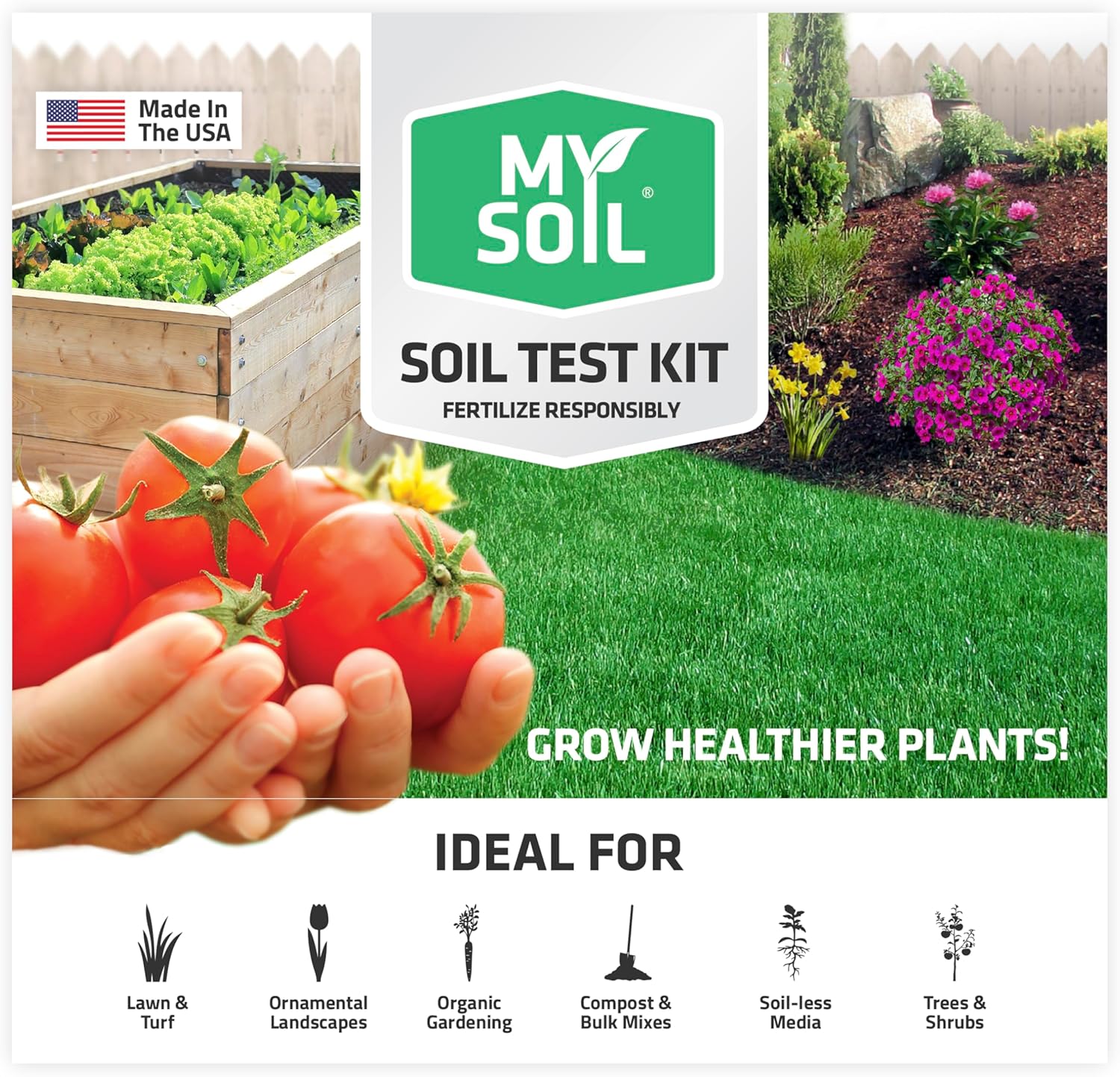


Pros
- Provides lab-based nutrient and pH analysis rather than relying on quick color charts or probe-style readings.
- Covers a wide range of lawn, garden, container, and specialty growing scenarios.
- Prepaid return postage and included instructions make it approachable for beginners.
- Recommendations are tailored to the soil and plant needs entered for the sample.
- Reviewers commonly mention that the kit is easy to use and that the report is detailed.
Cons
- Each kit covers only one soil test, so separate lawn zones, raised beds, or problem areas may require additional kits.
- Because it is a mail-in lab test, gardeners who need immediate same-day readings may prefer an at-home option.
- It is focused on soil nutrients and pH, so it should not be treated as a complete diagnosis for pests, diseases, drainage problems, or watering issues.
The MySoil Soil Test Kit is a single-use mail-in kit designed to help homeowners understand the nutrient and pH condition of a specific lawn, garden bed, container area, compost sample, or other growing setup. It is a practical fit for beginners who are unsure what their soil needs, as well as more experienced lawn and garden caretakers who want a clearer basis for fertilizer and amendment decisions.
According to the product information, the lab analysis measures 13 plant-available nutrient levels, including nitrogen and pH. That is the main advantage over simple at-home pH meters or test strips, which typically provide a narrower picture. The included recommendations are meant to show what to apply, how much to apply, and when to apply it, with both organic and non-organic fertilizer options listed.
The kit includes the soil sample materials, easy-to-follow instructions, and a prepaid mailing envelope addressed to the testing lab. Results are provided through an online dashboard, and the listed turnaround time is 6 to 8 days after the sample is processed through the mail-in system. Reviewers commonly describe the process as simple, with clear instructions and detailed reports, although individual timing can depend on mailing and processing.
For backyard use, this kit makes sense before renovating a tired lawn, starting a vegetable garden, correcting uneven growth in a flower bed, or deciding whether a raised bed needs more than routine compost. It can also be useful for annual spring or fall checks, mid-season troubleshooting, or comparing a poor-performing section with the rest of the yard, provided each distinct area is tested with its own kit.
The main limitation is that one kit equals one test, so gardeners managing several beds, lawn zones, or container mixes should plan accordingly. It also is not a substitute for diagnosing insects, fungal disease, compaction, poor drainage, or irrigation problems. For gardeners who want lab-based nutrient and pH guidance before buying fertilizer, the MySoil kit offers a convenient and beginner-friendly path to more informed soil care.
Pros
- Covers pH plus the main NPK nutrient indicators in one home kit.
- Clear instructions are included, and reviewers commonly mention that the process is understandable once prepared.
- Plant pH reference list for over 450 plants helps connect test results to real garden decisions.
- Works for a range of common growing areas, including vegetables, flowers, lawns, and garden beds.
Cons
- The 20-test count means 5 tests for each category, not 20 full sets of pH, nitrogen, phosphorus, and potash checks.
- NPK testing may require preparing a soil-and-water solution and allowing it to settle, so it is not always an instant process.
- Some reviewers report that the small capsules can be awkward to open and pour without spilling.
The Luster Leaf Rapitest 1602 Soil Test Kit is designed for home gardeners who want a basic read on soil pH, nitrogen, phosphorus, and potash before adding fertilizer or soil amendments. It fits vegetable gardens, flower beds, lawns, and general backyard growing areas where guessing at soil needs can lead to overfeeding, underfeeding, or choosing the wrong amendment.
Based on the listed product information, the kit includes components for 20 total tests, with 5 each for pH, nitrogen, phosphorus, and potash. That makes it most useful for spot-checking several areas, comparing beds, or testing before and after a soil improvement plan, provided you budget the capsules carefully.
The kit uses a capsule system and patented color comparators to help gardeners interpret results at home. The included instructions and pH preference list for over 450 plants are especially helpful for beginners because pH is not just a number, it affects how well many plants can use nutrients already present in the soil.
In practical use, this type of kit is well suited to raised beds that have stopped producing well, a new vegetable plot, a lawn area that is not responding as expected, or compost and garden soil that you want to evaluate before planting. Reviewers commonly mention that the directions are understandable, though several note that preparing the soil solution for nutrient testing can take time.
There are a few limitations to keep in mind. The product description’s 20-test total can be misunderstood, since it is not 20 complete four-part soil profiles. The small capsules may also require careful handling, and gardeners who need formal nutrient recommendations, high-volume testing, or documented lab precision may still prefer a professional extension office or laboratory soil analysis.
Overall, the Rapitest 1602 is a sensible starter soil test kit for homeowners who want more information before amending garden beds, lawns, or containers. It is best for occasional at-home checks and learning soil basics, while larger gardens or repeated testing programs may need a more refill-friendly or professional testing option.
Pros
- Covers pH plus the primary NPK nutrients commonly used to guide fertilizing decisions.
- Comes with clear instructions and fertilization guidelines according to the product information.
- Useful for checking different areas of a yard or garden bed rather than treating all soil as identical.
- Does not require batteries or an electronic meter.
Cons
- Gardeners needing laboratory-level analysis, micronutrient data, or professional soil recommendations may prefer a university extension or lab test.
- Some tests require mixing soil with water and waiting for the sample to settle, so it is not as instant as a probe-style meter.
- The kit includes a fixed number of capsules, so repeated testing across many beds may require another kit.
The Luster Leaf Rapitest 1601 Soil Test Kit is designed for home gardeners who want to check basic soil conditions before planting, fertilizing, or adjusting pH. It measures four common soil factors: pH, nitrogen, phosphorus, and potash. That makes it relevant for vegetable gardens, flower beds, lawns, and general backyard soil troubleshooting.
The main benefit is that it gives gardeners a more informed starting point than guessing from plant appearance alone. Soil pH affects how well plants can use nutrients, while nitrogen, phosphorus, and potash relate to leafy growth, root and fruit development, and general plant strength. The kit includes 10 tests for each category, which allows for checking more than one bed, lawn area, or planting zone.
The product information describes a capsule system with color-coded components and patented color comparators. Instead of relying only on a printed chart, the comparators are intended to make color matching easier. The kit also includes an eye dropper, instructions, fertilization guidelines, and a pH preference list for more than 450 plants. Listed dimensions are compact at 5 inches wide by 5.91 inches high, and the kit weighs 4 ounces, so it should be easy to store between seasonal uses.
In practical use, this type of kit is most helpful when preparing a new raised bed, checking a vegetable plot before spring planting, comparing different parts of a lawn, or evaluating soil before adding fertilizer. Reviewers commonly mention that the instructions are understandable and that the kit can help identify differences between planting areas. For small-space gardeners, it may also be useful for checking garden beds or container soil before deciding whether to amend or replace the mix.
There are a few realistic limitations. This is an at-home color comparison kit, not a full laboratory soil analysis, so gardeners managing major soil problems, large landscapes, or high-value plantings may still want a professional or extension-service test. The nutrient tests can require soil and water preparation with settling time, and careful timing and clean handling matter for consistent results. As with any chemical-style garden test kit, keep capsules and test materials away from children and pets, and follow the included directions closely.
Overall, the Rapitest 1601 is a sensible choice for beginner and intermediate gardeners who want a low-tech way to check pH and basic NPK levels before making fertilizer decisions. It is less suited to gardeners who need detailed lab numbers, micronutrient reporting, or ongoing high-volume testing across many separate sites.
Pros
- Covers pH plus major fertility indicators in a single home kit.
- Useful for routine monitoring in multiple growing areas.
- May help reduce guesswork before adding fertilizer or soil amendments.
- Updated instructions are listed for the 2026 version.
Cons
- As with most home liquid soil tests, careful sampling, measuring, and color reading may be required for useful results.
- Gardeners needing certified soil analysis, micronutrient data, or detailed amendment calculations may prefer a laboratory soil test.
- The product data does not list storage case details, reagent shelf life, or exact step-by-step procedure.
The DewildeTradingCo 140-test liquid soil test kit is an at-home soil fertility kit for checking pH, ammonia, nitrogen, phosphorus, and potassium. It is intended for gardeners who want a practical read on basic soil conditions before making fertilizer or amendment decisions. Based on the listed uses, it can fit vegetable gardens, lawns, flower beds, turf, ornamental landscapes, houseplants, compost, trees, vines, and hydroponic growing.
The main value of this kit is that it looks at several soil factors instead of focusing only on pH. pH affects how plants access nutrients, while nitrogen, phosphorus, potassium, and ammonia readings can help gardeners think more carefully about feeding. For beginners, that can be especially useful because poor growth is often blamed on one issue when soil fertility may involve several factors.
The product information describes this as a liquid soil test kit with about 140 total tests, including approximately 40 tests for each listed parameter and about 20 for nitrogen. That makes it better suited to repeated checks than a single-use kit, especially if you manage multiple raised beds, lawn sections, containers, or planting areas. No dimensions, storage case details, or exact procedure are provided, so buyers should expect to follow the included instructions closely.
In a backyard garden, this kit could be used before planting a vegetable bed, when comparing different lawn areas, or when checking container soil that has been reused across seasons. It may also be helpful for gardeners managing compost or ornamental beds who want a quick reference point before adding fertilizer. For small-space growers, the ability to run several tests may be useful when containers have different potting mixes or plant histories.
There are some practical limits to keep in mind. Home liquid soil tests generally depend on careful sample collection, clean handling, correct timing, and accurate color comparison, so rushing the process can reduce usefulness. This type of kit is helpful for routine guidance, but gardeners needing certified results, micronutrient testing, heavy metal screening, or precise amendment prescriptions should consider a professional lab soil test.
Overall, this DewildeTradingCo kit is a sensible choice for homeowners and beginner-to-intermediate gardeners who want a broad, at-home look at common soil fertility markers. It is best for routine monitoring and fertilizer planning, not for replacing a full laboratory analysis when a high-stakes planting, persistent soil problem, or detailed nutrient plan is involved.

Pros
- Wide pH 3.5 to 9 measurement range for common home garden soil checks.
- Large 100-count supply supports repeated testing or sampling from several locations.
- No meter, batteries, or probe setup is listed, which keeps the testing method straightforward.
- Product information provides clear timing steps for mixing, dipping, waiting, and comparing results.
- Reviewers often describe the strips as easy to use, although careful sample preparation matters.
Cons
- Color chart readings may be hard to judge for some users, especially when color bands look similar.
- Muddy or unclear soil-water mixtures could make the result harder to read.
- Gardeners needing lab-style precision or nutrient testing beyond pH may prefer a more comprehensive soil test.
The Dewilde Trading Co DTC-00024 Soil pH Test Strip Kit is made for gardeners who want a basic way to check soil acidity or alkalinity at home. Based on the listed specifications, the strips measure from pH 3.5 to 9 and are intended for soil testing in garden beds, lawns, indoor plants, fruit trees, flowers, vegetables, and shrubs.
The main value of this kit is helping you understand whether pH may be a factor in plant performance. Soil pH affects how available nutrients are to plants, so a quick pH check can be a useful first step before adding lime, sulfur, fertilizer, compost, or other amendments. The included 100 strips also make it practical to test more than one area instead of assuming the whole yard has the same soil condition.
The testing procedure listed by the manufacturer is straightforward: mix the soil sample with water, let the solution sit for 30 minutes, dip one strip for 3 seconds, hold it horizontally for 60 seconds, and compare it with the color chart on the bottle. Because this is a color-comparison strip test, consistent sampling is important. Taking soil from the right depth, avoiding debris, and letting heavy sediment settle can make the chart easier to read.
For backyard gardeners, this kit can be useful when comparing a vegetable bed with a lawn patch, checking container soil, or investigating why a particular planting area is underperforming. Small-space gardeners can use it for raised beds and pots, while homeowners with larger yards may appreciate having enough strips to sample several spots before making soil adjustments.
The biggest limitation is readability. Some reviewers mention that the strips are easy to use, while others note that the color chart or muddy water can be difficult to interpret. This is not described as a full laboratory soil analysis and it does not list testing for nitrogen, phosphorus, potassium, or micronutrients, so it should be viewed as a pH guidance tool rather than a complete soil health report.
This kit is a sensible choice for beginner and intermediate gardeners who want a low-complexity pH check for routine planting decisions. Gardeners who need highly precise readings, digital results, or full nutrient recommendations may be better served by a more advanced soil test or a local extension lab analysis.
Pros
- Measures three common plant-care factors: soil moisture, soil pH, and sunlight level.
- Does not require batteries, charging, or digital setup.
- Compact and lightweight for use around indoor plants, outdoor containers, raised beds, gardens, and lawns.
- Simple switch-based operation makes it approachable for beginner gardeners.
- Product instructions clearly outline cleaning and soil-use precautions.
Cons
- Not intended for testing water or other liquids, including liquid pH readings.
- Very dry or very hard soil may prevent movement of the indicator or risk damaging the probes if forced.
- Gardeners needing laboratory-level pH accuracy may prefer a dedicated soil test kit or professional soil analysis.
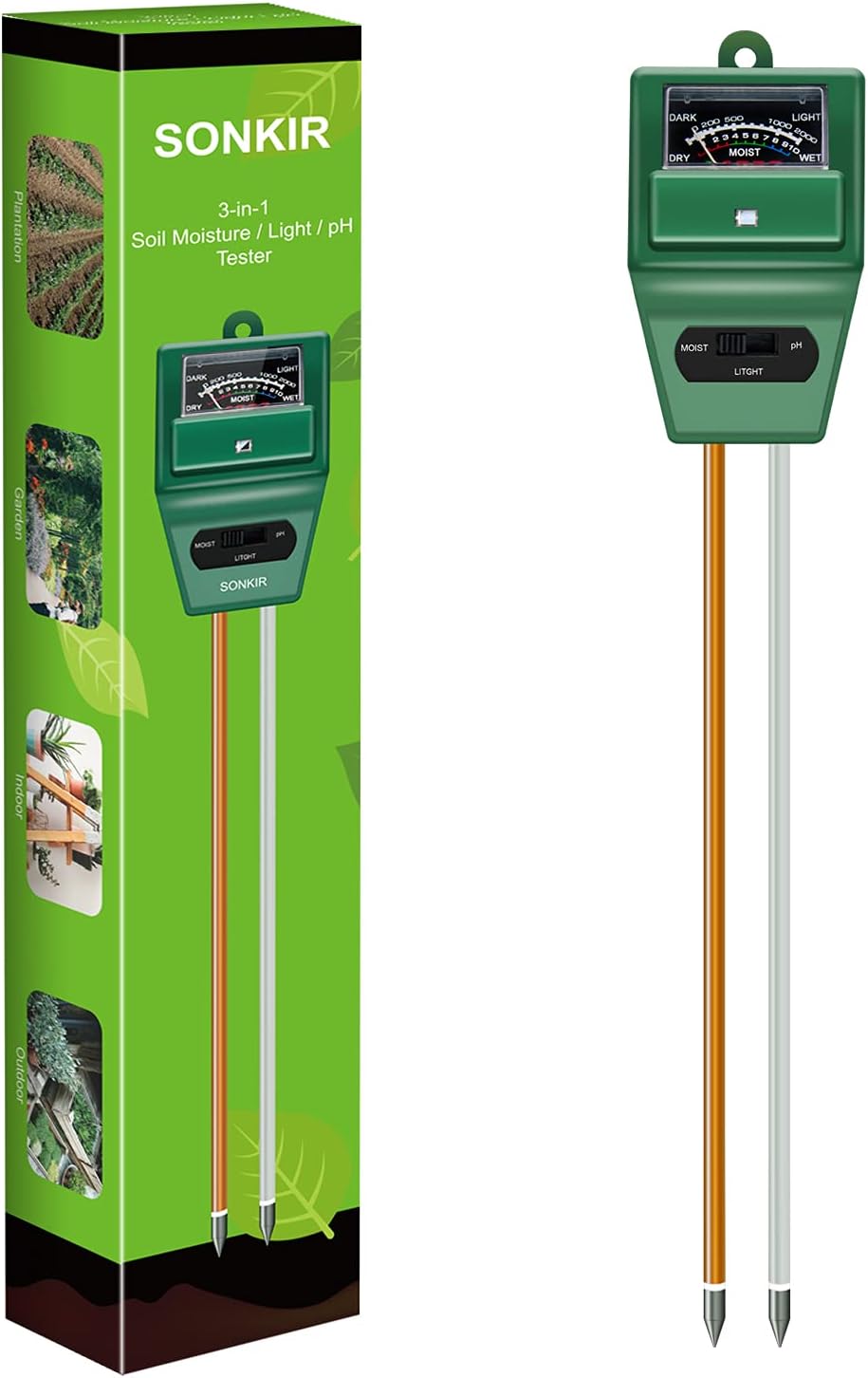
The SONKIR MS02 is a 3-in-1 soil meter made for checking soil moisture, soil pH, and sunlight level with a single analog dial. It is intended for practical plant care rather than lab-grade testing, making it a useful fit for homeowners, houseplant keepers, patio gardeners, and beginners who want a quick reference before watering or moving plants.
Its most useful everyday role is helping reduce guesswork around watering. The moisture scale runs from dry to wet, so gardeners can check below the surface instead of judging only by the top layer of soil. The pH function covers a listed range of 3.5 to 8, and the light setting can help compare growing spots for indoor plants, containers, vegetable beds, or lawn areas.
Based on the listed specifications, the meter measures 11.5 x 2 x 1.5 inches and weighs 2.89 ounces, so it should be easy to store with small garden tools or keep near a potting bench. The probe length is listed at 7.9 inches, and the instructions recommend inserting the probes about 6 to 7 inches into soil, then waiting about 10 minutes before reading the dial.
For small-space gardeners, this tool can be helpful when checking container soil that dries unevenly, comparing light levels on a windowsill, or monitoring raised-bed moisture after watering. In larger yards, it can serve as a quick reference for garden beds, lawns, and general soil checks, especially when plants show signs that water, light, or soil conditions may need attention.
There are important use limits to keep in mind. The product information says it is for soil only and should not be used to test pure water or other liquids. It also should not be forced into very hard soil or left in soil for long periods, and the probes should be wiped clean after each use. If the soil is extremely dry, the indicator may not move until the soil is watered before testing.
This is a sensible choice for gardeners who want a simple, battery-free way to gather basic soil-condition clues. Gardeners who need highly precise pH data for major soil amendments, crop planning, or diagnostic work may want to pair it with a more formal soil test, but for routine home plant care the MS02 offers a convenient starting point.
Pros
- Tests the main home-garden soil factors many gardeners check before applying fertilizer or amendments.
- Multiple tests allow comparisons between different garden zones instead of relying on one sample.
- Visual color-card readings avoid the need for an electronic meter or battery-powered device.
- Reviewer feedback commonly mentions that the kit is helpful and generally easy to use when the directions are followed.
Cons
- Some gardeners may find the testing process more involved than a basic probe-style meter.
- Color comparison results can be less exact than a laboratory soil analysis, especially for gardeners who need precise nutrient values.
- Users who only want to check pH may prefer a simpler single-purpose option.
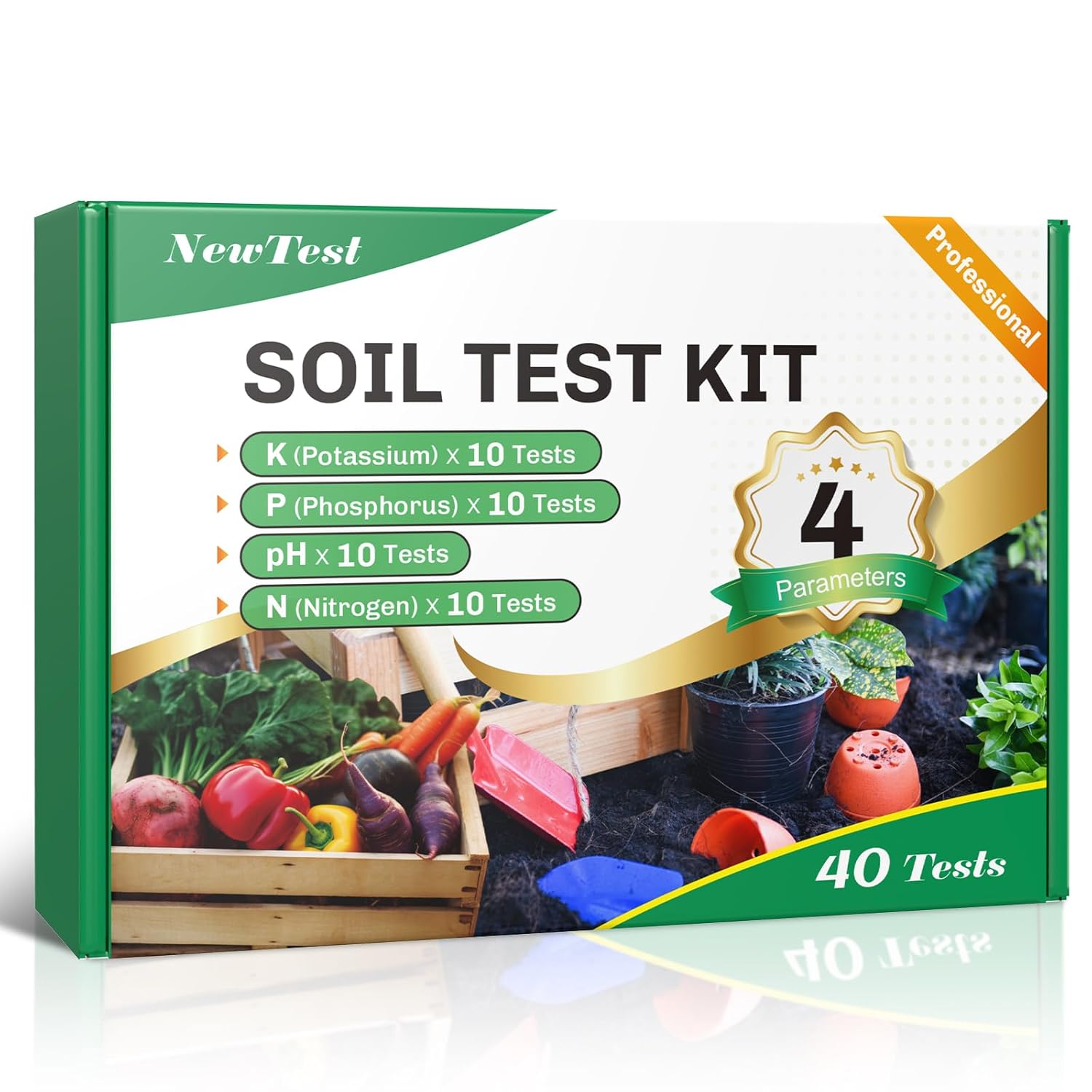
The NewTest 4-Parameter Soil Test Kit is designed for home gardeners who want to check pH, nitrogen, phosphorus, and potassium before making soil decisions. Based on the listed specifications, it includes 40 total tests, with 10 tests each for the four parameters. That makes it a practical fit for lawns, vegetable beds, flower borders, containers, compost checks, and other common backyard growing situations.
The most useful benefit is that it separates pH from the three primary plant nutrients, often shortened as NPK. For a beginner, this can help explain why a lawn is uneven, why a vegetable bed is not responding as expected, or whether a container mix may need adjustment. The product information indicates results are read by comparing test strips or liquids to a colorimetric card, so the kit provides range-based guidance rather than a digital readout.
NewTest lists a pH range of 3.5 to 9.0, which is broad enough for most home-garden troubleshooting. The included quick guide and detailed instructions are important because soil testing depends on careful sampling, clean handling, and following each step in order. Reviewers commonly mention that the instructions are usable, although a few note that the process can feel complicated or that reading results is not perfectly precise.
In everyday use, this kit makes the most sense when comparing several areas, such as a yellowing lawn patch against a greener section, one raised bed against another, or potting mix used for houseplants and patio containers. Because there are 10 tests for each parameter, a gardener can test more than one location instead of treating the whole yard as if the soil were identical everywhere.
The main limitation is that a color-comparison home kit should not be treated as a full replacement for a professional laboratory soil test when exact nutrient values are needed. It also requires more attention than simply inserting a probe into the soil. For best results, gardeners should read the instructions fully before starting, keep materials clean, and avoid making major amendment decisions from a single questionable sample.
Overall, the NewTest kit is a useful choice for homeowners and beginner-to-intermediate gardeners who want a more complete snapshot of soil condition than pH alone. Gardeners who need highly precise lab numbers, minimal handling, or only a quick pH check may be better served by a different testing approach.

Pros
- Covers pH plus the three primary macronutrients commonly considered when planning fertilization.
- Provides multiple tests for repeat checks in different parts of a yard or garden.
- Includes the basic accessories needed to prepare and test soil samples at home.
- No calibration is listed, which may appeal to gardeners who do not want to manage an electronic meter.
Cons
- Some reviewers found the instructions confusing, so careful reading and organized setup may be needed before testing.
- Results depend on color chart comparison, which may be less clear for gardeners who prefer digital readouts or lab reports.
- The kit reports measurements but may not provide enough guidance for every gardener on ideal levels or exactly what amendments to apply.
The AKSBTEC 4-in-1 Soil Test Kit is a home soil testing kit for gardeners who want to check pH, nitrogen, phosphorus, and potassium without sending a sample to a lab. It is aimed at practical lawn and garden use, including vegetable beds, flower beds, turf areas, and potted plants. For beginners, the main appeal is having the four basic readings in one box rather than buying separate kits for each soil factor.
The product information indicates that the kit includes 40 total tests, divided into 10 tests each for pH, nitrogen, phosphorus, and potassium. That gives a homeowner enough test capacity to compare different parts of a yard, check raised beds separately, or retest after making soil changes. These readings can help guide fertilizing decisions, although the kit should be treated as a screening tool rather than a full professional soil analysis.
The included components are more complete than a simple probe-style meter. The box lists phosphorus test strips, nitrogen and pH test strips, centrifuge tubes, a grinding rod, dropper, spoon, potassium vial, graduated tube, reagent tablets, instructions, and a color chart. The listed size, 4.8 x 2 x 7.1 inches, and weight, 7.8 ounces, make it a compact item to keep with seed-starting supplies, fertilizers, or garden records.
In everyday use, this type of kit is most useful when you want to compare conditions across several growing areas. A gardener could sample a vegetable bed before planting, check a struggling lawn patch, or compare potting soil in containers with soil from an in-ground bed. The color chart format is also helpful for quick seasonal checks when you want some guidance before adding fertilizer.
The main caution is that chemical soil test kits require careful sample preparation and close attention to the correct reagent or strip. Reviewers were mixed on ease of use, with some saying the instructions were straightforward and others saying they were confusing or did not explain what to do with the results. Gardeners who want exact amendment recommendations may still prefer a local extension or lab soil test.
Overall, this AKSBTEC kit is a reasonable fit for homeowners and beginner-to-intermediate gardeners who want a compact, multi-factor soil check for routine garden planning. It is less ideal for anyone who wants a digital display, highly detailed soil chemistry, or step-by-step fertilizer prescriptions included with the results.

Pros
- Tests pH plus the three primary macronutrients commonly considered in garden soil care.
- Provides enough tests for comparing several beds, containers, or lawn areas during a growing season.
- Includes the basic accessories needed to perform the listed tests at home.
- Suitable for both indoor and outdoor plant-care situations according to the product information.
Cons
- Intended for preliminary home use, not professional quantitative soil analysis.
- Color-card results may require careful lighting and close attention to the instructions for consistent interpretation.
- Gardeners who need detailed micronutrient data or formal fertilizer recommendations may prefer a laboratory soil test.
The AAWipes JS04-40 is a 4-in-1 soil test kit for checking pH, nitrogen, phosphorus, and potassium in home growing areas. Based on the listed product information, it is intended for practical soil testing in gardens, lawns, yards, raised beds, pots, and indoor plant setups. It should suit homeowners, beginner gardeners, and anyone who wants a basic way to compare soil conditions before making plant-care decisions.
The main value of this kit is that it covers more than pH alone. Soil pH affects how available nutrients are to plants, while nitrogen, phosphorus, and potassium are key macronutrients commonly considered when planning fertilizer or amendment use. Having all four checks in one kit can help gardeners avoid guessing as much when a lawn looks tired, vegetables are not growing vigorously, or container plants need a seasonal soil review.
The kit includes 40 total tests, divided into 10 tests each for pH, nitrogen, phosphorus, and potassium. The listed accessories include two bottles of test strips, two test tubes, 40 tablets, a dropper, a stick, a color card, and instructions. That setup is useful for routine home sampling because it provides the small tools needed to prepare and compare samples without requiring separate test containers or color references.
For backyard and small-space gardeners, this type of kit can be especially helpful when comparing different planting zones. You might use it to check a vegetable bed before feeding, compare a raised bed with an in-ground bed, test soil from a container garden, or review lawn and shrub areas separately. It is also suitable for indoor and outdoor use according to the product data, which makes it relevant for houseplants, herbs, flowers, trees, shrubs, vegetables, and lawn care.
There are a few reasonable limitations to keep in mind. The product information notes that the kit is designed for preliminary home use and is not intended as a professional quantitative analysis. As with most color-comparison soil kits, users should follow the instructions carefully and read results in good lighting to reduce confusion. For major soil renovation, unusual plant problems, or detailed fertilizer planning, a laboratory soil test may still be the better choice.
Overall, the AAWipes JS04-40 is a sensible option for gardeners who want a simple, multi-parameter soil testing kit for everyday garden decisions. It is best for routine checking and comparison across beds, containers, and lawn areas, rather than for highly precise soil science work. Gardeners who only need pH may prefer a simpler pH-only kit, while those needing exact nutrient levels should consider professional testing.

Pros
- Large strip count supports routine pH monitoring across several garden areas.
- No batteries, probes, or calibration steps are listed, which keeps the process approachable for beginners.
- Works for a wide range of home growing spaces, from indoor pots to outdoor lawns and vegetable beds.
- Reviewers commonly mention that the strips are easy to use and work as described.
Cons
- The test requires measuring soil and water and waiting before dipping the strip, so it is not as immediate as pushing a probe into the ground.
- A separate container is needed for mixing the soil sample, and one reviewer noted that no mixing tube was included.
- Color-chart strip tests may give a range rather than a laboratory-style exact number, which may be less suitable for gardeners needing highly precise soil analysis.
The MERYDI soil pH test kit is a strip-based option for checking whether garden soil is more acidic or alkaline. It is intended for home soil testing in vegetable beds, flower beds, lawns, indoor planters, fruit tree areas, and shrub plantings. For beginners and homeowners, this type of kit can be a straightforward way to monitor pH before making soil amendments.
According to the product information, the kit includes 150 test strips and uses a color comparison chart on the bottle. The listed range covers common garden soil conditions, so it can help gardeners track pH differences between raised beds, containers, and yard soil. This is especially useful when you want to compare several planting areas instead of relying on one general reading for the whole yard.
The testing process requires collecting 10 grams of soil, adding 40 milliliters of water, waiting 20 minutes, dipping a strip for 2 to 3 seconds, and comparing the color to the chart. That method is simple, but it does require a small container and careful handling. The product instructions also note that results should be read in natural daylight, wet fingers should be kept out of the bottle, and strips should be stored in a cool, dry place.
In practical garden use, these strips make sense for checking a new raised bed mix, comparing soil in different vegetable rows, monitoring potted plants, or getting a general pH reading before planting flowers or lawn seed. Because the strips are single-use, gardeners can test multiple spots without reusing the same strip in different samples.
The main limitation is that color-strip tests are best viewed as a practical home monitoring tool, not a full laboratory soil report. One reviewer described the result as somewhat vague, and another pointed out that the kit requires separate measuring and mixing supplies. Gardeners who need nutrient analysis, exact pH values, or professional amendment recommendations may want a lab soil test or a more advanced testing system.
Overall, this MERYDI kit is a sensible choice for routine pH checks when you want many tests on hand and do not mind preparing a soil-and-water sample. It is best for homeowners, container gardeners, and raised-bed growers who want a quick reference point for soil acidity or alkalinity before making everyday gardening decisions.

Pros
- Measures multiple soil and growing-condition indicators in one digital device.
- Backlit display with large numbers may be easier to read than basic needle-style meters, a point several reviewers commonly mention.
- Works for indoor and outdoor plant care, including gardens, beds, potted plants, and succulents according to the product information.
- Fast listed reading process, with the manufacturer describing about 10 seconds after inserting the probe.
- Lightweight design should be easy to carry between rooms, containers, and garden beds.
Cons
- AAA batteries are required but not included.
- The probe should not be forced into very dry or hard soil, so compacted beds may need light moistening and a wait before measuring.
- Gardeners who need laboratory-grade pH, nutrient, EC, or TDS results may prefer dedicated testing equipment.
The Buladeke 7-in-1 Digital Soil Tester is a probe-style meter made for routine plant checks around the home garden. Based on the listed features, it measures soil moisture, pH, temperature, light intensity, and fertility, with EC and TDS functions also included. It is a practical fit for beginners, houseplant collectors, patio gardeners, and homeowners who want a quick snapshot of growing conditions before watering or adjusting plant placement.
The main value is convenience. Instead of using separate tools for moisture, light, and basic soil-condition checks, this meter puts several readings on one digital display. For everyday gardening, moisture is likely the most useful function, especially for containers, succulents, and indoor plants where the soil surface can look dry while the root zone is still damp. The pH, fertility, temperature, and light readings can also help flag when a plant may need closer attention.
The product information highlights a large LCD screen with a white backlight, clear numbers, intuitive symbols, and a low-battery warning. It runs on 4 x 1.5V AAA batteries, which are not included. The listed package dimensions are 11.61 x 2.68 x 1.85 inches, and the item weight is 5.6 ounces, so it should store easily with small garden tools or on a potting bench.
For use, the manufacturer says to insert the probe about 10 cm into the soil and wait about 10 seconds for a reading. That makes it useful for checking several pots, raised-bed sections, or garden rows during a watering round. It can also help compare light levels in different areas, such as a windowsill, patio corner, greenhouse bench, or outdoor bed, when deciding where to place plants with different light needs.
There are a few important cautions. The product notes that the tester must not be used directly to measure liquids, and if soil is too dry or hard, the probe should not be forced in. The recommended approach is to moisten the test area slightly and wait 10 minutes before measuring to avoid damaging the device. As with most home soil meters, gardeners needing highly precise nutrient, pH, EC, or TDS data should consider follow-up testing with dedicated equipment.
Overall, this Buladeke meter looks most useful as a quick decision aid for everyday plant care rather than a professional lab instrument. It is a good match for growers who want easier watering judgment, clearer digital readings, and multiple plant-condition checks in one lightweight tool. Gardeners working in very compacted soil or those requiring calibrated scientific measurements may be better served by more specialized testing methods.

Pros
- Tests the main soil nutrients gardeners commonly evaluate before planting or fertilizing.
- Includes more pH tests than nutrient tests, which is helpful because pH often varies across a yard or garden.
- Comes with interpretation resources, not just test materials, so results are easier to turn into practical next steps.
- Suitable for both garden analysis and soil science education based on the product information.
Cons
- The kit uses color chart interpretation, so careful lighting and attention may be needed when reading results.
- Gardeners who need laboratory-level soil analysis or micronutrient testing may prefer a professional soil lab.
- Nutrient tests are limited to 15 each, so very large properties or frequent testing routines could require replacement supplies sooner.
The LaMotte Model EL Turf and Garden Soil Test Kit is designed for gardeners who want to understand their soil before starting a planting, lawn, or amendment project. Based on the product information, it measures nitrogen, phosphorus, potassium, and soil pH, which are among the most useful starting points for making basic soil decisions.
For home gardeners, the main benefit is replacing guesswork with a more structured soil check. The kit includes 15 tests each for nitrogen, phosphorus, and potassium, plus 30 pH tests, so it can be used across multiple garden beds, lawn areas, or planting zones. That is especially helpful when one part of the yard grows well and another seems to struggle.
The included rapid test procedures, diagrammed instructions, and laminated color charts are important design features for routine use. Color-chart kits still require careful reading, but the supplied charts and instructions should make the process more approachable for beginners, garden clubs, classrooms, and homeowners who are new to soil testing.
The Garden Guide manual and LaMotte Soil Handbook add practical value because test results are only useful if gardeners know what to do with them. According to the listed details, these resources help interpret results and provide lime and fertilizer recommendations, which can support more informed soil preparation before planting vegetables, turf, ornamentals, or raised beds.
This kit is best suited to gardeners who want a reusable-style testing setup for common soil checks rather than a single-purpose quick read. It may be less suitable for growers who need a full laboratory soil report, micronutrient data, or highly precise professional analysis. Users should also handle testing materials carefully, follow the instructions closely, and keep the color charts clean and readable.
Overall, the LaMotte Model EL is a practical soil test kit for homeowners, educators, and beginner-to-intermediate gardeners who want clear information on NPK and pH before adding lime, fertilizer, or other amendments. If your goal is basic garden and turf soil planning with included interpretation guidance, the listed feature set is well aligned with that task.

Pros
- Covers pH plus the primary macronutrients nitrogen, phosphorus, and potassium.
- Enough included tests for several garden zones or repeat checks over time.
- Lightweight and compact for easy storage between testing sessions.
- Several reviewers describe it as simple, economical, and helpful for home gardening use.
Cons
- Some users report that the reagent labeling and instructions can be difficult to follow, so careful setup is important.
- Color-card style results may be less suitable for gardeners who want lab-level detail or highly precise numerical readings.
- Because each category includes 10 tests, larger properties or frequent testers may eventually need replacement supplies or another kit.
The DewildeTradingCo DTC-00057 is a 4-in-1 home soil test kit designed to check pH, nitrogen, phosphorus, and potassium in garden and lawn soil. It fits the needs of homeowners, vegetable gardeners, raised-bed growers, and houseplant owners who want a basic read on soil conditions before adding amendments or fertilizer.
The main value of this kit is that it covers the soil factors most often considered when plants are struggling or when a gardener is preparing a new bed. pH affects how available nutrients are to plants, while nitrogen, phosphorus, and potassium are key nutrients often referenced on fertilizer labels. Having all four checks in one kit can help reduce guesswork when planning routine soil care.
According to the listed product information, the kit includes 40 total tests, divided into 10 tests each for pH, nitrogen, phosphorus, and potassium. The included components are listed as 2 bottles of test strips, 2 test tubes, 40 tablets, a dropper, a stick, a color card, a quick guide, and detailed instructions. At 7 x 2 x 5 inches and 6.4 ounces, it should be easy to keep on a garage shelf, potting bench, or seed-starting station.
In everyday garden use, this type of kit is most practical for comparing several areas rather than relying on one sample to represent an entire yard. A gardener might check a vegetable bed before spring planting, compare a thin lawn area with a healthier patch, or test potting soil used for herbs and container flowers. It may also be helpful for small-space gardeners who manage several pots and raised beds with different soil histories.
The biggest caution is ease of interpretation. While the product is presented as beginner-friendly, some reviewers mention that identifying the correct reagents or reading the labeling can be tricky. For best results, gardeners should read the full instructions before opening components, keep tablets and bottles organized, use clean tools, and avoid mixing materials between tests.
Overall, this kit is a practical choice for gardeners who want a convenient home method for checking general soil direction across several planting areas. Those who need formal recommendations, exact nutrient values, or a detailed soil report for a large landscape may still prefer a professional lab test through a local extension service or soil laboratory.

Pros
- Measures a broad set of growing conditions, including moisture, pH, fertility, light, soil temperature, air temperature, and humidity.
- Designed for both indoor and outdoor gardening uses, from houseplants to lawns and garden beds.
- LCD screen helps display temperature and humidity information clearly.
- Reviewers commonly mention that the readings are easy to understand and helpful for reducing guesswork around watering.
- Compact and lightweight enough for routine checks around pots, beds, and small growing spaces.
Cons
- Requires three batteries, and the product instructions indicate replacing or installing all three at the same time.
- It is not designed for testing liquid, so gardeners should only use it in soil as directed.
- The probe should not be forced into hard or very dry soil, since probe-style meters can be vulnerable to damage if pushed too aggressively.
The HSLGOVE 001 7-in-1 Soil Test Kit is a multipurpose soil meter made for everyday plant-care checks in home gardens, lawns, containers, and indoor growing spaces. Based on the product information, it measures soil moisture, pH, fertility, light, soil temperature, air temperature, and humidity, making it a practical choice for beginners who want a clearer picture of plant conditions before watering or fertilizing.
Its main benefit is convenience. Instead of relying only on finger tests or guessing from plant appearance, gardeners can insert the probe into soil and switch modes to check several key conditions. Moisture readings are especially useful for houseplants and containers, where overwatering is a common problem. The pH and fertility functions can also help guide general soil-care decisions, though gardeners making major amendments may still want a lab or dedicated soil test for confirmation.
The design combines a dial-style soil meter with an LCD display for temperature and humidity information. The listed probe length is about 6.8 inches, which should be useful for medium to large potted plants and many garden-bed checks. The product measures 11.5 x 2.9 x 1.5 inches and weighs 4.8 ounces, so it should be easy to store in a drawer, potting bench, greenhouse shelf, or small garden tote.
For everyday use, this meter fits a wide range of small-space and backyard tasks. A patio gardener could compare moisture levels between containers, a raised-bed gardener could check whether different areas are drying unevenly, and an indoor plant grower could use the light meter to evaluate plant placement. The air temperature and humidity readings may also be useful around seedlings, houseplants, or protected growing areas where conditions change quickly.
There are a few important cautions. The product information says this is not a water moisture meter, so it should not be used to test liquid. It also requires three batteries, and the instructions note that all three should be replaced or installed each time. As with any probe-style soil meter, it is wise to loosen very hard or dry soil first and insert the probe gently rather than forcing it, which can help reduce the chance of damaging the shaft or disturbing roots.
This is a sensible pick for gardeners who want an easy, all-in-one reference tool for routine plant care rather than a professional soil analysis device. Gardeners who need highly detailed nutrient reporting, laboratory-grade pH confirmation, or rugged field equipment for compacted farm soil may prefer a more specialized testing method.

Pros
- Combines multiple plant-care measurements in one soil meter.
- App connectivity may make readings easier to track than a basic analog probe.
- Works for a wide range of indoor and outdoor growing situations listed by the manufacturer.
- Rechargeable Type-C interface is convenient for routine garden use.
- Care instructions are straightforward, including wiping the probe and storing it dry after use.
Cons
- Requires Bluetooth, app use, and phone permissions, which may not appeal to gardeners who prefer a simple no-app meter.
- Readings require inserting the probe for 1 to 2 minutes and syncing in the app, so it is not an instant glance tool.
- The product information does not list measurement ranges, calibration details, waterproof rating, or battery runtime.
The KGLLIFE 6-in-1 Soil Test Kit is a digital soil meter made for checking several common growing conditions in one device. According to the product information, it measures soil pH, soil moisture, soil temperature, conductivity, light intensity, and relative humidity of the surrounding environment. That makes it a practical option for houseplant owners, balcony gardeners, vegetable growers, greenhouse users, and homeowners trying to make more informed care decisions.
The main benefit is the broader view it gives compared with a basic moisture-only meter. Moisture can tell you whether the root zone is dry or wet, but pH, conductivity, temperature, light, and humidity can also affect plant performance. The listed feature set suggests it can help gardeners compare readings with a plant’s preferred range before changing watering, fertilizer, or lighting routines.
This meter connects to the SoilX app through Bluetooth. The listed setup instructions say to press and hold the power button for 3 seconds, enable Bluetooth and location permissions, connect in the app, insert the probe into soil for 1 to 2 minutes, and then press Sync for more stable readings. An LED indicator shows power, pairing, and connection status, which should help users understand what the device is doing during setup.
For small-space gardening, this type of tool can be useful when checking potted herbs, succulents, flowers, balcony containers, or indoor foliage plants that dry unevenly. Outdoors, the product information lists use in vegetable gardens, lawns, greenhouses, and small farms, including crops and plants such as tomatoes, corn, strawberries, flowers, and succulents. It may be especially helpful when comparing conditions across several beds or containers rather than guessing by surface appearance alone.
There are a few practical cautions. The metal probe should be inserted vertically and should not be forced into hard rocks or compacted hard soil. After use, the probe should be wiped clean and the device stored dry to help preserve it. Gardeners should also note that the supplied information does not provide measurement ranges, calibration instructions, waterproof rating, or battery runtime, so those details should be checked before relying on it for more technical growing decisions.
Overall, this KGLLIFE soil meter is a sensible fit for gardeners who want a rechargeable, app-connected tool for routine plant checks and basic decision support. Gardeners who dislike phone apps, need lab-level soil analysis, or want a meter with clearly published calibration and range specifications may prefer a different option.
Guide d’achat du meilleur kit d’analyse du sol pour jardin potager
Déterminez ce que vous devez mesurer
Le premier choix consiste à déterminer si vous avez seulement besoin de mesurer le pH du sol ou si vous souhaitez également obtenir des informations sur les nutriments. Le pH influence la disponibilité des nutriments pour les plantes, tandis que les mesures de l’azote, du phosphore et du potassium peuvent vous aider à éviter de choisir un engrais au hasard.
Pour obtenir une vue d’ensemble des nutriments, le MySoil Soil Test Kit utilise une analyse professionnelle en laboratoire par courrier et mesure 13 niveaux de nutriments disponibles pour les plantes, dont l’azote et le pH. Les options à domicile telles que le LusterLeaf Rapitest Soil Test Kit, le NewTest Soil Test Kit 4 Parameters, le DewildeTradingCo Premium Soil Test Kit et le LaMotte Model El se concentrent sur le pH, l’azote, le phosphore et le potassium ou la potasse, selon le kit.
Si vous souhaitez principalement surveiller l’acidité des massifs, pelouses ou pots, des kits à bandelettes de pH comme le MERYDI Soil pH Test Kit et le DewildeTradingCo Soil Test Kit with 100 pH strips peuvent suffire. Les appareils numériques comme KGLLIFE, HSLGOVE et Buladeke ajoutent des mesures telles que l’humidité, la température, la lumière, la conductivité, la fertilité, l’EC ou le TDS, selon les fonctionnalités indiquées pour chaque produit.
Comprenez les kits de laboratoire, kits chimiques, bandelettes et appareils de mesure
Les kits à envoyer par courrier conviennent aux jardiniers qui souhaitent obtenir des recommandations détaillées plutôt qu’une simple lecture par couleur. Le MySoil Soil Test Kit comprend un kit de prélèvement à usage unique, des instructions, une enveloppe préaffranchie adressée au laboratoire d’analyse et des recommandations personnalisées indiquant quoi appliquer, en quelle quantité et à quel moment.
Les kits chimiques à domicile peuvent être utiles si vous souhaitez effectuer des analyses répétées sans attendre les résultats d’un laboratoire. Le LaMotte Model El comprend des procédures d’analyse rapides, des instructions illustrées, des nuanciers plastifiés et des tests pour l’azote, le phosphore, le potassium et le pH du sol. Le kit LusterLeaf Rapitest utilise un système de capsules et des comparateurs de couleurs pour obtenir rapidement des résultats à domicile.
Les bandelettes de pH sont généralement le format le plus simple et le moins coûteux de ce groupe, tandis que les appareils numériques sont pratiques pour des contrôles ponctuels rapides. Avec toute option autre qu’une analyse en laboratoire, suivez attentivement les instructions, consultez les nuanciers sous un éclairage adapté lorsque cela est indiqué et évitez de considérer une seule mesure comme représentative d’une grande pelouse ou d’un jardin hétérogène.
| Type de kit | Utilisation idéale | Exemples pris en charge dans les données fournies |
|---|---|---|
| Analyse en laboratoire par courrier | Jardiniers qui souhaitent connaître les niveaux de nutriments et obtenir des recommandations | MySoil Soil Test Kit |
| Kit NPK et pH à domicile | Potagers, pelouses et contrôles saisonniers répétés | LusterLeaf Rapitest, LaMotte Model El, NewTest Soil Test Kit 4 Parameters, DewildeTradingCo Premium Soil Test Kit |
| Bandelettes de pH | Contrôles simples de l’acidité pour pelouses, massifs et pots | MERYDI Soil pH Test Kit, DewildeTradingCo 100 Soil pH Test Strips |
| Appareil numérique multifonction | Contrôles rapides du pH, de l’humidité, de la lumière, de la température et mesures associées | KGLLIFE 6-in-1, HSLGOVE 7-in-One, Buladeke 7-in-1 |
Adaptez le kit à votre espace de culture
Un potager, une pelouse, un massif fleuri, une zone de compost, une collection de plantes d’intérieur et une terrasse composée de pots n’ont pas toujours besoin du même niveau d’analyse. MySoil indique une utilisation pour les pelouses et gazons, le maraîchage, les fleurs, le compost, les arbres, les vignes, les aménagements paysagers, les plantes d’intérieur, les substrats sans terre et l’hydroponie, ce qui en fait une option polyvalente si vous souhaitez obtenir un rapport de laboratoire pour différents contextes de culture.
Pour les petits espaces, les bandelettes de pH et les appareils numériques compacts peuvent être plus faciles à ranger et à utiliser autour des pots. Les bandelettes MERYDI comprennent 150 tests couvrant une plage de pH de 3 à 9, tandis que le kit de bandelettes de pH DewildeTradingCo comprend 100 bandelettes couvrant une plage de 3,5 à 9. Les appareils numériques comme HSLGOVE et Buladeke peuvent convenir aux propriétaires de plantes qui souhaitent mesurer l’humidité et la lumière en plus du pH du sol.
Pour les grandes pelouses ou les contrôles répétés du jardin, vérifiez le nombre de tests inclus. LaMotte indique 15 tests pour l’azote, le phosphore et le potassium, ainsi que 30 tests de pH du sol. LusterLeaf, NewTest et DewildeTradingCo Premium Soil Test Kit indiquent chacun 40 tests au total, généralement répartis entre le pH et les principaux nutriments.
Privilégiez des résultats lisibles et des instructions claires
Les débutants doivent privilégier des instructions claires et une interprétation facile. Les kits colorimétriques ne sont utiles que si vous pouvez comparer l’échantillon au nuancier fourni avec suffisamment de confiance. LaMotte comprend des instructions illustrées et des nuanciers plastifiés, tandis que LusterLeaf fournit des instructions détaillées simples ainsi qu’une liste des préférences de pH de plus de 450 plantes.
NewTest met l’accent sur un guide rapide, des instructions détaillées et la lecture colorimétrique des résultats. DewildeTradingCo Premium Soil Test Kit comprend un guide rapide, des instructions détaillées, des tubes à essai, des comprimés, un compte-gouttes, une tige et une carte de couleurs, ce qui peut convenir aux jardiniers qui recherchent une configuration complète d’analyse à domicile.
Les appareils numériques peuvent réduire les comparaisons de couleurs, mais ils ajoutent d’autres étapes. KGLLIFE utilise une connexion Bluetooth via l’application SoilX et demande d’insérer l’appareil pendant 1 à 2 minutes avant la synchronisation. Buladeke indique un grand écran LCD rétroéclairé, tandis que HSLGOVE associe un cadran et un écran LCD pour plusieurs mesures du sol et de l’air.
Tenez compte de l’accessibilité et du confort
Pour les jardiniers âgés ou toute personne souhaitant limiter le nombre de petites pièces, réfléchissez à la quantité de mélange, d’attente, de comparaison de couleurs, de configuration d’application ou d’envoi postal nécessaire. Les kits à envoyer par courrier peuvent demander moins d’interprétation à domicile, tandis que les kits à bandelettes et à capsules exigent des mesures précises et une comparaison visuelle.
Les grands écrans et les rétroéclairages peuvent être utiles pour lire les chiffres à l’extérieur ou par faible luminosité. Buladeke indique spécifiquement un grand écran LCD avec rétroéclairage blanc. Si vous avez du mal à vous pencher, prélevez si possible les échantillons à une hauteur de travail confortable, par exemple sur un établi de rempotage, et évitez de forcer les sondes dans un sol dur.
Pour les sondes numériques, suivez les instructions du fabricant concernant la profondeur d’insertion et l’état du sol. Buladeke indique qu’il ne faut pas forcer la sonde dans un sol sec ou dur et qu’il peut être nécessaire d’humidifier légèrement la zone avant la mesure. KGLLIFE conseille également d’éviter les roches ou les sols durs et d’essuyer la sonde après utilisation.
Évitez les erreurs courantes d’analyse du sol
Une erreur fréquente consiste à analyser un seul petit emplacement et à considérer le résultat comme représentatif de toute la propriété. Le sol peut varier entre une pelouse, un carré surélevé, une bordure de plantation et un mélange pour pots. Si votre kit permet plusieurs analyses, comparez les zones séparément au lieu de mélanger des espaces très différents.
Une autre erreur consiste à négliger les instructions relatives au temps d’attente et aux proportions d’eau. MERYDI demande de prélever un échantillon de sol de 10 g, d’ajouter 40 ml d’eau selon un ratio de 1:4, d’attendre 20 minutes, d’immerger la bandelette pendant 2 à 3 secondes et de comparer avec le nuancier. Les bandelettes de pH DewildeTradingCo demandent de mélanger le sol avec de l’eau, de laisser reposer la solution pendant 30 minutes, d’immerger une bandelette pendant 3 secondes, puis de comparer après l’avoir tenue horizontalement pendant 60 secondes.
N’utilisez pas les résultats d’une analyse du sol comme justification pour appliquer trop d’engrais, de chaux, de soufre ou d’autres amendements. Respectez les étiquettes des produits, les règles locales et les instructions du fabricant, notamment lors de l’application d’amendements autour de cultures comestibles, d’animaux domestiques, d’enfants, de cours d’eau ou de limites de propriété communes.
Prévoyez l’entretien, le rangement et les utilisations répétées
Les fournitures d’analyse du sol doivent rester propres et sèches. Les bandelettes de pH ne sont pas réutilisables, et MERYDI précise qu’il faut éviter de mettre des doigts humides dans le flacon et conserver les bandelettes dans un endroit frais et sec. Les nuanciers, capsules, comprimés et tubes à essai doivent être rangés ensemble afin que le kit soit prêt au début de la saison des plantations.
Les sondes numériques nécessitent davantage de soin, car la sonde constitue la partie active de l’outil. KGLLIFE conseille d’essuyer la sonde après chaque utilisation et de la ranger sèche. HSLGOVE mentionne l’utilisation des piles et le changement de mode, tandis que Buladeke indique une alimentation par piles AAA et un avertissement de batterie faible.
Si vous jardinez selon les saisons, effectuez l’analyse avant les principales décisions de plantation ou de fertilisation, plutôt qu’une fois que les plantes sont déjà en difficulté. Notez les résultats précédents dans un carnet afin de comparer au fil du temps le pH, les nutriments, les tendances d’humidité et les décisions concernant les amendements sans dépendre de votre mémoire.
Évaluez le prix par rapport à la quantité d’informations obtenue
La fourchette de prix fournie va de $8.99 – $99.92, de sorte que le rapport qualité-prix dépend de la quantité d’informations dont vous avez besoin. Un kit de bandelettes de pH peu coûteux peut suffire pour vérifier l’acidité, mais il ne fournira pas le même niveau de détail ou de recommandations sur les nutriments qu’un kit plus complet.
MySoil coûte plus cher que les bandelettes de base, mais comprend une analyse en laboratoire et des recommandations personnalisées. LaMotte est l’option la plus chère de la liste et comprend des fournitures pour des analyses NPK et pH répétées, ainsi qu’un manuel Garden Guide et le LaMotte Soil Handbook. LusterLeaf et les kits à domicile de 40 tests se situent entre les bandelettes simples et les systèmes d’analyse plus coûteux.
Avant d’acheter, demandez-vous si vous recherchez un diagnostic ponctuel, un suivi régulier ou des contrôles rapides de l’humidité et de la lumière en plus de la chimie du sol. Cette décision compte généralement davantage que le prix seul.
Méthodologie de recherche et fiabilité
Ce guide repose sur une analyse de produits fondée sur la recherche, et non sur des essais physiques menés dans une parcelle de test de Dove Creek Gardens. En juillet 2026, nous avons examiné les données fournies sur les produits afin d’identifier leur pertinence pour le meilleur kit d’analyse du sol pour jardin potager et exclu de notre discussion tout article sans lien évident avec l’analyse du sol ou sans informations fournies suffisantes pour étayer une recommandation.
Nous avons comparé les caractéristiques indiquées, les types d’analyses inclus, les plages de mesure lorsqu’elles étaient fournies, les instructions, le nombre de tests, la méthode de lecture des résultats et les utilisations prévues telles que les pelouses, potagers, fleurs, compost, plantes d’intérieur et cultures en pots. Les produits mesurant le pH, l’azote, le phosphore, le potassium, l’humidité, la fertilité, la lumière, la température, la conductivité, l’EC ou le TDS ont été considérés comme pertinents lorsque la fiche produit associait ces mesures au sol ou aux soins des plantes.
Les retours des propriétaires ont été pris en compte à travers les notes et le nombre d’avis fournis, mais nous n’avons pas considéré les notes seules comme une preuve de performance. Un kit présentant une utilisation claire, des mesures bien définies et des instructions pratiques peut mieux convenir à un jardinier donné qu’un produit offrant davantage de fonctionnalités mais nécessitant plus d’étapes de configuration.
Dans cette catégorie, les principaux critères de classement étaient l’utilité des mesures, la clarté des résultats, l’accessibilité pour les débutants, la valeur pour les analyses répétées, les besoins de rangement et d’entretien, ainsi que la capacité du kit à aider les jardiniers à prendre des décisions prudentes concernant les amendements sans promettre de résultats garantis pour les plantes.
Recommandations finales
Meilleur choix global : MySoil Soil Test Kit, Unlock Your Lawn & Garden Potential, Complete & Accurate Nutrient and pH Analysis with Recommendations Tailored to Your Soil and Plant Needs convient le mieux aux jardiniers qui souhaitent un rapport plus complet et des conseils précis sur les amendements. Son analyse en laboratoire par courrier mesure 13 niveaux de nutriments disponibles pour les plantes, dont l’azote et le pH, et le kit comprend une enveloppe préaffranchie ainsi que des recommandations personnalisées.
Meilleur choix pour débutants : Rapitest Soil Test Kit for Gardens, Vegetables, Flowers and Lawns. USA designed and assembled soil tester completely, quickly and accurately measures/analyzes soil pH acidity and garden nutrients est une option pratique à domicile pour les jardiniers qui souhaitent obtenir rapidement des résultats concernant le pH, l’azote, le phosphore et la potasse. Il comprend 40 tests, un système de capsules, des comparateurs de couleurs, des instructions détaillées et une liste des préférences de pH des plantes.
Meilleur choix pour petits espaces : Soil pH Test Kit,150 Test Strips(3-9 Range) for Testing Garden, Lawn,Vegetable Flower Beds,Gardening Dirt Yard,Quick Easy Soil pH Monitoring for Indoor Outdoor Plants est une option compacte et économique pour les jardiniers qui ont uniquement besoin de contrôler le pH. Pour des analyses NPK et pH plus fréquentes à domicile, envisagez Soil Test Kit 4 Parameters: Professional Accurate 40 Tests Soil Testing Kits for Lawns Gardening Vegetable Garden for pH Nitrogen Phosphorus Potassium – Soil Tester for Garden Nutrients (40), Premium Soil Test Kit: 40 Complete Tests for Lawns, Gardens, and Vegetables. Tests for Ammonia Nitrogen, pH, Phosphorus, and Potassium., ou Lamotte Model El – Turf and Garden Soil Test Kit – 5679-01.
FAQ
Quel est le meilleur kit d’analyse du sol pour les débutants au jardin potager ?
Pour les débutants qui souhaitent obtenir des résultats clairs à domicile, le LusterLeaf Rapitest Soil Test Kit est intéressant, car il comprend des tests de pH, d’azote, de phosphore et de potasse, ainsi que des instructions détaillées et des comparateurs de couleurs. Les jardiniers qui préfèrent recevoir des recommandations plutôt que d’interpréter eux-mêmes les résultats peuvent choisir le kit à envoyer par courrier MySoil.
Ai-je besoin de mesurer uniquement le pH ou d’un kit complet d’analyse des nutriments du sol ?
Choisissez des bandelettes mesurant uniquement le pH si vous souhaitez principalement vérifier l’acidité du sol dans des pots, pelouses ou massifs. Optez pour un kit pH plus NPK si vous devez choisir un engrais, comprendre une croissance médiocre ou préparer un potager avant les plantations.
Les appareils numériques d’analyse du sol conviennent-ils à un jardin potager ?
Les appareils numériques peuvent être utiles pour contrôler rapidement l’humidité, le pH, la température, la lumière et les mesures associées lorsqu’ils proposent ces fonctions. Ils sont particulièrement pratiques pour les plantes d’intérieur, les pots et les petits massifs, mais il faut éviter de forcer les sondes dans un sol dur et suivre attentivement les instructions du fabricant.
Comment ranger un kit d’analyse du sol pour jardin potager ?
Conservez les bandelettes, comprimés, capsules, cartes de couleurs et instructions propres, secs et ensemble. Pour les appareils numériques, essuyez la sonde après utilisation et rangez-la sèche, en respectant les consignes d’entretien du fabricant.
Une seule analyse du sol peut-elle représenter toute ma propriété ?
Pas toujours. Une pelouse, un carré surélevé, une bordure fleurie, une zone de compost et un mélange pour pots peuvent présenter des conditions de sol différentes. Si votre kit comprend plusieurs tests, analysez séparément les différentes zones afin de ne pas prendre de décisions concernant les amendements à partir d’un échantillon non représentatif.
Quelles précautions sont importantes lors de l’utilisation des résultats d’une analyse du sol ?
Utilisez les résultats de l’analyse comme guide, et non comme une raison d’appliquer trop d’amendements. Respectez toujours les étiquettes des engrais, de la chaux, du soufre, du compost ou d’autres amendements, ainsi que les instructions du fabricant et les règles locales, notamment autour des cultures comestibles, des enfants, des animaux domestiques et des zones exposées au ruissellement.