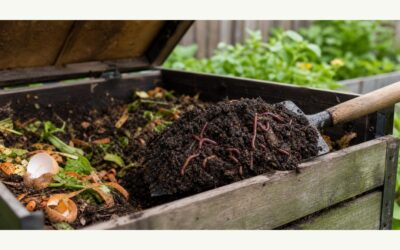



Choisir le meilleur composteur pour balcon d’appartement est différent de l’achat d’un système de compostage pour jardin. Les jardiniers en appartement doivent tenir compte du contrôle des odeurs, de la distance de transport, des règles du balcon, de l’accès et de la question de savoir si le bac servira principalement à recueillir les déchets de cuisine ou à traiter activement le compost à l’extérieur.
Nous avons comparé 22 produits de la sélection comparée, puis concentré nos recommandations sur les articles clairement adaptés à la collecte du compost ou au compostage dans les petits espaces. Si vous hésitez encore entre le stockage intérieur des déchets et une installation extérieure plus grande, notre guide général d’achat d’un composteur peut vous aider à comparer les différents types de bacs.
Les critères de choix les plus importants pour un balcon d’appartement sont la capacité, la gestion des odeurs, l’aération, la facilité de nettoyage, la simplicité de vidage et l’adéquation de la taille avec l’espace disponible. Les petits bacs de cuisine sont utiles pour conserver les déchets avant leur dépôt ou leur transfert, tandis que les composteurs rotatifs et les bacs extérieurs nécessitent suffisamment d’espace sur le balcon, un emplacement sûr et l’autorisation prévue par le règlement de l’immeuble.
Utopia Kitchen CB-13 Stainless Countertop Compost Bin for Cleaner Food Scrap Storage Epica SYNCHKG123584 Stainless Steel Countertop Compost Bin for Odor-Controlled Food Scrap Collection Tiyafuro 2.4-Gallon Kitchen Compost Bin for Compact, Accessible Indoor Waste Storage EKO 7L Kitchen Compost Bin for Compact Countertop Food Scrap Collection Les prix et la disponibilité peuvent changer. Nous pouvons percevoir une commission sur les achats éligibles.

Certaines fiches ci-dessous restent en anglais ; leur traduction est en cours de révision.
Pros
- Compact enough for countertop use while still offering 4.92 liters of listed capacity.
- Charcoal-filtered lid is intended to reduce odors from stored food scraps.
- Stainless steel body provides a sturdier alternative to many plastic scrap containers.
- Reviewers commonly mention that it is easy to clean and looks tidy in the kitchen.
- Useful for collecting scraps for compost piles, worm bins, chickens, or other separate food-waste handling systems.
Cons
- It stores scraps but does not turn them into finished compost on its own.
- The product information recommends thorough washing after each use, so it may require more routine cleaning than a disposable liner setup.
- Gardeners with large households or heavy daily food prep may prefer a larger collection bin.
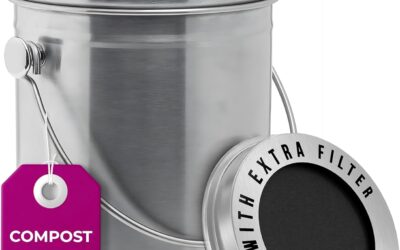
The Utopia Kitchen CB-13 is an indoor food scrap collection bin made for gardeners who want a cleaner way to move vegetable peels, coffee grounds, and other compostable kitchen waste out of the trash stream. Based on the listed specifications, it holds 1.3 gallons, or 4.92 liters, which suits small households, apartment gardeners, and homeowners who empty scraps into a backyard compost pile, worm bin, chicken feed bucket, or separate composting appliance.
The main benefit is convenience. Keeping a lidded compost bucket on the counter makes it easier to save scraps during meal prep instead of walking outside for every handful. The product information states that the lid includes charcoal filters designed to trap and control odors, and reviewers commonly mention reduced smell when the lid is closed. That can be especially helpful for beginners who are trying to build a composting habit without making the kitchen unpleasant.
The bin is listed as stainless steel with a silver cylindrical design, measuring 8.4 inches long, 7 inches wide, and 11 inches high. At 2 pounds, it should be manageable for most adults to lift and carry when full, though anyone with limited hand strength may still want to empty it before it becomes packed down. The stainless steel body is described as resistant to scratching, cracking, and chipping, giving it a more durable feel than many lightweight plastic scrap pails.
For small-space gardeners, the footprint is one of the most practical features. It can sit on a kitchen counter where scraps are generated, then be carried to a patio worm bin, raised-bed compost area, outdoor tumbler, or chicken run as part of a regular routine. Several reviewers also mention using liners or compost bags to simplify cleanup, although bag choice and compostability should be matched to your local composting setup.
This is not a compost maker by itself. It is a holding container, so food scraps still need to be emptied into a proper composting system or disposal stream. The manufacturer also recommends washing the bin thoroughly after each use to prevent odor, which is sensible for any indoor scrap container. Replacing or maintaining the charcoal filter will also be part of long-term use, though the published data does not specify an exact replacement schedule.
Gardeners who want a simple, good-looking countertop pail for daily food scrap collection are the best fit for this model. Those who generate a large volume of scraps, want hands-free opening, or need an appliance that actively processes waste into compost should consider a different option with more capacity or composting function.
Best For / Avoid If
Best for buyers prioritizing
- Compact enough for countertop use while still offering 4.92 liters of listed capacity.
- Charcoal-filtered lid is intended to reduce odors from stored food scraps.
- Stainless steel body provides a sturdier alternative to many plastic scrap containers.
Consider another option if
- It stores scraps but does not turn them into finished compost on its own.
- The product information recommends thorough washing after each use, so it may require more routine cleaning than a disposable liner setup.
- Gardeners with large households or heavy daily food prep may prefer a larger collection bin.
Pros
- Good countertop size for small households, apartment gardeners, and daily food scrap collection.
- Stainless steel body provides a durable, easy-to-clean surface based on the listed product materials.
- Charcoal filter is replaceable, so odor-control maintenance does not require replacing the entire bin.
- Reviewers commonly mention that it looks attractive on the counter and is simple to clean.
Cons
- It is a collection bin, not a full composting system, so scraps still need to be emptied into an outdoor pile, curbside organics bin, or other compost setup.
- Gardeners who cook heavily or generate large amounts of scraps may need to empty the 1.3-gallon bin frequently.
- Odor control depends on filter condition, scrap type, and emptying habits, and at least one reviewer reported odor escaping through the lid area.
The Epica SYNCHKG123584 is an in-home composting bin designed for kitchen countertops, not a backyard composter that finishes compost on its own. It gives gardeners and homeowners a tidy place to collect food scraps indoors before carrying them to an outdoor compost pile, raised-bed compost trench, community organics container, or municipal food-waste bin.
Based on the listed specifications, the main value is convenience. The 1.3-gallon capacity is large enough for regular kitchen prep scraps while staying small enough for visible counter use. For beginner composters, that matters because a bin that is easy to reach is more likely to be used consistently than a hidden container under the sink.
The product information indicates a stainless steel cylindrical body measuring 7.16 inches in diameter and 11 inches high. The one-piece molded design is described as resistant to leaks and rust, and it avoids welded seams that can be harder to maintain over time. The lid includes a replaceable activated-charcoal filter intended to help control odors naturally.
For small-space gardeners, patio growers, and homeowners with vegetable beds, this bin can serve as the indoor link between meal prep and soil building. It is well suited for collecting items such as produce trimmings and coffee grounds until they can be transferred outside. Reviewers commonly mention that the bin looks good on the counter, is easy to clean, and fits everyday kitchen use without feeling oversized.
There are some practical limits to keep in mind. This bin will not turn scraps into finished compost by itself, and it should be emptied regularly to reduce odor pressure, moisture buildup, and fruit fly risk. The charcoal filter is replaceable, but it will need maintenance over time, and odor control can vary depending on what is placed inside and how long scraps are stored.
This is a sensible choice for gardeners who want a compact, stainless steel food-scrap pail that can stay out on the counter. If you produce a large volume of kitchen waste, want foot-pedal operation, or prefer a fully sealed container without lid ventilation, a larger or different style of indoor organics bin may be a better fit.
Best For / Avoid If
Best for buyers prioritizing
- Good countertop size for small households, apartment gardeners, and daily food scrap collection.
- Stainless steel body provides a durable, easy-to-clean surface based on the listed product materials.
- Charcoal filter is replaceable, so odor-control maintenance does not require replacing the entire bin.
Consider another option if
- It is a collection bin, not a full composting system, so scraps still need to be emptied into an outdoor pile, curbside organics bin, or other compost setup.
- Gardeners who cook heavily or generate large amounts of scraps may need to empty the 1.3-gallon bin frequently.
- Odor control depends on filter condition, scrap type, and emptying habits, and at least one reviewer reported odor escaping through the lid area.
Pros
- Flexible placement options for countertops, under-sink areas, or compatible cabinet doors
- Compact capacity helps conserve usable kitchen and household space
- Included mounting accessories and trash bags make setup more convenient
- Smooth ABS plastic body should be relatively easy to rinse and clean
Cons
- Hanging installation may be less suitable for cabinet doors thicker than 0.95 inch or for doors that cannot support the bin comfortably
- The 2.4-gallon capacity may require frequent emptying for larger households or heavy kitchen use
- The product is intended for indoor waste collection, so gardeners needing an outdoor composting system will need a different solution
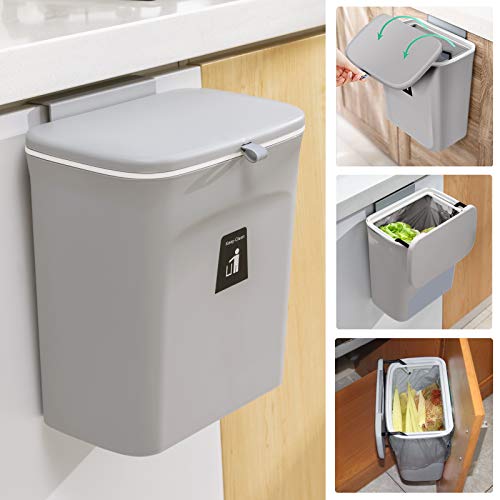
The Tiyafuro 2.4-gallon kitchen compost bin is a compact indoor container for collecting kitchen scraps and other household waste before disposal or transfer. It is a practical fit for homeowners, apartment residents, and gardeners who want a convenient collection point near food-preparation areas without adding a large floor bin.
Its fitted lid is designed to help keep odors from escaping, while the enclosed form keeps waste less exposed between emptying. The feature set suggests useful short-term storage for kitchen scraps, although the published information does not document a specific odor-control test or guarantee.
The bin measures about 10.2 by 6.3 by 11.6 inches and has a listed 2.4-gallon capacity. It can sit on a countertop or under a sink, or hang from a suitable cabinet or pantry door using the included hook or adhesive hooks. The listed door-thickness limit is less than 0.95 inch, so measure the intended door before installation.
For backyard and small-space gardening, this container can serve as an indoor holding point for kitchen scraps that will later be taken to an appropriate composting setup. It can also work in an RV, laundry area, bathroom, office, or other location where a smaller waste container is more useful than a full-size can.
The ABS plastic body is listed as easy to clean with soap and water, and the product information describes an interior without crevices intended to trap grime or liquids. Empty the container regularly, secure it carefully when hanging, and use a stable placement surface if adhesive mounting is not appropriate. Gardeners seeking outdoor compost processing, larger capacity, or a system with documented aeration should consider a different product.
Specifications
| Color | Gray |
|---|---|
| Size | 10.2 x 6.3 x 11.6 inches |
| Dimensions | 10.236220462 x 6.299212592 x 10.629921249 inches |
| Weight | 1.73 pounds |
| Product Group | Lawn & Patio |
| Binding | Lawn & Patio |
Verify the current product variation before purchase; specifications may change.
Best For / Avoid If
Best for buyers prioritizing
- Flexible placement options for countertops, under-sink areas, or compatible cabinet doors
- Compact capacity helps conserve usable kitchen and household space
- Included mounting accessories and trash bags make setup more convenient
Consider another option if
- Hanging installation may be less suitable for cabinet doors thicker than 0.95 inch or for doors that cannot support the bin comfortably
- The 2.4-gallon capacity may require frequent emptying for larger households or heavy kitchen use
- The product is intended for indoor waste collection, so gardeners needing an outdoor composting system will need a different solution
Pros
- Compact dimensions make it suitable for smaller kitchens, offices, and other space-limited areas.
- The removable liner helps keep bags in place and simplifies emptying.
- Multiple placement options provide more flexibility than a countertop-only food waste container.
Cons
- The 7L capacity may be less suitable for large households or gardeners who generate substantial food waste.
- Gardeners who need a larger outdoor composting container will need a separate compost bin or pile.
- The published information does not specify whether odor-control media, liners, or mounting hardware are included.
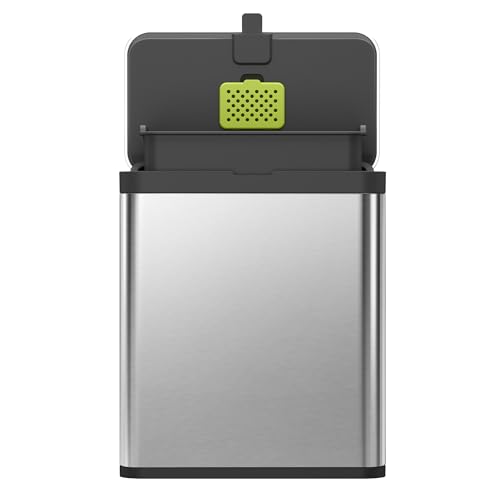
The EKO 7L kitchen compost bin is designed for collecting food scraps indoors before they are transferred to an outdoor compost pile, municipal organics program, or other disposal system. Its compact form makes it a practical fit for homeowners, apartment gardeners, and beginners who want a dedicated food waste container near food preparation areas.
Based on the listed specifications, the bin holds 7L, or about 1.85 gallons, and measures 9.88 by 6.65 by 11.42 inches. That capacity should work well for routine scrap collection in a smaller kitchen, while the swing lid helps keep the container closed between uses. The product listing also identifies a deodorizer compartment for adding odor-control media.
The stainless steel construction is listed as resistant to fingerprints, corrosion, and staining, which can help the bin maintain a tidy appearance during regular kitchen use. A removable inner bucket supports easier emptying, and the liner is intended to help keep garbage bags in place. The detachable design and carrying handle add convenience when moving the collected scraps for composting.
Placement is one of this bin's more flexible features. It can sit on a countertop, hang over a cabinet door, or be mounted on a wall, allowing gardeners to position it near a prep area without committing all of the available counter space. The listed dimensions should still be checked against cabinet clearance and wall space before installation.
This is a collection container, not a complete composting system, so it does not replace an outdoor compost bin, tumbler, or pickup service. The 7L capacity may also require frequent emptying in larger households or during heavy food-preparation periods. Routine cleaning of the inner bucket and lid area is sensible, and any wall or cabinet mounting should be completed securely according to the included instructions, if provided.
The EKO is a reasonable choice for gardeners who need a compact, movable food scrap caddy with flexible placement and easy-cleaning features. Those generating larger volumes of scraps, or looking for a product that composts material indoors, should consider a larger collection container or a dedicated indoor composting system instead.
Best For / Avoid If
Best for buyers prioritizing
- Compact dimensions make it suitable for smaller kitchens, offices, and other space-limited areas.
- The removable liner helps keep bags in place and simplifies emptying.
- Multiple placement options provide more flexibility than a countertop-only food waste container.
Consider another option if
- The 7L capacity may be less suitable for large households or gardeners who generate substantial food waste.
- Gardeners who need a larger outdoor composting container will need a separate compost bin or pile.
- The published information does not specify whether odor-control media, liners, or mounting hardware are included.

Pros
- Compact footprint at 23 inches long, 23.5 inches wide, and 29.5 inches high makes it easier to place than many larger compost bins.
- Tumbler format reduces the need for digging into a compost pile with a shovel or garden fork.
- Single sliding door keeps loading and unloading straightforward for new composters.
- Product information lists UV-protected plastic, tight seals, and a galvanized steel base for an outdoor composting setup.
Cons
- Single-chamber design means you may need to stop adding fresh scraps while a batch finishes, so heavy compost users may prefer a dual-chamber model.
- Several reviewers mention assembly can be tricky, especially snapping the side pieces and connectors together.
- Aeration openings and compost moisture may make it less suitable for clean patio surfaces unless placed where drips or small particles are acceptable.
The Miracle-Gro 18.5-gallon single chamber compost tumbler is built for homeowners who want a contained way to compost kitchen scraps and garden waste outdoors. It is especially relevant for beginners, small-yard gardeners, and raised-bed growers who do not want to manage an open compost pile.
The main gardening benefit is easier mixing. Instead of turning a pile with a fork, the product information indicates that you spin the tumbler every few days, while internal mixing bars and aeration support the breakdown process. Miracle-Gro lists a 4 to 6 week composting timeline, though real results will depend on the balance of greens and browns, moisture, temperature, and how consistently the bin is turned.
This model has a 70-liter capacity and measures 23 inches long, 23.5 inches wide, and 29.5 inches high, so it is more compact than many full-size compost bins. The listed design includes one sliding door, a hexagonal shape, side-locking mechanisms, tight seals, UV-protected BPA-free food-grade plastic, and a galvanized steel base. Garden gloves are also included.
In a typical backyard, this tumbler can sit near vegetable beds, flower borders, or a utility area where scraps are easy to add and finished compost is close to where it will be used. For small spaces, it offers a more orderly option than an open pile, but it is still best placed on flat ground or another surface where occasional moisture or small particles will not be a problem.
There are a few practical cautions. Reviewers commonly mention that assembly can require patience, especially aligning and snapping plastic parts together, so it may not be ideal for gardeners who struggle with hand strength or dexterity unless help is available. Like any compost system, it also needs the right mix of materials and regular turning to avoid slow decomposition or odors.
Overall, this is a sensible choice for gardeners who want a compact starter tumbler from a familiar garden brand and who produce a moderate amount of compostable waste. Gardeners with larger households, frequent yard cleanup, or a desire to start a new batch while another finishes may want to consider a larger or dual-chamber composter.
Specifications
| Brand Name | Miracle-Gro |
|---|---|
| UPC | 899069000720 |
| Manufacturer | DF Omer |
| Unit Count | 1 Count |
| Model Number | LEPPUSASHME3397 |
| Manufacturer Part Number | LEPUSASSFH3397 |
| Best Sellers Rank | #11,752 in Patio, Lawn & Garden (See Top 100 in Patio, Lawn & Garden) #5 in Outdoor Composting Bins |
| ASIN | B0785GSKJ1 |
| Customer Reviews | 4.2 4.2 out of 5 stars (14,600) 4.2 out of 5 stars |
| Capacity | 70 liters |
Verify the current product variation before purchase; specifications may change.
Best For / Avoid If
Best for buyers prioritizing
- Compact footprint at 23 inches long, 23.5 inches wide, and 29.5 inches high makes it easier to place than many larger compost bins.
- Tumbler format reduces the need for digging into a compost pile with a shovel or garden fork.
- Single sliding door keeps loading and unloading straightforward for new composters.
Consider another option if
- Single-chamber design means you may need to stop adding fresh scraps while a batch finishes, so heavy compost users may prefer a dual-chamber model.
- Several reviewers mention assembly can be tricky, especially snapping the side pieces and connectors together.
- Aeration openings and compost moisture may make it less suitable for clean patio surfaces unless placed where drips or small particles are acceptable.
Pros
- Two-bin setup supports batch composting instead of continuously mixing new scraps into one unfinished pile.
- Tumbling action can be easier for older gardeners or anyone who wants to avoid manual stirring.
- Listed dimensions give it a relatively compact footprint for a raised outdoor composter.
- Reviewers commonly mention that it feels sturdy once assembled and turns easily.
- Included gloves are a useful extra for routine garden cleanup and compost loading.
Cons
- Assembly may take time, and several reviewers say a second person makes panel alignment easier.
- The door opening may feel small for gardeners dumping larger bowls or countertop compost bags.
- Gardeners who generate a very large volume of yard waste may prefer a larger stationary bin or multi-bin system.
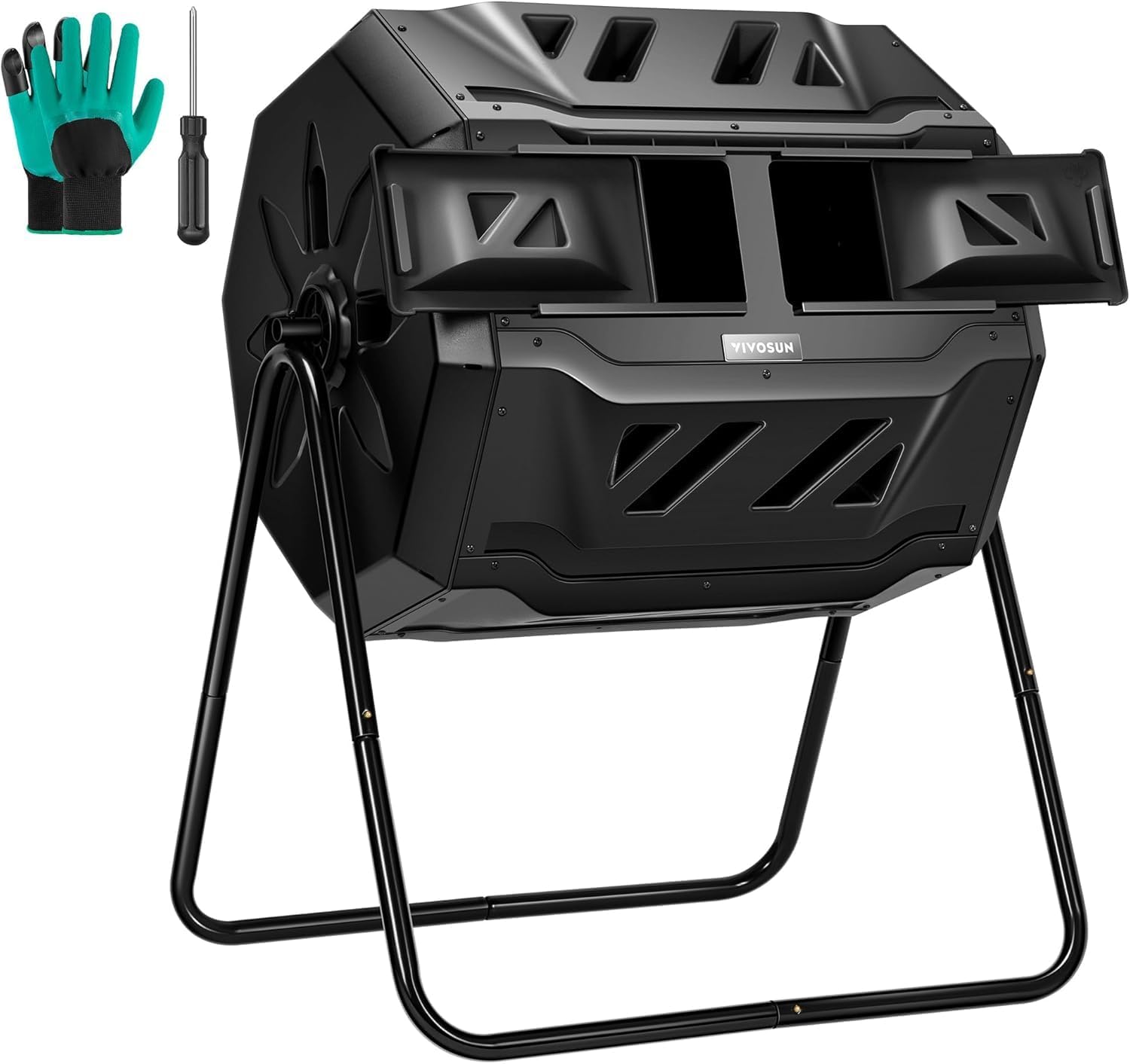
The VIVOSUN Outdoor Tumbling Composter is a 43 gallon compost bin for turning kitchen scraps and garden waste into compost in a contained outdoor setup. Based on the listed specifications, it is best suited to homeowners, raised-bed gardeners, and small-yard growers who want a cleaner alternative to an open compost pile and do not want to stir material by hand.
The main practical advantage is the dual-chamber layout. One side can hold material that is already composting while the other side stays available for fresh additions. For gardeners who add fruit and vegetable scraps, coffee grounds, leaves, or other compostable garden materials on a regular schedule, that batch-style setup can make it easier to let one side finish without constantly resetting the process.
The barrel rotates 360 degrees, and the product information lists air vents plus deep fins inside the panels. In plain terms, the tumbler is designed to mix the contents and introduce airflow as it turns, both of which are important for active composting. The octagonal shape, black body, and raised frame also keep the material off the ground, which can make turning and access more comfortable than working at soil level.
Its listed dimensions are 26.25 inches long by 23.6 inches wide by 36.5 inches high, with a listed capacity of 43 gallons and item weight of 21.67 pounds. The product description indicates a metal frame and PP plastic body, while the specifications also list galvanized steel. Reviewers commonly note that assembly involves many panels, screws, and a center divider, so beginners should plan time, organize parts first, and consider having a helper hold pieces in place.
In everyday backyard use, this composter fits gardeners who want to process a moderate stream of household scraps and light garden waste near a vegetable bed, patio edge, or utility area. The included garden gloves are a helpful extra for loading material or doing nearby planting work, though they do not replace careful hygiene. Always wash hands after handling compost materials, avoid adding unsuitable waste, and keep the unit on stable ground before rotating it.
The tradeoff is access size and assembly effort. Review feedback suggests the sliding doors may be less convenient when dumping larger containers, and gardeners with heavy compost output may want a larger bin. For many home gardeners, however, the VIVOSUN 43 gallon dual tumbler offers a useful balance of contained composting, easier mixing, and batch management in a compact outdoor footprint.
Best For / Avoid If
Best for buyers prioritizing
- Two-bin setup supports batch composting instead of continuously mixing new scraps into one unfinished pile.
- Tumbling action can be easier for older gardeners or anyone who wants to avoid manual stirring.
- Listed dimensions give it a relatively compact footprint for a raised outdoor composter.
Consider another option if
- Assembly may take time, and several reviewers say a second person makes panel alignment easier.
- The door opening may feel small for gardeners dumping larger bowls or countertop compost bags.
- Gardeners who generate a very large volume of yard waste may prefer a larger stationary bin or multi-bin system.

Pros
- Two-bin design supports a more continuous composting routine than a single-chamber tumbler.
- Raised rotating design reduces the need to fork or shovel a traditional compost pile.
- Listed dimensions make it compact enough for many home garden spaces.
- Reviewers commonly mention that it is lightweight and generally easy to rotate when not overfilled.
Cons
- Assembly may take patience, as several reviewers note many small fasteners and limited instructions.
- The tumbler does not list a side crank or handle, and some users report it can become harder to turn as it fills.
- Small sliding doors may be less convenient for gardeners emptying larger kitchen scrap containers or removing finished compost.
The Nazhura 43-gallon dual chamber compost tumbler is an outdoor composting bin for gardeners who want a cleaner, more contained alternative to an open compost pile. Based on the listed product information, it is intended for kitchen throw-outs, grass clippings, leaves, and other organic yard waste, making it suitable for homeowners, beginner composters, and small-yard gardeners who want to recycle everyday organic material.
The main benefit is the dual-bin design. One chamber can be used for new scraps while the other chamber continues breaking down, which helps avoid constantly disturbing a batch that is already composting. The rotating barrel is designed to mix materials and bring oxygen into the compost, a key part of keeping the process active without using a pitchfork.
The product specifications list a 43-gallon capacity, plastic and galvanized steel materials, and dimensions of 26.25 inches long by 23.6 inches wide by 36.5 inches high. At 21 pounds, the unit itself is not especially heavy before filling, though compost materials can add substantial weight. The sliding doors provide access for adding scraps and removing finished material, and the included garden gloves are a useful extra for routine garden handling.
In a typical backyard, this tumbler could sit near raised beds, a vegetable garden, or a side-yard utility area where kitchen scraps and dried leaves are easy to add. Its compact footprint may also work for gardeners who do not have space for a large three-bin compost system. For best results with any tumbler-style composter, gardeners should pay attention to the balance of wet green materials and dry brown materials so the contents do not become overly soggy.
The most common caution from reviewers is assembly. Several users describe the setup as doable but tedious, with many small nuts and bolts and instructions that may require careful interpretation. Some reviewers also mention that the unit can be harder to rotate as it gets fuller, and a few note leakage when the contents are too wet, so it is sensible to avoid overfilling and to add dry leaves or similar brown material when needed.
This is a sensible choice for gardeners who want an affordable-style, contained, dual-chamber composting system and do not mind a time-consuming assembly process. Gardeners who need a larger composting capacity, very large loading doors, or a built-in crank handle may want to compare other compost bin designs before choosing this one.
Best For / Avoid If
Best for buyers prioritizing
- Two-bin design supports a more continuous composting routine than a single-chamber tumbler.
- Raised rotating design reduces the need to fork or shovel a traditional compost pile.
- Listed dimensions make it compact enough for many home garden spaces.
Consider another option if
- Assembly may take patience, as several reviewers note many small fasteners and limited instructions.
- The tumbler does not list a side crank or handle, and some users report it can become harder to turn as it fills.
- Small sliding doors may be less convenient for gardeners emptying larger kitchen scrap containers or removing finished compost.

Pros
- 53-gallon capacity is useful for households that generate regular kitchen scraps and garden cleanup material.
- Two-chamber layout supports staggered batches instead of waiting for one full tumbler load to finish.
- Rotating design reduces the need for manual pile turning, which may help gardeners who prefer less lifting and digging.
- Product information lists adjustable vents, sliding doors, brake locks, and a gear-assisted handle for more convenient routine use.
Cons
- Assembly may take patience, and reviewers mention that the center divider and some instruction steps can be unclear.
- As with most tumblers, compost quality and speed still depend on the right mix of greens, browns, moisture, and airflow.
- Gardeners who want a no-assembly compost solution may prefer a simpler stationary bin.
The Maygrove MGN-CBG53X1-US is a 53-gallon outdoor compost tumbler designed for turning kitchen scraps and garden waste into usable compost for backyard beds, vegetable gardens, and container plantings. Its main appeal is the dual chamber setup, which lets one side receive new material while the other side continues decomposing.
Based on the listed features, the 360-degree rotating drum and built-in mixing bars are intended to reduce the work of turning compost by hand. The product information also lists adjustable air vents, which are helpful because compost needs oxygen and moisture balance to break down properly and reduce odor problems.
The design includes extra-wide sliding doors for loading and unloading, a gear-assisted handle for rotation, and dual-direction brake locks to help hold the drum steady during use. The listed construction combines polypropylene plastic with a solid steel frame, reinforced leg supports, and UV-resistant material for outdoor placement.
This tumbler is a practical fit for homeowners who want a contained composting system near a garden, raised beds, or a backyard growing area. It may also suit gardeners who do not want an open compost pile, since the rotating barrel keeps materials enclosed while still allowing mixing and airflow.
Assembly is the main point to approach carefully. Several reviewers describe setup as manageable, but some mention tricky steps, especially around the barrel panels, center divider, or instruction wording. Having a level work surface, reading the instructions before starting, and sorting hardware first may make the process easier.
For best results, users should follow the product guidance on what not to add and keep a balanced mix of moist green materials and dry brown materials. Gardeners who want continuous composting in a contained tumbler are a good match, while those who need the simplest possible setup or very large-volume composting may want to compare stationary bins or larger systems.
Specifications
| Brand Name | Maygrove |
|---|---|
| Manufacturer | Maygrove |
| Model Number | MGN-CBG53X1-US |
| Manufacturer Part Number | MGN-CBG53X1-US |
| Best Sellers Rank | #11,873 in Patio, Lawn & Garden (See Top 100 in Patio, Lawn & Garden) #2 in Outdoor Composting Tumblers |
| ASIN | B0G338V3V7 |
| Customer Reviews | 4.0 4.0 out of 5 stars (92) 4.0 out of 5 stars |
| Capacity | 53.01 gallons |
| Item Dimensions L x W x H | 23.8"L x 8.26"W x 30.3"H |
| Item Weight | 35.5 Pounds |
Verify the current product variation before purchase; specifications may change.
Best For / Avoid If
Best for buyers prioritizing
- 53-gallon capacity is useful for households that generate regular kitchen scraps and garden cleanup material.
- Two-chamber layout supports staggered batches instead of waiting for one full tumbler load to finish.
- Rotating design reduces the need for manual pile turning, which may help gardeners who prefer less lifting and digging.
Consider another option if
- Assembly may take patience, and reviewers mention that the center divider and some instruction steps can be unclear.
- As with most tumblers, compost quality and speed still depend on the right mix of greens, browns, moisture, and airflow.
- Gardeners who want a no-assembly compost solution may prefer a simpler stationary bin.
Pros
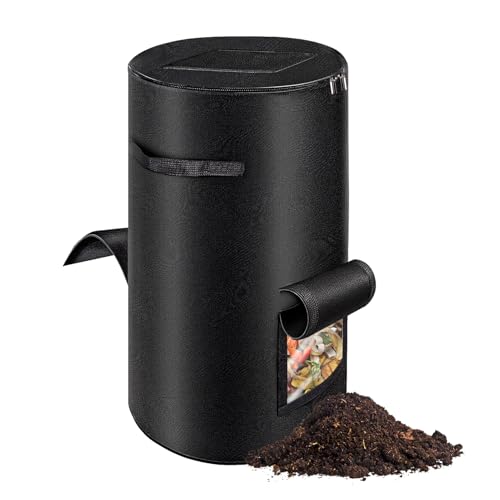
- Combines a generous capacity with a lightweight, collapsible format.
- Observation windows can make routine compost checking and soil removal more convenient.
- Useful for multiple outdoor collection tasks, including leaves, plant debris, and food scraps.
Cons
- Gardeners who prefer a rigid compost bin may find the felt bag less structured than a hard-sided option.
- The product information does not specify weather resistance or waterproofing, so extended exposure to rain may require extra consideration.
- Care is needed when removing soil so it does not contact the self-adhesive strips around the access windows.
The Niuyhe 34-gallon compost bag is a reusable felt container for collecting and handling household food scraps, leaves, weeds, and other garden debris. Its large capacity and upright design make it a practical fit for homeowners and beginner gardeners who need a dedicated collection point for composting materials.
Based on the listed specifications, the 600g felt material is intended to be sturdy, lightweight, and breathable for repeated use. The breathable construction and household fermentation focus may suit gardeners who want to keep composting materials together without committing to a permanent hard-sided bin.
The bag measures approximately 31.5 inches high and 17.72 inches in diameter. A dual-zipper opening provides broad access from the top, while reinforced handles on both sides support repositioning. When storage space is limited, the foldable design allows the container to be reduced in size between uses.
In a backyard or patio garden, the bag can collect pruning debris, fallen leaves, wilted plant parts, and kitchen scraps before those materials are managed in a composting routine. The two bottom windows are intended for checking fermentation progress and retrieving soil, which can reduce the need to open the entire top each time.
There are a few practical limitations to consider. The specifications do not identify the bag as waterproof or weather resistant, so placement and protection from prolonged rain may matter. When using the bottom access windows, avoid letting soil touch the self-adhesive strips, as the product information specifically calls for this precaution. Overall, it is a sensible choice for gardeners seeking a spacious, reusable, foldable composting bag, while those wanting a rigid or fully weather-specified bin should compare other formats.
Best For / Avoid If
Best for buyers prioritizing
- Combines a generous capacity with a lightweight, collapsible format.
- Observation windows can make routine compost checking and soil removal more convenient.
- Useful for multiple outdoor collection tasks, including leaves, plant debris, and food scraps.
Consider another option if
- Gardeners who prefer a rigid compost bin may find the felt bag less structured than a hard-sided option.
- The product information does not specify weather resistance or waterproofing, so extended exposure to rain may require extra consideration.
- Care is needed when removing soil so it does not contact the self-adhesive strips around the access windows.
Pros
- Two-chamber layout supports batch composting instead of mixing fresh waste into nearly finished compost.
- Elevated rotating design helps reduce direct ground contact and makes routine turning simpler than managing an open pile.
- BPA-free, UV-inhibited polypropylene is listed as contact safe and intended to resist fading and damage from direct sunlight.
- Octagonal shape and built-in hand holds are designed to make rotation easier during regular maintenance.
- Made in Canada from 100% post-consumer recycled resin, according to the product information.
Cons
- Compost timing depends on warm conditions and balanced ingredients, so the listed two-week result should not be expected in every climate or season.
- At 30 inches long by 28 inches wide by 36 inches high, it may need more dedicated space than very compact countertop or worm composting options.
- Gardeners who produce large volumes of leaves, grass clippings, or livestock bedding may prefer a larger composting system.
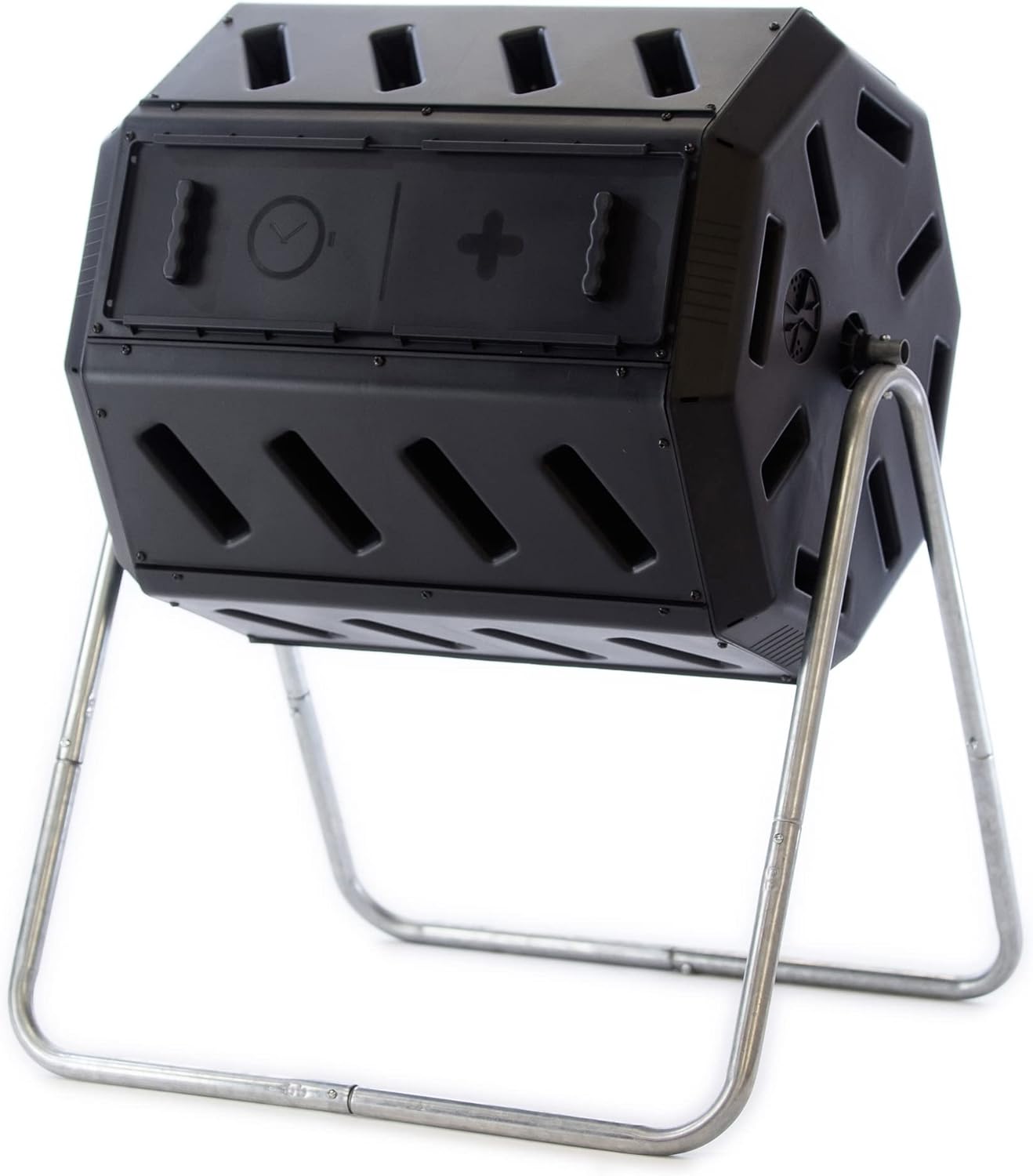
The FCMP Outdoor IM4000 is a 37-gallon tumbling composter built for turning kitchen scraps and yard waste into garden compost without maintaining an open pile. Its dual-chamber layout is especially useful for homeowners, beginner composters, and small-space gardeners who want a more organized way to manage compost in batches.
The main advantage is the two-sided system. One chamber can be filled with fresh material while the other side cures, which helps avoid the common problem of continually adding scraps to compost that is almost finished. The product information recommends rotating the bin 5 to 6 times every 2 to 3 days for best results, and notes that compost can be ready in as little as two weeks in warm, sunny conditions with balanced ingredients.
Based on the listed specifications, the IM4000 measures 30 inches long by 28 inches wide by 36 inches high and weighs 28 pounds. The 8-sided polypropylene body includes deep fins for gripping and mixing, aeration holes for airflow, wide openings, and a removable door for loading and unloading. The frame is galvanized steel, and the plastic is described as BPA-free, UV-inhibited, and made from 100% post-consumer recycled resin.
For backyard gardens, raised-bed growers, and patio-adjacent composting areas, this style of elevated tumbler can be easier to manage than a ground pile. It keeps the compost contained, rotates instead of requiring fork turning, and provides enough listed capacity for regular household vegetable scraps, plant trimmings, and moderate yard debris. Its black color and compact upright footprint may also fit neatly beside a shed, fence line, or garden work area.
There are a few practical limits to keep in mind. Like any composting system, results depend on moisture, airflow, temperature, and the balance of green and brown materials, so it is not a set-and-forget bin. The 37-gallon capacity is useful for many home gardeners, but people with heavy seasonal leaf loads or large lawns may need additional composting space. Gardeners should also place the unit on a stable surface and avoid overfilling, since extra weight can make turning more difficult.
Overall, the FCMP Outdoor IM4000 is a sensible choice for gardeners who want a contained, rotating, dual-batch composting setup made with recycled plastic. It is best suited to routine kitchen and garden waste rather than high-volume yard cleanup, and it will be most rewarding for users willing to turn it regularly and manage the ingredient balance.
Best For / Avoid If
Best for buyers prioritizing
- Two-chamber layout supports batch composting instead of mixing fresh waste into nearly finished compost.
- Elevated rotating design helps reduce direct ground contact and makes routine turning simpler than managing an open pile.
- BPA-free, UV-inhibited polypropylene is listed as contact safe and intended to resist fading and damage from direct sunlight.
Consider another option if
- Compost timing depends on warm conditions and balanced ingredients, so the listed two-week result should not be expected in every climate or season.
- At 30 inches long by 28 inches wide by 36 inches high, it may need more dedicated space than very compact countertop or worm composting options.
- Gardeners who produce large volumes of leaves, grass clippings, or livestock bedding may prefer a larger composting system.

Pros
- Compact dimensions fit small kitchens, apartments, RVs, and tight areas near the sink.
- Lid can hang to the side for more convenient hands-free scooping.
- Sturdy plastic construction resists stains and odors, according to the product information.
- Works with most standard small trash liners, which can help keep the interior cleaner.
Cons
- The 1.3-gallon capacity may require frequent emptying in households that produce large amounts of food scraps.
- The over-door hook is intended for cabinet doors under 1 inch thick, so thicker doors may require the adhesive mounting option or another solution.
- An adhesive installation requires a flat, clean surface and may be less flexible than a freestanding bin.
The stonespace 1.3-gallon compost bin is an in-home container for collecting kitchen food scraps before they are transferred to an outdoor compost pile or curbside bin. Its hanging design is particularly well suited to apartment kitchens, RVs, and small homes where countertop and floor space are limited.
The product information indicates that the sealed lid is intended to contain food odors and help prevent fruit flies. This makes the bin useful for holding coffee grounds, vegetable peels, fruit scraps, and other daily kitchen waste between emptying trips.
At 7.5 by 5.7 by 9.6 inches, the bin has a slim profile for placement near a sink, inside a cabinet, or in a tight corner. It includes an over-door hook for cabinet doors under 1 inch thick, along with an adhesive mount for a suitable flat, clean surface. The lid can hang to the side while scraps are being added.
The 5L capacity provides a practical collection point during meal preparation and cleanup without requiring a large dedicated compost station. After use, the lightweight bin can be lifted out for emptying, then returned to its hook or mount, making it a convenient fit for compact indoor composting routines.
The smooth plastic interior is designed for wiping or washing with soap and water, and small liners may help reduce cleanup. Users should confirm cabinet-door thickness before choosing the hook and empty the container as needed, since its compact capacity may be less suitable for households producing a high volume of scraps. It is a sensible choice for accessible, space-conscious kitchen scrap collection, while gardeners wanting a larger freestanding container may prefer a different option.
Specifications
| Color | Blue |
|---|---|
| Size | 5L/1.3GAL |
| Dimensions | 7.5 x 5.7 x 9.6 inches |
| Product Group | Home |
| Binding | Misc. |
Verify the current product variation before purchase; specifications may change.
Best For / Avoid If
Best for buyers prioritizing
- Compact dimensions fit small kitchens, apartments, RVs, and tight areas near the sink.
- Lid can hang to the side for more convenient hands-free scooping.
- Sturdy plastic construction resists stains and odors, according to the product information.
Consider another option if
- The 1.3-gallon capacity may require frequent emptying in households that produce large amounts of food scraps.
- The over-door hook is intended for cabinet doors under 1 inch thick, so thicker doors may require the adhesive mounting option or another solution.
- An adhesive installation requires a flat, clean surface and may be less flexible than a freestanding bin.

Pros
- Compact countertop format for routine food-scrap collection
- Smooth interior and removable lid support easier cleaning and emptying
- Rotating handle helps with transport to an outdoor composter
Cons
- The 0.75-gallon capacity may require frequent emptying in larger households or during heavy food-preparation periods
- Gardeners collecting large amounts of scraps may prefer a larger container for fewer trips
- The published information does not specify a liner system, dishwasher suitability, or other cleaning accessories
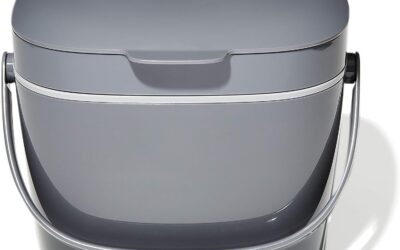
The OXO Good Grips Easy-Clean Compost Bin is an in-home composting container intended for collecting kitchen food scraps before they are taken to an outdoor composter. Its 0.75-gallon capacity and countertop-oriented design make it a practical fit for homeowners, apartment gardeners, and small-space growers who want a dedicated place for daily scraps.
The main usability benefits come from the lid and interior design. The lid flips up for filling and flips down to help lock in odors, while smooth interior walls are designed to reduce the buildup of foods and liquids. These features suggest a simpler routine for holding scraps between trips outside.
The bin measures approximately 6.6 by 6.4 by 7.5 inches and weighs 1.19 pounds, based on the listed specifications. Its contoured bottom and removable lid are intended to make emptying easier, and the rotating handle provides a more convenient grip when carrying waste to an outdoor composter.
In a backyard composting setup, this bin can sit near a food-preparation area and serve as a temporary collection point before scraps move outdoors. Its compact footprint may also work well in kitchens supporting patio containers, raised beds, or other small-space growing arrangements, although the published information does not specify how often it must be emptied under different household conditions.
The 0.75-gallon capacity may be less suitable for larger households or gardeners who generate substantial amounts of food waste, since it could require more frequent trips to the outdoor composter. Users should follow appropriate food-scrap handling and cleaning practices, and should not assume dishwasher compatibility or a liner system because those details are not provided. This bin is best suited to people who value a compact, easy-to-carry countertop collector, while high-volume composters may prefer a larger option.
Best For / Avoid If
Best for buyers prioritizing
- Compact countertop format for routine food-scrap collection
- Smooth interior and removable lid support easier cleaning and emptying
- Rotating handle helps with transport to an outdoor composter
Consider another option if
- The 0.75-gallon capacity may require frequent emptying in larger households or during heavy food-preparation periods
- Gardeners collecting large amounts of scraps may prefer a larger container for fewer trips
- The published information does not specify a liner system, dishwasher suitability, or other cleaning accessories
Pros
- Compact size with useful daily food-scrap capacity for small households and kitchens
- Charcoal filter is replaceable, supporting ongoing odor-control maintenance
- Stainless steel construction and a smooth interior should simplify rinsing and cleanup
Cons
- This is a kitchen collection container, not a complete composting system, so scraps still need to be transferred for processing.
- The 1.3-gallon capacity may require frequent emptying for larger households or heavy food preparation.
- Ongoing odor control depends on keeping the lid closed and replacing the charcoal filter as needed.
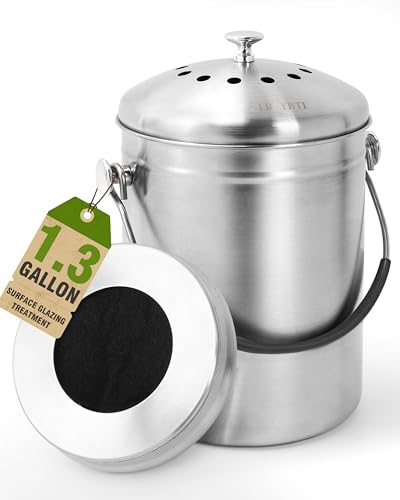
The LRYYBTI Countertop Compost Bin is an indoor food-scrap collection container designed for gardeners who want a convenient place to hold kitchen waste before taking it to an outdoor compost setup or another collection service. Its 1.3-gallon capacity and compact footprint make it particularly suitable for apartments, small kitchens, and households with limited storage space.
The feature set focuses on containing everyday scraps such as fruit peels, vegetable trimmings, and coffee grounds. The ventilated lid is designed to allow airflow while helping keep odors inside, and the included activated charcoal filter is replaceable for continued odor-control maintenance.
Based on the listed specifications, the bin measures 7 x 7 x 9.7 inches and weighs 2 pounds. Its wrapped carry handle should make it easier to move when emptying, while the stainless steel body and seamless inner tank are intended to resist rust, stains, and food residue buildup. No assembly or installation is indicated.
For backyard gardeners, this bin can serve as a convenient kitchen-side staging point for scraps that will later go to an outdoor compost pile or other approved composting method. It can also work in a pantry or under-sink area when countertop space is limited, provided the dimensions fit the available spot.
The bin does not itself process or finish compost, so it must be emptied regularly and cleaned as needed. Users should follow their local composting program's accepted-material guidelines, keep the lid properly closed, and replace the charcoal filter when odor control declines. It is a sensible choice for compact indoor scrap collection, while larger households may prefer a higher-capacity container or a separate system designed for more frequent food-waste handling.
Best For / Avoid If
Best for buyers prioritizing
- Compact size with useful daily food-scrap capacity for small households and kitchens
- Charcoal filter is replaceable, supporting ongoing odor-control maintenance
- Stainless steel construction and a smooth interior should simplify rinsing and cleanup
Consider another option if
- This is a kitchen collection container, not a complete composting system, so scraps still need to be transferred for processing.
- The 1.3-gallon capacity may require frequent emptying for larger households or heavy food preparation.
- Ongoing odor control depends on keeping the lid closed and replacing the charcoal filter as needed.

Pros
- Includes enough charcoal filters for an indicated 9 to 12 months of odor protection.
- Countertop-friendly size and farmhouse-inspired styling can fit more naturally into a visible kitchen area.
- Handle and fitted lid make moving collected scraps to an outdoor compost system more straightforward.
Cons
- Its 1.3-gallon capacity may be less suitable for busy households that generate large amounts of food waste between compost drop-offs.
- Because it is intended for countertop use, gardeners who prefer an out-of-sight under-sink container may want a different shape or placement option.
- The liner-free design requires washing the container rather than simply removing and replacing a disposable bag.
The Granrosi 1.3-gallon compost bin is an indoor countertop container for collecting food scraps, vegetable peels, and coffee grounds before they are moved to a yard bin or outdoor compost tumbler. Its compact footprint and farmhouse-inspired appearance make it a practical fit for homeowners who want a dedicated collection point near the kitchen work area.
The most useful feature for indoor use is the activated charcoal filter system. One filter is installed and two replacements are included, with each filter listed as lasting three to four months. This feature set suggests a convenient way to help manage odors between emptying trips, although the bin should still be emptied and cleaned as part of normal kitchen compost care.
Based on the listed specifications, the bin measures approximately 7.5 by 7.5 by 11.4 inches and weighs about 2.6 pounds. The fitted lid is designed to stay seated during transport, while the reinforced handle provides a direct way to carry the contents outside. No assembly or installation is indicated, so use appears limited to placing the bin on a stable countertop and maintaining the filter and container.
For a backyard compost setup, this pail can collect scraps indoors and then be carried to a compost bin or tumbler when full. It may also work well in smaller kitchens where a larger floor container would be inconvenient. The 1.3-gallon size provides useful capacity, but households producing substantial food waste may need to empty it more often.
The coated stainless steel body is listed as resistant to rust, scratches, and leaks, and the care instructions call for wiping the lid with a damp cloth and washing the body with warm soapy water. Since the design is liner-free, routine cleaning is part of ownership. Overall, it is a sensible choice for gardeners who want a reusable, visible kitchen scrap container with included odor-control filters, while users who prefer disposable liners or a hidden under-sink bin may prefer another style.
Best For / Avoid If
Best for buyers prioritizing
- Includes enough charcoal filters for an indicated 9 to 12 months of odor protection.
- Countertop-friendly size and farmhouse-inspired styling can fit more naturally into a visible kitchen area.
- Handle and fitted lid make moving collected scraps to an outdoor compost system more straightforward.
Consider another option if
- Its 1.3-gallon capacity may be less suitable for busy households that generate large amounts of food waste between compost drop-offs.
- Because it is intended for countertop use, gardeners who prefer an out-of-sight under-sink container may want a different shape or placement option.
- The liner-free design requires washing the container rather than simply removing and replacing a disposable bag.

Pros
- Odor-reducing lid does not require charcoal filter replacements.
- Removable basket supports simpler emptying and cleaning.
- Compact, lightweight design fits regular kitchen scrap collection.
Cons
- The 1.3-gallon capacity may require frequent emptying in households that produce larger amounts of food waste.
- It is a collection bin rather than a complete composting system, so scraps still need to be transferred to a suitable composting or organics-processing option.
- The listed dimensions should be checked against available counter or cabinet space before purchase.
The Arkalis Kitchen Compost Bin is an indoor food-scrap collection container designed for countertop use. Its main garden-related task is holding kitchen scraps until they can be moved to an outdoor compost system, community organics program, or other appropriate food-waste destination. It is a practical fit for homeowners, apartment residents, and small-space gardeners who want a dedicated container instead of an open bowl.
The most useful feature is the secure, well-fitted lid, which the product information says helps reduce everyday kitchen odors without charcoal filters. That can make routine scrap collection more comfortable on a kitchen counter. The bin is also described as suitable for indoor composting, but it should be understood as a holding container rather than a complete composting process.
Based on the listed specifications, the bin measures 10.04 by 7.68 by 6.69 inches and weighs 1.14 pounds. Its removable inner basket is intended to make emptying and rinsing easier, while the lightweight design should simplify carrying scraps to a compost area or collection point. No assembly, controls, installation, or special storage requirements are listed.
The compact format can work well in kitchens serving balcony gardens, patio planters, raised beds, or other small growing spaces where food scraps are collected in modest amounts. A gardener can keep it near food-preparation areas, fill it during daily cooking, and then transfer the contents as needed. The light grey finish is neutral enough for many kitchen settings, although available counter space should be measured before purchase.
The 1.3-gallon capacity may be less suitable for larger households or gardeners who generate substantial food waste between emptying trips. Regular cleaning is still important, even with odor reduction, and the removable basket and dishwasher-safe design are intended to support that maintenance. Overall, this bin is best for simple, organized indoor scrap collection, while gardeners needing on-site decomposition, higher capacity, or a specialized composting system should consider a different option.

Pros
- Compact 4-liter size suits apartments, small kitchens, and gardeners who empty scraps regularly.
- Wide opening and flip-up lid are practical for scraping plates and collecting prep waste.
- Adjustable air vent gives users some control over moisture and insect barrier needs.
- Cupboard-door mounting bracket adds a useful storage option beyond countertop placement.
Cons
- The small capacity may be less suitable for large households or gardeners who generate a lot of food waste between emptying.
- Plastic construction may not appeal to shoppers looking for metal or ceramic compost caddies.
- Custom-fit liner compatibility is listed for Joseph Joseph IW2 liners, so gardeners using other liners may need to check fit carefully.
The Joseph Joseph 30046 Compo is an in-home food waste caddy made for collecting kitchen scraps before they are taken to a compost pile, outdoor bin, or food waste collection system. With a 4-liter capacity and a slim rectangular shape, it is aimed at homeowners, apartment gardeners, and small-space growers who want a neat place to keep peelings, trimmings, and plate scrapings during daily kitchen use.
The most useful feature is the combination of a flip-up lid and an extra-wide opening. That design is intended to make it easier to scrape food waste directly from plates or cutting boards without aiming into a narrow container. For gardeners who compost regularly, a dedicated indoor caddy can also help separate food scraps from general trash and make the routine easier to maintain.
Based on the listed specifications, the caddy measures 4.72 inches long by 11.69 inches wide by 6.81 inches high and is made from plastic in a stone color. The lid includes an adjustable air vent that can be opened to let moisture escape, which the product information says may help reduce odor buildup, or closed to provide a barrier to insects in hotter climates. It also comes with a bracket for mounting on a cupboard door, giving users a way to keep the caddy accessible but off the counter.
This is a practical choice for small kitchens, patio gardeners, raised-bed growers, and anyone who empties scraps into an outdoor compost bin after meal prep. The slim profile should fit better in tight spaces than bulkier countertop pails, and the cupboard mounting option may be especially helpful where counter space is limited.
There are a few limitations to keep in mind. A 4-liter caddy is convenient for frequent emptying, but it may fill quickly in larger households or during heavy cooking days. Because it is a collection caddy rather than a composting system, the scraps still need to be transferred to an appropriate outdoor compost bin, municipal collection container, or other food waste setup. Routine cleaning is also important with any indoor scrap container to manage residue and kitchen odors.
Gardeners who want a compact, easy-access food waste caddy with flexible venting and cupboard-door storage should find this model well matched to everyday scrap collection. Those who prefer a larger container, a non-plastic material, or a caddy designed around a different liner system may want to compare other indoor compost bin options before choosing.
Best For / Avoid If
Best for buyers prioritizing
- Compact 4-liter size suits apartments, small kitchens, and gardeners who empty scraps regularly.
- Wide opening and flip-up lid are practical for scraping plates and collecting prep waste.
- Adjustable air vent gives users some control over moisture and insect barrier needs.
Consider another option if
- The small capacity may be less suitable for large households or gardeners who generate a lot of food waste between emptying.
- Plastic construction may not appeal to shoppers looking for metal or ceramic compost caddies.
- Custom-fit liner compatibility is listed for Joseph Joseph IW2 liners, so gardeners using other liners may need to check fit carefully.

Pros
- Compact footprint suits kitchens with limited counter space.
- Includes two filters and has a built-in compartment for odor management.
- Durable, easy-to-clean carbon steel design with a convenient carry handle.
- Useful bridge between daily food-scrap collection and backyard composting.
Cons
- The 1.1-gallon capacity may be less suitable for large households or gardeners producing substantial amounts of food waste.
- Ongoing odor control may require attention to the included charcoal filters and regular emptying.
- The product information does not specify outdoor weather suitability, so it is best treated as an indoor countertop container.
The KIBAGA countertop compost bin is designed for collecting food and other organic waste in the kitchen before transferring it to a backyard compost setup or another approved collection method. It is a sensible choice for homeowners, apartment gardeners, and beginners who want a dedicated food-scrap container close to the cooking area.
Its main garden-related benefit is convenience. Keeping scraps in a single 1.1-gallon container can make routine collection more organized and help support the steady supply of organic material used in home composting. The listed charcoal filter compartment and lid air holes are intended to help manage odors while allowing airflow.
Based on the listed specifications, the bin measures 7 by 7 by 10.2 inches and weighs about 2.89 pounds. Its compact footprint can fit on many kitchen counters, while the wooden handle supports easier carrying when the container needs to be emptied. No assembly or installation is indicated in the published product information.
This bin can be useful in small-space gardening situations where a patio, balcony, or backyard compost system is fed from kitchen scraps. The beige powder-coated carbon steel body, wooden handle, and wooden knob also make it suitable for kitchens where appearance matters alongside waste-sorting function.
The capacity may be limiting for large households or anyone generating a high volume of food waste, so those users may prefer a larger collection container. Regular emptying and attention to the charcoal filters are likely part of maintaining odor control, although the published information does not specify filter replacement timing. Overall, it appears to be a practical indoor collection bin for gardeners who want a compact, easy-to-carry starting point for food-scrap recycling.
Best For / Avoid If
Best for buyers prioritizing
- Compact footprint suits kitchens with limited counter space.
- Includes two filters and has a built-in compartment for odor management.
- Durable, easy-to-clean carbon steel design with a convenient carry handle.
Consider another option if
- The 1.1-gallon capacity may be less suitable for large households or gardeners producing substantial amounts of food waste.
- Ongoing odor control may require attention to the included charcoal filters and regular emptying.
- The product information does not specify outdoor weather suitability, so it is best treated as an indoor countertop container.
Pros
- Compact footprint works well for kitchens, apartments, RVs, offices, and other space-limited areas.
- Tool-free installation includes a cabinet hook and an adhesive hook for flexible placement.
- A lid and liner-retaining ring support cleaner, more contained food-waste handling.
Cons
- The cabinet-door hook is specified for doors thinner than 1 inch, so thicker or unusually shaped doors may not fit.
- The adhesive option requires a flat, clean vertical surface and may not suit textured or dusty areas.
- Because the listing focuses on waste storage, gardeners seeking an actively aerated composting system with drainage may prefer a dedicated compost bin.
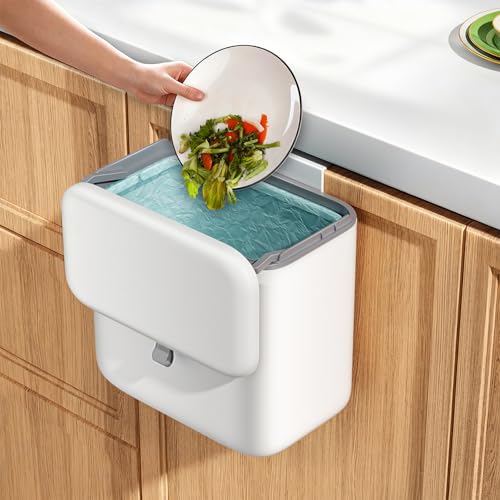
The Gleynest is a small food-waste storage bin for collecting kitchen scraps before they move to an outdoor compost system, municipal organics collection, or another disposal method. Its compact format suits homeowners, apartment gardeners, RV users, and anyone who wants a dedicated place for scraps without keeping a larger waste can nearby.
Based on the listed feature set, the main benefit is more convenient daily handling. The container can hang from a suitable cabinet door, attach to a flat vertical surface with the adhesive hook, or stand on a counter, under a sink, or another stable location. Keeping it near meal preparation areas may make routine scrap collection easier for gardeners who save vegetable trimmings for later use.
The bin measures about 10.2 by 6.3 by 9.4 inches and weighs 1.3 pounds, with a listed capacity of 2.6 gallons. Its flip-up or slide-down lid gives users two access methods, while the retaining ring is intended to help hold a garbage bag in place. The ABS plastic body is described as lightweight and easy to clean with a cloth.
For backyard and small-space gardening, this container can serve as an indoor collection point for fruit and vegetable scraps, coffee-related waste, or other household organics before they are transferred elsewhere. It may also work as a compact recycling or general waste container in a potting area, laundry room, office, or RV, although the published information does not specify outdoor weather resistance.
The cabinet-door mounting option requires a door thinner than 1 inch, and the adhesive hook needs a flat, clean vertical surface. The listing describes odor and fruit-fly control through the lidded design, but actual results can depend on the type and age of the stored waste. This is best viewed as a convenient covered collection bin, not a complete composting system, since no aeration or drainage features are specified.
Gardeners who want an accessible, wipe-clean scrap container with several placement options should find the feature set practical. Those needing a larger outdoor unit, built-in compost aeration, drainage, or a system designed for active decomposition should consider a dedicated compost bin instead.
Specifications
| Color | White |
|---|---|
| Size | 10.2 inches x 6.3 inches x 9.4 inches |
| Dimensions | 10.2 x 6.3 x 9.4 Inches |
| Weight | 1.3 Pounds |
| Product Group | Kitchen |
Verify the current product variation before purchase; specifications may change.
Best For / Avoid If
Best for buyers prioritizing
- Compact footprint works well for kitchens, apartments, RVs, offices, and other space-limited areas.
- Tool-free installation includes a cabinet hook and an adhesive hook for flexible placement.
- A lid and liner-retaining ring support cleaner, more contained food-waste handling.
Consider another option if
- The cabinet-door hook is specified for doors thinner than 1 inch, so thicker or unusually shaped doors may not fit.
- The adhesive option requires a flat, clean vertical surface and may not suit textured or dusty areas.
- Because the listing focuses on waste storage, gardeners seeking an actively aerated composting system with drainage may prefer a dedicated compost bin.

Pros
- Generous capacity for routine household and garden waste collection.
- Portable design with handles and a foldable form for easier handling and storage.
- Multiple access points make loading and removing compost more convenient.
- Viewing window helps gardeners check material changes without fully opening the bin.
Cons
- The product information does not specify a weather rating, so placement may require protection from prolonged exposure.
- The listed specifications do not describe a dedicated drainage system or rigid base.
- Gardeners who prefer a hard-sided bin may find a felt bag less structured for long-term placement.
The Atvkov 34-gallon compost bin is a flexible outdoor composting bag for collecting and fermenting fruit peels, weeds, fallen leaves, plant fragments, and other garden waste. Its size and portable design make it suitable for homeowners, beginner gardeners, and anyone who wants a simple compost container without a rigid bin structure.
Based on the listed specifications, the main convenience comes from the combination of generous capacity, breathable felt construction, and several access points. The top zipper provides a broad loading area, while the transparent side window lets gardeners observe changes inside the bag during fermentation. These features can make routine monitoring and material handling more straightforward.
The bin measures 17.7 by 17.7 by 31.5 inches and is described as having a 34-gallon capacity. Handles on both sides support repositioning, and the foldable design is useful for storage when the container is not needed. Top and bottom square ports provide separate ways to add material or remove soil and compost during the process.
In a backyard or garden setting, the bag can serve as a central collection point for fallen leaves, plant trimmings, and kitchen fruit peels. Its portable format may also suit gardeners who need to move the container between outdoor areas, although the available information does not specify a required surface, drainage arrangement, or weather protection.
The thick felt is described as breathable, tear-resistant, lightweight, and intended for repeated use. Gardeners should keep the bag in a suitable location and monitor moisture and material condition during composting, especially because the product information does not list a weather-resistance rating or dedicated drainage feature. Overall, it appears well suited to users who value accessible loading, visual monitoring, and compact storage.
Choose this bin if you want a portable, large-capacity compost bag with handles and multiple openings. A different option may be preferable if you need a rigid container, a specified weather rating, or clearly documented drainage and base features.
Best For / Avoid If
Best for buyers prioritizing
- Generous capacity for routine household and garden waste collection.
- Portable design with handles and a foldable form for easier handling and storage.
- Multiple access points make loading and removing compost more convenient.
Consider another option if
- The product information does not specify a weather rating, so placement may require protection from prolonged exposure.
- The listed specifications do not describe a dedicated drainage system or rigid base.
- Gardeners who prefer a hard-sided bin may find a felt bag less structured for long-term placement.

Pros
- Convenient rolling format for moving compost closer to garden beds or other outdoor areas.
- Single-chamber tumbling design reduces the need to mix compost by hand.
- Beginner-friendly access with a large opening and removable door.
- Compact 24 x 12 x 24-inch footprint can fit many smaller outdoor spaces.
Cons
- The 19-gallon capacity may be less suitable for large households or gardeners producing substantial amounts of yard waste.
- A single-chamber batch design may be less convenient for gardeners who want to start multiple compost batches at different stages.
- Compost timing depends on maintaining a suitable balance of ingredients and providing the recommended regular rotations.
The FCMP Outdoor HOTFROG is a 19-gallon, single-chamber batch tumbling composter for converting suitable kitchen scraps and yard clippings into compost. Its rolling format and straightforward operation make it a useful option for beginners, homeowners with smaller yards, and gardeners who prefer not to manage a stationary pile.
The main benefit is easier routine mixing. According to the product information, users close the door and rotate the composter 5 to 6 times every 2 to 3 days. Deep exterior fins provide handholds, while internal fins and aeration holes help mix oxygen through the contents and break up clumps.
At 24 x 12 x 24 inches, the bin has a relatively compact footprint and can be moved to the area where finished compost is needed. The large opening and removable door support simpler loading and unloading, and no assembly is required. The listed construction is 100% recycled, BPA-free, UV-inhibited polyethylene.
This composter can suit a small backyard, patio-adjacent growing area, or garden with limited space for a traditional compost pile. Its rolling design may be especially useful when compost needs to be moved closer to raised beds or planting areas instead of carried in buckets or a wheelbarrow.
The 19-gallon capacity may be limiting for households with heavy food-scrap output or gardens that generate large amounts of clippings. Because it is a single-chamber batch unit, gardeners who want several batches at different stages may prefer a larger or multi-chamber setup. The product information indicates that compost may finish in as little as two weeks only in hot, sunny conditions with a proper balance of ingredients, so results will depend on how it is managed.
Specifications
| Color | Black, Green |
|---|---|
| Dimensions | 24 x 12 x 24 inches |
| Product Group | Lawn & Patio |
| Binding | Lawn & Patio |
Verify the current product variation before purchase; specifications may change.
Best For / Avoid If
Best for buyers prioritizing
- Convenient rolling format for moving compost closer to garden beds or other outdoor areas.
- Single-chamber tumbling design reduces the need to mix compost by hand.
- Beginner-friendly access with a large opening and removable door.
Consider another option if
- The 19-gallon capacity may be less suitable for large households or gardeners producing substantial amounts of yard waste.
- A single-chamber batch design may be less convenient for gardeners who want to start multiple compost batches at different stages.
- Compost timing depends on maintaining a suitable balance of ingredients and providing the recommended regular rotations.

Pros
- Generous 80-gallon capacity for regular household and yard waste.
- Bottom access door can make harvesting compost more convenient.
- Lightweight, tool-free assembly is suitable for many home gardeners.
Cons
- It does not include a base and is intended to sit directly on the ground.
- Its roughly 23.2 by 22.4 inch footprint and 31.9 inch height require a dedicated outdoor location.
- Gardeners who want adjustable aeration, tumbling, or a raised working height may prefer a different composting design.
The JupiterForce 80-gallon compost bin is designed for turning household and yard organic waste into compost outdoors. Its capacity and straightforward layout make it a practical fit for homeowners, beginner composters, and gardeners with enough ground space for a dedicated bin.
The product information highlights four ventilation openings on each side to support air circulation during decomposition. The large chamber can hold kitchen scraps, leaves, grass clippings, and similar organic material, although successful composting still depends on using suitable inputs and maintaining an appropriate mix.
New material is added through the top lid, while a sliding door at the bottom provides a separate route for collecting compost. The closed lid may help discourage small animals from entering. At 23.2 by 22.4 by 31.9 inches and 11.9 pounds, the bin is relatively lightweight before filling and does not require tools for its four-step assembly.
This composter could work well beside a backyard garden, near a raised-bed area, or in another outdoor spot where kitchen and yard waste can be added regularly. Its listed frost and rain resistance supports outdoor use throughout the year, and the black finish provides a simple, unobtrusive appearance.
The main setup consideration is that no base is included, so the bin must be placed directly on the ground. Choose a stable location with enough clearance to open the lid and use the bottom door, and follow the assembly instructions before adding material. It is a sensible choice for gardeners wanting a spacious, simple stationary composter, while those seeking a raised, tumbling, or more adjustable system should compare other designs.
Specifications
| Color | black |
|---|---|
| Size | 80 Gallon |
| Dimensions | 23.2 x 22.4 x 31.9 inches |
| Weight | 11.9 Pounds |
| Product Group | Lawn & Patio |
Verify the current product variation before purchase; specifications may change.
Best For / Avoid If
Best for buyers prioritizing
- Generous 80-gallon capacity for regular household and yard waste.
- Bottom access door can make harvesting compost more convenient.
- Lightweight, tool-free assembly is suitable for many home gardeners.
Consider another option if
- It does not include a base and is intended to sit directly on the ground.
- Its roughly 23.2 by 22.4 inch footprint and 31.9 inch height require a dedicated outdoor location.
- Gardeners who want adjustable aeration, tumbling, or a raised working height may prefer a different composting design.

Pros
- Compact capacity and dimensions can suit small gardens, patios, and limited yard space.
- Rotating design reduces the need to manually dig through or mix the contents.
- Vent holes and full rotation support regular aeration of the compost material.
- The steel frame provides a sturdy support structure for the plastic composting barrel.
Cons
- The single 18.5-gallon chamber may be less suitable for households producing large amounts of garden waste.
- It requires regular turning, with the product information recommending six to seven rotations every few days.
- The published specifications do not describe assembly instructions, access height, or a separate chamber for finished compost.
The Nouva Outdoor Composting Bin is an 18.5-gallon, single-chamber tumbler designed for combining kitchen and garden waste in a compact backyard composting setup. Its size and rotating format make it a practical match for homeowners, beginner gardeners, and people working with limited outdoor space.
The main benefit is easier aeration through movement. The product information recommends rotating the bin six to seven times every few days, while the 360-degree design helps stir material throughout the chamber. Multiple vent holes allow air into the bin, which supports the airflow needed during decomposition.
The barrel is made from PP plastic, described as tough and resistant to chemicals, and the supporting frame is made from steel with a black powder-coated surface. The bin measures 23.62 by 19.29 by 29.13 inches and weighs 14.1 pounds. A 9.2 by 7.4-inch door provides access for adding waste, although the published information does not describe assembly steps or the finished-compost removal process.
This composter could fit well beside a small kitchen garden, near raised beds, or in a modest backyard where a large stationary compost pile would be inconvenient. The tumbling action may also appeal to gardeners who want to avoid digging and manually mixing material, provided they have enough room to rotate the barrel safely.
The single chamber and 18.5-gallon capacity may be less suitable for large yards or households generating substantial volumes of organic waste. Routine turning is still required, and users should follow the product instructions when loading and rotating the bin. Overall, it is a compact option for gardeners seeking a straightforward tumbling design, while users needing higher capacity or separate curing and finished-compost compartments should consider a different format.
Best For / Avoid If
Best for buyers prioritizing
- Compact capacity and dimensions can suit small gardens, patios, and limited yard space.
- Rotating design reduces the need to manually dig through or mix the contents.
- Vent holes and full rotation support regular aeration of the compost material.
Consider another option if
- The single 18.5-gallon chamber may be less suitable for households producing large amounts of garden waste.
- It requires regular turning, with the product information recommending six to seven rotations every few days.
- The published specifications do not describe assembly instructions, access height, or a separate chamber for finished compost.
Guide d’achat du meilleur composteur pour balcon d’appartement
Déterminez si vous avez besoin de stocker les déchets ou de composter activement
De nombreux jardiniers en appartement commencent par un bac à compost de cuisine, et non par un composteur extérieur complet. Les modèles Epica Kitchen Compost Bin for Kicthen Countertops, 1.3 Galllon – Silver et Utopia Kitchen Countertop Compost Bin 1.3 Gallon, Stainless Steel, Silver sont conçus pour contenir les déchets alimentaires grâce à des filtres à charbon qui aident à contrôler les odeurs jusqu’au vidage du bac.
Si votre balcon est suffisamment grand et que votre bail ou le règlement de l’immeuble l’autorise, un composteur rotatif extérieur peut traiter activement les déchets de cuisine et de jardin. Des modèles comme FCMP Outdoor Heavy Duty 37 Gallon 8 Sided Steel Portable Plastic Dual Chamber Tumbling Composter Outdoor Elevated Rotating Garden Compost Bin, Black et VIVOSUN Outdoor Tumbling Composter Dual Rotating Batch Compost Bin, 43 Gallon Black Door sont beaucoup plus grands qu’un bac de cuisine. Mesurez donc soigneusement l’espace avant de les envisager pour un balcon d’appartement.
Choisissez une capacité adaptée à votre espace et à votre volume de déchets alimentaires
Pour la plupart des cuisines d’appartement, une capacité de 1 à 1,3 gallon est pratique pour stocker temporairement les déchets alimentaires. Le Joseph Joseph 30046 Compo Easy-Fill Compost Bin Food Waste Caddy with Adjustable Air Vent, Stone, 1 Gallon / 4 liters présente un design étroit et une ouverture extra-large, tandis que les bacs Epica et UTOPIAKITCHEN affichent tous deux une capacité de 1,3 gallon.
Les composteurs rotatifs extérieurs offrent une capacité bien supérieure, mais cela peut être un inconvénient sur un balcon. Le Miracle-Gro Compost Tumbler Single Chamber affiche 18,5 gallons, le modèle FCMPOutdoor 37 gallons et plusieurs composteurs rotatifs à deux chambres 43 gallons ou plus. Une grande capacité peut réduire la fréquence des vidages, mais elle nécessite aussi davantage d’espace au sol, pèse plus lourd une fois remplie et demande un emplacement plus soigneusement choisi.
| Type de bac | Exemples concernés | Utilisation idéale |
|---|---|---|
| Bac de cuisine pour déchets alimentaires | Epica 1.3 gallon, UTOPIAKITCHEN 1.3 gallon, Joseph Joseph 1 gallon | Petits appartements, cuisines où les odeurs sont une priorité, collecte des déchets avant transfert |
| Composteur rotatif extérieur compact | Miracle-Gro 18.5 gallon à chambre unique | Balcons ou terrasses disposant de suffisamment d’espace et d’une autorisation de l’immeuble |
| Composteur rotatif plus grand à deux chambres | FCMPOutdoor 37 gallon, VIVOSUN 43 gallon, NazhuraGoodCompanionAtHome 43 gallon, MAYGROVE 53 gallon | Grands balcons, terrasses ou petits jardins où l’espace nécessaire à la rotation est disponible |
Donnez la priorité au contrôle des odeurs en appartement
Le contrôle des odeurs est particulièrement important en appartement, car le bac peut se trouver près de la cuisine, d’une porte ou du balcon d’un voisin. Le bac Epica utilise un couvercle hermétique et un filtre remplaçable au charbon actif, tandis que le bac UTOPIAKITCHEN comprend des filtres à charbon conçus pour piéger et contrôler naturellement les odeurs dans le récipient en acier inoxydable.
L’aération fonctionne différemment avec les composteurs extérieurs. Les modèles FCMPOutdoor et VIVOSUN mentionnent des trous d’aération, des évents, des ailettes ou des fonctions favorisant la circulation de l’air et l’apport d’oxygène aux matières en compostage. Sur un balcon, l’aération est utile, mais elle ne remplace pas les bonnes pratiques : évitez de trop remplir le bac, videz régulièrement les petits bacs de cuisine et ne laissez pas les déchets humides y séjourner trop longtemps.
Examinez l’accès, les poignées, les portes et l’effort nécessaire pour tourner le bac
Le compostage en appartement est plus simple lorsque le bac est facile à ouvrir, à transporter et à vider. Le bac à déchets alimentaires Joseph Joseph possède un couvercle rabattable et une ouverture extra-large pour racler les restes des assiettes. Le modèle UTOPIAKITCHEN indique une poignée ergonomique, tandis que le bac Epica est un modèle compact de cuisine mesurant 7.16 inches de diamètre sur 11 inches de hauteur.
Pour les composteurs rotatifs, prêtez attention au système de rotation et à la taille de la porte indiqués dans les caractéristiques du fabricant. FCMPOutdoor mentionne des poignées intégrées, une porte amovible et des ailettes profondes. MAYGROVE indique une poignée ergonomique avec système d’assistance par engrenages, de très grandes portes coulissantes et des verrous de frein, ce qui peut être utile aux jardiniers souhaitant faciliter la rotation lorsque l’unité est chargée.
Adaptez les matériaux et les besoins de nettoyage à votre usage quotidien
Les bacs de cuisine en acier inoxydable sont populaires, car ils peuvent rester discrets dans une cuisine et sont conçus pour être nettoyés régulièrement. Epica indique un acier inoxydable de haute qualité, une résistance aux rayures et aux fuites ainsi qu’une conception moulée en une seule pièce. UTOPIAKITCHEN indique une construction en acier inoxydable qui ne se raye, ne se fissure et ne s’écaille pas, avec des instructions recommandant de laver soigneusement le bac après chaque utilisation afin de prévenir les odeurs.
Les composteurs rotatifs extérieurs de la sélection comparée utilisent, dans plusieurs cas, des corps en plastique et des cadres métalliques. FCMPOutdoor indique un plastique composé à 100 % de matériaux recyclés post-consommation, du polypropylène sans BPA stabilisé contre les UV et un cadre en acier galvanisé. VIVOSUN indique un cadre métallique et un corps en plastique PP, tandis que MAYGROVE indique un cadre en acier et un plastique PP résistant aux UV. Ces détails sont importants si le bac doit rester dehors sur un balcon exposé au soleil et aux variations saisonnières.
Vérifiez les règles du balcon, l’emplacement et les considérations pour les voisins
Avant d’installer un composteur actif sur un balcon, vérifiez votre bail, les règles de la copropriété, les consignes locales concernant les déchets ainsi que les politiques de l’immeuble en matière d’incendie ou d’hygiène. Certains appartements peuvent autoriser les bacs fermés pour déchets alimentaires à l’intérieur, mais limiter les composteurs extérieurs en raison du poids, de l’écoulement des liquides, des nuisibles ou des problèmes liés aux espaces partagés.
Placez tout bac de balcon dans un endroit stable, facile d’accès, qui ne bloque ni un passage ni une sortie de secours. Les grands composteurs rotatifs ont besoin d’espace pour tourner et être vidés. Si votre espace est limité, un bac de cuisine associé à un point de dépôt municipal ou à un programme de compostage de jardin communautaire peut être le choix le plus sûr. Pour découvrir davantage d’options destinées à la cuisine, consultez notre guide des bacs à compost de cuisine.
Évitez les erreurs courantes du compostage en appartement
L’erreur la plus fréquente consiste à acheter un bac trop grand pour l’espace disponible. Un composteur rotatif de 37, 43 ou 53 gallons peut être utile dans le bon environnement, mais il peut être difficile à manipuler sur un balcon étroit. Une autre erreur consiste à considérer un bac de cuisine comme un système de compostage complet ; la plupart des petits bacs servent surtout à recueillir les déchets avant leur transfert dans une installation de compostage plus grande.
Ne négligez ni l’humidité ni le nettoyage. Les déchets humides peuvent provoquer plus rapidement des odeurs, même dans un bac équipé d’un filtre. Gardez le couvercle et la zone du filtre propres, remplacez les filtres à charbon si nécessaire et suivez les instructions du fabricant concernant l’installation et la sécurité de tout composteur rotatif extérieur.
Envisagez les alternatives : lombricomposteurs et composteurs extérieurs
Si vous souhaitez produire du compost dans un petit espace sans avoir la place pour un composteur rotatif, un système de lombricompostage peut mériter votre attention. Les lombricomposteurs sont un type de produit différent et nécessitent une routine d’entretien spécifique. Consultez donc un guide dédié aux lombricomposteurs avant de faire votre choix.
Si vous disposez d’une terrasse, d’un petit jardin ou d’un grand balcon, les bacs et composteurs rotatifs extérieurs peuvent être plus adaptés qu’un simple bac à déchets alimentaires. Notre guide des composteurs extérieurs couvre cette catégorie plus large pour les jardiniers disposant de davantage d’espace.
Composteur pour balcon d’appartement : notre méthode de recherche
Ce guide repose sur une comparaison fondée sur la recherche des caractéristiques publiées pour les produits.
Pour l’utilisation en appartement et sur un balcon, nous avons comparé la capacité indiquée, les fonctions de contrôle des odeurs, le type d’accès, les conseils de nettoyage, l’aération, le mode de rotation, les matériaux lorsqu’ils étaient fournis ainsi que les indicateurs provenant des retours des utilisateurs, tels que les notes et le nombre d’avis. Les produits pour lesquels peu de détails étaient fournis ont été évalués avec prudence, même lorsque leur titre semblait pertinent.
Lors de la mise à jour de juillet, nous avons également pris en compte l’adaptation aux petits espaces et l’accessibilité. Un bac excellent pour un jardin peut être trop grand pour de nombreux balcons d’appartement, tandis qu’un petit bac de cuisine peut être idéal pour recueillir les déchets sans produire seul du compost mûr.
Recommandations finales
Meilleur choix global : Epica Kitchen Compost Bin for Kicthen Countertops, 1.3 Galllon – Silver convient particulièrement à de nombreux jardiniers en appartement qui recherchent un bac compact pour déchets alimentaires avec une bonne gestion des odeurs. Sa capacité indiquée de 1,3 gallon, son couvercle hermétique, son filtre remplaçable au charbon actif, son corps en acier inoxydable et sa conception moulée en une seule pièce résistante aux fuites le rendent pratique pour un usage quotidien en cuisine, avant le dépôt des déchets dans un point de compostage, un lombricomposteur ou un composteur extérieur.
Meilleur choix pour les petits espaces : Joseph Joseph 30046 Compo Easy-Fill Compost Bin Food Waste Caddy with Adjustable Air Vent, Stone, 1 Gallon / 4 liters est une bonne option lorsque l’espace sur le plan de travail ou dans les placards est limité. Sa forme étroite, son couvercle rabattable, son ouverture extra-large et son évent réglable sont particulièrement utiles pour recueillir simplement les déchets alimentaires dans un appartement.
Meilleur composteur rotatif pour balcon : Miracle-Gro Compost Tumbler Single Chamber – Easy-Turn Composter Tumbler Outdoor for Fast Composting – Heavy-Duty Composting Bin with 1 Sliding Door (18.5 Gallon / 70 Liter) est le modèle le plus plausible pour un balcon parmi les grandes options extérieures fournies, car sa capacité indiquée de 18,5 gallons est inférieure à celle des modèles de 37, 43 et 53 gallons. Choisissez un modèle plus grand comme FCMPOutdoor, VIVOSUN, NazhuraGoodCompanionAtHome ou MAYGROVE uniquement si votre balcon ou votre terrasse dispose de suffisamment d’espace, d’une capacité de charge sûre et de l’autorisation de l’immeuble.
FAQ
Quel est le meilleur composteur pour un balcon d’appartement ?
Pour de nombreux jardiniers en appartement, le meilleur choix est un bac compact pour déchets alimentaires doté d’un système de contrôle des odeurs, comme le bac Epica de 1,3 gallon en acier inoxydable ou le bac UTOPIAKITCHEN de 1,3 gallon en acier inoxydable. Si vous souhaitez composter activement sur le balcon, mesurez soigneusement l’espace et vérifiez que votre immeuble autorise un composteur rotatif extérieur.
Un bac à compost de cuisine suffit-il pour un appartement ?
Un bac à compost de cuisine suffit généralement pour recueillir les déchets alimentaires, mais il ne constitue pas toujours un système de compostage complet. La plupart des petits bacs sont conçus pour être utilisés avant le transfert des déchets vers un composteur extérieur plus grand, un lombricomposteur, un site de compostage collectif ou un programme municipal de collecte.
Quelle taille de composteur choisir pour un balcon ?
Pour la collecte des déchets, une capacité de 1 à 1,3 gallon convient à de nombreux appartements. Pour un compostage actif sur balcon, un composteur rotatif de 18,5 gallons peut être plus facile à installer que les modèles de 37, 43 ou 53 gallons, mais la taille appropriée dépend de l’espace au sol disponible, des limites de poids et du règlement.
Comment réduire les odeurs dans une installation avec le meilleur composteur pour balcon d’appartement ?
Choisissez, lorsqu’ils sont disponibles, des modèles dotés de fonctions de contrôle des odeurs, comme un couvercle hermétique ou un filtre à charbon. Videz régulièrement les petits bacs, lavez-les après utilisation lorsque le fabricant le recommande et évitez de laisser les déchets très humides y séjourner trop longtemps.
Puis-je utiliser un grand composteur rotatif extérieur sur un balcon d’appartement ?
Parfois, mais uniquement si le balcon dispose de suffisamment d’espace, si l’immeuble l’autorise et si le composteur chargé peut être installé en toute sécurité. Les grands composteurs rotatifs à deux chambres peuvent être utiles, mais ils nécessitent un dégagement suffisant pour tourner et peuvent être trop encombrants pour les balcons étroits.
À quelle fréquence dois-je nettoyer un bac à compost d’appartement ?
Nettoyez-le chaque fois que vous le videz si des résidus ou des odeurs sont perceptibles. Les caractéristiques du fabricant UTOPIAKITCHEN recommandent précisément de laver soigneusement le bac après chaque utilisation afin de prévenir les odeurs et de garder la cuisine fraîche.
Les lombricomposteurs valent-ils la peine d’être envisagés pour le compostage en appartement ?
Les lombricomposteurs peuvent constituer une bonne alternative pour les petits espaces, mais ils fonctionnent différemment d’un bac de cuisine ou d’un composteur rotatif. Ils nécessitent une installation et une routine d’entretien adaptées. Comparez donc les options dédiées au lombricompostage avant de faire votre choix.