


Una buona configurazione per una compostiera fai da te parte dal modo in cui raccogli davvero scarti alimentari, rifiuti del giardino e compost maturo. Alcuni giardinieri hanno bisogno di un contenitore da cucina ordinato per bucce e scarti vegetali, mentre altri necessitano di una compostiera da esterno o di un modello rotante capace di gestire erba tagliata, foglie e scarti di cucina senza dover rivoltare continuamente il materiale.
Per questa guida di luglio 2026, Dove Creek Gardens ha confrontato 18 prodotti presenti nell’elenco fornito, concentrandosi poi sulle compostiere e sui contenitori per la raccolta del compost che corrispondono chiaramente alla categoria Compost, Soil & Mulch. Abbiamo esaminato capacità, aerazione, sportelli di accesso, metodo di rivoltamento, esigenze di pulizia e compatibilità di ciascuna opzione con una cucina piccola, un patio, un giardino o una routine di compostaggio per principianti. Per altre risorse sulla costruzione del terreno, visita la nostra sezione Compost, Soil & Mulch.
GEOBIN Expandable Outdoor Compost Bin for High-Volume Backyard Composting VIVOSUN 43 Gallon Dual-Chamber Tumbling Composter for Easier Backyard Compost Mixing JupiterForce 80-Gallon Compost Bin, Ventilated Outdoor Composter for Kitchen Scraps and Yard Waste Nazhura 43-Gallon Dual-Chamber Compost Tumbler for Easier Backyard Composting Prices and availability can change. We may earn a commission from qualifying purchases.

Alcune schede qui sotto sono ancora in inglese; la traduzione è in revisione.
Pros
- Simple roll-and-lock style assembly is well suited to beginners and low-maintenance composting routines.
- Excellent ventilation is listed as a core feature and is useful for aerobic composting.
- Adjustable size gives more flexibility than a fixed rigid bin.
- Lightweight plastic construction is easier to move and store than many heavy compost systems.
Cons
- Because it is a lightweight, flexible bin, some gardeners may want separate stakes or supports for better shape and stability, especially before it is full.
- Gardeners who need a fully enclosed composter for wildlife-prone areas may prefer a lidded or closed-bin design.
- Turning a tall, full pile may require a fork and some effort, so it may be less convenient for gardeners with limited strength or mobility.
The GEOBIN outdoor compost bin is a flexible, cylindrical plastic composter intended for backyard use with yard debris, plant trimmings, leaves, and suitable kitchen scraps. Based on the listed features, it is best suited to homeowners and beginner-to-intermediate gardeners who want a straightforward composting setup with more volume than a countertop pail or small enclosed bin.
The key gardening benefit is capacity combined with airflow. The product information describes a large, expandable bin with excellent ventilation, and those two traits matter for composting because a pile needs enough mass and oxygen to break down well. For gardeners who regularly collect fall leaves, grass clippings, spent vegetable plants, or coffee grounds, this format can help keep organic material contained instead of piled loosely in the yard.
Assembly is designed around closure keys, so the bin can be set up, taken apart, and reassembled without a complex frame. The listed 7-pound weight also makes it easier to move than many rigid composters. The specifications identify the material as plastic, the color as black, and the shape as cylindrical. Product information lists expandable capacity details, while the specification table lists 216 gallons, so shoppers should treat the exact usable volume as dependent on how the bin is adjusted during setup.
In a practical backyard, this bin fits well near a vegetable garden, behind a shed, along a fence line, or in a corner where leaves and garden cleanup waste are easy to add. It may also suit small-space gardeners who have enough outdoor room for a compost station but do not want a permanent wooden bin. Reviewers commonly mention using stakes, rebar, or similar supports to help the flexible sides keep their shape, especially when the bin is not yet full.
The main limitation is that this is not a sealed tumbler or enclosed pest-resistant composter. Gardeners in areas with raccoons, deer, or other wildlife may want to be careful about what they add, cover fresh green material with browns, or choose a closed composter if animal access is a major concern. As with any compost bin, avoid adding materials that are not appropriate for home composting, and use safe lifting and forking habits when turning a heavy pile.
Overall, the GEOBIN is a sensible choice for gardeners who value capacity, airflow, adjustability, and simple assembly over a rigid, fully enclosed design. It is especially appealing for leaf-heavy yards and vegetable gardeners who generate steady organic waste. Gardeners who need a neater sealed system, built-in supports, or easier turning may be better served by a different composting style.
Best For / Avoid If
Best for buyers prioritizing
- Simple roll-and-lock style assembly is well suited to beginners and low-maintenance composting routines.
- Excellent ventilation is listed as a core feature and is useful for aerobic composting.
- Adjustable size gives more flexibility than a fixed rigid bin.
Consider another option if
- Because it is a lightweight, flexible bin, some gardeners may want separate stakes or supports for better shape and stability, especially before it is full.
- Gardeners who need a fully enclosed composter for wildlife-prone areas may prefer a lidded or closed-bin design.
- Turning a tall, full pile may require a fork and some effort, so it may be less convenient for gardeners with limited strength or mobility.
Pros
- Two-bin setup supports batch composting instead of continuously mixing new scraps into one unfinished pile.
- Tumbling action can be easier for older gardeners or anyone who wants to avoid manual stirring.
- Listed dimensions give it a relatively compact footprint for a raised outdoor composter.
- Reviewers commonly mention that it feels sturdy once assembled and turns easily.
- Included gloves are a useful extra for routine garden cleanup and compost loading.
Cons
- Assembly may take time, and several reviewers say a second person makes panel alignment easier.
- The door opening may feel small for gardeners dumping larger bowls or countertop compost bags.
- Gardeners who generate a very large volume of yard waste may prefer a larger stationary bin or multi-bin system.
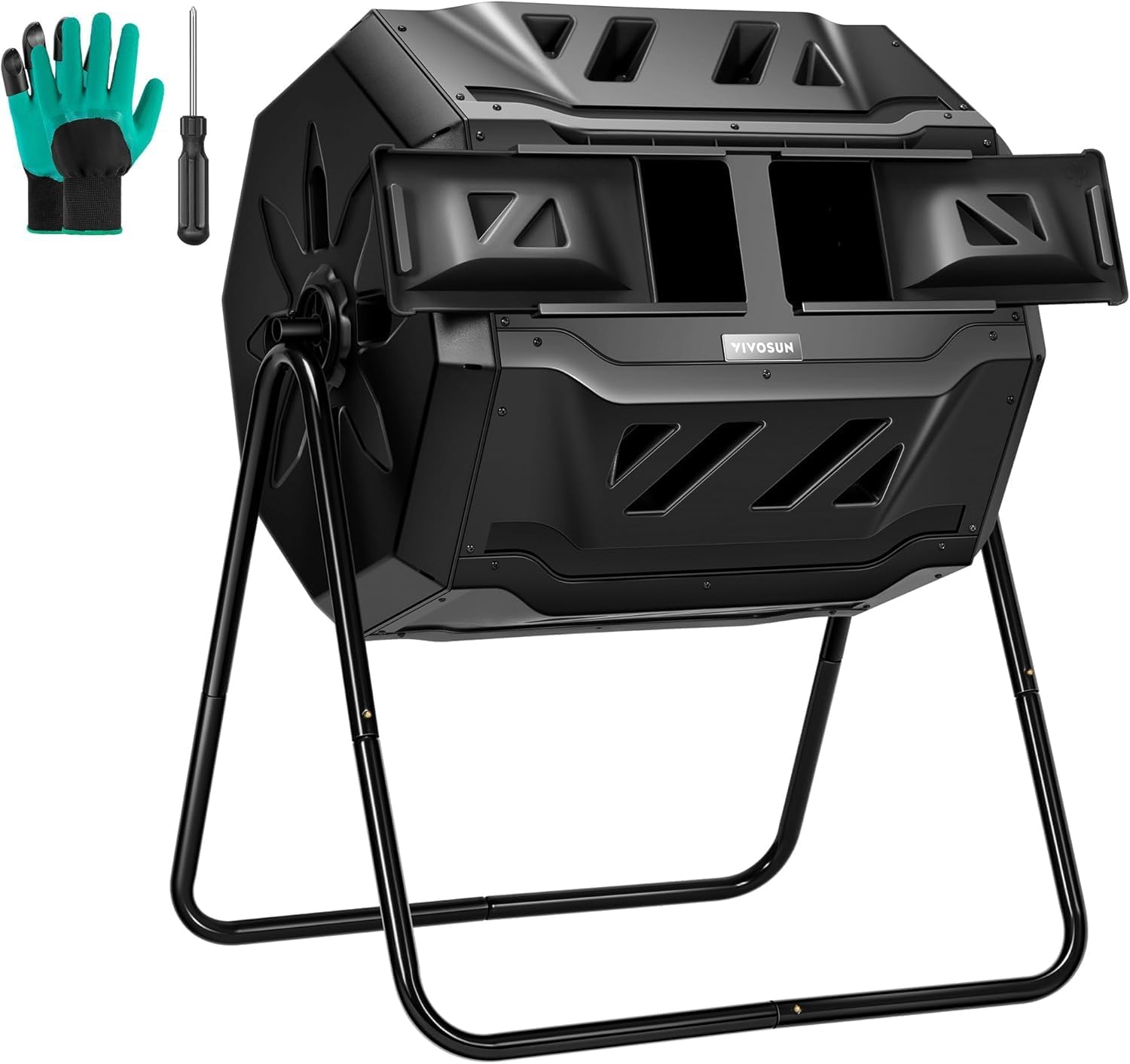
The VIVOSUN Outdoor Tumbling Composter is a 43 gallon compost bin for turning kitchen scraps and garden waste into compost in a contained outdoor setup. Based on the listed specifications, it is best suited to homeowners, raised-bed gardeners, and small-yard growers who want a cleaner alternative to an open compost pile and do not want to stir material by hand.
The main practical advantage is the dual-chamber layout. One side can hold material that is already composting while the other side stays available for fresh additions. For gardeners who add fruit and vegetable scraps, coffee grounds, leaves, or other compostable garden materials on a regular schedule, that batch-style setup can make it easier to let one side finish without constantly resetting the process.
The barrel rotates 360 degrees, and the product information lists air vents plus deep fins inside the panels. In plain terms, the tumbler is designed to mix the contents and introduce airflow as it turns, both of which are important for active composting. The octagonal shape, black body, and raised frame also keep the material off the ground, which can make turning and access more comfortable than working at soil level.
Its listed dimensions are 26.25 inches long by 23.6 inches wide by 36.5 inches high, with a listed capacity of 43 gallons and item weight of 21.67 pounds. The product description indicates a metal frame and PP plastic body, while the specifications also list galvanized steel. Reviewers commonly note that assembly involves many panels, screws, and a center divider, so beginners should plan time, organize parts first, and consider having a helper hold pieces in place.
In everyday backyard use, this composter fits gardeners who want to process a moderate stream of household scraps and light garden waste near a vegetable bed, patio edge, or utility area. The included garden gloves are a helpful extra for loading material or doing nearby planting work, though they do not replace careful hygiene. Always wash hands after handling compost materials, avoid adding unsuitable waste, and keep the unit on stable ground before rotating it.
The tradeoff is access size and assembly effort. Review feedback suggests the sliding doors may be less convenient when dumping larger containers, and gardeners with heavy compost output may want a larger bin. For many home gardeners, however, the VIVOSUN 43 gallon dual tumbler offers a useful balance of contained composting, easier mixing, and batch management in a compact outdoor footprint.
Best For / Avoid If
Best for buyers prioritizing
- Two-bin setup supports batch composting instead of continuously mixing new scraps into one unfinished pile.
- Tumbling action can be easier for older gardeners or anyone who wants to avoid manual stirring.
- Listed dimensions give it a relatively compact footprint for a raised outdoor composter.
Consider another option if
- Assembly may take time, and several reviewers say a second person makes panel alignment easier.
- The door opening may feel small for gardeners dumping larger bowls or countertop compost bags.
- Gardeners who generate a very large volume of yard waste may prefer a larger stationary bin or multi-bin system.
Pros
- Generous 80-gallon capacity for regular household and yard waste.
- Bottom access door can make harvesting compost more convenient.
- Lightweight, tool-free assembly is suitable for many home gardeners.
Cons
- It does not include a base and is intended to sit directly on the ground.
- Its roughly 23.2 by 22.4 inch footprint and 31.9 inch height require a dedicated outdoor location.
- Gardeners who want adjustable aeration, tumbling, or a raised working height may prefer a different composting design.
The JupiterForce 80-gallon compost bin is designed for turning household and yard organic waste into compost outdoors. Its capacity and straightforward layout make it a practical fit for homeowners, beginner composters, and gardeners with enough ground space for a dedicated bin.
The product information highlights four ventilation openings on each side to support air circulation during decomposition. The large chamber can hold kitchen scraps, leaves, grass clippings, and similar organic material, although successful composting still depends on using suitable inputs and maintaining an appropriate mix.
New material is added through the top lid, while a sliding door at the bottom provides a separate route for collecting compost. The closed lid may help discourage small animals from entering. At 23.2 by 22.4 by 31.9 inches and 11.9 pounds, the bin is relatively lightweight before filling and does not require tools for its four-step assembly.
This composter could work well beside a backyard garden, near a raised-bed area, or in another outdoor spot where kitchen and yard waste can be added regularly. Its listed frost and rain resistance supports outdoor use throughout the year, and the black finish provides a simple, unobtrusive appearance.
The main setup consideration is that no base is included, so the bin must be placed directly on the ground. Choose a stable location with enough clearance to open the lid and use the bottom door, and follow the assembly instructions before adding material. It is a sensible choice for gardeners wanting a spacious, simple stationary composter, while those seeking a raised, tumbling, or more adjustable system should compare other designs.
Best For / Avoid If
Best for buyers prioritizing
- Generous 80-gallon capacity for regular household and yard waste.
- Bottom access door can make harvesting compost more convenient.
- Lightweight, tool-free assembly is suitable for many home gardeners.
Consider another option if
- It does not include a base and is intended to sit directly on the ground.
- Its roughly 23.2 by 22.4 inch footprint and 31.9 inch height require a dedicated outdoor location.
- Gardeners who want adjustable aeration, tumbling, or a raised working height may prefer a different composting design.
Pros
- Separate chambers support a more continuous composting routine.
- Turning helps mix organic materials and bring oxygen into the center of the bin.
- The sliding-door design provides direct access for loading and emptying compost.
- The 21-pound listed weight may make the unit more manageable to position than heavier composting systems.
Cons
- The 36 x 28 x 24 inch footprint requires a dedicated level area in the yard or patio.
- Regular turning and a suitable balance of green and brown materials are still required for effective composting.
- Assembly details and long-term outdoor durability are not provided in the available specifications.
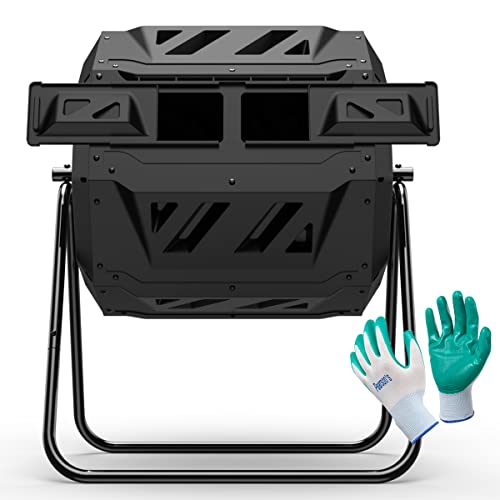
The Nazhura 43-gallon compost tumbler is a dual-chamber bin for recycling kitchen scraps, grass clippings, and other organic yard waste into compost. Its enclosed rotating design is best suited to homeowners, beginner gardeners, and small-space growers who want a contained alternative to managing an open compost pile.
The main practical benefit is aeration through turning. The listed feature set indicates that rotating the chambers mixes the contents and brings fresh oxygen into the center, while internal paddles help with mixing. The product information also describes insulated compartments intended to conserve heat generated during decomposition, although actual composting speed will depend on the material balance, moisture, temperature, and care routine.
Two chambers allow one compartment to remain in the composting stage while the other accepts new material. Sliding doors are designed to provide access for both loading and removing finished compost. Based on the listed dimensions, the tumbler measures 36 x 28 x 24 inches, so it should be placed where there is enough room to turn it and open the access doors.
This format can work well beside a backyard garden, near a kitchen garden, or in a compact yard where an open pile would be inconvenient. The included gardening gloves may be useful for handling garden materials during loading and for routine digging or planting tasks, but the available information does not specify glove sizing or additional protective features.
Composting still requires regular turning and an appropriate mix of green and brown materials, and the supplied data does not include assembly instructions, drainage details, or a stated weather-resistance rating. Gardeners who want a straightforward rotating system with separate composting chambers may find this design suitable, while those needing detailed installation guidance, a specified drainage system, or a larger-capacity setup should compare other options.
Best For / Avoid If
Best for buyers prioritizing
- Separate chambers support a more continuous composting routine.
- Turning helps mix organic materials and bring oxygen into the center of the bin.
- The sliding-door design provides direct access for loading and emptying compost.
Consider another option if
- The 36 x 28 x 24 inch footprint requires a dedicated level area in the yard or patio.
- Regular turning and a suitable balance of green and brown materials are still required for effective composting.
- Assembly details and long-term outdoor durability are not provided in the available specifications.
Pros
- Combines a generous capacity with a lightweight, collapsible format.
- Observation windows can make routine compost checking and soil removal more convenient.
- Useful for multiple outdoor collection tasks, including leaves, plant debris, and food scraps.
Cons
- Gardeners who prefer a rigid compost bin may find the felt bag less structured than a hard-sided option.
- The product information does not specify weather resistance or waterproofing, so extended exposure to rain may require extra consideration.
- Care is needed when removing soil so it does not contact the self-adhesive strips around the access windows.
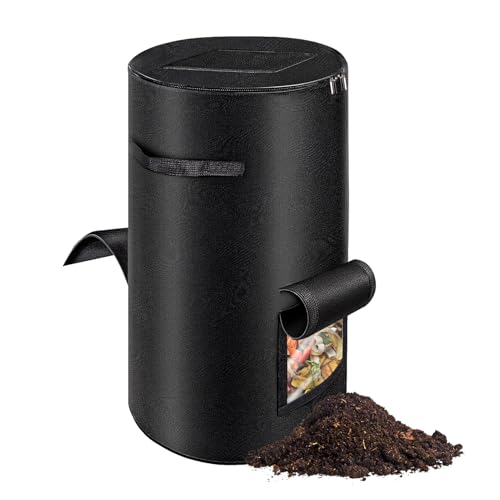
The Niuyhe 34-gallon compost bag is a reusable felt container for collecting and handling household food scraps, leaves, weeds, and other garden debris. Its large capacity and upright design make it a practical fit for homeowners and beginner gardeners who need a dedicated collection point for composting materials.
Based on the listed specifications, the 600g felt material is intended to be sturdy, lightweight, and breathable for repeated use. The breathable construction and household fermentation focus may suit gardeners who want to keep composting materials together without committing to a permanent hard-sided bin.
The bag measures approximately 31.5 inches high and 17.72 inches in diameter. A dual-zipper opening provides broad access from the top, while reinforced handles on both sides support repositioning. When storage space is limited, the foldable design allows the container to be reduced in size between uses.
In a backyard or patio garden, the bag can collect pruning debris, fallen leaves, wilted plant parts, and kitchen scraps before those materials are managed in a composting routine. The two bottom windows are intended for checking fermentation progress and retrieving soil, which can reduce the need to open the entire top each time.
There are a few practical limitations to consider. The specifications do not identify the bag as waterproof or weather resistant, so placement and protection from prolonged rain may matter. When using the bottom access windows, avoid letting soil touch the self-adhesive strips, as the product information specifically calls for this precaution. Overall, it is a sensible choice for gardeners seeking a spacious, reusable, foldable composting bag, while those wanting a rigid or fully weather-specified bin should compare other formats.
Best For / Avoid If
Best for buyers prioritizing
- Combines a generous capacity with a lightweight, collapsible format.
- Observation windows can make routine compost checking and soil removal more convenient.
- Useful for multiple outdoor collection tasks, including leaves, plant debris, and food scraps.
Consider another option if
- Gardeners who prefer a rigid compost bin may find the felt bag less structured than a hard-sided option.
- The product information does not specify weather resistance or waterproofing, so extended exposure to rain may require extra consideration.
- Care is needed when removing soil so it does not contact the self-adhesive strips around the access windows.

Pros
- Two-bin design supports a more continuous composting routine than a single-chamber tumbler.
- Raised rotating design reduces the need to fork or shovel a traditional compost pile.
- Listed dimensions make it compact enough for many home garden spaces.
- Reviewers commonly mention that it is lightweight and generally easy to rotate when not overfilled.
Cons
- Assembly may take patience, as several reviewers note many small fasteners and limited instructions.
- The tumbler does not list a side crank or handle, and some users report it can become harder to turn as it fills.
- Small sliding doors may be less convenient for gardeners emptying larger kitchen scrap containers or removing finished compost.
The Nazhura 43-gallon dual chamber compost tumbler is an outdoor composting bin for gardeners who want a cleaner, more contained alternative to an open compost pile. Based on the listed product information, it is intended for kitchen throw-outs, grass clippings, leaves, and other organic yard waste, making it suitable for homeowners, beginner composters, and small-yard gardeners who want to recycle everyday organic material.
The main benefit is the dual-bin design. One chamber can be used for new scraps while the other chamber continues breaking down, which helps avoid constantly disturbing a batch that is already composting. The rotating barrel is designed to mix materials and bring oxygen into the compost, a key part of keeping the process active without using a pitchfork.
The product specifications list a 43-gallon capacity, plastic and galvanized steel materials, and dimensions of 26.25 inches long by 23.6 inches wide by 36.5 inches high. At 21 pounds, the unit itself is not especially heavy before filling, though compost materials can add substantial weight. The sliding doors provide access for adding scraps and removing finished material, and the included garden gloves are a useful extra for routine garden handling.
In a typical backyard, this tumbler could sit near raised beds, a vegetable garden, or a side-yard utility area where kitchen scraps and dried leaves are easy to add. Its compact footprint may also work for gardeners who do not have space for a large three-bin compost system. For best results with any tumbler-style composter, gardeners should pay attention to the balance of wet green materials and dry brown materials so the contents do not become overly soggy.
The most common caution from reviewers is assembly. Several users describe the setup as doable but tedious, with many small nuts and bolts and instructions that may require careful interpretation. Some reviewers also mention that the unit can be harder to rotate as it gets fuller, and a few note leakage when the contents are too wet, so it is sensible to avoid overfilling and to add dry leaves or similar brown material when needed.
This is a sensible choice for gardeners who want an affordable-style, contained, dual-chamber composting system and do not mind a time-consuming assembly process. Gardeners who need a larger composting capacity, very large loading doors, or a built-in crank handle may want to compare other compost bin designs before choosing this one.
Best For / Avoid If
Best for buyers prioritizing
- Two-bin design supports a more continuous composting routine than a single-chamber tumbler.
- Raised rotating design reduces the need to fork or shovel a traditional compost pile.
- Listed dimensions make it compact enough for many home garden spaces.
Consider another option if
- Assembly may take patience, as several reviewers note many small fasteners and limited instructions.
- The tumbler does not list a side crank or handle, and some users report it can become harder to turn as it fills.
- Small sliding doors may be less convenient for gardeners emptying larger kitchen scrap containers or removing finished compost.

Pros
- Large adjustable capacity for substantial backyard composting needs
- Ventilated design supports airflow through composting materials
- Reusable construction can be disassembled and relocated
- Simple component-based assembly with included gloves
Cons
- The 50.4-inch square footprint may be less suitable for patios, narrow side yards, or other space-limited areas.
- The product information does not specify features such as a dedicated access door, lid, or temperature monitoring.
- Gardeners who need a smaller, enclosed composter may prefer a more compact design.
The VIVOSUN 300-Gallon Outdoor Compost Bin is an expandable composting container for homeowners who want to process substantial amounts of yard and household organic waste. It is best suited to gardeners with a dedicated outdoor area for collecting leaves, grass clippings, cardboard, coffee grounds, and kitchen waste.
Based on the listed specifications, the bin can hold up to 300 gallons and can be adjusted to a smaller size when needed. That flexibility may help gardeners match the container to seasonal cleanup volume instead of maintaining the maximum footprint at all times.
The bin is made from HDPE and measures 50.4 by 50.4 by 35.4 inches at the listed size. Its wall holes are intended to support air circulation through the composting materials, while the assembly system uses five anchor bars and 10 connecting buckles to secure and adjust the structure.
This format can work well beside a lawn, vegetable garden, or backyard growing area where leaves and grass clippings accumulate regularly. Because it can be disassembled and reused, it may also be useful for gardeners who change the location of their composting area or want to move it between seasons.
The large footprint requires a reasonably spacious, level outdoor location, and the supplied information does not identify a lid, access door, or temperature-monitoring feature. Gardeners should follow sensible compost-handling practices, balance wet and dry materials, and keep the area suitable for their local conditions. Overall, it is a practical option for high-volume backyard composting when adjustable capacity and simple setup matter more than enclosed-bin features.
Best For / Avoid If
Best for buyers prioritizing
- Large adjustable capacity for substantial backyard composting needs
- Ventilated design supports airflow through composting materials
- Reusable construction can be disassembled and relocated
Consider another option if
- The 50.4-inch square footprint may be less suitable for patios, narrow side yards, or other space-limited areas.
- The product information does not specify features such as a dedicated access door, lid, or temperature monitoring.
- Gardeners who need a smaller, enclosed composter may prefer a more compact design.

Pros
- Generous capacity for routine household and garden composting
- Accessible pull-out door simplifies basic compost management
- Slatted construction is intended to support airflow through the pile
- Compact rectangular footprint works well in many backyard layouts
Cons
- The product information does not specify weather resistance, protective treatment, or a maintenance schedule for the wood.
- A 35.4-inch height and pull-out access may still require bending or lifting when managing lower material.
- Gardeners wanting precise moisture control, sealed containment, or built-in drainage details may prefer a different composting design.
The SOCOME 95-gallon cedar wood compost bin is designed for outdoor composting of kitchen scraps and leaves. Its relatively large capacity makes it a sensible choice for homeowners with regular household compostables, backyard garden waste, or enough outdoor space for a dedicated composting station.
The main performance feature is the slatted wooden construction, which is intended to let more oxygen reach the composting materials. The product information indicates that this can support natural decomposition under suitable temperature and humidity conditions, but compost results will still depend on how the pile is managed and balanced.
A pull-out door provides access to the contents for adding new material, turning the compost for aeration, and harvesting finished compost. The listed dimensions are 31.5 inches long, 19.6 inches wide, and 35.4 inches high, giving the bin a tall, rectangular profile with a footprint that can fit into many backyard layouts.
The stated assembly time is 15 to 30 minutes, which may appeal to beginners who want to start composting without a complicated setup. It can suit a backyard garden, side-yard composting area, or other outdoor location with enough room to open the access door and handle compost materials comfortably.
Important details about weather resistance, wood treatment, drainage, and long-term maintenance are not provided, so buyers should plan to monitor moisture and protect or maintain the wood according to local conditions. Wear gloves during assembly as recommended. Overall, this bin is best for gardeners seeking a roomy, natural-looking compost container with simple access, while those needing sealed containment or specified wood protection may want another option.

Pros
- High capacity reduces how often gardeners need to empty or replace the compost container.
- Vented construction is designed to support useful air circulation inside the bin.
- Tool-free assembly and a sliding bottom door simplify setup and compost removal.
Cons
- Its 23 by 23 inch footprint and 31.6 inch height may be less suitable for very small patios or balconies.
- The product information does not specify anchoring features, so placement should be chosen carefully in exposed areas.
- Drainage details and access for mixing are not provided, which may matter to gardeners seeking a more adjustable composting setup.
The SUPER DEAL 80 Gallon Compost Bin is an outdoor plastic composter for collecting and processing household and garden organic waste. Its capacity and dimensions make it a practical choice for homeowners, backyard gardeners, and small farms that want a dedicated container for continuous composting.
The main growing-use benefit is its aeration design. Four vents on each side are intended to allow air circulation through the compost, helping introduce oxygen and reduce the chance of densely packed material restricting airflow. The spacious interior can hold a substantial amount of organic waste between maintenance sessions.
The bin measures 23 inches long by 23 inches wide and 31.6 inches high, with a bottom door measuring 22.1 by 21.1 inches. The lid is designed for adding material, while the bottom door slides upward and off for access. Assembly requires no tools, and the six parts connect through tabs that snap into slots.
This composter can work in a backyard garden, beside a raised-bed area, or in a suitable corner of a larger yard. The footprint is relatively compact compared with its listed capacity, but gardeners should leave enough surrounding space to open the lid and remove the bottom door comfortably.
The product information does not specify anchoring, drainage, or a dedicated mixing mechanism, so placement and routine compost management will still require attention. Gardeners should follow appropriate composting practices, avoid overfilling the bin, and check that the assembled panels and access door remain securely positioned.
It is a sensible fit for users who value generous capacity, basic ventilation, and straightforward assembly. Gardeners with very limited outdoor space, or those wanting specified drainage, anchoring, or more active mixing controls, may prefer a different composting design.
Best For / Avoid If
Best for buyers prioritizing
- High capacity reduces how often gardeners need to empty or replace the compost container.
- Vented construction is designed to support useful air circulation inside the bin.
- Tool-free assembly and a sliding bottom door simplify setup and compost removal.
Consider another option if
- Its 23 by 23 inch footprint and 31.6 inch height may be less suitable for very small patios or balconies.
- The product information does not specify anchoring features, so placement should be chosen carefully in exposed areas.
- Drainage details and access for mixing are not provided, which may matter to gardeners seeking a more adjustable composting setup.

Pros
- Two reusable bags provide flexible separation of kitchen waste, leaves, weeds, or other compostable materials.
- Bottom access can simplify removal of processed soil compared with an enclosed container without an outlet.
- The upright, lightweight design with handles is practical for filling and moving around a yard or garden area.
Cons
- Gardeners needing a rigid compost tumbler or hard-sided bin may prefer a different design for more structural support.
- The listed dimensions may require a dedicated footprint of about 17.7 by 17.7 inches per bag, which could be more space than some small patios can spare.
- The self-adhesive strips need care during soil removal because contact with soil may interfere with the opening.
The MyLifeUNIT compost bags are reusable outdoor yard waste containers designed to organize kitchen scraps, weeds, leaves, wilted plant parts, and other material intended for composting. Each bag is listed at 34 gallons, and the two-pack format suits homeowners who want separate collection areas or extra capacity during active garden cleanup.
The feature set emphasizes convenient compost handling rather than a rigid-bin structure. A sealed zipper is intended to help contain the material during fermentation and decomposition, while the top opening provides access for adding waste. The product information suggests a practical way to keep compostable material organized before later use in the garden.
Each bag measures 17.7 by 17.7 by 31.5 inches and weighs 0.71 pounds. Its upright shape is designed to remain open while filling, and strong webbing handles support moving the bag when it is full. The water-resistant, tear-resistant construction is useful for general yard waste collection, while the collapsible design makes storage easier between gardening tasks.
The top and bottom openings are especially useful for routine compost access. Gardeners can check the contents from above and take soil out from below, but the supplied instructions advise keeping soil away from the self-adhesive strips during removal. The bags could work well beside a raised bed, in a backyard cleanup area, or in a garden where a lightweight, movable collection container is more convenient than a permanent bin.
These bags are not described as rigid compost tumblers, so gardeners who want a hard-sided structure, turning mechanism, or specifically documented ventilation system may prefer another composting solution. Users should follow local composting practices, keep the closures and access points clean, and handle the bag carefully when heavily filled. Overall, the product is a practical choice for flexible garden waste organization, especially where collapsible storage and easy access matter.
Best For / Avoid If
Best for buyers prioritizing
- Two reusable bags provide flexible separation of kitchen waste, leaves, weeds, or other compostable materials.
- Bottom access can simplify removal of processed soil compared with an enclosed container without an outlet.
- The upright, lightweight design with handles is practical for filling and moving around a yard or garden area.
Consider another option if
- Gardeners needing a rigid compost tumbler or hard-sided bin may prefer a different design for more structural support.
- The listed dimensions may require a dedicated footprint of about 17.7 by 17.7 inches per bag, which could be more space than some small patios can spare.
- The self-adhesive strips need care during soil removal because contact with soil may interfere with the opening.

Pros
- Large 65-gallon listed capacity suits regular household food scrap and yard waste composting.
- Vented design supports airflow, an important part of active compost management.
- Four-door access is useful for removing lower compost without fully emptying the bin.
- No-tool assembly keeps initial setup simpler than bins requiring hardware or special tools.
Cons
- As a stationary bin, it may require manual turning or an aerator tool if you want to mix materials more actively.
- The listed product data includes conflicting dimension entries, so gardeners with tight spaces should confirm the assembled footprint before buying.
- Plastic bins can be easier to place than heavier systems, but gardeners wanting a tumbler-style composter may prefer a rotating design.
The REDMON Since 1883 Model 8000 is an outdoor composting bin built for homeowners who want to recycle kitchen food scraps, decomposed leaves, plant material, soil, and other suitable organic waste into compost for the garden. With a listed 65-gallon capacity, it is aimed at backyard and small homestead use rather than tiny countertop collection.
The most useful feature set is the combination of ventilation and access. Multiple vent holes are designed to help air move through the bin and allow gases to escape, both of which matter when managing a compost pile. The lift-off lid provides top access for adding fresh materials, while the four side doors help with reaching lower, more finished compost.
Based on the supplied information, the bin is made from plastic and contains 80 percent post-consumer recycled materials. It is described as weather resistant for outdoor use and requires no tools for assembly. The product information lists the outdoor composter at 26 x 26 x 30.75 inches, although some specification fields show conflicting smaller dimensions, so it is wise to verify the footprint if placement space is limited.
In a typical home garden, this bin could sit near raised beds, a vegetable patch, or a convenient side-yard location where kitchen scraps and garden debris can be added regularly. Its 65-gallon size should be more practical for homeowners with seasonal leaves, spent plants, and routine food scrap collection than for gardeners who only generate a very small amount of organic waste.
Like most stationary compost bins, this model still depends on good composting habits. Gardeners may need to balance moist green materials with dry brown materials, keep the contents from becoming too wet, and turn or aerate the pile as needed. Because it has a lift-off lid and side doors, place it where there is enough room to access the top and all sides comfortably.
This is a sensible choice for beginners and backyard gardeners who want a basic outdoor compost bin with a large capacity, ventilation, and multiple access points. Gardeners who need a very compact patio composter, a sealed indoor system, or a rotating tumbler for easier mixing may want to compare other composting formats before deciding.
Specifications
| Brand Name | REDMON Since 1883 |
|---|---|
| UPC | 741435462932 270612116264 773822286876 773490750815 027061211626 785934140793 |
| Manufacturer | Redmon |
| Unit Count | 1.0 Count |
| Global Trade Identification Number | 00027061211626 |
| Item Type Name | bin |
| Model Number | 8000 |
| Manufacturer Part Number | 8000 |
| Manufacturer Warranty Description | 1 year limited |
| Best Sellers Rank | #21,743 in Patio, Lawn & Garden (See Top 100 in Patio, Lawn & Garden) #11 in Outdoor Composting Bins |
Verify the current product variation before purchase; specifications may change.
Best For / Avoid If
Best for buyers prioritizing
- Large 65-gallon listed capacity suits regular household food scrap and yard waste composting.
- Vented design supports airflow, an important part of active compost management.
- Four-door access is useful for removing lower compost without fully emptying the bin.
Consider another option if
- As a stationary bin, it may require manual turning or an aerator tool if you want to mix materials more actively.
- The listed product data includes conflicting dimension entries, so gardeners with tight spaces should confirm the assembled footprint before buying.
- Plastic bins can be easier to place than heavier systems, but gardeners wanting a tumbler-style composter may prefer a rotating design.

Pros
- High capacity suits households generating significant amounts of leaves, grass clippings, and kitchen scraps.
- Ventilation openings may help improve airflow and contact between composting materials.
- Can be disassembled and reused instead of remaining permanently installed.
Cons
- Its lightweight design means it may need secure anchoring or placement to prevent wind movement.
- The nearly 39-inch square footprint may be too large for compact patios or very small yards.
- The supplied information does not specify an access door, turning system, or finished-compost removal method.
The VEVOR 220-Gallon Compost Bin is a large outdoor composter for converting common yard and kitchen materials into composting material for future garden use. With a listed capacity of up to 220 gallons, it is best suited to homeowners, vegetable gardeners, and flower growers who regularly generate more organic waste than a small household bin can hold.
Ventilation holes are intended to improve air circulation and increase contact between materials such as leaves, grass clippings, cardboard, coffee grounds, and kitchen scraps. This design may support a more active composting process, although the final result will still depend on the materials, moisture, and routine management used by the gardener.
The bin measures 39 by 39 by 35 inches and weighs 6.83 pounds. Its HDPE construction is listed as corrosion-proof and heat-resistant, while the lightweight build makes assembly and later disassembly easier. Installation is described as taking about five minutes, but the product information recommends fixing the composter in place before use.
In a backyard, the capacity can be useful for collecting seasonal leaves, grass clippings, and kitchen scraps without frequent transfers. The square footprint may also work beside a larger vegetable garden or flower bed, but it should be measured against available space before purchase, especially on a patio or in a small yard.
The main practical consideration is stability. Because the bin is lightweight, gardeners should place it securely and follow the recommendation to hold or fix it in position so wind does not move it. The supplied information does not describe a dedicated access door, turning mechanism, or finished-compost removal system, so users should plan how they will mix and empty the contents.
This composter is a reasonable fit for gardeners who prioritize high capacity, quick setup, and a reusable outdoor design. Those with limited space, frequent strong winds, or a preference for an enclosed tumbler with built-in turning access may want to consider a different composting format.
Best For / Avoid If
Best for buyers prioritizing
- High capacity suits households generating significant amounts of leaves, grass clippings, and kitchen scraps.
- Ventilation openings may help improve airflow and contact between composting materials.
- Can be disassembled and reused instead of remaining permanently installed.
Consider another option if
- Its lightweight design means it may need secure anchoring or placement to prevent wind movement.
- The nearly 39-inch square footprint may be too large for compact patios or very small yards.
- The supplied information does not specify an access door, turning system, or finished-compost removal method.
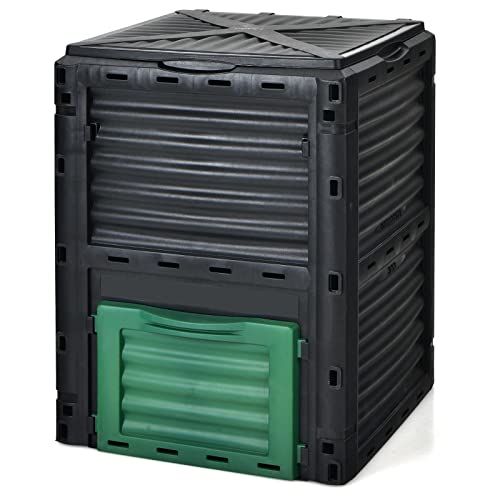
Pros
- Generous 80-gallon capacity for ongoing household and garden waste.
- Bottom access door can make harvesting compost more convenient.
- Ventilation openings and a ground-contact base support airflow and natural soil interaction.
- Tool-free assembly may be useful for gardeners who want a straightforward setup.
Cons
- Its 23.5 by 23 by 32-inch footprint may be less suitable for balconies, small patios, or very limited yards.
- The open-bottom design requires a suitable soil location and may not work well on concrete or other sealed surfaces.
- The listed features do not describe a tumbler or mixing mechanism, so gardeners wanting frequent hands-free turning may prefer a different composting style.
The Goplus 80-gallon compost bin is designed for homeowners who want to recycle kitchen scraps, grass clippings, leaves, and other suitable garden waste in an outdoor container. Its relatively large capacity makes it a practical fit for households or gardens that produce compostable material regularly rather than only occasionally.
Based on the listed specifications, the bin combines a large top opening with 12 vents on each side to support airflow through the composting material. The product information indicates that compost may be ready through the bottom door after about 6 to 8 weeks, with faster results possible in hot summer conditions, although actual timing depends on the mix, moisture, temperature, and management of the material.
The bin measures 23.5 by 23 by 32 inches and is made from thickened BPA-free PP material described as UV-inhibited and weather-resistant. It uses a flip-latch lid for loading and a bottom exit door for access to lower material. Assembly involves joining four sides and the lid without tools or screws, which should make initial setup relatively simple.
This composter is best placed directly on suitable soil in a backyard or garden area. Its grounding design has no shelf at the bottom, allowing liquid to flow into the soil and worms to access the interior. That arrangement can suit gardeners who want a stationary composting area near raised beds, flower gardens, or vegetable plots, but it is not an ideal match for a sealed patio or balcony.
The large capacity is useful, but the bin may require more space than compact kitchen or small-yard composters. The supplied information does not describe a turning handle or built-in mixing system, so gardeners should be prepared to manage the contents using their preferred composting routine and to monitor moisture and airflow. Overall, it is a sensible option for a stationary outdoor setup where accessible loading, bottom harvesting, and ground contact matter more than portability.
Best For / Avoid If
Best for buyers prioritizing
- Generous 80-gallon capacity for ongoing household and garden waste.
- Bottom access door can make harvesting compost more convenient.
- Ventilation openings and a ground-contact base support airflow and natural soil interaction.
Consider another option if
- Its 23.5 by 23 by 32-inch footprint may be less suitable for balconies, small patios, or very limited yards.
- The open-bottom design requires a suitable soil location and may not work well on concrete or other sealed surfaces.
- The listed features do not describe a tumbler or mixing mechanism, so gardeners wanting frequent hands-free turning may prefer a different composting style.

Pros
- Large 80-gallon capacity is useful for households producing regular kitchen and yard waste.
- Adjustable ventilation and deep fins are designed to improve airflow without requiring routine digging or shoveling.
- Locking lid and pull-up access door make loading and compost removal more convenient.
- Lightweight construction and quick assembly may appeal to beginner gardeners and homeowners.
Cons
- The 23 by 23 by 32-inch footprint may require a dedicated, level area and could be less suitable for very small patios or narrow spaces.
- The product information does not specify a built-in base, drainage system, or a method for turning the material, so gardeners wanting those features may prefer another design.
- Although the feature set is intended to support faster composting, actual results will depend on the balance and condition of the organic material.
The Simply Bio Garden Compost Bin is an 80-gallon outdoor composting container for collecting and processing organic kitchen and yard material. Its large capacity makes it a practical fit for homeowners who want to compost regularly without managing a small container that fills quickly.
The feature set is centered on airflow and moisture management. Four adjustable air vents and deep fins are designed to improve circulation inside the bin, while the black PP plastic is listed as helping retain heat and regulate moisture. The product information indicates that these features can support soil creation in approximately four to six weeks, although results will vary with the materials and conditions inside the bin.
The bin measures 23 by 23 by 32 inches and weighs 15 pounds. A secure top-loading lid with a locking feature helps contain the contents and limit access by pests, while the pull-up door provides a convenient way to remove compost. The listed five-minute assembly time may be useful for beginners, and the lightweight construction can make positioning easier before the bin is filled.
This compost bin could work well in a backyard near a kitchen garden, raised beds, or a household area where organic waste is generated regularly. Its 80-gallon size offers useful capacity for ongoing composting, but the dimensions should be checked against the available space before purchase, particularly for small patios, narrow side yards, or compact garden layouts.
Gardeners should place the bin where it can be accessed for loading and compost removal, and they should follow practical composting habits for balancing organic materials and moisture. The supplied information does not specify a built-in base, drainage system, or turning mechanism, so users who specifically want those features may prefer a different composting design. Overall, it appears well suited to homeowners seeking a lightweight, high-capacity bin with adjustable ventilation and straightforward access.
Best For / Avoid If
Best for buyers prioritizing
- Large 80-gallon capacity is useful for households producing regular kitchen and yard waste.
- Adjustable ventilation and deep fins are designed to improve airflow without requiring routine digging or shoveling.
- Locking lid and pull-up access door make loading and compost removal more convenient.
Consider another option if
- The 23 by 23 by 32-inch footprint may require a dedicated, level area and could be less suitable for very small patios or narrow spaces.
- The product information does not specify a built-in base, drainage system, or a method for turning the material, so gardeners wanting those features may prefer another design.
- Although the feature set is intended to support faster composting, actual results will depend on the balance and condition of the organic material.

Pros
- Compact enough for countertop use while still offering 4.92 liters of listed capacity.
- Charcoal-filtered lid is intended to reduce odors from stored food scraps.
- Stainless steel body provides a sturdier alternative to many plastic scrap containers.
- Reviewers commonly mention that it is easy to clean and looks tidy in the kitchen.
- Useful for collecting scraps for compost piles, worm bins, chickens, or other separate food-waste handling systems.
Cons
- It stores scraps but does not turn them into finished compost on its own.
- The product information recommends thorough washing after each use, so it may require more routine cleaning than a disposable liner setup.
- Gardeners with large households or heavy daily food prep may prefer a larger collection bin.
The Utopia Kitchen CB-13 is an indoor food scrap collection bin made for gardeners who want a cleaner way to move vegetable peels, coffee grounds, and other compostable kitchen waste out of the trash stream. Based on the listed specifications, it holds 1.3 gallons, or 4.92 liters, which suits small households, apartment gardeners, and homeowners who empty scraps into a backyard compost pile, worm bin, chicken feed bucket, or separate composting appliance.
The main benefit is convenience. Keeping a lidded compost bucket on the counter makes it easier to save scraps during meal prep instead of walking outside for every handful. The product information states that the lid includes charcoal filters designed to trap and control odors, and reviewers commonly mention reduced smell when the lid is closed. That can be especially helpful for beginners who are trying to build a composting habit without making the kitchen unpleasant.
The bin is listed as stainless steel with a silver cylindrical design, measuring 8.4 inches long, 7 inches wide, and 11 inches high. At 2 pounds, it should be manageable for most adults to lift and carry when full, though anyone with limited hand strength may still want to empty it before it becomes packed down. The stainless steel body is described as resistant to scratching, cracking, and chipping, giving it a more durable feel than many lightweight plastic scrap pails.
For small-space gardeners, the footprint is one of the most practical features. It can sit on a kitchen counter where scraps are generated, then be carried to a patio worm bin, raised-bed compost area, outdoor tumbler, or chicken run as part of a regular routine. Several reviewers also mention using liners or compost bags to simplify cleanup, although bag choice and compostability should be matched to your local composting setup.
This is not a compost maker by itself. It is a holding container, so food scraps still need to be emptied into a proper composting system or disposal stream. The manufacturer also recommends washing the bin thoroughly after each use to prevent odor, which is sensible for any indoor scrap container. Replacing or maintaining the charcoal filter will also be part of long-term use, though the supplied data does not specify an exact replacement schedule.
Gardeners who want a simple, good-looking countertop pail for daily food scrap collection are the best fit for this model. Those who generate a large volume of scraps, want hands-free opening, or need an appliance that actively processes waste into compost should consider a different option with more capacity or composting function.
Best For / Avoid If
Best for buyers prioritizing
- Compact enough for countertop use while still offering 4.92 liters of listed capacity.
- Charcoal-filtered lid is intended to reduce odors from stored food scraps.
- Stainless steel body provides a sturdier alternative to many plastic scrap containers.
Consider another option if
- It stores scraps but does not turn them into finished compost on its own.
- The product information recommends thorough washing after each use, so it may require more routine cleaning than a disposable liner setup.
- Gardeners with large households or heavy daily food prep may prefer a larger collection bin.
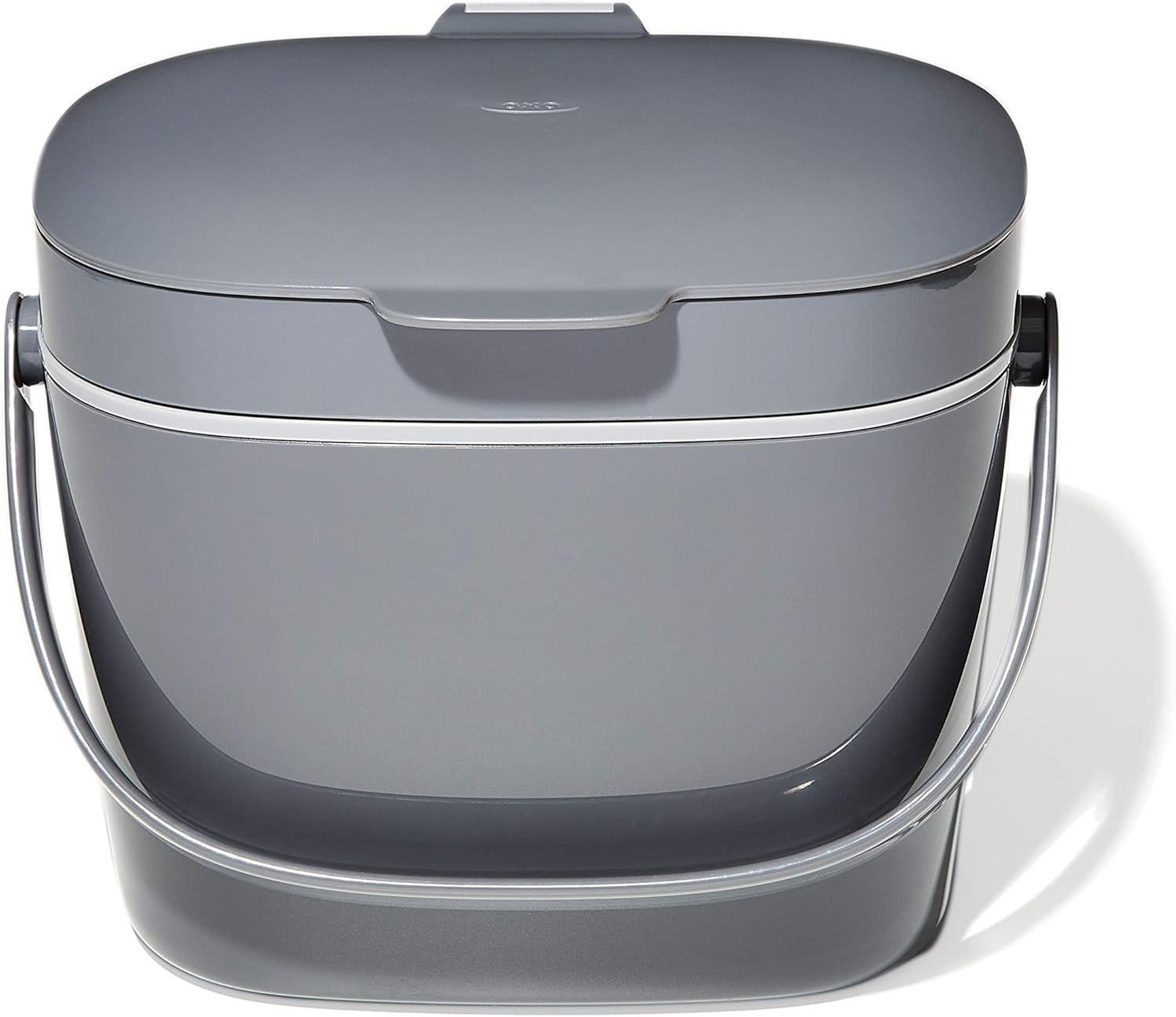
Pros
- Compact countertop-friendly dimensions with enough capacity for routine kitchen scrap collection
- Smooth plastic interior and removable parts support easier cleaning than bins with more crevices
- Handle folds down when not in use and helps with transporting scraps to the main compost area
- Lid can stay open during food prep and comes off for emptying
- Reviewers frequently praise the neat bag fit and odor control
Cons
- Larger households or very active cooks may need to empty it more often than a bigger kitchen compost pail
- Plastic construction may not appeal to gardeners who prefer stainless steel or ceramic countertop bins
- One long-term reviewer reported staining and water getting into the liner after extended use, so periodic inspection and cleaning are sensible
The OXO Good Grips Easy-Clean Compost Bin is an in-home composting bin made for collecting kitchen scraps before they move to an outdoor compost pile, backyard bin, or local compost collection container. Based on the listed specifications, it holds 1.75 gallons, or 6.62 liters, which makes it useful for everyday vegetable peels, fruit scraps, coffee grounds, and other kitchen compostables allowed by your composting system.
Its strongest practical benefit is convenience during food prep. The stay-open lid lets you toss scraps in as you cook, while the design keeps bags tucked inside for a cleaner look on the counter. The product information also notes an odor-containing, pest-reducing lid design, and several reviewers commonly mention that it helps keep smells down when closed.
The bin measures 8.3 inches long, 10.15 inches wide, and 12 inches high, with an oval charcoal plastic body. It weighs 1.5 pounds, includes a removable lid, and has a handle that folds down when not in use. The smooth interior is intended to make cleaning easier, and the removable internal bucket is listed as dishwasher safe for more thorough washing.
For small-space gardeners, this bin is a simple bridge between the kitchen and the garden. It can sit near a sink for daily scraps, tuck under a sink for a cleaner counter, or be carried out to a backyard compost bin when full. It is especially well suited to beginners who want composting to feel like a normal kitchen habit rather than a messy extra chore.
There are a few limitations to keep in mind. A 1.75-gallon bin may fill quickly in larger households, during canning season, or for gardeners who cook heavily with fresh produce. Since it is plastic, it may stain over time depending on what is stored in it, and one reviewer noted staining after extended use. Emptying it regularly, using compatible composting bags if desired, and washing it often will help keep it more pleasant indoors.
Overall, the feature set suggests a well-designed kitchen compost collector for homeowners, apartment gardeners, and anyone trying to keep food scraps organized before composting. Gardeners who want a countertop bin with simple handling and easy cleaning should find it a good match, while those needing a larger-volume pail or a non-plastic material may want to compare other options.
Best For / Avoid If
Best for buyers prioritizing
- Compact countertop-friendly dimensions with enough capacity for routine kitchen scrap collection
- Smooth plastic interior and removable parts support easier cleaning than bins with more crevices
- Handle folds down when not in use and helps with transporting scraps to the main compost area
Consider another option if
- Larger households or very active cooks may need to empty it more often than a bigger kitchen compost pail
- Plastic construction may not appeal to gardeners who prefer stainless steel or ceramic countertop bins
- One long-term reviewer reported staining and water getting into the liner after extended use, so periodic inspection and cleaning are sensible

Pros
- Good countertop size for small households, apartment gardeners, and daily food scrap collection.
- Stainless steel body provides a durable, easy-to-clean surface based on the listed product materials.
- Charcoal filter is replaceable, so odor-control maintenance does not require replacing the entire bin.
- Reviewers commonly mention that it looks attractive on the counter and is simple to clean.
Cons
- It is a collection bin, not a full composting system, so scraps still need to be emptied into an outdoor pile, curbside organics bin, or other compost setup.
- Gardeners who cook heavily or generate large amounts of scraps may need to empty the 1.3-gallon bin frequently.
- Odor control depends on filter condition, scrap type, and emptying habits, and at least one reviewer reported odor escaping through the lid area.
The Epica SYNCHKG123584 is an in-home composting bin designed for kitchen countertops, not a backyard composter that finishes compost on its own. It gives gardeners and homeowners a tidy place to collect food scraps indoors before carrying them to an outdoor compost pile, raised-bed compost trench, community organics container, or municipal food-waste bin.
Based on the listed specifications, the main value is convenience. The 1.3-gallon capacity is large enough for regular kitchen prep scraps while staying small enough for visible counter use. For beginner composters, that matters because a bin that is easy to reach is more likely to be used consistently than a hidden container under the sink.
The product information indicates a stainless steel cylindrical body measuring 7.16 inches in diameter and 11 inches high. The one-piece molded design is described as resistant to leaks and rust, and it avoids welded seams that can be harder to maintain over time. The lid includes a replaceable activated-charcoal filter intended to help control odors naturally.
For small-space gardeners, patio growers, and homeowners with vegetable beds, this bin can serve as the indoor link between meal prep and soil building. It is well suited for collecting items such as produce trimmings and coffee grounds until they can be transferred outside. Reviewers commonly mention that the bin looks good on the counter, is easy to clean, and fits everyday kitchen use without feeling oversized.
There are some practical limits to keep in mind. This bin will not turn scraps into finished compost by itself, and it should be emptied regularly to reduce odor pressure, moisture buildup, and fruit fly risk. The charcoal filter is replaceable, but it will need maintenance over time, and odor control can vary depending on what is placed inside and how long scraps are stored.
This is a sensible choice for gardeners who want a compact, stainless steel food-scrap pail that can stay out on the counter. If you produce a large volume of kitchen waste, want foot-pedal operation, or prefer a fully sealed container without lid ventilation, a larger or different style of indoor organics bin may be a better fit.
Best For / Avoid If
Best for buyers prioritizing
- Good countertop size for small households, apartment gardeners, and daily food scrap collection.
- Stainless steel body provides a durable, easy-to-clean surface based on the listed product materials.
- Charcoal filter is replaceable, so odor-control maintenance does not require replacing the entire bin.
Consider another option if
- It is a collection bin, not a full composting system, so scraps still need to be emptied into an outdoor pile, curbside organics bin, or other compost setup.
- Gardeners who cook heavily or generate large amounts of scraps may need to empty the 1.3-gallon bin frequently.
- Odor control depends on filter condition, scrap type, and emptying habits, and at least one reviewer reported odor escaping through the lid area.

Pros
- 53-gallon capacity is useful for households that generate regular kitchen scraps and garden cleanup material.
- Two-chamber layout supports staggered batches instead of waiting for one full tumbler load to finish.
- Rotating design reduces the need for manual pile turning, which may help gardeners who prefer less lifting and digging.
- Product information lists adjustable vents, sliding doors, brake locks, and a gear-assisted handle for more convenient routine use.
Cons
- Assembly may take patience, and reviewers mention that the center divider and some instruction steps can be unclear.
- As with most tumblers, compost quality and speed still depend on the right mix of greens, browns, moisture, and airflow.
- Gardeners who want a no-assembly compost solution may prefer a simpler stationary bin.
The Maygrove MGN-CBG53X1-US is a 53-gallon outdoor compost tumbler designed for turning kitchen scraps and garden waste into usable compost for backyard beds, vegetable gardens, and container plantings. Its main appeal is the dual chamber setup, which lets one side receive new material while the other side continues decomposing.
Based on the listed features, the 360-degree rotating drum and built-in mixing bars are intended to reduce the work of turning compost by hand. The product information also lists adjustable air vents, which are helpful because compost needs oxygen and moisture balance to break down properly and reduce odor problems.
The design includes extra-wide sliding doors for loading and unloading, a gear-assisted handle for rotation, and dual-direction brake locks to help hold the drum steady during use. The listed construction combines polypropylene plastic with a solid steel frame, reinforced leg supports, and UV-resistant material for outdoor placement.
This tumbler is a practical fit for homeowners who want a contained composting system near a garden, raised beds, or a backyard growing area. It may also suit gardeners who do not want an open compost pile, since the rotating barrel keeps materials enclosed while still allowing mixing and airflow.
Assembly is the main point to approach carefully. Several reviewers describe setup as manageable, but some mention tricky steps, especially around the barrel panels, center divider, or instruction wording. Having a level work surface, reading the instructions before starting, and sorting hardware first may make the process easier.
For best results, users should follow the product guidance on what not to add and keep a balanced mix of moist green materials and dry brown materials. Gardeners who want continuous composting in a contained tumbler are a good match, while those who need the simplest possible setup or very large-volume composting may want to compare stationary bins or larger systems.
Best For / Avoid If
Best for buyers prioritizing
- 53-gallon capacity is useful for households that generate regular kitchen scraps and garden cleanup material.
- Two-chamber layout supports staggered batches instead of waiting for one full tumbler load to finish.
- Rotating design reduces the need for manual pile turning, which may help gardeners who prefer less lifting and digging.
Consider another option if
- Assembly may take patience, and reviewers mention that the center divider and some instruction steps can be unclear.
- As with most tumblers, compost quality and speed still depend on the right mix of greens, browns, moisture, and airflow.
- Gardeners who want a no-assembly compost solution may prefer a simpler stationary bin.
Guida pratica all’acquisto di una compostiera fai da te
Inizia dal luogo in cui farai il compostaggio
Una compostiera da cucina serve principalmente a raccogliere gli scarti alimentari prima di portarli all’esterno o conferirli a un programma comunale di compostaggio. Epica Kitchen Compost Bin for Kicthen Countertops, 1.3 Galllon – Silver, OXO Good Grips EASY-CLEAN COMPOST BIN – CHARCOAL – 1.75 GAL/6.62 L e Utopia Kitchen Countertop Compost Bin 1.3 Gallon, Stainless Steel, Silver sono tutte soluzioni pensate per la cucina con funzioni indicate per il controllo degli odori o la pulizia facilitata.
Una compostiera da esterno o rotante è la parte di un sistema di compostaggio fai da te che trasforma gli scarti del giardino e della cucina in compost utilizzabile. Geobin Compost Bin – 246 Gallon, Expandable, Easy Assembly, Made in the USA, Outdoor & Backyard Composter è una compostiera ampia e ventilata, mentre i modelli rotanti da 43 e 53 galloni utilizzano camere girevoli per mescolare il materiale senza dover rivoltare il cumulo a mano.
Scegli la capacità in base a scarti, foglie e dimensioni del giardino
La capacità è importante perché una compostiera troppo piccola si riempie prima che il materiale abbia il tempo di decomporsi, mentre una troppo grande può risultare scomoda in un giardino piccolo. I modelli da cucina presenti nei dati forniti hanno una capacità compresa tra 1.3 e 1.75 galloni, adatta alla raccolta quotidiana degli scarti alimentari più che alla lavorazione completa del compost.
Le opzioni da esterno sono adatte a lavori molto più grandi. Il modello Geobin è indicato come espandibile fino a 237 galloni, la compostiera da esterno REDMON Since 1883 ha una capacità di 65 galloni, Goplus Compost Bin è indicata con una capacità di 80 galloni e i modelli rotanti presenti nei dati dei prodotti includono configurazioni da 43 e 53 galloni. Per un patio piccolo o un passaggio laterale stretto, una compostiera rotante può essere più facile da contenere; per una routine con molte foglie ed erba, una compostiera fissa ad alta capacità può essere più adatta.
| Configurazione per il compostaggio | Utilizzo più adatto in base alle caratteristiche fornite |
|---|---|
| Compostiera da cucina da 1.3 a 1.75 galloni | Raccolta degli scarti alimentari prima dello svuotamento all’esterno |
| Compostiera rotante da 43 a 53 galloni | Compostaggio in giardino con camere girevoli e miscelazione più semplice |
| Compostiera da esterno da 65 a 80 galloni | Scarti del giardino e alimentari con sportelli o coperchi di accesso |
| Compostiera espandibile da 237 galloni | Compostaggio all’aperto di grandi volumi, dove lo spazio lo consente |
Cerca funzioni di aerazione e rivoltamento
Il compost ha bisogno di aria. Nei dati forniti, Geobin mette in evidenza un’eccellente ventilazione, la compostiera REDMON Since 1883 indica fori di ventilazione e VIVOSUN Outdoor Tumbling Composter Dual Rotating Batch Compost Bin, 43 Gallon Black Door indica prese d’aria e alette profonde che aiutano a rompere i grumi.
Le compostiere rotanti sono utili per chi non vuole rivoltare il cumulo con un forcone. NazhuraGoodCompanionAtHome 43-gallon dual chamber tumbler, VIVOSUN 43-gallon tumbler e Maygrove 53-gallon tumbler includono tutti, tra le caratteristiche indicate, sistemi rotanti o di rivoltamento a 360°. Sono particolarmente utili per i giardinieri più anziani o per chi vuole ridurre il lavoro con pala e i piegamenti.
Confronta l’accesso per caricare e raccogliere il compost
Un accesso semplice evita che il compostaggio diventi una fatica. La compostiera da esterno REDMON Since 1883 indica un coperchio sollevabile e 4 sportelli di accesso, utili sia per caricare il materiale sia per raggiungere quello maturo. Il titolo di Goplus Compost Bin indica un coperchio superiore con chiusura a scatto e uno sportello di uscita inferiore, una combinazione pratica per aggiungere gli scarti dall’alto e rimuovere il compost dal basso.
Per le compostiere rotanti, osserva il design degli sportelli e la disposizione delle camere. Il modello NazhuraGoodCompanionAtHome indica uno sportello scorrevole per il compost maturo, il modello VIVOSUN ha due camere e il modello Maygrove indica sportelli scorrevoli extra-large oltre a due camere. Le camere doppie consentono a un lato di continuare il compostaggio mentre l’altro riceve materiale fresco.
Considera il controllo degli odori per cucine e patii
Per la raccolta degli scarti in casa, il controllo degli odori è spesso il fattore decisivo. Il modello Epica utilizza un coperchio ermetico e un filtro sostituibile a carbone attivo, mentre il contenitore Utopia Kitchen include filtri al carbone che catturano e controllano naturalmente gli odori. OXO Good Grips è descritto come capace di contenere gli odori e ridurre la presenza di parassiti, con il passaggio dell’aria attraverso un coperchio a chiusura morbida.
Le compostiere da esterno dipendono maggiormente dal flusso d’aria, dal corretto caricamento e dalla manutenzione ordinaria. Mantieni un equilibrio tra scarti di cucina e materiale secco del giardino, chiudi i coperchi quando presenti e segui le istruzioni per l’uso del produttore. Se nella tua zona la fauna selvatica è un problema, le nostre risorse Garden Pest & Wildlife possono aiutarti a valutare posizione e prevenzione.
Adatta materiali e pulizia alla tua routine
I contenitori da cucina devono essere lavati spesso. I modelli Epica e Utopia Kitchen indicano una struttura in acciaio inossidabile e il design stampato in un unico pezzo di Epica è descritto come resistente alla ruggine e alle perdite. L’interno liscio e il coperchio rimovibile di OXO sono funzioni utili per una pulizia rapida.
Le compostiere da esterno devono sopportare carichi regolari, umidità e uso stagionale, ma bisogna fare affidamento solo sulle dichiarazioni di durata effettivamente indicate dal produttore. La compostiera REDMON Since 1883 è realizzata con l’80 percento di materiali riciclati ed è descritta come progettata per resistere alle condizioni meteorologiche e all’uso esterno. Il modello Maygrove indica un telaio in acciaio per impieghi gravosi con plastica PP resistente ai raggi UV, mentre VIVOSUN indica un telaio in metallo e un corpo in plastica PP.
Pianifica montaggio, posizione e rimessaggio
Il montaggio può fare una grande differenza per i principianti. Geobin indica un assemblaggio semplice con chiavi di chiusura e la possibilità di spostarla e rimontarla. La compostiera REDMON Since 1883 indica un montaggio senza attrezzi e la compostiera rotante Maygrove indica una struttura a incastro con un numero minimo di viti.
Posiziona una compostiera fai da te da esterno in un punto accessibile tutto l’anno, ma dove non blocchi passaggi, cancelli o il transito del tosaerba. Conserva filtri di ricambio, guanti e piccoli attrezzi per il compostaggio in un luogo asciutto; se il tuo spazio per gli attrezzi è affollato, la nostra guida su come organizzare un piccolo capanno da giardino può esserti utile.
Evita gli errori comuni con le compostiere
Un errore comune è acquistare solo un contenitore da cucina aspettandosi che completi il compostaggio in casa. I contenitori da cucina di questa guida sono secchi per la raccolta, non sistemi completi per il compostaggio all’aperto. Abbinali a una compostiera da esterno, a un modello rotante o a un servizio locale di raccolta del compost se vuoi creare una routine completa.
Un altro errore è ignorare l’altezza di accesso e lo sforzo necessario per rivoltare il materiale. Una compostiera fissa grande può contenere di più, ma la raccolta del compost maturo può richiedere più piegamenti. Una compostiera rotante può ridurre il rivoltamento manuale, ma devi comunque caricarla e svuotarla in sicurezza seguendo le istruzioni del produttore.
Metodologia della ricerca e affidabilità
Questa guida si basa sulla ricerca e sul confronto dei dati dei prodotti forniti, non su test fisici. Abbiamo selezionato gli articoli elencati in base alla loro rilevanza per l’uso come compostiera fai da te, includendo raccolta degli scarti in cucina, compostaggio all’aperto, rivoltamento, aerazione, accesso, capacità e adeguatezza alle normali attività di giardinaggio.
I prodotti con funzioni chiare per il compostaggio sono stati considerati validi per questa categoria. Gli accessori venduti singolarmente non sarebbero stati idonei, ma i guanti inclusi nelle confezioni sono stati considerati secondari perché l’articolo principale era comunque una compostiera rotante. I prodotti con descrizioni fornite limitate sono stati discussi solo sulla base dei dati disponibili nel titolo, nel prezzo, nella valutazione o nelle specifiche indicate.
Durante l’aggiornamento di luglio, abbiamo confrontato gli indicatori dei feedback dei proprietari quando disponibili, comprese valutazioni e quantità di recensioni, insieme a criteri pratici di giardinaggio come sportelli di accesso, camere doppie, ventilazione, facilità di pulizia e requisiti di montaggio. Non abbiamo inventato risultati sulle prestazioni, durate, garanzie o risultati del compostaggio oltre quanto dichiarato nei dati dei prodotti.
Raccomandazioni finali
Scelta migliore in assoluto: Geobin Compost Bin – 246 Gallon, Expandable, Easy Assembly, Made in the USA, Outdoor & Backyard Composter è la soluzione più adatta ai giardinieri che desiderano una compostiera fai da te da esterno semplice e ad alta capacità. Le caratteristiche fornite includono una capacità espandibile di 237 galloni, montaggio semplice, facilità di spostamento e rimontaggio ed eccellente ventilazione.
Scelta per gli spazi ridotti: Epica Kitchen Compost Bin for Kicthen Countertops, 1.3 Galllon – Silver è un pratico contenitore da cucina per la raccolta degli scarti, adatto a chi desidera mantenere ordinato il piano di lavoro prima di portare il materiale all’esterno. La struttura in acciaio inossidabile indicata, il coperchio ermetico, il filtro sostituibile a carbone attivo e la capacità di 1.3 galloni lo rendono adatto alla raccolta quotidiana degli scarti alimentari.
Scelta accessibile: Maygrove Outdoor Compost Bin 53 Gallon, Dual Chamber Large Compost Tumbler for Garden Backyard, with 360° Rotating, Sliding Doors & Solid Steel Frame, Updated Instructions è la compostiera rotante presente nei dati forniti con il maggior numero di funzioni per ridurre il rivoltamento manuale. Il design rotante a 360°, la maniglia con assistenza tramite ingranaggi, gli sportelli scorrevoli extra-large, i blocchi con freno e le camere doppie indicati favoriscono una routine di compostaggio in giardino con meno sforzo, anche se è l’articolo dal prezzo più alto nell’intervallo fornito, pari a $126.99.
Domande frequenti
Di quale dimensione deve essere una compostiera fai da te per un giardino piccolo?
Per un giardino piccolo, una compostiera rotante da 43 o 53 galloni può essere più facile da contenere rispetto a un modello molto grande e aperto. Se ti serve solo raccogliere gli scarti di cucina, è sufficiente un contenitore da 1.3 a 1.75 galloni, ma dovrai svuotarlo in un sistema da esterno o in un programma di compostaggio.
Una compostiera da cucina è uguale a una compostiera da esterno?
No. Le compostiere da cucina di questa guida servono principalmente a conservare gli scarti alimentari in casa. Le compostiere da esterno e i modelli rotanti sono progettati per contenere volumi maggiori di scarti alimentari e rifiuti del giardino mentre il materiale si decompone.
Le compostiere rotanti sono più semplici da usare rispetto ai modelli fissi?
Possono esserlo per i giardinieri che vogliono evitare di scavare o rivoltare manualmente il cumulo. I modelli rotanti forniti utilizzano design girevoli e alcuni includono camere doppie, così un lato può lavorare mentre l’altro riceve nuovi scarti.
Come posso ridurre gli odori in una compostiera fai da te?
Per la raccolta in casa, scegli un contenitore con funzioni indicate per il controllo degli odori, come filtri al carbone, un coperchio ermetico o un design del coperchio che trattiene gli odori. All’esterno, usa la compostiera secondo le indicazioni, mantieni disponibile il flusso d’aria ed evita di lasciare scoperti gli scarti umidi dove i parassiti possono raggiungerli.
Quali caratteristiche sono più importanti per i giardinieri anziani?
Cerca un accesso più semplice, meno rivoltamento manuale e un montaggio intuitivo. Le compostiere rotanti con camere girevoli, sportelli scorrevoli e maniglie possono ridurre i piegamenti e il lavoro con il forcone rispetto a un grande cumulo fisso, ma considera sempre altezza e sforzo di caricamento prima di scegliere.
Posso usare una compostiera fai da te su un patio?
Un contenitore da cucina può essere usato in casa o vicino alla porta della cucina per raccogliere gli scarti, mentre una compostiera rotante compatta può adattarsi ad alcuni patii se le norme locali lo consentono. Controlla le dimensioni del prodotto quando disponibili, lascia spazio per aprire gli sportelli o ruotare il tamburo e posiziona la compostiera in un punto che renda semplice la pulizia.
Quanto dovrei aspettarmi di spendere per una compostiera fai da te?
L’intervallo di prezzi fornito per questa guida è $18.99 – $126.99. I contenitori da cucina più piccoli hanno generalmente un prezzo inferiore nei dati forniti, mentre le compostiere rotanti da esterno più grandi, con camere doppie e funzioni di rotazione assistita, costano di più.